June was about as ugly a month as the Royals have seen in a long, long time. In fact, the offense was downright terrible. A few days ago, Max Rieper looked at just how pitiful the bats were last month:
They are last in all of baseball in slugging, second-to-last in on-base percentage, and last in home runs. They have drawn fewer walks than everyone but the White Sox, and are dead last in OPS with men on base.
The offense has been poor all season, but in June, the team took it to a new low. The Royals, as a team, hit .193/.253/.303 in the month of June. Three pitchers with at least 50 plate appearances last year hit better than that.
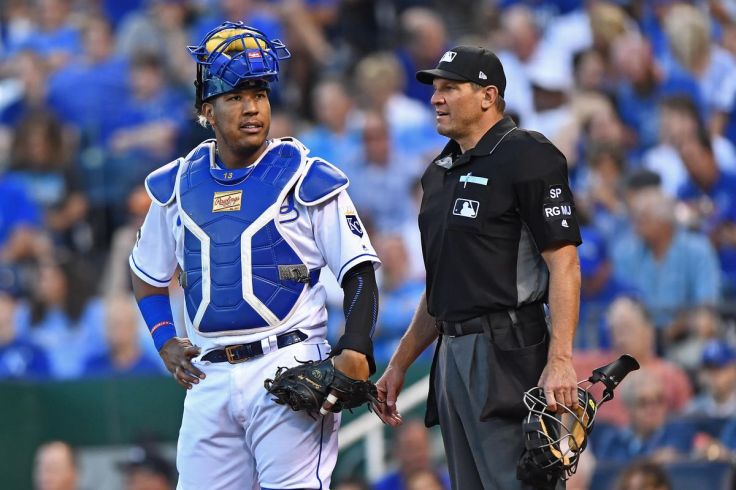
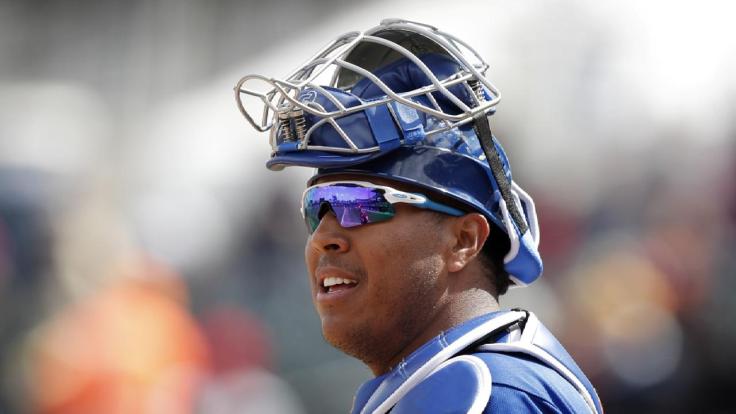
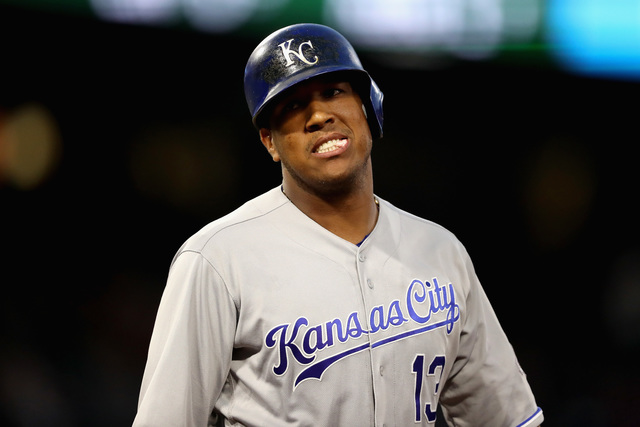
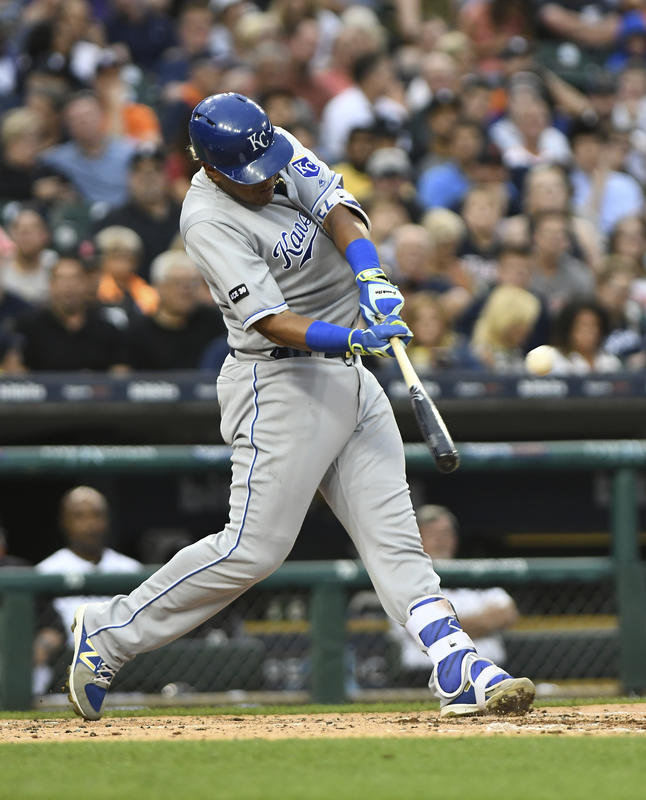
The numbers aren’t good and hope doesn’t appear to be looming on the horizon. But if there is one player that could help the Royals revive the bats, it would appear to be the lineup linchpin, Salvador Perez.
Credit: MLB.com
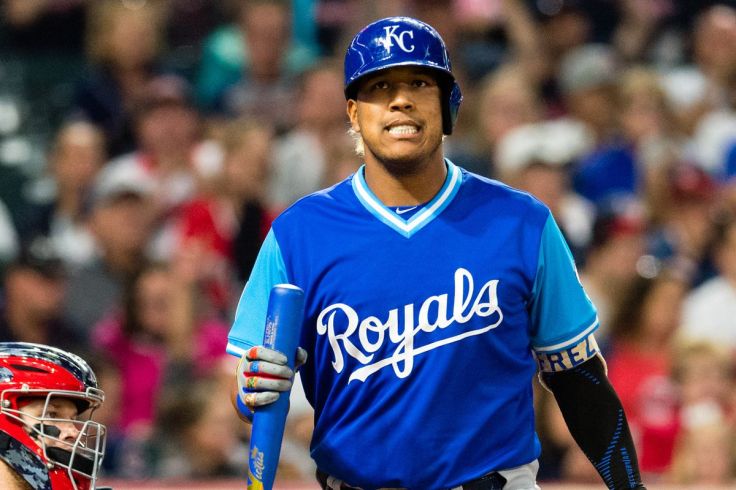
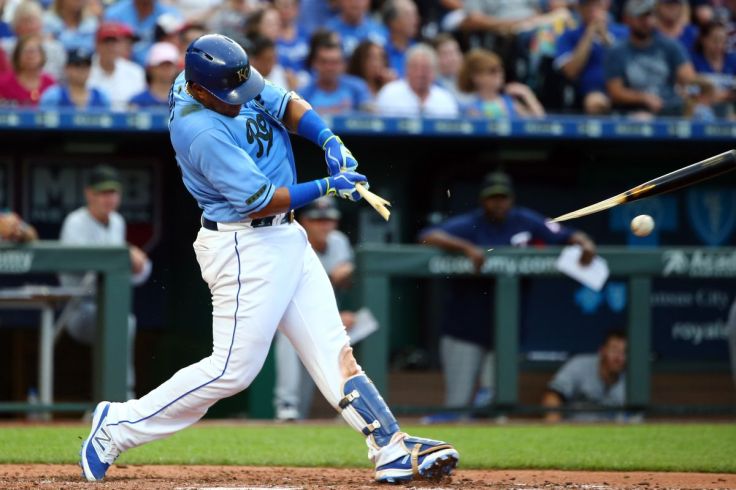
Salvy (like almost everyone else wearing royal blue and carrying a bat to the plate) had a bad June at the dish. In fact, it was bad enough that I almost wondered if his picture would show up on a milk carton, asking if you’ve seen his offense.
Perez hit .158/.200/.253 for the month of June with two homers, four RBI’s and an OPS+ of 26. Over the last two weeks, he hit . 143/.143/.190 with zero homers or RBI’s and an OPS+ of -9. This from a guy who regularly hits in the middle of the Kansas City order!
Credit: SEAN M. HAFFEY
When I actually sat down to think about any specific at bat from Perez this month I drew a blank. In fact, I don’t even remember the last time we saw a Salvy-bomb. Turns out it was June 10th against Oakland, which feels like eons ago (thanks, Baseball Reference!). I faintly remember that, but numbers don’t lie and I’m not one to argue with a site that supplies me baseball stats.
The numbers don’t get much better when you look at the entire spectrum of 2018. Perez has hit .212/.253/.388 coming into play on Monday and saw his slugging percentage dip below .400 last week. His numbers almost across the board would be the worst of his career if the season ended today and the only season in his big league career that compares was 2014, where he hit .260/.289/.403 with an OPS+ of 91.
Credit: The Associated Press
Some of this really isn’t too far off course. He has only had one season out of the last four where he produced above league average OPS+ and that was last year. His walks and strike outs are on par with what he has done the last couple of seasons. Even his AB/HR percentage and extra base percentage is comparable to almost every year beside 2017. So while the numbers tell the story of a player having a bad season, it also appears to be saying that he isn’t too far off from what we should be expecting.
It’s even fair to say in some regards he is doing a number of things right. Salvy’s line drive and fly ball rate line up with what he has done in the past and his hard hit rate is the highest of his career. In fact, according to Baseball Savant, Perez is barreling the ball at the highest rate of his career with an increased exit velocity:
So why are the results just not there for Salvy?
The first thing I noticed was a lack of luck. Perez has a feeble .223 batting average on balls in play, a number that shows that while he might be hitting the ball hard they are also turning into outs way more often than not. BABIP is predicated on luck most of the time and a few balls hit into the gap or down the line can make a difference between a solid number here or a weak number there.
Credit: Jason Miller/Getty Images
Next, I wanted to see what he was swinging at. Most of us are aware that Salvy is a free-swinger and we should expect a high percentage of swings outside of the strike zone. As expected, he is swinging at more pitches outside of the zone (51.6% of the time, up from 47.9% in 2017) and is making less contact outside as well (66.9% to last year’s 70.4%). The interesting aspect of all of this is that he is making more contact within the strike zone (92.5%) and his contact rate in general is close to his average the last couple seasons (78% this year, 80.8% in 2017 and 79% in 2016).
It’s interesting to note here that Perez is swinging at less pitches within the strike zone while making more contact on the ones he is swinging at. One has to wonder if he swings at a few more pitches that actually are strikes and stays a bit more patient on the ones that are outside the strike zone (especially those outside and low pitches he loves to hack at), if some of these numbers would start to turn around.
Credit: Jay Biggerstaff-USA TODAY Sports
I’ll go a step further and say that if he combined that with his hard hit rate and maybe (just maybe) a dash of better luck on the balls he hits into play, Salvy could go from being the ‘disappearing hitter’ he was in June to helping ignite what little offense the Royals can muster on a consistent basis.
The problem in all this lies in what we know about Perez, which is that patience is not one of his strong points. He has never been one for consistently ignoring pitches that entice him that aren’t strikes. Salvy is the definition of ‘see it and swing it’ and at this point in his career it is uncertain whether or not that can be changed.
The one thing for certain is that the Royals need him to get on a hot streak and soon. The framework is there, as evidenced by the hard hit rate and exit velocity. Now he just needs to be a bit more selective and hope that his luck takes a turn for the better. If not, it could be a long summer for Salvy and the Royals.
Last Monday, the Kansas City Royals dealt their closer Kelvin Herrera (and biggest trade chip) to Washington for three prospects. While the trade has come with mixed reviews so far, the one conundrum it left the Royals with was who would be the team’s successor to Herrera as closer?
The question was posed not too long after the trade to Royals manager Ned Yost and he gave the answer most of us would have expected:
“All of them,” Royals manager Ned Yost replied when asked who will get a chance to close out games. “Opportunity exists down there. We’ll have to see who takes advantage of it.”
This isn’t a shock and considering the state of the Royals bullpen (last in the American League in fWAR, the highest ERA & FIP, lowest strike out rate and third highest walk rate all among relievers), it makes sense to keep it an open race. The problem in my eyes is that Ned is holding on to a formula that might not be the best for Kansas City in this situation:
“I’ll look at different guys, but I would prefer one guy to emerge, take advantage of the opportunity,” Yost said. “But it’s wide-open right now.”
Yes, Yost at the end of the day wants one reliever and one only to end up with the job. But to be honest, that feels like an antiquated solution to their problem.
Credit: Ed Zurga/Getty Images
In Ned’s eyes, there are four main challengers for the role: Brandon Maurer, Wily Peralta, Kevin McCarthy and Justin Grimm. Maurer is the only one out of the group with experience closing out games while the rest have combined for five career saves; for this conversation I’ll avoid the save stat, for the fact that it doesn’t really matter in the bigger picture.
So far in 2018, McCarthy and Peralta have put up good numbers out of the pen, albeit Peralta’s have been in limited action so far. I’ve been a proponent of McCarthy for a while, as just a few weeks ago I wrote about how the Royals should be giving him a bigger role in the bullpen. When McCarthy was asked about moving to the closer’s role, he said he’s “not really thinking about that at all, really. I think anyone in the ‘pen can get it done.”
Peralta has seen a slight uptick in his velocity since moving to the bullpen last year in Milwaukee and has looked good for Kansas City since being recalled to the majors on June 17th. Peralta’s strike out rate has been well above 20% so far this year (24.8% in AAA, 29.4% in the big leagues), which is a significant improvement over the 16.8% he has averaged over his career.
The walk rate is a concern (23.5%), especially considering it was also pretty high during his time in Omaha (13.4%) earlier this year. Hopefully that is just a symptom of a small sample size, but it could also be a trend that began for him in 2017. Either way, it will take more innings before we get a real feel for what the Royals actually have in Peralta.
Credit: Carlos Osorio/AP
That being said, I tend to think we have a pretty good idea of what they have with both Maurer and Grimm. Grimm has seen his strike out rate fall and his walk rate increase, which is a recipe for disaster. He is also allowing more fly balls and less ground balls, another bad sign for success. The hard hit rate is about on par with last year, which already had a decent increase from the previous seasons.
Nothing for Maurer has worked this year: strike outs are down, walks are up and hitters are hitting the ball hard against him 50% of the time (his previous high was 39.1% back in 2016). If anyone should be immediately eliminated from the discussion for closer, it’s Maurer. You might be thinking ‘But he was a closer before, so shouldn’t he be a front-runner for the role?’, right? Hold that thought:
AL scout told me regarding Royals trade: "Maurer was the key piece. Better as a setup guy. Better handing baton off than taking the baton."
This was from last year, the day after the trade that sent Maurer and Ryan Buchter to the Royals from San Diego. Every time I see Ned bring Maurer into a high-leverage situation, this is what I think of. It is obvious from not only this scout, but also from what we have seen, that Maurer is better suited for a less pressure-filled situation in the pen. But because he has experience in the role, Yost wants to use him. This is part of why the whole idea of ‘one lone closer’ for this team isn’t really the best idea.
Credit: John Sleezer
Ned is a big fan of roles. He likes to have his relievers set up to know what they will be doing and when they will be doing it. That is fine when you have a bullpen like Kansas City had back in 2015; unfortunately, those days are long gone.
This is a team who needs to keep an open mind about how they are using their relievers. While none of the names mentioned (outside of Maurer, of course) have experience closing, that doesn’t mean they aren’t capable of doing the job. I’m pretty sure the Royals didn’t view Wade Davis as the absolute dominating beast he would become when they acquired him from Tampa Bay, even despite the success he had as a reliever with the Rays in 2012. But he had success, so the team continued to give him more opportunities.
Opportunities are what this current group need, most notably the younger arms that are inhabiting the pen. Roles can be a mental plus to some guys, but they can also backfire on you. Remember this great quote from 2014?:
“Because I had confidence in Aaron Crow,” Yost said. “That’s why. Aaron Crow’s inning is the sixth inning. Kelvin’s is the seventh.”
Ned was so rigid back then that he insisted on using Aaron Crow as his sixth inning guy, even if the match-up wasn’t optimal for Crow. This insistence on keeping routine was a pivotal turning point in the Royals season and led to Yost using the best match-up in a situation rather than who has what inning. Ned loosened the ‘old manager mentality’ of how to use relievers and this change helped lead the team to an epic run in the playoffs just a few weeks later.
Credit: Orlando Ramirez-USA TODAY Sports
This Royals squad isn’t going to go on the kind of run they had in 2014, but it would appear to help their situation if they just continued to use the ‘closer-by-committee’ currently in place. Whoever he uses in the 9th inning should be determined by what the better match-up is for that situation.
Let’s say two or three left-handed batters are batting in the final frame? Sounds like a job for Tim Hill, who lefties are hitting .219/.265/.250 against. You need a ground ball? Give the ball to McCarthy, who has a 62.6% ground ball rate. Just need a big strike out? Someone like Peralta or even Jason Adam would fit the bill.
Credit: Troy Taormina-USA TODAY Sports
The point is that while it is great if you have that one guy you can count on to fill the closer’s role, not every team has a Wade Davis or a Kelvin Herrera. Sometimes you have to work with what you have and right now the Royals are in that situation.
Maybe a guy out of this group will step up and prove to be fit for the role. It could even be someone we haven’t even seen yet, like Richard Lovelady who is currently down in AAA. Hey, it is definitely possible and wouldn’t be the worst thing to happen for the Royals.
But it could also take a while to find that one guy. So until then, it would be great to see Ned take a page from the playbook he used in late 2014-2015 and use the percentages to his advantage. I’m not counting on this happening, but it feels like the better road to take than that same, beaten, old path that managers have been taking for years.
We’ve all had that thought, especially us longtime Kansas City Royals fans. At one point of another, you’ve noticed a player on the roster that is receiving a bunch of playing time and you just ask ‘why?’. For whatever reason, these players seem to be a mainstay throughout Kansas City history.
Who will ever forget Willie Bloomquist, the definition of a utility player who became a lineup regular for the Royals in 2009, despite never posting an above average offensive season before or after (unless you count his 2013 season, where he posted an OPS+ of 101 over 150 plate appearances)?
The one that always bothered me was Chris Getz. If you want some amusement, go read some posts of mine from back in 2012-2013 at bleedingroyalblue.com; I even started a (fake) Q & A column around Getz based off of my confusion to the playing time he was receiving.
The player who currently is taking up a fairly regular spot in the Royals lineup is infielder Ryan Goins and more than one Royals fan has deemed their displeasure with Goins, including old friend Craig Brown:
I will never understand why Ryan Goins is on this team. #Royals
Craig pretty much sums up what a lot of us are thinking: why is Ryan Goins on this team? The simple answer is that Kansas City needs a backup infielder who can play multiple positions and Goins fits the bill.
But the true answer probably lies a bit deeper. Goins adds some versatility, as he has played every infield position in his career plus a few innings in the outfield. He also threw an inning of relief back in 2016, but we already have Drew Butera for that.
Credit: AP Photo/Orlin Wagner
In fact Goins has been a plus defender for most of his career, mainly at second base. The defensive metrics don’t speak as highly of him at shortstop (-3.7 UZR at short in 2017), but luckily the Royals won’t need him there, since Alcides Escobar will be playing shortstop for the Royals until the end of time. I’m joking…I think.
Goins defense at second base allows manager Ned Yost the option of moving Whit Merrifield around and gives the lineup the overall flexibility they haven’t had for years. At the end of the day, Goins is a steady hand that Yost can rely on to keep the defense steady in a pinch.
Credit: Associated Press
Before you think this is going to turn into a ‘Ryan Goins Appreciation Club’ article, don’t be fooled. Offensively Goins is a bit of a drag on the lineup. So far in 2018 he is hitting .234/.265/.319 with a wRC+ of 56. 56!! To put that in context, Alcides Escobar’s wRC+ is 55. Essentially, Goins and Escobar have put up similar offensive production, which is slim and none. So when both Goins and Escobar are in the lineup at the same time, it truly does create a black hole of death at the bottom of the order.
I thought maybe the deeper I dove into the numbers I would find something that would explain Goins’ playing time, but overall the numbers just aren’t pretty. Even the Win Probability numbers are in the negatives, which means he is probably hurting the Royals more than helping. Trying to justify those 21 starts is getting more and more difficult.
The small positives I could find offensively was a good BABIP (.324) and a noticeable increase in his line drive rate (up to 29.2% from last year’s 14.9%) combined with a lower ground ball rate (41.5% compared to 2017’s 50.3%). Whatever positives that come from his defense it is almost completely negated by his non-existent offense.
Credit: Getty Images
This shouldn’t be breaking news to you and more than likely it isn’t. But what I am going to say next might shock you: Goins is probably just what Kansas City needs right now. No, not the lackluster offense or the constant bunting. Where Goins has value right now for the Royals is as a stopgap.
It’s obvious the front office and coaching staff like Goins and see value in him where maybe we as fans don’t. It all really does come down to what you value as an individual. While on the surface we see a player who probably only has value on the defensive side of the ball, that might be enough for the higher-ups in the Royals organization. You and I might disagree with that, but we aren’t the ones making those decisions for the team.
That is not to say you are right or the Royals are right; there is more than one way to put together a contending baseball team. What I am saying is that occasionally as fans we believe we have the answers to how and why a team is successful, mainly based off of what we value. But we all value aspects of the game differently, and while on the surface it might not appear that Goins has value to this ballclub, his value might be part of a bigger picture.
It has become obvious that the Kansas City brass don’t feel that Adalberto Mondesi is quite ready for a bigger role on the big league club, a role that in part Goins is playing right now. While Mondesi shouldn’t be a backup infielder once he finally gets the call, he also probably won’t be in specifically one role for them once he is on the roster. There is a good chance that once he is recalled he will be playing all around the infield rather than just shortstop or just second base.
The good news is that it feels like Mondesi is getting closer and closer. He is hitting .257/.299/.514 at Omaha right now and his walk rate has seen a slight increase while the strike out rate has taken a dip. Mondesi has shown a proclivity of improving the longer he stays at each level over his career, and it appears that is what is going on in AAA as we speak.
Credit: Jay Biggerstaff-USA TODAY Sports
So while you and I might not understand the ‘Ryan Goins Experience’, it is definitely not a permanent answer for the Royals infield. While Mondesi will probably leap over Goins and be a starter at some point, the role of backup will probably transition over to someone like Ramon Torres, who appears to be a younger and better version of Goins.
Sometimes we just need to take a step back and allow the bigger picture to show itself. I’m not advocating for Goins being a part of this Royals roster, but I do feel Kansas City is looking at the future more than we give them credit for. Rome wasn’t built in a day and the Royals aren’t going to get better just by ditching Ryan Goins. More than likely though, Rome will appear sooner once Goins is no longer an option.
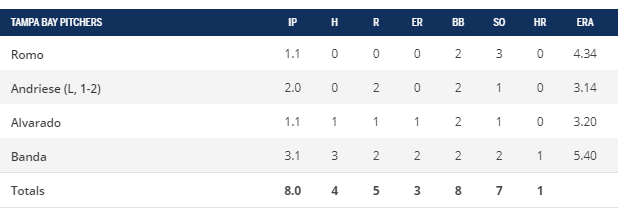
Over the weekend history was made as Sergio Romo, a reliever who had never started a game in the Major Leagues over 588 appearances, started back-to-back days for the Tampa Bay Rays as an “Opener“, starting him in very short appearances before giving way to other pitchers–normally youngsters who had been starters down in the minors–for use in extra inning spurts throughout the rest of the game.
The reasoning makes sense:
But the most challenging inning for any staff isn’t the ninth, or the eighth, or the middle innings when a starter approaches his pitch count limit. It’s the first inning, when teams hit better than any other because it’s the only frame in which a lineup’s top hitters are guaranteed to bat. Batters have hit 10 percent better than league average in the first this season, which is the best mark in any inning.
The Rays had a couple of young pitchers scheduled to start over the weekend and knew they probably weren’t going to pitch deep into the game. So with that in mind, they started Romo to face the Angels plethora of right-handed batters at the top of the lineup, as Romo has had success against righties throughout his career (ranking second in opposing OBP with a .232 rate for active pitchers).
So you can see why Tampa was willing to experiment and at the very least give this a shot. But this got me to thinking ‘What if the Royals tried this on occasion?’ and maybe even the more important question ‘Should the Royals try this on occasion?’
Credit: MLB.com
If we are talking different options, Kansas City has a number of relievers this might work well with. Brad Keller has been phenomenal this year and there has even been discussion of moving him to the rotation. Trying him as an ‘Opener’ first might be a good way to get his feet wet and the Royals could even stretch out his starts this way, starting him with just an inning or two at first before eventually increasing his innings per outing.
Credit: Patrick Semansky/Associated Press
Burch Smith is also an intriguing option, especially since he was primarily a starter throughout his minor league career. Smith has a 25% strike out rate to go with batters hitting .269 against him on balls in play. The one concern with Smith is his walk rate, which as of Tuesday sits at 13.5%. The last thing you want early in the game is extra baserunners, as that would soil the whole purpose of this experiment.
Credit: MLB.com
There is also Tim Hill, who would be a trip for batters to see early in the contest. The idea of hitters trying to figure out Hill funky delivery for an inning or two and then adjusting to someone like Jason Hammel, who relies on his slider quite a bit more would be an interesting situation.
So should the Royals consider using an ‘Opener’, at least occasionally? Considering how the starting pitching has been the last month it wouldn’t be an awful idea. Over the last 30 days, the Royals starting pitchers are last in the American League in ERA and fWAR, while giving up the most hits, runs and home runs. In other words, whatever the starters are doing isn’t working and trying almost anything else at this point isn’t a bad idea.
In fact, it might actually help some of the pitchers like Hammel or Ian Kennedy. Let’s say a reliever “opens” the game and throws two innings or less. You can then bring in whomever would normally start that day and let them pitch a couple times through the order. Most of us are aware of the numbers that point out how pitchers fare the third time through a batting order and this might make it to where someone like Hammel never has to see a batter a third time.
A number of people are going to hate this idea and disregard it before it even happens. In fact, I can’t imagine Ned Yost would ever be on board with this, as it has taken him years to warm-up to the idea of defensive shifts and he is still questioning it. But I also feel the Royals are in the perfect spot to try something “out of the box” without any major repercussions.
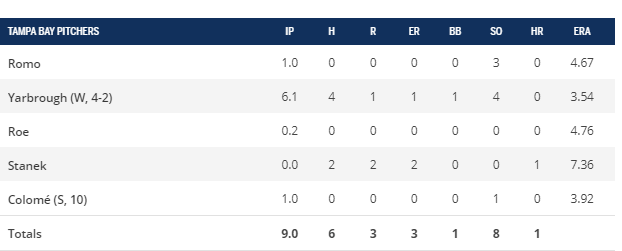
There is no way to tell whether or not it will work either, as apparent by the results for Tampa Bay over the weekend. On Saturday, things went as hoped:
Yarbrough followed Romo, throwing six innings while giving up only one run. But Sunday didn’t go as smoothly:
The rest of Tampa’s pitchers couldn’t maintain the pace and they ended up losing the game. That’s the thing with trying something like this; it might work as planned but it could also blow up in your face. The bigger question is whether or not it is worth it in the long run.
Credit: Getty Images
If we are being honest, I am fully on board with Kansas City trying an “Opener” at some point but I’m not going to hold my breath while waiting. Kudos to the Rays for attempting it and if we are being honest baseball is better and more interesting when teams are changing up the status quo. The game has been around for over 170 years and it has evolved quite a bit since that first game in Hoboken, New Jersey back in 1846. Now it might be time for the game to evolve a bit more when it comes to pitching strategies.
Here we are, the middle of April and I’m sure a number of you are already frustrated with the Kansas City Royals. I mean, the bullpen has been a dumpster fire, the offense feels anemic and it’s just been a struggle to play games on consecutive days. Luckily, there is another way to enjoy Royals baseball this summer without watching the big league club.
For those of us longtime fans, we spent a number of the ‘Lean Years’ paying attention to the Royals minor league teams and keeping track of what the top prospects were up to. It was a way to keep an eye on the future while figuring out if these players fit in to what Kansas City needed.
Credit: Minda Haas Kuhlmann
So doing this can be daunting for a newcomer to Royals baseball or just for someone who has only ever focused on the major league squad. To help you out on this journey, I’m going to pass along some links and websites to keep track of so you can follow the progression of the Royals of tomorrow.
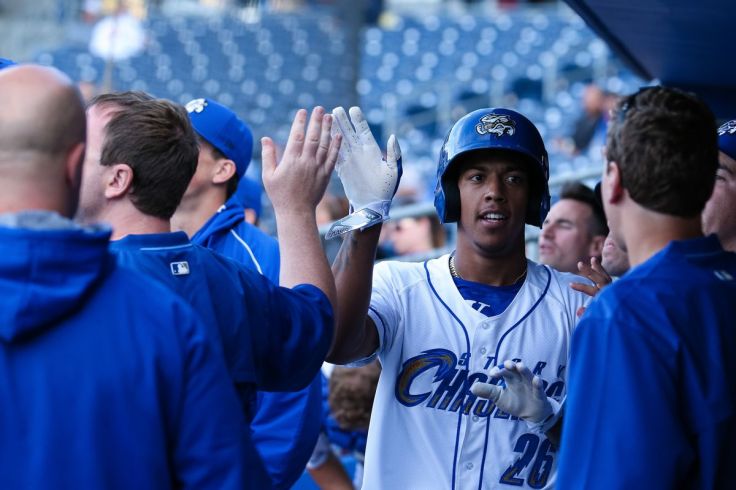
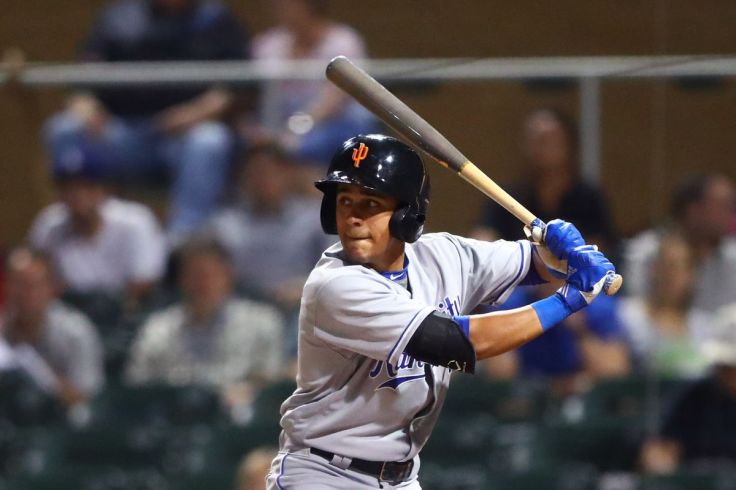
Let’s start with the Royals AAA affiliate, the Omaha Storm Chasers. To keep tabs on the team you just need to go to their website where you will get daily updates, schedules, statistics and more. You can also follow them on twitter or instagram. Top prospects currently on the Storm Chasers roster include Hunter Dozier, Richard Lovelady and Trevor Oaks. Since Omaha is the Royals top rung of the minor league system, they are a good source of seeing players who could be on the main roster sooner rather than later.
Credit: ArkansasOnline.com
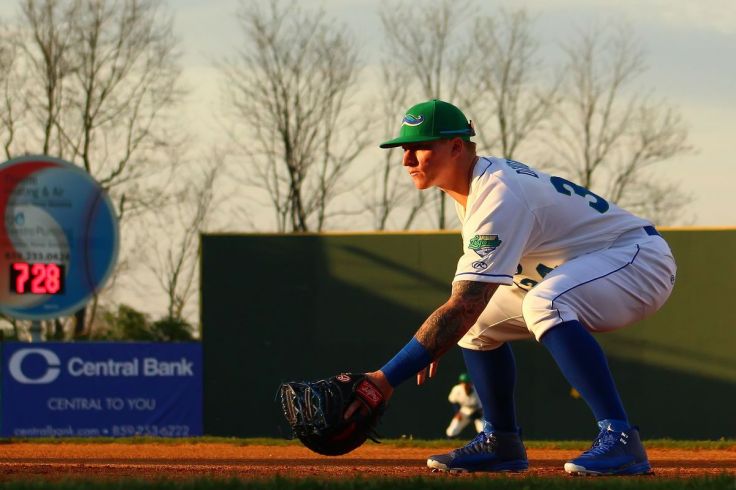
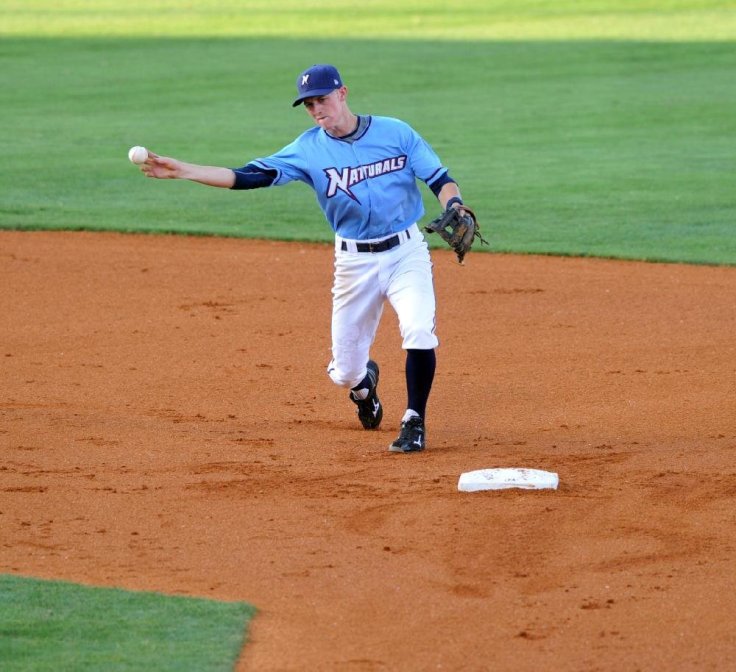
Going down the line, there is the Kansas City’s AA team, the Northwest Arkansas Naturals. You can check out their official site for daily updates and the regular updates on Twitter. The team right now houses prospects like Foster Griffin, Samir Duenez and Donnie Dewees. The Royals occasionally promote players from AA but not as often as they used to, as many will receive a little bit of time in AAA before their promotion to the big leagues. The Naturals are also the team that current Royals bullpen coach Vance Wilson was managing for the last couple of seasons. I mention Wilson, since I’ve long believed he is a future Royals manager in waiting, which is relevant since Ned Yost’s contract runs out at the end of the year.
Credit: Ken Inness/MiLB.com
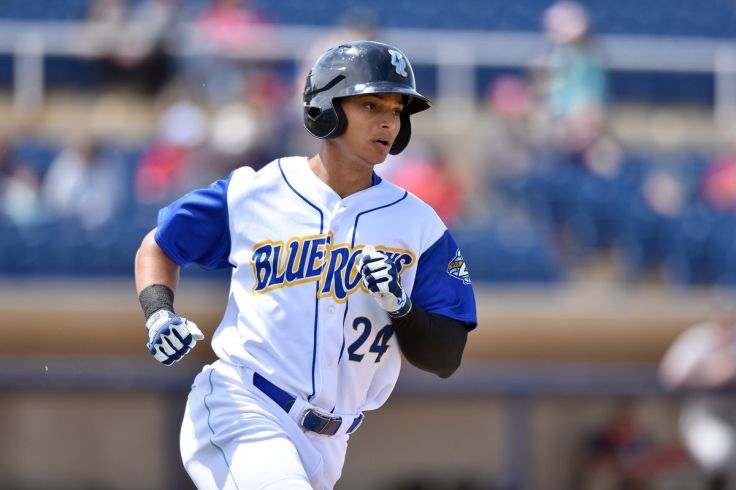
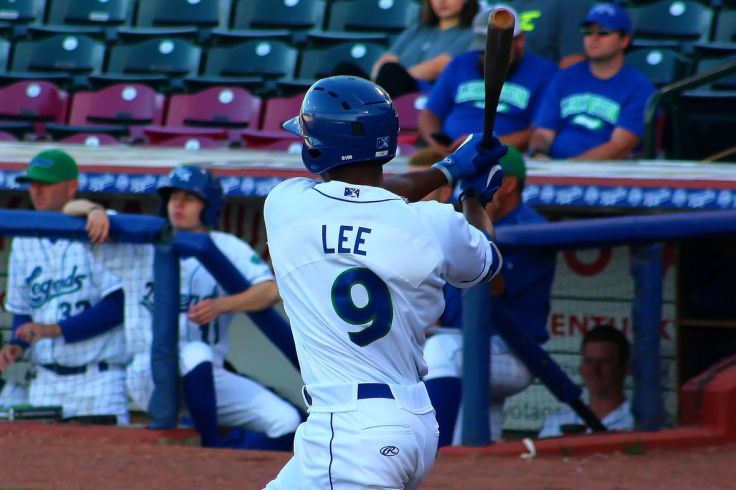
Sliding down to High A ball, where we check in on the Royals affiliate, the Wilmington Blue Rocks. You can check out their main page and follow them on Twitter. Their roster has a nice array of prospects like Gerson Garabito, Chase Vallot, and top prospect Khalil Lee. The team will probably see a plethora of other top prospects recalled to their squad this year, since a number of the team’s top talent is in the lower section of the farm system.
Credit: Brian McLeod/MiLB.com
Finally, there is the Royals Class A team, the Lexington Legends. Once again, they have their official minor league site and Twitter to follow. The team has a number of the Royals top shelf prospects, like last year’s number one draft pick Nick Pratto, MJ Melendez and Seuly Matias. The players at this level are names you should be keeping tabs on and watching their progress, as they could be a big part of the major league team’s future. While the Royals are ranked as having one of the worst farm systems in baseball, the players at this level could start to turn the tide and we could start seeing results from them as early as this year.
Credit: Clinton Riddle, SB Nation/Vox Media
If that isn’t enough to wet your appetite, there are a number of other sources of where you can get good analysis on players to keep an eye on. Clint Scoles does great work over at Baseball Prospectus Kansas City and you can follow him on the Twitter machine. There is also the Royals Farm Report, which does a thorough job of covering all aspects of the Royals farm system, whether on their site or on social media.
Credit: Minda Haas Kuhlmann
I would also be remiss if I didn’t mention the great work that Minda Haas Kuhlmann does, especially covering the Storm Chasers. You might have noticed that she took a number of the photos you see in this article and writes a weekly feature over at Royals Review. The feature is called “This Week in the Minors” and is a good way to keep up to date with what is going on with the organization on a weekly basis. Minda is a great writer and I highly suggest you check out her work, as it is always top notch.
Credit: Mark J. Rebilas-USA TODAY Sports
Meanwhile, I will occasionally write about some of the up and comers here at bleedingroyalblue.com. One of the fun aspects of being a baseball fan is keeping track of the players who are on the way and I’ve always enjoyed writing about them on this blog.
So that should get you started on following the Royals minor league system and help educate yourself about ‘who is next’. Just remember that while the major league team will probably struggle most of this 2018 season, they won’t lose forever. The odds always come around at some point and the Royals will be a contender again. When that happens, you will already have an idea who will be a part of the “Royal Resurgence”.
With the Royals just a few days away from kicking off this 2018 campaign, I thought it would be good to throw out some predictions. But not the normal sort of predictions. No, I traveled down a different road.
So here are your 2018 Royals fake predictions. I’ve done these in the past and they were wildly popular. These are all jokes, so please don’t take any of this too seriously. They are just meant as amusement as we get ready to kick off the new season. So without further ado, here are your ‘Fake Royals Predictions’!
Credit:Associated Press
After a near-death experience in the offseason, manager Ned Yost has grown a greater appreciation for the men and women of the media that he interacts with on a regular basis. Rather than snarky sound bites and short, abrupt answers, Ned gives the media answers with heartfelt, thought provoking feeling and life affirming positivity. Then they have a group hug when the session is over.
On Opening Day, Lucas Duda will make his official Royals debut…and will be awarded a 2015 World Championship ring.
With Lorenzo Cain off to Milwaukee, Salvador Perez is in need of a new best friend that he can harass and shoot instagram videos of. Luckily, that honor has been bestowed onto Jon Jay. Unbeknownst to Jay, he agreed to it when he signed his contract, as it was slipped in there thanks to some sneaky maneuvering by Salvy.
Alex Gordon’s offensive struggles continue as the season begins, forcing him to try everything in the book to get out of this two-year funk. Gordon even resorts to eating junk food, which actually does improve his production…at first.
After appearing in all 162 games for three of the last four seasons, Alcides Escobar goes to Ned Yost 25 games into the season and asks for a day off because he is tired. Escobar falls asleep and awakens the last week of September, missing almost the entire season.
After giving up a dozen home runs, Ian Kennedy finally decides to become a different pitcher, one who focuses on ground balls. He then goes from giving up long bombs to inside the park home runs, still leading the league in home runs allowed.
Credit: John Sleezer/KC Star
A number of Royals fans attempt to play ‘Rex Bingo’ (a game my family created last year) during a lazy May afternoon game but everyone hits bingo by the second inning. All the mentions of ‘hands’ and ‘sneaking cheese by a hungry rat’ seems to have caused their boards to fill up super fast.
Jason Hammel asks to be moved to the bullpen and puts up good numbers through the first half. Come to find out after the All-Star break that Hammel and Luke Hochevar had a ‘Parent Trap’ moment and it was Luke all along these last two seasons.
In Whit Merrifield’s never-ending quest to ‘beef up’, he increases his protein intake and starts adding even more muscle mass to his frame. Whit sees a spike in his home runs yet again, but on the diamond he becomes a defensive liability. Think Daniel Murphy crossed with Alberto Callaspo at second base.
Steve Physioc realizes that the notes he is given before each game are to be used to help him during the broadcast. Not only does he start sounding like a competent announcer, he also receives less glares from Denny Matthews.
Danny Duffy stays healthy.
The Royals swap out one debonair first base coach for another, as Mitch Maier takes over for Rusty Kuntz. While many will miss Rusty, it doesn’t take long for the fans to warm up to the former Royals outfielder. A petition is started and Maier will get his own bobblehead night in 2019.
While trying to forget a rough 2017, Kelvin Herrera decides to add an eephus pitch to his repertoire. Herrera finds success again, but it kills the Royals time of game. The pace of play Gods are angered.
Richard Lovelady tires of all the talk of his name and little discussion on his actual statistics. This leads him to change his name to something very bland and vanilla. You can now legally call him ‘Tim Collins’.
As the Royals attempt to stay as ‘pure’ as humanly possible, they start attending workshops over the summer discussing the ill effects of watching cartoon animals who don’t wear pants.
Mike Moustakas was only able to land a $6.5 million deal this winter to return to Kansas City. The cut in pay has made it harder on Moose, as he no longer can afford his Stouffer Fit Kitchen Meals.
Brian Flynn will not fall through a barn…at least not for the first month of the season. All bets off after that.
Jorge Soler will hit the ball so hard this year that he will actually knock the cover off the ball. Also, Soler will swing and miss so hard that he will knock the cover off the ball.
and finally, the Royals will replace hitting coach Terry Bradshaw in May as the offense struggles. He will be replaced with former Pittsburgh Steelers quarterback Terry Bradshaw. Somehow, the offense will become the best in the league.
Credit: John Sleezer/KC Star
So there you go, my 2018 fake Royals predictions. Hopefully you took them as they meant to be, which is all in jest. I will seriously crack up laughing if even one of these come true. I’m sure there is one or two I missed. So what fake predictions do you have for the upcoming season? What would amuse you if it happened to the Royals in 2018?
With Opening Day just a hop, skip and a jump away, it is a great time to look back on the 2017 Kansas City Royals squad and see how this season might develop differently. There was some good, bad and ugly with last year’s Royals and very rarely in baseball do things shake out the way they did the previous season. With that said, here are some items of note to keep an eye on as you get ready to make the Royals a part of your daily schedule.
Bouncing Back
One of the key elements of the 2017 team was the number of down years that appeared to fill up the roster. Alex Gordon, Ian Kennedy, Jorge Soler, Jason Hammel and Kelvin Herrera are just a few names that under-performed last year and are looking to “bounce back” this year and perform closer to the norm.
Most would take a league average hitting season from Gordon while Soler needs to just be the run producer the Royals thought they were acquiring when they traded Wade Davis to the Cubs. Kennedy would do well to keep the ball in the park a bit more (I would love to say keep the ball on the ground, but we just know that won’t happen) while also staying healthy.
Hammel’s ratio of baserunners allowed last year far exceeded the innings he was compiling, as he tossed 180 innings, giving up 209 hits and 48 walks. Limiting runners on base would go a long way toward improvement on his 2017 numbers that were less than desirable.
Herrera would do good to re-discover his curveball and use his cutter a bit less this year. It would also help him to throw more first pitch strikes, as that number took a dip this past year (60.6%, down from 64.7% in 2016). It felt like he was always pitching from behind in 2017 and throwing that first pitch strike could alleviate some of the other issues he dealt with last season, like walks and home runs.
Now the likelihood that all of these players produce like they have in the past is probably slim and none. But if the Royals can get a couple to improve or even put together solid seasons, it could go a long way toward helping some of the lackluster play we are sure to see at points this season.
Credit: Jennifer Stewart/Getty Images
Merrifield’s Regression?
I don’t know if anyone would have predicted the season that Whit Merrifield had in 2017, maybe not even Whit himself. Merrifield, like many players around the league, started putting the ball in the air more and was rewarded with a 19 home run, 78 RBI season to go along with a .172 ISO and a .332 wOBA.
Now the bigger question remains…can he repeat it? I have my doubts, especially since teams will focus more on him this season than they did last year. The key might just be whether or not he is able to keep the ball in the air. Last year his fly ball rate held at 40.5% (it sat at 29.8% during his stint in KC back in 2016) and throughout his minor league career he was able to hit fly balls in the upper 30’s/lower 40 % range.
Luckily, Whit has already gotten farther than many expected in the first place so it feels weird to doubt him now. It is going to be interesting to see how he adjusts to any changes he sees this year from opposing pitchers. This will go a long way to figuring out whether or not he is able to repeat a stellar 2017.
Credit: MLB.com
A Healthy Rotation
The Royals rotation last year felt like a revolving door for a good chunk of the season. Danny Duffy procured two stints on the disabled list, Ian Kennedy spent a portion of the year hurt and Nate Karns didn’t pitch in a game after May 19th. Add in the struggle of keeping a consistent pitcher in the 5th spot in the rotation and you can understand why the team continues to go after guys like Clay Buchholz and Ricky Nolasco to add depth.
While no one is really expecting this team to contend, how they perform will depend a lot on the health of the rotation. If Duffy, Kennedy and Karns are able to stay healthy this year, that would allow guys like Trevor Oaks and Andres Machado to continue to mature down in the minor leagues.
Last year the Royals were forced to use Onelki Garcia, Luke Farrell and even Travis Wood for five starts when all three should have never started a game. A healthy rotation would put less stress on the bullpen while also giving the team a strength that was evident in the early parts of 2017. For the Royals to not be basement dwellers this season, they need their starters to post more time on the mound than in the trainer’s room.
Credit: John Sleezer/KC Star
The Kids Are Alright
While the Royals front office has moved away from a complete rebuild, the template for this Kansas City team is still one of beginning the process of evaluating what some of their prospects are capable of at the major league level. In that regard, this season could very well shine a light onto who stays in the organization and who might not be a part of the Royals future.
Whether it is a Richard Lovelady or Kyle Zimmer in the bullpen, a Bubba Starling in the outfield, or a Hunter Dozier or Adalberto Mondesi in the infield, by the end of the season there should be a nice influx of younger talent on the roster. The interesting aspect of this whole process (yeah, I just said it) is not always what the numbers will tell us about their performance. Even if they face some adversity, the best thing for them and the future of this organization is allowing them to go out everyday and try to improve.
Dayton Moore has mentioned numerous times that a big part of the Royals championship team weren’t the players who were highly touted prospects, but the ones who flew under the radar and turned out to be big contributors to Kansas City’s playoff runs. The only way to find out what they have is to let them play. While the veterans will steer the ship to begin the year, it could be the youth movement manning the deck by the time September rolls around.
The Coaching Carousel
Finally, quite possibly the biggest change on this Royals team this year will be the addition of new coaches to help manager Ned Yost throughout the season. Terry Bradshaw, Cal Eldred and Vance Wilson were added to the coaching staff at the end of last season while Mitch Maier will continue his role as the first base coach that he assumed late in the 2017 campaign.
While on the surface the coaches might not be an exciting part of the “New” Royals, it very well could end up being a window into what we should expect from the team past this upcoming year. There is a good chance Ned Yost will retire after 2018 and the changes this coaching staff make this year could give us an idea of what the focus will be on for 2019 and beyond.
During the team’s infamous playoff runs in 2014 and 2015, it was well-known that the Royals were a team who focused on putting the ball in play while forcing the opposing defense to make the plays. The team was also known for their defense and while they didn’t shift as much as some other teams (I’m looking at you, Houston and Tampa Bay), there was a certain pattern to what they were trying to accomplish.
Will Bradshaw change the hitting approach? Does Eldred have some tricks up his sleeve that oppose what former pitching coach Dave Eiland would have done? Will Dale Sveum moving from hitting coach to bench coach effect any tactical decisions?
These are all questions that will be interesting to follow and see if there are noticeable differences from the previous coaching staffs. Baseball is a constantly evolving sport that has modified itself on a consistent basis. There is a high probability that the new Royals coaches could zig where the old regime would have zagged. To me, this will be one of the more intriguing plot lines to follow during this 2018 campaign.
Credit: Associated Press
While I’m sure I missed a few, these are the most obvious areas to keep an eye on for this upcoming season. Some will be good, some will be bad while others will just stay the same. The one constant will be the questions that will be added as the season progresses. The most important part will be how everything shapes up starting on March 29th. Change will be inevitable.
You don’t think about it during the run. It escapes your mind every October. There is no thought of it during the parades, the raising of the flags or the passing out of rings. It’s after the gold and glory start to fade that you actually begin to think about rebuilding.
The Kansas City Royals have been running with their hair on fire for the past four years and while it sits in the back of our minds, you don’t really begin to think about how to start over until it smacks you in the face. The Royals have dealt with the probability of their next chapter since November, when Eric Hosmer, Lorenzo Cain, Mike Moustakas and Alcides Escobar filed for free agency. They were the last major pieces of the 2015 World Champions to leave the nest and move on from one of the greatest eras in Royals history. Or at least two of them did.
So with Opening Day just a few days away and the Royals looking ahead to their future, it feels like the right time to break down what you should really expect from the ‘Boys in Blue’ as they embark on a new journey. There are some new faces, some old faces and more than anything, a different outlook.
Credit: Scripps Media, Inc.
Let’s begin with what I think will be a positive this season for the Royals and that is the starting rotation. While on the surface this is an underwhelming group of arms, there is potential here that could be reached if circumstances go the right way. Danny Duffy returns to lead the charge, as he looks to bounce back from a season he would overall like to forget. There were the injuries…and then there was the DUI. By the end of the year it just felt like a wash for Duffman, despite the fact he still managed to lead the pitching staff in WAR over the 146 innings he threw. Duffy left his start on Saturday but right now that looks like a precaution more than anything. If the Royals even hope to sniff a winning season, they need Duffy to be healthy and produce the way he did back in 2016.
Duffy will be followed in the rotation by Ian Kennedy and Jason Hammel. Both are coming off disappointing campaigns last year and are looking to bounce back. The honest truth is that neither should be this high up in a rotation, but the one thing they do is eat innings. If Kennedy can give up a few less home runs (and stay healthy) and if Hammel can lessen the amount of base runners allowed, the Royals really only need them to be the reliable veterans they have been over the years. It would be even better if Kennedy can come close to approaching his 2016 season and help people forget that he still has three years left on his contract.
Credit: Frank Jansky/Icon Sportswire
The real potential for the rotation is at the back-end, where Jake Junis and Nate Karns will occupy the final two slots. Junis only posted a 0.9 WAR season in 2017, but it was almost a tale of two seasons for him. In the first half, Junis appeared in eight games (six starts), posting a 5.66 ERA, 1.629 WHIP and a strike out to walk ratio of 1.75. The second half was a different story, as in his 12 appearances he produced a 3.55 ERA, 1.089 WHIP and a strike out to walk ratio of 5.78. Down the stretch, Junis was the Royals most reliable starter and if the team had been able to eek out a playoff appearance, he would have been in the rotation. I’m not a big believer in spring training stats, but Junis did strike out 20 batters in 14 innings while walking only one. His slider has become a very effective out pitch and I wouldn’t be shocked to see him take another big step in 2018.
Karns is one of those pitchers that has always had a stockpile of potential but has always found a way to get hurt. It was not different for him in 2017, as Karns only started eight games before being shelved and having to undergo thoracic outlet syndrome surgery. In fact, over his last four starts he was stellar, posting a 2.01 ERA over 22 innings, striking out 32 while walking only four batters. I discussed Karns a bit more in-depth a few months back and his use of the knuckle-curve has proven to be a game changer for him. If he can stay healthy and on the field, he can be a breath of fresh air for this Royals pitching staff.
So what if any of the starters go down with an injury? The good news is the amount of decent depth built up within the organization this winter makes an injury not feel like a deal-breaker. Jesse Hahn will start the year on the disabled list but he could be an option if he is able to return in the near future (the earliest he will be back is early May). They also have a couple of righties in Andres Machado and Scott Barlow down in the minors and lefty Eric Skoglund could be an option as well, as he would look to improve on his seven appearances in 2017. Clay Buchholz was signed last week and could be an interesting arm to watch as he works to get back to the big leagues. The one name to keep an eye on is Trevor Oaks, who was acquired from the Dodgers this winter and could be a key piece of the rotation by September. Oaks is a sinkerball pitcher who spent most of last year in AAA and is right on the cusp of getting an opportunity in the majors. Oaks won’t miss a lot of bats, but he will keep the ball on the ground and won’t walk many either, as he has only walked 72 batters in 404 minor league innings throughout his career. If a starter goes down, there is a good chance Oaks will get the call.
Credit: Jennifer Stewart/Getty Images
While the rotation could be a major plus for the Royals, the offense has at least a chance to be interesting. The mainstays are still here, as Salvador Perez and Mike Moustakas return and will probably produce about on par with what they have done in the past. I do think Moustakas could be a better overall hitter in 2018, as he could have a chip on his shoulder from how his time on the free agent market went this winter. A Moose with an agenda could be a frightening proposition for American League pitchers.
Whit Merrifield will look to improve on his breakout 2017, but the cynic in me thinks he could be in store for a small fall from grace. No one was expecting Whit to hit for power the way he did last year (19 home runs, .460 slugging percentage, .172 ISO) and while I don’t predict a big drop-off for him offensively, there could be a slight adjustment when it comes to the way pitchers approach him this year. The hope is that Whit will be able to adjust as well and negate some of the changes that are sure to pop up.
It should be interesting to see how some of the new bats perform as both Jon Jay and Lucas Duda begin their first season in Kansas City. Jay will probably hit near the top of the order and is a good on-base threat while Duda put together a solid 2017 and is looking to grow on that. While I don’t expect either to duplicate what their predecessors did last year, they are a vital part of the lineup and there is a greater chance they end up being pluses rather than negatives.
Maybe the most intriguing bat in camp this spring is outfielder Jorge Soler. Soler struggled in his first season in Kansas City and is looking to bounce back and live up to some of the potential that he has been tagged with since the Cubs signed him back in 2012. Soler spent the winter working on his swing and management has really been impressed with what they have seen from him in Arizona:
Dayton says Jorge Soler was the best player on the field last Sunday vs. Cubs.
"There are holes (in his swing) that he has to learn to cover. That occurs with experience. … He’s fitting in much better. We’ve seen more fire, more intensity and a greater sense of urgency in him.”
The interesting part of Soler isn’t as much what he is capable of as much as the ridiculous expectations that have been put on him. I talked this winter about what the Royals really need from Soler and it’s very simple: a solid, run producing bat for the middle of the order with league average defense in right field. I think Soler might be a welcome surprise this year and possibly even reach some of those lofty expectations as he enters his age 26 season.
The rest of the lineup is probably questionable at best. Alcides Escobar returns to play shortstop and we all know what we should really expect from Esky offensively at this point. Alex Gordon is looking to prove that the rumors of his demise are overstated, as he has been working on his approach this spring. My belief is that if Gordon works on hitting the ball to the opposite field while focusing more on getting on base than hitting for power, we might just see an improvement in his overall numbers.
The designated hitter spot will be interesting to watch this year, as the Royals won’t be going with just one batter there on a daily basis. Kansas City will attempt to try a floating DH this year, with guys like Cheslor Cuthbert, Soler and Jorge Bonifacio (when he returns from his suspension) probably seeing the majority of at bats there. This will give them flexibility and allow them to try different scenarios throughout the season.
In fact, the lineup we see on Opening Day will more than likely not be the same come September. I fully expect a few bats traded at the deadline, with Moose, Duda and Jay near the top of the list. By September we could be looking at a very young lineup and that could also mean a lot of evaluating by the Royals coaching staff. If these deals go down, they will want to see what they have for 2019 and will give guys like Hunter Dozier and Ryan O’Hearn as many at bats as necessary. While this might not be the best for this year, it will help the team in the future.
Credit: MLB.com
So what does this mean for the Royals offense in 2018? Probably that it will be an inconsistent bunch. There is a decent amount of firepower right now, with Salvy, Moose, Duda and Soler leading the charge. But there are some possible black holes as well like Gordon and Escobar. Also remember, this is a bunch who don’t like to walk much (they were dead last in walks in all of baseball last year) and teams that don’t take as many bases on balls tend to go through wilder peaks and valleys. Add in the younger bats later in the season and this could be a team who offensively really struggles at times. While they weren’t dead last in the American League last year in wRC+ and offensive WAR, they were near the bottom and haven’t done much to improve the lineup.
Credit: MLB.com
This leads to another problem spot, which could be the bullpen. The Royals bullpen outperformed expectations in 2017 (they were ranked by Fangraphs #28 before the season and ended up in the middle of the pack) but that was also helped by the great seasons that Scott Alexander and Mike Minor had. Both are now gone and what is left are a number of relievers that struggled last year, which is why Fangraphs has now ranked them 30th overall, which is dead last in all of baseball.
The good news is that both Kelvin Herrera and Brandon Maurer should be able to perform better than their numbers last year showed. I would also expect new signee Justin Grimm to perform closer to his 2016 season than 2017. But once you get past those three veterans you end up with more questions than answers.
Credit: Adam Glanzman/Getty Images
There are a few veteran arms joining the fray this year, like Blaine Boyer and Wily Peralta. There are also young arms like Brad Keller, Tim Hill, Brian Flynn and Eric Skoglund that will get an opportunity to show what they can do. In fact, I would expect the bullpen to be in constant flux this season, or at least until the team starts figuring out who to keep and who to scrap. Kevin McCarthy, Mike Broadway, Kyle Zimmer, Miguel Almonte, Scott Barlow, Richard Lovelady, Eric Stout, Josh Staumont and even Andres Machado could all see time out in the pen this year and the road between Omaha and Kansas City could get pretty worn out.
But the good news from this is a number of those arms are going to stick. Almonte looked this spring like he had finally turned a corner and his electric stuff could play well out of the pen. Lovelady has turned into a highly touted prospect in just a short amount of time and once he is up he will probably stick. Zimmer has always had the stuff but his health has always held him back. While the idea for some of letting this group work out their struggles in big league games sounds harrowing, it is what needs to happen if the Royals are hoping to be contenders again come 2021 or beyond.
So while it is tough to hear, the bullpen is going to struggle. But the pen you see in April probably won’t be the one you see in July. In fact, by then we could be talking about a completely different story when it comes to the Royals relievers. This will be something to keep an eye on for the next few months, as their will be development with a number of Kansas City arms.
Credit: The Associated Press
The other aspect of this team that will be tough to swallow for some is the defense. Gone is Lorenzo Cain’s ability to cover everything in the outfield. Whether you believe the defensive metrics or not, losing Eric Hosmer at first base will be noticeable. Not only are those two gone, but the elite defenders still in Kansas City are a year older and some of the replacements are league average at best. The Royals teams of 2014-2015 prided themselves on their excellent defense and was a big part of why they had the success they did. Unfortunately, those expectations should be thwarted, as this team defensively will more than likely be a shell of their former selves.
So while the bullpen and defense are no longer the Royals strong points, one aspect of this team that will be fun to follow is the coaching staff. I actually discussed this last week over at Royals Review, but I am really intrigued to see how some of the new coaches are going to shape this team. Cal Eldred, Terry Bradshaw and Vance Wilson have joined the staff and with this will probably come a new way of viewing the pitching and the hitting. In fact, with the likelihood of Ned Yost retiring after this year, we could get a window into the philosophies we could be seeing for years to come. After years of the same coaches scouting and preparing these players, the new bunch will shape a whole new generation of Royals and I for one am excited to see what could come of that.
Credit: John Sleezer/KC Star
So after all that, what does this mean for the 2018 Kansas City Royals? It means that while there will be some highs this year, there will be a few more lows as the team looks to begin their rebuild. For me, I am always interested in seeing what the young talent can do to outperform the expectations that have been thrown onto them and this group has a lot of players in that category. So while it will probably be a bumpy ride, it will at least be one where we learn more about what the Royals have within their farm system.
Overall I am expecting a 74-88 record, placing them in 4th in the American League Central. I wouldn’t be shocked at a few wins or a few losses going either way, but overall this team will fall a bit short of .500 while feasting on some of the lesser teams within the league. The good news is that most of the veterans under contract this year are only signed for one year, so if they aren’t dealt at the trade deadline they probably won’t be back in 2019. This will free up roster spots for any of the prospects who might elevate their game throughout the upcoming season.
Sure, this isn’t going to be the fun ride we got from September 2014 to November of 2015. But it also shouldn’t be as bumpy as most of the early 2000’s were. While most of the remnants of the glory days are gone, they will never be able to take away those memories that us Royals fans have. It’s time now to regroup, rebuild and motivate. It’s time to begin a new chapter to the next era of Royals baseball. That era begins this week, making it closer every day to another classic Kansas City moment…and it all begins this year. Win or lose, we all bleed Royal blue.
While last week was a big week for free agent signings for the Kansas City Royals, it ended on a bit of a sour note, as outfielder Jorge Bonifacio was hit with an 80 game suspension for testing positive for a performance enhancing substance:
Jorge Bonifacio has been suspended 80 games for performance enhancing drugs by MLB. That clears up the outfield situation a little bit.
The suspension comes on the heels of the Mike Moustakas signing, and throws out a number of questions as the Royals creep up on Opening Day in a couple of weeks.
Bonifacio tested positive for Boldenone, an anabolic-androgenic steroid intended for use in the cattle and horse industry. The drug is one that is easily detected and can be found in one’s system months after use. Luckily for Bonifacio, it appears as if he has maintained support from the Royals front office:
GM Dayton Moore on the suspension: "This obviously [is] a very disappointing situation for the Royals, our fans and Jorge. He is an incredible person who simple made a mistake. Jorge will have our full support as he deals with the consequences."
The suspension is a blow to a team that was ready to give Bonifacio as many at bats this year as possible, as the team looks to see just what they have with a number of their younger players. Combined with Jorge Soler and Cheslor Cuthbert, Royals management was hoping to get “400 to 500 at bats” each out of those three players this season. The suspension throws a bit of a monkey wrench into those plans but maybe that is not a bad thing.
Credit: Jamie Squire/Getty Images
While the Royals were counting on Bonifacio, this also clears up a bit of a logjam in the outfield/DH battles that have been going on this spring. With Soler, Cuthbert, Paulo Orlando, Michael Saunders and Bonifacio basically fighting for time at two spots, knocking out Boni for half the season eases up some playing time. There’s a good chance Soler will see most of the time in right field while DH could end up as a revolving door (which I will get into more next week). It wasn’t the cleanest way to fix the playing time issue, but it will help make things a bit easier for manager Ned Yost.
The one question I had when the suspension was announced was how long Dayton Moore had known about it. One would assume that Moore is informed about something of this magnitude ahead of when it is made public, so that brings up the thought running through my head: Did Moore know Bonifacio was being suspended before they opened negotiations with Mike Moustakas? If he knew, you could see a scenario where Moore felt they needed another bat to help fill Boni’s spot and reached out to Moose to fill the void. In fact, that would almost make more sense than just the Royals and Moustakas trying to get a deal done. I’m not saying the Royals wouldn’t have been interested in a reunion before knowing of the suspension; obviously there was interest. But I can also see where if Moore knew Bonifacio was missing 80 games that it would make sense for the Royals to beef up the offense. It doesn’t matter either way, as the result is Moustakas back in royal blue, but it is an interesting tidbit to think about, since the news of both came in about a 48 hour period.
Credit: Keith Gillett/Icon Sportswire
Most importantly, this is a big step-back for Bonifacio. He will be entering his age 25 season and made some big strides in 2017. 2018 was supposed to be his chance to show he deserved his spot as a starter in the Royals outfield; instead, he will get half a season to try to erase any bad feelings that are left after the suspension. While this is a dumb move, it is one that probably hurts Bonifacio more than anyone. The Royals will get a chance to see other players and give an opportunity to someone who might not have had that chance before this news. While the Royals have done nothing but be supportive, there has to be some re-evaluating going on as we speak to not only Bonifacio but also his future with the team. The good news for him is there are no immediate outfield prospects in the Royals system that are close enough to take his spot and he will be given a chance when the second half of the season rolls around. While the mistake will be felt by Boni for a while, it is not one that is a deal-breaker. The mountain is tall, but it is still climbable. Because of his poor decision, he now has to do things the hard way. I don’t know about you, but I’m rooting for him to overcome this.
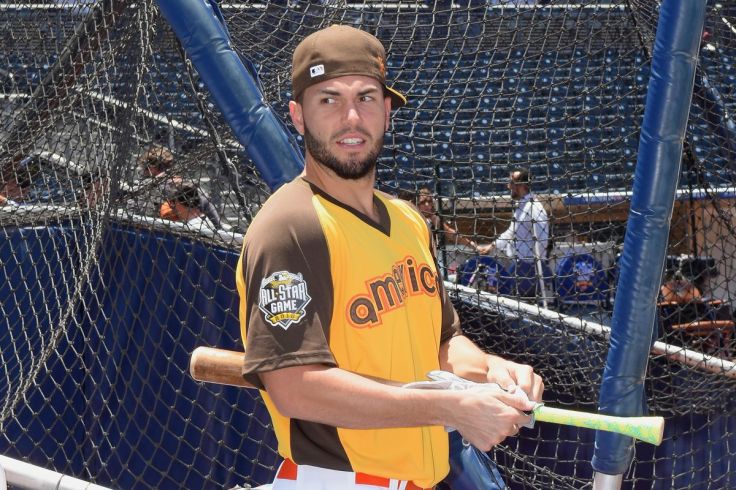
It took much longer than expected, but Eric Hosmer has finally found a home for the foreseeable future. Late Saturday, Hosmer agreed to an 8-year, $144 million deal with the San Diego Padres:
The contract, which includes a fifth-year opt-out, easily surpasses the four-year, $75 million deal for pitcher James Shields that previously set the standard for a Padres free agent.
So we can officially close the book on Hosmer as a Kansas City Royal and there is a number of ways to look at him leaving. I figured today we would look at as many angles to this whole situation.
Credit: USA Today Sports Images
First, let’s discuss what the Royals were able to offer Hosmer. We’ve all heard all the numbers floated out there and while I don’t know if we will ever find out the true number, we can at least take a good stab at it. I’m pretty sure the high-end year wise was seven years, as multiple sources around Kansas City appeared to agree on that number. But what about the dollars?
It was, at one point, believed to be in the neighborhood of $140 million — though club officials declined to divulge the final number. It was competitive, depending on your definition of the word, though Moore acknowledged that the Padres’ final package was better.
It does appear San Diego had the higher volume of dollars but Kansas City did make “certainly the highest offer we’ve ever made.” In fact it was so much money that it required a lot of flexibility from GM Dayton Moore:
Dayton Moore stressed that signing Hosmer would have required unloading more money. "I'm responsible for where we are economically as an organization, " he said. "I made a decision after the 2015 season, knowing full well that our players were going to become free agents."
While it appears the highest offer on the table at one point was 7 years and in the $140 million range, it definitely wasn’t the final offer that was given to Hosmer:
FanRag reporter Robert Murray, who works with Scott Boras-connected reporter Jon Heyman, writes today that the Royals’ final offer was for five years in the $100 million range. That is about the same amount of money the Padres offered in the first five years of their offer, but without the guarantee of the final three years of the deal should something happen to Hosmer.
So the Royals offer to Hosmer appeared to have gone down from earlier in the winter. What would cause that to happen?
Without Royals officials disclosing much — publicly or privately — the details of the Royals’ side of this are a little murky. But through a handful of conversations this week, and a working knowledge of how the organization has operated, here’s the best guess:
▪ Royals owner David Glass didn’t want to do it. This has all the markings of him going skittish at another big contract.
▪ The Padres pushed forward at the end of the negotiation while the Royals pulled back. The Padres won by offering an opt-out clause, which the Royals didn’t want to do because that wouldn’t guarantee Hosmer being around when they’re ready to win again.
▪ That may not have mattered, because while the Royals talked early of a six-year deal with an average annual value near $20 million, the final offer peeled back a little at (presumably) Glass’ direction. That last part is important.
Again, this is all based on varying levels of guesswork. The Padres’ offer is believed to be significantly better than the Royals’ — more years, more guaranteed money, more money upfront and an opt-out.
If you are able to connect the dots here, it appears that while Moore was always on the Hosmer bandwagon, owner David Glass was into moving on from him. In fact, Sam Mellinger of the Kansas City Star continues his guess as to what happened:
My guess: Glass is already uncomfortable with those deals for Gordon and Kennedy, which have turned out horribly. The Royals owe Gordon $44 million over the next two seasons and Kennedy $49 million over the next three.
Locking into another long-term deal worth $20 million or so per year was a tough sell for the owner, who knows the Royals are likely to lose a lot of games the next few seasons no matter what. He was looking for a way out.
One more time, because I want to be as clear as possible: This is based in part on conjecture.
So while Sam is just guessing, it’s a guess that has a decent amount of weight to it. At the end of the day, a contract of this magnitude could cripple the Kansas City organization for years and cause stress on their payroll, even with all the money in baseball and the Royals negotiating a new television deal in the near future. Obviously, Glass appeared to be skittish about making this much of a commitment to one lone player.
Credit: Mark Cunningham/MLB Photos via Getty Images
It also means that the old era of Royals baseball is now dead and a new one will soon be on the horizon:
It doesn't appear the Royals will be pursuing Mike Moustakas or any other costly free-agent, even with Hoz signing elsewhere. Dayton Moore said, “That period of time, that phase of who we are, is over. We need to move on.”
When we heard earlier in the winter that it was “Hos or Bust” for the Royals, Moore really wasn’t kidding. To be honest, it makes more sense for the team to rebuild at this juncture. In fact, I am on board for a complete rebuild. If Kansas City would have locked in Hosmer, that would add one more large salary to a payroll that already feels a bit bloated. Toss in the length of any deal for Hos and you start dealing with trying to find a spot in the lineup for when guys like Samir Duenez and Nick Pratto are ready for the big time. It’s already going to be a couple of years before we can start discussing the Royals as a legit contender again; if Hosmer had signed, Moore might not have had the flexibility available when it comes to payroll and it could have pushed the contending window back even further. In other words, I’m glad Hosmer chose San Diego and there was multiple reasons I breathed a sigh of relief to find out he was officially gone.
If we are being honest here, I have long been in the camp that Hosmer was overrated by not only the Kansas City organization, but the baseball media in general. I saw the reasons for the fawning: Hosmer has a pretty swing, is fluid around the bag at first, is well spoken and appears to be a born leader. Add in how clutch he has been in the playoffs (I would rattle off all the key moments, but there really are a bunch) and how he doesn’t seem to fear the big stage and you have the recipe for a star to build around. The problem is that if you watched him on a regular basis, you also saw the slumps. You remember, the slumps where his swing would look like a mess and he would be so cold that you would have to put his face on a milk carton? These weren’t just slumps but long periods of time where Hosmer would go missing for four to six weeks. Toss in a slightly above average 111 career wRC+, a paltry 9.9 career fWAR over seven seasons and a ground ball rate that hasn’t been below 50% since his rookie year (and even that was 49.7%) and you don’t have a player who would elicit a contract that would bump him into the higher echelon of major league contracts. Yes, his 2017 was a career high for him and I do believe he can be this player that everyone longs him to be. I just question whether or not it will actually happen. I’m very skeptical and that skepticism made it difficult for me to get on board for the team to commit 5-7 years to a player that doesn’t feel like a franchise cornerstone. At the end of the day, I am a numbers guy and the numbers don’t lie; Eric Hosmer isn’t worth the money or the length of the deal.
That being said, I’m happy for Hosmer. He got his money and he got a contract that was heavily front-loaded with an opt out after year five. Hosmer will be gearing up for his age 33 season after his fifth year in San Diego and at that point he could be able to bank even more dough. The truth is that baseball players have very short shelf lives and I will never blame one for trying to make enough money as humanly possible. It’s why I was happy when Lorenzo Cain got his deal from Milwaukee and why I will be happy when Mike Moustakas gets his. Would I love some of these guys to stay and play in Kansas City? Of course I would. I’m already dreading watching Cain in a different uniform this upcoming season. But I get how this business is and trust me when I saw that at the heart of things, this is a business. It’s why when an owner cries foul that they lost money the previous season I roll my eyes. All owners have money; it’s just a matter of what they are willing to spend and how big they want their bottom line. Also, there are times you should take comments with a grain of salt:
Ned Yost said he texted Hoz numerous times this off-season but never heard back from him: "I’m not sure whose orders that was." Ned then joked, "Even when I was on my death bed.”
I know some Royals fans got upset when they saw this comment from manager Ned Yost. The truth is we don’t know what actually happened and it even appears that Neddy was joking a bit here. Just realize that players don’t owe us anything; the loyalty we pledge as fans is to the name on the front, not the one on the back.
Credit: The Associated Press
So if you are a Royals fan, how should you take this signing? If you are a fan of Hosmer, be thankful he was in Kansas City for seven years. You will always have the memories. The triple in the wild card game. The clutch hits throughout the playoffs in 2014 and 2015. The ballsy slide in Game five of the 2015 World Series. Know that Hosmer won’t soon forget Kansas City:
“Every player’s goal is to ultimately win a world championship,” Hosmer said. “To be able do that in Kansas City was amazing. To have that taste and understand what it means to a city and how much joy and excitement it brings to the people out there, it’s an experience I can sit here and talk about all day. It’s something that drives you as a player — to try to bring back as many as you can.
He also hasn’t forgotten his former teammates:
“I told Glenn it would mean a lot to me if I could wear No. 30 and continue Yordano’s legacy,” Hosmer said. “Not only Yordano, but all those guys in Kansas City. We all shared good moments with him and obviously shared a really tough moment in his passing. It really meant a lot to me. Hoff was more than open to let me carry on that number. I told him I’ll wear it with pride each and every day.”
So while it will be sad for some to not see #35 on Opening Day at Kauffman Stadium, it’s also wise to remember that nothing lasts forever. The Royals have to move on and we need to do the same. For all you know the next player who will be your new favorite could be in Kansas City sooner rather than later. You will always have those memories of Hosmer and no one can take that away. But it’s time to make new memories with some new faces. So cheer the new Royals we will meet this year and even cheer Hosmer from afar. But don’t judge him for leaving. Don’t be a Cardinals fan; understand that we are better than that. Kansas City needs to just be thankful. So even while I am not his biggest fan, I say thank you, Eric. Thank you and the best of luck. Now…who wants to tell Hosmer what San Diego means in German?





















 Bleeding Royal Blue