Even in the middle of a calamity there appears a glint of hope. For the Kansas City Royals 2018 season, that glint would be the performance of Jorge Soler and more to the point, his ability to draw walks. The problem is, the Royals as a whole just aren’t big fans of a patient eye.
I’m not spilling any major secrets when I say that Kansas City has not been a team to embrace the ability to work a count and take a free base. For years this team has almost looked at patience at the plate with a “well, I guess if we have to” type mentality. The Royals championships teams of the last few years were built on making contact with an emphasis on putting the ball in play.
Credit: Getty Images
Over the course of the Royals 50 year history, they have had only six instances of players with 100+ walk seasons, with John Mayberry’s 122 walks back in 1973 being the ultimate peak. In fact, the numbers don’t get much better when discussing walks and the Royals. 2013 was the last time the team wasn’t last in the league in walks and 2010 was the last time they were able to breach the top ten in the American League.
In fact the highest walk total for a Royals player in the last decade was Billy Butler’s 79 back in 2013, which garnered an 11.8% walk rate. The highest walk rate in club history was Mayberry’s 19.1%, which he compiled back in the before-mentioned 1973 campaign. This leads us to what Soler is doing and why it is so special.
Credit: Getty Images
So far Soler has 18 walks in his 24 games, putting him 6th in the American league for his total and 11th in actual walk rate. His rate currently sits at 18.2%, which if he was able to maintain it would give him the second highest walk rate among qualified batters in Royals history, just a smidgen above Darrel Porter’s 17.8% back in 1979.
So what Soler is doing so far is something that Royals’ fans haven’t seen in many moons but is something we should see more often, if I’m being frank. I’ve long been a proponent of the ability to produce a walk and tend to believe there is a direct correlation for teams that take more walks to produce more success.
Credit: Steve Mitchell
Looking back over the last five years, every year the team that led the league in bases on balls also made an appearance in the playoffs. 2012 was the last year that the team who led all of baseball in walk rate (the Tampa Bay Rays) didn’t make it to the postseason. Before that it was 2006, when the Red Sox led all of baseball but fell short to the Yankees. In most years, the teams that rank near the top of the leader-board in walks are the ones who continue to play into October.
My belief has always been that the value of drawing a walk goes beyond just getting another runner on base. If a batter is taking a number of pitches, that should be driving up the pitcher’s pitch count. The higher that pitch count gets, the earlier a team has to dip into their bullpen. The earlier you get into a team’s bullpen, the more taxed they become. Being a patient hitting team has a very immediate trickle-down effect.
Credit: AP Photo/Paul Sancya
There is also the whole “extra base-runner” thing which is always a positive. Just go back and look at the first inning of the Royals game on Monday. Whit Merrifield gets a hit, followed by a Soler walk and Mike Moustakas getting hit by a pitch to load the bases. Walks by Salvador Perez and Lucas Duda would follow and by the time the inning was done the Royals had put a three spot on the board.
Now if Kansas City was better at hitting with runners in scoring position that score would have been higher, but that isn’t the point here. The point is that the walks doled out led to extra base-runners which led to more scoring opportunities. More opportunities tend to led to more runs, which is the whole name of the game.
I also believe if the Royals were a bit more patient they might not be such a streaky offensive team. Remember last year’s scoreless streak? That might have been avoided (or at least halted a lot sooner) if the team took more walks. Patience is normally less streaky than hitting and if they had taken more walks the Royals might have been able to muster up a couple of more rallies and been able to squeak out a few more “W’s” during some close games.
Credit: Joe Camporeale-USA TODAY Sports
I’m not saying that if this team walked more that their success would turn around or that what Soler is doing should be done by every player. I highly doubt we will ever see Alcides Escobar or Salvador Perez rack up walk totals like Joey Votto. But a heavier emphasis on patience, especially starting at the minor league level, could go a long way.
So maybe some of Soler’s teammates should take a cue from him and force the opposing pitchers to throw them strikes. It’s not a glamorous part of the game or even one that will gain you admiration from some in the fan base. But a few more walks could lead to a few more runs and at this point, the Royals need to cross the plate more often if they want to win more games this season.
With the Royals just a few days away from kicking off this 2018 campaign, I thought it would be good to throw out some predictions. But not the normal sort of predictions. No, I traveled down a different road.
So here are your 2018 Royals fake predictions. I’ve done these in the past and they were wildly popular. These are all jokes, so please don’t take any of this too seriously. They are just meant as amusement as we get ready to kick off the new season. So without further ado, here are your ‘Fake Royals Predictions’!
Credit:Associated Press
After a near-death experience in the offseason, manager Ned Yost has grown a greater appreciation for the men and women of the media that he interacts with on a regular basis. Rather than snarky sound bites and short, abrupt answers, Ned gives the media answers with heartfelt, thought provoking feeling and life affirming positivity. Then they have a group hug when the session is over.
On Opening Day, Lucas Duda will make his official Royals debut…and will be awarded a 2015 World Championship ring.
With Lorenzo Cain off to Milwaukee, Salvador Perez is in need of a new best friend that he can harass and shoot instagram videos of. Luckily, that honor has been bestowed onto Jon Jay. Unbeknownst to Jay, he agreed to it when he signed his contract, as it was slipped in there thanks to some sneaky maneuvering by Salvy.
Alex Gordon’s offensive struggles continue as the season begins, forcing him to try everything in the book to get out of this two-year funk. Gordon even resorts to eating junk food, which actually does improve his production…at first.
After appearing in all 162 games for three of the last four seasons, Alcides Escobar goes to Ned Yost 25 games into the season and asks for a day off because he is tired. Escobar falls asleep and awakens the last week of September, missing almost the entire season.
After giving up a dozen home runs, Ian Kennedy finally decides to become a different pitcher, one who focuses on ground balls. He then goes from giving up long bombs to inside the park home runs, still leading the league in home runs allowed.
Credit: John Sleezer/KC Star
A number of Royals fans attempt to play ‘Rex Bingo’ (a game my family created last year) during a lazy May afternoon game but everyone hits bingo by the second inning. All the mentions of ‘hands’ and ‘sneaking cheese by a hungry rat’ seems to have caused their boards to fill up super fast.
Jason Hammel asks to be moved to the bullpen and puts up good numbers through the first half. Come to find out after the All-Star break that Hammel and Luke Hochevar had a ‘Parent Trap’ moment and it was Luke all along these last two seasons.
In Whit Merrifield’s never-ending quest to ‘beef up’, he increases his protein intake and starts adding even more muscle mass to his frame. Whit sees a spike in his home runs yet again, but on the diamond he becomes a defensive liability. Think Daniel Murphy crossed with Alberto Callaspo at second base.
Steve Physioc realizes that the notes he is given before each game are to be used to help him during the broadcast. Not only does he start sounding like a competent announcer, he also receives less glares from Denny Matthews.
Danny Duffy stays healthy.
The Royals swap out one debonair first base coach for another, as Mitch Maier takes over for Rusty Kuntz. While many will miss Rusty, it doesn’t take long for the fans to warm up to the former Royals outfielder. A petition is started and Maier will get his own bobblehead night in 2019.
While trying to forget a rough 2017, Kelvin Herrera decides to add an eephus pitch to his repertoire. Herrera finds success again, but it kills the Royals time of game. The pace of play Gods are angered.
Richard Lovelady tires of all the talk of his name and little discussion on his actual statistics. This leads him to change his name to something very bland and vanilla. You can now legally call him ‘Tim Collins’.
As the Royals attempt to stay as ‘pure’ as humanly possible, they start attending workshops over the summer discussing the ill effects of watching cartoon animals who don’t wear pants.
Mike Moustakas was only able to land a $6.5 million deal this winter to return to Kansas City. The cut in pay has made it harder on Moose, as he no longer can afford his Stouffer Fit Kitchen Meals.
Brian Flynn will not fall through a barn…at least not for the first month of the season. All bets off after that.
Jorge Soler will hit the ball so hard this year that he will actually knock the cover off the ball. Also, Soler will swing and miss so hard that he will knock the cover off the ball.
and finally, the Royals will replace hitting coach Terry Bradshaw in May as the offense struggles. He will be replaced with former Pittsburgh Steelers quarterback Terry Bradshaw. Somehow, the offense will become the best in the league.
Credit: John Sleezer/KC Star
So there you go, my 2018 fake Royals predictions. Hopefully you took them as they meant to be, which is all in jest. I will seriously crack up laughing if even one of these come true. I’m sure there is one or two I missed. So what fake predictions do you have for the upcoming season? What would amuse you if it happened to the Royals in 2018?
With Opening Day just a hop, skip and a jump away, it is a great time to look back on the 2017 Kansas City Royals squad and see how this season might develop differently. There was some good, bad and ugly with last year’s Royals and very rarely in baseball do things shake out the way they did the previous season. With that said, here are some items of note to keep an eye on as you get ready to make the Royals a part of your daily schedule.
Bouncing Back
One of the key elements of the 2017 team was the number of down years that appeared to fill up the roster. Alex Gordon, Ian Kennedy, Jorge Soler, Jason Hammel and Kelvin Herrera are just a few names that under-performed last year and are looking to “bounce back” this year and perform closer to the norm.
Most would take a league average hitting season from Gordon while Soler needs to just be the run producer the Royals thought they were acquiring when they traded Wade Davis to the Cubs. Kennedy would do well to keep the ball in the park a bit more (I would love to say keep the ball on the ground, but we just know that won’t happen) while also staying healthy.
Hammel’s ratio of baserunners allowed last year far exceeded the innings he was compiling, as he tossed 180 innings, giving up 209 hits and 48 walks. Limiting runners on base would go a long way toward improvement on his 2017 numbers that were less than desirable.
Herrera would do good to re-discover his curveball and use his cutter a bit less this year. It would also help him to throw more first pitch strikes, as that number took a dip this past year (60.6%, down from 64.7% in 2016). It felt like he was always pitching from behind in 2017 and throwing that first pitch strike could alleviate some of the other issues he dealt with last season, like walks and home runs.
Now the likelihood that all of these players produce like they have in the past is probably slim and none. But if the Royals can get a couple to improve or even put together solid seasons, it could go a long way toward helping some of the lackluster play we are sure to see at points this season.
Credit: Jennifer Stewart/Getty Images
Merrifield’s Regression?
I don’t know if anyone would have predicted the season that Whit Merrifield had in 2017, maybe not even Whit himself. Merrifield, like many players around the league, started putting the ball in the air more and was rewarded with a 19 home run, 78 RBI season to go along with a .172 ISO and a .332 wOBA.
Now the bigger question remains…can he repeat it? I have my doubts, especially since teams will focus more on him this season than they did last year. The key might just be whether or not he is able to keep the ball in the air. Last year his fly ball rate held at 40.5% (it sat at 29.8% during his stint in KC back in 2016) and throughout his minor league career he was able to hit fly balls in the upper 30’s/lower 40 % range.
Luckily, Whit has already gotten farther than many expected in the first place so it feels weird to doubt him now. It is going to be interesting to see how he adjusts to any changes he sees this year from opposing pitchers. This will go a long way to figuring out whether or not he is able to repeat a stellar 2017.
Credit: MLB.com
A Healthy Rotation
The Royals rotation last year felt like a revolving door for a good chunk of the season. Danny Duffy procured two stints on the disabled list, Ian Kennedy spent a portion of the year hurt and Nate Karns didn’t pitch in a game after May 19th. Add in the struggle of keeping a consistent pitcher in the 5th spot in the rotation and you can understand why the team continues to go after guys like Clay Buchholz and Ricky Nolasco to add depth.
While no one is really expecting this team to contend, how they perform will depend a lot on the health of the rotation. If Duffy, Kennedy and Karns are able to stay healthy this year, that would allow guys like Trevor Oaks and Andres Machado to continue to mature down in the minor leagues.
Last year the Royals were forced to use Onelki Garcia, Luke Farrell and even Travis Wood for five starts when all three should have never started a game. A healthy rotation would put less stress on the bullpen while also giving the team a strength that was evident in the early parts of 2017. For the Royals to not be basement dwellers this season, they need their starters to post more time on the mound than in the trainer’s room.
Credit: John Sleezer/KC Star
The Kids Are Alright
While the Royals front office has moved away from a complete rebuild, the template for this Kansas City team is still one of beginning the process of evaluating what some of their prospects are capable of at the major league level. In that regard, this season could very well shine a light onto who stays in the organization and who might not be a part of the Royals future.
Whether it is a Richard Lovelady or Kyle Zimmer in the bullpen, a Bubba Starling in the outfield, or a Hunter Dozier or Adalberto Mondesi in the infield, by the end of the season there should be a nice influx of younger talent on the roster. The interesting aspect of this whole process (yeah, I just said it) is not always what the numbers will tell us about their performance. Even if they face some adversity, the best thing for them and the future of this organization is allowing them to go out everyday and try to improve.
Dayton Moore has mentioned numerous times that a big part of the Royals championship team weren’t the players who were highly touted prospects, but the ones who flew under the radar and turned out to be big contributors to Kansas City’s playoff runs. The only way to find out what they have is to let them play. While the veterans will steer the ship to begin the year, it could be the youth movement manning the deck by the time September rolls around.
The Coaching Carousel
Finally, quite possibly the biggest change on this Royals team this year will be the addition of new coaches to help manager Ned Yost throughout the season. Terry Bradshaw, Cal Eldred and Vance Wilson were added to the coaching staff at the end of last season while Mitch Maier will continue his role as the first base coach that he assumed late in the 2017 campaign.
While on the surface the coaches might not be an exciting part of the “New” Royals, it very well could end up being a window into what we should expect from the team past this upcoming year. There is a good chance Ned Yost will retire after 2018 and the changes this coaching staff make this year could give us an idea of what the focus will be on for 2019 and beyond.
During the team’s infamous playoff runs in 2014 and 2015, it was well-known that the Royals were a team who focused on putting the ball in play while forcing the opposing defense to make the plays. The team was also known for their defense and while they didn’t shift as much as some other teams (I’m looking at you, Houston and Tampa Bay), there was a certain pattern to what they were trying to accomplish.
Will Bradshaw change the hitting approach? Does Eldred have some tricks up his sleeve that oppose what former pitching coach Dave Eiland would have done? Will Dale Sveum moving from hitting coach to bench coach effect any tactical decisions?
These are all questions that will be interesting to follow and see if there are noticeable differences from the previous coaching staffs. Baseball is a constantly evolving sport that has modified itself on a consistent basis. There is a high probability that the new Royals coaches could zig where the old regime would have zagged. To me, this will be one of the more intriguing plot lines to follow during this 2018 campaign.
Credit: Associated Press
While I’m sure I missed a few, these are the most obvious areas to keep an eye on for this upcoming season. Some will be good, some will be bad while others will just stay the same. The one constant will be the questions that will be added as the season progresses. The most important part will be how everything shapes up starting on March 29th. Change will be inevitable.
You don’t think about it during the run. It escapes your mind every October. There is no thought of it during the parades, the raising of the flags or the passing out of rings. It’s after the gold and glory start to fade that you actually begin to think about rebuilding.
The Kansas City Royals have been running with their hair on fire for the past four years and while it sits in the back of our minds, you don’t really begin to think about how to start over until it smacks you in the face. The Royals have dealt with the probability of their next chapter since November, when Eric Hosmer, Lorenzo Cain, Mike Moustakas and Alcides Escobar filed for free agency. They were the last major pieces of the 2015 World Champions to leave the nest and move on from one of the greatest eras in Royals history. Or at least two of them did.
So with Opening Day just a few days away and the Royals looking ahead to their future, it feels like the right time to break down what you should really expect from the ‘Boys in Blue’ as they embark on a new journey. There are some new faces, some old faces and more than anything, a different outlook.
Credit: Scripps Media, Inc.
Let’s begin with what I think will be a positive this season for the Royals and that is the starting rotation. While on the surface this is an underwhelming group of arms, there is potential here that could be reached if circumstances go the right way. Danny Duffy returns to lead the charge, as he looks to bounce back from a season he would overall like to forget. There were the injuries…and then there was the DUI. By the end of the year it just felt like a wash for Duffman, despite the fact he still managed to lead the pitching staff in WAR over the 146 innings he threw. Duffy left his start on Saturday but right now that looks like a precaution more than anything. If the Royals even hope to sniff a winning season, they need Duffy to be healthy and produce the way he did back in 2016.
Duffy will be followed in the rotation by Ian Kennedy and Jason Hammel. Both are coming off disappointing campaigns last year and are looking to bounce back. The honest truth is that neither should be this high up in a rotation, but the one thing they do is eat innings. If Kennedy can give up a few less home runs (and stay healthy) and if Hammel can lessen the amount of base runners allowed, the Royals really only need them to be the reliable veterans they have been over the years. It would be even better if Kennedy can come close to approaching his 2016 season and help people forget that he still has three years left on his contract.
Credit: Frank Jansky/Icon Sportswire
The real potential for the rotation is at the back-end, where Jake Junis and Nate Karns will occupy the final two slots. Junis only posted a 0.9 WAR season in 2017, but it was almost a tale of two seasons for him. In the first half, Junis appeared in eight games (six starts), posting a 5.66 ERA, 1.629 WHIP and a strike out to walk ratio of 1.75. The second half was a different story, as in his 12 appearances he produced a 3.55 ERA, 1.089 WHIP and a strike out to walk ratio of 5.78. Down the stretch, Junis was the Royals most reliable starter and if the team had been able to eek out a playoff appearance, he would have been in the rotation. I’m not a big believer in spring training stats, but Junis did strike out 20 batters in 14 innings while walking only one. His slider has become a very effective out pitch and I wouldn’t be shocked to see him take another big step in 2018.
Karns is one of those pitchers that has always had a stockpile of potential but has always found a way to get hurt. It was not different for him in 2017, as Karns only started eight games before being shelved and having to undergo thoracic outlet syndrome surgery. In fact, over his last four starts he was stellar, posting a 2.01 ERA over 22 innings, striking out 32 while walking only four batters. I discussed Karns a bit more in-depth a few months back and his use of the knuckle-curve has proven to be a game changer for him. If he can stay healthy and on the field, he can be a breath of fresh air for this Royals pitching staff.
So what if any of the starters go down with an injury? The good news is the amount of decent depth built up within the organization this winter makes an injury not feel like a deal-breaker. Jesse Hahn will start the year on the disabled list but he could be an option if he is able to return in the near future (the earliest he will be back is early May). They also have a couple of righties in Andres Machado and Scott Barlow down in the minors and lefty Eric Skoglund could be an option as well, as he would look to improve on his seven appearances in 2017. Clay Buchholz was signed last week and could be an interesting arm to watch as he works to get back to the big leagues. The one name to keep an eye on is Trevor Oaks, who was acquired from the Dodgers this winter and could be a key piece of the rotation by September. Oaks is a sinkerball pitcher who spent most of last year in AAA and is right on the cusp of getting an opportunity in the majors. Oaks won’t miss a lot of bats, but he will keep the ball on the ground and won’t walk many either, as he has only walked 72 batters in 404 minor league innings throughout his career. If a starter goes down, there is a good chance Oaks will get the call.
Credit: Jennifer Stewart/Getty Images
While the rotation could be a major plus for the Royals, the offense has at least a chance to be interesting. The mainstays are still here, as Salvador Perez and Mike Moustakas return and will probably produce about on par with what they have done in the past. I do think Moustakas could be a better overall hitter in 2018, as he could have a chip on his shoulder from how his time on the free agent market went this winter. A Moose with an agenda could be a frightening proposition for American League pitchers.
Whit Merrifield will look to improve on his breakout 2017, but the cynic in me thinks he could be in store for a small fall from grace. No one was expecting Whit to hit for power the way he did last year (19 home runs, .460 slugging percentage, .172 ISO) and while I don’t predict a big drop-off for him offensively, there could be a slight adjustment when it comes to the way pitchers approach him this year. The hope is that Whit will be able to adjust as well and negate some of the changes that are sure to pop up.
It should be interesting to see how some of the new bats perform as both Jon Jay and Lucas Duda begin their first season in Kansas City. Jay will probably hit near the top of the order and is a good on-base threat while Duda put together a solid 2017 and is looking to grow on that. While I don’t expect either to duplicate what their predecessors did last year, they are a vital part of the lineup and there is a greater chance they end up being pluses rather than negatives.
Maybe the most intriguing bat in camp this spring is outfielder Jorge Soler. Soler struggled in his first season in Kansas City and is looking to bounce back and live up to some of the potential that he has been tagged with since the Cubs signed him back in 2012. Soler spent the winter working on his swing and management has really been impressed with what they have seen from him in Arizona:
Dayton says Jorge Soler was the best player on the field last Sunday vs. Cubs.
"There are holes (in his swing) that he has to learn to cover. That occurs with experience. … He’s fitting in much better. We’ve seen more fire, more intensity and a greater sense of urgency in him.”
The interesting part of Soler isn’t as much what he is capable of as much as the ridiculous expectations that have been put on him. I talked this winter about what the Royals really need from Soler and it’s very simple: a solid, run producing bat for the middle of the order with league average defense in right field. I think Soler might be a welcome surprise this year and possibly even reach some of those lofty expectations as he enters his age 26 season.
The rest of the lineup is probably questionable at best. Alcides Escobar returns to play shortstop and we all know what we should really expect from Esky offensively at this point. Alex Gordon is looking to prove that the rumors of his demise are overstated, as he has been working on his approach this spring. My belief is that if Gordon works on hitting the ball to the opposite field while focusing more on getting on base than hitting for power, we might just see an improvement in his overall numbers.
The designated hitter spot will be interesting to watch this year, as the Royals won’t be going with just one batter there on a daily basis. Kansas City will attempt to try a floating DH this year, with guys like Cheslor Cuthbert, Soler and Jorge Bonifacio (when he returns from his suspension) probably seeing the majority of at bats there. This will give them flexibility and allow them to try different scenarios throughout the season.
In fact, the lineup we see on Opening Day will more than likely not be the same come September. I fully expect a few bats traded at the deadline, with Moose, Duda and Jay near the top of the list. By September we could be looking at a very young lineup and that could also mean a lot of evaluating by the Royals coaching staff. If these deals go down, they will want to see what they have for 2019 and will give guys like Hunter Dozier and Ryan O’Hearn as many at bats as necessary. While this might not be the best for this year, it will help the team in the future.
Credit: MLB.com
So what does this mean for the Royals offense in 2018? Probably that it will be an inconsistent bunch. There is a decent amount of firepower right now, with Salvy, Moose, Duda and Soler leading the charge. But there are some possible black holes as well like Gordon and Escobar. Also remember, this is a bunch who don’t like to walk much (they were dead last in walks in all of baseball last year) and teams that don’t take as many bases on balls tend to go through wilder peaks and valleys. Add in the younger bats later in the season and this could be a team who offensively really struggles at times. While they weren’t dead last in the American League last year in wRC+ and offensive WAR, they were near the bottom and haven’t done much to improve the lineup.
Credit: MLB.com
This leads to another problem spot, which could be the bullpen. The Royals bullpen outperformed expectations in 2017 (they were ranked by Fangraphs #28 before the season and ended up in the middle of the pack) but that was also helped by the great seasons that Scott Alexander and Mike Minor had. Both are now gone and what is left are a number of relievers that struggled last year, which is why Fangraphs has now ranked them 30th overall, which is dead last in all of baseball.
The good news is that both Kelvin Herrera and Brandon Maurer should be able to perform better than their numbers last year showed. I would also expect new signee Justin Grimm to perform closer to his 2016 season than 2017. But once you get past those three veterans you end up with more questions than answers.
Credit: Adam Glanzman/Getty Images
There are a few veteran arms joining the fray this year, like Blaine Boyer and Wily Peralta. There are also young arms like Brad Keller, Tim Hill, Brian Flynn and Eric Skoglund that will get an opportunity to show what they can do. In fact, I would expect the bullpen to be in constant flux this season, or at least until the team starts figuring out who to keep and who to scrap. Kevin McCarthy, Mike Broadway, Kyle Zimmer, Miguel Almonte, Scott Barlow, Richard Lovelady, Eric Stout, Josh Staumont and even Andres Machado could all see time out in the pen this year and the road between Omaha and Kansas City could get pretty worn out.
But the good news from this is a number of those arms are going to stick. Almonte looked this spring like he had finally turned a corner and his electric stuff could play well out of the pen. Lovelady has turned into a highly touted prospect in just a short amount of time and once he is up he will probably stick. Zimmer has always had the stuff but his health has always held him back. While the idea for some of letting this group work out their struggles in big league games sounds harrowing, it is what needs to happen if the Royals are hoping to be contenders again come 2021 or beyond.
So while it is tough to hear, the bullpen is going to struggle. But the pen you see in April probably won’t be the one you see in July. In fact, by then we could be talking about a completely different story when it comes to the Royals relievers. This will be something to keep an eye on for the next few months, as their will be development with a number of Kansas City arms.
Credit: The Associated Press
The other aspect of this team that will be tough to swallow for some is the defense. Gone is Lorenzo Cain’s ability to cover everything in the outfield. Whether you believe the defensive metrics or not, losing Eric Hosmer at first base will be noticeable. Not only are those two gone, but the elite defenders still in Kansas City are a year older and some of the replacements are league average at best. The Royals teams of 2014-2015 prided themselves on their excellent defense and was a big part of why they had the success they did. Unfortunately, those expectations should be thwarted, as this team defensively will more than likely be a shell of their former selves.
So while the bullpen and defense are no longer the Royals strong points, one aspect of this team that will be fun to follow is the coaching staff. I actually discussed this last week over at Royals Review, but I am really intrigued to see how some of the new coaches are going to shape this team. Cal Eldred, Terry Bradshaw and Vance Wilson have joined the staff and with this will probably come a new way of viewing the pitching and the hitting. In fact, with the likelihood of Ned Yost retiring after this year, we could get a window into the philosophies we could be seeing for years to come. After years of the same coaches scouting and preparing these players, the new bunch will shape a whole new generation of Royals and I for one am excited to see what could come of that.
Credit: John Sleezer/KC Star
So after all that, what does this mean for the 2018 Kansas City Royals? It means that while there will be some highs this year, there will be a few more lows as the team looks to begin their rebuild. For me, I am always interested in seeing what the young talent can do to outperform the expectations that have been thrown onto them and this group has a lot of players in that category. So while it will probably be a bumpy ride, it will at least be one where we learn more about what the Royals have within their farm system.
Overall I am expecting a 74-88 record, placing them in 4th in the American League Central. I wouldn’t be shocked at a few wins or a few losses going either way, but overall this team will fall a bit short of .500 while feasting on some of the lesser teams within the league. The good news is that most of the veterans under contract this year are only signed for one year, so if they aren’t dealt at the trade deadline they probably won’t be back in 2019. This will free up roster spots for any of the prospects who might elevate their game throughout the upcoming season.
Sure, this isn’t going to be the fun ride we got from September 2014 to November of 2015. But it also shouldn’t be as bumpy as most of the early 2000’s were. While most of the remnants of the glory days are gone, they will never be able to take away those memories that us Royals fans have. It’s time now to regroup, rebuild and motivate. It’s time to begin a new chapter to the next era of Royals baseball. That era begins this week, making it closer every day to another classic Kansas City moment…and it all begins this year. Win or lose, we all bleed Royal blue.
Now that the dust has finally settled and Eric Hosmer has landed in San Diego, it only seems fair to ask where the Royals go from here. There are so many questions to ask, especially as the team appears to be getting ready for a rebuild. But what three questions are the most urgent? I went ahead and earmarked these three as being the most pressing for Kansas City moving forward.
Should the Royals re-sign Mike Moustakas?
I’ve long been a proponent of bringing Moose back to Kansas City, but with the developments of the last month weighing heavy on my mind, my opinion has shifted just a bit. I still believe that re-signing Moustakas isn’t an awful idea, especially if it would be on a two or three-year deal. But with the market for him all but dead at the moment, the Royals definitely shouldn’t roll out an armored bank truck for him.
That being said, the idea of a complete rebuild sounds more and more enticing by the day. This Royals team can lose 85-100 games with or without Moustakas, plus it would keep the payroll at bay. It could also give the organization a chance to see what Cheslor Cuthbert and/or Hunter Dozier can do while both could also see playing time across the diamond at first base. Honestly, I’m okay with either scenario playing out as there are positives and negatives for both. But if the Royals really buy into a rebuild, letting Moustakas go would make the most logical sense.
Who plays first base in Kansas City this year?
This could be the most interesting question of the three while also being the one that is answered last. It does appear there are no frontrunners in the bunch, although Dozier and Cuthbert will get first crack at both corner positions. In fact, the Royals actually have a number of options floating out there, which I took a look at a few months back.
To be honest, my opinion hasn’t changed much since December. I like the idea of Dozier or Ryan O’Hearn (or both) getting a shot and seeing what they could do. Out of the free agents on the market, signing someone like Adam Lind to platoon with Dozier also appeals to me. The interesting aspect about this is that the Royals aren’t tied down to one player who gets all the playing time. This gives the coaching staff a chance to evaluate some of the younger talent while also seeing what is a good fit for both the lineup and on defense. While the answer isn’t an obvious one, that also breeds opportunity which isn’t a bad thing for a club that is rebuilding.
Should the Royals overhaul the roster even more and look to trade veterans?
On the surface it appears that Kansas City is going to rebuild one way or the other now that most of the major cogs are out of the picture. But should the team do a complete rebuild? At this point, it honestly makes more sense to go this route. Merrifield would seem to be an obvious choice to be dealt, as his value might never be higher than it is right now. The team already has a player who could take over at second base (Raul Mondesi) while hopefully acquiring one or two players who could be under team control for multiple seasons.
Duffy was bandied about in trade talks earlier this winter and one would think the Royals could get a hefty haul in any trade that Duffy was involved in. While the Royals don’t have any in-house replacements that could fill the top of the rotation, more than likely Dayton Moore would ask for such a piece in any deal that Duffy is in. While the idea of Duffy also leaving is grim, it isn’t guaranteed he would still be with the team the next time they are contending.
It would also make sense to see what they can get for the likes of Kelvin Herrera and Jason Hammel. Both are veterans that will be eligible for free agency at the end of the year and could bolster a number of teams’ pitching staffs. The idea at this point might be to wait until the trade deadline and then see what they can get for either pitcher. While neither player will probably net Kansas City a top-tier player/prospect, Moore should be able to get something for them to help now and possibly even in a packaged deal.
What about Alex Gordon and Ian Kennedy? While I’m sure most would like to see their contracts off the Kansas City books, the team would probably struggle finding anyone to take them on, or at least without the Royals paying a sizeable chunk of their salary. Gordon and Kennedy might not be quite untradeable, but they are about as close as any player on the Royals roster. In other words, Kansas City has to hope they turn things around and be productive in 2018.
The one player that would probably be off-limits would be Salvador Perez. While this might be the right time to trade him off before he starts regressing, the likelihood of that is slim and none. At this point Salvy is the “Face of the Franchise” and with Hosmer, Cain, etc. gone, dealing Perez would kill off a large chunk of the fanbase. It’s going to be a hard adjustment already for a number of fans this upcoming season; it would take years to build trust back up if they dealt off Salvy.
Credit: Kansas City Royals
While there are more questions that will need to be answered in the future, these three feel like the most important moving forward. It’s going to be a hard adjustment for some to view the Royals in rebuilding mode, especially those that don’t remember the team before 2014. I always look for the positive and with this club it appears to be options. The Royals can build their roster pretty much as they please moving forward without a ton of restrictions. Think of it like a clump of clay that you can design however you want; just remember that how that design looks this year could look completely different in two years.
When the news broke last week that the Royals were looking to bring Alcides Escobar back into the fold, a lot of questions were needing to be asked. Most asked why, a few asked what we had done to anger Dayton Moore but one question hovered over the rest: Where does this leave Raul Mondesi?
The belief all winter was that Mondesi would take over at shortstop and (for the most part) would be allowed to sink or swim. Now that idea has been turned on its head by not only the Escobar news but also a piece that ran on Fangraphs last week that didn’t paint a fuzzy picture of the relationship between the organization and Mondesi. In fact, it felt like a damning piece for the former prospect’s future:
The term “makeup” might have different meanings from scout to scout. In Mondesi’s case, evaluators are concerned about his defensive consistency, especially as it pertains to throwing accuracy, and have seen him fail to execute routine plays. Others were not thrilled with what they saw from Mondesi as he worked back into playing shape following his PED suspension in Arizona, citing poor effort and on-field focus which they particularly disliked in an environment laden with young, impressionable teenagers.
With Nicky Lopez coming up fast through the Kansas City system, it feels like Mondesi isn’t the “Chosen One” anymore and that the Royals have moved on to a prettier girl, so to speak. But…that can all change in an instant based on how he performs this spring or at the beginning of the minor league season. It’s forgotten sometimes because of how long we have heard about him, but Mondesi will only be entering his age 22 season in 2018, so it’s not like he is a washed up prospect trying to make it work in his late 20’s.
Credit: Peter G. Aiken-USA TODAY Sports
So I’m going to play devil’s advocate. Let’s throw out a couple of situations and find a spot in the lineup for Raul. This activity is a best case scenario and more than likely the reality will be somewhere in between this and struggling in the minors. The good news is that Mondesi has some versatility and a few options besides shortstop.
Scenario #1: Mondesi has a great spring offensively and forces the Royals to move him back to second base.
Sound crazy? It wouldn’t be completely out of the realm of possibility, considering he had a good spring last year, even if the numbers weren’t telling the entire truth.
So they could start the year with Mondesi at second base, moving Whit Merrifield to the outfield. Whit played center field a little bit in the minors and has seen a bit more time in left field, which could slide Alex Gordon over to center. While Merrifield has experience at the position and played there quite a bit in college, this scenario doesn’t feel like a long-term solution.
Gordon playing there could be a bit more interesting, but you would have to question how he would hold up manning the position for a full season. One could make the argument of Whit going back to being a super-utility player, although I doubt the Royals would allow that to happen after the season he pulled off in 2017. The best case scenario for playing Mondesi at second base would be a trade of Merrifield, which doesn’t look likely at the moment.
Credit: Dan Hamilton-USA TODAY Sports
Scenario #2: Mondesi has a great spring and wins the center field job.
Alright, I think this is actually possible, despite the fact it sounds crazy to me. Mondesi has always been lauded for his glove and it feels weird that the Royals would move a guy that is that good defensively in the middle of the infield and plop him down in the outfield, where he has never played professionally. Obviously the organization has been thinking of doing this for a while, as it was first brought up in July:
“He’s such a good athlete. We’ve even talked about his ability to play the outfield – centerfield specifically – not that we’re necessarily moving on that right now.”
Let’s be honest here: the Royals right now don’t have a great center field option. There is Paulo Orlando, Billy Burns and…maybe Bubba Starling. That’s really it. This is what the Royals have to deal with unless they go out and sign a free agent this spring. So the idea of Mondesi playing center isn’t the worst idea ever; if he hits well, adapts to the outfield and shows some patience at the plate, he could be a possibility. Chalk this up as a long-shot, but one that might just pan out.
Scenario #3: Mondesi starts the year in AAA and gets off to a hot start. The Royals struggle offensively and decide to recall him and see if he can inject some life into the lineup.
We’ve all seen the Royals’ bats go cold early in the season. In fact, we just saw it last year. Mondesi actually had a good offensive season for AAA in 2017 and has shown a pattern of improving at different levels in the minors after his second go around at that level. He hit .305/.340/.539 in 357 plate appearances last year in Omaha and we continue to see his power numbers improve the older he gets. I’m not saying he has figured out AAA pitching, but it does appear that he is learning and his production could be on the upswing.
The main issue I see with this scenario is the same one we saw in scenario #1: who gets bumped out of the lineup? We can probably assume that Escobar will be trotted out there every day, so scratch him off the list. Whit is a possibility, but only if he is in the middle of a big cold spell. Center field still looks like the best spot, unless Whit shuffled around the diamond.
Credit: Peter G. Aiken-USA TODAY Sports
Scenario #4: Mondesi is the starting shortstop.
The likelihood of this happening is probably slim and none. But it does make you wonder just what it would take for the Royals to break camp with Mondesi in the starting role. Outside of an injury, it’s hard to think of a situation where the Royals would pick Mondesi over Escobar. Even if Mondesi tore it up this spring, my belief is that the team would find another role for him rather than picking him over Esky. Now, if Raul continued to play well as the season progresses there could be a situation where he would start seeing more playing time than Escobar, but that feels like an August-September situation rather than a March-April one.
The one scenario that feels like a step back is the one where Mondesi makes the team as a backup infielder. The key at this point is for Raul to continue his development, which could be stunted sitting on the Kansas City bench. Ned Yost is not widely known as a manager who uses his bench regularly and if this happened the worry would be how much playing time Mondesi would actually see. Repetition is what he needs and the only way that happens is with regular playing time.
The good news is that while it looks a bit bleak right now for Mondesi attaining a starting big league job, those tides can turn fast. He is just a Merrifield trade or an Escobar injury away from getting his shot to show what he can do. The Royals obviously have their concerns and most of us aren’t too blind to see them. He needs to work on his plate discipline, continue to improve his power numbers and fix whatever small flaws he has on the defensive side of the ball.
Credit: AP Photo/Charlie Riedel
The Royals did him no favors back in 2016 when they called him up to the big leagues and they would be doing him a disservice now by looking past him. Luckily, at 22-years old it wouldn’t take much for him to get back into the organization’s good graces. Solid play with continued development feels like the best way to get management’s attention. While Mondesi might not be in favor at the moment, there is too much talent there to ignore what he could still be.
Last year about this time I decided to take a look back at the 2016 campaign and hand out awards for the most deserving players. At the time it felt like a fun thing to do but moving forward I feel it is a way to really acknowledge the players who have earned the honor and attention for their play. While the Royals season was a letdown in some regards, in others it was successful. So let’s look at the players who contributed to some of Kansas City’s success.
Credit: Kansas City Star
Most Valuable Royal: Lorenzo Cain
Man, this was not an easy category, not with all the productive offensive seasons put up by Kansas City. By no means is this a slight on Eric Hosmer, Mike Moustakas or Whit Merrifield; all three were very worthy of this honor and it was hard to weigh one over the other. But at the end of the day, I felt Lorenzo Cain had not only the most productive season for the Royals but also the most consistent. Cain wrapped up the year hitting .300/.363/.400 with 15 home runs, 49 RBI’s, 47 extra base hits, 26 stolen bases an OPS+ of 112 and a bWAR of 5.3. Cain’s value obviously goes beyond just his offense, as his defense led him to this win, posting a 0.9 defensive WAR and 5 defensive runs saved. It was hard to separate Cain and Hosmer, as they both put up very similar numbers outside of some of the power numbers that Hosmer dominated, and they even tied for fWAR at 4.1. At the end of the day Cain’s defense won out but it was also interesting how Cain got to this point. While it is obvious 2015 has been his career year to this point, Cain did post career high’s this year in walk rate and on base percentage while posting the lowest strike out rate of his career (15.5%). While Cain’s power numbers were higher in 2015, his role on this year’s team was slightly different, especially later in the season when manager Ned Yost was batting him 2nd in the order. Cain’s responsibility in the lineup became more of a guy trying to get on base rather than driving in base runners and it shows in his numbers. Since 2015 Cain has morphed into Kansas City’s best overall player, taking the mantle from Alex Gordon. What he showed this year was not only a productive wrap up of his Royals career (more than likely), but he adjusted to the situation he was in and came out a better player. That is why he was the ‘Most Valuable Royal’ in 2017.
Honorable Mention: Eric Hosmer, Whit Merrifield, Mike Moustakas
Most Valuable Pitcher and Reliever of the Year: Mike Minor
This was another category that was not an easy pick, for different reasons than the previous. While numerous Kansas City batters put up ‘career years’ during 2017, the pitching staff wasn’t quite as promising. Danny Duffy and Jason Vargas at various times felt like the front runners, but between Duffy’s injuries and Vargas’ awful second half, neither felt like the guy who pieced together enough for this honor. So it came down to the bullpen and after an initial belief on my part that Scott Alexander deserved this honor (and if not for his late burnout he probably would have won it), the winner ended up going to Minor. While most probably expected some success from Minor when Kansas City signed him in 2016, the idea he would garner such prosperity out of the bullpen would be an idea out of left field. Before this season, Minor had made two career relief appearances…total. That is for his entire professional career, both in the minors and majors. So converting Minor to a blockbuster reliever didn’t really appear to be in the cards, but now it seems like genius on the Royals part. Minor appeared in 65 games this season, throwing 77.2 innings, posting a 2.55 ERA, a 2.62 FIP, a 28.7% K rate (the best of his major league career) and 2.1 fWAR. What made his conversion even more intriguing was his acceptance of the closer role over the last couple weeks of the season. Kelvin Herrera struggles pushed him to a setup role for the team and with Scott Alexander taxed physically and Brandon Maurer mentally, the Royals turned to Minor to close out a few games. Mike would do so with quite a bit of success, enough so that if he would return to Kansas City (he is an upcoming free agent) he would be in the running for said role. Overall, the 2017 campaign was a positive one for a guy who kept having his comeback attempts foiled in the minors throughout 2016 and was not a lock to even make the Royals out of spring training this year. From the trainers room to the bullpen, Mike Minor has earned the honor of Royals best pitcher in 2017.
Honorable Mention: Scott Alexander, Jason Vargas
Best Hitter Award: Eric Hosmer
While the Royals overall didn’t compile the best of offensive numbers, a number of players did achieve career years in 2017. While Whit Merrifield and Mike Moustakas can claim great seasons, Eric Hosmer will be bestowed the Best Hitter Award for the Royals in 2017. Now Hosmer has long been a sore spot on this blog; just going back to February I discussed reasons the Royals shouldn’t re-sign him. One of my main arguments was his lack of consistency, an issue that had dragged him down throughout his career. That all changed in 2017, as Hosmer proved to be the hitter we all imagined him to be when he was coming up through the Royals farm system. Outside of April (which was his worst month of the season and worst for the entire Royals offense), Hosmer’s lowest batting average in any one month was .297. His lowest on base percentage was .367 in June and his lowest slugging percentage per month was .476 in September. To take this a step further, Hosmer’s lowest wRC+ outside of April was 134 in September, a number I would take for an entire season if we are being honest. All Hosmer did in 2017 was tie for his career high in home runs while setting new career highs in walk percentage, isolated power, batting average on balls in play, batting average, on base percentage, slugging percentage, weighted on base average, weighted runs created plus and wins above replacement. If there was ever a time for Hos to have a career year, this year would be his best option as he gets ready to enter free agency. While Hosmer still has a higher ground ball rate than a guy in the middle of the batting order should have (55.6%) he countered that with a much higher line drive rate (up to 22.2% from 16.5% in 2016). Back when Hosmer was first recalled to Kansas City in the 2011 season there was quite a bit of discussion on how if he performed as expected he could be a future MVP contender. While that felt far-fetched even eight months ago, it now appears that Hosmer finally reached his potential. For that, he was easily Kansas City’s best hitter in 2017.
Honorable Mention: Mike Moustakas, Lorenzo Cain
Rookie(s) of the Year: Jorge Bonifacio and Jake Junis
When forced to make a choice between these two candidates for best Royals rookie, it just felt wrong to slight either of them. So instead, Bonifacio and Junis are my co-winner’s of the best rookie in Kansas City this year. Lets start with Bonifacio, who was recalled late in April to help a struggling offense. It was very evident early on that Bonifacio could be a keeper, as he slugged at a .523 pace in May (his first full month) with a wRC+ of 118. Outside of a very pedestrian August, Boni put up some solid numbers throughout the season and provided some power that has been much-needed in Kansas City over the years. By the end of the year he had posted a line of .255/.320/.432 with 17 home runs, 40 RBI’s, a 99 wRC+ (which is essentially league average) and 0.9 fWAR. It should also be mentioned that he saw his playing time cut quite a bit once Melky Cabrera was acquired in late July, so while some of those numbers might feel a tad low, he was also used very sparingly over the last couple months of the season. If anything, Jorge’s 2017 earned him a spot on the team moving into spring training come February. While Boni helped the offense, Jake Junis was a shot in the arm for the rotation. After a bumpy start that saw him follow a pattern of ‘One good start, one bad start’, Junis’ ERA peaked at 5.66 after his start in Detroit on June 29th. Junis would appear in only one game in July (which was in relief, also against the Tigers) but come August he would firmly entrench himself into the rotation for the rest of the year, proving he is a major league pitcher. Over the last two months of the season, Junis threw 62.1 innings, posting an ERA of 3.61, only allowing nine walks in that span, while holding batters to a line of .250/.286/.392. Junis’ footprint had left such a mark that if the Royals had made it to the wild card game, there was some discussion of him being a solid candidate to start it. Junis proved he is here to stay and should be almost a lock for the rotation in 2018. What Junis and Bonifacio did this year was show the brass of Kansas City that they are big leaguers and should be solid contributors moving forward.
Honorable Mention: Kevin McCarthy
Comeback Player of the Year: Mike Moustakas
One of the best stories told on the field for Kansas City this year was that of Mike Moustakas and his run toward the Royals single season home run record, or as we liked to call it ‘Chasing Balboni’. The truth is, if there was ever a Royal during this period of Kansas City baseball to break the record, it was long thought to be the man we call Moose. Moustakas’ power numbers grew during his time in the minors (go look at his 2010 minor league numbers; you can see where the excitement grew) and it was believed that he would gradually build those up in the big leagues. After a 20 home run 2012 season, the sky was the limit; unfortunately, Moose crashed back down to earth in both 2013 and 2014. After changing up his approach in 2015 (which included going the other way, but also saw his power numbers rise), Moustakas looked to be on track for a big year in 2016. Then came the collision with Alex Gordon and his season ended due to a knee injury in May. The good news was that 2016 had seen his power numbers escalate and it gave most of us hope for the 2017 campaign…and boy did he deliver! Moustakas would end the year hitting .272/.314/.521 with 38 home runs (breaking Steve Balboni’s single season record), 85 RBI’s, a .249 ISO (which was his highest for a full season), a wOBA of .345 and wRC+ of 114. While his numbers overall were slightly better in 2015(I still consider that his career year, plus I prefer Oppo-Moose), he really came into his own power-wise and set himself up for a healthy pay raise this offseason. The one question that still lingers concerns his last two months of the season that saw a decline in his numbers. Moose spent those last two months dealing with leg issues and one has to wonder how many home runs he might have hit if it were not for the knee issue suffered against Seattle or even if Bruce Rondon was an adult instead of a child. The belief is that if not for those injuries, he would have been well on his way to over 40 home runs and possibly even higher. Overall, it was the comeback season that the Royals both needed and expected from Mike Moustakas.
Honorable Mention: Mike Minor, Jason Vargas
While there was obvious disappointment with how the season ended in Kansas City, there was plenty to honor as well. These awards were well deserved and showed the positive sides of the Royals in 2017. I know some believe ‘World Series or Bust’ but I am at peace with a team that is a contender. To me, there was more positive than negative this year and those are the moments I will remember moving forward. Speaking of, here is a great video that shows almost all the highlights of this season. Enjoy and once again a big congratulations to all the winners I honored in this piece.
The script was supposed to play out different from this. Here it was, the final contractual season for most of the core group of players who brought a championship back to Kansas City, and rather than ending with a bang and one final playoff run, it ended with a whimper. While the Royals showed glints of their former greatness throughout the 2017 season, at the end of the day this group couldn’t overcome inconsistent hitting, a human bullpen and a number of injuries that left the team limping into the final month. This was supposed to be the final run, one last hurrah, the final countdown or any other cliché that the sports media likes to toss out there. As the four key free agents to be were taken out of the ballgame on Sunday, it was hard not to wonder what might have been. I was part of the optimistic bunch this spring, feeling that if any team could overcome obstacles it was this one. But two factors hurt my thinking: one, I was counting on this team to stay healthy for the most part and two, that a large chunk of the players would post career seasons. While a number of Royals did post peak seasons, they also saw a few that were plummeting. But the health of key members of the lineup and a few notables on the pitching staff really put a monkey wrench on the team’s hopes and dreams and left us with their first below .500 season since 2012 and nothing left to do but conjure up our memories and say goodbye to one of the greatest era’s in Royals history.
But let’s start with what went right for the Royals this year. For one, the team saw a plethora of peak offensive seasons from their regulars. Eric Hosmer posted the most consistent season of his career, as he put up career highs in batting average, on-base percentage, slugging, weighted runs created plus, wins above replacement, walk rate and tying his career high in home runs. The biggest knock on Hosmer (besides his inconsistency) was his ground ball rate, which was first in the AL in 2016 for qualified batters. His ground ball rate was still really high for a player of his caliber (55.6%) but he countered that with a much improved line drive rate (up to 22.2%) while pulling the ball a decent amount less (down to 31.1%, compared to 36. 1% in 2016). But it wasn’t just Hos who should be applauded for his work with the stick. Mike Moustakas broke the 32 year single season home run record for Kansas City by hitting 38 home runs, breaking the mark of 36 held by Steve Balboni since 1985. Lorenzo Cain tied for the team lead in wins above replacement (with Hosmer) at 4.1 fWAR and was as consistent as they come throughout the entire campaign. Jason Vargas had a stellar first half of the season, posting a 1.15 WHIP, 3.12 K/BB ratio while batters slugged at a .373 rate. Vargas would earn a spot on the All-Star team for his efforts, but saw his numbers balloon in the second half of the season. Mike Minor wrapped up his first full season as a reliever with a 2.55 ERA, 2.62 FIP, and 2.1 fWAR. His season led to a lot of discussion in September about the possibility of him returning to Kansas City next year in the closers role.The most surprising part of the 2017 season though was the production of Whit Merrifield, who not only earned himself the second base job despite starting the year in AAA, but would hit .288/.324/.460 with 19 home runs, 78 RBI’s, 3.1 fWAR and lead the American League in stolen bases with 34. For a guy who was regarded as just a utility player and was even left off the 40 man roster just a few years ago, Whit has worked himself into a starting spot in 2018 and has received support as one of the top second baseman in the American League. But while these players proved their worth, a number of Royals struggled throughout 2017.
Credit: Peter G. Aiken-USA Today
Top of the list for disappointments was Alex Gordon. Gordon had the worst offensive season of his career, posting a line of .208/.293/.315 with only 9 home runs, 45 RBI’s, a career worst wRC+ of 62 and an even fWAR of 0.0. The one positive for Gordon was his September, where he hit . 250/.337/.452 and a wRC+ of 107 for the month, which were all bests for any single month in the season. The Royals had him start focusing on hitting the ball the other way, which has always been a strength for him throughout his career. Gordon might have to shift what type of hitter he is moving forward, as the power numbers might just be a sign of regression and age, but if Gordon can continue to play great defense and reinvent himself as a hitter that focuses on just getting on base ( and Gordon has posted good walk totals over his career) he can still be a valuable part of the team rather than a liability. But Gordon wasn’t the only player who struggled: Brandon Moss hit .207/.279/.428 with 22 home runs, 50 RBI’s and a wRC+ of 84 in his first season in Kansas City. Alcides Escobar was almost a ghost in the first half of the season, posting a line of .226/.242/.306 and a wRC+ of 39 (league average is 100). Escobar was able to pick it up in the second half of the season, hitting .282/.309/.424 with a wRC+ of 90 and might have even earned himself a new contract this offseason. Kelvin Herrera took over the closers role and struggled with it, tossing a 4.25 ERA, 21.6% K rate (his lowest since 2014), 70.2% left on base percentage (the lowest of his career) and just 0.1 fWAR. Herrera’s role in 2018 is probably up in the air and could be determined in spring training.
Credit: Jason Miller-Getty Images
The Royals also struggled as a group from time to time during the campaign. Remember that whole scoreless streak in August? The Royals went 45 innings without scoring a run and no doubt probably helped push the team farther and farther away from a playoff spot during that span. The offense as a whole just wasn’t great, finishing 15th in OBP and RBI’s, 14th in wRC+ and K%, 13th in wOBA, runs and ISO, 12th in WAR, 11th in slugging, home runs and BABIP. So while we did see more long balls this year from the Royals, the fact this team isn’t patient and tends to have a ‘swing away’ mentality lead to many a slump and caused them to be a very streaky bunch. The pitching, while better was mostly in the middle of the pack on the American League, but the starters saw a bit more of a decline as the season progressed. Kansas City’s starting pitching finished 12th in xFIP, ERA, LOB% and 11th in WHIP. Injuries to Danny Duffy and Nathan Karns hurt the pitching and led them to starting a number of pitchers who either weren’t ready (Eric Skoglund, Luke Farrell) or shouldn’t even have been in that situation (Onelki Garcia).
Credit: John Cordes
The good news is a couple of rookies showed themselves to be keepers this year and will almost assure them a spot on the roster when the Royals break camp next spring. Jake Junis threw 98.1 innings for Kansas City this year, accumulating a 4.30 ERA, 4.55 FIP, 19% K rate, 1.28 WHIP and 0.9 fWAR. Junis proved to be one of the most reliable starters in the Royals rotation and if the team had made the playoffs he would have been an easy choice for the rotation in October. Junis started throwing his slider more as the season progressed and it proved to be a killer pitch, as he threw it on average about 10 MPH slower than his fastball, leaving batters off-balance whenever he threw it. Jorge Bonifacio also put himself into the conversation in 2018, hitting .255/.320/.432 with 17 home runs and 40 RBI’s, a wRC+ of 99 and a fWAR of 0.9. Bonifacio saw his playing time cut once Melky Cabrera was acquired but it felt more like manager Ned Yost had more trust in his veterans and liked having Gordon’s defense in left more than needing Boni’s bat in the lineup. I would expect Jorge to play a lot of right field next year, although the team also has Jorge Soler waiting in the wings and they definitely didn’t acquire him from Chicago to sit on the bench. There was one more rookie who showed some promise this year, and that was Kevin McCarthy. McCarthy threw 45 innings in 2017, putting up a 3.20 ERA, 3.98 FIP, and a 13.8% K rate. Maybe the most impressive part of his game was that he only allowed a hard hit rate of 26.3% and proved to be a clutch performer, posting a 0.30 WPA and 0.45 CLUTCH. While the team will be bringing back a number of their relievers for the upcoming season, one would have to think McCarthy could see a growing role in the Kansas City pen next year.
So with expectations so high on this Kansas City Royals team, at the end of the day it just felt like this team was just not on the same level of talent of both the 2014 and 2015 teams. This team just couldn’t overcome injuries to guys like Salvy, Duffy and Moose and didn’t have the depth of talent in the organization that was there in years past. What this season did teach me was to hold on to the memories of those championship teams and not just because there will be a change in 2018. You hold on to those moments because I don’t know if we see another Kansas City team like this one for a very long time. I always held on to the 1985 squad, since that was the first team that made me fall in love with baseball and they were the only Royals team to win the World Series, despite better Royals teams back in the late 1970’s. These players eclipsed the ones before them in that they were able to overcome massive odds and bring winning back to Kansas City. The 2017 roster had talent and potential, but alas they just weren’t quite on par with the teams that preceded them. So what happens next? There are apparently two streams of thought within the front office…one is where the team starts to rebuild and works more on development than contending. The other? Whether you believe it or not, the Royals higher up brass feel that if they can re-sign Eric Hosmer, they might be able to also sign either Cain or Moustakas. This theory would involve a number of chips to fall their way and would also mean a shuffling of a number of high-priced veterans from their roster, but it is possible. I will leave you with this quote from Dayton Moore from just the other day:
“I think there’s some other things that we’d like to execute if possible — see what happens with our free agents. Everybody assumes that we are just going to just get blown away in free agency, and we don’t have a chance. They may be right, but I think everybody felt that way about Alex Gordon at the time. That fell back to us. You just never really know.”
While I fully expect this team to lose most if not all of their key free agents this winter, I am also aware that the pull of Kansas City and what it means to these guys could be greater than we think. Logic says the curtain has fallen and we have seen this story play itself completely out. But I’ve also learned to ‘Trust the Process’ and trust Moore more than distrust him. It would be a major coup to pull off, but maybe, just maybe…
Almost from the moment he made his major league debut in 2016, Whit Merrifield became a fan favorite. Maybe it was the extra hustle, maybe it was the long journey it took him to get to the big leagues. There was the dazzling defense, the clutch hits and even the boyish grin. Most importantly though was Whit’s production: .283/.323/.392 slash line and 1.6 bWAR. He got off to a fast start with Kansas City before hitting a bump in the road, finishing with an OPS+ of 90. It was believed most of the offseason that Merrifield would take over the second base position for the 2017 season, but in the end Raul Mondesi won the job and Whit was optioned to AAA. He was only in the minors for nine games this year before being recalled and since then he has been nothing short of amazing, producing at a higher level.
Over 100 games, Merrifield is hitting .293/.330/.473 with an OPS+ of 109 and 3.4 bWAR. He has already toppled his number for Total Bases from last year (186 to 122) and his power numbers have seen the biggest increase. Whit’s home run total of 14 easily beats his total from last year (2) and his 17 combined this year (between the majors and AAA) is an increase over his combined totals last year (10 total between the big leagues and minors). But it’s not just the home runs; Merrifield has seen in increase in his doubles and triples, and his slugging percentage and wOBA have seen an uptick as well. Whit has increased his body mass over the last two offseasons, which has been a big part of the increase in his power numbers. Maybe the most surprising revelation last winter was that he had bumped his meal intake to seven meals a day, increasing his muscle mass. To me, this read as a guy who was 27 years old coming into the 2016 season, knew he was going to have to improve to not only make it to the majors, but to stay as well. Whit has done just that and put himself with some impressive company.
When comparing Merrifield to other second baseman, he is right there among the top at the position in the American League. Whit is 3rd in WAR and slugging percentage, 6th in wRC+, ISO and doubles, 5th in wOBA, 4th in OPS and first in triples. These numbers have put him right there with the Cano’s, Pedroia’s and Altuve’s of the world, which is very select company in the league. In fact, most of his numbers have either been on par or better than Ian Kinsler, Brian Dozier and Rougned Odor, all mainstays in the second base conversation. Whit has put himself in this discussion with his production, but it does beg a question: Is he better left at second base, or would he better served to go back to being a utility guy?
I ask this question because that has always been the plan for Merrifield, but the Royals need at second has been stronger. For right now, Whit is a good fit where he is at. But for the long run (and the longevity of his career) he might very well be better suited for the utility role. While some Royals fans have thrown out the idea of him being comparable to former Royal Ben Zobrist, I’m not as sure that Merrifield is quite that good. During the peak of his career, Zobrist was putting up solid 5.0 fWAR seasons. While Merrifield isn’t too far off this year with his 3.4 bWAR, offensively Whit isn’t quite the player Zobrist was. Ben had more power than Whit but where the big difference is notable is in walks. During his prime years, Zobrist would regularly post a 11-15% walk rate. In his two years in the majors Whit has posted a 5.7% and a 4.7% walk rate. In fact, the highest walk rate of Whit’s career, both minor and majors, was a 11. 6% in 190 plate appearances back in 2014. While both players can fill in admirably at numerous positions, Zobrist was a more complete offensive player while Merrifield is probably more comparable to a Willie Bloomquist or Sean Rodriguez. There is nothing wrong with that and in fact there might be more value in him moving around position to position in the future. Right now the Royals don’t have a second baseman to take his place, but if and when they do, Merrifield’s role on the team would probably adjust back to that utility role.
There is no idea what the future is going to hold for Whit Merrifield, but it is safe to say that he is probably in the majors for good. The scrappy infielder who moved himself up the Royals farm system has entrenched himself into the Royals starting lineup and endeared himself to Royals fans everywhere. It will be interesting to see what he does this offseason to improve on his game and one can only hope he ups his meal total to nine a day (I’m joking…I think). Whit is proof that hard work and dedication do pay off. We all hope he is able to maintain his current pace and continue to excel when given another challenge. While you won’t see him batting in the middle of the order, he might just be the glue that keeps this entire team flowing. I tend to believe at some point Merrifield will come back to earth…but I’m also not going to count him out either. Perseverance be Whit’s name!
As they say, July was a very, very good month for the Kansas City Royals. The Royals went 16-10, pulling themselves within a few games of the Cleveland Indians in the American League Central and taking over the second wild card spot in the AL. They pulled off a nine game winning streak near the end of the month before falling to Boston on July 29th. The month was very good for Kansas City but do the numbers speak to that as well? Let’s take a look at how you break down the month of July for Kansas City.
Let’s begin with the pitching, which has been the strong point for Kansas City throughout most of the season. Overall, here is how the Royals ranked in the league:
Innings Pitched-4th
K/9-13th
BB/9-13th (which means they had the 3rd best walk rate in the AL)
HR/9-14th (2nd lowest in the league)
LOB%-8th
HR/FB-15th (Best in the AL)
ERA-6th lowest
FIP-4th lowest
fWAR-5th
So those are the overall pitching numbers in July. Let’s break them farther down, starting with the starting pitching:
IP-8th
K/9-11th
BB/9-15th (Best in the AL)
HR/9-8th
LOB%-10th
HR/FB-14th (2nd best in the AL)
ERA-10th
FIP-6th
fWAR-6th
So just based off these numbers, the Royals rotation was about in the middle of starters numbers in July to slightly better. How about the relievers?
IP-3rd
K/9-14th
BB/9-9th
HR/9-14th (2nd best in the AL)
LOB%-3rd
HR/FB-14th (2nd best in the AL)
ERA-1st
FIP-3rd
fWAR-3rd
Just like in years past, the bullpen carries a good bulk of the Royals pitching. The one change is obvious in the strike outs per 9 rate, which was one of the lowest in the league for July. The Kansas City bullpen used to be built on power arms. Now, the relievers are allowing the stellar Royals defense to do the work. It becomes even more evident by the fact that the Royals bullpen has the second highest ground ball rate in the AL for the month at 53.6%. So the pitching held up their end; how about the offense?
On the surface it appeared the Royals offense was above average this past month, but we all know the numbers won’t lie:
HR-3rd
Runs-2nd
RBI’s-3rd
BB%-15th
K%-10th
ISO-3rd
BABIP-5th
Batting Average-3rd
OBP-5th
Slugging-2nd
wOBA-3rd
wRC+-4th
fWAR-3rd
For a team that can really struggle offensively, the Royals bats were the biggest part of their successful month. The fact that the team ranks in the Top 5 of the league in most offensive categories was a boost to their winning record in the last 31 days. We all know this team can be streaky, so a cold spell could be just around the corner, but if they continue to put up numbers like this, the Royals should be able to stay in contention over the last couple months of the season.
Speaking of the offense, who really led the way for the Royals in July? My money would have been on Eric Hosmer, but alas it was ‘Two Hit’ Whit Merrifield who led the team in fWAR throughout the month. Hosmer and Mike Moustakas were vital contributors to the team’s success and helped lead a major offensive charge throughout July:
Home Runs-Mike Moustakas, 9
Runs-Eric Hosmer, 22
RBI’s-Hosmer & Moustakas, 21
ISO-Moustakas, .309
BABIP-Hosmer, .423
Batting Average-Hosmer, .379
OBP-Hosmer, .434
Slugging-Moustakas, .596
wOBA-Hosmer, .430
wRC+-Hosmer, 172
So what will be on the plate for August? There is no way to really guess that, although the recent injury to Salvador Perez could mean a dip in some of those offensive stats. What I can say is that if they produce anything close to what they did in July this Royals team might be able to elevate themselves further along in the American League Central. With less than sixty games left, it is ‘do or die’ time for any team looking to capture a postseason berth and Kansas City will have to weather some bumps in the road. Luckily, a large chunk of these players have been through the grind before…but will that be enough to get them to October?

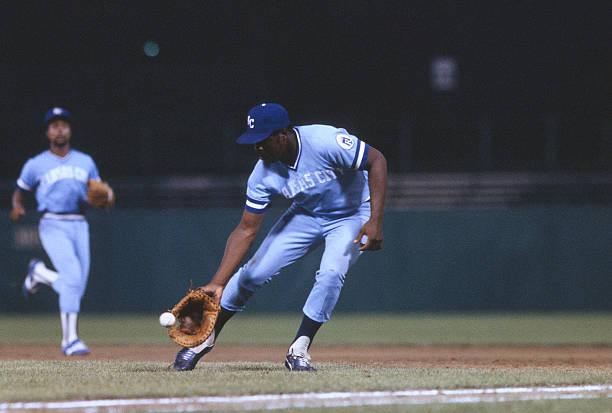
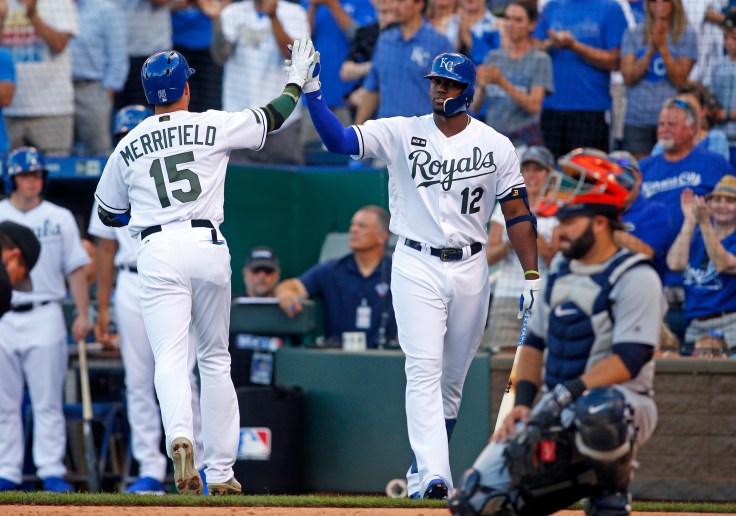
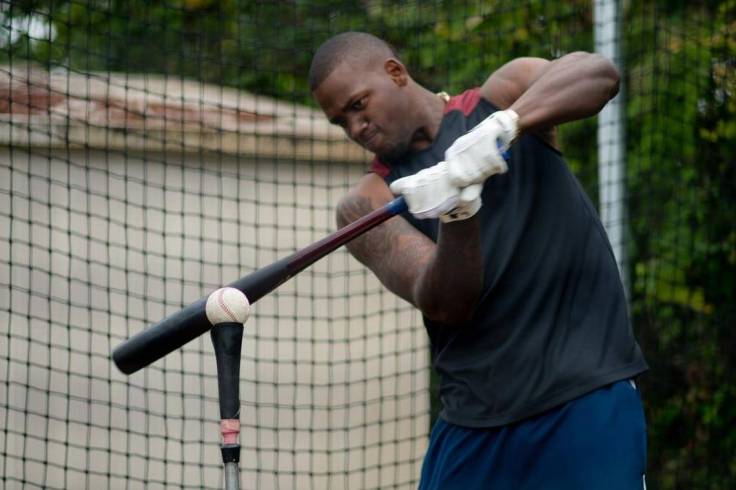

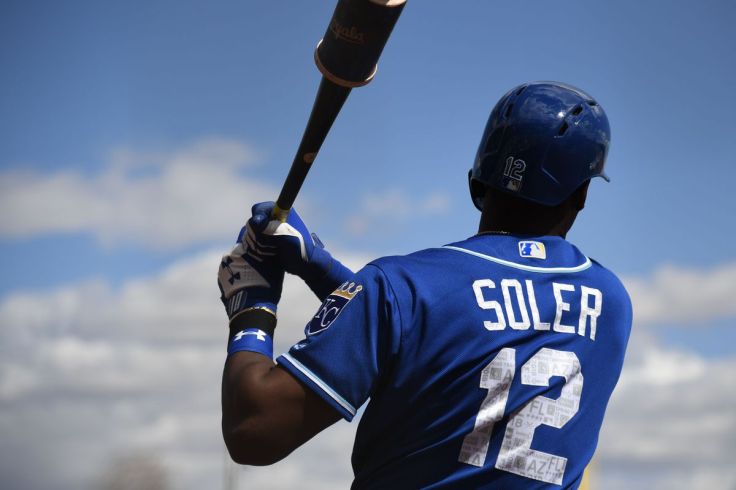

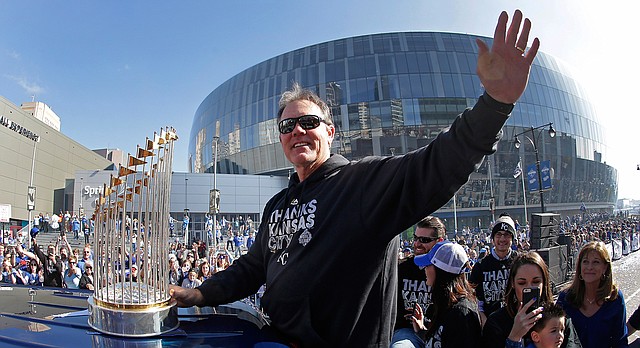

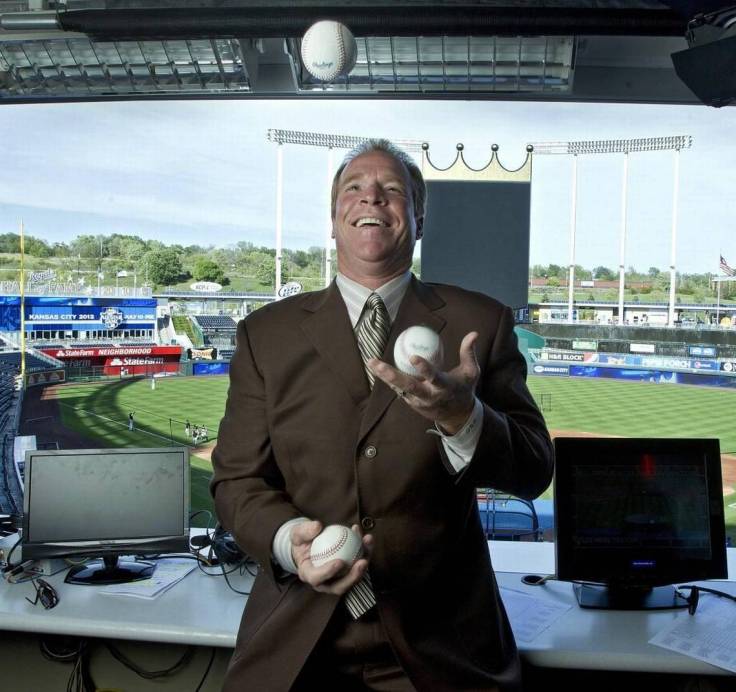

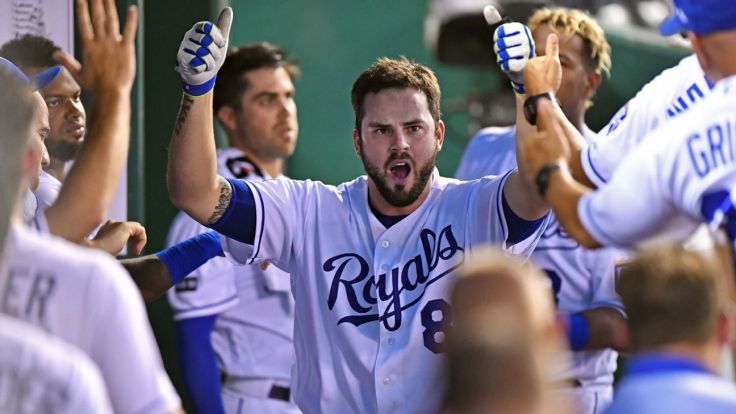
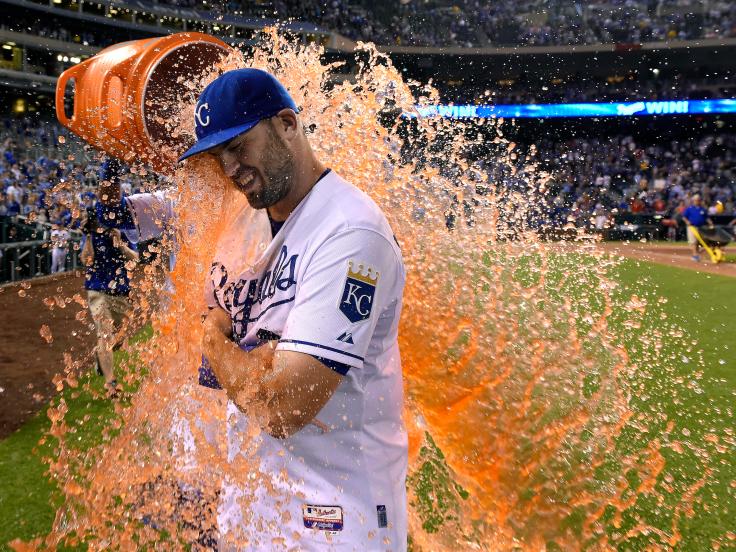
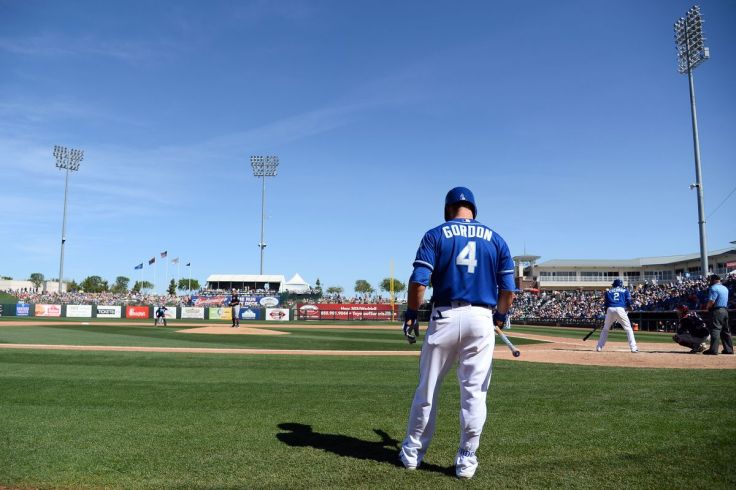

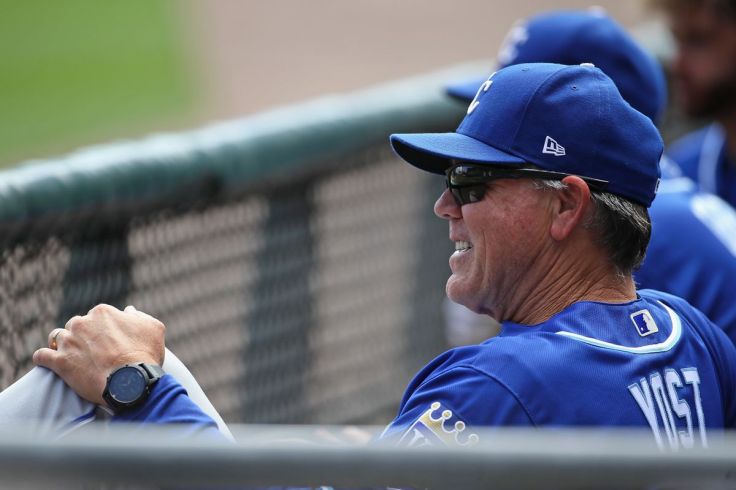

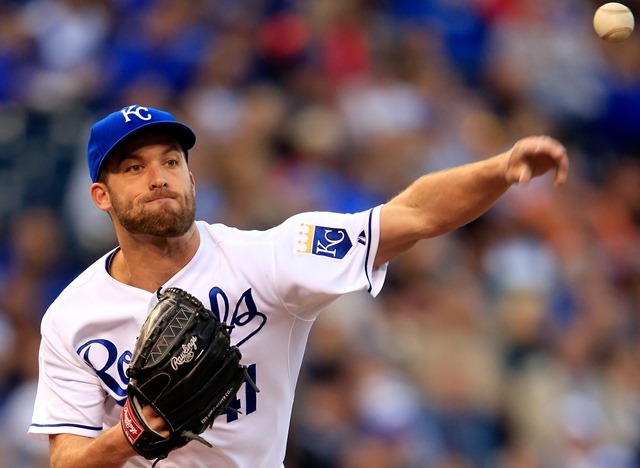
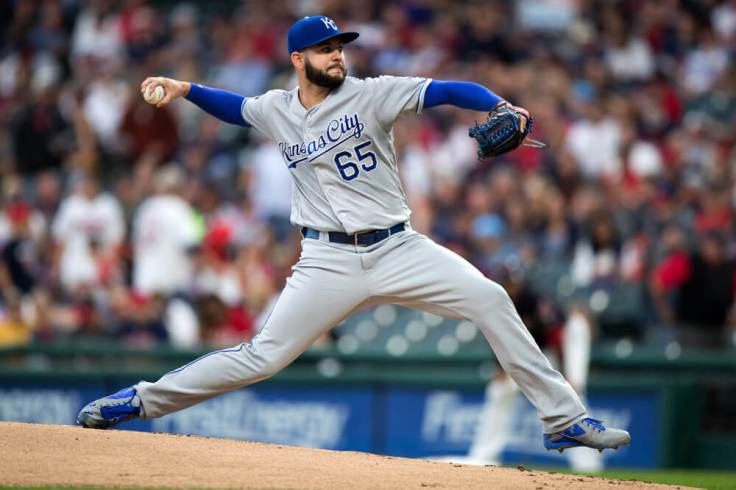

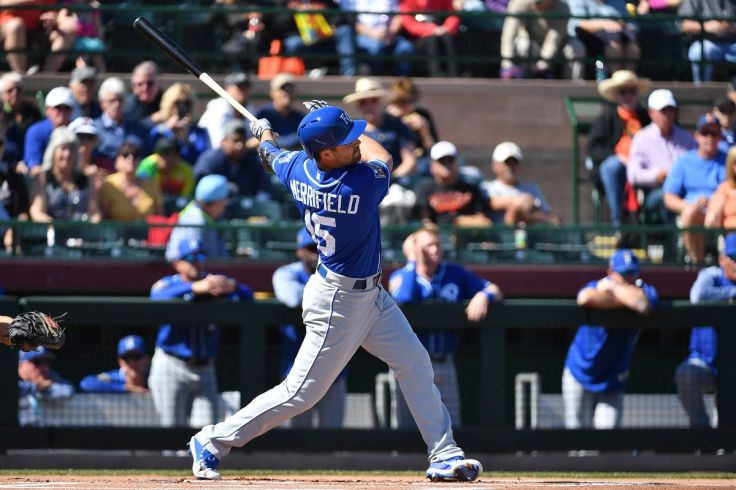
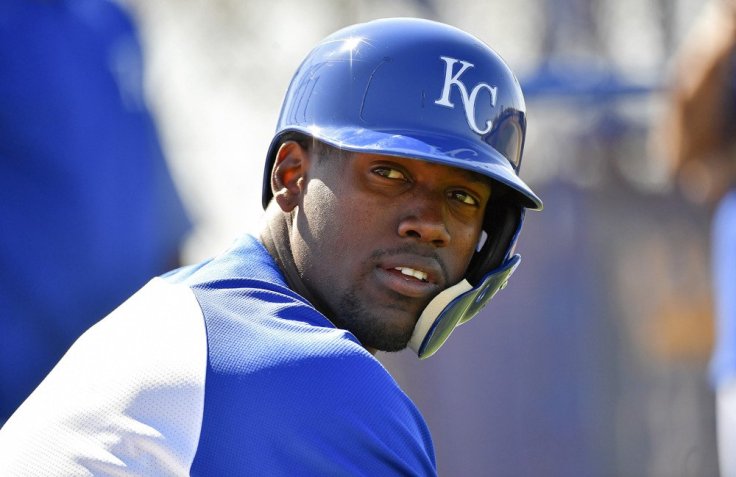

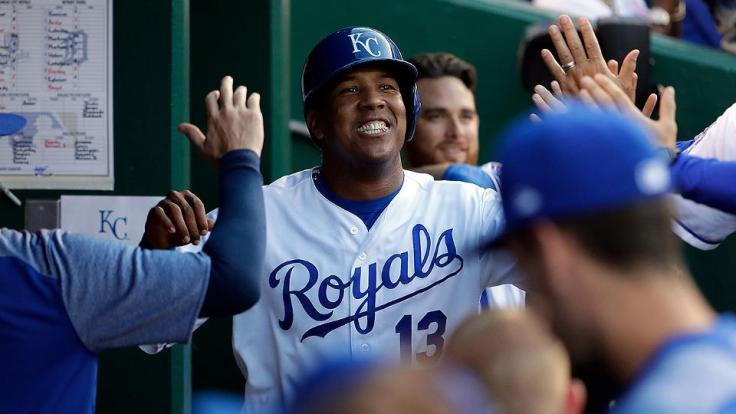
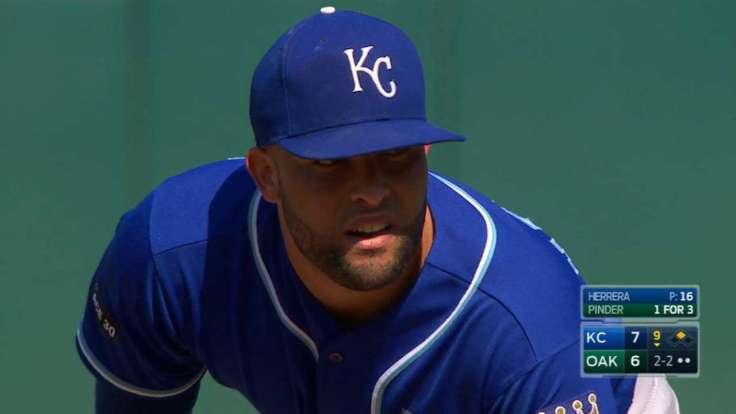


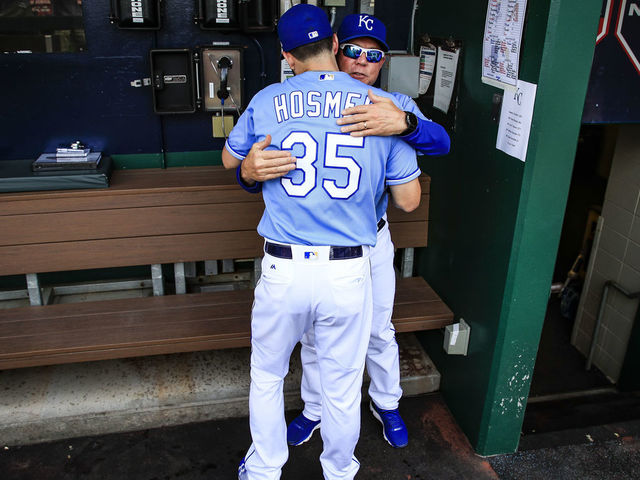
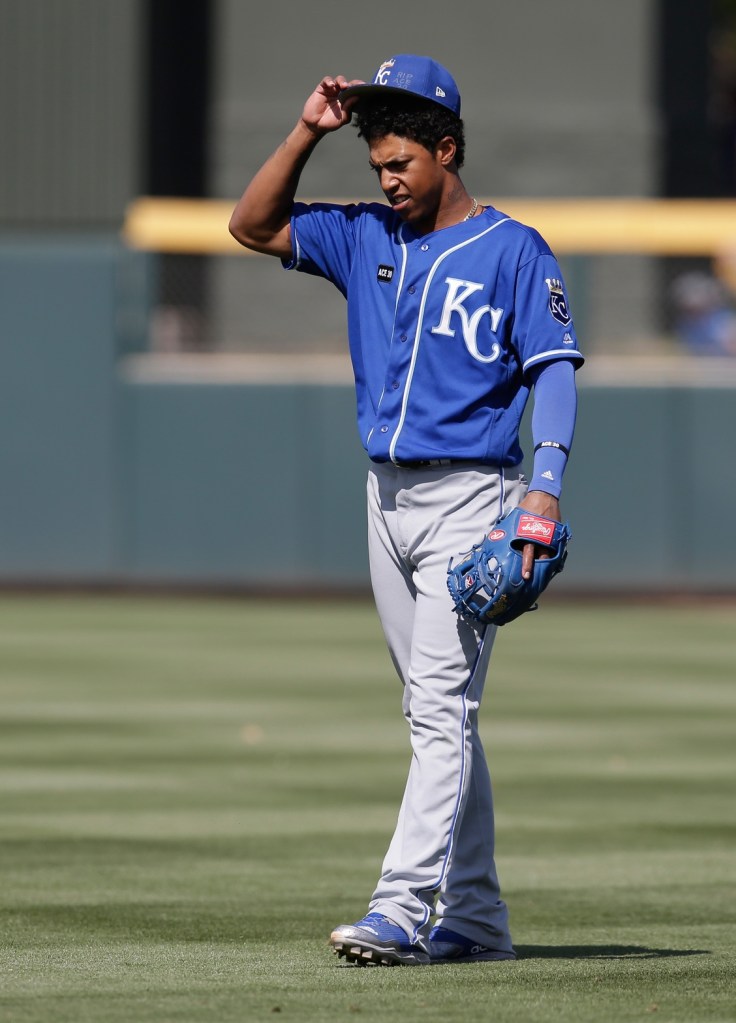

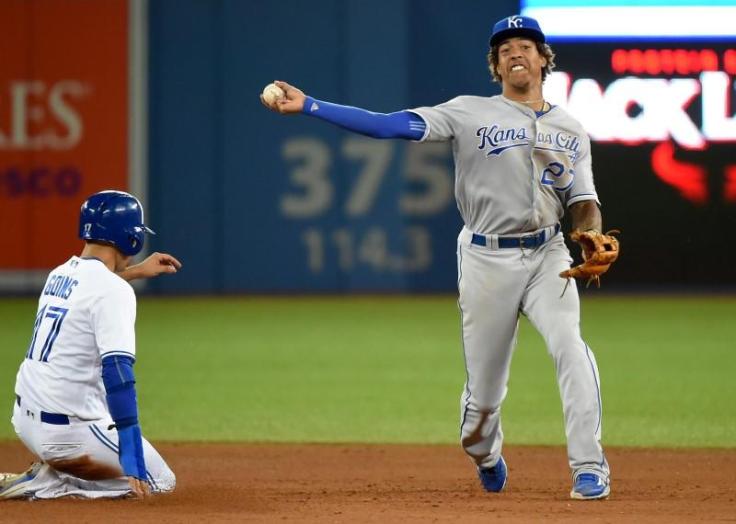

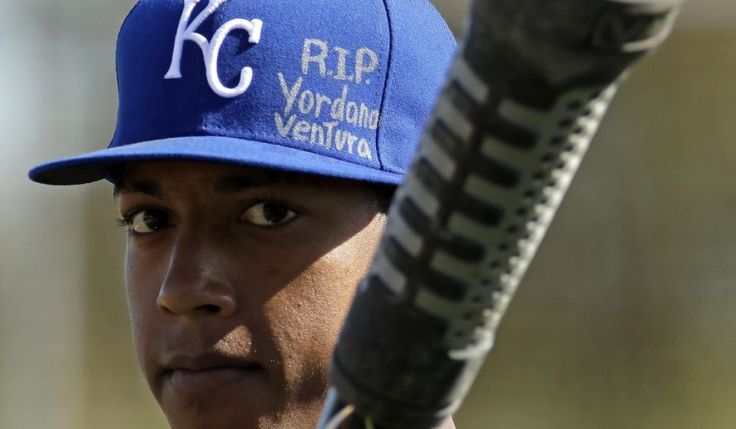
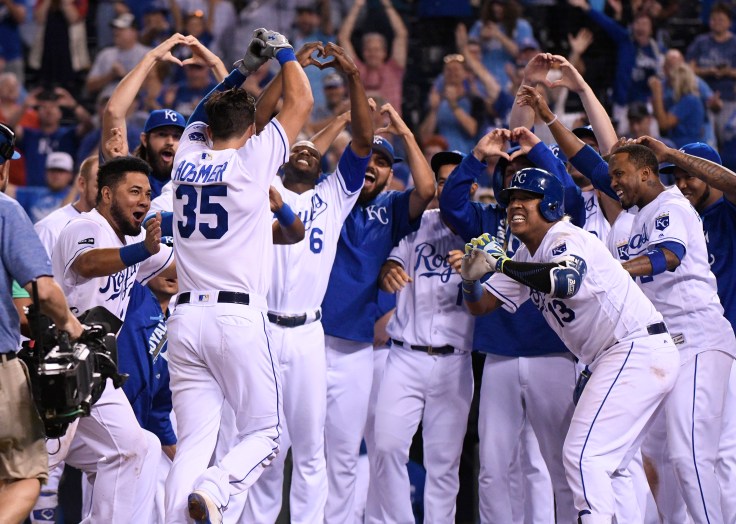

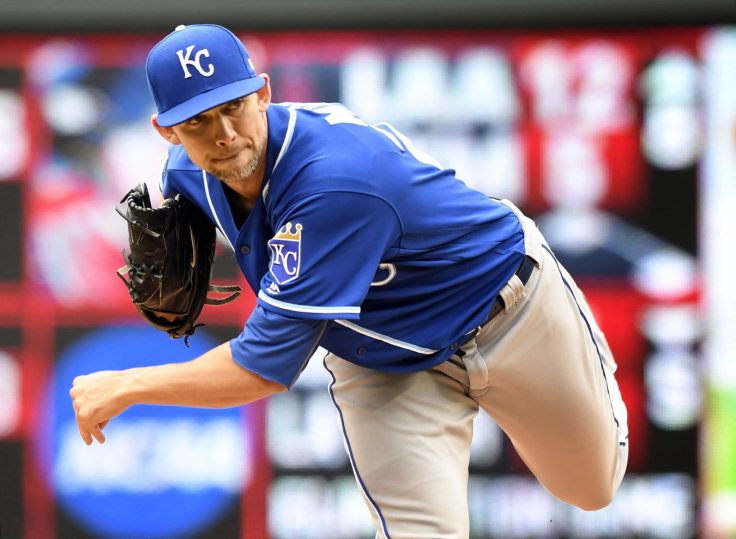
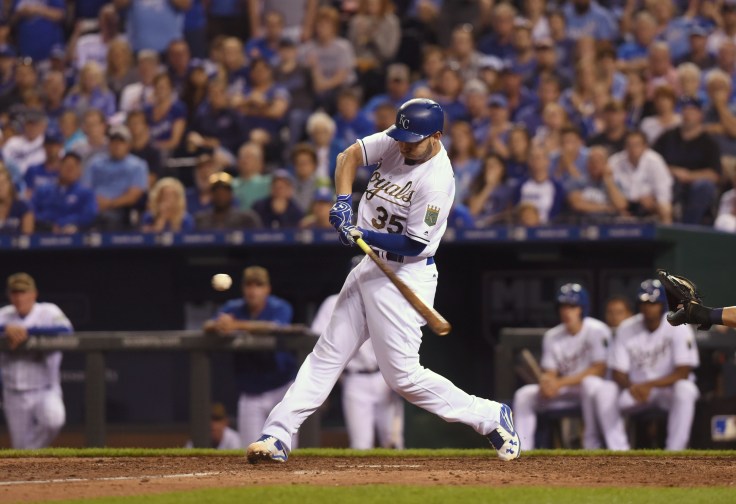
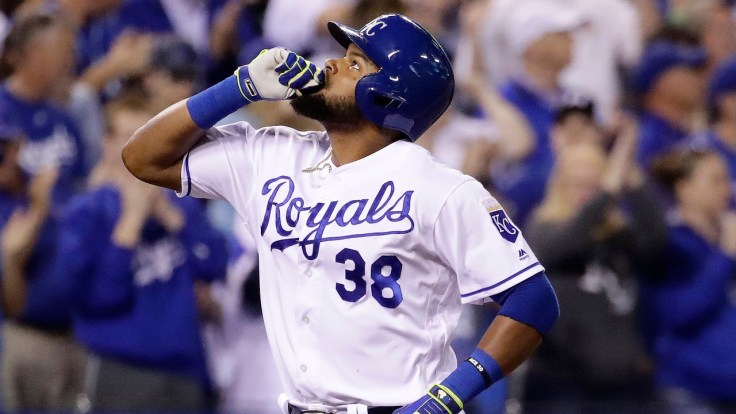
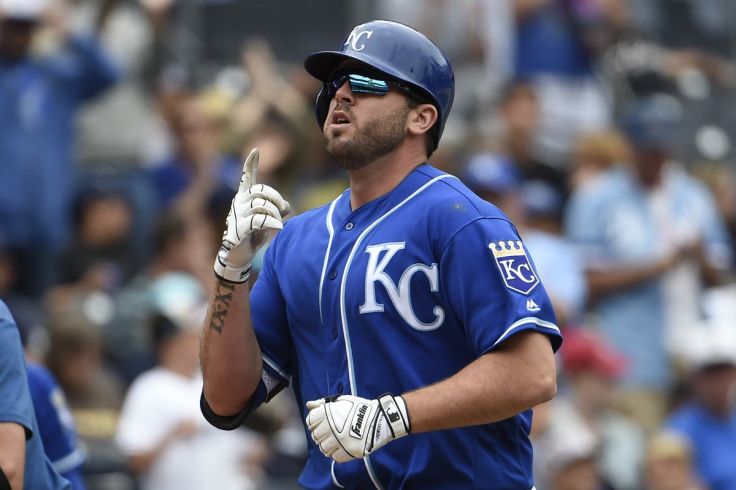
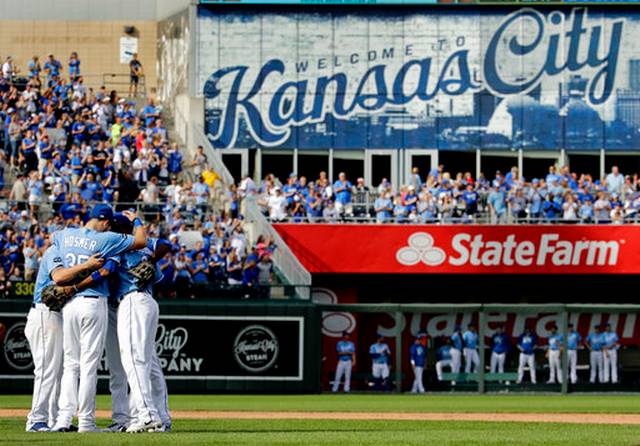
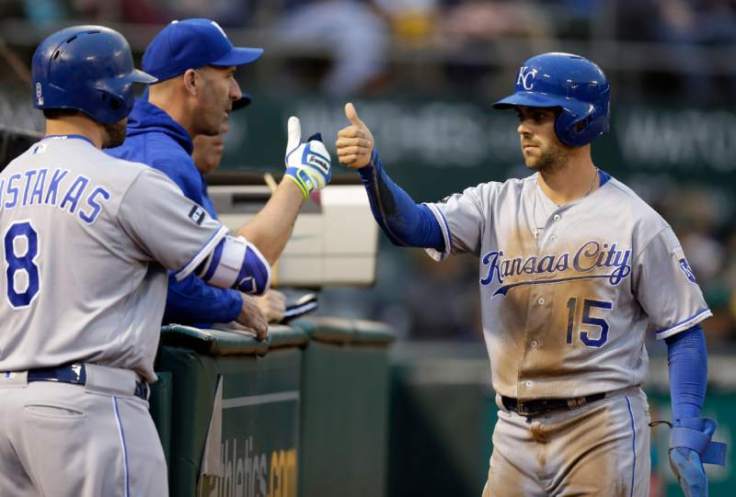
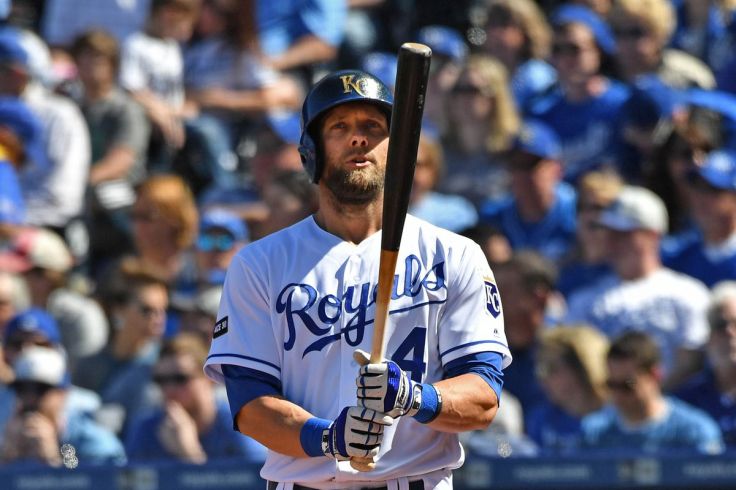
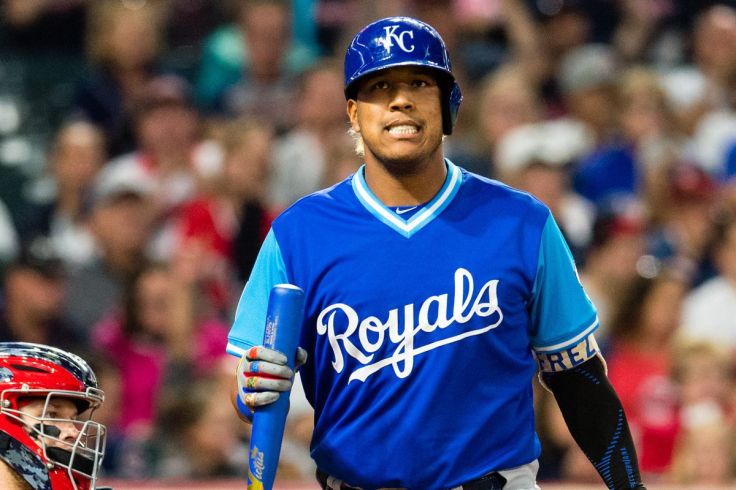
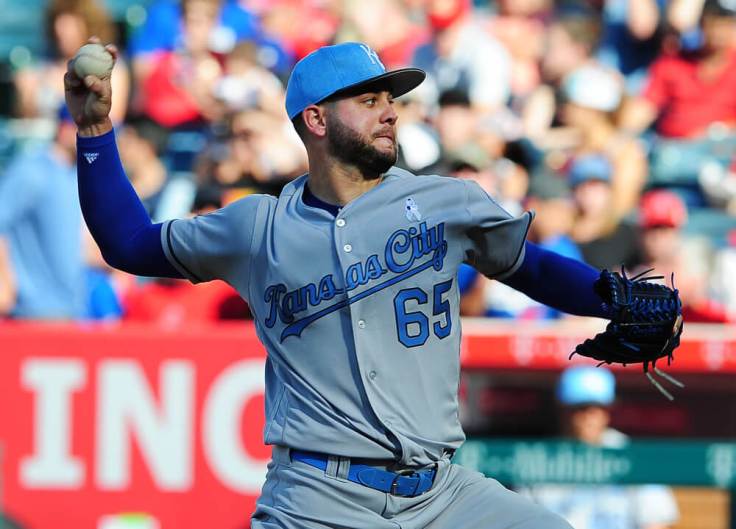
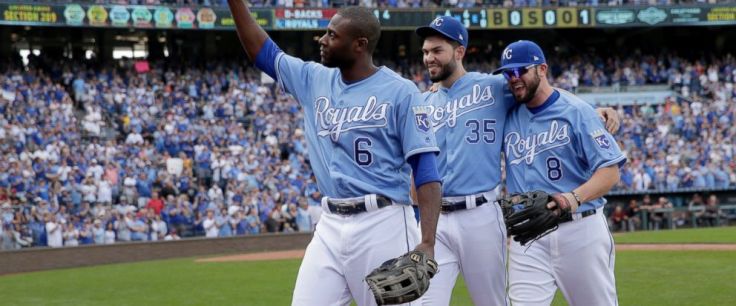
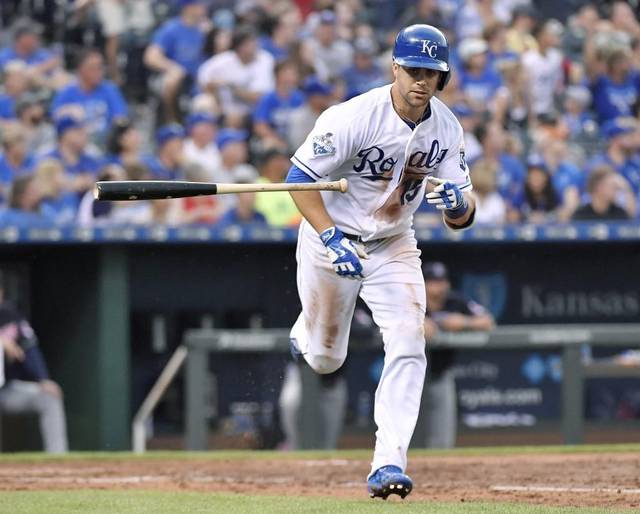

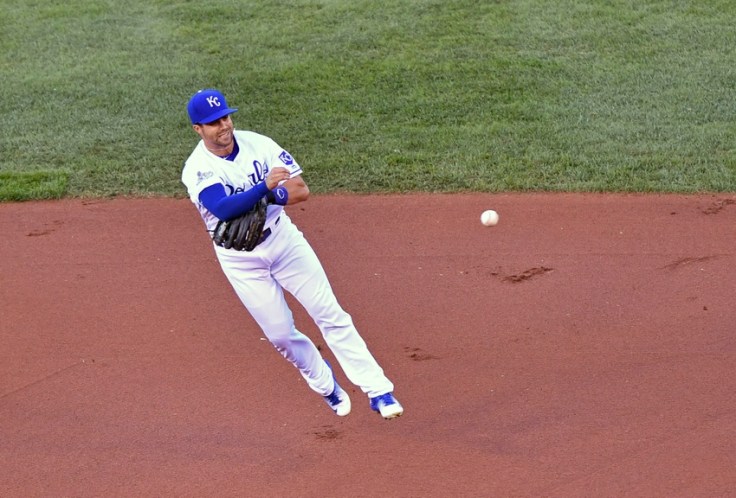
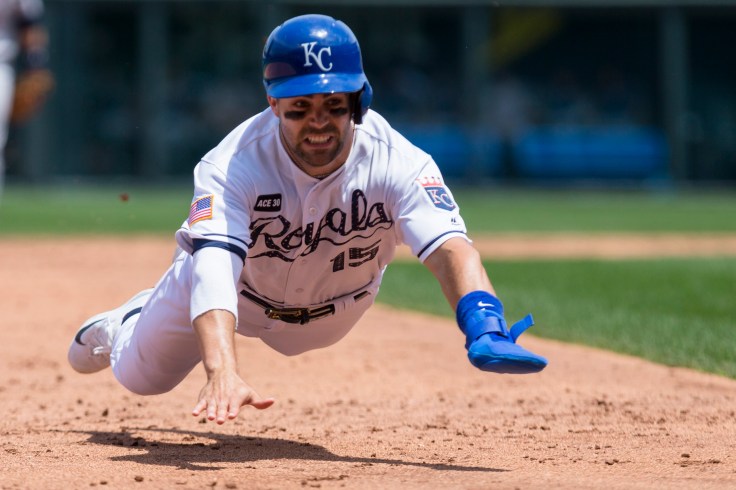
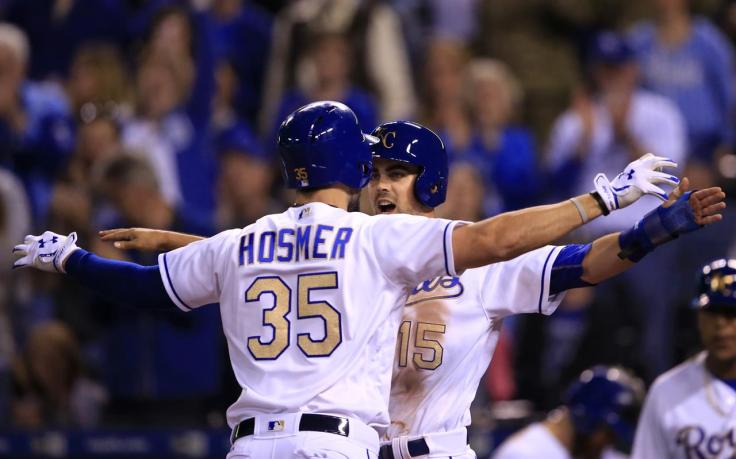
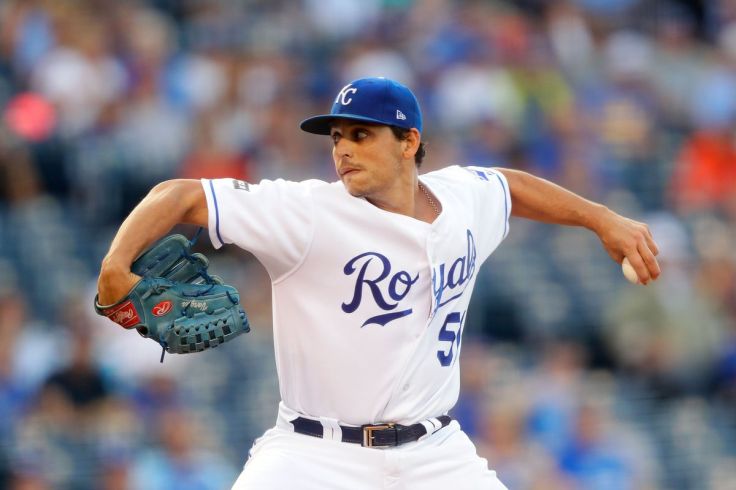
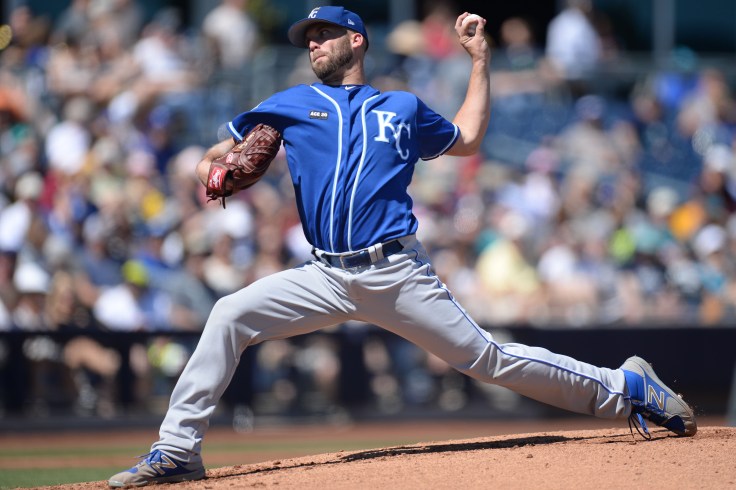

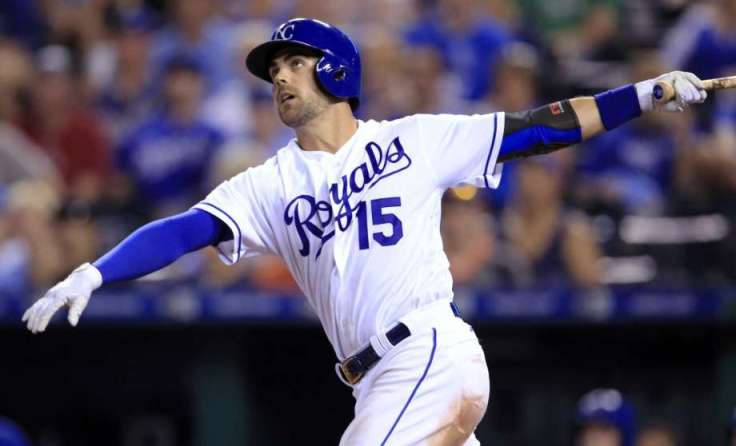
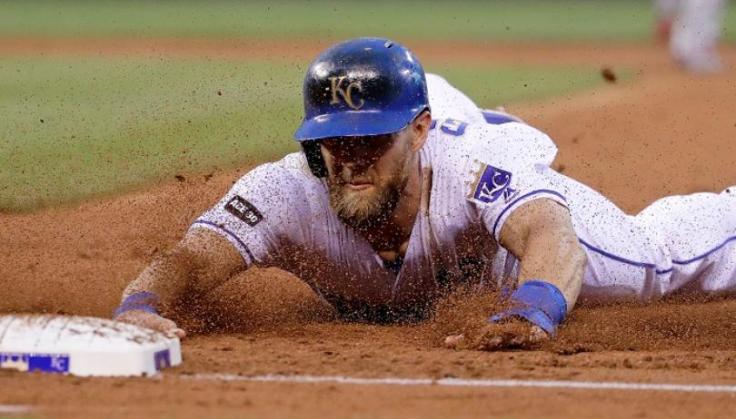
 Bleeding Royal Blue