Just when you thought the Kansas City Royals winter was over…
On Wednesday they signed Lucas Duda to a one-year, $3.5 million dollar deal with Kansas City. Incentives could push this deal a bit higher, based on plate appearances:
Duda has 1-yr, $3.5M deal as @JonHeyman reported, incentives can take to nearly $5M. #Royals
With the signing, Duda will take over the first base position to begin the year and will add a much-needed left-handed bat to the middle of the Royals batting order. Even better, Duda has been surprisingly productive the last few years in both New York and Tampa Bay.
Credit: The Associated Press
Duda is coming off of a 30-home run season as he split time with the Rays and Mets. Duda hit 30 bombs, drove in 64 runs, posted a slash line of .217/.322/.496 with an OPS+ of 116. Not enough for your liking? Over his career he has put up an OPS+ of 120 (league average is 100), a .457 slugging percentage and has three seasons where he has produced over 200 total bases. Duda is a power hitting first baseman who is entering his age 32 season and should be able to still produce in the friendly confines of Kauffman Stadium.
I’m sure there will be some who question whether or not he can produce at the level of his predecessor, Eric Hosmer. Well….
Last 5 yrs: Hosmer 115 OPS-plus, Duda 123 OPS-plus. Durability, defense, baserunning, intangibles, age get Hosmer 8-$144M with #Padres, Duda $3.5M with #Royals
Duda won’t be as agile as Hosmer on the base paths or even on defense. Speaking of his defense…
In case you didn’t know, Duda was the one who threw the ball into the stands. The Royals are obviously taking a step down defensively with Duda, but considering what he will do with the bat and what they will be paying him, it is still a good deal.
The one issue that has been brought up with his signing is how he will affect the younger players who have been vying for the first base spot in camp, most notably Hunter Dozier (who appeared to be the front-runner this spring). If you are in the camp of the Royals doing a larger rebuild, Duda would be the wrench in that process as he would be taking at bats away from players like Dozier, Ryan O’Hearn and Frank Schwindel. But General Manager Dayton Moore doesn’t see things that way:
Dayton Moore and Ned Yost are stressing the Lucas Duda signing doesn’t block Dozier at first base because it’s only a one-year deal. Claim Duda brings stability/security in a lineup loaded with young/inexperienced bats. #Royals
It’s obvious to see that the best case scenario is for Duda to play well, boosting his value and making him more tantalizing for teams before the summer trade deadline. The Royals could then ship him off for a piece that could hopefully help the team in the future and someone like Dozier or O’Hearn could then take over the first base position. In fact, it appears that is what Moore is already thinking:
Regarding Dozier, Dayton believes it's easier for young players to transition/adjust to the major leagues in June/July because the game energy/pitcher's energy isn't as high as it is in April. (i.e.: Things can snowball if you get off to a rough start) #Royals
This seems to hint toward Dozier starting the year in the minors and working his way back up to the big league club. In my mind, this isn’t a bad idea and I even pointed out why I believe that the day of the signing:
Dozier has only played 12 games at 1B in his professional career. Obviously, there will be somewhat of a learning curve & it's never good when a player has to do that in the majors. This allows him to continue getting comfortable at the position without the everyday pressure.
While I probably view Dozier differently then some (and I will delve into that at a later date), throwing him into the lineup to start the year and replacing an icon while still learning the position feels like a lot of weight to throw on one man’s shoulders. The Duda signing gives the team time to get Dozier better adjusted to these scenario’s while adding a veteran left-handed bat to a lineup that is going to need all the help it can get.
Credit: Fox Sports
Taking this all into account, bringing Duda into the fold feels like a win-win situation for the Royals. The Royals get a veteran bat, adding a lefthander for a very righthanded heavy lineup while allowing time for Dozier to adjust to his fairly new position. Throw in that it is only costing Kansas City $3.5 million AND they might be able to deal him later in the summer and you have the makings of a quality Dayton Moore signing. It even looks like any beef Duda had with Rusty Kuntz has gone away:
Re: KC signing of Lucas Duda, just spoke with Rusty Kuntz, who had the immortal line about Duda's arm/Hosmer dash in 2015: "Bless his heart, Duda. He's a good bat." Says had good chat with Duda today but laughed and said specific topic never came up. And noted how big Duda is.
It’s not ground breaking, but it was a move that pegs in the positive side of the ledger. For those worried about how Moore will operate as the team moves to rebuild, this will hopefully temper some of the paranoia.
Oh…and considering he is a world series hero in many a Royals fan’s eyes, I would expect a ‘Standing O’ come Opening Day. I have a feeling Duda will fit in just fine…
Now that the dust has finally settled and Eric Hosmer has landed in San Diego, it only seems fair to ask where the Royals go from here. There are so many questions to ask, especially as the team appears to be getting ready for a rebuild. But what three questions are the most urgent? I went ahead and earmarked these three as being the most pressing for Kansas City moving forward.
Should the Royals re-sign Mike Moustakas?
I’ve long been a proponent of bringing Moose back to Kansas City, but with the developments of the last month weighing heavy on my mind, my opinion has shifted just a bit. I still believe that re-signing Moustakas isn’t an awful idea, especially if it would be on a two or three-year deal. But with the market for him all but dead at the moment, the Royals definitely shouldn’t roll out an armored bank truck for him.
That being said, the idea of a complete rebuild sounds more and more enticing by the day. This Royals team can lose 85-100 games with or without Moustakas, plus it would keep the payroll at bay. It could also give the organization a chance to see what Cheslor Cuthbert and/or Hunter Dozier can do while both could also see playing time across the diamond at first base. Honestly, I’m okay with either scenario playing out as there are positives and negatives for both. But if the Royals really buy into a rebuild, letting Moustakas go would make the most logical sense.
Who plays first base in Kansas City this year?
This could be the most interesting question of the three while also being the one that is answered last. It does appear there are no frontrunners in the bunch, although Dozier and Cuthbert will get first crack at both corner positions. In fact, the Royals actually have a number of options floating out there, which I took a look at a few months back.
To be honest, my opinion hasn’t changed much since December. I like the idea of Dozier or Ryan O’Hearn (or both) getting a shot and seeing what they could do. Out of the free agents on the market, signing someone like Adam Lind to platoon with Dozier also appeals to me. The interesting aspect about this is that the Royals aren’t tied down to one player who gets all the playing time. This gives the coaching staff a chance to evaluate some of the younger talent while also seeing what is a good fit for both the lineup and on defense. While the answer isn’t an obvious one, that also breeds opportunity which isn’t a bad thing for a club that is rebuilding.
Should the Royals overhaul the roster even more and look to trade veterans?
On the surface it appears that Kansas City is going to rebuild one way or the other now that most of the major cogs are out of the picture. But should the team do a complete rebuild? At this point, it honestly makes more sense to go this route. Merrifield would seem to be an obvious choice to be dealt, as his value might never be higher than it is right now. The team already has a player who could take over at second base (Raul Mondesi) while hopefully acquiring one or two players who could be under team control for multiple seasons.
Duffy was bandied about in trade talks earlier this winter and one would think the Royals could get a hefty haul in any trade that Duffy was involved in. While the Royals don’t have any in-house replacements that could fill the top of the rotation, more than likely Dayton Moore would ask for such a piece in any deal that Duffy is in. While the idea of Duffy also leaving is grim, it isn’t guaranteed he would still be with the team the next time they are contending.
It would also make sense to see what they can get for the likes of Kelvin Herrera and Jason Hammel. Both are veterans that will be eligible for free agency at the end of the year and could bolster a number of teams’ pitching staffs. The idea at this point might be to wait until the trade deadline and then see what they can get for either pitcher. While neither player will probably net Kansas City a top-tier player/prospect, Moore should be able to get something for them to help now and possibly even in a packaged deal.
What about Alex Gordon and Ian Kennedy? While I’m sure most would like to see their contracts off the Kansas City books, the team would probably struggle finding anyone to take them on, or at least without the Royals paying a sizeable chunk of their salary. Gordon and Kennedy might not be quite untradeable, but they are about as close as any player on the Royals roster. In other words, Kansas City has to hope they turn things around and be productive in 2018.
The one player that would probably be off-limits would be Salvador Perez. While this might be the right time to trade him off before he starts regressing, the likelihood of that is slim and none. At this point Salvy is the “Face of the Franchise” and with Hosmer, Cain, etc. gone, dealing Perez would kill off a large chunk of the fanbase. It’s going to be a hard adjustment already for a number of fans this upcoming season; it would take years to build trust back up if they dealt off Salvy.
Credit: Kansas City Royals
While there are more questions that will need to be answered in the future, these three feel like the most important moving forward. It’s going to be a hard adjustment for some to view the Royals in rebuilding mode, especially those that don’t remember the team before 2014. I always look for the positive and with this club it appears to be options. The Royals can build their roster pretty much as they please moving forward without a ton of restrictions. Think of it like a clump of clay that you can design however you want; just remember that how that design looks this year could look completely different in two years.
It took much longer than expected, but Eric Hosmer has finally found a home for the foreseeable future. Late Saturday, Hosmer agreed to an 8-year, $144 million deal with the San Diego Padres:
The contract, which includes a fifth-year opt-out, easily surpasses the four-year, $75 million deal for pitcher James Shields that previously set the standard for a Padres free agent.
So we can officially close the book on Hosmer as a Kansas City Royal and there is a number of ways to look at him leaving. I figured today we would look at as many angles to this whole situation.
Credit: USA Today Sports Images
First, let’s discuss what the Royals were able to offer Hosmer. We’ve all heard all the numbers floated out there and while I don’t know if we will ever find out the true number, we can at least take a good stab at it. I’m pretty sure the high-end year wise was seven years, as multiple sources around Kansas City appeared to agree on that number. But what about the dollars?
It was, at one point, believed to be in the neighborhood of $140 million — though club officials declined to divulge the final number. It was competitive, depending on your definition of the word, though Moore acknowledged that the Padres’ final package was better.
It does appear San Diego had the higher volume of dollars but Kansas City did make “certainly the highest offer we’ve ever made.” In fact it was so much money that it required a lot of flexibility from GM Dayton Moore:
Dayton Moore stressed that signing Hosmer would have required unloading more money. "I'm responsible for where we are economically as an organization, " he said. "I made a decision after the 2015 season, knowing full well that our players were going to become free agents."
While it appears the highest offer on the table at one point was 7 years and in the $140 million range, it definitely wasn’t the final offer that was given to Hosmer:
FanRag reporter Robert Murray, who works with Scott Boras-connected reporter Jon Heyman, writes today that the Royals’ final offer was for five years in the $100 million range. That is about the same amount of money the Padres offered in the first five years of their offer, but without the guarantee of the final three years of the deal should something happen to Hosmer.
So the Royals offer to Hosmer appeared to have gone down from earlier in the winter. What would cause that to happen?
Without Royals officials disclosing much — publicly or privately — the details of the Royals’ side of this are a little murky. But through a handful of conversations this week, and a working knowledge of how the organization has operated, here’s the best guess:
▪ Royals owner David Glass didn’t want to do it. This has all the markings of him going skittish at another big contract.
▪ The Padres pushed forward at the end of the negotiation while the Royals pulled back. The Padres won by offering an opt-out clause, which the Royals didn’t want to do because that wouldn’t guarantee Hosmer being around when they’re ready to win again.
▪ That may not have mattered, because while the Royals talked early of a six-year deal with an average annual value near $20 million, the final offer peeled back a little at (presumably) Glass’ direction. That last part is important.
Again, this is all based on varying levels of guesswork. The Padres’ offer is believed to be significantly better than the Royals’ — more years, more guaranteed money, more money upfront and an opt-out.
If you are able to connect the dots here, it appears that while Moore was always on the Hosmer bandwagon, owner David Glass was into moving on from him. In fact, Sam Mellinger of the Kansas City Star continues his guess as to what happened:
My guess: Glass is already uncomfortable with those deals for Gordon and Kennedy, which have turned out horribly. The Royals owe Gordon $44 million over the next two seasons and Kennedy $49 million over the next three.
Locking into another long-term deal worth $20 million or so per year was a tough sell for the owner, who knows the Royals are likely to lose a lot of games the next few seasons no matter what. He was looking for a way out.
One more time, because I want to be as clear as possible: This is based in part on conjecture.
So while Sam is just guessing, it’s a guess that has a decent amount of weight to it. At the end of the day, a contract of this magnitude could cripple the Kansas City organization for years and cause stress on their payroll, even with all the money in baseball and the Royals negotiating a new television deal in the near future. Obviously, Glass appeared to be skittish about making this much of a commitment to one lone player.
Credit: Mark Cunningham/MLB Photos via Getty Images
It also means that the old era of Royals baseball is now dead and a new one will soon be on the horizon:
It doesn't appear the Royals will be pursuing Mike Moustakas or any other costly free-agent, even with Hoz signing elsewhere. Dayton Moore said, “That period of time, that phase of who we are, is over. We need to move on.”
When we heard earlier in the winter that it was “Hos or Bust” for the Royals, Moore really wasn’t kidding. To be honest, it makes more sense for the team to rebuild at this juncture. In fact, I am on board for a complete rebuild. If Kansas City would have locked in Hosmer, that would add one more large salary to a payroll that already feels a bit bloated. Toss in the length of any deal for Hos and you start dealing with trying to find a spot in the lineup for when guys like Samir Duenez and Nick Pratto are ready for the big time. It’s already going to be a couple of years before we can start discussing the Royals as a legit contender again; if Hosmer had signed, Moore might not have had the flexibility available when it comes to payroll and it could have pushed the contending window back even further. In other words, I’m glad Hosmer chose San Diego and there was multiple reasons I breathed a sigh of relief to find out he was officially gone.
If we are being honest here, I have long been in the camp that Hosmer was overrated by not only the Kansas City organization, but the baseball media in general. I saw the reasons for the fawning: Hosmer has a pretty swing, is fluid around the bag at first, is well spoken and appears to be a born leader. Add in how clutch he has been in the playoffs (I would rattle off all the key moments, but there really are a bunch) and how he doesn’t seem to fear the big stage and you have the recipe for a star to build around. The problem is that if you watched him on a regular basis, you also saw the slumps. You remember, the slumps where his swing would look like a mess and he would be so cold that you would have to put his face on a milk carton? These weren’t just slumps but long periods of time where Hosmer would go missing for four to six weeks. Toss in a slightly above average 111 career wRC+, a paltry 9.9 career fWAR over seven seasons and a ground ball rate that hasn’t been below 50% since his rookie year (and even that was 49.7%) and you don’t have a player who would elicit a contract that would bump him into the higher echelon of major league contracts. Yes, his 2017 was a career high for him and I do believe he can be this player that everyone longs him to be. I just question whether or not it will actually happen. I’m very skeptical and that skepticism made it difficult for me to get on board for the team to commit 5-7 years to a player that doesn’t feel like a franchise cornerstone. At the end of the day, I am a numbers guy and the numbers don’t lie; Eric Hosmer isn’t worth the money or the length of the deal.
That being said, I’m happy for Hosmer. He got his money and he got a contract that was heavily front-loaded with an opt out after year five. Hosmer will be gearing up for his age 33 season after his fifth year in San Diego and at that point he could be able to bank even more dough. The truth is that baseball players have very short shelf lives and I will never blame one for trying to make enough money as humanly possible. It’s why I was happy when Lorenzo Cain got his deal from Milwaukee and why I will be happy when Mike Moustakas gets his. Would I love some of these guys to stay and play in Kansas City? Of course I would. I’m already dreading watching Cain in a different uniform this upcoming season. But I get how this business is and trust me when I saw that at the heart of things, this is a business. It’s why when an owner cries foul that they lost money the previous season I roll my eyes. All owners have money; it’s just a matter of what they are willing to spend and how big they want their bottom line. Also, there are times you should take comments with a grain of salt:
Ned Yost said he texted Hoz numerous times this off-season but never heard back from him: "I’m not sure whose orders that was." Ned then joked, "Even when I was on my death bed.”
I know some Royals fans got upset when they saw this comment from manager Ned Yost. The truth is we don’t know what actually happened and it even appears that Neddy was joking a bit here. Just realize that players don’t owe us anything; the loyalty we pledge as fans is to the name on the front, not the one on the back.
Credit: The Associated Press
So if you are a Royals fan, how should you take this signing? If you are a fan of Hosmer, be thankful he was in Kansas City for seven years. You will always have the memories. The triple in the wild card game. The clutch hits throughout the playoffs in 2014 and 2015. The ballsy slide in Game five of the 2015 World Series. Know that Hosmer won’t soon forget Kansas City:
“Every player’s goal is to ultimately win a world championship,” Hosmer said. “To be able do that in Kansas City was amazing. To have that taste and understand what it means to a city and how much joy and excitement it brings to the people out there, it’s an experience I can sit here and talk about all day. It’s something that drives you as a player — to try to bring back as many as you can.
He also hasn’t forgotten his former teammates:
“I told Glenn it would mean a lot to me if I could wear No. 30 and continue Yordano’s legacy,” Hosmer said. “Not only Yordano, but all those guys in Kansas City. We all shared good moments with him and obviously shared a really tough moment in his passing. It really meant a lot to me. Hoff was more than open to let me carry on that number. I told him I’ll wear it with pride each and every day.”
So while it will be sad for some to not see #35 on Opening Day at Kauffman Stadium, it’s also wise to remember that nothing lasts forever. The Royals have to move on and we need to do the same. For all you know the next player who will be your new favorite could be in Kansas City sooner rather than later. You will always have those memories of Hosmer and no one can take that away. But it’s time to make new memories with some new faces. So cheer the new Royals we will meet this year and even cheer Hosmer from afar. But don’t judge him for leaving. Don’t be a Cardinals fan; understand that we are better than that. Kansas City needs to just be thankful. So even while I am not his biggest fan, I say thank you, Eric. Thank you and the best of luck. Now…who wants to tell Hosmer what San Diego means in German?
When the news broke last week that the Royals were looking to bring Alcides Escobar back into the fold, a lot of questions were needing to be asked. Most asked why, a few asked what we had done to anger Dayton Moore but one question hovered over the rest: Where does this leave Raul Mondesi?
The belief all winter was that Mondesi would take over at shortstop and (for the most part) would be allowed to sink or swim. Now that idea has been turned on its head by not only the Escobar news but also a piece that ran on Fangraphs last week that didn’t paint a fuzzy picture of the relationship between the organization and Mondesi. In fact, it felt like a damning piece for the former prospect’s future:
The term “makeup” might have different meanings from scout to scout. In Mondesi’s case, evaluators are concerned about his defensive consistency, especially as it pertains to throwing accuracy, and have seen him fail to execute routine plays. Others were not thrilled with what they saw from Mondesi as he worked back into playing shape following his PED suspension in Arizona, citing poor effort and on-field focus which they particularly disliked in an environment laden with young, impressionable teenagers.
With Nicky Lopez coming up fast through the Kansas City system, it feels like Mondesi isn’t the “Chosen One” anymore and that the Royals have moved on to a prettier girl, so to speak. But…that can all change in an instant based on how he performs this spring or at the beginning of the minor league season. It’s forgotten sometimes because of how long we have heard about him, but Mondesi will only be entering his age 22 season in 2018, so it’s not like he is a washed up prospect trying to make it work in his late 20’s.
Credit: Peter G. Aiken-USA TODAY Sports
So I’m going to play devil’s advocate. Let’s throw out a couple of situations and find a spot in the lineup for Raul. This activity is a best case scenario and more than likely the reality will be somewhere in between this and struggling in the minors. The good news is that Mondesi has some versatility and a few options besides shortstop.
Scenario #1: Mondesi has a great spring offensively and forces the Royals to move him back to second base.
Sound crazy? It wouldn’t be completely out of the realm of possibility, considering he had a good spring last year, even if the numbers weren’t telling the entire truth.
So they could start the year with Mondesi at second base, moving Whit Merrifield to the outfield. Whit played center field a little bit in the minors and has seen a bit more time in left field, which could slide Alex Gordon over to center. While Merrifield has experience at the position and played there quite a bit in college, this scenario doesn’t feel like a long-term solution.
Gordon playing there could be a bit more interesting, but you would have to question how he would hold up manning the position for a full season. One could make the argument of Whit going back to being a super-utility player, although I doubt the Royals would allow that to happen after the season he pulled off in 2017. The best case scenario for playing Mondesi at second base would be a trade of Merrifield, which doesn’t look likely at the moment.
Credit: Dan Hamilton-USA TODAY Sports
Scenario #2: Mondesi has a great spring and wins the center field job.
Alright, I think this is actually possible, despite the fact it sounds crazy to me. Mondesi has always been lauded for his glove and it feels weird that the Royals would move a guy that is that good defensively in the middle of the infield and plop him down in the outfield, where he has never played professionally. Obviously the organization has been thinking of doing this for a while, as it was first brought up in July:
“He’s such a good athlete. We’ve even talked about his ability to play the outfield – centerfield specifically – not that we’re necessarily moving on that right now.”
Let’s be honest here: the Royals right now don’t have a great center field option. There is Paulo Orlando, Billy Burns and…maybe Bubba Starling. That’s really it. This is what the Royals have to deal with unless they go out and sign a free agent this spring. So the idea of Mondesi playing center isn’t the worst idea ever; if he hits well, adapts to the outfield and shows some patience at the plate, he could be a possibility. Chalk this up as a long-shot, but one that might just pan out.
Scenario #3: Mondesi starts the year in AAA and gets off to a hot start. The Royals struggle offensively and decide to recall him and see if he can inject some life into the lineup.
We’ve all seen the Royals’ bats go cold early in the season. In fact, we just saw it last year. Mondesi actually had a good offensive season for AAA in 2017 and has shown a pattern of improving at different levels in the minors after his second go around at that level. He hit .305/.340/.539 in 357 plate appearances last year in Omaha and we continue to see his power numbers improve the older he gets. I’m not saying he has figured out AAA pitching, but it does appear that he is learning and his production could be on the upswing.
The main issue I see with this scenario is the same one we saw in scenario #1: who gets bumped out of the lineup? We can probably assume that Escobar will be trotted out there every day, so scratch him off the list. Whit is a possibility, but only if he is in the middle of a big cold spell. Center field still looks like the best spot, unless Whit shuffled around the diamond.
Credit: Peter G. Aiken-USA TODAY Sports
Scenario #4: Mondesi is the starting shortstop.
The likelihood of this happening is probably slim and none. But it does make you wonder just what it would take for the Royals to break camp with Mondesi in the starting role. Outside of an injury, it’s hard to think of a situation where the Royals would pick Mondesi over Escobar. Even if Mondesi tore it up this spring, my belief is that the team would find another role for him rather than picking him over Esky. Now, if Raul continued to play well as the season progresses there could be a situation where he would start seeing more playing time than Escobar, but that feels like an August-September situation rather than a March-April one.
The one scenario that feels like a step back is the one where Mondesi makes the team as a backup infielder. The key at this point is for Raul to continue his development, which could be stunted sitting on the Kansas City bench. Ned Yost is not widely known as a manager who uses his bench regularly and if this happened the worry would be how much playing time Mondesi would actually see. Repetition is what he needs and the only way that happens is with regular playing time.
The good news is that while it looks a bit bleak right now for Mondesi attaining a starting big league job, those tides can turn fast. He is just a Merrifield trade or an Escobar injury away from getting his shot to show what he can do. The Royals obviously have their concerns and most of us aren’t too blind to see them. He needs to work on his plate discipline, continue to improve his power numbers and fix whatever small flaws he has on the defensive side of the ball.
Credit: AP Photo/Charlie Riedel
The Royals did him no favors back in 2016 when they called him up to the big leagues and they would be doing him a disservice now by looking past him. Luckily, at 22-years old it wouldn’t take much for him to get back into the organization’s good graces. Solid play with continued development feels like the best way to get management’s attention. While Mondesi might not be in favor at the moment, there is too much talent there to ignore what he could still be.
With Spring Training almost two weeks away, the Kansas City Royals swung another deal on Monday night, trading OF/DH Brandon Moss and reliever Ryan Buchter to the Oakland A’s for pitchers Jesse Hahn and Heath Fillmyer. Cash was also involved, as $3.25 million was sent from the Royals to the A’s. This frees up about $5 million on the Kansas City payroll, which already has some (like myself) speculating on why the Royals would want to do that:
So while the Hosmer rumors can now run wild (brother), let’s take a look at what the Royals gave up and are receiving.
Moss had a very underwhelming 2017, his only season in Kansas City. Moss posted a line of .207/. 279/.428 with 22 home runs, 50 RBI’s and an OPS+ of 84. Moss struggled out of the gate and it wasn’t until later in the summer that he started producing like the Royals expected. Moss will be entering his age 34 season in 2018 and while he would have seen consistent playing time somewhere for Kansas City (whether it was at first base or DH), he probably would have also been taking playing time away from some younger talent like Jorge Soler, Hunter Dozier or Jorge Bonifacio. While the move feels like a salary dump, it also allows the Royals to see what they have with Dozier or Soler without a veteran like Moss blocking them. While Moss didn’t have many memorable moments in a Royals uniform, he was always very honest about his performance on the field and never made excuses for the lack of production. My favorite Moss moment will be from Star Wars day at The K this past year. My wife, son and myself got to listen to a couple of fans give their “analysis” of Moss’ issues at the plate, which included the serious line of “he needs glasses; he can’t see the ball.” We listened for what felt like fifty innings to these two “special” fans rag on Moss non-stop. Then…he stepped up and hit a three-run home run. At that point, our “friends” left their seats and got out of Dodge. If anything, I became a Brandon Moss fan that day. But it wasn’t just Moss packing his bags for Oakland…
Ryan Buchter was the bigger catch for the A’s, as they can plug-in another lefty into their bullpen. While Buchter incurred a few issues during his short stint in Kansas City, he was a very reliable part of the Padres pen and has produced some great numbers these last couple of seasons:
Over the past two seasons combined, Buchter’s 16.7% infield fly ball rate (IFFB) ranks 10th in the majors among qualified relievers. He also ranks 14th during that span with a 26% soft contact rate against. Buchter is even tougher against lefties, limiting them to a .160/.255/.306 batting line during his MLB career.
The Royals started the winter with a couple of strong lefties in their pen, but with this trade and the trade of Scott Alexander, that depth has taken a big hit. The team still has Eric Stout, Brian Flynn, Tim Hill and Eric Skoglund as lefty options currently on the 40-man roster, and a prospect like Richard Lovelady could slither his way into the conversation this spring. While losing Buchter could be looked at as a loss, the Royals did get a couple of positive gains in this trade.
Credit: BRIAN ROTHMULLER/ICON SPORTSWIRE
Jesse Hahn is entering his age 28 season for the Royals and looks to be an option as either a starter or a reliever. More than anything, Hahn just needs to stay healthy as he has dealt with various ailments over the last couple seasons. He pitched in only 14 big league games last year, producing a 5.30 ERA, 3.62 FIP and an ERA+ of 81. Early in his career he showed a lot of promise but the injuries have derailed his career since 2015. The Royals have been focusing on ground ball pitchers this winter, as they are looking to counter the rise of home runs in the league the last two years, and Hahn fits that profile. He’s produced a 49.7% groundball rate throughout his career and a slightly below hard hit rate of 28.3%. If he can stay healthy, Hahn could fit at the back of the Royals rotation in 2018 and either way will probably stick on the roster, since he is out of options.
Credit: Christian Petersen/Getty Images
Heath Fillmyer is the intriguing catch of this trade for the Royals, as he slides into the 28th best prospect in the Kansas City system according to MLB.com. Let’s start with the scouting report on Fillmyer:
Fillmyer has a quick arm and typically throws his fastball in the 92-96 mph range with good sinking action that nets him ground-ball outs and results in few home runs. He has a pair of above-average secondary offerings in a curveball, which he throws with tight spin and late bite, and a changeup, a pitch he made big strides with last season. Improved feel for repeating his delivery has led to him throwing more strikes, though he regressed with both his control and command in his first full Double-A campaign.
With his athleticism, big arm and feel for three average-or-better pitches, Fillmyer has the ingredients to become a No. 4 or 5 starter in the big leagues.
Once again, the Royals have put an emphasis on ground ball pitchers and Fillmyer is another that fits the mold. He dealt with some control issues in 2017 (his walk rate bumped up to 8.0%) but he will be entering his age 24 season this year and looks to be a good candidate for a bounce-back year. I wouldn’t be shocked to see him start the year in AAA Omaha when camp breaks.
Credit: SCOTT WINTERS/ICON SPORTSWIRE
This trade accomplished a couple of check marks off the Royals “to do” list. Acquiring Fillmyer helps them continue their goal of re-stocking the farm system, while adding Hahn gives the team another option in the rotation. Obviously dealing Moss was a way to pare down payroll, although it feels like a preemptive measure to help accommodate incoming payroll from a certain first baseman. While I wasn’t a big fan of the Alexander/Soria trade earlier this winter, this trade felt more like a solid gain (and possibly even a win) for Dayton Moore. I am fully on board with the team targeting ground ball pitchers and actually I felt that should have been done a couple of years ago. I also wouldn’t be shocked to see another trade in the near future, as veterans Jason Hammel and Kelvin Herrera could help the team shed more payroll and force the Royals overall to get a bit younger. We could also see a free agent signing…I mean, this is what these moves are leading to, right? Time will tell, but I wouldn’t be shocked if the team signs Eric Hosmer sometime in the next couple weeks. For now, this move was simply a way to dump some payroll while building up some pitching depth. At the end of the day, that is a positive.
The story of the Kansas City Royals after this past 2017 season was murky, but simple enough: Eric Hosmer, Mike Moustakas and Lorenzo Cain would all be free agents and the Royals would be lucky to re-sign one of them, if any at all. What seemed the most apparent was that Hosmer would have the highest chance of leaving, even before he put together a career year in 2017. The belief was that a number of bigger market teams would be bidding for his services (the Yankees and Red Sox have been mentioned the most) and he would go where the money led him. We kept hearing the Royals would be making Hosmer their main priority, but in a lot of ways that just felt like lip service. I know myself personally, it appeared that the Royals would make him an offer or two, the big market teams would blow away Kansas City’s offer and Royals GM Dayton Moore would essentially concede defeat. The team could then say they made an effort, but financially just couldn’t compete with the New York’s and Boston’s of the world. This has been my frame of mind for well over a year now…and then something threw a monkey wrench into that thinking. That something now has me wondering if it is not only possible to bring Hosmer back, but possibly either Moose or LoCain as well.
Credit: Kansas City Royals
Let me begin by stating I still feel like it is a long shot to bring back Hosmer but the chances do appear to be improving for the Royals. Start by reading this article by Sam Mellinger of the Kansas City Star. Mellinger paints a picture of how this could go down and while it feels like a ‘Hail Mary’, it isn’t as crazy as you might think. To sum up what he says, the belief is that if the market shakes out a certain way for Hosmer, he could fall back to the Royals, much in the way Alex Gordon did a few years back, as even Moore references:
“I think there’s some other things that we’d like to execute if possible — see what happens with our free agents. Everybody assumes that we are just going to just get blown away in free agency, and we don’t have a chance. They may be right, but I think everybody felt that way about Alex Gordon at the time. That fell back to us. You just never really know.”
If you remember, Gordon appeared all but gone by all of baseball, that was until Jason Heyward signed his contract with the Cubs and Justin Upton and Yoenis Cespedes’ names were still on the board. Gordon fell a tick or two below those two names and his age and the fact that the Cubs were the biggest suitor for him appeared to lower the type of deal he could get on the market. The one aspect of Alex coming back to Kansas City was that he always wanted to stay with the Royals, which is a bit in question with Hosmer:
The Royals know they cannot offer the biggest contract to Hosmer, so they will likely follow the same plan that eventually landed Gordon two years ago: stay in touch, be patient, trust that they’ll have a chance after other offers come in, and then get as close as possible.
Hosmer signing with the Royals would require a series of breaks their way. Many around the game believe Hosmer could get $150 million or more. They would need to be wrong. Many around the game believe Hosmer wants to play in a bigger market. They would need to be wrong about that, too.
Sure, that is a lot of if’s. A lot. But I do genuinely feel like these guys love Kansas City and the organization. If you saw any of the send-off on the final day of the season you could tell that there was some real, heartfelt emotion going on with this group. Hosmer is super close to Moustakas and Salvador Perez and one does have to wonder how much those friendships play into a player’s decision. I know, money trumps the rest most of the time. I even understand that, considering most players don’t have a super long career in the first place, so they should make their money while they can. But if these guys want to make it work while staying in Kansas City, it could happen. But Hosmer appears to be the pivotal piece and his decision will affect the rest when it comes to re-signing.
Credit: Kansas City Royals
The decision for Hosmer could be affected by which and how many teams are bidding for his services. The belief all along has been that a number of big market teams would be vying for his attention, but Buster Olney of ESPN points out that there might not be as many teams as first thought:
Hosmer theoretically fits the Red Sox or the Yankees, but each of those big-market teams have worked to get under the luxury-tax threshold. New York believes in Greg Bird’s talent and swing, and the potential savings of Bird over Hosmer is likely to keep the Yankees out of the Hosmer bidding. The Red Sox already have over $130 million committed in 2018 payroll before they pick up the options on closer Craig Kimbrel ($13 million) and Chris Sale ($12.5 million) and before they deal with the pricey arbitration cases of Xander Bogaerts, Jackie Bradley Jr. and Mookie Betts.
The Giants also have very little payroll flexibility, to the degree that they informed Madison Bumgarner last winter they weren’t ready to talk about a contract extension yet because of luxury-tax implications. The San Francisco front office would probably love to have Hosmer, who would help in so many ways — the offensive production and RBI potential, the defense, the leadership. But Brandon Belt is about to reach the backloaded portion of his contract: He’ll make $17.2 million for each of the next four seasons, a staggering debt that the Giants might have to live with.
Olney also mentions that there are a number of bigger market teams who already have younger, cheaper options at first base, like the Dodgers, Phillies and Mets. He would go on to mention the Angels could be interested, but it would matter on whether or not Upton returns to the team and the Cardinals would probably have to unload Matt Carpenter before they could consider signing Hosmer. That leaves…well, that leaves only a few teams in the hunt for the young first baseman, as Olney again points out:
As the saying goes: All it takes is one serious bidder. But it does not appear as if Hosmer will have a high volume of teams in pursuit, and the Royals might turn out to be his most ardent suitors.
If this comes to fruition, it is very plausible Hosmer could fall to the Royals. To add to the discussion, the Yankees Greg Bird had a very positive postseason this month (.244/.426/.512 with 3 home runs, 6 RBI’s and 5 total extra base hits) and it would appear the Yankees are already out of the running, especially considering the luxury-tax threshold. So if this happens, what would the Royals be able to offer money-wise?
Credit: Kansas City Royals
It’s hard to predict just what the Royals would be offering Hosmer, but I’m going to go ahead and take a guess. Let’s start with his salary for 2017, which sat at $12.25 million. Hosmer will obviously see a bump from there, but how high? I’m assuming here the Royals will want to sign him to a long-term deal, but not the ten-year deal that was floated around this past spring. So let’s go with a 6 year deal with a couple of option years tacked on (Dayton does love his mutual options!). This might be a tad less, but I can’t picture the team being locked into anything over six years guaranteed (but I could be wrong about that). Hosmer’s comparable player would most likely be Freddie Freeman of the Braves (or as I normally call him, “Better Hosmer”); Freeman signed a 8 year, $135 million dollar deal back in 2014. That averages out to $16.875 million a year. I tend to believe Hosmer would get something in that same ballpark, but I’m not quite sold that he would get the $20 million a year that was tossed around for a while. So lets keep him at an average of $18 million a year, which in six years would be a $108 million dollar deal. He could get slightly more than that, but if I know Moore, he would probably make the early years slightly lesser and the last few years would be heavily back-loaded. Like I said, he could get slightly more than this from the Royals, but not much more. So if Kansas City is able to pull this off, the talk is that then the Royals would go after either Moustakas or Cain, which sounds crazy, right?
Royals officials are making it clear that Hosmer is their top offseason priority. If they are able to re-sign him, they will try to shed some payroll and make an aggressive offer to Mike Moustakas or Lorenzo Cain. If Hosmer signs somewhere else, the Royals will move to a contingency plan.
Let’s play devil’s advocate: if Hosmer re-signs and they then go out and sign Moustakas for instance, how would the Royals be able to afford both stars?
Credit: Kansas City Royals
There is a very simple solution to how the Royals could afford both players: shed payroll. That also means Kansas City would have to eat some money, which they have been reluctant to do:
That could mean moving players like Ian Kennedy, Joakim Soria, Jason Hammel and Brandon Moss. All of those contracts are backloaded, so the Royals would need to eat some money. They haven’t done much of that in the past, but would have to see the opportunity to keep homegrown stars long-term as reason to break protocol.
So you are probably now shaking your head at me, saying ‘but then how do you replace THOSE players?’. Good question. Obviously, the Royals would get something in return for all them, but the quality of players they would get in return would be questionable, as well as if they would be major league ready. The Royals could also go out and deal Cheslor Cuthbert, Hunter Dozier and Ryan O’Hearn (or two of the three), since Hosmer and Moustakas would be taking over the positions they currently play. That could be a way for the team to pick up some younger, affordable arms to add to the organization. Obviously the team would also have to scrounge on the free agent market for a few more players, but Moore has shown a tendency to be creative the last few years if called upon. Kansas City seriously needs to upgrade their pitching next year, and if the team did bring back Hos and Moose, it would appear a bit harder to accomplish that goal. Harder, but still possible. Once again, this is a long shot, but it is interesting to think of all the different scenarios the team could go in if they were able to bring back two members of this core group.
Credit: Kansas City Royals
While I still contend this is the least likely scenario to happen, I am all in to bring back Hosmer and Moustakas. Now that might appear to be a bit strange coming from the guy who earlier this wrote that the Royals shouldn’t re-sign Hosmer, but if it means Moustakas stays (which has been my main preference all along) and it forces the front office to be creative, then I am on board. The one thing to remember in situations like this is that many players who sign a long-term deal with a team don’t remain with said team for the duration of the contract. So the prospect of the Royals locking in Hosmer for more than five years might appear to be daunting on the surface, in the big picture it would be likely he is dealt before the contract is up. Maybe I’m holding on to all those ‘fuzzy feelings’ I felt at that last game of the season, or maybe I’m just not ready to move on from these players. But I’m not opposed to this plan by the front office and if they aren’t going to tank the big league club, this is a better scenario than piecing players together for years on end. It wouldn’t be the first time this organization flew by the seat of their pants:
If this sounds wishy-washy, like an organization that doesn’t know exactly what it wants to be, it’s actually similar in philosophy to how they made the parade.
When he came to Kansas City, Moore didn’t intend to build a team without home-run power — first thing he wanted to do as GM was move the fences in.
He didn’t intend to build the best bullpen in modern baseball history — strongest belief he had when he arrived was the importance of starting pitching.
But the Royals’ best teams hit very few home runs, and had a line of shutdown relievers, because the front office identified cost-effective workarounds to the traditional ways of winning.
They’ll have to continue to think on their feet, but for now, they wait. Everything depends on Hosmer.
I couldn’t have said it better myself, Sam. Remember this during the winter whenever Hosmer’s name is brought up. He is the key to what we will see on the field next year in Kansas City.
The script was supposed to play out different from this. Here it was, the final contractual season for most of the core group of players who brought a championship back to Kansas City, and rather than ending with a bang and one final playoff run, it ended with a whimper. While the Royals showed glints of their former greatness throughout the 2017 season, at the end of the day this group couldn’t overcome inconsistent hitting, a human bullpen and a number of injuries that left the team limping into the final month. This was supposed to be the final run, one last hurrah, the final countdown or any other cliché that the sports media likes to toss out there. As the four key free agents to be were taken out of the ballgame on Sunday, it was hard not to wonder what might have been. I was part of the optimistic bunch this spring, feeling that if any team could overcome obstacles it was this one. But two factors hurt my thinking: one, I was counting on this team to stay healthy for the most part and two, that a large chunk of the players would post career seasons. While a number of Royals did post peak seasons, they also saw a few that were plummeting. But the health of key members of the lineup and a few notables on the pitching staff really put a monkey wrench on the team’s hopes and dreams and left us with their first below .500 season since 2012 and nothing left to do but conjure up our memories and say goodbye to one of the greatest era’s in Royals history.
But let’s start with what went right for the Royals this year. For one, the team saw a plethora of peak offensive seasons from their regulars. Eric Hosmer posted the most consistent season of his career, as he put up career highs in batting average, on-base percentage, slugging, weighted runs created plus, wins above replacement, walk rate and tying his career high in home runs. The biggest knock on Hosmer (besides his inconsistency) was his ground ball rate, which was first in the AL in 2016 for qualified batters. His ground ball rate was still really high for a player of his caliber (55.6%) but he countered that with a much improved line drive rate (up to 22.2%) while pulling the ball a decent amount less (down to 31.1%, compared to 36. 1% in 2016). But it wasn’t just Hos who should be applauded for his work with the stick. Mike Moustakas broke the 32 year single season home run record for Kansas City by hitting 38 home runs, breaking the mark of 36 held by Steve Balboni since 1985. Lorenzo Cain tied for the team lead in wins above replacement (with Hosmer) at 4.1 fWAR and was as consistent as they come throughout the entire campaign. Jason Vargas had a stellar first half of the season, posting a 1.15 WHIP, 3.12 K/BB ratio while batters slugged at a .373 rate. Vargas would earn a spot on the All-Star team for his efforts, but saw his numbers balloon in the second half of the season. Mike Minor wrapped up his first full season as a reliever with a 2.55 ERA, 2.62 FIP, and 2.1 fWAR. His season led to a lot of discussion in September about the possibility of him returning to Kansas City next year in the closers role.The most surprising part of the 2017 season though was the production of Whit Merrifield, who not only earned himself the second base job despite starting the year in AAA, but would hit .288/.324/.460 with 19 home runs, 78 RBI’s, 3.1 fWAR and lead the American League in stolen bases with 34. For a guy who was regarded as just a utility player and was even left off the 40 man roster just a few years ago, Whit has worked himself into a starting spot in 2018 and has received support as one of the top second baseman in the American League. But while these players proved their worth, a number of Royals struggled throughout 2017.
Credit: Peter G. Aiken-USA Today
Top of the list for disappointments was Alex Gordon. Gordon had the worst offensive season of his career, posting a line of .208/.293/.315 with only 9 home runs, 45 RBI’s, a career worst wRC+ of 62 and an even fWAR of 0.0. The one positive for Gordon was his September, where he hit . 250/.337/.452 and a wRC+ of 107 for the month, which were all bests for any single month in the season. The Royals had him start focusing on hitting the ball the other way, which has always been a strength for him throughout his career. Gordon might have to shift what type of hitter he is moving forward, as the power numbers might just be a sign of regression and age, but if Gordon can continue to play great defense and reinvent himself as a hitter that focuses on just getting on base ( and Gordon has posted good walk totals over his career) he can still be a valuable part of the team rather than a liability. But Gordon wasn’t the only player who struggled: Brandon Moss hit .207/.279/.428 with 22 home runs, 50 RBI’s and a wRC+ of 84 in his first season in Kansas City. Alcides Escobar was almost a ghost in the first half of the season, posting a line of .226/.242/.306 and a wRC+ of 39 (league average is 100). Escobar was able to pick it up in the second half of the season, hitting .282/.309/.424 with a wRC+ of 90 and might have even earned himself a new contract this offseason. Kelvin Herrera took over the closers role and struggled with it, tossing a 4.25 ERA, 21.6% K rate (his lowest since 2014), 70.2% left on base percentage (the lowest of his career) and just 0.1 fWAR. Herrera’s role in 2018 is probably up in the air and could be determined in spring training.
Credit: Jason Miller-Getty Images
The Royals also struggled as a group from time to time during the campaign. Remember that whole scoreless streak in August? The Royals went 45 innings without scoring a run and no doubt probably helped push the team farther and farther away from a playoff spot during that span. The offense as a whole just wasn’t great, finishing 15th in OBP and RBI’s, 14th in wRC+ and K%, 13th in wOBA, runs and ISO, 12th in WAR, 11th in slugging, home runs and BABIP. So while we did see more long balls this year from the Royals, the fact this team isn’t patient and tends to have a ‘swing away’ mentality lead to many a slump and caused them to be a very streaky bunch. The pitching, while better was mostly in the middle of the pack on the American League, but the starters saw a bit more of a decline as the season progressed. Kansas City’s starting pitching finished 12th in xFIP, ERA, LOB% and 11th in WHIP. Injuries to Danny Duffy and Nathan Karns hurt the pitching and led them to starting a number of pitchers who either weren’t ready (Eric Skoglund, Luke Farrell) or shouldn’t even have been in that situation (Onelki Garcia).
Credit: John Cordes
The good news is a couple of rookies showed themselves to be keepers this year and will almost assure them a spot on the roster when the Royals break camp next spring. Jake Junis threw 98.1 innings for Kansas City this year, accumulating a 4.30 ERA, 4.55 FIP, 19% K rate, 1.28 WHIP and 0.9 fWAR. Junis proved to be one of the most reliable starters in the Royals rotation and if the team had made the playoffs he would have been an easy choice for the rotation in October. Junis started throwing his slider more as the season progressed and it proved to be a killer pitch, as he threw it on average about 10 MPH slower than his fastball, leaving batters off-balance whenever he threw it. Jorge Bonifacio also put himself into the conversation in 2018, hitting .255/.320/.432 with 17 home runs and 40 RBI’s, a wRC+ of 99 and a fWAR of 0.9. Bonifacio saw his playing time cut once Melky Cabrera was acquired but it felt more like manager Ned Yost had more trust in his veterans and liked having Gordon’s defense in left more than needing Boni’s bat in the lineup. I would expect Jorge to play a lot of right field next year, although the team also has Jorge Soler waiting in the wings and they definitely didn’t acquire him from Chicago to sit on the bench. There was one more rookie who showed some promise this year, and that was Kevin McCarthy. McCarthy threw 45 innings in 2017, putting up a 3.20 ERA, 3.98 FIP, and a 13.8% K rate. Maybe the most impressive part of his game was that he only allowed a hard hit rate of 26.3% and proved to be a clutch performer, posting a 0.30 WPA and 0.45 CLUTCH. While the team will be bringing back a number of their relievers for the upcoming season, one would have to think McCarthy could see a growing role in the Kansas City pen next year.
So with expectations so high on this Kansas City Royals team, at the end of the day it just felt like this team was just not on the same level of talent of both the 2014 and 2015 teams. This team just couldn’t overcome injuries to guys like Salvy, Duffy and Moose and didn’t have the depth of talent in the organization that was there in years past. What this season did teach me was to hold on to the memories of those championship teams and not just because there will be a change in 2018. You hold on to those moments because I don’t know if we see another Kansas City team like this one for a very long time. I always held on to the 1985 squad, since that was the first team that made me fall in love with baseball and they were the only Royals team to win the World Series, despite better Royals teams back in the late 1970’s. These players eclipsed the ones before them in that they were able to overcome massive odds and bring winning back to Kansas City. The 2017 roster had talent and potential, but alas they just weren’t quite on par with the teams that preceded them. So what happens next? There are apparently two streams of thought within the front office…one is where the team starts to rebuild and works more on development than contending. The other? Whether you believe it or not, the Royals higher up brass feel that if they can re-sign Eric Hosmer, they might be able to also sign either Cain or Moustakas. This theory would involve a number of chips to fall their way and would also mean a shuffling of a number of high-priced veterans from their roster, but it is possible. I will leave you with this quote from Dayton Moore from just the other day:
“I think there’s some other things that we’d like to execute if possible — see what happens with our free agents. Everybody assumes that we are just going to just get blown away in free agency, and we don’t have a chance. They may be right, but I think everybody felt that way about Alex Gordon at the time. That fell back to us. You just never really know.”
While I fully expect this team to lose most if not all of their key free agents this winter, I am also aware that the pull of Kansas City and what it means to these guys could be greater than we think. Logic says the curtain has fallen and we have seen this story play itself completely out. But I’ve also learned to ‘Trust the Process’ and trust Moore more than distrust him. It would be a major coup to pull off, but maybe, just maybe…
Coming on the heels of Sunday’s final game of the season where potential free agents Lorenzo Cain, Mike Moustakas, Eric Hosmer and Alcides Escobar might have played their final game for the Kansas City Royals, on Monday it was announced that the team had shaken up their coaching staff, saying goodbye to pitching coach Dave Eiland, bench coach Don Wakamatsu, assistant hitting coach Brian Buchanan and possibly parting ways with bullpen coach Doug Henry (Henry could stay at his position, as he can be named by the incoming pitching coach). Buchanan could still be re-assigned in the organization while longtime first base coach Rusty Kuntz will also be leaving the big league team, possibly for a job as a roving instructor within the Royals organization. All these moves are a bit of a shock to the system, as on the surface it would appear the team is dismantling but in reality these are moves that signify a true end to an era in Kansas City baseball.
Lets start with Eiland, who is widely regarded as one of the best pitching coaches in the league. It was assumed that he would return for one more year in 2018, but after Ned Yost and Dayton Moore discussed the future over the last few weeks, the decision was made to move forward in a new direction. It appears as if Eiland isn’t leaving on bad terms:
“Dave is a great mechanical pitching coach,” Yost said. “He formulates a great plan. He was an integral part of our championship.”
More than anything it appears the Royals are transitioning from a team that views themselves as contenders to one who will be looking to transition a number of their younger players into full-time roles:
“We’re transitioning a new group of players….We just felt in some areas we needed a different voice.” -Ned Yost
The other factor in effect is the future of the coaching staff once Ned Yost leaves. Yost is signed through the 2018 season and while someone like Wakamatsu would appear to be a great candidate to replace him, it appears someone else might have already been picked to take Ned’s place when he leaves:
Yost says his eventual replacement is in-house. "We feel like we’ve got the right people to take over for me."
So if I was to make an educated guess, the Royals already have an heir apparent in place to replace Yost or at least someone they’ve been eyeing for a while. It would make sense that if it was someone within the organization, it would be smart to place them on the coaching staff and learn under Ned’s tutelage before taking over, possibly as early as 2019. With that in mind, there is an option I have felt would be in Kansas City at some point:
I'm really curious to see if Vance Wilson takes over at bench coach for the #Royals. I've long thought he is a future KC MGR. #RaisedRoyal
Wilson is the current manager for the Royals Double A affiliate, Northwest Arkansas and would be a great choice for future manager. If someone like Wilson (or help us, Jason Kendall) is being groomed to take over the helm, then Wakamatsu would be taking valuable experience away from whomever that may be. In other words, it would make more sense to promote someone from within and let them learn and allow Wakamatsu to go hunting for bigger opportunities (he was a finalist for Tampa Bay’s managerial position after the 2014 season). Like Eiland, I don’t believe Kansas City had any issue with Don:
“I want to personally thank both Don and Dave for the contributions they made to our success here, culminating with the World Series title in 2015,” Moore said.
Overall, it is very obvious the Royals will be taken in a different direction next year:
“We’re making some changes,” manager Ned Yost said Monday during a morning news conference. “We’re transitioning to a new group of players, and (general manager Dayton Moore) and I have been talking a lot about the coaching staff here that is going to move forward with a young group.”
So it will be interesting to see who Kansas City brings in to fill these spots and there are a few possible candidates within the organization, like Wilson, Brian Poldberg and Steve Luebber. But the coaching changes weren’t the only big news coming out of Kansas City today.
Credit: Kansas City Star
With the news of the mess going on in the Atlanta Braves organization and the resignation of GM John Coppolella, it almost instantly brought up the rumors and rumblings we have all heard before about Royals GM Dayton Moore returning to the organization that Kansas City pried him from. In years past this topic has been broached whenever Atlanta has an opening and every time Moore has held steadfast to his current position in Kansas City and how he is not looking to leave. That didn’t change this time around either:
Dayton Moore on any Atlanta rumors: "I've heard that stuff before and I'm not even going to comment on it. My focus is and always has been on the Kansas City Royals."
It does appear that Moore headed back to Atlanta is at least a possibility at this point and considering all the changes going on within the Kansas City organization it might be good timing on Moore’s part. That being said, I am still leaning toward Moore staying but not counting out the possibility of him moving on to an interesting situation, to say the least. The good news is that if it does happen, more than likely Assistant GM J.J. Piccolo would take over Moore’s job and the transition would be mostly spotless. Piccolo has been with Kansas City since 2006 and just finished his third season in his current position. Piccolo is well thought of within baseball and over the last couple years has been considered for front office jobs in Arizona, Philadelphia and Minnesota. If Moore is enticed by the challenge in Atlanta, the Royals should have a pretty seamless transition to Piccolo and more than likely the direction of the team will stay the course.
If the last few days have taught us anything, it is that the Royals are changing whether we as fans are prepared for it or not. The last five years have been a roller-coaster ride of emotions but it’s time to get off the ride and allow it time for repairs. The task in front of the Kansas City front office and coaching staff is one that will not be arranged overnight nor will it be an easy fix. Many fear change and trust me when I say we can all understand the frightening unknown. But change can be good and while we all loved the group of players and coaches during this run, it’s time for a new group to win our hearts. Winter is coming folks, and while there might not be any flying zombie dragons, there will be a new set of faces to guard the Royal wall.
There is nothing quite like late July in Major League Baseball; pennant races, visits to Cooperstown and the trade deadline. It’s long been believed that the Kansas City Royals would be buying at the trade deadline and last week Royals GM Dayton Moore swung a deal with San Diego for three pitchers to help both the rotation and bullpen. Earlier in the weekend, it was known that Moore was also on the hunt for a bat to beef up the lineup:
#Royals are contemplating adding a corner OF bat for stretch run. Two possibilities: #Phillies Howie Kendrick and #Whitesox Melky Cabrera.
So the Royals have now added an additional bat for the lineup. The question has already been asked so let’s immediately address it: Where does Melky fit in?
The answer is ‘everywhere’. The most apparent fit would be left field, as Alex Gordon has struggled most of the season. The numbers seem to preach that as well:
Gordon-.201/.294/.296, 0.4 fWAR
Cabrera-.295/.336/.436, 0.8 fWAR
Since Melky would be a possible fit at DH against lefties, I decided to break down those splits as well:
Gordon- .186/.336/.209, 59 wRC+
Cabrera- .296/.327/.500, 118 wRC+
Moss-.318/.412/.591, 166 wRC+
In years past there have been some heavy splits for Moss against lefties, but so far in 2017 he is handling them very well. It would appear that Gordon would be the odd man out in this scenario, but while I expect to see Gordon’s playing time cut, he will probably still see a good number of starts as well as being a defensive replacement late in the game. If you look up above at the fWAR numbers, Melky and Alex aren’t too far off and that is mostly because of defense. Alex has been an above average defender in 2017 while Melky continues to be below average. What I would expect to see is Melky floating around, playing left field one day, right field another, and DH every now and then too. Manager Ned Yost will probably mix and match according to who is on the mound that day and who is struggling/needs rest. Melky being a switch hitter helps in this equation, as he can fit in whether there is a righty or a lefty on the mound. While Melky isn’t exactly tearing up the league offensively, he is an improvement over what Kansas City has had most of this year and while not displacing just one player, will be a fairly regular in the Royals lineup, most likely in the two-hole.
Credit: The Sporting News
While his bat will improve the lineup, maybe the biggest addition with Melky is his presence in the clubhouse. During his previous stint in Kansas City, he was beloved by the likes of Eric Hosmer and Salvador Perez and Melky has still been known to give a hug to Hosmer whenever he reaches first base when he has been on the opposing team. In fact, it surprised me a bit that Melky didn’t try to return to the Royals before the 2015 season when he was a free agent. This is what I wrote back in August 2015 about it:
But while watching Melky this past weekend I started thinking about how much he loves these guys and I started pondering how much fun he would have if he was still with Kansas City. The thing is, he could have been a Royal again. This past winter, the Royals were on the hunt for a new right fielder to take the place of Nori Aoki. They had tried Torii Hunter but he returned to Minnesota. They had also talked to Melky about coming in, even offering him a contract fairly similar to what he got from Chicago. Chicago eventually won the Melky sweepstakes, but I found it interesting why he chose the White Sox over the Royals:
Cabrera “really wanted to win,” Rick Hahn, White Sox GM recalled. “(He said) ‘But with all due respect are you guys really in a position to win and am I really a difference maker for you?’ ”
So Chicago’s winter moves swayed Melky, or at least he felt like they had a better chance to win. The funny thing is, the Royals offered a deal somewhat similar to what Chicago gave him. I believe it was one less year, and possibly a few million less. But here was my thought this weekend: with the Royals in about the same situation as Chicago, at least when pertaining to their chance of winning, why would he not take a little less money to be around a bunch of guys that he really enjoys playing with? Now, Seattle did offer Cabrera an extra year, so maybe the years weren’t as big a deal but with the Royals offering something in the same ballpark, I just find it odd that he wouldn’t try to come back to Kansas City. I’m sure that White Sox locker room is full of quality guys; I don’t doubt that a bit. But the chance to win a championship and do that with a bunch of guys you think fondly of? I tend to think you can’t beat that. But obviously it was not meant to be, and instead the Royals end up with Alex Rios who looks about the same as the Alex Rios that was sapped of power last year in Texas. We can only imagine how much better this Royals team would have been with Melky roaming right field…
So Melky is now going to get that chance to play with his friends and I can only imagine good things come from that. There is no statistic to quantify clubhouse chemistry, but it is well-known that Kansas City has a great group of guys that most have enjoyed playing with whenever they come play for the Royals. I have to believe the addition of Melky has put a bunch of smiles on the faces of the veterans who were with Kansas City back in 2011.
Credit: Sports Illustrated
Adding Melky to the Royals equation was a smart move, but there is always the other side of a deal and in this one it involved two young pitchers. A.J. Puckett was the Royals first pick for Kansas City back in the 2016 draft (in the second round) and has been pitching this year in the Royals High A affiliate in Wilmington. Baseball America had Puckett ranked as the number 5 prospect in the Royals farm system before the 2017 season but he has struggled a bit so far in this campaign: 3.90 ERA over 108 innings, allowing 107 hits and a 1.412 WHIP. The original belief was that Puckett would go as far as his breaking ball takes him and at his ceiling would probably be a #3 starter in the big leagues. That being said, consistency has been his enemy this year:
Puckett lacks a dominant pitch and hasn't shown that great of command start to start. Give something to get something.
Scoles does a great job analyzing the Royals farm system for Baseball Prospectus Kansas City and is someone who has been keeping an eye on Puckett. Davis is a 23-year-old lefty who hasn’t been listed on any of the Royals top prospect list but has done a good job against lefties this season at Class A Lexington: .216/.289/.352 batting line in 97 plate appearances this year. His overall numbers are a bit pedestrian: 4.82 ERA, with a 1.389 WHIP and a nice 3.78 strike out to walk ratio. Obviously Puckett is the bigger piece of this deal and while it always hurts to give up a solid pitching arm, this feels like a low regret type deal for the Royals in the long haul.
So the Royals pick up another piece on their latest run to the playoffs and if anything the front office and ownership has shown they will step up when needed:
Royals will owe Cabrera $2.5 million the rest of the season. Chicago is covering a little more than half of remaining contract, per source.
So in the last week Kansas City has acquired a rotation arm, two bullpen arms and a solid bat for the lineup….and it appears that Kansas City isn’t quite done yet:
As of this morning, #Royals were “looking all over for cheap pitching,” according to one rival exec. Search figures to continue, post-Melky.
The MLB trade deadline is set for 3pm Central on Monday, more than enough time for ‘Dealer Dayton’ to grab another arm. If the last week has been any indication we should expect another surprise within the next 24 hours. It feels good to know that no matter the end outcome, Royals management is giving this team everything it needs to play October baseball. The band is back together and getting ready to spin their greatest hits over the final two months of the season…and maybe the encore come October.
There has been a large question mark surrounding the Kansas City Royals since before the season even started and it revolved around three simple words: buy or sell? It has been well-known for a while now that the Royals nucleus of their championship teams in 2014 and 2015 are eligible for free agency at the end of the season and how the Royals performed this year would go a long way towards determining which party they attended. I’ve long felt they wouldn’t be selling but that didn’t exactly mean they would be buying either. The honest truth is that there aren’t a lot of pieces in the minors for Kansas City to use as bait and dissecting the big league roster would most likely damage their chances of contending. With that said, baseball was taken aback on Monday as the Royals traded pitchers Matt Strahm and Travis Wood with minor league infielder Esteury Ruiz to San Diego for pitchers Brandon Maurer, Ryan Buchter and Trevor Cahill. It was a trade that will help both teams but the heavy emphasis is how it helps Kansas City as they make another run to October baseball.
Pitching is what the Royals needed and adding the three arms is a plus for Kansas City moving forward. Cahill will slide into the rotation, an instant improvement on the young arms they have tried to stabilize the 5th spot in the rotation. Cahill has been an above average starter to far in 2017, posting an ERA+ of 115 in his 11 starts, a 3.39 FIP and a nice 3.00 strike out to walk ratio in 61 innings. Cahill has posted his highest strike out rate of his career so far (27.4%), mostly due to an increased use of his curveball. Cahill has dealt with some shoulder discomfort this year and spent a bit of time on the disabled list because of it. But he is already an improvement over the Junis’ and Skoglund’s that Kansas City has been throwing out there this summer and could even see more consistency with the Royals defense behind him.
Buchter (pronounced Book-ter) will add another stellar left-hander to the Royals pen and improves an already solid array of relievers. Buchter has been productive so far this year: 139 ERA+, 2.61 strike out to walk ratio, and a 29.2% strike out ratio. His FIP is a bit high (4.55) but his work against lefties is exactly what any manager would expect from a left-handed specialist: .175/.277/.386 line against lefties, striking out 20 over 15.2 innings against batters from the left side. Buchter has allowed a few too many home runs for the short amount of work he has pitched (7 home runs given up over 38.1 innings) but he was less productive at home this season (batters hit .238/.304/.492 against Buchter at Petco Park this year) which could be a plus at Kauffman Stadium. Buchter has also performed admirably in high leverage situations (posting a slash line of .071/.188/.214 and a wOBA of .187) and has been on lock down when he has had runners in scoring position (.156/.270/.226 and a wOBA of .231). Buchter isn’t going to be one of your main setup guys, but he could be the guy Ned Yost goes to when a tough left-handed batter needs to be vanquished.
The most intriguing piece of the trade is Brandon Maurer, who has been the Padres default closer for most of this year. While his surface numbers won’t pop out at you (74 ERA+, 5.72 ERA and 39 hits over 39 innings), underneath tells a different story. While Maurer’s ERA is above 5, his FIP sits at 3.22. He also has the highest strike out rate of his career (23.5%) and the lowest walk rate as well (4.9%). What has hurt Maurer this year has been those high leverage situations; Maurer has posted a .283/.309/.442 line in those situations and a wOBA of .310. This goes double for his performance with men in scoring position, as they have hit .400/.455/.641 with a wOBA of .450. I mentioned ‘default closer’ earlier and that was for a reason; Maurer is probably better suited as a setup guy and it’s not just the numbers that speak of that:
AL scout told me regarding Royals trade: "Maurer was the key piece. Better as a setup guy. Better handing baton off than taking the baton."
If this is the case, Maurer will be a great fit for the Royals, being one of the bridges to closer Kelvin Herrera. Even better for Kansas City, the Royals will be able to keep Maurer and Buchter for the foreseeable future:
Maurer isn't a FA until post-2019. Buchter isn't a FA until after 2021. For the record
While Cahill will be a free agent after the end of the year, Maurer and Buchter look to be staying for a while. The contract control had to be a great selling point for Dayton Moore as he was working on this deal.
The Royals meanwhile gave up a couple of solid arms and a young prospect for the three San Diego pitchers. Matt Strahm, currently on the disabled list, was the big get as he was ranked as the Royals second best prospect by Baseball America before the season started. While Strahm struggled during his two stints in Kansas City this year (84 ERA+, 22 runs given up in 34.2 innings), he was initially going to be a big part of the Royals pen. While Kansas City envisioned him as a future starter, there are some concerns that he might be better suited for the bullpen in the long run. Either way, losing Strahm does hurt any pitching depth the Royals had in their minor league system. Travis Wood was also dealt and to be honest it is amazing that someone was willing to take him with the season he has had this year. Wood’s time in Kansas City was not good, as he compiled an ERA+ of 66 with 33 runs given up in 41.2 innings. While the Royals shipped Wood to the Padres, they are still paying on his contract:
Royals are sending the Padres more than $7.2 million to cover most of Travis Wood's contract. They'll save $1.5 million.
Okay, now I see how the Royals were able to deal Wood. Being able to ship him off is still a win-win situation and should actually improve Kansas City. Finally, minor league infielder Esteury Ruiz rounded out this trade. Ruiz isn’t ranked on most prospect lists, but scouts really love this kid:
Already hearing a lot of buzz on Esteury Ruiz from evaluators who have seen him in Arizona. Really young but wiry strong. Good upside play.
I tend to believe if the Royals had any regrets, it will end up being because of Ruiz. He is only 18 years old so the likelihood of regretting trading him probably won’t happen for at least four years at the earliest. Overall, this trade was one that made sense for both clubs and appears to help the them both now and in the future.
The Royals need for pitching appeared to be fulfilled with this trade but alas it appears Moore might not be done dealing yet:
The Royals have not only discussed Liriano with Toronto, but also Marco Estrada as possible fits in the Kansas City rotation. Estrada would appear to be the better fit, as Liriano as struggled with consistency and efficiency for years now, while Estrada had put together five solid seasons before this bump in the road in 2017. There are still about five days left before the trade deadline so it is possible that Kansas City isn’t done adding to their team. Even if it doesn’t happen, the Royals upgraded both the bullpen and rotation with the trade earlier this week and have put themselves in a better position to go after a playoff spot. Time will tell whether these moves pay off, but no one can say that the Royals didn’t at least give it a go. They aren’t big moves like picking up Ben Zobrist or Johnny Cueto, but we all knew Kansas City couldn’t afford moves like that. Instead, the Royals appear to be following the model of 2014; let the rotation eat enough innings and then hand the ball over to the bullpen. It worked once, so there is no reason to think it can’t work again.

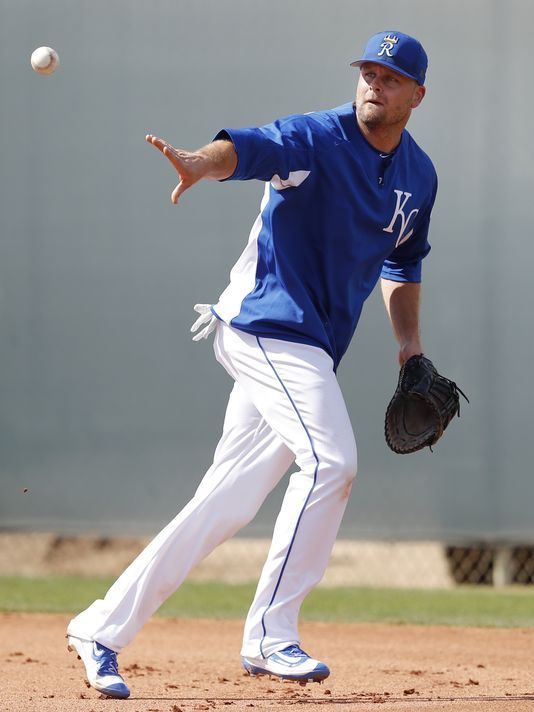
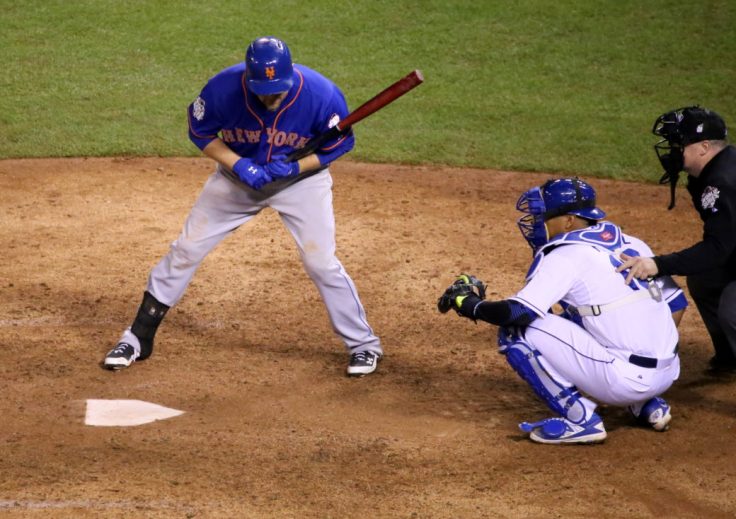

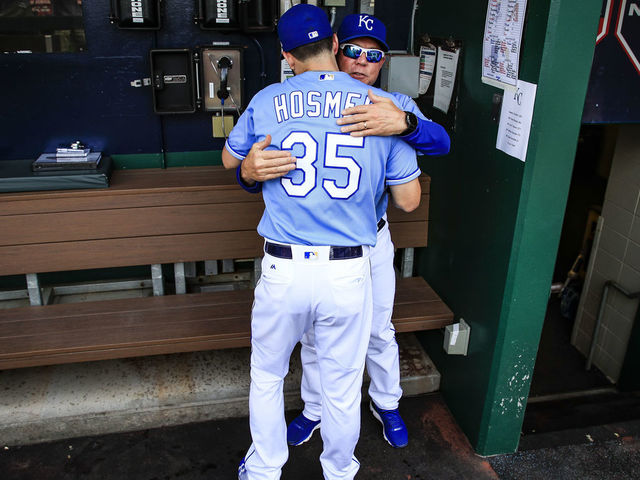


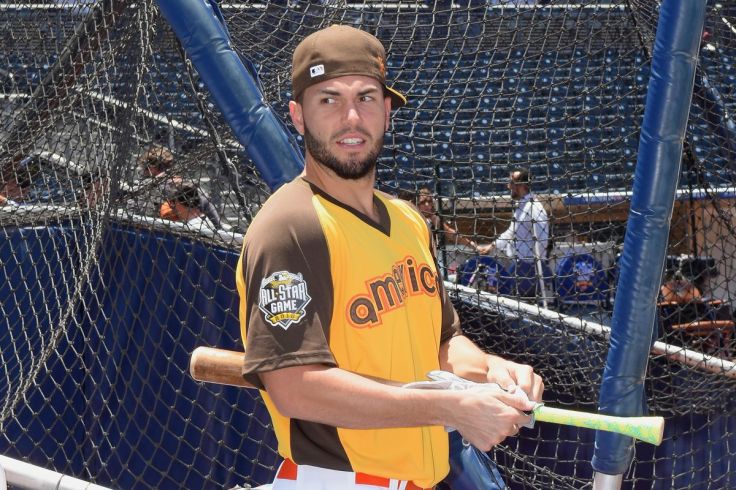


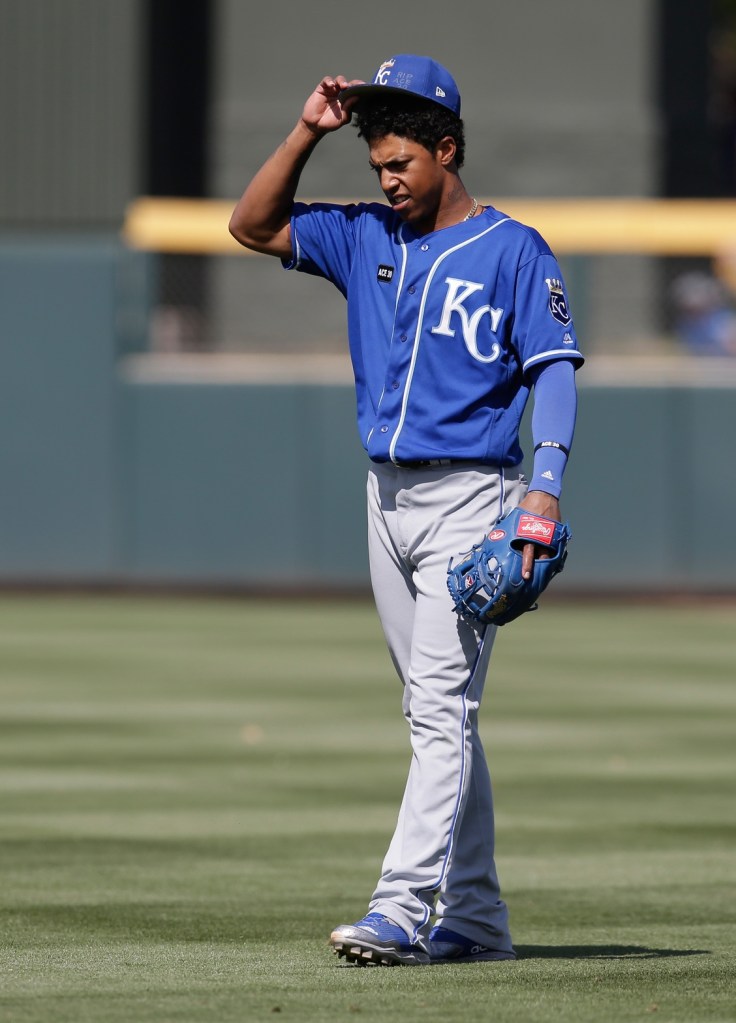

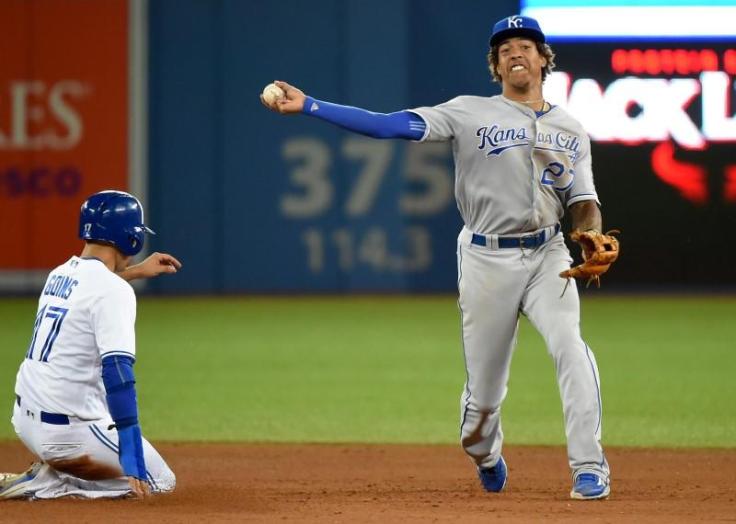

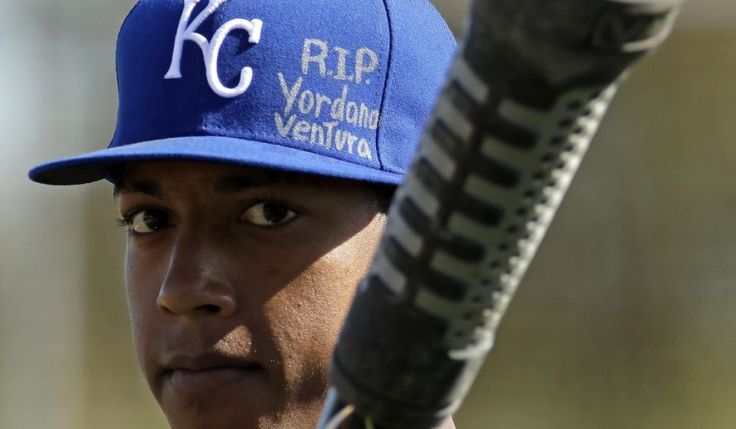


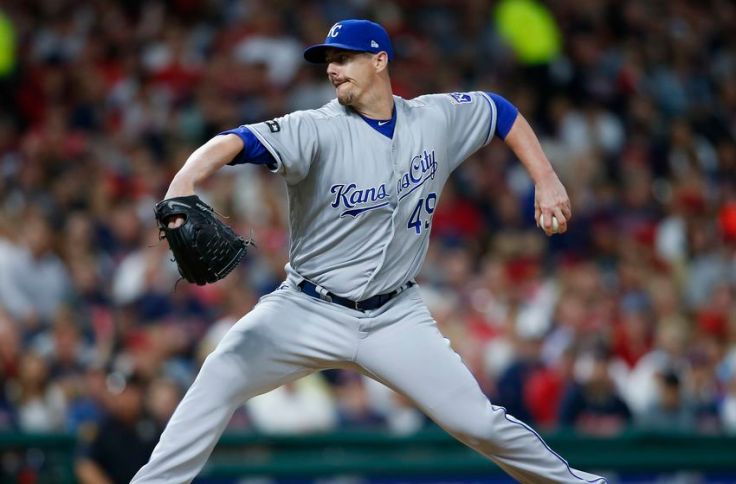


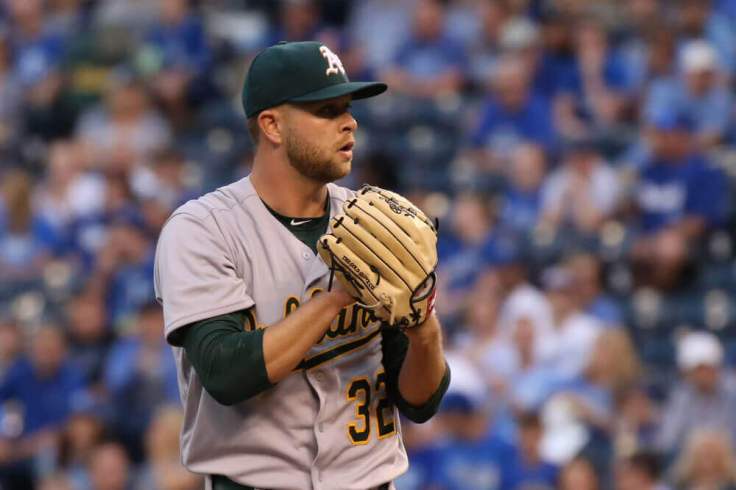
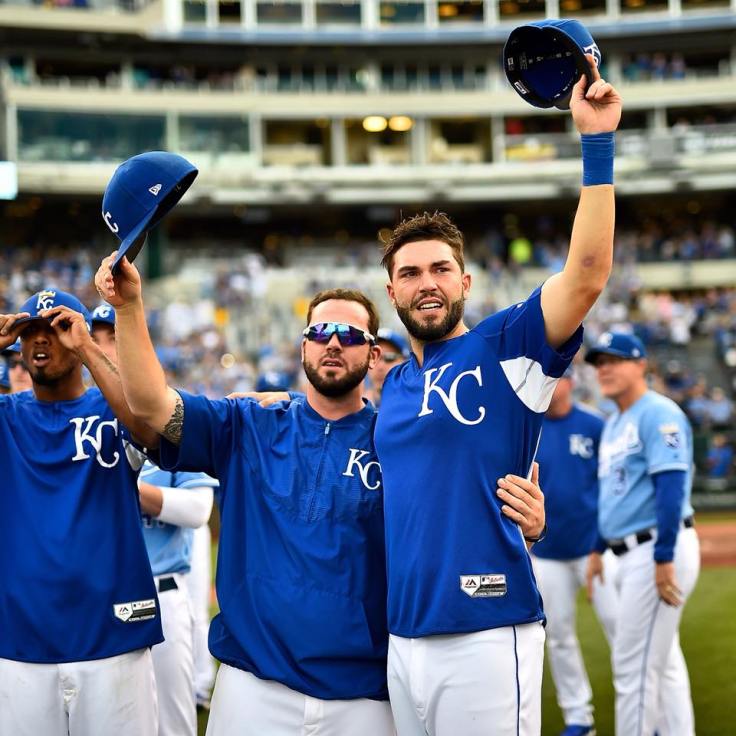
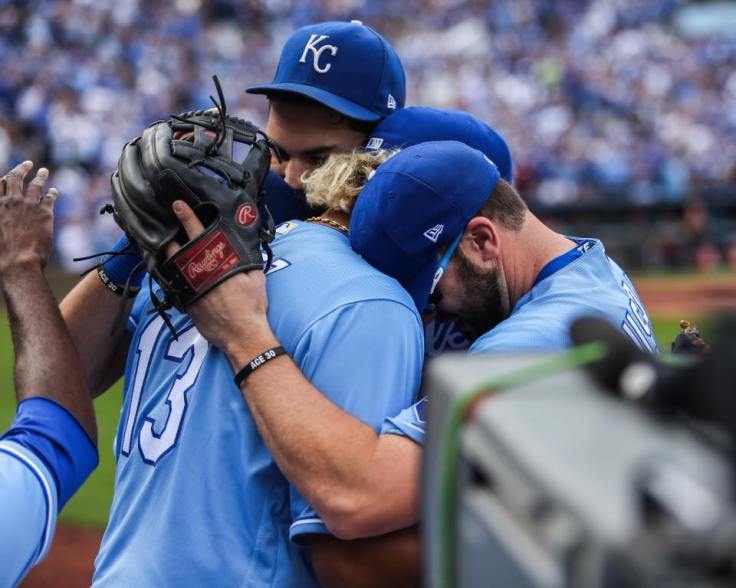
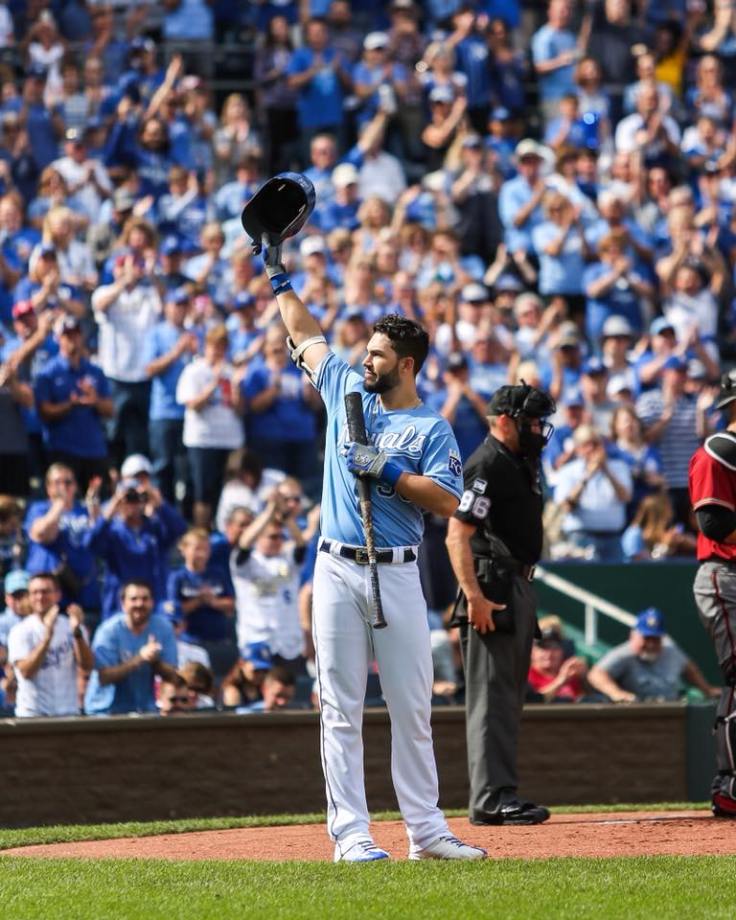
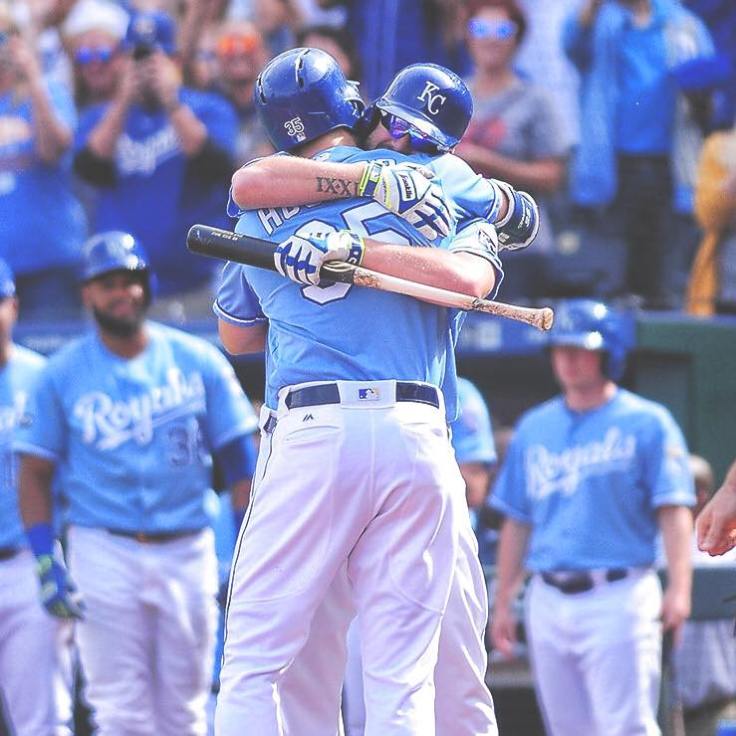

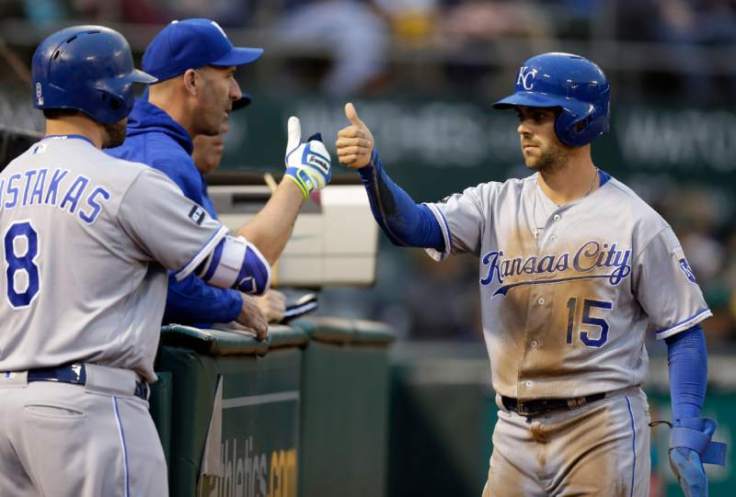
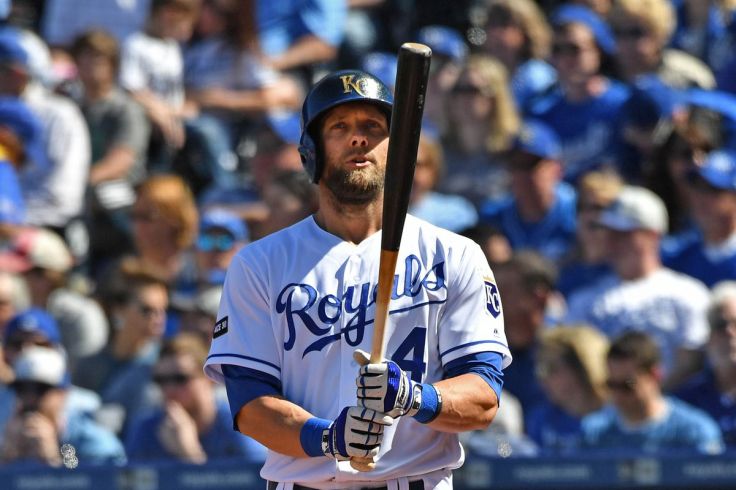
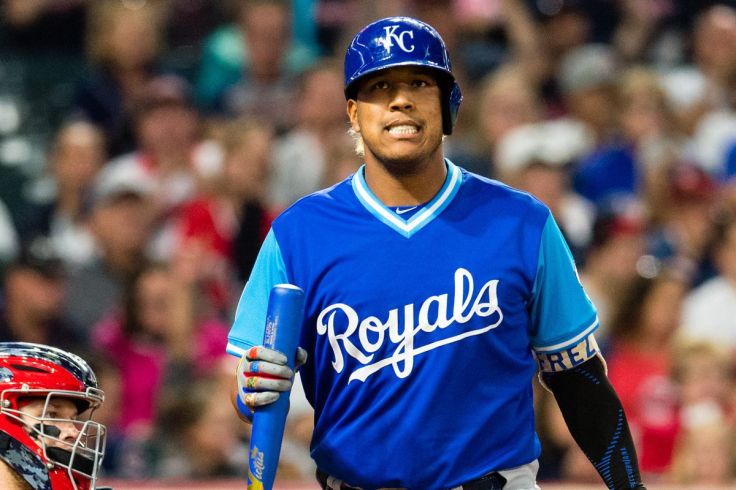
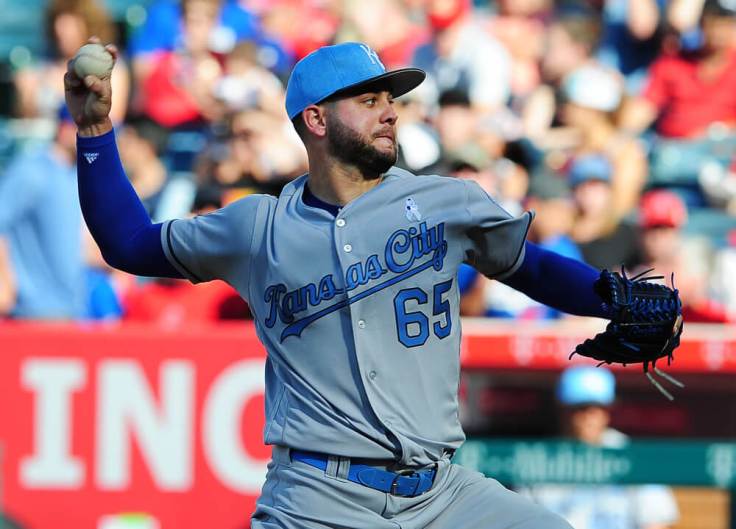
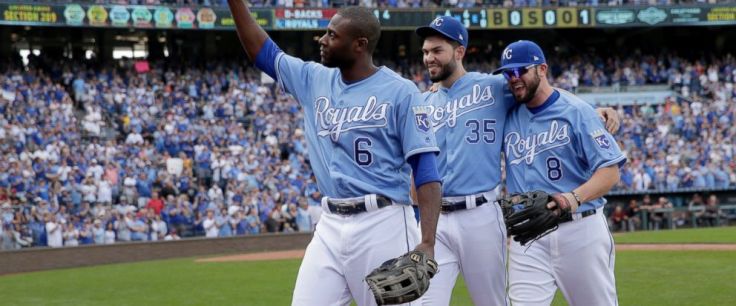
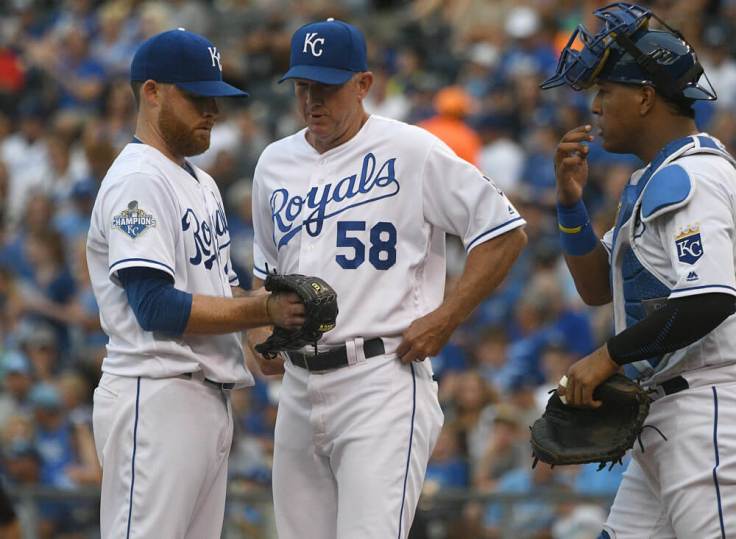
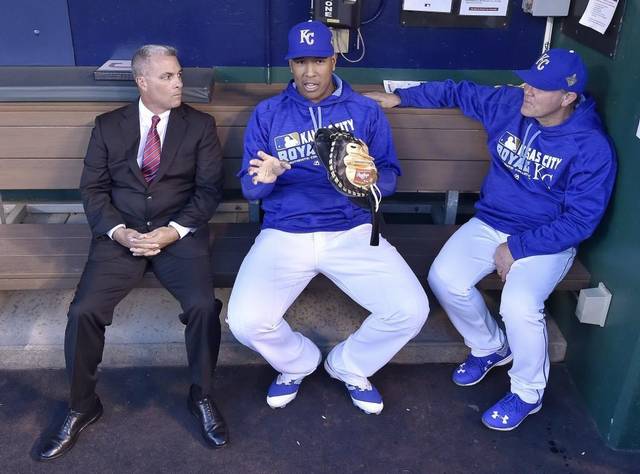
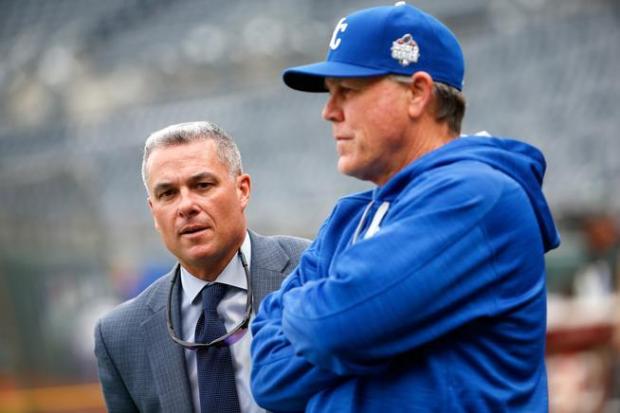
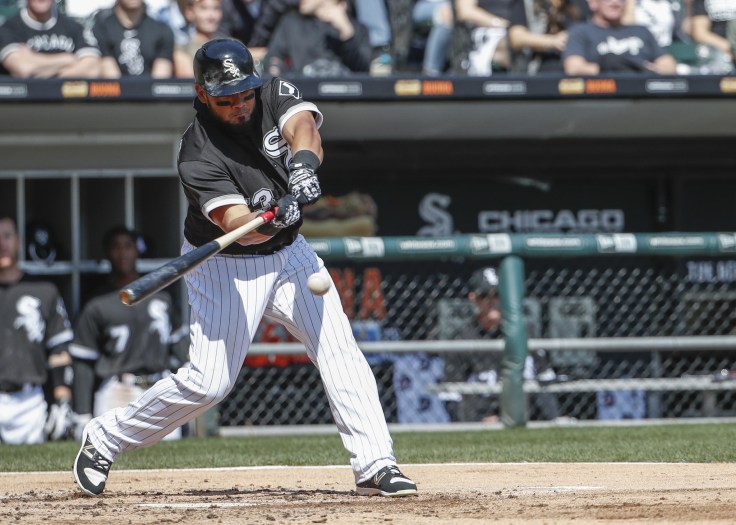
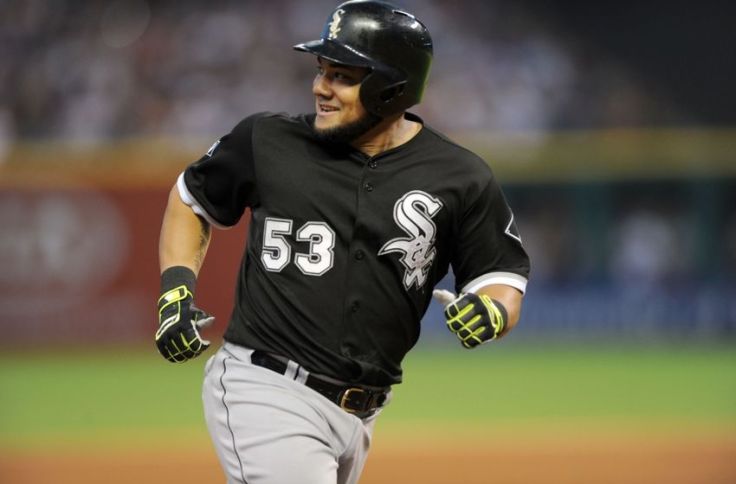
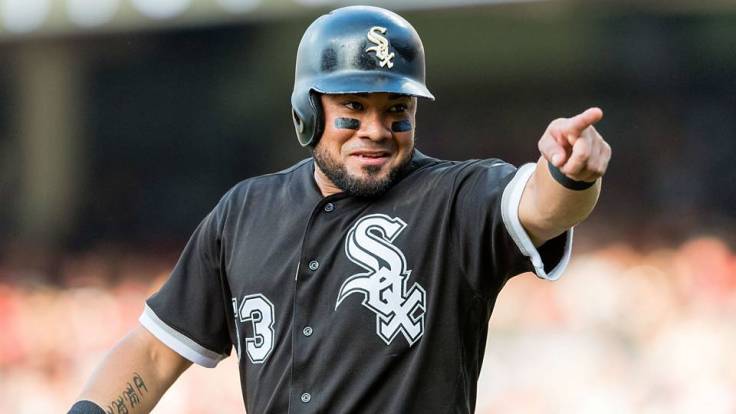
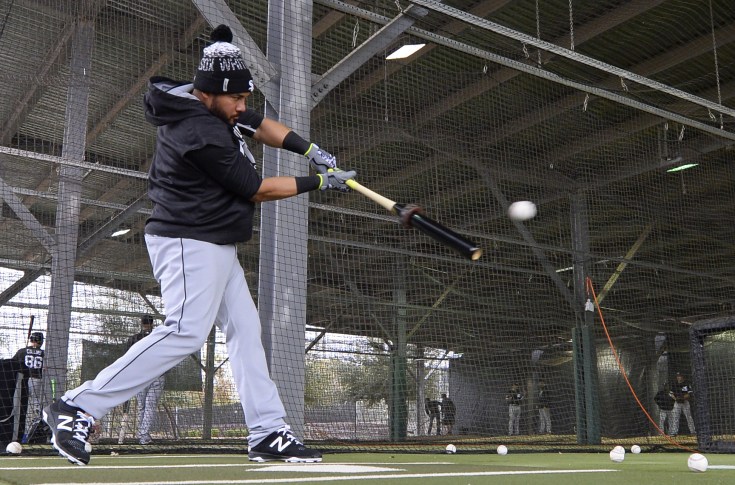
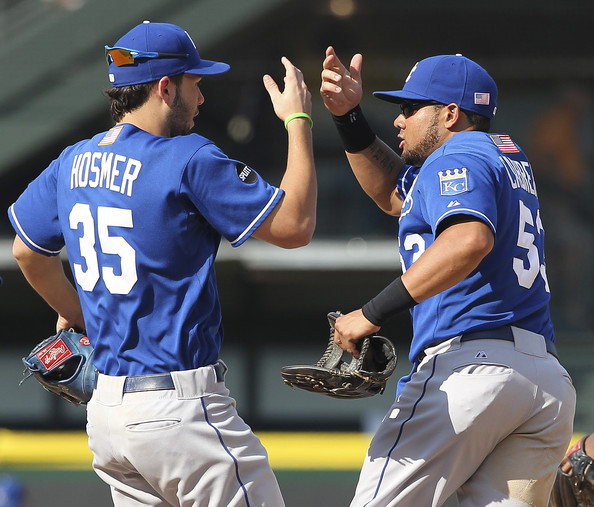

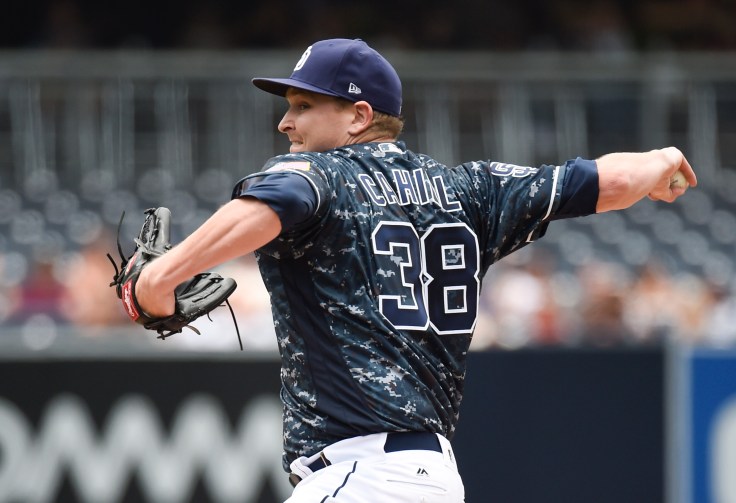
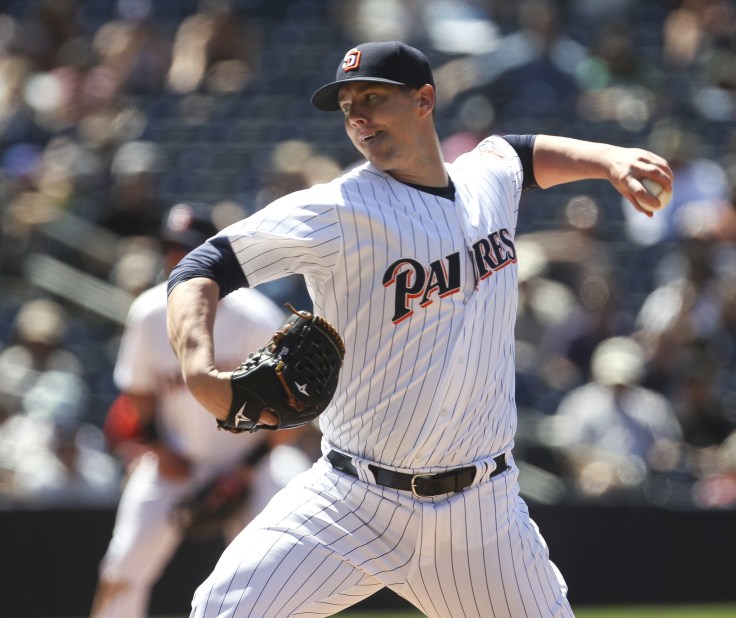
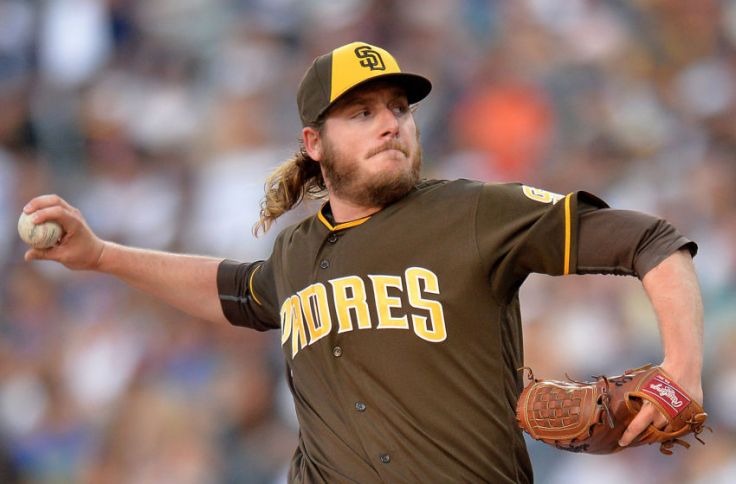
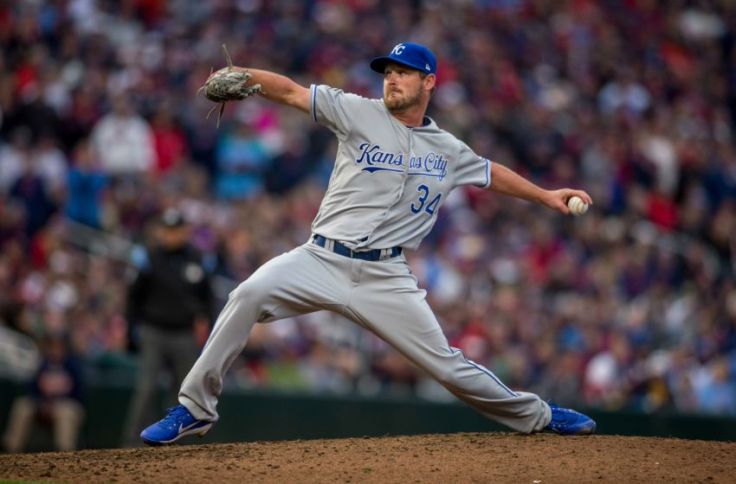

 Bleeding Royal Blue