The Most Mediocre Players in Royals History

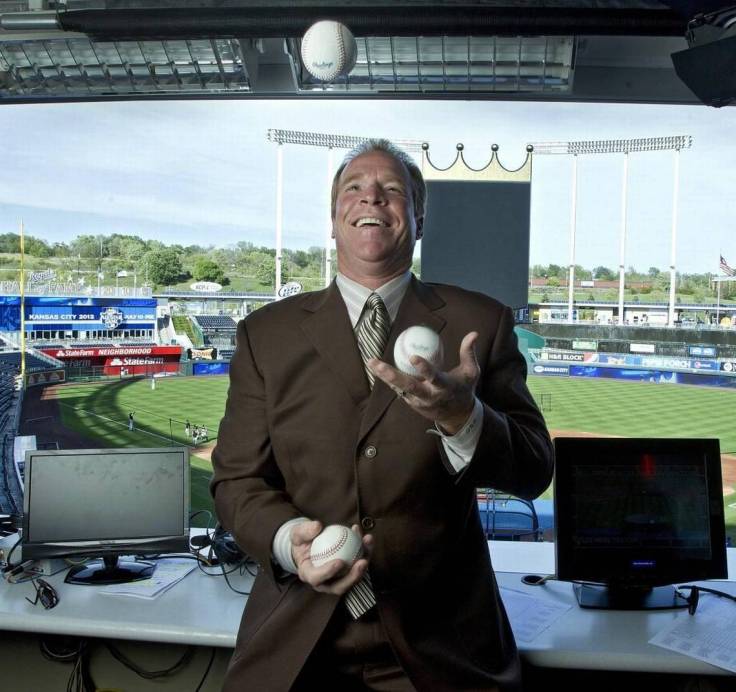
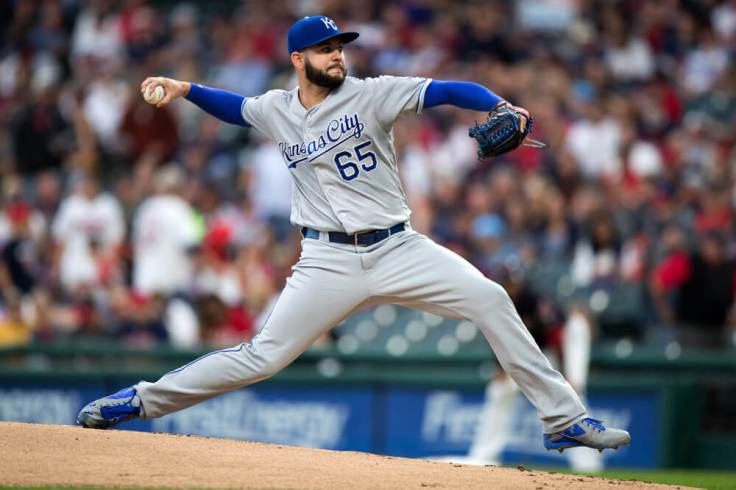
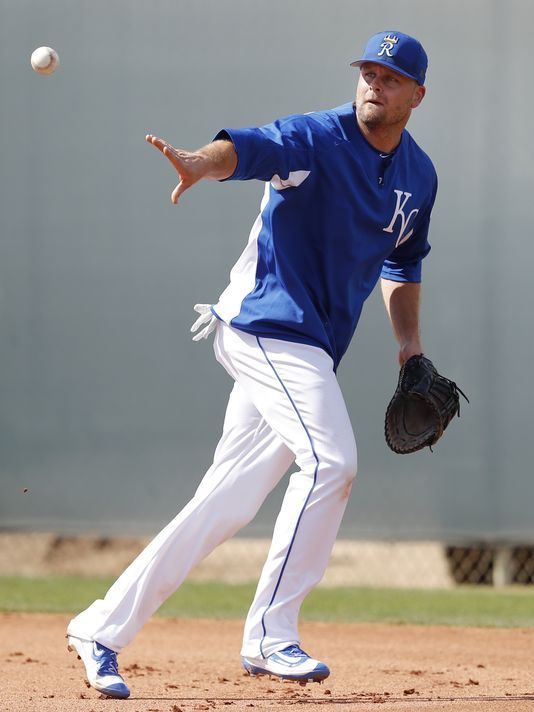
Royals catcher Brent Mayne.
Credit: Barry Taylor Photography

As the Kansas City Royals enter the 50th year of their existence, it’s commonplace to take a deeper look into the franchise’s history and the gold and glory that comes with it. It’s easy to look at all the accomplishments and the positives that come with it. But it also can lead you down a dark tunnel, one that many refuse to even glance at.

When I saw this tweet, my brain started churning:

https://twitter.com/joeshyk/status/980914717018423296

Now, this is obviously a bracket for the Pittsburgh Pirates, but it tossed a question into my brain: who is the most mediocre player in Royals history? Has anyone really delved into that? Or has anyone even been brave enough to jaunt down that rabbit hole?

Closeup Of George Brett

We could do a list of the best Royals of all-time, but we can answer that without even looking up any stats: George Brett is the greatest hitter and Kevin Appier is the best pitcher. See, simple enough?

Astros v Royals X
Credit: Getty Images

We could even do a worst of all-time, but we all know that is Neifi Perez. Hey, the numbers might not back this up but I find it hard to believe that much of anyone will argue with Neifi being the choice. Sure, Dee Brown has less fWAR (-4.1 to Neifi’s -3.2) but Neifi was like that family member that just shows up on your doorstep and invites themselves to stay for a month. Then they just crash on your couch, watching reruns of ‘Family Guy’ the entire time. Sorry about the tangent but you get the point. When the only Royals player Sung Woo Lee has ever disliked is you, you are officially the worst. So Neifi, you officially get that honor. Congrats, I guess.

But what about mediocre? That doesn’t mean you are good or bad. It means you are…just there. Ordinary, average, middle of the road, run of the mill, pedestrian and probably forgettable. There have been a number of forgettable names that have put on a Royals jersey over the years, but it takes a special kind to be mediocre.

So when I decided to take this challenge, I needed to decide on my criteria. Initially I thought of making a bracket, if for no reason then so I could toss in a Jeff Reboulet here or a Dave Wickersham there (I’m not joking when I say that is not a made up name. Totally real).

Instead I decided to go with players who have a career 0.0 fWAR during their entire tenure in Kansas City. Nothing says ‘mediocre’ like a middle of the road number like 0.0. I thought about using wRC+ for batters and ERA+ for pitchers, but that wouldn’t deliver the true scope of mediocrity that I am looking for.

Since there was a decent amount of players who actually achieved this wearing the royal blue, I then went ahead and broke it down according to those batters with the most plate appearances and pitchers with the most innings while accomplishing 0.0 WAR. So let’s start first with the pitchers:

kc4

#3- Don Hood

Hood comes in third place for this ‘race of the mediocre’ as he pitched 114.1 innings as a Royal, with a respectable 2.99 ERA, 4.31 FIP, 3.78 K’s per 9, 2.83 BB’s per 9 in 57 games for Kansas City. Honestly, the only reason I even remember Hood is because I have his baseball card. He pitched for the Royals during his last two big league seasons, 1982 and 1983, while primarily pitching out of the pen.

Not only was Hood’s ERA pretty good, but he also posted an ERA+ of 137. So he actually was a decent contributor for the team but alas had a 0.0 fWAR, which left him on this list.  Just for posterity’s sake, he did put up 1.2 bWAR, so Baseball Reference does rate him a bit higher.

Hood might actually be a decent representation of forgettable, as I would bet it would be hard to conjure up many Kansas City fans who remember Hood’s time with the team.

kc5
Credit: Stephen Dunn

#2- Blake Wood

Wood is a more recent contributor to the ‘House of Mediocre’, as he pitched for the Royals during the 2010-2011 campaigns, his first two seasons in the majors. Wood compiled an ERA of 4.30, 4.15 FIP, 7.01 K’s per 9 and an ERA+ of 97 over 119.1 innings.

Amazingly, Wood appeared in 106 games during that two year span and while Fangraphs has his WAR at 0.0, Baseball Reference once again has it a tad higher, at 0.9. Maybe the funniest part about this entire test is that Wood continues to be pretty pedestrian, putting up a career ERA+ of 95 (slightly below average) and an fWAR & bWAR of 1.0 over seven seasons. It’s easy to see now that Wood is a great fit as a mediocre former Royal.

Detroit Tigers vs Kansas City Royals
Credit: Barry Taylor Photography

#1- Jorge De La Rosa

The most mediocre Royals pitcher of all-time is someone who has been around forever and I’m sure a few of you don’t even remember his time in Kansas City. De La Rosa spent a part of the 2006 season in Kansas City after being acquired from Milwaukee (for Tony Graffanino) and would also spend 2007 in a Royals uniform. Over 178.2 innings, he would compile a 5.64 ERA, 5.57 FIP, 5.94 K’s per 9, and an ERA+ of 82.

Like the other two, his Baseball Reference WAR skews a bit higher (0.2) and it does feel important to remember that De La Rosa spent his first full season in the big leagues with the Royals in 2007. Since then, he has gone on to pitch 11 more seasons in the majors (15 overall) and is currently pitching for the Diamondbacks.

Maybe the best part of this project is seeing how these players have turned out and De La Rosa has continued down a path of mediocrity. De La Rosa’s career ERA+ is 99 and has accumulated 14.6 fWAR over 14 seasons, or a shade over 1.0 wins above replacement per season. De La Rosa proves that while being average could appear bad to some, it can also lead to stability in Major League Baseball.

Alright, so there are the mediocre pitchers, so now we shift over to the hitters.

kc7

#3- Butch Davis

I’m just going to be honest: I don’t remember Butch Davis. Davis was an outfielder that played in Kansas City from 1983 to 1984. In those two years, Davis made it to the plate 258 times, posting a line of .248/.285/.370  with 4 home runs and 30 RBI’s.

The weird part is that Davis actually had a really solid rookie year in 1983, as he hit .344/.359/.508 with a wRC+ of 135 over 130 plate appearances. Davis would plummet in ’84 though, hitting just .147/.211/.224 in 128 plate appearances.

Combined, this led to a wRC+ of 79, a fWAR of 0.0 and a bWAR of 0.2. Pretty average numbers for a player who ends up as the third most mediocre hitter in Royals history.

kc8

#2- Rudy Law

I do remember Rudy Law, as he was signed by Kansas City after the 1985 season to play in the outfield. In fact, Law was actually a pretty good player for the White Sox during the 1982 and 1983 seasons, almost even posting a 3 win season in ’83.

Law would appear in 86 games for the Royals in 1986, with 341 plate appearances. He would hit .261/.327/.388 with one home run and 36 RBI’s. He would also post a wRC+ of 95 (pretty average), which was actually on par with his 1983 season.

The biggest difference for Law appeared to be on defense in Kansas City, as his dWAR fell to -0.9 after being around average the previous few seasons. This led to the 0.0 fWAR and a 0.5 bWAR. While I do remember Rudy’s time in Kansas City, it’s easy to see how you could forget his short stay there as well.

Royals catcher Brent Mayne.
Credit: Barry Taylor Photography

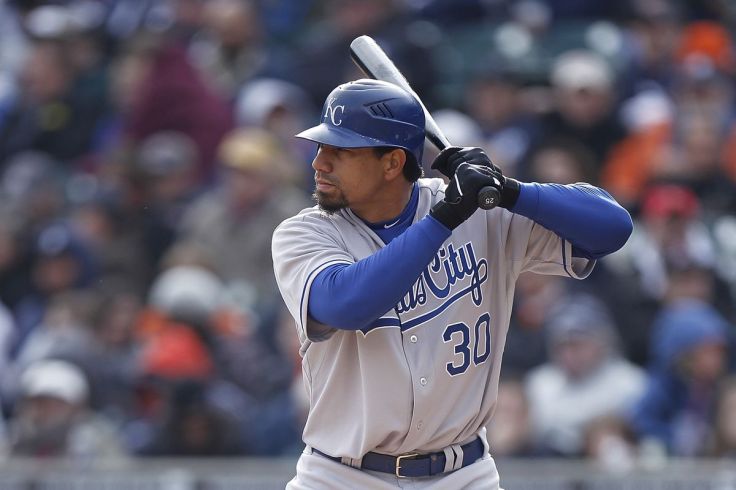
#1- Brent Mayne

All of this middle of the road talent has led us to this, the guy who not only is the #1 most mediocre position player in Royals history, but the overall #1…and it isn’t even close. It only makes sense that the most run of the mill Royals player would be a guy that the team drafted in the 1st round back in 1989.

Brent Mayne would pull multiple tours of duty for Kansas City (1990-1995 and 2001-2003) and just looking at the numbers show how pedestrian he really was. Mayne would hit .244/.305/.322 with 20 home runs and 205 RBI’s in a Royals uniform. The honest truth was that Mayne was more wildly known for his defense than his offense, which also explains the career wRC+ of 74 and a 63 for his tenure in Kansas City.

So why does Mayne stack above everyone else? Most of the other players on this list had very brief careers as a Royal whereas Mayne would play nine seasons for our boys in blue. He would rack up 2200 plate appearances over 664 career games for Kansas City and no player on this list can even come close to those numbers while also posting pure mediocrity.

In those nine seasons, Mayne would have only four seasons with a fWAR above 0.0 and in 2002 he actually finished the season at 0.0! You’ve probably also noticed that throughout this experiment most of the players would put up a better WAR according to Baseball Reference than Fangraphs.

So in an ironic twist, it appears that Mayne’s fWAR (0.0) is actually higher than it is on Baseball Reference (-1.2). This obviously is because of how each site factors their wins above replacement, but it does show how Mayne’s value can shift according to what you are looking for.

If you watched the Royals during what I like to refer to as ‘The Lean Years”, you probably saw Brent Mayne play and you are probably completely agreeing with him ending up at the top of this list. The funny part is that while I am poking a bit of fun toward a list of mediocrity, Mayne is more proof that being average can actually be a strength. Mayne ended up with a 15 year career, got to appear in the playoffs in 2004 and racked up over $13 million dollars in his career. All in all, that speaks of a very blessed career for Mr. Mayne.

Mayne homers in the eighth inning.
Barry Taylor Photography

So there you go, the most mediocre players in Royals history. Now it’s your turn: who do you think should be the most mediocre? Who was your favorite mediocre player? Would you go by a different point of reference to determine an average player? Maybe break it down to decades? Let us know who you feel is an all-time mediocre Royal.

Lost Opportunities

MLB: Baltimore Orioles at Kansas City Royals

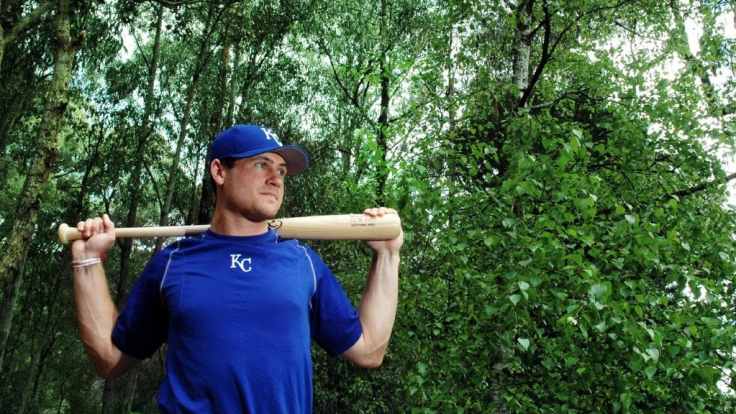
The other day Matthew LaMar wrote about Hunter Dozier and the unwillingness of the Kansas City Royals to give him an opportunity when a spot has become available on the roster. Matthew wrote up a number of reasons why the team might have passed him over and some of them might carry some weight, especially among those in the Royals front office or even their scouting department.

But Dozier is not the first prospect in the Kansas City farm system to be passed over despite not having anyone of actual value holding them back. In fact, over the years the team has found a way to not see what they have with their younger talent. There for a long time, the Royals were infamous for bypassing younger players for older ones with more big league experience.

kc2

Justin Huber was one of the first names to pop in my mind when I thought of players not given a chance to perform. Huber was a highly touted prospect in the New York Mets system when they traded him to the Royals before the 2004 trade deadline for…Jose Bautista. Huber was initially a catcher, but after the trade he tore cartilage in his left knee and underwent surgery that would end his career behind the dish. The Royals would move him to first base and eventually shift him to the outfield later in his career.

Huber consistently was slugging in the .450-.475 range for most of his minor league years in New York and during his first season in the Kansas City organization hit .326/.417/.560 over 527 plate appearances. He would get a slight audition with the major league club that year, playing in 25 games while hitting just .218/.271/.256  over 85 plate appearances.

He would end up back in Omaha to start 2006 but would end up only getting 11 plate appearances that year. I specifically remember the team recalling him in May of that year for a series against Minnesota and he would only get one at bat, a pinch-hitting appearance on May 3rd.

At the time the Royals had Doug Mientkiewicz at first base and while he was a good hitter with a great glove, he also was in his age 32 season and was a one year solution at first. In layman’s terms, no one of major value was blocking Huber from getting playing time. Alas it was not to be, as Huber would play eight more games for the Royals in 2007 before being traded to San Diego in March of 2008.

kc3
Credit: Gregory Shamus/Getty Images

Speaking of first baseman, Kila Ka’aihue is another player who the Royals dragged their feet on. Ka’aihue put up a monster year in 2008, hitting .314/.456/.628 with 37 home runs and 100 RBI’s while splitting time in AA and AAA. The Royals gave him 24 plate appearances that September and he looked to at least be an option in 2009.

Instead, Ka’aihue would spend the entire 2009 season in Omaha, hitting .252/.392/.433 with 17 home runs and 57 RBI’s. Meanwhile, the Royals had a 1B/DH combo of Billy Butler and…Mike Jacobs. Jacobs was awful during his only season in Kansas City, hitting .228/.297/.401 with an OPS+ of 84. He would be released by Kansas City in December of that year.

Ka’aihue would get a bit of a chance in May of the following year, as he was recalled to Kansas City but would still see the majority of his playing time in Omaha. He finished the 2010 season on a bit of a hot streak with 8 home runs and 25 RBI’s.

But we knew what would happen next. Eric Hosmer was on the horizon and with Billy Butler firmly entrenched at DH, that left Ka’aihue without a spot. He would end his Kansas City career with only 326 plate appearances in a four-year span, hitting .216/.309/.375.

kc4

Finally, there is the tale of Johnny Giavotella. Giavotella moved quickly through the Kansas City farm system and by the end of 2011 had posted wRC+ seasons of 123, 108, 139 and 118 and was easily the best second base prospect in the organization.

Giavotella was recalled in August of 2011 and two days after would hit his first major league home run off of Max Scherzer. Gio would spend the last two months in Kansas City, hitting .247/.273/.376 with a wRC+ of 72. He would spend 2012 bouncing back and forth between AAA and the majors, compiling 189 plate appearances and a wRC+ of 55.

At the time, “Mistake Free” Chris Getz was the Royals second baseman and while he was decent on defense, he was below average with the bat. The Royals liked Getz’s glove and Giavotella’s defense obviously hurt him in the Royals’ eyes. The fact he hadn’t hit during his short trials probably didn’t help matters either.

By the end of 2014 he was designated for assignment and would end his Royals career getting 465 plate appearances (over four years), hitting .238/.277/.334 and an OPS+ of 67. It always felt like Johnny was never given a prolonged look at the position to truly see what he was capable of and the question was always what would happen if he was just told to go out there and play on a day-to-day basis.

That is the issue with all of these players and what appears could happen to Dozier. None of the names I mentioned above were ever really truly given a chance to get comfortable and play on a consistent basis in Kansas City. The chances they were given were sporadic at best and it was frustrating to watch replacement level veterans filling spots on a number of Royals teams that, to be honest, just weren’t going anywhere.

That is the point of this whole thing. I’m not saying that Ka’aihue, Giavotella or Huber (or even someone like Jose Martinez years later) would have been top shelf offensive stars and would plant themselves in the Royals lineups for years and years. For all we know they would have produced exactly like they did in their short time with the team.

kc5
Credit: MLB.com

But they should have been given the chance to see what they could do, especially since no one was blocking them. We saw Hosmer and Mike Moustakas struggle for years to reach a level of success in the big leagues and the organization allowed them that time to figure it out on a yearly basis.

The players mentioned weren’t afforded that same chance and because of that we are forever left with questions with what could have been. The Royals have an opportunity over the next couple of years to give a number of players the chance to prove their worth and the time to let them fail and pick themselves back up. Sure, not every prospect is going to succeed and a number of them won’t be keepers. But you never know unless you give them the opportunity.

Not allowing someone like Dozier or even someone like Ryan O’Hearn an opportunity after all the time that has been invested in them feels like a loss of resources. At least find out what these guys can and can’t do; if the Royals want to cut bait after that then they are perfectly within their rights. But don’t leave questions left unanswered.

The 2018 Fake Royals Predictions

kc1

With the Royals just a few days away from kicking off this 2018 campaign, I thought it would be good to throw out some predictions. But not the normal sort of predictions. No, I traveled down a different road.

So here are your 2018 Royals fake predictions. I’ve done these in the past and they were wildly popular. These are all jokes, so please don’t take any of this too seriously. They are just meant as amusement as we get ready to kick off the new season. So without further ado, here are your ‘Fake Royals Predictions’!

kc3
Credit:Associated Press
  • After a near-death experience in the offseason, manager Ned Yost has grown a greater appreciation for the men and women of the media that he interacts with on a regular basis. Rather than snarky sound bites and short, abrupt answers, Ned gives the media answers with heartfelt, thought provoking feeling and life affirming positivity. Then they have a group hug when the session is over.
  • On Opening Day, Lucas Duda will make his official Royals debut…and will be awarded a 2015 World Championship ring.
  • With Lorenzo Cain off to Milwaukee, Salvador Perez is in need of a new best friend that he can harass and shoot instagram videos of. Luckily, that honor has been bestowed onto Jon Jay. Unbeknownst to Jay, he agreed to it when he signed his contract, as it was slipped in there thanks to some sneaky maneuvering by Salvy.

Image result for fun alex gordon

  • Alex Gordon’s offensive struggles continue as the season begins, forcing him to try everything in the book to get out of this two-year funk. Gordon even resorts to eating junk food, which actually does improve his production…at first.
  • After appearing in all 162 games for three of the last four seasons, Alcides Escobar goes to Ned Yost 25 games into the season and asks for a day off because he is tired. Escobar falls asleep and awakens the last week of September, missing almost the entire season.
  • After giving up a dozen home runs, Ian Kennedy finally decides to become a different pitcher, one who focuses on ground balls. He then goes from giving up long bombs to inside the park home runs, still leading the league in home runs allowed.
kc6
Credit: John Sleezer/KC Star
  • A number of Royals fans attempt to play ‘Rex Bingo’ (a game my family created last year) during a lazy May afternoon game but everyone hits bingo by the second inning. All the mentions of ‘hands’ and ‘sneaking cheese by a hungry rat’ seems to have caused their boards to fill up super fast.
  • Jason Hammel asks to be moved to the bullpen and puts up good numbers through the first half. Come to find out after the All-Star break that Hammel and Luke Hochevar had a ‘Parent Trap’ moment and it was Luke all along these last two seasons.
  • In Whit Merrifield’s never-ending quest to ‘beef up’, he increases his protein intake and starts adding even more muscle mass to his frame. Whit sees a spike in his home runs yet again, but on the diamond he becomes a defensive liability. Think Daniel Murphy crossed with Alberto Callaspo at second base.
  • Steve Physioc realizes that the notes he is given before each game are to be used to help him during the broadcast. Not only does he start sounding like a competent announcer, he also receives less glares from Denny Matthews.
  • Danny Duffy stays healthy.
  • The Royals swap out one debonair first base coach for another, as Mitch Maier takes over for Rusty Kuntz. While many will miss Rusty, it doesn’t take long for the fans to warm up to the former Royals outfielder. A petition is started and Maier will get his own bobblehead night in 2019.

Image result for fun kelvin herrera

  • While trying to forget a rough 2017, Kelvin Herrera decides to add an eephus pitch to his repertoire. Herrera finds success again, but it kills the Royals time of game. The pace of play Gods are angered.
  • Richard Lovelady tires of all the talk of his name and little discussion on his actual statistics. This leads him to change his name to something very bland and vanilla. You can now legally call him ‘Tim Collins’.
  • As the Royals attempt to stay as ‘pure’ as humanly possible, they start attending workshops over the summer discussing the ill effects of watching cartoon animals who don’t wear pants.

kc2

  • Mike Moustakas was only able to land a $6.5 million deal this winter to return to Kansas City. The cut in pay has made it harder on Moose, as he no longer can afford his Stouffer Fit Kitchen Meals.
  • Brian Flynn will not fall through a barn…at least not for the first month of the season. All bets off after that.
  • Jorge Soler will hit the ball so hard this year that he will actually knock the cover off the ball. Also, Soler will swing and miss so hard that he will knock the cover off the ball.
  • and finally, the Royals will replace hitting coach Terry Bradshaw in May as the offense struggles. He will be replaced with former Pittsburgh Steelers quarterback Terry Bradshaw. Somehow, the offense will become the best in the league.
kc4
Credit: John Sleezer/KC Star

So there you go, my 2018 fake Royals predictions. Hopefully you took them as they meant to be, which is all in jest. I will seriously crack up laughing if even one of these come true. I’m sure there is one or two I missed. So what fake predictions do you have for the upcoming season? What would amuse you if it happened to the Royals in 2018?


Ready to Start: My 2018 MLB Predictions

kc1

There might be no greater day in the entire calendar year than Opening Day of the Major League Baseball season. The hope, the promise and the search for glory all start today and the standings all say your team is still in it. Every year I like to break down how I believe the season will go…and then go back a few months later and laugh at how far off I was.

In fact if you want to view my guesses last year, just click here. To go a step further, we are keeping me honest this year, as part of these predictions I already did over at Royals Review, as the staff (myself included) broke down the upcoming season. As I stress every year, these are just some fun guesses and by no means should you take this super serious. No one really knows how this will play out, but it’s fun trying to predict. So with that said, here are my 2018 MLB predictions.

kc2
Credit: Jim McIsaac | Getty Images

AL EAST

  1. New York Yankees
  2. Boston Red Sox
  3. Toronto Blue Jays
  4. Tampa Bay Rays
  5. Baltimore Orioles

Image result for kansas city royals 2018

AL CENTRAL

  1. Minnesota Twins
  2. Cleveland Indians
  3. Chicago White Sox
  4. Kansas City Royals
  5. Detroit Tigers


kc3

AL WEST

  1. Houston Astros
  2. Los Angeles Angels
  3. Seattle Mariners
  4. Texas Rangers
  5. Oakland A’s
kc4
Credit: Brad Mills-USA TODAY Sports

NL EAST

  1. Washington Nationals
  2. Philadelphia Phillies
  3. New York Mets
  4. Atlanta Braves
  5. Miami Marlins

Chicago Cubs v Milwaukee Brewers

NL CENTRAL

  1. Milwaukee Brewers
  2. Chicago Cubs
  3. St. Louis Cardinals
  4. Cincinnati Reds
  5. Pittsburgh Pirates
kc6
Credit: Associated Press

NL WEST

  1. Los Angeles Dodgers
  2. Arizona Diamondbacks
  3. Colorado Rockies
  4. San Francisco Giants
  5. San Diego Padres
kc7
Credit: David J. Phillip / Associated Press

Awards

Related image

American League MVP: Mike Trout, Los Angeles

kc8
Credit: Getty Images

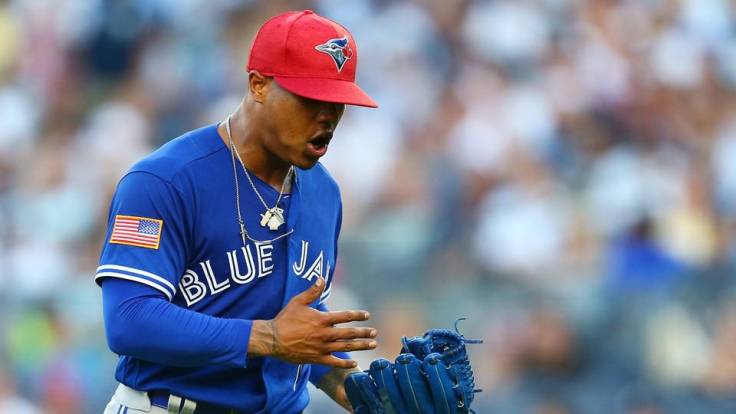
American League Cy Young: Marcus Stroman, Toronto

Image result for eloy jimenez

American League Rookie of the Year: Eloy Jimenez, Chicago

kc9
Credit: Getty Images

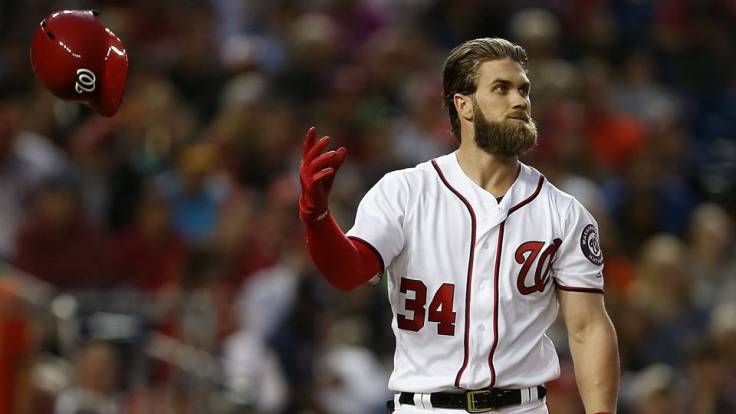
National League MVP: Bryce Harper, Washington

kc10
Credit: Jasen Vinlove-USA TODAY Sports

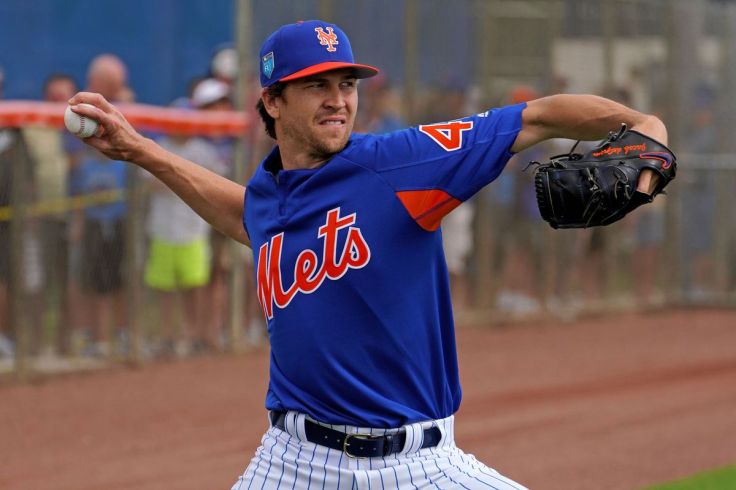
National League Cy Young: Jacob deGrom, New York

kc11

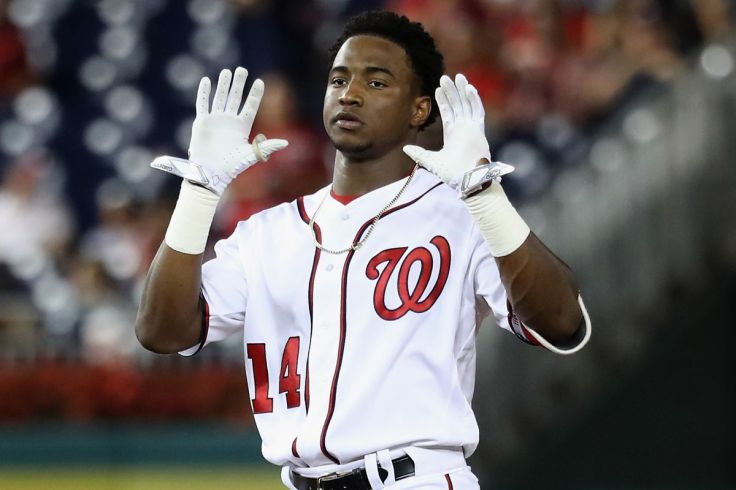
National League Rookie of the Year: Victor Robles, Washington

Kansas City Royals v Cleveland Indians

Playoff Teams

kc13
Credit: AP Photo/Charles Krupa

American League

Division Winners: New York, Minnesota, Houston

Wild Cards: Cleveland, Los Angeles

American League Champions: Houston

kc14
Credit: Jamie Squire/Getty Images

National League

Division Winners: Washington, Milwaukee, Los Angeles

Wild Cards: Chicago, Arizona

National League Champions: Washington

kcOD
Credit: John Sleezer/KC Star

Am I super confident about my picks? Nope. Baseball is a funny thing, largely because of the length of the season. There are so many twists and turns that there is no way to truly predict how it will all shake down. What I can say with confidence is that another fun, memorable season is getting ready to start and I can’t wait. The best part about baseball is the storyline that it revolves around. I can’t wait to see how this whole thing unfolds. Last October, we had a crazy Houston/Los Angeles World Series; what do the baseball God’s have in store for us this year? Truly, only time will tell.


The 2018 Kansas City Royals: Where Do We Go From Here?

kc1
Credit: Christa Dubill

You don’t think about it during the run. It escapes your mind every October. There is no thought of it during the parades, the raising of the flags or the passing out of rings. It’s after the gold and glory start to fade that you actually begin to think about rebuilding.

The Kansas City Royals have been running with their hair on fire for the past four years and while it sits in the back of our minds, you don’t really begin to think about how to start over until it smacks you in the face. The Royals have dealt with the probability of their next chapter since November, when Eric Hosmer, Lorenzo Cain, Mike Moustakas and Alcides Escobar filed for free agency. They were the last major pieces of the 2015 World Champions to leave the nest and move on from one of the greatest eras in Royals history. Or at least two of them did.

So with Opening Day just a few days away and the Royals looking ahead to their future, it feels like the right time to break down what you should really expect from the ‘Boys in Blue’ as they embark on a new journey. There are some new faces, some old faces and more than anything, a different outlook.

477583347JS00029_Baltimore_
Credit: Scripps Media, Inc.

Let’s begin with what I think will be a positive this season for the Royals and that is the starting rotation. While on the surface this is an underwhelming group of arms, there is potential here that could be reached if circumstances go the right way. Danny Duffy returns to lead the charge, as he looks to bounce back from a season he would overall like to forget. There were the injuries…and then there was the DUI. By the end of the year it just felt like a wash for Duffman, despite the fact he still managed to lead the pitching staff in WAR over the 146 innings he threw. Duffy left his start on Saturday but right now that looks like a precaution more than anything. If the Royals even hope to sniff a winning season, they need Duffy to be healthy and produce the way he did back in 2016.

Duffy will be followed in the rotation by Ian Kennedy and Jason Hammel. Both are coming off disappointing  campaigns last year and are looking to bounce back. The honest truth is that neither should be this high up in a rotation, but the one thing they do is eat innings. If Kennedy can give up a few less home runs (and stay healthy) and if Hammel can lessen the amount of base runners allowed, the Royals really only need them to be the reliable veterans they have been over the years. It would be even better if Kennedy can come close to approaching his 2016 season and help people forget that he still has three years left on his contract.

kc3
Credit: Frank Jansky/Icon Sportswire

The real potential for the rotation is at the back-end, where Jake Junis and Nate Karns will occupy the final two slots. Junis only posted a 0.9 WAR season in 2017, but it was almost a tale of two seasons for him. In the first half, Junis appeared in eight games (six starts), posting a 5.66 ERA, 1.629 WHIP and a strike out to walk ratio of 1.75. The second half was a different story, as in his 12 appearances he produced a 3.55 ERA, 1.089 WHIP and a strike out to walk ratio of 5.78. Down the stretch, Junis was the Royals most reliable starter and if the team had been able to eek out a playoff appearance, he would have been in the rotation. I’m not a big believer in spring training stats, but Junis did strike out 20 batters in 14 innings while walking only one. His slider has become a very effective out pitch and I wouldn’t be shocked to see him take another big step in 2018.

Karns is one of those pitchers that has always had a stockpile of potential but has always found a way to get hurt. It was not different for him in 2017, as Karns only started eight games before being shelved and having to undergo thoracic outlet syndrome surgery. In fact, over his last four starts he was stellar, posting a 2.01 ERA over 22 innings, striking out 32 while walking only four batters. I discussed Karns a bit more in-depth a few months back and his use of the knuckle-curve has proven to be a game changer for him. If he can stay healthy and on the field, he can be a breath of fresh air for this Royals pitching staff.

kc4

So what if any of the starters go down with an injury? The good news is the amount of decent depth built up within the organization this winter makes an injury not feel like a deal-breaker. Jesse Hahn will start the year on the disabled list but he could be an option if he is able to return in the near future (the earliest he will be back is early May). They also have a couple of righties in Andres Machado and Scott Barlow down in the minors and lefty Eric Skoglund could be an option as well, as he would look to improve on his seven appearances in 2017. Clay Buchholz was signed last week and could be an interesting arm to watch as he works to get back to the big leagues. The one name to keep an eye on is Trevor Oaks, who was acquired from the Dodgers this winter and could be a key piece of the rotation by September. Oaks is a sinkerball pitcher who spent most of last year in AAA and is right on the cusp of getting an opportunity in the majors. Oaks won’t miss a lot of bats, but he will keep the ball on the ground and won’t walk many either, as he has only walked 72 batters in 404 minor league innings throughout his career. If a starter goes down, there is a good chance Oaks will get the call.

kc5
Credit: Jennifer Stewart/Getty Images

While the rotation could be a major plus for the Royals, the offense has at least a chance to be interesting. The mainstays are still here, as Salvador Perez and Mike Moustakas return and will probably produce about on par with what they have done in the past. I do think Moustakas could be a better overall hitter in 2018, as he could have a chip on his shoulder from how his time on the free agent market went this winter. A Moose with an agenda could be a frightening proposition for American League pitchers.

Whit Merrifield will look to improve on his breakout 2017, but the cynic in me thinks he could be in store for a small fall from grace. No one was expecting Whit to hit for power the way he did last year (19 home runs, .460 slugging percentage, .172 ISO) and while I don’t predict a big drop-off for him offensively, there could be a slight adjustment when it comes to the way pitchers approach him this year. The hope is that Whit will be able to adjust as well and negate some of the changes that are sure to pop up.

It should be interesting to see how some of the new bats perform as both Jon Jay and Lucas Duda begin their first season in Kansas City. Jay will probably hit near the top of the order and is a good on-base threat while Duda put together a solid 2017 and is looking to grow on that. While I don’t expect either to duplicate what their predecessors did last year, they are a vital part of the lineup and there is a greater chance they end up being pluses rather than negatives.

kc6

Maybe the most intriguing bat in camp this spring is outfielder Jorge Soler. Soler struggled in his first season in Kansas City and is looking to bounce back and live up to some of the potential that he has been tagged with since the Cubs signed him back in 2012. Soler spent the winter working on his swing and management has really been impressed with what they have seen from him in Arizona:

The interesting part of Soler isn’t as much what he is capable of as much as the ridiculous expectations that have been put on him. I talked this winter about what the Royals really need from Soler and it’s very simple: a solid, run producing bat for the middle of the order with league average defense in right field. I think Soler might be a welcome surprise this year and possibly even reach some of those lofty expectations as he enters his age 26 season.

The rest of the lineup is probably questionable at best. Alcides Escobar returns to play shortstop and we all know what we should really expect from Esky offensively at this point. Alex Gordon is looking to prove that the rumors of his demise are overstated, as he has been working on his approach this spring. My belief is that if Gordon works on hitting the ball to the opposite field while focusing more on getting on base than hitting for power, we might just see an improvement in his overall numbers.

Image result for cheslor cuthbert 2018

The designated hitter spot will be interesting to watch this year, as the Royals won’t be going with just one batter there on a daily basis. Kansas City will attempt to try a floating DH this year, with guys like Cheslor Cuthbert, Soler and Jorge Bonifacio (when he returns from his suspension) probably seeing the majority of at bats there. This will give them flexibility and allow them to try different scenarios throughout the season.

In fact, the lineup we see on Opening Day will more than likely not be the same come September. I fully expect a few bats traded at the deadline, with Moose, Duda and Jay near the top of the list. By September we could be looking at a very young lineup and that could also mean a lot of evaluating by the Royals coaching staff. If these deals go down, they will want to see what they have for 2019 and will give guys like Hunter Dozier and Ryan O’Hearn as many at bats as necessary. While this might not be the best for this year, it will help the team in the future.

kc7
Credit: MLB.com

So what does this mean for the Royals offense in 2018? Probably that it will be an inconsistent bunch. There is a decent amount of firepower right now, with Salvy, Moose, Duda and Soler leading the charge. But there are some possible black holes as well like Gordon and Escobar. Also remember, this is a bunch who don’t like to walk much (they were dead last in walks in all of baseball last year) and teams that don’t take as many bases on balls tend to go through wilder peaks and valleys. Add in the younger bats later in the season and this could be a team who offensively really struggles at times. While they weren’t dead last in the American League last year in wRC+ and offensive WAR, they were near the bottom and haven’t done much to improve the lineup.

kc8
Credit: MLB.com

This leads to another problem spot, which could be the bullpen. The Royals bullpen outperformed expectations in 2017 (they were ranked by Fangraphs #28 before the season and ended up in the middle of the pack) but that was also helped by the great seasons that Scott Alexander and Mike Minor had. Both are now gone and what is left are a number of relievers that struggled last year, which is why Fangraphs has now ranked them 30th overall, which is dead last in all of baseball.

The good news is that both Kelvin Herrera and Brandon Maurer should be able to perform better than their numbers last year showed. I would also expect new signee Justin Grimm to perform closer to his 2016 season than 2017. But once you get past those three veterans you end up with more questions than answers.

Detroit Tigers v Boston Red Sox
Credit: Adam Glanzman/Getty Images

There are a few veteran arms joining the fray this year, like Blaine Boyer and Wily Peralta. There are also young arms like Brad Keller, Tim Hill, Brian Flynn and Eric Skoglund that will get an opportunity to show what they can do. In fact, I would expect the bullpen to be in constant flux this season, or at least until the team starts figuring out who to keep and who to scrap. Kevin McCarthy, Mike Broadway, Kyle Zimmer, Miguel Almonte, Scott Barlow, Richard Lovelady, Eric Stout, Josh Staumont and even Andres Machado could all see time out in the pen this year and the road between Omaha and Kansas City could get pretty worn out.

But the good news from this is a number of those arms are going to stick. Almonte looked this spring like he had finally turned a corner and his electric stuff could play well out of the pen. Lovelady has turned into a highly touted prospect in just a short amount of time and once he is up he will probably stick. Zimmer has always had the stuff but his health has always held him back. While the idea for some of letting this group work out their struggles in big league games sounds harrowing, it is what needs to happen if the Royals are hoping to be contenders again come 2021 or beyond.

So while it is tough to hear, the bullpen is going to struggle. But the pen you see in April probably won’t be the one you see in July. In fact, by then we could be talking about a completely different story when it comes to the Royals relievers. This will be something to keep an eye on for the next few months, as their will be development with a number of Kansas City arms.

kc10
Credit: The Associated Press

The other aspect of this team that will be tough to swallow for some is the defense. Gone is Lorenzo Cain’s ability to cover everything in the outfield. Whether you believe the defensive metrics or not, losing Eric Hosmer at first base will be noticeable. Not only are those two gone, but the elite defenders still in Kansas City are a year older and some of the replacements are league average at best. The Royals teams of 2014-2015 prided themselves on their excellent defense and was a big part of why they had the success they did. Unfortunately, those expectations should be thwarted, as this team defensively will more than likely be a shell of their former selves.

So while the bullpen and defense are no longer the Royals strong points, one aspect of this team that will be fun to follow is the coaching staff. I actually discussed this last week over at Royals Review, but I am really intrigued to see how some of the new coaches are going to shape this team. Cal Eldred, Terry Bradshaw and Vance Wilson have joined the staff and with this will probably come a new way of viewing the pitching and the hitting. In fact, with the likelihood of Ned Yost retiring after this year, we could get a window into the philosophies we could be seeing for years to come. After years of the same coaches scouting and preparing these players, the new bunch will shape a whole new generation of Royals and I for one am excited to see what could come of that.

kc11
Credit: John Sleezer/KC Star

So after all that, what does this mean for the 2018 Kansas City Royals? It means that while there will be some highs this year, there will be a few more lows as the team looks to begin their rebuild. For me, I am always interested in seeing what the young talent can do to outperform the expectations that have been thrown onto them and this group has a lot of players in that category. So while it will probably be a bumpy ride, it will at least be one where we learn more about what the Royals have within their farm system.

Overall I am expecting a 74-88 record, placing them in 4th in the American League Central. I wouldn’t be shocked at a few wins or a few losses going either way, but overall this team will fall a bit short of .500 while feasting on some of the lesser teams within the league. The good news is that most of the veterans under contract this year are only signed for one year, so if they aren’t dealt at the trade deadline they probably won’t be back in 2019. This will free up roster spots for any of the prospects who might elevate their game throughout the upcoming season.

Sure, this isn’t going to be the fun ride we got from September 2014 to November of 2015. But it also shouldn’t be as bumpy as most of the early 2000’s were. While most of the remnants of the glory days are gone, they will never be able to take away those memories that us Royals fans have. It’s time now to regroup, rebuild and motivate. It’s time to begin a new chapter to the next era of Royals baseball. That era begins this week, making it closer every day to another classic Kansas City moment…and it all begins this year. Win or lose, we all bleed Royal blue.


It’s Time to Trust “The Process”…Again

kc1
Credit: Ed Zurga/Getty Images

Sometimes, when I’m half asleep and veering off into unconsciousness, I remember. I remember a time when we relied on hope. It was a simpler time, when players were “mistake free” and reporters were told to “rewind yourself”. It was a time when the thought of a winning season, never mind a full-blown championship, was enough to put a smile on any Kansas City Royals fan’s face. During this period, a phrase was uttered so many times that it became both a mantra and a sarcastic answer to another blow-out loss. That phrase was “Trust the Process”.

I was reminded of this the other day when reading the latest from a former Kansas City scribe, Joe Posnanski. Joe was around for a number of the lean years and remembers them (I’m sure) somewhat fondly. More than that, he remembers Dayton Moore and his beliefs B.C. (Before Championship):

Moore isn’t naive about it; he dutifully answers those questions. But this idea of baseball being bigger than baseball, this is what he really wants to talk about … and it always has been. He has believed from his first day on the job with the Royals that if he could hire great people, acquire talented players who love the game deeply, create an atmosphere where everyone looks forward to coming to the ballpark and appreciates just how lucky they are, that the team unquestionably would win a championship.

People — again, including me — had their doubts.

But that team absolutely did win a championship exactly as Moore planned.

So here we are again. The rebuild has begun. Once again, Moore wants us to believe in “The Process”. But as fans, did we fully buy in before?

kc2
Credit: Jamie Squire/Getty Images

The answer is yes…and no. At first we bought all in. The Royals had become a laughingstock and at that point any sign of an actual plan that might come to fruition seemed promising. What wasn’t promising was the farm system. To truly understand, here are the top ten prospects going into 2006 according to Baseball America:

1. Alex Gordon
2. Billy Butler, of/3b
3. Justin Huber, 1b
4. Chris Lubanski, of
5. Jeff Bianchi, ss
6. Luis Cota, rhp
7. Chris McConnell, ss
8. Mitch Maier, of
9. Donnie Murphy, 2b
10. Shane Costa, of
It started out promising…and then just flat-lines (although I will admit to being a Mitch Maier fan). The system was ranked 23rd in all of baseball to start the year and it was obvious that Moore had his work cut out for him when he took the GM job in June of that year. So at first, we trusted; Moore had an idea where he wanted to go and how to go about it. But as time wore on, our faith wavered.

By 2012 the Royals were almost six years into “The Process” and by the end of May it felt like we had been dealt some cruel, mean joke. Do you remember the slogan for that year? “Our Time”. For those of you not following the team back then, you probably can imagine how that slogan went down as the Royals limped to a 72-90 season. At this point, “The Process” had become a joke.

kc3
Credit: Denny Medley-USA TODAY Sports

All it took for me was a quick glance at my blog posts in 2012 and I can see where my faith had diminished. In fact, read just about any article I wrote from 2012 to 2013 (which you can check out at bleedingroyalblue.com) and I was no longer aboard the “Process Express”. It took Moore seven full seasons to grasp a winning record and while the Royals were in the pennant race into the last week of 2013, a number of fans weren’t sold yet that Dayton’s mantra was the end-all, be-all answer.

Then 2014 happened. The wild card game, the sweep through the American League playoffs and a seventh game of the World Series. Then the Royals won it all in 2015. At this point, we had forgotten about our lack of faith (I’m sure Dayton found it disturbing) and bowed to GMDM’s greatness. Whether we wanted to admit it or not, “The Process” had worked and reached its final destination.

So here we are in 2018 and we begin to wrap our heads around putting faith back into Moore’s plan. I won’t lie; the first time I heard him utter those two words again I froze. But when I look at the farm system right now, I feel better than I did in 2006. Here are the top ten current prospects according to Baseball America:

1. Nick Pratto, 1B

2. Khalil Lee, OF

3. Seuly Matias, OF

4. Josh Staumont, RHP

5. Eric Skoglund, LHP

6. M.J. Melendez, C

7. Nicky Lopez, SS/2B

8. Hunter Dozier, 3B/OF

9. Foster Griffin, LHP

10. Scott Blewett, RHP

While there will probably be a few misses on this list, there is also a chance for some major upside with guys like Lee, Pratto, Matias and Melendez. In fact, by 2021 the Royals lineup could be way better than say, the 2009 Royals:


PROJECTED 2021 LINEUP

(Listed with 2021 season age)

🔸C Salvador Perez (31)
🔸1B Nick Pratto (22)
🔸2B Nicky Lopez (26)
🔸3B Cheslor Cuthbert (28)
🔸SS Raul A. Mondesi (25)
🔸LF Seuly Matias (22)
🔸CF Khalil Lee (23)
🔸RF Jorge Bonifacio (28)
🔸DH Hunter Dozier (28)
🔸SP Danny Duffy (32)
🔸SP Jake Junis (28)
🔸SP Josh Staumont (27)
🔸SP Eric Skoglund (28)
🔸SP Foster Griffin (25)
🔸CL Kelvin Herrera (31)
That is a lineup and a rotation I could live with in three years. One interesting aspect that Moore has brought up multiple times is how it’s not always the top-tier prospects that pan out:

I can’t help but point out that nobody is thinking the Royals can win anytime soon, but he says that has always been true — and he’s right, most experts thought that the 2014 team would battle for last place, and they won the American League pennant. Most people thought it was a fluke, and the ’15 team won the World Series.

True, but then I point out that those Royals had some big prospects — Eric HosmerMike Moustakas — that this team lacks. He then says, “Nobody had [five-time All-Star] Salvador Perez on their Top 100 list. Nobody had Lorenzo Cain on their Top 100 list. Nobody had Greg Holland or Kelvin Herrera on their Top 100 list.”

Moore is right about this. While it’s easy to point out the Hosmer’s and Moustakas’ that toiled for “The Best Farm System in Baseball”, it was the off the radar guys that pushed the Royals to the next level. All it takes is for a few players to outperform their expectations and push the team back into contention.

kc4
Credit: John Sleezer/KC Star

So is it time to “Trust in the Process” again? The better question might be why you should put your trust back in Moore. The truth is a lot of us doubted him and he proved us wrong. While it might be easy to snicker and roll your eyes when he discusses his ‘grand plan’, it did procure us fans some of the greatest moments in Royals history. For that, I will be forever grateful to Dayton Moore.

It doesn’t mean we have to agree with everything he says, and it doesn’t mean we have to like every move he makes; you can still disagree with decisions while being supportive. But it does mean putting a little dab of faith and a nice chunk of hope into the eventual finished product. We might all be crazy for going down this road again…but if it ends with the same payoff, then I am all in.


Royals Sign Duda


kc1
Credit: Sports Illustrated

Just when you thought the Kansas City Royals winter was over…

On Wednesday they signed Lucas Duda to a one-year, $3.5 million dollar deal with Kansas City. Incentives could push this deal a bit higher, based on plate appearances:

With the signing, Duda will take over the first base position to begin the year and will add a much-needed left-handed bat to the middle of the Royals batting order. Even better, Duda has been surprisingly productive the last few years in both New York and Tampa Bay.

kc2
Credit: The Associated Press

Duda is coming off of a 30-home run season as he split time with the Rays and Mets. Duda hit 30 bombs, drove in 64 runs, posted a slash line of .217/.322/.496 with an OPS+ of 116. Not enough for your liking? Over his career he has put up an OPS+ of 120 (league average is 100), a .457 slugging percentage and has three seasons where he has produced over 200 total bases. Duda is a power hitting first baseman who is entering his age 32 season and should be able to still produce in the friendly confines of Kauffman Stadium.

I’m sure there will be some who question whether or not he can produce at the level of his predecessor, Eric Hosmer. Well….

Duda won’t be as agile as Hosmer on the base paths or even on defense. Speaking of his defense…

In case you didn’t know, Duda was the one who threw the ball into the stands. The Royals are obviously taking a step down defensively with Duda, but considering what he will do with the bat and what they will be paying him, it is still a good deal.

Lucas Duda takes a pitch during #WorldSeries Game 1.

The one issue that has been brought up with his signing is how he will affect the younger players who have been vying for the first base spot in camp, most notably Hunter Dozier (who appeared to be the front-runner this spring). If you are in the camp of the Royals doing a larger rebuild, Duda would be the wrench in that process as he would be taking at bats away from players like Dozier, Ryan O’Hearn and Frank Schwindel. But General Manager Dayton Moore doesn’t see things that way:

It’s obvious to see that the best case scenario is for Duda to play well, boosting his value and making him more tantalizing for teams before the summer trade deadline. The Royals could then ship him off for a piece that could hopefully help the team in the future and someone like Dozier or O’Hearn could then take over the first base position. In fact, it appears that is what Moore is already thinking:

This seems to hint toward Dozier starting the year in the minors and working his way back up to the big league club. In my mind, this isn’t a bad idea and I even pointed out why I believe that the day of the signing:

While I probably view Dozier differently then some (and I will delve into that at a later date), throwing him into the lineup to start the year and replacing an icon while still learning the position feels like a lot of weight to throw on one man’s shoulders. The Duda signing gives the team time to get Dozier better adjusted to these scenario’s while adding a veteran left-handed bat to a lineup that is going to need all the help it can get.

Lucas Duda
Credit: Fox Sports

Taking this all into account, bringing Duda into the fold feels like a win-win situation for the Royals. The Royals get a veteran bat, adding a lefthander for a very righthanded heavy lineup while allowing time for Dozier to adjust to his fairly new position. Throw in that it is only costing Kansas City $3.5 million AND they might be able to deal him later in the summer and you have the makings of a quality Dayton Moore signing. It even looks like any beef Duda had with Rusty Kuntz has gone away:

It’s not ground breaking, but it was a move that pegs in the positive side of the ledger. For those worried about how Moore will operate as the team moves to rebuild, this will hopefully temper some of the paranoia.

Oh…and considering he is a world series hero in many a Royals fan’s eyes, I would expect a ‘Standing O’ come Opening Day. I have a feeling Duda will fit in just fine…


Book Review: The Bullpen Gospels

kc1

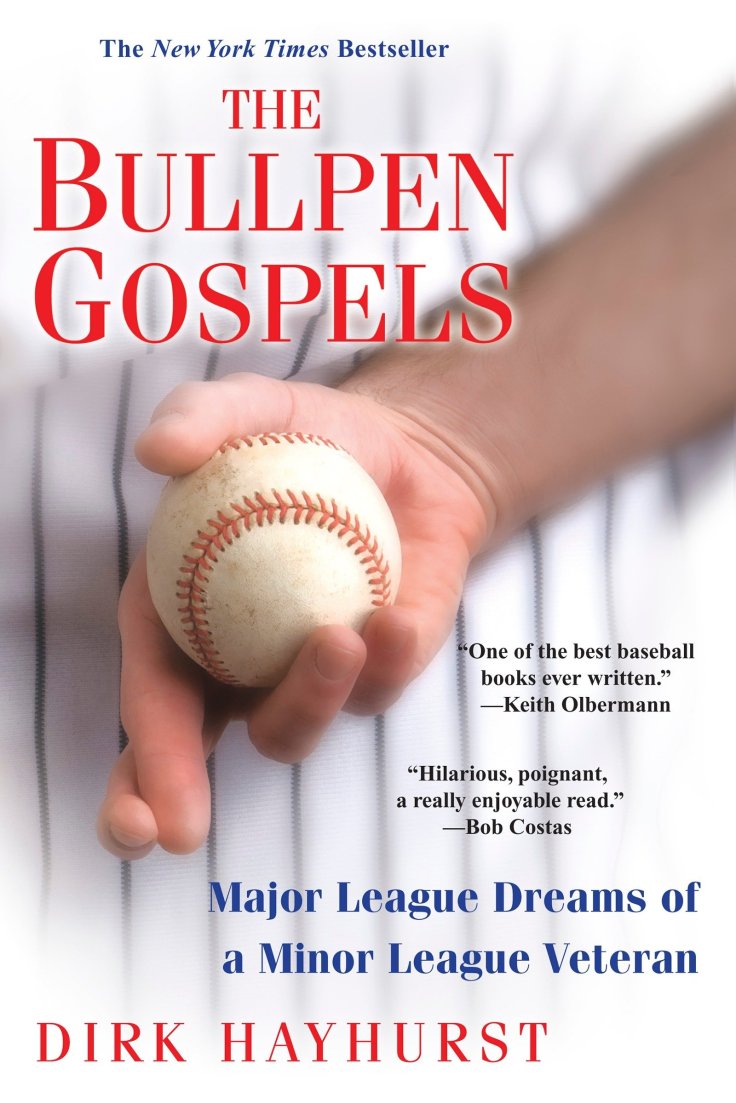
There is something to be said about a good baseball book and when you can find one that deals with failure, it makes it even better. “The Bullpen Gospels” is a book written by former major league reliever Dirk Hayhurst, looking at a pivotal part of his career while in the minor leagues. While a number of baseball books delve into the successes of its players, this book also takes a hard look at what it is like as a player trying to achieve his dream while coming up through the minor leagues

The book begins as Hayhurst is struggling with his future. He’s coming off of a lackluster finish to a season and is unsure how long he wants to continue trying to reach his dream of being a big league pitcher. He does a great job of letting us wander into his mind as he deals with what his future has in store. You really get a window into how something as major as “confidence” can play into a player’s success or failure. Hayhurst is dealing with a floundering career, a lack of confidence and a non-existent support system.

Rays Spring Baseball
Credit: Associated Press

While the focal point of this book is Hayhurst’s struggle and attempt to reach the big leagues, the aspect of the book that really grabs you is his description of minor league life and the relationships with his teammates. Whether it is the lewd jokes, the grizzled coaches or even a bus trip from hell, listening to stories about the grind of a baseball season really puts into perspective how unattractive the minor leagues can be. While some of the names are legit and left as is, there are a number of players whose names were changed for one reason or another. If you’ve ever wondered what it is like to live a season chasing your baseball dream, this is a nice view into that scenario.

You also find out how Dirk evolves as a pitcher and allows himself to not worry about his performance on the field. While his struggles are in the forefront at the beginning of the book, his success is thrown in as almost a side note as the book progresses. The deeper you get into this book, the more you realize it isn’t as much about what happens on the baseball field as much as it’s a look into the thinking pattern of a player trying to avoid the repetitiveness of a long baseball season.

kc3
Credit: DirkHayhurst.com

Overall, I loved the book. I’ve always had a fondness for locker room stories and a deeper look into not just the game of baseball but the nuts and bolts of what makes the game. My favorite part of the book was Dirk’s interactions with Trevor Hoffman, someone who Hayhurst had looked up to for years. These visits not only gave a nice insight into how his mind works, but also how someone like Hoffman can be viewed one way as a player and another as a person.

If you are looking into an honest look into what it is like climbing the ladder of baseball’s minor league system and the ups and downs that are met along the way, this is for you. Some have said this is the best baseball book since Jim Bouton’s “Ball Four” and while I can’t vouch for that (I haven’t read the classic Bouton book), I will say that Hayhurst is a great writer and has woven a baseball tale that will entertain you. If you would like to give it a read, here is a link to the book on Amazon and he has written two other books, here and also here. While his career was a short one, Hayhurst has made sure that it will live on for years to come. The book is worth your time and should make you even more excited for baseball season to begin.

Call to the Bullpen

kc1

In what has been a slow offseason that has seen the coldest of ‘Hot Stove’s’ we’ve ever seen, we needed a bit of a pick me up. Luckily, on Thursday we got one:

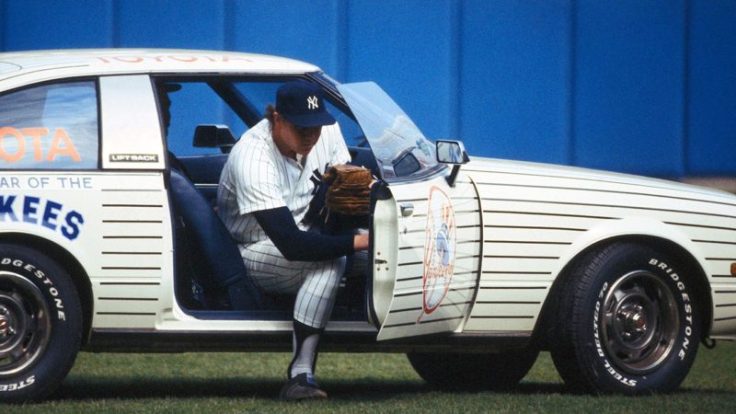
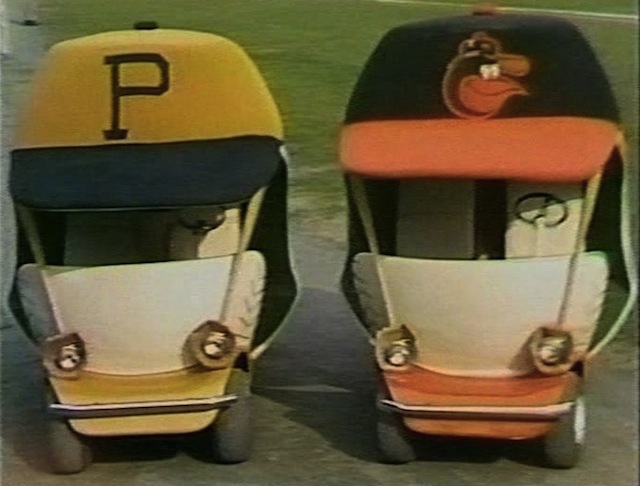
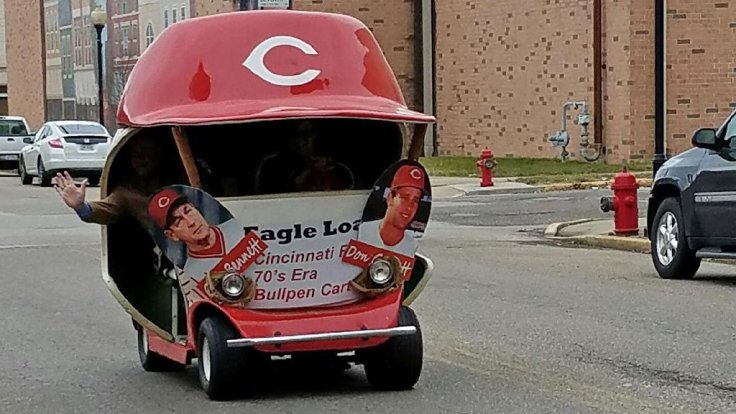
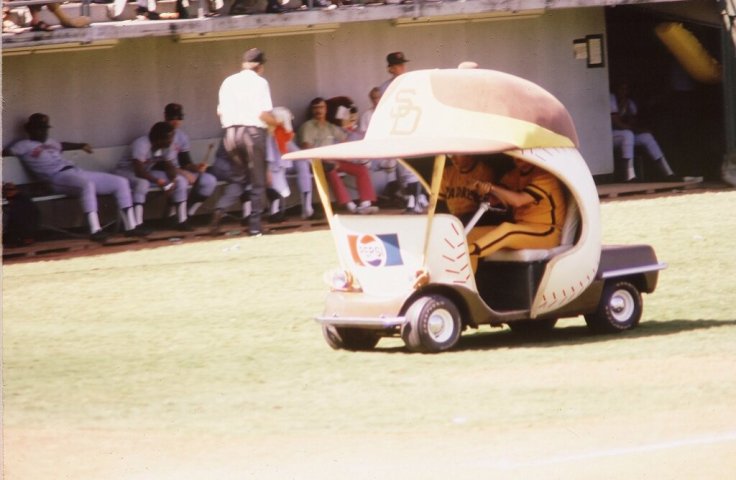
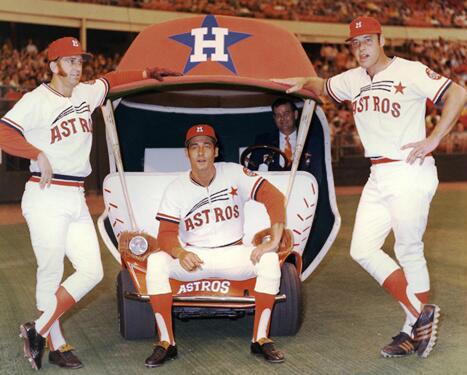
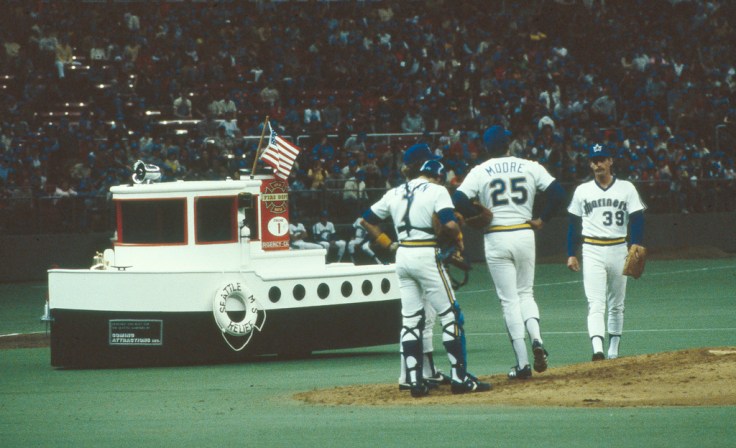
That’s right: in 2018, we could see the return of the bullpen cart in baseball! The unfortunate thing is that baseball is not considering this because the carts are one of the coolest aspects of the baseball experience. No, no, no. They are wanting to bring it back to help the pace of play initiative going on within the game. But would it help? Luckily, the greatness that is Grant Brisbee looked into how much it could improve the pace of a baseball game:

There are an average of about six pitching changes per game between both teams, but that also includes relievers who start an inning. Let’s be generous and suggest there are an average of four mid-inning pitching changes in every game.

That’s about two minutes. It’s not nothing. Slap together 20 changes just like it, and you have some real progress. Not to mention that the real tire-fire games probably have more mid-inning pitching changes, which means the dullest blowouts could be trimmed by five minutes, perhaps.

So there would be an improvement, even if just a slight one. But as I should have expected, Grant wasn’t done with ideas:

We’ll have lots of time to revisit the idea during the strike this year or next year.

Maybe they could have a drone carry the player to the mound.

What about a sled with wheels that’s pulled by 16 trained Alaskan Malamutes, all of whom are very good dogs?

I wouldn’t mind those dogs who let a monkey ride on their back pull some of these carts. Maybe that is too mean…maybe they could pull a Segway? a street luge? The Cardinals could go get a couple of Clydesdale’s to pull the cart…or what about pygmy horses? I hope Grant realizes he opened up a can of worms here. No matter the case, I am all for the return of the bullpen cart. I’m already looking forward to when the first cart dies near the mound and 30 minutes are spent trying to figure out how to get it off the field. That should improve that pesky pace of play!

kc2

kc3

kc4

kc5

kc6

kc8

kc9

kc10

kc11

kc12

kc7


BBWAA Elects 4 to Hall of Fame; IBWAA Elects 6

kc1

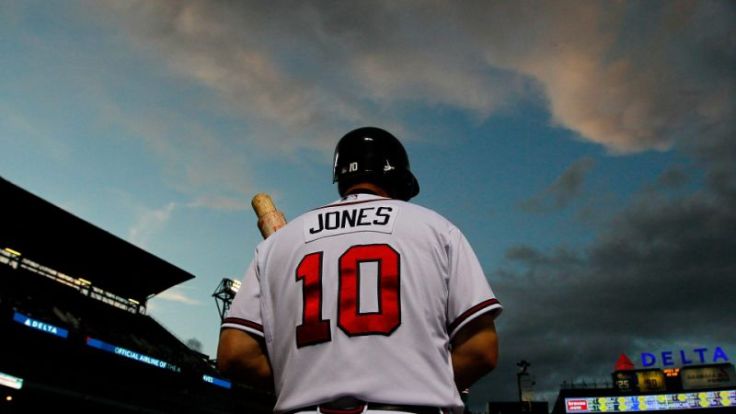
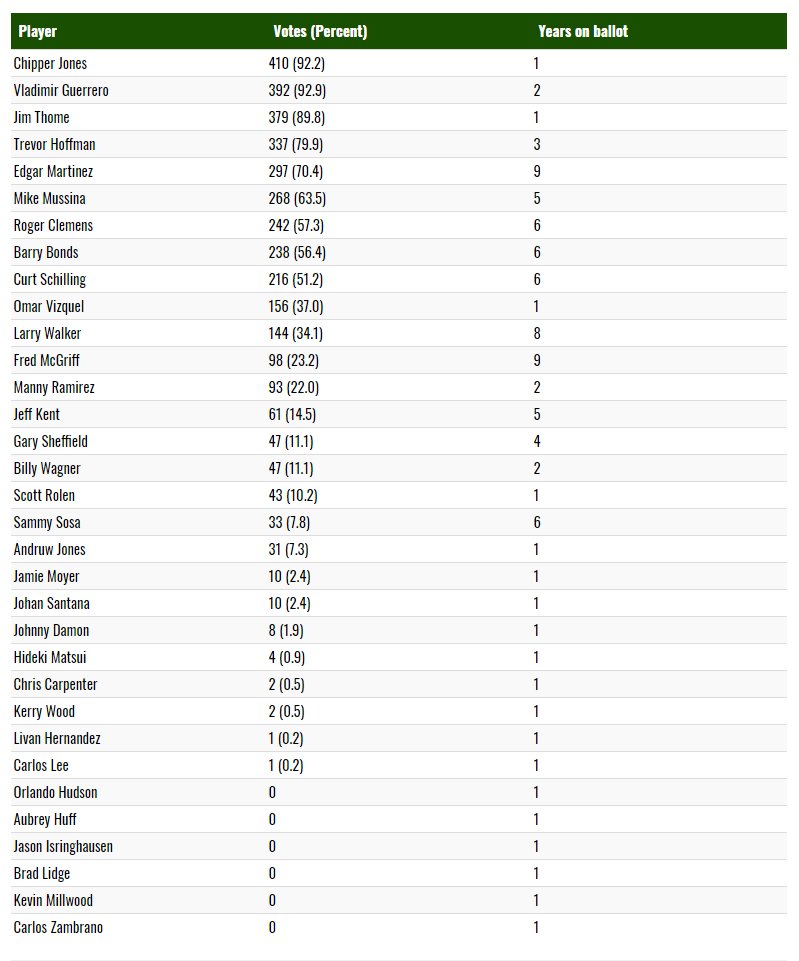
On Wednesday, the National Baseball Hall of Fame got a little bit bigger as the BBWAA (Baseball Writers’ Association of America) voted in four new inductees: Trevor Hoffman, Chipper Jones, Jim Thome and Vladimir Guerrero. Add in Alan Trammell and Jack Morris and you have six induction speeches on a sunny July afternoon in Cooperstown. Meanwhile, my brethren in the IBWAA did some house cleaning as well, as we inducted six players (Chipper Jones, Jim Thome, Mike Mussina, Roger Clemens, Barry Bonds and Trevor Hoffman) into our digital Hall of Fame. In my eyes, all the players mentioned above were worthy of this honor. It is also showing a shift in the thinking of baseball writer’s across the baseball landscape.

kc2

First, let’s discuss the BBWAA voting, which almost led to a five man class in 2018:

First, it was very obvious going into Wednesday that Chipper, Vlad and Thome were locks. All three were over 90% for the polling (which was sitting at around 55% of the  ballots made public) that morning. Hoffman was a bit dicier, as he was sitting around 78.2% of public ballots. It appeared on the surface that he would get in, since he fell just five votes short in 2017.

Meanwhile, Edgar Martinez came up just a bit short, despite the fact he had been polling in the 80% range for the last couple weeks. The good news is that Edgar jumped up to 70.4%, less than 5% to the promised land as he enters his final year on the ballot in 2019.

kc3
Credit: Robert Hanashiro, USA TODAY Sports

Also making ground this year on the ballot was Mike Mussina and Larry Walker. Mussina bumped up to 63.5% and Walker 34.1%. Mussina feels like a lock for induction sometime in the next couple of years, while Walker has only two more years of eligibility left. Clemens, Bonds and Curt Schilling all appeared to stay put around where they have been, so next year could be a big one for all three of them.

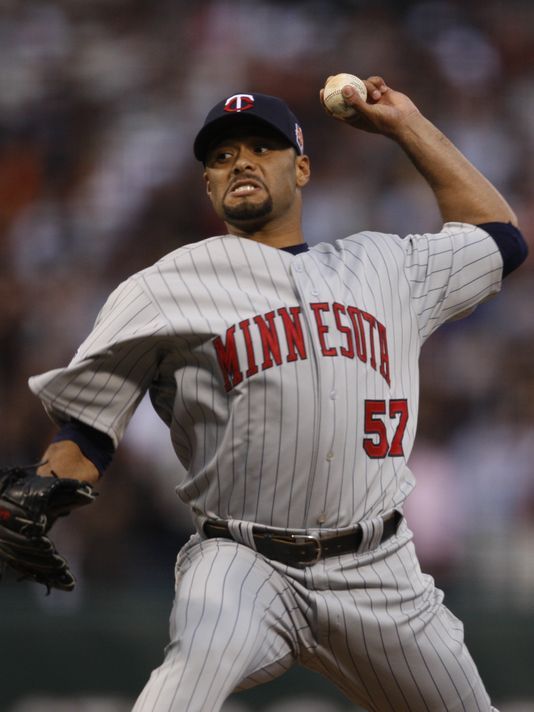
I was glad to see Scott Rolen and Andruw Jones get enough support to stay on the ballot, and their climb could get a bit easier over the next couple of years, since there are less Hall-worthy candidates on the horizon. The one disappointment was Johan Santana, who is a borderline candidate for the hall. If you are like me and believe strongly in WAR7 (which is the seven-year peak or that players best seven years) and notice the similarities with Sandy Koufax, then you are probably leaning toward him being in. If you believe in a long career and lots of innings for a pitcher, then you are probably against him. The one thing that most of us can agree on is he probably deserved to at least stay on the ballot and let his case be judged for a few more years. Unfortunately, he is now bumped off and like Lou Whitaker, Jim Edmonds and Kenny Lofton before him, he won’t get a fair shake of letting his case be heard.

Overall I felt like the BBWAA did an admirable job and it does appear as if the ballot logjam is starting to sort itself out. That should be a good thing for fringe candidates and those players like Mussina and Martinez who need a little extra nudge to get them over the finish line.

Now onto an organization I am part of, the IBWAA. If you want to talk about making room on the ballot for the future, I believe we took care of that this year:

Six players are entering our “Digital Hall of Fame” and I’ll be the first to admit I was a bit shocked that we elected Clemens and Bonds, just because they have been floating around on our ballot as well. This is just me throwing out a theory, but our members tend to skew a bit younger and it has felt over the last couple of years like the younger writers have less of an issue with the “Steroid Era” than the older ones. I’m sure there are different reasons for that, whether it is the lack of testing during that period making it harder to really know who did what, or feeling like the rest of baseball was able to get off scot-free while inducting then-Commissioner Bud Selig just last year. Whatever the case may be, Bonds and Clemens were joined by Chipper, Thome, Mussina and Hoffman as part of the IBWAA Class of 2018.

With six players off the ballot, that should make it easier for us to focus on some other deserving candidates next year. Schilling and Walker both took big jumps and Scott Rolen posted a nice 44.7% of the vote in his first year on the ballot. Even Santana stuck around for round two, as he got 36 votes and sits at 21.1% in his first year. With next year’s class of Mariano Rivera, Roy Halladay and Todd Helton being the main first year candidates, it should be easy for us to keep honoring players who deserve this highest honor. We also get 15 votes instead of the BBWAA’s 10, which also helps us keep players on the ballot longer. All in all, I feel like we as a group did a great job this year and I look forward to the results in 2019.

kc4
Credit: MLB Photos

In 2013, the BBWAA voted no player over the 75% threshold, which meant a very quiet summer in Cooperstown. Luckily, the last few years have made up for that error, as the writers have voted in 16 players over the last five years. Whether you prefer a bigger Hall of Fame or a smaller one, the truth is that we have seen a lot of worthy entries over these last few years. For every Tim Raines or Edgar Martinez that have to struggle and have people preaching their cause, there are the Chipper Jones’ and Jim Thome’s that have the numbers and look the part. Baseball is better when a light can be shone on the players of year’s past that helped make this the great game that it is. For all its flaws, baseball at its pinnacle is the grandest game of them all. To get to honor those that encompass that greatness…well, that just makes this process a whole lot sweeter.


Blog at WordPress.com.

Up ↑