Straddling The Fence

kauffmanfireworks1

Being a longtime Kansas City Royals fan can give someone a different perspective of the team than say, someone who has only been around the last couple years. There is a section of the fanbase that sat around during the “Lean Years” so to speak, an era where many a time we would be accepting of an errorless game, or a quality start from the starting pitcher that day. Trust me folks, years ago the bar was set really low. With that being said, this winter the Royals have been fairly quiet on the acquisition front, as we have essentially seen the Jorge Soler trade and the Nate Karns trade with a few minor signings sprinkled in. I’ve actually felt like both trades made sense and were quality deals on GM Dayton Moore’s part. I even liked the Peter O’Brien signing and don’t hate Jonathan Sanchez being brought in on a minor league contract. But something else has been gnawing at me this winter and these trades have reinforced my worries. It appears on the surface like the Royals are neither “going all in” this off-season nor “rebuilding”. In fact, it appears as if Kansas City management is straddling a fence that often isn’t very successful.

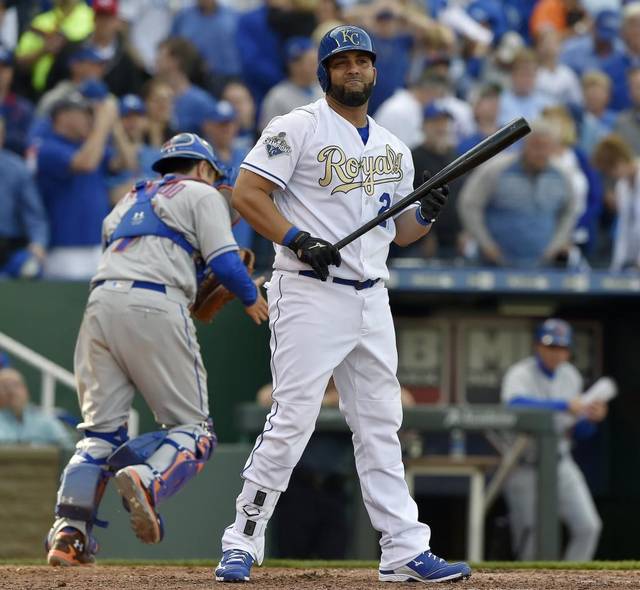
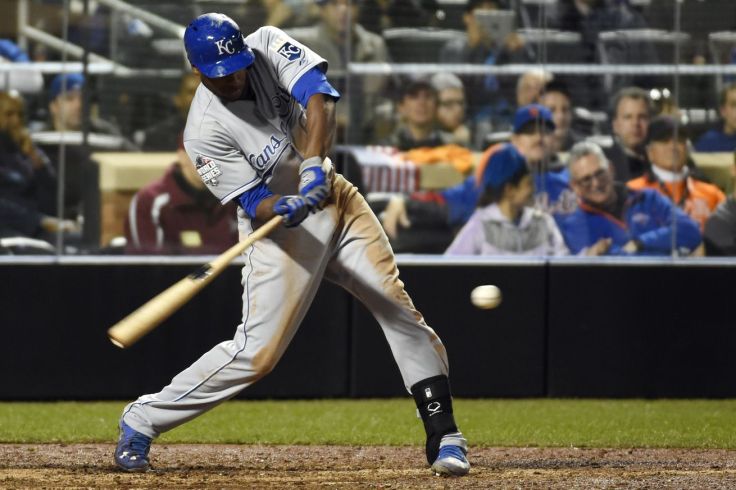
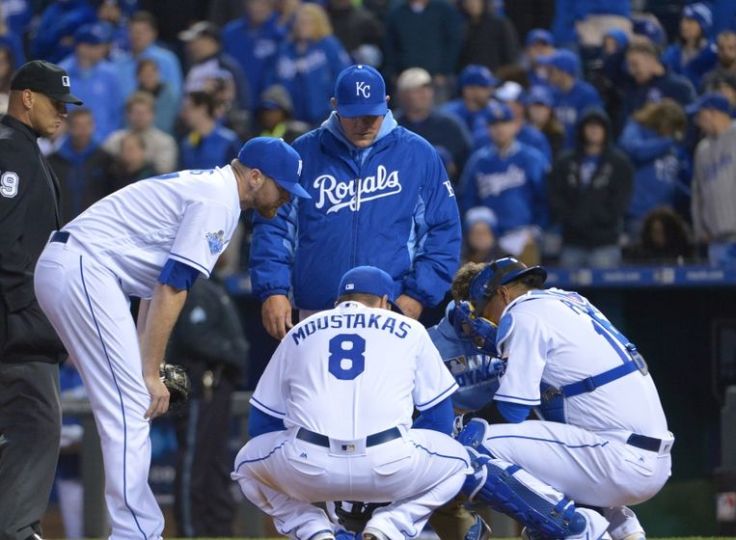
KC Royals VS NY Mets, Game 2, 2015 World Series

I feel like I need to be a bit more clear in my estimation, as it could be taken as if I am saying the Royals won’t be in a position to contend in 2017, which I don’t feel at all. In fact, I feel as if Kansas City has a great chance to be in the playoff hunt this year, as we enter the final year of a contending window with the current nucleus in place. That is a big part of my worries right there; after this season, Eric Hosmer, Mike Moustakas, Alcides Escobar and Lorenzo Cain will be free agents. Danny Duffy was also set to go out on the market, but luckily he was given a long-term extension while Wade Davis and Jarrod Dyson, two more potential free agents after 2017, were dealt in the trades mentioned above. The front office has known for years that this was the final year of winning with this group and while the initial plan was for the farm system to keep spitting out major league ready talent, that hasn’t turned out to be the case. Knowing that there was not really any help on the horizon down in the minors (although someone like Hunter Dozier could contribute as soon as this year), this felt like the season where the team should be “all in” and put the team in the best position to reach the playoffs. That has not happened and not all of that can fall at the feet of Moore. No, you have to look higher up on the food chain to find the biggest issue facing the front office.

kc2

Back in December, it came out that Royals owner David Glass didn’t want the team to increase the payroll for the 2017 campaign, putting Moore and his associates in the front office in a weird position. Moore over the years has always tried to temper expectations and kept his cards close to the vest, but apparently he really meant it this year when he said that the team wouldn’t be able to take on more payroll:

“We’re simply not in a position to add to our current payroll,” Royals general manager Dayton Moore said.

This is why Davis was traded and why Dyson wasn’t far behind; Moore was trying to shuffle the roster by unloading any payroll he can why acquiring players who are younger, cheaper and are under club control for the immediate future. In fact I will go a step further and say Moore has done an admirable job trying to keep the foundation of the team together to make another run while keeping the payroll within Glass’ desired level. Yes, some of this falls at the feet of Moore; he is the one who gave Ian Kennedy his 5 year contract, Omar Infante’s contract that the Royals are still paying for this year and backloaded a number of contracts to make the team’s money situation work in years past. But more than anything this feels like Glass being cheap, which he really hasn’t been these last few years. Why pull back now when more money could be had if the team goes back to the playoffs?
kc3

When I first started understanding the business side of baseball, I learned very quickly that to make money in baseball you have to spend money. There has never been a major league owner that pinched pennies and made a fortune off of it; maybe for one year or some random event but none consistently. Instead, the teams that have made a ton of money did so by spending as well. Now, I am not saying that the only way to make money in baseball is to spend like the Yankees, Red Sox or Dodgers; in fact, many of those teams that were high spenders didn’t even profit from playoff teams to really max out their wealth. So I am not saying Glass should just spend willy-nilly and expect profitable results; no, there is a way to spend wisely while not going over any self-imposed budget. The perfect definition of that could very well be those Royals teams that made the playoffs in both 2014 and 2015. Glass spent more money those two years than any other Royals team and he made more money both of those years than ever before because of the team playing into October. I am not saying Glass should give Dayton an open check and tell him to go get what they need; that should probably never be done, period. But a slight bump in the payroll could give this Royals team a chance to improve a few holes in the team’s roster and improve their chances of winning this year. With the Twins and White Sox rebuilding and the Tigers also straddling a fence (they have hinted at dealing some of their veterans this winter but alas none have been dealt), realistically that would leave the Royals and Indians to battle it out for the American League Central in 2017. That could still happen, but one has to wonder how this team will improve based just off of players being healthy and expecting many to improve on their 2016 output.
MLB: Minnesota Twins at Kansas City Royals

The other issue at hand is tied up in Moore’s trades this winter and what they mean for the future of this team. Like I said, I have liked both trades he has made and feel getting Karns and Soler were excellent acquisitions for what Kansas City is trying to do. But…it does appear on the surface that they are trying to win this year while also building a club controlled roster after the expected departures next winter. The team is neither “all in” or “rebuilding” and this is a problem. In the past, team’s who have tried to leverage a situation like this have eventually decided to take either one path or the other once they figured out that taking neither wasn’t working. We don’t have to look far to see what kind of problem this can cause-just look at the Philadelphia Phillies. In 2012, the Phillies finished .500 while employing a roster of veterans like Ryan Howard, Jimmy Rollins and Roy Halladay. The team attempted to re-stock in 2013, adding Michael Young and Ben Revere while keeping the older nucleus in tact. The team floundered that year, losing 89 games and it appeared a rebuild was in their future. Instead, they acquired A.J. Burnett right before Spring Training that year, and would rack up another 89 loss season. It wasn’t until after that season that the organization put forward a full-scale rebuild on the franchise. The Phillies learned that straddling that line between rebuild and contending normally doesn’t work out and I’m afraid Kansas City will learn the same lesson.
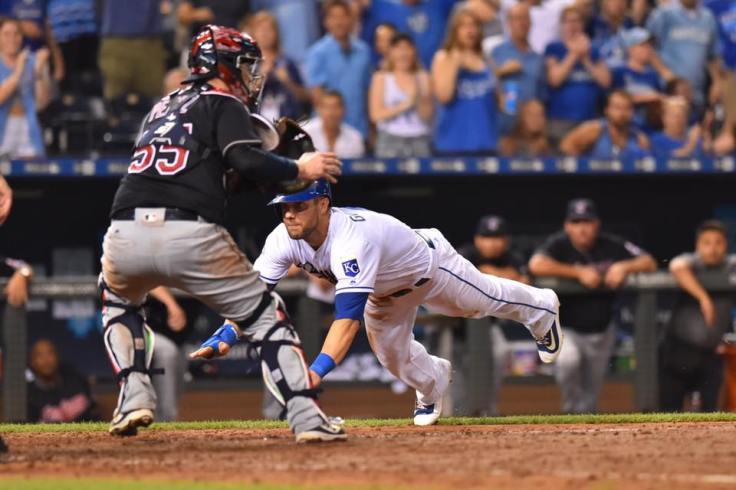
alex1

Since the idea of drifting between contending and rebuilding sounds counterproductive to me, I am in the camp that the Royals should be going for it this year. This is the last year of the window with Moose, Esky, Hos and Cain, so now would be the time to give this team its greatest opportunity to return to the playoffs. The farm system has very little in the way of help next year and this is an organization that didn’t make it to postseason play for 29 years before 2014; now is the time for one last run. The logic I am using is that if Glass agrees to spend even just an extra $10-$15 million to upgrade a few spots, they would at least be giving this squad the best opportunity to reach October baseball. We have zero idea of what will happen after 2017, and the likelihood that the Royals are even able to bring back more than just one of those four free agents is probably slim and none. The thinking is that if the team puts forth another winning season, the stadium will be packed and Glass will make his money back and then some. Instead, it feels like he is saying “we won a World Series, I think we’ll just stop there”. Even if the team doesn’t make it back to the postseason this year, Glass can go cheap in 2018 with a much younger ballclub, make his money that way and no one will think less of it, since they would be “rebuilding”. This group of players deserve one last shot at etching a legacy in Kansas City but the chances of that happening at the moment don’t look as good as it should be.

kc6

So what does this all mean for the 2017 Kansas City Royals? It means that while this club on the surface still looks like a contender, things could go awry very quickly as well. One does have to wonder, after the soul-crushing death of Yordano Ventura, if the team might go out and pick up a replacement starter for the rotation or if they will attempt to fill his spot with a Matt Strahm or a Mike Minor. Even if another acquisition is looming, I’m not sold that this is the best Royals team that could be pieced together. Could they contend with this squad? Of course. But does this feel like a team that could cause damage in October? Not likely. I could be wrong but it feels like ownership is not giving this team the best chance to bring the World Series back to Kansas City, and that saddens me. It’s easy for me to sit here and say “spend more money”, when it isn’t my own. But if I understand the structure of a major league baseball team that wants to contend, you don’t half-ass the project. It should be all about winning the whole damn thing again this year and instead it feels like someone just waiting to turn the lights out. We have no clue how much of a chance the Royals will have to make the playoffs again after 2017; why not go out with a bang and get the band back together for one last gig? Instead it feels like a farewell tour where we keep asking them to play all the big hits one last time before hitting the road. At this point, Royals ownership should do right by the fans, the front office and even the players who have given their blood, sweat and tears these last 4-5 years. It’s time to push the chips all in and go for broke. Now is not the time to stop halfway and assume that will do the trick. It’s time to go for broke…and trust me Mr. Glass, this won’t make you broke. In fact it could increase your wealth for years to come…
Royals Roster Math

kc1

You know it has been a slow winter for the Kansas City Royals when two moves in one week feels like a tidal wave. It all kicked off earlier this week as Kansas City picked up Peter O’Brien from Arizona and was capped off Friday afternoon, as Royals fan favorite Jarrod Dyson was dealt to Seattle for pitcher Nate Karns. So what did the Royals get and how does it affect the team moving forward? Let’s dive in!

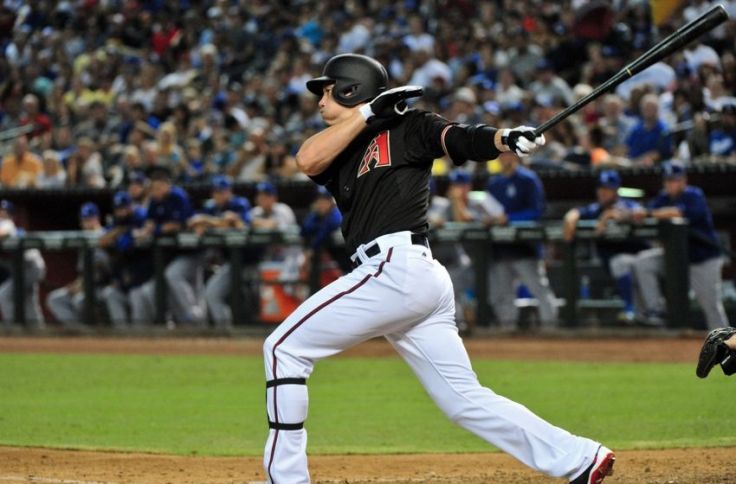
MLB: Los Angeles Dodgers at Arizona Diamondbacks

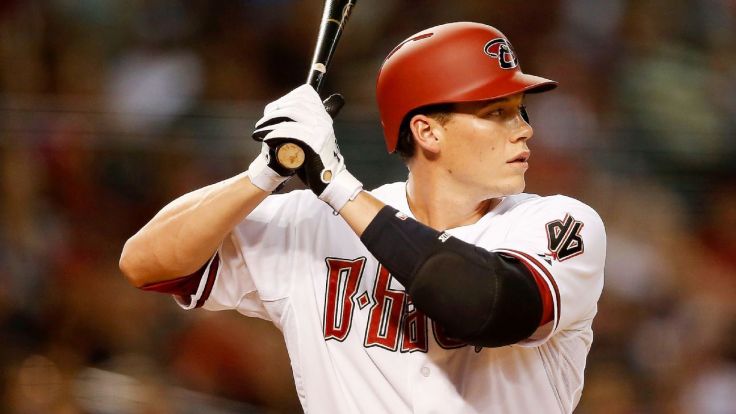
On Tuesday, the Royals acquired Peter O’Brien from the Diamondbacks for minor league pitcher Sam Lewis. O’Brien was once a top prospect in the Yankees farm system but was traded to Arizona in 2014 and has only seen 36 games of big league action. In that short span he hit just .176/.228/.446 with 6 home runs, 12 RBI’s and a-0.4 fWAR. Over five minor league seasons, he hit .269/.317/.532 with 116 home runs (which for those that struggle with math, an average of about 23 a season). O’Brien was originally a catcher in New York’s system but at this point is primarily an outfielder when on defense. It’s obvious by the numbers that O’Brien’s big catch is his power, as he has slugged over .500 at every level in the minor leagues. His power is why teams will give him chances over and over again. There are flaws in his game, as obviously defensively he probably is best suited to be a DH, which tells you a lot right there. O’Brien has been adequate in the short amount of time he has seen at first base, which makes me think he is probably a Billy Butler type at first (which is not completely a knock; Butler worked hard to become an average defensive first baseman). O’Brien, like most sluggers, strikes out quite often and isn’t too fond of walks; it’s easy to see why teams are both enamored with and frustrated with him at the same time. His numbers have been a tad better against left-handed pitching and one has to wonder if he would be best suited in a platoon type situation where his flaws might not be as noticeable. The good news is he will only be entering his age 26 season (he’ll turn 27 in July) and the Royals are starving for some power in their lineup. Meanwhile, Sam Lewis was the pitcher given up by the Royals for O’Brien, and he is coming off a good season, where he threw 44 innings, with an ERA of 1.62, a WHIP of 0.857 and a 5.57 strike out to walk ratio. I don’t know if there was much of a future for Lewis in Kansas City, so trading an extra arm in the system for a guy who could help the big league club is plus-plus in my book. I don’t know if O’Brien will be helping the big league club to start off the season, but it’s a good bat to keep around and see if the Kansas City coaching staff can work out some of the kinks in his swing. Overall, good trade by Moore.

kc4

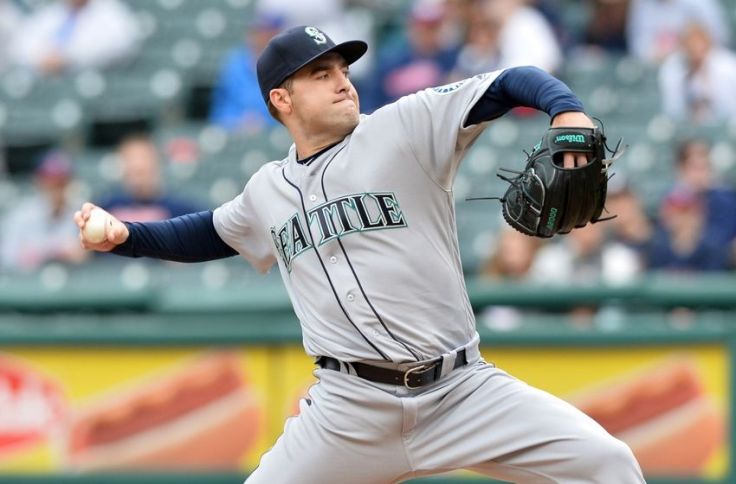
Karns is entering his age 29 season and is coming off a lackluster 2016. Over 22 games in Seattle, Karns posted a 5.15 ERA over 94 innings, with an ERA+ of 79, WHIP of 1.484 with a 2.24 strike out to walk ratio. Karns has plus velocity, averaging around 93 on his fastball last year (92.2 mph over his career) and can gun it up to the upper 90’s on occasion. Karns did deal with some injury issues in 2016:

He has also had some command issues and (for right now) will be competing for the Royals 5th starter job. One of the reasons that Moore had his eye on Karns for awhile (they tried to work out a deal for him during the Winter Meetings) is contract control:

It’s obvious with all of the Royals trades this winter that Moore is looking for players who will fit on the roster past 2017, as the club will be losing a number of key players after this season. While Karns has been a starter, a big part of me wonders if he would be better suited out of the pen and could be a bit like Wade Davis when Kansas City acquired him. If you remember back to that trade, Davis was coming off of a good season out of the bullpen in Tampa but Kansas City wanted to try him in the rotation. Davis struggled as a starter, was moved back to the pen and became one of the best relievers in the game. Karns probably won’t reach the heights that Wade did, but a guy with a plus fastball being used in the back-end of the bullpen can be a big positive for a team like the Royals, who are trying to rebuild their pen this winter. Overall, I like the trade and think Kansas City got a quality arm for Dyson.

kc3

I would be remiss a bit if I didn’t mention the value that Kansas City is losing with Dyson. While not a regular in the outfield during his time in Kansas City, Dyson was an important cog on the Royals world championship team and a vital part of the team. In fact, Dyson led the Royals offense in bWAR in 2016, at 3.1. Dyson was a fan favorite but it appeared for a awhile now that his days in Kansas City were numbered, as he will be a free agent at the end of the season, the team had a surplus of outfielders and losing his contract would free up some payroll issues. We all have our favorite Dyson moments, although many of them occurred on the basepaths. Dyson has plus speed and you always knew business was picking up (thanks, JR) when Dyson would enter the game as a pinch runner. While the Royals have a suitable replacement on the field in Billy Burns (a comparable player), Dyson will mostly be missed in the clubhouse and by the organization:

Dyson will be missed, but this game constantly moves on. I’ve long thought fans are going to have a hard time when the players from the 2015 Royals start departing, since we fans get attached to them. Dyson’s a perfect example of a player who will live long in the heart of Kansas City baseball.

kc5

Two moves in one week for Dayton Moore and both are quality moves. He is under a number crunch with this year’s payroll and acquisitions like this help soften the payroll while also trying to improve the team that will take the field this spring. It’s obvious that Moore is trying to get players who can help the team beyond 2017 without completely tearing down the roster and starting over in 2018. O’Brien and Karns could both be additions that could help the Royals do just that. Not every deal has to be a blockbuster that shakes up the structure of the team; sometimes you just need small pieces to fill out the puzzle.


The Wade Davis Experience Has Left The Building

kc1

Axl Rose once said “…nothing last forever, even cold November rain.” This feels appropriate when discussing the Kansas City Royals and their 2015 roster. It’s been known for awhile that we would start to see the players from that club disperse and at some point probably become ex-Royals. Throw in the Royals issue with payroll, and it became very apparent that the 2017 version of the Kansas City Royals could look much different. The first hammer was dropped on Wednesday as closer and supposed cyborg Wade Davis was dealt to the Chicago Cubs for outfielder Jorge Soler.

kc2

First, lets look at what the Cubs are getting with Davis. Davis has been one of the best relievers in baseball over the last three seasons, throwing 182 innings over that span with 234 strike outs, an ERA+ of 351 (league average is 100), 8.9 bWAR, FIP of 1.86 and only 3 home runs allowed. There are no 100% definite’s in baseball, but these last few years Davis has been about as much a lock as a pitcher can be. It wasn’t just the regular season where Wade was a lock, as he only allowed 2 runs over 25 innings throughout the 2014-2015 postseasons. If Davis comes in the game, you feel pretty confident that the game is over and he will wrap up another victory. All of this is what the Cubs are hoping for by picking him up this winter, as they look for another trip to the playoffs in 2017.

kc3

If there is a concern for Chicago, it is Davis’ right arm. Wade would make two appearances on the disabled list in 2016 for a forearm strain. Both times he would go down, the Royals stressed there was nothing wrong with Davis’ elbow and he just needed some rest to heal. This did have an effect on his velocity for most of 2016:

brooksbaseball-chart

On average, Davis’ four-seam fastball saw a decrease in 2016, down about 1 MPH from his average in 2015. His sinker and cutter both saw a decrease as well, both of which weren’t drastic but it was noticeable. There is no way to tell for sure that this will continue but it is something the Cubs had to take into account before acquiring him. It appears the Cubs were very thorough when giving him a physical this week, so what they saw must have been good enough for them to pull trigger.

kc4

So how will this effect the Kansas City bullpen? Obviously, Kelvin Herrera will take over the closer’s role in 2017, a role he performed in admirably while Davis’ was injured this past season. The Royals have talked a lot this winter about building their bullpen back up to elite levels, so I would assume that they are not done restructuring the pen for the upcoming year. One option they have for a setup role is young lefty Matt Strahm, who put together a really good rookie season in 2016. Another in-house candidate is Josh Staumont, who has become the Royals number one prospect, according to Baseball America. More than likely, it will be some combination of those two and an arm or two that the team picks up this winter to complement Herrera at the back-end of the bullpen. Also remember that former closer Joakim Soria will return in 2017 and as much as his performance in 2016 was very underwhelming, he does have experience in the role and could see some late inning work this next year, although I wouldn’t expect him to see the majority of time in that role. There is some work left to be done to the pen, but considering the Royals were the 5th best bullpen in the American League in 2016, they aren’t as far away as some think.

MLB: NLCS-New York Mets at Chicago Cubs

So what about the player that Kansas City acquired in this deal, Jorge Soler? Soler will be entering his age 25 season in 2017 and is a former top prospect in the Chicago organization. Soler first saw time in the big leagues in 2014, putting together a very solid .292/.330/.573 line through 24 games. Since then, he has struggled with inconsistency and injuries, posting a line of .253/.328/.413 over 187 games and very average OPS+ of 101 during that span. While the injuries are a concern (as well as his attitude, as he was late to camp the year after signing his contract with Chicago), the upside is an enticing look into what he could do when healthy. Scouts have listed Soler as having 70 power, which is on a scale of 20-80, and while he might never be a guy who hits for a high average, he has improved his walk and strike out rates this past season. Defensively, he has an above average arm in the outfield but overall he is below average out in the field. One has to wonder if he will struggle a bit on defense, as he will be moving from one of the smallest outfields in baseball to the largest. I would expect Soler to probably bat in the 5th to 7th spot in the lineup in Kansas City, as the Royals utilize his power while not putting him in more of a run-producing spot. If healthy, both physically and mentally, Soler could be a solid run-producing bat in the lineup who the Royals will have under contract for the next four years.

kc6

While that contract control I am sure played a part in it, I would tend to believe that Davis’ injuries last year made it to where the Royals were only able to get Soler in this deal. It was believed by some that the Royals would get a haul similar to what the Yankees got for Aroldis Chapman last summer, but they were different trades. The Cubs were in a position where they needed a ‘lights out’ reliever to guide them through the playoffs and most teams are bound to overpay at the trade deadline. The Cubs had other options beside Davis, and in many ways had more control than GM Dayton Moore did in the trade talks. Throw in Davis’ forearm and the four years of contract control for Soler, and it makes sense why it was a straight up ‘1 for 1′ deal. It would have been nice to get more for Wade, but all things considered they at least got a bat that has a good chance to be an above average hitter in Kansas City. Whether this deal is a win or a loss for the Royals will be determined on a number of factors, not just Soler and Davis’ numbers. As much as most Royals fans didn’t want to see Wade leave, it was a trade that made sense for Kansas City, as they got a young, cheap every day player while freeing up some room on the Kansas City payroll. At some point this Royals team will look nothing like the team that won the World Series a year ago and it could be sooner rather than later. This could just be step one in a roster reconstruction; step two could be in the very near future.

Winners and Losers: My 2016 Year End Awards

kc1

November is a great month to be a baseball fan; there is the afterglow of the World Series, Hot Stove season gears up and we all get to take a glance back and venture back into just how great this past baseball season has been. This of course means that the award winners are announced by not only the BBWAA, but by a group I am proud to be a member of, the IBWAA. Being a member allows me to vote on the year-end awards and for the third straight year, have done just that. If you want to check out my past ballots, here they are: 2014 and 2015. It is an honor for me to be allowed the opportunity to vote and I take it very seriously. With that said, here are my picks for this past 2016 season.

kc2

American League MVP: Mike Trout

For the second consecutive year, my vote was for the best player in the game, Mike Trout. This actually has been a very heated debate over the last few months, as even back in August I was saying Trout should be given heavy consideration for this award. The sentimental pick is Jose Altuve and the ‘my team made the playoffs’ pick is Mookie Betts. I instead went with the ‘his numbers are ultimately better’ pick in Trout. All Trout did this year was lead the league in runs, walks, on-base percentage, OPS+, bWAR, fWAR, oWAR, runs created, adjusted batting runs, win probability added for an offensive player and RE24. Oh, he also got better this year, in case anyone didn’t notice. Trout walked more, struck out less, stole three times more bases this year than last, and hit for a higher average, while his other stats were on par with last year. The argument against Trout was…well, it was that his team sucked. But that is really not his fault and in fact you can say the Angels might have been way worse if it was not for Trout. His WPA sat at 6.5, which factors in how he helped his team change the outcome of the game. The next closest batter in the American League was Josh Donaldson…who was at 4.3 WPA, over 2 wins less than Trout. At some point, baseball should view Trout for what he is: the game’s best player no matter whether or not his team is losing. Considering the MVP award is an individual award, not a team one, I give the nod to the player who had the best season and that would be Trout…and it’s not really even close.

My Top 3: 1-Trout, 2-Mookie Better, 3-Jose Altuve

IBWAA Winner: Mike Trout

BBWAA Winner: Mike Trout

kc3

National League MVP: Kris Bryant

In this space just last year, Kris Bryant was the easy choice for NL Rookie of the Year. Just one year later, he is my choice for NL MVP in just his second season in the big leagues. Bryant led the league in bWAR, fWAR, oWAR, and runs scored while finishing second in WPA/LI and third in five other categories. While finishing second in home runs and third in runs created is very nice, there was two very big numbers that swayed me to Bryant. For one, Bryant was third in RE24, which factors in runs added in a resulting play by either a batter or baserunner. Considering he was also fourth in both adjusted batting runs and adjusted batting wins, this would tell me that Bryant contributed greatly from both his bat and his baserunning. The other big factor for me was Bryant’s defense, or more precisely the factor of his value all over the field. While Bryant posted a dWAR this year of 0.8, what makes it even more impressive is just how many positions he would play and not hurt his defensive stats. Kris would start games at 3B, 1B, LF, RF in 2016, and would also make appearances for an inning at both CF and SS for a game. So here is a guy who would play all over the diamond this year, producing MVP offensive numbers and above average defensive numbers. While Daniel Murphy, Freddie Freeman and Corey Seager were all worthy candidates, only one player was an all-around choice for this award, and his name is Kris Bryant.

My Top 3: 1-Bryant, 2-Corey Seager, 3-Freddie Freeman

IBWAA Winner: Kris Bryant

BBWAA Winner: Kris Bryant

kc4

American League Cy Young Award: Chris Sale

This was easily the hardest category to make a decision on and I can honestly say I’m still not 100% comfortable with my pick. To me, there were positives and negatives to almost all of the candidates for this award and after digesting the numbers I felt like Chris Sale was the most deserving pitcher for this award. That being said, no one pitcher stood out of the bunch and that is why you are seeing such discourse when it comes to this award. Let’s start with my choice, Sale. He was tied for first in fWAR, first in complete games, 2nd in strike outs, 3rd in FIP, innings pitched, K/BB ratio, and WHIP and fourth in hits per 9 innings and walks per 9, all while facing the second most batters in the league. This is why this was such a hard pick: Corey Kluber and Justin Verlander also led in a number of categories and were on par with Sale’s performance this year. So what about Rick Porcello? He had a good year, but I had a hard time going with a guy who got the best run support in baseball (6.61) and much of his case was dictated on his win total. Zach Britton? I considered him for the award, but I had a few issues with his case (which we will go into later in this article) and even felt that Andrew Miller had a better season than he did. So I went with Sale, although if you told me that Kluber or Verlander were more deserving, I probably wouldn’t put up much of a fight. This was the year where no clear winner was defined.

My Top 3: 1-Sale, 2- Corey Kluber, 3-Justin Verlander

IBWAA Winner: Corey Kluber

BBWAA Winner: Rick Porcello

Clayton Kershaw

National League Cy Young Award: Clayton Kershaw

Remember how I wrote above how I had considered Zach Britton for the AL Cy Young? A lot of the Britton argument was based on ignoring his innings pitched and focus on how tremendous his numbers were in 2016. So if we are considering Britton,  then shouldn’t we have to look at Clayton Kershaw as a worthy candidate in the National League? I believe so and I will take it a step further by saying that Kershaw’s season was so spectacular that even with only 149 innings tossed, he was my pick for NL Cy Young. Follow me on this one, if you will: despite Kershaw’s low innings total, he was still 2nd in bWAR and first in fWAR, stats that are normally driven up as the season progresses. Read that again; in 33 less innings than Noah Syndergaard of the Mets (the fWAR runner-up), Kershaw accumulated more WAR than any other pitcher in the National League. If he had been qualified, Kershaw would have led the NL in ERA, WHIP, hits per 9, walks per 9, strikeouts to bases on balls ratio, ERA+,  and FIP…and if he had stayed on par with what he had done to that point it wouldn’t have even been close! Kershaw did lead the league in shutouts, WPA/LI, REW, and adjusted pitching wins, 3rd in complete games and win probability added and 2nd in adjusted pitching runs and RE24. All in just 149 innings.To put it another way, Kershaw was on course for an absolutely record-breaking season if it were not for being sidelined for a couple of months over the summer. To me, it was worth enough to win him the Cy Young. This wasn’t a knock on Kyle Hendricks, Max Scherzer, Syndergaard or Jon Lester. It was more that Kershaw was absolutely dominating when healthy…and it wasn’t even close. We really saw an absolutely amazing season from a probable future Hall of Famer in Clayton Kershaw.

My Top 3: 1-Kershaw, 2-Noah Syndergaard, 3-Jose Fernandez

IBWAA Winner: Max Scherzer

BBWAA Winner: Max Scherzer

MLB: MAY 21 Rays at Tigers

American League Rookie of the Year: Michael Fulmer

There was a small debate late in the season for this award, as Yankees catcher Gary Sanchez made a late push, but in the end this was Michael Fulmer’s prize to win. Fulmer compiled a great rookie season in Detroit, racking up 159 innings over 26 starts, a 135 ERA+, 3.76 FIP, and a WHIP of 1.119. Fulmer also put together a 33.1 inning scoreless streak early in the season, that was put to bed on June 18 in Kansas City. Fulmer was a great addition to the Detroit rotation but late in the year he did receive some competition from Sanchez, who was able to piece together a 3.0 bWAR season in just 53 games. Fulmer was still able to beat him out with 4.9 bWAR and for the honor of being the best rookie in the American League. All this from a pitcher acquired the year before from the Mets for Yoenis Cespedes, a deal that could be paying off in Detroit for a long time.

My Top 3: 1-Fulmer, 2-Gary Sanchez, 3-Tyler Naquin

IBWAA Winner: Michael Fulmer

BBWAA Winner: Michael Fulmer

MLB: OCT 09 NLDS - Game 1 - Mets at Dodgers

National League Rookie of the Year: Corey Seager

This was another slam dunk pick and one that many (like myself) predicted before the season began. Seager blew away the rookie competition this year and even forced himself into the NL MVP race this year. Seager led all National League rookies in fWAR, bWAR, RBI’s, runs, and was second in home runs and wRC+. Overall, he was 5th in bWAR and runs scored, 2nd in oWAR, 1oth in slugging percentage and runs created, 4th in total bases, 7th in doubles,  and 8th in RE24. The Dodgers struggled quite a bit offensively in 2016, but Seager was solid the entire year, never posting an on-base percentage below .311 in any month. Seager’s rookie season was almost record-breaking as well, as he had the 6th best rookie campaign according to fWAR this year, sitting at 7.5, and has the second best rookie season in the modern era (1988-today). So while Trea Turner, Trevor Story and Jon Gray had good to great first seasons, none were quite as good as the Dodgers starting shortstop.

My Top 3: 1-Seager, 2-Jon Gray, 3-Trea Turner

IBWAA Winner: Corey Seager

BBWAA Winner: Corey Seager

MLB: OCT 11 ALDS - Game 3 - Blue Jays at Rangers

American League Manager of the Year: Jeff Banister

Banister was last year’s pick in both the IBWAA and the BBWAA, and I had him a close second to Minnesota’s Paul Molitor. But this year, my pick went to Banister. The Texas Rangers dealt with a number of issues this past year,most notably when it came to injuries. The team lost portions of their rotation throughout the year, whether it was Yu Darvish, Derek Holland or Colby Lewis. Shin-Soo Choo was in and out of the lineup most of the year and Josh Hamilton never even got going. Throw in the ineffectiveness and injuries for Carlos Gomez and the career-ending neck injury to Prince Fielder and you have a team that could have been a mess. Instead, Banister led his team to the best record in the American League and found a number of working parts to fill any holes he had. While Terry Francona and Buck Showalter were both excellent choices, to me Jeff Banister overcame a ton of obstacles and did the best managing job in the American League this year.

My Top 3: 1-Banister, 2-Terry Francona, 3-Buck Showalter

IBWAA Winner: Terry Francona

BBWAA Winner: Terry Francona

kc9

National League Manager of the Year: Dave Roberts

Managing in the big leagues isn’t always an easy job. For a first-time manager, it can be twice as daunting. So while Dave Roberts walked into a solid roster when he inherited the Dodgers as manager, he also had his work cut out for him. Not only was he going to have to juggle a roster that was littered with veterans, but he also fell into a rotation that be dealt a number of injuries and the whole Yasiel Puig situation. There was also an offense that lingered in the middle of the pack in most offensive categories in 2016 but did manage to accumulate the 3rd highest fWAR in the NL. Oh, he also had to deal with losing the best pitcher in baseball, Clayton Kershaw, for about two months of the season. Throw in those struggles of a first year manager that we mentioned earlier and it wouldn’t surprise anyone if Los Angeles didn’t even capture a playoff spot. Instead, Roberts steered his team to a division title and took them all the way to Game 6 of the NLCS before being ousted. To me, that wins you NL Manager of the Year.

My Top 3: 1-Roberts, 2-Dusty Baker, 3-Joe Maddon

IBWAA Winner: Joe Maddon

BBWAA Winner: Dave Roberts

kc10

American League Reliever of the Year: Andrew Miller

Someone right now just said “He misspelled Zach Britton”. No, I didn’t. I know this will shock some, but despite Britton’s fantastic 2016, I viewed Andrew Miller’s season in a much brighter light. Let’s go ahead and break down some numbers to get a better view of where I am coming from. First, I won’t squabble over innings pitched. Miller only threw 7 more innings than Britton this year, which means very little. Miller led Britton in K/9 (14.89 to 9.94), BB/9 (1.09 to 2.42), LOB% (95.7 to 89.7), HR/FB ratio (20 to 7.1), FIP (1.68 to 1.94), xFIP (1.18 to 2.09) and possibly most importantly, fWAR (2.9 to 2.5). Yes, Britton had a better HR/9 ratio (0.13 to 0.97) and a much lower ERA (0.54 to 1.45) but to me that wasn’t enough to say Britton was better. Yes, despite Britton’s insane WPA (6.14 to Miller’s 4.79), it still felt to me that Miller was the better reliever this year. One final number tipped me to Miller’s side over Britton. In Britton’s 69 appearances, he pitched only 6 games of more than 1 inning and 11 games where he pitched less than 1 inning. In Miller’s 70 games, he threw 11 games of more than 1 inning and 8 games of less than 1 inning. It’s not a giant gap, but it does show Miller was used in longer stretches in the game than Britton, and it might have been even more if he had been pitching in Cleveland all year. For all the talk about Britton this year, there should have been a lot more talk about Andrew Miller’s 2016. For me, the choice is easy. Miller was the best reliever in the American League this past year.

My top 3: 1-Miller, 2-Zach Britton, 3-Dellin Betances

IBWAA Winner: Zach Britton

AP METS CUBS BASEBALL S BBN USA IL

National League Reliever of the Year: Jeurys Familia

This was another tough battle and while I thought Kenley Jansen had a great year, I felt like Familia’s was just slightly better. Jansen did beat Familia in a number of categories: K/9, BB/9, ERA, FIP, ERA+ and fWAR. All solid categories and I don’t discount any of them. Familia did pitch in about 7 more games, while throwing about 9 more innings. Familia also had a better HR/9 rate and it wasn’t even very close (0.12 to 0.52). Where I liked Familia a bit more was WPA, Win Probability Added. Familia had a WPA of 1.82 to Jansen’s 1.77 while his WPA+ was much higher than Jansen’s, 11.54 to 7.32. These numbers tell me that Familia seemed to pitch in more high leverage situations, which is a bit more valuable. The Clutch stat also leans a bit toward Familia, 0.27 to 0.95. So in the end I voted for Familia, although a vote for Jansen isn’t a bad one either. If I was being 100% honest, looking at everything right now, I might have changed my vote for Jansen if I could do it again. Either way, both had great seasons with Familia getting the very slight edge in this battle.

My Top 3: 1-Jeurys Familia, 2-Kenley Jansen, 3-Tyler Thornburg

IBWAA Winner: Kenley Jansen

kc12

So there you go, my votes for this 2016 season. I’m sure some of you will disagree, but that is part of the fun of these picks. It is a great honor that I get to vote every year like this and I can only hope I do a respectable part to show the value of an organization like the IBWAA. This is a game we all love and while we might squabble here and there on numbers, it really comes down to what you value. I can only hope 2017 brings us just as many highly contested winners. Here’s to baseball being back sooner rather than later.


Shaking Up The Royals Roster

kc1

A few weeks have passed since the Kansas City Royals wrapped up their 2016 campaign and we’ve all had time to really digest what went wrong with this year’s team. That also means we’ve had sometime to ponder what the Royals front office should do this offseason to move forward and take advantage of the last year with Kansas City’s home-grown core that garnered them a world championship. Once the season wrapped, General Manager Dayton Moore talked to the media and one of main talking points was how the Royals could see a regression with the payroll moving into the 2017 season. This really shouldn’t be a shock to anyone who has followed this team during Moore’s tenure, as he has a tendency to temper expectations and not show his hand. Moore also discussed how the team worked with most of the world championship team intact, hoping to catch lightning in the bottle a second time. That didn’t work, obviously, but it also appears as if Moore might want to shake things up this winter, which I tend to agree with. That might mean one or two of the main core of players being traded this offseason, which I am also in agreement of. So who would I move? Well, I’m glad you asked as I have put a lot of thought into this and think I have a strategy that could put the Royals in a better position financially while also keeping the team a contender in 2017. Tread lightly, folks; I’m about to shake up the Royals roster.

kc2

Let’s start with a move you that already has been hinted at, trading closer Wade Davis. In fact, trade interest has already started to trickle out for one of the premier bullpen arms in baseball. No teams have been linked with Davis yet, but one would have to believe that some of the teams that showed interest before the trade deadline (San Francisco, Los Angeles, Washington, etc.) will probably still be interested this winter. So far during the playoffs this October, we have seen the importance of having a stellar, lock-down pen and Davis would be a great addition to about any pen in baseball. So would the Royals get a package on par with what the Yankees got for either Aroldis Chapman or Andrew Miller? Probably something close to that, although it might be a tad less considering some of the issues Davis had during this past season. Davis saw his strike out rate and average velocity fall just a tick this year while his walk rate was the highest it has ever been during his time in the bullpen. Davis did miss about five weeks with a strained forearm, which will no doubt be a concern for any team wanting to acquire him this winter. Now, I’m sure someone, somewhere is wondering why the Royals would part with one of the best relievers in the game. For one, Davis will be making $10 million this upcoming season once the Royals pick up his option, which will be a formality. Freeing up that much money will give Kansas City some flexibility and the ability to use that money on multiple players. Second, no matter what anyone tells you, the Royals still had one of the top five bullpens in the American League this past season and Kelvin Herrera showed the team this year that he is more than capable of taking over the closer’s role. Third, there has to be some concern that Davis is starting to regress, especially seeing the struggles that occurred this past season. That doesn’t mean he will be terrible this upcoming season if he is regressing, but Moore has had issues in the past dealing his All-Star closers at their peak value. Moore held on to both Joakim Soria (version 1.0) and Greg Holland longer than he should have and both ended up on the operating table. Davis not only has great value right now, but the team would be able to ditch some payroll while procuring some young talent that could be mainstays in Kansas City past the 2017 season. Moore wanted to focus on rebuilding his pen this winter, and honestly, finding a young power arm on the cheap really isn’t that hard. To make that happen, move number one this offseason should be to deal Wade Davis.

kc3

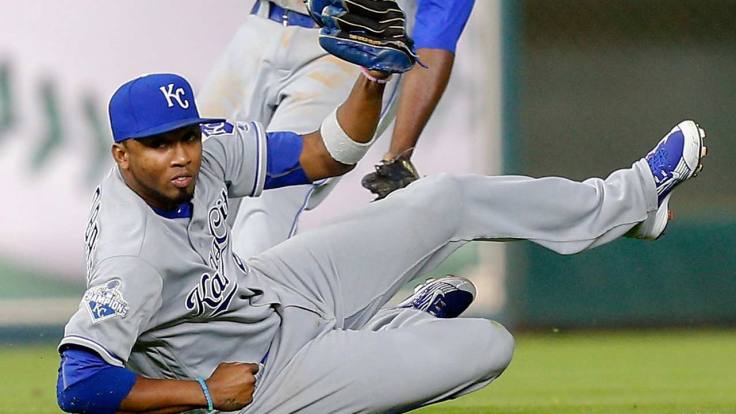
The next deal I would make would be trading shortstop Alcides Escobar. Escobar is coming off of a frustrating offensive season, putting up a line of .261/.292/.350 with an OPS+ of 70 and 0.3 bWAR. Escobar will be entering his age 30 season and defensively is still a plus defender, which should give him some value out on the market. Any team that would be acquiring Escobar would be picking him up for his defense and whatever offense he can contribute, although his best year at the plate was 2012, where he hit .293/.331/.390 with an OPS+ of 96, the highest of his career. If the Royals can find a trade partner for Esky, the team would be able to shed the $6.5 million he will earn this upcoming season (as long as the Royals pick up the option, which is expected) while hopefully acquiring a younger player. Shortstop will be taken care of in his absence, as Raul Mondesi, Jr. could slide over from second base, take over shortstop while freeing up the Royals to look for a second baseman this winter. Defensively, Mondesi might actually be an improvement at the position. Offensively, Mondesi still has some work to do (as evident by his OPS+ of 36) but it wasn’t like Escobar was producing a ton of offense. If you are in the camp of believing that Mondesi will continue to improve, you can imagine him possibly producing close to the numbers that Escobar put up in 2016. The likelihood of Moore dealing Esky is probably slim, but I am in the camp of dealing him and upgrading second base in 2017.

kc4

I would also trade Jarrod Dyson. Now, this might seem a bit odd, in the sense that Dyson is still fairly cheap ($3.45 million in 2016) and is an important contributor not only on the field but in the clubhouse. Dyson is a major role player for Kansas City and in fact lead the team in fWAR in 2016, at 3.1 with Danny Duffy a close second at 2.8. So why would I trade Dyson? Because they already have a similar player who is younger and cheaper. His name would be Billy Burns, who the Royals acquired from Oakland back in July for Brett Eibner. Burns has comparable speed and offensively appears to be on par with Dyson, if you count his 2016 campaign as an off year. Burns won’t be a free agent until after the 2020 season and earned $513K in his second year in the big leagues. Dyson, meanwhile, will become a free agent after the 2017 season and is pretty close to peak value right now. I really figured he would be traded away back in July, but nothing came to fruition, as the Royals held pat at the deadline. The Royals wouldn’t be freeing up a ton of cash by trading away Dyson, so a trade would be more about what they could get back. I would imagine a good B level prospect could be had in a deal, which would strengthen the depth in the organization. If I had my say, Dyson would become an ex-Royal this winter.

kc5

So would I deal anyone else? More than likely not, but I also believe the Royals should listen for any player, as there is always the chance a team might overpay for a key piece they want to add to their roster. Take for instance three impending free agents after the 2017 season: Lorenzo Cain, Mike Moustakas and Eric Hosmer. On first glance it would seem crazy to deal any of these three, as the offense struggled in 2016 and need as many quality bats as possible. But you could make a legitimate argument for any of the three, especially if the haul garners them some big name, major league talent. You could argue that Cain is injury prone, and the likelihood that he would get a long-term contract from the Royals while entering his age 31 season would seem a long-shot. While I believe that Kansas City really missed Moustakas’ bat this season, you could also argue that the Royals have two younger players (Cheslor Cuthbert and Hunter Dozier) who are third baseman that could take over the position at a much cheaper price. While the Royals probably don’t have a first baseman in their system that will be ready for the big leagues by the start of the 2017 season, Hosmer is enticing trade bait in my mind for a couple of reasons. For one, he is still really young (2017 will be his age 27 season) and most teams would be more likely to take a chance on a player his age than one in his 30’s. Two, the national media seems to love this guy, no matter how much they try to hide the truth, which is that he regressed in 2016, into a league average hitter. If the Royals can get a “King’s Ransom” for Hosmer, I think they should take it. To me, he is not the player some consider him and while he might have flashes of greatness, he also has valleys of huge proportions. More than anything, he seems to struggle with change. Take last year; after his red hot start, pitchers changed the way they pitched to Hosmer, throwing less fastballs and giving him a nice diet of off-speed stuff. This started before the All-Star game and from June through the rest of the year we saw a player who produced a below league average OPS+. Ian Kennedy could also be a candidate for a trade this offseason, as the Royals would like to get out from underneath the five year deal they gave him last winter. The Royals though will probably need his innings and stability in the rotation and for the moment that might hold more value to the team than any trade they would be able to swing.

Processed with VSCO with hb2 preset
Kauffman Stadium

One of the big reasons this Royals team has been so popular with the fanbase over the last few years has been the ability to give them an emotional connection. This can also be a problem, as it will be that much harder when the front office starts dismantling the core of this team. Baseball is a business and as much as you or I would like to see these players be in Kansas City forever, that just isn’t realistic. The Royals have an opportunity this winter to shake things up, be creative and restructure the roster to make it both a contender next year and build a new core of players to carry the team past 2017. Will that happen? I have my doubts, but if I am being unbiased I know it needs to happen. What the front office needs to ask itself over the next few months is not only what will help the team contend next season, but what is best for the team in the long-term. The best thing for this Royals team is to let the heart fall to the side and let logic take over. Logic says it is time to shake up the team and deal some of their popular players. It will be shunned by some, but it’s the logical thing to do.

Forever Splendid

kc1

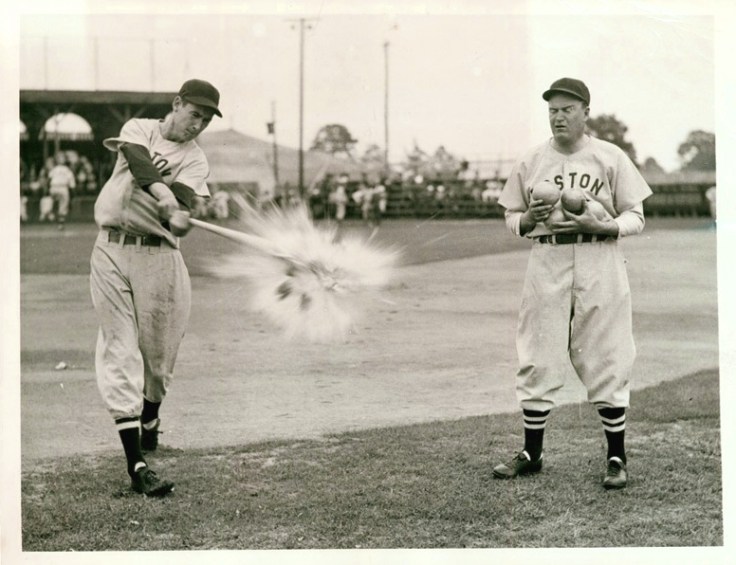
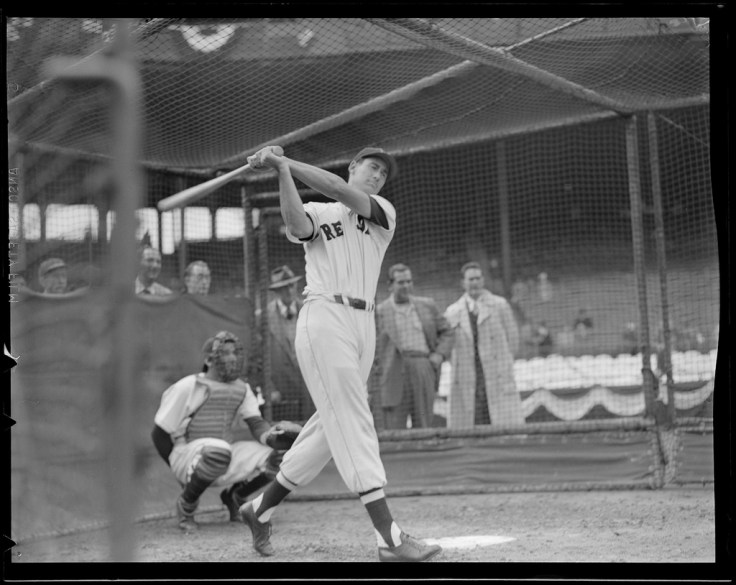
August 30, 2016 would have been Ted Williams’ 98th birthday and though he passed away in July of 2002, Williams’ legacy lives on all these years later. To some like myself, Williams is the greatest hitter of all time in baseball and the numbers back that up: two MVP awards, five time Major League Player of the Year, six batting titles, 14th all time in bWAR(11th for position players), 6th all time in OWAR, 8th best batting average, 2nd best OPS, best career on-base percentage, 2nd best slugging percentage, 4th most walks, 5th best WPA and 6th most runs created. What’s even more compelling is that ‘Teddy Ballgame’ did all of this while missing three years of his prime (his age 24-26 seasons) while serving in the war. Williams is one of the greats in the game and has always been a man who has piqued my interest once I started delving into the history of the game back in my early years. I think one of the main aspects of Williams (at least to me) was he absolutely loved the art of hitting and studied it like he was a scientist or scholar who wanted to breakdown every section of this art. To celebrate his greatness, I thought today we would look at some great factoids, stories and other interesting notes about the ‘Splendid Splinter’, Ted Williams.

kc2

  • Williams had a great memory. In fact, he could recall specific  at bats, sequences, conversations and much more from years before. These stories are still being passed along today:

One time, comedian Billy Crystal met Williams and told him that he had video of Williams striking out against the Yankees’ Bobby Shantz in a specific game 30 years earlier. Williams looked at Crystal and said, “Curveball, low and away. [The catcher] dropped the ball and tagged me, right?” Of course it was, because that was Williams.

Williams was obsessed with hitting, taking batting practice before and after games. Tim Kurkjian once wrote:

“Fear of failure drove Williams. That’s why he never stopped hitting, never stopped striving for perfection.”

He would often tell people that his only goal when he retired was to have people look at him walking down the street and say, “There goes Ted Williams, the greatest hitter who ever lived.”

kc3

  • Williams was known to be a surly guy, but stories have surfaced over the years about what a good-hearted person he could be. This story in particular makes it hard to dislike the guy. This came from Roger Waynick, owner of Cool Springs Press:

When Roger was in his mid-teens, before he had a drivers license, he went on a trip with his father to Islamorada, Florida to fish for tarpon. The group that included his dad breakfasted one morning and then, for some reason, left Roger behind when they went to the boat.

Ted Williams, a pretty famous tarpon fisherman (one of his major endorsement deals was with Sears for fishing tackle), noticed the young man sitting by himself and asked him what was going on. Roger explained that his dad and his dad’s friends had left him behind. Ted invited him to spend the day with him fishing on his boat.

Waynick has two great memories of the day. One was about the legendary Williams eyesight. (It was claimed that he could read the label on a 45 rpm record while it was spinning on the turntable.) Waynick explained to me that fishing for tarpon is like hunting; you see the target game first and then “cast to it.” As Waynick put it, “he had brilliant eyes and could see the fish long before I could!”

But the other recollection Waynick has nearly 40 years later is about Williams’s strength. “We caught several fish and I was amazed how he could hold his rod almost vertically as these huge fish pulled. For me, I was being pulled around the boat…but not him. He stood still and straight. Splendid.”

  • Not a fan of defensive shifts that litter the game of baseball nowadays? Well, Williams was the first player to ever have such a shift used against him.It was called the “Ted Williams Shift”and was first used by Cleveland Indians manager Lou Boudreau on July 14, 1946 :

In the opening game of a Fenway doubleheader, Williams, in his first season back from World War II military service (and waist-deep in what would be his first MVP campaign), went 4-for-5 with three homers and eight RBI. For the second tilt, Boudreau, with creativity likely borne of desperation, employed the following defensive alignment when Williams ambled to the plate …
kc4

The immediate result? Williams went 1-for-2 with a double and a pair of walks. So that’s … better, at least compared to what he wrought in the first game of the double-header. Note, though, that Williams posted a .750 OBP for the game, and the shift was still deemed a success of sorts. Such were the hitting chops of the Splendid Splinter.

kc5

  • One factoid that I didn’t realize until a few years ago was that Williams was of hispanic descent:

Williams’s Latino pedigree surprises many, but the Splendid Splinter was always private about family. In his 1969 autobiography, My Turn At Bat, Williams acknowledged his heritage as “part Mexican” and recognized the difficulties that might have been his lot. He wrote, “If I had had my mother’s name, there is no doubt I would have run into problems in those days, the prejudices people had in southern California.”

Williams mother’s name was May Venzor and it appears that his mother’s side of the family had a big influence on Ted’s love of the game of baseball:

Sarah Diaz (May’s younger sister) recalled of Ted’s visits to Santa Barbara in the early 1930s, when he was a teenager: “Ted played with my brother Saul. We had a big garden, and they’d get out there and throw the ball to each other. Ted learned a lot. When Ted would come, the first thing they would do is get out there in that field and pitch to each other and bat. My mother was left-handed and, boy, she didn’t miss when she threw rocks at us, to get our attention.”

  • As most know, Williams was the last hitter to hit .400 in a season, .406 back in 1941. Many felt like he should sit out the final game of the season, which was a doubleheader at Shibe Park. Williams’ average was at .39955 and batting average’s are always rounded up to the next decimal. Williams’ could have sat out the game and still accomplished a .400 season. Instead, Williams played both games:

Williams went 6 for 8 in the two games to finish at .406, and no one has since hit .400 or better for a season. No one, in fact, has hit higher than .390, and that was 31 years ago.

Many hitters have tried since then to reach the .400 barrier, only to fall short:


Williams had 456 at-bats in 1941. Brett, who hit .390 in 1980, had 449 at-bats that season. In 1994, Gwynn had 419 at-bats in 110 games and washitting .394 on Aug. 11; then the players went on strike and the rest of the season was canceled.

John Olerud was hitting .400 on Aug. 2, 1993, the second latest that anyone has carried a .400 average in a season since Williams. (Brett was hitting .400 on Sept. 19, 1980.) Olerud raved about Williams’s eye for the strike zone and his plate coverage but wondered whether he had benefited from playing when starters usually pitched complete games.

On this issue, Williams always conceded that some changes, like a bullpen full of specialists, might have made hitting harder since the 1940s, but that other changes might have made it easier, like the major league expansion to 30 teams from 16, which probably diluted the overall pitching talent.

kc6

  • One final story that I found incredibly interesting-Ted Williams once pitched in a major league game. It was August 24, 1940 and all things considered didn’t pitch too badly:

Just 21 at the time, Williams was not an ideal person to take the mound. But the Red Sox’s manager, Joe Cronin, found himself in a tight situation during a blowout loss to the Detroit Tigers.

Needing a fresh arm to get some outs, Cronin called on Williams to throw some pitches.

Despite his inexperience, Williams did fine in two innings, allowing just three hits and one run. The Tigers won by 11, but the Red Sox were able to get through the game without any further embarrassment.

Go ahead and use that little fact to try to stump a friend. I’m pretty sure they won’t know that Williams actually pitched in a game early in his career!

kc7

Ted Williams is not only one of the greatest baseball players in history, he is also a man who will be talked about way past any of our lifetimes. Williams was a one of a kind player and many of the stories here will be told for years to come. I love running across new stories I have never heard before about Williams, as I find him to be a fascinating player and person, someone whose reach was far past the game of baseball. Williams lived a full life that many would be proud of, but he also was one who always wanted more. We should want more out of life and never quit wanting to learn and be better. It is a goal that Ted Williams strived for and seemed to succeed at.


Royals Offense, Where Art Thou?

kc1

A lot of words have been spilled this year on the Kansas City Royals starting pitching and the atrocious numbers they have put up. While all this is very true, what has not been mentioned as much is how lethargic the offense has been, especially over this past month. The Royals went 7-19 in July, a month where they went from potential playoff contenders to also-rans and a big part of the awful July was the struggles of the Kansas City offense. So where did it all go wrong?

MLB: Kansas City Royals at Houston Astros
(Credit: Troy Taormina-USA TODAY)

Let’s begin with the season totals. The Royals are currently last in the American League in home runs, runs, RBI’s, walk %, walk to strikeout % and ISO. They are also next to last in hard hit rate, second from the top in soft hit rate while floating near the bottom of the league in On Base Percentage, slugging percentage oWAR and wRC+. What is really scary is that this is a team built to make contact and put pressure on the other team’s defense by putting the ball in play, yet their contact % is only 7th in the league at 78.7%. For a team whose entire offense is built around making contact, it is scary not to see them at the top of the league.

Alcides Escobar
(AP Photo/Ted S. Warren)

The July numbers don’t really get any better. Throughout this past month, the Royals are last in home runs, runs, RBI’s, ISO, BAbip, batting average, on base percentage, slugging percentage, wOBA, wRC+ and oWAR. Offensively, the Royals were the worst team in the league in July and a huge part of why they won only seven games all month. The obvious numbers that really stick out are the power numbers, as this team is not hitting the ball hard and had the highest ground ball % in the league this last month. Look, the Royals are never going to be compared to the old ” Murderer’s Row” Yankees’ teams, but if they want to be a contender they can’t be hitting the ball on the ground as much as they are.

kc4

Some of these numbers shouldn’t be a surprise. The Royals over the last few years have been near the bottom of the league in home runs and walks, so neither of those numbers should be too surprising. This would also affect their numbers for on base percentage and slugging percentage, but even those are down quite a bit from 2015. Last year, the Royals were either 7th or 8th in OBP, slugging percentage and wRC+, which are very respectable numbers for a team who doesn’t hit a lot of home runs or take walks. Part of this can be attributed to Kansas City being third in the league in doubles and fourth in triples. So far in 2016, the Royals are 9th in doubles and 11th in triples. Those extra base hits were vital to a contact team like Kansas City and can be pointed to as a big part of their success last year. If you want to take a shot at what is different from last year to this year offensively, those extra base hits would be a good place to start.

World Series Royals Mets Baseball
(AP Photo/Matt Slocum)

So what can the Royals offense do to improve on these numbers? I know, it’s not like the team can magically snap their fingers and they are fixed, but there are a few techniques that are bound to improve the numbers, even if it is a gradual improvement. One thing that instantly comes to mind is waiting for your pitch. In 2015 the Royals really seemed to improve on this, looking for a pitch to drive rather than just something in the zone. That frame of mind needs to come back. There also could be an improvement in their ground ball ratio, which is partially a by-product of a high soft hit rate as well. I am of the belief that if the team can raise their hard hit rate and can get a sprinkle of luck(as they were last in BAbip throughout the month of July)  then we will see an increase in offensive production. Eric Hosmer seems to be turning things around over the last 4 games, slugging .533 in that span. Add in the return of Lorenzo Cain and the continued production of  Cheslor  Cuthbert at the top of the lineup and this is a team that can catch a hot streak in no time. I would mention that the team could be a bit more patient at the plate(and I do think that would help them in the long run), I am not crazy; I know this is just not a team that is going to rack up a number of walks. Best case scenario sees this team loosen up a bit(as they have looked pretty tight as of late), square up the ball a bit more and just focus on making good contact. It has felt like this team is trying to do too much at the plate when the honest truth is that keeping it simple could very well garner better results.

kc6

Baseball is a great sport because the littlest thing that drags you down one month can completely vanish in a second. With July now in the rear-view mirror, August is a chance for Kansas City to awaken their bats and show the rest of the American League that they are better offensively than they have shown so far in 2016. The honest truth is that the Royals teams of the last 3-4 years have always been a bit of a streaky bunch and have had equal parts high and low lights. This team is capable of being better but they are running out of time to prove it. So far in August they have racked up back to back 9 hit games. A little bit more run production and this team could squeak their way back into the wild card race in the American League. It’s a long-shot, but if there was a team to do it…

Royals Selling, But Who’s Buying?

Edinson Volquez
(AP Photo/Marcio Jose Sanchez)

With the trade deadline a few days away(Monday afternoon at 3pm CT, to be exact), there has been much discussion about what the Kansas City Royals are going to do, especially since it now appears they will be selling rather than buying. It’s hard to imagine the defending World Champions being in this position when the season started but the team has been littered with issues in the starting rotation and more than anything else, a litany of injuries. So who might the Royals ship off before Monday? There are a few candidates for Kansas City to deal and it starts with a key part of the rotation.

kc2

Volquez has had a very up and down 2016 so far, compiling a 4.56 ERA in 124 innings, with an ERA+ of 98, a FIP of 4.11 and a SO/W ratio of 2.00, all numbers below what he racked up last year but above his career marks. The starting pitching market is fairly weak this deadline and a known commodity like Volquez should garner a couple of very solid prospects. Or…maybe more:

Alright, so maybe we should make that 3-4 prospects. The Royals are in a position where they need to re-stock the arms in their minor league system and dealing Eddie would be a good first start for this to happen. There is a bit of immediacy when it comes to starting pitching(last in the American League in innings pitched, WAR, FIP…yes, the list goes on) and if Kansas City can gain a few major league or close to major league ready arms from dealing Volquez than they should go for it. Volquez’s contract runs out after this season(there is a mutual option for 2017) and if Kansas City was really interested, they could look into re-signing Eddie during the off-season if they happen to deal him. There is a very good likelihood that Volquez is dealt before Monday afternoon(I would say probably an 85-90% chance for a trade) and there is a number of contending teams interested in him. So far, San Francisco, Texas and Los Angeles(Dodgers) have all inquired about him while Baltimore, Boston and Miami could also be options(although the Marlins picked up Andrew Cashner on Friday). No matter the team, there is probably a very good chance that Volquez will no longer be a Royal by Tuesday.

kc3

Also on the trading block is Kendrys Morales. Morales’ numbers are down from last year(.246/.315/.431 with an OPS+ of 95 and -0.4 bWAR) but Morales had a great June and is still a viable power threat. Like Volquez, Morales is signed through this season with a mutual option for 2017(Dayton sure does love his mutual options). So if a team was interested in him, he would be just a two month rental. I can’t imagine many National League teams would be interested, as he is almost purely a DH at this point in his career and is a below average defender. This leaves the American League teams as an option and many of them wouldn’t have a set spot for him in the lineup. I could possibly see him as an option off the bench, but that would be an expensive bench player for most teams. One team that might consider Kendrys is the Rangers, as they found out this week that their high-priced DH, Prince Fielder, will be having season-ending neck surgery. Morales is a great fit in that Texas lineup and might see an uptick in offense at Globe Life Park in Arlington. That being said, the chances of the Royals finding a trade partner for Morales is probably in the 20-30% range, so I wouldn’t expect him to be leaving the confines of Kauffman Stadium by the deadline.

kc5

Then there is the wild card of this bunch, Wade Davis. It’s not hard to see why so many teams are interested in Davis, as he has been one of the top(if not the very top) reliever in the game since 2014. Davis hasn’t been as dominating in 2016(1.60 ERA, 280 ERA+, 2.75 FIP, 8.6 Strike Outs per 9) but is still considered an elite closer. The interesting scenario with Wade is that he is under contract until the end of 2017, which means if he was dealt by Kansas City, whichever team acquired him would get him for the 2017 season. Because of this, the Royals are asking for a bigger haul for Davis than New York got from the Cubs for Aroldis Chapman, and rightly so because of the extra year of contract control. Since the Royals are asking for so much, they have also tried to pawn off the contract of Ian Kennedy onto anyone wanting Davis, like the Dodgers. Kennedy’s contract would be a lot for any team to take on, even one has wealthy as Los Angeles. The Royals know at this point they don’t have to deal Wade, as Kansas City is in a position where they could be contenders again in 2017. So the only way Davis is dealt is if a team totally overwhelms Dayton Moore to where he just can’t say no. I would say the chances of him being traded are in the 10-20% area, with Los Angeles, Washington and Cleveland as possible suitors(although I can’t imagine Moore trading Davis to a team within their division, so don’t hold your breathe on that one). I’m not expecting Wade to be dealt, but I also know it is not completely off the table.(Writers note: While working on this piece, it was found out that Davis definitely is NOT going to be traded:

The MRI is planning to be on his right elbow. Try not to think the worst, Royals fans, but with the way this season is going…)

kc7

One name I initially did not plan on talking about in this space was Jarrod Dyson, but I’m now thinking he very well could be gone by Monday afternoon. Why the change of heart?

Let’s see if Burns sounds familiar; speedy guy, slightly above average defensively, doesn’t strike out much, makes contact but sometimes has trouble getting on base. Sounds a lot like Dyson, right? Burns was 5th last year in the AL Rookie of the Year voting, with 26 stolen bases and .334 OBP. He has struggled most of this year and was sent to AAA Omaha after the trade today. But with Burns now in the fold, and Dyson getting more expensive as he approaches free agency after the 2017 season, it appears as if the Royals might have acquired Dyson’s replacement if he was dealt. I don’t know what percentage chance he has of being traded, but it would seem weird to have two backup outfielders with pretty much the exact same talent set. Just saying.

kc6

There is one more Royal that has been heavily mentioned in trade talk, and that is Luke Hochevar. Hochevar looked like almost a lock to be traded away before the deadline, that was until he was placed on the disabled list on Thursday. The news didn’t get better on Friday:

Hochevar and the Royals could not have gotten any worse news. For a guy who was an awful starter, to turn his career around out of the bullpen, AND THEN have Tommy John Surgery, that is some bad luck. To then return from surgery and less than two years later find out you have Thoracic Outlet Syndrome, that will defeat anyone’s hopes:

That is a tough break and I don’t even mean that in the sense of Hochevar’s trade value. Sure, the Royals could have traded him and gotten 1-2 good players in return. But it’s even worse to have this surgery and be unsure about one’s future. Moving forward, Hochevar has a long road ahead of him.

kc8

The frame of mind that the Kansas City front office should have right now is of a team that is close to contending but needs to upgrade some pieces for 2017. I am not 100% waving the white flag on this season, but it just doesn’t appear as if the postseason is in the cards for this team. If the Royals are able to swing a few trades, upgrade a few question marks and look ahead toward the future, they will be sitting in a good position next year, the last year for the main core on this Royals roster. I doubt there is a lot of movement by Kansas City but a few tweaks here and there are probable. Major League Baseball extended the trade deadline an extra day this year so that it wouldn’t fall on the weekend. The Royals have an extra day to get creative; the clock is ticking.


Is It Time For a Beltran-Royals Reunion?

MLB - Oakland Athletics vs Kansas City Royals
May 30, 2003.

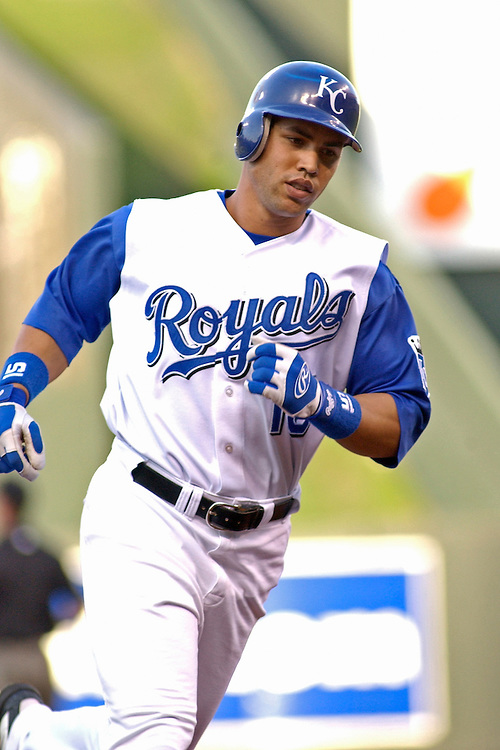
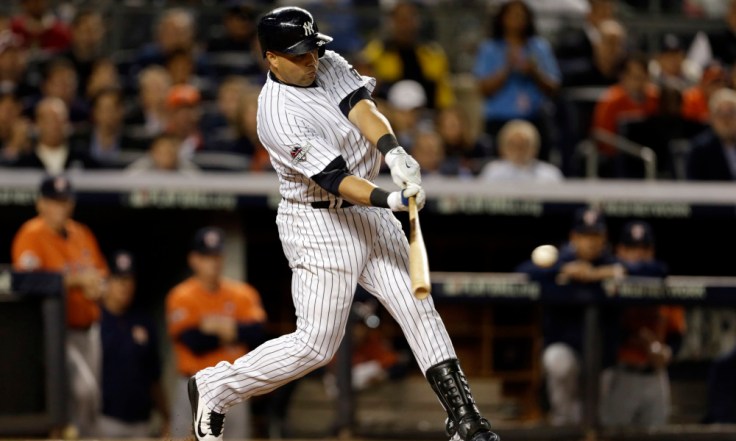
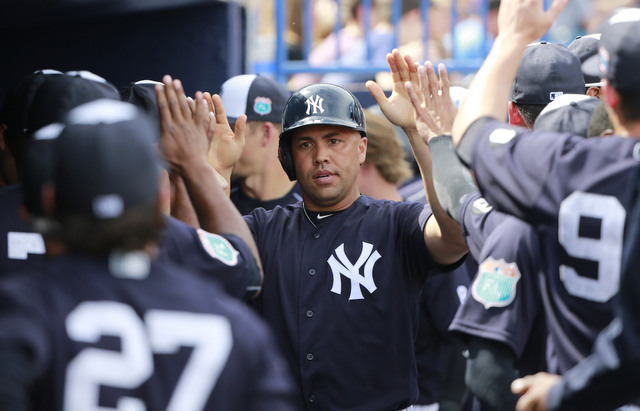
With the trade deadline looming about six weeks away, it is the time of the year where speculation runs rampant. In fact, be prepared for so many rumors during this time period that you can probably discard about 3/4 of them from your brain. One rumor that I can guarantee you will hear a bunch moving forward is whether or not the Kansas City Royals will visit a reunion between themselves and current New York Yankee Carlos Beltran. For the uninformed, Beltran actually began his big league career in Kansas City, playing there from 1998 through the middle of the 2004 season, when he was dealt to Houston. The Royals even attempted to sign him before the 2014 season; but despite a spirited try, Beltran decided to head back to the bright lights of New York City. So should the Royals bring Beltran back to the midwest? Let’s take a look.

kc2

When this subject was initially broached to me back in May, I scoffed. I just didn’t believe that Beltran, at 39 years old, was a good fit for the Royals. He is a below average defender now, which probably leaves him in the position to DH more than anything else and the Royals have Kendrys Morales, who is also without a defensive position in the field. Add in his age and how batters are normally in full-blown regression at this stage of the game, adding Beltran didn’t seem like a step forward for Kansas City. But as we sit here in June, Morales is still struggling and Beltran has done something I wasn’t expecting: his numbers have gone skyward during this last month. With that said, let’s break those numbers down a bit farther to see if he would be a good fit in Kansas City.

USP MLB: AL WILD CARD GAME-HOUSTON ASTROS AT NEW Y S BBA USA NY
(Credit: Adam Hunger-USA TODAY)

Let’s start with the basics. Beltran’s line so far this year sits at .282/.316/.573 with 16 home runs and 43 RBI’s. To really grasp this, for the entire 2015 campaign, Beltran hit 19 homers and knocked in 67 runs while hitting .276/.337/.471. I like to dig deeper though, to fully weigh just how everything breaks down. Beltran’s OPS+ currently sits 135 compared to 120 last year and unless something drastically goes awful, has the same bWAR(1.0) as he did in 2015. His walk rate is down by quite a bit from 2015, as his strike out rate has gone up, but I tend to think you can link those together a bit with the increase in power. In fact, Beltran’s ISO this year has rocketed up almost one hundred points from last year, .291 from .195.

MLB: Spring Training-Boston Red Sox at New York Yankees
(Credit: Kim Klement-USA TODAY

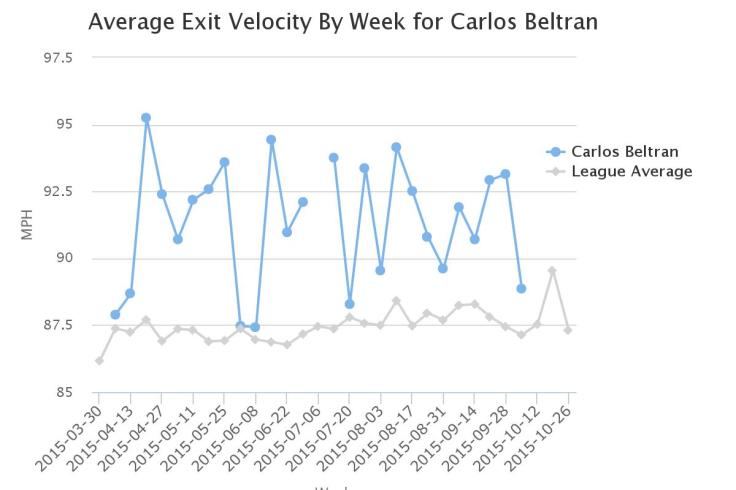
Now to the real meat and potatoes that I feel will give us a good grasp of Beltran’s performance; how hard is Beltran hitting the ball and how often? In an interesting swerve, Beltran’s line drive rate is down(18.3%), his ground ball rate is up(39.6%), while his fly ball rate is the same from 2015. But his Home Run to Fly Ball ratio has doubled(22.5% from 11.1%) while his hard hit rate has gone up(36.7%) and his soft hit rate is down(11.2%, the lowest it has been since 2006). This goes in line with his exit velocity this year, which has been above the league average for all but two weeks this year:

chart

As you can tell, Beltran’s exit velocity has been above 92.5 MPH for a large chunk of the 2016 season, an increase from 2015. In fact last year barely saw him get in the 95 MPH range:

chart (1)

So what does all this tell us? It tells me that Beltran seems to be not only seeing the ball very well this year but is also hitting the ball with some authority. This is a good sign for Beltran, as he is not getting beat by the fastball, a common occurrence for player’s his age. In fact Beltran has been within 5% of his hits coming on fastballs for the last six seasons. It’s a bit odd to see a hitter staying close to his same numbers near the tail end of his career, so the fact that Beltran’s hit selection hasn’t seen a drastic change is a good sign if Kansas City wanted to go after him.

MLB - Oakland Athletics vs Kansas City Royals
June 1, 2003.

One more positive from Beltran’s numbers is that there isn’t a drastic difference between when he hits from the right or the left hand side of the plate. Against right-handed pitching he is hitting .289/.318/.563 while against left-handed pitching he is hitting .280/.321/.587. I’m actually a bit surprised by this, since Beltran plays his home games at Yankee Stadium, which has that short right field porch. All you have to do to hit it out of Yankee Stadium is to hit the ball 314 feet to right field and you have yourself a home run. This would seem to benefit Beltran when he bats left handed, which he does the majority of the time(142 at bats hitting left handed, 75 right handed). But just peeking at the stats show that there isn’t a giant split in those numbers, which tells me he is just flat-out raking, not just taking advantage of his home surroundings. I’m sure Beltran’s numbers are a tad skewed because of his stadium(11 of his 16 home runs are in New York) but if you are looking at the entire offensive package, Beltran is putting up solid numbers almost everywhere, including his four games in Oakland. If there were concerns about Beltran coming to play in Kansas City and hitting in a pitcher’s park like Kauffman Stadium, I would tend to lean toward that not being a big issue moving forward.

MLB - Oakland Athletics vs Kansas City Royals
May 31, 2003. 

So after looking at all of Beltran’s numbers, the question will be asked again: should the Royals look into bringing him back? I can’t believe I am going to say this but yes, I think they should. With Morales continuing to struggle and the combo of Jarrod Dyson and Paulo Orlando starting to come down to earth, it might be a good time to take a flyer on Beltran. The Royals shouldn’t give up a major prospect(or a needed piece of the current roster) for Beltran, but I tend to think New York won’t ask for something like that. Beltran’s contract only runs through the rest of this season and there have been whispers that he might decide to retire once the season is up. It’s conceivable to think the Royals could take on his contract for the last few months of the season and see if he can help them offensively. It would be assumed that Beltran could see some time in right field(especially if Morales starts to hit) but it makes sense for him to mostly be a DH if he came to Kansas City. The Royals have had some offensive struggles as of late and adding a solid bat for the stretch run might be just what this team needs. While the Royals haven’t looked like a contender during this most recent road trip, as I type this they are only four games out of first place in the American League Central, or within striking distance. Reuniting Beltran with the Royals(plus Alex Gordon returning from the disabled list) might be just what the Kansas City offense needs. Since we all love feel good stories, can you think of a better one than the future Hall of Famer Carlos Beltran, returning to the team that he began his career with, and helping them reach the playoffs for the third consecutive season? Sounds like the storybook ending that Beltran’s career deserves.


Cough Syrup, Free Passes and Sparkplugs: Random Royals Notes

kc1

I think we can all agree that the Kansas City Royals have hit a rough patch these last few weeks. The Royals have lost 11 out of their last 14 games and have fallen below .500 within the last couple of days. I’m not one to worry this early in the season, but it does appear as if plenty of other Royals fans are doing that for me. With all that being said, the news has not gotten much better this week as the path of ‘getting back on track’ has taken a detour. With that said, here are some random notes on what has been an eventful week for the Royals of Kansas City.

kc2

  • Let’s begin with the most shocking news of the week, the 50 game suspension of Royals top prospect, Raul Mondesi, Jr.:

Now, the good news from this is that rather than receiving the normal 80 game suspension for a first time offender, Mondesi got his reduced due to proving a cough syrup he took had the PED he tested positive for in the ingredients:

The other positive of the reduced sentence is that because he was able to get his suspension reduced, Mondesi will be eligible for postseason play if the Royals want to use him in October:

So all things considered, this could have gone much worse for both the Royals and Mondesi. It appears, going off of the Royals AA affiliate’s, Northwest Arkansas, schedule that Mondesi would most likely be activated sometime in early July. Where the suspension hurts both parties is the development of Mondesi and his eventual ascension to the big leagues. I’ve been of the belief since before the season even started that Mondesi would be the Royals starting second baseman no later than August of this year. Now with this setback, I would say we might not even see him in the majors until September at the earliest, unless the Royals just believe he is ready to go. So there is still a possibility Mondesi will be helping out the big league club before the season is over, but the chances dimmed a bit from this news. There will be people in certain circles that will label him with the scarlet ‘PED’ letters, but I tend to lean toward MLB with this; if they believed his story enough that they reduced his suspension, then that’s where I will stand as well. Hopefully this is just a bump in the road to what will be a highly successful career for this youngster.

kc3

  • An ever-growing area of concern for the Royals the last few weeks is the starting pitching, which has floundered at best during that span. Outside of Ian Kennedy (who has had only one bad start so far this season), the rotation has been inconsistent at best and ‘watching Bartolo Colon squeeze into a pair of speedos’ at worst. Edinson Volquez has had mostly good outings but a few stinkers while Chris Young has given up 13 home runs in just 32 innings(or a home run every 2.4 innings). Maybe the most concerning statistic is the one that Kris Medlen and Yordano Ventura have put up this year. Both starters are averaging over 7 walks per 9, with Medlen at 7.4 and Ventura at 7.3. The Royals starters are averaging 4.52 walks per 9 innings and only 5.2 innings per start. Bottom line, this group just isn’t getting it done and it’s put extra weight on the Royals bullpen. So are there any options? Only a few, to be honest. There is Danny Duffy in the bullpen, and it has always been figured that he would end up starting at some point this year, since Young was never slated to be a starter all year-long. Duffy might have to build up his arm a bit, but he is a good possibility. Dillon Gee is starting for Young on Saturday and has a good shot of staying there unless he completely bombs out. Mike Minor made his first rehab start on Tuesday, but he probably won’t be ready until the beginning of June. Hey, the Royals might have even see if Brian Flynn, a starter throughout his minor league career, can make a few starts to tide them over. So for the most part that leaves Kansas City with less than stellar options. For the most part, the Royals’ starters just need to step up their game and pitch the way they are expected to, as there is no magical solution to the problem on the horizon.

kc4

  • I was posed the question multiple times this past week on whether or not Cheslor Cuthbert can play some second base. My answer was fairly standard: yes, as he had started three games in the minors throughout his career, committing two errors but I’m pretty sure the Royals would prefer a defensive player at second. Royals Review covered the possibility quite a bit recently and as much as I like Cheslor and would like to see him get more at bats, I just don’t see him getting playing time at second base in his future. The other question I was asked was about Royals minor league outfielder Jorge Bonifacio, who is off to a hot start down in AAA Omaha. I like Bonifacio as well, but I get the feeling the Royals aren’t quite sold that he is ready for a big league job. The questions were directed toward me more because the person was thinking that the Royals needed ‘a spark’ to get them going. As much as the offense has struggled scoring runs this year, I’m not sure either Cuthbert or Bonifacio are really the answer. I tend to believe the answer is already on the roster.

kc5

  • Speaking of that answer, this leads me to a positive note about the offense. Over the last week, a few members of Kansas City’s starting lineup have started producing and getting on base quite regularly. Lorenzo Cain, who had struggled mightily to begin the season, has produced a line of .339/.339/.518 over the last couple of weeks with 3 home runs(all in one game against the Yankees on Tuesday), 7 RBI’s and a BABIP of . 421. Alex Gordon, a notoriously slow starter, has put up a line of .300/.400/.433 with 1 home run, 2 RBI’s and a BABIP of .421 since May 1st. Finally, Alcides Escobar has a line of .368/.400/.421 since May 1st with 3 RBI’s and a BABIP of .412. So the bats are starting to wake up and if Kansas City can get some solid starting pitching, it wouldn’t be out of the realm of belief if they went on a big winning streak. As much as the offense still has some questions(when will Kendrys Morales wake up?), it does appear as if a few players have started climbing out of their early season funk.

kc6

So this season hasn’t played out the way most of us figured it would but it isn’t a lost cause either. It’s not the like the ‘World Champs’ have forgotten how to win, they just need to tweak their performance for better results. The good news is that Atlanta is headed to ‘The K’ this weekend and we all know how dreadful they have played so far this season. The bad news is that after that, Kansas City has Boston and then the White Sox to play in back to back series. If the Royals don’t want to fall farther off the beaten path, they are going to have to step it up and get locked in. If not, there might be a bigger discussion coming up about what needs to happen to turn things around. Before anyone asks, no, they don’t need to change the hitting coach. All that really needs to happen is for the Royals to stay focus and remember what made them the hunted and start being the hunter again.

Blog at WordPress.com.

Up ↑