The Royals and Yankees Just Don’t Hate Each Other Like They Used To

kc1

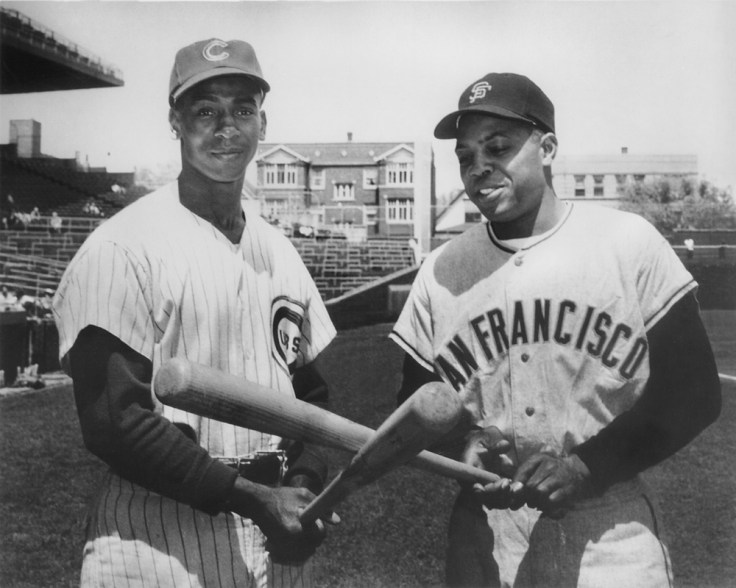
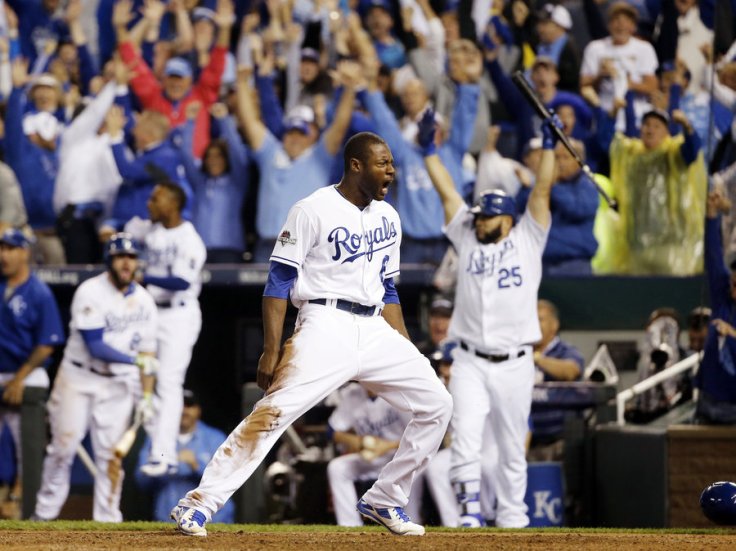
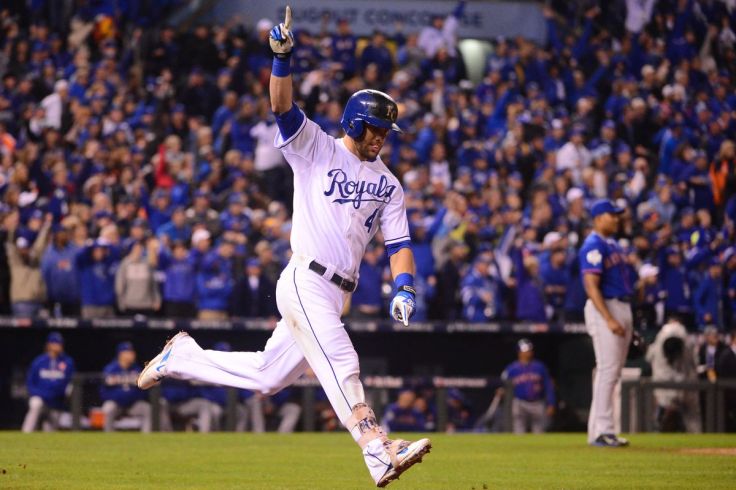
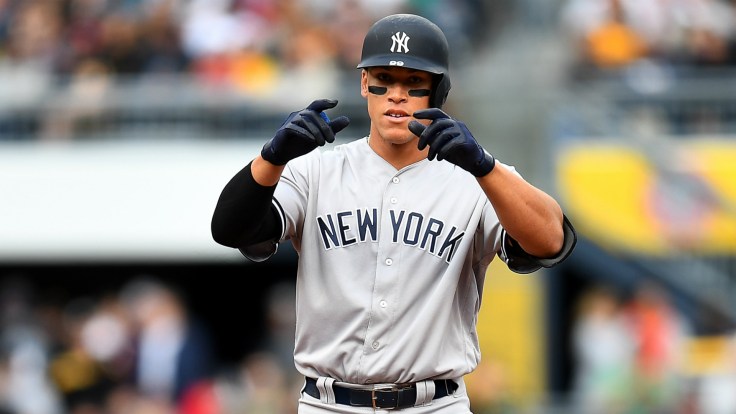
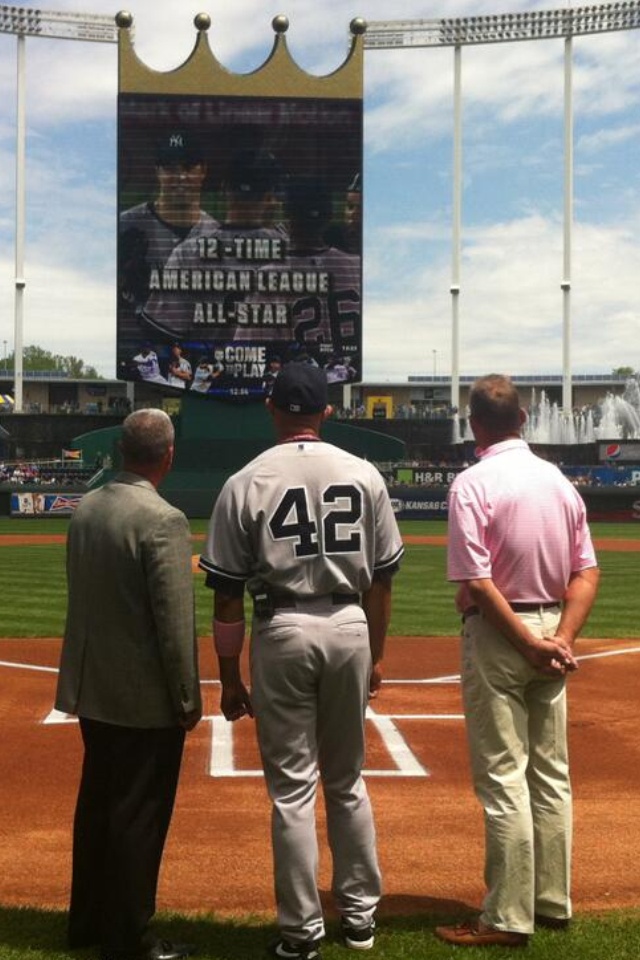
This Friday the New York Yankees travel to Kauffman Stadium as they open a three-game series against the Kansas City Royals. There will be many a discussion about the “old days” and how at one time the Royals and Yankees had one of the biggest rivalries in baseball. But in 2018 that is no more and hasn’t been for a very long time.

Back in the late ’70’s/early 80’s the Royals and Yankees hated each other as much as Rob Manfred hates anyone standing still. The two teams battled it out in the American League Championship Series from 1976-1978 and then again in 1980. While the feud was mostly based on competition and the desire to reach the World Series, there was also a real built-in hatred there.

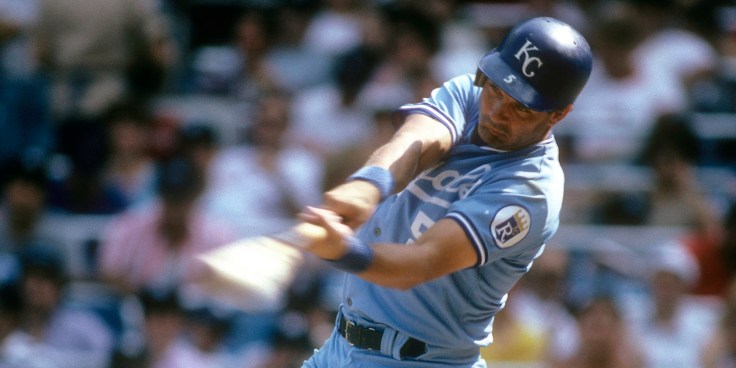
Let’s start with 1976 and the series deciding Game 5. In the Top of the 8th inning, George Brett would come up and put the game into a 6-6 deadlock:

Unfortunately for Kansas City, Chris Chambliss would break the hearts of Royals fans everywhere with this walk-off home run to win the series:

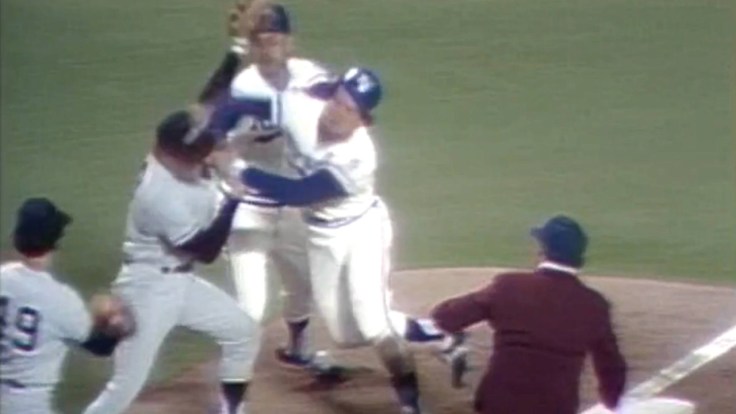
In 1977, the play on the field would get even rougher thanks to one of Hal McRae’s patented slides:

This was from Game 2 of the ALCS and it showed that both teams would do whatever it took to come away victors. That would get ramped up even more during the 1st inning of Game 5:

So at this point it is pretty easy to see that the Royals didn’t like the Yankees and the feeling was mutual from the Yankees. The Yankees would rally for three runs in the Top of the 9th and would seal the deal in the bottom of the inning:

The two teams would meet again in the 1978 ALCS and would split the first two games in Kansas City. For the Yankees to win Game 3, they would have to stop George Brett:

Despite the three home run day for Brett, the Royals would fall short again, losing both Games 3 and 4 as the Yankees would once again punch their ticket to the World Series:

While the Yankees were always the team ending up on top during those three years, the truth was that Kansas City was right there with them in most of those games. The two teams would face off 14 times in the playoffs during that three-year stretch and 6 of the 14 games would be decided by two runs or less. Finally in 1980, the Royals would get their revenge:

While many consider Brett’s homer off Gossage in the ‘Pine Tar Game’ to be the most iconic homer of Brett’s career, he would never hit a bigger shot than the one in Game 3 of the ALCS in 1980. After years of falling just short of New York, sweeping the Yankees in 1980 was the definition of things finally coming back around.

The two teams would continue to battle for American League dominance over the next few seasons but wouldn’t ever meet back up in the playoffs. In fact maybe the most remembered moment of their feud was the aforementioned ‘Pine Tar Game’:

After years of feuding, Billy Martin was still looking for a way to stick it to Brett and the Royals. As most of us are aware, this would eventually backfire on Martin, as the American League President Lee MacPhail would uphold the Royals protest and the home run would stand. The Royals would end up winning the game when they restarted the game almost a month later.

kc4
Credit: Associated Press

After that? Well, the feud pretty much dissipated. The Yankees would have a long playoff drought and not return to the playoffs untilĀ  1995. While it would have been great for the Royals and Yankees to continue this rivalry, the truth is that the two teams were hardly ever relevant at the same time. With the main players in the feud gone and retired, the hatred and animosity trickled away as well.

Now in 2018, it’s just business as usual when these two teams meet up. Many of the players not only know each other but are friends with the other side and there is a different aura when the two clash. If anything the only real vitriol that remains is from us, the fans.

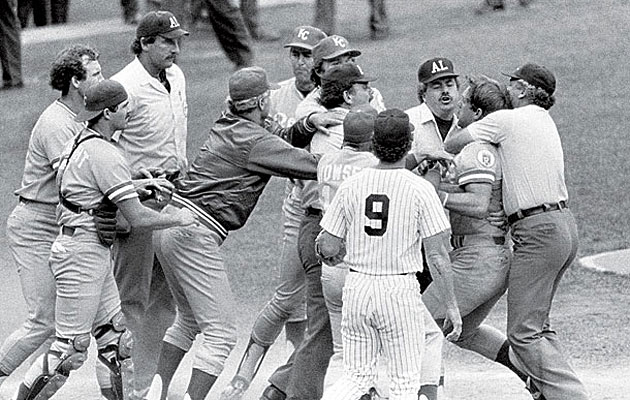
In fact if I am being honest, it is mostly from us older fans. As a kid I was trained to hate the Yankees. It wasn’t because they were a big-market team or because they would sign our players when they hit the free agent market. No, we hated them because they were the team the Royals had to jump over to get to the World Series. We hated the Yankees because of all the times they broke our hearts.
kc6
Credit: Associated Press

While there is still a vile taste left in the mouth when mentioning the Yankees, for younger fans it is more of a ‘Big Market vs. Small Market’ hatred than anything else. Over the last 20 or so years, there are very few moments of the Yankees personally doing something to the Royals to really make us despise them.

I guess you could be mad at former Yankee Robinson Cano for not picking Billy Butler in the Home Run Derby in 2012 or be mad at Derek Jeter for being Derek Jeter. But actual, legit beef for doing something dastardly to our boys in blue? It just isn’t there.
kc5

To be honest, it saddens me that this feud has tapered off. There is nothing quite like a healthy competition between two teams that want to win and will do anything to do it. Call it David vs. Goliath, or to modernize it a bit maybe Thanos vs. the Avengers.

There is nothing quite like a good underdog story and for years the Royals played that tune ‘to a T’. Sometime in the future it will happen again and these two teams will rekindle their venom for each other. But for now, it’s just two teams trying to win a nice game of baseball. It’s compelling, but it just doesn’t have the same bite to it.

The Most Mediocre Players in Royals History

Royals catcher Brent Mayne.
Credit: Barry Taylor Photography

As the Kansas City Royals enter the 50th year of their existence, it’s commonplace to take a deeper look into the franchise’s history and the gold and glory that comes with it. It’s easy to look at all the accomplishments and the positives that come with it. But it also can lead you down a dark tunnel, one that many refuse to even glance at.

When I saw this tweet, my brain started churning:

https://twitter.com/joeshyk/status/980914717018423296

Now, this is obviously a bracket for the Pittsburgh Pirates, but it tossed a question into my brain: who is the most mediocre player in Royals history? Has anyone really delved into that? Or has anyone even been brave enough to jaunt down that rabbit hole?

Closeup Of George Brett

We could do a list of the best Royals of all-time, but we can answer that without even looking up any stats: George Brett is the greatest hitter and Kevin Appier is the best pitcher. See, simple enough?

Astros v Royals X
Credit: Getty Images

We could even do a worst of all-time, but we all know that is Neifi Perez. Hey, the numbers might not back this up but I find it hard to believe that much of anyone will argue with Neifi being the choice. Sure, Dee Brown has less fWAR (-4.1 to Neifi’s -3.2) but Neifi was like that family member that just shows up on your doorstep and invites themselves to stay for a month. Then they just crash on your couch, watching reruns of ‘Family Guy’ the entire time. Sorry about the tangent but you get the point. When the only Royals player Sung Woo Lee has ever disliked is you, you are officially the worst. So Neifi, you officially get that honor. Congrats, I guess.

But what about mediocre? That doesn’t mean you are good or bad. It means you are…just there. Ordinary, average, middle of the road, run of the mill, pedestrian and probably forgettable. There have been a number of forgettable names that have put on a Royals jersey over the years, but it takes a special kind to be mediocre.

So when I decided to take this challenge, I needed to decide on my criteria. Initially I thought of making a bracket, if for no reason then so I could toss in a Jeff Reboulet here or a Dave Wickersham there (I’m not joking when I say that is not a made up name. Totally real).

Instead I decided to go with players who have a career 0.0 fWAR during their entire tenure in Kansas City. Nothing says ‘mediocre’ like a middle of the road number like 0.0. I thought about using wRC+ for batters and ERA+ for pitchers, but that wouldn’t deliver the true scope of mediocrity that I am looking for.

Since there was a decent amount of players who actually achieved this wearing the royal blue, I then went ahead and broke it down according to those batters with the most plate appearances and pitchers with the most innings while accomplishing 0.0 WAR. So let’s start first with the pitchers:

kc4

#3- Don Hood

Hood comes in third place for this ‘race of the mediocre’ as he pitched 114.1 innings as a Royal, with a respectable 2.99 ERA, 4.31 FIP, 3.78 K’s per 9, 2.83 BB’s per 9 in 57 games for Kansas City. Honestly, the only reason I even remember Hood is because I have his baseball card. He pitched for the Royals during his last two big league seasons, 1982 and 1983, while primarily pitching out of the pen.

Not only was Hood’s ERA pretty good, but he also posted an ERA+ of 137. So he actually was a decent contributor for the team but alas had a 0.0 fWAR, which left him on this list.Ā  Just for posterity’s sake, he did put up 1.2 bWAR, so Baseball ReferenceĀ does rate him a bit higher.

Hood might actually be a decent representation of forgettable, as I would bet it would be hard to conjure up many Kansas City fans who remember Hood’s time with the team.

kc5
Credit: Stephen Dunn

#2- Blake Wood

Wood is a more recent contributor to the ‘House of Mediocre’, as he pitched for the Royals during the 2010-2011 campaigns, his first two seasons in the majors. Wood compiled an ERA of 4.30, 4.15 FIP, 7.01 K’s per 9 and an ERA+ of 97 over 119.1 innings.

Amazingly, Wood appeared in 106 games during that two year span and while Fangraphs has his WAR at 0.0, Baseball ReferenceĀ once againĀ has it a tad higher, at 0.9. Maybe the funniest part about this entire test is that Wood continues to be pretty pedestrian, putting up a career ERA+ of 95 (slightly below average) and an fWAR & bWAR of 1.0 over seven seasons. It’s easy to see now that Wood is a great fit as a mediocre former Royal.

Detroit Tigers vs Kansas City Royals
Credit: Barry Taylor Photography

#1- Jorge De La Rosa

The most mediocre Royals pitcher of all-time is someone who has been around forever and I’m sure a few of you don’t even remember his time in Kansas City. De La Rosa spent a part of the 2006 season in Kansas City after being acquired from Milwaukee (for Tony Graffanino) and would also spend 2007 in a Royals uniform. Over 178.2 innings, he would compile a 5.64 ERA, 5.57 FIP, 5.94 K’s per 9, and an ERA+ of 82.

Like the other two, his Baseball Reference WAR skews a bit higher (0.2) and it does feel important to remember that De La Rosa spent his first full season in the big leagues with the Royals in 2007. Since then, he has gone on to pitch 11 more seasons in the majors (15 overall) and is currently pitching for the Diamondbacks.

Maybe the best part of this project is seeing how these players have turned out and De La Rosa has continued down a path of mediocrity. De La Rosa’s career ERA+ is 99 and has accumulated 14.6 fWAR over 14 seasons, or a shade over 1.0 wins above replacement per season. De La Rosa proves that while being average could appear bad to some, it can also lead to stability in Major League Baseball.

Alright, so there are the mediocre pitchers, so now we shift over to the hitters.

kc7

#3- Butch Davis

I’m just going to be honest: I don’t remember Butch Davis. Davis was an outfielder that played in Kansas City from 1983 to 1984. In those two years, Davis made it to the plate 258 times, posting a line of .248/.285/.370Ā  with 4 home runs and 30 RBI’s.

The weird part is that Davis actually had a really solid rookie year in 1983, as he hit .344/.359/.508 with a wRC+ of 135 over 130 plate appearances. Davis would plummet in ’84 though, hitting just .147/.211/.224 in 128 plate appearances.

Combined, this led to a wRC+ of 79, a fWAR of 0.0 and a bWAR of 0.2. Pretty average numbers for a player who ends up as the third most mediocre hitter in Royals history.

kc8

#2- Rudy Law

I do remember Rudy Law, as he was signed by Kansas City after the 1985 season to play in the outfield. In fact, Law was actually a pretty good player for the White Sox during the 1982 and 1983 seasons, almost even posting a 3 win season in ’83.

Law would appear in 86 games for the Royals in 1986, with 341 plate appearances. He would hit .261/.327/.388 with one home run and 36 RBI’s. He would also post a wRC+ of 95 (pretty average), which was actually on par with his 1983 season.

The biggest difference for Law appeared to be on defense in Kansas City, as his dWAR fell to -0.9 after being around average the previous few seasons. This led to the 0.0 fWAR and a 0.5 bWAR. While I do remember Rudy’s time in Kansas City, it’s easy to see how you could forget his short stay there as well.

Royals catcher Brent Mayne.
Credit: Barry Taylor Photography

#1- Brent Mayne

All of this middle of the road talent has led us to this, the guy who not only is the #1 most mediocre position player in Royals history, but the overall #1…and it isn’t even close. It only makes sense that the most run of the mill Royals player would be a guy that the team drafted in the 1st round back in 1989.

Brent Mayne would pull multiple tours of duty for Kansas City (1990-1995 and 2001-2003) and just looking at the numbers show how pedestrian he really was. Mayne would hit .244/.305/.322 with 20 home runs and 205 RBI’s in a Royals uniform. The honest truth was that Mayne was more wildly known for his defense than his offense, which also explains the career wRC+ of 74 and a 63 for his tenure in Kansas City.

So why does Mayne stack above everyone else? Most of the other players on this list had very brief careers as a Royal whereas Mayne would play nine seasons for our boys in blue. He would rack up 2200 plate appearances over 664 career games for Kansas City and no player on this list can even come close to those numbers while also posting pure mediocrity.

In those nine seasons, Mayne would have only four seasons with a fWAR above 0.0 and in 2002 he actually finished the season at 0.0! You’ve probably also noticed that throughout this experiment most of the players would put up a better WAR according to Baseball Reference than Fangraphs.

So in an ironic twist, it appears that Mayne’s fWAR (0.0) is actually higher than it is on Baseball Reference (-1.2). This obviously is because of how each site factors their wins above replacement, but it does show how Mayne’s value can shift according to what you are looking for.

If you watched the Royals during what I like to refer to as ‘The Lean Years”, you probably saw Brent Mayne play and you are probably completely agreeing with him ending up at the top of this list. The funny part is that while I am poking a bit of fun toward a list of mediocrity, Mayne is more proof that being average can actually be a strength. Mayne ended up with a 15 year career, got to appear in the playoffs in 2004 and racked up over $13 million dollars in his career. All in all, that speaks of a very blessed career for Mr. Mayne.

Mayne homers in the eighth inning.
Barry Taylor Photography

So there you go, the most mediocre players in Royals history. Now it’s your turn: who do you think should be the most mediocre? Who was your favorite mediocre player? Would you go by a different point of reference to determine an average player? Maybe break it down to decades? Let us know who you feel is an all-time mediocre Royal.

L-O-Y-A-L-T-Y

kc1
Credit: KansasCity.com

I’ve always been told loyalty is an honorable trait to have. It speaks of a person’s character and can be a window into how a person will react when times get rough. In fact, the definition says it all:

loyalty
[loi-uhĀ l-tee]

1.theĀ stateĀ orĀ qualityĀ ofĀ beingĀ loyal;Ā faithfulnessĀ toĀ commitmentsĀ or obligations.
2.faithfulĀ adherenceĀ toĀ aĀ sovereign,Ā government,Ā leader,Ā cause,Ā etc.
3.anĀ exampleĀ orĀ instanceĀ ofĀ faithfulness,Ā adherence,Ā orĀ theĀ like:aĀ manĀ withĀ fierceĀ loyalties.

Loyalty in sports can be a tricky thing. The definition of the word can fluctuate, whether you are a fan or a player. For years players have been labeled as “sell outs” or “greedy” whenever they decide to look for greener pastures ($$$$) and head to the highest bidder. But loyalty in baseball should probably be defined differently.

kc2
Credit: AP Photo/Charlie Neibergall


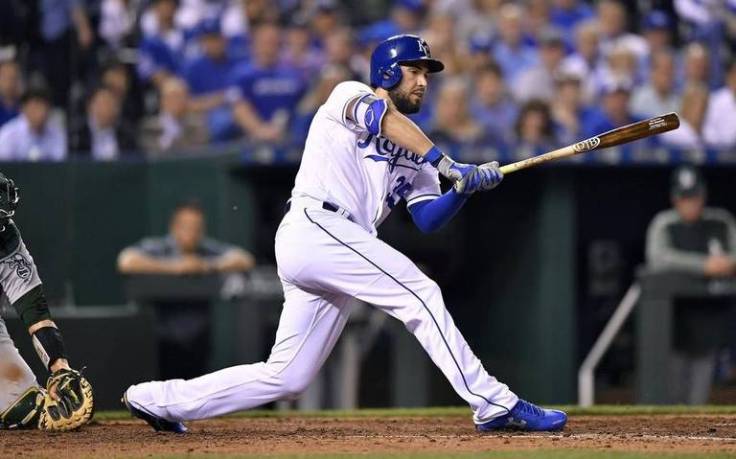
I bring this up because a few Royals fans were not pleased with Eric Hosmer’s decision to sign with theĀ San Diego Padres. Yes, these fans are the minority, but they are a vocal bunch. Obviously there is an emotional attachment to this group of players; I knew this was going to be rough when a part of me felt bad that Jeremy Guthrie was gone. It’s inevitable that winning a championship would make it harder when the business of baseball gets in the way of putting together the big league roster. But that word–business–seems to be the hurdle some have a hard time getting over.

Let’s break this down. When a player is allowed to venture out on the free agent market, they can talk with other teams and see if there is a mutual interest there in working together. It only makes sense that a player would want to gauge how much he is worth. It’s really not any different from if another job talks to you about leaving your current employment and offers you perks that your current job has not.


kc3
Credit: Michael Sears, Milwaukee Journal Sentinel

But baseball has a slight difference: you can’t be a major league player forever. In fact the average length of a major league career is justĀ 5.6 years:

After studying the 5,989 position players who began their careers between 1902 and 1993 and who played 33,272 years of major league baseball, three demographers have come up with an answer: On average, a rookie can expect to play major league baseball for 5.6 years.Their study, which is being published in the August issue of Population Research and Policy Review, also found that one in five position players would play only a single season.

Fewer than half of all rookies remain long enough to play a fifth year. And only about 1 percent of players last 20 seasons or more.

Cognizant that pitchers are more prone to injuries and have volatile careers, the authors, William Witnauer of the State University of New York at Buffalo and Richard Rogers and Jarron Saint Onge of the University of Colorado, excluded them from the study. They also excluded 618 players who made their debut after Sept. 1 and played only that season.The authors found advantages in starting a major league career early. The probability of ending a career after one year is 10 percent for players starting at age 20, but rises to 13 percent for players who start at 21, and 36 percent for players who start at 28.

With the averages not boding well for a long, lengthy career for a large chunk of players reaching the majors, that would mean the wise decision is to make as much money as humanly possible while you can. You never know when an injury or illness could swing around and not only hurt your value but also hurt your chances of continuing your career.So it’s easy to see why most players want to make as much money as possible when they head out on the free agent market. Take Lorenzo Cain for example. Cain has dealt with numerous leg issues over the years and will be entering his age 32 season this year. While he might have been able to take a shorter deal for more money per year, Cain went with aĀ 5-year dealĀ in Milwaukee this winter. It made more sense for Cain to go with a long-term deal rather than a shorter one where he would end up back on the market at an older age. At that point, who knows where Cain’s value would be and if injuries would hurt his chances of procuring a deal similar to what he received this past offseason.

kc5
Credit: Charlie Neibergall / AP

What that means is I will never fault a player for getting as much money as they can out on the market. I also wouldn’t question their loyalty to the organization, since that is a two-way street. Sure, Hosmer and Cain could have possibly returned to Kansas City on lesser deals, but why? A sense of loyalty from what they have done these past seven years? While it might be looked at by some as a noble gesture if they had stayed, logically it would make no sense. The Royals this winter weren’t financially in a position to offer the contracts that the Brewers or Padres offered, let alone whether those deals would make sense for the Royals long-term.The honest truth is that while it is great when players like George Brett or Alex Gordon stay with one team for the duration of their career, you can’t fault a player for wanting to milk as much as they can from the market. This doesn’t mean they are disloyal to the team they left nor does it mean they disliked the team, organization or even the fans with that team; it just means they did what was best for them and their family.

kc4
Credit: K.C. Alfred / San Diego Union-Tribune

I expect Royals’ fans will give a healthy standing ovation the next time Eric Hosmer or Lorenzo Cain return to Kauffman Stadium and they should. Both players were a big part of the rejuvenation of baseball in Kansas City over these last couple of seasons. But if you boo these players you might want to think about what you would do in that situation. It’s easy to say you would take less money to stay in a comfortable place like Kansas City, but would you still feel that way if your career was winding down or if you had the opportunity at a mega-contract?At the end of the day baseball is a business and as we have seen this offseason, it can sometimes be a cold, heartless, ruthless business to those looking for a job. While on the surface the idea of a player staying in one spot and being loyal sounds great, the reality is a lot murkier than that. Temper expectations, try to look at the situation from someone else’s point of view and enjoy the time you have with your favorite players. Hopefully if you are loyal to your team, they will be loyal to you.

To give or not give Eric Hosmer a long-term deal, that is the question

MLB: FEB 27 Kansas City Royals Photo Day

Ask any player out on the free agent market this winter what they covet the most and a good majority will say a multi-year contract. Sure, they won’t turn their nose up to the wads of cash thrown their way, but signing a new deal for an extended period is the kind of stability players dream of. The Royals have set their sights on re-signing first baseman Eric Hosmer and it’s hard to fathom that happening without Kansas City committing to a deal that is at least four years in length (and probably more). But history has shown that might not bode well for the Royals.

Kansas City Royals v New York Yankees
Credit: Getty Images

The most infamous long-term contracts in Royals history goes back to 1985 and theĀ “lifetime contracts”Ā . George Brett, Dan Quisenberry and Willie Wilson were the recipients of those deals that appeared at the time to be solid commitments for a perennial contender. But those deals would fall apartĀ quickly, with Quisenberry being released inĀ July of 1988Ā while Wilson fought off injuries and saw his offensive production wane before leaving after the 1990 season. While in theory these contracts appeared to lock in a chunk of the Kansas City nucleus in the mid 1980’s,Ā  theĀ reality was that the Royals overpaid for players during a period whereĀ collusionĀ controlled the free agent market and salaries.

The Royals would close out the 1980’s with one of the worst free agent signings in club history, signing Mark Davis (the 1989 Cy Young award winner) to a four-year, $13 million dollarĀ deal. That deal would go sour almost instantly, as Davis would struggle and lose his closers role to future Royals Hall of Famer Jeff Montgomery. Davis would be dealt to Atlanta in July of 1992 and put up some ugly numbers during his short stint in Kansas City: 167.2 innings, a 5.31 ERA, 5.01 FIP and an ERA+ of 76.

Mike Sweeney
Credit: MLB.com

We all remember Mike Sweeney’s $55 million dollar deal he signed after theĀ 2002 season. Sweeney was the one who decided to stay, while watching Damon, Dye and Beltran be shipped off. Sweeney was coming off his career year in Kansas City, posting the highest bWAR and OPS+ of his career, among other career highs that season. Sweeney’s deal kept him in Kansas City through 2007 but injuries would take their toll on him as early as 2003. While the offensive production was still there for the first couple years of the contract, his time on the field diminished and by 2006 he had essentially become a shell of his former self.

Not every long-term contract handed out by the Royals would miss the mark. One could argue that George Brett’s lifetime contract paid off in spades, as he would continue to be a hitting machine until his age 38 season, well past the normal age of regression for a major league hitter. Zack Greinke’sĀ four-year dealĀ that was signed in 2009 would produce a Cy Young season, but Greinke would be dealt before the contract had run its course. One could even make the argument for David Cone’sĀ three-year dealĀ that he signed with Kansas City before the 1993 season being a success, but for the sake of argument you could also contend that a contract of three years really isn’t “long-term” by definition.

kc4

That leads us to the modern-day Royals, which currently host a number of extended relationships. Ian Kennedy isĀ locked in for another three seasons in Kansas City and has been a mixed bag during his first two seasons as a Royal (one good season, one bad season). Salvador Perez will be entering year two of aĀ five-yearĀ extension in 2018 and while Salvy should be entering his prime, there have to be some concerns about the amount of games (and innings) he has caught in his major league career and the wear and tear that goes with it. Danny Duffy will also be in the second year of aĀ five-year extensionĀ this upcoming season and has dealt with a wide array of injuries throughout his career as well as aĀ DUI arrestĀ just last summer.

Then there is the Royals contract with the most scorn, that of Alex Gordon. HisĀ four-year contractĀ originally appeared on the surface to be a calculated move. Gordon had been a consistent run producer and defensive wizard for the previous five seasons and while he was entering his regression years, the slope appeared lessened by his crazy work ethic and ability to stay healthy. Gordon had appeared in at least 150 games in every season between 2011 and 2014, while hisĀ groin strainĀ in 2015 looked to be an outlier. But injuries hindered his 2016 campaign and offensively he hasn’t looked the same for two years now. Situations like Gordon’s are why teams become hesitant to commit to a long-term contract.

kc5
Credit: Kansas City Star

This all leads back to the Eric Hosmer situation and how the Royals should deal with it. On one hand, you have a player entering his age 28 season, coming off of a career best season, in what should be the prime of his career. On the other hand, Hosmer before 2017 was an inconsistent offensive player and has a propensity to hit the ball on the ground at an alarming rate. While the Royals have not had the best of luck when it comes to contracts of more than four years, we are all aware that every situation (and player) is different. Signing any player for 4+ years is a gamble within itself. The question the Royals have to ask is if the risk is bigger or smaller than the reward when rolling the dice on their future.

Baseball Thank You’s

League Championship Series - New York Yankees v Houston Astros - Game Two

Thanksgiving is a great time to spend time with family and friends, eat lots of carbs and be thankful for everything in your life. Yes, we should be more thankful on a daily basis, but with the pace of life speeding up more and more, we sometimes forget to stop and smell the roses (so to speak). We probably don’t say it enough, but I am thankful every day that baseball appears to be on an upswing and is still such a large part of my life. I’m not for sure what the ratio would be, but the amount of joy that this great game gives me would appear to be greater than what I am able to give back to it. So for today, let me be thankful for all the glory that is this kid’s game that we adore…
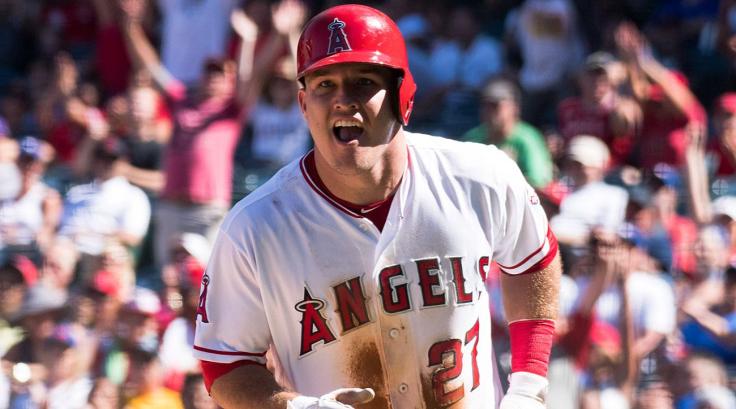
Mike Trout

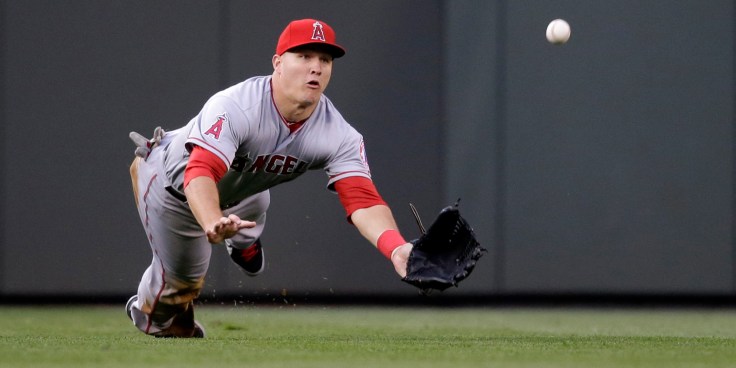
I am thankful for Mike Trout. Literally everything about him. Trout is that every day working man who goes out there and helps his team almost every game. Defense, hitting, hitting for power, running the bases; Trout brings it to every aspect of his game. We are seeing the best player in modern-day baseball and possibly one of the greatest of all-time when it is all said and done. I am thankful we get to see such a great player in my lifetime.

Almost the same can be said for Clayton Kershaw, only on the pitching side of the game. I’ve seen Maddux, Johnson and Pedro in my time, but Kershaw could be the best of the bunch. I am thankful for his precision, dedication and work ethic that makes Kershaw as great as he is.

I am thankful for the current playoff system. I was initially against the second wild card in the playoffs, but it has added a new, exciting element to the postseason and I feel it is for the better. The last four October’s have been spectacular and it has shown a steady uptick for baseball viewing among the general public.

kc3
Credit: Chicago Tribune

I am thankful for the mass group of players that I love watching all throughout the baseball season.

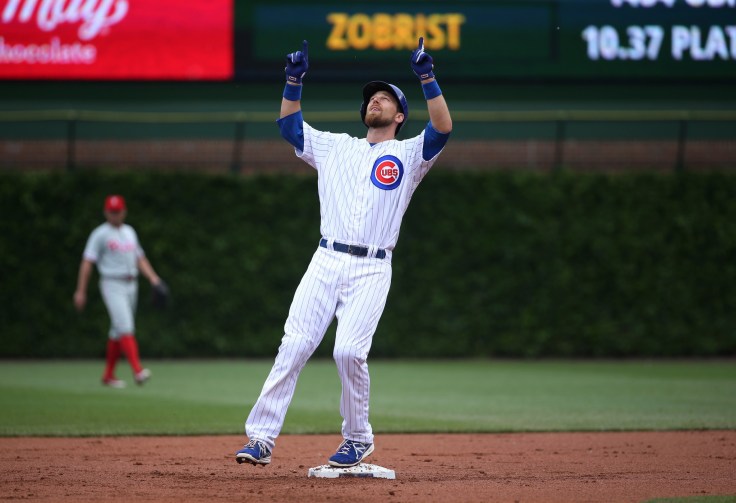
Ben Zobrist’s versatility and patience.

Andrew McCutchen’s five tools.

Giancarlo Stanton’s unbridled power.

Yasiel Puig’s child-like enthusiasm.

Bryce Harper’s hustle and ‘Hair on Fire’ approach on the field.

Wade Davis’ ‘Vein’s of Ice’.

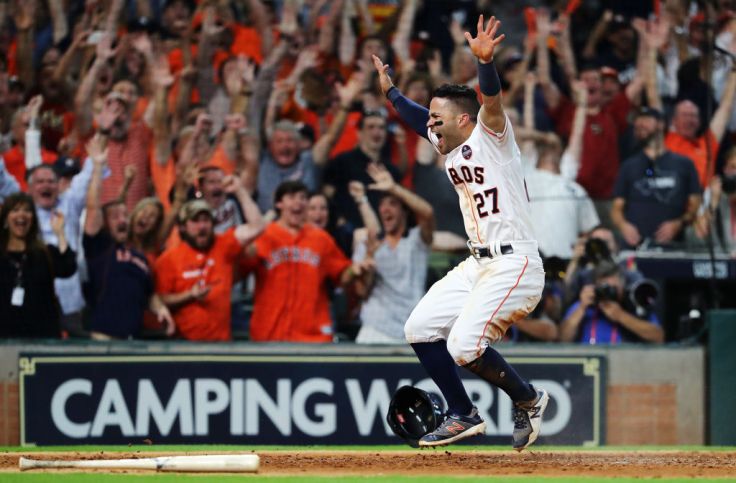
Jose Altuve’s ability to hit the ball “where they ain’t”.

Baseball not only has a great group of guys that encompass the immense talent in the game, but a group that are positive role models for the game and makes rooting for them even easier.

kc4

I’m also thankful for all the retired players whose accomplishments I’m still in awe of today.

Ted Williams’ love and dedication to hitting.

Willie Mays’Ā grace.

Bob Gibson’s fire.

Yogi Berra’s understated play on the field…oh, and his sayings.

Tony Gwynn’s knowledge of the strike zone.

Greg Maddux’s precise location.

Edgar Martinez’s understated study of hitting.

Tim Raines’ speed and ability to put himself in a position to score.

Jackie Robinson’s patience, maturity and determination to prove his worth.

Hank Aaron’s power, quiet leadership and calm demeanor.

I could go on and on with some of the greats of the game, but more than anything I am thankful they were able to pave the way for the talent that would follow them.

kc5
Credit: NPR

More than anything, I am thankful for my favorite team of the last 30+ years, the team I fell in love with as a child and the team that always reminds me why I love baseball, the Kansas City Royals.

Thank you George Brett, for the hustle and inability to give up that helped me love this game.

Thank you Bo Jackson, for doing the impossible on a baseball diamond.

Thank you Dan Quisenberry, for your unique delivery, late inning shutdowns and your sense of humor.

Thank you Bret Saberhagen, for being one of the best of your generation.

Thank you Mike Sweeney, for your loyalty.

Thank you Alex Gordon, for quiet leadership and ability to become a Gold Glover at a new position. Oh, and that home run in Game 1 of the 2015 World Series.

Thank you Eric Hosmer, Mike Moustakas and Lorenzo Cain. Without you, 2014 and 2015 do not happen.

Thank you Salvador Perez, for your infectious smile and childlike love of the game.

Thank you Denny Matthews and Fred White. You were the voices of my childhood and will always be my favorite baseball announcers. The pictures you drew with your words made listening to a Royals game on the radio an absolute joy.

Thank you Kauffman Stadium, for being so beautiful.

Thank you, 1985.

Thank you, 2015.

Thank you, Kansas City.

kc6

More than anything, thank you baseball. Thank you for loving me back. There will never be another like you. I could go on all day with the things I love about baseball, but more than anything, I love it all. I am thankful that baseball has been a major part of my life since the age of 7. I look forward to the many years ahead we have together. I will always be thankful for you. You’re the best, baseball.


The Battle For the AL MVP & How Mike Trout is Trying to Crash the Party

kc1
Credit: Sports Illustrated

When baseball reached the All-Star break, the American League MVP race felt like a two-man battle. Jose Altuve of Houston was once again a top contender while the Yankees Aaron Judge was making baseball writers and analysts go ga-gaĀ as he invoked memories of Ruth and Mantle. The normal leader in MVP conversations, Mike Trout, was sitting on the sideline, finishing up a rehab assignment and hoping to get back on the field after missing close to 40 games. While Trout was the front-runner before his injury, there appeared to be no way he could catch Altuve and Judge in any of the statistics that mattered. But then Trout came back, picking up where he left off, and something happened…Trout slowly climbed up the fWAR leaderboard. Day by day, game by game, Mike Trout was catching up to the two leaders. Just like last year, what appeared to be a two-man race turned into a three-man battle to the end. While it would appear Trout missing those 40 games would deter his case, it’s actually enhancing the argument that he is the 2017 American League MVP.

kc2

Let’s start with the WAR argument, which I referenced above. As of this writing, Altuve sits atop the American League leaderboard, with 6.5 fWAR. Trout follows with 6.2 and Judge sits in third place with 5.7. Just as an aside, this is just speaking for the hitters in the league; Chris Sale leads everyone with 7.5 WAR and Corey Kluber is at 6.0. Both Sale and Kluber can be calculated into your MVP discussion (and trust me, Sale is in that convo), but at least for me, I don’t value pitchers in MVP talk UNLESS they have been so dominant and crucial to their team’s success (and since I know it will be asked, the next closest Red Sox to Sale’s WAR number is Mookie Betts at 3.8). So Altuve and Trout are 1-2 in hitter’s WAR, but that gap was much larger at the All-Star break. At the break, Aaron Judge led the AL with 5.4 fWAR, followed by Altuve at 4.1 and Trout was down in 6th place with 3.4 fWAR. So in this second half of the season, Altuve has accumulated 2.4 WAR, Judge 0.3 and Trout 2.8. Now, the gap between Altuve and Trout wasn’t that big at the break, but Judge’s lead above both was quite a bit more. So while Trout’s push in this second half has been impressive, Altuve’s has been equally impressive in that short amount of time. What has been the most important aspect of this gain is not just how Trout has shortened the gap between the two candidates; the most impressive part of this whole debate is that WAR is a stat that accumulates over time, so the more you play the higher your number should go. Obviously not every player sees that (Alcides Escobar has played every game this year for Kansas City and his fWAR sits at a sickly -0.3 right now) but if you are an elite player, your Wins Above Replacement will rise the more you play. The fact that Trout has almost reached Altuve in over 150 less plate appearances, says a lot about how good Trout’s season has been.

kc3
Credit: The Sporting News

So how is Trout doing with some of the other statistics? Obviously Trout can’t win it on WAR alone, and luckily the numbers prove he won’t. Trout leads the league in weighted Runs Created Plus, weighted On Base Average, On Base Percentage, Slugging Percentage, walk percentage, Win Probability Added, Walk to Strikeout ratio, On-Base Plus Slugging, 2nd in Isolated Power, and 10th in stolen bases. The most impressive out of all these numbers to me is Trout’s Win Probability Added number. Trout is at 5.74; the next closest batter is Nelson Cruz at 3.67. I mentioned earlier how WAR is a stat that accumulates and so does WPA. For Trout to have an over two point lead in a stat that adds up over time is amazing. No other player in the American League has had a larger effect on his teams outcome than Trout AND IT ISN’T EVEN CLOSE!Ā When I think of the term ‘Most Valuable Player’, I think of someone who is so valuable that you can’t even imagine what that team would look like without that player on the field. Trout missed 40 games (40 games!!) and has had a larger effect on his team than any other player in all of baseball. If that doesn’t speak of value, I can’t imagine what else does.

Brett George 2400.81 NBL

Now, there is one slight issue, which is that Trout is not quite a qualified batter, as he is sitting at 325 at bats for the season and 412 plate appearances. Trout would need to reach 502 plate appearances to be a qualified batter and with 24 games left Trout would have to average 3.75 plate appearances per game, which is doable. So while Trout has a good chance of reaching the bar he needs to get to, there would still be a few writers who might not vote for him because of time missed. Luckily, there are a fewĀ precedentsĀ that show it can and has been done before. First, go back to 1962 when Mickey Mantle missed 25 games in May and June of that year. Mantle would justbarelyĀ squeak in enough plate appearances (502) to qualify for the batting title and win MVP. Mantle also lead in many of the same categories that Trout leads in right now and would garnish a Gold Glove award. George Brett in 1980 missed 25 games with an ankle injury and racked up 515 plate appearances. George flirted with .400 for most of the year and would also lead the league in most of the same categories as Trout. Finally, Barry Bonds missed 32 games in 2003, racked up 550 plate appearances, 10.2 WAR and would win his 6th MVP award. In all three of these cases, a player missed a significant amount of time to injury yet had such potent offensive seasons that the voters could not dismiss their contributions to their team. To me, that reads just like Trout this year and shows that if the numbers are there, it should be an easy vote come the end of the season.

kc5
Credit: Sports Illustrated

So while Mike Trout hasn’t passed Jose Altuve just yet, it’s hard to imagine a scenario where it doesn’t happen before the end of the season. You almost feel sorry for guys like Altuve, Judge, Manny Machado and others; they are playing at the same time as one of the greatest players of not only this time period, but easily one of the best of the last 30-40 years. Mike Trout appears to be on a completely different level and this year the numbers say he is doing it in a slightly shorter amount of time. While a vote for Altuve wouldn’t be a bad vote, it would be ignoring not only what Trout is achieving but also what he is doing to help lead an Angels team to contention. It might feel redundant to say Trout should be MVP each year, but it would also be foolish to vote against him just for the sake of change. Last year in August, I said Trout should be in the conversation for MVP and I was scoffed at. I was told Altuve had it in the bag. Trout ended up winning the award. This year I make a different proclamation: Mike Trout should be MVP again. This time, it might be wise to just admit the arguments against him aren’t as strong as the arguments for. All hail Mike Trout.

Kansas City’s Offensive Offense

kc1

It’s highly doubtful that anyone would have predicted that the Kansas City Royals offense would be as pitiful as it has been 18 games into the 2017 campaign. In fact, the stench wafting from the Kansas City offense has become so heavy that it has raised a whole slew of questions moving forward: Who needs to sit? Who should get sent down? Who should be called up? When will Jorge Soler be ready? When will the first player be traded? It feels like they go through these offensive droughts on a yearly basis because…well, because they do. We all remember July 2016. We remember the new batting coaches the team employed in back to back May’s, including hiring George BrettĀ  to help out. This team has been notorious for its offensive struggles, but the timing this year is worse, as it will be the final year of its main core of the lineup; in fact, if things don’t change, guys like Moose, Hos and LoCain could be dealt before we even get to the trading deadline. So just how bad is it?

kc2

Let’s start with a few numbers to break down how comatose the bats are. The big stat that has been thrown out there is the team’s batting average with runners in scoring position: .153, last in all of baseball. It doesn’t get much better with two outs and runners in scoring position: .102, which earns them last in the American League. Last in runs, last in RBI’s, last in slugging percentage, next to last in on-base percentage, Ā last in wRC+, and next to last in WAR…and this is for all of baseball, not just the American League. The struggle is real and floats all the way down the lineup; here is the regular lineup (or at least what has been the most used lineup) and their individual wRC+, with league average being 100:

Gordon-35

Moustakas-152

Cain-150

Hosmer-41

Perez-118

Moss-56

Orlando- -13

Mondesi- -8

Escobar-30

Three starting players are above league average and the rest are way below that line. In fact, two players sit in the negative column and both of them (Orlando and Mondesi) were sent to AAA last week. Sure, Cain and Moose are hitting good and getting on-base, but does it matter when no one can drive them in? It doesn’t help that the team has hit into 18 double plays, which amazingly is only the 6th most in the AL. But that 18 hurts more when you factor in how little this team is getting on base in the first place, which means they seem to be killing any rally that gets started. So with the numbers glaring us all in the face, one has to ask the question–what is causing this slump?

kc3

There is no bigger factor than looking at what pitches the Royals are swinging at. So far this year, the batters are swinging at 34.3% of pitches outside the strike zone, leading the AL. Fascinating enough, the team is also swinging at 70.2% of pitches within the strike zone (tops in the AL), which means this team is swinging at almost everything being tossed up there. The sad part is that they are only making contact 75% of the time, which earns them 2nd worst in the American League behind only Tampa Bay. The Royals are swinging and missing at pitches 12.5% of the time, the 2nd highest in the AL as well. This shouldn’t be too surprising to long time fans, since this has long been a Ā ‘put the ball in play’ team who rarely takes a walk. The problem is a lot of the times they just aren’t putting the ball in play and that is killing their offense in the process. In an interesting side-note, the team actually isn’t last in walks so far in 2017, as they have walked 47 times, which sits them in 13th place in the AL. I bring this up for one very big reason: teams that walk more often can power through slumps easier if they are patient and get on base with a free pass rather than get a hit. Because the Royals aren’t a team that walks, their slumps appear worse since they aren’t utilizing their patience the way they probably should. Remember folks, a walk is as good as a hit, and in many cases it also means you are driving the pitcher’s pitch count up. In my mind, that is a win-win situation.

kc4

The other factor that is hurting the offense is how they are hitting the ball. The Royals have the highest soft hit rate in the AL so far this year (23.8%) while racking up the third lowest hard hit rate (26.6%). Kansas City just isn’t hitting the ball hard and it is showing in the offensive output. The team has put a stronger emphasis on hitting for power this year, but it appears to have backfired, or at least it appears that way in the numbers. The Royals have the 4th highest pull percentage in the league (42%) yet their line drive rate sits at only 20.3%, which is 8th best. The team’s HR/FB ratio sits at 10.7% (10th in the AL) while their fly ball rate sits at only 35.1%. This team hits the ball on the ground way too regularly, as their ground ball to fly ball ratio is the 5th worst in the league (1.27, only .41 behind the Angels, who have the worst). The most alarming stat among these numbers is the infield fly ball rate, which is the second worst in the junior circuit (13.4%). The whole name of the game right now in baseball is elevating the ball, yet there is such a thing as bad elevation. The Royals appear to be doing that and there is no Royals batter who is averaging above 90 mph in exit velocity so far in 2017. It’s very obvious what Kansas City would benefit from; more hits off the barrel of the bat and less swinging on a downward plane. It is easy to say, but not as simple to do.

kc5

So can the offense pull out of this? Of course they can. As we sit here on Monday, the Royals have only played 11% of their games, so there is more than enough time for the offense to turn things around. In fact, in year’s past we have seen Kansas City do just that. The issue is that if things are going to turn around, it needs to happen sooner than later. The worst case scenario is for the bats to stay cold and the team decides they aren’t in a hunt for a playoff spot. If that happens, there is a good chance a few of the impending free agents could be available on the trade market. This is worst case, but very real as well. Do I believe this Royals team is this bad at the plate? No. Are there issues that need to be addressed? Obviously. If the team could swing a little less, be a bit more patient and drive the ball more, good things will eventually happen. The only question becomes ‘how long will that take’? Hopefully we have an answer soon, as in this week. The last thing we want to see is Kansas City continuing to struggle offensively into May.


Royalty’s Notebook: February Royals Thoughts

kc1

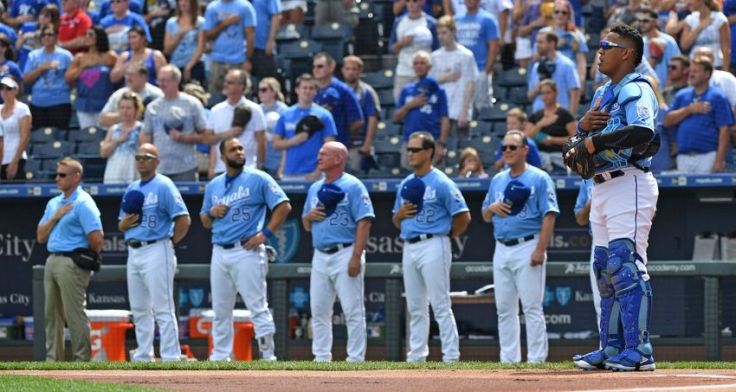
Spring Training is so close that we can practically smell the freshly cut grass and see the perfectly drawn baselines. It’s that time of year when the phrase ‘Pitchers and catchers report’ is music to any baseball fans ears. Over the last few weeks, I have had a number of thoughts littering my head and figured rather than writing four separate articles, I would shoot out a few short notes on some Kansas City Royals related activities that have been going on. What better way to start than with the pitcher we call ‘Duffman’…

kc2

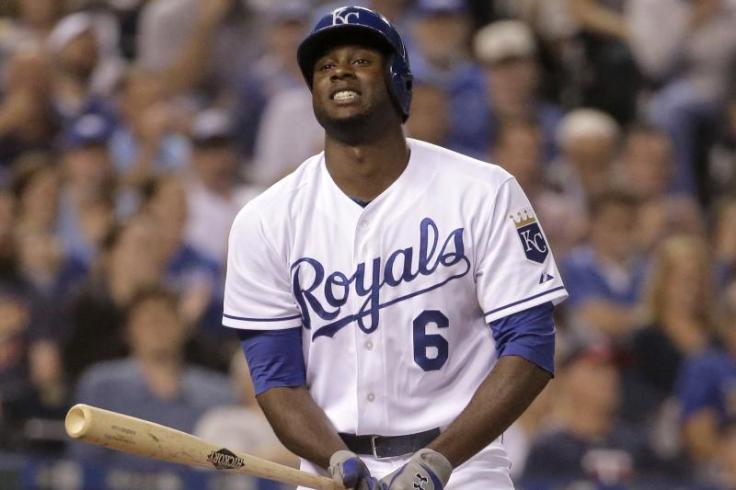
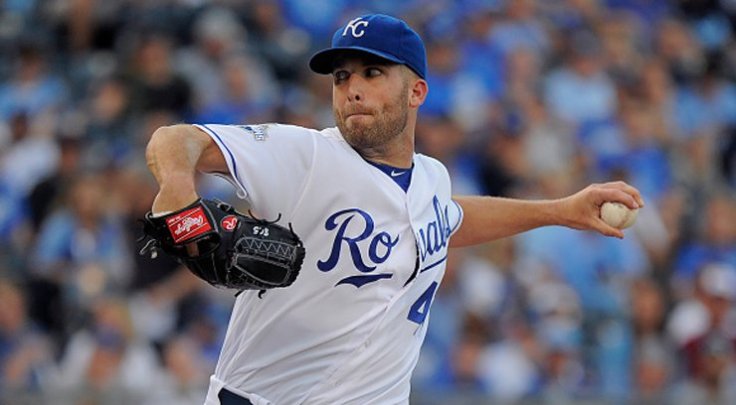
There are so many reasons to love Danny Duffy right now. Duffy showed himself to be a true front of the rotation starter last year and was rewarded with a nice new contract, which means he will be around for at least the next five years. There is his return to twitterĀ where he is trying to do some good. Speaking of Duffy the good samaritan, if you weren’t already ‘Team Duffy’, than him meeting and talking to fans at Kauffman Stadium after Yordano Ventura’s deathĀ should have swayed you. But the story that made me really proud to know that Duffy is on ‘my team’ is the one where he bought a Yordano bobblehead. This story must be read, so click here. In short, a Royals fan in the Kansas City area sold his Ventura bobblehead on ebay and right before he mailed it off, he saw it was addressed to Duffy. He canceled the payment and sent Duffy a message, telling him he wasn’t going to charge him for the bobble. Duffy told the guy he was trying to buy up as much Yordano merchandise as possible and then mail it to his mom at the end of the season. When I first read that, a legit huge smile broke out on my face. I have long rooted for Duffy to succeed, if anything because the guy has shown again and again that he is an awesome human being. The fact that he was accumulating as much Yo’ memorabilia as possible because it would help her “remember the good times” was just phenomenal. Talk about being proud that he is in Kansas City; I have never seen an athlete who is so open about his feelings AND in such a positive way, to boot (Yes, that was slightly directed at Zack Greinke). We might love our Salvy, our A1 and our Moose, but dammit if I’m not a Duffy fan for life because of what he represents as a player and a person.

Royals Preview Spring Baseball

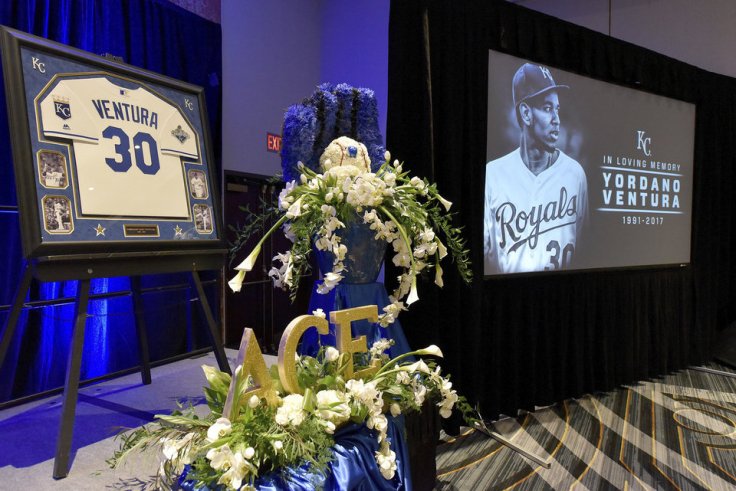
Speaking of Ventura, there has been a call amongst many Royals fans for the team to retire his number 30Ā this season. I understand that for most of us there is an emotional attachment to the group of players who guided this team to their first championship in 30 years. I was just as broken up about Ventura’s passing as most other Royals fans and I figure the home opener on April 10th will probably cause a few lumps in throats. That being said, it feels like the push to retire his number is an emotional thought and not a logical one. Over the team’s 47 year history, they have retired three former Royals: George Brett (5), Frank White (20) and Dick Howser (10). That’s it. In my eyes there have been a few worthy numbers that could have been retired by Kansas City over the years, but I do like that they aren’t just retiring numbers left and right. To me, if you are going to go that route, it better be a player who really marked their spot in franchise history. While Ventura had a number of big moments in his short career, he did only have three full seasons under his belt, and was just slightly above league average overall during that time. I have heard a number of great ideas in honoring Ventura this year, like leaving the ball on the mound opening day and letting manager Ned Yost make a “pitching change”, or naming a baseball academy down in the Dominican Republic after him. Those are just two great examples of honoring his passing and I wouldn’t even have a big issue with putting him in the Royals Hall of Fame in the future, even if it would feel like it was being done because he passed away while still with the team. But retiring his number feels like an emotional reaction to his death and I just don’t agree with it. I’m sure the Royals will honor his time in Kansas City this year and they should; but lets not overreact. Honoring Ventura is fine, but retiring his number is unnecessary and to be brutally honest, not really earned.
MLB: Minnesota Twins at Kansas City Royals

With the Royals signing ofĀ Jason HammelĀ this week, Kansas City has marked off almost every need that they were searching for this winter…that is, except for another bullpen arm. The thought has been that the Royals would possibly sign one more reliever and with Spring Training looming in just a few days, there could be a last-minute signing, especially if they bring Luke Hochevar back into the fold. Hochevar is coming off of Thoracic Outlet Surgery but it’s been thought all along that as long as he is healthy, the team would look to bring him back to Kansas City. If not Hochevar, there are a few options still available on the market. Guys like Travis Wood, Jonathan Niese and former Royals Joe Blanton and Jorge De La Rosa are still available. The Royals also checked in on Seth ManessĀ last week, the former Cardinals reliever who bypassed Tommy John Surgery and elected an experimental surgery that would have him back on the field in 7 months. While I tend to think Hoch will be back fairly soon, Kansas City has many choices and with a group of young arms also in the running ( Josh Staumont, Kevin McCarthy and Eric Skoglund among them) there will be some definite competition in the bullpen this spring for the Royals.

Boston Red Sox v Kansas City Royals-Game Two

The Hammel signing also meant that room would have to be made for him on the Royals 40 man roster, and Alec Mills was the unfortunate person to be sent packing. Mills was dealt to the Cubs for outfielderĀ Donnie Deewees. Mills was a solid arm for Kansas City’s system but at best was probably someone who would have success out of the bullpen rather than in the rotation. Deewees is an interesting acquisition, as he is a speedy outfielder type that Dayton Moore continually covets. The scouts evaluation of Deewees seems to be on par with current Royals outfielder Billy Burns:

ESPN’s Keith Law recently rated DeweesĀ 15th among Cubs farmhands, noting that he’s a 70-grade runner that can handle center field from a range standpoint but has a 20-grade arm that limits him to left field. Longenhagen ranked him 19th among Cubs prospects offering a similar take (albeit a 30-grade arm instead of 20), writing that without the power to profile as a left field regular, his best scenario is a Ben Revere type. B-Pro’s Steve Givarz was a bit more optimistic about his glovework but still pegs him as more of a fourth outfielder than a potential starter.

Deewees is still only 23 years old and more than likely will start the year in Kansas City’s High A Ball team in Wilmington. This could be a trade to monitor over the next couple years and see how Deewees has (or has not) developed. When all else fails, Moore will always lean towards speed.

kc7

Finally, Kansas City went out and signedĀ Brayan PenaĀ to a minor league deal this past week. Pena is a former Royal who played for Kansas City from 2009-2012 and spent most of his time as a backup catcher. Pena is a serviceable receiver who has a bit of pop in his bat and is well liked in the clubhouse. The honesty is that this is a depth signing and much like Tony Cruz last year, Pena will most likely be spending his time in Omaha this year unless something goes wrong for Salvador Perez or Drew Butera. It’s good to see Brayan back in blue, but I wouldn’t expect to see much of him once the season starts.

kc8

In just a few days pitchers and catcher will be reporting to Spring Training and we can actually start digesting some news on our ‘Boys in Blue’ and start getting a feel for what the major league roster will look like come April. I can say with all honesty that I feel better about the feel of this roster now than I did even a few weeks ago. For all intent and purposes, the Royals are looking to gain back what they lost last year, which would be the top of the Central Division. Next week, step one begins on a long road to their (hopeful) final destination, October baseball.As always, hope springs eternal.

Forever Splendid

kc1

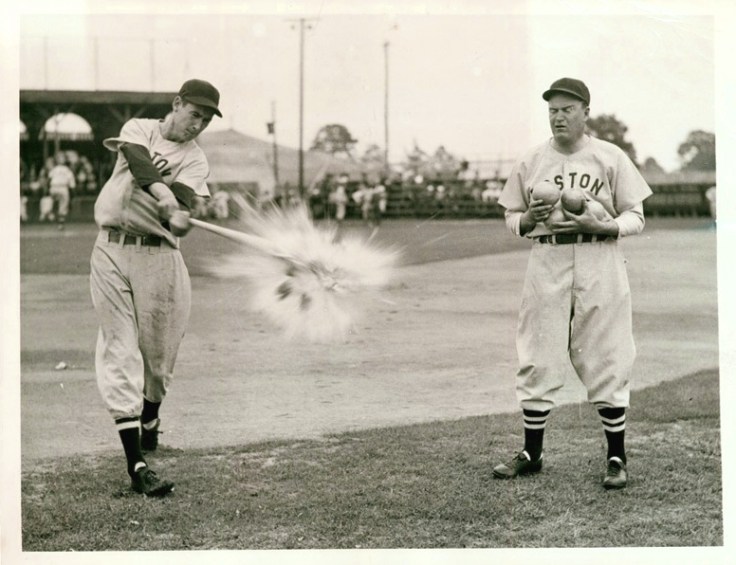
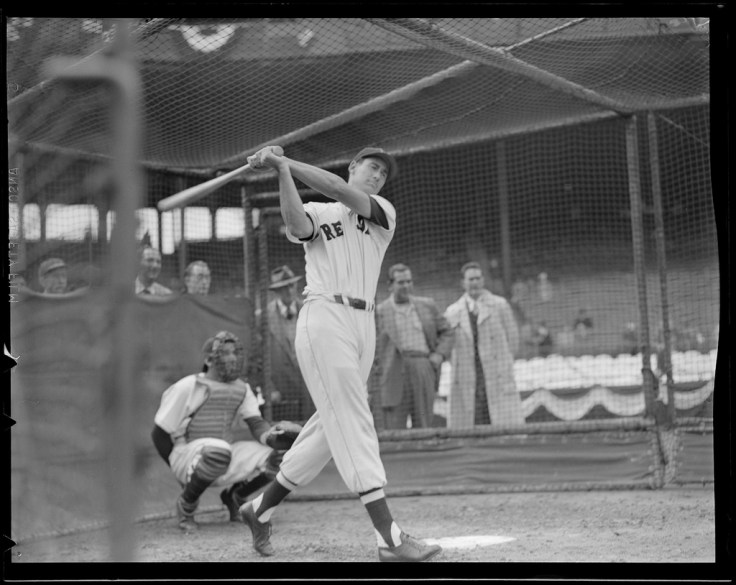
August 30, 2016 would have been Ted Williams’ 98th birthday and though he passed away in July of 2002, Williams’ legacy lives on all these years later. To some like myself, Williams is the greatest hitter of all time in baseball and the numbers back that up: two MVP awards, five time Major League Player of the Year, six batting titles, 14th all time in bWAR(11th for position players), 6th all time in OWAR, 8th best batting average, 2nd best OPS, best career on-base percentage, 2nd best slugging percentage, 4th most walks, 5th best WPA and 6th most runs created. What’s even more compelling is that ‘Teddy Ballgame’ did all of this while missing three years of his prime (his age 24-26 seasons) while serving in the war. Williams is one of the greats in the game and has always been a man who has piqued my interest once I started delving into the history of the game back in my early years. I think one of the main aspects of Williams (at least to me) was he absolutely loved the art of hitting and studied it like he was a scientist or scholar who wanted to breakdown every section of this art. To celebrate his greatness, I thought today we would look at some great factoids, stories and other interesting notes about the ‘Splendid Splinter’, Ted Williams.

kc2

  • Williams had a great memory. In fact, he could recall specific Ā at bats, sequences, conversations and much more from years before. These stories are still being passed along today:

One time, comedian Billy Crystal met Williams and told him that he had video of Williams striking out against the Yankees’ Bobby Shantz in a specific game 30 years earlier. Williams looked at Crystal and said, “Curveball, low and away. [The catcher] dropped the ball and tagged me, right?” Of course it was, because that was Williams.

Williams was obsessed with hitting, taking batting practice before and after games. Tim Kurkjian once wrote:

“Fear of failure drove Williams. That’s why he never stopped hitting, never stopped striving for perfection.”

He would often tell people that his only goal when he retired was to have people look at him walking down the street and say,Ā “There goes Ted Williams, the greatest hitter who ever lived.”

kc3

  • Williams was known to be a surly guy, but stories have surfaced over the years about what a good-hearted person he could be. This story in particular makes it hard to dislike the guy. This came from Roger Waynick, owner of Cool Springs Press:

When Roger was in his mid-teens, before he had a drivers license, he went on a trip with his father to Islamorada, Florida to fish for tarpon. The group that included his dad breakfasted one morning and then, for some reason, left Roger behind when they went to the boat.

Ted Williams, a pretty famous tarpon fisherman (one of his major endorsement deals was with Sears for fishing tackle), noticed the young man sitting by himself and asked him what was going on. Roger explained that his dad and his dad’s friends had left him behind. Ted invited him to spend the day with him fishing on his boat.

Waynick has two great memories of the day. One was about the legendary Williams eyesight. (It was claimed that he could read the label on a 45 rpm record while it was spinning on the turntable.) Waynick explained to me that fishing for tarpon is like hunting; you see the target game first and then ā€œcast to it.ā€ As Waynick put it, ā€œhe had brilliant eyes and could see the fish long before I could!ā€

But the other recollection Waynick has nearly 40 years later is about Williams’s strength. ā€œWe caught several fish and I was amazed how he could hold his rod almost vertically as these huge fish pulled. For me, I was being pulled around the boat…but not him. He stood still and straight. Splendid.ā€

  • Not a fan of defensive shifts that litter the game of baseball nowadays? Well, Williams was the first player to ever have such a shift used against him.It was called the “Ted Williams Shift”and was first used by Cleveland Indians manager Lou Boudreau on July 14, 1946 :

In the opening game of a Fenway doubleheader, Williams, in his first season back from World War II military service (and waist-deep in what would be his first MVP campaign), went 4-for-5 with three homers and eight RBI. For the second tilt, Boudreau, with creativity likely borne of desperation, employed the following defensive alignment when Williams ambled to the plate …

kc4

The immediate result? Williams went 1-for-2 with a double and a pair of walks. So that’s … better, at least compared to what he wrought in the first game of the double-header. Note, though, that Williams posted a .750 OBP for the game, and the shift was still deemed a success of sorts. Such were the hitting chops of the Splendid Splinter.

kc5

  • One factoid that I didn’t realize until a few years ago was that Williams was ofĀ hispanic descent:

Williams’s Latino pedigree surprises many, but the Splendid Splinter was always private about family. In his 1969 autobiography, My Turn At Bat, Williams acknowledged his heritage as “part Mexican” and recognized the difficulties that might have been his lot. He wrote, “If I had had my mother’s name, there is no doubt I would have run into problems in those days, the prejudices people had in southern California.”

Williams mother’s name was May Venzor and it appears that his mother’s side of the family had a big influence on Ted’s love of the game of baseball:

Sarah Diaz (May’s younger sister) recalled of Ted’s visits to Santa Barbara in the early 1930s, when he was a teenager: “Ted played with my brother Saul. We had a big garden, and they’d get out there and throw the ball to each other. Ted learned a lot. When Ted would come, the first thing they would do is get out there in that field and pitch to each other and bat. My mother was left-handed and, boy, she didn’t miss when she threw rocks at us, to get our attention.”

  • As most know, Williams was the last hitter to hit .400 in a season, .406 back in 1941. Many felt like he should sit out the final game of the season, which was a doubleheader atĀ Shibe Park. Williams’ average was at .39955 and batting average’s are always rounded up to the next decimal. Williams’ could have sat out the game and still accomplished a .400 season. Instead, Williams played both games:

WilliamsĀ went 6 for 8 in the two games to finish at .406, and no one has since hit .400 or better for a season. No one, in fact, has hit higher than .390, and that was 31 years ago.

Many hitters have tried since then to reach the .400 barrier, only to fall short:


Williams had 456 at-bats in 1941. Brett, who hit .390 in 1980, had 449 at-bats that season. In 1994, Gwynn had 419 at-bats in 110 games and washitting .394 on Aug. 11; then the players went on strike and the rest of the season was canceled.

John Olerud was hitting .400 on Aug. 2, 1993, the second latest that anyone has carried a .400 average in a season since Williams. (Brett was hitting .400 on Sept. 19, 1980.) Olerud raved about Williams’s eye for the strike zone and his plate coverage but wondered whether he had benefited from playing when starters usually pitched complete games.

On this issue, Williams always conceded that some changes, like a bullpen full of specialists, might have made hitting harder since the 1940s, but that other changes might have made it easier, like the major league expansion to 30 teams from 16, which probably diluted the overall pitching talent.

kc6

  • One final story that I found incredibly interesting-Ted Williams once pitched in a major league game. It was August 24, 1940 and all things considered didn’t pitch too badly:

Just 21 at the time, Williams was not an ideal person to take the mound. But the Red Sox’s manager, Joe Cronin, found himself in a tight situation during a blowout loss to the Detroit Tigers.

Needing a fresh arm to get some outs, Cronin called on Williams to throw some pitches.

Despite his inexperience, Williams did fine in two innings, allowing just three hits and one run. The Tigers won by 11, but the Red Sox were able to get through the game without any further embarrassment.

Go ahead and use that little fact to try to stump a friend. I’m pretty sure they won’t know that Williams actually pitched in a game early in his career!

kc7

Ted Williams is not only one of the greatest baseball players in history, he is also a man who will be talked about way past any of our lifetimes. Williams was a one of a kind player and many of the stories here will be told for years to come. I love running across new stories I have never heard before about Williams, as I find him to be a fascinating player and person, someone whose reach was far past the game of baseball. Williams lived a full life that many would be proud of, but he also was one who always wanted more. We should want more out of life and never quit wanting to learn and be better. It is a goal that Ted Williams strived for and seemed to succeed at.


The Prodigal Son Has Returned

kc1

There really has been only one topic on the minds of anyone who follows the Kansas City Royals: will Alex Gordon re-sign with Kansas City and continue to be the pillar of this championship Royals team? After months of speculation(and worry that he would leave) we found out on Wednesday that Gordon was staying with the only major league team he has ever known, signing a 4 year, $72 million dollar contract with an option for a 5th year. So how does that deal break down?

It’s interesting to see that Gordon will actually be making less this upcoming season than he made in 2015, but it is not surprising to see the contract back-loaded with a mutual option(seriously, Dayton loves those mutual options) in year five. So what does this mean for the Royals moving forward?

kc2

Financially, Gordon’s contract gives the team flexibility not only for this year(after expected arbitration raises and probably the signing of another starting pitcher, the team’s payroll will probably be above $120 million, which really isn’t a giant increase from 2015), but also 2017. Why those two years? The main core of this Kansas City team will be intact for at least the next two years, so the Royals chances of continuing to reach the postseason is greater now for those two years. A smaller deal for Gordon helps out the rest of that payroll and could very well impact the team if they try to make another big deal in July if so be it. Now his contract goes up in years 3 and 4 of the deal, but I would say there is a good chance that by then this contract won’t look as imposing when you look at the influx of money within the game of baseball right now. Add in that the Royals should be able to restructure their TV deal around 2018 and the Royals could be playing with even more money than they have right now. Obviously the big part of this deal is that it gives GM Dayton Moore more wiggle room to help get the pieces needed to keep this team a contender through 2017, which will then see Eric Hosmer, Mike Moustakas, Lorenzo Cain, Wade Davis and Alcides Escobar become free agents.

kc3

The signing also means the chances of Kansas City taking advantage of their window have improved with the return of Gordon. Realistically, the Royals have the next two seasons to take advantage of their current core players and have a better chance of reaching the playoffs again with Gordon in tow. I am of the belief that without Gordon’s return, the chances of Kansas City returning to October baseball would have been much harder to accomplish, where as now they return the “backbone” of the team. About a month ago I went into deep detailĀ on why the Royals should bring back Alex and it seems obvious when I say this team is better with Alex roaming left field for the next four years. To me, I wouldn’t even worry too much about 2018 and instead focus on the here and now. If the Royals reach the postseason the next two years(or even one of the two), that means more people coming to the ballpark, meaning more money coming into the team. To me, that extra money could be used on whatever the game plan is for after the 2017 season, which could be to re-sign a Cain or a Hosmer(I know, he is a Boras client so the likelihood is not very high) or go out and revamp the team. Either way, giving the Royals the best chance possible to win now helps the organization in the future as well. Keeping Gordon in the fold helps in that regard.

kc4

Speaking of the core Royals group, I also felt like Gordon was the best choice for a long-term deal out of that group mentioned earlier. Hosmer and Moustakas are almost completely off the table since they are Scott Boras clients and he will always tell his clients to take the deal that will make them the most money. I love Wade Davis but he is a reliever and you should never give a reliever a long-term deal(unless his last name is Rivera). That leaves Cain and Escobar, who will both be in their low 30’s at this point. I love both guys but Cain has a long injury history and a big part of Escobar’s game(speed) will have started to regress at this point which makes a long-term deal seem iffy. To me, Gordon will regress the best out of this bunch and will probably come close to his expected production over the next couple years that will make his deal worth the money that was spent. In fact Craig BrownĀ ofĀ Royals AuthorityĀ took a look at just that the other day, taking a look at his Steamer & ZiPS projections over the course of the deal and putting that up against his earnings during those years.Ā I feel you can also throw in what he means to that clubhouse, as many a teammate has referred to Gordon as the “backbone” of the team. He isn’t the rah-rah team leader, but that is why they have Salvador Perez. Gordon is the quiet one who leads by example and it is normally a “balls to the wall” type example that he plays by for them to follow.

kc5

Concerns? There are always concerns when signing a player to a deal of this size, and most of them are health related. Gordon missed some time this year due to a couple injuries, a wrist injury that limited him when the season began and a groin injury that left him out of action for August and a good chunk of July. But since Gordon made the move to left field full-time in 2011, he had played at least 150 games in all of those years before this past year. I tend to feel like the injury is an outlier for Alex, but it’s easy to see how an injury could happen to him with his “reckless abandon” style of play out on the field. We all saw what happened to Mike Sweeney late in his career, but knowing how Gordon is a health nut and his insane work-out routine, I think there is a better chance of Alex staying healthy than spending the majority of his time on the disabled list. Will he regress? Of course he will. ‘Father Time’ always wins that battle. But once again, Gordon takes good care of his body, so the belief is that his regression won’t be as steep as it normally is for others.

kc6

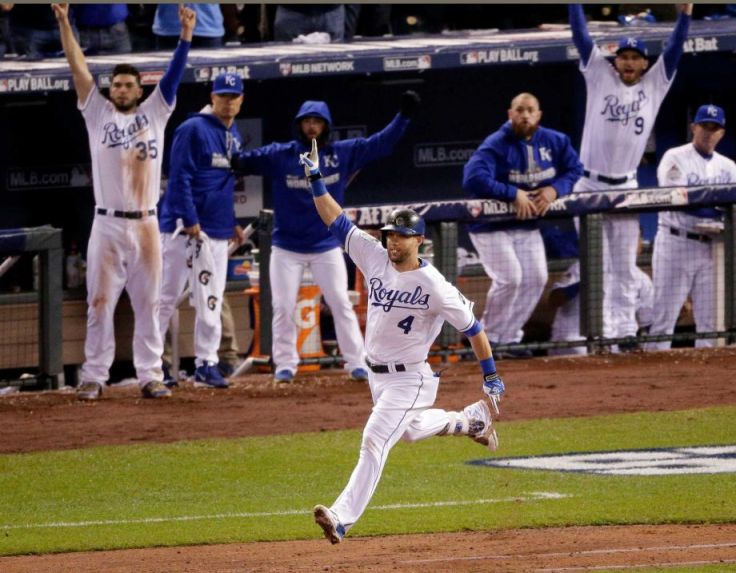
To me it always made the most sense to bring back Gordon to the only major league team he has ever known. Gordon is beloved in Kansas City and it was the team he grew up rooting for. It only made sense for the present and the future to make sure Alex remained in Royal blue. As a fan, I was very biased on this all along. As a kid my favorite player was George Brett and would stop whatever I was doing once Brett came up to the plate. I loved the way Brett played and it became a model for me to judge other players by. As an adult, Alex Gordon is in that same pantheon for me. He is my favorite player on this Royals team and the thought of him wearing another team’s jersey was tough to stomach. Knowing now that he is locked up makes me feel better about the future of the Royals as he is the constant everyone can rely on. Alex now has four years to further cement his legacy and a deeper place into the history of the Kansas City Royals. It seems like a lock now that Gordon will one day get a statue near the fountains at Kauffman Stadium. Honestly, I can’t think of a current player more deserving than ‘#4’.

Blog at WordPress.com.

Up ↑