The Black Hole of Death…is Alive!

kc1

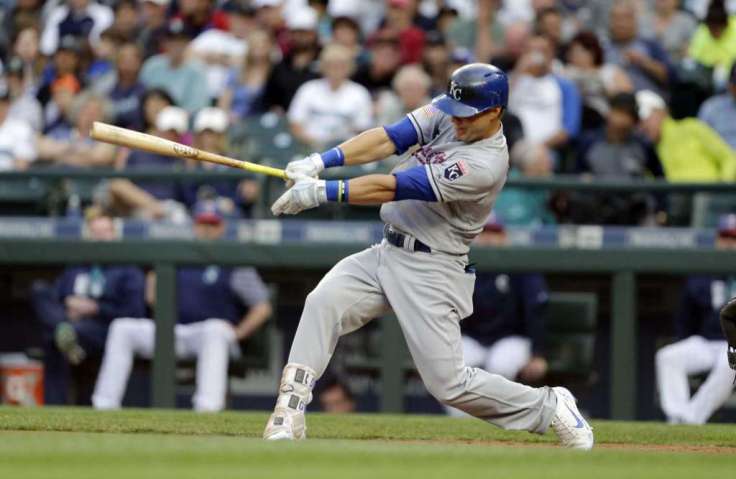
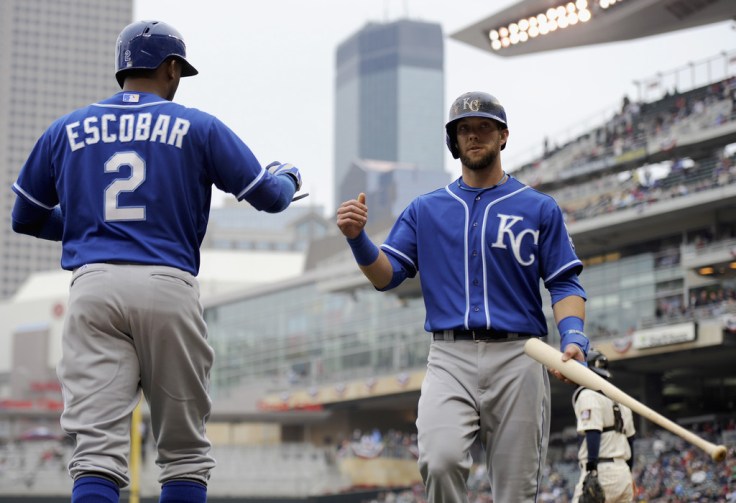
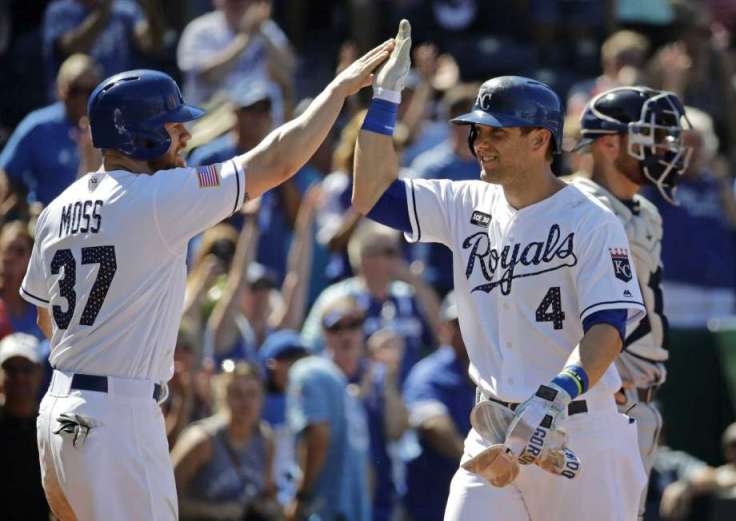
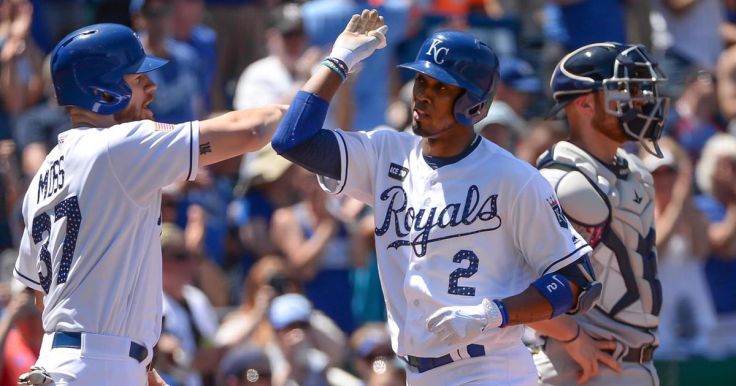
We all remember April. April was not kind to the Kansas City Royals and in large part it was due to the lack of offense. The Royals were last in almost every offensive category in the American League (outside of home runs and ISO) and produced a wRC+ of 57 as a team (league average is 100). While almost the entire team was struggling, the most glaring weakness was the bottom of the lineup, which consisted of Brandon Moss, Alcides Escobar and Alex Gordon. The last third of the lineup continued their struggle through May before June started to see a bit of life. But over the last few weeks, this trifecta that was denoted ‘The Black Hole of Death’ has awoken from their slumber and helped guide the Royals to where they now sit 1.5 games out of first place in the American League Central and tied for the second wild card spot in the AL. So how has this group gone from basement dwellers to driving forces behind a Kansas City Surge?
kc2

Let’s start by looking at where this group started at in April with a look at their slash lines:

Moss: .167/.250/.367, -0.3 fWAR

Escobar: .171/.200/.220, -0.4 fWAR

Gordon: .184/.268/.218, -0.3fWAR

The numbers didn’t see a big uptick in May:

Moss: .203/.266/.508, 0.0 fWAR

Escobar: .197/.220/.248, -0.5 fWAR

Gordon: .164/.307/.192, -0.1 fWAR

Now remember, WAR factors in defense and Moss for the most part doesn’t see a whole lot of time on the field. So what might be the most telling sign of how badly Escobar and Gordon were performing is looking at the WAR statistic; both players are former Gold Glove winners and are still great defensively. The fact that both put together below replacement level performances really shows you how lackluster they were with the bats. Also, take a look at Escobar and Gordon’s slugging percentage in April and May: both months, Escobar had a higher slugging percentage than Alex, which shows that Gordon wasn’t driving the ball at all in those two months. Escobar is not known to get a bunch of extra base hits while Gordon in the past has been known as a guy who can rack up a decent amount of doubles and home runs. At that point, one would wonder how much better this Royals team could be just by getting replacement level play from the bottom third of the batting order. Luckily, June would see their bats start to wake up.
kc3

All it took was a trip to the west coast and warmer weather to get a pulse from these three (or at least two of the three):

Moss: .156/.240/.178, -0.5 fWAR

Escobar: .294/.301/.412, 0.5 fWAR

Gordon: .231/.295/.436, 0.3 fWAR

Moss’ June was not pleasant, as he only drove in one run the entire month and had a wRC+ of 13. Gordon actually went deep three times and a lot of his production can be attributed to hitting coach Dale Sveum working on his stance and having Gordon use his legs a bit more to help him drive the ball. The Royals as a team had a great offensive month in June but the best was yet to come in July:

Moss: .326/.392/.630, 0.5 fWAR

Escobar: .271/.320/.414, 0.4 fWAR

Gordon: .254/.318/.407, 0.3 fWAR

While Moss was almost invisible in June, his July has seen his numbers drastically move upward, thanks to something that doesn’t have a stat to quantify it: confidence:

“Before the last couple of weeks, I’d get to two strikes (and) not to say that you knew it was over, but you knew you probably missed your chance,” he said, smiling and adding, “Been seeing the ball a lot better and have better balance at the plate, so it’s not a panic any more.”

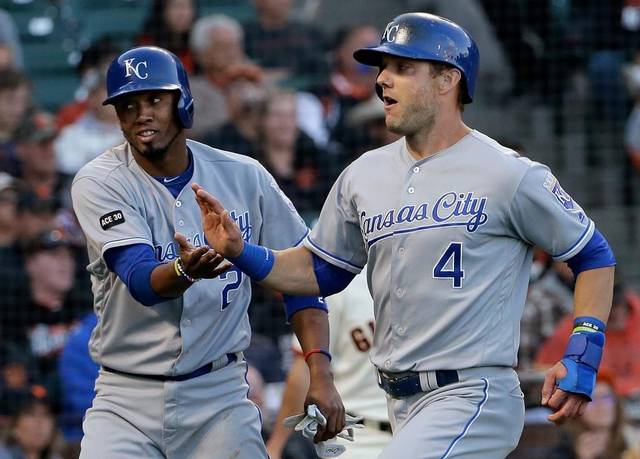
Escobar has gone with a more balanced attack, spraying the ball all over the field. In July, Escobar is pulling the ball 30.7% of the time, hitting the ball up the middle 35.5%, and the opposite way 33.9%. Gordon appears to be taking the ball to the opposite field more, 28.6% compared to 13.1% last month. Gordon is also focusing more on off-speed pitches to hit, as his wCH/c (which is a linear weight against change-ups) is sitting at 1.69 in July, compared to -3.67 in April. Gordon has always been a better hitter when he isn’t pulling the ball as much and most of his big hits in the last week have been to the opposite field:

So for the month, these three are almost all above the league average for wRC+ (Moss is above with 168, Escobar and Gordon are almost there with 94 and 91 respectively) and all have a wOBA of .313 or higher. Kansas City has sought any offense from the bottom three and it has finally come to fruition. The next big question is ‘Can they sustain?’ this pace?
kc4
Credit: Kansas City Star

With a little over two months left in the season, there is no reason to think these three hitters can’t continue this pace of production or something close to it. Moss might not slug at a .620 clip but as long as meets a happy medium between his low and his high that should keep him at a respectable level. Both Escobar and Gordon are performing at levels that are very sustainable and would be more than accepted if they can keep it up. Moss and Gordon are well-known to be streaky hitters so the highs and lows could be a bit extreme, but as long as they evened out to respectable numbers it should mark an improvement. The Royals have waited all season for these guys to hit and now comes the hard part-maintaining it. These three don’t need to carry the offense, they just need to contribute.
 

Waiting On Soler

kc1
Credit: Kansas City Star

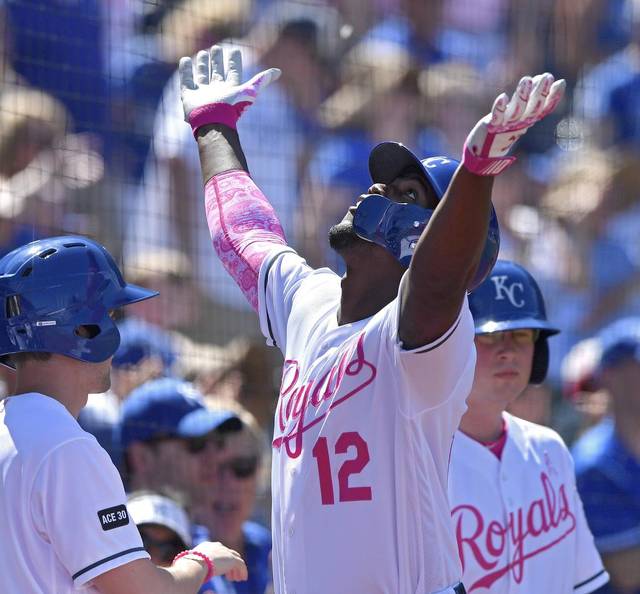
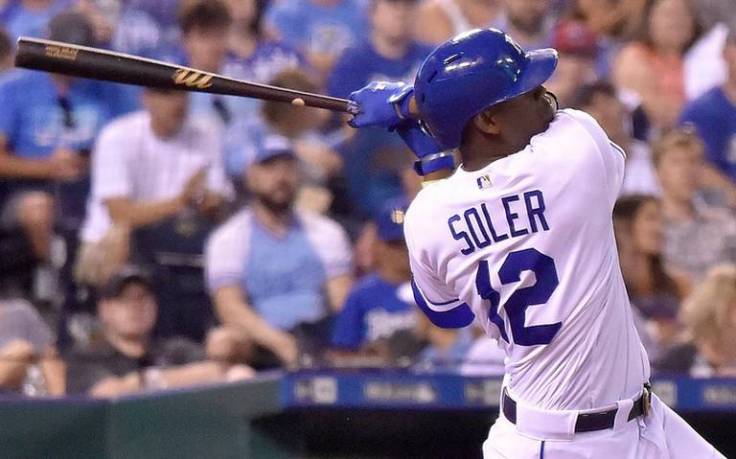
On the surface, the expectations for Jorge Soler were simple: play average defense, take a few walks and most importantly, hit bombs. He didn’t have to be the main cog in the middle of the Kansas City Royals offense; all he needed to be was a dangerous bat who could drive mistakes over the outfield fence. Instead, Soler’s inaugural campaign in Kansas City has been rather mundane, as he is hitting a pedestrian .154/.245/.275 with 2 home runs and a wRC+ of 34 in 102 plate appearances. Because of the lack of production,  Soler was optioned back down to AAA (again), with Billy Burns taking his roster spot. Manager Ned Yost explained that the lack of at bats and production factored into the decision:

“It’s just been a struggle to get going,” Yost said. “He just doesn’t look comfortable in the box. He just hasn’t been able to get on a role up here. We were hoping after his stint down there where he was hitting .320 and hitting homers that he could get up here and get comfortable. But we just need him to get at-bats.”

So now the Royals are left with a struggling DH in Brandon Moss and a player who many hoped would be a run producer in the Kansas City lineup now sent down to Omaha. But I am here to tell you that it is too soon to give up on Jorge Soler.

kc2

Let’s start with the easy reasons. For one, Soler is just 25 years old. Two, the Royals still have control of him through the 2020 season. If you have ever wondered why the Royals only got one player (Soler) for Wade Davis, this is why. One contract controlled season for Davis equals four controlled seasons for Soler. Third on the list of reasons is his raw power. His power can be a game changer:

Some scouts give Soler 80 raw power on the 20-80 scale…

This came from a scouting report in Baseball America from back in 2013 and if you have seen him in batting practice you know that power is legit. The belief has always been that if he could get regular playing time and stay healthy (both have plagued him in his short career) we would start seeing improvement from Soler. Unfortunately, the injuries have piled up (Soler was even hurt to start this year) and 2015 was the only year where he received over 400 plate appearances. Even this year has seen his at bats scattered, as he has spent about the same amount of time in both Kansas City and Omaha. Soler is a player who needs consistency and so far this year he hasn’t been able to get that.

kc3
Credit: Kansas City Star

One of the reasons I am not too down on Soler is because of what scouts and those close to him have said this past winter. One comment mentioned numerous times was that Soler takes a bit to adjust, whether it be to a new team or a new league and he is one who needs to be comfortable, which he has not been at the plate this year. The promise is in the numbers he has accumulated in Omaha: .324/.453/.667 with 11 home runs and 31 RBI’s. But we all know that AAA is not the same at the major league level and it shows in his numbers. Some of the issues he had earlier in the season have expanded and led to the reason for his demotion. While his walk rate isn’t awful (10.8%), his strike out rate is the highest of his career as is his ISO and wOBA. while his hard hit rate, line drive rate and fly ball rate are on par with his 2016 numbers. Besides the strike outs, his contact rate is the lowest of his career (65.3%), which is not a good sign. If one was to digest these numbers, you would tend to believe that if he made a bit more contact and even be a bit more aggressive at the plate, you might see some of those numbers progress up. In the past he has been accused of being a bit too aggressive at the plate, but over the last couple seasons he has been more patient and while I am a big proponent of the walk (and on-base percentage), in his case it might be better for him to be a smidge less selective. The problem to this whole scenario is that the Royals can’t afford for him to figure this out at the big league level, not with them in the hunt for a playoff spot.

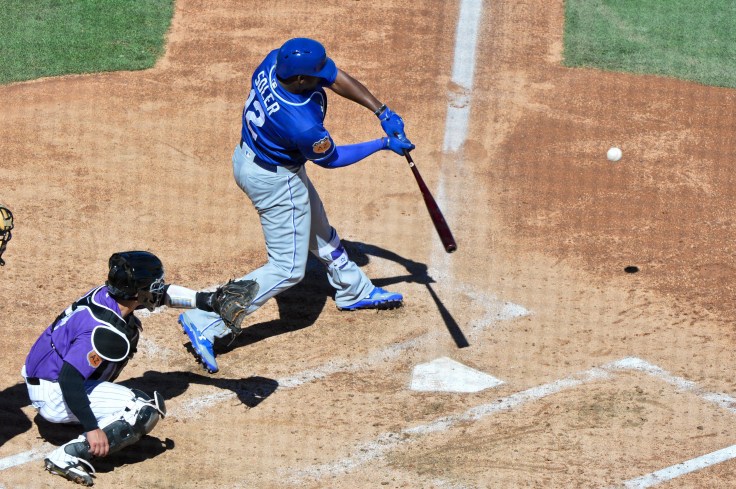
MLB: Spring Training-Kansas City Royals at Colorado Rockies

The patience and at bats that Soler need isn’t readily available at the moment since the Royals need production now from their DH, as Brandon Moss has struggled throughout most of the 2017 campaign. Moss’ numbers are borderline anemic: .191/.261/.383 with 10 homers and 16 RBI’s, not exactly the numbers Dayton Moore expected when he signed him to a 2 year deal this offseason. With Soler slugging in Omaha, it made sense to recall him and give him a shot to produce. The only problem is he struggled even more these last few weeks, striking out 15 times over 37 plate appearances in June and July. Soler just hasn’t found his groove and with the Kansas City offense being a streaky bunch, the Royals need offense now, not a few weeks from now. The hope has to be for Soler to get hot again down in AAA and recall him again, hoping it shifts over to the big league club. If not, the more time goes on the more it will feel like 2017 was a wasted season for Soler.

kc5

While 2017 hasn’t been what the Royals wanted from Soler, his contribution to the team isn’t relegated to just this season. When I had read the comments from scouts about him needing to be comfortable, I knew not to expect much the first few months of the season from Soler. In fact, considering all the factors in play (the injury, new team, new league, the weight of being the guy traded for Davis, etc.) I wasn’t even planning on making a judgment on him until midway through the 2018 season. The Royals still have him under contract for the next three seasons after this and very well could end up being the elite power bat that Kansas City needs. The problem is the Royals are contenders NOW and immediacy is of the highest value. Royals fans, don’t shun Soler just yet; he might end up where he needs to be, it just might not be as fast as we would all like.


Royals Help in the Minors


34006314925_a5c5c71dd5_z
Credit: Minda Haas Kuhlmann

With it becoming more and more apparent that the Kansas City Royals will be buying and not selling this month, the question has arisen more and more on who they might be buying. Names like Jaime Garcia, Brad Hand, Dee Gordon and Pat Neshek have all been bandied about and I’m sure more will be tossed out there before the trade deadline at the end of the month. While Kansas City does appear to be buyers, the honest truth is that they won’t be able to buy much, as a combination of a depleted farm system and a need for almost everyone on the current roster leaves them few options for dealing. With that in mind, I thought today we would look at a few options in the Royals farm system that could help the team down the stretch run. Now there is no guarantee we will see these players, but they would fill a need and are currently just a call away.

15231912675_c5024fe06d_z
Credit: Minda Haas Kuhlmann

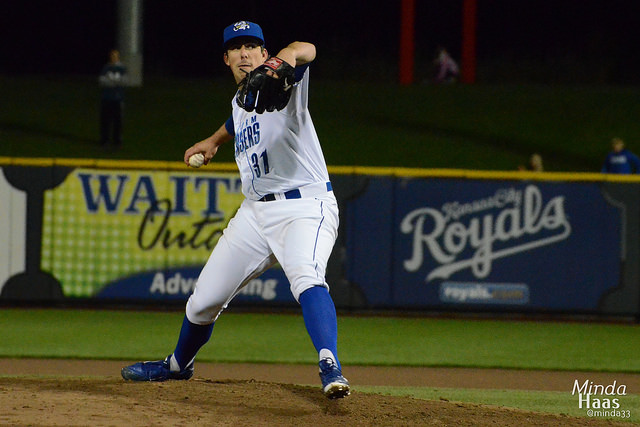
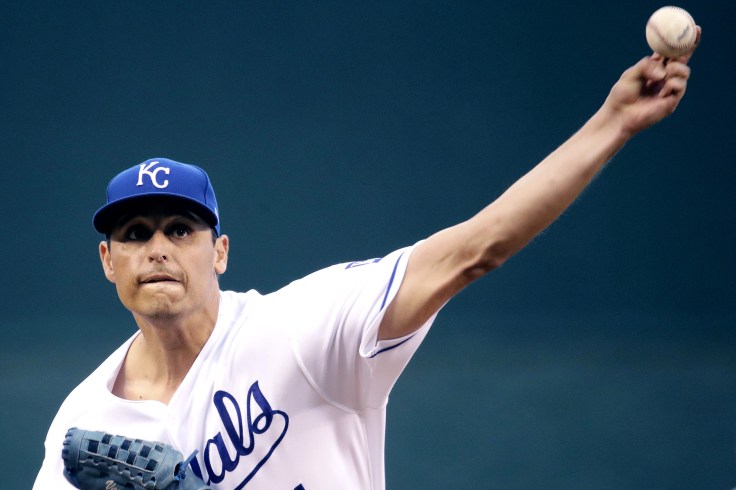
Let’s start with a former first round draft pick in Kyle Zimmer. Zimmer has been able to stay healthy over the last month and has been converted to the bullpen for the Royals AAA club in Omaha. His numbers are less than spectacular so far ( 7.52 ERA, 5.52 FIP & 4.87 walks per 9) but his velocity has been stellar and can be dominate when he is around the strike zone. He has given up one run or less in 8 out of his 12 outings this season, but the last few appearances have seen Zimmer get lit up (7 runs over 3 2/3 innings). I’m sure the Royals would like to see a bit more success before recalling him, but with his stuff (he was clocked between 94-97 mph in his last outing) he could be a nice addition to the pen down the stretch.

kc1
Credit: Kansas City Star

Brian Flynn pitched on the big league club in 2016 but has spent most of this year on the disabled list. He returned near the end of May to the Royals AAA team and has been superb over his last four appearances (2 runs given up over 9 1/3 innings). Flynn has the ability to get both righties and lefties out and could be a trusted arm out of the pen as a situational lefty or a guy to eat a few innings for the pitching staff. I do think we will see Flynn in Kansas City before the year is out.

28035473570_8f71a0c87e_z
Credit: Minda Haas Kuhlmann

Raul Mondesi, Hunter Dozier and Bubba Starling would all be good additions to the Royals bench/DH/outfield situation. Unfortunately, all three are dealing with an assortment of injuries and while I can see a scenario where we could see them this season, I doubt we do before September. Mondesi has found his groove in Omaha before the injury, hitting at a .316/.346/.544 clip with a wOBA of .372 and wRC+ of 121. Mondesi still swings at too many pitches and hardly walks, but his strike out rate is the lowest of his career (20.9%) and well below his career major league rate. I talked a bit about Starling last month and he would be an interesting option in the OF/DH situation for Kansas City. Scouts still think he will struggle mightily once he finally gets to the big leagues, but his adjustments this year have given the team a sign of hope and his defense has been major league ready for years. Don’t expect to see any of these guys in the next month, but we very well could see all three in September.
kc2

Maybe the most intriguing prospect that entered into Royals’ conversations is left-hander Richard Lovelady, a reliever stowed away down in AA Northwest Arkansas. The 6 ft. twenty-two year old is only in his second professional season and has been dominating this year between Wilmington and NW Arkansas. He is averaging over 11 strike outs per 9 and has not allowed an earned run since May 1st. In 42 innings this season, Lovelady has an ERA of 0.86 in 42 innings, allowing only 4 earned runs and striking out 52 in that span. His name has been tossed about more and more as a possibility in the Royals bullpen come September and could be in the vein of a Brandon Finnegan and his contribution to Kansas City back in 2014. I would say at this point the likelihood we see him in September is very good, so keep your eye out for the young lefty with a fantastic name.
kc3

A couple of names in AA to keep an eye on the next couple of months are Foster Griffin and Nicky Lopez. Both are currently playing at Northwest Arkansas and have had fantastic years. Griffin just appeared in the MLB Futures Game, getting both of the batters he faced out. He has started 19 games this year, posting a 2.89 ERA, striking out 108 batters over 109 innings. I doubt we see him in Kansas City this year, but the former first round draft pick has an outside shot of seeing time with the big league club in 2017.  Lopez has been a rising star in the Royals farm system, racking up a .299/. 378/.402 line, 122 wRC+ and a wOBA of .357. Lopez is a shortstop and while he isn’t going to take Alcides Escobar’s job this year, it might not be long before he is in the middle infield for Kansas City, possibly forming a double play team with Mondesi. He started the year in Wilmington and while I’m not expecting him in Kansas City yet, he could at least be in the discussion come September. If there is a name you should be keeping an eye on in the next year, it’s Nicky Lopez.
34024028505_fdc33516ea_z
Credit: Minda Haas Kuhlmann

I am still expecting the Royals to buy and acquire someone for the back of the rotation, but for now those are the names within the system that could provide some help over the next couple of months. I would love to add top prospect Josh Staumont to this list, but he has struggled mightily at AAA over the last 6 weeks or so and was shipped down to AA recently. His arm is electric but he is still battling the control issues that have plagued him for years. Even without him in the discussion, the Royals have some arms to count on during the pennant race if they so choose. There is no one there that will steal the show and become household names, but every winning team gets contributions from player one to player twenty-five on the roster. If the Royals are serious about heading back to October, it wouldn’t be a bad idea to let a few of these kids shine.

Bleeding Royal Blue Radio-Episode 3

Home Run Derby Baseball

With the All-Star Game and Home Run Derby in the rear-view mirror, Scott Hayes joins Sean to talk about the game and the derby, looking at the Royals first half and what to look forward to in the second half, the Cubs and what they need to do in the second half of the season and discussion on who should be the ‘Face of the Game’. Lots of fun baseball talk that you can listen to. The podcast is a new thing here on Bleeding Royal Blue, so I would love any feedback on what you think. Any and all comments are appreciated and thanks for listening!


The Royals Debate: Buy or Sell?

kc1

A funny thing happened in June; the Kansas City Royals kicked it into another gear, going 17-9 and putting them near the top of the American League Central. As of this writing, the Royals are 3 games out in the division, half a game out of the wild card. It feels very apparent that the team is making another one of their patented runs, a run that has been christened ‘The Last Ride’ due to a number of key players becoming free agents at the end of the year. It is ‘Do or die’ at this point and the Royals appear to be saying ‘We aren’t dead yet’. Despite all of this, there are some that believe Kansas City should still sell before the trade deadline and start acquiring pieces for the future. The farm system is weak and depleted and has been ranked by numerous sources (including Baseball America and mlb.com) as one of the worst in baseball. So…should the Royals buy or sell?

kc2

The argument for buying is simple: they are within reaching distance of a playoff spot and have performed way more consistently through the last 4-6 weeks than during their horrid April. Over the last 30 days, the Royals are 5th in home runs, have the 4th lowest strike out rate, 4th best ISO (Isolated Power), 4th best slugging percentage, and 2nd best WPA. The WPA (or Win Probability Added) might be the most telling, as it determines each player’s contribution to a win. Also, they have the best Clutch stat in the American League over the last 30 days, a stat that measures how players perform in high leverage situations. Overall, the offense has awoken and has performed more along the lines of their expectations. When I was deciding on my predictions back in April, I felt that overall the offense was going to bounce back from a rather lackluster 2016 and produce closer to their 2015 numbers. But the first month of the season made me question whether I had raised my expectations too high and was betting more on hope than reality. The pitching has been mostly efficient during that same span, as they were able to keep the team on pace while enduring injuries to two of their starters (Danny Duffy and Nate Karns) while dealing with a few struggles from some of their younger arms (Eric Skoglund, Jake Junis, Luke Farrell). Over the last month, the Royals pitchers have the 5th best walks per 9, 4th best HR per 9, 4th best LOB%,  have the best HR/FB%, 3rd best ERA, and 5th best FIP in the American League. Considering the state of the rotation during this span, it gives one comfort especially now that Duffy has returned to action. The numbers are all on the incline, which is a positive sign for a team wanting to play October baseball. This makes me believe they should be buyers, but what they will be able to buy is another issue.

Mike Moustakas

While in theory buying appears to make the most sense, the big question being asked for the Royals is ‘who can they offer?’ if a deal goes down. To be honest, not much. It would seem that anyone dealt off the main roster would leave a hole on the team and the farm system is pretty thin on tradeable talent. One would think they would go after a starter for the back-end of the rotation, someone who wouldn’t cost much but would eat up innings and be a notch above the performances we have seen from Junis and Skoglund. The Royals sent scouts to go watch Jose Quintana of the White Sox, but I’m pretty certain Kansas City would not be able to assimilate a package for the lefty that would fit what Chicago is looking for. A rotation “rental” might be the way to go for the Royals, someone like Scott Feldman , Lance Lynn or Alex Cobb, a veteran arm that wouldn’t cost the team very much. I can also see the Royals looking for another arm for the pen, as Kansas City has sent scouts to look at Philadelphia’s Pat Neshek who will be a free agent at the end of the season. The Royals were able to make big deals back in 2015 that netted them Johnny Cueto and Ben Zobrist; I would not expect a deal of that magnitude, but I can see them scouring cheaper options that would improve on the current roster.

0707_SPO_LDN-L-DODGERS-ROYALS-HG

So why should the Royals sell? There are some analysts who believe that with how weak the Kansas City farm system is, they would be best suited to sell at the deadline so their rebuild after this year doesn’t drag on for a 3-6 year period. Amongst those who believe the team should swing into sell mode is former MLB General Manager Jim Bowden:

Look, I get the arguments that are made that say if Kansas City doesn’t sell, the rebuild will be a huge task to bounce back from. I am very well aware that the farm system is one of the weakest in the game and probably won’t really be supplying steady, regular major league talent for a couple more years. But…I can live with that if it means we get one more season with a run in October. As a fan for 33 years, I know what it is like to be at the bottom looking up; been there, done that. But I also remember the 20 year period where the Royals played very few (if any at all) meaningful games. In my eyes, the Royals have this one more year to give the fans and the nucleus of this team one more playoff run for us to etch into our memories. Baseball’s parity has never looked better and with the second wild card, it opens up a whole other realm for teams that are on the fringe of the postseason. After all these years, I have confidence in the Kansas City front office that they will be able to assemble a game plan for the future, that is if they haven’t already. From Dayton Moore’s interviews, I have gotten the vibe that they are very well aware of the position they are in and what that means for the future of the franchise. That makes me believe that they aren’t blindly walking into this scenario like ostriches with their head’s stuck in the ground. They are aware and feel this is the best course of action to take. I also believe that if the Royals are able to make it to October, the money made from playoff baseball will help the team in the years to follow, whether it is used to sign free agents or help with something like scouting. It would be a major disservice to this team, the organization, the fanbase and even baseball to dismantle this team when they are within breathing distance of a playoff spot. A small market team like the Royals succeeding is good for baseball and helps build interest all across the game.

kc5

At the end of April the Royals looked like sellers that were just biding time until July. The last six weeks have been proof that baseball is a long season and one month does not make an entire season. I don’t know if I would label Kansas City as a team that will win the World Series but I also won’t count them out either. The last four seasons have shown us that this Royals team loves to defy logic and are never truly out of a race. Wasn’t it Han Solo who wasn’t a big fan of odds?

Maybe it’s just me, but when ending the story of these last few years of Kansas City Royals baseball it seems fitting that the end should be a team that never says quit and bounced back from a horrible start to reach the playoffs. Maybe I’m a sucker for a good story or maybe the homer in me just believes in this team. No matter which it is, it makes sense to let this play out and see where the Royals end up. It could be a let down or…it could be the storybook ending we all have wished and hoped for.

Bleeding Royal Blue Radio-Episode 2

Jorge Bonifacio

As the Kansas City Royals get ready for a weekend series against the Minnesota Twins, Sean chats with Panda Pete from Twins and Losses about the upcoming series between the two teams, the state of the American League Central, parity in the American League Wild Card race, the upcoming Player’s Weekend and closer’s entrance music. Enjoy and any feedback is much appreciated.


The Arms of Relief

kc1

When the season began, there appeared to be some serious questions about the Kansas City Royals bullpen, a pen that once was the most dominant in baseball. In fact, Fangraphs had them ranked as the 28th best bullpen in baseball coming into the 2017 campaign. The first week of the season didn’t dispel any of the concern with the Royals relievers, as they struggled throughout the Minnesota series and were quite susceptible to the walk. But one bad week or one bad month do not make a season and luckily the Royals have righted the ship, to the point that there have been a number of surprising performances from the bullpen helping the team scratch itself back to .500.

MLB: New York Yankees at Kansas City Royals

Let’s start with the numbers. The Royals have the 12th best bullpen in MLB according to fWAR, 8th best in the American League. They have the 8th best FIP, 11th best ERA, 9th best K%, and 10th best K-BB%. The Kansas City pen still has the highest walk percentage in the AL, although one has to wonder how much that first month of the season plays into that number. The Royals do have the 5th best HR/9 in the league and the 11th best WHIP. I am becoming a big proponent of WPA (Win Probability Added) and the Royals relievers have the 6th best in the league. Throw in the 4th best Clutch in the league (which at 1.18 has them in between Excellent and Great on the Clutch scale) and you have a bullpen that has allowed a few more runners than they would like but have performed well in those high leverage situations. The Royals also have the 3rd highest Soft Hit % in the league (21.4%) and the 6th lowest Hard Hit % (29.9%). Finally, since I like to break down the numbers as much as possible, looking at just fWAR here are the Royals pen month by month so far this year:

March/April- 0.1 (13th in the AL)

May- 0.8 (9th)

June- 0.8 (4th)

So what do all these numbers tell us? The Royals bullpen, while not dominating the way they used to, are coming into their own as the season progresses. If anyone is wondering why that is happening, you don’t have to look very far to see who is leading the way.

kc3

Let’s start with the guy who has been the most efficient and (until recently), the most overlooked. Scott Alexander has been almost dominating this year, producing a 1.38 ERA over 26 innings, a 2.91 FIP and a 20.2 K rate. But what really has been astounding is his 76.1% GB rate, which is the highest of his professional career. All those ground balls can be attributed to a ‘lights out’ sinker, which some have compared (at least success-wise) to Zach Britton of Baltimore. Alexander’s production has caused manager Ned Yost to use him more in high leverage situations and don’t be surprised if he continues to be a main cog in this Royals pen.

MLB: Oakland Athletics at Kansas City Royals

Peter Moylan has been a vital part of the bullpen since Day One this year, as he has been Ned’s ‘Go to Guy’ to get just a few batters out in tight situations. In 23.2 innings over 33 appearances this year, Moylan has a 3.81 FIP, 0.2 fWar and a 22.3 K rate. While his ERA is a bit bloated (6.46), his soft hit rate of 33.8% is the highest of his career and his WPA is sitting at a crisp 0.71. Moylan’s Left on Base % could see some improvement, but for the most part he has done what Yost has needed from him this year, which is to come in and extinguish fires.

kc5

The Royals weren’t for sure what they had with Mike Minor in the pen coming into the season, especially since he had been a starter his entire career. But so far he has been a welcome addition to the Royals bullpen. In his first year of relieving, Minor has posted a 1.93 ERA, a 2.47 FIP, 1.0 fWAR and an 82% left on base percentage. He has put up a solid 17.9% K-BB ratio and has seen his soft hit rate go up (29.2%) and his hard hit rate go down (24%), both career highs. One of the keys to his success this year has been his use of his slider, which he is using at 38.7% clip, easily the highest of his career. At one point it appeared the Royals might deal Minor come the trade deadline, but with the Royals back in the race he is probably more likely to be a key arm for Kansas City down the stretch.

kc6

Maybe the most welcome return to form is Joakim Soria. Much was written about Soria and his struggles last year, a year that for Soria was one to forget. But 2017 has been the complete opposite, as he has improved everything across the board. Pick a stat and it is better than it was last year…other than his walk rate, which has gone up just a smidge. But besides that, Soria has been one of the most consistent contributors in the Kansas City pen. In fact, here is a quote from Fangraphs back in March when they were compiling the piece I mentioned earlier, ranking all the bullpens in baseball:

 His strikeout rate was decent, but his walks went up and he gave up a bunch of homers, getting worse as the season went on. The homers probably should come down a bit, but that still won’t make him the pitcher whom the Royals thought they were getting before last season.

The home runs have gone down…but more than a bit. So far this year, Soria has yet to give up a home run (knock on wood) over 30 innings of work. If you believe he will assume about the same workload as last year, he is almost half way to his innings total of 2016 and has not given up a long ball. Last year, he gave up 10 round trippers. While Soria is still not the guy who was a consistent All-Star in Kansas City (and no one should expect that from him), he has been the perfect set-up man who the Royals envisioned he would be when they signed him back in the Winter of 2015.

kc7

You might have noticed I hadn’t even mentioned closer Kelvin Herrera yet, and there is a reason for that. Herrera has had his struggles this year but number wise, nothing major really stands out. In fact, his hard hit rate going up and the increase in home runs is the only big slight on his mark this year. He is still striking out people at a rate close to normal, and still walking about the same amount as well. The one aspect of his game that is different is the contact rate, which makes sense if you are someone who has watched many of his outings. Herrera has had an issue of getting behind in the count this year, leading him to leave a few pitches out over the middle of the plate. Herrera’s Z-Contact % (pitches hit inside of the strike zone) has seen a slight tick up this year (83.9 from 78.6% in 2016). In fact, Herrera has almost been too precise, leaving pitches inside the zone that normally he would leave just off the outer edges. This past week he has looked better, where his pitches have been either outside or inside and normally down, rather than down the middle. There is no reason for alarm, but more than anything other teams should worry; Herrera can (and my guess is he will)  improve in the second half.

kc8

Before the season started, I would discuss the Royals relievers and mention the same thing: what you see in April/May won’t be what you see by September. So far this year, Chris Young has been ousted, Matt Strahm has moved to the rotation and Kyle Zimmer has been pitching in relief down in AAA. If Zimmer gets the call, it could bolster a group of arms that have been steadily increasing their production month by month. I’ve had to stress to Royals fans these last couple seasons that the bullpens Kansas City had in 2014-15 were not normal. Having a pen that is THAT locked in is not the norm and only really comes along once in a blue moon. You shouldn’t expect the Royals relievers of today to be as dominating as they were with Holland and Davis leading the charge. But what they have now is a healthy substitute that we should be comfortable with during the team’s final three months of the season.


Notes of Royalty: West Coast Swing

kc1

It is very interesting times for the Kansas City Royals, as a team that once looked to be holding down the fort in the basement of the American League Central has now propelled themselves back into the playoff discussion, as they sit at 32-34, 3 games out of the lead in the division. Maybe the realization has finally hit me that the Royals are slow starters and don’t really start heating up until late May/early June. So what has changed? Quite a bit and in some ways it is just the status quo for a team that never says die.

kc2

…And the Line Keeps on Moving

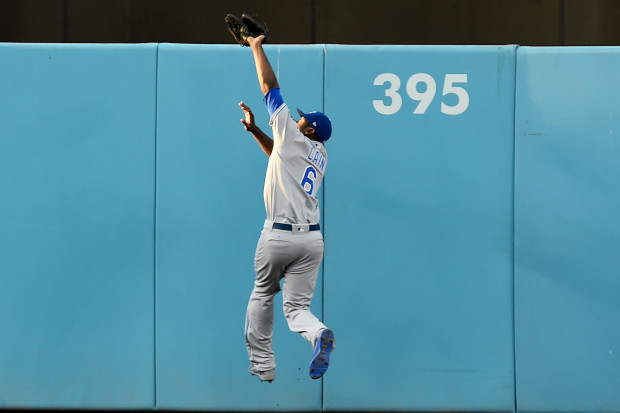
The Royals in June are a force to be reckoned with, going 10-4 after heading into the month at 22-30. The most noticeable difference for this team lies in the offensive numbers, which make the team look like a modern version of “Murderer’s Row”. Let’s analyze by going off wRC+, which is park and league adjusted, and league average is 100: anything above that is the percent higher than that average. Hope everyone is sitting down:

Moustakas 214

Cain            184

Hosmer      162

Perez           161

Gordon        153

Maybe the most encouraging number here is Gordon’s, and I don’t just say that because of my loyalty to “A1”. Nothing is more frustrating than having to admit that one of your favorites might be regressing at a faster pace than expected, but I had started wondering about his slump earlier this season. It appears some work has been done as he prepares to load his swing and it has caused a resurgence of the Alex of old. So far in June, Alex has a line of .275/.396/.600 with 3 home runs, 4 RBI’s, 10 runs, a .325 ISO (isolated power), a .404 wOBA (weighted on-base average, designed to measure a player’s overall offensive contributions per plate appearance) and 0.6 fWAR in just 12 games. If the Royals are wanting to be serious contenders, they need Alex to help carry a portion of the load and perform closer to his numbers in the 2014-15 seasons. A large chunk of the lineup has gotten hot as well and it shows in the team numbers. So far this month, the Royals are hitting .299/.339/.513 with a wRC+ of 122, 2.45 WPA (Win Probability Added), and 3.3 fWAR. I don’t expect Kansas City to keep up the pace they have been on during this jaunt on the West Coast, but if they can find a happy medium where they keep elevating their runs per game (currently up to 3.98, 27th in baseball) and just keep the line moving offensively, it could make for a fun summer.

MLB: Spring Training-Kansas City Royals at Chicago Cubs

Chasing Balboni

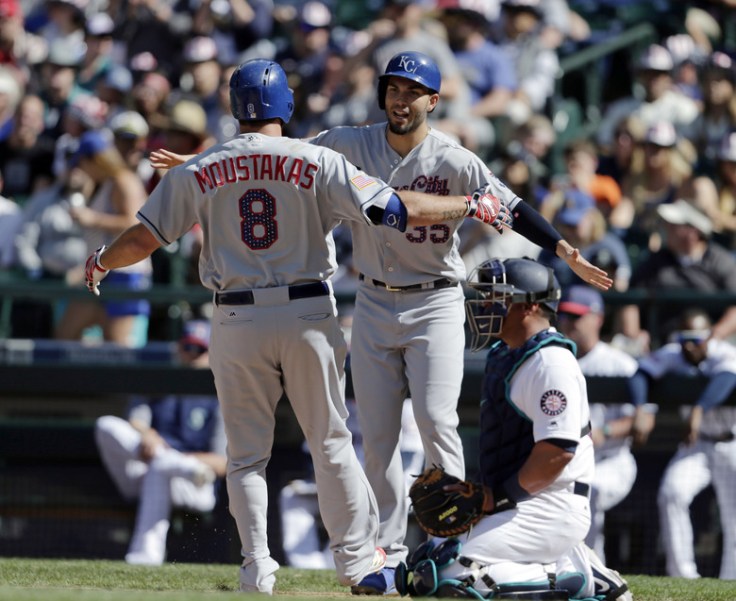
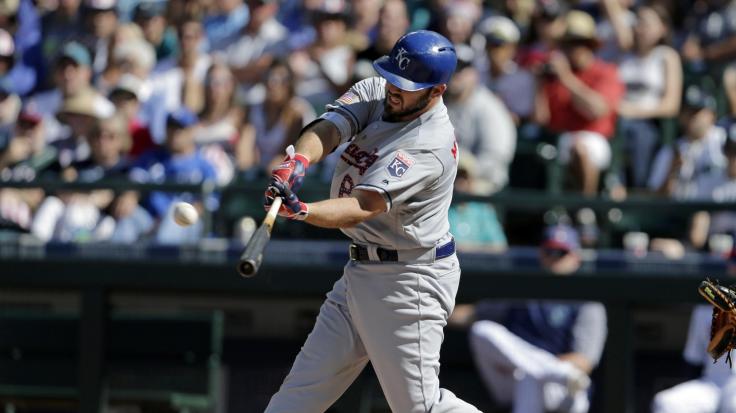
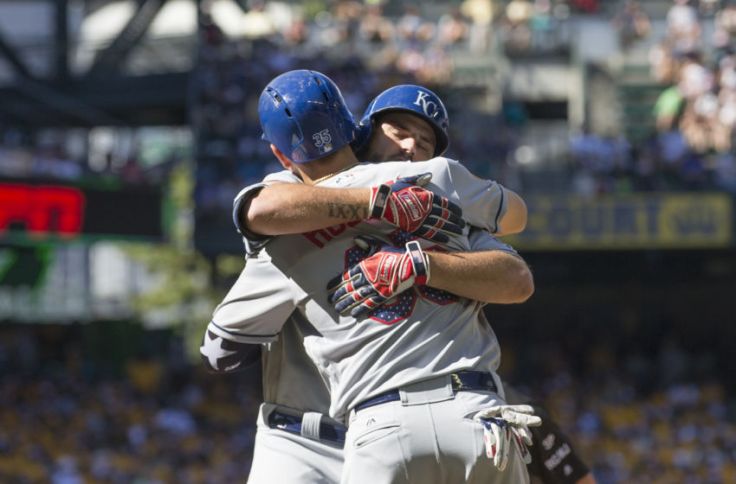
Speaking of the offense, the big talking point for most Royals fans is the home run pace that Mike Moustakas is on. For us Kansas City fans, there is a number that has haunted us for 32 years: 36. That is the Royals single-season home run record, held by former Royals first baseman Steve Balboni. He accomplished this feat back in 1985 and outside of a Gary Gaetti here or a Jermaine Dye there, no one has gotten close to the record. That being said, we are 65 games into the season and Moose sits at 18 home runs hit, halfway to “Bye-Bye”‘s record. At his current pace, Moustakas would reach 45 homers, annihilating the record and making it even harder for anyone in the future to topple. As a fan who remembers Balboni and has discussed at length this record for years, it is time to see it broken. Do I think Moose can beat it? Most definitely. Moose’s pitch selection has improved dramatically this year and his HR/FB rate is at 20.9%, the highest he has seen since 2010 in Double A (the year he hit 36 combined home runs in Double and Triple A). If there was ever going to be a year for the record to fall, this is it. You just have to hope that the Royals stay in the race so Moustakas isn’t dealt to a team like Boston before the trade deadline (yeah, I know. It’s very specific). I’ve spent years mentioning Steve Balboni in random conversations. I think it’s time to change the trivia answer.

kc4

The Search for a Stopgap

With Danny Duffy on the shelf for at least the next month, the Royals have been hoping for a young arm to step up and fill the void for a bit. Eric Skoglund had a memorable first start at Kauffman Stadium, but since then has struggled to get through two innings. On Thursday night, Matt Strahm was plucked from the bullpen to take Skoglund’s place and showed why the Royals have envisioned him being a starter in the near future. Strahm went 5 innings, allowing 3 hits, 1 run (0 earned), with 3 punch outs and 1 walk. Strahm was on a limited pitch count of 65-70, throwing 68 when it was all said and done. It was an admirable performance and one has wonder what that means for the Royals if he is able to keep it up. Where is Strahm’s arm more valuable-the pen or the rotation? With the performance of Mike Minor and the need for quality innings out of their starters, I would almost lean toward Strahm staying in the starting five if he is able to maintain the performance of his first start. That would give Kansas City another starter while letting them focus on picking up a bullpen arm for the stretch drive (if they are still contending in a month). Skoglund still interests me, but for the moment it appears Strahm might be the better way to go.


35089250186_932be7f25e_z
Picture Courtesy: Minda Haas Kuhlmann

A Starling Performance

Over the last month, an interesting development has sprouted up in Omaha, the Royals Triple A team. Former 1st Round draft pick Bubba Starling, the man from Gardner who many had started writing off, has found his groove. The numbers don’t lie:

Bubba is what the kids call “en fuego” and maybe the most interesting aspect of this turn of events is how he got here:

So the guy who has been “Major League ready” defensively for years might have actually figured out something offensively, opening up a whole other conversation when it comes to the Royals future outfield. I would still like to see him continue this for a while longer before jumping too far ahead but there are numerous encouraging signs:

Reports have also came out that Starling has started spraying the ball the opposite way more often, as teams had gotten into the habit of putting shifts on him. If this is something Starling can maintain, we could be discussing an outfield of Gordon, Bubba and Bonifacio next year, with Soler as a DH/OF. I’m not saying this is locked into stone, but it is an encouraging sign from a player that has struggled with the bat almost his entire professional career. Maybe, just maybe, that draft pick won’t feel as daunting as it has felt the last six years.

kc5

While the Royals are still under .500, they’re within shouting distance of the first place Twins with slightly less than 100 games left to play. I said a few years ago I wouldn’t doubt what this team is capable of doing and even today I’m not going to start doing it now. The Royals have Boston and Toronto awaiting them next week and hopefully they can continue to roll the trifecta (effective offense, solid pitching, great defense). We are entering the dog days of summer and the Royals might have just found that other gear. It’s time for that one final run we’ve been promised.

Bleeding Royal Blue Radio-Episode 1

moose

I have decided recently to experiment a little bit and see about doing an occasional podcast discussing the Kansas City Royals and any current events in baseball. I don’t know if this will become a regular thing or just something I will do on a whim; it’s something I am just tossing out there. So if you have some spare time give it a listen, as Dalton Wiley and I discuss the Royals last week, the AL Central, Moose trying to break Steve Balboni’s home run record and more. Hope you enjoy it.

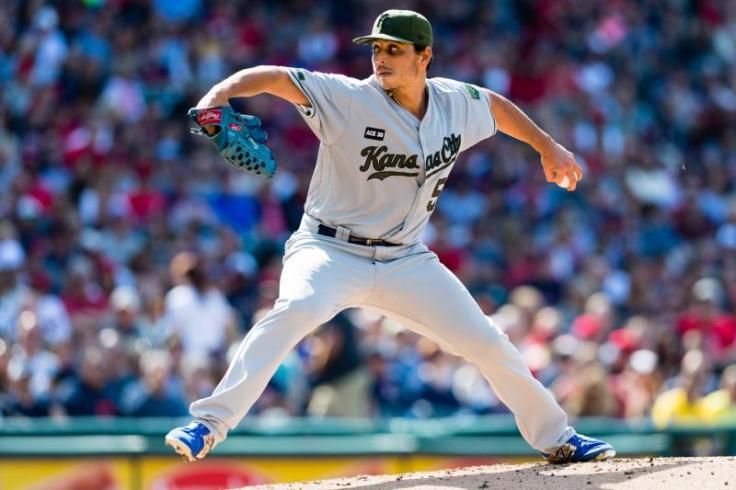
Jason Vargas, Elite Pitcher

kc1

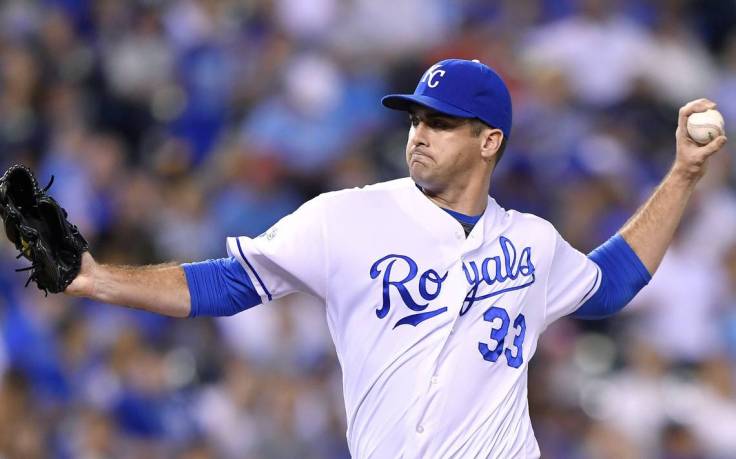
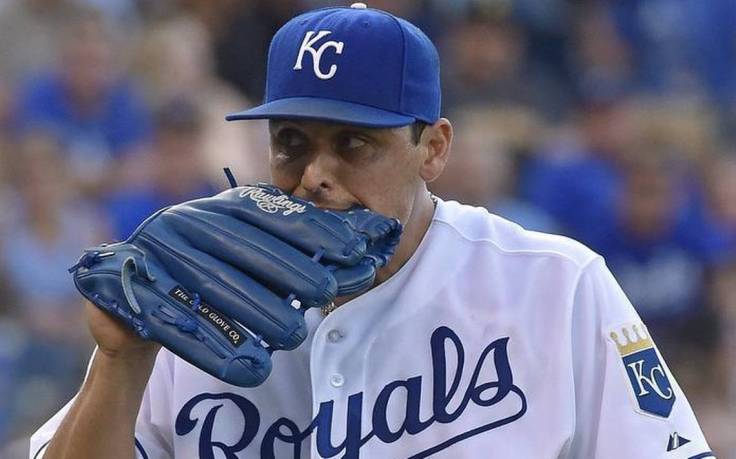
The 2017 campaign has been one filled with disappointment when it comes to the Kansas City Royals, whether it be their sluggish start, the sputtering offense or even injuries to key players like Danny Duffy. But one of the surprises of the season so far would be the resurgence of Jason Vargas. Vargas sat out most of the 2016 as he was recovering from Tommy John surgery, only throwing 12 innings in his three starts late in the year. Vargas was entering the final year of his contract and many were unsure just what he would be producing before he entered the free agent market. Instead, he has helped anchor the rotation, put up career best numbers and even leads the Royals in bWAR at 2.8. So how has Vargas gone from a steady arm at the back of the rotation to being one of the best pitchers in the league? That is a question that doesn’t have an easy answer.

kc2

First, here are some of the base numbers that Vargas has put up this season: 69.1 innings, 2.08 ERA, 3.17 FIP, 7.01 K/9 and 2.08 BB/9. Most of his numbers to this point are improvements on his career averages, within an obvious smaller sample size. But digging deeper finds that Vargas is posting numbers that are fairly similar to some of his better seasons in the big leagues. In fact, when looking at his performance, there are distinct similarities to his first season in Kansas City back in 2014. Let’s start with his strike out and walk rates, which have both seen an improvement this year. Vargas’ K rate sits at 19.7%, which is the highest in his career; the next closest season to that was his rookie campaign back in 2005, which sat at 18.2%. His walk rate is at 5.8%; his career best was 5.2% back in 2014, his first season as a Royal. Even better is his K-BB%, which sits at 13.9%; before this year, his career best percentage was 9.8% back in 2013 with the Angels. So this shows that Vargas is striking out more batters this year while walking less, which is always an optimal result for a player seeking success. But how is he doing it?

kc3

When looking at the contact hitters are getting off of Vargas, the numbers appear fairly normal. Line drive, ground ball and fly ball rates are all very similar to his best years, although his home run to fly ball ratio is way down, sitting at 5.8%, which is only beaten in his career by his rookie year in Florida. This would tell me that maybe hitters are not hitting the ball as hard off of him, but that doesn’t appear to be the case. In fact, Vargas’ hard hit percentage is sitting at 30.5%, the second highest of his career, while his soft hit rate is at 18.7%, which is about on par for his career average of 19.1%. Overall, there isn’t a big change in these numbers over his career and especially during his time in Kansas City:

Brooksbaseball-Chart

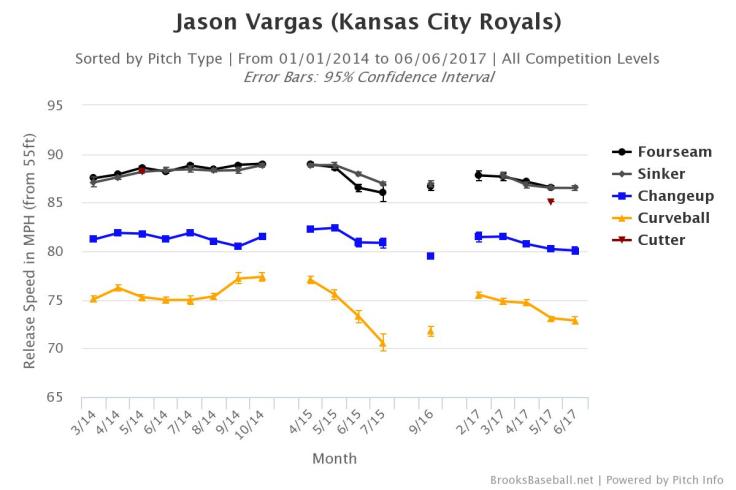
The chart is just looking at his time with the Royals and as you can see, there isn’t a big change in his release speed…but there is a difference.

kc4

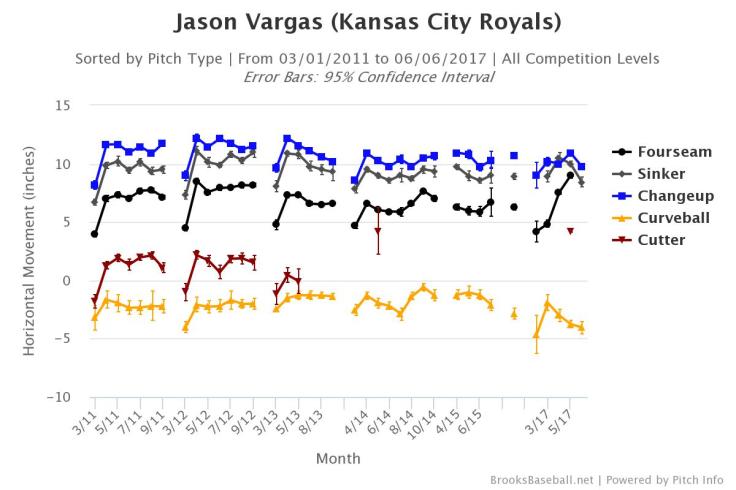
The numbers do show a slight decrease in Vargas’ velocity, which is a tad odd for a pitcher coming off of Tommy John surgery, which normally shows a slight uptick in velocity upon a pitcher’s return. Instead, Vargas is showing a decrease in every  pitch across the board. His fastball was 87.9-87.3 mph during the five years before the surgery, while now it has sat on average around 86.6 mph. His slider has gone down from the 84-83 mph range to 82.3 mph, while curveball is down slightly to 73 mph, moving from 74.9-74.7 mph. Even his change-up has seen a decrease, as it has sat in the 79 mph range this year after being regularly around 81-80 mph. It isn’t a drastic decrease, but it very well could be a sign of Vargas having better control of his pitches and getting more movement on those pitches as well. In fact, the movement is very noticeable when comparing it to years past:

Brooksbaseball-Chart (2)

This chart is looking at Vargas’ horizontal movement on his pitches since 2011. Look at the curveball movement for 2017; if you want to get a better idea of why Vargas is having a bigger increase in success so far this year, the movement on his curveball might be the answer we are looking for.

kc5

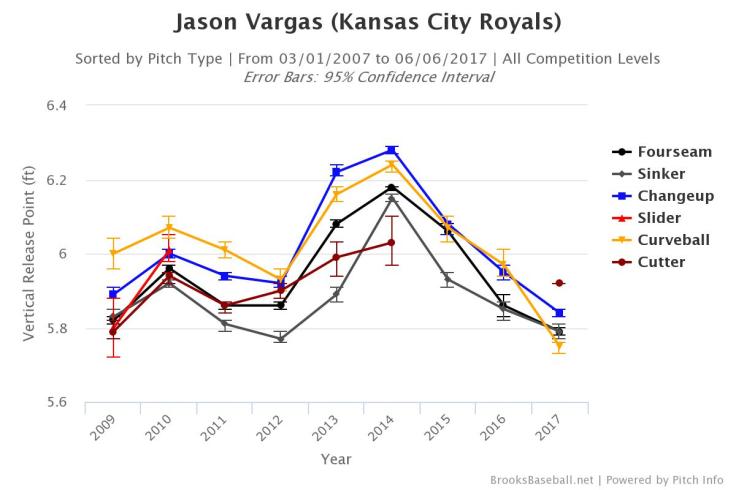
Back in May Devan Fink of Beyond the Box Score took a look at Vargas’ season and one of the changes Fink saw was a difference in his arm angle, most notably with his change-up. But the effects haven’t only been seen from his change-up, but also the curveball:

Brooksbaseball-Chart (3)

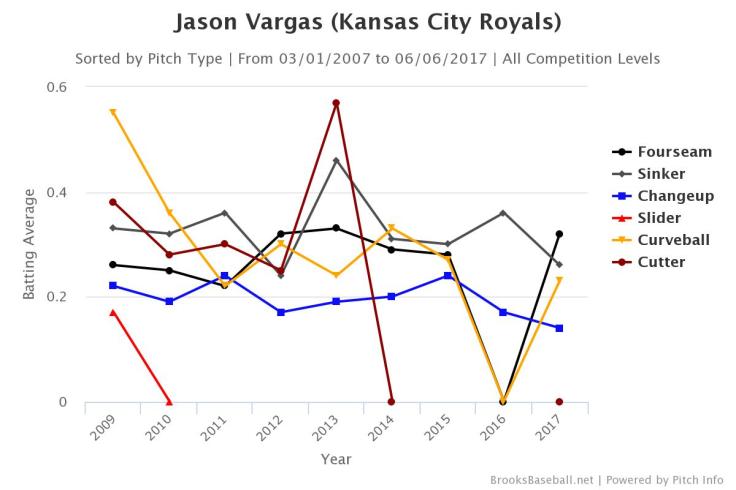
In fact, his release point has appeared to help his curveball almost as much as his change-up, as pointed out by the graph. Vargas is also throwing his curve more this year than in years past, sitting at 19.4%, compared to his career average of 8% and the 14% he was averaging over the last 4-5 years. Both the change and curve have seen a big decrease in batting average during 2017:

Brooksbaseball-Chart (4)

Vargas didn’t allow a base hit against the curveball last year, but you also have to remember that he only pitched in three games in 2016. Going off his last full year pitched (which was 2014), Vargas had a .333 batting average against his curve while it sits at .227 this year. In comparison, his change-up has seen a drastic drop as well, as hitters had a .202 batting average against in 2014 compared to .135 this year. In other words, it appears the change in arm angle coupled with a slight drop in velocity has made Vargas a more difficult at bat than he was just a few years back.

kc6

So can Vargas keep it up? It appears on the surface that hitters are having a harder time seeing his off-speed and breaking pitches this year and as long as he can maintain the new arm angle it would appear he could keep it up. If that arm angle becomes less consistent though, it wouldn’t be hard to see him give up more solid contact and see his numbers trickle back to his norm. Jason Vargas isn’t going to blow much by hitters but he doesn’t have to if he is able to locate and maintain control. The continued focus on the curve and change-up appears to be a nice double whammy that hitters just have not been able to figure out. Maybe the bigger question isn’t whether Vargas can keep up his pace but whether he will be doing it in Royal blue. His value has never been higher and I wouldn’t be the least bit shocked if Kansas City dealt him sooner rather than later. When it comes to surprises on this 2017 Kansas City Royals team, Vargas is near the very top. It goes to show what a bit of deception and location can do for a pitcher who doesn’t rely on superior velocity.

Create a free website or blog at WordPress.com.

Up ↑