We all know the story of the Kansas City Royals and projections the last couple seasons. Before 2014 Kansas City was projected to finish 79-83 by Baseball Prospectus, in a tie for second in the American League Central with the Cleveland Indians. The Royals did ten games better, finishing 89-73, earning a Wild Card berth and ending up one game short of winning the World Series. In 2015, the Royals were projected to finish(once again by Baseball Prospectus) even worse, 72-90, the second worst projected total in the American League. The Royals would easily eclipse this projection, finishing 95-67, winning the American League Central, claiming home field advantage throughout the playoffs and eventually winning the World Series. So with pitchers and catchers reporting to Spring Training in less than two weeks, once again the Royals are once again projected to finish 79-83, this time by Fangraphs. Last year, Royals fans were in an uproar over this, feeling like the team was being overlooked and not given the respect they earned after the 2014 World Series. Even into the summer, when Kansas City steamrolled past the 72 win mark, fans would make snide remarks and mock BP, questioning the website and the way they came to their results. But the real problem isn’t Baseball Prospectus or Fangraphs; no, the real problem is that fans(and analysts alike) put too much stock in projections and predictions.
Let’s start with the PECOTA projections. I actually had no issue with the Royals being projected so low, as it made sense to me. Most of their projections are taken off of a players’ past performance and the Royals had a number of players who accumulated poor seasons in 2014. A lot of people just remember the playoffs, when Mike Moustakas and Eric Hosmer looked like beasts and the Royals looked like an unbeatable locomotive. The truth was that Moustakas had an awful 2014, Hosmer’s wasn’t great and they weren’t alone. A good chunk of the Royals lineup did not fare well, so of course the projections would be lower. Even offseason acquisition Kendrys Morales was coming off of a lackluster campaign, one in which he put up worse numbers than the man he was replacing, Billy Butler. PECOTA puts a lot of stock in past performance, so this made sense. Sam Miller of BP wrote a great article about how they came to these results, in which Miller even admits that they need to work on improving the weight of a good bullpen and excellent defense can have on a team winning. The final paragraph speaks volumes about the projections and why they aren’t perfect:
While PECOTA aspires to be perfect, what it really does is this: It projects players, individually; it converts those performances into expected runs, based on how baseball usually works; then it converts those runs into expected wins, based on how baseball usually works. At each step along the way, it gets harder to be perfect, and the Royals demonstrate that challenge well. Some players did better than we expected; some offered incomplete data on which to project them; some were added to the roster at midseason; some found the right fit. None of us is arrogant enough to think that projection systems are magic; baseball is impossible to predict with the sort of precision that avoids situations like 2015 Royals. We all know we can’t outrun the bear.
To sum this up, the projections are based off of projected numbers put up by each player on the team. If you calculate the players who will get injured or the players who will be acquired within the season, these numbers are bound to be off. In fact, as much as I use BP quite frequently during the season(the yearly projection book is normally right beside my desk), I also know that the projections are just that, not a definite. Just look at last year’s projections: only three teams were expected to win over 90 games. Yep, three total for both leagues. Instead, seven teams finished with over 90 wins while three alone were in the National League Central. So it becomes very obvious that BP’s projections are a starting point, not a literal interpretation of how the season will actually unfold.
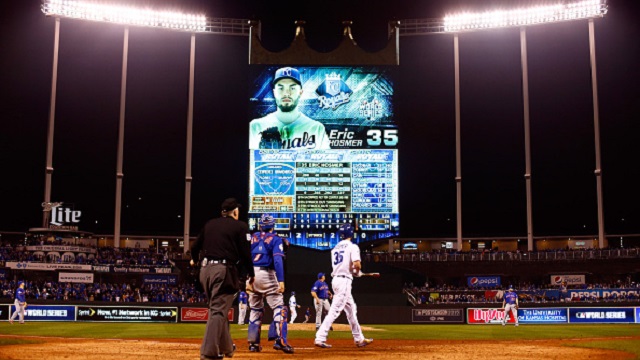
Game One of the 2015 World Series-October 27, 2015
Predictions are different than projections in that predictions are purely one person’s opinion. Projections you can actually go back and check the numbers and see how you ended up with the finished results. It’s like when you would show your math homework; if your answer is ‘C’, all you have to do is go back and look at ‘A’ and ‘B’ to figure out how you got to your final answer. Predictions are literally just guesses. Granted, these predictions hold more weight when it is a respected baseball analyst, but at the end of the day they are still guesses. I respect the hell out of guys like Ken Rosenthal and Jayson Stark, and both of them are around the game every day and are about as knowledgeable as they come in the game. But…their predictions are still just guesses. So why are fans, most notably Royals fans, getting upset that someone essentially has a different opinion than they do?
This is where I laugh at the fan who gets visibly angry that analyst ‘x’ predicted that the Royals won’t get to the playoffs or that they won’t compete at the level they did the year before. To me, all predictions are guesses and more than anything are done for fun. Most analysts(yes, the Rosenthal’s, Stark’s and Gammon’s of the world) would even tell you their guesses are normally way off. So if we all acknowledge the fact that predictions shouldn’t be taken super serious, why do some fans get all worked up about it? The only logical answer is that they want an analyst(or you or me) to agree with them. There seems to be some underlying issue with people who view something like preseason predictions as the expected result and the end all be all of final answers. They are not. If anything, these last couple seasons have proved that with the way the Royals have gone out there and over-exceeded results. I couldn’t tell you if Kansas City used such “guesses” as bulletin board fodder or not, but I’m sure they were aware and promptly did what every other team did: go out and play the games.
July 22 2013
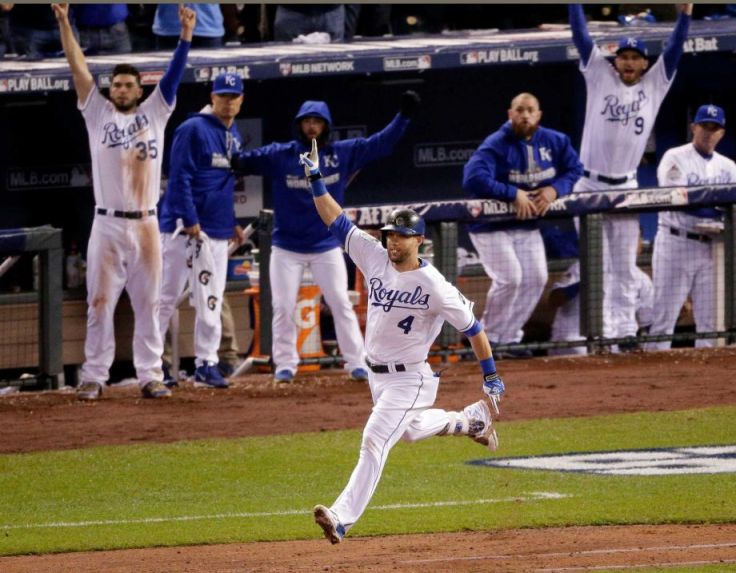
At the end of the day, that is what it all comes down to; actually playing the games. You see, we can estimate what someone like Alex Gordon will do, and we might even be closely accurate, but the players have to go out there and actually play on the field. I am proud to say I absolutely love stats and I freely will admit to being a ‘stat nerd’, but I also realize that these are humans that go out there and play baseball. I say let all the ‘experts’ predict and project that the Royals won’t do this, or won’t do that. Let them say that they don’t hit enough home runs or make too much contact. Because if we have learned anything these last two years, it’s that this Royals team determines their own fate. The unpredictable is almost the norm for this team and that can’t be predicted. So remember that when more projections and predictions pop up soon; the numbers unfortunately can’t measure a player’s heart or will. It can’t predict a five run 8th inning or a mad dash to home with two outs. It can’t measure a team that has an out of this world defense and a cyborg for their closer. Love the numbers, but realize that anything is possible if you put your mind to it.
Spring Training is just around the corner, and there are always a few things you can count on. There is always that one player who is in “the best shape of his life”. Yep, you know the player; he’s the guy trying to bounce back from a down season and looking to put up career high numbers. Then there is the player who would conceivably be in “the worse shape of his life”. That player normally looks he spent all offseason on the couch watching Homer Simpson’s genius plan to be able to work from home by gaining as much weight as humanly possible. This role is normally reserved for Pablo Sandoval(sorry, Panda). Then there is the third type of player at Spring Training, the non-roster invitee who tries to slide into camp inconspicuously while hopefully walking away with an Opening Day spot on the 25 man roster. Most don’t, but there are always a few who make their case and wiggle their way up north. Headed into Spring Training there are a few of these players that will be in Kansas City Royals camp, looking to impress the Royals coaching staff and procuring a job. In fact, there are three in particular who will be vying for a spot that seem to have an outside chance of making the club. So who are these mystery men? Let’s start with a former New York Met looking to wear Royal blue come April.
Dillon Gee will be entering his age 30 season, coming off of an injury riddled 2015 campaign with the Mets. In fact, Gee only appeared in 8 games last year, partially due to a groin injury and partially because the Mets were loaded with a bunch of young power arms(see Syndergaard, Noah or deGrom, Jacob). Plus, Gee didn’t help his own cause by getting bombed in the few starts he was given in 2015. The positive is that Gee is a serviceable arm, one that most major league teams would use as insurance at AAA until he is needed. In other words, there is a good chance Gee will be the 2016 version of Joe Blanton, who turned in a good season for the Royals and Pirates last year, netting him a deal with the Dodgers. Gee won’t overpower you with his fastball(he averaged about 89 mph in 2015)but he knows how to get outs and if paired with the Royals defense he would probably put up some pretty solid numbers. That being said, if Gee gets 8-10 starts for the Royals, someone is either injured or something has gone horribly wrong. I like Dillon Gee as insurance at Omaha, but his chances this spring hinge on the health of the other candidates in the rotation. So unless chicken pox arises in the Royals clubhouse again, it’s a safe bet Gee will be AAA to start the year.
Peter Moylan’s chances of starting the year at Kauffman Stadium are better than Gee’s, but still a bit of an uphill battle for the 37 year old reliever. Age will be a factor for Moylan, although he has never been a guy who relied on his fastball and with his sidearm delivery his whole success is based more off of movement than velocity. Moylan was actually able to come back from a second Tommy John surgery in 2015, although the Braves initially intended him to be a coach in their low minors. Instead, the Braves stumbled and used Moylan out of the pen in September to positive results. For one, he didn’t walk anyone in the 10+ innings he threw, and was able to induce groundballs at a fairly high rate(69%), which we all know is a positive in Kansas City. He also was able to get some movement back on his sinker, which is a major plus for a guy who won’t blow pitches by batters. The Royals bullpen is loaded right now(as we all know), but there is always a chance Moylan could find his way to Kansas City. Louis Coleman was released on Wednesday, giving Moylan one less reliever to fight with for a spot in the pen. Moylan is also good friends with Royals starter Kris Medlen, as the pair were former teammates in Atlanta back in the day. I would say Moylan’s chances of making the team are slim, but did anyone predict he would have the career he has had so far? In other words, there is always a chance.
Then there is Travis Snider. Snider was signed to a minor league deal over this past weekend and is the definition of living off of potential. Snider was once a 1st round draft pick of the Blue Jays back in 2006 and ten years later the baseball world is still expecting him to prove he can be as good as once expected. Over his 8 year career, Snider has performed below league average(93 career OPS+, league average is 100) and has not hit the way scouts once expected him to. There are positives with Snider, like the fact that he is going into only his age 28 season and he isn’t too far off from his career best year in the majors(2014). Looking back at that 2014 campaign, Snider played in 140 games for the Pirates with a line of .264/.338/.438, producing an OPS+ of 117 and a WAR of 2.1. Snider fell back this past season, splitting time in Baltimore and Pittsburgh. The other positive for Snider is that the Royals are currently looking at a Jarrod Dyson/Paulo Orlando platoon in right field, so there is a lot of room for someone to step up and make Royals management take notice. The argument could even be made that if Snider showed an ability to get on base on a regular basis he would get a decent amount of playing time. The Royals at this point know what they are getting with Dyson and Orlando; Snider is the wild card that has the ability to open some eyes. There is a good chance Snider could make the opening day roster as backup outfielder and work his way to a good chunk of at bats. I don’t know if Snider will ever turn into a .300 hitter or a 20 home run guy, but a reliable bat who can get on base could work just as well when it comes to playing time.I have to say, Snider’s chances are good this spring but like most things, I am basing this off potential.
There aren’t many spots available on the Royals roster as we head into Spring Training, but just look at last year. Ryan Madson came into camp as a guy who hadn’t pitched in the majors since 2011 and ended up not only making the roster, but being a reliable cog in the pen for the entire 2015 season. A few spots are open for the taking, and any of the three names mentioned above could sneak their way onto the team. That’s the great thing about spring; hope springs eternal, even for grizzled veterans. Even if they don’t, the Royals will have depth which is always a coveted part of any winning team. These signings are proof that the Royals roster will be just as deep in 2016 as it was during their run to a world championship.
Earlier today I did a quick ‘Q & A’ with former Kansas City Star Royals beat writer, Andy McCullough. Andy covered the Royals during both the 2014 and 2015 seasons so he was around for their playoff runs during both years. This is just a quick few questions about his time in Kansas City and covering the team during their resurgence.
1. You went from covering the Mets & the Yankees to covering the Royals for the Kansas City Star in 2014. What was your opinion of the team(contenders, pretenders, etc.) headed into Spring Training that year & in your mind when was the point where the team seemed to shift from just playoff contenders to serious championship material?
I thought they would be a good team and compete for the division. The turning point during the postseason was after they won the Wild Card game.
2. What was it like going from big market teams like the Yankees & Mets to a small market team like the Royals? Was there a difference in how you covered the teams?
The biggest difference is the postgame interviews were shorter because you don’t have 15 people in the scrum, all asking questions. I did not cover the team any differently.
3. The Royals fanbase is quite rabid to say the least. Were you surprised at how passionate the fans were & how did you handle some of the crazier ones on Twitter?
I wasn’t surprised by the passion, but I was definitely impressed by the crowds during these past two postseasons. Great atmosphere. I muted or blocked a lot of dopes on Twitter.
4. Was there a major difference in the team when comparing Spring Training in 2014 & Spring Training this past year?
Teams sound confident, every single year, in spring training. In 2014, I suppose it appeared more like false bravado, because they hadn’t actually won anything yet. In 2015, they had some evidence to back up their confidence.
5. The two most memorable articles you wrote(in my mind) was the recap of the 2014 Wild Card game & the Lorenzo Cain piece. Did you feel it was fairly easy to find compelling stories for this team & do you think you’ll ever cover a team with as much material as the 2014-2015 Royals had?
There was a lot of untilled ground when I took over the beat in 2014, because the team hadn’t spent much time in the national spotlight. It’s never easy to find interesting stories, but there was certainly some low-hanging fruit. I hope I’ll find a team that’s just as compelling soon enough, but I’m not sure I will.
6. Finally, looking back how do you view your time in Kansas City?
It was an OK time. Underrated city for Vietnamese food.
7. Oh, one more question for old times sake: any word on Kyle Zimmer?
I hope he starts the All-Star Game in 2017.
I would like to thank Andy for taking the time to answer these questions. McCullough is now working for the LA Times, as he is their beat writer for the Dodgers. You can find Andy’s coverage of the Dodgers at LATimes.com and he is a great follow on Twitter. Sure, he covers the Dodgers now, but if you love baseball(and some humor), McCullough is a good follow no matter the team. Glad us Royals fans had McCullough to guide us through the last two years. He did a great job and in a lot of ways will always be connected to this team. Thanks, Andy.
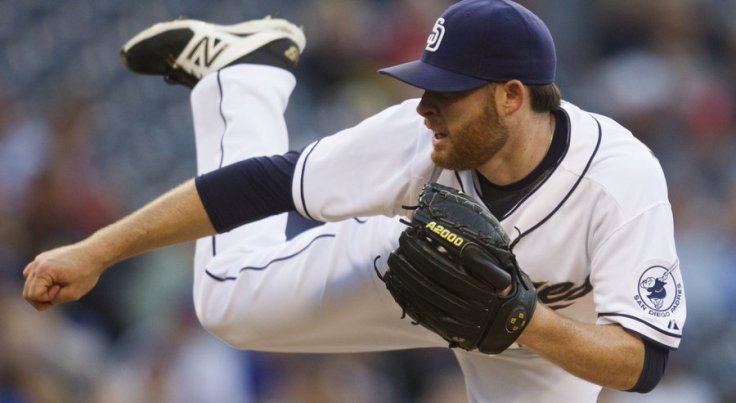
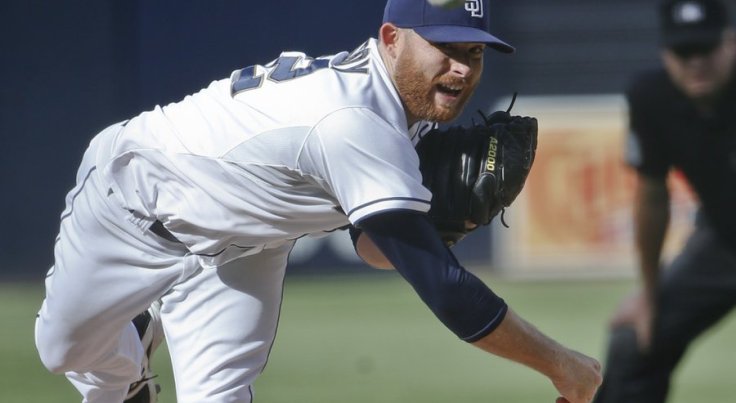
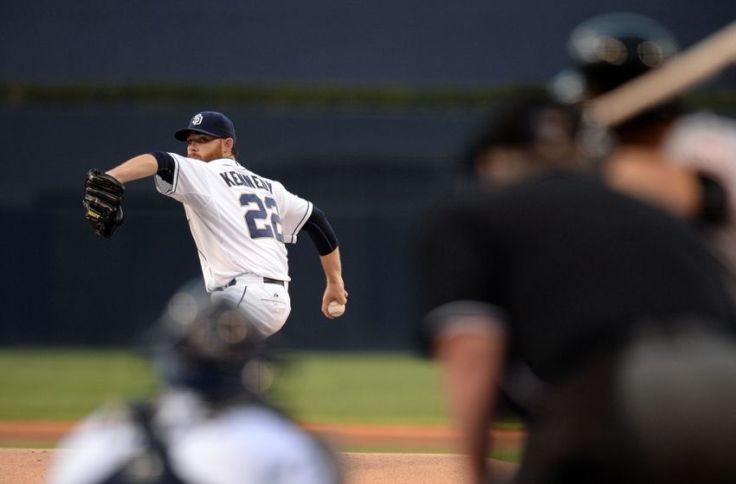
Sometimes things are so inevitable that they will happen no matter the circumstances. For the last week plus we have heard about the Kansas City Royals interest in free agent righty Ian Kennedy and on Saturday morning they pulled the trigger on a 5 year, $70 million dollar deal.
Source confirms: Kennedy to #Royals, five years, $70M – and with an opt-out after two seasons. First reported: @jonheyman.
The deal does have an opt out after year two(appears to be a player option) which would be after the 2017 season, where the Royals would already have Wade Davis, Lorenzo Cain, Eric Hosmer, Mike Moustakas and Alcides Escobar possibly eligible for free agency. This obviously means the Royals are taking advantage of the two year window in front of them and adding another arm to the rotation was at the top of the list for General Manager Dayton Moore. There are a number of immediate questions about Kennedy(as well as some positives), but first let’s give you an idea of just who Ian Kennedy really is.
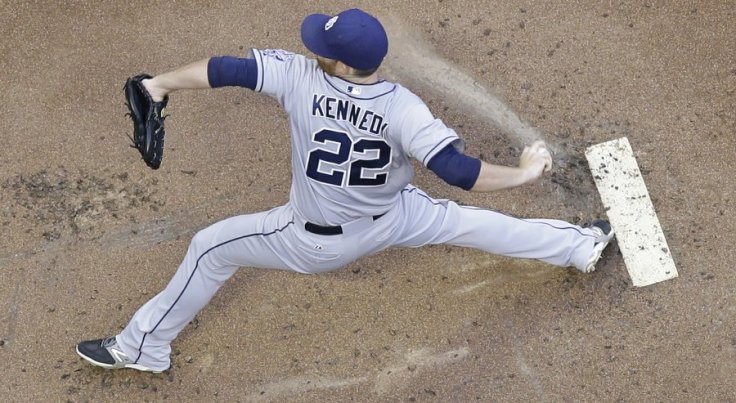
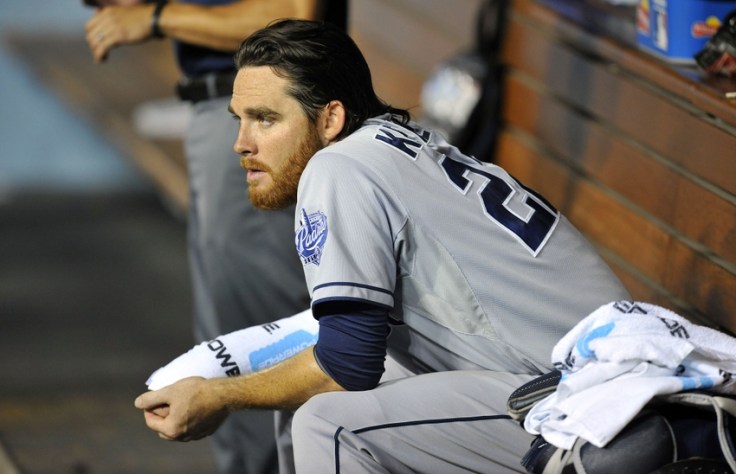
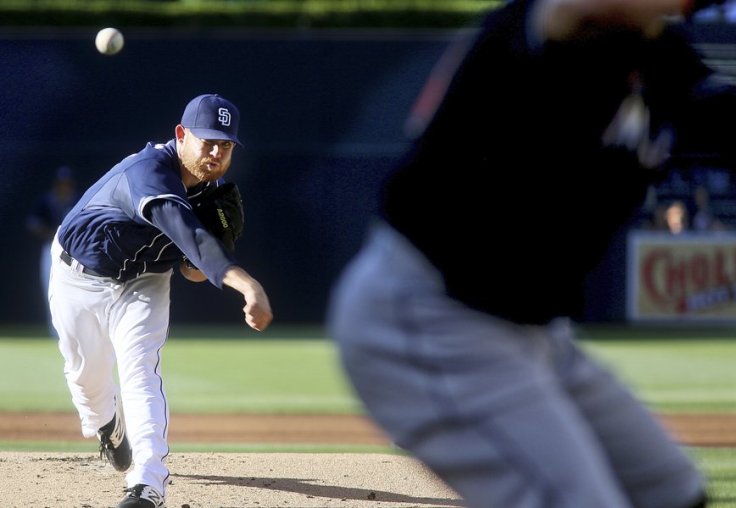
Ian Kennedy is going into his 31 year old season as a former big time prospect in the New York Yankees organization who has toiled in the majors since 2007. His best season to date is the 2011 campaign, where he went 21-4 for the Diamondbacks, striking out 8.03 batters per 9, a 2.88 ERA, an ERA+ of 137 and 4.8 WAR. Unfortunately, that 2011 season seems to be the outlier of Kennedy’s career, as he has been a fairly mediocre starter throughout his time in the big leagues, including three straight seasons of being a below average pitcher from 2013-2015. That being said, there are plusses and minuses to the signing.
Let’s start with the giant pink elephant in the room: home runs. Last year, Kennedy gave up 31 home runs, 19 in his home field of Petco Park. Yes, the Petco park that is considered a major pitchers park. For whatever reason, balls flew out of that place at a higher rate last year, and Kennedy and former Padres teammate James Shields paid the price for the increase. In fact, Kennedy allowed home runs on 17% of his fly balls in 2015, only toppled by Shields and Kyle Kendrick, with a difference of only less than half of one percentage point. Yes, it appeared that balls flew out of Petco last year, but giving up that many home runs is still a blemish on the stat board and has to be taken into consideration. It appears that the Royals scouts and front office believe that playing in Kauffman Stadium, which has a low home run rate, plus adding in the Royals stellar defense in the outfield will help Kennedy with some of those fly balls. It’s possible…but as this chart shows, maybe not as much as we would hope:
What the graph shows is that if you took those 31 home runs and moved them to Kauffman, 3/4 of them would still leave the park. Add in that Kennedy won’t be starting all of his games in Kansas City, and…well, you can see why there is some worry.
Now, I feel like I can’t paint the ‘Ian Kennedy picture’ without mentioning some of the positives. For one, his K/9 rate the last has been above 8 for three straight seasons and has been sitting at a steady 9.3 for the last two. The guy has noticed an uptick in his velocity and it has shown in his strikeout numbers. But the increase in velocity has also accounted for a high hard-hit rate, which normally means a low soft-hit rate. In fact, Kennedy has not a hard-hit % below 30% since…you guessed it, that great 2011 season. In other words, when batters do make contact off of Kennedy, they are getting good wood on the ball. That makes it harder to keep the scoring down and also hurts the chances of a pitcher pitching deeper into the game. Last year, Kennedy averaged 5.6 innings per start, but over his career he has been a workhouse. Since 2010, the lowest amount of innings Kennedy has accumulated is 168 in 2015, while in that span he has had three seasons over 200 innings(and one at 194). So Kennedy will give you innings, which has long been a goal of Moore when he acquires starting pitchers.
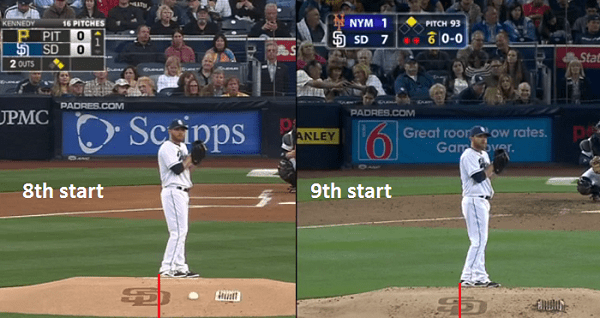
Also, his walk rate went down this past year, down to 2.78 after hovering in the 3’s for the previous two years. So you have a guy who has increased his strikeout rate while lowering his walk rate, which is a plus for any starter in the majors. Kennedy also seemed to improve his statistics in June of last year, possibly due to a shift on the pitching rubber:
The picture on the left is from his last start, the one on the right is from his first start in June. As you can tell, he went from throwing on the 3rd base side of the rubber to the 1st base side. There was a noticeable improvement, as his home runs dipped down and his OPS allowed improved by almost 200 points. I’m sure all of this will be digested by Royals pitching coach Dave Eiland, who within himself is a big part of this puzzle. You see, Kennedy is not a stranger to Eiland:
Ian Kennedy goes to KC, where he'll work with his former pitching coach, Dave Eiland. Big ballpark, strong OF defense for KC will help.
Eiland was the pitching coach for the Yankees when Kennedy made it to the big leagues so Eiland is familiar with him not only from then but back when he had success during his days as a prospect in the New York system. One has to think a big part of Kansas City feeling so confident in giving him this big contract was having Eiland in their back pocket to guide him back to success. Eiland has shown over the years to have a knack of turning questionable pitchers into solid starters by just tweaking the most subtle of things. All you have to look at is Jeremy Guthrie time in Kansas City(before 2015) and most recently Edinson Volquez. If anyone can turn Kennedy around, it would be Eiland.
There is one more positive to the this signing, and that would be durability. Kennedy has been lucky so far in his career and hasn’t had a major arm injury. In fact, Kennedy spent a little bit of time on the disable list last year, but it was for a hamstring strain. Kennedy has been healthy enough to make at least 30 starts in all 6 of his seasons as a regular. Add in the innings totals and at the very least you have a starter that you can count on to take the mound once every five games. Anymore, that is a major victory within itself in this game.
So where do I stand? This is an odd signing in that I am not totally for sure how I feel. I like that the Royals seem to have signed a durable starter who can log some innings for the team before turning it over to the pen. There were times this past season where the starters went four or five innings and were done for the day. I’m not a big fan of a five year deal, but there is the opt out clause after year two, so hopefully Kennedy takes that and the Royals don’t get stuck with the last three years of the contract. For me it’s not even about Kennedy as much as I don’t like giving any pitcher a long-term deal, not with how easy it is to get arm injuries in this day and age. Over his career Kennedy has been about a league average pitcher and I have a feeling that is what Kansas City will get from him this year. I think there will be times he looks really good on the hill, and I think there will be times those hard hit fly balls will leave the playing field. Steamer projections are predicting Kennedy to make 31 starts, logging 182 innings with an ERA of 3.90, an FIP of 4.02 and 2.2 WAR. Honestly, I would take that and would even applaud that kind of season. The best part of the signing is that the Royals showed a willingness to spend money and give them as good a chance as any to keep a contending baseball team on the field. The last few years, Dayton Moore has shown an ability to make questionable acquisitions and have them turn to gold(paging Morales, Kendrys). At this point, if Dayton likes this move than I am on board. I just hope the ride isn’t too bumpy.
There really has been only one topic on the minds of anyone who follows the Kansas City Royals: will Alex Gordon re-sign with Kansas City and continue to be the pillar of this championship Royals team? After months of speculation(and worry that he would leave) we found out on Wednesday that Gordon was staying with the only major league team he has ever known, signing a 4 year, $72 million dollar contract with an option for a 5th year. So how does that deal break down?
Gordon deal is $12M, $16M, $20M, $20M with $23M mutual option and $4M buyout. #Royals
It’s interesting to see that Gordon will actually be making less this upcoming season than he made in 2015, but it is not surprising to see the contract back-loaded with a mutual option(seriously, Dayton loves those mutual options) in year five. So what does this mean for the Royals moving forward?
Financially, Gordon’s contract gives the team flexibility not only for this year(after expected arbitration raises and probably the signing of another starting pitcher, the team’s payroll will probably be above $120 million, which really isn’t a giant increase from 2015), but also 2017. Why those two years? The main core of this Kansas City team will be intact for at least the next two years, so the Royals chances of continuing to reach the postseason is greater now for those two years. A smaller deal for Gordon helps out the rest of that payroll and could very well impact the team if they try to make another big deal in July if so be it. Now his contract goes up in years 3 and 4 of the deal, but I would say there is a good chance that by then this contract won’t look as imposing when you look at the influx of money within the game of baseball right now. Add in that the Royals should be able to restructure their TV deal around 2018 and the Royals could be playing with even more money than they have right now. Obviously the big part of this deal is that it gives GM Dayton Moore more wiggle room to help get the pieces needed to keep this team a contender through 2017, which will then see Eric Hosmer, Mike Moustakas, Lorenzo Cain, Wade Davis and Alcides Escobar become free agents.
The signing also means the chances of Kansas City taking advantage of their window have improved with the return of Gordon. Realistically, the Royals have the next two seasons to take advantage of their current core players and have a better chance of reaching the playoffs again with Gordon in tow. I am of the belief that without Gordon’s return, the chances of Kansas City returning to October baseball would have been much harder to accomplish, where as now they return the “backbone” of the team. About a month ago I went into deep detail on why the Royals should bring back Alex and it seems obvious when I say this team is better with Alex roaming left field for the next four years. To me, I wouldn’t even worry too much about 2018 and instead focus on the here and now. If the Royals reach the postseason the next two years(or even one of the two), that means more people coming to the ballpark, meaning more money coming into the team. To me, that extra money could be used on whatever the game plan is for after the 2017 season, which could be to re-sign a Cain or a Hosmer(I know, he is a Boras client so the likelihood is not very high) or go out and revamp the team. Either way, giving the Royals the best chance possible to win now helps the organization in the future as well. Keeping Gordon in the fold helps in that regard.
Speaking of the core Royals group, I also felt like Gordon was the best choice for a long-term deal out of that group mentioned earlier. Hosmer and Moustakas are almost completely off the table since they are Scott Boras clients and he will always tell his clients to take the deal that will make them the most money. I love Wade Davis but he is a reliever and you should never give a reliever a long-term deal(unless his last name is Rivera). That leaves Cain and Escobar, who will both be in their low 30’s at this point. I love both guys but Cain has a long injury history and a big part of Escobar’s game(speed) will have started to regress at this point which makes a long-term deal seem iffy. To me, Gordon will regress the best out of this bunch and will probably come close to his expected production over the next couple years that will make his deal worth the money that was spent. In fact Craig Brown of Royals Authority took a look at just that the other day, taking a look at his Steamer & ZiPS projections over the course of the deal and putting that up against his earnings during those years. I feel you can also throw in what he means to that clubhouse, as many a teammate has referred to Gordon as the “backbone” of the team. He isn’t the rah-rah team leader, but that is why they have Salvador Perez. Gordon is the quiet one who leads by example and it is normally a “balls to the wall” type example that he plays by for them to follow.
Concerns? There are always concerns when signing a player to a deal of this size, and most of them are health related. Gordon missed some time this year due to a couple injuries, a wrist injury that limited him when the season began and a groin injury that left him out of action for August and a good chunk of July. But since Gordon made the move to left field full-time in 2011, he had played at least 150 games in all of those years before this past year. I tend to feel like the injury is an outlier for Alex, but it’s easy to see how an injury could happen to him with his “reckless abandon” style of play out on the field. We all saw what happened to Mike Sweeney late in his career, but knowing how Gordon is a health nut and his insane work-out routine, I think there is a better chance of Alex staying healthy than spending the majority of his time on the disabled list. Will he regress? Of course he will. ‘Father Time’ always wins that battle. But once again, Gordon takes good care of his body, so the belief is that his regression won’t be as steep as it normally is for others.
To me it always made the most sense to bring back Gordon to the only major league team he has ever known. Gordon is beloved in Kansas City and it was the team he grew up rooting for. It only made sense for the present and the future to make sure Alex remained in Royal blue. As a fan, I was very biased on this all along. As a kid my favorite player was George Brett and would stop whatever I was doing once Brett came up to the plate. I loved the way Brett played and it became a model for me to judge other players by. As an adult, Alex Gordon is in that same pantheon for me. He is my favorite player on this Royals team and the thought of him wearing another team’s jersey was tough to stomach. Knowing now that he is locked up makes me feel better about the future of the Royals as he is the constant everyone can rely on. Alex now has four years to further cement his legacy and a deeper place into the history of the Kansas City Royals. It seems like a lock now that Gordon will one day get a statue near the fountains at Kauffman Stadium. Honestly, I can’t think of a current player more deserving than ‘#4’.
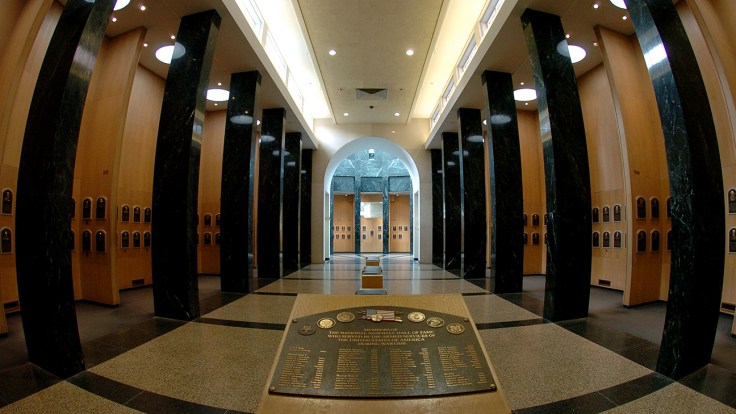
Nothing is debated more intensely each year than who should and shouldn’t be elected to the baseball Hall of Fame. The last few years have been filled with a moral dilemma for some, as they struggle with voting in players whose numbers are ‘Hall Caliber’, but the scarlet ‘S’ (for steroids) looms around their neck. This has led to a backloaded ballot for BBWAA members as they struggle with the decision of voting in a player who they feel would tarnish the game. Some of us(myself included) am not bothered by this, since the Hall is all about the history of the game, good or bad, and it is hard for me to sit here and tell you these players shouldn’t be voted in when there are no positive tests, because baseball was not testing at the time. So right there, you see the dilemma. As a member of the IBWAA, we have our own Hall of Fame and do our own voting each year. Our voting has not been completely parallel to the BBWAA’s, as last year Randy Johnson, Pedro Martinez, John Smoltz, Jeff Bagwell and Tim Raines all reached the 75% of the votes needed for election. In years past, Craig Biggio and Mike Piazza have been elected by us in the IBWAA, so they are no longer on the ballot either. As a group, we also decided that we can vote for up to 15 players on the ballot, which opens it up even more and has allowed the ballot not to get so clogged up. Before we get started with my votes, you can go back and read my last two years of voting: Here is 2014 and 2015. Also, to keep up to date with all of the BBWAA votes that have been revealed, follow Ryan Thibs on Twitter. That way you can follow how the voting is going before Wednesday’s big announcement. Without further ado, here are my votes for the 2016 Hall of Fame ballot.
Barry Bonds
Barry Bonds was also on my list the last two years and is easily one of the greatest baseball players ever, the all-time home run king and that is all tainted by supposed steroid use. To me Bonds was a Hall of Famer before his supposed use and was a 5 tool player early in his career. We can debate all day about whether or not PED users should be allowed in the Hall(and I am someone who believes the Hall of Fame is NOT sacred ground) but what is easy to decipher is that Bonds is one of the greats of the game. ‘Nuff said.
Roger Clemens
Roger Clemens is another duel year vote for me and like Bonds, has the PED albatross around his neck. Clemens is thegreatest pitcher of his era, a 7 time Cy Young award winner and should have been a first ballot Hall of Famer. Instead we are stuck continuing an argument that might never finish and also like Bonds, might have to wait for the Veteran’s Committee to get voted into Cooperstown. Clemens deserves to have a plaque next to the Johnson’s, Koufax’s, and Gibson’s of the world. When(or if) that happens is another issue.
(Photo by Focus on Sport/Getty Images)
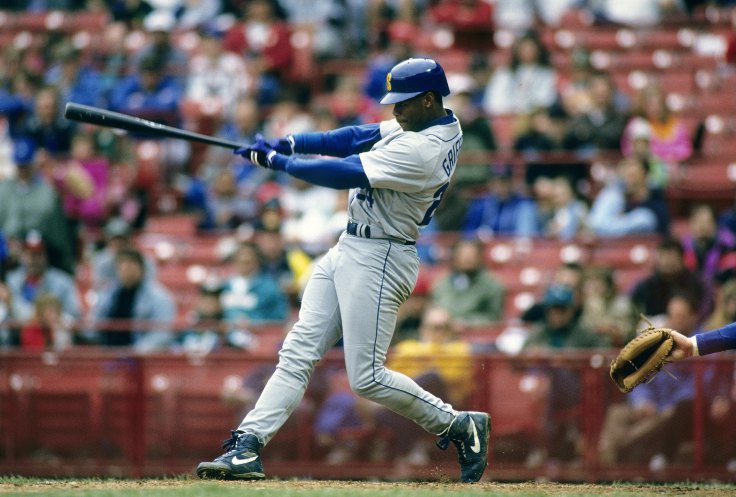
Ken Griffey Jr.
Some votes are so easy you don’t even have to think about them before marking the box. So is the case with Ken Griffey, Jr., an easy first ballot Hall of Famer and one of the greatest players of his generation. Griffey came into the league as a wide eyed youngster, bringing his enthusiasm and childlike glee to stadiums everywhere. It would been awhile since the baseball world had seen a five tool player(outside of Bonds, of course) perform so easily and graceful on the field the way Griffey did. Griffey was a 13 time All-Star(10 as a Mariner, 3 as a Red), AL MVP in 1997, 10 time Gold Glove Winner and 7 time Silver Slugger award winner. At one point or another he lead the league in runs, home runs, RBI’s, slugging percentage, total bases and intentional walks. Griffey would finish 1st in the league in WAR once(1996, while finishing 1st three times for position players), while finishing 2nd three times(pulling a career bWAR of 83.6, 57th all time. The numbers just continue to stack up- 55th all time in OPS, 35th in slugging percentage, 33rd in runs scored, 50th in hits, 13th in total bases, 6th on the all time home run list and 15th career in RBI’s. There are some interesting stats that won’t pop out but are interesting nonetheless-22nd all time runs created, 7th all time extra base hits, and 6th all time intentional walks. The numbers show someone who is an easy vote for the Hall, but one has to wonder just how much higher Griffey would rank on all-time lists if not for injuries that curtailed him late in his career. It’s easy to point at his trade to Cincinnati before the 2000 season as the beginning of his decline, but that 2000 season was actually a solid one for Griffey. After that though, the injuries piled up and he went from being a player who could challenge Hank Aaron’s(at the time) all-time home run record to a ghost of his former self. In fact if you take out that 2000 season, Griffey only averaged 100 games a season during the rest of his time in Cincy, with an average of 22 home runs and 62 RBI’s per season. Even with these numbers you have a player who should be mentioned in the same breath as Mays, Ruth and yes, even Bonds, as one of the most prolific home run hitters(and all around best players) in baseball history. The question this year will be: will Griffey be the first player to be an unanimous selection to the Hall?
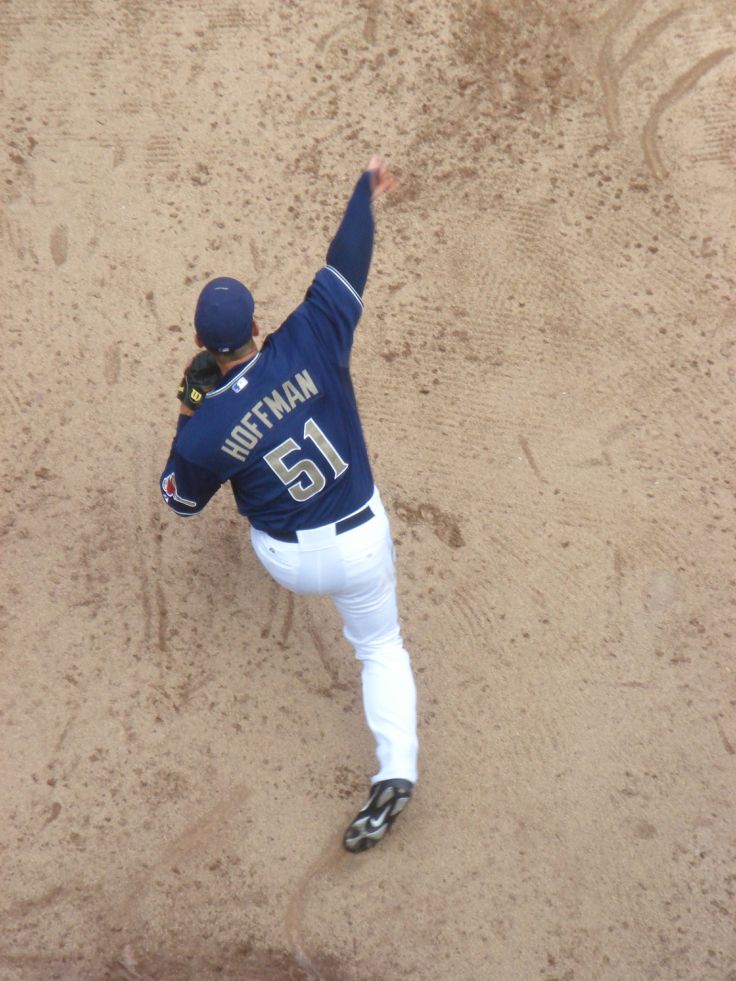
Trevor Hoffman
I’m sure my pick here will cause some debate, since there are those that believe you have to be Mariano Rivera to be a Hall of Fame closer, but much like the Tim Raines debate(which I am a strong supporter of), you can’t fault Hoffman for not being the best closer in baseball history. Yes, the closer in modern day baseball is a defined role that is the guy who closes out the game for his team, not always the guy who faces the toughest part of the lineup. Yes, the save is probably the worst stat in baseball, based just off of its parameters on how you can get one. But when you are the second best player at your position for 16 seasons, you deserve to get more recognition than to be just tossed aside and scoffed at. Here is why I voted for Hoffman and why I feel he is a Hall of Famer. First, he was as consistent as they come. Outside of 2003 when he was injured, Hoffman posted 15 consecutive years of 20 or more saves and is second all-time(ALL-TIME!) behind Rivera. I know some use the argument “well, he was no Gossage or Fingers or even Sutter”, and to be honest, no, he wasn’t. But that is the whole point behind this; no one compares to those guys anymore, because closers aren’t used the same way they were in the 70’s and early 80’s. Why compare a pitcher to guys who faced completely different game situations 30-40 years earlier? It’s not a fair assessment and people sure as hell don’t use that same comparison when talking about Rivera and his place in the game. Second, besides the consistency he was also fairly dominant, which sometimes gets lost in the shuffle. Hoffman is a 7 time All-Star, placed 2nd in the National League Cy Young award voting twice(!), has the 8th best K per 9 percentage, 8th best WHIP, 14th best ERA+ and the 18th best WPA(Win Probability Added) ever. That’s not even mentioning he also blew just 76 career saves, which gives him a 88.8% save conversion rate. What about his out-pitch? Hoffman had a lethal change-up that was one of the hardest pitches to handle during this period. Sure, it wasn’t Mariano’s cutter, but it got the job done and normally threw batters off of their game. No matter which way you cut it, Hoffman is one of the great closers in baseball history, even if you took away the save stat. Very few pitchers have been able to do what he has done and do it for as long as he did. Bottom line is that ‘closer’ is a position filled by each team in the big leagues and Hoffman was elite at that position for a very long time. That is why he gets my vote for the Hall of Fame.
(AP Photo/Elaine Thompson)
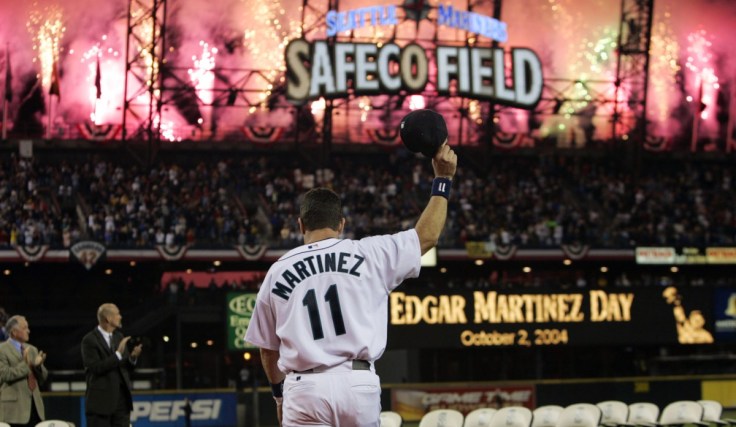
Edgar Martinez
Edgar Martinez has been looked over for years but he was an easy pick for me the last two years. Edgar is the greatestDesignated Hitter of all-time, and one of the greatest hitters in baseball history. Apparently Martinez not playing much in the field hurts his case, but that honestly should be superseded by the fact that he was so good at one thing(hitting) that he is 76th in career WAR. Just like when discussing closers, Designated Hitters are a part of the game just as much as their late inning friends. Soon David Ortiz will be eligible for the Hall of Fame and you don’t hear anyone question whether or not he belongs. If he belongs, why doesn’t the guy who they named the DH Award after? Edgar is the GOAT and should be honored justly.
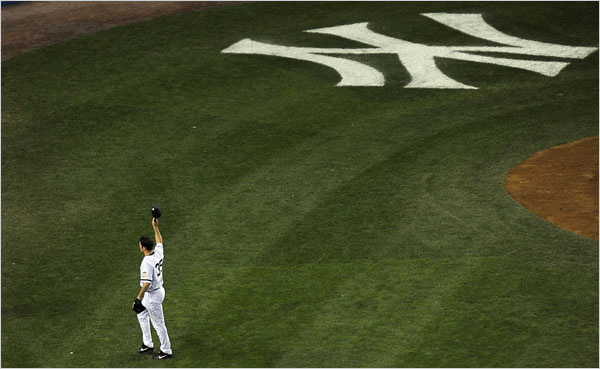
Mike Mussina
Mike Mussina probably never dazzled anyone over his 18 year big league career. He wasn’t the most dominant, didn’t really blow gas past batters or have that one pitch that no one could hit(although his knuckle curve was a nice little out pitch when he needed it). But more than anything Mussina was consistent and stayed that way for the entire span of his career. In fact if you didn’t know better you would think Mussina was a ninja with the way his numbers jump up on you. So here are just a few of the numbers Mussina compiled during his (what should be) Hall of Fame career: 5 time All-Star, 6 Top 5 finishes in American League Cy Young voting, 7 time Gold Glove winner, 57th all-time in career WAR(24th all-time for pitchers), 19th all-time career strikeouts(2813), 89th all-time career ERA+(123), and 270 career wins. Mussina also pitched a large chunk of his career during the ‘Steroid Era’ and the two ballparks he called home during his career(Camden Yards and Yankee Stadium) were both hitters parks. I’ve always considered ‘Moose’ the right-handed equivalent of Tom Glavine, a guy who wouldn’t blow you away but put up solid numbers year after year. 2014 was Mussina’s first year on the BBWAA ballot and he compiled 20.3% of the vote, which I have to believe will go up again this year. If you want flashy, Mussina isn’t your guy. But if you want a top of the rotation starter who you can rely on year after year for quality starts and quality innings, Mussina was a lock. Eighteen years of that quality should also mean he is a lock–for the Hall of Fame.
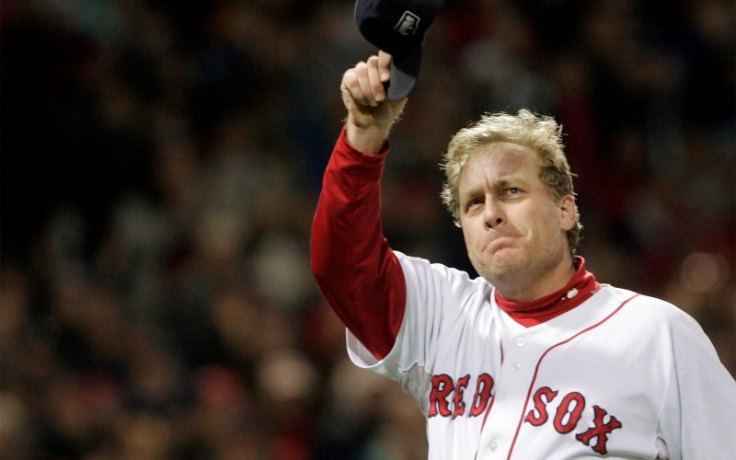
Curt Schilling
Just how much difference does a player’s postseason success factor into a Hall of Fame vote? In the case of Curt Schilling it matters a lot. In fact I would say without his playoff numbers Schilling probably wouldn’t get into the Hall. But when you add that to the mix, his true greatness shines through. A 2.23 ERA, .846 winning %, and a WHIP of .968(plus one bloody sock), all over 133 innings pitched in October shows just what kind of mettle Schilling really had. In fact, just go look at his postseason stats for 2001; ridiculous! When you then add in the regular season numbers it becomes much more obvious. Schilling was a 6 time All-Star, 1993 NLCS MVP, 2001 World Series MVP, 4 times was in the Top 5 of the Cy Young award voting, 62nd all-time in career WAR(26th for pitchers), 15th all-time in career strikeouts(3116), and 47th all-time in career ERA+(127). All this from a guy who floundered in the majors until he was 25 in 1992 with the Phillies. Schilling the person might not be a guy who we would agree with on a regular basis(and definitely don’t argue evolution with him) but none of that matters when it comes to Hall of Fame voting. Schilling was a front line starter in the big leagues for 15 years and has the numbers to prove it. That is ‘Hall Worthy’ if I have ever seen it.
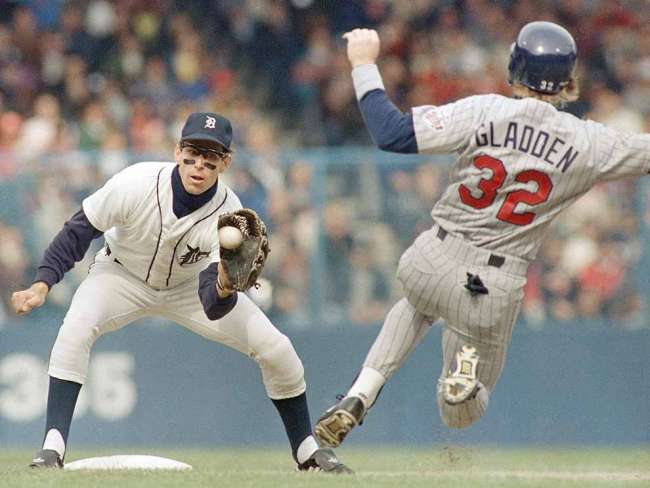
Alan Trammell
It took me a long time(almost too long) but after really studying his case, I believe Alan Trammell is a Hall of Famer. Trammell case has probably been hurt for a number of reasons. Trammell’s offensive numbers don’t pop out at you and he never reached any of the big milestones that voters look for when it comes time to fill out a ballot. The argument for Trammell though outweighs a lot of the negatives; Trammell has a career WAR of 70.4, which makes him 94th all-time and 63rd amongst position players. To go a step further, Trammell has a career dWAR of 22.0, which places him 34th all-time. Trammell was solid with the bat, winning three Silver Slugger awards and in 1987 probably should have won the American League MVP(which went to George Bell of Toronto). Trammell was a 6 time All-Star, the 1984 World Series MVP, a 4 time Gold Glove winner during a period where he competed with Cal Ripken Jr. for the award, and walked more than he struck out in 7 different seasons(and had the same amount of both in 2 other seasons). Trammell is the batter equivalent of Mike Mussina; he never blew you away with anything but he was so consistent for a long period of time that what he put together was a Hall of Fame career. Still aren’t convinced? Joe Posnanski has made the argument that if you are of the belief that Derek Jeter is a Hall of Famer, then you should compare his numbers with Trammell’s. Joe points out just how close Jeter and Trammell were as players, with Jeter holding a slight edge over Alan offensively, while Trammell was easily a better defender. If Ozzie Smith can get into the Hall on his defense, and Jeter will get in on his offense(and leadership; you know that will be brought up) then Trammell deserves to be in for being the better all-around player. The sad part is that this will be Trammell’s last year on the ballot, which means after this year his case will be handed over to the Veteran’s Committee. I wish I had really studied his case sooner, not that my lone vote would mean much. If anything I wouldn’t have underrated Trammell as much as I did, not realizing he was way better than the memory remembers. Now about his double play partner, Lou Whitaker…
(Photo by A. Messerschmidt/Getty Images)
So eight votes from me this year, which was less than last year. I did consider a number of other players for this honor, players who I feel are just on the cusp but not quite there. On that list that I heavily considered was Larry Walker, Billy Wagner, Jeff Kent and Jim Edmonds. All were great players but I felt for now they fall just short for me. Does that mean I could change my mind? I could, honestly. I did when it comes to Trammell and Raines and I could with any of these guys in the future. Sometimes it just takes a longer look to really grasp how important a certain player was to his era. This is a special honor not given to just any player, but only to the greats of the game. The eight I voted for this year I consider great; next year Ivan Rodriguez, Manny Ramirez and Vladimir Guerrero will show up on the ballot for the first time. Oh, and Russ Springer. That means we have a year to determine who of that group should be inducted; yes, even Russ Springer. All these players add a certain element to the baseball Hall of Fame, good and bad. It is all part of the story that is this great game we call baseball.
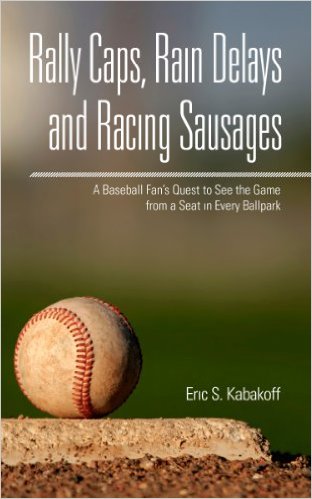
During the offseason, most of us “seamheads” try to find a way to sustain our baseball fever until Spring Training rolls around. Some immerse themselves into other sports, some go back and watch classic games(I am guilty of doing this fairly often) and some go to find something baseball related to read. I have read a couple of baseball related books so far this winter and one of them might be one of the funnest baseball books I have ever read; it’s called ‘Rally Caps, Rain Delays and Racing Sausages’ by Eric Kabakoff.
The book is a simple science project; what happens when one fan tries to attend a game at every major league ballpark? It’s something we have all thought of(yes, it is a part of my baseball bucket list) and the author actually did just that, even if it wasn’t his initial plan. Basically, Eric kept going to different games in different stadiums, then at one point decided it would make a great book. What you get is a fan’s perspective of his journey all across the United States(and Canada) to fulfill this dream/project.
What you get is a very unbiased(well, for the most part unbiased; Kabakoff is a Yankees fan, so there is some favoritism there. Honestly, we all do that to a degree for our hometown team) opinion of the cathedrals of Major League Baseball. There are some great stories in here, like the chapter on visiting RFK Stadium in Washington, which is a hoot to read or a visit to the Metrodome in Minnesota that was a bit different than anywhere else he had gone. There is not only lots of discussion about the games that are attended, but also visiting other baseball attractions around these areas. There is a visit to the site of the old Tigers Stadium and a tour of Wrigley Field before actually attending a game there.
One thing that I really love about this book is the attention the author takes to not only the game, but all the nooks and crannies around the stadium. You get a history in each chapter about the home team and history about each stadium as well. I love that we get a deeper look at not just the product on the field, but also the extra entertainment at the stadium. Anymore when you visit a ballpark, you have a lot of options to keep you entertained if you aren’t worried about the play on the field. Kabakoff does a great job of taking in all of this while also paying attention to the action on the field.
Then there is the food. Obviously every ballpark has different food on their menu and Eric spends a lot of time discussing this. Hey, I can’t blame the guy; it’s always interesting to get a sneak peak into the meals that are available at each park you might visit if you are taking on a tour of each stadium. Since a good portion of us enjoy our food, Kabakoff ‘s deeper look into stadium menu’s is an extra bonus and can be taken into consideration if you are going to a new park. Also, he mentions places you can go and eat around these ballparks if you are wanting to get a bite before or after a game. If you are a food connoisseur, Kabakoff will give you something to look forward to if you bring your appetite to the ballyard; or he will give you a reason to go elsewhere before the game.
Ballpark Pictures
Overall, I really loved this book. It is a fun read that seems to fly by fast, as you want to see how every stadium rates for the average fan. Kabakoff has done a great job of putting together a book that anyone could read, whether you are new to the game or you are a diehard that lives the sport. I highly recommend picking up this book and it is easy to buy on Amazon whether you want it in paperback or your Kindle. I also recommend following Eric on Twitter; I have had many a conversation with him and he might be one of the nicest guys I have interacted with on social media. This book would make a great read for yourself, a friend or as a gift. Hopefully after reading it, you too will want to visit all the Major League Stadiums and compare your notes to Eric’s. Oh, and also remember to bring your hat to the ballpark or else you’ll have to wear an A’s hat no matter where you go!
I love the Winter Meetings. I have since I was a kid. There is nothing quite like the insanity of four days of trades, signings and now rumors of where a number of baseball players could be inhabiting for the upcoming season. All has been quiet on the Kansas City Royals front(well, except for a few minor moves) but it was inevitable it wouldn’t stay that way forever. So when news broke Monday morning that a few moves were very close, I figured it was time to take a peak at the two new-old signings.
The first was the re-signing of right handed starter Chris Young. Young was a great signing this past year for Royals GM Dayton Moore, as he would take a flyer on the 6′ 10″ righty during Spring Training. Most of us felt like Young would be a solid pick-up, if for no reason other than the fact that he is a notorious flyball pitcher, which works well in Kauffman Stadium. Young was even better than advertised, starting 18 games while throwing out of the pen for 16 more, with a 3.06 ERA over 123 innings, an ERA+ of 135 and an FIP of 4.52. His GB/FB rate was on pace with what he has done over his career and was solid in whatever role manager Ned Yost had for him.That flexibility turned out to be a Godsend for Kansas City, as Young excelled in every role he was given, but none bigger than Game 1 of the World Series. The Royals needed someone to come out of the pen, and despite the fact that Young was the expected starter for Game 4, was called upon to eat some innings that night. All he did was pitch 3 no-hit innings, walking 1 and striking out 4. He was just what the Royals needed and ended up getting the victory after Eric Hosmer’s sacrifice fly in the bottom of the 14th.
The Royals inked Young to a new 2 year, $11.5 million deal(with a 3rd year as a mutual option; yes, Dayton loves his mutual options!) with the deal paying Young $4.25 million in 2016 and 5.75 million in 2017. Young can also earn bonuses based on games on the roster, which sounds like a sweet deal for someone as consistent as Young. Considering what all Young did for Kansas City this year, it’s not hard to see why the Royals wanted to bring him back:
“Chris Young is special,” Moore said from his suite in the Gaylord Opryland Resort and Convention Center. “He’s an unbelievable competitor. You can make the case that he’s the MVP of our pitching staff. And we’re very proud that he’s returning to Kansas City.”
I really like this signing, as Young can fill multiple roles for this team and is a great competitor. Part of what makes Young so great is the fact that he doesn’t have to worry about a loss of velocity, as he already doesn’t throw very hard and works more on location and deception than anything else. It appears Young will start the year in the rotation, so it will be interesting to see if the Royals go after another starter, as a name like Scott Kazmir has been mentioned so far as a possible acquisition.
The other signing for Kansas City was the return of former All-Star closer Joakim Soria. Now, this deal hasn’t been 100% finalized yet(Soria still has to take his physical) but the word is that Soria would come in on a 3 year, $25 million dollar contract(with a fourth year mutual option). There apparently is some language in the deal they are working on where Soria would have incentives for starting; I wouldn’t look too deep into that, as it seems like a moot point. In other words, he won’t be starting unless the rest of the rotation falls victim to chicken pox(oh, wait…). One positive for Kansas City is the fact that most of the Royals management is familiar with Soria and know what he is capable of performing for the team out of the bullpen. In fact, manager Ned Yost sounds as if he is anxiously awaiting Soria’s return to Kansas City:
“Just loved his professionalism,” manager Ned Yost said. “Loved his makeup and his composure. Loved his ability to field his position, control the running game, execute pitches. A lot like Chris Young. He’s just a professional performer when he steps on the mound and still very, very productive. Would love to have him.”
Last year Soria split time between Detroit and Pittsburgh and performed admirably in whatever role was chosen for him. It appears at this point that he will be a setup guy for Wade Davis, so I can easily see him pitching the 8th while sliding Kelvin Herrera back to the 7th inning. Soria’s numbers looked good last year, accumulating an 2.53 ERA over 67.2 innings, with an ERA+ of 156 and an FIP of 3.71. Soria also had 24 saves(if you like that sort of thing) in 2015, the most he has had in a season since his days in Kansas City. The most impressive number from Soria this past season was an increased velocity out of his fastball. In 2015 he had an average fastball speed of 92.1 mph, his highest average speed throughout his entire career. It would appear on the surface as if his arm is fine and possibly in the best shape it has been in years.
(AP Photo/Jeff Roberson)
But I have my concerns. Soria has had two Tommy John surgeries so there will always be a concern that another arm injury could finish him off. Also, it will be hard to insure Soria because of those surgeries, which doesn’t seem like a big deal but if you look at a situation like Jason Vargas, where the Royals will get most of his 2016 contract covered if he sits out the entire year, you could see the importance of being able to insure a pitcher’s arm. There has long been talk about how the Royals waited too long to try and deal Soria, and then lost him for his final Kansas City season to that 2nd Tommy John surgery. But his health isn’t the only problem I have with the Soria signing.
The other aspect of this signing I have issue with is the size of the contract, both dollars and years. For one, averaging over $8 million a year(and knowing Dayton the deal will be smaller for the first year and gradually increase) just seems like too much for any reliever to me, unless you are Mariano Rivera or Dan Quisenberry. I know it is what the market is dictating right now, but I don’t agree with it. Finding hard throwing arms to fill your bullpen is fairly easy at this point and also fairly cheap. So to spend that money on a setup guy just seems almost comical. Throw in that the deal is 3 years and it goes from bad to worse. No offense to Joakim; I love the guy and I’m already looking forward to hearing ‘Welcome to the Jungle’ blare when he comes into a game at Kauffman Stadium. But for a guy with his injury history and where he is at in his career, 3 years just feels like too much. Once again, I feel the Royals could have gotten a solid reliever cheaper and probably even younger and they could have done the same job Soria will do for Kansas City. I’m glad Soria is returning to where he started, but sometimes that same magic doesn’t return just because you do.
But the best returning news came Monday afternoon thanks to an interview with skipper Ned Yost:
Ned says Rusty Kuntz will be back as 1B coach #Royals
Seriously, best. news. ever. Sure, part of it is the glorious hair that Kuntz rocks. I’m sure even part of it is his name that people still butcher. But the main part is that Kuntz is a big part of that Royals coaching staff. He is the one who works with shifting the outfielders and moving them around based on which hitter is at the plate. He also works with the team on baserunning and was a big part of a big play in the ALCS against Toronto, as he picked up on something David Price had been doing and took advantage of it. Kuntz is a vital part of the Royals success and I’m glad they convinced him to return for at least one more year. Watch out ladies, the ‘Kuntz is Loose’!
…and so goes day one of the Winter Meetings! There are still a few days left, so plenty of time for Dayton Moore to continue his holiday shopping for the Royals. It will be interesting to see if a couple of the main outfielders on the market start to sign if the other dominoes(ie. Alex Gordon) fall after that happens. All that can be said at this point is the dull period of the offseason is probably over; time to turn the ‘Hot Stove’ up to 11!
We are creeping into the second week of December and very little has occurred with the Kansas City Royals transactions page since they wrapped up the World Series. It’s a bit odd at this point in the offseason to see Dayton Moore so quiet after all those years of moves being made within the first week of the end of the season. All has been quiet until the other day, when the Royals made a few notable moves to add to the ledger.
Let’s start with closer Greg Holland being non-tendered a contract. This wasn’t a shocking move, as it had been discussed almost immediately after everyone found out Holland would be having Tommy John surgery and would be missing the 2016 campaign. The good news is that this move was purely financial, as the Royals didn’t want to be on the hook for close to $10 million next year for a pitcher who would be sitting on the sideline. This also means the Royals are open to re-signing Holland to a new deal, possibly a two year deal that would be low for this upcoming season while much larger salary for year two of the deal, probably with a bunch of incentives. I would say the chance of Kansas City and Holland coming to agreement on a new deal is pretty good, as both parties want to stay together and understand why this business decision was made. I would expect Holland back in the fold fairly soon and hopefully will make his Royals return in 2017.
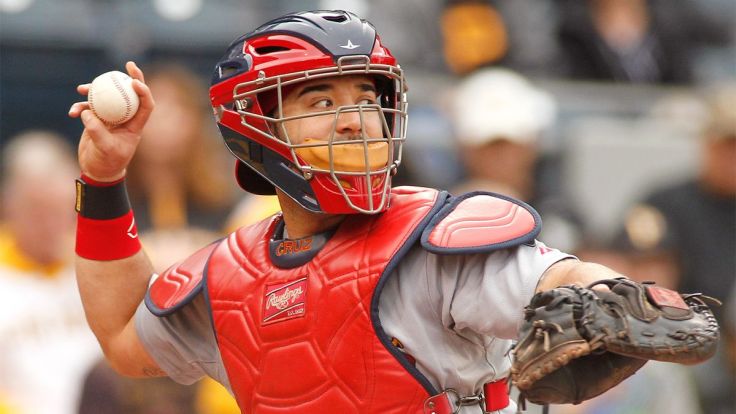
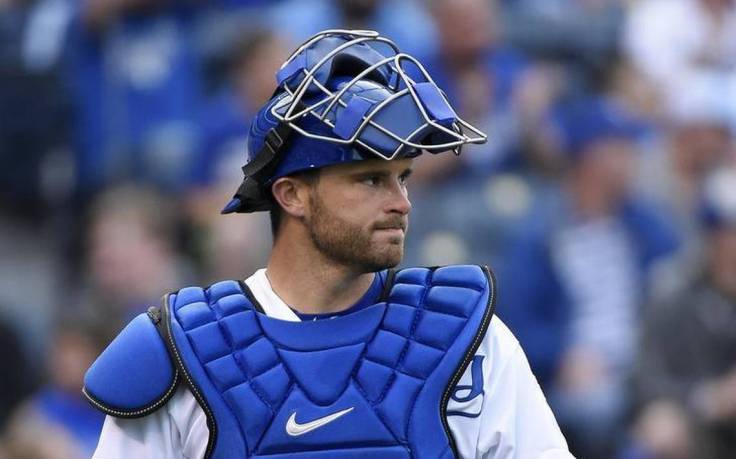
The other move made by Kansas City was acquiring backup catcher Tony Cruz from St. Louis. On first glance this seemed like a move designed to make him the new backup to Salvador Perez while pushing Drew Butera(yes, I almost just wrote ‘Sal’ instead of ‘Drew’; his father would be proud) out the non-tendered door. But then the Royals offered Drew a contract, leaving the Royals with two options to play in about 30 games next year(if that). So it would appear from the outside that these two catchers will be battling in Spring Training to see who heads North with the team, and who ventures to Omaha(possibly; last year’s AAA catcher, Francisco Pena, was claimed by Baltimore). So who would be the better option?
Offensively this might be a bit of a push. Butera last year had a line of .196/.252/.252 with an OPS+ of 40 while Cruz had a line of .204/.235/.310 with an OPS+ of 47. Over their careers, Butera has an OPS+ of 41 while Cruz’s is 58. Cruz looks to be the better hitter, even if by just the smallest of margin’s. It does appear Cruz has more pop in his bat(.310 to .266 career slugging percentage) while Butera seems to be the more patient hitter(Cruz has averaged a tad over 6 walks a year over his career, Butera almost 8 per year). Offensively, neither one of these guys are going to earn their job with their work with the bat, so let’s check the glove work.
Looking at dWAR, Butera has quite the advantage over Cruz, 2.3 to -0.4. It seems as if Butera is the better defender, which was my initial thought before I started breaking down the stats. I was actually surprised though; Butera only has about 45 more career games than Cruz, despite Butera being 3 years older than Cruz. It also appears as if their offense drags them down, as both have negative career WAR; -1.7 to -2.8, Butera over Cruz. Now I can say I haven’t seen as much of Cruz’s work, but I’ve long enjoyed Butera’s work behind the plate, where he is known for his defense and good game calling skills. I’m not 100% for sure where Royals management head is on the backup catcher situation, but I know manager Ned Yost(a former catcher) prefers his backup to be solid defensively. It would appear if that was the case again this spring, you will see Butera backing up Perez. I wouldn’t mind keeping Cruz down in AAA if he is open to that, and once again, I’m not entirely for sure what the Royals braintrust is thinking. If I had to make a guess, this move was purely for depth, which is never a bad move for any team.
So nothing major has occurred yet for the Royal roster, but the Winter Meetings are this week, so something is bound to happen. There is already talk that Kansas City is close to a deal with Chris Young and word crept out today that they have interest in lefty Scott Kazmir. So more than likely, expect something to happen this week in Nashville. This news also brightened my day today:
#Royals have not given up on re-signing Alex Gordon. Still waiting for OF market to fully define.
The question has been asked nonstop since the Kansas City Royals wrapped up their second championship at the beginning of November, and it will continue to be asked until there is a definite answer: will Alex Gordon re-sign and stay a Royal, or will he leave the only place he has known as home? It’s a question that will nag at most of us Royals fans until a decision is made. But the real question that should be pondered is whether or not the Royals should invest long-term in one of the best players in Royals history. That seems crazy to say, right? It does, but follow me on this.
I should start this with my personal feelings on this matter: Alex Gordon is my favorite player on the Royals, so from a selfish standpoint of course I want him to come back to Kansas City. But sometimes, even if it would break your heart from a fan standpoint, it makes more sense to view a player’s return based on how it would affect the team going forward, both on the field and on the payroll. Obviously just based on the next couple seasons, it makes sense to have Gordon in the fold. The Royals seem to have a small window to contend with this group of players, as right now Eric Hosmer, Mike Moustakas, Lorenzo Cain and Wade Davis would all be possible free agents after the 2017 season. With little help on the horizon prospects wise for Kansas City, it would appear the Royals chances of continuing this great run will be closing soon. Bringing back a player of Gordon’s caliber would help this team not only contend in the present, but be a great veteran presence for the younger players whenever they make their way to the big leagues. Now the issue to this is that Gordon wouldn’t just be signing a 2 or 3 year deal if he comes back.
(AP Photo/Ed Zurga)
The word on contract negotiations are that Gordon would be getting either a 4 or 5 year deal with whomever he signs. Add in the price tag of anywhere from $16-20 million a season and team like the Royals would be making a big commitment to one player for not just a season or two, but into 2020 possibly. When you add in the factor of all the players mentioned earlier that could be on the market after the 2017 season, and you can see where locking in a player for that long term could handcuff Royals GM Dayton Moore in more ways than one. Let’s do a little bit of math here: if Kansas City pays Gordon anywhere from $18-20 million a season, Gordon’s contract alone would take up about 15% of the projected $130 million dollar payroll for 2016. For one player to take up that substantial chunk of the payroll is a bit daring and he would have to be a player worth the risk. So is Gordon worth that?
(Photo by Hannah Foslien/Getty Images)
The easy answer is ‘yes’. Gordon not only has been an above average offensive player over the last 5 years, but is possibly the best defensive left fielder in baseball(yes, I see you, Starling Marte) and is the backbone of this Kansas City team. You can bat Gordon near the top of the order(he is the abnormal Royal who actually takes a decent amount of walks and has been productive in the past at the top of the order), in the middle as an RBI threat or near the bottom as a lethal bat before a team reaches the top of the lineup again. Gordon takes good care of his body, as he is a workout fiend, to the point he doesn’t hardly ever put any sweets into his stomach. The belief is that because Gordon takes such good care of himself, he won’t regress the way a lot of players do starting in their early 30’s. If Gordon would sign a 5 year deal, he would be in his age 36 season in year 5 of the deal. I’m not saying there won’t be regression on his part; there is always some sort of regression going on, even if it is just a little bit of speed on the basepaths and reaction time on defense. But it won’t be the kind of regression that most players see during this section of their career.
With that being said, there is an injury history with Gordon. Just this past season alone, he recovered from offseason wrist surgery to start off 2015, then encountered a groin strain that kept him out for about two months this year. This history doesn’t mean it is the norm going forward for A1, in fact it could be an outlier for him. But if you watch Gordon play, you know he goes all out on every play. With his aggressive style on defense, there is a good chance injuries could start to pile up. As a team that would be locking him in for the foreseeable future, the hope would be that this past season was not a pattern that will show up for the duration of his contract.
With all that being said, the main concern for Kansas City goes back to the payroll flexibility mentioned earlier. Dayton Moore likes to keep himself in a position where if he needs to move around pieces midseason he can afford to do that without having a contract on the books weighing him down. The initial thought of having a player holding down 15% of the payroll seems a bit much for a small market team like Kansas City, who can’t just go out there and compete on the free agent market with the Boston’s and New York’s of the baseball world. There has been talk that Kansas City could see their payroll up around $130 million this year, compared to last year’s $112. It makes sense, as between raises for a number of arbitration eligible players added in with any free agent signings would raise the total, especially after coming off of a championship season. It is easy to see why Moore could be leery of getting into a bidding war with another team over Gordon, as it could leave Kansas City with a contract that feels like an albatross around their neck. As much as the Royals want Gordon to come back, they also realize the financial issue it could put on the Royals payroll come 2018 and on. Or would it?
(Credit: Denny Medley-USA TODAY)
I ask ‘would it?’ because if you follow baseball you’ve probably noticed how much money is flowing in from their TV contract. Baseball is making so much money at this point that you feel at times like the higher ups in the sport are like Scrooge McDuck, swimming in a vault of money all day long. It’s conceivable in three years that even with the Royals not making the amount of revenue off of the gate like they have these last two years, they could still be sitting pretty on their own before the TV money even flows in. That could mean that Gordon’s $18-20 mill a year contract could be a steal by then and the amount of payroll he would be taking up would be much lower than the estimated 15%. Yes, David Glass might not want to spend what he is spending now, but unless the team just decides to go into total rebuidling mode(which I don’t predict will happen), Gordon’s contract would not be weighing down the team as much as one would expect. It’s even possible in three years we could be discussing how it was humorous how much concern there was giving one player in Kansas City that much money.
The verdict? As much as there are concerns that a big contract(like 5 years, $100 mill) could be hefty for the Royals, I think it is workable. Not only that, but knowing how Moore operates, it is very likely that there could be a couple years of mutual or player options, a portion of the contract deferred and lots of incentives, including a promise to Gordon for a spot in the organization once his playing days are over. I’ve heard the same things as everyone else on other team’s interested in Alex and how hard a push these teams will make for him; at this point we just have to wait to see what happens. What Gordon’s decision will come down to is this: how badly does he want to stay in Kansas City and what is best for his family? Only he can answer that question. What I can tell you is no fanbase will love Alex the way us Royals fans do; what he would gain by staying couldn’t be measured in dollars. Oh, and a statue. If he stays he would get a statue in the outfield. Not too shabby for a kid from Nebraska.









 Barry Bonds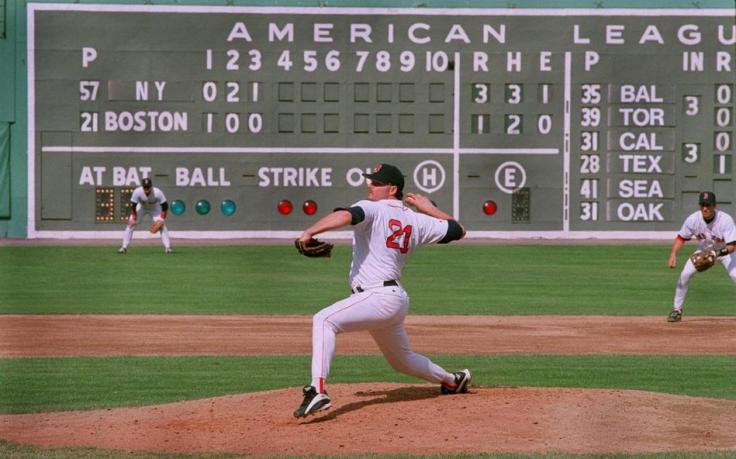









 Bleeding Royal Blue