Nothing makes me chuckle quite like when Kansas City Royals General Manager Dayton Moore plays a free agent signing so close to his chest that we know nothing of it until it is almost official. This was none more true than on Sunday when he signed OF/DH Brandon Moss to a 2-year deal:
Sources: Royals have agreed to a two-year deal with Brandon Moss, pending a physical. Going to be for $12 million. Physical is this week.
There had been some light littering of rumors floating about DH types, like Chris Carter, but no specific mention of Moss being on the Kansas City radar. The deal actually breaks down very favorable for the Royals this year, as like most contracts Dayton works on, as it is backloaded for the second year of the deal:
Brandon Moss contract is $3.75M for 2017, $7.25M in 2018 with $1M buyout on 2019 option, per @JonHeyman
So, close to $4 million is added to the payroll with this move, which is actually not much and still gives Moore room to go after another starting pitcher and/or reliever. In regards to the financial aspect of this signing, very shrewd move from Moore and one that could pay off if Moss produces like he has in the past. So what should be expected of Moss production-wise?
Last season Moss produced a line of .225/.300/.484 with 28 home runs, 67 RBI’s, an OPS+ of 105 and 0.8 bWAR. The biggest aspect of Moss’ game is his power and the power numbers were impressive in 2016: 2nd best home run total, 3rd best slugging percentage of his career, 3rd best extra base hit percentage, the highest percentage of hits for extra bases, 2nd best at bats per home run and 3rd highest isolated power average. You also get strike outs with Moss (he sat at 30% last year), but that is normal for someone with his kind of power. He will get the occasional walk, but throughout his career he has been league average to slightly above average (9.3% over ten years). In other words, don’t expect a high batting average from Moss, which is good since he could care less about that stat:
It’s very apparent that Moss understands the value of a walk and the flaws within batting average. This also tells me that he is probably walking up to the dish with a plan already in place, which is a good thing. Also, while Moss does have flaws in his game, there is a way to optimize some of the negatives. Moss’ splits over his career have not been kind, with a drop in his slugging percentage against lefties (.395 compared to .472 against righties) and an even bigger drop last year (.375 compared to .525 against righthanders). If manager Ned Yost was smart, he would almost primarily have Moss face right-handed pitching; he doesn’t have to lock him into a platoon, but I wouldn’t have him face many lefties this upcoming season. The good thing for Kansas City is they have a number of good options (Cheslor Cuthbert, Hunter Dozier, Paulo Orlando, possibly even putting a regular position player in the DH spot) and could work around some of the lesser aspects of his game.
What about his defense? Honestly, while Moss can man the outfield corners and first base, he is well below average defender at first (-16.1 UZR, -22 Defensive Runs Saved) and most capable in right field (6.6 UZR, 5 defensive runs saved). This tells me he is probably average to slightly below average defender in the outfield and his defensive metrics are still better than new Royals right fielder Jorge Soler (-8.2 UZR, -7 Defensive Runs Saved). Many like myself felt that Soler would end up being the primary DH by mid-season this year, but if we go by the numbers (and yes, defensive metrics are still a work in progress, so they shouldn’t be taken solely by the end numbers) Moss could be better suited for right field than Soler. The curious part of my brain wonders how the Royals will attack that, since one of the big aspects of the Kansas City team’s these past few years has been the greatness of the outfield defense. Obviously, putting Moss or Soler out there lowers the bar quite a bit, which makes me wonder how that will be addressed (although coach Rusty Kuntz plans on working with Soler this spring, so we’ll see how that plays out). I think this also shows that Moss was acquired to get most of his plate appearances in 2017 at DH, which is what most assumed.
There is one aspect of the signing that didn’t sit well with me and that was that the signing meant the end (once again) of the rotating DH plan that Kansas City has tried to implement for years:
I’m sure I am in the minority, but I actually thought this would be a good idea for Kansas City in 2017. Rather than be tied down to one guy playing the majority of the games in this slot, you could rotate players in and out of the role. This would give at bats to a Cuthbert or Dozier, while also allowing a Gordon, Perez or Cain to rest their bodies (and all three have taken quite a beating these last few years). If the Royals are serious about contending this year, having those guys rested and as close to 100% as possible headed into September-October is a must. The rotating DH plan would have given Yost more options and given these guys a defensive day off, which will be needed. Now, there is still a chance that happens (as we mentioned Moss’ numbers against southpaws) but the other concern is Yost’s use of his backups. Even if you have just followed his tenure in Kansas City, you have figured out that Ned is not big on using his bench a ton. He is notorious for riding guys for as long as he can and with the three names mentioned above, that worries me. Maybe I am worrying about nothing and like in years past, Yost has learned to ebb and flow with what his team needs. But there is also a chance that “Rigid Ned” continues to play his guys into the ground and injuries pile up because of it. I like the addition of Moss, but one does have to wonder if it strengthens or weakens this team in the long run.
So which is it, a plus or a negative acquisition? I have to admit to really liking this signing by Dayton and although I have my concerns, they don’t bother me to the extent that I wish they could take it all back. Home runs were up throughout baseball in 2016 and year after year the Royals are near the basement (if not in the cellar) in home runs hit throughout the league. Adding Moss’ bat to Moose, Hos, Soler and Salvy just accentuates one more threat in the Kansas City lineup. If optimized correctly, he could be a steal for the low price he is signed for in 2017. The signing also gives them just a smidge more room for another starting pitcher (Jason Hammel?) or reliever (the return of Luke Hochevar?) if the Royals are looking. Don’t be surprised to see a number of bombs hit into the fountains this year; I mean, it’s not like Moss isn’t familiar with Kauffman Stadium!
Being a longtime Kansas City Royals fan can give someone a different perspective of the team than say, someone who has only been around the last couple years. There is a section of the fanbase that sat around during the “Lean Years” so to speak, an era where many a time we would be accepting of an errorless game, or a quality start from the starting pitcher that day. Trust me folks, years ago the bar was set really low. With that being said, this winter the Royals have been fairly quiet on the acquisition front, as we have essentially seen the Jorge Soler trade and the Nate Karns trade with a few minor signings sprinkled in. I’ve actually felt like both trades made sense and were quality deals on GM Dayton Moore’s part. I even liked the Peter O’Brien signing and don’t hate Jonathan Sanchez being brought in on a minor league contract. But something else has been gnawing at me this winter and these trades have reinforced my worries. It appears on the surface like the Royals are neither “going all in” this off-season nor “rebuilding”. In fact, it appears as if Kansas City management is straddling a fence that often isn’t very successful.
I feel like I need to be a bit more clear in my estimation, as it could be taken as if I am saying the Royals won’t be in a position to contend in 2017, which I don’t feel at all. In fact, I feel as if Kansas City has a great chance to be in the playoff hunt this year, as we enter the final year of a contending window with the current nucleus in place. That is a big part of my worries right there; after this season, Eric Hosmer, Mike Moustakas, Alcides Escobar and Lorenzo Cain will be free agents. Danny Duffy was also set to go out on the market, but luckily he was given a long-term extension while Wade Davis and Jarrod Dyson, two more potential free agents after 2017, were dealt in the trades mentioned above. The front office has known for years that this was the final year of winning with this group and while the initial plan was for the farm system to keep spitting out major league ready talent, that hasn’t turned out to be the case. Knowing that there was not really any help on the horizon down in the minors (although someone like Hunter Dozier could contribute as soon as this year), this felt like the season where the team should be “all in” and put the team in the best position to reach the playoffs. That has not happened and not all of that can fall at the feet of Moore. No, you have to look higher up on the food chain to find the biggest issue facing the front office.
Back in December, it came out that Royals owner David Glass didn’t want the team to increase the payroll for the 2017 campaign, putting Moore and his associates in the front office in a weird position. Moore over the years has always tried to temper expectations and kept his cards close to the vest, but apparently he really meant it this year when he said that the team wouldn’t be able to take on more payroll:
“We’re simply not in a position to add to our current payroll,” Royals general manager Dayton Moore said.
This is why Davis was traded and why Dyson wasn’t far behind; Moore was trying to shuffle the roster by unloading any payroll he can why acquiring players who are younger, cheaper and are under club control for the immediate future. In fact I will go a step further and say Moore has done an admirable job trying to keep the foundation of the team together to make another run while keeping the payroll within Glass’ desired level. Yes, some of this falls at the feet of Moore; he is the one who gave Ian Kennedy his 5 year contract, Omar Infante’s contract that the Royals are still paying for this year and backloaded a number of contracts to make the team’s money situation work in years past. But more than anything this feels like Glass being cheap, which he really hasn’t been these last few years. Why pull back now when more money could be had if the team goes back to the playoffs?
When I first started understanding the business side of baseball, I learned very quickly that to make money in baseball you have to spend money. There has never been a major league owner that pinched pennies and made a fortune off of it; maybe for one year or some random event but none consistently. Instead, the teams that have made a ton of money did so by spending as well. Now, I am not saying that the only way to make money in baseball is to spend like the Yankees, Red Sox or Dodgers; in fact, many of those teams that were high spenders didn’t even profit from playoff teams to really max out their wealth. So I am not saying Glass should just spend willy-nilly and expect profitable results; no, there is a way to spend wisely while not going over any self-imposed budget. The perfect definition of that could very well be those Royals teams that made the playoffs in both 2014 and 2015. Glass spent more money those two years than any other Royals team and he made more money both of those years than ever before because of the team playing into October. I am not saying Glass should give Dayton an open check and tell him to go get what they need; that should probably never be done, period. But a slight bump in the payroll could give this Royals team a chance to improve a few holes in the team’s roster and improve their chances of winning this year. With the Twins and White Sox rebuilding and the Tigers also straddling a fence (they have hinted at dealing some of their veterans this winter but alas none have been dealt), realistically that would leave the Royals and Indians to battle it out for the American League Central in 2017. That could still happen, but one has to wonder how this team will improve based just off of players being healthy and expecting many to improve on their 2016 output.
The other issue at hand is tied up in Moore’s trades this winter and what they mean for the future of this team. Like I said, I have liked both trades he has made and feel getting Karns and Soler were excellent acquisitions for what Kansas City is trying to do. But…it does appear on the surface that they are trying to win this year while also building a club controlled roster after the expected departures next winter. The team is neither “all in” or “rebuilding” and this is a problem. In the past, team’s who have tried to leverage a situation like this have eventually decided to take either one path or the other once they figured out that taking neither wasn’t working. We don’t have to look far to see what kind of problem this can cause-just look at the Philadelphia Phillies. In 2012, the Phillies finished .500 while employing a roster of veterans like Ryan Howard, Jimmy Rollins and Roy Halladay. The team attempted to re-stock in 2013, adding Michael Young and Ben Revere while keeping the older nucleus in tact. The team floundered that year, losing 89 games and it appeared a rebuild was in their future. Instead, they acquired A.J. Burnett right before Spring Training that year, and would rack up another 89 loss season. It wasn’t until after that season that the organization put forward a full-scale rebuild on the franchise. The Phillies learned that straddling that line between rebuild and contending normally doesn’t work out and I’m afraid Kansas City will learn the same lesson.
Since the idea of drifting between contending and rebuilding sounds counterproductive to me, I am in the camp that the Royals should be going for it this year. This is the last year of the window with Moose, Esky, Hos and Cain, so now would be the time to give this team its greatest opportunity to return to the playoffs. The farm system has very little in the way of help next year and this is an organization that didn’t make it to postseason play for 29 years before 2014; now is the time for one last run. The logic I am using is that if Glass agrees to spend even just an extra $10-$15 million to upgrade a few spots, they would at least be giving this squad the best opportunity to reach October baseball. We have zero idea of what will happen after 2017, and the likelihood that the Royals are even able to bring back more than just one of those four free agents is probably slim and none. The thinking is that if the team puts forth another winning season, the stadium will be packed and Glass will make his money back and then some. Instead, it feels like he is saying “we won a World Series, I think we’ll just stop there”. Even if the team doesn’t make it back to the postseason this year, Glass can go cheap in 2018 with a much younger ballclub, make his money that way and no one will think less of it, since they would be “rebuilding”. This group of players deserve one last shot at etching a legacy in Kansas City but the chances of that happening at the moment don’t look as good as it should be.
So what does this all mean for the 2017 Kansas City Royals? It means that while this club on the surface still looks like a contender, things could go awry very quickly as well. One does have to wonder, after the soul-crushing death of Yordano Ventura, if the team might go out and pick up a replacement starter for the rotation or if they will attempt to fill his spot with a Matt Strahm or a Mike Minor. Even if another acquisition is looming, I’m not sold that this is the best Royals team that could be pieced together. Could they contend with this squad? Of course. But does this feel like a team that could cause damage in October? Not likely. I could be wrong but it feels like ownership is not giving this team the best chance to bring the World Series back to Kansas City, and that saddens me. It’s easy for me to sit here and say “spend more money”, when it isn’t my own. But if I understand the structure of a major league baseball team that wants to contend, you don’t half-ass the project. It should be all about winning the whole damn thing again this year and instead it feels like someone just waiting to turn the lights out. We have no clue how much of a chance the Royals will have to make the playoffs again after 2017; why not go out with a bang and get the band back together for one last gig? Instead it feels like a farewell tour where we keep asking them to play all the big hits one last time before hitting the road. At this point, Royals ownership should do right by the fans, the front office and even the players who have given their blood, sweat and tears these last 4-5 years. It’s time to push the chips all in and go for broke. Now is not the time to stop halfway and assume that will do the trick. It’s time to go for broke…and trust me Mr. Glass, this won’t make you broke. In fact it could increase your wealth for years to come…
You often hear that “baseball is a kid’s game”, a phrase that bears a ton of truth. For many fans, they fall in love with the game at a young age and never lose that youthful exuberance when at the ballpark. Players are no different, as many play as if they are still ten years old, kicking dirt on a backfield while playing a pick up game with friends. The realities of life sometimes slip away during the span of a baseball game, as all the daily worries seem to slide into a separate filter, only to be untapped at a later date. Last year, baseball lost a grown up kid in Jose Fernandez, an elite pitcher who’s life was taken all too soon. On Sunday, Kansas City Royals pitcher Yordano Ventura, just 25, fell to the same fate, dying from a traffic crash in the Dominican Republic. Ventura was not wearing a seat belt and was thrown from his vehicle after losing control of it on the highway. Apparently there was some thick fog when the accident happened. For a guy who only pitched three full seasons in the majors, there are a ton of memories for Royals fans to remember him by.
Ventura first started showing up on most Royals fan’s radar in late 2012, a season where he fanned 130 batters in 109 minor league innings. His ascension in the Royals farm system continued in 2013, where he struck out 155 hitters in just 134 innings and was a September call-up that year, starting three games while throwing just 15 innings and producing an ERA+ of 120. The report back then was pretty simple; lanky righthander with a power arm that would sometimes allow too many baserunners. He was already getting comparisons with Hall of Fame pitcher Pedro Martinez, as there were even questions on whether or not his frame could hold up to a full major league season. That would be put to the test in 2014, as Ventura made the team out of Spring Training, throwing 183 innings, posting an ERA+ of 123, a FIP of 3.60 and a strike out to walk ratio of 2.30. Ventura would end up 6th in the Amiercan League Rookie of the Year voting. He was already cementing his spot in the Kansas City rotation and would further that even more in October.
It’s funny looking back at it now, but Ventura would make his playoff debut in the 2014 Wild Card game against Oakland, in a very controversial outing at the time. Ventura would be brought in from the bullpen after the 6th inning had started, and would face only three batters; one would single,Brandon Moss would hit a home run, and he would get one batter out.
After the homer, the Royals would be down 6-2 at that point and even to this day, it felt like a weird move to make. Why would you bring in a rookie, who had started all but one game all season, in the middle of the inning with a runner on base rather than bring him in during a clean inning? It seemed like a move that could have cost manager Ned Yost his job. Luckily for Yost, the Royals would come back and win the game in extra innings and moving forward we would only see Ventura start in the postseason.
In fact, it was during that postseason that he would pitch the greatest game of his career. In Game 6 of the 2014 World Series, with the Royals on the edge of elimination, Ventura would pitch in honor of his friend Oscar Tavares (a Cardinals prospect who had five days earlier passed away from a car accident) and throw a gem against the San Francisco Giants, pitching seven shutout innings, striking out 4 while only allowing 3 hits.
It was hard at that point not imagining Ventura being the future of the Royals starting rotation and putting together a string of memorable outings. Over the years, Kansas City had a number of excellent pitchers to hang their hat on: Saberhagen, Busby, Leonard, Cone and Greinke just to name a few. At this point it felt like we would be able to add Ventura to the list. But that wasn’t how things played out.
While the Royals were better in 2015, Ventura seemed to fall down a peg. Ventura would throw 20 less innings in 2015, while his ERA+ was right around league average (103) and his bWAR fell (3.2 to 1.9), his strike out to walk ratio and FIP would slightly improve. 2016 wasn’t any better, as his ERA+ fell below league average (98), while his FIP and WHIP both rose to career highs.His strike out to walk ratio also fell, as his strike out total fell while his walk total increased. It was obvious to some at this point that Ventura’s real battle was going to be harnessing his emotions while on the mound.
The first bout of his emotions getting the better of him occurred in 2015, as early in the season Ventura would get upset at a Mike Trout single that breezed by his head. It was chalked up to just being a heat of the moment type thing, at least until the incident against Oakland later in the month. After some bad feelings on Friday night (thanks to an aggressive Brett Lawrie slide), Ventura would give up a home run to Josh Reddick in what to that point had been a rocky outing for the young flamethrower. Ventura would follow by plunking Lawrie with a 100 mph fastball and the benches would empty. I was at the ballpark for that game (which I was super excited about since it was the first Yordano game I was getting to see in person) and was disappointed with Ventura’s obvious decision to get himself taken out of the game. Ventura would get ejected again in his next start, as Adam Eaton of Chicago would get under his skin and start a melee. A reputation would be earned at this point for Ventura, that of being a hot-head, and other teams would try to take advantage of this by trying to get him riled up and off his game. That reputation would hit an apex in June of last year as he would tussle with Manny Machado of the Orioles, hitting him and causing everyone to question Ventura’s mental stability on the mound.
But was this really who Yordano Ventura was? The answer, like most things, was more complicated than that.
For all the posturing and cockiness, there was a guy with a big heart inside of Ventura. Many of the Royals players, while frustrated with his shenanigans on the mound, considered him their “younger brother”, disappointed with his actions but supporting him all the same, knowing he was still young and finding his way. They saw the kid who would get upset after a tough loss, feeling like he let the team down with his performance on the field and hoping to work better. For every outburst, there were just as many (if not more) days where you could see a smiling Ventura, loving where he was at considering where he came from. While the Royals had become disappointed with his behavior sometimes, they saw the kid who was watching tape, listening to what his coaches were telling him and who was one of the hardest working guys on the team. Ventura was human, like most of us and with that comes the good and the bad.
As a fan, most of us were equal parts enthralled and impatient with him. For every outing where he struggled to keep his cool, there was one that gave you hope that the ceiling was starting to be reached. For every emotional outburst there was a perfect setup of a batter, luring the batters in with the heat before finishing them off with the nastiest of curveballs. For a team that has struggled producing quality starting pitching, Ventura was that hope that the Royals had finally found their Marichal, their Martinez, their Fernandez. He was the scrawny kid from the Dominican Republic who was signed at 16 years old, throwing in the mid 80’s, hoping he would grow to be something more. He had grown to be something more…but unfortunately we will never find out just how much more.
No human being should meet their fate at the age of 25, let alone an athlete who hasn’t reached the peak of their career yet. There was so much more life to live, so much more for Ventura to give and I don’t even mean on the mound. What most people will remember from Yordano Ventura won’t be the fastball, or the fights or the swagger. No, most people will remember that smile, a smile that was infectious and was a little kid’s smile in a grown man’s body. Even at 25, Ventura was just a little kid getting to throw a baseball for a living. That will stay with me much longer than individual accomplishments or frustration I had with him as a player. Ventura was that sign of hope that all of us look for in our baseball team’s, that hope that tomorrow will be a brighter day. While today was a dark one for baseball fans, I promise tomorrow will be brighter. As fans, our days were brighter with the hope that Yordano Ventura’s arm and smile brought us.
Most of the focus this winter for the Kansas City Royals has been on how they were going to bounce back in 2017 while trimming payroll, as the team’s cavalcade of free agents after this year looms in every conversation about this team. Throughout all this, there has been a growing sentiment (one of which was from me last summer) that the Royals real focus should have been on getting a new long-term contract worked out for staff ace Danny Duffy. After word leaked out back in November that Duffy and the Royals were negotiating a contract extension, it was hard not to get excited about a deal getting done before Spring Training in February. But as November became December and December became January, worry started to set in. Luckily, all that worry was for not, as Kansas City has locked up Duffy with a 5 year, $65 million dollar deal. Now that Duffman is signed, sealed and delivered, let’s break down the deal and how it will affect the Royals.
Duffy had asked for $8 million through arbitration last week and the Royals had countered with $7.25 million for 2017. Obviously, GM Dayton Moore has backloaded this deal, which trims some money from Kansas City’s 2017 payroll. Not a big shock, as Moore has shown a tendency to backload contracts to keep the current payroll as low as possible. This will give the Royals some flexibility this year in case the team decides to make any further moves, which it would appear very well could be the case. This is a move that not only is exciting for us fans but for Kansas City management as well:
“We’re very excited to have Danny Duffy with us for the next five years,” Kansas City general manager Dayton Moore told MLB.com. “Danny is someone who fits in with our organization and within our community.”
It was obvious that Duffy’s 2016 season was a deciding factor in working out an extension with him:
“He has begun to separate himself among the top left-handers in the game,” Moore said. “As I said, very excited to know he’ll be a Royal for quite some time.”
Considering how the market has grown the last few years, especially for pitchers, this deal could actually turn out to be a steal for Kansas City, as it is a fair comparison to other elite left-handed starters in baseball. As an example, Chris Sale (who will be the same age as Duffy next year) will be making $12 million this year, $12.5 million in 2018 and $13.5 million in 2019. Duffy’s deal will be just slightly less than Sale’s but within that same ballpark. While Sale has had more success to this point in his career, they are very similar pitchers in many different aspects and it is easy to see Duffy being discussed in the same sentence with Sale if he continues to pitch the way he did in 2016.
Maybe the biggest advantage to getting Duffy locked in is making sure the rotation is taken care of past this upcoming season. If Duffy had left through free agency after the 2017 season, that would have left Yordano Ventura and Ian Kennedy for the Kansas City rotation followed by a bunch of question marks. Chris Young has a team option and Mike Minor has a mutual option for 2018, but both are question marks in the first place so who knows how valuable they will be in 2017, let alone the year after. Matt Strahm is a possible future fixture in the rotation, but at least in the immediate future he looks to be ticketed for the bullpen. Nate Karns could also be in the back-end of the rotation, but he could also be better suited for the pen. What about any prospects in the farm system? Pitching-wise, there is very little on the immediate horizon, as guys like Miguel Almonte and Christian Binford have taken a step back, Kyle Zimmer can’t stay healthy and Josh Staumont will probably end up as a valued piece of the bullpen. The good news is that the Royals would have had options, but none of the names mentioned would be able to be what Duffy was last year, which was the stopper, ace and leader of the pitching staff. When the Royals scored 0-2 runs in a game, Duffy had an ERA of 1.37 and a strike out to walk ratio of 11.0. Having that guy at the top of the rotation can help a team’s confidence and make a few losses not turn into a long losing streak. Danny Duffy is that guy for the Royals.
More than anything, this gives the Royals a homegrown starting pitcher to build the rest of their rotation around, which has been few and far between during Moore’s tenure as General Manager. In fact the only homegrown pitcher to flourish during his time as GM (besides Duffy) was Zack Greinke, who was drafted in 2002, well before Moore was employed by the Royals. If there is one part of the Moore regime that has failed, it is the development of starting pitching. Locking up Duffy gives the Royals a homegrown pitcher that can lead the team into the future and possibly give the younger arms in Kansas City’s system someone to aspire to, an organizational cog. With Duffy signed, the team doesn’t have to go outside the organization and sign a staff leader, or trade a top prospect to get that arm to Kansas City. Instead, they have rewarded a player drafted by the team and can spend the money or prospects on something else over the next five years. Signing Duffy, in some ways, is growth for this franchise.
Over the last couple months there have been more questions than answers in Kansas City and with this signing there is one less question to be answered for the future of the Royals. The future looks a little bit brighter and (dare I say it) a little more gnar. While some might question the Royals ownership decision to not “push all the chips in” this year (and you can probably count me in that group), it is evident the front office is looking past 2017 and well into the future. Long ago, Danny Duffy said “Bury me a Royal” and while it felt a tad like pandering, you could tell the man meant it and was extremely grateful for this organization and what they had done for him. Now it is his time to return the favor. I honestly can’t think of a better representative to lead the future of this franchise into whatever direction they will be going into. Duffy is a sound investment and hopefully in the future will be discussed the same way the generation before talked about Leonard, Splittorff and Busby.
There is no greater honor in any sport than getting a plaque in the baseball Hall of Fame. I’m sure someone who believes the NFL or NBA is a greater honor will debate me on this, but there is never the sort of debate toward their hall’s as there is in baseball. That debate has grown into a fervor amongst baseball fans, writers and even players, as every one seems to have an opinion on this topic. What has made it even more intense is what we should do with players who were “suspected” of enhancement thanks to steroids and other performance enhancement drugs, and whether or not they deserve a spot in the hallowed halls of Cooperstown or left on the outside looking in. In some ways, the people who vote on this honor are the judge, jury and executioner, as testing was not done during this period so for many of the players of that era there is no definite of what they did or did not do. As a member of the IBWAA, this will be my third year of voting for ‘the Hall’ and as I have said in years past, I have no issue voting for anyone suspected for PED use, since I feel those players played within the parameters of the rules allowed at that time. I’ve long considered the Hall of Fame a museum of the game, not a church, and because of this I vote based on performance alone. Now, there are a few differences between us in the IBWAA & our brethren in the BBWAA, one of which is the players we have already inducted. Last year we inducted Ken Griffey Jr. and Edgar Martinez, and in years past we had already voted in Mike Piazza, Jeff Bagwell and Tim Raines, so none of those players showed up on our ballots this year. Also, we are allowed to vote for up to 15 players, where as the BBWAA can only vote for 10. Before we get to my actual votes, you can read my previous votes: Here is 2014, 2015, and 2016. Also, follow Ryan Thibodaux on Twitter. That way you can follow how the voting is going before the big announcement on January 18th. Without further ado, here are my votes for the 2017 Hall of Fame ballot.
Barry Bonds
I have voted for Bonds every year and will continue to until he is finally elected. In my eyes, this is a no-brainer, as Bonds is one of the greatest baseball players ever, not just of his era. I could rattle off all the numbers that show how great he was, but I think the best way to explain it is this way: before there was any whispers about suspected steroid use, Bonds was a 5 tool player who could literally do anything on the baseball field…and then he became an offensive juggernaut that could not be contained. The all-time home run king took that whole era to another level and it wasn’t even close. You might not like him or what he had to do to elevate his game, but I am not concerned about any of that when it comes to voting. To me, Bonds is a slam dunk pick and should already be in the Hall of Fame.
Roger Clemens
Like Bonds, Clemens is an easy pick, the greatest pitcher of his era and one of the greatest pitchers of all-time. Clemens won the Cy Young Award 7 times throughout his career, and is on top of a plethora of statistics that garner him near the top of almost all pitching leaderboards. Both Bonds and Clemens seem to be garnering more support, as the election of former Commissioner Bud Selig to the Hall seems to have allowed some voters to start putting an ‘x’ in the box next to their names. At one time it appeared both men would have to wait until they showed up on the Veteran’s Committee ballot before they would get elected; now we could see that wall busted through in the next couple of years.
Vladimir Guerrero
Guerrero is the first debut on my ballot this year and appears on the surface to be a borderline pick for the Hall, but digging deeper shows you a guy who should be more of an easy pick for voters. Most will remember Guerrero as a hitter who never saw a pitch he didn’t like (as he was a notorious bad-ball hitter), but he was also a very good hitter, which those two things normally clash if put together. Instead, Guerrero posted a career .318/.379/.553 line with 449 home runs and 2,590 hits during his 16 year career, with a career contact rate of 79.9%. The accolades are there with this guy: 2004 AL MVP, 9 time All-Star, 8 time Silver Slugger award winner and 2010 Edgar Martinez award winner. All that should entice a voter’s view of Vlad, but what really takes the cake is his place in history when it comes to his offensive stats. Guerrero’s all-time rank is staggering: 56th all-time in batting average, 24th in slugging percentage, 34th in OPS, 49th in total bases, 85th in doubles, 38th in home runs, 57th in RBI’s, 79th in OPS+, 64th in runs created, 56th in adjusted batting runs, 61st in adjusted batting wins, 45th in extra base hits, 5th all time in intentional bases on balls, 45th in power-speed #, 59th in RE24, and 50th in Win Probability Added. Most people could tell you that he was a really good player, but it isn’t until the numbers slap you in the face that you see just how great he was, not just really good. The cherry on top of his offensive numbers is this fun little fact that Graham Womack found: Guerrero’s career batting average, home runs and hits are only topped in baseball history by five players. Those five? Ted Williams, Babe Ruth, Jimmie Foxx, Stan Musial and Lou Gehrig. Yes, all five are Hall of Famers and yes, Vladimir Guerrero should be as well. If not this year, hopefully Vlad will get in the Hall in the very near future.
Trevor Hoffman
For the second consecutive season, I voted for Trevor Hoffman. There has been plenty of debate on whether or not closers should be judged on a different criteria than most other positions and to a small degree I get some of the trepidation. Closers today don’t always face the strongest part of the lineup and it seems odd to have your best bullpen arm only throw an inning or less an outing. The thing to remember though is that “the closer” is still a position and if you excel at it for 16 seasons, you should be rewarded justly. In some ways, the Hoffman argument is very similar to Tim Raines; Raines was the second best leadoff hitter of his time, behind another Hall of Famer in Rickey Henderson. Hoffman was the second best closer of his, behind future Hall honoree Mariano Rivera. Hoffman not only shouldn’t be punished for not being Rivera, but was about as consistent as one can be. During his career, Hoffman posted 15 consecutive seasons of 20+ saves (and I hate the save stat, but this is still very impressive) and had an 88.8% save conversion rate, which within itself is almost insane when you consider the amount of save opportunities he received in his career.Throw in his lethal change-up that was almost as deadly as Rivera’s cutter, and you have a one of the best relievers of all-time. He might be no Mariano Rivera, but then again who is? What Hoffman is though is a Hall of Fame closer.
Mike Mussina
When thinking about Mike Mussina, what is the first thing that springs to mind? Is it his start in Game 7 of the 2003 ALCS? Or maybe his use of the knuckle-curve, which was his out pitch? Or does nothing specific pop into your mind when hearing Mussina’s name? I sometimes wonder if those of us on the Mussina bandwagon would have to praise his career if he had been even just a tad bit flashier.What I end up realizing is that part of what made him so great was that he wasn’t flashy and just went out for 18 seasons and performed as a top of the rotation starter in that span. There are no Cy Young awards on his mantle, but there are numbers that back up his greatness. Mussina has the 24th best bWAR for pitchers, 19th in strikeouts, 22nd best strikeout to walk ratio, 17th best adjusted pitching runs, 21st best adjusted pitching wins, 9th best RE24, and 10th best Win Probability Added. Mussina was that guy who you could count on for a big win or just to go out and save the bullpen from being overused. Mussina jumped up to 43% of the ballots in 2016 and one can only hope he inches closer to the 75% he needs to reach the Hall. One of the pitchers that Mussina’s stats are comparable to is another former Oriole, Jim Palmer. While Palmer might have the accolades that Mussina does not have, the one thing in common is that both pitchers deserve to be in the baseball Hall of Fame.
Manny Ramirez
Manny makes his debut on the Hall of Fame ballot and with that comes a bee-hive of debate. Many voters have said the difference to them between Bonds or a Clemens and Palmeiro or Ramirez is that the latter tested positive for performance enhancing drugs and was justly suspended. In fact, when I started filling out my ballot, I paused on Ramirez and had to really stop and think of which direction I wanted to go. Like I have said, my voting is performance based but an actual suspension (and for Manny it was multiple suspensions) muddies the water a bit. After much contemplation, I went ahead and voted for Manny since he had put up Hall of Fame numbers before the suspensions. While Ramirez wasn’t a stellar defender (and that is evidenced by his career bWAR of 69.2), offensively he was a juggernaut. Manny posted a career line of .312/.411/.585 with 555 career home runs, and an OPS+ of 154. I firmly believe he could hit blindfolded and still produce league average numbers, as he was that good of a hitter. Manny also contributed during the playoffs, where he hit .285/.394/.544 with 29 home runs and 78 RBI’s over 111 postseason games, all fairly on pace to his regular season averages. The awards are all there for him as he was a 12 time All-Star, 2 time Hank Aaron award winner, 2002 AL batting title, 2004 World Series MVP, and 9 time Silver Slugger award winner. If that isn’t impressive enough, the numbers are quite gaudy: 32nd all-time in oWAR, 32nd in On-Base Percentage, 8th in Slugging Percentage, 8th in OPS, 29th in total bases, 31st in doubles, 15th in home runs, 18th in RBI’s, 28th in OPS+, 21st in runs created, 17th in Adjusted Batting Runs, 20th in Adjusted Batting Wins, 16th in extra base hits, 11th in RE24, and 23rd in Win Probability Added. Those are Hall of Fame numbers and most of that accumulated before he tested positive for anything. Would I hold it against anyone for not voting for him because of the suspensions? Nope. I get it.But for me, Ramirez has long been a Hall of Famer; the only thing those suspensions did was tarnish the perception of him, which is unfortunate. Instead of people remembering Manny for his child-like antics or immense hitting, he will be branded a cheater. He has no one else to blame for that, but I still felt like he had earned my vote, scarlet letter and all.
Ivan Rodriguez
This will be “Pudge’s” first time on the ballot and for most accounts should be an easy, first ballot inductee. The problem is that like many of that era, he has been rumored to have used PED’s, as former teammate Jose Canseco (a bastion of trust) said he shot Rodriguez up during their time together on the Rangers. Since it just speculation at this point, he got my vote, as he is easily one of the best catchers in baseball history. Over a 21 year career, Pudge would hit .296/.334/.464 with 311 career home runs, 1,332 RBI’s, an OPS+ of 106 and a bWAR of 68.4. Rodriguez was the 1999 AL MVP, 2003 NL NLCS MVP, 13 time Gold Glove winner, 7 time Silver Slugger award winner, and 14 time All-Star, including this little honor he gets all to himself:
His numbers are somewhat mind-boggling for a catcher, a position that has been very hard for most to excel on both offense and defense. Rodriguez is 9th all-time in career defensive WAR, 48th in hits, 54th in total bases, 26th in doubles, 97th in RBI’s, 58th in extra base hits, 13th in Total Zone Runs, 1st in defensive games as a catcher, 1st in career putouts as a catcher, 23rd in assists at catcher, 5th in double plays turned at catcher, 78th in caught stealing percentage, and 1st in Total Zone Runs as a catcher. In some ways, Rodriguez re-invented the catcher position, as he was a hybrid of speed, guile, power, and nimble defense with a cannon of an arm. According to JAWS (which is a ranking system created by Jay Jaffe that is of great use to help determine Hall of Fame worthiness), is the third best catcher of all-time, just behind Johnny Bench and Gary Carter. When you factor in his comparable players (Carlton Fisk, Ted Simmons, Carter and Yogi Berra) it is easy to see why Rodriguez should be a first ballot HOFer. So far, he is polling at 79.9% of the ballots, which is probably a good sign that he will either get in this year or come up just short, which would be a good sign for 2018. In my eyes, there is no debate here: Pudge is one the greats of the game.
Curt Schilling
There might not be a bigger lightning rod on the Hall of Fame ballot than Schilling, who has caught quite a bit of scorn for his behavior on social media within the last year. While I might not agree with his politics, I do realize it has nothing to do with his candidacy in the Hall and justly had no qualms in voting for him yet again this year. Schilling’s numbers speak of a top notch starter: 26th all-time in pitchers bWAR, 15th in strikeouts, 3rd best strikeout to walk ratio, 18th best Win Probability Added and 46th best ERA+. Those are just his regular season numbers; toss in the postseason and you have a surefire Hall of Famer. Schilling has rubbed many a writer the wrong way (and by no means do I feel sorry for Curt; he would probably be better off learning when to keep quiet) and because of that his vote totals have gone down this year, but so far he is polling exactly where he finished last year, at 52%. I might not like Schilling the person, but the baseball player was one hell of a pitcher out on the diamond. For that, he has my vote.
Billy Wagner
This year is the first that I voted for Wagner, although I came very (very) close to voting for him in 2016. Since I was so close last year to marking an ‘X’ next to his name, I decided to dig deeper into his numbers and compare them to some of his peers. Wagner was a 7 time All-Star, twice was in the top ten of the NL Cy Young award and took home the 1999 NL Rolaids Relief Award. While he sits in 6th place all-time in saves, that doesn’t mean as much to me as his 86% conversion rate, which is close to Trevor Hoffman’s 88.8%. What does interest me is some of the deeper numbers when compared to fellow relievers. Wagner is 5th all-time for relievers in ERA+, 14th for relievers in bWAR (in fact, just under Hoffman), 4th in strikeouts for a reliever, 86th in Adjusted Pitching Runs, 93rd in Adjusted Pitching Wins, 55th in RE24, and 36th in Win Probability Added. All this was done in less than 1,000 innings, which for some is a hindrance rather than a positive. I get that relievers today aren’t used in the same scenarios as their forefathers, and because of that their innings totals will seem meek in comparison. But that is also what the role calls for nowadays and there is something to be said for compiling numbers like this in a much shorter amount of time. For Wagner, it was more about the efficiency than the longevity; Wagner came in, shut down the opposing team and was done. In some ways, Wagner and Hoffman are linked in that they both pitched about the same amount of time, in the same period and were very equally efficient. Both were top of the food chain for their position and in my eyes, both should be in Cooperstown.
Larry Walker
Much like Wagner, this was the first year I voted for Walker and my take on him seemed to be a bit different than a lot of folks. For many, the fact that Walker played a large chunk of his home games in Coors Field (Walker was a Rockie from 1995 to 2004) seemed to deter voters from placing a vote for him; I had no issue with that, since I knew he hit on the road almost as well as he did at home. No, my issue with him was injuries, as he had 7 seasons of less than 130 games, 12 of less than 140. Walker’s issue wasn’t the ‘Rocky Mountain High’s’ as much as the ability to stay on the field and play. The numbers speak volumes: .313/.400/.565 career slash line, 141 career OPS+, 5 time All-Star, 1997 NL MVP, 3 batting titles, and 7 time Gold Glove winner. So what changed for me when it comes to Walker? His place in history. According to JAWS, Walker is the 10th best right fielder of all-time. All-Time! Just seeing who he is better than sounds like a who’s-who of right fielders: Shoeless Joe Jackson, Tony Gwynn, Ichiro Suzuki, Dwight Evans, Dave Winfield, Vladimir Guerrero, Willie Keeler, Paul Waner and Enos Slaughter, just to name a few. Walker is 86th all-time in bWAR, 56th in bWAR for position players, 55th in on base percentage, 12th in slugging percentage, 14th in OPS, 31st in power-speed #, 38th in RE24, and 36th in Win Probability Added. Those numbers are just a sliver of what he could do; there are 7 other categories where Walker is in the Top 100 of all-time. What makes me curious is the voting for Walker during the first six years on the ballot; He peaked in 2012 at 22% and last year bumped up a bit to 15%. One has to wonder if the voters viewpoint of him would change if he hadn’t played so many games in Colorado. It took me awhile to recognize it, but Walker deserves to be with the other elite right fielders in Cooperstown.
So those were my picks for this year’s class of the Hall of Fame. There are always those players we struggle with, the ones that we hem and haw about before deciding yay or nay. Here are a few of those and why I didn’t vote them:
Jeff Kent-While being one of the best offensive second baseman of all-time, his defense hurts him a ton. 19th all-time in bWAR for second sackers, 27th in WAR (which factors in a players best 7 seasons). Even just factoring in hitting, he is 18th amongst his position in OPS+. Close, but not quite.
Fred McGriff-Also close, but just misses the cut for me. Number-wise he is in the “very good but not quite great” category.
Gary Sheffield-I go back and forth on him every year, mainly because I love his offensive numbers and where they stand in baseball history. But his defense…he has a career bWAR of 60.3; just imagine if he was even just an average defender? Sheff is a close call for me and could very well win me over next year.
Lee Smith-Longevity seems to be his main catch but nothing much really stands out for me. Nice strikeout ratio and ERA+, but outside of that he would seem to fit in the “good not great” category.
Sammy Sosa-Sosa always felt like a one-dimensional player: home runs and not much more. In fact, when you consider he hit over 600 home runs, you would think his bWAR would be higher than just 58.4.Below average defender, struck out a lot, and only cracks the Top 100 of all-time in six offensive categories. Not a Hall of Famer in my eyes.
I always love writing these Hall of Fame articles, as there is a ton of research to gloss over. Every year I feel like I receive a greater perception of the bigger picture and every year I feel like I left someone off that maybe deserved a deeper look into their case. Some of these you will agree with, some you won’t, as each person’s definition of a Hall of Famer seems to be different. What I can say that in my eyes these are the best of the best and earned the honor.
You know it has been a slow winter for the Kansas City Royals when two moves in one week feels like a tidal wave. It all kicked off earlier this week as Kansas City picked up Peter O’Brien from Arizona and was capped off Friday afternoon, as Royals fan favorite Jarrod Dyson was dealt to Seattle for pitcher Nate Karns. So what did the Royals get and how does it affect the team moving forward? Let’s dive in!
On Tuesday, the Royals acquired Peter O’Brien from the Diamondbacks for minor league pitcher Sam Lewis. O’Brien was once a top prospect in the Yankees farm system but was traded to Arizona in 2014 and has only seen 36 games of big league action. In that short span he hit just .176/.228/.446 with 6 home runs, 12 RBI’s and a-0.4 fWAR. Over five minor league seasons, he hit .269/.317/.532 with 116 home runs (which for those that struggle with math, an average of about 23 a season). O’Brien was originally a catcher in New York’s system but at this point is primarily an outfielder when on defense. It’s obvious by the numbers that O’Brien’s big catch is his power, as he has slugged over .500 at every level in the minor leagues. His power is why teams will give him chances over and over again. There are flaws in his game, as obviously defensively he probably is best suited to be a DH, which tells you a lot right there. O’Brien has been adequate in the short amount of time he has seen at first base, which makes me think he is probably a Billy Butler type at first (which is not completely a knock; Butler worked hard to become an average defensive first baseman). O’Brien, like most sluggers, strikes out quite often and isn’t too fond of walks; it’s easy to see why teams are both enamored with and frustrated with him at the same time. His numbers have been a tad better against left-handed pitching and one has to wonder if he would be best suited in a platoon type situation where his flaws might not be as noticeable. The good news is he will only be entering his age 26 season (he’ll turn 27 in July) and the Royals are starving for some power in their lineup. Meanwhile, Sam Lewis was the pitcher given up by the Royals for O’Brien, and he is coming off a good season, where he threw 44 innings, with an ERA of 1.62, a WHIP of 0.857 and a 5.57 strike out to walk ratio. I don’t know if there was much of a future for Lewis in Kansas City, so trading an extra arm in the system for a guy who could help the big league club is plus-plus in my book. I don’t know if O’Brien will be helping the big league club to start off the season, but it’s a good bat to keep around and see if the Kansas City coaching staff can work out some of the kinks in his swing. Overall, good trade by Moore.
Karns is entering his age 29 season and is coming off a lackluster 2016. Over 22 games in Seattle, Karns posted a 5.15 ERA over 94 innings, with an ERA+ of 79, WHIP of 1.484 with a 2.24 strike out to walk ratio. Karns has plus velocity, averaging around 93 on his fastball last year (92.2 mph over his career) and can gun it up to the upper 90’s on occasion. Karns did deal with some injury issues in 2016:
Karns had some back issues last season but Dayton Moore said Karns has had no restrictions working out this off-season. #Royals
He has also had some command issues and (for right now) will be competing for the Royals 5th starter job. One of the reasons that Moore had his eye on Karns for awhile (they tried to work out a deal for him during the Winter Meetings) is contract control:
Karns is a 29-year-old with plus fastball and decent curve. Under club control through 2020. #Royals
It’s obvious with all of the Royals trades this winter that Moore is looking for players who will fit on the roster past 2017, as the club will be losing a number of key players after this season. While Karns has been a starter, a big part of me wonders if he would be better suited out of the pen and could be a bit like Wade Davis when Kansas City acquired him. If you remember back to that trade, Davis was coming off of a good season out of the bullpen in Tampa but Kansas City wanted to try him in the rotation. Davis struggled as a starter, was moved back to the pen and became one of the best relievers in the game. Karns probably won’t reach the heights that Wade did, but a guy with a plus fastball being used in the back-end of the bullpen can be a big positive for a team like the Royals, who are trying to rebuild their pen this winter. Overall, I like the trade and think Kansas City got a quality arm for Dyson.
I would be remiss a bit if I didn’t mention the value that Kansas City is losing with Dyson. While not a regular in the outfield during his time in Kansas City, Dyson was an important cog on the Royals world championship team and a vital part of the team. In fact, Dyson led the Royals offense in bWAR in 2016, at 3.1. Dyson was a fan favorite but it appeared for a awhile now that his days in Kansas City were numbered, as he will be a free agent at the end of the season, the team had a surplus of outfielders and losing his contract would free up some payroll issues. We all have our favorite Dyson moments, although many of them occurred on the basepaths. Dyson has plus speed and you always knew business was picking up (thanks, JR) when Dyson would enter the game as a pinch runner. While the Royals have a suitable replacement on the field in Billy Burns (a comparable player), Dyson will mostly be missed in the clubhouse and by the organization:
Dyson will be missed, but this game constantly moves on. I’ve long thought fans are going to have a hard time when the players from the 2015 Royals start departing, since we fans get attached to them. Dyson’s a perfect example of a player who will live long in the heart of Kansas City baseball.
Two moves in one week for Dayton Moore and both are quality moves. He is under a number crunch with this year’s payroll and acquisitions like this help soften the payroll while also trying to improve the team that will take the field this spring. It’s obvious that Moore is trying to get players who can help the team beyond 2017 without completely tearing down the roster and starting over in 2018. O’Brien and Karns could both be additions that could help the Royals do just that. Not every deal has to be a blockbuster that shakes up the structure of the team; sometimes you just need small pieces to fill out the puzzle.
It’s been a slow winter for the Kansas City Royals so far. Outside of the acquisition of Jorge Soler, the possible next biggest news for Kansas City might be the team re-signing backup catcher Drew Butera. Yep, that is how slow it has been. In fact, you’ve probably heard many a Royals fan utter the phrase “Just sign someone, anyone…”. Well…you got your wish, as Kansas City signed four players to minor league deals on Christmas Eve. On that list is pitcher Bobby Parnell, infielder Brooks Conrad, outfielder Ruben Sosa and…former Royal Jonathan Sanchez. Yes, the same Sanchez who was acquired for Melky Cabrera at one point. The same Sanchez who was absolutely atrocious during his short stint in Kansas City. We will get back to him in just a moment. But first, lets look at all of these signings and what to expect from them.
Let’s start with Parnell, who is the biggest name on this list. Parnell used to be a solid contributor out of the bullpen for the Mets, including a four year run from 2010 to 2013 where he produced an average 140 ERA+ during that span. Injuries curtailed Parnell’s run after that, appearing in just one game in 2014 (due to Tommy John surgery) before returning to the Mets for 30 games in the 2015 season. That year was nothing to write home about, as Parnell posted an ERA+ of 61, a FIP of 4.18 and an ERA of 6.38. Parnell signed a minor league deal with Detroit last year but threw most of the year in AAA, putting up very pedestrian numbers. He did appear in six games for the Tigers, throwing 5 innings, striking out 4 while walking 5 in that short span and would eventually be let go by Detroit. The one positive in 2016 for Parnell was that the velocity on his fastball did increase, picking up to 94 mph on average, one mph faster than he racked up in 2015 and closer to the upper 90’s fastball seen by him before the surgery. I actually think Parnell could be a valuable asset in the Royals bullpen, as he could be in the vein of a Ryan Madson, who had been out of baseball for a couple of years before signing with Kansas City before the 2015 season. This is a quality signing by Dayton Moore in my eyes.
Conrad is a veteran journeyman who has floated around baseball for about 15 years now and played in the Independent League in 2016. Conrad last saw action in the minor leagues back in 2015, posting a line of .190/.280/.319 in 83 games. Conrad has basically been used as a utility infielder throughout his career, seeing most of his time at third base. He has played parts of 6 seasons in the major leagues, putting up a line of .200/.271/.389 over 515 plate appearances. It’s pretty obvious that Conrad’s signing was a depth move, as he can fill a number of roles if the Royals end up placing him in either AA or AAA. In fact, I would dare to say there is a chance he was signed for the sole purpose of working with many of the younger players in the farm system and might even be a future coach in the Kansas City system. This might be a signing that was being eyed more for a future role in the organization than anything else, so I wouldn’t really expect to see him in Kansas City at anytime in 2017.
Sosa is an outfielder who has spent most of his career in the Astros and Angels organizations. Sosa hasn’t had a horrible minor league career, posting a career line of .282./.366/.391 over six seasons. Sosa is a speedy outfielder who seems to take a good amount of walks, but also strikes out quite often (319 strike outs in 419 games). What probably caught the Royals eye is his work in the Mexican League in 2016. Over 70 games, Sosa hit .371/.458/.517 with 22 stolen bases. Sosa probably is a backup outfielder at best if he would reach the big leagues, used mainly as a defensive replacement and pinch runner would be my guess. Sosa would be a long-shot to get to Kansas City and has been assigned to the Kansas City AA affiliate, Northwest Arkansas.
Finally, we have reached the main event, former Royal Jonathan Sanchez. I’m sure many a Royals fan cringed when they heard Moore had signed Sanchez to a minor league deal, as he is not fondly remembered by Royals fans. Lets not mince words-Sanchez was awful during his short span in Kansas City. In just 12 games (and yes, it feels like he pitched more than that for Kansas City), Sanchez 0.82 Strike out to walk ratio, an ERA+ of 54 (100 is league average) 6.45 FIP and a -1.3 bWAR. Before you ask, yes, Sanchez was as bad as the numbers indicate. The worst part of his run in Kansas City was that it just seemed like he didn’t want to be with the team, so he was dealt to Colorado in July of 2012 for Jeremy Guthrie. Incidentally, my first post on this blog was spent talking about that deal, a deal that was definitely one of Dayton Moore’s best. All this being said…it doesn’t really bother me that the Royals have brought Sanchez back into the fold. The honest truth is that the likelihood that he makes it to the big league club is slim and none. Sanchez hasn’t pitched in the majors since 2013, where he pitched in 5 games for Pittsburgh, throwing only 13 innings, allowing 18 runs and 7 home runs in that short amount of time. He was in the Reds camp last year for Spring Training, but was released at the end of camp. It is very simple math with this signing: if he is awful, the team will release him in Spring Training and that will be that. If he does good, then he can actually contribute to the Royals in 2017, something he didn’t do the first time around. Kansas City doesn’t lose anything by bringing him in, other than a small amount of time.
The honest truth is that moves like these are necessary for any major league ballclub. Most minor league deals are done for one very big reason: depth. A team never knows how the season will unfold and the more depth you have stored away in the minor leagues, the more likely you will stumble across someone who can contribute to the major league team. It’s a total win/win situation, as most of these signings are done very cheaply and don’t cost the team anything. Over the years the Royals have succeeded on a few of these signings, especially with a few guys who were coming off of injuries and were able to be a part of the big league roster. Ryan Madson is the most prolific, as he pitched good enough in 2015 to earn himself a lot of money from Oakland that following winter. So while these signings aren’t going to blow anyone away, you never know what might actually pan out. So I’m not going to get worked up about Sanchez being in Royals camp this spring; the honest truth is the Royals gave up nothing for him and he either pitches good or he is gone. This time around, Sanchez needs the Royals more than they need him.
It’s that time of year; the stockings are hung by the fireplace, the tree is lit up for all to see. It’s that time of year when we give a bit more than we usually do, showing a generous side that most of us could afford to do more often. It is also the time of year when we compile lists of items we deem necessary to make our lives a bit brighter. It’s been an absurdly slow offseason so far for the Kansas City Royals, so when it comes to what most Royals fans would like to see under the tree the list is equally as ridiculous. Since I have no one player off the free agent market on my list of wants for Kansas City (I would have loved to see Dexter Fowler in powder blue), I thought of a few items that I would like to wish for this holiday season.
For starters, I would like to see the Eric Hosmer we saw in the first half of 2016. That Hosmer hit .299/.355/.476 with an OPS+ of 118 and earned a well deserved spot in the MLB All-Star Game. The Hosmer we saw in the second half was a shell of this guy; .225/.296/.380 with an OPS+ of 78. As he is entering his ‘walk year’ in 2017, it would only make sense for Hosmer to put his best foot forward and produce at a level that will earn him as big a contract as possible. If he performs the way he did in the back-half of 2016, it will be a bad sign for both his value and the Royals 2017 season.
Nothing would make my Christmas brighter than a healthy Alex Gordon. Gordon lost valuable playing time due to injuries for the second straight season in 2016 and produced the lowest numbers we had seen from ‘A1’ since he has become a full-time outfielder. While his numbers in August were stellar, it was the only month in 2016 that Gordon was an above average hitter and in fact he limped to the finish line, wrapping up September with a meek .211/.272/.358 line with 36 strike outs, the most he racked up for a full month last year. It really felt the last couple months that Gordon wasn’t 100% healed from the wrist injury that sidelined him for most of June and if that is actually the case, then that might explain why he never quite got going in 2016. For the Royals to make a run this next year, they need their leader to stay healthy and not look like a player who is regressing.
A hopeful present that I would like to check off my list is that Danny Duffy’s 2016 wasn’t a fluke. Duffy looked like the ace that Kansas City’s front office and coaching staff had longed he would be, as he set career highs in innings, walks, strike outs, FIP, BB/9, SO/9 and bWAR. If Duffy’s turnaround is for real, then the Royals should be looking to lock him up to an extension ASAP, as he is scheduled to become a free agent after the 2017 campaign. The Royals have no potential top of the rotation arms in their upper minor league system (and I won’t consider Kyle Zimmer in that category until he can stay healthy for an entire season) and the rotation could look bleak if Duffy isn’t wrangled in long-term. If Duffy is for real, he is going to get real expensive, real quick.
Since Saint Nick is listening to my wishes, I would appreciate it if one of the Royals young prospects become a productive cog in the Kansas City lineup in 2017. With the outlook being that the Royals might have to look from within this upcoming season, they are going to need a young bat to step up and produce. Hunter Dozier would appear to the most likely, as he is coming off of a .296/.366/.533 season between AAA and AA last year and received 21 plate appearances during his September call-up to Kansas City. It doesn’t matter if it is Dozier, Jorge Bonifacio, Raul Mondesi or any other hitter in the Royals system; bottom line, Kansas City needs someone to step up this year the way Cheslor Cuthbert and Whit Merrifield did in 2016.
Speaking of stepping up, that is a high priority on my wish list for Yordano Ventura. We all know Ventura has the stuff that can make him an elite starter in the major leagues, but does he have it upstairs? The big hang-up for ‘Yo’ appears to be the mental aspect of baseball and until he can skirt that, he will continue to languish around league average. Ventura as he is now is still a good starter to have in any rotation, but there is a large gap between what he is and what he could be. He has progressively declined in his second and third seasons in the bigs and most of the issue appears to be in-between his ears. If the Royals want to go back to the playoffs, they need Ventura to pitch closer to his potential than league average.
So what about my stocking? Wouldn’t it be nice to find Ian Kennedy pitch a bit more comparable to his contract? I actually felt like Kennedy had a quality 2016, one that saw him post some of the best numbers he has produced since his awesome 2011 season. Now it probably isn’t realistic to expect Kennedy to pitch much better than he did last year, but considering the Royals are going to be paying him $13.5 million in 2017, it would be nice to see him improve on a few of his numbers, like his strike out to walk ratio and his home runs allowed. Kennedy is an innings eater who is a good fit in Kansas City; they just need him to be a number two starter more than being a number three or four starter, which are more indicative of the numbers he put up last year.
If we are taking about items on my Christmas list that just need a minor tweak, Salvador Perez has a couple options. My first inclination was for Salvy to work on his patience at the plate, but his walk rate did improve in 2016 to the highest it has been since 2013. I mean…it’s not great, but it’s better. Instead, I will wish for an improvement on his pitch framing. Catcher’s defensive metrics have become more and more prevalent the last few years and pitch framing has become a need for many teams, as a good framer will get your pitchers more strikes. In fact, I would say that pitch framing, good and bad, will determine an umpire’s strike zone more than anything else in this day and age. Out of all catchers who caught 2,000 pitches in 2016, Perez was dead last in plus calls, as he sat at -146 for the entire season. Now, the Royals are aware of this and even dug deeper into individual scenario’s of his frame-work. Their research showed that Perez was one of the best in the league in high leverage situations, while he struggled in blowouts. So if the team can get Salvy to focus a bit more in 2017, one wonders what this will do for the amount of strike calls that Kansas City pitchers will get.
Finally, I wish that Joakim Soria could be counted on in the occasional high leverage situation. Look, I don’t expect him to be the All-Star closer he was during his first run in Kansas City; those days are long gone. But I also don’t want him to be the walking definition of a gas can either. A happy medium would suffice and maybe even make me not hate that three year contract that Dayton signed him to not look like a giant eyesore. I don’t ask for much.
With Christmas just around the corner, I can live with just a few of these wishes coming true for the upcoming season. There is still much to be thankful for if you are a Royals fan, but it can always be just a bit better. So I’ll pass on that Ikea gift card in my stocking; I will just take an improvement for the Royals 2017 season and have that be my gift…the gift that keeps on giving.
We are halfway through December and the Kansas City Royals’ hot stove is lukewarm at best. So far this offseason Kansas City has re-signed Drew Butera, traded Wade Davis for Jorge Soler, and have said goodbye to Edinson Volquez, Kendrys Morales and Tim Collins (who signed a minor league contract with the Nationals this past week). So we have seen a very uneventful winter so far and the likelihood of something happening around the holiday season is very slim at best. That being said, a number of Royals have been linked in trade rumors so far, which makes sense as the Royals don’t look to be major players in the free agent market. So which Royals could be dealt and where? Let’s dive in and break down these rumors.
Let’s start with the most recent rumor, which is that the Houston Astros are looking at upgrading their rotation and have placed Yordano Ventura and Danny Duffy on their targeted list. I tend to feel like the chances of Duffy being dealt are slim or none, especially considering the Royals have opened talks with him on a contract extension. So if we take Duffy out of the equation (for now), then that leaves 25 year old Ventura, who has been a lightning rod throughout his early career. Most know Ventura has electric stuff, as he can reach 100 MPH on the radar gun and an equally as nasty curveball. The issue with him has been bouts of inconsistency and maturity, which continues to rear it’s ugly head. The potential of Ventura, plus his age, makes him a salivating target for GM’s around baseball, and when you add in the fact that he still is under team control for another three seasons (plus two more years of team options), you can see why a team like Houston would be interested. With all of that factored in, I can see a scenario where a Ventura trade could happen, but only if Kansas City got a healthy haul from their trading partner. Kansas City doesn’t have one of the best rotations in baseball, so if they dealt a Ventura, they would have to get at least one more arm in return that could fill his spot on the team. I actually believe Kansas City should look deep into a deal with someone like Houston, since they have a stocked farm system and could help bring them a couple of players in return to help replenish the Royals main roster and/or farm system. It would be hard to deal a player with the potential of Ventura, but one has to wonder if he will ever grasp the mental aspect of the game, which would elevate his game to the level of his potential. I think this is a deal worth exploring if you are the Royals front office.
One trade that has been rumored that I believe will happen at some point is the Royals dealing Jarrod Dyson, who is entering the final year of his contract. Dyson so far this winter has been linked to Baltimore, Texas, St. Louis and most notably Oakland, who was talking to Kansas City during the Winter Meetings about Dyson. Dyson is an affordable (he made $3.45 million last year), versatile outfielder who brings plus defense and baserunning, especially as a secret weapon off the bench as a pinch runner and defensive replacement. Dyson’s value has never been higher and is coming off a season where he led the Royals in bWAR (3.1). It only makes sense to deal Dyson, especially with Billy Burns on the Kansas City roster, a player who essentially is a younger, cheaper version of Dyson. I would expect before the winter is out that Dyson is elsewhere and hopefully the Royals can get a solid trade piece in return, like a plus arm for the rotation or bullpen.
Another trade possibility is Kansas City centerfielder Lorenzo Cain, who is also entering the last year of his contract in 2017. Cain is coming off an injury plagued season that saw him appear in only 103 games for the Royals.So far this winter the Rangers, Cardinals and Dodgers have all inquired about Cain and at one point they had discussed him in multi-player trades involving Wade Davis, before Davis was dealt to Chicago. When healthy, Cain has become a force in the Kansas City lineup, a third place MVP finalist back in 2015. But that health is the issue and probably why Kansas City won’t look too deep into extending him past 2017. Cain has only played in more than 140 games once in his career (2015) and has been a regular visitor to the disabled list throughout his seven year career. Add in that he is entering his age 31 season and has been rumored to want at least a four year deal when the Royals had discussed extensions a couple of years ago. I don’t believe there is a very high chance of Cain being traded, but it might not be the worst thing for Kansas City to listen to any offers that teams have for Lorenzo. Cain could probably get a couple of solid big league players and teams would be drawn to his defense and postseason experience. I’m not expecting him to get dealt, but I also wouldn’t be shocked if it happened.
A player I see getting traded even less than those mentioned above (and in fact I would say the chances are about as slim as they come with him) is Mike Moustakas. Now, I haven’t really seen his name mentioned, but his name had at least been tossed out there:
Moustakas is also entering the final year of his contract but he is coming off of an ACL injury that sidelined him for the final four months of the 2016 season. While I doubt Moose will get traded, the Royals do have a surplus of third basemen in Moustakas, Cheslor Cuthbert and Hunter Dozier (who the Royals have moved to the outfield but a team could still be interested in him at the hot corner). While the Royals have mentioned moving Cuthbert and Dozier around to other positions, with the right offer I could see Kansas City dealing one of these three. While the Royals would love to keep all three (especially with Moose possibly gone after 2017), there is always value in trading from a strength and right now Kansas City has one at third base. Like I said, I’m not counting on any of these three being dealt, but never say never, not with the position that the Royals are in right now.
The Royals are in a tight situation that makes this offseason different than the last few. They are entering the final year of their contending window, as they have a number of players who will become free agents at the end of the 2017 campaign, so it would appear that the team should be pushing all their chips in on another playoff run. Unfortunately, owner David Glass is refusing to increase payroll, leaving the Royals front office in a position where they have to improve the team by making trades and essentially ignoring the free agent market. Because of this, the dealing probably isn’t done and at least one or two more deals appear to be on the horizon. Dayton Moore has spent much of his time in Kansas City working around small market limitations, but this might be the most creative he has ever had to be. How do you stay a contender by not increasing payroll and not having any major prospects on the immediate horizon? Hunker down Royals fans, because a player you are probably attached to emotionally could be gone within the next couple of months. Contending can still be done; but the Royals are being forced to shift the pieces on the board more by subtraction than addition. It can be done, but the makeup of this team is about to change. Time will tell if it is for the better or worse.
Axl Rose once said “…nothing last forever, even cold November rain.” This feels appropriate when discussing the Kansas City Royals and their 2015 roster. It’s been known for awhile that we would start to see the players from that club disperse and at some point probably become ex-Royals. Throw in the Royals issue with payroll, and it became very apparent that the 2017 version of the Kansas City Royals could look much different. The first hammer was dropped on Wednesday as closer and supposed cyborg Wade Davis was dealt to the Chicago Cubs for outfielder Jorge Soler.
First, lets look at what the Cubs are getting with Davis. Davis has been one of the best relievers in baseball over the last three seasons, throwing 182 innings over that span with 234 strike outs, an ERA+ of 351 (league average is 100), 8.9 bWAR, FIP of 1.86 and only 3 home runs allowed. There are no 100% definite’s in baseball, but these last few years Davis has been about as much a lock as a pitcher can be. It wasn’t just the regular season where Wade was a lock, as he only allowed 2 runs over 25 innings throughout the 2014-2015 postseasons. If Davis comes in the game, you feel pretty confident that the game is over and he will wrap up another victory. All of this is what the Cubs are hoping for by picking him up this winter, as they look for another trip to the playoffs in 2017.
If there is a concern for Chicago, it is Davis’ right arm. Wade would make two appearances on the disabled list in 2016 for a forearm strain. Both times he would go down, the Royals stressed there was nothing wrong with Davis’ elbow and he just needed some rest to heal. This did have an effect on his velocity for most of 2016:
On average, Davis’ four-seam fastball saw a decrease in 2016, down about 1 MPH from his average in 2015. His sinker and cutter both saw a decrease as well, both of which weren’t drastic but it was noticeable. There is no way to tell for sure that this will continue but it is something the Cubs had to take into account before acquiring him. It appears the Cubs were very thorough when giving him a physical this week, so what they saw must have been good enough for them to pull trigger.
So how will this effect the Kansas City bullpen? Obviously, Kelvin Herrera will take over the closer’s role in 2017, a role he performed in admirably while Davis’ was injured this past season. The Royals have talked a lot this winter about building their bullpen back up to elite levels, so I would assume that they are not done restructuring the pen for the upcoming year. One option they have for a setup role is young lefty Matt Strahm, who put together a really good rookie season in 2016. Another in-house candidate is Josh Staumont, who has become the Royals number one prospect, according to Baseball America. More than likely, it will be some combination of those two and an arm or two that the team picks up this winter to complement Herrera at the back-end of the bullpen. Also remember that former closer Joakim Soria will return in 2017 and as much as his performance in 2016 was very underwhelming, he does have experience in the role and could see some late inning work this next year, although I wouldn’t expect him to see the majority of time in that role. There is some work left to be done to the pen, but considering the Royals were the 5th best bullpen in the American League in 2016, they aren’t as far away as some think.
So what about the player that Kansas City acquired in this deal, Jorge Soler? Soler will be entering his age 25 season in 2017 and is a former top prospect in the Chicago organization. Soler first saw time in the big leagues in 2014, putting together a very solid .292/.330/.573 line through 24 games. Since then, he has struggled with inconsistency and injuries, posting a line of .253/.328/.413 over 187 games and very average OPS+ of 101 during that span. While the injuries are a concern (as well as his attitude, as he was late to camp the year after signing his contract with Chicago), the upside is an enticing look into what he could do when healthy. Scouts have listed Soler as having 70 power, which is on a scale of 20-80, and while he might never be a guy who hits for a high average, he has improved his walk and strike out rates this past season. Defensively, he has an above average arm in the outfield but overall he is below average out in the field. One has to wonder if he will struggle a bit on defense, as he will be moving from one of the smallest outfields in baseball to the largest. I would expect Soler to probably bat in the 5th to 7th spot in the lineup in Kansas City, as the Royals utilize his power while not putting him in more of a run-producing spot. If healthy, both physically and mentally, Soler could be a solid run-producing bat in the lineup who the Royals will have under contract for the next four years.
While that contract control I am sure played a part in it, I would tend to believe that Davis’ injuries last year made it to where the Royals were only able to get Soler in this deal. It was believed by some that the Royals would get a haul similar to what the Yankees got for Aroldis Chapman last summer, but they were different trades. The Cubs were in a position where they needed a ‘lights out’ reliever to guide them through the playoffs and most teams are bound to overpay at the trade deadline. The Cubs had other options beside Davis, and in many ways had more control than GM Dayton Moore did in the trade talks. Throw in Davis’ forearm and the four years of contract control for Soler, and it makes sense why it was a straight up ‘1 for 1′ deal. It would have been nice to get more for Wade, but all things considered they at least got a bat that has a good chance to be an above average hitter in Kansas City. Whether this deal is a win or a loss for the Royals will be determined on a number of factors, not just Soler and Davis’ numbers. As much as most Royals fans didn’t want to see Wade leave, it was a trade that made sense for Kansas City, as they got a young, cheap every day player while freeing up some room on the Kansas City payroll. At some point this Royals team will look nothing like the team that won the World Series a year ago and it could be sooner rather than later. This could just be step one in a roster reconstruction; step two could be in the very near future.
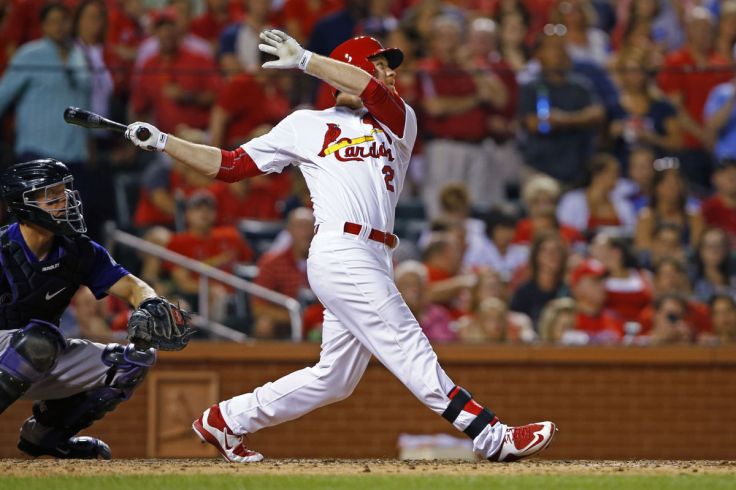
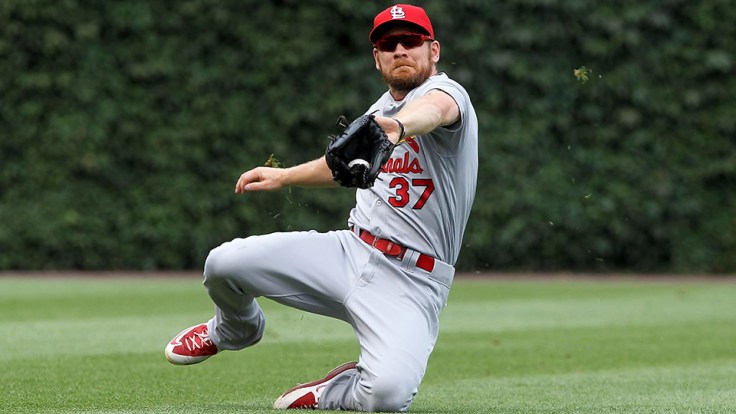
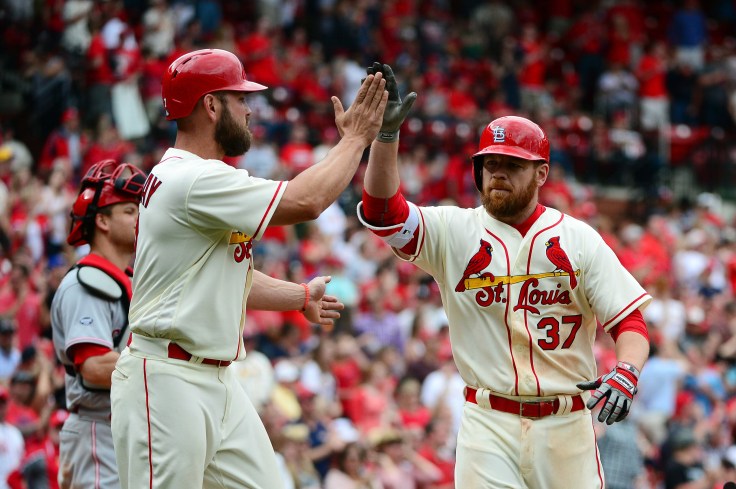
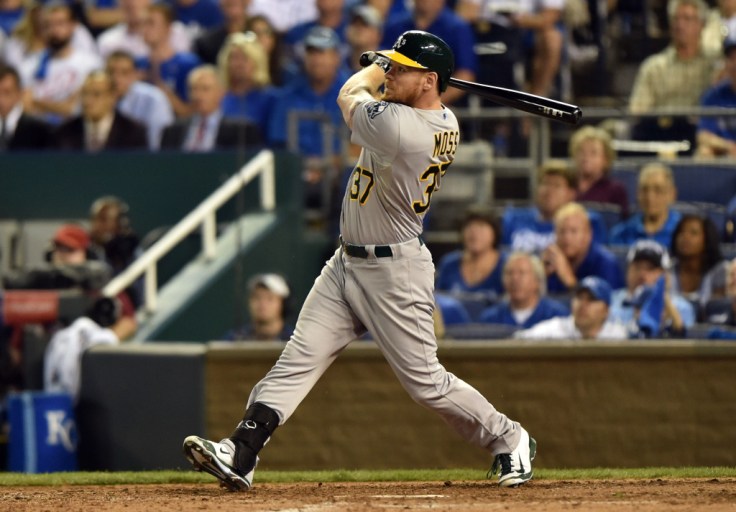


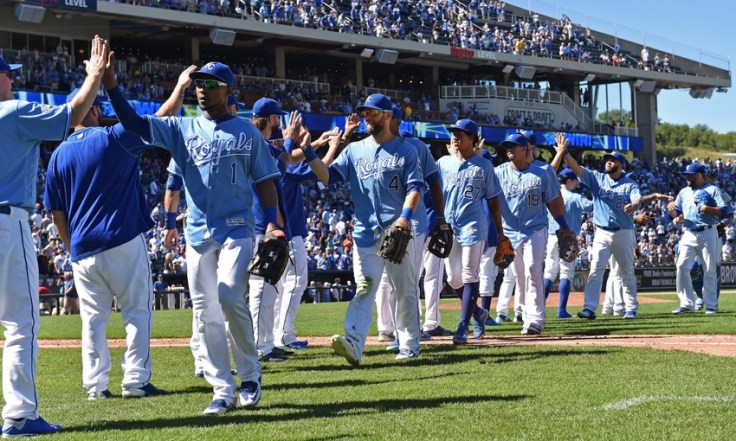
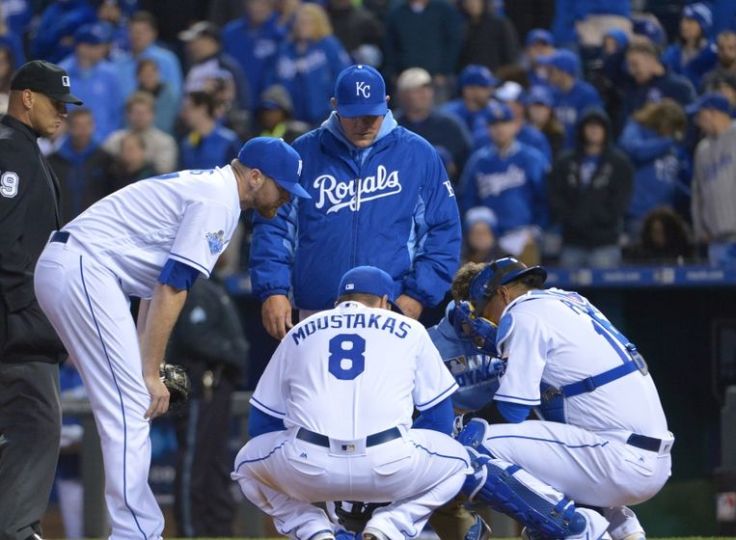
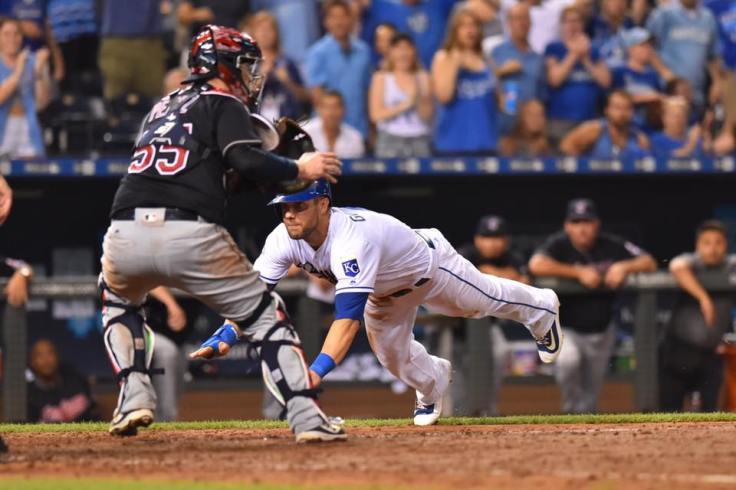


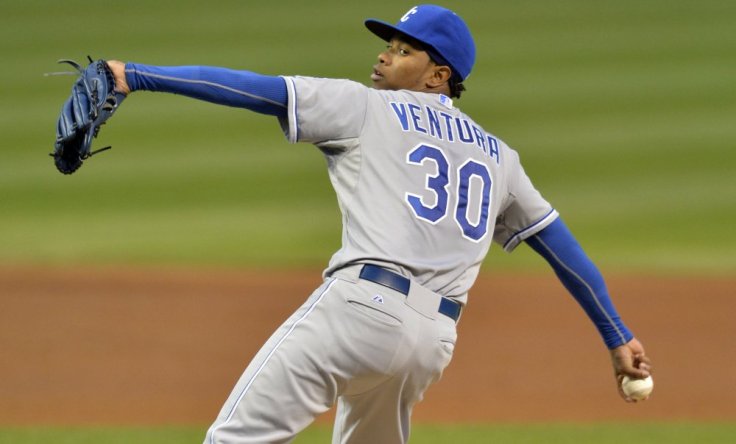
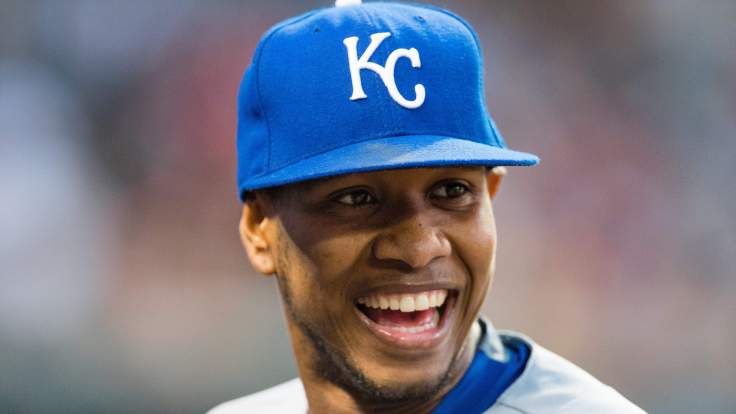

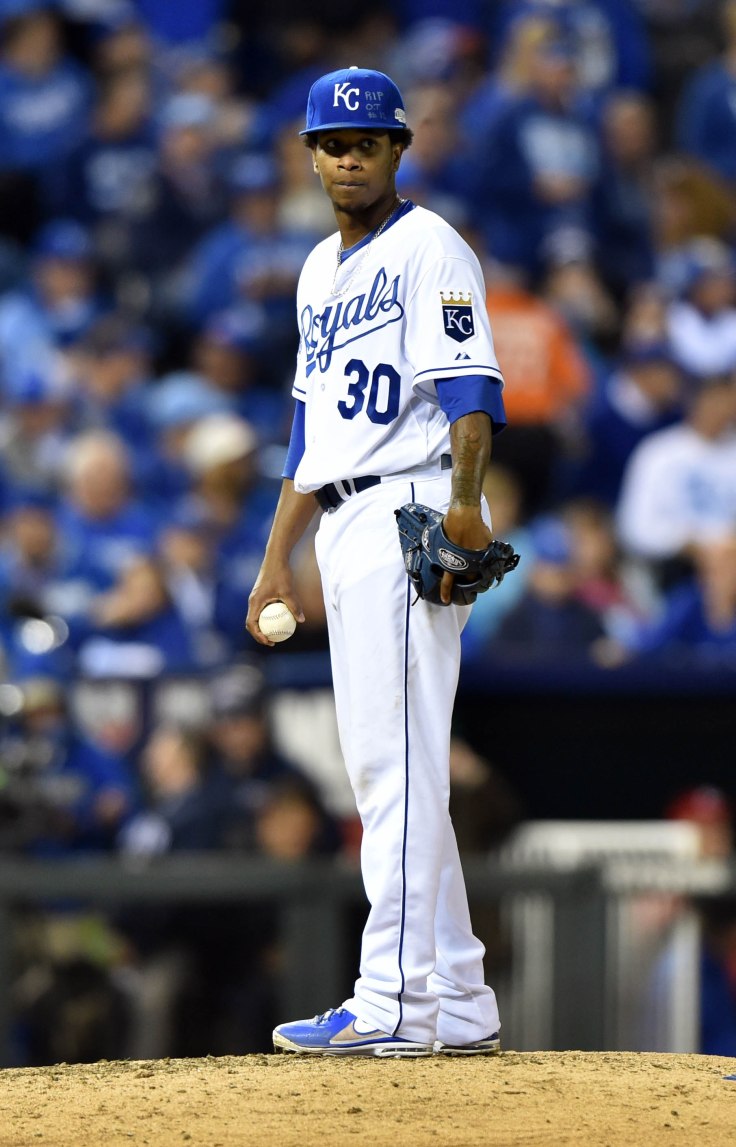

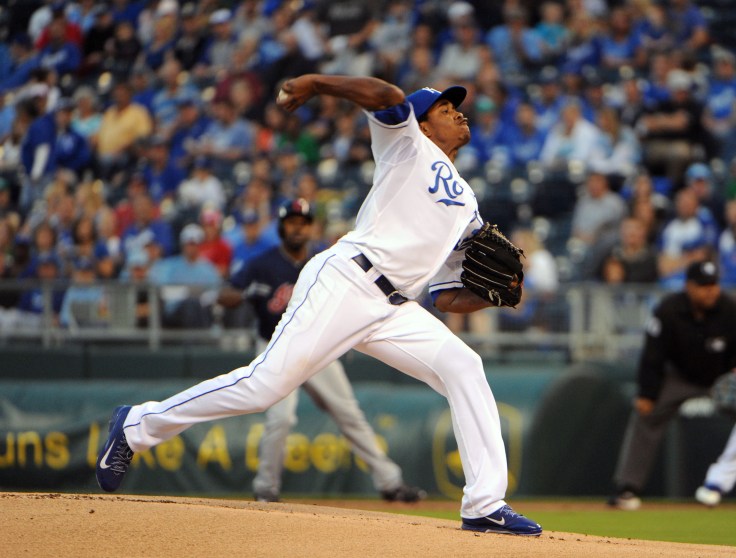
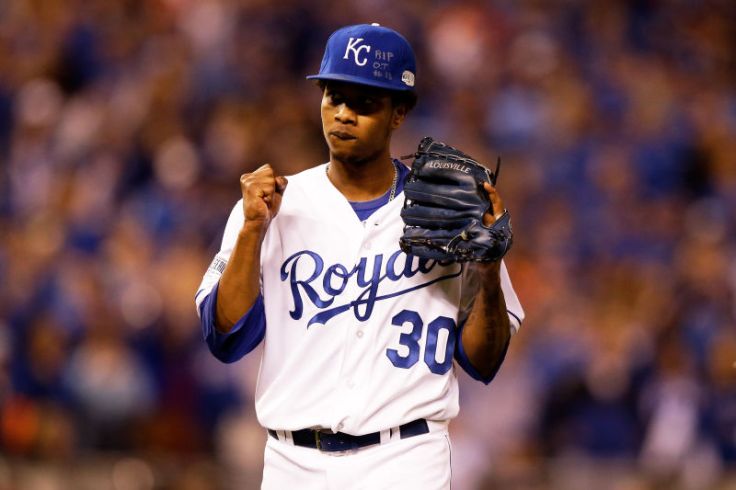
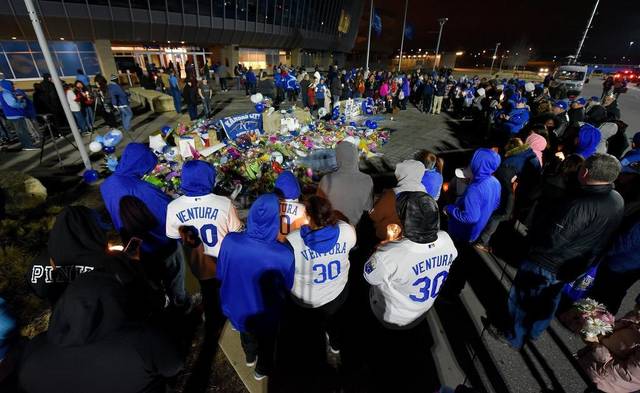

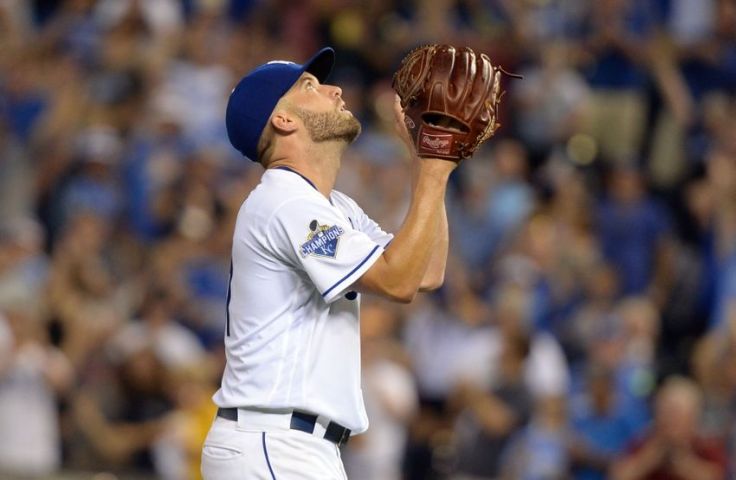

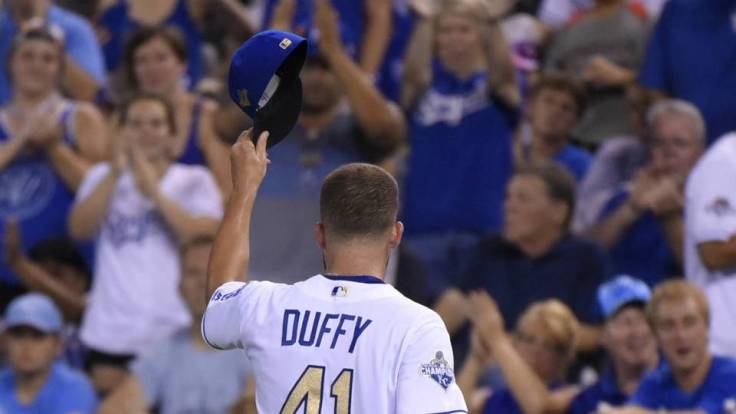
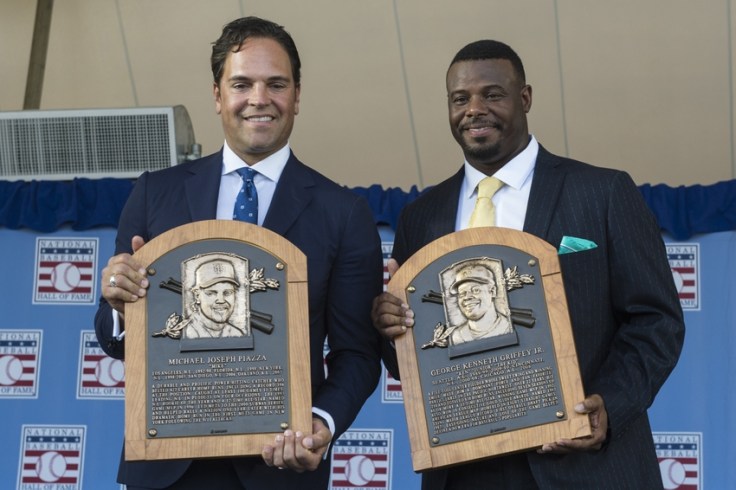
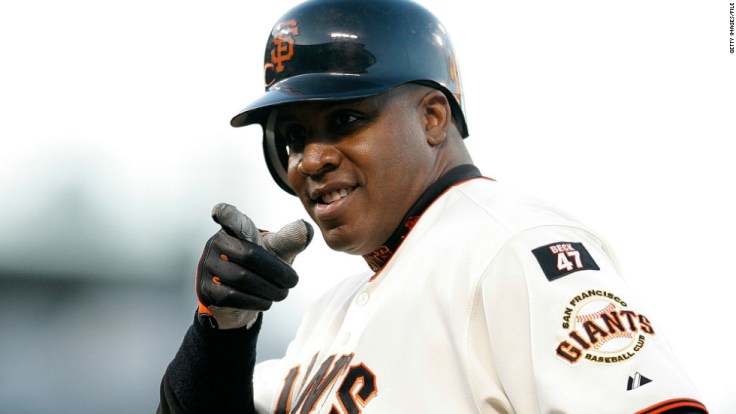
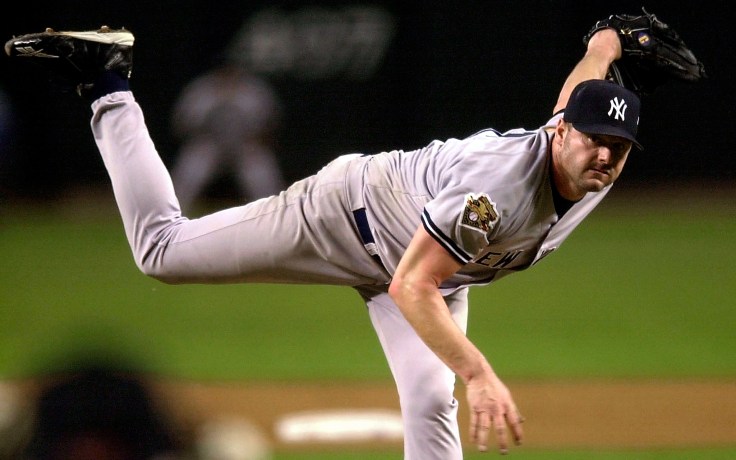
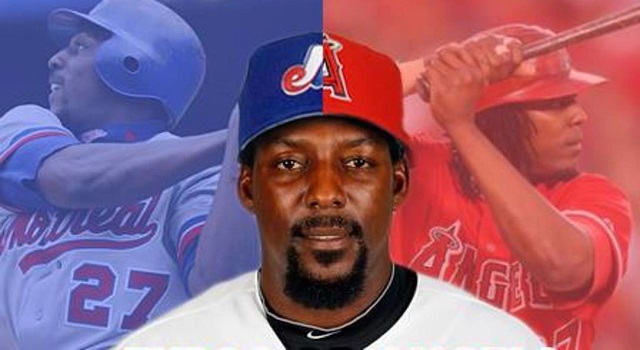
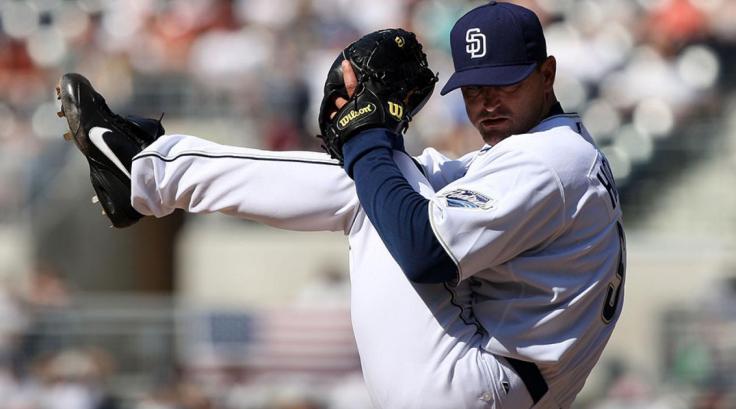

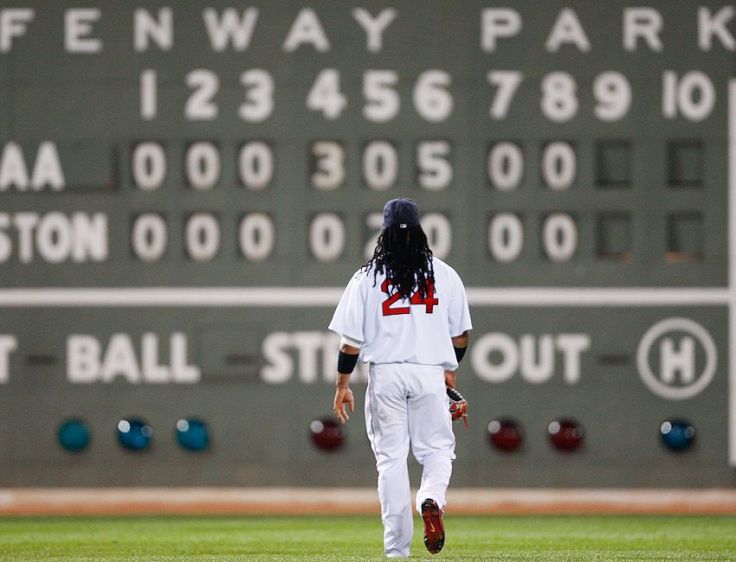
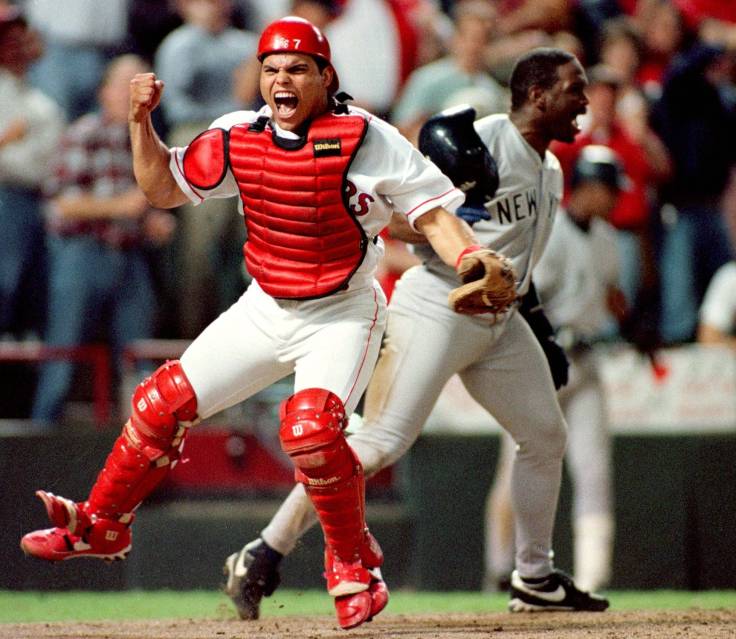
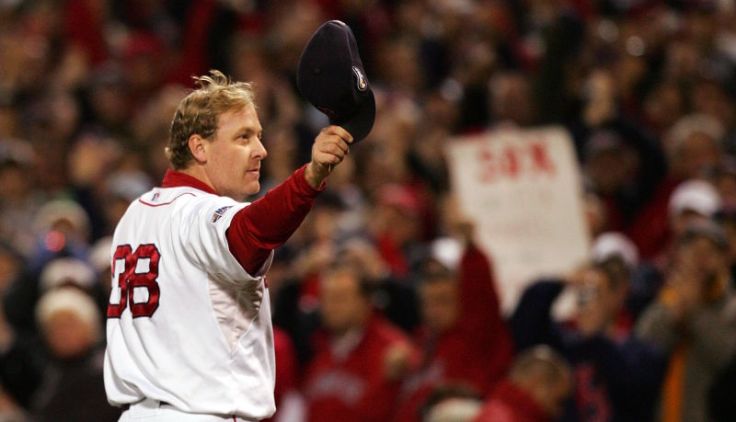

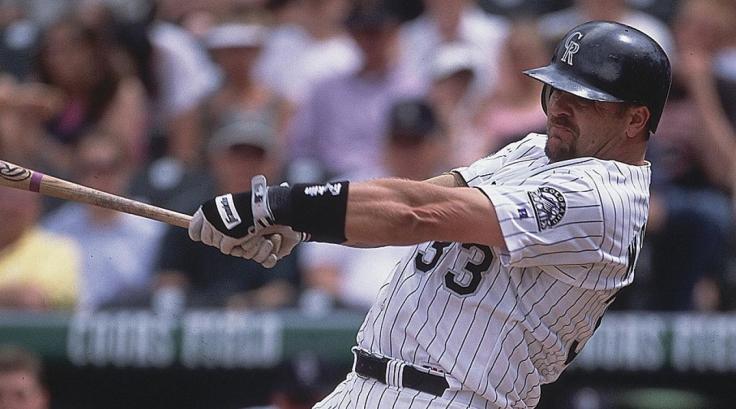

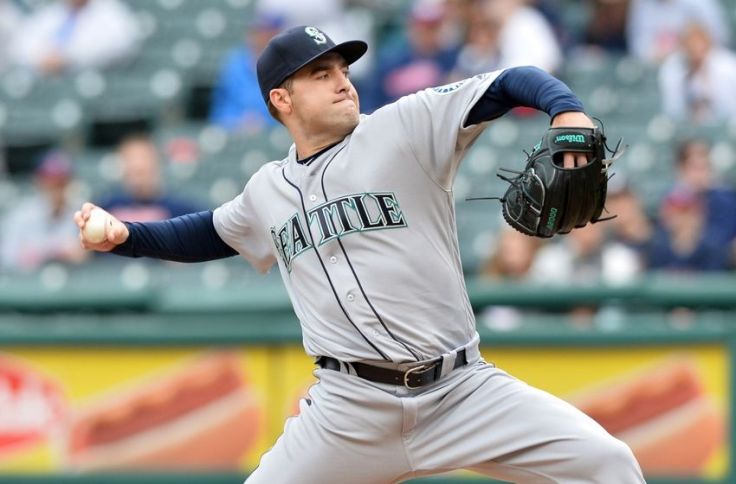
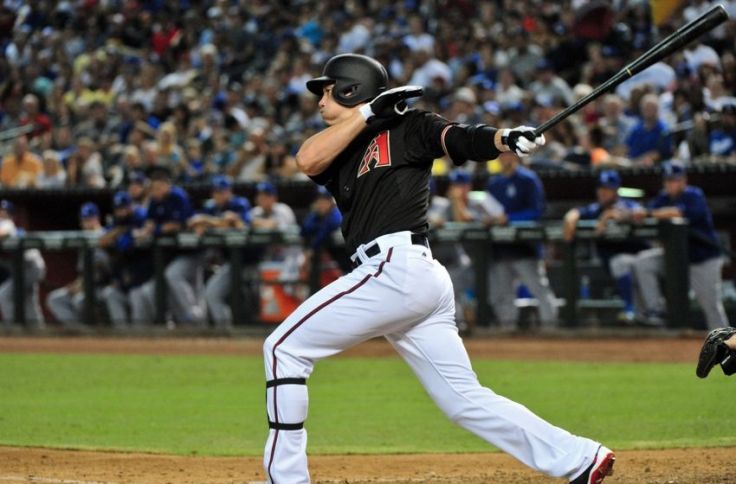
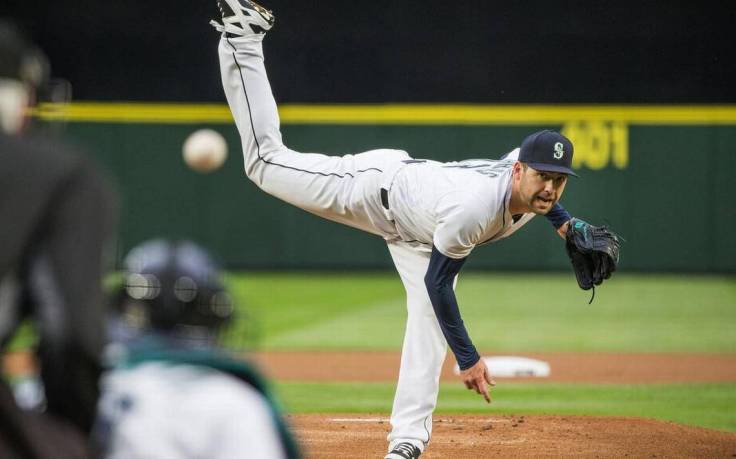
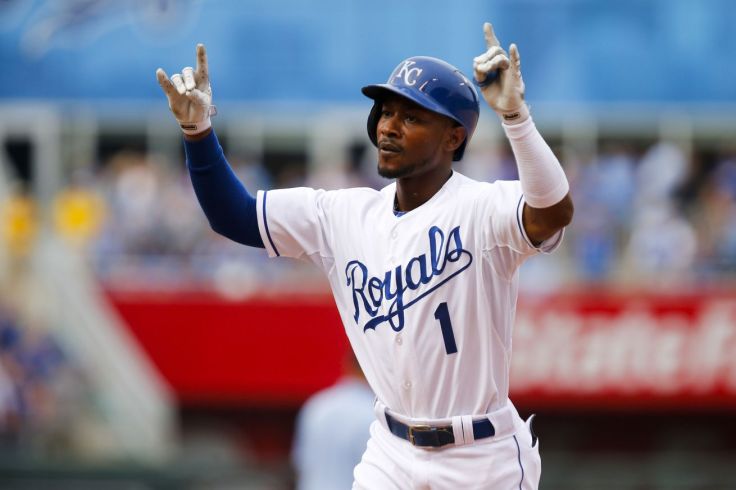
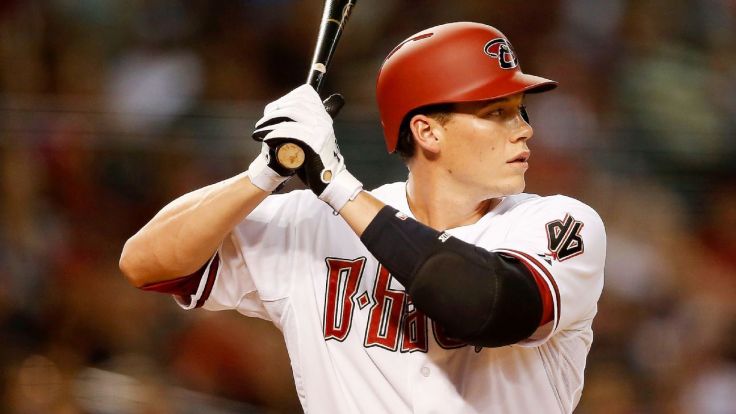





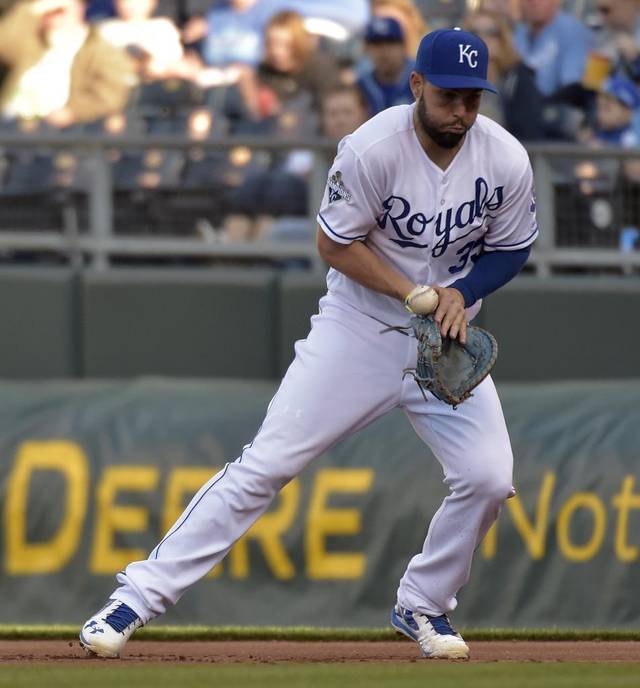
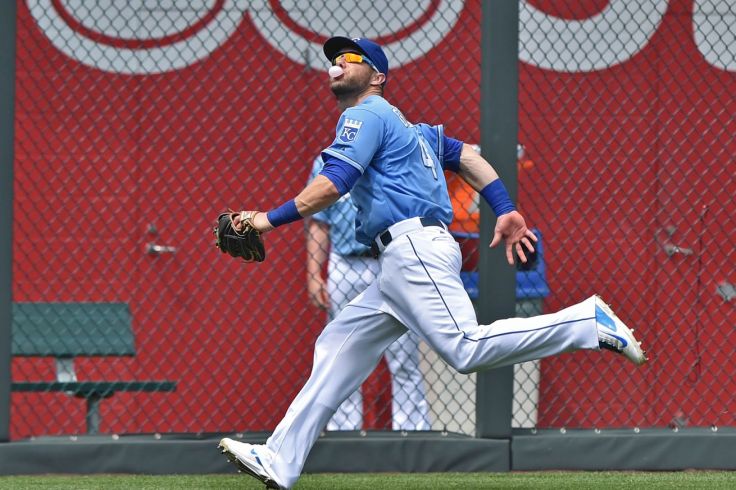

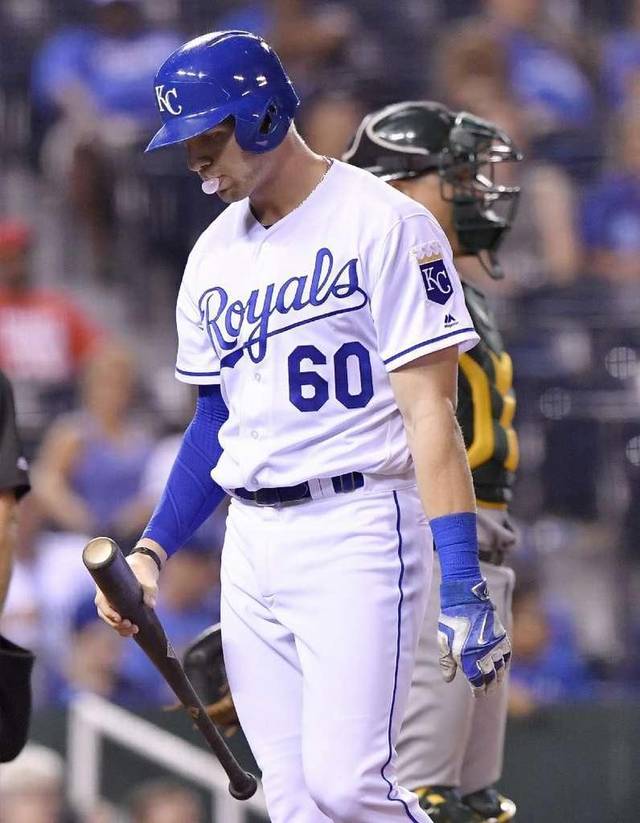
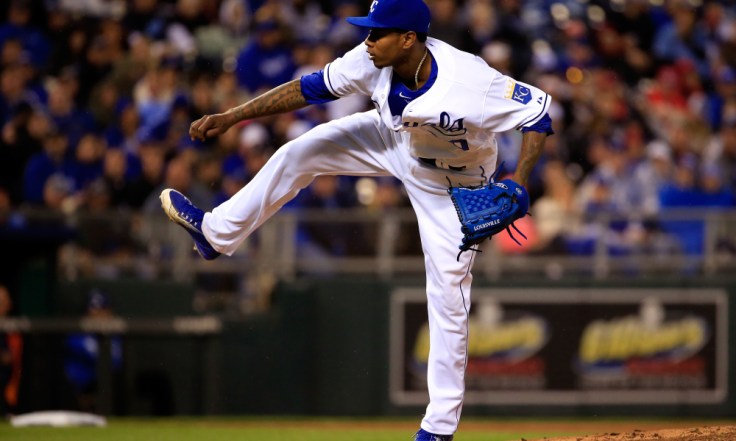
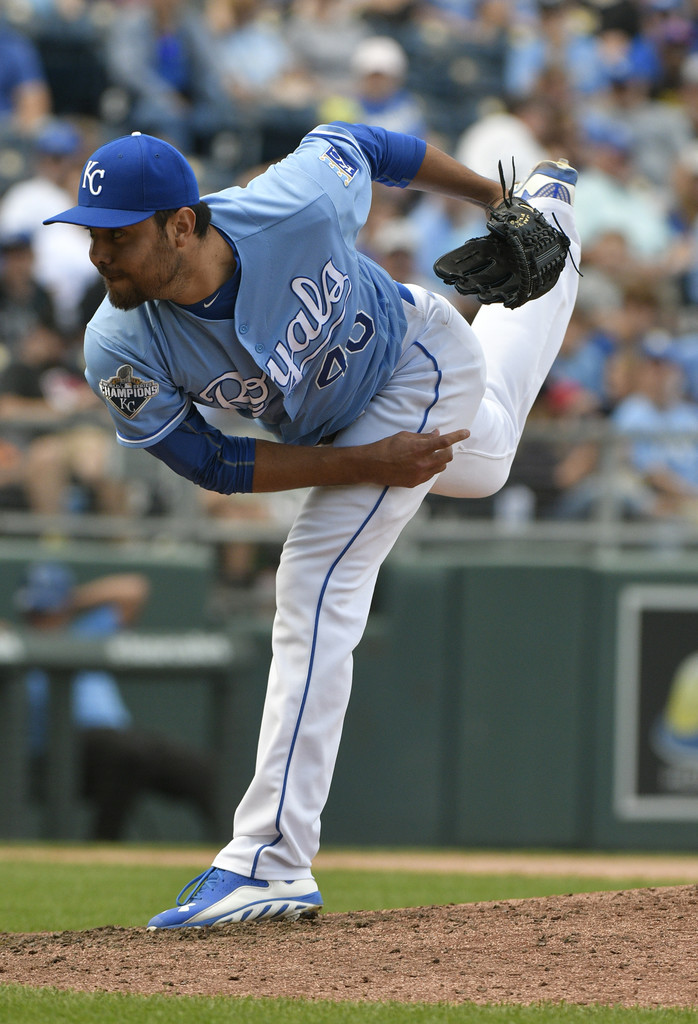
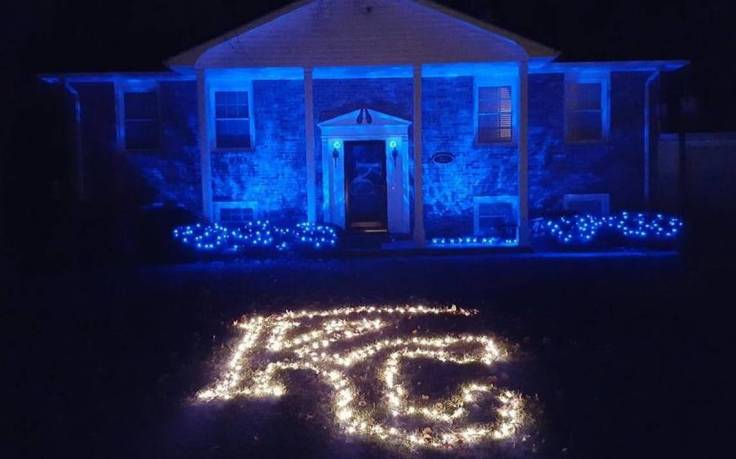


 Bleeding Royal Blue