Younger Days

kc1
Credit: Getty Images

This was it. This was supposed to be the beginning of a new era of Kansas City Royals baseball, an era of rebuilding that would shape the foundation of the organization for not only the next few years but years beyond. 2018 was going to be the year we all look back on and see the outline of a master plan that would come to fruition around 2021-2022. Instead, we are sitting almost five months deep into the season wondering what the point of this season was.

Dayton Moore has been preparing us for this rebuild for more than a year, knowing full well that the team would be losing a number of free agents after the 2017 season. He knew that financially it wouldn’t make sense to bring back the entire group and that it was time to move forward. That would normally mean allowing younger players to infiltrate the roster. But is that how it has gone down?
Kansas City Royals v New York Yankees
Credit: Sports Illustrated

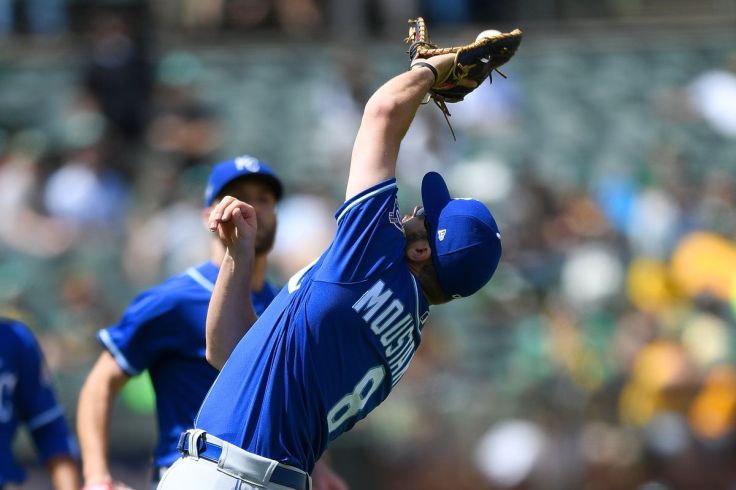
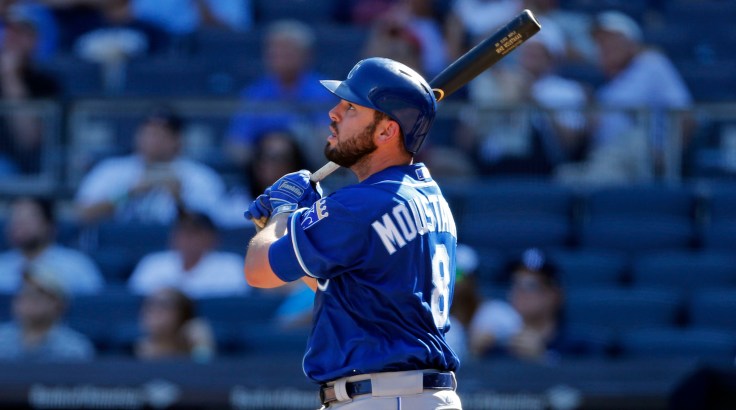
Early in spring training the Royals went out and filled some holes on the roster with veterans, as they locked up Jon JayLucas Duda and Mike Moustakas. For the most part there was “no harm, no foul”, as Kansas City didn’t spend much on any of the three while giving the team trade bait for later in the summer.

For the most part that is how it has played out, as Jay and Moustakas have both been dealt and Duda is still a possibility to be traded later this month. So while these three have been taking up roster spots, they weren’t blocking a player who was ready to play in the big leagues.

kc3
Credit: Associated Press

But there are some major question marks when it comes to a segment of the veterans still on the club and the amount of playing time they have been receiving lately. For example, over the last week or so we have seen Drew Butera make a couple starts at not only catcher but even first base. Yes, first base where he had started a total of two games before this season.

Four starts in one week for Butera feels like a lot. The guy is a solid backup catcher and appears to work well with the pitching staff. Should he be starting at a position he has played at sparingly when you have two youngsters (Hunter Dozier and Ryan O’Hearn) who actually play the position fairly regularly? Probably not. I won’t go as far as saying it is hurting their development but starting Butera over them this past week felt like a real head scratcher.

kc4
Credit: Jay Biggerstaff-USA TODAY Sports

How about everyone’s favorite punching bag, Alcides Escobar? It’s hard to justify his playing time with a line of .204/.257/.283 and -0.9 fWAR and yet he is in the lineup more often than not. Adalberto Mondesi has shown that offensively he is an improvement over Escobar and defensively has been superior for years now. Yet over the two months since being recalled, he has only started 31 games in the field.

Out of a group of six rookies (which does not include Mondesi, since he passed his rookie status before this season) that have played for the Royals this season, they have compiled 527 plate appearances, or only 108 more than Escobar. Whether it is allowing these players to ease into the big leagues or just not giving them a bigger role, these prospects have not gotten the experience many of us expected them to receive as the season progressed.
kc5
Credit: Associated Press

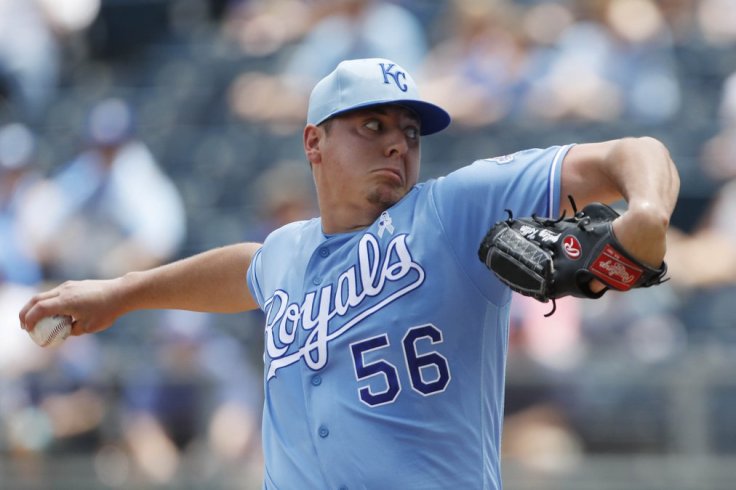
It’s been a slightly different story for the pitching staff, as a number of rookies have been given more prominent roles. Brad Keller has probably been the pitcher of the year for Kansas City so far, posting a 3.57 ERA, 3.64 FIP and 1.3 fWAR. The Royals rookie pitchers (ten in total) have thrown 346 out of the team’s 1033 innings. Keller and fellow Rule 5 Draft Pick Burch Smith have thrown the most out of the bunch, 88.1 and 60.2 respectively.

Six Royals rookies have tossed 30 innings or more this year, including relievers Tim Hill and Jason Adam. It is hard to argue that the team is not giving some of the younger arms in the organization an opportunity to pitch this year when 4/5 of the current rotation are rookies. Then why does it feel like they could go even younger?
kc6
Credit: Ken Blaze-USA TODAY Sports

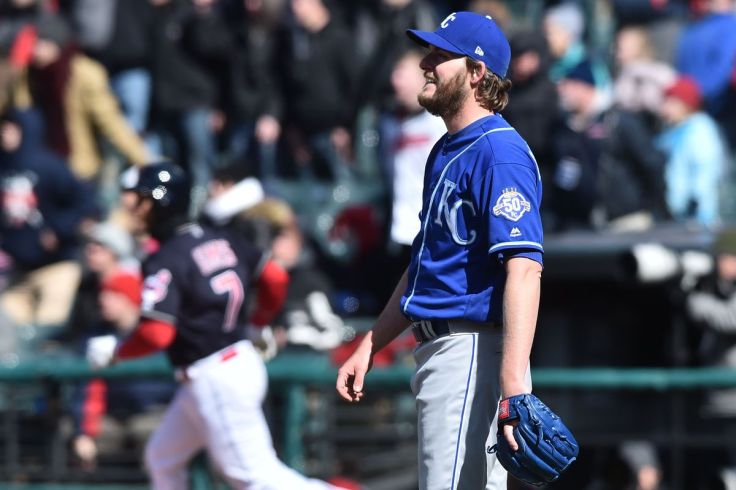
The new “Black Hole of Death” appears to be in the bullpen, where Brandon Maurer, Jason Hammel and Blaine Boyer are taking up space. All three have struggled this year and have hurt the team on the field more than any value the rookies receive from their veteran leadership. It has been suggested that the club should cut bait with these three and give some of the arms in Omaha an opportunity…and at this point it is hard to argue with that reasoning.

Is there any reason not to give Eric Stout or Trevor Oaks a longer look? Are control issues enough of a detriment to see whether Josh Staumont and Sam Selman can have success out of a major league bullpen? What about new acquisition Jorge Lopez? And how are we in the middle of August and there is still no sign of Richard Lovelady? In my eyes, it makes no sense to employ veterans like Maurer and Boyer when they just aren’t getting the job done. Give them a bus pass and lets see what some of the inexperienced arms can do.

kc7
Credit: John Sleezer/KC Star

Maybe my expectations were off course, but by this point in the season I presumed that the Royals would be employing one of the younger rosters in the league. Instead, they still feel really…old. By no means do I expect this team to be a cavalcade of 20 year olds, but I did expect the focus to be on the future. Instead, it feels like they are treading water.

Not every prospect is going to be ready and there is an appreciation for allowing them to develop at their own pace. But if the Royals are to contend again around 2021 (and that is the expectation in the front office) then they need to speed this process up. Giving at bats to Alcides Escobar or allowing Brandon Maurer another day on the roster isn’t helping anyone. For this to be a real rebuild, the Royals need to quit straddling the fence and move forward with players who could still be in Kansas City three years from now.
Kansas City Wish Fulfillment

kc1
Credit: John Sleezer/KC Star

If you are taking stock of the first half of the Kansas City Royals 2018 season, most of your return would be a muddled mess. The Royals were in shambles, whether it was the offense, the rotation or the bullpen. Essentially the only reliability sat in their defense, which is leading the American League in UZR while coming in 8th in defensive runs saved.

But this isn’t a piece to prop up the defense or even bash the ineptitude we have seen for the first three and a half months of the season. Instead, this is that nugget of positivity you keep hoping for. This is the dream scenario where the blocks fall into place like on a Tetris grid.

What we’ve compiled is a wish list of sorts. It’s a few items of interest that if swayed the proper direction could benefit the Royals for the rest of this season into next. By no means should you take this as ‘This is how the Royals win the American League Central’, as that is just crazy talk. No, this is a view of ‘what could be’ if Kansas City plays their cards right these next few months.

Kc2

Trading Up

With the trade deadline looming in less than a week (July 31 to be exact), the Royals are in a good position to make some moves and add some depth to the organization. Mike Moustakas appears to be the main chip that Dayton Moore has to deal and a number of teams (Boston and Atlanta among them) have shown interest in the power-hitting slugger.

But after Moose there aren’t any certainties. Whit Merrifield would be a great acquisition for a team looking to pick up a versatile fielder with the ability to get on base, but Kansas City is in a position where they don’t have to deal him if they don’t like the offers they are receiving. At this point the likelihood of a Whit trade feels like a 50/50 chance…at best.

Two other names to keep an eye on would be Lucas Duda and Jason Hammel. Duda has been hitting .310/.394/.414 over his last nine games coming into Tuesday with a BABIP of .421. While on the surface Hammel’s shift to the bullpen has been a mixed bag, his velocity has gone up (as expected) and he appears to be assimilating to his new role.

Duda could possibly be dealt in August after clearing waivers to a team looking for a power bat but Hammel feels less likely. The combination of a poor season coupled with a high salary(that Kansas City is probably unwilling to eat) makes the likelihood of a trade probably slim. But if the Royals are given the opportunity, they should take it.

Image result for Adalberto Mondesi 2018

Playing Younger

With the talk of veterans being dealt, that should open up more opportunities for some of the younger talent in the Kansas City farm system. One of the advantages of a rebuild is players getting a chance to prove themselves on a fairly regular basis. That opportunity appears to be looming.

We’ve already seen extended tryouts for guys like Adalberto Mondesi and Hunter Dozier. The pitching staff has been littered with youth, from Brad Keller and Burch Smith (two Rule 5 draftees) to Tim Hill and now Heath Fillmyer. Maybe I’m being selfish, but I would love to see a larger youth movement implemented these last two months.

At this point, I am game to hand out opportunities like pieces of PEZ. Would you like to see another youngster in the rotation? Let’s see what Trevor Oaks can do on an extended basis. How about the bullpen? We’ve heard about Richard Lovelady for a while, but it’s not too far-fetched to give Kevin Lenik an opportunity as well.

Offensively there aren’t as many options, but names like Ryan O’Hearn and Frank Schwindel could be interesting come September (despite their performances so far this season). Even guys we have seen already, like Cam Gallagher and Ramon Torres, could see some playing time as the season wears on.

Obviously not all of these names are going to produce and some will even show that they are not worth keeping around. But if a team is truly rebuilding, you owe it to yourself to hand out these opportunities and let the players run with it. Good or bad, it’s simply a matter of going out and proving their worth…and luckily, the Royals have the time to allow that to happen.

kc4
Credit: Christian Petersen/Getty Images

The Rotation we were Expecting

Before the season started, a number of us felt like the Royals rotation could be a major plus for the team. In fact, I was one of those proponents:

While on the surface this is an underwhelming group of arms, there is potential here that could be reached if circumstances go the right way.

Most of the high expectations came from thinking the starters could outperform their 2017 numbers. Unfortunately, Ian Kennedy and Jason Hammel have not while Jakob Junis appeared to be on a fast-track to success early in the season and he has since fallen on hard times. There was also that Nate Karns guy, but who even knows if we will see him this season, as he rebounds from thoracic outlet syndrome surgery.

But there is some hope. Danny Duffy has looked superb over his last 11 starts, posting a 2.58 ERA while holding batters to a line of .217/.303/.296. Heath Fillmyer has been nothing short of sensational since being put in the rotation. Then there is Brad Keller, who has possibly been the biggest bright spot for Kansas City in a season full of dim bulbs.

If the Royals can get Junis back to his early season self (and his start over the weekend was encouraging) and audition either Burch Smith or Trevor Oaks for an extended period, this could be a rotation similar to what was originally expected. It won’t challenge the Atlanta Braves rotations of the early 90’s, but it doesn’t have far to go to top how the rotation performed in the first half.

kc5
Credit: Getty Images

Fulfilled Expectations

While the other wishes were part of a grander scale, there are a few more items to keep your eye on in the second half that would drastically improve the ballclub.

Keep an eye on Whit Merrifield (if he isn’t traded) as he is on pace to topple most of his stats from 2017. Whit is currently hitting .299/.370/.420 with a wRC+ of 118 and 3.0 fWAR. While his power numbers have seen a slight decline (slugging percentage and ISO have seen the biggest dip) his overall numbers have been an improvement.

The rest of his numbers appear to have improved ( in fact his WAR is already better  than 2017), as his walk rate has seen an increase and his BABIP has risen to .356. While his strike out rate has gone up, we have also seen an uptick in the hard hit rate. If you are purely a fan of Whit’s power you might be disappointed, but otherwise it will be fun to watch him wrap up what appears to be his new peak this season.

Another interesting player to watch is Salvador Perez. A few weeks ago I took a look at Perez and his struggles. In that piece, I mentioned how it might not take much to turn around his season:

I’ll go a step further and say that if he combined that with his hard hit rate and maybe (just maybe) a dash of better luck on the balls he hits into play, Salvy could go from being the ‘disappearing hitter’ he was in June to helping ignite what little offense the Royals can muster on a consistent basis.

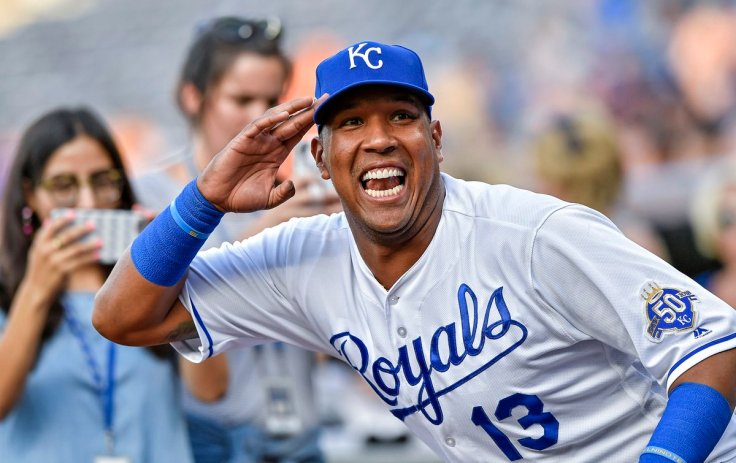
That luck has finally come around, as Salvy is hitting .269/.286/.481 over his last 13 games with 3 home runs and 12 RBI’s. But the improvement shows up in his BABIP, where he is hitting .314 in that span and contributing on almost a daily basis.

To break that down even further, Perez is hitting .273/.286/.576 in the last eight games with  an OPS of .861. While it may be just a small sample size, Salvy has been seeing more pitches per at bat while looking for a pitch to drive. It’s not hard to imagine him turning things around the next couple months and ending up with numbers comparable to year’s past.

Image result for Kansas City royals July 2018

Obviously we would all like to see the Royals turn themselves back into contenders during the second half, but that just isn’t realistic. The good news is that their performance in the first half has set the bar very low for the last half of the season. It gives Kansas City a chance to show they aren’t quite as bad as they’ve played to this point.

There is a number of things you can wish for, but your best bet is to wish for improvement. Moving forward wins and losses shouldn’t matter as much as how the development is coming along for this team. It should be about finding out what they have and what they should keep moving forward. That is what should be at the top of any Royals fan’s wish list.

That and to never see Brandon Maurer in a high-leverage situation ever again.


Happy Trails, Moose

kc1
Credit: Thearon W. Henderson/Getty Images

The inevitable became reality late Friday night, as Mike Moustakas officially turned in his Kansas City blue, as Moose was dealt to the Milwaukee Brewers for outfielder Brett Phillips and pitcher Jorge Lopez. This was a move expected all the way back in Spring Training when Kansas City was able to re-sign Moustakas to a new contract before the beginning of the season. For those that wonder whether the Royals were willing to cover the remainder of his deal, you need not worry:

So Moose is now officially a Brewer and the Royals were able to acquire some young talent to help them. So lets discuss all the parties involved and where this leaves them.

kc2
Credit: AP Photo/Ed Zurga

The trade puts Moustakas instantly into a playoff race, as Milwaukee is 1.5 games out in the NL Central and 1.5 games up for the first Wild Card spot in the National League. Production-wise, Moose is hitting .248/.308/.463 this year with 20 home runs, 105 wRC+ and 1.7 fWAR. Moustakas has also seen a slight uptick in his walk rate and a slight decrease in his strike out rate. The most impressive stat for him this year is his hard hit rate, which has been elevated by a large margin, 43.7% to last year’s 31.9%. Some of that could be attributed to the leg injuries he dealt with the last half of 2017, which appeared to sap some of his power as the season progressed.

Moose leaves behind a legacy in Kansas City of being the ultimate gamer, which even teammates can attest to:

His manager also thought very fondly of him:

Moose is the guy who broke Steve Balboni’s 32-year reign as the Royals single-season home run record of 36, as he hit 38 last year. More than anything, he was a fan favorite who dealt with offensive issues throughout his time in Kansas City but found a way to make himself better, which endeared him to the fanbase. In many ways, it was easier for us fans to sympathize with someone like Moose because he did struggle and worked hard to improve himself.

kc3
Credit: Orlando Ramirez-USA TODAY Sports

On the other side of the trade is Brett Phillips. Phillips was ranked as the tenth-best prospect for the Brewers this year and is a toolsy outfielder. Here is a scouting report from last summer on his offensive ability:

Phillips is an above-average to plus runner and when he does make contact, he hits the ball hard to all fields, so he may be able to carry above-average batting averages on balls in play going forward. Given his strikeout rate, however, his hit tool will probably only be fringe-average at best and it doesn’t appear as though he’ll ever consistently hit for a high batting average. Even if he’s ultimately only a .230-.240 hitter, Maverick should at least be able to post respectable on-base numbers thanks to his patient approach at the dish. He looks to have the power to hit between 15-20 home runs on an annual basis, and should be a threat to steal 15 or more bases.

So the good news is that Phillips is a patient hitter and has a decent amount of power, power that should improve as he continues to develop. The bad news is the strike outs, which have continued to slow down his progress:

According to the scouts at Baseball Prospectus, Phillips can struggle to remain consistent with his mechanics at times and has plenty of swing-and-miss within the strike zone. Phillips has struck out in 30% of his plate appearances dating back to midseason-2015 and owns only a .249 batting average since that time.

Defensively, Phillips is a gem:

Phillips has the tools to be an outstanding defender in the outfield. He is an outstanding athlete and has enough speed to play in center, though he’s ceded most of the playing time there to Lewis Brinson this season. His plus-plus arms features outstanding velocity and carry on his throws and plays best in right field. He is still working on reading trajectories in center field and can have issues going back on balls at times, but that shouldn’t be much of a concern going forward. If it all comes together for him, Phillips should be an above-average centerfielder or excellent right fielder.

So with Phillips the Royals have acquired an outfielder who could be above average at the plate if he can just control his whiffs. Also, he has one of the best laughs in baseball:

Phillips will get the chance to be a regular outfielder for Kansas City and at this point looks to be a good choice for the future of this organization.

kc4
Credit: Mark J. Rebilas-USA TODAY Sports

Lopez is another top Milwaukee prospect who is in his age 25 season. The Royals aren’t for sure what role to use Lopez in yet but either way he has the stuff needed for the big leagues:

He can get his fastball up to 95 and has a pretty decent change-up, but his best pitch is his powerhouse curveball. He was unhittable with it in Double-A in ‘15 but the thin air in the higher altitudes of Colorado Springs and some of the other PCL parks in 2016 lessened the effectiveness of this pitch and he was unable to adjust.

Lopez has been pitching out of the bullpen for the most part these last two seasons and with his high-octane fastball could very well end up in that role for Kansas City. For the moment, Lopez has been sent to AAA where he will be fully evaluated but expect to see him on the big league roster by the end of the year.

kc5
Credit: Dylan Buell/Getty Images

Overall, it feels like a pretty good haul for Kansas City considering that Moustakas is a two-month rental for Milwaukee. Personally, I felt the Royals would end up with a lot less than what they got in the trade, so the fact they were able to get two former Top 100 prospects for just a couple of months of Moose feels like a solid trade for Dayton Moore.

Moore had an interesting comment after the trade was made pertaining to what he was looking for in return. To say it caught Royals fans eyes would be an understatement:

It’s obvious that Moore is looking to improve the big league club sooner rather than later and there have been some concerns raised about wanting to speed up the current rebuild. I’m not ready to lambaste GMDM yet, but you do have to wonder if his attention should be focused more on the future than the wins and losses column of the current squad.

kc6
Credit: Associated Press

So after thinking Moustakas was gone after the end of the 2017 season, the truth was that us Royals fans got an extra four months of “The Man we call Moose”. The good news is that the team can now move forward and officially make plans for the future. Every fan will have a favorite Moose moment and I am no different. One play will always stick out for me when it comes to Mike Moustakas’ tenure in Kansas City:

While the home runs were sometimes majestic and many helped the Royals win, that catch personified what Moose really is: a grinder, a man who always got his jersey dirty and a player who never gave up.

Moustakas was the guy who knew he needed to work on his defense after his rookie year and would spend the following winter transforming himself into an above-average defender. Moustakas was the guy who knew he needed to learn how to hit the ball to the opposite field to counteract the shift and did just that before the 2015 campaign.

Moustakas was also the guy who improved his power numbers as he got older and embraced his role as being a clubhouse leader. More than anything, Moose was a guy who embodied the attitude of the 2014-2015 Royals: Never die, never give up and never admit defeat. Moose was a perfect fit for those teams and without him Kansas City would have never been able to win a world championship. Thank you, Moose. You will always be ‘Forever Royal’.

In Case You Hadn’t Noticed, the Royals are Bad Again

Image result for kansas city royals june 2018

It’s always a bitter pill to swallow when your favorite team isn’t good. Everyone handles it differently. Some people make excuses for why they are bad. Some accept it and move on. Others just flat out get angry but keep coming back for more.

This 2018 version of the Kansas City Royals is bad. Real bad. As in the numbers speak of a team reaching a new level of ineptitude. The Royals offense is last in the American League in wRC+, wOBA, slugging percentage, ISO, RBI’s, runs, home runs, OPS and RE24. The Royals hit a woeful .193/.253/.303 in the month of June and even those numbers feel a bit heavy if you have actually watched this team play on a regular basis.

The pitching numbers aren’t a whole lot better. The Kansas City pitchers are last in the league in fWAR, FIP, RE24 and ERA while having the lowest strike outs per nine innings and the highest home runs per nine. So it isn’t just the Royals bats that are pitiful; the entire package is one of the worst in baseball and a big part of why they have the second lowest winning percentage in baseball right now at .294 (my apologies to the fans of Baltimore. You understand what we are dealing with right now).

kc1
Credit: Orlin Wagner, AP

…and yet I’m still watching most of the games. Call it loyalty or call it being a glutton for punishment; both are probably acceptable. Either way, I still find myself wanting to watch them most days and hardly ever does the little voice in my head question it with a ‘but are you sure?’ or a ‘does that seem like a good idea?’. At this point you might be asking why I would put myself through that…and I wouldn’t blame you for asking.

Sure, part of it is that the Royals are my team, and have been since I was seven years old and will still be if I reach the ripe age of 87. I truly bleed royal blue. But the other reason is that while things appear to be as bad as the worst Kansas City teams we’ve seen over the last 20 years, I also realize that it is possibly the beginning of some really important careers for the youngest of Royals.

kc2

Hunter Dozier has been getting consistent playing time and is starting to look more comfortable, both at the plate and in the field. Adalberto Mondesi gets to play with less pressure and is hitting the ball a lot harder than he did during his previous stints in the big leagues. While Rosell Herrera might not be a part of the Royals future, he is being given the chance to see if he could be a part of it, at least.

On the pitching side, Brad Keller is making the case of being the best Rule 5 draft pick in Royals history (hello, Joakim Soria!) and has been possibly the brightest spot for this team so far in 2018. Jason Adam, Heath Fillmyer, Tim Hill, Kevin McCarthy and Burch Smith are all getting extended looks out of the bullpen, where in years past they might get just a cup of coffee in the big leagues or a small chance while someone was on the disabled list.

Image result for Frank Schwindel royals

There is more on the way, especially on the Omaha roster. Richard Lovelady, Josh Staumont, Frank Schwindel, Ryan O’Hearn, Nicky Lopez, Cam Gallagher, Donnie Dewees, and possibly even Bubba Starling are all names that could become a regular part of your Royals experience over the next year or two. Some of these guys will turn out to be regulars and others won’t reach the potential that some have expected of them. But the opportunity is why this team is still one to watch.

The Royals are in an interesting situation where they really have nothing to lose by giving these players a chance to prove their worth. I mean, it’s not like the team could be even worse, right? Right???!!! Maybe it’s a small dash of optimism, but one has to wonder if a few of these prospects could help churn out more runs for this team than what we have seen over the last month.

kc3
Credit: Thearon W. Henderson/Getty Images

It really hasn’t felt like a rebuild this year, not with all the veterans on the roster. But here before too long (maybe even by August), this is going to feel like a different team. I’m not going to sit here and try and tell you it’s going to be great the entire time, because you are going to see some bad baseball over the next couple of years. But the hope is also there to see some of these players blossom and become Royals legends.

kc4
Credit: Peter G. Aiken

So yes, this team is bad. It’s even safe to say that come September they are still going to be as awful as they are at this moment. If you are someone who has already tuned them out this year, I can sympathize. There are times that some of us die-hard’s have to take a break from this team, no matter how much we love them.

But there are also still reasons to tune in and head to the ballpark. While they will lose more than they win right now, they are also starting to build the foundation. One of the greatest experiences of my life has been watching “my” Royals go from being the joke of baseball to winning the World Series in 2015. For those of us that stuck it out through the bad, we were rewarded.

The reason it tasted so sweet was because we were around for the rough times. Trust me when I say that Kansas City will get back to the postseason and it probably won’t take another 30 years. Until then, watch this team grow and enjoy getting to watch the younger players develop into staples of the organization. It won’t always be pretty, but there will be moments for you to grasp on for years.


Closing Time

kc1
Credit: Rick Scuteri-USA TODAY Sports

Last Monday, the Kansas City Royals dealt their closer Kelvin Herrera (and biggest trade chip) to Washington for three prospects. While the trade has come with mixed reviews so far, the one conundrum it left the Royals with was who would be the team’s successor to Herrera as closer?

The question was posed not too long after the trade to Royals manager Ned Yost and he gave the answer most of us would have expected:

“All of them,” Royals manager Ned Yost replied when asked who will get a chance to close out games. “Opportunity exists down there. We’ll have to see who takes advantage of it.”

This isn’t a shock and considering the state of the Royals bullpen (last in the American League in fWAR, the highest ERA & FIP, lowest strike out rate and third highest walk rate all among relievers), it makes sense to keep it an open race. The problem in my eyes is that Ned is holding on to a formula that might not be the best for Kansas City in this situation:

“I’ll look at different guys, but I would prefer one guy to emerge, take advantage of the opportunity,” Yost said. “But it’s wide-open right now.”

Yes, Yost at the end of the day wants one reliever and one only to end up with the job. But to be honest, that feels like an antiquated solution to their problem.

kc5
Credit: Ed Zurga/Getty Images

In Ned’s eyes, there are four main challengers for the role: Brandon Maurer, Wily Peralta, Kevin McCarthy and Justin Grimm. Maurer is the only one out of the group with experience closing out games while the rest have combined for five career saves; for this conversation I’ll avoid the save stat, for the fact that it doesn’t really matter in the bigger picture.

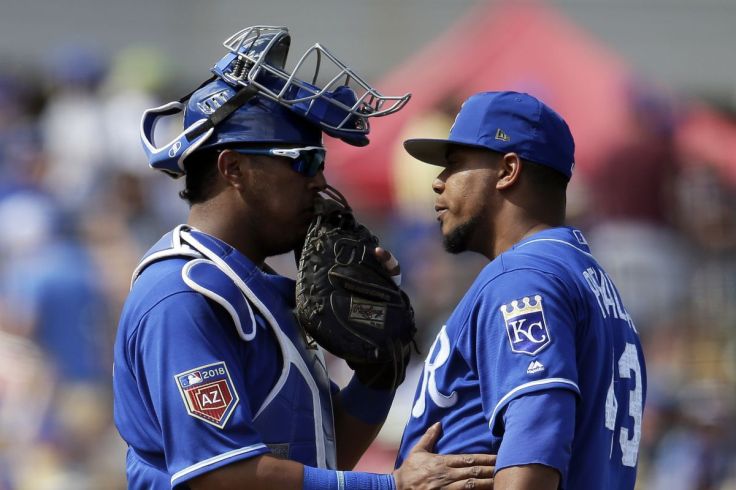
So far in 2018, McCarthy and Peralta have put up good numbers out of the pen, albeit Peralta’s have been in limited action so far. I’ve been a proponent of McCarthy for a while, as just a few weeks ago I wrote about how the Royals should be giving him a bigger role in the bullpen. When McCarthy was asked about moving to the closer’s role, he said he’s “not really thinking about that at all, really. I think anyone in the ‘pen can get it done.”

Peralta has seen a slight uptick in his velocity since moving to the bullpen last year in Milwaukee and has looked good for Kansas City since being recalled to the majors on June 17th. Peralta’s strike out rate has been well above 20% so far this year (24.8% in AAA, 29.4% in the big leagues), which is a significant improvement over the 16.8% he has averaged over his career.

The walk rate is a concern (23.5%), especially considering it was also pretty high during his time in Omaha (13.4%) earlier this year. Hopefully that is just a symptom of a small sample size, but it could also be a trend that began for him in 2017. Either way, it will take more innings before we get a real feel for what the Royals actually have in Peralta.

kc6
Credit: Carlos Osorio/AP

That being said, I tend to think we have a pretty good idea of what they have with both Maurer and Grimm. Grimm has seen his strike out rate fall and his walk rate increase, which is a recipe for disaster. He is also allowing more fly balls and less ground balls, another bad sign for success. The hard hit rate is about on par with last year, which already had a decent increase from the previous seasons.

Nothing for Maurer has worked this year: strike outs are down, walks are up and hitters are hitting the ball hard against him 50% of the time (his previous high was 39.1% back in 2016). If anyone should be immediately eliminated from the discussion for closer, it’s Maurer. You might be thinking ‘But he was a closer before, so shouldn’t he be a front-runner for the role?’, right? Hold that thought:

This was from last year, the day after the trade that sent Maurer and Ryan Buchter to the Royals from San Diego. Every time I see Ned bring Maurer into a high-leverage situation, this is what I think of. It is obvious from not only this scout, but also from what we have seen, that Maurer is better suited for a less pressure-filled situation in the pen. But because he has experience in the role, Yost wants to use him. This is part of why the whole idea of ‘one lone closer’ for this team isn’t really the best idea.

kc7
Credit: John Sleezer

Ned is a big fan of roles. He likes to have his relievers set up to know what they will be doing and when they will be doing it. That is fine when you have a bullpen like Kansas City had back in 2015; unfortunately, those days are long gone.

This is a team who needs to keep an open mind about how they are using their relievers. While none of the names mentioned (outside of Maurer, of course) have experience closing, that doesn’t mean they aren’t capable of doing the job. I’m pretty sure the Royals didn’t view Wade Davis as the absolute dominating beast he would become when they acquired him from Tampa Bay, even despite the success he had as a reliever with the Rays in 2012. But he had success, so the team continued to give him more opportunities.

Opportunities are what this current group need, most notably the younger arms that are inhabiting the pen. Roles can be a mental plus to some guys, but they can also backfire on you. Remember this great quote from 2014?:

“Because I had confidence in Aaron Crow,” Yost said. “That’s why. Aaron Crow’s inning is the sixth inning. Kelvin’s is the seventh.”

Ned was so rigid back then that he insisted on using Aaron Crow as his sixth inning guy, even if the match-up wasn’t optimal for Crow. This insistence on keeping routine was a pivotal turning point in the Royals season and led to Yost using the best match-up in a situation rather than who has what inning. Ned loosened the ‘old manager mentality’ of how to use relievers and this change helped lead the team to an epic run in the playoffs just a few weeks later.

kc8
Credit: Orlando Ramirez-USA TODAY Sports

This Royals squad isn’t going to go on the kind of run they had in 2014, but it would appear to help their situation if they just continued to use the ‘closer-by-committee’ currently in place. Whoever he uses in the 9th inning should be determined by what the better match-up is for that situation.

Let’s say two or three left-handed batters are batting in the final frame? Sounds like a job for Tim Hill, who lefties are hitting .219/.265/.250 against. You need a ground ball? Give the ball to McCarthy, who has a 62.6% ground ball rate. Just need a big strike out? Someone like Peralta or even Jason Adam would fit the bill.

kc9
Credit: Troy Taormina-USA TODAY Sports

The point is that while it is great if you have that one guy you can count on to fill the closer’s role, not every team has a Wade Davis or a Kelvin Herrera. Sometimes you have to work with what you have and right now the Royals are in that situation.

Maybe a guy out of this group will step up and prove to be fit for the role. It could even be someone we haven’t even seen yet, like Richard Lovelady who is currently down in AAA. Hey, it is definitely possible and wouldn’t be the worst thing to happen for the Royals.

But it could also take a while to find that one guy. So until then, it would be great to see Ned take a page from the playbook he used in late 2014-2015 and use the percentages to his advantage. I’m not counting on this happening, but it feels like the better road to take than that same, beaten, old path that managers have been taking for years.

Ryan Goins Might Not be What We Want, but He Might be What the Royals Need

kc1
Credit: Jamie Squire/Getty Images

We’ve all had that thought, especially us longtime Kansas City Royals fans. At one point of another, you’ve noticed a player on the roster that is receiving a bunch of playing time and you just ask ‘why?’. For whatever reason, these players seem to be a mainstay throughout Kansas City history.

Who will ever forget Willie Bloomquist, the definition of a utility player who became a lineup regular for the Royals in 2009, despite never posting an above average offensive season before or after (unless you count his 2013 season, where he posted an OPS+ of 101 over 150 plate appearances)?

The one that always bothered me was Chris Getz. If you want some amusement, go read some posts of mine from back in 2012-2013 at bleedingroyalblue.com; I even started a (fake) Q & A column around Getz based off of my confusion to the playing time he was receiving.

kc2

The player who currently is taking up a fairly regular spot in the Royals lineup is infielder Ryan Goins and more than one Royals fan has deemed their displeasure with Goins, including old friend Craig Brown:

Craig pretty much sums up what a lot of us are thinking: why is Ryan Goins on this team? The simple answer is that Kansas City needs a backup infielder who can play multiple positions and Goins fits the bill.

But the true answer probably lies a bit deeper. Goins adds some versatility, as he has played every infield position in his career plus a few innings in the outfield. He also threw an inning of relief back in 2016, but we already have Drew Butera for that.

Ryan Goins, Nicholas Castellanos
Credit: AP Photo/Orlin Wagner

In fact Goins has been a plus defender for most of his career, mainly at second base. The defensive metrics don’t speak as highly of him at shortstop (-3.7 UZR at short in 2017), but luckily the Royals won’t need him there, since Alcides Escobar will be playing shortstop for the Royals until the end of time. I’m joking…I think.

Goins defense at second base allows manager Ned Yost the option of moving Whit Merrifield around and gives the lineup the overall flexibility they haven’t had for years. At the end of the day, Goins is a steady hand that Yost can rely on to keep the defense steady in a pinch.

kc4
Credit: Associated Press

Before you think this is going to turn into a ‘Ryan Goins Appreciation Club’ article, don’t be fooled. Offensively Goins is a bit of a drag on the lineup. So far in 2018 he is hitting .234/.265/.319 with a wRC+ of 56. 56!! To put that in context, Alcides Escobar’s wRC+ is 55. Essentially, Goins and Escobar have put up similar offensive production, which is slim and none. So when both Goins and Escobar are in the lineup at the same time, it truly does create a black hole of death at the bottom of the order.

I thought maybe the deeper I dove into the numbers I would find something that would explain Goins’ playing time, but overall the numbers just aren’t pretty. Even the Win Probability numbers are in the negatives, which means he is probably hurting the Royals more than helping. Trying to justify those 21 starts is getting more and more difficult.

The small positives I could find offensively was a good BABIP (.324) and a noticeable increase in his line drive rate (up to 29.2% from last year’s 14.9%) combined with a lower ground ball rate (41.5% compared to 2017’s 50.3%). Whatever positives that come from his defense it is almost completely negated by his non-existent offense.

Kansas City Royals v Toronto Blue Jays
Credit: Getty Images

This shouldn’t be breaking news to you and more than likely it isn’t. But what I am going to say next might shock you: Goins is probably just what Kansas City needs right now. No, not the lackluster offense or the constant bunting. Where Goins has value right now for the Royals is as a stopgap.

It’s obvious the front office and coaching staff like Goins and see value in him where maybe we as fans don’t. It all really does come down to what you value as an individual. While on the surface we see a player who probably only has value on the defensive side of the ball, that might be enough for the higher-ups in the Royals organization. You and I might disagree with that, but we aren’t the ones making those decisions for the team.

That is not to say you are right or the Royals are right; there is more than one way to put together a contending baseball team. What I am saying is that occasionally as fans we believe we have the answers to how and why a team is successful, mainly based off of what we value. But we all value aspects of the game differently, and while on the surface it might not appear that Goins has value to this ballclub, his value might be part of a bigger picture.

It has become obvious that the Kansas City brass don’t feel that Adalberto Mondesi is quite ready for a bigger role on the big league club, a role that in part Goins is playing right now. While Mondesi shouldn’t be a backup infielder once he finally gets the call, he also probably won’t be in specifically one role for them once he is on the roster. There is a good chance that once he is recalled he will be playing all around the infield rather than just shortstop or just second base.

The good news is that it feels like Mondesi is getting closer and closer. He is hitting .257/.299/.514 at Omaha right now and his walk rate has seen a slight increase while the strike out rate has taken a dip. Mondesi has shown a proclivity of improving the longer he stays at each level over his career, and it appears that is what is going on in AAA as we speak.

kc6
Credit: Jay Biggerstaff-USA TODAY Sports

So while you and I might not understand the ‘Ryan Goins Experience’, it is definitely not a permanent answer for the Royals infield. While Mondesi will probably leap over Goins and be a starter at some point, the role of backup will probably transition over to someone like Ramon Torres, who appears to be a younger and better version of Goins.

Sometimes we just need to take a step back and allow the bigger picture to show itself. I’m not advocating for Goins being a part of this Royals roster, but I do feel Kansas City is looking at the future more than we give them credit for. Rome wasn’t built in a day and the Royals aren’t going to get better just by ditching Ryan Goins. More than likely though, Rome will appear sooner once Goins is no longer an option.

Kevin McCarthy is Proving He Should Have Been on the Opening Day Roster

kc1
Credit: Ed Zurga/Getty Images

When Opening Day rosters are announced there are always a few surprises that end up heading north with the team. Sometimes though, it isn’t who made the team as much as who is left off. That was the case with Kevin McCarthy, who did not make the Kansas City Royals roster out of Spring Training and instead began the year in the minors.

It was a bit of a surprise, as McCarthy had put together a pretty nice rookie year for the Royals in 2017. McCarthy threw 45 innings last year over 33 games in the big leagues, posting a 3.20 ERA, 3.98 FIP and 0.2 fWAR. But what really impressed me was his ability to produce in tight situations:

Maybe the most impressive part of his game was that he only allowed a hard hit rate of 26.3% and proved to be a clutch performer, posting a 0.30 WPA and 0.45 CLUTCH. While the team will be bringing back a number of their relievers for the upcoming season, one would have to think McCarthy could see a growing role in the Kansas City pen next year.

In proper context, the WPA was 9th best on the Royals last year while Clutch was 5th best. Sure, not ‘blow off the doors’ amazing but steady and a good starting point for a pitcher during his rookie campaign.

kc2
Credit: Keith Gillett/Icon Sportswire

These were all reasons that it appeared a foregone conclusion McCarthy would be with the Royals to start the year, but the numbers game probably got the best of him. McCarthy had options left and the team wanted to keep Rule 5 picks Burch Smith and Brad Keller on the roster. Thus, McCarthy started the year at Omaha, appearing in 3 games before being recalled by Kansas City on April 13th. Since then, it is safe to say he has been one the Royals top relievers.

McCarthy has appeared in 22 games headed into play on Tuesday, tossing 25.2 innings posting a 3.16 ERA, 3.62 FIP, 3.31 xFIP and 0.2 fWAR (which ties him with his total from last year). McCarthy is keeping pace on his strike out rate this year, but has lowered his walk rate a bit (5.9%) and a 1.01 WHIP, which is down from 1.13 in 2017.

Image result for Kevin McCarthy Royals 2018

But where it gets even more interesting for him is looking at some of the advanced numbers. Win probability is where McCarthy continues to impress. He currently sits second on the team in Win Probability Added at 0.40, and third in RE24, at 4.22. Both of these are accumulating statistics and should continue to rise as the season progresses, barring a major setback. It also shows how McCarthy easily should be one of the most trusted arms out of the bullpen right now.

In fact, McCarthy’s success appears to be coming on a slight shift in his pitch selection. Here’s a look over his pitch usage since the beginning of 2017 to today:

Brooksbaseball-ChartMcCarthy has gone from a pitcher that relies on his sinker and slider most often to one who is using his slide-piece less and less and using the change-up more. This shift appeared to happen around September of last year and he’s continued it into this season.

By doing that, he is inducing groundballs at a higher rate thanks to the change:

Brooksbaseball-Chart (1)

For McCarthy, the higher rate of groundballs has led to a lower batting average against, pretty much all across the board:

Brooksbaseball-Chart (2)

McCarthy has almost entirely ditched his four-seam fastball and is relying heavily on the sinker, tossing in the change-up, curve and slider to compliment it:

Brooksbaseball-Chart (3)

It’s not quite the extreme that we saw from Scott Alexander last year, but it does show that if you have a pitch that is working and getting outs, using it more often would seem to translate to more outs.

Image result for Kevin McCarthy Royals 2018

It also appears that the coaching staff is trusting him more and more as the season progresses. During May, the Royals used McCarthy 12 times, compiling a 2.25 ERA with batters hitting .179/.193/.304 against him. The bullpen struggled throughout the first month of the season, with a number of veterans like Blaine Boyer and Justin Grimm contributing to the bleeding rather than stopping it.

kc3
Credit: Jay Biggerstaff-USA TODAY Sports

With Brad Keller shifting to the rotation, it would appear to be as good a time as any for Kansas City to give McCarthy a shot at being a setup guy for closer Kelvin Herrera. With Herrera being a heavily coveted arm this summer, it is as good a time as any to see what McCarthy can do late in the game.

The Royals bullpen is continuing its evolution and it appears McCarthy will continue to evolve as well. More than likely there will be a few more shifts before it is all said and done and McCarthy is as good a choice as any to be a major part of it. So far he is passing all the Royals tests with flying colors; there is almost no reason to stop the development now. Moving forward should be the mantra.

Jay Traded to Arizona for Two Prospects

kc1
Credit: Denny Medley-USA TODAY Sports

Pretty much from the beginning of Spring Training this year, we have been aware that the Kansas City Royals would be sellers come the trade deadline. In fact, it was obvious who the Royals would be dangling as bait when that time came. But what none of us saw coming was outfielder Jon Jay being dealt during the first week of June:

So while we might have known Jay would be dealt before the end of summer, I’m pretty sure none of us saw this coming as early as it has. But from the first glance, it looks like a solid deal for Kansas City.

Image result for Jon Jay May 2018

In his short stint in Kansas City, Jay had proven to be exactly what the Royals needed. In fact, Jay is coming off of a great month of May. During those 31 days, Jay hit .368/.402/.436 over 28 games, racking up 43 hits and a sOPS+ of 132. May was big enough for him that he is still 14th in the American League in batting average (.307) and 5th in hits with 73 (2nd in singles at 61 behind only Jose Altuve). So it makes sense that Jay’s value is at a high right now and with the Diamondbacks dealing with some injury issues in the outfield (both A.J. Pollock and Steven Souza are currently on the disabled list), it only made sense for Arizona to be on the look-out for some help.

The good thing for Arizona is they are now getting a veteran outfielder who can play all three outfield positions and who can fit about any role that is needed. Jay isn’t going to wow anyone, as he is not a flashy player, but he is consistent and should help the team with some depth until Souza or Pollock are able to return.

kc3
Credit: Kansas City Royals Twitter Account

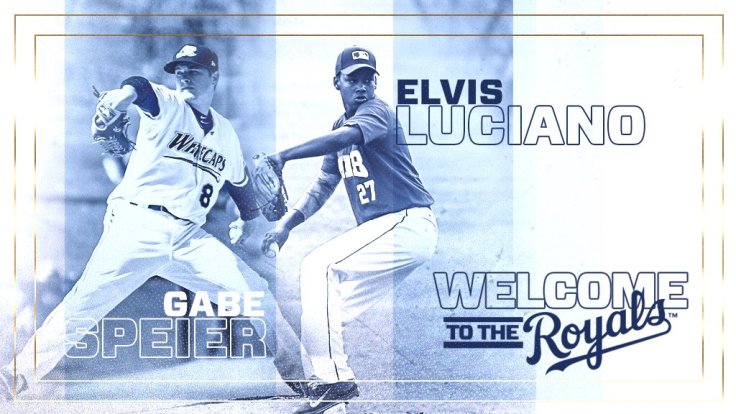
The two pitchers that Kansas City acquired in this trade was 18-year old righty Elvis Luciano and 23-year old lefty Gabe Speier. Fangraphs did a nice little scouting report last night after the trade went down:

Luciano is a live-armed 18-year-old Dominican righty who spent most of 2017 in the DSL, then came to the U.S. in August for a month of Rookie-level ball, then instructional league. During instructs he was 90-94 with an average curveball, below-average changeup, and below command, especially later in his outing as he tired. He was an honorable-mention prospect on the D-backs list.

His velocity has mostly remained in that range this spring, topping out at 96. Luciano’s delivery has been changed to alter his glove’s location as he lifts his leg, probably to help him clear his front side a little better. He’s still had strike-throwing issues and might be a reliever, but he has a live arm and can spin a breaking ball. Though 18, Luciano’s frame doesn’t have much projection, so while he might grow into some velocity as he matures, it probably won’t be a lot. He’s an interesting, long-term flier who reasonably projects as a back-end starter.

As for Speier, he’s repeating Double-A. He’s a sinker/slider guy, up to 95 with an average slide piece. He projects as a bullpen’s second lefty and should be viable in that type of role soon.

So there is some definite upside to Luciano and Speier very well could have a future role for the Royals in the bullpen. Considering that Jay is essentially a league average hitter, it appears Kansas City actually got a couple of players who could be a part of the main roster in the future, even if it will be awhile before either is ready to contribute.

Kansas City Royals v Texas Rangers
Credit: RON JENKINS

While I know there was some uproar from the ‘Facebook’ crowd that the Royals went and traded one of their best players, the honest truth is it made sense and is a smart deal for the future of the organization. Jay was on a short, one-year deal and part of the point of signing him in the first place was to turn around and flip him in a trade this summer. The Royals accomplished that goal and in return added a couple of arms to add depth to their farm system.

While it might make the “on-the field” product a little lacking, the trade makes the future a little bit brighter. This is the whole point of this 2018 season: see what you have on the roster, keep the younger players with value and trade the veterans that can bring back some prospects. Jay is just the first of many deals we will be seeing from the Kansas City front office this summer. If this deal upset you, you probably aren’t going to like what happens next.


The Royals Want All the College Pitchers

kc1

Stop me if you’ve heard this before: the 2018 MLB Draft will go down as one of the most pivotal in the history of the Kansas City Royals, one way or the other. The Royals farm system has been continuously ranked as one of the worst in baseball by almost every publication around. With Kansas City getting compensation picks this year from the free agent losses of Lorenzo Cain and Eric Hosmer, this year’s draft was the perfect time to re-stock the farm and begin the slow climb back up to contender. If their goal was to make a big splash, then they have succeeded.

kc2
Credit: Steven Branscombe-USA TODAY Sports

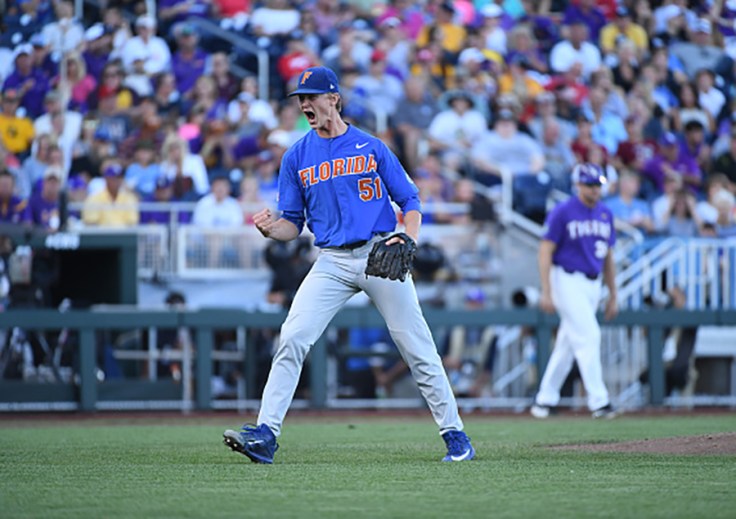
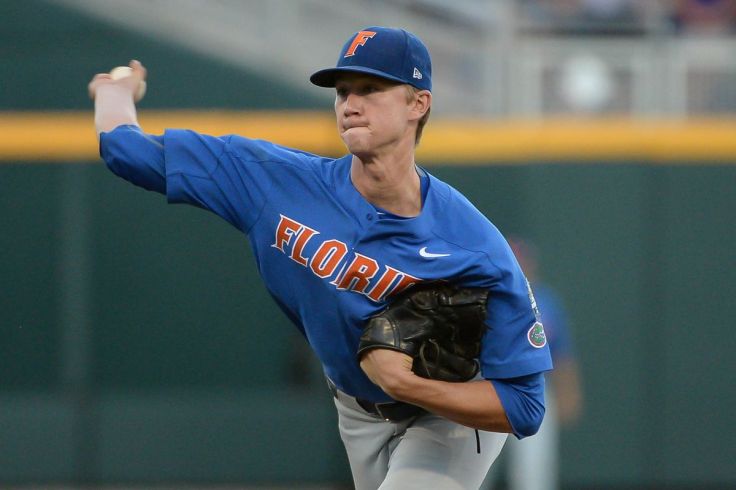
The Royals first pick was at #18 and their pick was Baseball America’s College Player of the Year Brady Singer from Florida. Most had Singer going in the top five of the draft and some felt the lowest he would drop would be around #10. So what did Kansas City get with their top pick? Here is part of the scouting report from MinorLeagueBall.com:

Singer is listed at 6-5, 210 (he was 180 in high school), born August 4th, 1996. His fastball is his best pitch, up to 95-96 with boring action in on right-handed hitters when things are going well. He can also show a plus slider and has made good strides with his change-up this spring; a recent in-person report from Burke Granger at 2080 Baseball describes the change with “above average deception and tumble, parachuting out of the zone.” One of the few complaints about Singer in 2017 was the need for a better change-up and it sounds like things are going well in that department.

So why did he drop to #18? I’m sure sign-ability came into play, but there were also some concerns by some scouts when it came to Singer:

Despite the good statistics, several observers have noted Singer’s harder pitches, especially the fastball, flattening out at times this year. This is traced to changes in his arm angle although the exact cause/effect chain is a bit unclear from a distance.

His delivery has always been somewhat unusual with a three-quarters approach and some whippy action. His arm angle and release point looked higher at times this year and this has been enough to lower his projection in the eyes of some very respected observers.

So there are a few worries about Singer, but overall he has a plus arm that is already pretty far along in his development. What this means is as long as things go according to plan, Singer could be in the majors by the end of 2019. This was a great pick for the Royals and one that could pay off sooner rather than later.

2017 College World Series: TCU defeats Florida 9-2
Credit: Steve Cheng

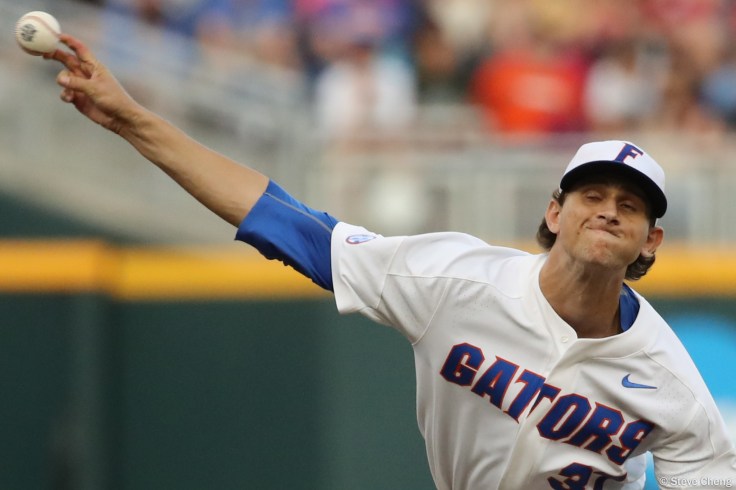
With the 33rd pick in the draft, the Royals would draft Singer’s teammate at Florida, Jackson Kowar. Kowar is an interesting pick, as evidenced by the reports on him this season:

As a prep his fastball was generally 88-92 with higher peaks. In college that’s up to 92-95 with peaks as high as 97-98.

His best secondary pitch is his change-up, drawing plus ratings. Development of his breaking ball has been key this spring and while it is sharper and more consistent than in 2017, it is still his third pitch behind the fastball and change. Further refinement of the breaking stuff and general sharpening of his command will obviously be the first items on his agenda as a pro.

So while Kowar isn’t as far along as Singer, there are a few scouts that preferred him to Singer:

When Kowar is at his best he shows three plus pitches. He’s not as close to being a finished product as Brady Singer but in some ways Kowar is a more conventional prospect than his teammate and some scouts like Kowar better.

Kowar might be the more interesting pick to watch out of the two Florida boys, and I like the idea of the two teammates getting to move through the Royals system together.

kc5

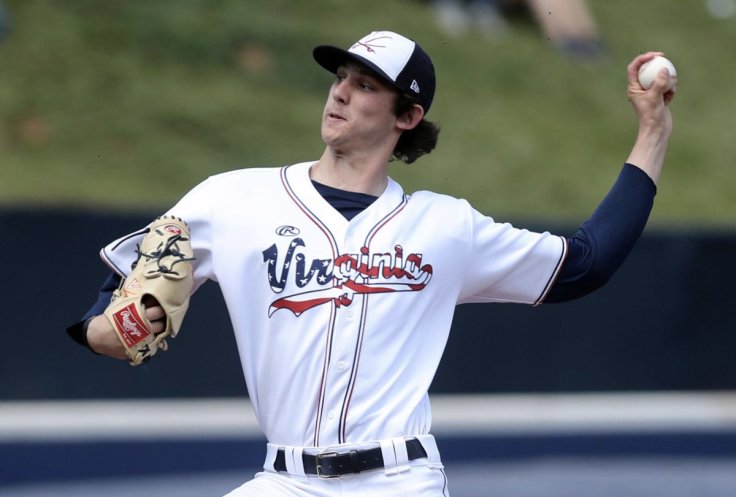
At #34, Kansas City would stay in the college ranks and draft left-handed pitcher Daniel Lynch from Virginia. Here is an assessment of Lynch earlier in the year:

A lean and narrow 6’4’’, Lynch won’t overpower hitters and needs to hit spots to have success. He throws from a clean abbreviated windup, getting consistent extension over his front half with little overall effort in his mechanics. He repeats well, able to stay around the zone with a four-pitch mix. The fastball has fringy velocity, sitting right around 90 mph while ranging anywhere from 88-to-93 mph without a lot of lateral movement. He’ll mix a cutter in the mid-80s as well, though the pitch has light, sweeping action and doesn’t project to be more than a wrinkle pitch to keep hitters off his fastball. Lynch commanded both sides of the plate with his four-seam fastball and cutter, though the loud contact allowed shows the limited margin for error he has within the zone. He’s more comfortable with a changeup than a breaking ball, showing more confidence in a fading low-80s circle-change that can get righties out on their front foot.

While Singer and Kowar would probably be ranked as power arms, Lynch appears to rely more on location:

Lynch projects to be a finesse lefty at the professional level. Scouts cite his thin frame as reason to wonder if his already fringy stuff backs up when he pitches on a more demanding schedule in the minor leagues. The best-case ceiling is that of a fifth starter who can soak up back-rotation innings, though he could fit a long or situational reliever if he ultimately lacks the stuff to face lineups more than once pitching out of the rotation.

So through their first three picks, Kansas City went with college pitchers with a good amount of upside. Their next pick didn’t stray far from the pattern.

kc6
Credit: Stanford University

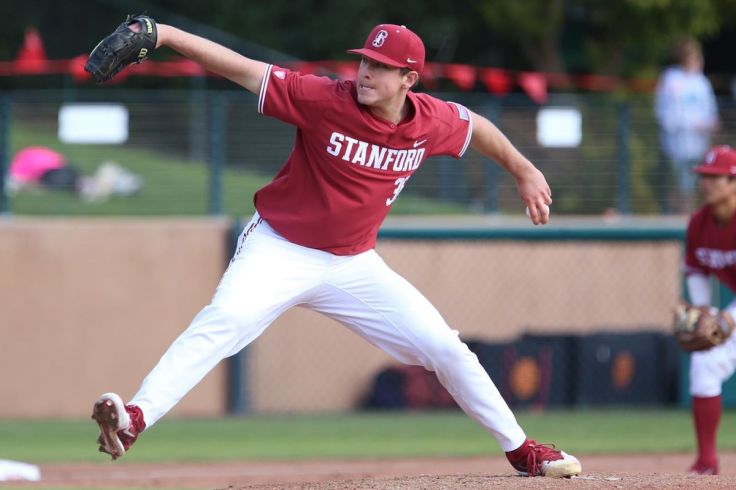
With the 40th pick (a competitive balance pick), the Royals would draft Stanford lefty Kris Bubic. Bubic has a delivery similar to Dodgers star Clayton Kershaw but that is where most of the similarities end:

Bubic is armed with a fastball that works best in the low-90s. He has a little reach-back velocity and can touch 95 MPH. It has some natural arm-side run, as is common with most lefties. What really has him on a path to success is a plus-changeup. He’s able to repeat his delivery and arm slot with it, giving it the look of a fastball. It has good fade down-and-away to right-handers, but he isn’t afraid to throw it against any hitter in any count. His curveball is a work in progress. He didn’t use it much during his first two seasons with the Cardinal, but it has improved enough this season to be a viable third pitch.

The good news is that while his ceiling is a bit unknown, his floor is higher than most:

A standout in the Cape Cod League last year, Bubic has the ceiling of a low-end No. 2 starter should everything click. More likely, he’s a solid No. 3/4 guy who thrives with his command/control profile and a borderline double-plus changeup. He could move quickly if he takes well to professional instruction. But don’t expect much more velocity, as he’s physically maxed out.

I’m interested to see how Bubic develops and he feels like a pitcher to keep an eye on. His change-up should get him places and it will be interesting to see what the Royals will want to do with his curve.

kc7
Credit: Joe Murphy/University of Memphis

At this point it just made sense to continue on the trajectory they were on, so the Royals drafted another college pitcher, going with Memphis right-hander Jonathan Bowlan at #58:

The Memphis product has a solid fastball in the low-90s. The slider will flash better than average at its best, while an average changeup completes his arsenal. Not really a guy who will punch out a lot of hitters unless there is a serious uptick in stuff, Bowlan is probably a fifth starter or middle reliever within a few years.

Bowlan appears to be a underslot signing for Kansas City, but it also felt like the Royals had a direction they wanted to go in once Singer fell to them and they just went with it.

kc3
Credit: Steven Branscombe-USA TODAY Sports

So what direction might that be? Maybe it’s just what lingers on the surface, but it appears Kansas City went the safe route with their picks on the first day by going with college pitchers. The Royals have been burned in the past by prep pitchers, so maybe they felt going with the older, more mature arms would garner a higher success rate than going with a high school player who has more talent but would take much longer to develop.

It also would make sense that the college pitchers could possibly start at a higher level, possibly in A ball. Maybe someplace like Lexington, where Royals prospects Nick Pratto, MJ Melendez and Seuly Matias are currently playing at. Maybe, just maybe, the Kansas City brain-trust remembers how the core players from their 2015 championship (Eric Hosmer, Mike Moustakas, Danny Duffy, Salvador Perez, etc.) came up through the minors together and won together on their way to the major leagues. Maybe…they are looking to repeat history. I could just be reaching here, but if I’m not it’s definitely not the worst idea in the world.

kc8

The one thing we absolutely can determine from the draft is that the Kansas City Royals have done a good job of replenishing the farm system, especially with their pitching. It will be years before we can determine the true value of these players and where they rank among other former Royals draftees.

The one thing we can say is the team went in with a game plan and it appears they followed it down to the letter. The baseball draft always feels like a crap-shoot and as far as we know none of these picks will truly leave their mark. But there is a chance they could be the next Splittorff, Saberhagen, or Duffy. Pitching is the currency of the sport and the Royals just increased how much they have sitting in the bank.


The Case for Trevor Oaks in the Royals Rotation

kc1
Credit: MLB.com

So far in 2018, Eric Skoglund has held down the 5th starters spot in the Kansas City Royals rotation, albeit with mixed results. In his three starts this season, Skoglund has given up 14 runs in 14.2 innings while allowing 18 hits and five walks. The positive is that Skoglund has slightly gotten better in each start, with his best outing this past weekend in Detroit.

The negative is that outing still was below expectations: four runs, four hits and two walks in five innings of work. Technically the numbers are improving, but definitely not enough to forego discussing other options for the rotation. There is already talk that Clay Buchholz will more than likely take over for Skoglund this weekend against Chicago and he is as good an option as any that the Royals have right now. But if we are talking options we might as well throw Trevor Oaks’ name out there.

kc2
Credit: Peter G. Aiken/USA TODAY Sports

Oaks is in his age 25 season and was the biggest “get” in the Scott Alexander/Joakim Soria trade that went down earlier this winter. Oaks has primarily been a ground-ball pitcher throughout his career and relies on a nice four-seam fastball (with some natural sinking action), a sinker, and a slider with the occasional change-up thrown in there as well. He’s not going to miss many bats, but his ability to induce groundballs would be a welcome change for the Royals rotation.

The Royals have relied on fly-ball pitchers over the last 4-5 years and back when the team was making regular trips to the postseason it made sense. The team was employing an outfield of plus defenders like Alex Gordon, Lorenzo Cain and Jarrod Dyson, so the thinking was as long as the pitcher could keep the ball in the ballpark, their outfielders would run it down.

kc3
Credit: Brian Davidson/Getty Images

But since then the focus in baseball has been on getting the ball in the air and more importantly, home runs. When even middle infielders are focusing on elevating the ball, it only makes sense to try and swing the pendulum to the other side and work on keeping the ball on the ground. The Royals still have a good infield defense and it would seem Oaks could be one to take advantage of that.

To give you an idea of how often Oaks keeps the ball on the ground, let’s do a comparison to some of the top ground-ball pitchers in baseball today. Over the last two seasons, Oaks has been in the range of 64-50% of groundballs, which would rank him in the top 20 if he would be able to make that transition to the big leagues. Lance McCullers, Jr. of Houston has the highest rate so far this season at 63.6% while the highest eligible Kansas City pitcher is Jason Hammel at 43.9%.

Oaks did have some issues with his sinker when he returned from injury last year but former big-league pitcher Justin Masterson, who has also heavily relied on the sinker over his career, was able to pass on some words of wisdom:

“I was struggling to find consistent movement. In years past, it’s always just kind of been a natural pitch for me, so I hadn’t really thought much about it or really tweaked around the grips too much. So while I was going through that period of struggle, he was able to show me things. It was like, ‘Hey, why don’t you try this?’

“A lot of it was just little tweaks here and there, from stuff he had learned over the course of his career throwing the sinker. And he was also kind of calming me down. He’d say, ‘Hey, don’t freak out if it’s not your best stuff that day.’

“I think that’s why I still had a decent year. While I didn’t have my best sinker, I was still able to go out there and compete. I had the confidence to be like, ‘I can get these guys out, even without my best sinker, and then once that pitch comes back for me, I can really take off.”

So while Oaks’ sinker is a big part of his repertoire, he seemed to make an adjustment last year which is always a big part of the maturation process. While Oaks only had a 50.8% ground-ball rate in AAA last year, the lessons he learned seemed to help him grow as a pitcher.

kc4
Credit: Christian Petersen/Getty Images

It’s still early into 2018, but Oaks has pretty much kept pace with what he did in AAA for the Dodgers last year. Groundballs, flyballs and line drives are all pretty much on par with 2017 while the strike out rate has been a tad lower (11.8% compared to 21.1.%) and the walk rate is a bit higher (6.5% to 5.3%). This is only over 23.1 innings in Omaha, so it’s a small sample size, but more than anything there does appear to be a hint of consistency.

I’m not against Buchholz getting his chance before Oaks and I even understand why it is happening. Buchholz cost the Royals practically nothing and if he can show a glint of his former All-Star caliber talent then it only makes sense for Kansas City to see what they have in him.

kc5
Credit: MLB.com

While it won’t hurt Oaks to stay in the minors a bit longer, it’s just a matter of time until he is in the Kansas City rotation. He has thrown 170 innings in AAA over the last couple seasons while proving he can hang at that level.

The next couple seasons are all about opportunities for Kansas City and seeing what they have. If Buchholz turns out to be a find then that can only be a positive for the team moving forward. But if we are talking long-term, that is where Oaks comes into the discussion. Last year Jake Junis was given the chance to prove his worth. 2018 should be Trevor Oaks’ turn to shine for the Royals.

Blog at WordPress.com.

Up ↑