Ryan Goins Might Not be What We Want, but He Might be What the Royals Need

kc1
Credit: Jamie Squire/Getty Images

We’ve all had that thought, especially us longtime Kansas City Royals fans. At one point of another, you’ve noticed a player on the roster that is receiving a bunch of playing time and you just ask ‘why?’. For whatever reason, these players seem to be a mainstay throughout Kansas City history.

Who will ever forget Willie Bloomquist, the definition of a utility player who became a lineup regular for the Royals in 2009, despite never posting an above average offensive season before or after (unless you count his 2013 season, where he posted an OPS+ of 101 over 150 plate appearances)?

The one that always bothered me was Chris Getz. If you want some amusement, go read some posts of mine from back in 2012-2013 at bleedingroyalblue.com; I even started a (fake) Q & A column around Getz based off of my confusion to the playing time he was receiving.

kc2

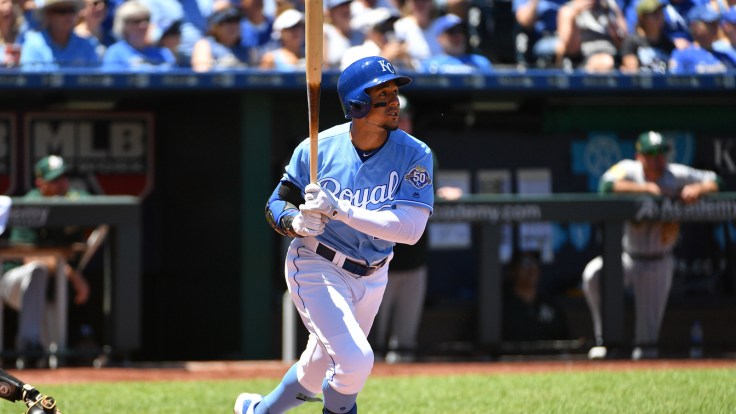
The player who currently is taking up a fairly regular spot in the Royals lineup is infielder Ryan Goins and more than one Royals fan has deemed their displeasure with Goins, including old friend Craig Brown:

Craig pretty much sums up what a lot of us are thinking: why is Ryan Goins on this team? The simple answer is that Kansas City needs a backup infielder who can play multiple positions and Goins fits the bill.

But the true answer probably lies a bit deeper. Goins adds some versatility, as he has played every infield position in his career plus a few innings in the outfield. He also threw an inning of relief back in 2016, but we already have Drew Butera for that.

Ryan Goins, Nicholas Castellanos
Credit: AP Photo/Orlin Wagner

In fact Goins has been a plus defender for most of his career, mainly at second base. The defensive metrics don’t speak as highly of him at shortstop (-3.7 UZR at short in 2017), but luckily the Royals won’t need him there, since Alcides Escobar will be playing shortstop for the Royals until the end of time. I’m joking…I think.

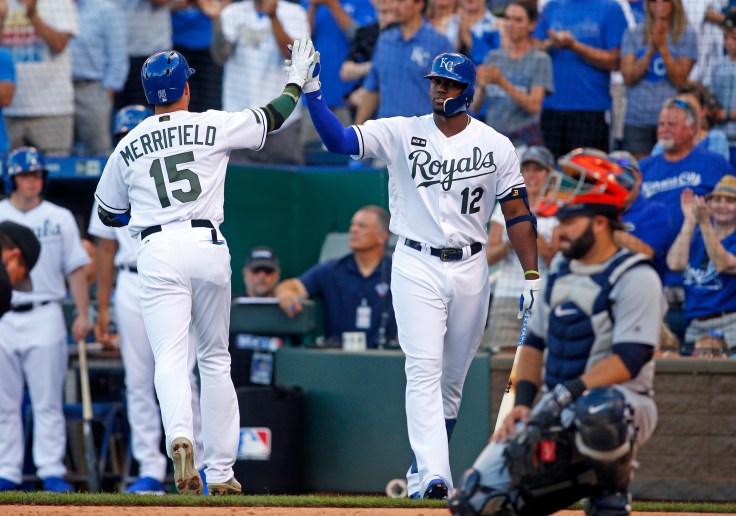
Goins defense at second base allows manager Ned Yost the option of moving Whit Merrifield around and gives the lineup the overall flexibility they haven’t had for years. At the end of the day, Goins is a steady hand that Yost can rely on to keep the defense steady in a pinch.

kc4
Credit: Associated Press

Before you think this is going to turn into a ‘Ryan Goins Appreciation Club’ article, don’t be fooled. Offensively Goins is a bit of a drag on the lineup. So far in 2018 he is hitting .234/.265/.319 with a wRC+ of 56. 56!! To put that in context, Alcides Escobar’s wRC+ is 55. Essentially, Goins and Escobar have put up similar offensive production, which is slim and none. So when both Goins and Escobar are in the lineup at the same time, it truly does create a black hole of death at the bottom of the order.

I thought maybe the deeper I dove into the numbers I would find something that would explain Goins’ playing time, but overall the numbers just aren’t pretty. Even the Win Probability numbers are in the negatives, which means he is probably hurting the Royals more than helping. Trying to justify those 21 starts is getting more and more difficult.

The small positives I could find offensively was a good BABIP (.324) and a noticeable increase in his line drive rate (up to 29.2% from last year’s 14.9%) combined with a lower ground ball rate (41.5% compared to 2017’s 50.3%). Whatever positives that come from his defense it is almost completely negated by his non-existent offense.

Kansas City Royals v Toronto Blue Jays
Credit: Getty Images

This shouldn’t be breaking news to you and more than likely it isn’t. But what I am going to say next might shock you: Goins is probably just what Kansas City needs right now. No, not the lackluster offense or the constant bunting. Where Goins has value right now for the Royals is as a stopgap.

It’s obvious the front office and coaching staff like Goins and see value in him where maybe we as fans don’t. It all really does come down to what you value as an individual. While on the surface we see a player who probably only has value on the defensive side of the ball, that might be enough for the higher-ups in the Royals organization. You and I might disagree with that, but we aren’t the ones making those decisions for the team.

That is not to say you are right or the Royals are right; there is more than one way to put together a contending baseball team. What I am saying is that occasionally as fans we believe we have the answers to how and why a team is successful, mainly based off of what we value. But we all value aspects of the game differently, and while on the surface it might not appear that Goins has value to this ballclub, his value might be part of a bigger picture.

It has become obvious that the Kansas City brass don’t feel that Adalberto Mondesi is quite ready for a bigger role on the big league club, a role that in part Goins is playing right now. While Mondesi shouldn’t be a backup infielder once he finally gets the call, he also probably won’t be in specifically one role for them once he is on the roster. There is a good chance that once he is recalled he will be playing all around the infield rather than just shortstop or just second base.

The good news is that it feels like Mondesi is getting closer and closer. He is hitting .257/.299/.514 at Omaha right now and his walk rate has seen a slight increase while the strike out rate has taken a dip. Mondesi has shown a proclivity of improving the longer he stays at each level over his career, and it appears that is what is going on in AAA as we speak.

kc6
Credit: Jay Biggerstaff-USA TODAY Sports

So while you and I might not understand the ‘Ryan Goins Experience’, it is definitely not a permanent answer for the Royals infield. While Mondesi will probably leap over Goins and be a starter at some point, the role of backup will probably transition over to someone like Ramon Torres, who appears to be a younger and better version of Goins.

Sometimes we just need to take a step back and allow the bigger picture to show itself. I’m not advocating for Goins being a part of this Royals roster, but I do feel Kansas City is looking at the future more than we give them credit for. Rome wasn’t built in a day and the Royals aren’t going to get better just by ditching Ryan Goins. More than likely though, Rome will appear sooner once Goins is no longer an option.
Jay Traded to Arizona for Two Prospects

kc1
Credit: Denny Medley-USA TODAY Sports

Pretty much from the beginning of Spring Training this year, we have been aware that the Kansas City Royals would be sellers come the trade deadline. In fact, it was obvious who the Royals would be dangling as bait when that time came. But what none of us saw coming was outfielder Jon Jay being dealt during the first week of June:

So while we might have known Jay would be dealt before the end of summer, I’m pretty sure none of us saw this coming as early as it has. But from the first glance, it looks like a solid deal for Kansas City.

Image result for Jon Jay May 2018

In his short stint in Kansas City, Jay had proven to be exactly what the Royals needed. In fact, Jay is coming off of a great month of May. During those 31 days, Jay hit .368/.402/.436 over 28 games, racking up 43 hits and a sOPS+ of 132. May was big enough for him that he is still 14th in the American League in batting average (.307) and 5th in hits with 73 (2nd in singles at 61 behind only Jose Altuve). So it makes sense that Jay’s value is at a high right now and with the Diamondbacks dealing with some injury issues in the outfield (both A.J. Pollock and Steven Souza are currently on the disabled list), it only made sense for Arizona to be on the look-out for some help.

The good thing for Arizona is they are now getting a veteran outfielder who can play all three outfield positions and who can fit about any role that is needed. Jay isn’t going to wow anyone, as he is not a flashy player, but he is consistent and should help the team with some depth until Souza or Pollock are able to return.

kc3
Credit: Kansas City Royals Twitter Account

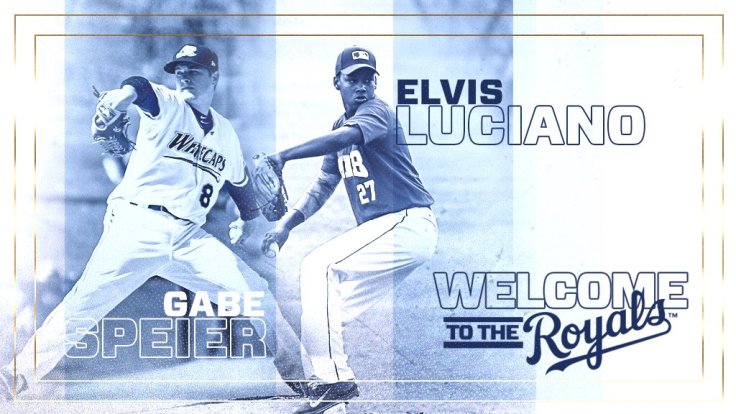
The two pitchers that Kansas City acquired in this trade was 18-year old righty Elvis Luciano and 23-year old lefty Gabe Speier. Fangraphs did a nice little scouting report last night after the trade went down:

Luciano is a live-armed 18-year-old Dominican righty who spent most of 2017 in the DSL, then came to the U.S. in August for a month of Rookie-level ball, then instructional league. During instructs he was 90-94 with an average curveball, below-average changeup, and below command, especially later in his outing as he tired. He was an honorable-mention prospect on the D-backs list.

His velocity has mostly remained in that range this spring, topping out at 96. Luciano’s delivery has been changed to alter his glove’s location as he lifts his leg, probably to help him clear his front side a little better. He’s still had strike-throwing issues and might be a reliever, but he has a live arm and can spin a breaking ball. Though 18, Luciano’s frame doesn’t have much projection, so while he might grow into some velocity as he matures, it probably won’t be a lot. He’s an interesting, long-term flier who reasonably projects as a back-end starter.

As for Speier, he’s repeating Double-A. He’s a sinker/slider guy, up to 95 with an average slide piece. He projects as a bullpen’s second lefty and should be viable in that type of role soon.

So there is some definite upside to Luciano and Speier very well could have a future role for the Royals in the bullpen. Considering that Jay is essentially a league average hitter, it appears Kansas City actually got a couple of players who could be a part of the main roster in the future, even if it will be awhile before either is ready to contribute.

Kansas City Royals v Texas Rangers
Credit: RON JENKINS

While I know there was some uproar from the ‘Facebook’ crowd that the Royals went and traded one of their best players, the honest truth is it made sense and is a smart deal for the future of the organization. Jay was on a short, one-year deal and part of the point of signing him in the first place was to turn around and flip him in a trade this summer. The Royals accomplished that goal and in return added a couple of arms to add depth to their farm system.

While it might make the “on-the field” product a little lacking, the trade makes the future a little bit brighter. This is the whole point of this 2018 season: see what you have on the roster, keep the younger players with value and trade the veterans that can bring back some prospects. Jay is just the first of many deals we will be seeing from the Kansas City front office this summer. If this deal upset you, you probably aren’t going to like what happens next.


The Royals Want All the College Pitchers

kc1

Stop me if you’ve heard this before: the 2018 MLB Draft will go down as one of the most pivotal in the history of the Kansas City Royals, one way or the other. The Royals farm system has been continuously ranked as one of the worst in baseball by almost every publication around. With Kansas City getting compensation picks this year from the free agent losses of Lorenzo Cain and Eric Hosmer, this year’s draft was the perfect time to re-stock the farm and begin the slow climb back up to contender. If their goal was to make a big splash, then they have succeeded.

kc2
Credit: Steven Branscombe-USA TODAY Sports

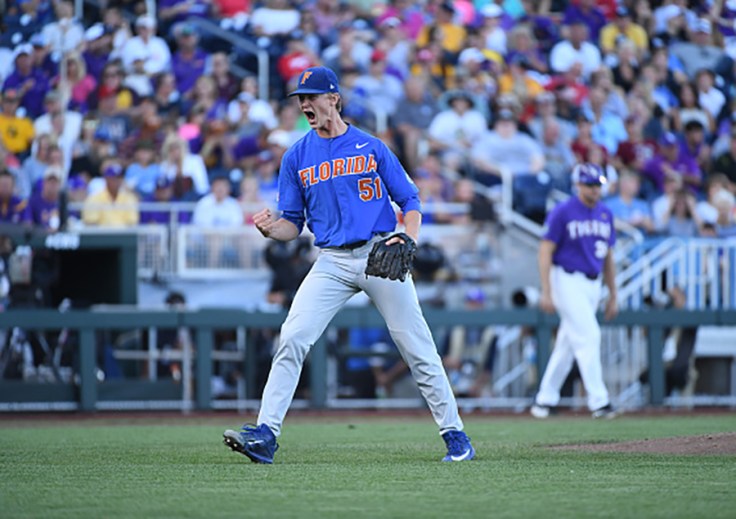
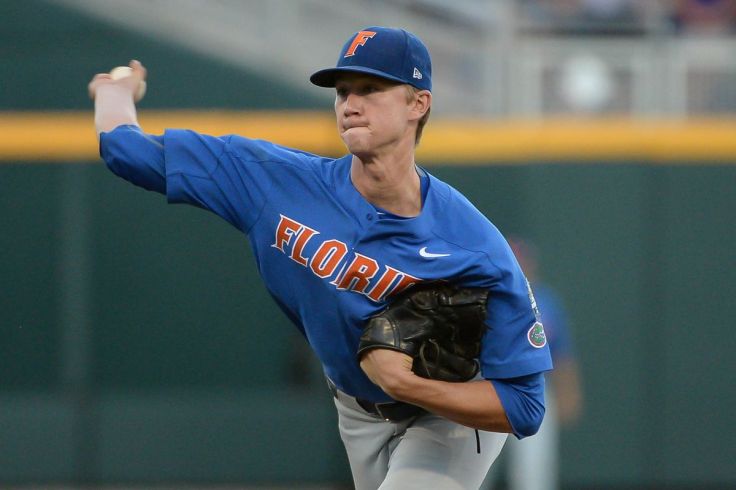
The Royals first pick was at #18 and their pick was Baseball America’s College Player of the Year Brady Singer from Florida. Most had Singer going in the top five of the draft and some felt the lowest he would drop would be around #10. So what did Kansas City get with their top pick? Here is part of the scouting report from MinorLeagueBall.com:

Singer is listed at 6-5, 210 (he was 180 in high school), born August 4th, 1996. His fastball is his best pitch, up to 95-96 with boring action in on right-handed hitters when things are going well. He can also show a plus slider and has made good strides with his change-up this spring; a recent in-person report from Burke Granger at 2080 Baseball describes the change with “above average deception and tumble, parachuting out of the zone.” One of the few complaints about Singer in 2017 was the need for a better change-up and it sounds like things are going well in that department.

So why did he drop to #18? I’m sure sign-ability came into play, but there were also some concerns by some scouts when it came to Singer:

Despite the good statistics, several observers have noted Singer’s harder pitches, especially the fastball, flattening out at times this year. This is traced to changes in his arm angle although the exact cause/effect chain is a bit unclear from a distance.

His delivery has always been somewhat unusual with a three-quarters approach and some whippy action. His arm angle and release point looked higher at times this year and this has been enough to lower his projection in the eyes of some very respected observers.

So there are a few worries about Singer, but overall he has a plus arm that is already pretty far along in his development. What this means is as long as things go according to plan, Singer could be in the majors by the end of 2019. This was a great pick for the Royals and one that could pay off sooner rather than later.

2017 College World Series: TCU defeats Florida 9-2
Credit: Steve Cheng

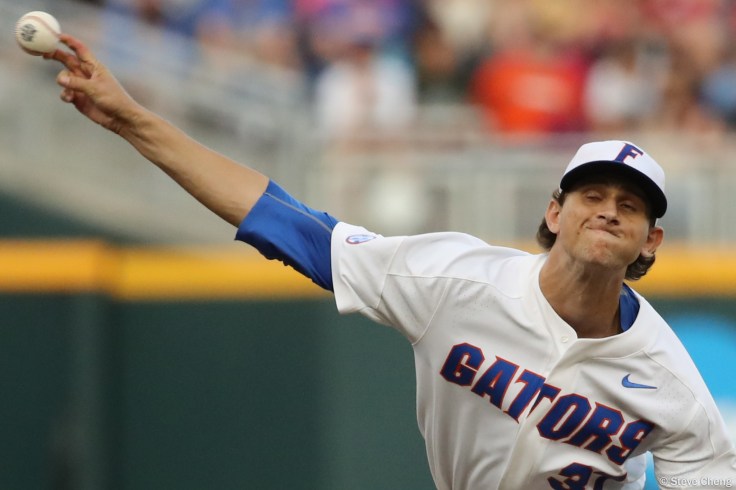
With the 33rd pick in the draft, the Royals would draft Singer’s teammate at Florida, Jackson Kowar. Kowar is an interesting pick, as evidenced by the reports on him this season:

As a prep his fastball was generally 88-92 with higher peaks. In college that’s up to 92-95 with peaks as high as 97-98.

His best secondary pitch is his change-up, drawing plus ratings. Development of his breaking ball has been key this spring and while it is sharper and more consistent than in 2017, it is still his third pitch behind the fastball and change. Further refinement of the breaking stuff and general sharpening of his command will obviously be the first items on his agenda as a pro.

So while Kowar isn’t as far along as Singer, there are a few scouts that preferred him to Singer:

When Kowar is at his best he shows three plus pitches. He’s not as close to being a finished product as Brady Singer but in some ways Kowar is a more conventional prospect than his teammate and some scouts like Kowar better.

Kowar might be the more interesting pick to watch out of the two Florida boys, and I like the idea of the two teammates getting to move through the Royals system together.

kc5

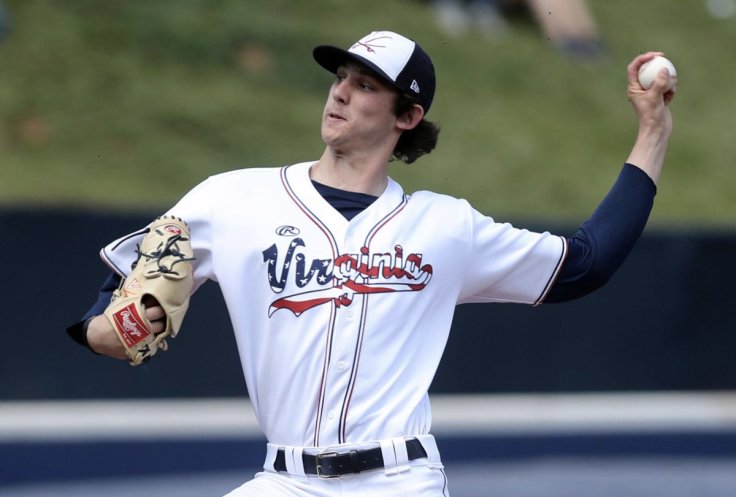
At #34, Kansas City would stay in the college ranks and draft left-handed pitcher Daniel Lynch from Virginia. Here is an assessment of Lynch earlier in the year:

A lean and narrow 6’4’’, Lynch won’t overpower hitters and needs to hit spots to have success. He throws from a clean abbreviated windup, getting consistent extension over his front half with little overall effort in his mechanics. He repeats well, able to stay around the zone with a four-pitch mix. The fastball has fringy velocity, sitting right around 90 mph while ranging anywhere from 88-to-93 mph without a lot of lateral movement. He’ll mix a cutter in the mid-80s as well, though the pitch has light, sweeping action and doesn’t project to be more than a wrinkle pitch to keep hitters off his fastball. Lynch commanded both sides of the plate with his four-seam fastball and cutter, though the loud contact allowed shows the limited margin for error he has within the zone. He’s more comfortable with a changeup than a breaking ball, showing more confidence in a fading low-80s circle-change that can get righties out on their front foot.

While Singer and Kowar would probably be ranked as power arms, Lynch appears to rely more on location:

Lynch projects to be a finesse lefty at the professional level. Scouts cite his thin frame as reason to wonder if his already fringy stuff backs up when he pitches on a more demanding schedule in the minor leagues. The best-case ceiling is that of a fifth starter who can soak up back-rotation innings, though he could fit a long or situational reliever if he ultimately lacks the stuff to face lineups more than once pitching out of the rotation.

So through their first three picks, Kansas City went with college pitchers with a good amount of upside. Their next pick didn’t stray far from the pattern.

kc6
Credit: Stanford University

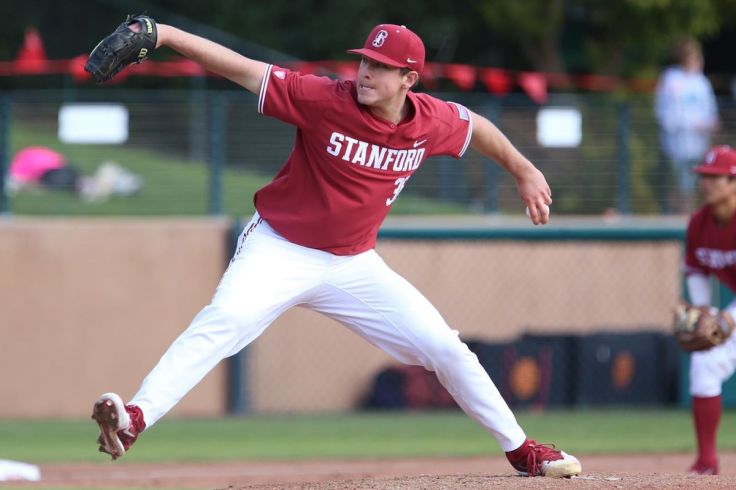
With the 40th pick (a competitive balance pick), the Royals would draft Stanford lefty Kris Bubic. Bubic has a delivery similar to Dodgers star Clayton Kershaw but that is where most of the similarities end:

Bubic is armed with a fastball that works best in the low-90s. He has a little reach-back velocity and can touch 95 MPH. It has some natural arm-side run, as is common with most lefties. What really has him on a path to success is a plus-changeup. He’s able to repeat his delivery and arm slot with it, giving it the look of a fastball. It has good fade down-and-away to right-handers, but he isn’t afraid to throw it against any hitter in any count. His curveball is a work in progress. He didn’t use it much during his first two seasons with the Cardinal, but it has improved enough this season to be a viable third pitch.

The good news is that while his ceiling is a bit unknown, his floor is higher than most:

A standout in the Cape Cod League last year, Bubic has the ceiling of a low-end No. 2 starter should everything click. More likely, he’s a solid No. 3/4 guy who thrives with his command/control profile and a borderline double-plus changeup. He could move quickly if he takes well to professional instruction. But don’t expect much more velocity, as he’s physically maxed out.

I’m interested to see how Bubic develops and he feels like a pitcher to keep an eye on. His change-up should get him places and it will be interesting to see what the Royals will want to do with his curve.

kc7
Credit: Joe Murphy/University of Memphis

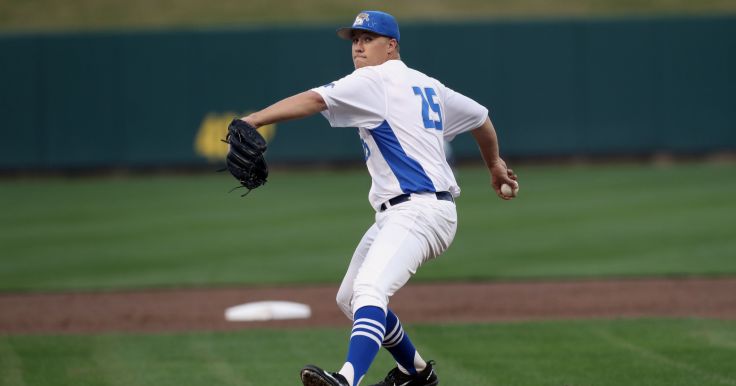
At this point it just made sense to continue on the trajectory they were on, so the Royals drafted another college pitcher, going with Memphis right-hander Jonathan Bowlan at #58:

The Memphis product has a solid fastball in the low-90s. The slider will flash better than average at its best, while an average changeup completes his arsenal. Not really a guy who will punch out a lot of hitters unless there is a serious uptick in stuff, Bowlan is probably a fifth starter or middle reliever within a few years.

Bowlan appears to be a underslot signing for Kansas City, but it also felt like the Royals had a direction they wanted to go in once Singer fell to them and they just went with it.

kc3
Credit: Steven Branscombe-USA TODAY Sports

So what direction might that be? Maybe it’s just what lingers on the surface, but it appears Kansas City went the safe route with their picks on the first day by going with college pitchers. The Royals have been burned in the past by prep pitchers, so maybe they felt going with the older, more mature arms would garner a higher success rate than going with a high school player who has more talent but would take much longer to develop.

It also would make sense that the college pitchers could possibly start at a higher level, possibly in A ball. Maybe someplace like Lexington, where Royals prospects Nick Pratto, MJ Melendez and Seuly Matias are currently playing at. Maybe, just maybe, the Kansas City brain-trust remembers how the core players from their 2015 championship (Eric Hosmer, Mike Moustakas, Danny Duffy, Salvador Perez, etc.) came up through the minors together and won together on their way to the major leagues. Maybe…they are looking to repeat history. I could just be reaching here, but if I’m not it’s definitely not the worst idea in the world.

kc8

The one thing we absolutely can determine from the draft is that the Kansas City Royals have done a good job of replenishing the farm system, especially with their pitching. It will be years before we can determine the true value of these players and where they rank among other former Royals draftees.

The one thing we can say is the team went in with a game plan and it appears they followed it down to the letter. The baseball draft always feels like a crap-shoot and as far as we know none of these picks will truly leave their mark. But there is a chance they could be the next Splittorff, Saberhagen, or Duffy. Pitching is the currency of the sport and the Royals just increased how much they have sitting in the bank.


Should the Royals Use an ‘Opener’?

kc1
Credit: Brian Davidson/Getty Images

Over the weekend history was made as Sergio Romo, a reliever who had never started a game in the Major Leagues over 588 appearances, started back-to-back days for the Tampa Bay Rays as an “Opener“, starting him in very short appearances before giving way to other pitchers–normally youngsters who had been starters down in the minors–for use in extra inning spurts throughout the rest of the game.

The reasoning makes sense:

But the most challenging inning for any staff isn’t the ninth, or the eighth, or the middle innings when a starter approaches his pitch count limit. It’s the first inning, when teams hit better than any other because it’s the only frame in which a lineup’s top hitters are guaranteed to bat. Batters have hit 10 percent better than league average in the first this season, which is the best mark in any inning.

The Rays had a couple of young pitchers scheduled to start over the weekend and knew they probably weren’t going to pitch deep into the game. So with that in mind, they started Romo to face the Angels plethora of right-handed batters at the top of the lineup, as Romo has had success against righties throughout his career (ranking second in opposing OBP with a .232 rate for active pitchers).

So you can see why Tampa was willing to experiment and at the very least give this a shot. But this got me to thinking ‘What if the Royals tried this on occasion?’ and maybe even the more important question ‘Should the Royals try this on occasion?’

kc2
Credit: MLB.com

If we are talking different options, Kansas City has a number of relievers this might work well with. Brad Keller has been phenomenal this year and there has even been discussion of moving him to the rotation. Trying him as an ‘Opener’ first might be a good way to get his feet wet and the Royals could even stretch out his starts this way, starting him with just an inning or two at first before eventually increasing his innings per outing.

kc3
Credit: Patrick Semansky/Associated Press

Burch Smith is also an intriguing option, especially since he was primarily a starter throughout his minor league career. Smith has a 25% strike out rate to go with batters hitting .269 against him on balls in play. The one concern with Smith is his walk rate, which as of Tuesday sits at 13.5%. The last thing you want early in the game is extra baserunners, as that would soil the whole purpose of this experiment.

kc4
Credit: MLB.com

There is also Tim Hill, who would be a trip for batters to see early in the contest. The idea of hitters trying to figure out Hill funky delivery for an inning or two and then adjusting to someone like Jason Hammel, who relies on his slider quite a bit more would be an interesting situation.

So should the Royals consider using an ‘Opener’, at least occasionally? Considering how the starting pitching has been the last month it wouldn’t be an awful idea. Over the last 30 days, the Royals starting pitchers are last in the American League in ERA and fWAR, while giving up the most hits, runs and home runs. In other words, whatever the starters are doing isn’t working and trying almost anything else at this point isn’t a bad idea.

kc5

In fact, it might actually help some of the pitchers like Hammel or Ian Kennedy. Let’s say a reliever “opens” the game and throws two innings or less. You can then bring in whomever would normally start that day and let them pitch a couple times through the order. Most of us are aware of the numbers that point out how pitchers fare the third time through a batting order and this might make it to where someone like Hammel never has to see a batter a third time.

A number of people are going to hate this idea and disregard it before it even happens. In fact, I can’t imagine Ned Yost would ever be on board with this, as it has taken him years to warm-up to the idea of defensive shifts and he is still questioning it. But I also feel the Royals are in the perfect spot to try something “out of the box” without any major repercussions.

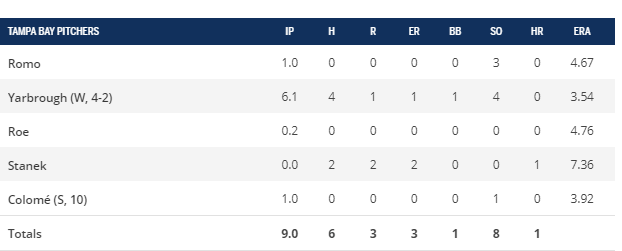
There is no way to tell whether or not it will work either, as apparent by the results for Tampa Bay over the weekend. On Saturday, things went as hoped:

Rays Sat

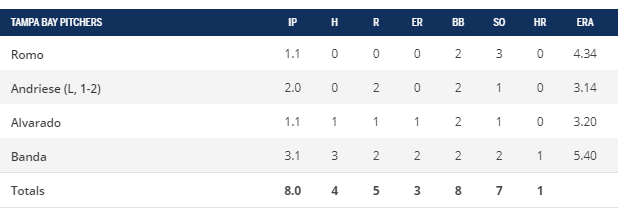
Yarbrough followed Romo, throwing six innings while giving up only one run. But Sunday didn’t go as smoothly:

Rays Sun

The rest of Tampa’s pitchers couldn’t maintain the pace and they ended up losing the game. That’s the thing with trying something like this; it might work as planned but it could also blow up in your face. The bigger question is whether or not it is worth it in the long run.

kc6
Credit: Getty Images

If we are being honest, I am fully on board with Kansas City trying an “Opener” at some point but I’m not going to hold my breath while waiting.  Kudos to the Rays for attempting it and if we are being honest baseball is better and more interesting when teams are changing up the status quo. The game has been around for over 170 years and it has evolved quite a bit since that first game in Hoboken, New Jersey back in 1846. Now it might be time for the game to evolve a bit more when it comes to pitching strategies.

The Royals and Yankees Just Don’t Hate Each Other Like They Used To

kc1

This Friday the New York Yankees travel to Kauffman Stadium as they open a three-game series against the Kansas City Royals. There will be many a discussion about the “old days” and how at one time the Royals and Yankees had one of the biggest rivalries in baseball. But in 2018 that is no more and hasn’t been for a very long time.

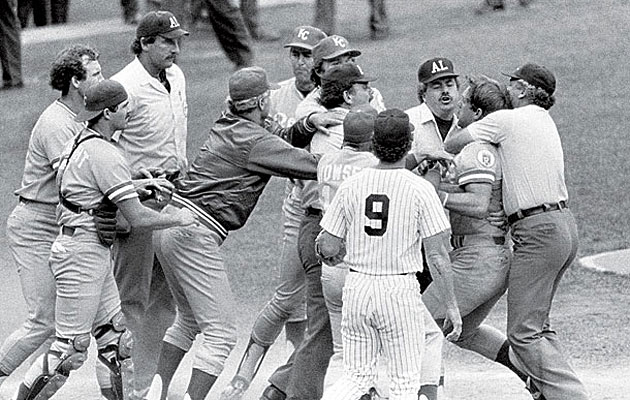
Back in the late ’70’s/early 80’s the Royals and Yankees hated each other as much as Rob Manfred hates anyone standing still. The two teams battled it out in the American League Championship Series from 1976-1978 and then again in 1980. While the feud was mostly based on competition and the desire to reach the World Series, there was also a real built-in hatred there.

Let’s start with 1976 and the series deciding Game 5. In the Top of the 8th inning, George Brett would come up and put the game into a 6-6 deadlock:

Unfortunately for Kansas City, Chris Chambliss would break the hearts of Royals fans everywhere with this walk-off home run to win the series:

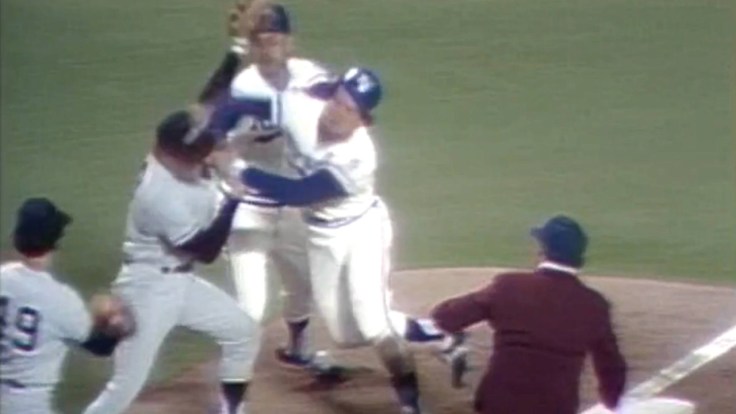
In 1977, the play on the field would get even rougher thanks to one of Hal McRae’s patented slides:

This was from Game 2 of the ALCS and it showed that both teams would do whatever it took to come away victors. That would get ramped up even more during the 1st inning of Game 5:

So at this point it is pretty easy to see that the Royals didn’t like the Yankees and the feeling was mutual from the Yankees. The Yankees would rally for three runs in the Top of the 9th and would seal the deal in the bottom of the inning:

The two teams would meet again in the 1978 ALCS and would split the first two games in Kansas City. For the Yankees to win Game 3, they would have to stop George Brett:

Despite the three home run day for Brett, the Royals would fall short again, losing both Games 3 and 4 as the Yankees would once again punch their ticket to the World Series:

While the Yankees were always the team ending up on top during those three years, the truth was that Kansas City was right there with them in most of those games. The two teams would face off 14 times in the playoffs during that three-year stretch and 6 of the 14 games would be decided by two runs or less. Finally in 1980, the Royals would get their revenge:

While many consider Brett’s homer off Gossage in the ‘Pine Tar Game’ to be the most iconic homer of Brett’s career, he would never hit a bigger shot than the one in Game 3 of the ALCS in 1980. After years of falling just short of New York, sweeping the Yankees in 1980 was the definition of things finally coming back around.

The two teams would continue to battle for American League dominance over the next few seasons but wouldn’t ever meet back up in the playoffs. In fact maybe the most remembered moment of their feud was the aforementioned ‘Pine Tar Game’:

After years of feuding, Billy Martin was still looking for a way to stick it to Brett and the Royals. As most of us are aware, this would eventually backfire on Martin, as the American League President Lee MacPhail would uphold the Royals protest and the home run would stand. The Royals would end up winning the game when they restarted the game almost a month later.

kc4
Credit: Associated Press

After that? Well, the feud pretty much dissipated. The Yankees would have a long playoff drought and not return to the playoffs until  1995. While it would have been great for the Royals and Yankees to continue this rivalry, the truth is that the two teams were hardly ever relevant at the same time. With the main players in the feud gone and retired, the hatred and animosity trickled away as well.

Now in 2018, it’s just business as usual when these two teams meet up. Many of the players not only know each other but are friends with the other side and there is a different aura when the two clash. If anything the only real vitriol that remains is from us, the fans.

In fact if I am being honest, it is mostly from us older fans. As a kid I was trained to hate the Yankees. It wasn’t because they were a big-market team or because they would sign our players when they hit the free agent market. No, we hated them because they were the team the Royals had to jump over to get to the World Series. We hated the Yankees because of all the times they broke our hearts.

kc6
Credit: Associated Press

While there is still a vile taste left in the mouth when mentioning the Yankees, for younger fans it is more of a ‘Big Market vs. Small Market’ hatred than anything else. Over the last 20 or so years, there are very few moments of the Yankees personally doing something to the Royals to really make us despise them.

I guess you could be mad at former Yankee Robinson Cano for not picking Billy Butler in the Home Run Derby in 2012 or be mad at Derek Jeter for being Derek Jeter. But actual, legit beef for doing something dastardly to our boys in blue? It just isn’t there.

kc5

To be honest, it saddens me that this feud has tapered off. There is nothing quite like a healthy competition between two teams that want to win and will do anything to do it. Call it David vs. Goliath, or to modernize it a bit maybe Thanos vs. the Avengers.

There is nothing quite like a good underdog story and for years the Royals played that tune ‘to a T’. Sometime in the future it will happen again and these two teams will rekindle their venom for each other. But for now, it’s just two teams trying to win a nice game of baseball. It’s compelling, but it just doesn’t have the same bite to it.

Celebrating Royals History

kc2
Credit: @JermaineDye on Twitter

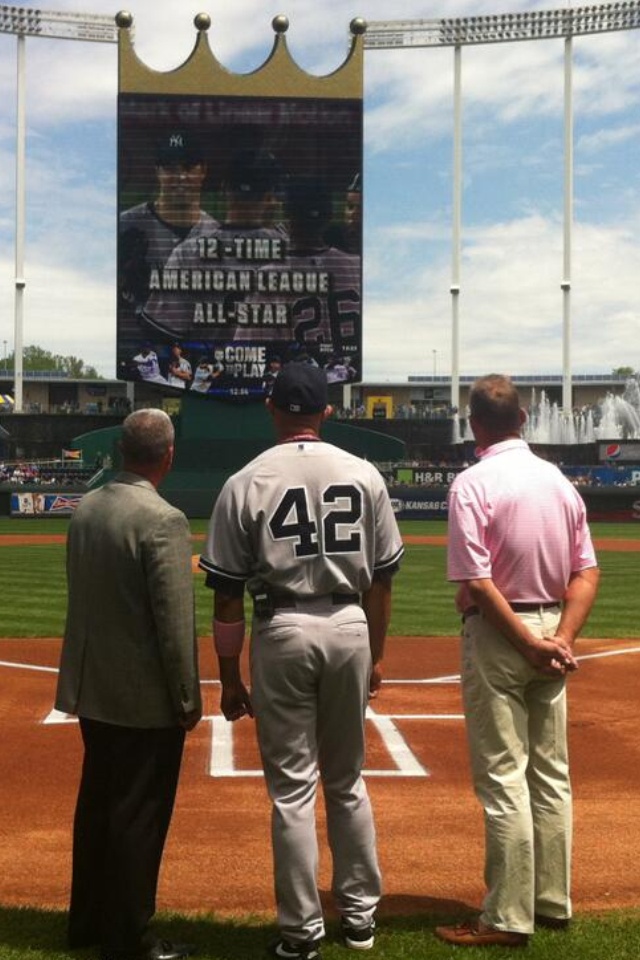
Over the weekend, the Kansas City Royals celebrated a number of their legends in the 50th season of the team’s existence. The New York Yankees were in town and while the series didn’t go as much of us would have liked (the Yankees took two out of three from the Royals) it did give the broadcast team the chance to catch up with some Kansas City greats.

The most interesting return was the trio who once roamed the outfield for the Royals. Jermaine Dye, Johnny Damon and Carlos Beltran are considered part of the best outfield in Royals history and were able to sit down and discuss their time in Kansas City:


It was great to see these three back at Kauffman Stadium, especially considering their place in Royals history. They also weren’t the only legends that made their back:


Over the last few years, the history of the Kansas City Royals has been pushed back a tad as the team on the field was putting up winning baseball. But now that the team is struggling, it’s a perfect time to remember their history and welcome back some of the greats with open arms. I know for me, losing baseball goes down a bit smoother when you get to hear Bret Saberhagen discuss his time in Kansas City.

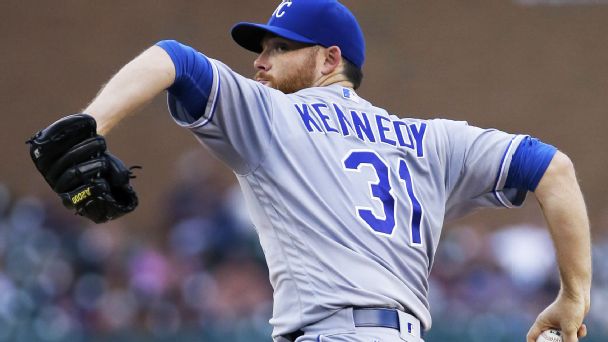
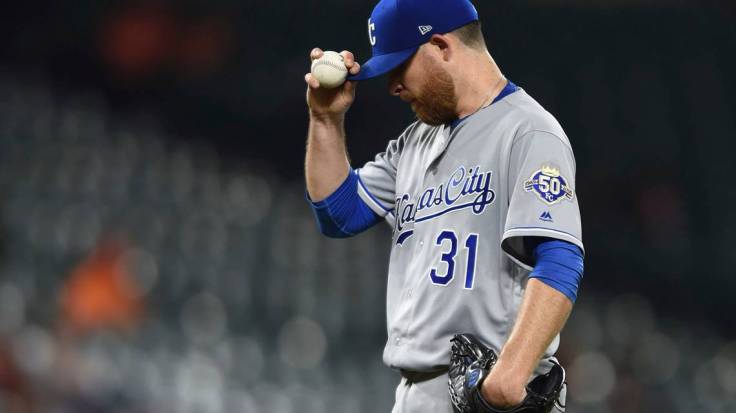
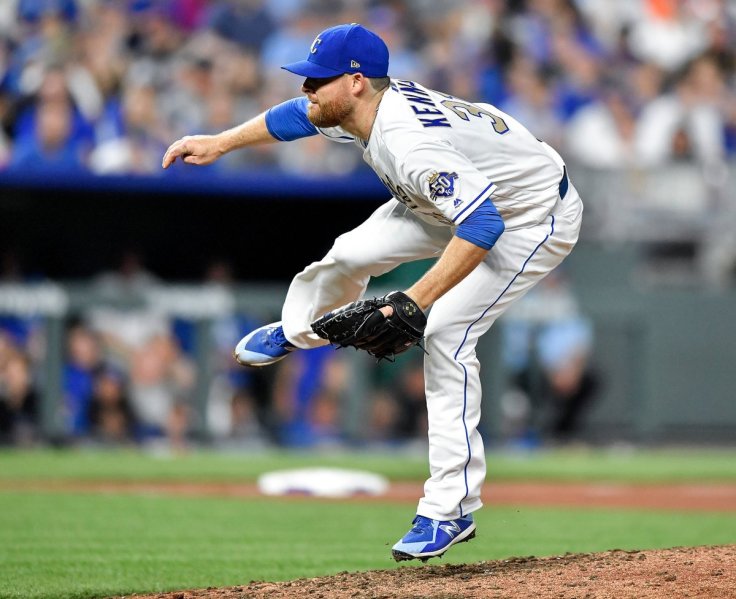
Newsflash: Ian Kennedy is having a really good season

Image result for ian kennedy 2018

Coming into this 2018 season, if you would ask Kansas City Royals fans what they would like to see from Ian Kennedy most would answer something along the lines of what he did for Kansas City back in 2016. Kennedy spent most of last year dealing with a right hamstring strain and never got quite back on track after putting together a solid April.

Now Kennedy is healthy and once again putting up strong April numbers. So far in seven starts, Kennedy has thrown 37 innings, producing a 2.92 ERA, 3.47 FIP and 0.8 fWAR (which is halfway to his 2016 total). But when we dive deeper into the numbers, they show he has actually been more than just a solid performer.

kc2
Credit: Associated Press

Let’s start with some of the statistics he can actually control, like walks and strike outs. Kennedy’s strike outs are about on par with what he has done in the past, sitting at 21.7%. Over the last five seasons, his K rate has been in the 20-24.5% range.

His walk rate actually shows some improvement, at 6.8%. If he was able to maintain this rate moving forward, that would put him above average on his walks for the first time since 2015. In fact, most of Kennedy’s better seasons have been when he’s been able to keep his walk rate in the 6-7% range.

kc3
Credit: Jay Biggerstaff-USA TODAY Sports

His pitch selection is about the same as in the past, with a few modifications. Kennedy is throwing his fastball, cutter and sinker about the same amount, but so far this year he is throwing the curveball a bit less (13.7%) and throwing his change-up a bit more (12.2%). In fact his usage this season has been very similar to what he did in 2016 but one does wonder how he would do if he would not only throw his change-up more but also throw it a bit slower.

Kennedy put together a career year back in 2011 in Arizona and if you look at his pitch selection back then, he threw the change-up 15.6% of the time. He would continue to throw that pitch more and more the next few years, but his velocity also continued to rise with it, going from averaging 81.8 MPH to 86.4 MPH this year.

I’m not saying him using the pitch more and slowing it down would improve his numbers, but one has to wonder since 2014 is the closest he has come to that mark and even then he was throwing his change-up more than he has the last four seasons.

kc4
Credit: Gail Burton/Associated Press

With that being said, the numbers that really speak to me are his Win Probability numbers. Kennedy currently sits at 0.55 WPA and 6.01 RE24, both numbers that rank him in the top 21 of qualified pitchers in the American League. He is not posting the elite numbers that Justin Verlander or Corey Kluber are putting up, but Jake Junis is the only other Royals pitcher close to these numbers and in fact the two of them are very similar in that regard.

I’m a big proponent of  Win Probability and RE24 and tend to believe if you really want to look at the value a player is bringing to his team you look at these two numbers. So far Kennedy has helped put the Royals in situations to win and his performance has helped the team way more than hurt it.

kc5
Credit: Getty Images

But for all the good he has done, there are some concerns as well:

Kennedy statcast2 redo
credit: baseballsavant.com

The main concerns would be the higher hard hit rate, exit velocity and barrel %. All are noticeably up from the last two years and all are signs of batters getting a good read on his pitches. With that being said, there are some positives sprinkled in here as well.

From the chart it looks like the hitters launch angle against him has gone down, which coincides with his HR/FB rate this year. That rate is down to 9.8%, the lowest it has been since 2014. We all know Kennedy gives up home runs but this year it is at a lower rate. One reason could be the weather so far this year; as temperatures rise it only makes sense that he will give up more bombs.

Image result for ian kennedy 2018

Another reason could be what hitters are doing when making contact against Kennedy. His flyball rate currently sits at 36.3%, , which you have to go back to 2015 to find the last time it was below 40%. Also, the contact rate against him has gone up, currently at 83.3%, up from 80.3% in 2017. Hitters are swinging at more of his pitches this year (48.4%) and more importantly, swinging at more pitches outside of the strike zone, as his o-contact rate is at 74%, up from 65% last year and 68% in 2016.

So while Kennedy is allowing more contact, how he is doing it is more interesting. Kennedy is known as a flyball pitcher, but balls hit in the air are down and balls hit on the ground are down as well (33.6%). From the numbers it appears that he has given up more line drives this year, in fact almost doubling his percentage from last year, 16.3 to 30.1%. This would explain the hard hit rate seeing an increase and also why the home run to flyball ratio is down as well.

So is all this sustainable? I still maintain that we will see more home runs hit off of Kennedy as the season progresses. He is what he is and history has shown us that 2014 (where he gave up only 16 home runs all season) feels like an outlier when it comes to dingers hit off of him.

kc6
Credit: John Sleezer/KC Star

But if hitters continue to swing at pitches outside the strike zone 33% of the time, he has a chance of keeping up most of his current pace. Combine that with the lower walk total and he should be able to minimize the damage when the home runs finally come.

After 12 years in the league it feels like you can get a pretty clear picture of what to expect from a pitcher like Kennedy. But the ability to adjust can be a vital part to any players progression. It’s been nice to see that so far from a pitcher that is entering the latter half of his career.


From the Bleachers: A Further Step into the Season

kc1
Credit: Charles Rex Arbogast/AP

Now that we are in the middle of May, there is a definite feeling of where many teams lie or at least where they will be as the season progresses. Since I haven’t been able to truly dive in with my thoughts (outside of anything Kansas City Royals related), I thought this would be a good time to take a look at some of the big stories of the last few weeks. Let’s start with the mess that is the American League Central…

kc2

Grab it like You Want It

So with about six weeks into the season it has become very apparent that the American League Central isn’t the best division in baseball. Or the league. Or much of anywhere. In fact if it wasn’t for the Indians facing my hapless Royals this weekend I wonder if they would be posting a winning record right now:

AL Central
Credit: MLB.com

That’s right, the Indians are the only team in the division with at least a .500 record. Actually, on Friday night the entire division was under .500. The Royals had beaten Cleveland that night, leaving them at 18-19 at the top of what has become a poor, beaten-down, pathetic division.

More than likely the Indians and probably even the Twins will finish with a winning record when it is all said and done, but right now this is an ugly picture. When the Royals have played very uninspired baseball to this point and they are only sitting 7.5 games out of the lead, that is not a good sign.

But let’s be honest here for a bit; at some point we are going to get a division winner with a losing record. In fact if it wasn’t for the strike back in 1994 we might have gotten it then:

west bbref
Credit: baseball-reference.com

That season ended with the Rangers leading while being ten games below .500. Then the strike happened and baseball didn’t come back until the next season. But it does make you wonder about when it will happen and how soon the pundits will flip out. I can already picture the “talking heads” discussing how such a weak team will grace postseason play and “tarnish” the good name of baseball.

The truth probably lies somewhere in-between, where it’s more of a sign of the dangers of allowing more and more teams into the playoffs. It probably won’t happen this year or even the next few years, but at some point a team with a losing record will be playing in the games that matter the most in October…and just imagine if they get hot and punch their ticket to the World Series. Oh my…

kc3
Credit: AP Photo/Mark J. Terrill

The Dark Knight is His Own Worst Enemy

Earlier this week Matt Harvey was dealt to the Cincinnati Reds for catcher Devin Mesoraco, ending his time in New York. While many will question his arm and whether he will even return to his former self, to me the bigger question is whether or not his ego and pride will allow him to be successful again.

Don’t get me wrong, he pitched very well on Friday: 4 innings, 1 hit, 0 runs, 0 walks and 2 strike outs against the Dodgers, all of which spells a great debut in Cincy. But at the end of the day his performance wasn’t the lone issue clouding him. No, his issues are paramount and solving these problems need to be his choice, not forced onto him.

In my opinion, the Mets had the right idea; send him down to the minors and break his entire game down to rebuild it. But Harvey’s pride and stubbornness got in the way. Maybe getting out of ‘The Big Apple’ will help, but I tend to think we will see him struggle again, soon.

Matt Harvey loves being ‘Matt Harvey, the dominant stud pitcher’ or ‘Matt Harvey, busy man on the town’ more than he loves being just a guy who gets to play baseball for a living. Until he recognizes himself as the biggest problem, there just won’t be a happy ending for the man formerly known as ‘The Dark Knight’.

kc4

Nick Markakis…Hall of Famer?

About a week ago MLB.com scribe and (in my opinion) one of the best baseball writers of this era Joe Posnanski posed an interesting question about Nick Markakis: can he realistically reach 3,000 hits? Before you start laughing and thinking that is impossible you might want to go look at his career numbers…now pick up your jaw. Markakis currently sits at 2,105 hits here in his age 34 season. In other words, he only needs 895 hits to reach one of the biggest milestones for a hitter in baseball lore.

Outside of players not yet eligible for induction into the baseball Hall of Fame, only two players who have reached 3,000 hits haven’t been inducted into the hallowed halls: Pete Rose and Rafael Palmeiro. Rose is not in because of his lifetime ban and Palmeiro is not because of a positive steroid test. That number–3,000–has always meant an automatic place in Cooperstown and speaks of a player’s longevity and consistency. Markakis checks off both of those marks.

But I’m pretty sure you don’t view him as being an all-time great or even a perennial All-Star. On of his list of achievements is a two-time Gold Glover winner and…leading the American League in WAR in 2008. That is it.

But what has helped Markakis get to this point is a lack of injuries and a regular spot in the lineup. Markakis has only had one season under 145 games played in a season (2012) and his lowest hit total in a season (outside of 2012) is 143 in his rookie year. If things keep moving at his current pace, he could hold on for another six seasons or so and reach 3,000 around his age 40 season.

If that happens, do we then consider him a Hall of Famer? I tend to believe we have to, even if he was never talked about as being one of the top ten players in the game. More than anything, I want this to happen just to hear the discussions about his candidacy. There will be those that will look at 3,000 hits as proof he belongs. Others will argue he was never a “Great” player. Either way, I hope he gets close and I am now rooting for Markakis to reach this milestone.

GTY 957493782 S BBN USA PA

Welcome Back, Cutch

Earlier this week Andrew McCutchen returned to Pittsburgh for the first time since his trade to San Francisco and it was as great as you probably pictured it being in your head:

Look, I absolutely loved this for about a million reasons. One, it is always great to see a player return to his former stomping ground and be appreciated for all he did. Two, he was a vital part of that franchise’s return to prominence and was the biggest piece of the puzzle when it came to how that team was built.

But it was also great because I have been a fan of Cutch for years. Go ahead and search his name on this blog; you are bound to find me speak nothing but glowing praise his way. McCutchen, much like Bonds before him, was an all-around player who helped push the Pirates farther because of his greatness. He’s not quite the player he used to be at this point of his career, but at one time he was easily one of the top five players in the game.

I’ve also kind of felt like the Pirates are the National League’s version of the Royals. Both teams were once a regular participant in the playoffs, only to fall on hard times for a couple of decades and then return to glory. I obviously loved the Royals climb back to the postseason and appreciated Pittsburgh’s return as well. So I am glad Cutch got the standing ovation and I’m glad to see him still loved. He is truly a great player and a great human who deserves all the cheers he gets and more.

Finally, for my fellow Royals fans, here is what Eric Hosmer was up to this weekend:

While I wasn’t nor ever will be a big Hosmer fan, I’m glad to see him contributing in San Diego. Plays like this are why the Padres acquired him and hopefully that doesn’t go unnoticed.

kc6

That is just a snippet of what is going on around baseball. I didn’t even get to Shohei Ohtani, Bartolo Colon, Mike Trout or even Mookie Betts. No talk of the increase in home runs and strike outs, foul weather or big-market collapses. I’m sure the next couple of weeks will give me more than enough material to discuss and hopefully I will be able to pass along my thoughts. Until then…


The Resurgence of Alex Gordon

kc1
Credit: Ed Zurga/Getty Images

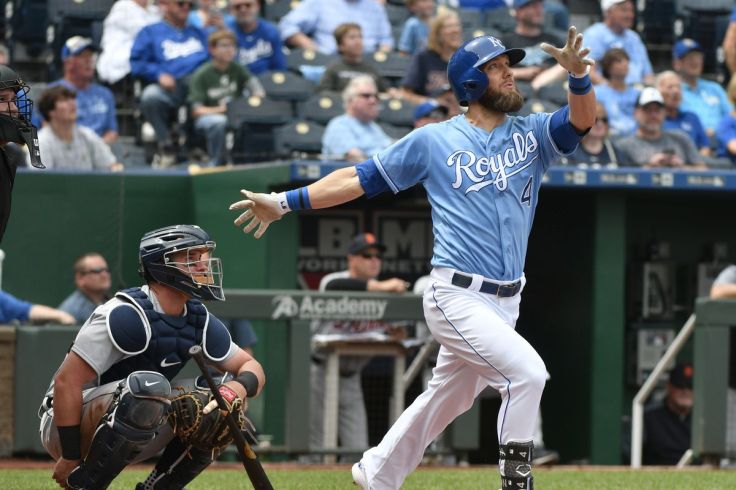
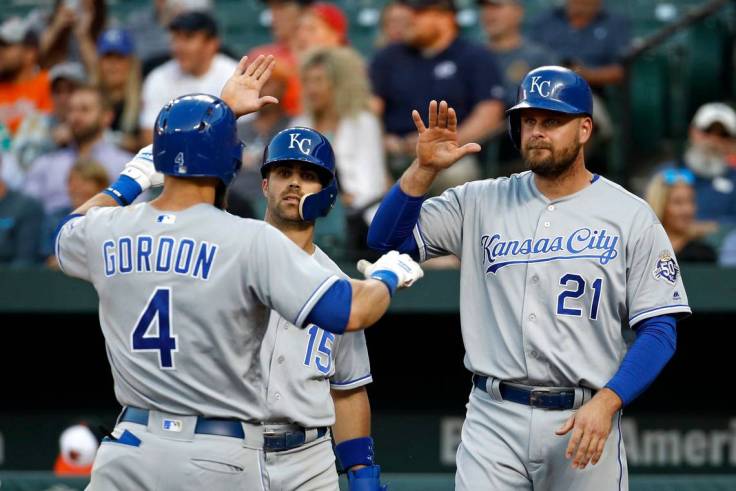
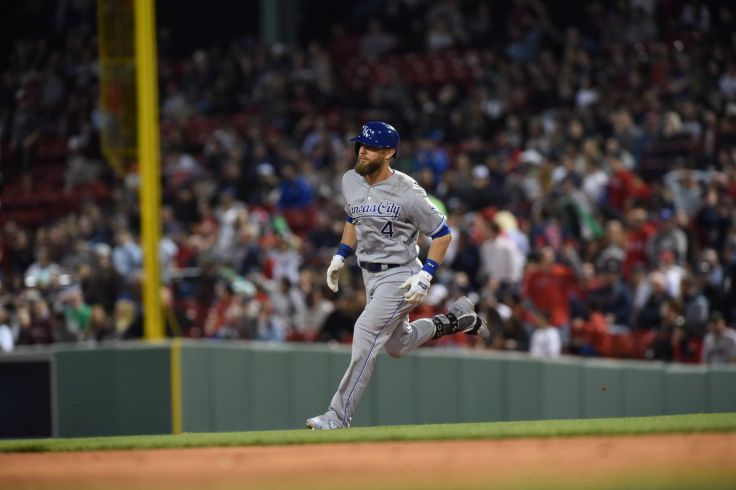
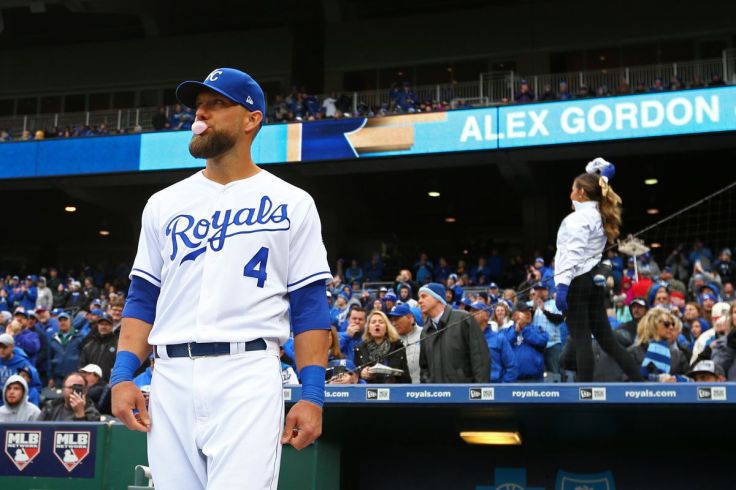
The last two years have been hard for Alex Gordon fans.

It was difficult to understand how a guy who was once one of the most well-rounded players in the game had turned into one of the least productive batters in all of baseball. It wasn’t just the elevated strike outs in 2016 or even the 29.2% hard hit rate last year. It wasn’t even a wRC+ of 62 last year that was tied with teammate Alcides Escobar and only better than Texas’ Rougned Odor for qualified batters in all of baseball.

No, it was just as much Alex fouling off pitches he used to scorch. It was him pulling the ball to the right side when he used to take a pitch to the opposite field. It was him looking lost at the plate and not appearing to have a real plan while he was up there.

kc2
Credit: Patrick Semansky-AP Photo

Call it what you want. Maybe it was him trying to live up to the massive contract he signed after 2015. Maybe he was in his head too much. Maybe it was a slight tweak in his mechanics or a change in approach at the plate.

I myself have long felt the wrist injury he suffered when colliding with Mike Moustakas in 2016 was a big factor in some of the issues he was dealing with. Or maybe it was just the natural regression that occurs to every athlete and had finally took up residence on his physical doorstep.

Whatever the case may be, after two years of sub-par productivity and a litany of injuries in between it really felt like the Alex Gordon of our past was just that: in the past. But a new year brings new promise and since his return from the disabled list he has looked like the Alex of old.

kc3
Credit: AP Photo/Patrick Semansky

The numbers so far speak of a revitalized Gordon, as he ended Thursday hitting .303/.352/.439 after going 3 for 4 on the day with his second home run of the year and two runs scored. The most promising stats for Alex have to be his hard hit rate and exit velocity. His hard hit rate is at 38% (his career high is 36.9%) and the exit velocity is at 89.7% according to Baseball Savant, a good 2 to 4% higher from the last two seasons.

It is still very early for Gordon, as he has compiled just 71 plate appearances so far. In other words, it’s a small sample size. But the last two years have seen him not hit the ball very hard whereas now he looks more comfortable at the dish and it might be just a minor change in his mechanics that have done the trick:

Alex Gordon starts with his hands. This, he says, is where the adjustment began, where a mini renaissance was born. His hand path to the baseball is different; a little flatter, he says, in the hitting zone longer. He’s trying to keep his hands back longer. He’s seeking to load quicker. He’s trying to stride straight at the pitcher.

You may not have noticed these tweaks if you watched Gordon over the last week. They are minor in scale, insignificant to the untrained eye. “A lot of little things,” he says. But inside the batting cage at Kansas City’s Kauffman Stadium, as hitting coach Terry Bradshaw looks on, Gordon has sought to find his swing.

He wants to beat the shifts that have haunted him in the last two seasons. He wants to stay back and go the other way. He wants to give himself a chance.

“I feel like my swing is a little bit different than it was at the beginning of the season,” Gordon says.

This swing has led to him hitting the ball to the opposite field at a higher rate this year (26..0%) than any year since 2013. I’ve long felt Alex was a better hitter when hitting to the left side of the diamond while focusing on the gaps in the outfield. At one point he was a guy who could rack up 50 doubles in a full season (51 back in 2012) and make a good living off taking the ball the opposite way.

kc4
Credit: Bob DeChiara-USA TODAY Sports

So should we expect Gordon to return to past glory? I’m pretty sure the Alex we saw in 2011-2015 is probably in the past; I mean the man is 34 years old and his body has taken a beating over the last three seasons. But this resurgence is probably closer to what most of us expected when he returned to Kansas City in January of 2016. We knew that the aging process would bring regression, but we also figured that the dedication to keeping his body in tip-top shape might slow down the regression a bit.

But if he can keep his approach at the plate consistent and just work on being comfortable, there is reason to believe he can maintain a pace where he is productive again and possibly even above replacement level at the plate.

kc5
Credit: Jay Biggerstaff-USA TODAY Sports

There’s still a long way to go and many peaks and valleys along the way. But for those of us that have cheered and placed him up on a higher mantle, it’s hard not to smile real big when thinking about how he is performing right now. It’s nice to see that the Alex we love hasn’t completely left the building.


The Royals Just Don’t Walk the Walk

Image result for jorge soler 2018

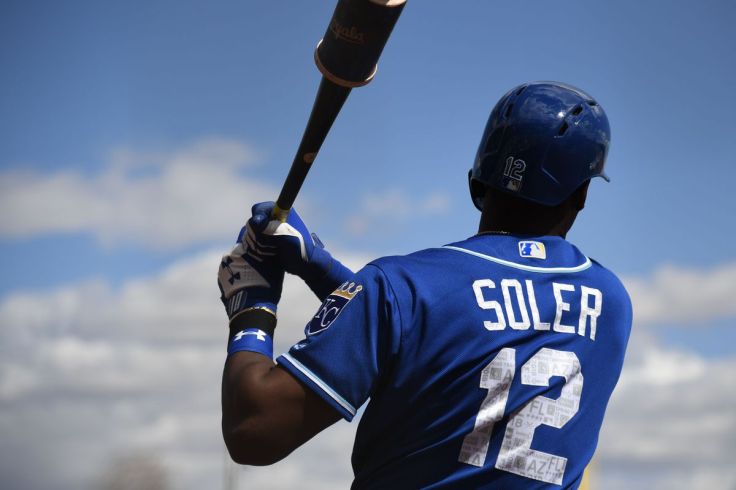
Even in the middle of a calamity there appears a glint of hope. For the Kansas City Royals 2018 season, that glint would be the performance of Jorge Soler and more to the point, his ability to draw walks. The problem is, the Royals as a whole just aren’t big fans of a patient eye.

I’m not spilling any major secrets when I say that Kansas City has not been a team to embrace the ability to work a count and take a free base. For years this team has almost looked at patience at the plate with a “well, I guess if we have to” type mentality. The Royals championships teams of the last few years were built on making contact with an emphasis on putting the ball in play.

lc2
Credit: Getty Images

Over the course of the Royals 50 year history, they have had only six instances of players with 100+ walk seasons, with John Mayberry’s 122 walks back in 1973 being the ultimate peak. In fact, the numbers don’t get much better when discussing walks and the Royals. 2013 was the last time the team wasn’t last in the league in walks and 2010 was the last time they were able to breach the top ten in the American League.

In fact the highest walk total for a Royals player in the last decade was Billy Butler’s 79 back in 2013, which garnered an 11.8% walk rate. The highest walk rate in club history was Mayberry’s 19.1%, which he compiled back in the before-mentioned 1973 campaign. This leads us to what Soler is doing and why it is so special.

MLB: Detroit Tigers at Kansas City Royals
Credit: Getty Images

So far Soler has 18 walks in his 24 games, putting him 6th in the American league for his total and 11th in actual walk rate. His rate currently sits at 18.2%, which if he was able to maintain it would give him the second highest walk rate among qualified batters in Royals history, just a smidgen above Darrel Porter’s 17.8% back in 1979.

So what Soler is doing so far is something that Royals’ fans haven’t seen in many moons but is something we should see more often, if I’m being frank. I’ve long been a proponent of the ability to produce a walk and tend to believe there is a direct correlation for teams that take more walks to produce more success.

kc4
Credit: Steve Mitchell

Looking back over the last five years, every year the team that led the league in bases on balls also made an appearance in the playoffs.  2012 was the last year that the team who led all of baseball in walk rate (the Tampa Bay Rays) didn’t make it to the postseason. Before that it was 2006, when the Red Sox led all of baseball but fell short to the Yankees. In most years, the teams that rank near the top of the leader-board in walks are the ones who continue to play into October.

My belief has always been that the value of drawing a walk goes beyond just getting another runner on base. If a batter is taking a number of pitches, that should be driving up the pitcher’s pitch count. The higher that pitch count gets, the earlier a team has to dip into their bullpen. The earlier you get into a team’s bullpen, the more taxed they become. Being a patient hitting team has a very immediate trickle-down effect.

kc5
Credit: AP Photo/Paul Sancya

There is also the whole “extra base-runner” thing which is always a positive. Just go back and look at the first inning of the Royals game on Monday. Whit Merrifield gets a hit, followed by a Soler walk and Mike Moustakas getting hit by a pitch to load the bases. Walks by Salvador Perez and Lucas Duda would follow and by the time the inning was done the Royals had put a three spot on the board.

Now if Kansas City was better at hitting with runners in scoring position that score would have been higher, but that isn’t the point here. The point is that the walks doled out led to extra base-runners which led to more scoring opportunities. More opportunities tend to led to more runs, which is the whole name of the game.

I also believe if the Royals were a bit more patient they might not be such a streaky offensive team. Remember last year’s scoreless streak? That might have been avoided (or at least halted a lot sooner) if the team took more walks. Patience is normally less streaky than hitting and if they had taken more walks the Royals might have been able to muster up a couple of more rallies and been able to squeak out a few more “W’s” during some close games.

kc6
Credit: Joe Camporeale-USA TODAY Sports

I’m not saying that if this team walked more that their success would turn around or that what Soler is doing should be done by every player. I highly doubt we will ever see Alcides Escobar or Salvador Perez rack up walk totals like Joey Votto. But a heavier emphasis on patience, especially starting at the minor league level, could go a long way.

So maybe some of Soler’s teammates should take a cue from him and force the opposing pitchers to throw them strikes. It’s not a glamorous part of the game or even one that will gain you admiration from some in the fan base. But a few more walks could lead to a few more runs and at this point, the Royals need to cross the plate more often if they want to win more games this season.

Create a free website or blog at WordPress.com.

Up ↑