You Wanted The Royals To Sign Someone…

kc1

It’s been a slow winter for the Kansas City Royals so far. Outside of the acquisition of Jorge Soler, the possible next biggest news for Kansas City might be the team re-signing backup catcher Drew Butera. Yep, that is how slow it has been. In fact, you’ve probably heard many a Royals fan utter the phrase “Just sign someone, anyone…”. Well…you got your wish, as Kansas City signed four players to minor league deals on Christmas Eve. On that list is pitcher Bobby Parnell, infielder Brooks Conrad, outfielder Ruben Sosa and…former Royal Jonathan Sanchez. Yes, the same Sanchez who was acquired for Melky Cabrera at one point. The same Sanchez who was absolutely atrocious during his short stint in Kansas City. We will get back to him in just a moment. But first, lets look at all of these signings and what to expect from them.

kc2

Let’s start with Parnell, who is the biggest name on this list. Parnell used to be a solid contributor out of the bullpen for the Mets, including a four year run from 2010 to 2013 where he produced an average 140 ERA+ during that span. Injuries curtailed Parnell’s run after that, appearing in just one game in 2014 (due to Tommy John surgery) before returning to the Mets for 30 games in the 2015 season. That year was nothing to write home about, as Parnell posted an ERA+ of 61, a FIP of 4.18 and an ERA of 6.38. Parnell signed a minor league deal with Detroit last year but threw most of the year in AAA, putting up very pedestrian numbers. He did appear in six games for the Tigers, throwing 5 innings, striking out 4 while walking 5 in that short span and would eventually be let go by Detroit. The one positive in 2016 for Parnell was that the velocity on his fastball did increase, picking up to 94 mph on average, one mph faster than he racked up in 2015 and closer to the upper 90’s fastball seen by him before the surgery. I actually think Parnell could be a valuable asset in the Royals bullpen, as he could be in the vein of a Ryan Madson, who had been out of baseball for a couple of years before signing with Kansas City before the 2015 season. This is a quality signing by Dayton Moore in my eyes.

MLB: San Diego Padres at Chicago Cubs

Conrad is a veteran journeyman who has floated around baseball for about 15 years now and played in the Independent League in 2016. Conrad last saw action in the minor leagues back in 2015, posting a line of .190/.280/.319 in 83 games. Conrad has basically been used as a utility infielder throughout his career, seeing most of his time at third base. He has played parts of 6 seasons in the major leagues, putting up a line of .200/.271/.389 over 515 plate appearances. It’s pretty obvious that Conrad’s signing was a depth move, as he can fill a number of roles if the Royals end up placing him in either AA or AAA. In fact, I would dare to say there is a chance he was signed for the sole purpose of working with many of the younger players in the farm system and might even be a future coach in the Kansas City system. This might be a signing that was being eyed more for a future role in the organization than anything else, so I wouldn’t really expect to see him in Kansas City at anytime in 2017.

kc4

Sosa is an outfielder who has spent most of his career in the Astros and Angels organizations. Sosa hasn’t had a horrible minor league career, posting a career line of .282./.366/.391 over six seasons. Sosa is a speedy outfielder who seems to take a good amount of walks, but also strikes out quite often (319 strike outs in 419 games). What probably caught the Royals eye is his work in the Mexican League in 2016. Over 70 games, Sosa hit .371/.458/.517 with 22 stolen bases. Sosa probably is a backup outfielder at best if he would reach the big leagues, used mainly as a defensive replacement and pinch runner would be my guess. Sosa would be a long-shot to get to Kansas City and has been assigned to the Kansas City AA affiliate, Northwest Arkansas.

kc5

Finally, we have reached the main event, former Royal Jonathan Sanchez. I’m sure many a Royals fan cringed when they heard Moore had signed Sanchez to a minor league deal, as he is not fondly remembered by Royals fans. Lets not mince words-Sanchez was awful during his short span in Kansas City. In just 12 games (and yes, it feels like he pitched more than that for Kansas City), Sanchez 0.82 Strike out to walk ratio, an ERA+ of 54 (100 is league average) 6.45 FIP and a -1.3 bWAR. Before you ask, yes, Sanchez was as bad as the numbers indicate. The worst part of his run in Kansas City was that it just seemed like he didn’t want to be with the team, so he was dealt to Colorado in July of 2012 for Jeremy Guthrie. Incidentally, my first post on this blog was spent talking about that deal, a deal that was definitely one of Dayton Moore’s best. All this being said…it doesn’t really bother me that the Royals have brought Sanchez back into the fold. The honest truth is that the likelihood that he makes it to the big league club is slim and none. Sanchez hasn’t pitched in the majors since 2013, where he pitched in 5 games for Pittsburgh, throwing only 13 innings, allowing 18 runs and 7 home runs in that short amount of time. He was in the Reds camp last year for Spring Training, but was released at the end of camp. It is very simple math with this signing: if he is awful, the team will release him in Spring Training and that will be that. If he does good, then he can actually contribute to the Royals in 2017, something he didn’t do the first time around. Kansas City doesn’t lose anything by bringing him in, other than a small amount of time.

kc6

The honest truth is that moves like these are necessary for any major league ballclub. Most minor league deals are done for one very big reason: depth. A team never knows how the season will unfold and the more depth you have stored away in the minor leagues, the more likely you will stumble across someone who can contribute to the major league team. It’s a total win/win situation, as most of these signings are done very cheaply and don’t cost the team anything. Over the years the Royals have succeeded on a few of these signings, especially with a few guys who were coming off of injuries and were able to be a part of the big league roster. Ryan Madson is the most prolific, as he pitched good enough in 2015 to earn himself a lot of money from Oakland that following winter. So while these signings aren’t going to blow anyone away, you never know what might actually pan out. So I’m not going to get worked up about Sanchez being in Royals camp this spring; the honest truth is the Royals gave up nothing for him and he either pitches good or he is gone. This time around, Sanchez needs the Royals more than they need him.

Royals Christmas Wish List

kc1

It’s that time of year; the stockings are hung by the fireplace, the tree is lit up for all to see. It’s that time of year when we give a bit more than we usually do, showing a generous side that most of us could afford to do more often. It is also the time of year when we compile lists of items we deem necessary to make our lives a bit brighter. It’s been an absurdly slow offseason so far for the Kansas City Royals, so when it comes to what most Royals fans would like to see under the tree the list is equally as ridiculous. Since I have no one player off the free agent market on my list of wants for Kansas City (I would have loved to see Dexter Fowler in powder blue), I thought of a few items that I would like to wish for this holiday season.

kc2

For starters, I would like to see the Eric Hosmer we saw in the first half of 2016. That Hosmer hit .299/.355/.476 with an OPS+ of 118 and earned a well deserved spot in the MLB All-Star Game. The Hosmer we saw in the second half was a shell of this guy; .225/.296/.380 with an OPS+ of 78. As he is entering his ‘walk year’ in 2017, it would only make sense for Hosmer to put his best foot forward and produce at a level that will earn him as big a contract as possible. If he performs the way he did in the back-half of 2016, it will be a bad sign for both his value and the Royals 2017 season.

kc3

Nothing would make my Christmas brighter than a healthy Alex Gordon. Gordon lost valuable playing time due to injuries for the second straight season in 2016 and produced the lowest numbers we had seen from ‘A1’ since he has become a full-time outfielder. While his numbers in August were stellar, it was the only month in 2016 that Gordon was an above average hitter and in fact he limped to the finish line, wrapping up September with a meek .211/.272/.358 line with 36 strike outs, the most he racked up for a full month last year. It really felt the last couple months that Gordon wasn’t 100% healed from the wrist injury that sidelined him for most of June and if that is actually the case, then that might explain why he never quite got going in 2016. For the Royals to make a run this next year, they need their leader to stay healthy and not look like a player who is regressing.

MLB: Detroit Tigers at Kansas City Royals

A hopeful present that I would like to check off my list is that Danny Duffy’s 2016 wasn’t a fluke. Duffy looked like the ace that Kansas City’s front office and coaching staff had longed he would be, as he set career highs in innings, walks, strike outs, FIP, BB/9, SO/9 and bWAR. If Duffy’s turnaround is for real, then the Royals should be looking to lock him up to an extension ASAP, as he is scheduled to become a free agent after the 2017 campaign. The Royals have no potential top of the rotation arms in their upper minor league system (and I won’t consider Kyle Zimmer in that category until he can stay healthy for an entire season) and the rotation could look bleak if Duffy isn’t wrangled in long-term. If Duffy is for real, he is going to get real expensive, real quick.

kc5

Since Saint Nick is listening to my wishes, I would appreciate it if one of the Royals young prospects become a productive cog in the Kansas City lineup in 2017. With the outlook being that the Royals might have to look from within this upcoming season, they are going to need a young bat to step up and produce. Hunter Dozier would appear to the most likely, as he is coming off of a .296/.366/.533 season between AAA and AA last year and received 21 plate appearances during his September call-up to Kansas City. It doesn’t matter if it is Dozier, Jorge Bonifacio, Raul Mondesi or any other hitter in the Royals system; bottom line, Kansas City needs someone to step up this year the way Cheslor Cuthbert and Whit Merrifield did in 2016.

Cincinnati Reds v Kansas City Royals

Speaking of stepping up, that is a high priority on my wish list for Yordano Ventura. We all know Ventura has the stuff that can make him an elite starter in the major leagues, but does he have it upstairs? The big hang-up for ‘Yo’ appears to be the mental aspect of baseball and until he can skirt that, he will continue to languish around league average. Ventura as he is now is still a good starter to have in any rotation, but there is a large gap between what he is and what he could be. He has progressively declined in his second and third seasons in the bigs and most of the issue appears to be in-between his ears. If the Royals want to go back to the playoffs, they need Ventura to pitch closer to his potential than league average.

kc7

So what about my stocking? Wouldn’t it be nice to find Ian Kennedy pitch a bit more comparable to his contract? I actually felt like Kennedy had a quality 2016, one that saw him post some of the best numbers he has produced since his awesome 2011 season. Now it probably isn’t realistic to expect Kennedy to pitch much better than he did last year, but considering the Royals are going to be paying him $13.5 million in 2017, it would be nice to see him improve on a few of his numbers, like his strike out to walk ratio and his home runs allowed. Kennedy is an innings eater who is a good fit in Kansas City; they just need him to be a number two starter more than being a number three or four starter, which are more indicative of the numbers he put up last year.

Salvador Perez

If we are taking about items on my Christmas list that just need a minor tweak, Salvador Perez has a couple options. My first inclination was for Salvy to work on his patience at the plate, but his walk rate did improve in 2016 to the highest it has been since 2013. I mean…it’s not great, but it’s better. Instead, I will wish for an improvement on his pitch framing. Catcher’s defensive metrics have become more and more prevalent the last few years and pitch framing has become a need for many teams, as a good framer will get your pitchers more strikes. In fact, I would say that pitch framing, good and bad, will determine an umpire’s strike zone more than anything else in this day and age. Out of all catchers who caught 2,000 pitches in 2016, Perez was dead last in plus calls, as he sat at -146 for the entire season. Now, the Royals are aware of this and even dug deeper into individual scenario’s of his frame-work. Their research showed that Perez was one of the best in the league in high leverage situations, while he struggled in blowouts. So if the team can get Salvy to focus a bit more in 2017, one wonders what this will do for the amount of strike calls that Kansas City pitchers will get.

kc9

Finally, I wish that Joakim Soria could be counted on in the occasional high leverage situation. Look, I don’t expect him to be the All-Star closer he was during his first run in Kansas City; those days are long gone. But I also don’t want him to be the walking definition of a gas can either. A happy medium would suffice and maybe even make me not hate that three year contract that Dayton signed him to not look like a giant eyesore. I don’t ask for much.

kc10

With Christmas just around the corner, I can live with just a few of these wishes coming true for the upcoming season. There is still much to be thankful for if you are a Royals fan, but it can always be just a bit better. So I’ll pass on that Ikea gift card in my stocking; I will just take an improvement for the Royals 2017 season and have that be my gift…the gift that keeps on giving.


Firing Up The Royals Rumor Mill

kc1

We are halfway through December and the Kansas City Royals’ hot stove is lukewarm at best. So far this offseason Kansas City has re-signed Drew Butera, traded Wade Davis for Jorge Soler, and have said goodbye to Edinson Volquez, Kendrys Morales and Tim Collins (who signed a minor league contract with the Nationals this past week). So we have seen a very uneventful  winter so far and the likelihood of something happening around the holiday season is very slim at best. That being said, a number of Royals have been linked in trade rumors so far, which makes sense as the Royals don’t look to be major players in the free agent market. So which Royals could be dealt and where? Let’s dive in and break down these rumors.

kc2

Let’s start with the most recent rumor, which is that the Houston Astros are looking at upgrading their rotation and have placed Yordano Ventura and Danny Duffy on their targeted list. I tend to feel like the chances of Duffy being dealt are slim or none, especially considering the Royals have opened talks with him on a contract extension. So if we take Duffy out of the equation (for now), then that leaves 25 year old Ventura, who has been a lightning rod throughout his early career. Most know Ventura has electric stuff, as he can reach 100 MPH on the radar gun and an equally as nasty curveball. The issue with him has been bouts of inconsistency and maturity, which continues to rear it’s ugly head. The potential of Ventura, plus his age, makes him a salivating target for GM’s around baseball, and when you add in the fact that he still is under team control for another three seasons (plus two more years of team options), you can see why a team like Houston would be interested. With all of that factored in, I can see a scenario where a Ventura trade could happen, but only if Kansas City got a healthy haul from their trading partner. Kansas City doesn’t have one of the best rotations in baseball, so if they dealt a Ventura, they would have to get at least one more arm in return that could fill his spot on the team. I actually believe Kansas City should look deep into a deal with someone like Houston, since they have a stocked farm system and could help bring them a couple of players in return to help replenish the Royals main roster and/or farm system. It would be hard to deal a player with the potential of Ventura, but one has to wonder if he will ever grasp the mental aspect of the game, which would elevate his game to the level of his potential. I think this is a deal worth exploring if you are the Royals front office.

kc3

One trade that has been rumored that I believe will happen at some point is the Royals dealing Jarrod Dyson, who is entering the final year of his contract. Dyson so far this winter has been linked to Baltimore, Texas, St. Louis and most notably Oakland, who was talking to Kansas City during the Winter Meetings about Dyson. Dyson is an affordable (he made $3.45 million last year), versatile outfielder who brings plus defense and baserunning, especially as a secret weapon off the bench as a pinch runner and defensive replacement. Dyson’s value has never been higher and is coming off a season where he led the Royals in bWAR (3.1). It only makes sense to deal Dyson, especially with Billy Burns on the Kansas City roster, a player who essentially is a younger, cheaper version of Dyson. I would expect before the winter is out that Dyson is elsewhere and hopefully the Royals can get a solid trade piece in return, like a plus arm for the rotation or bullpen.

kc4

Another trade possibility is Kansas City centerfielder Lorenzo Cain, who is also entering the last year of his contract in 2017. Cain is coming off an injury plagued season that saw him appear in only 103 games for the Royals.So far this winter the Rangers, Cardinals and Dodgers have all inquired about Cain and at one point they had discussed him in  multi-player trades involving Wade Davis, before Davis was dealt to Chicago. When healthy, Cain has become a force in the Kansas City lineup, a third place MVP finalist back in 2015. But that health is the issue and probably why Kansas City won’t look too deep into extending him past 2017. Cain has only played in more than 140 games once in his career (2015) and has been a regular visitor to the disabled list throughout his seven year career. Add in that he is entering his age 31 season and has been rumored to want at least a four year deal when the Royals had discussed extensions a couple of years ago. I don’t believe there is a very high chance of Cain being traded, but it might not be the worst thing for Kansas City to listen to any offers that teams have for Lorenzo. Cain could probably get a couple of solid big league players and teams would be drawn to his defense and postseason experience. I’m not expecting him to get dealt, but I also wouldn’t be shocked if it happened.

kc5

A player I see getting traded even less than those mentioned above (and in fact I would say the chances are about as slim as they come with him) is Mike Moustakas. Now, I haven’t really seen his name mentioned, but his name had at least been tossed out there:

Moustakas is also entering the final year of his contract but he is coming off of an ACL injury that sidelined him for the final four months of the 2016 season. While I doubt Moose will get traded, the Royals do have a surplus of third basemen in Moustakas, Cheslor Cuthbert and Hunter Dozier (who the Royals have moved to the outfield but a team could still be interested in him at the hot corner). While the Royals have mentioned moving Cuthbert and Dozier around to other positions, with the right offer I could see Kansas City dealing one of these three. While the Royals would love to keep all three (especially with Moose possibly gone after 2017), there is always value in trading from a strength and right now Kansas City has one at third base. Like I said, I’m not counting on any of these three being dealt, but never say never, not with the position that the Royals are in right now.

kc6

The Royals are in a tight situation that makes this offseason different than the last few. They are entering the final year of their contending window, as they have a number of players who will become free agents at the end of the 2017 campaign, so it would appear that the team should be pushing all their chips in on another playoff run. Unfortunately, owner David Glass is refusing to increase payroll, leaving the Royals front office in a position where they have to improve the team by making trades and essentially ignoring the free agent market. Because of this, the dealing probably isn’t done and at least one or two more deals appear to be on the horizon. Dayton Moore has spent much of his time in Kansas City working around small market limitations, but this might be the most creative he has ever had to be. How do you stay a contender by not increasing payroll and not having any major prospects on the immediate horizon? Hunker down Royals fans, because a player you are probably attached to emotionally could be gone within the next couple of months. Contending can still be done; but the Royals are being forced to shift the pieces on the board more by subtraction than addition. It can be done, but the makeup of this team is about to change. Time will tell if it is for the better or worse.


The Wade Davis Experience Has Left The Building

kc1

Axl Rose once said “…nothing last forever, even cold November rain.” This feels appropriate when discussing the Kansas City Royals and their 2015 roster. It’s been known for awhile that we would start to see the players from that club disperse and at some point probably become ex-Royals. Throw in the Royals issue with payroll, and it became very apparent that the 2017 version of the Kansas City Royals could look much different. The first hammer was dropped on Wednesday as closer and supposed cyborg Wade Davis was dealt to the Chicago Cubs for outfielder Jorge Soler.

kc2

First, lets look at what the Cubs are getting with Davis. Davis has been one of the best relievers in baseball over the last three seasons, throwing 182 innings over that span with 234 strike outs, an ERA+ of 351 (league average is 100), 8.9 bWAR, FIP of 1.86 and only 3 home runs allowed. There are no 100% definite’s in baseball, but these last few years Davis has been about as much a lock as a pitcher can be. It wasn’t just the regular season where Wade was a lock, as he only allowed 2 runs over 25 innings throughout the 2014-2015 postseasons. If Davis comes in the game, you feel pretty confident that the game is over and he will wrap up another victory. All of this is what the Cubs are hoping for by picking him up this winter, as they look for another trip to the playoffs in 2017.

kc3

If there is a concern for Chicago, it is Davis’ right arm. Wade would make two appearances on the disabled list in 2016 for a forearm strain. Both times he would go down, the Royals stressed there was nothing wrong with Davis’ elbow and he just needed some rest to heal. This did have an effect on his velocity for most of 2016:

brooksbaseball-chart

On average, Davis’ four-seam fastball saw a decrease in 2016, down about 1 MPH from his average in 2015. His sinker and cutter both saw a decrease as well, both of which weren’t drastic but it was noticeable. There is no way to tell for sure that this will continue but it is something the Cubs had to take into account before acquiring him. It appears the Cubs were very thorough when giving him a physical this week, so what they saw must have been good enough for them to pull trigger.

kc4

So how will this effect the Kansas City bullpen? Obviously, Kelvin Herrera will take over the closer’s role in 2017, a role he performed in admirably while Davis’ was injured this past season. The Royals have talked a lot this winter about building their bullpen back up to elite levels, so I would assume that they are not done restructuring the pen for the upcoming year. One option they have for a setup role is young lefty Matt Strahm, who put together a really good rookie season in 2016. Another in-house candidate is Josh Staumont, who has become the Royals number one prospect, according to Baseball America. More than likely, it will be some combination of those two and an arm or two that the team picks up this winter to complement Herrera at the back-end of the bullpen. Also remember that former closer Joakim Soria will return in 2017 and as much as his performance in 2016 was very underwhelming, he does have experience in the role and could see some late inning work this next year, although I wouldn’t expect him to see the majority of time in that role. There is some work left to be done to the pen, but considering the Royals were the 5th best bullpen in the American League in 2016, they aren’t as far away as some think.

MLB: NLCS-New York Mets at Chicago Cubs

So what about the player that Kansas City acquired in this deal, Jorge Soler? Soler will be entering his age 25 season in 2017 and is a former top prospect in the Chicago organization. Soler first saw time in the big leagues in 2014, putting together a very solid .292/.330/.573 line through 24 games. Since then, he has struggled with inconsistency and injuries, posting a line of .253/.328/.413 over 187 games and very average OPS+ of 101 during that span. While the injuries are a concern (as well as his attitude, as he was late to camp the year after signing his contract with Chicago), the upside is an enticing look into what he could do when healthy. Scouts have listed Soler as having 70 power, which is on a scale of 20-80, and while he might never be a guy who hits for a high average, he has improved his walk and strike out rates this past season. Defensively, he has an above average arm in the outfield but overall he is below average out in the field. One has to wonder if he will struggle a bit on defense, as he will be moving from one of the smallest outfields in baseball to the largest. I would expect Soler to probably bat in the 5th to 7th spot in the lineup in Kansas City, as the Royals utilize his power while not putting him in more of a run-producing spot. If healthy, both physically and mentally, Soler could be a solid run-producing bat in the lineup who the Royals will have under contract for the next four years.

kc6

While that contract control I am sure played a part in it, I would tend to believe that Davis’ injuries last year made it to where the Royals were only able to get Soler in this deal. It was believed by some that the Royals would get a haul similar to what the Yankees got for Aroldis Chapman last summer, but they were different trades. The Cubs were in a position where they needed a ‘lights out’ reliever to guide them through the playoffs and most teams are bound to overpay at the trade deadline. The Cubs had other options beside Davis, and in many ways had more control than GM Dayton Moore did in the trade talks. Throw in Davis’ forearm and the four years of contract control for Soler, and it makes sense why it was a straight up ‘1 for 1′ deal. It would have been nice to get more for Wade, but all things considered they at least got a bat that has a good chance to be an above average hitter in Kansas City. Whether this deal is a win or a loss for the Royals will be determined on a number of factors, not just Soler and Davis’ numbers. As much as most Royals fans didn’t want to see Wade leave, it was a trade that made sense for Kansas City, as they got a young, cheap every day player while freeing up some room on the Kansas City payroll. At some point this Royals team will look nothing like the team that won the World Series a year ago and it could be sooner rather than later. This could just be step one in a roster reconstruction; step two could be in the very near future.

The Future of Josh Staumont

kc1

There is no greater currency in baseball than prospects. Prospects can make or break your team, whether you are a team rebuilding or a team making a playoff push. When discussing prospects, every team is in need of a young power arm, the ones who throw anywhere from the upper 90’s to triple digits on the radar gun. It’s also easy for a young flamethrower to get more chances than his softer throwing brethren, making it easier for them to climb up the prospect ladder. No pitcher follows this pattern in the Kansas City Royals system more than Josh Staumont.

kc2

Staumont was drafted in the second round of the 2015 draft by Kansas City and the early buzz on him was that he had a lively arm but also had issues with his control. That was very evident that first season, as in 18 games, Staumont was walking 7.2 batters per 9 innings, an absolutely ridiculous amount. But during that span, he also was striking out 13.0 batters per 9 inning, which is also ridiculous but in the good way. Before the 2016 season, Baseball America rated Staumont as the Royals #15 prospect and had some very glowing praise for him:

He tickles triple-digits regularly with a low-effort delivery. Staumont sits 96-98 and has touched 102 mph with a four-seamer. It grades out as an easy top-of-the-scale 80 on the scouting card.

They also praised his curveball, which had graded out as plus-plus when he stays on top of it. But coming into 2016, the concern was that his inability to harness his windup, which led to inconsistency throwing strikes, would continue to hold him back. Luckily, a slight adjustment would speed up his arrival time.

kc3

What the Royals wanted him to work on was speeding up his delivery. By the second half of the 2016 season, he figured his delivery out:

He was keeping his arm in the glove too long, which caused him to have trouble finding a proper release point. The Royals preached a delivery with more tempo.

“It was causing a lot of erratic behavior, especially when it came to the fastball,” Staumont said. “It was just figuring out how my body worked.”
The numbers definitely showed a different Staumont: over his final 10 starts, Staumont posted a 3.17 ERA while striking out 71 and walking 33 in 45  1/3 innings while in AA Northwest Arkansas. Overall he still had a high walk total (7.6 walks per 9 overall, 6.6 in AA) but his ERA, WHIP, and FIP had all gone down. By the end of the season, there was already rumblings that Staumont could be seen in Kansas City the following season, probably out of the bullpen and probably late in the year. Since then, that timetable might have changed.
kc4
The Royals sent Staumont to the Arizona Fall League this offseason and he has been nothing short of impressive. In 7 games, Staumont threw 24 innings, striking out 30 batters while walking 16. On the surface those aren’t blow away numbers, but they are on par with his second half in AA which is a sign of consistency. It’s also been good enough for Baseball America to bump him from 15th to 1st on the Royals prospect chart. They weren’t the only ones impressed  by Staumont, as former pro scout Bernie Pleskoff was really taken with him during the AFL:
The young man I saw throwing an easy, effortless 98 miles per hour with a recently-incorporated over-the-head, windmill delivery knows how to pitch. He is realizing success with his new mechanics. Of course, more time is needed to perfect the changes, but he is smart and patient.
What I found very interesting was his take on Staumont’s delivery, the one that was adjusted earlier in the year:
Staumont repeats his delivery very well. He uses the identical over-the-head, old-school windmill windup to gain consistency on his delivery. The ball comes from the same location and at the same pace and arm speed every pitch.
This is very good to see and shows that the slight hitch in his delivery is gone and he has taken to the instructions of the coaching staff. Staumont has been pitching as a starter, but Pleskoff did wonder what his role would be once he reaches the majors:
As I observed Staumont, I wondered exactly what role the Royals have in mind for the hard-throwing right-hander. If he remains a starter, he may be able to get a way with two very solid above-average pitches in his four-seam fastball and his curveball. It will help that he mixes in the cutter. However, it would really help him navigate a big league batting order if he includes a two-seam fastball to his arsenal. That would give him an entirely different pitch to show hitters. It could provide earlier sink and induce ground balls.
Overall, Pleskoff was very impressed with Josh:
I project Staumont to be an impact pitcher for the Royals once he is settled in with his new mechanics and a greater sense of confidence in his ability. Yes, there may be some hiccups along the way, but he has the arm, the poise and the pitches to dominate. He just needs time now to refine the entire package.
At this point, it might be okay to get excited about what the Royals have with Staumont.
kc5
So the verdict on Staumont? He will be heading to Spring Training in February and should at the least compete for a role on the Royals 2017 pitching staff. I tend to lean toward Staumont starting the year in the minors but I fully expect to see him before the year is done. But…in what role? I really believe his future is in the bullpen, but I can easily see why the Royals would want to see what he can do as a starting pitcher. I wouldn’t be surprised to see him start in the pen for Kansas City and eventually shift to the rotation, either late in 2017 or even 2018. No matter the role, it appears as if Staumont’s star is on the rise. During Dayton Moore’s tenure, the Royals have had a hard time producing homegrown arms for the rotation that stick. Time will tell, but the thought of Staumont  on the mound at Kauffman Stadium, blowing away hitters, should get Kansas City fans excited. Write Josh’s name down in pencil for now, but it looks like we will be seeing him sooner rather than later.

Winners and Losers: My 2016 Year End Awards

kc1

November is a great month to be a baseball fan; there is the afterglow of the World Series, Hot Stove season gears up and we all get to take a glance back and venture back into just how great this past baseball season has been. This of course means that the award winners are announced by not only the BBWAA, but by a group I am proud to be a member of, the IBWAA. Being a member allows me to vote on the year-end awards and for the third straight year, have done just that. If you want to check out my past ballots, here they are: 2014 and 2015. It is an honor for me to be allowed the opportunity to vote and I take it very seriously. With that said, here are my picks for this past 2016 season.

kc2

American League MVP: Mike Trout

For the second consecutive year, my vote was for the best player in the game, Mike Trout. This actually has been a very heated debate over the last few months, as even back in August I was saying Trout should be given heavy consideration for this award. The sentimental pick is Jose Altuve and the ‘my team made the playoffs’ pick is Mookie Betts. I instead went with the ‘his numbers are ultimately better’ pick in Trout. All Trout did this year was lead the league in runs, walks, on-base percentage, OPS+, bWAR, fWAR, oWAR, runs created, adjusted batting runs, win probability added for an offensive player and RE24. Oh, he also got better this year, in case anyone didn’t notice. Trout walked more, struck out less, stole three times more bases this year than last, and hit for a higher average, while his other stats were on par with last year. The argument against Trout was…well, it was that his team sucked. But that is really not his fault and in fact you can say the Angels might have been way worse if it was not for Trout. His WPA sat at 6.5, which factors in how he helped his team change the outcome of the game. The next closest batter in the American League was Josh Donaldson…who was at 4.3 WPA, over 2 wins less than Trout. At some point, baseball should view Trout for what he is: the game’s best player no matter whether or not his team is losing. Considering the MVP award is an individual award, not a team one, I give the nod to the player who had the best season and that would be Trout…and it’s not really even close.

My Top 3: 1-Trout, 2-Mookie Better, 3-Jose Altuve

IBWAA Winner: Mike Trout

BBWAA Winner: Mike Trout

kc3

National League MVP: Kris Bryant

In this space just last year, Kris Bryant was the easy choice for NL Rookie of the Year. Just one year later, he is my choice for NL MVP in just his second season in the big leagues. Bryant led the league in bWAR, fWAR, oWAR, and runs scored while finishing second in WPA/LI and third in five other categories. While finishing second in home runs and third in runs created is very nice, there was two very big numbers that swayed me to Bryant. For one, Bryant was third in RE24, which factors in runs added in a resulting play by either a batter or baserunner. Considering he was also fourth in both adjusted batting runs and adjusted batting wins, this would tell me that Bryant contributed greatly from both his bat and his baserunning. The other big factor for me was Bryant’s defense, or more precisely the factor of his value all over the field. While Bryant posted a dWAR this year of 0.8, what makes it even more impressive is just how many positions he would play and not hurt his defensive stats. Kris would start games at 3B, 1B, LF, RF in 2016, and would also make appearances for an inning at both CF and SS for a game. So here is a guy who would play all over the diamond this year, producing MVP offensive numbers and above average defensive numbers. While Daniel Murphy, Freddie Freeman and Corey Seager were all worthy candidates, only one player was an all-around choice for this award, and his name is Kris Bryant.

My Top 3: 1-Bryant, 2-Corey Seager, 3-Freddie Freeman

IBWAA Winner: Kris Bryant

BBWAA Winner: Kris Bryant

kc4

American League Cy Young Award: Chris Sale

This was easily the hardest category to make a decision on and I can honestly say I’m still not 100% comfortable with my pick. To me, there were positives and negatives to almost all of the candidates for this award and after digesting the numbers I felt like Chris Sale was the most deserving pitcher for this award. That being said, no one pitcher stood out of the bunch and that is why you are seeing such discourse when it comes to this award. Let’s start with my choice, Sale. He was tied for first in fWAR, first in complete games, 2nd in strike outs, 3rd in FIP, innings pitched, K/BB ratio, and WHIP and fourth in hits per 9 innings and walks per 9, all while facing the second most batters in the league. This is why this was such a hard pick: Corey Kluber and Justin Verlander also led in a number of categories and were on par with Sale’s performance this year. So what about Rick Porcello? He had a good year, but I had a hard time going with a guy who got the best run support in baseball (6.61) and much of his case was dictated on his win total. Zach Britton? I considered him for the award, but I had a few issues with his case (which we will go into later in this article) and even felt that Andrew Miller had a better season than he did. So I went with Sale, although if you told me that Kluber or Verlander were more deserving, I probably wouldn’t put up much of a fight. This was the year where no clear winner was defined.

My Top 3: 1-Sale, 2- Corey Kluber, 3-Justin Verlander

IBWAA Winner: Corey Kluber

BBWAA Winner: Rick Porcello

Clayton Kershaw

National League Cy Young Award: Clayton Kershaw

Remember how I wrote above how I had considered Zach Britton for the AL Cy Young? A lot of the Britton argument was based on ignoring his innings pitched and focus on how tremendous his numbers were in 2016. So if we are considering Britton,  then shouldn’t we have to look at Clayton Kershaw as a worthy candidate in the National League? I believe so and I will take it a step further by saying that Kershaw’s season was so spectacular that even with only 149 innings tossed, he was my pick for NL Cy Young. Follow me on this one, if you will: despite Kershaw’s low innings total, he was still 2nd in bWAR and first in fWAR, stats that are normally driven up as the season progresses. Read that again; in 33 less innings than Noah Syndergaard of the Mets (the fWAR runner-up), Kershaw accumulated more WAR than any other pitcher in the National League. If he had been qualified, Kershaw would have led the NL in ERA, WHIP, hits per 9, walks per 9, strikeouts to bases on balls ratio, ERA+,  and FIP…and if he had stayed on par with what he had done to that point it wouldn’t have even been close! Kershaw did lead the league in shutouts, WPA/LI, REW, and adjusted pitching wins, 3rd in complete games and win probability added and 2nd in adjusted pitching runs and RE24. All in just 149 innings.To put it another way, Kershaw was on course for an absolutely record-breaking season if it were not for being sidelined for a couple of months over the summer. To me, it was worth enough to win him the Cy Young. This wasn’t a knock on Kyle Hendricks, Max Scherzer, Syndergaard or Jon Lester. It was more that Kershaw was absolutely dominating when healthy…and it wasn’t even close. We really saw an absolutely amazing season from a probable future Hall of Famer in Clayton Kershaw.

My Top 3: 1-Kershaw, 2-Noah Syndergaard, 3-Jose Fernandez

IBWAA Winner: Max Scherzer

BBWAA Winner: Max Scherzer

MLB: MAY 21 Rays at Tigers

American League Rookie of the Year: Michael Fulmer

There was a small debate late in the season for this award, as Yankees catcher Gary Sanchez made a late push, but in the end this was Michael Fulmer’s prize to win. Fulmer compiled a great rookie season in Detroit, racking up 159 innings over 26 starts, a 135 ERA+, 3.76 FIP, and a WHIP of 1.119. Fulmer also put together a 33.1 inning scoreless streak early in the season, that was put to bed on June 18 in Kansas City. Fulmer was a great addition to the Detroit rotation but late in the year he did receive some competition from Sanchez, who was able to piece together a 3.0 bWAR season in just 53 games. Fulmer was still able to beat him out with 4.9 bWAR and for the honor of being the best rookie in the American League. All this from a pitcher acquired the year before from the Mets for Yoenis Cespedes, a deal that could be paying off in Detroit for a long time.

My Top 3: 1-Fulmer, 2-Gary Sanchez, 3-Tyler Naquin

IBWAA Winner: Michael Fulmer

BBWAA Winner: Michael Fulmer

MLB: OCT 09 NLDS - Game 1 - Mets at Dodgers

National League Rookie of the Year: Corey Seager

This was another slam dunk pick and one that many (like myself) predicted before the season began. Seager blew away the rookie competition this year and even forced himself into the NL MVP race this year. Seager led all National League rookies in fWAR, bWAR, RBI’s, runs, and was second in home runs and wRC+. Overall, he was 5th in bWAR and runs scored, 2nd in oWAR, 1oth in slugging percentage and runs created, 4th in total bases, 7th in doubles,  and 8th in RE24. The Dodgers struggled quite a bit offensively in 2016, but Seager was solid the entire year, never posting an on-base percentage below .311 in any month. Seager’s rookie season was almost record-breaking as well, as he had the 6th best rookie campaign according to fWAR this year, sitting at 7.5, and has the second best rookie season in the modern era (1988-today). So while Trea Turner, Trevor Story and Jon Gray had good to great first seasons, none were quite as good as the Dodgers starting shortstop.

My Top 3: 1-Seager, 2-Jon Gray, 3-Trea Turner

IBWAA Winner: Corey Seager

BBWAA Winner: Corey Seager

MLB: OCT 11 ALDS - Game 3 - Blue Jays at Rangers

American League Manager of the Year: Jeff Banister

Banister was last year’s pick in both the IBWAA and the BBWAA, and I had him a close second to Minnesota’s Paul Molitor. But this year, my pick went to Banister. The Texas Rangers dealt with a number of issues this past year,most notably when it came to injuries. The team lost portions of their rotation throughout the year, whether it was Yu Darvish, Derek Holland or Colby Lewis. Shin-Soo Choo was in and out of the lineup most of the year and Josh Hamilton never even got going. Throw in the ineffectiveness and injuries for Carlos Gomez and the career-ending neck injury to Prince Fielder and you have a team that could have been a mess. Instead, Banister led his team to the best record in the American League and found a number of working parts to fill any holes he had. While Terry Francona and Buck Showalter were both excellent choices, to me Jeff Banister overcame a ton of obstacles and did the best managing job in the American League this year.

My Top 3: 1-Banister, 2-Terry Francona, 3-Buck Showalter

IBWAA Winner: Terry Francona

BBWAA Winner: Terry Francona

kc9

National League Manager of the Year: Dave Roberts

Managing in the big leagues isn’t always an easy job. For a first-time manager, it can be twice as daunting. So while Dave Roberts walked into a solid roster when he inherited the Dodgers as manager, he also had his work cut out for him. Not only was he going to have to juggle a roster that was littered with veterans, but he also fell into a rotation that be dealt a number of injuries and the whole Yasiel Puig situation. There was also an offense that lingered in the middle of the pack in most offensive categories in 2016 but did manage to accumulate the 3rd highest fWAR in the NL. Oh, he also had to deal with losing the best pitcher in baseball, Clayton Kershaw, for about two months of the season. Throw in those struggles of a first year manager that we mentioned earlier and it wouldn’t surprise anyone if Los Angeles didn’t even capture a playoff spot. Instead, Roberts steered his team to a division title and took them all the way to Game 6 of the NLCS before being ousted. To me, that wins you NL Manager of the Year.

My Top 3: 1-Roberts, 2-Dusty Baker, 3-Joe Maddon

IBWAA Winner: Joe Maddon

BBWAA Winner: Dave Roberts

kc10

American League Reliever of the Year: Andrew Miller

Someone right now just said “He misspelled Zach Britton”. No, I didn’t. I know this will shock some, but despite Britton’s fantastic 2016, I viewed Andrew Miller’s season in a much brighter light. Let’s go ahead and break down some numbers to get a better view of where I am coming from. First, I won’t squabble over innings pitched. Miller only threw 7 more innings than Britton this year, which means very little. Miller led Britton in K/9 (14.89 to 9.94), BB/9 (1.09 to 2.42), LOB% (95.7 to 89.7), HR/FB ratio (20 to 7.1), FIP (1.68 to 1.94), xFIP (1.18 to 2.09) and possibly most importantly, fWAR (2.9 to 2.5). Yes, Britton had a better HR/9 ratio (0.13 to 0.97) and a much lower ERA (0.54 to 1.45) but to me that wasn’t enough to say Britton was better. Yes, despite Britton’s insane WPA (6.14 to Miller’s 4.79), it still felt to me that Miller was the better reliever this year. One final number tipped me to Miller’s side over Britton. In Britton’s 69 appearances, he pitched only 6 games of more than 1 inning and 11 games where he pitched less than 1 inning. In Miller’s 70 games, he threw 11 games of more than 1 inning and 8 games of less than 1 inning. It’s not a giant gap, but it does show Miller was used in longer stretches in the game than Britton, and it might have been even more if he had been pitching in Cleveland all year. For all the talk about Britton this year, there should have been a lot more talk about Andrew Miller’s 2016. For me, the choice is easy. Miller was the best reliever in the American League this past year.

My top 3: 1-Miller, 2-Zach Britton, 3-Dellin Betances

IBWAA Winner: Zach Britton

AP METS CUBS BASEBALL S BBN USA IL

National League Reliever of the Year: Jeurys Familia

This was another tough battle and while I thought Kenley Jansen had a great year, I felt like Familia’s was just slightly better. Jansen did beat Familia in a number of categories: K/9, BB/9, ERA, FIP, ERA+ and fWAR. All solid categories and I don’t discount any of them. Familia did pitch in about 7 more games, while throwing about 9 more innings. Familia also had a better HR/9 rate and it wasn’t even very close (0.12 to 0.52). Where I liked Familia a bit more was WPA, Win Probability Added. Familia had a WPA of 1.82 to Jansen’s 1.77 while his WPA+ was much higher than Jansen’s, 11.54 to 7.32. These numbers tell me that Familia seemed to pitch in more high leverage situations, which is a bit more valuable. The Clutch stat also leans a bit toward Familia, 0.27 to 0.95. So in the end I voted for Familia, although a vote for Jansen isn’t a bad one either. If I was being 100% honest, looking at everything right now, I might have changed my vote for Jansen if I could do it again. Either way, both had great seasons with Familia getting the very slight edge in this battle.

My Top 3: 1-Jeurys Familia, 2-Kenley Jansen, 3-Tyler Thornburg

IBWAA Winner: Kenley Jansen

kc12

So there you go, my votes for this 2016 season. I’m sure some of you will disagree, but that is part of the fun of these picks. It is a great honor that I get to vote every year like this and I can only hope I do a respectable part to show the value of an organization like the IBWAA. This is a game we all love and while we might squabble here and there on numbers, it really comes down to what you value. I can only hope 2017 brings us just as many highly contested winners. Here’s to baseball being back sooner rather than later.



Royals Retro: Bret Saberhagen

kc1

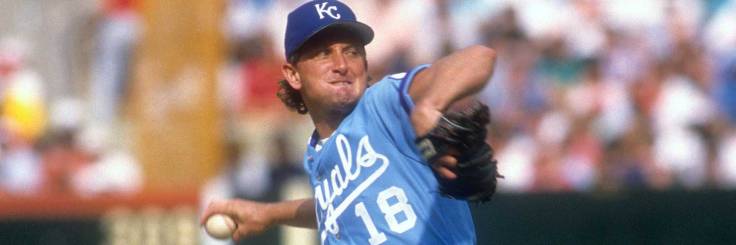
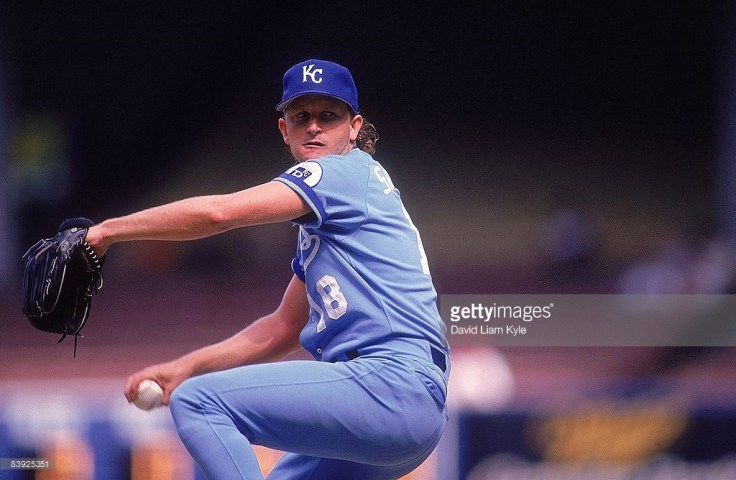
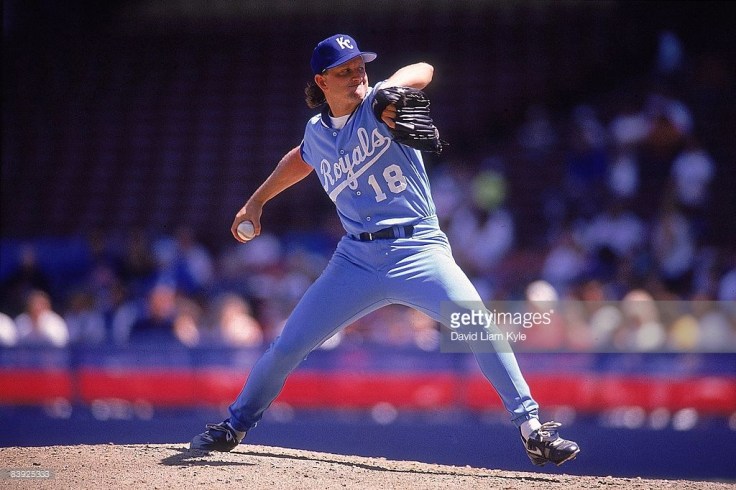
Back in the spring, I got to thinking about the history of the Kansas City Royals and how it was embedded into the fabric of my fandom as much as anything else. In the past I have done pieces on Hal McRae and have taken a look back at the history of the team, both at shortstop and a ‘Where are They Now’ piece as well. But I really wanted to dive into the past a bit more here on the blog and knew that during the season wouldn’t exactly be an opportune time to do that. Instead, I decided to wait until the off-season to get started with a monthly segment that will be called ‘Royals Retro’. Once a month, I’ll take a look back at the career of a past Royal who deserves to have a light shined on their career. I honestly couldn’t think of a better candidate to start off with than possibly the greatest pitcher in Royals history, Bret Saberhagen.

MLB Photos Archive

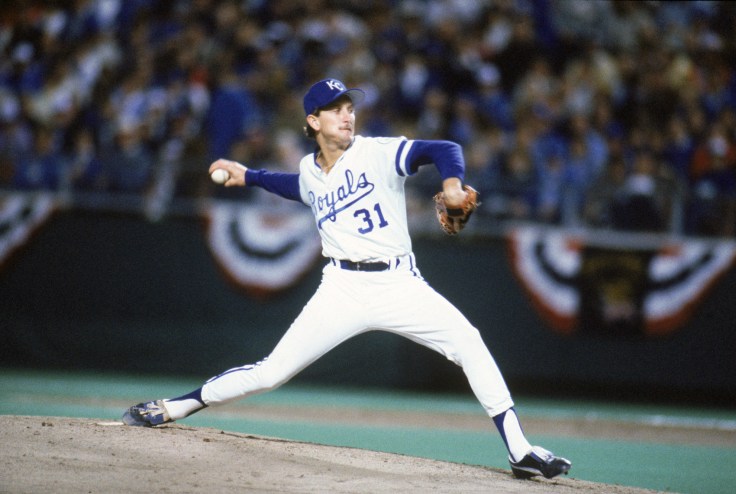
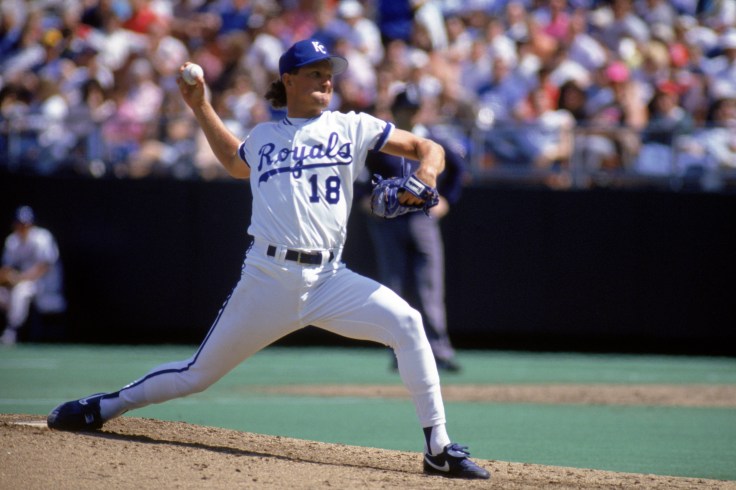
Saberhagen wasn’t a glorified first round draft pick by the Royals as I assume many would think he was. Instead, Bret was drafted by Kansas City in the 19th round of the 1982 draft, a high school pitcher out of Reseda, California. Saberhagen would sign late in July of that year, but wouldn’t make his professional debut until the 1983 season. In fact, 1983 would be Saberhagen’s only year in the minors, starting 27 games, posting an ERA of 2.55 over 187 innings, averaging 6.3 strike outs per 9, 2.3 walks per 9 and a WHIP of 1.134. Saberhagen took the fast track to the major leagues, as he would make his debut in Kansas City just one year later in 1984, splitting time between the rotation and bullpen for the Royals. He would throw 157 innings over 38 games (18 games started), posting an ERA+ of 115, striking out 4.2 batters per 9, and a FIP of 3.64. As probably expected, Saberhagen put up slightly better numbers in his 20 appearances out of the bullpen, posting an ERA of 2.32 over 54 innings, while averaging 4.1 strike outs per 9. One aspect of his game that was evident even early on in his career was how Sabs was good about trusting his defense and making pitches for the batter to put in play. Spanning his career, Bret’s ball in play percentage was on average anywhere from mid 70% to upper 70%; during his rookie year, it sat at 79%. Saberhagen would also make his first postseason start, throwing 8 innings while only allowing 3 runs, 2 earned. Nothing overtly stands out in his 1984 numbers that showed how he would break out the following year, but it was at least obvious that the Royals had a keeper.

Kansas City Royals

Saberhagen would enter his age 21 season and it wouldn’t take long for him to become the Royals ace. By the end of the season, he would lead the American League in FIP, WHIP, walks per 9 and strike out to walk ratio. He would also rack up an ERA+ of 143, an ERA of 2.87 and would win his first Cy Young award while coming in tenth in the AL MVP voting…basically on two pitches:

“The year Bret won 20, he relied mostly on two pitches: his fastball and his changeup, which he throws extremely well,” said Kansas City pitching coach Gary Blaylock. “Even though he also threw a curveball and a hard slider, he never really had control of either of them. Too often they were just waste pitches.

The icing on the cake was during the Royals playoff run that October. During the World Series in 1985, Saberhagen would make two starts, throwing two complete games, including a complete game shutout in Game 7 to help Kansas City take their first championship. Bret would end up MVP of the World Series, while his wife would give birth to the couple’s first child, Drew William, on the night of Game 6. All in all, it felt like the beginning of a very prosperous career for the young righthander.

kc4

But Saberhagen would fall back in 1986, as a nasty combination of struggles and injuries limited him to 25 starts and 30 appearances overall. Injuries were the biggest issue, as Bret dealt with shoulder, elbow and foot problems and contributed to a 4.15 ERA, a 102 ERA+ and just 2.0 bWAR, a year after racking up an impressive 7.3 bWAR. Many wondered  back in ’86 if success had spoiled Sabs, but Saberhagen was just as unsure as anyone else:

“Everybody’s trying to come up with a solution or theory of what I could have done to change things,” Saberhagen said before the Kansas City Royals met the Angels Tuesday night in Anaheim Stadium. “When you’re not going as well as you should be, everybody shines the light at you and asks why.”

1986 would also be the beginning of weird odd year/even year pattern where it concerned his success. It appeared over time that Bret excelled in odd years, while struggling during even years. This odd phenomenon would continue throughout his Kansas City career.

Kansas City Royals

1987 saw Saberhagen restore his old glory, throwing an impressive 257 innings over his 33 starts, compiling 15 complete games, a WHIP of 1.163, an ERA+ of 136 and 8.0 bWAR. Bret would also earn his first All-Star nomination and a WPA+ of 19.1. A big part of his success that year was the added use of a curveball, a new addition to his pitching repertoire:

“That’s why we decided to take the hard slider away from him in spring training and have him work on perfecting his curveball, which actually fits his mechanics a lot better,” Blaylock continued. “Now he can consistently get hitters out with his curveball, where before it was just there. I won’t say that’s the chief reason for Bret’s fast start this season, but that’s part of it.”

It also appeared that any distractions he had in ’86 were in the rear-view mirror:

Saberhagen reportedly is also a lot more disciplined on days when he is scheduled to work than he was last year, when on at least one occasion he came to the park early, not to work on some of his problems, but to film a car commercial. This year he definitely seems more organized, more able to block out distractions, and more willing to challenge the hitters with a fastball that has been clocked as high as 96 m.p.h.

The one downside to 1987 was a shoulder injury in the second half of the season that affected his performance on the field, as only 4 of those 15 complete games were in the second half. Saberhagen would also allow more hits, runs and home runs in the second half, all in 42 less innings than he had in the first half.

kc6

The pattern would continue in 1988, as Bret struggled, allowing the most hits in the American League and giving up the most runs in his career. Saberhagen would post an ERA+ of 106, a FIP of 3.08 (which actually wasn’t that bad) and a bWAR of 3.8. The good news was that he stayed healthy and that health would remain as he ventured into 1989. ’89 would be his career year when it came to numbers, as he would lead the American League in wins, W-L%, ERA, complete games, innings pitched, ERA+, WHIP, FIP and strike out to walk ratio. His bWAR that year was the highest of his career, 9.7, as he would earn his second Cy Young award, while earning his first Gold Glove and finishing 8th in the AL MVP voting. From July 26th on, Saberhagen would compile four shutouts and only once in a game over that period would a team score more than two runs on him. In many ways, 1989 was the year that Saberhagen went from being a really good pitcher who won the Cy Young award at one point to one of the best pitchers in the game and an elite ace. Most Royals fans will discuss his 1985 campaign when talking about his greatness, but 1989 was easily his best year.

kc7

1990 was the expected off-year for Saberhagen, as he would appear in just 20 games while throwing 135 innings. The one positive for him was his second All-Star game appearance, one in which he would pick up the win for the American League. Bret would pitch in one game during the second half before being shelved, as he would have successful arthroscopic surgery on his elbow in July. At this point, he was 26 and the litany of injury issues were starting to pile up.

kc8

1991 would be Bret’s final year in Kansas City and as patterns go, it was another solid season. Saberhagen would throw 196 innings in 1991, with seven complete games, an ERA+ of 135, a WHIP of 1.070 and a bWAR of 5.1. The crowning moment for him that season was his first career no-hitter, as he blanked the Chicago White Sox, 7-0. All these years later and it is the last no-hitter thrown in Royals history. Bret really didn’t think about getting it until about the 7th inning:

“The funny thing is that once we got to the seventh inning — and I’d been at that point a few times before in my career (with a no-hitter) and I’d never been able to finish it off — I started to think about getting that darn thing,” Saberhagen recalled. “So at that point, I told myself I was going to go at every batter like he was the last batter of the game.

The toughest out might very well have been the final out:

“It was a breaking ball to Frank, and he hit the ball to Terry Shumpert at second base,” Saberhagen recalled almost 23 years later. “Terry got it and fired to first and that was it. Such a cool feeling.”
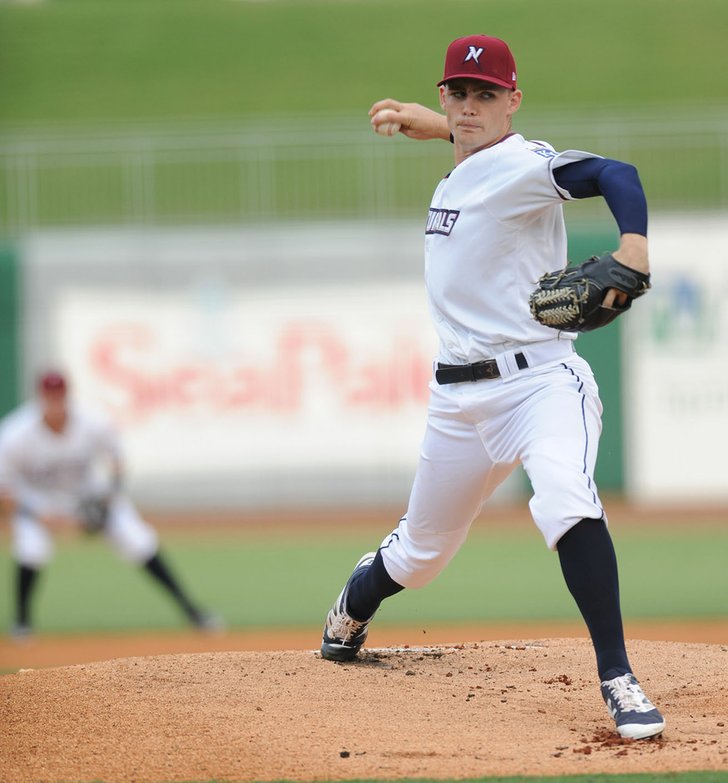
How ironic, 25 years later, that this would be just a few months before Saberhagen’s time in Kansas City would wrap up. It seems fitting that possibly the greatest pitcher in Royals history would throw a no-no in his final year as a Royal.

kc9

On December 11, 1991, the Royals shockingly traded Saberhagen to the New York Mets (with Bill Pecota) for Kevin McReynolds, Gregg Jefferies and Keith Miller. Bret was entering his age 28 season, and while there were some concerns about injuries, this was a way to fill three holes in the Kansas City offense:

“Any time an organization gives up a player of Bret Saberhagen’s caliber, it’s a hard thing to do. But we had to take a risk and do some things that you don’t always want to do. But we feel we’re a better ball club because of it. We were able to fill three holes. The Mets probably were the only club in baseball talent-rich enough to do something like this.”

What is interesting to see all these years later is the reactions, such as this one from former Mets GM Al Harazin on whether or not New York felt like they overpaid for Saberhagen:

“I think we gave up an awful lot of talent, but we got one of the best pitchers in baseball. I’ll leave it to others to decide if we overpaid.”

It was a shocking move, even for Bret as he wasn’t expected to leave Kansas City:

“When you win a couple of Cy Young’s you start thinking maybe you’re a fixture and one of the main reasons they’ve accomplished what they have in the past.”

The move was equally as shocking for Royals fans. I remember being crushed as a 15 year old Royals fan to learn one of my favorite players was no longer a Royal. At the time I wasn’t as privy to the business side of baseball; all I knew was a player I had gotten attached to was now going to pitch in New York. So how did the trade work out? Not great for the Royals. Saberhagen would accumulate 11.7 bWAR during his time in New York, including a third place finish in the National League Cy Young voting in 1994. Miller would play parts of four seasons with Kansas City, raking in 1.4 total bWAR in that span. McReynolds put together 1.9 bWAR in his two seasons in Kansas City (and never endeared himself to Royals fans), while Jefferies had a 2.2 bWAR in his lone season in Kansas City. Jefferies at one point was considered a future star, but was a slightly above average player whom the Royals would trade the following winter for Felix Jose. Jose was an even bigger bust, posting a -0.2 bWAR during his time in Kansas City. It’s hard to say one move could lead to the downfall of one organization, but the Saberhagen trade didn’t accomplish what Royals management was hoping it would and instead began a downfall that would fall even farther in upcoming seasons.

kc10

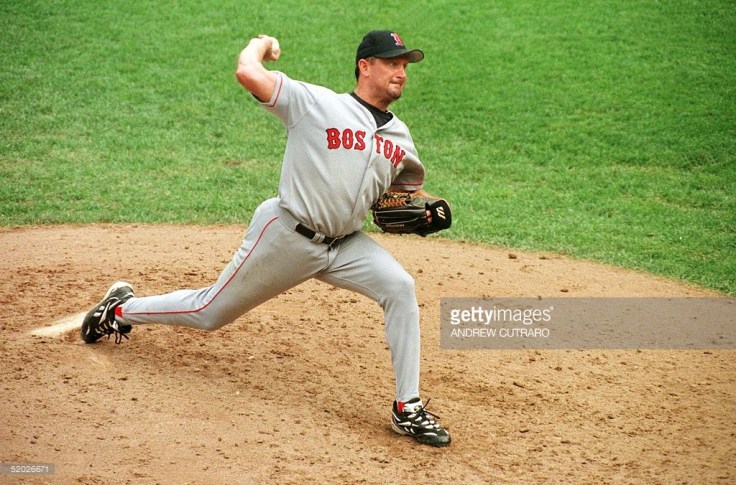
The Mets would deal Bret to Colorado during the 1995 season and would finish out the year with the Rockies, including pitching in a Colorado playoff game that fall. He would sit out the 1996 season due to injury, but would return to baseball the following year, joining the Boston Red Sox. Saberhagen would pitch part of four seasons in Boston, and while at times he would show a glint of his past success, at this point of his career he was a nice middle of the rotation starter. He did become the Sporting News Comeback Player of the Year in 1998 and would also win the Tony Conigliaro Award. He would miss the 2000 season and while he tried a comeback in 2001, he would only pitch in three games and retire at the end of the season.The latter part of his career was littered with injuries and stunted what at one time was considered a possible Hall of Fame career.
kc11

So two questions have gnawed at me over the years: one, ‘is Bret the greatest Royals pitcher in history?’ and two, ‘how close did he actually get to becoming a Hall of Famer?’. Let’s start with the first question, his place in Royals history. In all-time career bWAR, Saberhagen is just behind Kevin Appier, 47.3 to 40.8. He is fourth in ERA (behind three relievers), sixth in wins, fourth in win-loss%, 1st in WHIP, 2nd in walks per 9, 6th in innings pitched and fourth in strikeouts. At this point, it is pretty close between him and Appier, so I’m going to venture to the advanced side of things. Saberhagen is 5th in team adjusted ERA+ (second behind Appier for starters), first in team FIP and third in WPA. With all these numbers at hand, I would say in a very close race that Kevin Appier might just slightly edge out Bret for being the greatest Royals starting pitcher of all time. That also tells you how super underrated Appier really was.

kc12

So how about the Hall of Fame? Going off the great website Hall of Stats, Saberhagen is in, as they gave him a Hall Rating of 122, as they take the top 217 players (the amount of players currently in the Hall of Fame) based just off of their career statistics and nothing else. Their formula?:

The Hall of Stats uses a formula called Hall Rating to rank every player in baseball history. Hall Rating combines the value of a player’s peak and longevity into a single number that represents the quality of that player’s Hall of Fame case. It’s not perfect, but there’s a lot to be said for rating all players in history according to the same objective criteria.

Now this factors in both longevity and peak of career, which has become more and more important over the years. Saberhagen’s case is 62% peak and 38% longevity and by their Hall Ratings he is 152nd all-time, 134th among eligible players and 45th among pitchers. Saberhagen will be eligible for the upcoming Today’s Game Era Committee, but the likelihood of him getting voted in is probably pretty slim. What this does tell us though is that his battle with injuries late in his career probably hurt his case and has made many voters ignore his numbers during his peak. The good news is that Saberhagen is already in the Kansas City Royals Hall of Fame, which is a great honor in Kansas City and was also voted one of the ‘Franchise Four’ for the Royals back in 2015.

MLB: World Series-San Francisco Giants at Kansas City Royals

For a number of years, it felt like the Royals had forgotten about Saberhagen and his place in the team’s history. There were a few public acknowledgements, but that was about it. It always bothered me, considering his place in franchise history. Luckily, over the last few years while the Royals have made their epic playoff runs, Saberhagen has continuously been seen at Kauffman Stadium. After all these years, it is still great to see ‘The Kid’ at the stadium, even for just a moment. I’m sure a kid from California never imagined while he was growing up that he would become such a large part of the fabric of a team in the midwest, but he has. When you talk about great Royals pitchers, names like Splittorff, Leonard, Busby, Appier and Greinke are often mentioned. But for me, the conversation started and ended with Saberhagen…and it always will.


For The Love Of The Game

kc3

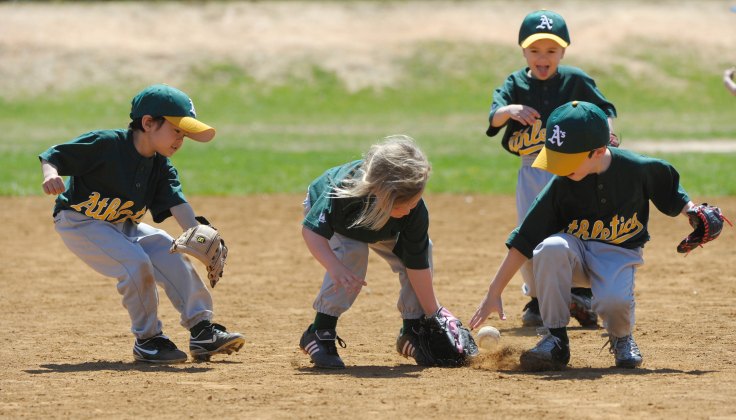
Normally in this space I discuss professional baseball, breaking down the game in about any form or fashion. Without a doubt I am a ‘seamhead’, as everything about the game encompasses my life for the entire twelve months of the year. As much as I love baseball, I have a firm grasp of the bigger picture, which is that at the end of the day it is still “just a game”. With that being said, I have become increasingly disappointed with many of my fellow adults who can’t separate the level of importance for sports, most notably when it comes to our children playing these sports.
kc4

Traveling youth baseball squads have become all the rage in youth sports and it can start as young as 9 years old. Traveling squads have become year round for many areas and have taken a bite out of local community baseball leagues. Some of these teams can play up to 120 games a year, which is more than most minor league teams play. There are many facets of this that bother me, none more than the cost for these leagues. So if you want your kid in a traveling league, what will it cost you? From the Washington Post in 2014:

Travel ball, by contrast, is not cheap — participation fees average about $2,000 per player per year. And teams may invite players from anywhere in the region. Since tournaments and games are usually in other towns, players and their parents must spend many hours commuting.

The cost is a bigger issue than just what appears on the surface. One of the issues that plagues Major League Baseball is the lack of African-Americans playing baseball today. In 2016, only 8% of the opening-day rosters were of African American descent, which is miniscule in comparison with the mid-1970’s, when 27% of major league players were African American. Traveling squads can be an issue for many inner city youths, as can be attested by former National League MVP Andrew McCutchen. Back in 2015, McCutchen talked about how his parents could not afford for him to be on a traveling team when he was a kid, which would lessen his chances of a scout seeing him perform. McCutchen talked about how the money just adds up after awhile:

But all the scraping and saving in the world wasn’t going to be enough for my family to send me an hour north to Lakeland every weekend to play against the best competition. That’s the challenge for families today. It’s not about the $100 bat. It’s about the $100-a-night motel room and the $30 gas money and the $300 tournament fee. There’s a huge financing gap to get a child to that next level where they might be seen.

McCutchen was lucky, as an AAU coach saw him play and when he found out that Andrew’s family could not afford the squad, Jimmy Rutland paid for him to be on the team:

My dad told him that it was just too expensive, and coach Rutland basically took me in as if I was another one of his sons. He helped pay for my jerseys and living expenses. My parents took care of what they could, which was basically just money for food.

This is just one issue hitting low-income families, who can’t afford for their child to play on these teams. But it is just one issue that is on the table.

Photo by Jon L. Hendricks

Another issue at hand is the effect this has on these players bodies. If you want to point at a big factor in the abundance of arm injuries in baseball these days, look at how kids are treated when it comes to pitch counts. Jeff Passan wrote a great piece for Yahoo Sports back in June (a piece I am going to recommend you read; just click on that link) about how a high school Junior was allowed to throw 157 pitches in a game for them back in the spring. Let me put this another way: a youth whose body is still developing was allowed to throw more pitches in a game than even a major league pitcher does:

Because Colby Pechin isn’t unique, and overuse in all forms – high single-game pitch counts, throwing multiple times the same day, too many pitches clustered among multiple days, playing competitively year round – pervades the youth-baseball landscape. This is the worst time of the year for it, with high school teams trying to stay alive and universities aiming for the College World Series. Previously the headquarters of arm abuse, professional baseball is today far and away the safest place for a pitcher.

If you aren’t alarmed yet, read on:

A 2015 paper in “The American Journal of Orthopaedics” found 56.8 percent of Tommy John surgeries between 2007 and 2011 were on 15- to 19-year-olds, and doctors say that number is bound to rise in coming years.

Now think about this: would you want your child to play on a year-round team if that high risk of Tommy John Surgery could be looming in their future?

One of the most resonant messages of the silly season came from an Illinois man named Thomas Blamey. In a Facebook post that has been shared more than 70,000 times, Blamey wrote what amounted to a public apology to his 17-year-old son Matt: “After I stopped being Matt’s coach at age 14, I allowed coaches to over use him. I take the blame. I knew his pitch counts like my own SSN. And because I didn’t want to embarrass him or have his coaches think I’m a crazy dad, I let him throw until the coach decided to pull him. And often times that was after the game ended. Here is what can happen.”

All this for what? The likelihood your child is going to play even college ball is slim, let alone playing professionally. So why are parents so gung-ho on having their kids be a part of a traveling team? Unfortunately, there is a selfish response to this question.

kc6

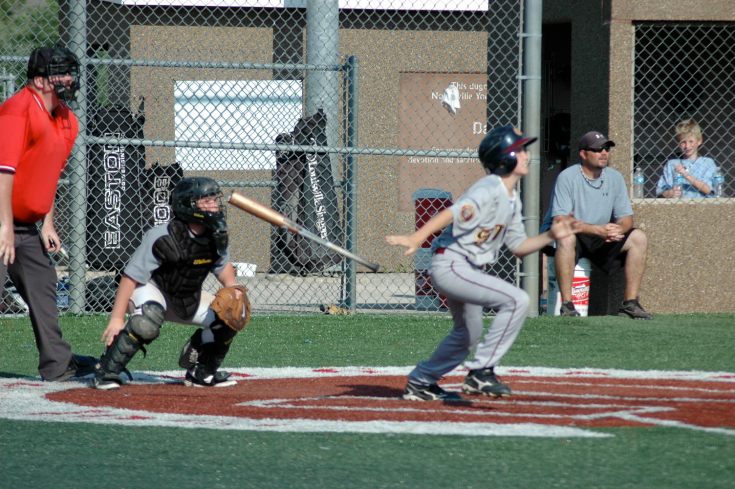
Now before we go into the factors that might be at play, I want to stress that I believe most parents believe they are being supportive of their kids and truly just want them to exceed past the level they accomplished. Unfortunately, many times it does not play out that way. Just in the short span I have attended games in which my son is involved, I have seen a number of different parents at these games. The ones that concern me are the super-competitive ones. They normally played sports themselves and probably have pushed their kid into playing as well. Hey, nothing wrong with that as long as you let them go out and play. But certain parents don’t stop there, as they are the ones constantly pushing their child, never being satisfied with how they perform. I’ve often referred to them as the ‘Al Bundy’s’ of the parenting world. Most were star athletes in high school and never accomplished more than that, athletically and in life. These parents are some of the worst because they are past the point of realizing it is just a game, and believe they know better than any coach or official that is in their child’s presence. There is also the parent that loves the social aspect of their kid playing at a higher level of athletics. This gives them a chance to be in a social group or club, all while acting like they are special because their child is on this team. Like the parents before, they focus on themselves quite a bit in these situations and less on the child’s level of interest in the sport or why they are playing. In many ways, parents are the biggest problem with youth athletics in this modern age. I for one can say I have seen my fair share of improper behavior by parents and am disgusted every time I see it.Once again, there needs to be some perspective here, most notably that your kid will more than likely never play baseball or any other sport past high school.

kc7

Not all parents are this way but it is always the bad seeds that you remember when it is all said and done. I have loved the fact that my son has wanted to participate in athletics over the years but we’ve started seeing a shift in how much he wants to play. He’s entered high school and played football this past season, mainly on the junior varsity squad. He initially wanted to quit early in the season, but we talked him into staying in, mainly because we wanted him to hold up his commitment. When he was talking about quitting, one of the phrases he uttered to me was “…they just take it way too serious. I want to play, but I want to just go out and have fun.” It is very obvious that he enjoys the social aspect of sports but you probably won’t find him putting in extra work for it. He is just not competitive in that manner and we haven’t pushed him to be. You wonder how some of the kids who are pushed would feel if their parents sat down with them and discussed what they really wanted to do.

kc8

By no means am I saying kids shouldn’t be competitive or want to push themselves harder to win. I believe being involved in sports has had a positive effect on my son and I’m glad he has at least gone out and attempted to see what he can do. But I also feel like there needs to be more regulations and maybe a lesser focus on traveling squads. When you really sit down and think about it, if you have your kid participating in a traveling team, they have a certain set number of hours they have to set aside each week for practice and/or games. Add in school and you factor in time spent at school, school activities and homework. If your kid is also in high school, throw in a social life and possibly even dating. Then…remember how you were as a teenager. Those teenage years are some of the hardest years of your life, as everything is changing and changing on a constant basis. So you want to toss in the pressure of being on a traveling team and everything that involves? I know I couldn’t have handled that as a kid and it feels like a lot to throw at these still developing humans. Keep your kids in sports and encourage them to work their hardest. Teach them the wrongs and rights and playing these games that are a fun getaway from reality. But also teach them that it is just a game and just a small piece of a much bigger picture. I always tell my son I have just two rules when he plays: try your hardest and have fun. Asking anything more of them just feels like you are trying to accomplish something for your own cause.

Fall Surprises: 2016 Playoff Notes

kc1

Here we are again, on the verge of another World Series. As much as I love Spring and the beginning of the baseball season, October is still the best time to be a fan of the sport. Like most ‘seamheads’, I have been spending the last few weeks enjoying postseason baseball and all the intrigue and drama that surrounds it. Since I’ve been fairly silent this month (mostly due to other responsibilities), I thought I would pass along some of my thoughts from the playoffs so far, as we get ready for one long-standing streak to fall once the Fall Classic is over, as either the Chicago Cubs or Cleveland Indians eviscerate a drought that has been going on before even some of our parents were born. So what’s been on my mind this October? All of what is to follow and more…

MLB: Baltimore Orioles at Tampa Bay Rays

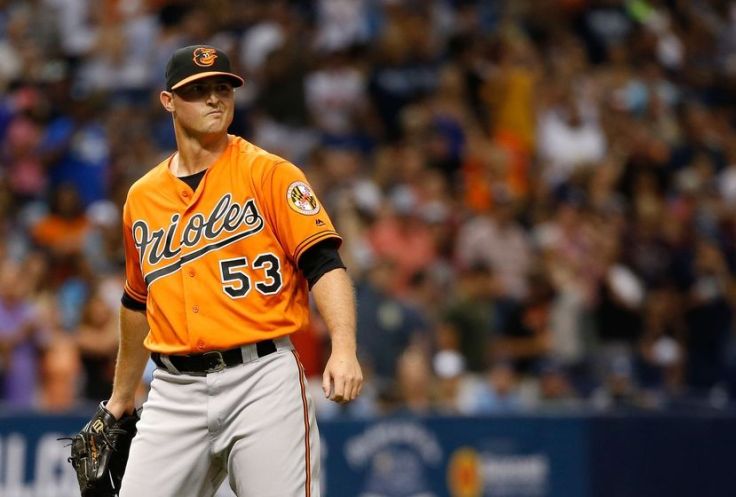
  • Weeks later and I still have a hard time figuring out how Buck Showalter went the entire American League Wild Card game without bringing in stud closer Zach Britton. Look, I get that most managers like to wait (especially on the road) till the very end of the game to bring in their closer, but when the playoffs are involved, you don’t chance it the way Buck did. There has been a movement for managers to use their closers in a different manner than most are accustomed to; not waiting for a save situation and using your best pitcher in the most high leverage situation possible. Showalter, who I consider to be one of the best managers in the game and one who isn’t shackled to conventional thinking, seemed to fall back into a frame of mind that is actually fairly normal in today’s game and it might have cost his team the chance to advance to the ALDS. The hope is that Showalter’s mistake (and yes, it was a mistake) might shine a light on reliever usage and force managers to use their closers in better situations than just the 9th inning.

kc3

  • On the other end of that spectrum is Terry Francona’s use of Andrew Miller this postseason. Miller, the ALCS MVP, has been used as early as the 5th inning during the playoffs, many times for multiple innings. It might be considered unorthodox by some, but it has done nothing but garner success for Francona and the Indians. One has to wonder if teams will be on the lookout for relievers like Miller, someone with electrifying stuff and the ability to be used for more than just one inning at a time. While the argument could be made that you can’t use your bullpen during the regular season the way most teams do in October (and there is at least some truth to that), it doesn’t mean that you won’t see more managers trash the old, antiquated system and start using some relievers the way Miller is used. While Showalter was the example of what not to do with your closer, Francona is the example that managers around the game should be trying to copy when 2017 rolls around.

USP MLB: ALDS-TORONTO BLUE JAYS AT TEXAS RANGERS S BBA USA TX

  • The Texas Rangers collapse in pitching took me by surprise this month. I figured with the front two of Cole Hamels and Yu Darvish and a bullpen that had been racking up a 35 inning plus scoreless streak, this team could be a dangerous one in the playoffs. Instead, Rangers pitching gave up 22 runs in three games and the team from Arlington limped out of the playoffs. While some of the credit should go to Toronto’s offense, the Rangers pitching should get more of the credit for the Blue Jay’s sweep than anything else. One would have to think that Texas will spend the offseason fortifying the rotation and making sure it is stronger headed into the next season.

APTOPIX ALCS Indians Blue Jays Baseball

  • Speaking of the Blue Jays, their exit from the playoffs couldn’t have come in a more appropriate manner. For a baseball fan outside Toronto, this is a hard team to like. While they are not short on talent, over the last few years we have seen the Blue Jays main hitters continuously whine and complain about one thing or another. Front and center has been Jose Bautista, a man who will never be confused with a golden gloves boxer. Bautista claimed that Toronto were victims of “circumstances” in this series and that was why their offense had gone south. Edwin Encarnacion also had to be escorted away from the home plate umpire one game, with Toronto just hopeful he wouldn’t be ejected. While there were a few pitches called strikes against the Blue Jays that might have been balls, that is a fairly common aspect of today’s game and not really something worth blaming their four games to one loss in the ALCS. In fact, Cleveland only scored 12 runs in the five games, with Toronto posting 8 runs. All the way around, it was a low scoring series. The real “circumstances” that Bautista talked about was Cleveland’s pitching  and their dominance against Toronto’s bats. Kluber, Merritt, and Tomlin all silenced the Blue Jays and when you tack on their lockdown bullpen, it was easy to see why Cleveland is headed to the World Series. A big part of Toronto’s issues lie in their leadership and their tendency to make excuses rather than owning up to their own struggles. The Blue Jays temperament just isn’t one of a championship team, and it showed in the ALCS.

MLB: NLDS-Los Angeles Dodgers at Washington Nationals

  • Has there been a more disappointing team in the postseason the last few years than the Washington Nationals? The sky seemed the limit a few years back with their blend of youngsters and veterans and two of the most intriguing players in the game (Bryce Harper and Stephen Strasburg). Instead, since 2012 the Nationals have lost in the NLDS three times. What very well could have been a dynasty has left this organization with more questions than answers. If you are Washington’s braintrust, what should you think? If you saw a team with Harper, Strasburg, Max Scherzer, Anthony Rendon, Daniel Murphy, Trea Turner and Tanner Roark, you would have to think at the least they would have made the NLCS at least once. Instead, this team now has to regroup and wonder what the missing piece is. Last year, the belief was getting rid of Matt Williams and hiring Dusty Baker would fill that needed puzzle piece. Is it the manager? Does the team need another bat? Another stud starter? Or do they need a clubhouse veteran to be this team’s glue? It will be an interesting offseason in Washington and one that might define this team’s immediate and long-term future.

kc7

  • There is no better story in the playoffs this year than the Chicago Cubs. You’ve all heard the numbers on the years of futility; their last world championship was 1908, last trip to the World Series was in 1945. Last month I mentioned I was rooting for the Cubs but even if I didn’t have the emotional connection from my youth, I would probably still want to see the Cubbies rack up their first world title of the century. It’s not just the years of bad luck and bad teams, not just the old lovable stadium or long history of the franchise in general. It is a change in the culture in Chicago, brought forth by both Theo Epstein and Joe Maddon. Maddon might be one of the great motivating managers of the last 30 years, if for no reason than how loose he keeps that clubhouse. Add in the mix of exciting youngsters and grizzled veterans and you have a recipe for not only a championship but also possibly a dynasty. I found it ironic that Chicago bounced the Dodgers from the playoffs, since the Cubs should probably thank Los Angeles for putting them in this position in the first place. If not for LA prying Andrew Friedman from the Rays, the Cubs would not have been able to get Maddon to manage this team. Maddon had a clause in his contract that allowed him to “look elsewhere for employment” if Friedman left the organization, which he took advantage of when Andrew left Tampa for Los Angeles. The Cubs swooped in, procured the services of Maddon and as they say, “the rest is history”. There are many a reason to root for Cleveland as well (The Revenge of Willie Mays Hayes?), but more than anything, this Cubs team just feels like a team of destiny. I know there will be Chicago fans who will be waiting for the other shoe to drop but…but what if there is no other shoe?

MLB: SEP 19 Pirates at Dodgers

  • Finally, one has to feel for Los Angeles’ Clayton Kershaw. Kershaw, easily the best pitcher in baseball, was the victim of Chicago’s clinching win on Saturday night in Game 6 of the NLCS and because of it the narrative will be pushed again that Kershaw is not a “big game” pitcher. The funny thing is while Kershaw has had a couple of clunkers over the years (I’m looking at you, Game 1 of the 2014 NLDS), he hasn’t been nearly as bad as some would have you believe. In his 14 playoff starts, Kershaw has 8 quality starts while he has five starts of giving up 5 runs or more. Just looking at the last two years, Kershaw has thrown 38 playoff innings, compiling a 3.79 ERA while striking out 48 and allowing a .218 batting average over that span. Sure, he isn’t Madison Bumgarner or Curt Schilling in the postseason, but he isn’t worthless in the playoffs either. Even with that being said, this year in particular should not be a determining factor on how Kershaw performs in October. He would return from a back injury that kept him out for over two months on September 9th and would allow 4 earned runs the rest of the year. So obviously Kershaw was putting up Kershaw numbers, but was he 100% healthy? I didn’t feel like he was at all this October and apparently I wasn’t alone:

That comment was from Saturday after the Dodgers loss to the Cubs to wrap up the NLCS. This also tells me that even 80-85% of Kershaw is probably better than most pitchers alive today. So the narrative for him will live on in some minds, but it probably shouldn’t. Clayton Kershaw is still the same pitcher in October that he is the other months of the year; he’s just not perfect like some would expect from him.

kc9

So here we are, just a day away from the World Series. It is also our reminder that at the most, we have only seven games left in this 2016 season before baseball takes a few months off (at least on the field). It has once again been a fun October, even without my Royals in the playoffs. In fact, it has been stress-free without my team to cheer on in the playoffs. No matter the outcome of the World Series, one team will slay a beast of a streak, one that sits at 68 years while the other one sits at 108 years. It should be a fun series, as we should see some stellar pitching and some clutch hitting. I always hope for a seven game series, so we get not only the greatest amount of baseball but also some high drama. We should get both and yes, I do believe this series could go all seven. So my prediction? The Cubs in seven. Sure, they won’t be able to clinch at Wrigley Field, but a win is a win. I look forward to the next week of action and what will ensue. No matter what, we the fans are the true winners. Thank you, baseball.

Shaking Up The Royals Roster

kc1

A few weeks have passed since the Kansas City Royals wrapped up their 2016 campaign and we’ve all had time to really digest what went wrong with this year’s team. That also means we’ve had sometime to ponder what the Royals front office should do this offseason to move forward and take advantage of the last year with Kansas City’s home-grown core that garnered them a world championship. Once the season wrapped, General Manager Dayton Moore talked to the media and one of main talking points was how the Royals could see a regression with the payroll moving into the 2017 season. This really shouldn’t be a shock to anyone who has followed this team during Moore’s tenure, as he has a tendency to temper expectations and not show his hand. Moore also discussed how the team worked with most of the world championship team intact, hoping to catch lightning in the bottle a second time. That didn’t work, obviously, but it also appears as if Moore might want to shake things up this winter, which I tend to agree with. That might mean one or two of the main core of players being traded this offseason, which I am also in agreement of. So who would I move? Well, I’m glad you asked as I have put a lot of thought into this and think I have a strategy that could put the Royals in a better position financially while also keeping the team a contender in 2017. Tread lightly, folks; I’m about to shake up the Royals roster.

kc2

Let’s start with a move you that already has been hinted at, trading closer Wade Davis. In fact, trade interest has already started to trickle out for one of the premier bullpen arms in baseball. No teams have been linked with Davis yet, but one would have to believe that some of the teams that showed interest before the trade deadline (San Francisco, Los Angeles, Washington, etc.) will probably still be interested this winter. So far during the playoffs this October, we have seen the importance of having a stellar, lock-down pen and Davis would be a great addition to about any pen in baseball. So would the Royals get a package on par with what the Yankees got for either Aroldis Chapman or Andrew Miller? Probably something close to that, although it might be a tad less considering some of the issues Davis had during this past season. Davis saw his strike out rate and average velocity fall just a tick this year while his walk rate was the highest it has ever been during his time in the bullpen. Davis did miss about five weeks with a strained forearm, which will no doubt be a concern for any team wanting to acquire him this winter. Now, I’m sure someone, somewhere is wondering why the Royals would part with one of the best relievers in the game. For one, Davis will be making $10 million this upcoming season once the Royals pick up his option, which will be a formality. Freeing up that much money will give Kansas City some flexibility and the ability to use that money on multiple players. Second, no matter what anyone tells you, the Royals still had one of the top five bullpens in the American League this past season and Kelvin Herrera showed the team this year that he is more than capable of taking over the closer’s role. Third, there has to be some concern that Davis is starting to regress, especially seeing the struggles that occurred this past season. That doesn’t mean he will be terrible this upcoming season if he is regressing, but Moore has had issues in the past dealing his All-Star closers at their peak value. Moore held on to both Joakim Soria (version 1.0) and Greg Holland longer than he should have and both ended up on the operating table. Davis not only has great value right now, but the team would be able to ditch some payroll while procuring some young talent that could be mainstays in Kansas City past the 2017 season. Moore wanted to focus on rebuilding his pen this winter, and honestly, finding a young power arm on the cheap really isn’t that hard. To make that happen, move number one this offseason should be to deal Wade Davis.

kc3

The next deal I would make would be trading shortstop Alcides Escobar. Escobar is coming off of a frustrating offensive season, putting up a line of .261/.292/.350 with an OPS+ of 70 and 0.3 bWAR. Escobar will be entering his age 30 season and defensively is still a plus defender, which should give him some value out on the market. Any team that would be acquiring Escobar would be picking him up for his defense and whatever offense he can contribute, although his best year at the plate was 2012, where he hit .293/.331/.390 with an OPS+ of 96, the highest of his career. If the Royals can find a trade partner for Esky, the team would be able to shed the $6.5 million he will earn this upcoming season (as long as the Royals pick up the option, which is expected) while hopefully acquiring a younger player. Shortstop will be taken care of in his absence, as Raul Mondesi, Jr. could slide over from second base, take over shortstop while freeing up the Royals to look for a second baseman this winter. Defensively, Mondesi might actually be an improvement at the position. Offensively, Mondesi still has some work to do (as evident by his OPS+ of 36) but it wasn’t like Escobar was producing a ton of offense. If you are in the camp of believing that Mondesi will continue to improve, you can imagine him possibly producing close to the numbers that Escobar put up in 2016. The likelihood of Moore dealing Esky is probably slim, but I am in the camp of dealing him and upgrading second base in 2017.

kc4

I would also trade Jarrod Dyson. Now, this might seem a bit odd, in the sense that Dyson is still fairly cheap ($3.45 million in 2016) and is an important contributor not only on the field but in the clubhouse. Dyson is a major role player for Kansas City and in fact lead the team in fWAR in 2016, at 3.1 with Danny Duffy a close second at 2.8. So why would I trade Dyson? Because they already have a similar player who is younger and cheaper. His name would be Billy Burns, who the Royals acquired from Oakland back in July for Brett Eibner. Burns has comparable speed and offensively appears to be on par with Dyson, if you count his 2016 campaign as an off year. Burns won’t be a free agent until after the 2020 season and earned $513K in his second year in the big leagues. Dyson, meanwhile, will become a free agent after the 2017 season and is pretty close to peak value right now. I really figured he would be traded away back in July, but nothing came to fruition, as the Royals held pat at the deadline. The Royals wouldn’t be freeing up a ton of cash by trading away Dyson, so a trade would be more about what they could get back. I would imagine a good B level prospect could be had in a deal, which would strengthen the depth in the organization. If I had my say, Dyson would become an ex-Royal this winter.

kc5

So would I deal anyone else? More than likely not, but I also believe the Royals should listen for any player, as there is always the chance a team might overpay for a key piece they want to add to their roster. Take for instance three impending free agents after the 2017 season: Lorenzo Cain, Mike Moustakas and Eric Hosmer. On first glance it would seem crazy to deal any of these three, as the offense struggled in 2016 and need as many quality bats as possible. But you could make a legitimate argument for any of the three, especially if the haul garners them some big name, major league talent. You could argue that Cain is injury prone, and the likelihood that he would get a long-term contract from the Royals while entering his age 31 season would seem a long-shot. While I believe that Kansas City really missed Moustakas’ bat this season, you could also argue that the Royals have two younger players (Cheslor Cuthbert and Hunter Dozier) who are third baseman that could take over the position at a much cheaper price. While the Royals probably don’t have a first baseman in their system that will be ready for the big leagues by the start of the 2017 season, Hosmer is enticing trade bait in my mind for a couple of reasons. For one, he is still really young (2017 will be his age 27 season) and most teams would be more likely to take a chance on a player his age than one in his 30’s. Two, the national media seems to love this guy, no matter how much they try to hide the truth, which is that he regressed in 2016, into a league average hitter. If the Royals can get a “King’s Ransom” for Hosmer, I think they should take it. To me, he is not the player some consider him and while he might have flashes of greatness, he also has valleys of huge proportions. More than anything, he seems to struggle with change. Take last year; after his red hot start, pitchers changed the way they pitched to Hosmer, throwing less fastballs and giving him a nice diet of off-speed stuff. This started before the All-Star game and from June through the rest of the year we saw a player who produced a below league average OPS+. Ian Kennedy could also be a candidate for a trade this offseason, as the Royals would like to get out from underneath the five year deal they gave him last winter. The Royals though will probably need his innings and stability in the rotation and for the moment that might hold more value to the team than any trade they would be able to swing.

Processed with VSCO with hb2 preset
Kauffman Stadium

One of the big reasons this Royals team has been so popular with the fanbase over the last few years has been the ability to give them an emotional connection. This can also be a problem, as it will be that much harder when the front office starts dismantling the core of this team. Baseball is a business and as much as you or I would like to see these players be in Kansas City forever, that just isn’t realistic. The Royals have an opportunity this winter to shake things up, be creative and restructure the roster to make it both a contender next year and build a new core of players to carry the team past 2017. Will that happen? I have my doubts, but if I am being unbiased I know it needs to happen. What the front office needs to ask itself over the next few months is not only what will help the team contend next season, but what is best for the team in the long-term. The best thing for this Royals team is to let the heart fall to the side and let logic take over. Logic says it is time to shake up the team and deal some of their popular players. It will be shunned by some, but it’s the logical thing to do.

Blog at WordPress.com.

Up ↑