A Royal Thank You

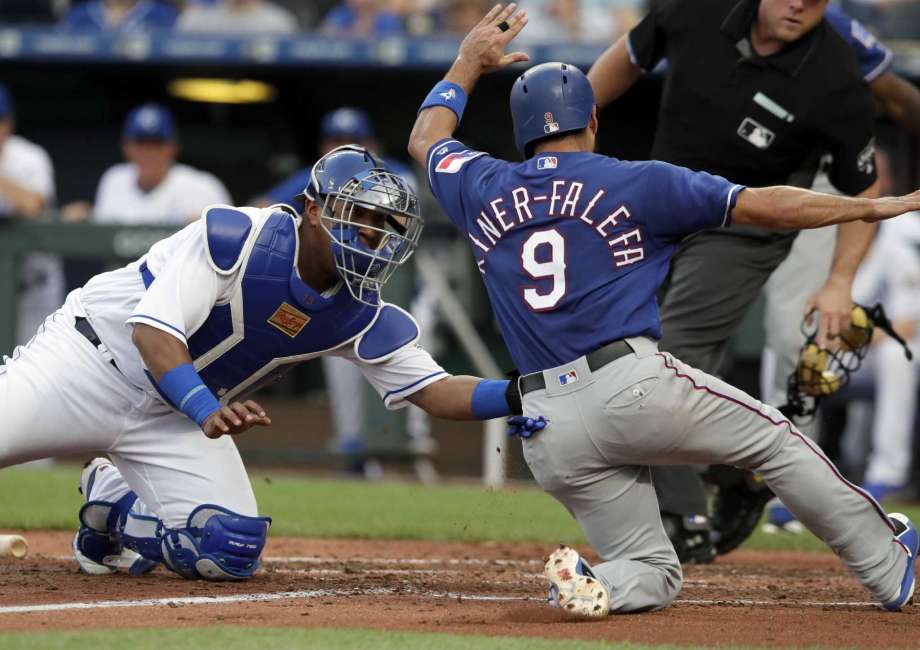
Credit: John Sleezer/KC Star

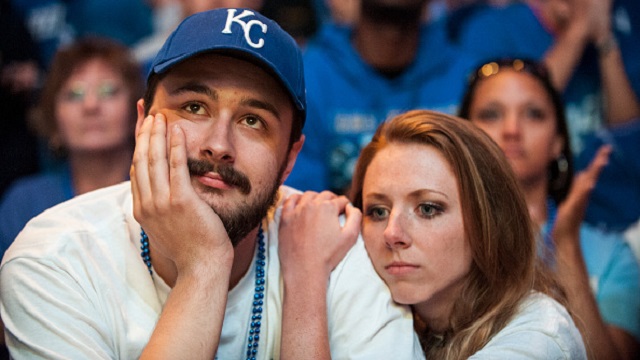
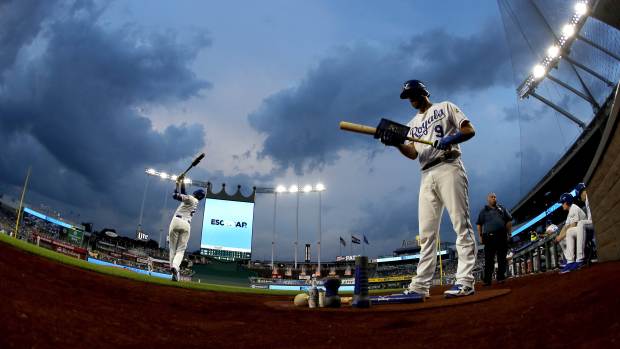
It is the norm this time of year to take a step back, reflect and ponder all that we are thankful for. When it comes to baseball that becomes even more prominent at this time, as the season has wrapped up and the yearly awards have been handed out to their (normally) deserving parties.

So with that said, I figured I would go ahead and toss out what I am thankful for this holiday season:

Credit: AP Photo/Colin E. Braley

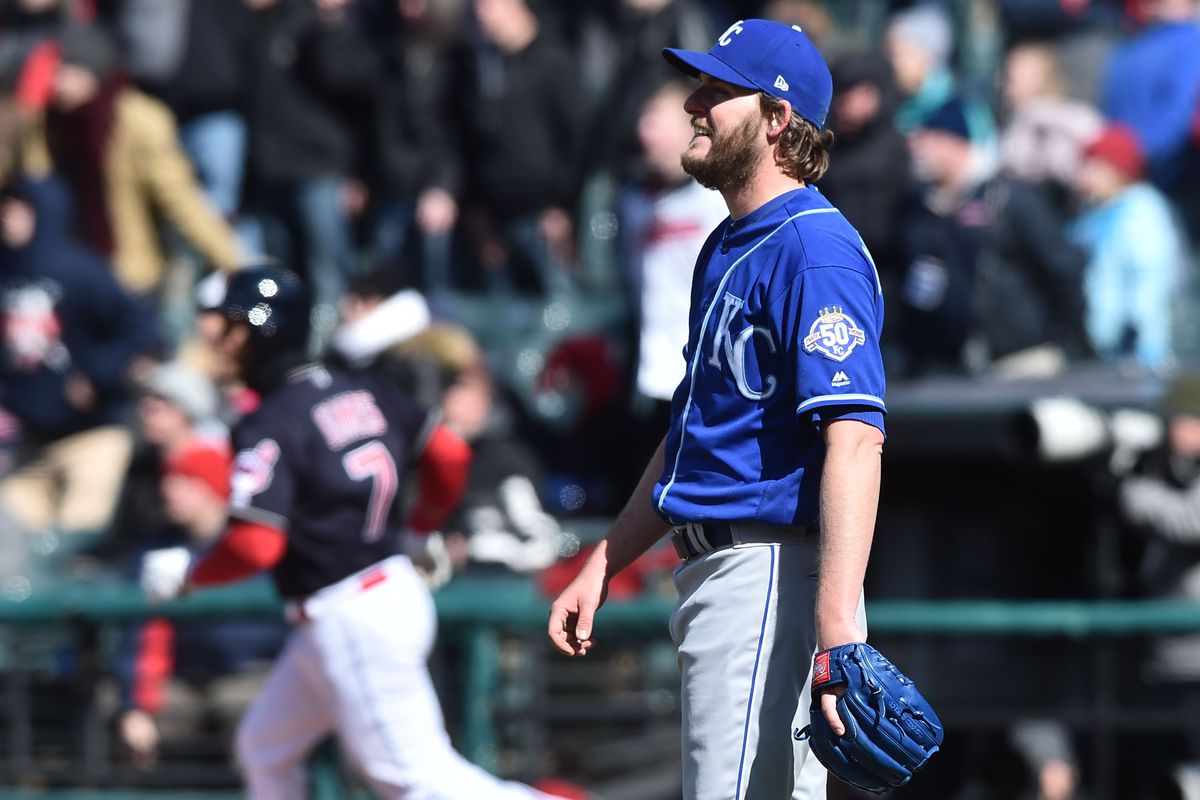
I am thankful the Royals didn’t have the worst record in baseball. Yes, it was a rough year, but there was also a glint of hope in the final two months.

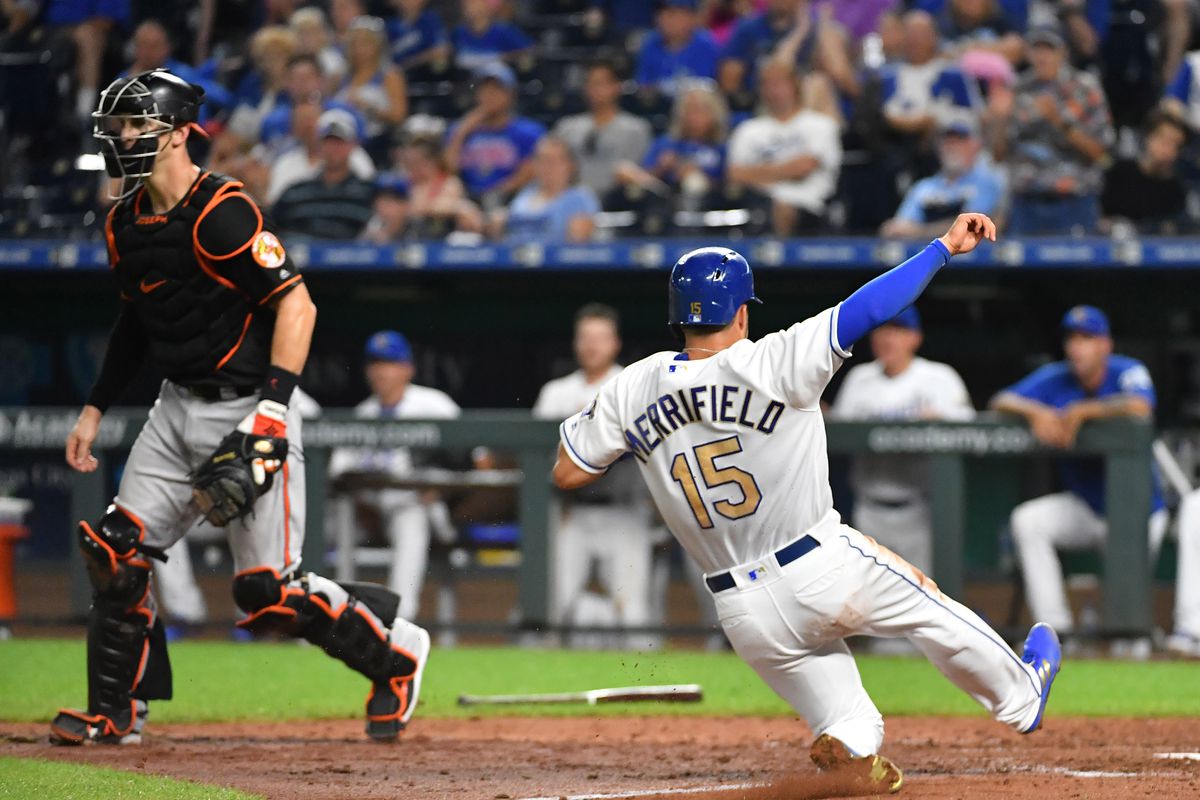
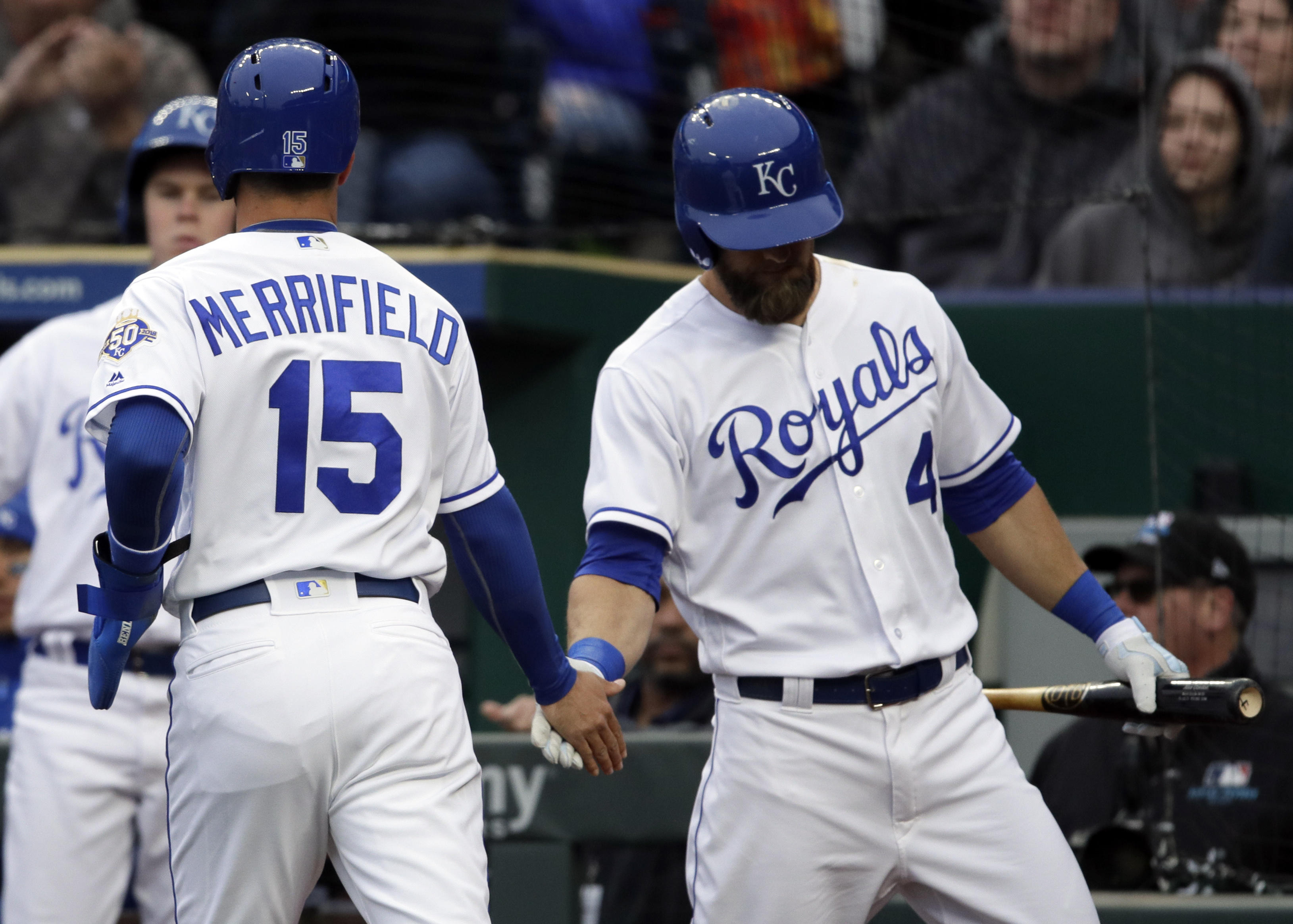
It’s hard not to be thankful for Whit Merrifield defying the odds. No one pictured Whit being a regular major leaguer, let along becoming the best player on the Royals roster. Whitley has worked himself into a five win player, and I’m impressed by that every day.

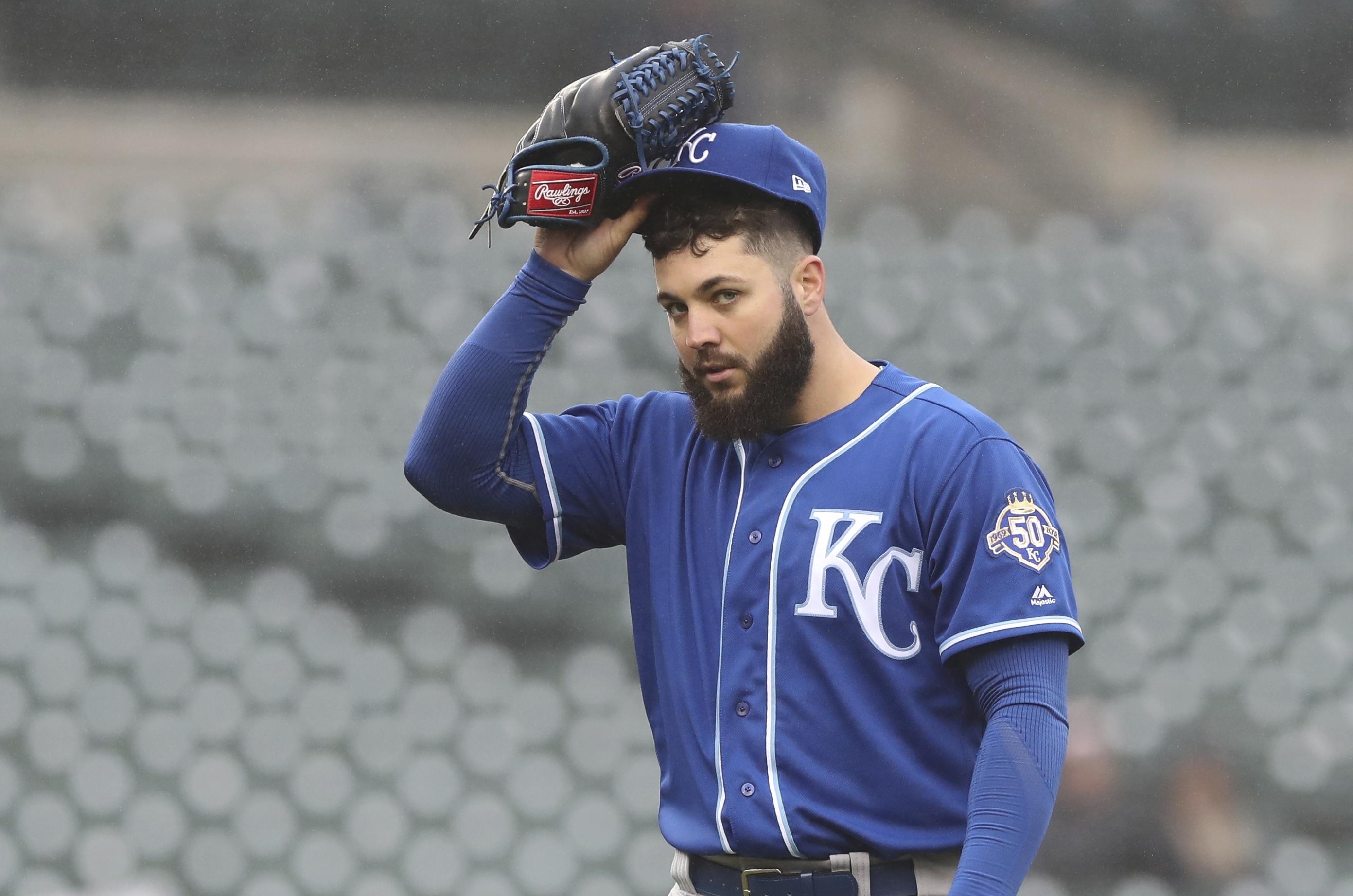
I’m thankful for still having a reason to cheer for Danny Duffy. It would have been easy to consider him a lost cause after some of the issues he incurred in 2017. Instead, Duffy is still the guy who wears his heart on his sleeve, giving to help others and working through his flaws. His character is a big reason why a lot of us still root for his success.

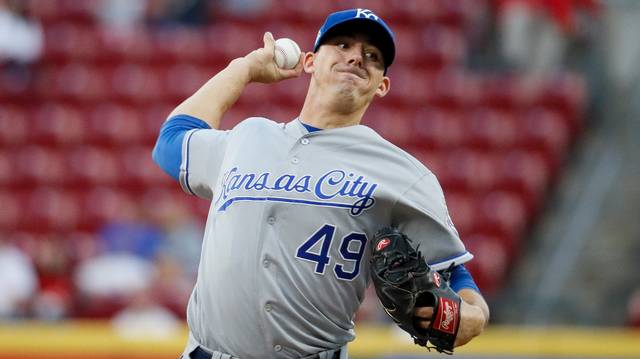
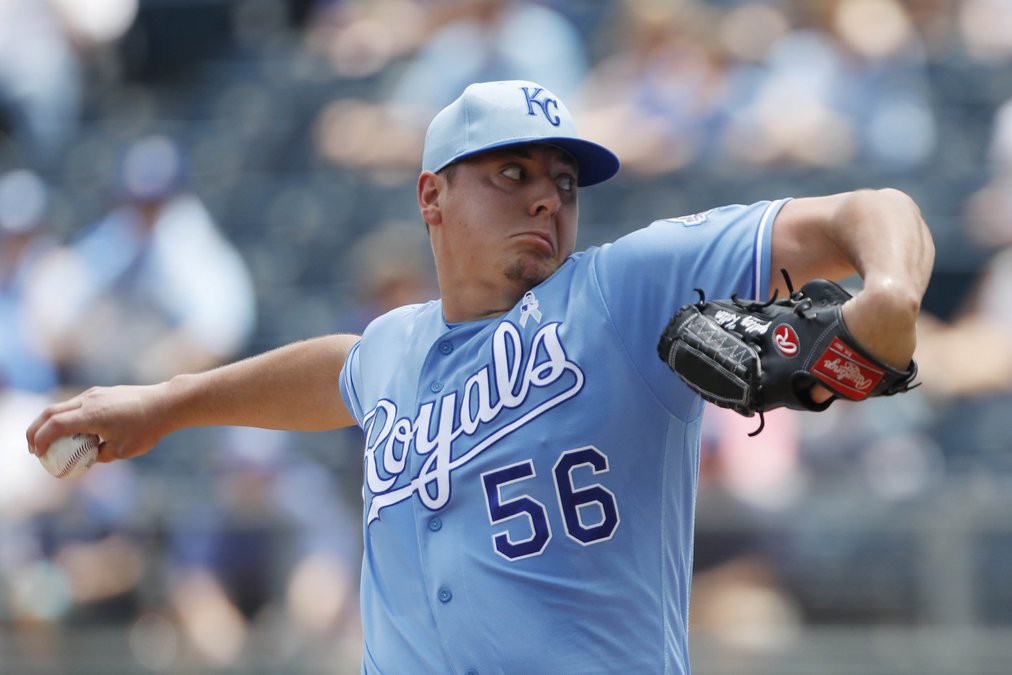
How about Brad Keller’s rookie season? One of the brightest spots in this past 2018 campaign was the performance of Keller, who was just expected to be part of the back-end of the bullpen. Instead he turned his success as a reliever into a shot at the starting rotation and then never left. His rise this season has given more hope for 2019.

Credit: 
Nick Tre. Smith/Icon Sportswire via Getty Images

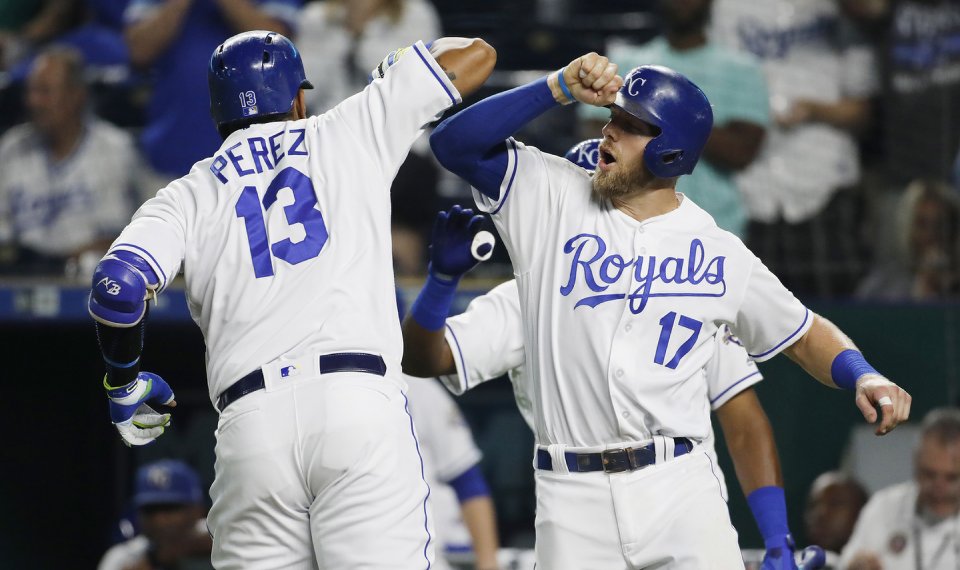
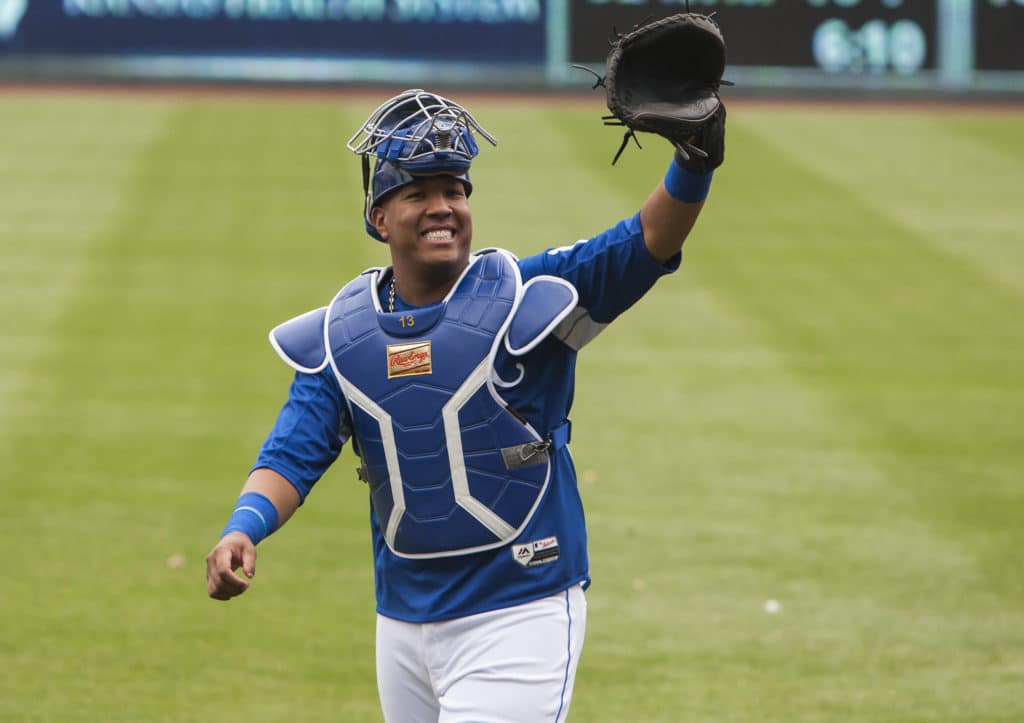
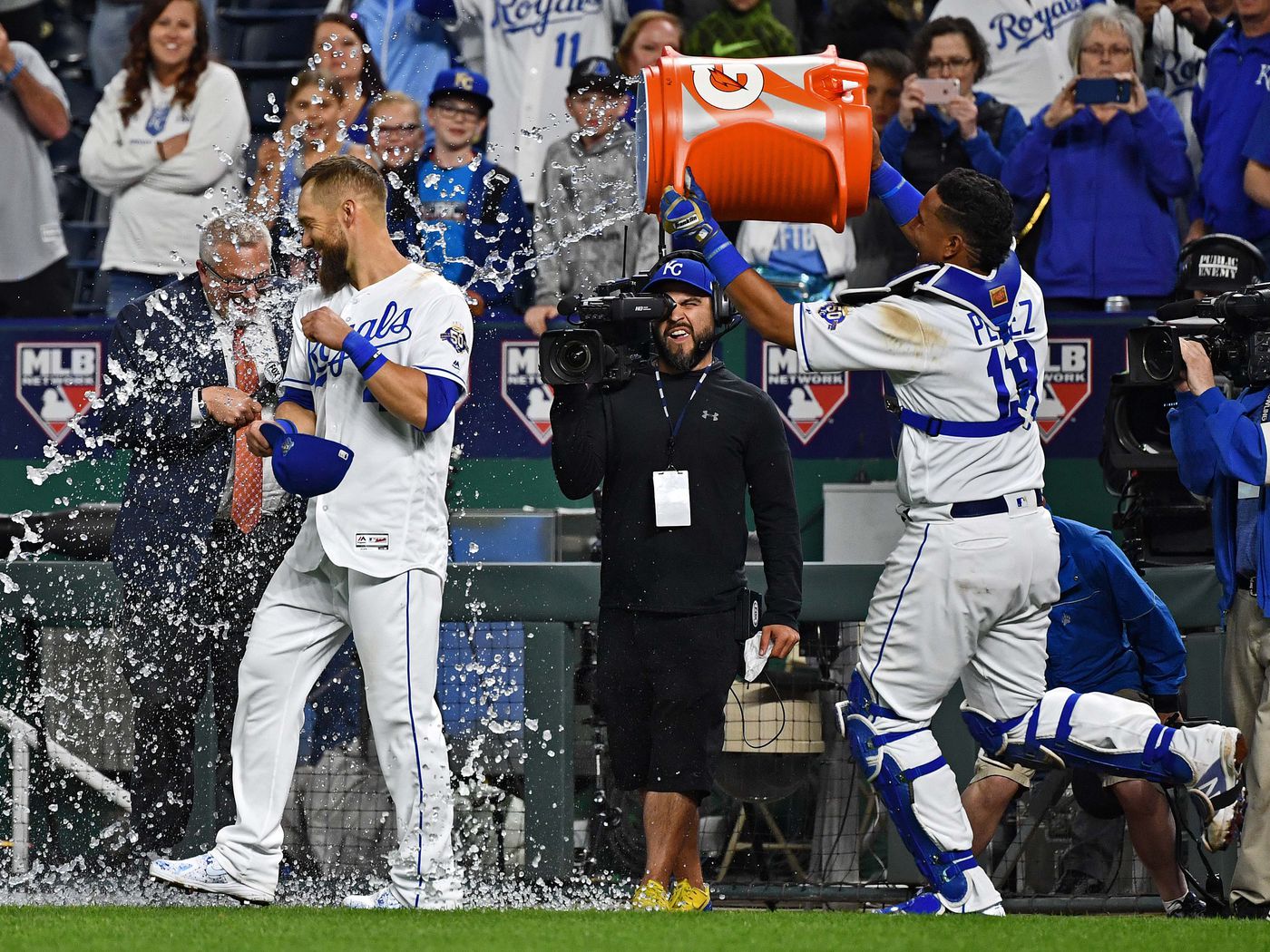
I’m thankful Salvador Perez is still smiling. It would be easy for a player like Salvy to not smile as much, considering the Royals first half and all of his friends leaving for greener pastures. Instead, he still has that childlike aura whenever he steps onto the field. Hopefully that smile never fades from his face.

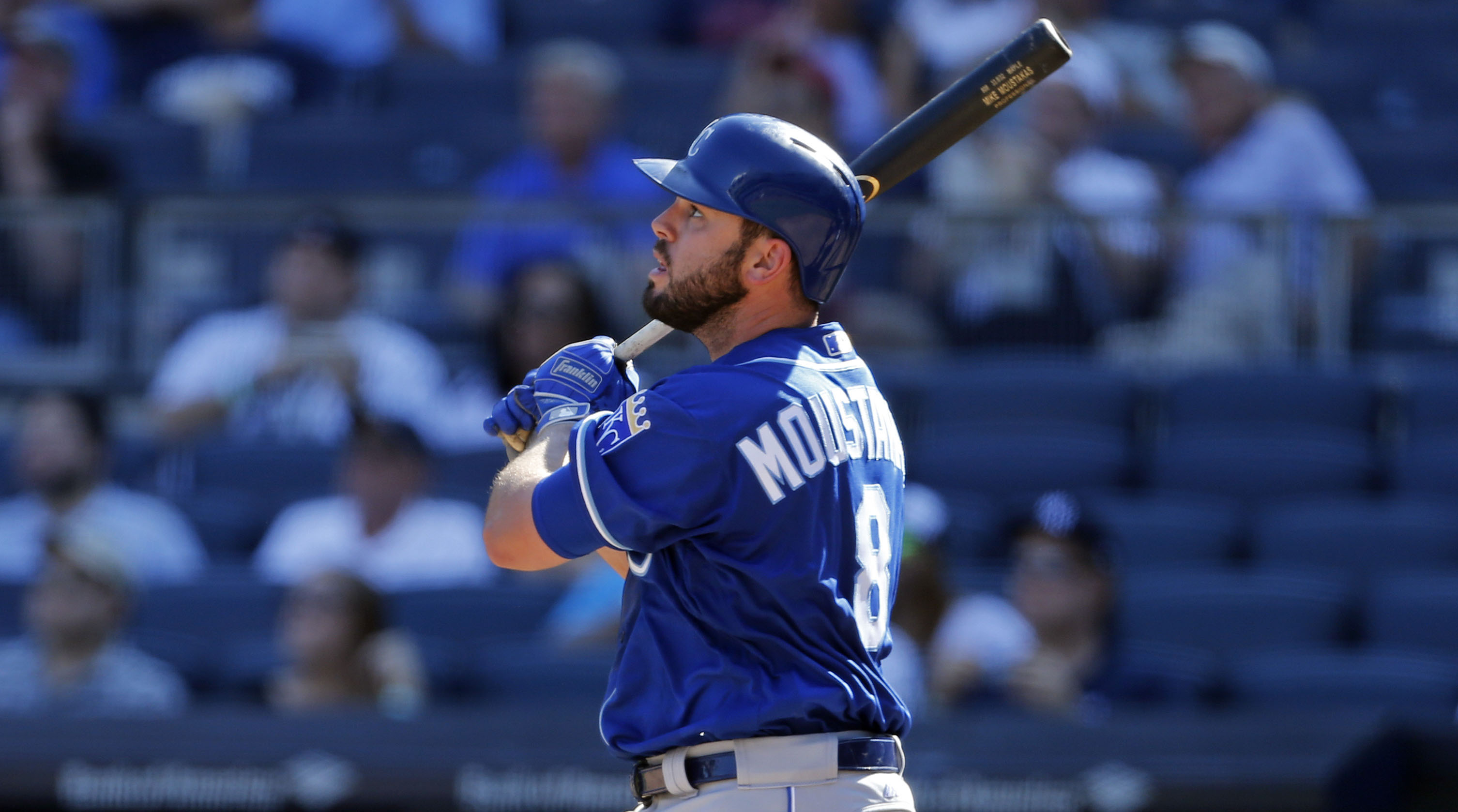
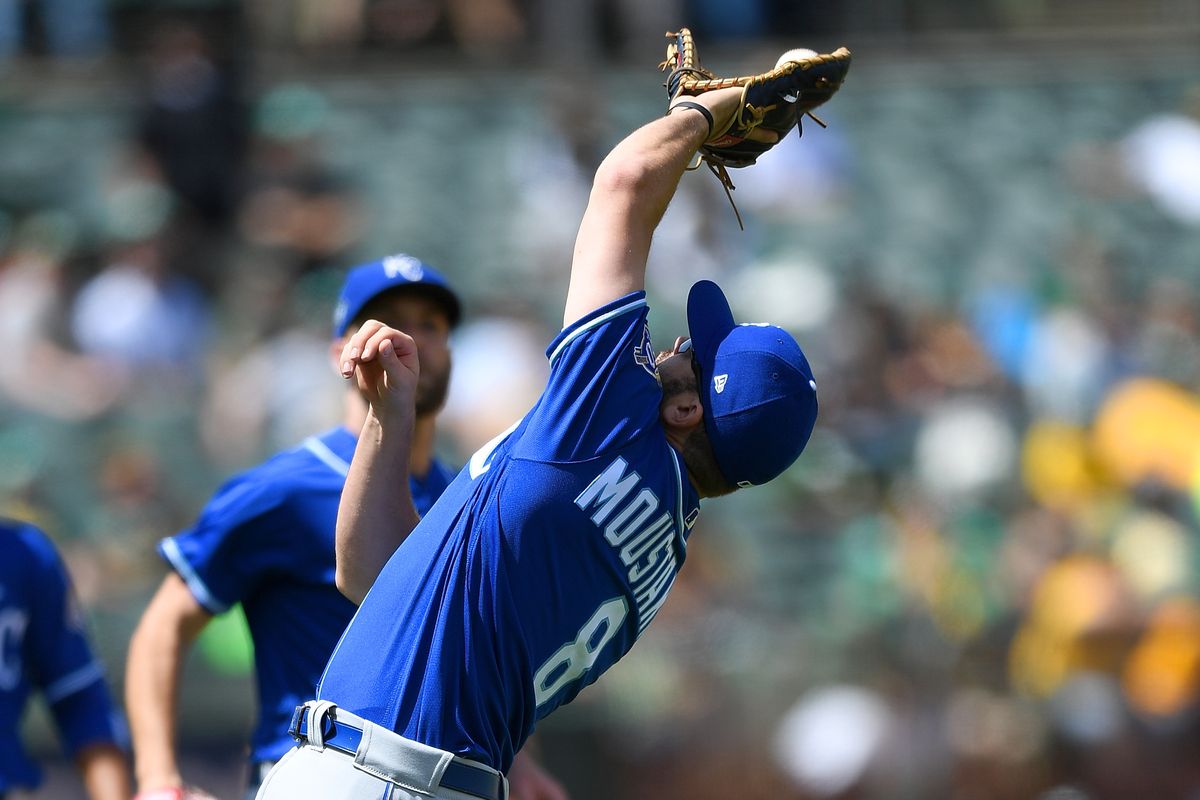
I am thankful that former Royals Mike Moustakas, Lorenzo Cain, Joakim Soria, Erik Kratz and a host more got to enjoy October baseball this year. The legacy of those 2014-2015 teams live on with the players who helped get Kansas City a world championship.

Credit: 
Sean M. Haffey/Getty Images

Speaking of former Royals, I’m thankful Kansas City was unable to bring Eric Hosmer back to the fold. While he is dearly loved by the fanbase, a contract even close to what San Diego paid him could have very well crippled the Royals future and made it harder to contend. Instead, the payroll should start seeing a slide downward soon, giving Kansas City the flexibility they will need.

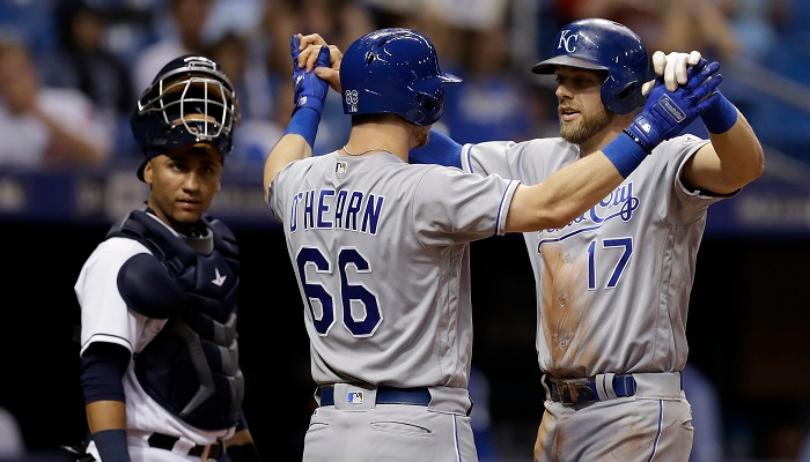
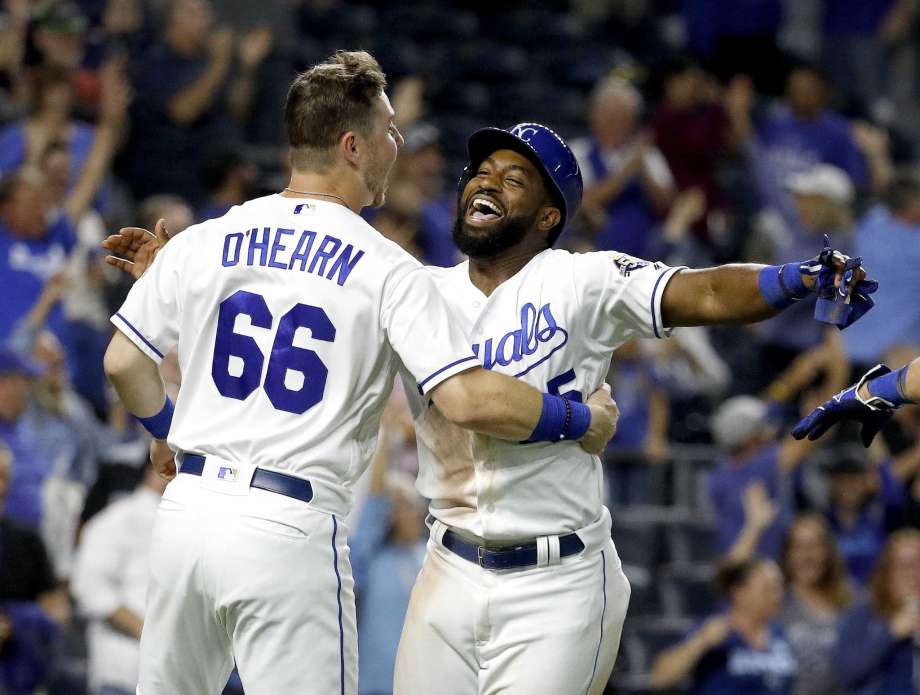
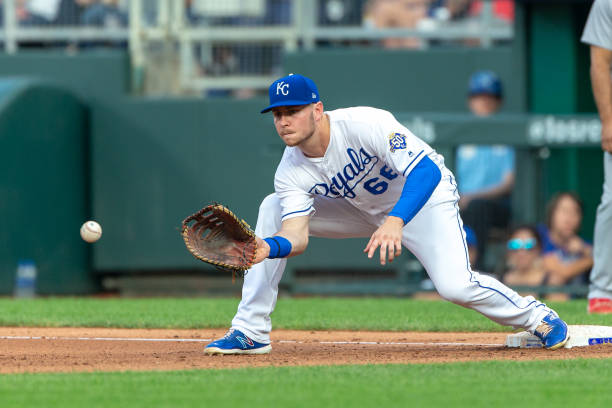
Since we are talking about first baseman, I’m thankful for Ryan O’Hearn’s surprising ascent to the majors. No one expected him to get recalled, yet he went out and hit .262/.353/.597 in 44 games and gave himself the frontrunner’s spot at the first base position this spring. As someone watching him rise through the Kansas City system, it was a welcome surprise.

I’m also thankful to see Hunter Dozier healthy and getting an opportunity in 2018. It appeared that Dozier got more comfortable as the season progressed and he even put together a very solid August, hitting .280/.321/.467. Dozier will have some competition at third base this spring, but the opportunities will continue. 

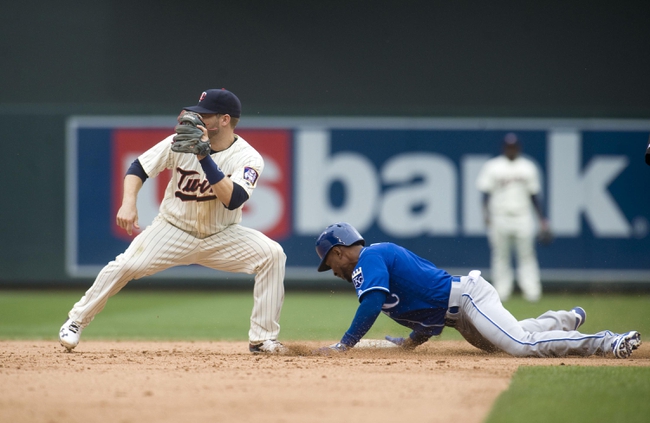
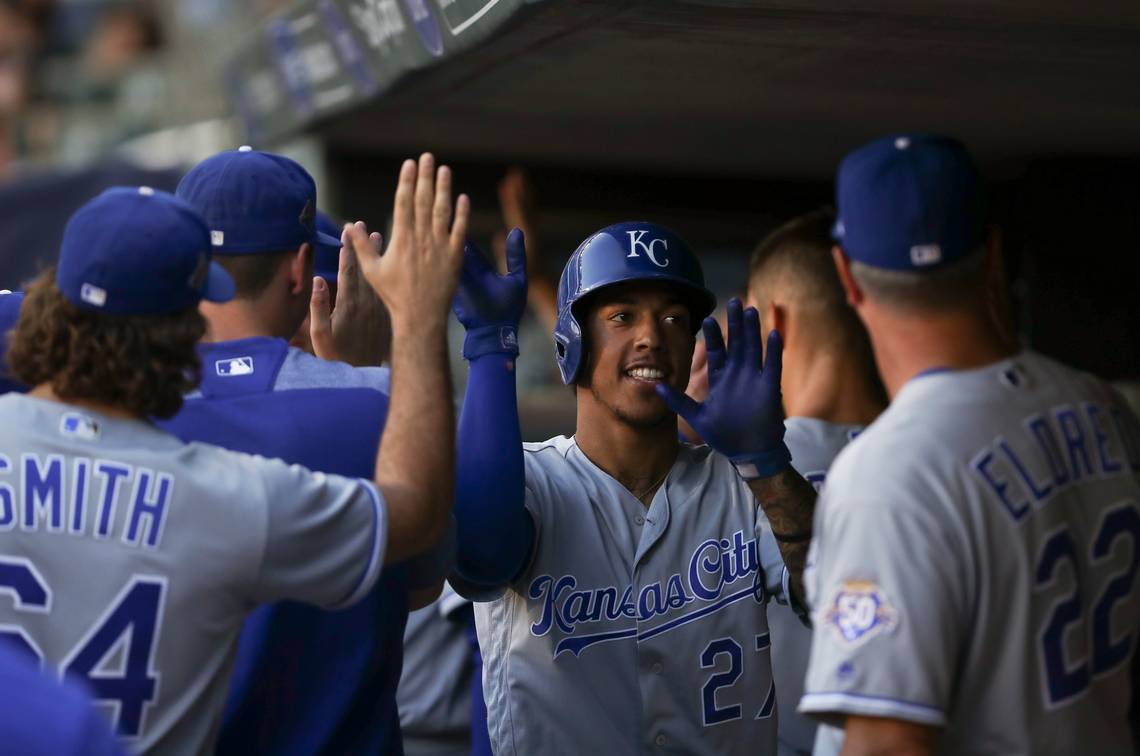
How have I gotten this deep into what I’m thankful for and not mentioned Adalberto Mondesi? The kid was finally given the keys to shortstop and made the most of it his last two months. He hit .280/.316/.533 for August and September with 11 home runs, 21 total extra base hits and 24 stolen bases. The strike outs are still a concern, but 2019 will still be just his age 23 season and his ceiling appears to be even higher. Need a simple reason to visit the ballpark in 2019? That reason is Mondesi.

Credit: John Sleezer/KC Star

 I’m thankful for Jakob Junis’ slider. That pitch is a beast.

I’m thankful for the performance of Jorge Lopez in Minnesota and giving us a glimpse of what he can do for Kansas City in the future. Actually, let’s give a nod for how Heath Fillmyer pitched as well. For the Royals to take some big steps forward next year, they are going to need some of the young pitching to step up.

Credit: 
Dennis Wierzbicki-USA TODAY Sports

I will always be thankful for Alex Gordon’s glove. It is still as golden as it was seven years ago and shows there is still some value in the player. Cherish 2019, cause that very well could be the swan song for Alex.

Looking ahead, it’s good to see GM Dayton Moore replenish the farm system this past year. Between multiple deals of veterans being shipped off for young talent, overseas signings and the draft, the lower minors appear to be Kansas City’s hope for the future. Maybe the most important item of interest to watch next year will be the development of players like Brady Singer, Seuly Matias and Nick Pratto. The Royals have some players with high upside that still have room to grow.

I’m thankful that Moore didn’t sign Luke Heimlich. Although as time moves on, it appears I probably should thank ownership for Heimlich not being signed. Let’s hope that whole circus is over with.

Credit: 
Mike DiNovo/USA TODAY Sports

I’m thankful for Brett Phillips’ arm. And his personality. And that laugh. Actually, Phillips is just an easy guy to root for. Hopefully his play on the field shines as much as his demeanor.

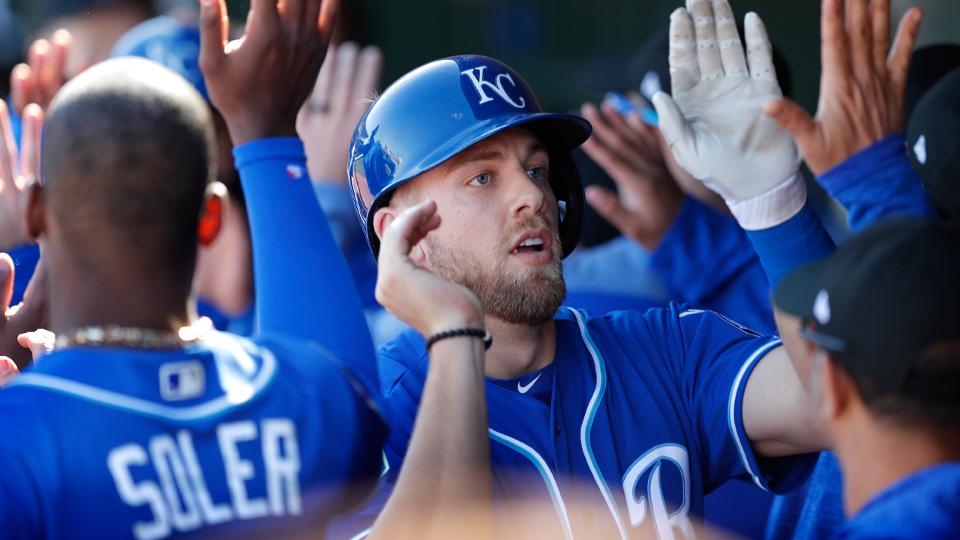
Here’s to seeing what Jorge Soler can do in 2019. If last year was a tease, than an injury-free Soler could be a lot of fun next summer. But he has to stay healthy, which hasn’t been easy up to this point.

Credit: 
Ed Zurga/Getty Images

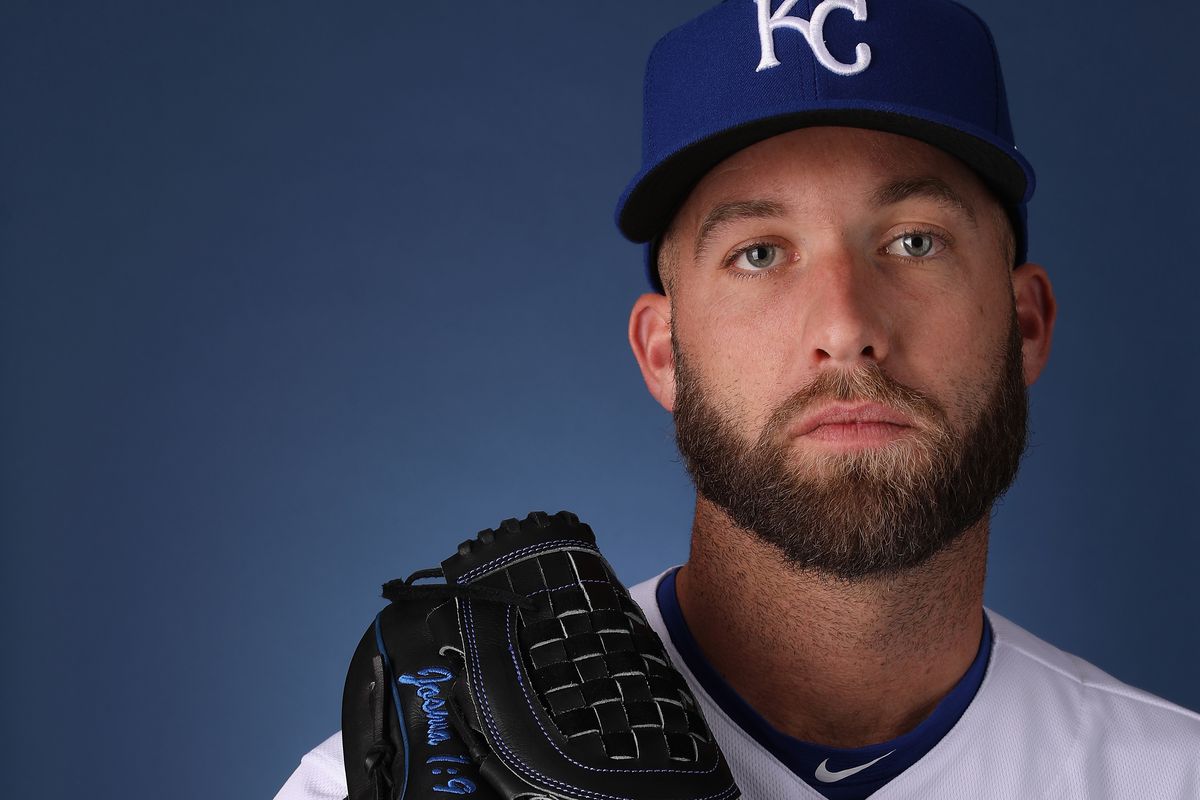
I’m thankful Jason Adam got to procure a lifelong dream in 2018. Sometimes dreams do come true.

Staying within the baseball world, I’m thankful we still have personalities in the game like Bartolo Colon. “Big Sexy” is good for the game and the game needs players like him. I mean that in every way possible.

I’m thankful for all the young talent in the game right now. Never before has this much younger talent been such a focal point of baseball. Hopefully that continues well into the future.

Credit: MLB.com

October is still the funnest time of the year and I am thankful we even got a couple of Game 163’s! I’ve been wanting chaos for years and we finally got it this October.

I’m thankful Pitching Ninja is allowed to do his thing on Twitter. It’s a better world with him in it.

and finally, I’m thankful that my passion for the game hasn’t waned over all these years. I often tell people that my first love is baseball and outside of the strike, it has never left my side. I get so much joy from a child’s game and continuing to follow it has forced me to expand my world and my mind. I am better for loving baseball and hopefully baseball is better for letting us play a small part in it.

Happy Thanksgiving to everyone. Now it’s your turn. What are you thankful for during this time of year?  

Welcome (again) to ‘The Process’

kc1
Credit: Ed Zurga/Getty Images

As Kansas City Royals fans, we all have a different reaction when we hear anyone mention ‘The Process’. Dayton Moore coined the term years ago to define what the organization was doing as part of their team-building strategy. Before 2014, if you were a Royals fan and you mentioned ‘The Process’, you were probably doing it with your tongue firmly planted into your cheek.

But then the trip to the 2014 World Series happened. Then Kansas City took home the gold and became world champions in 2015. Once Wade Davis struck out Wilmer Flores to wrap up the title that year, any mention of Dayton’s term was meant mostly with sincere intent.

Wrong Way Royals Baseball
Credit: Associated Press

After the 2017 campaign, it was pretty well known that the Royals were in a position to rebuild and with that came the return of ‘The Process’. The Royals will probably never be a team that goes out and spends lavishly in free agency, so the main framework of any team in Kansas City would have to be done by building up the farm system.

Which is what Moore set out to do this season. The Royals came into the year with one of the worst farm systems in baseball. MinorLeagueBall.com had them ranked last while Baseball America had them ranked 29th. It honestly didn’t matter who was evaluating the organization, as almost everyone ranked the minor league system as one of the worst in the game.

Image result for jon jay royals

It was obvious that one of Moore’s goals this summer was to “restock the shelves”, so to speak. It appeared to begin early in June, as Jon Jay was dealt to Arizona for a couple of arms, Elvis Luciano and Gabe Speier. Twelve days later, Kelvin Herrera was traded to Washington for a trio of minor league players, third baseman Kelvin Gutierrez, outfielder Blake Perkins and right-handed pitcher Yohanse Morel.

You can see where this is going. Funny thing is that Dayton didn’t just shop at one store. While the trades helped, he used other methods to improve the talent coming up through the minor leagues. There was the signing of pitcher Yefri del Rosario back in December, a player who was granted free agency from the Atlanta Braves after incurring international signing violations.

kc3

Add a couple more international signings to the list in Wilmer Candelario and Omar Florentino, both from the Dominican. The Royals even stretched their search all the way  in Japan, as the team signed 16-year-old pitcher Kaito Yuki. The Royals wanted Yuki to get himself acclimated to the United States first, so he should make his professional debut in 2019.

But the biggest splash might have been felt from the draft. In one fell swoop, the Royals drafted a number of college arms in Brady Singer, Jackson Kowar, Daniel Lynch, Jonathan Bowlan and Kris Bubic. The farm system was in desperate need of some arms with upside and this appeared to have done the trick, as almost all these pitchers (outside of Singer) were thrown into the low minors upon their signing.

Image result for adalberto mondesi 2018

The farm system has always been the main focal point for Moore, but he also started piecing together a younger foundation for the major league club. Hunter Dozier was recalled in May. Adalberto Mondesi got the call in June. Brett Phillips and Jorge Lopez were acquired in the Mike Moustakas trade with Milwaukee. Slowly but surely, Dayton was piecing together a vision of the Royals future.

But the move that really felt like Kansas City was in full “Process” mode was Ryan O’Hearn getting the call to the big leagues. O’Hearn numbers weren’t anything special down in AAA yet they called him up to give him a shot. O’Hearn took the opportunity and ran with it, producing a line of .262/.353/.597 over 44 games and an OPS+ of 155.

kc4
Credit: Stephen Brashear/Getty Images

Throw in Brad Keller’s outstanding rookie season and Whit Merrifield’s ascension to being a five-win player and it appears ‘The Process’ is farther along then even Moore might have imagined it would be. This is not to say a playoff run is in the near future; that would just be a ludicrous dream riddled with disappointment. But there is one more factor that could solidify that Kansas City is on the right track.

It was announced on Sunday that manager Ned Yost would be back for at least one more year in 2019. While some will cringe at the thought of Neddy’s return, there is an important factor to remember:

The Royals have had numerous prospects move up through their system over the last 7-8 years and while some were among the biggest prospects in baseball, a number of them were not highly touted at all. Not all of this can be attributed to Yost and his work with younger players, but some of that success should be credited to him. Without him, a Salvador Perez or a Kelvin Herrera (just to name a couple) might not have turned into the All-Star caliber players they have been in their career.

kc5

With Yost at the helm, the next wave of talent to move up to Kansas City should get the advantage of sitting under the learning tree. Yost has shown a penchant these last few years to just let the players go out and play, and that might be just what they need. The truth is that Yost is just as much a part of ‘The Process’ as any of the talent in the Kansas City system.

So while we might still snicker when Dayton starts talking about his game plan, the truth is that it worked once before. While we might question his focus at times, the bigger picture appears to be a mix of patience and trust. Rome wasn’t built in a day and ‘The Process’ initially didn’t pay off for a number of years. The good news is that the ship appears to be righted and back on course. It might be a bumpy ride on the way there, but you have to hope it ends up at the right destination.

A Different World

kc7
Credit: Denny Medley-USA TODAY Sports

You’ve probably noticed the immense increase in home runs around Major League Baseball these last couple of seasons. The game has slowly evolved into one where launch angle and exit velocity are king while aspects of the game like putting the ball in play and hitting to the opposite field are not practiced as widely.

This isn’t an article that will rail against the direction of the game. I’m a firm believer that some of these changes are good while others feel more neglected. Major League Baseball has never had as many talented young players roaming the landscape as they do right now, both at the plate and on the mound. That is good for baseball.

major-league-baseball

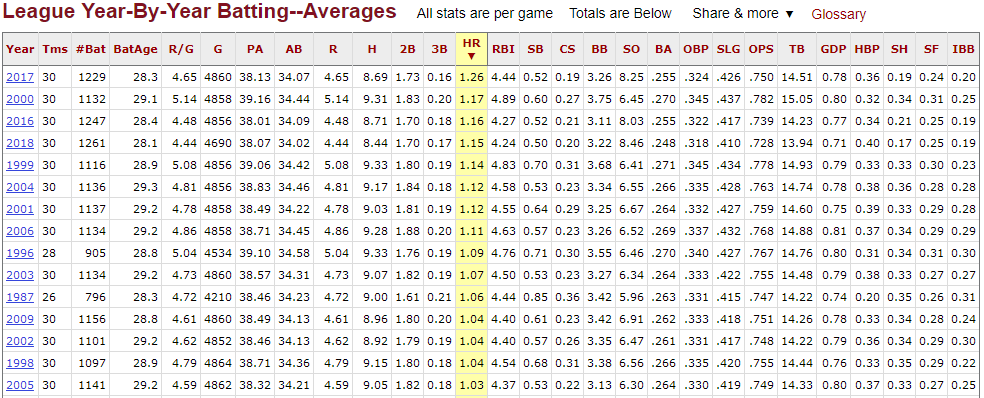
But the home run has soared to new heights these last couple of seasons that we have never seen before. Last year had not only the most home runs in history but also the highest home run rate of all time. In fact, these last couple of seasons have toppled the numbers put up in the so-called “Steroid Era” of the late 1990’s-early 2000’s:

hr rates years peak
Credit: Baseball-Reference.com

Three of the top four home run rates IN HISTORY have been achieved the last three seasons. A big factor into these numbers can be purely related to the actual baseballs used in a regular MLB game. Yes, the baseballs have changed.

The first sign of a different baseball was after the 2015 All-Star game, as numbers increased across the board at record levels. Last season saw even bigger numbers and tests were done with the baseballs used before and after the 2015 “Midsummer Classic”. Studies were done and it was determined that “reduced drag on the baseballs was responsible for the rising home run rate but had not found any changes in properties of the balls that could account for the reduced drag.”

kc3

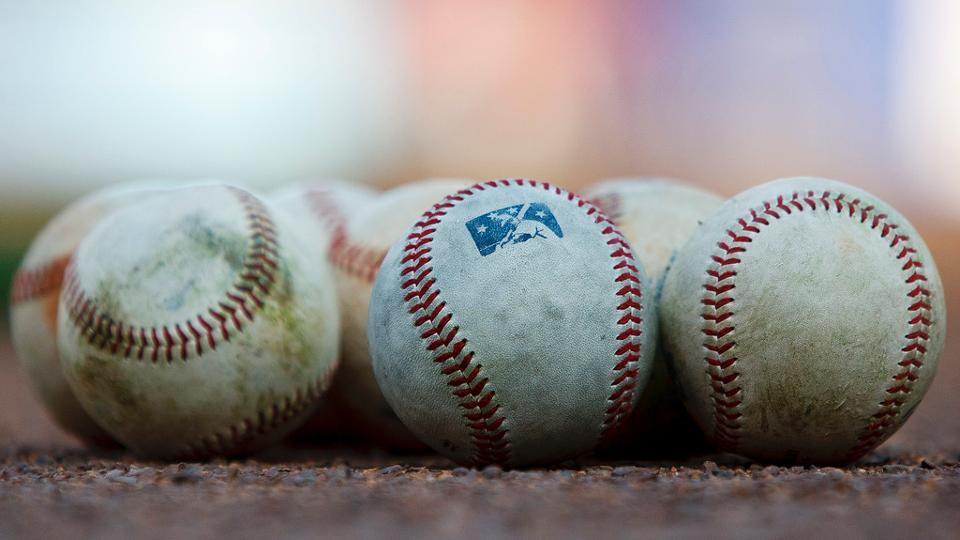
While Major League Baseball started using different baseballs, there was also a difference between the balls used in the big leagues and those used in the minor leagues. In fact, last week they announced that next season in Triple A they will use the same baseballs used by MLB. This pretty much proves what many have said these last few years, in that the balls being used are much, much different:

This change could end up being very big for how teams evaluate their talent, as some noticeable differences have occurred due to the differences in baseballs used at the two levels.

kc4
Credit: Ken Blaze-USA TODAY Sports

We all are well aware that when Ryan O’Hearn was recalled by the Royals he wasn’t exactly tearing up AAA. In fact, he was posting a very pedestrian .232/.322/.391 slash line  for Omaha when the Royals came beckoning, numbers that definitely don’t just jump out at you. But the Kansas City front office saw his exit velocity was stellar and figured there was a bit of bad luck involved in the results.

We all know how that has turned out: O’Hearn is slugging .612 in the big leagues with an ISO (Isolated Power) of .349. The power numbers are the most notably different for O’Hearn, but it isn’t just him who has seen an increase in those numbers. Hunter Dozier was slugging .339 for Omaha with an ISO of .085; in Kansas City he is slugging .391 with an ISO of .163.

Indians Royals Baseball
Credit: Associated Press

Even Adalberto Mondesi has seen an increase, albeit a much smaller one. His slugging has gone up to .498 from .492 while his ISO has actually seen a decrease, .211 compared to .242. There are obviously numerous factors in play here, the most obvious being the small sample size of their time in the minor leagues. That being said, there is a difference and it might very well be why teams have gone outside of the standard numbers to evaluate whether or not a player is ready for the big leagues.

So what does the difference in the balls do that causes the gap in the numbers? I’ll let a couple of pitchers who have used both balls explain. First, Ben Heller on the differences in pitch movement:

“My fastball actually rides a little bit more. For whatever reason, it has more life to it in the big leagues than it does down in the minors. I feel like my slider moves less. The minor-league balls, with the bigger seams, give my slider a little more downward break. I can start it at the batter’s hip, or almost at his shoulder, and it will break down for a strike. With the big-league balls, if I leave my slider up at all… it seems like it just spins. I need to drive it down, and really finish it, to get that good break.”

Now, Kirby Yates on the carry of batted balls:

“I think the ball goes further — it flies better — in the big leagues. I’ve hung stuff in Triple-A where guys have put on a good swing and it was an out, whereas in the big leagues it was probably a home run. That could be the hitters, too — I’m not 100% sure — but it does seem like it flies more. Regardless of the reason, the balls here are definitely different.”

Pitchers who have been in both leagues have noticed the change and it would even explain some of the struggles younger pitchers have had these last couple seasons once they get the call to the big leagues. These changes appear to be helping the hitters while causing a few growing pains for the pitchers.

kc6
Credit: AP Photo/Chris O’Meara

So where does baseball go from here? Having the same ball being used at the top two levels should definitely help, as it should make the adjustment period a bit shorter for any player getting recalled. But hopefully some of the lessons learned from this will carry over.

While breaking down a player’s slash line or home run total is fine, it has at least taught us that it doesn’t always measure whether or not a player will find success. Someone like O’Hearn is an example to why a deeper look is sometimes necessary.

Hopefully the higher-ups remember that. It is the perfect case of why there should always be a glance taken to exit velocity, launch angle and hard hit rate to measure whether or not a player is doing things right but is just not seeing the results.

There are numerous factors that come into play, and anyone evaluating talent should cover all their bases when it comes to determining a player’s future. Something as simple as a physical difference in a baseball could speak volumes that aren’t spoken in batting averages, and slugging percentages.


A Winning Formula

kc1
Credit: AP Photo/Colin E. Braley

You’ve probably noticed but in case you haven’t, the Kansas City Royals have been playing good baseball as of late. The team is 16-14 over their last 30 games and 12-8 over the last 20. It has felt like night and day in comparison with how the Royals performed during the first two months of the season. So what has changed to cause all this winning?

The most obvious answer is the influx of young talent in the Royals lineup on a daily basis. Ryan O’Hearn, Adalberto Mondesi, Hunter Dozier and Brett Phillips have all become regulars for Kansas City and while a few of those names have been on the roster for months now, they have never looked as comfortable as they have recently. This change has not only been a spark for the lineup, but has really shifted the morale in the clubhouse.

kc2
Credit: Associated Press

It also helps that the offense has been one of the best in the league over this past month. The Royals are 1st in slugging and ISO(tied for the lead with Oakland and Toronto), 2nd in wOBA, BABIP and batting average, 3rd in WAR and RBI’s and 4th in wRC+, runs, home runs and OBP. They have the second best hard hit rate over that span and the 5th best win probability added in the AL. The offense is leading the way and producing at a level we really haven’t seen from Kansas City since 2015.

But maybe the most important shift has been the Royals increased emphasis on running the basepaths. The Royals are first in the league in stolen bases and BsR over the last month and fourth in Ultimate Base Running (UBR). Early in the season, Kansas City wasn’t running as often and it made sense why. At that point, the lineup was filled with older and slower players like Mike Moustakas and Lucas Duda, players who aren’t exactly known for their speed. Factor in the colder weather as well, and Kansas City was a very station-to-station team.

kc3
Credit: Carlos Osorio, AP

But in the last 30 days, the team has made speed a potent part of their offense. Whit Merrifield, Mondesi and Alex Gordon (yes, ALEX F. GORDON!) have all been taking advantage of their baserunning expertise and Whit is even tied for the league lead in BsR over that span. This has allowed the Royals batters more situations with runners in scoring position and given them more opportunities to drive in those runners. All this equals a greater chance for runs and the Royals have taken advantage of it.

So the offense has been a big part of the Royals recent success, but it isn’t the only element that has improved. Kansas City’s starting pitching has been just as vital for the team’s success as the bats. Over the last 30 days, the Royals starters have the 3rd best ERA, HR per 9 and HR/FB rate, 4th best WAR, WPA, BB per 9 and WHIP and 5th best FIP and xFIP. The Royals starters have thrown the 2nd most innings in that span (152.1 innings, only behind Cleveland) and while they haven’t been a dominating bunch (they’ve posted a 19.3% K rate in the last month, which is only 10th best in the league) they have found a way to get outs.

kc4
Credit: AP Photo/John Minchillo

The most accurate representation of how they have been getting the job done would appear to be how the ball is being put into play. The Royals starters have allowed the third best ground ball rate and are 14th in fly ball rate, which is next to last. So they are making the opposing batters put the ball on the ground more, allowing the infield to be put to good use. The Royals have a very good defensive infield and it appears the team is working to their strength in that regard.

On the opposite end of that spectrum, they are not allowing as many fly balls which would also explain the lack of homers allowed. Many of the teams in the American League are built to be home run teams, so when that is stifled it would appear to be a big blow into their offensive output. It really appears like the starting pitching is working smarter, not harder.

Image result for Kansas city royals September 2018

Combine all of these efforts and you get a winning month for the Kansas City Royals. It appears that the shift to youth has been the right move for this franchise and hopefully is a springboard for expectations over the next couple of years.

What will be the most interesting aspect to follow is whether or not the team is able to take the experience from the last month and transfer that over into the 2019 season. While success in September should sometimes be taken with a grain of salt due to everything from roster call-ups to playoff teams resting their regulars more often, the Royals are doing a number of things right and it has led to success. This won’t mean the team will become a winning ballclub again next season, but it does create some hope and intrigue that wasn’t there just a few months ago.

The Diary of a Bemused Royals Fan

Kansas City Royals Fans Gather To Watch Game Seven Of World Series Against San Francisco Giants
Credit: Julie Denesha – Getty Images

On January 29, 2060, former Bleeding Royal Blue writer Sean Thornton passed away at the age of 81. Light snow fell from the sky as the lifelong Royals fan said his goodbyes.

After his passing, family members would dig through his possessions and find a number of unwritten musings about his favorite team and baseball in general.

Maybe the most interesting archive that was uncovered was a diary with daily posts from the 2018 season. In it was stories, thoughts and premonitions of the worst season in club history. It wasn’t just a straight telling of the events of that year. Instead it was a personal account dripped in sarcasm as a fan tries to balance cheering on his team while realizing the grim reality of how bad they are.

Enclosed are some of Sean’s posts from the final five weeks of that season. What follows is a mixture of love, masochism and acceptance to the Royals and the plight they walked throughout the 2018 campaign. Enjoy and know you were warned beforehand.

kc2
Credit: Denny Medley-USA TODAY Sports

August 31, 2018

The Royals kicked off a series with the Baltimore Orioles tonight. Yes, the one team that can stake claim to being worse than Kansas City. I was expecting this to be the definition of bad baseball and I wasn’t let down.

Runners stranded on base. Pitchers lacking control. Lack of awareness on the basepaths. Brandon Maurer coughing up a lead. It was all there and more as the game stretched through 14 innings.

Neither team appeared to want to win and if it wasn’t for a Tim Beckham miscue on an Alex Gordon grounder in the bottom of the 14th the two teams might still be battling on Saturday afternoon. 3-2 was the final score, but it was very apparent none of us won. This was bad baseball. Hopefully you didn’t sit through all 14 innings like I did. Yikes.

Image result for royals indians 2018

September 4th, 2018

The Royals and Indians went back at it tonight and once again the Royals lost, 6-4.  Kansas City is still on pace for 114 losses this year. But the good news is that there was some positives in the game. Ryan O’Hearn went 2 for 4 with a double and a home run. Adalberto Mondesi stole two bases and made a dazzling play at shortstop. Heath Fillmyer went six strong, giving up five hits and three runs and Richard Lovelady would come in and pitch a scoreless 8th inning.

I’m always a sucker for September, as it’s nice to see the young talent and think ahead of what they can do for a full season. There are some definite bright spots on this team and it should be fun to watch the development as the month progresses.

That being said, Alcides Escobar made his first start in right field tonight. I have no idea what Ned is doing. I’m worried that Escobar could be brought back next year as a backup and to add veteran presence. God help us all.

kc3

September 9th, 2018

Somehow the Royals pulled out a series win against Minnesota today, winning 7-6. The first 3 innings were a dumpster fire as Ian Kennedy showed us he could still give up home runs and put Kansas City into a 4-0 hole.

Luckily, the Royals bats would wake up and the bullpen would hold the Twins at bay. Hunter Dozier went 2 for 3 and hit a big 3-run homer in the 7th inning. Mondesi continues to impress, hitting a triple to start a rally in the 8th. The arms of Lovelady, Kevin McCarthy and Josh Staumont would hold the Twins to just one run over 4 innings.

If you need a reason to get excited for the future of this team, this game had more than a few. It really makes you wonder what would have happened if the “youth movement” had started a little bit earlier this season. These youngsters are injecting life into the rest of the team.

Oh, and Escobar started the game at first base. No position will be left untouched for Esky. March on, Ned.

Whit Merrifield, Alex Gordon

September 10, 2018

Just yesterday I was praising the Royals and the youngsters. Today was proof there is still a large hill to climb for this organization. 11-2, White Sox. Yuck. The pitching looked bad, the bats were cold and even the defense made a few costly errors.

There were a number of moments in the game that aggravated me, but none more than the free-swinging that was going on almost all night. There was very little patience which explains the 12 strike outs from Kansas City batters. If it was tossed up, the Royals swung at it.

Funny-painful moment in the 6th inning: Glenn Sparkman balked, moving a runner from second base to third. Next pitch, Royals catcher Drew Butera allowed a passed ball. 9-1, White Sox as Yolmer Sanchez crossed the plate. At this point I went and watched an episode of “Brockmire”. At least I could laugh at his ineptitude.

Twins Royals Baseball
Credit: Associated Press

September 14, 2018

The Royals were shut out by Jose Berrios. Twins 4, Royals 0. Literally nothing happened in this game, unless you count a section of the right field lights going out for about 15 minutes in the 3rd inning. Oh, and some guy danced in the crowd for no real apparent reason other than for attention. Fifteen games left. Then the pain will stop. Right? Right???

I almost forgot…Alcides saw time in left field tonight. Pretty sure Ned is going to have him be a super utility guy next year. Escobar will be a Royal forever. His statue is being commissioned as we speak, I’m sure. There is no love like the Royals love of Alcides Escobar.

kc7
Credit: John Sleezer/KC Star

September 19, 2018

The bats came out in droves as the Royals beat the Pirates 8-3. Salvy went deep, Brett Phillips had a two-hit day and Whit Merrifield compiled three hits and two stolen bases.

Speaking of Whit, what we have seen from him these last few years is really amazing. The guy made his major league debut at the age of 27 and just continues to improve. It really feels like the Royals are going to keep him and build this team around him. Don’t be shocked if he gets an extension soon.

As a sidenote, Ned announced before the game that he will be back next year. Let the ‘meh’ times roll.

Jakob Junis
Credit: Carlos Osorio / Associated Press

September 21, 2018

Jakob Junis loves the Tigers. Seven shutout innings and the Royals win 3-0. Watch out folks, as Kansas City has won two games in a row. It really feels like uncharted territory this year. It would be nice to see a few more wins with a little over a week left in the season and end it all on a positive note. That’s the wish.

In fact, they need to win five out of the last eight to not hit the 110 loss mark. They’ll still finish with the worst season in club history, but it would be nice to keep the bleeding to a minimum.

That being said, it appears Tony Pena and Buddy Bell have a monkey off their back. A fruit basket will be sent to the Royals clubhouse within the next week. Mark my words.

kc9
John Sleezer/KC Star

September 26, 2018

Another day, another loss. To the Reds, nonetheless. 9-2, Cincinnati. It was like the Reds bats were using a heat-seeking missile and the Royals offense decided on a whim to use a wooden pop gun.

Chalk up loss #107. Four games left to go and they can wash all our brains and we can forget this ever happened. I wish I had taken the blue pill.

kc10
Credit: John Sleezer/KC Star

September 30, 2018

It all ends today and nothing like the Royals ending the season with a victory, 5-3 over Cleveland. If you are an optimist, this game left you with some hope. Quality start for Danny Duffy. O’Hearn, Dozier, Mondesi and Phillips all got two hits apiece. Even the bullpen was able to hold a lead.

There was a bit of insanity though, as Ned attempted to play Alcides Escobar at every position in game 162. He plowed through the infield early in the game and even played catcher for one batter in the 6th inning. I won’t lie: it was strange watching Yost continue this charade as the Royals were actually winning.

Late in the game they moved Esky around the outfield and by the 9th inning all he had left was to take the mound and pitch to a batter. Luckily, common sense kicked in and he let Wily Peralta close out the win. So Escobar fell short of playing all nine positions in one game. Don’t worry; Esky will be back next year to try again.

So the Royals finish 53-109 and the second worst record in baseball. This team will go down as the worst in Kansas City history and maybe the most confusing. We knew they were going to be bad, but the possibility of 70 wins seemed doable. Instead, we got some of the most uninspired baseball that any longtime fan can ever remember seeing.

So the ghosts of Emil Brown, Angel Berroa and Runelvys Hernandez can disappear into the ether. The 2005 Royals, while still a bad squad, have been removed from their throne. Long live the ghosts of Alcides Escobar, Brandon Maurer and Jason Hammel. Yes, they have left a mark. Let’s hope to see less losing in 2019. For our sanity, it can’t get worse than this. Right?

Younger Days

kc1
Credit: Getty Images

This was it. This was supposed to be the beginning of a new era of Kansas City Royals baseball, an era of rebuilding that would shape the foundation of the organization for not only the next few years but years beyond. 2018 was going to be the year we all look back on and see the outline of a master plan that would come to fruition around 2021-2022. Instead, we are sitting almost five months deep into the season wondering what the point of this season was.

Dayton Moore has been preparing us for this rebuild for more than a year, knowing full well that the team would be losing a number of free agents after the 2017 season. He knew that financially it wouldn’t make sense to bring back the entire group and that it was time to move forward. That would normally mean allowing younger players to infiltrate the roster. But is that how it has gone down?

Kansas City Royals v New York Yankees
Credit: Sports Illustrated

Early in spring training the Royals went out and filled some holes on the roster with veterans, as they locked up Jon JayLucas Duda and Mike Moustakas. For the most part there was “no harm, no foul”, as Kansas City didn’t spend much on any of the three while giving the team trade bait for later in the summer.

For the most part that is how it has played out, as Jay and Moustakas have both been dealt and Duda is still a possibility to be traded later this month. So while these three have been taking up roster spots, they weren’t blocking a player who was ready to play in the big leagues.

kc3
Credit: Associated Press

But there are some major question marks when it comes to a segment of the veterans still on the club and the amount of playing time they have been receiving lately. For example, over the last week or so we have seen Drew Butera make a couple starts at not only catcher but even first base. Yes, first base where he had started a total of two games before this season.

Four starts in one week for Butera feels like a lot. The guy is a solid backup catcher and appears to work well with the pitching staff. Should he be starting at a position he has played at sparingly when you have two youngsters (Hunter Dozier and Ryan O’Hearn) who actually play the position fairly regularly? Probably not. I won’t go as far as saying it is hurting their development but starting Butera over them this past week felt like a real head scratcher.

kc4
Credit: Jay Biggerstaff-USA TODAY Sports

How about everyone’s favorite punching bag, Alcides Escobar? It’s hard to justify his playing time with a line of .204/.257/.283 and -0.9 fWAR and yet he is in the lineup more often than not. Adalberto Mondesi has shown that offensively he is an improvement over Escobar and defensively has been superior for years now. Yet over the two months since being recalled, he has only started 31 games in the field.

Out of a group of six rookies (which does not include Mondesi, since he passed his rookie status before this season) that have played for the Royals this season, they have compiled 527 plate appearances, or only 108 more than Escobar. Whether it is allowing these players to ease into the big leagues or just not giving them a bigger role, these prospects have not gotten the experience many of us expected them to receive as the season progressed.

kc5
Credit: Associated Press

It’s been a slightly different story for the pitching staff, as a number of rookies have been given more prominent roles. Brad Keller has probably been the pitcher of the year for Kansas City so far, posting a 3.57 ERA, 3.64 FIP and 1.3 fWAR. The Royals rookie pitchers (ten in total) have thrown 346 out of the team’s 1033 innings. Keller and fellow Rule 5 Draft Pick Burch Smith have thrown the most out of the bunch, 88.1 and 60.2 respectively.

Six Royals rookies have tossed 30 innings or more this year, including relievers Tim Hill and Jason Adam. It is hard to argue that the team is not giving some of the younger arms in the organization an opportunity to pitch this year when 4/5 of the current rotation are rookies. Then why does it feel like they could go even younger?
kc6
Credit: Ken Blaze-USA TODAY Sports

The new “Black Hole of Death” appears to be in the bullpen, where Brandon Maurer, Jason Hammel and Blaine Boyer are taking up space. All three have struggled this year and have hurt the team on the field more than any value the rookies receive from their veteran leadership. It has been suggested that the club should cut bait with these three and give some of the arms in Omaha an opportunity…and at this point it is hard to argue with that reasoning.

Is there any reason not to give Eric Stout or Trevor Oaks a longer look? Are control issues enough of a detriment to see whether Josh Staumont and Sam Selman can have success out of a major league bullpen? What about new acquisition Jorge Lopez? And how are we in the middle of August and there is still no sign of Richard Lovelady? In my eyes, it makes no sense to employ veterans like Maurer and Boyer when they just aren’t getting the job done. Give them a bus pass and lets see what some of the inexperienced arms can do.

kc7
Credit: John Sleezer/KC Star

Maybe my expectations were off course, but by this point in the season I presumed that the Royals would be employing one of the younger rosters in the league. Instead, they still feel really…old. By no means do I expect this team to be a cavalcade of 20 year olds, but I did expect the focus to be on the future. Instead, it feels like they are treading water.

Not every prospect is going to be ready and there is an appreciation for allowing them to develop at their own pace. But if the Royals are to contend again around 2021 (and that is the expectation in the front office) then they need to speed this process up. Giving at bats to Alcides Escobar or allowing Brandon Maurer another day on the roster isn’t helping anyone. For this to be a real rebuild, the Royals need to quit straddling the fence and move forward with players who could still be in Kansas City three years from now.

Kansas City Wish Fulfillment

kc1
Credit: John Sleezer/KC Star

If you are taking stock of the first half of the Kansas City Royals 2018 season, most of your return would be a muddled mess. The Royals were in shambles, whether it was the offense, the rotation or the bullpen. Essentially the only reliability sat in their defense, which is leading the American League in UZR while coming in 8th in defensive runs saved.

But this isn’t a piece to prop up the defense or even bash the ineptitude we have seen for the first three and a half months of the season. Instead, this is that nugget of positivity you keep hoping for. This is the dream scenario where the blocks fall into place like on a Tetris grid.

What we’ve compiled is a wish list of sorts. It’s a few items of interest that if swayed the proper direction could benefit the Royals for the rest of this season into next. By no means should you take this as ‘This is how the Royals win the American League Central’, as that is just crazy talk. No, this is a view of ‘what could be’ if Kansas City plays their cards right these next few months.

Kc2

Trading Up

With the trade deadline looming in less than a week (July 31 to be exact), the Royals are in a good position to make some moves and add some depth to the organization. Mike Moustakas appears to be the main chip that Dayton Moore has to deal and a number of teams (Boston and Atlanta among them) have shown interest in the power-hitting slugger.

But after Moose there aren’t any certainties. Whit Merrifield would be a great acquisition for a team looking to pick up a versatile fielder with the ability to get on base, but Kansas City is in a position where they don’t have to deal him if they don’t like the offers they are receiving. At this point the likelihood of a Whit trade feels like a 50/50 chance…at best.

Two other names to keep an eye on would be Lucas Duda and Jason Hammel. Duda has been hitting .310/.394/.414 over his last nine games coming into Tuesday with a BABIP of .421. While on the surface Hammel’s shift to the bullpen has been a mixed bag, his velocity has gone up (as expected) and he appears to be assimilating to his new role.

Duda could possibly be dealt in August after clearing waivers to a team looking for a power bat but Hammel feels less likely. The combination of a poor season coupled with a high salary(that Kansas City is probably unwilling to eat) makes the likelihood of a trade probably slim. But if the Royals are given the opportunity, they should take it.

Image result for Adalberto Mondesi 2018

Playing Younger

With the talk of veterans being dealt, that should open up more opportunities for some of the younger talent in the Kansas City farm system. One of the advantages of a rebuild is players getting a chance to prove themselves on a fairly regular basis. That opportunity appears to be looming.

We’ve already seen extended tryouts for guys like Adalberto Mondesi and Hunter Dozier. The pitching staff has been littered with youth, from Brad Keller and Burch Smith (two Rule 5 draftees) to Tim Hill and now Heath Fillmyer. Maybe I’m being selfish, but I would love to see a larger youth movement implemented these last two months.

At this point, I am game to hand out opportunities like pieces of PEZ. Would you like to see another youngster in the rotation? Let’s see what Trevor Oaks can do on an extended basis. How about the bullpen? We’ve heard about Richard Lovelady for a while, but it’s not too far-fetched to give Kevin Lenik an opportunity as well.

Offensively there aren’t as many options, but names like Ryan O’Hearn and Frank Schwindel could be interesting come September (despite their performances so far this season). Even guys we have seen already, like Cam Gallagher and Ramon Torres, could see some playing time as the season wears on.

Obviously not all of these names are going to produce and some will even show that they are not worth keeping around. But if a team is truly rebuilding, you owe it to yourself to hand out these opportunities and let the players run with it. Good or bad, it’s simply a matter of going out and proving their worth…and luckily, the Royals have the time to allow that to happen.

kc4
Credit: Christian Petersen/Getty Images

The Rotation we were Expecting

Before the season started, a number of us felt like the Royals rotation could be a major plus for the team. In fact, I was one of those proponents:

While on the surface this is an underwhelming group of arms, there is potential here that could be reached if circumstances go the right way.

Most of the high expectations came from thinking the starters could outperform their 2017 numbers. Unfortunately, Ian Kennedy and Jason Hammel have not while Jakob Junis appeared to be on a fast-track to success early in the season and he has since fallen on hard times. There was also that Nate Karns guy, but who even knows if we will see him this season, as he rebounds from thoracic outlet syndrome surgery.

But there is some hope. Danny Duffy has looked superb over his last 11 starts, posting a 2.58 ERA while holding batters to a line of .217/.303/.296. Heath Fillmyer has been nothing short of sensational since being put in the rotation. Then there is Brad Keller, who has possibly been the biggest bright spot for Kansas City in a season full of dim bulbs.

If the Royals can get Junis back to his early season self (and his start over the weekend was encouraging) and audition either Burch Smith or Trevor Oaks for an extended period, this could be a rotation similar to what was originally expected. It won’t challenge the Atlanta Braves rotations of the early 90’s, but it doesn’t have far to go to top how the rotation performed in the first half.

kc5
Credit: Getty Images

Fulfilled Expectations

While the other wishes were part of a grander scale, there are a few more items to keep your eye on in the second half that would drastically improve the ballclub.

Keep an eye on Whit Merrifield (if he isn’t traded) as he is on pace to topple most of his stats from 2017. Whit is currently hitting .299/.370/.420 with a wRC+ of 118 and 3.0 fWAR. While his power numbers have seen a slight decline (slugging percentage and ISO have seen the biggest dip) his overall numbers have been an improvement.

The rest of his numbers appear to have improved ( in fact his WAR is already better  than 2017), as his walk rate has seen an increase and his BABIP has risen to .356. While his strike out rate has gone up, we have also seen an uptick in the hard hit rate. If you are purely a fan of Whit’s power you might be disappointed, but otherwise it will be fun to watch him wrap up what appears to be his new peak this season.

Another interesting player to watch is Salvador Perez. A few weeks ago I took a look at Perez and his struggles. In that piece, I mentioned how it might not take much to turn around his season:

I’ll go a step further and say that if he combined that with his hard hit rate and maybe (just maybe) a dash of better luck on the balls he hits into play, Salvy could go from being the ‘disappearing hitter’ he was in June to helping ignite what little offense the Royals can muster on a consistent basis.

That luck has finally come around, as Salvy is hitting .269/.286/.481 over his last 13 games with 3 home runs and 12 RBI’s. But the improvement shows up in his BABIP, where he is hitting .314 in that span and contributing on almost a daily basis.

To break that down even further, Perez is hitting .273/.286/.576 in the last eight games with  an OPS of .861. While it may be just a small sample size, Salvy has been seeing more pitches per at bat while looking for a pitch to drive. It’s not hard to imagine him turning things around the next couple months and ending up with numbers comparable to year’s past.

Image result for Kansas City royals July 2018

Obviously we would all like to see the Royals turn themselves back into contenders during the second half, but that just isn’t realistic. The good news is that their performance in the first half has set the bar very low for the last half of the season. It gives Kansas City a chance to show they aren’t quite as bad as they’ve played to this point.

There is a number of things you can wish for, but your best bet is to wish for improvement. Moving forward wins and losses shouldn’t matter as much as how the development is coming along for this team. It should be about finding out what they have and what they should keep moving forward. That is what should be at the top of any Royals fan’s wish list.

That and to never see Brandon Maurer in a high-leverage situation ever again.


In Case You Hadn’t Noticed, the Royals are Bad Again

Image result for kansas city royals june 2018

It’s always a bitter pill to swallow when your favorite team isn’t good. Everyone handles it differently. Some people make excuses for why they are bad. Some accept it and move on. Others just flat out get angry but keep coming back for more.

This 2018 version of the Kansas City Royals is bad. Real bad. As in the numbers speak of a team reaching a new level of ineptitude. The Royals offense is last in the American League in wRC+, wOBA, slugging percentage, ISO, RBI’s, runs, home runs, OPS and RE24. The Royals hit a woeful .193/.253/.303 in the month of June and even those numbers feel a bit heavy if you have actually watched this team play on a regular basis.

The pitching numbers aren’t a whole lot better. The Kansas City pitchers are last in the league in fWAR, FIP, RE24 and ERA while having the lowest strike outs per nine innings and the highest home runs per nine. So it isn’t just the Royals bats that are pitiful; the entire package is one of the worst in baseball and a big part of why they have the second lowest winning percentage in baseball right now at .294 (my apologies to the fans of Baltimore. You understand what we are dealing with right now).

kc1
Credit: Orlin Wagner, AP

…and yet I’m still watching most of the games. Call it loyalty or call it being a glutton for punishment; both are probably acceptable. Either way, I still find myself wanting to watch them most days and hardly ever does the little voice in my head question it with a ‘but are you sure?’ or a ‘does that seem like a good idea?’. At this point you might be asking why I would put myself through that…and I wouldn’t blame you for asking.

Sure, part of it is that the Royals are my team, and have been since I was seven years old and will still be if I reach the ripe age of 87. I truly bleed royal blue. But the other reason is that while things appear to be as bad as the worst Kansas City teams we’ve seen over the last 20 years, I also realize that it is possibly the beginning of some really important careers for the youngest of Royals.

kc2

Hunter Dozier has been getting consistent playing time and is starting to look more comfortable, both at the plate and in the field. Adalberto Mondesi gets to play with less pressure and is hitting the ball a lot harder than he did during his previous stints in the big leagues. While Rosell Herrera might not be a part of the Royals future, he is being given the chance to see if he could be a part of it, at least.

On the pitching side, Brad Keller is making the case of being the best Rule 5 draft pick in Royals history (hello, Joakim Soria!) and has been possibly the brightest spot for this team so far in 2018. Jason Adam, Heath Fillmyer, Tim Hill, Kevin McCarthy and Burch Smith are all getting extended looks out of the bullpen, where in years past they might get just a cup of coffee in the big leagues or a small chance while someone was on the disabled list.

Image result for Frank Schwindel royals

There is more on the way, especially on the Omaha roster. Richard Lovelady, Josh Staumont, Frank Schwindel, Ryan O’Hearn, Nicky Lopez, Cam Gallagher, Donnie Dewees, and possibly even Bubba Starling are all names that could become a regular part of your Royals experience over the next year or two. Some of these guys will turn out to be regulars and others won’t reach the potential that some have expected of them. But the opportunity is why this team is still one to watch.

The Royals are in an interesting situation where they really have nothing to lose by giving these players a chance to prove their worth. I mean, it’s not like the team could be even worse, right? Right???!!! Maybe it’s a small dash of optimism, but one has to wonder if a few of these prospects could help churn out more runs for this team than what we have seen over the last month.

kc3
Credit: Thearon W. Henderson/Getty Images

It really hasn’t felt like a rebuild this year, not with all the veterans on the roster. But here before too long (maybe even by August), this is going to feel like a different team. I’m not going to sit here and try and tell you it’s going to be great the entire time, because you are going to see some bad baseball over the next couple of years. But the hope is also there to see some of these players blossom and become Royals legends.

kc4
Credit: Peter G. Aiken

So yes, this team is bad. It’s even safe to say that come September they are still going to be as awful as they are at this moment. If you are someone who has already tuned them out this year, I can sympathize. There are times that some of us die-hard’s have to take a break from this team, no matter how much we love them.

But there are also still reasons to tune in and head to the ballpark. While they will lose more than they win right now, they are also starting to build the foundation. One of the greatest experiences of my life has been watching “my” Royals go from being the joke of baseball to winning the World Series in 2015. For those of us that stuck it out through the bad, we were rewarded.

The reason it tasted so sweet was because we were around for the rough times. Trust me when I say that Kansas City will get back to the postseason and it probably won’t take another 30 years. Until then, watch this team grow and enjoy getting to watch the younger players develop into staples of the organization. It won’t always be pretty, but there will be moments for you to grasp on for years.


Lost Opportunities

MLB: Baltimore Orioles at Kansas City Royals

The other day Matthew LaMar wrote about Hunter Dozier and the unwillingness of the Kansas City Royals to give him an opportunity when a spot has become available on the roster. Matthew wrote up a number of reasons why the team might have passed him over and some of them might carry some weight, especially among those in the Royals front office or even their scouting department.

But Dozier is not the first prospect in the Kansas City farm system to be passed over despite not having anyone of actual value holding them back. In fact, over the years the team has found a way to not see what they have with their younger talent. There for a long time, the Royals were infamous for bypassing younger players for older ones with more big league experience.

kc2

Justin Huber was one of the first names to pop in my mind when I thought of players not given a chance to perform. Huber was a highly touted prospect in the New York Mets system when they traded him to the Royals before the 2004 trade deadline for…Jose Bautista. Huber was initially a catcher, but after the trade he tore cartilage in his left knee and underwent surgery that would end his career behind the dish. The Royals would move him to first base and eventually shift him to the outfield later in his career.

Huber consistently was slugging in the .450-.475 range for most of his minor league years in New York and during his first season in the Kansas City organization hit .326/.417/.560 over 527 plate appearances. He would get a slight audition with the major league club that year, playing in 25 games while hitting just .218/.271/.256  over 85 plate appearances.

He would end up back in Omaha to start 2006 but would end up only getting 11 plate appearances that year. I specifically remember the team recalling him in May of that year for a series against Minnesota and he would only get one at bat, a pinch-hitting appearance on May 3rd.

At the time the Royals had Doug Mientkiewicz at first base and while he was a good hitter with a great glove, he also was in his age 32 season and was a one year solution at first. In layman’s terms, no one of major value was blocking Huber from getting playing time. Alas it was not to be, as Huber would play eight more games for the Royals in 2007 before being traded to San Diego in March of 2008.

kc3
Credit: Gregory Shamus/Getty Images

Speaking of first baseman, Kila Ka’aihue is another player who the Royals dragged their feet on. Ka’aihue put up a monster year in 2008, hitting .314/.456/.628 with 37 home runs and 100 RBI’s while splitting time in AA and AAA. The Royals gave him 24 plate appearances that September and he looked to at least be an option in 2009.

Instead, Ka’aihue would spend the entire 2009 season in Omaha, hitting .252/.392/.433 with 17 home runs and 57 RBI’s. Meanwhile, the Royals had a 1B/DH combo of Billy Butler and…Mike Jacobs. Jacobs was awful during his only season in Kansas City, hitting .228/.297/.401 with an OPS+ of 84. He would be released by Kansas City in December of that year.

Ka’aihue would get a bit of a chance in May of the following year, as he was recalled to Kansas City but would still see the majority of his playing time in Omaha. He finished the 2010 season on a bit of a hot streak with 8 home runs and 25 RBI’s.

But we knew what would happen next. Eric Hosmer was on the horizon and with Billy Butler firmly entrenched at DH, that left Ka’aihue without a spot. He would end his Kansas City career with only 326 plate appearances in a four-year span, hitting .216/.309/.375.

kc4

Finally, there is the tale of Johnny Giavotella. Giavotella moved quickly through the Kansas City farm system and by the end of 2011 had posted wRC+ seasons of 123, 108, 139 and 118 and was easily the best second base prospect in the organization.

Giavotella was recalled in August of 2011 and two days after would hit his first major league home run off of Max Scherzer. Gio would spend the last two months in Kansas City, hitting .247/.273/.376 with a wRC+ of 72. He would spend 2012 bouncing back and forth between AAA and the majors, compiling 189 plate appearances and a wRC+ of 55.

At the time, “Mistake Free” Chris Getz was the Royals second baseman and while he was decent on defense, he was below average with the bat. The Royals liked Getz’s glove and Giavotella’s defense obviously hurt him in the Royals’ eyes. The fact he hadn’t hit during his short trials probably didn’t help matters either.

By the end of 2014 he was designated for assignment and would end his Royals career getting 465 plate appearances (over four years), hitting .238/.277/.334 and an OPS+ of 67. It always felt like Johnny was never given a prolonged look at the position to truly see what he was capable of and the question was always what would happen if he was just told to go out there and play on a day-to-day basis.

That is the issue with all of these players and what appears could happen to Dozier. None of the names I mentioned above were ever really truly given a chance to get comfortable and play on a consistent basis in Kansas City. The chances they were given were sporadic at best and it was frustrating to watch replacement level veterans filling spots on a number of Royals teams that, to be honest, just weren’t going anywhere.

That is the point of this whole thing. I’m not saying that Ka’aihue, Giavotella or Huber (or even someone like Jose Martinez years later) would have been top shelf offensive stars and would plant themselves in the Royals lineups for years and years. For all we know they would have produced exactly like they did in their short time with the team.

kc5
Credit: MLB.com

But they should have been given the chance to see what they could do, especially since no one was blocking them. We saw Hosmer and Mike Moustakas struggle for years to reach a level of success in the big leagues and the organization allowed them that time to figure it out on a yearly basis.

The players mentioned weren’t afforded that same chance and because of that we are forever left with questions with what could have been. The Royals have an opportunity over the next couple of years to give a number of players the chance to prove their worth and the time to let them fail and pick themselves back up. Sure, not every prospect is going to succeed and a number of them won’t be keepers. But you never know unless you give them the opportunity.

Not allowing someone like Dozier or even someone like Ryan O’Hearn an opportunity after all the time that has been invested in them feels like a loss of resources. At least find out what these guys can and can’t do; if the Royals want to cut bait after that then they are perfectly within their rights. But don’t leave questions left unanswered.

A Guide to the Royals Minor League Teams

kc1
Credit: Clinton Riddle, SB Nation/Vox Media

Here we are, the middle of April and I’m sure a number of you are already frustrated with the Kansas City Royals. I mean, the bullpen has been a dumpster fire, the offense feels anemic and it’s just been a struggle to play games on consecutive days. Luckily, there is another way to enjoy Royals baseball this summer without watching the big league club.

For those of us longtime fans, we spent a number of the ‘Lean Years’ paying attention to the Royals minor league teams and keeping track of what the top prospects were up to. It was a way to keep an eye on the future while figuring out if these players fit in to what Kansas City needed.

kc2
Credit: Minda Haas Kuhlmann

So doing this can be daunting for a newcomer to Royals baseball or just for someone who has only ever focused on the major league squad. To help you out on this journey, I’m going to pass along some links and websites to keep track of so you can follow the progression of the Royals of tomorrow.

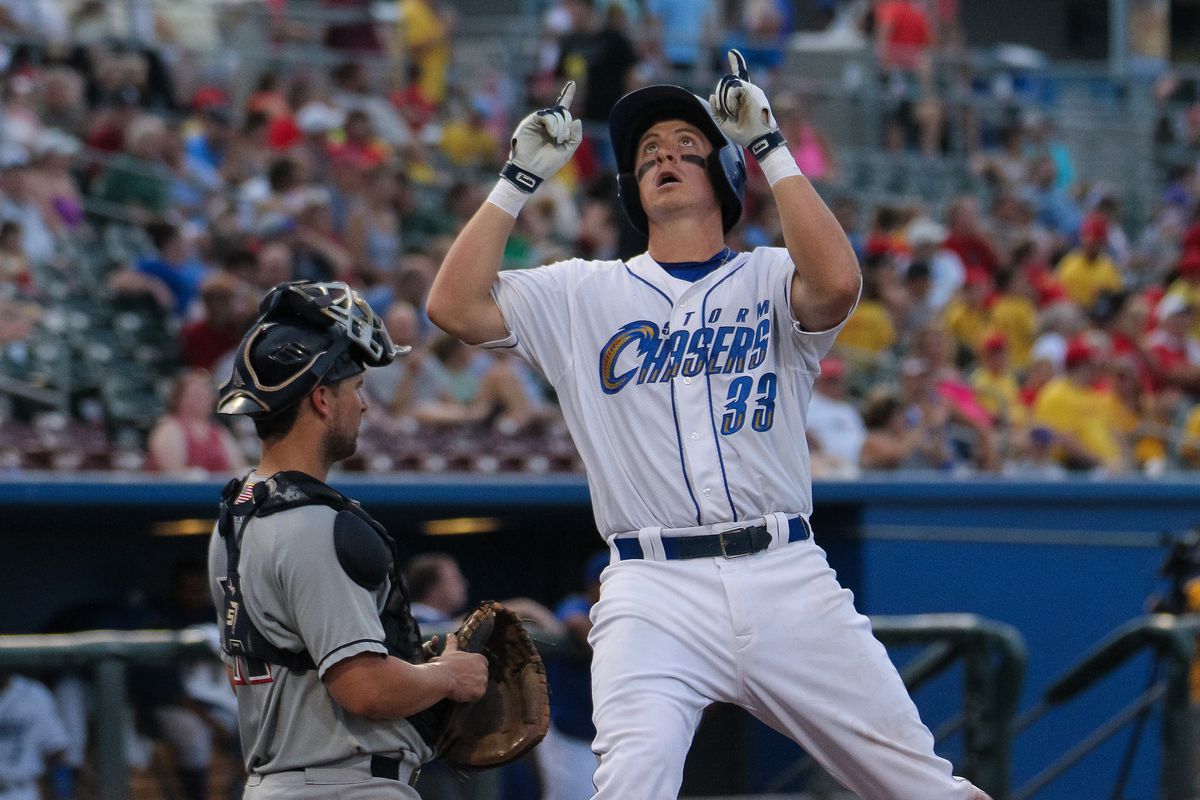
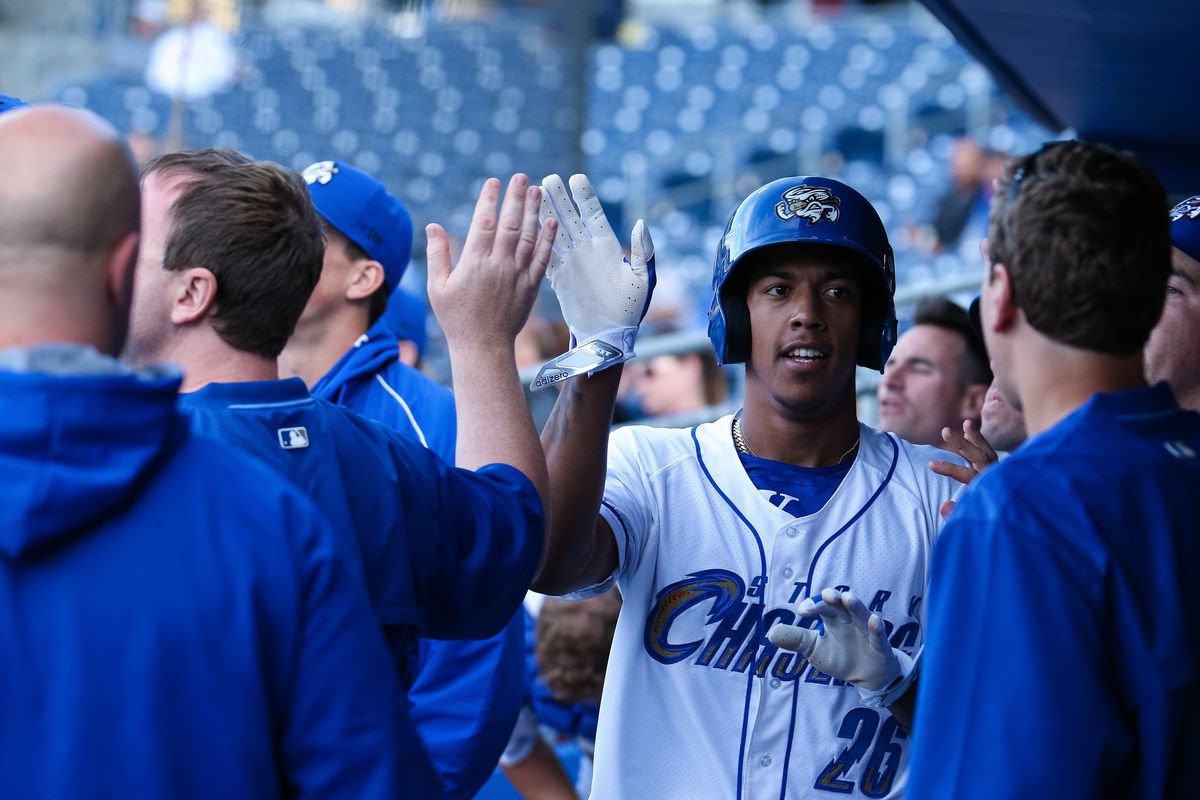
Let’s start with the Royals AAA affiliate, the Omaha Storm Chasers. To keep tabs on the team you just need to go to their website where you will get daily updates, schedules, statistics and more. You can also follow them on twitter or instagram. Top prospects currently on the Storm Chasers roster include Hunter Dozier, Richard Lovelady and Trevor Oaks. Since Omaha is the Royals top rung of the minor league system, they are a good source of seeing players who could be on the main roster sooner rather than later.

kc3
Credit: ArkansasOnline.com


Going down the line, there is the Kansas City’s AA team, the Northwest Arkansas Naturals. You can check out their official site for daily updates and the regular updates on Twitter. The team right now houses prospects like Foster Griffin, Samir Duenez and Donnie Dewees. The Royals occasionally promote players from AA but not as often as they used to, as many will receive a little bit of time in AAA before their promotion to the big leagues. The Naturals are also the team that current Royals bullpen coach Vance Wilson was managing for the last couple of seasons. I mention Wilson, since I’ve long believed he is a future Royals manager in waiting, which is relevant since Ned Yost’s contract runs out at the end of the year.

kc4
Credit: Ken Inness/MiLB.com

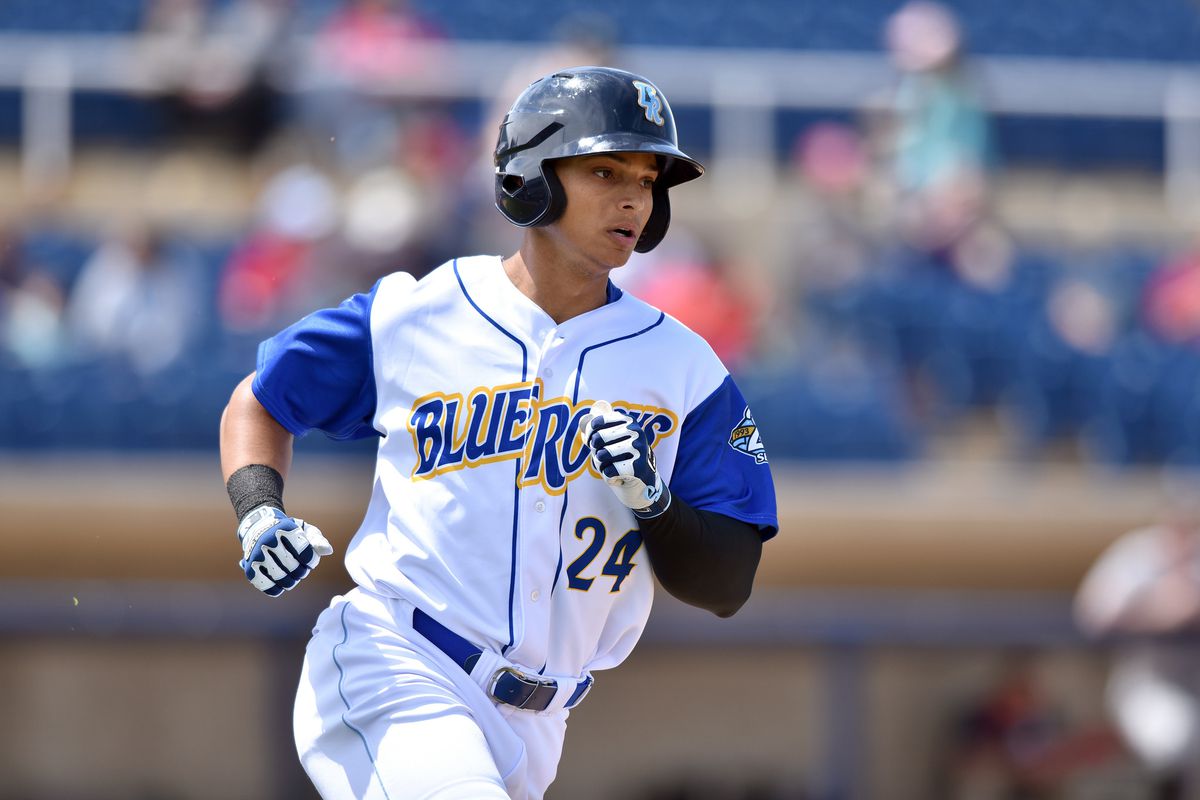
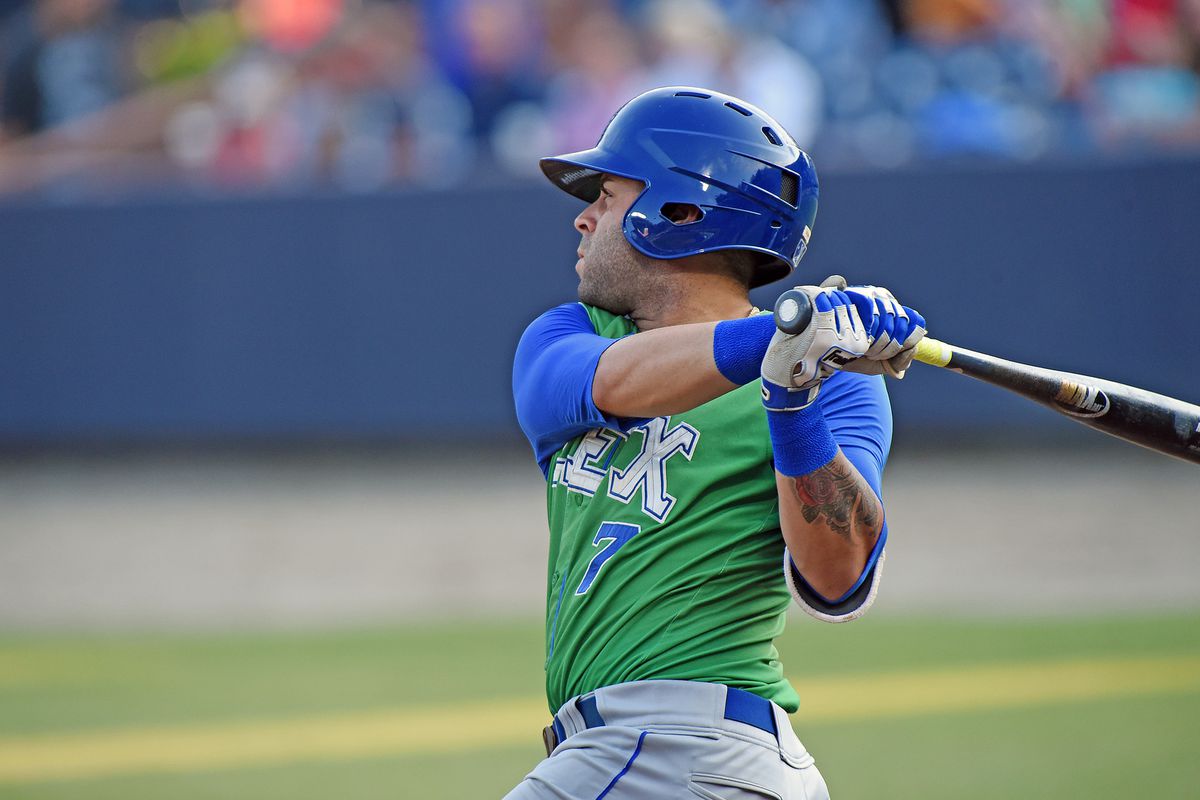
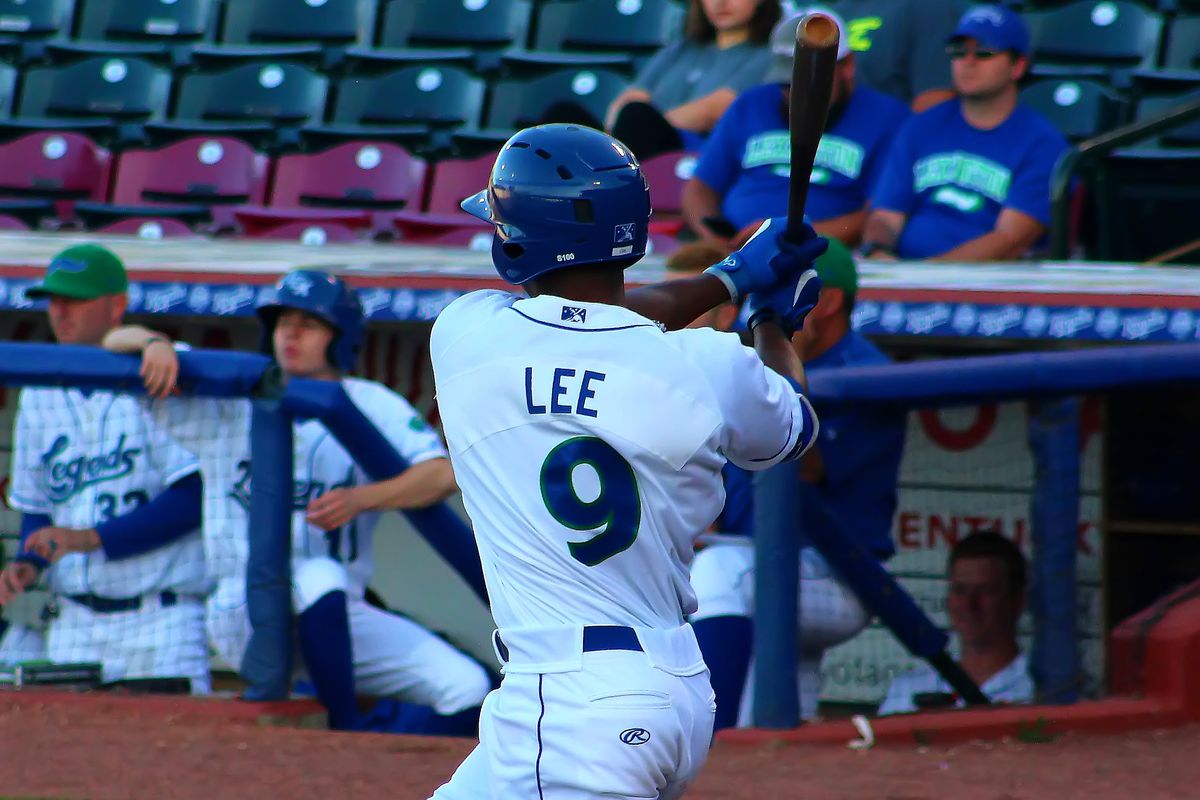
Sliding down to High A ball, where we check in on the Royals affiliate, the Wilmington Blue Rocks. You can check out their main page and follow them on Twitter. Their roster has a nice array of prospects like Gerson Garabito, Chase Vallot, and top prospect Khalil Lee. The team will probably see a plethora of other top prospects recalled to their squad this year, since a number of the team’s top talent is in the lower section of the farm system.

kc5
Credit: Brian McLeod/MiLB.com

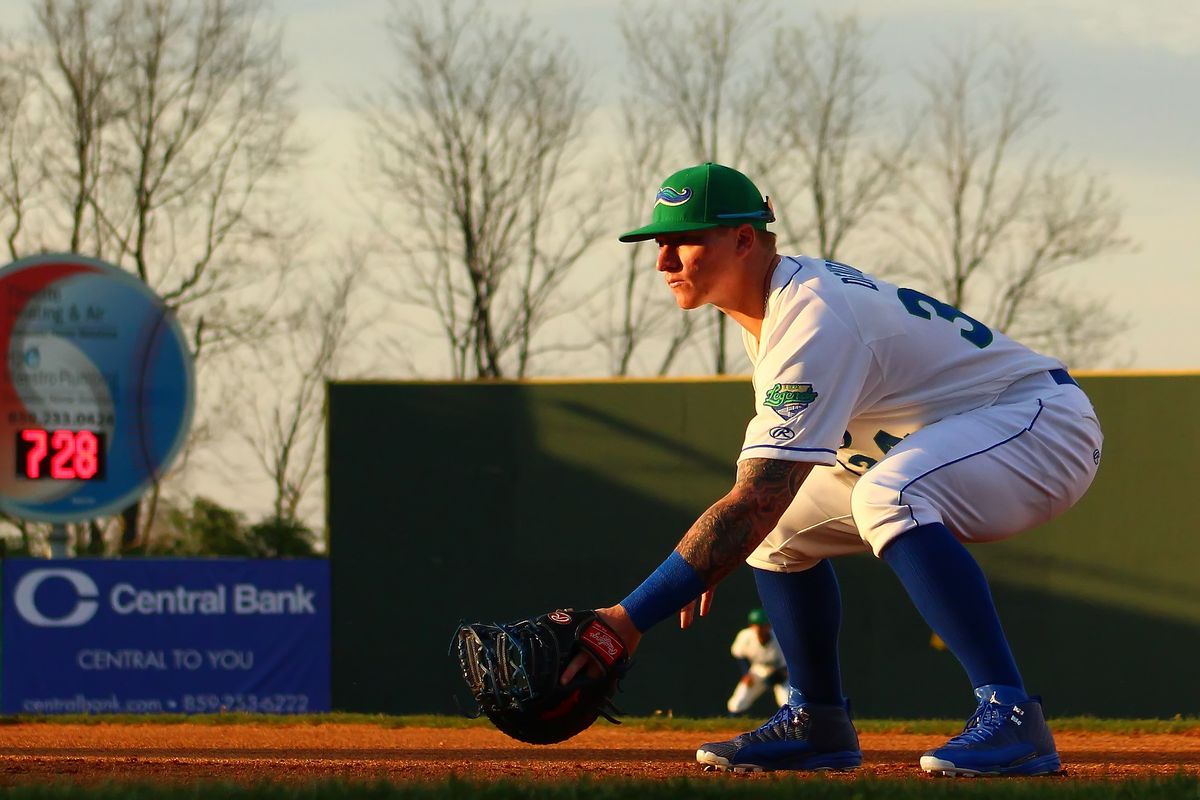
Finally, there is the Royals Class A team, the Lexington Legends. Once again, they have their official minor league site and Twitter to follow. The team has a number of the Royals top shelf prospects, like last year’s number one draft pick Nick Pratto, MJ Melendez and Seuly Matias. The players at this level are names you should be keeping tabs on and watching their progress, as they could be a big part of the major league team’s future. While the Royals are ranked as having one of the worst farm systems in baseball, the players at this level could start to turn the tide and we could start seeing results from them as early as this year.

kc6
Credit: Clinton Riddle, SB Nation/Vox Media

If that isn’t enough to wet your appetite, there are a number of other sources of where you can get good analysis on players to keep an eye on. Clint Scoles does great work over at Baseball Prospectus Kansas City and you can follow him on the Twitter machine. There is also the Royals Farm Report, which does a thorough job of covering all aspects of the Royals farm system, whether on their site or on social media.

kc7
Credit: Minda Haas Kuhlmann

I would also be remiss if I didn’t mention the great work that Minda Haas Kuhlmann does, especially covering the Storm Chasers. You might have noticed that she took a number of the photos you see in this article and writes a weekly feature over at Royals Review. The feature is called “This Week in the Minors” and is a good way to keep up to date with what is going on with the organization on a weekly basis. Minda is a great writer and I highly suggest you check out her work, as it is always top notch.

kc8
Credit: Mark J. Rebilas-USA TODAY Sports

Meanwhile, I will occasionally write about some of the up and comers here at bleedingroyalblue.com. One of the fun aspects of being a baseball fan is keeping track of the players who are on the way and I’ve always enjoyed writing about them on this blog.

So that should get you started on following the Royals minor league system and help educate yourself about ‘who is next’. Just remember that while the major league team will probably struggle most of this 2018 season, they won’t lose forever. The odds always come around at some point and the Royals will be a contender again. When that happens, you will already have an idea who will be a part of the “Royal Resurgence”.


Blog at WordPress.com.

Up ↑