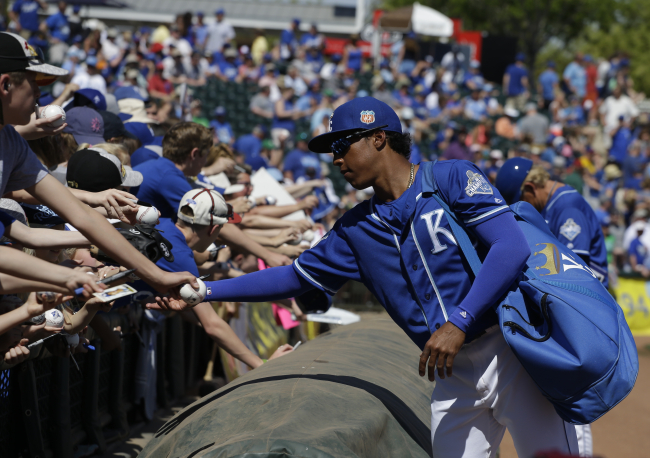
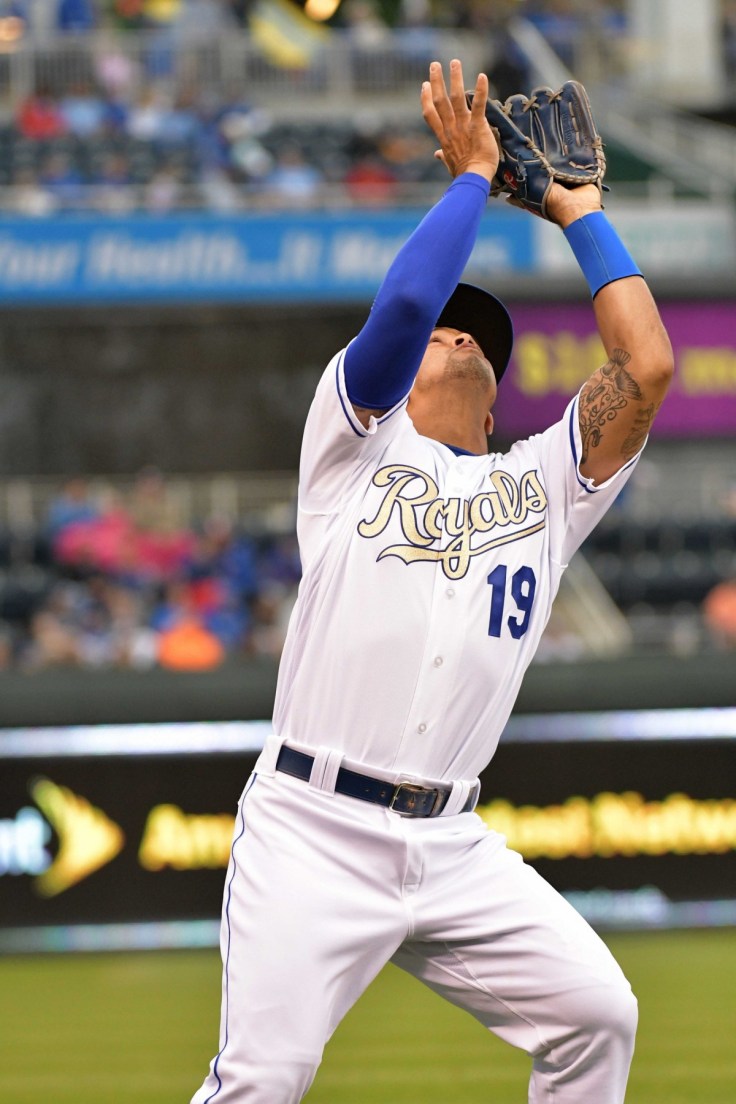
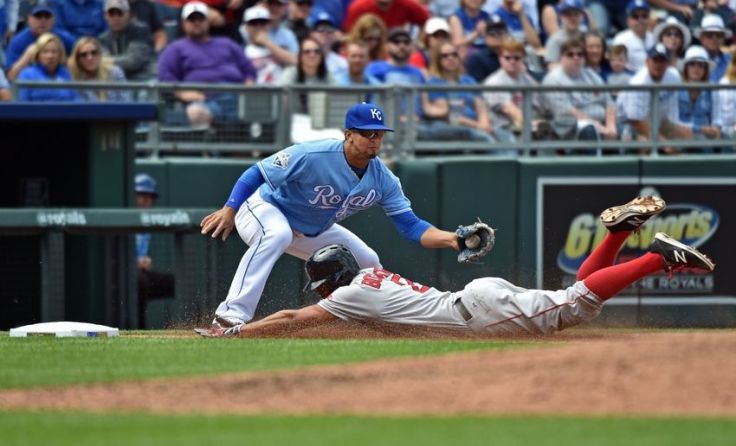
When the season started, it was expected that Paulo Orlando would be splitting time in right field with Jarrod Dyson, with Dyson probably seeing the bulk of the playing time. In 2015, Orlando proved that he was a worthy backup outfielder, posting a line of .249/.269/.444 in 251 plate appearances with a wRC+ of 89 and 1.0 fWAR. Orlando supplied above average defense with a bat that wasn’t spectacular but could place a timely hit from time to time with a bit of pop. Orlando had toiled in the minors for 9 seasons before 2015 and in some ways it was easy to see why. He had put together a couple of above average offensive seasons in the minors, but nothing that would really grab a scout looking for a gem in the minors. The Royals liked Orlando’s defense and speed, two pillars of Kansas City’s success these last few years. As much as most of us liked Paulo, we also figured with his past track record that he was a solid backup at best, whose flaws would be more glaring the more playing time he would receive. Instead, Paulo followed a sparse April(30 plate appearances in 9 games) with a spectacular May where he hit .429/.456/.603 and hasn’t looked back. So is Paulo for real?
My first instinct with Orlando’s hot hitting was that as much as it appeared as if he had improved offensively, that at some point he would regress. The highest he has hit average wise at any level was .305, which he did in 2010 for the Royals AA team. Orlando has only two above average offensive seasons throughout his minor league career(2010 and 2014) and one of those seasons was just barely above league average(101 wRC+ in 2014 for Omaha, the Royals AAA team). In June, he still put up solid numbers, but they slipped a bit, down to .292/.323/.371 in 26 more plate appearances. Paulo went from platooning with Dyson to seeing the majority of the time in right field and in all honesty he had earned it. Orlando would follow that with a bigger dip in July, hitting .273/.291/.351 , which were still respectable numbers but it did appear as if he was finally coming down to earth. But early into August he is hitting .500/.519/.692 with a sOPS+ of 227. So what is he doing differently in 2016 to see such a big increase in production?
It appears the biggest part of his success is coming from watching video. Back in June, Orlando discussed his use of video to scout out the opposing pitchers and would use what he learned when it came time take batting practice that day:
“It can slow down the game and help you a lot. Before every game, before I go practice, I watch. If a pitcher throws a lot of breaking balls, you go to BP and try to work on that.”
It’s also been obvious that playing every day has also helped his approach at the plate:
“When you play more games, you have your timing every day. Some guys throw hard — 95 to 97 mph — some guys throw 90 to 92. So when you play every day, you have more confidence in yourself.”
At the plate Paulo has improved his hitting, but a number of his stats point to him being in some ways the same player he was in 2015. His strike out percentage is about the same as last year (20.1% to 21.1%) while his walk percentage is still almost non-existent(2.0% to 2.3% last year). Orlando has continued to put the ball in play at a high rate(77.9 % this year, 79.1% in 2015) but his placement of where he is hitting the ball is a bit different this year. Last year, Paulo was pulling the ball at a 36% clip, while this year he is hitting the ball to center field 39.7% of the time. In fact, he is even hitting the ball to right field more this year (30.6%) than he is to left (29.7%). It’s obvious that his approach at the plate this year has been more focused on putting the ball in play and going with the pitch than trying to pull the ball and use his power. The power, is the one part of his game that has been sacrificed so far in 2016.
One of the positives for Orlando last year was the fact that he showed some power from the right side of the plate, something the Royals didn’t have a plethora of in 2015. Last year Orlando slugged at a .432 clip with 27 extra base hits and an ISO of .195. So far in 2016(and as of August 11 he has played in exactly the same amount of games as last year, with 60 more plate appearances), Paulo is slugging at a .432 rate with 22 extra base hits and an ISO of .105. It’s obvious with his approach this year he has sacrificed some of his power this year for an increase in his on-base percentage(which is up by .082 this year). This also means his hard hit rate is down(26.5%, down from 31.4% in 2015), but his soft hit rate is down as well(17.6% from 19.9% last year). How you feel about this is determined on whether or not you believe the Royals would be better off with someone with more power or someone getting on base. To me, as much as Kansas City needs a bit more power in their lineup, even more in need is someone who can get on base consistently. Orlando is doing just that so this could probably be filed under the ‘if it ain’t broke, don’t try to fix it’ category.
In what has become a very frustrating season for Kansas City, Orlando’s production has been a bright light and while some of us(myself included) have been thinking he will start to regress, time is proving us wrong. Within the last week Orlando has been moved to the leadoff spot for the Royals, a spot that has been lacking this year. Kansas City’s leadoff batters are hitting .243/.277/.314, all either in last or next to last in the American League this year. The Royals also have just 23 extra base hits from leadoff this year, the lowest in the league. I’m not sold that Orlando is the answer at the top(he does have only 12 career walks during his two years in the major leagues), but it was also obvious that mainstay Alcides Escobar wasn’t the answer either. The Royals have no immediate answer at the top of the order, which is why manager Ned Yost is giving it a try:
“(We’re) just giving him a shot,” Yost said in the dugout before Tuesday’s game. “We’ve been thinking about it for a while. Paulo’s been swinging the bat good.”
In two games, he is 2 for 11 at the top, not exactly proving Yost right but it is the smallest of small sample sizes. At this point, it is worth a try to see if he can still get on base at a good clip. No matter whether at the top or farther down the lineup, Paulo Orlando has earned his playing time this year. Like Lorenzo Cain, he didn’t start playing baseball until his teenage years in Brazil, so his development is not quite the same as the normal player. Orlando has proven himself a quick learner and could be seeing more improvement before a regression sets in. Not bad for a guy who didn’t even make his major league debut until the age of 29.
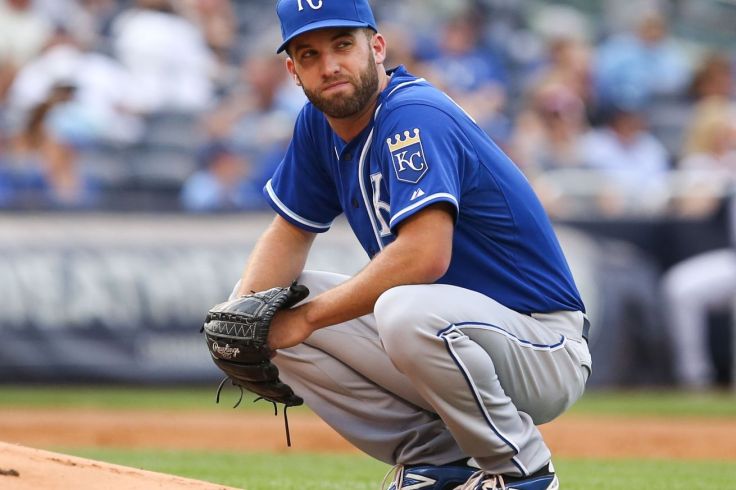
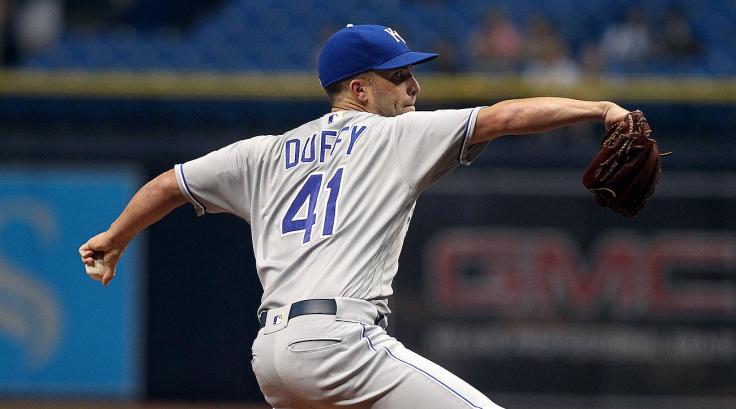
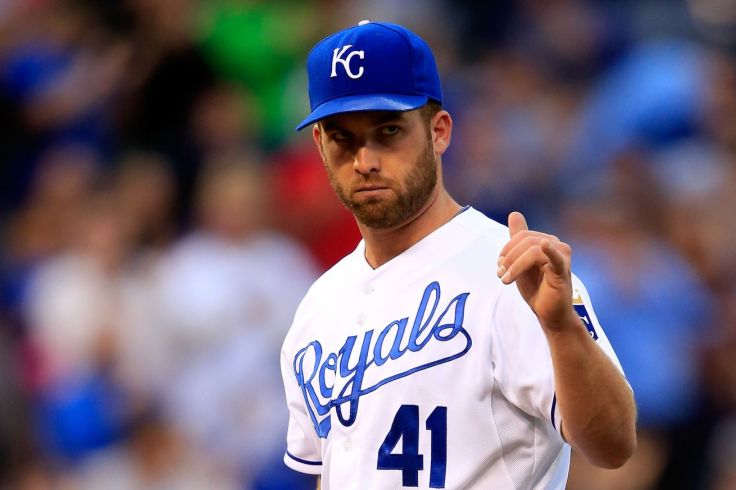
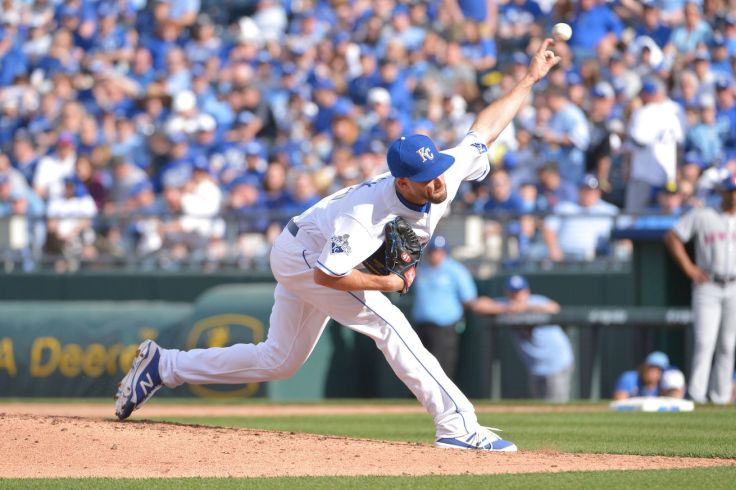
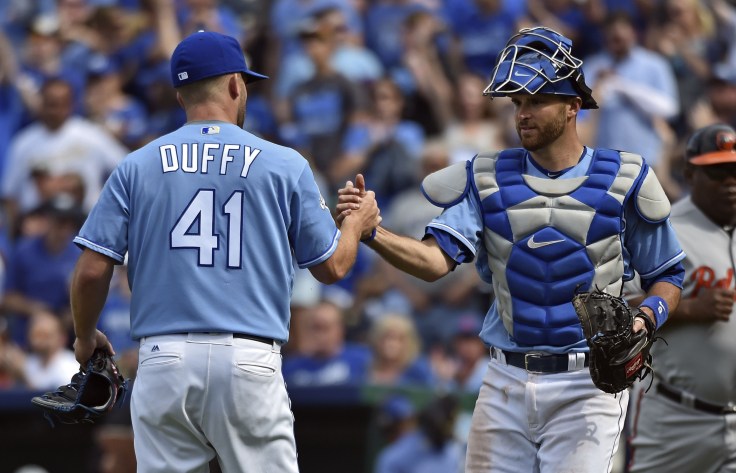
On Monday night, Danny Duffy went out and pitched the game of his life against Tampa Bay, an 8 inning, 1 hit(7 innings of no-hit ball), 16 strike out affair that gave Duffy the new team strikeout record for a single game. It gave many a national baseball analyst to finally discuss the great season that Duffy has had this year, a year that has seen a massive amount of growth. While his superb performance made the baseball world take notice, most in Royal Nation have been discussing a bigger issue when it comes to Duffy-should the Royals lock him up long-term, keeping him a Royal for the immediate future?
Back in April this seemed not quite comical but definitely would give you some funny looks if the idea was thrown out there. Duffy had been relegated to the bullpen to start the year and didn’t become a part of the Royals rotation until almost the middle of May. Since that time he has easily been Kansas City’s best starter; 96 innings, 105 strike outs, 2.98 ERA, 67% strikes thrown and a WPA(Win Probability Added by pitcher) of 1.336. Duffy has been averaging 6 innings a start, but you have to remember that he was on a limited pitch count during those first few starts, as he was transitioning to the rotation. He didn’t actually go 6 innings in a start until his fourth start and has now thrown quality starts in 10 of his 16 starts. One of the knocks on Duffy for years was that he wasn’t an efficient pitcher; it was a big deal if he was still in the game come the 7th inning. Danny has been working deeper into games and has also put up career high numbers; he has the highest K/9 of his career, lowest BB/9 and lowest FIP of his major league career. A man who once pitched purely on emotion has not only changed his approach, he has also changed the mentality he goes into each and every game:
It’s been pretty gratifying to not be a guy who’s gone five-and-dive, like I did for so long in my career,” Duffy said. “I’m not saying that’s not something that will ever happen again. But I have confidence when I take the ball that I’m going to do everything I can to hand the ball off to the bullpen late in the game.
The change in his mental approach is a big part of his success this year, but that is also a key to why the Royals should extend his contract for the long-term.
2016 isn’t the first time we have believed that Duffy had things figured out. Back in 2014, it seemed that he was able to unlock his potential, as he had put together what was a career year at that point. It really appeared as if Duffy had turned a corner, although there is a very noticeable difference between his success two years ago and today. What was very apparent back then was that Duffy wasn’t striking people out, as he was averaging 6.81 K’s per 9, the lowest average of his career. Thankfully the Royals superb defense was able to handle Duffy pitching to contact, as hitters were making the most contact against him(84.4%) in his career. That contact rate stayed fairly close in 2015(82.3%) but hitters were also getting a bit luckier off him last year on balls in play(.298 batting average on balls in play against Danny in 2015). Both stats have taken a decline so far this year, as the contact rate against Duffy sits at 72.3%(the lowest of his career) and hitters have a .286 BAbip. Throw in all the other career highs he is racking up this year and you can see why he is having a turnaround year in 2016.
So the numbers play the largest part in why the Royals should sign Duffy to a long-term deal, but there are a few more reasons an extension makes sense. For one, Duffy is still only 27 years old, as he won’t turn 28 until December. He hasn’t even reached 30 years old and these late 20’s are when a lot of pitchers learn to really pitch, not just throw. Maybe the biggest reason to lock him up now is the state of the Kansas City Rotation. The starting staff has struggled so far this year and there isn’t much help in the minors. If the Royals want to still be contenders, they are going to need more reliable starting pitching and keeping Duffy is a must. At some point the Royals are going to have to get younger in their rotation and with no arms on the immediate horizon, Duffy could be in that caliber of a Chris Archer or Sonny Gray, younger arms who lead their respective team’s staffs. Unless Kansas City goes out and swings a deal for a young talented starter, they will have to look older with either the lackluster free agent market or a trade. Locking up Duffy might be a cheaper way to go for the Royals rebuilding of the rotation.
So what kind of deal could the Royals off Duffy? Good question and in some ways it is hard to guess with the way the market is constantly being elevated. Let’s start first with years; I would go with either a 3-4 year deal with at least one option year(come on, you know Dayton can’t sign someone without a mutual option!). If the Royals go 3 years, give Duffy two option years. If you go 4 years, give him a mutual option for the 5th year. So what about money? Once again, I’m just throwing numbers out here, but let’s start with what he is making this year, $4.2 million. As a comparison, Chris Sale of Chicago is the same age as Duffy, although Sale has a better track record. Sale is making $9.2 million this year, which is higher than what Duffy will get, for sure. Let’s say Duffy gets $6 million in 2017, $9.5 in 2018, 12.5 in 2019 and $16.75 in 2020. That would be a 4 year, $44.75 million contract, which I might even be lowballing a bit, considering how the market has seen such a big increase these last few years. Still, the Royals are going to have to keep the contract manageable, and after Ian Kennedy’s contract I wouldn’t be surprised if they are gun-shy to dole out a contract of that magnitude again for a pitcher. Still, that is not a bad contract for a guy who hasn’t really been a top starter before this year.
Kansas City has a plethora of decisions to make this upcoming offseason, everything from figuring out what they want to do with free agents Edinson Volquez and Kendrys Morales, to rebuilding the starting rotation, there will be some shuffling going on throughout the winter months. While those decisions won’t be easy, procuring Duffy’s services for the immediate future should be a slam dunk. The last thing the Royals want to do is not have Duffy taken care of before he can become a free agent after 2017, especially with all the decisions that have to be made after next year. One of the top priorities for General Manager Dayton Moore this winter should be to make Duffy a Royal for the long-term. It’s going to cost Kansas City some dollars, but I would rather pay now than have him knock off another fantastic season in 2017 and raise his value even more. Signing Danny Duffy should be a must this offseason; it’s time to keep things ‘gnar’ in Kansas City moving forward.
A lot of words have been spilled this year on the Kansas City Royals starting pitching and the atrocious numbers they have put up. While all this is very true, what has not been mentioned as much is how lethargic the offense has been, especially over this past month. The Royals went 7-19 in July, a month where they went from potential playoff contenders to also-rans and a big part of the awful July was the struggles of the Kansas City offense. So where did it all go wrong?
(Credit: Troy Taormina-USA TODAY)
Let’s begin with the season totals. The Royals are currently last in the American League in home runs, runs, RBI’s, walk %, walk to strikeout % and ISO. They are also next to last in hard hit rate, second from the top in soft hit rate while floating near the bottom of the league in On Base Percentage, slugging percentage oWAR and wRC+. What is really scary is that this is a team built to make contact and put pressure on the other team’s defense by putting the ball in play, yet their contact % is only 7th in the league at 78.7%. For a team whose entire offense is built around making contact, it is scary not to see them at the top of the league.
(AP Photo/Ted S. Warren)
The July numbers don’t really get any better. Throughout this past month, the Royals are last in home runs, runs, RBI’s, ISO, BAbip, batting average, on base percentage, slugging percentage, wOBA, wRC+ and oWAR. Offensively, the Royals were the worst team in the league in July and a huge part of why they won only seven games all month. The obvious numbers that really stick out are the power numbers, as this team is not hitting the ball hard and had the highest ground ball % in the league this last month. Look, the Royals are never going to be compared to the old ” Murderer’s Row” Yankees’ teams, but if they want to be a contender they can’t be hitting the ball on the ground as much as they are.
Some of these numbers shouldn’t be a surprise. The Royals over the last few years have been near the bottom of the league in home runs and walks, so neither of those numbers should be too surprising. This would also affect their numbers for on base percentage and slugging percentage, but even those are down quite a bit from 2015. Last year, the Royals were either 7th or 8th in OBP, slugging percentage and wRC+, which are very respectable numbers for a team who doesn’t hit a lot of home runs or take walks. Part of this can be attributed to Kansas City being third in the league in doubles and fourth in triples. So far in 2016, the Royals are 9th in doubles and 11th in triples. Those extra base hits were vital to a contact team like Kansas City and can be pointed to as a big part of their success last year. If you want to take a shot at what is different from last year to this year offensively, those extra base hits would be a good place to start.
(AP Photo/Matt Slocum)
So what can the Royals offense do to improve on these numbers? I know, it’s not like the team can magically snap their fingers and they are fixed, but there are a few techniques that are bound to improve the numbers, even if it is a gradual improvement. One thing that instantly comes to mind is waiting for your pitch. In 2015 the Royals really seemed to improve on this, looking for a pitch to drive rather than just something in the zone. That frame of mind needs to come back. There also could be an improvement in their ground ball ratio, which is partially a by-product of a high soft hit rate as well. I am of the belief that if the team can raise their hard hit rate and can get a sprinkle of luck(as they were last in BAbip throughout the month of July) then we will see an increase in offensive production. Eric Hosmer seems to be turning things around over the last 4 games, slugging .533 in that span. Add in the return of Lorenzo Cain and the continued production of Cheslor Cuthbert at the top of the lineup and this is a team that can catch a hot streak in no time. I would mention that the team could be a bit more patient at the plate(and I do think that would help them in the long run), I am not crazy; I know this is just not a team that is going to rack up a number of walks. Best case scenario sees this team loosen up a bit(as they have looked pretty tight as of late), square up the ball a bit more and just focus on making good contact. It has felt like this team is trying to do too much at the plate when the honest truth is that keeping it simple could very well garner better results.
Baseball is a great sport because the littlest thing that drags you down one month can completely vanish in a second. With July now in the rear-view mirror, August is a chance for Kansas City to awaken their bats and show the rest of the American League that they are better offensively than they have shown so far in 2016. The honest truth is that the Royals teams of the last 3-4 years have always been a bit of a streaky bunch and have had equal parts high and low lights. This team is capable of being better but they are running out of time to prove it. So far in August they have racked up back to back 9 hit games. A little bit more run production and this team could squeak their way back into the wild card race in the American League. It’s a long-shot, but if there was a team to do it…
With the trade deadline a few days away(Monday afternoon at 3pm CT, to be exact), there has been much discussion about what the Kansas City Royals are going to do, especially since it now appears they will be selling rather than buying. It’s hard to imagine the defending World Champions being in this position when the season started but the team has been littered with issues in the starting rotation and more than anything else, a litany of injuries. So who might the Royals ship off before Monday? There are a few candidates for Kansas City to deal and it starts with a key part of the rotation.
Volquez has had a very up and down 2016 so far, compiling a 4.56 ERA in 124 innings, with an ERA+ of 98, a FIP of 4.11 and a SO/W ratio of 2.00, all numbers below what he racked up last year but above his career marks. The starting pitching market is fairly weak this deadline and a known commodity like Volquez should garner a couple of very solid prospects. Or…maybe more:
Sign that the trade market has officially gotten out of hand: Jeremy Hellickson may well fetch at least three, and perhaps four, prospects.
Alright, so maybe we should make that 3-4 prospects. The Royals are in a position where they need to re-stock the arms in their minor league system and dealing Eddie would be a good first start for this to happen. There is a bit of immediacy when it comes to starting pitching(last in the American League in innings pitched, WAR, FIP…yes, the list goes on) and if Kansas City can gain a few major league or close to major league ready arms from dealing Volquez than they should go for it. Volquez’s contract runs out after this season(there is a mutual option for 2017) and if Kansas City was really interested, they could look into re-signing Eddie during the off-season if they happen to deal him. There is a very good likelihood that Volquez is dealt before Monday afternoon(I would say probably an 85-90% chance for a trade) and there is a number of contending teams interested in him. So far, San Francisco, Texas and Los Angeles(Dodgers) have all inquired about him while Baltimore, Boston and Miami could also be options(although the Marlins picked up Andrew Cashner on Friday). No matter the team, there is probably a very good chance that Volquez will no longer be a Royal by Tuesday.
Also on the trading block is Kendrys Morales. Morales’ numbers are down from last year(.246/.315/.431 with an OPS+ of 95 and -0.4 bWAR) but Morales had a great June and is still a viable power threat. Like Volquez, Morales is signed through this season with a mutual option for 2017(Dayton sure does love his mutual options). So if a team was interested in him, he would be just a two month rental. I can’t imagine many National League teams would be interested, as he is almost purely a DH at this point in his career and is a below average defender. This leaves the American League teams as an option and many of them wouldn’t have a set spot for him in the lineup. I could possibly see him as an option off the bench, but that would be an expensive bench player for most teams. One team that might consider Kendrys is the Rangers, as they found out this week that their high-priced DH, Prince Fielder, will be having season-ending neck surgery. Morales is a great fit in that Texas lineup and might see an uptick in offense at Globe Life Park in Arlington. That being said, the chances of the Royals finding a trade partner for Morales is probably in the 20-30% range, so I wouldn’t expect him to be leaving the confines of Kauffman Stadium by the deadline.
Then there is the wild card of this bunch, Wade Davis. It’s not hard to see why so many teams are interested in Davis, as he has been one of the top(if not the very top) reliever in the game since 2014. Davis hasn’t been as dominating in 2016(1.60 ERA, 280 ERA+, 2.75 FIP, 8.6 Strike Outs per 9) but is still considered an elite closer. The interesting scenario with Wade is that he is under contract until the end of 2017, which means if he was dealt by Kansas City, whichever team acquired him would get him for the 2017 season. Because of this, the Royals are asking for a bigger haul for Davis than New York got from the Cubs for Aroldis Chapman, and rightly so because of the extra year of contract control. Since the Royals are asking for so much, they have also tried to pawn off the contract of Ian Kennedy onto anyone wanting Davis, like the Dodgers. Kennedy’s contract would be a lot for any team to take on, even one has wealthy as Los Angeles. The Royals know at this point they don’t have to deal Wade, as Kansas City is in a position where they could be contenders again in 2017. So the only way Davis is dealt is if a team totally overwhelms Dayton Moore to where he just can’t say no. I would say the chances of him being traded are in the 10-20% area, with Los Angeles, Washington and Cleveland as possible suitors(although I can’t imagine Moore trading Davis to a team within their division, so don’t hold your breathe on that one). I’m not expecting Wade to be dealt, but I also know it is not completely off the table.(Writers note: While working on this piece, it was found out that Davis definitely is NOT going to be traded:
The Royals have now confirmed that Wade Davis will undergo an MRI tomorrow in Kansas City. He previously battled forearm strain.
The MRI is planning to be on his right elbow. Try not to think the worst, Royals fans, but with the way this season is going…)
One name I initially did not plan on talking about in this space was Jarrod Dyson, but I’m now thinking he very well could be gone by Monday afternoon. Why the change of heart?
#Royals acquire Billy Burns from A's for Brett Eibner
Let’s see if Burns sounds familiar; speedy guy, slightly above average defensively, doesn’t strike out much, makes contact but sometimes has trouble getting on base. Sounds a lot like Dyson, right? Burns was 5th last year in the AL Rookie of the Year voting, with 26 stolen bases and .334 OBP. He has struggled most of this year and was sent to AAA Omaha after the trade today. But with Burns now in the fold, and Dyson getting more expensive as he approaches free agency after the 2017 season, it appears as if the Royals might have acquired Dyson’s replacement if he was dealt. I don’t know what percentage chance he has of being traded, but it would seem weird to have two backup outfielders with pretty much the exact same talent set. Just saying.
There is one more Royal that has been heavily mentioned in trade talk, and that is Luke Hochevar. Hochevar looked like almost a lock to be traded away before the deadline, that was until he was placed on the disabled list on Thursday. The news didn’t get better on Friday:
First diagnosis for Luke Hochever confirmed Thoracic Outlet Surgery. Will have 2nd opinion but surgery likely and season prob over. #Royals
Hochevar and the Royals could not have gotten any worse news. For a guy who was an awful starter, to turn his career around out of the bullpen, AND THEN have Tommy John Surgery, that is some bad luck. To then return from surgery and less than two years later find out you have Thoracic Outlet Syndrome, that will defeat anyone’s hopes:
Luke Hochevar: “I think the biggest pill to swallow is not being available to the team. As for free-agency, that stuff works itself out."
That is a tough break and I don’t even mean that in the sense of Hochevar’s trade value. Sure, the Royals could have traded him and gotten 1-2 good players in return. But it’s even worse to have this surgery and be unsure about one’s future. Moving forward, Hochevar has a long road ahead of him.
The frame of mind that the Kansas City front office should have right now is of a team that is close to contending but needs to upgrade some pieces for 2017. I am not 100% waving the white flag on this season, but it just doesn’t appear as if the postseason is in the cards for this team. If the Royals are able to swing a few trades, upgrade a few question marks and look ahead toward the future, they will be sitting in a good position next year, the last year for the main core on this Royals roster. I doubt there is a lot of movement by Kansas City but a few tweaks here and there are probable. Major League Baseball extended the trade deadline an extra day this year so that it wouldn’t fall on the weekend. The Royals have an extra day to get creative; the clock is ticking.
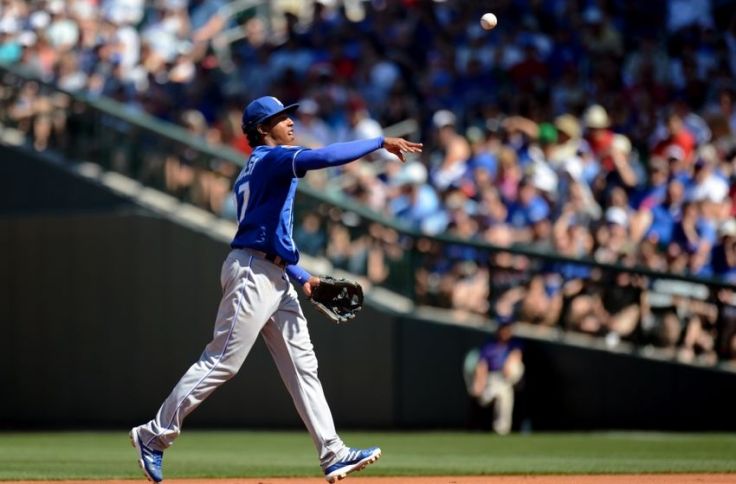
The defending World Champion Kansas City Royals have fallen into a spiral of mediocrity over the last couple months, with an array of injuries and rotation issues at the heart of the problem. The Royals are 48-50, looking more like sellers than buyers right before the trade deadline, with many wondering if the likes of Edinson Volquez, Kendrys Morales, Luke Hochevar and Wade Davis could all be moving on before the end of deadline. So to say the promotion of Raul Mondesi, Jr. from AAA was a bit of shock could be labeled as an understatement. Why now? Lets look at some theories.
One theory definitely at play here is the struggles of Whit Merrifield. Merrifield was sent down to Omaha as the corresponding move to Mondesi’s recall and it’s not hard to see where Whit’s recent lack of production made this an easier move. Most know that Whit got off to a hot start in Kansas City, but so far in July he is hitting .170/.241/.245 and had been losing playing time to Christian Colon. The honest truth is that Whit is probably better suited in the super utility role for Kansas City but had been forced into a regular spot at second base because of the release of Omar Infante. To me, Whit could still have a valuable role on this Royals team but it makes more sense for it to be in the utility role.
Another factor would be Mondesi’s hot start since his recall to AAA. In just 14 games, Mondesi was hitting .304/.328/.536 with a wRC+ of 122. Mondesi just recently returned from a suspension from Major League Baseball for testing positive for a banned substance. In total, he has only appeared in 52 total minor league games this year but there has been some marked improvement offensively for Mondesi, as he has been slugging at a higher percentage this year than at any other time in his career. His ISO(Isolated power) and slugging percentage have been higher this year and has hit the same amount of extra base hits(22) as he did in all of 2015 in almost 30 less games. The knock on Mondesi has always been his offense, as many scouts have considered him defensively ready for the majors for a few years now. The improvement is noticeable and definitely a major plus in his development during his age 20 season, but is this move being made too soon?
Mondesi started the year as the #29 top prospect in baseball thanks to Baseball America and the top prospect in the Kansas City farm system. It is very apparent from watching Mondesi for a bit that he has most of the tools to be not just a productive big leaguer but an elite one. The hang-up has always been his hitting and despite the improvements this year at the plate against minor league pitching, there has been a decent sized blemish. So far this year in 231 plate appearances, Mondesi has struck out 60 times while walking only 17 times. Bumping the math up just a tad, that averages out to 10 strikeouts to every 3 walks he racks up, not a great ratio. I would imagine that in the big leagues that divide will only be greater, as Mondesi has been known to have a hard time distinguishing balls from strikes. It is very obvious that his offense is still a work in progress.
That being said, I tend to think that the Royals will be more than patient with his offense as long as he plays the superb defense that is expected from him. While Merrifield was a slightly above average defender, Mondesi is a game-changing defenseman and could tighten up an already stellar infield defense. This could change if Mondesi really struggles at the plate, but my guess would be that the coaching staff will work on his plate discipline while looking for a gradual improvement offensively as time goes on.
(AP Photo/Darron Cummings)
While some will believe Mondesi was recalled to provide a spark to this struggling Royals team, I tend to think this is more a move to get his feet wet and introduce him to major league life. He could be the spark the Royals need, but I don’t think that is the actual intention here. Are the Royals pushing him too fast? Mondesi very well could be overmatched at the big league level, but the weight of this team is not on his back. He is already in the lineup for tonight and is batting at the bottom of the order, a good spot for a rookie to get acquainted with. In a month we could be talking about Mondesi being back in the minors, discussing issues he might very well have with major league pitching. But we could also be raving about his play on defense and short flashes of offensive life. More development in the minors wouldn’t hurt Raul, but I don’t think the big leagues will completely overwhelm him. The Royals are taking baby steps with their biggest prospect and this is just step one.
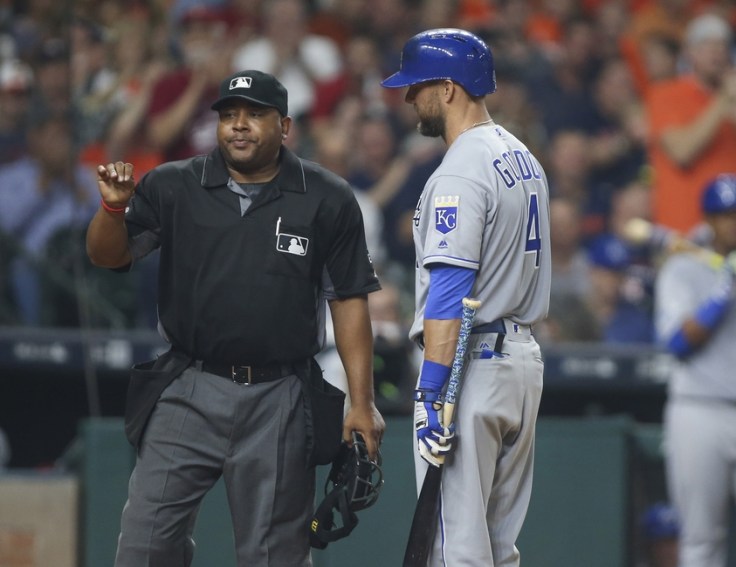
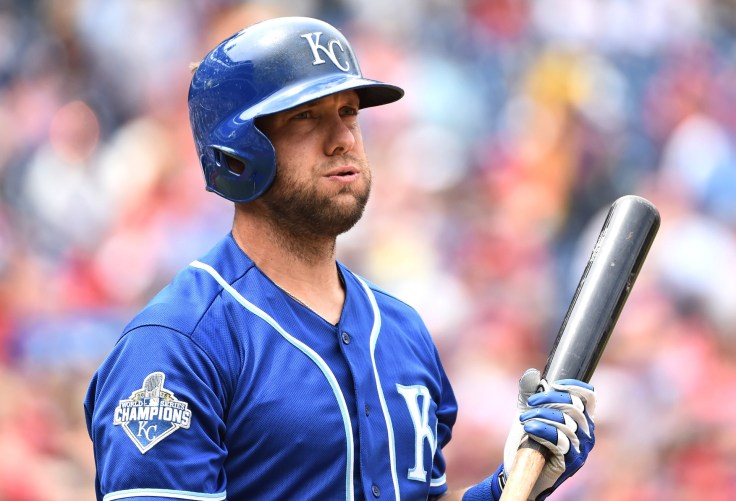
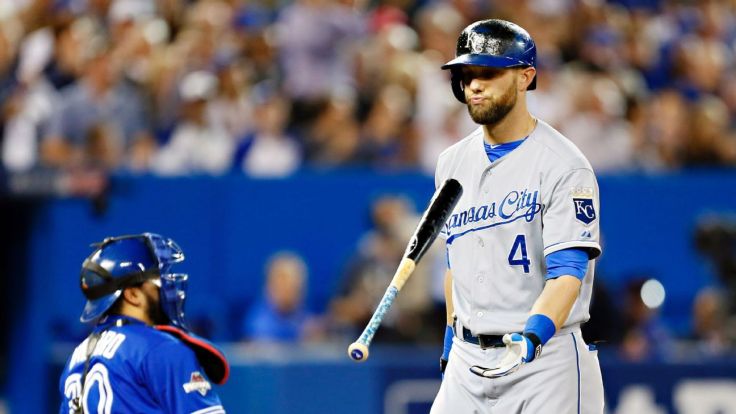
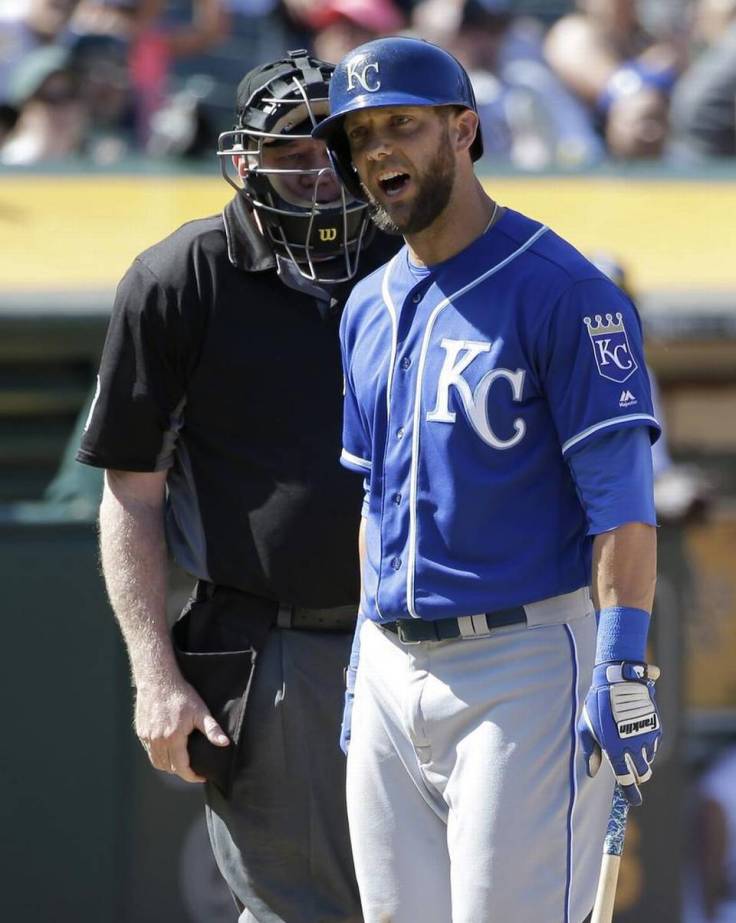
If you follow baseball in any manner, the word ‘Consistency’ will be heard on a fairly regular basis. Every team wants that player that year after year puts up good numbers(consistently) and can be inserted into the lineup without a second thought. Hitters especially can be a streaky bunch, but as long as your numbers are there at the end of the year, that is all that matters. In fact, some players are so consistent that they can be taken for granted for going out day after day and being a reliable major league player. Alex Gordon has been as consistent as any player in the game since 2011 and because of that he sometimes blends into the background unless he is really hot…or really cold. So far in 2016, Gordon has struggled mightily in a year that has him coming off of signing his big contract in the off-season and an injury to his wrist that left him out of action for about a month. No matter the situation, Gordon just can’t seem to catch a hot streak and his struggles are even starting to worry the most faithful of us(like myself). With Kansas City on the ledge of being sellers at the trade deadline instead of buyers, one has to wonder-what is wrong with Alex Gordon?
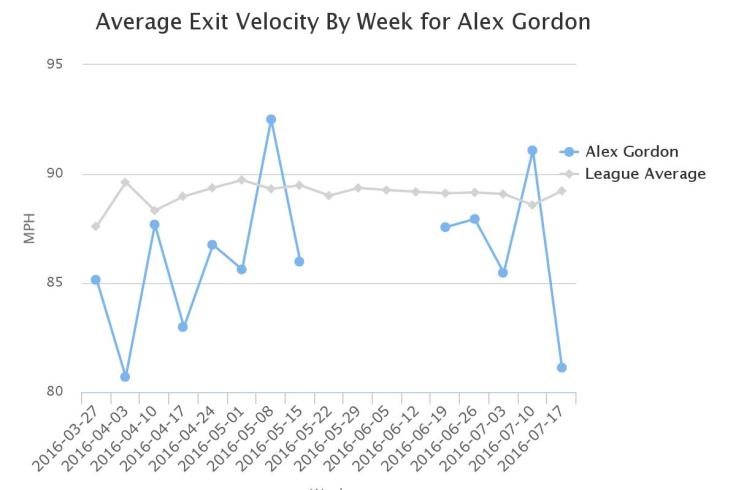
Let’s mark a few items of discussion off the ledger. One, it’s hard to imagine the wrist injury from May is not affecting him in some way now. I’m not saying he isn’t 100%, but you do have to wonder if there is some sort of effect in his hitting. A big part of hitting is in the wrists and if he is not quite 100% then you could see where that would limit bat speed. I took a deeper look at his exit velocity this year and the only pattern I found is one of a streaky hitter, which I was already aware that Alex was:
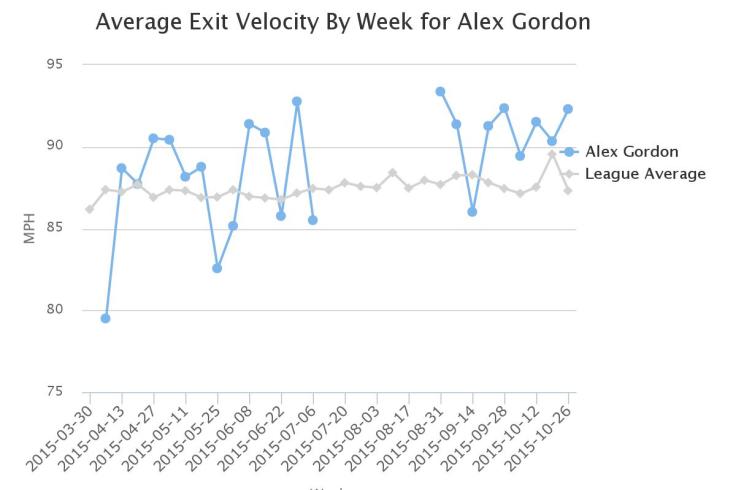
I thought I would take a look at his 2015 exit velocities to see if they were as streaky as this year…and they were:
For anyone that has followed Kansas City or Gordon throughout his career, it is very obvious he is a streaky hitter. When he is hot, he is lava hot. When he is cold, you would think he was an inhabitant of Hoth. The one constant is that a cold spell is normally followed by a big hot streak. Unfortunately in 2016, we still haven’t seen that from Alex.
The other item to mark off the ledger is the amount of strikeouts Gordon has piled up this year. If you are paying attention, it does appear as if Alex is striking out at a higher rate this year and the numbers back up what your eyes are telling you. So far in 2016, Gordon has a 28.6% strikeout rate, which is much higher than his previous career high in years he has played in more than 100 games, which was 22.8% all the way back in 2007. If you would like to compare it since he re-invented his career back in 2011, the highest K rate over the last 6 years was 21.8% just last year. So Alex is striking out more but it has also appeared as if he has been working deeper into counts this year, in my estimation. When diving into the numbers, it appears that I was right…and wrong. So far this year, Gordon is seeing more pitches per plate appearance than ever before(4.22) and his seeing more 2-0 counts than ever before(17.6%). But he is also first pitch swinging at a higher percentage(26%) than any year since 2011 and is swinging at strikes at the highest rate(73.5%) since 2011. The problem is that Gordon’s contact rate is down(69.3% compared to 76.1% last year) and it is really showing in his numbers on pitches outside the strike zone. Gordon is only making contact on 46.9% of pitches outside the strike zone this year, in contrast with 60.8% in 2015, and if it holds it would be the lowest contact rate of his career. Overall, Alex is swinging at more pitches this year than he has since 2013(44.1% to 45.2%) but is making less contact than ever before.
With all that being said, most of Alex’s other numbers are either on par for him or slightly above. Gordon’s hard hit rate is at 32.7%, when he is normally between 32-34%, while his medium hit rate is within range(50% this year, anywhere from 47-52% over the last couple seasons) and his soft hit rate is within recent years(sitting at 17%, as it has been between 15-19%). His line drive, ground ball and fly ball rates are all in the vicinity of the last few years and his HR/FB rate is about on pace with his career. Alex is even doing what most hitters should do, as he is pulling the ball less this year(40.7%) and hitting it to the opposite field even more(24.1%, the highest he has seen since 2013). So if there was concern by anyone that maybe Gordon was starting to regress(and at 32 years old he is about the age that regression starts to sit in), it appears as if those concerns should be put to bed. The issue with Alex is simply and purely about contact.
So does Alex’s season turn around with a little more contact? I tend to think so. I’ve always looked at Gordon as a patient hitter who wasn’t much of a bad ball hitter and a few less swings on pitches outside the strike zone would probably raise his walk total and garner more strikes to hit. Gordon’s BAbip has been quite a bit lower this year(.268, while it has been above .300 the last five years) and one would think that more contact would equal more balls in play which would also elicit some better luck in this area. I am as big a proponent of taking pitches, working the count and drawing walks as anyone you will talk to. I tend to think the more you do these things, the more likely you will get your pitch to hit while driving up the pitchers pitch count. For Alex it might be as simple as going back to basics; swing less outside the strike zone, forcing the pitcher to throw more strikes. If he can do that, he could be the bat this Royals team so desperately needs. Gordon is a leader in the Royals clubhouse and has long been the guy they look to when their back is against the wall. All this Kansas City team needs is the same thing they have counted on from Alex the last six years-his consistency.
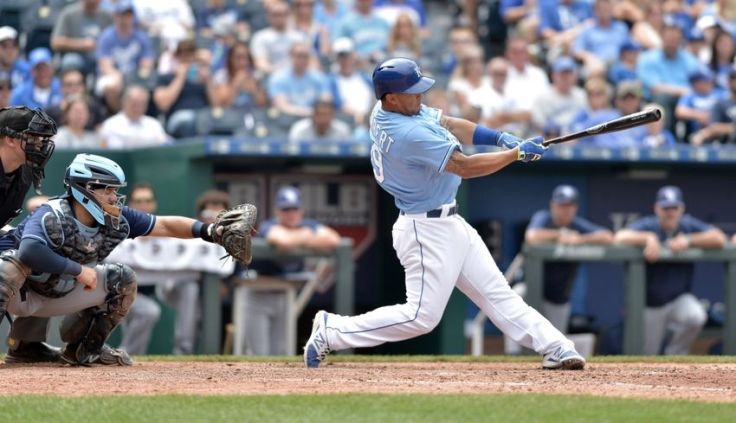
The unexpected is a regular occurrence during a baseball season. There are always players who outperform their expected production, and those that under-perform expectations. Injuries are the norm and they lead to someone getting playing time that wasn’t expecting to. Cheslor Cuthbert would fit that criteria, as no one knew that Mike Moustakas would get hurt on a collision in May and miss the rest of the 2016 season. Cuthbert was the immediate replacement, as he was having a stellar season in AAA Omaha and had seen some time last year in Kansas City. Cuthbert saw limited time for the Royals in 2015, putting up a line of .217/.280/.370 with an OPS+ of 74 and a bWAR of 0.0. It was a very small sample size(19 games, 50 plate appearances) but in a lot of ways he looked over-matched. He was only 22 years old, and it wasn’t like Cuthbert was going to unseat Moustakas anytime soon. But 2016 has been a different story for Cheslor…
(AP Photo/Tony Dejak)
Cuthbert would make his first appearance of the year on May 7th, as Moustakas was dealing with a left thumb fracture at the time. Cheslor had been tearing it up in Omaha, hitting .333 in 24 games with 7 home runs, 28 RBI’s and 58 total bases. Moustakas would return on May 21st, with Cuthbert being shipped back to AAA. During that first stint in the big leagues this year, Cuthbert hit only .255/.269/.373 with 1 home run and 3 RBI’s. My honest assessment at the time was that he would probably be a league average hitter, good fielder but the power we had seen from him in AAA wouldn’t translate. Moose would turn around and get hurt a day later, giving Cheslor his second recall to Kansas City of the young season.
(Credit: Denny Medley-USA TODAY)
Cheslor would return to the Royals lineup on May 24, going 1 for 4 against Minnesota. At the time there wasn’t a definite on Moose’s condition. No one knew the severity of Moustakas’ ACL and wouldn’t until two days later, when it would be announced that he had a torn ACL and would miss the rest of the season. This was big for Cuthbert, on multiple levels. For one, he was the man that most figured would see the most playing time at third base. To me though, it meant something so much more. A young player often struggles mentally when they are recalled to the majors, for fear that they will not perform good enough in the little time they might see. Cuthbert now knew he was going to be given the first shot at the third base job with regular at bats and a weight had to be lifted off his chest. This was a big contributor on how he would produce in the coming months.
Starting on May 27th, Cuthbert would show the offensive prowess that he produced in AAA earlier in the year. Since that date, Cuthbert has hit .300/.331/.475 with 7 home runs, 27 RBI’s, a BAbip of .347, and has raised his average to .288. Digging a bit deeper, Cuthbert has an wRC+ of 104(with 99 total bases), and 0.7 fWAR. It’s been obvious that Cuthbert has hit for a bit more power this year in the big leagues, and it shows with a 28.3% hard hit rate, up by 15% from last year and 13.8% HR/FB rate, a good 5% higher than last year. Another positive to take on his numbers is the fact he is hitting the ball more to center field this year, hitting the ball up the middle 34.7% of the time, a good 7.7% more. Percentage wise, Cheslor is hitting the ball at about the same rate as last year, only with a bigger sample of playing time to play with. It does appear as if there is a bit of luck involved, as his BAbip of .347 is almost a full .100 points higher than last year. Where last year he was finding leather, this year he is finding grass and dirt. Offensively he has just been a shade over replacement level but the improvement has to give a person hope as the season is progressing.
(Credit: Peter G. Aiken-USA TODAY)
As much as Cuthbert has outperformed expectations offensively, defensively he has been as steady as expected. Cuthbert has not only been an above-average defender this year, he has excelled in a few areas that were a bit unexpected. His UZR sits at 0.4 while his defense sits at 1.2. The impressive part to me is how he is performing on the unlikely play(which normally has a 10-40% chance of being fielded); Cheslor has been making those plays at a 62.5% clip, well above the league average. Add in the fact that he makes the likely and routine plays in the range he should and you have the making of a plus defender. Cuthbert might not make the flashy play on the corner, but he will make the majority of the plays he should and even the majority of plays slightly below average. Cheslor might not be quite the third baseman that Moustakas is, but he is a steady replacement that won’t make anyone regret the decision.
Cuthbert’s performance this year has raised some eyebrows and has forced the Royals front office to look at some new possibilities. Do you keep Cuthbert in case Moustakas leaves after 2017? Do you find a new position for him? Do you use him as trade bait? Do you move third base prospect Hunter Dozier to another position? Do you trade Dozier? There are a slew of decisions that Kansas City will have to make because Cuthbert is only 23 years old and has shown he is worth a longer look. There were some doubts about Cheslor before the season and many of them are summed up by this scouting report on scoutingbook.com:
Royals slugger Cheslor Cuthbert needs to level up a bit if he’s going to stick as a permanent MLB player. He showed readiness with a .277/.339/.421 slashline in AAA last year, leading to a 46 at-bat stint with the big club, but the .217/.280/.370 line he showed there wasn’t exactly impressive. Still, he more or less held his own and looked like he fit defensively. The bat might yet come along. He just needs more reps before we’re sure.
The bat has come along and if I was going to pick a word to describe Cuthbert it would be this: steady. Steady is what the Royals needed after losing Moustakas and Cheslor has been the answer. It has been a pleasure to watch him succeed where some expected him to fail. Now comes the hard part; deciding Cuthbert’s future in Kansas City. Luckily, a decision could be put off until next year, plenty of time for him to continue to show his worth.
The second half of the Major League Baseball season is now underway, and with that comes the looming trade deadline, scheduled for August 1st this year. Teams can trade players throughout August, but a player has to pass through waivers first before a deal can be done. So for the next few weeks, teams will be trading players at a greater rate, since there are no restrictions to any deal they would like to procure. With that being said, the Kansas City Royals have a few needs they would like to fill before the deadline. The Royals probably won’t be making the splash they made before last year’s deadline, as the farm system was gutted last summer and with a number of injuries to the team this year, there isn’t as much depth as in years past. So don’t look for a Ben Zobrist or Johnny Cueto to end up in their lap this year. With that being said, the two I will be looking at today is starting pitching (which needs an immediate upgrade) and right field. Now, before anyone asks, yes Paulo Orlando is having a great season for Kansas City, playing mostly right field. While Paulo has been getting on base, he hasn’t been producing as many runs as maybe the team would like and there is possibly even a worry that he won’t be able to sustain his current pace. Now…let’s look at some trade possibilities for the Royals, beginning with starting pitchers.
20 MAR 2016
Jeremy Hellickson
I’ve long been a supporter of Hellickson since his Tampa years, and secretly hoped the Royals would swing a deal for him. Hellickson has had a bounce back year for Philadelphia this year, throwing 105 innings with a 107 ERA+, lower FIP and WHIP and a higher SO/W ratio(3.44). Hellickson is still only 29 and will be a free agent after the season, so the Royals wouldn’t have to keep him once the season was over. Hellickson is a ground ball pitcher, which would seem to be a good fit with the Royals infield defense. With Hellickson on the upswing, this would be a good time to pick him up and toss him into the rotation.
Rich Hill
Hill is inevitably on everyone’s list and not surprisingly so. Hill is coveted because A) He is signed only through the 2016 season B) He is only(only!!) making $6 million this year C) He’s left-handed and D) Billy Beane likes to deal his players at the deadline. Hill has dealt with a groin injury this year but that most likely won’t affect his value on the market. Hill has had a good season when healthy, posting 76 innings with an ERA+ of 184, 2.57 FIP, 3.21 SO/W ratio and 3.0 WAR. Hill resurrected his career last year but shouldn’t cost much if Kansas City decided to part with a prospect. Hill would be a good addition to the Royals rotation, but there is a long list of teams who have been scouting him over the last couple of months.
Matt Moore
Moore is another lefty that the Royals have been linked to as an interested party. Moore was once considered a top of the rotation type pitcher but has had control and health issues during his time in Tampa. Moore has thrown 109 innings this year, compiling an ERA+ of 93, 4.59 FIP and a 2.94 SO/W ratio. Moore still has electric stuff and is signed through this year, but has team options through 2019. If the Royals wanted, they could acquire Moore and possibly keep him with the team for three more seasons. He is still only 27 years old and would be an intriguing possibility if Kansas City decided to go this route. Tampa Bay appears to be in trading mode, so I would think there is a good chance Moore is dealt before the end of July.
(STAFF PHOTO / DENNIS MAFFEZZOLI)
Jake Odorizzi
Odorizzi is possibly the most intriguing name on this list, as he came up through the minors in the Kansas City farm system after being acquired from Milwaukee in the Zack Greinke trade. For the longest time Odorizzi was considered a future mainstay of the Royals staff, only to be dealt to Tampa in the Wade Davis deal(which is what we will refer to it moving forward). Odorizzi has seen Amodest success with the Rays the last few years, racking up 104 innings so far this year, with an ERA+ of 93, 4.39 FIP and a WAR of 1.3. There is some familiarity for Kansas City with Odorizzi and much like Moore, if Jake was acquired the Royals would have him under contract through the 2019 season. It might cost Kansas City a bit more to pick up Odorizzi because of the contract, but he also has a better recent track record than Moore and Kansas City would already have an idea of what they would be getting with Odorizzi. If I have a favorite on this list, it’s this guy.
Other names to keep an eye on: Erasmo Ramirez, Ervin Santana, Andrew Cashner, Dan Straily and Jorge De La Rosa
Now, let’s move on to the outfielders…
Jay Bruce
Bruce might be the most coveted position player available this trade season and is a good bet to be out of Cincinnati by the end of the month. Bruce is signed through the season but has a $13 million team option for 2017. He could be someone the Royals could acquire to keep through this current contending window and then allow to leave at the end of next year. But…I tend to think Bruce is a long shot to end up in Kansas City for a few reasons. One, it will probably take a decent size haul to trade for him in the first place, possibly more than the Royals currently have to offer. Two, while Bruce has put up good power numbers this year(18 home runs, .538 slugging percentage and 171 total bases), he strikes out quite a bit(69 times so far this year, 145 last year) and defensively he is a below average defender. Throw in the fact that he is tops on a number of teams trade list, and you have the likelihood of Bruce ending up in another contenders pocket when the dust finally settles on August 1st.
12 July 2015
Josh Reddick
Reddick is most contending team’s wet dream; free agent at the end of the season, reasonable salary and is putting up good numbers this season. It’s been reported that the Royals have scouted both Reddick and his teammate Rich Hill, so there is interest from Kansas City in the Oakland slugger. I would normally be gung-ho about this move, especially since Reddick is hitting .295/.369/.426 with an OPS+ of 117 and 1.4 WAR. But Reddick has been dealing with a thumb injury and it seems to have sapped his power; so far this year he has only 5 home runs and 14 total extra base hits. I think this still might be a good acquisition for Kansas City, as the numbers show no major change in his hard hit rate and is also a plus defender in the outfield. If the team was looking to upgrade in right field, they could do a lot worse than Josh Reddick.
(Credit: Jake Roth-USA TODAY)
Melvin Upton, Jr.
I’m going to be honest: I’ve never been a big fan of Upton. I would even go so far as to say I have long felt he is overrated. This goes back to his early years in Tampa Bay, where I felt he was living off his potential and occasional bursts of solid production. He seemed to me to be an athletic guy with the “5 tools” executives and scouts covet but only really making use of one or two of them. In my eyes, he seemed to strike out too much and focus his attention on the longball, turning himself into a one-dimensional hitter. All this being said, I am thoroughly shocked at his production this year and even more shocked that he is out-hitting his brother(106 OPS+ compared to Justin’s 80). Upton is putting up numbers we haven’t seen from him since 2012, posting a line of .262/.311/.454 with 16 home runs, 44 RBI’s and 2.2 WAR. These are all really good numbers and you can see why he has been mentioned in many a trade rumor. But here is the elephant in the room-Upton’s contract. Upton is in year 4 of a 5 year deal that is paying him $15.45 million this year and $16.45 million next year. That is waaaaaaay too much money for a guy who has racked up only 1.2 WAR in 3.5 years. The only way Kansas City would acquire him is if San Diego was willing to eat a large chunk of that contract, and even then they would be hesitant. If the Padres are willing to eat most of the money, there is a chance this could happen. If not, barely a discussion will happen between the two sides.
Other names to keep an eye on: Ender Inciarte, Nick Markakis, Matt Joyce and Odubel Herrera
The one thing to remember before the trade deadline is that there is probably at least a 1,000 to 1 ratio of ‘rumors’ to ‘rumors with actual legs on them’, so take many of them with a grain of salt. With that being said, it appears something will happen on the Royals front and possibly even before August 1st. Kansas City can still make a move after that, but that will require the players involved in the deal to pass through waivers unclaimed first, which is hard to do. Last year Cueto and Zobrist were the big prizes and GM Dayton Moore was able to reel them in. This year, Dayton might have to be more creative when it comes to piecing together another team that can make a deep playoff run.
We are at baseball’s halfway point, as the All-Star break is upon us and everyone is allowed a chance to take a step back, take a deep breath and relax. The Kansas City Royals are in a tie for 3rd place in the American League Central(7 games out)and still very much in a position for a playoff spot. Since we have only 74 games left in this season, let’s take one final look back at the first half of the season and what all the Royals have accomplished. With that, I am proud to announce the 1st Annual Mid-Season Royals Awards here on Bleeding Royal Blue!
Most Valuable Player
Eric Hosmer-.299/.355/.476, 13 HR, 49 RBI, 116 OPS+, 1.5 bWAR
When contemplating on just one word to describe the Kansas City Royals first half of the 2016 season, a number of words flooded my brain: struggle, streaky, battle, fluky and frustration all seemed fitting. But the one word that seems to fit more than any other is ‘adversity’, a word that has fit like a glove since before the season even started. Whether it has been the struggles of the starting rotation or the streaky offense, the Royals have not had the smooth sailing they were witness to for a large chunk of the 2015 season. Probably the biggest roadblock in front of them this season has been the litany of injuries that have occurred.
The walking wounded actually began back in Spring Training, as Jarrod Dyson, who was in line to see a big increase in playing time in right field, came down with a strained oblique. In May, starters Kris Medlen and Chris Young would both venture to the disabled list, after struggling through their previous few starts. Late in May, Alex Gordon and Mike Moustakas would collide chasing a foul ball in Chicago and the news was grim; Gordon would miss a month with a wrist injury while Moustakas would have a torn ACL and was expected to miss the rest of the season. A week after that collision, catcher Salvador Perez would incur a quad contusion after third baseman Cheslor Cuthbert would run into Salvy while chasing a pop fly. Luckily, Perez would sit out for a week but not have to make an appearance on the disabled list. The injury bug would return in June, with outfielder Brett Eibner(after only being recalled a few days earlier) going on the DL on June 1st with a left ankle sprain, returning after two weeks. Lorenzo Cain would make his first DL appearance in two years, pulling up lame and grabbing his hamstring after running out a ground ball just a few weeks ago. To cap it all off, closer Wade Davis, a man who some of us believe is actually a machine, would deal with a forearm strain and land on the DL with Cain just this past week. If you are taking notes at home, that is four Royals All-Stars that have seen time on the DL so far this season and that is just through 88 games. One of the biggest strengths for Kansas City the last two years was their health, as they were able to make two big playoff runs while dealing with very limited injuries to their main nucleus. The pendulum always swings back around and it appears the Royals dance with lady luck has ended on the injury front.
Speaking of turbulence, the Royals starting pitching has been more than just rocky so far in 2016. Kansas City starting pitching is next to last in innings pitched, 3rd highest in walks per 9, 1st in home runs per 9, 4th highest ERA, highest FIP, and lowest WAR in the American League. The only area where the starting pitching is moderately succeeding is strikeouts per 9, which is the 3rd highest in the league. With these numbers it is easy to see why the Royals have struggled and are currently looking for upgrades on the trade market. Chris Young, who was a vital part of the Royals playoff run last year, has allowed the most home runs in the American League(26 in only 56 innings pitched) and has been banished to the bullpen. Ian Kennedy has been about what was expected from him; at times he has looked phenomenal and has shut down other teams, while others he has been a victim of the long-ball, allowing the second most home runs in the AL( 21). Yordano Ventura has not looked like the ace that he could be capable of, as he has struggled(including inciting a melee in Baltimore) and others he has put together some very quality starts(like just this past Friday). Edinson Volquez hasn’t been as consistent as he was in 2015, yo-yoing from start to start. The one shining light has been the re-emergence of Danny Duffy, who has looked like a pitcher who has figured something out. Duffy started the year in the bullpen but was moved to the rotation in May and has been splendid ever since. He has thrown 81 innings to this point, striking out over 10 batters per 9, walking less than 2 per 9 and stranding runners at an 83% clip. Duffy’s numbers just jump out on the page: highest K-BB% in a Royals uniform, highest soft hit % of his career, and the fastest average fastball velocity of his career. If the Royals can get some more consistency from Volquez and Ventura, while picking up a cheap arm in a trade, they might be able to stabilize the rotation and improve on numbers that shouldn’t be hard to improve upon.
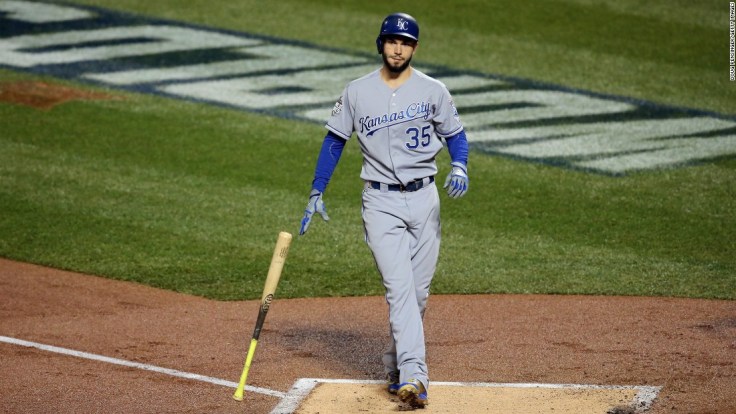
While the starting pitching has been a major trouble area, the offense has been very bi-polar. Much like the last few years, the Kansas City offense is a very streaky bunch. As a team they are next to last in runs, last in RBI’s, home runs, walk %, isolated power, and 12th in wRC+. Most other offensive categories the Royals are around the middle of the pack, but the Royals also get their runs in a different manner than most other American League teams. Eric Hosmer has turned in a season worthy of his All-Star starting nod, hitting .299/.355/.476 with 13 home runs and 49 RBI’s. Salvador Perez has seen an increase in power this season and has turned into a serious threat in the middle of the lineup(writers note: he even hit a home run right after I typed this). Paulo Orlando has been a pleasant surprise this year, hitting .324/.347/.417, sacrificing some of the power we saw from him last year for a better on base percentage. Lorenzo Cain struggled in April, but came on like wildfire in May and was putting up good numbers before his injury this month. Kendrys Morales struggled through the first two months of the season, but looked like a completely different hitter in June, a month where he put up video game numbers. Even Mike Moustakas was putting up great power numbers before his injury in May. But the real surprise of the offense has been the call-ups Kansas City has been using to fill the holes for injured players.
(Credit: John Rieger-USA TODAY)
The great thing about this Royals team is not only the depth that they have compared to years past, but the amount of production we have seen from players that were not expected to contribute. Whit Merrifield has been a life-changer for Kansas City, posting a line of .291/.313/.407 with 1.4 bWar in just 46 games. Whit was originally supposed to fill the super utility role for Kansas City, but instead ended up taking the second base job from the now released Omar Infante. Cheslor Cuthbert, who saw some time in Kansas City last year, was recalled to take over at third base for Moustakas and struggled a bit the first few weeks of seeing regular playing time. Since May 27(right around the Moose injury), Cuthbert is hitting .293/.331/.471 with 7 home runs, 22 RBI’s and a BAbip of .343. Defensively, he is not quite the glovesman that Moustakas is, but he has proved to be more than capable, with an UZR of 6.2 and making 83% of plays that are considered unlikely(which are considered normally to be made 10-40% of the time). The man who has seen the least amount of time out of this group is Brett Eibner, as he has only played in 18 games. Eibner has been productive in that span, hitting .269/.333/.500 with a BAbip of .343 and a wRC+ of 116. Eibner has 8 extra base hits in his 18 games and is a bat that can supply the power the Royals heavily covet. All three players have stepped in when the Royals have needed them to and have produced in many a tight situation. It wasn’t expected for these three to be heavy contributors, but so far in 2016 they have probably helped this team stay in the pennant race.
While this Royals team isn’t gliding into a postseason berth like they did last year, they are still very much in contention, even being 7 games out in the American League Central but only 4 1/2 games out of a wild card spot. The hope is that the Royals can stabilize the rotation while hitting a bit more consistently, which should increase their chances of a playoff spot. Injuries have hurt Kansas City so far this year but they haven’t crippled them and that has allowed them to stay in the race. We have seen over the last couple seasons that this is a team that strives on adversity. If that stays true to form, then we should be seeing a stellar second half from our ‘Boys in Blue’.















 Bleeding Royal Blue