Ask any player out on the free agent market this winter what they covet the most and a good majority will say a multi-year contract. Sure, they won’t turn their nose up to the wads of cash thrown their way, but signing a new deal for an extended period is the kind of stability players dream of. The Royals have set their sights on re-signing first baseman Eric Hosmer and it’s hard to fathom that happening without Kansas City committing to a deal that is at least four years in length (and probably more). But history has shown that might not bode well for the Royals.
Credit: Getty Images
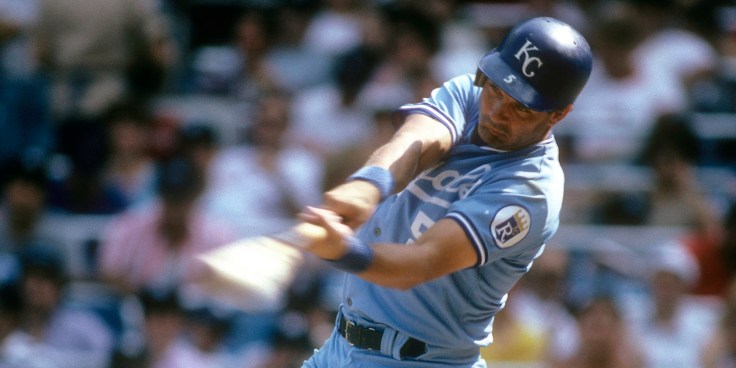
The most infamous long-term contracts in Royals history goes back to 1985 and the “lifetime contracts” . George Brett, Dan Quisenberry and Willie Wilson were the recipients of those deals that appeared at the time to be solid commitments for a perennial contender. But those deals would fall apart quickly, with Quisenberry being released in July of 1988 while Wilson fought off injuries and saw his offensive production wane before leaving after the 1990 season. While in theory these contracts appeared to lock in a chunk of the Kansas City nucleus in the mid 1980’s, the reality was that the Royals overpaid for players during a period where collusion controlled the free agent market and salaries.
The Royals would close out the 1980’s with one of the worst free agent signings in club history, signing Mark Davis (the 1989 Cy Young award winner) to a four-year, $13 million dollar deal. That deal would go sour almost instantly, as Davis would struggle and lose his closers role to future Royals Hall of Famer Jeff Montgomery. Davis would be dealt to Atlanta in July of 1992 and put up some ugly numbers during his short stint in Kansas City: 167.2 innings, a 5.31 ERA, 5.01 FIP and an ERA+ of 76.
Credit: MLB.com
We all remember Mike Sweeney’s $55 million dollar deal he signed after the 2002 season. Sweeney was the one who decided to stay, while watching Damon, Dye and Beltran be shipped off. Sweeney was coming off his career year in Kansas City, posting the highest bWAR and OPS+ of his career, among other career highs that season. Sweeney’s deal kept him in Kansas City through 2007 but injuries would take their toll on him as early as 2003. While the offensive production was still there for the first couple years of the contract, his time on the field diminished and by 2006 he had essentially become a shell of his former self.
Not every long-term contract handed out by the Royals would miss the mark. One could argue that George Brett’s lifetime contract paid off in spades, as he would continue to be a hitting machine until his age 38 season, well past the normal age of regression for a major league hitter. Zack Greinke’s four-year deal that was signed in 2009 would produce a Cy Young season, but Greinke would be dealt before the contract had run its course. One could even make the argument for David Cone’s three-year deal that he signed with Kansas City before the 1993 season being a success, but for the sake of argument you could also contend that a contract of three years really isn’t “long-term” by definition.
That leads us to the modern-day Royals, which currently host a number of extended relationships. Ian Kennedy is locked in for another three seasons in Kansas City and has been a mixed bag during his first two seasons as a Royal (one good season, one bad season). Salvador Perez will be entering year two of a five-year extension in 2018 and while Salvy should be entering his prime, there have to be some concerns about the amount of games (and innings) he has caught in his major league career and the wear and tear that goes with it. Danny Duffy will also be in the second year of a five-year extension this upcoming season and has dealt with a wide array of injuries throughout his career as well as a DUI arrest just last summer.
Then there is the Royals contract with the most scorn, that of Alex Gordon. His four-year contract originally appeared on the surface to be a calculated move. Gordon had been a consistent run producer and defensive wizard for the previous five seasons and while he was entering his regression years, the slope appeared lessened by his crazy work ethic and ability to stay healthy. Gordon had appeared in at least 150 games in every season between 2011 and 2014, while his groin strain in 2015 looked to be an outlier. But injuries hindered his 2016 campaign and offensively he hasn’t looked the same for two years now. Situations like Gordon’s are why teams become hesitant to commit to a long-term contract.
Credit: Kansas City Star
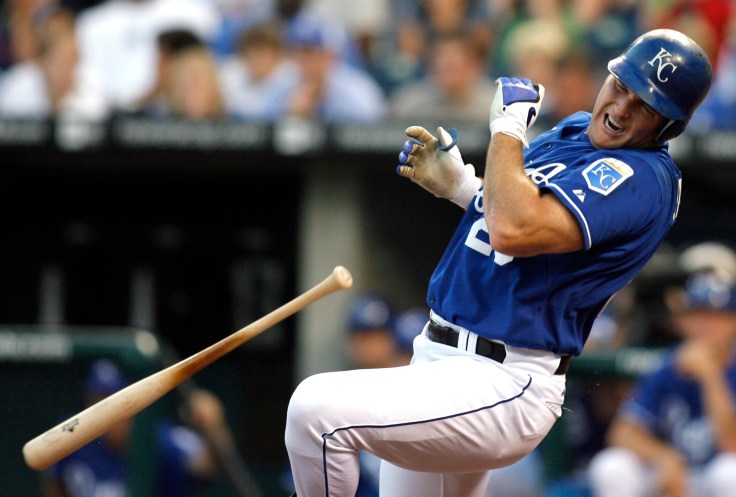
This all leads back to the Eric Hosmer situation and how the Royals should deal with it. On one hand, you have a player entering his age 28 season, coming off of a career best season, in what should be the prime of his career. On the other hand, Hosmer before 2017 was an inconsistent offensive player and has a propensity to hit the ball on the ground at an alarming rate. While the Royals have not had the best of luck when it comes to contracts of more than four years, we are all aware that every situation (and player) is different. Signing any player for 4+ years is a gamble within itself. The question the Royals have to ask is if the risk is bigger or smaller than the reward when rolling the dice on their future.
I received my IBWAA Hall of Fame ballot in my inbox yesterday. I look forward to it every year, as it is an honor to be able to vote for players I feel are worthy of baseball’s highest honor. It also gives me the opportunity to really dive into the numbers, or as my wife calls it “fall down the statistic rabbit hole”. You will see that article in about a months time, where I breakdown my votes and why I voted the way I did. Since I occasionally get asked this, in the IBWAA we do things a bit differently than the boys and girls over at the BBWAA. We have a number of guys who have been voted in (Vlad Guerrero, Edgar Martinez) that the BBWAA still has on their ballot. We are also able to vote for 15 players instead of the 10 the BBWAA are left with. Finally, we don’t have a former player like Joe Morgan send us a letter, trying to sway our vote with arrogant confidence and ignorant hubris…and for that I am grateful.
Credit: Kansas City Star
If you aren’t aware(or maybe in a cave), Joe Morgan sent out a letter a few weeks back, hoping to veer the writers of the BBWAA away from voting for players linked to steroid use. If you want to read the entire letter, here it is:
Teams lobby us to get their players into the HOF. This email from Joe Morgan arrived this AM to keep steroid users out… pic.twitter.com/BkLPJ8NUTK
Now, I’m not going to get into a huge debate over the Hall of Fame or steroid use in baseball; I have done that so much over the years that I’m just bored with it and it just seems to agitate me. I will tell you that if you want my opinion on the Hall, read this; I wrote this a few years back and it pretty much encompasses my feelings on “cheaters” in the Hall. So I’m not going to get into a big debate about steroid use and Cooperstown. But…I do have a few comments about what Joe said and just who Joe is speaking for.
Credit: MLB.com
First, let’s start with Joe’s comment about those linked to steroid use:
We hope the day never comes when known steroid users are voted into the Hall of Fame. They
cheated. Steroid users don’t belong here.
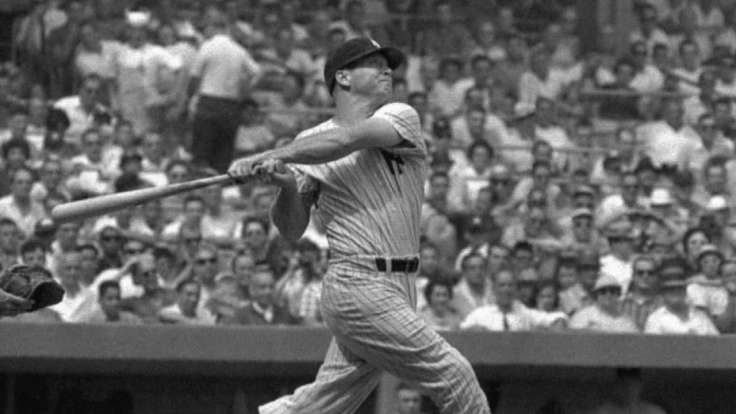
I hate to tell Joe, but I’m pretty positive there is someone (or likely more than one) in the Hall who used steroids. Oh yeah…Mickey Mantle took steroids. So right there, you have a player in those “hallowed halls” that falls below Morgan’s standard for Cooperstown. Pretty sure you won’t catch ol’ Joe looking to pull “The Mick” and his plaque.
Players who failed drug tests, admitted using steroids, or were identified as users in Major League
Baseball’s investigation into steroid abuse, known as the Mitchell Report, should not get in. Those
are the three criteria that many of the players and I think are right.
Look, there is a some validity to the Mitchell Report but lets not act like it is a 100% guilty verdict. That is just someone wanting to believe guilt without the proof.
Now, I recognize there are players identified as users on the Mitchell Report who deny they were
users. That’s why this is a tricky issue. Not everything is black and white – there are shades of gray
here. It’s why your job as a voter is and has always been a difficult and important job. I have faith in
your judgment and know that ultimately, this is your call.
Wait, so Joe knows the Mitchell Report is probably not 100% accurate, yet earlier wants voters to use that report as a template? Come on Joe…
But it still occurs to me that anyone who took body-altering chemicals in a deliberate effort to cheat
the game we love, not to mention they cheated current and former players, and fans too, doesn’t
belong in the Hall of Fame. By cheating, they put up huge numbers, and they made great players
who didn’t cheat look smaller by comparison, taking away from their achievements and consideration for the Hall of Fame. That’s not right.
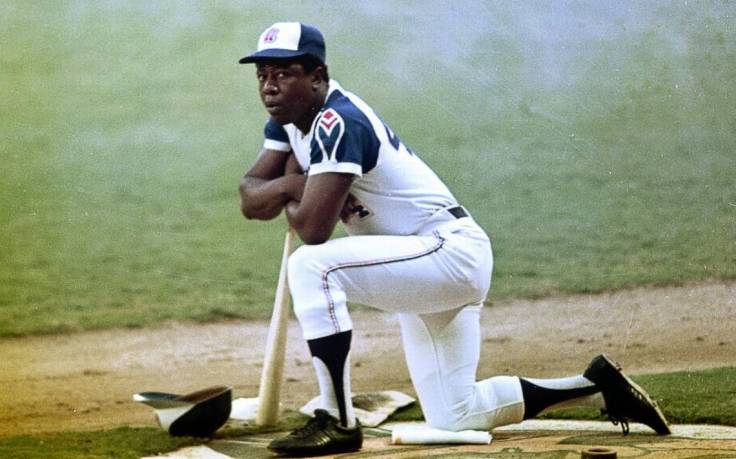
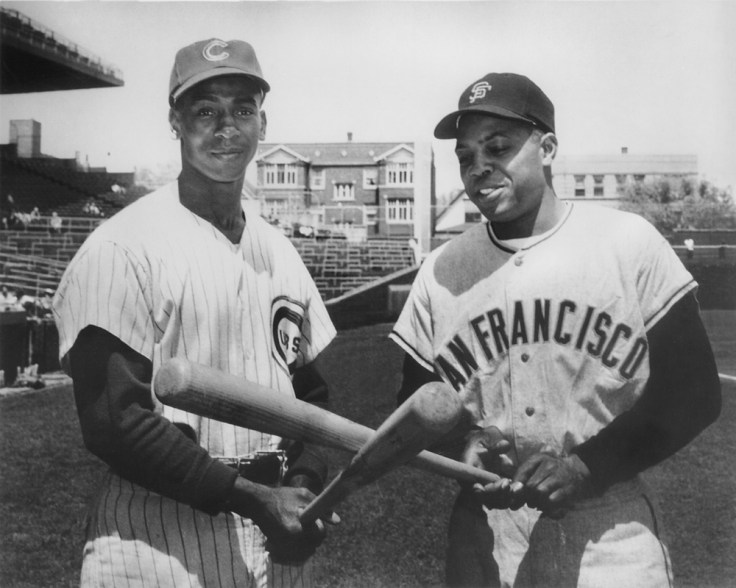
Body-altering chemicals? You mean like performance enhancers? So players who used amphetamines, right? Because, if we are being honest, amphetamines are enhancing a players performance…and Greenies were used in baseball up until they started testing for amphetamines back in 2006. Greenies were prevalent in the game for years and were widely used during Morgan’s playing days. In fact, players like Hank Aaron & Willie Mays have both been linked to amphetamines over the years…and no one is asking those two to leave Cooperstown (nor should they).
It’s gotten to the point where Hall of Famers are saying that if steroid users get in, they’ll no longer
come to Cooperstown for Induction Ceremonies or other events. Some feel they can’t share a stage
with players who did steroids. The cheating that tainted an era now risks tainting the Hall of Fame
too. The Hall of Fame means too much to us to ever see that happen. If steroid users get in, it will
divide and diminish the Hall, something we couldn’t bear.
Does this include Gaylord Perry? Is he appalled by the cheating?
I care about how good a player was or what kind of numbers he put up; but if a player did steroids,
his integrity is suspect; he lacks sportsmanship; his character is flawed; and, whatever contribution
he made to his team is now dwarfed by his selfishness.
So when do we point out the selfishness of baseball for allowing steroids to be used all those years? The owners? The GM’s? Bud Selig? I’m sure their selfishness won’t allow them to return all the money they received from fans flooding the ballparks during this period. You can put some of the blame on the players, Joe, but there is enough blame to go all the way around.
Steroid users knew they were taking a drug that physically improved how they played. Taking
steroids is a decision. It’s the deliberate act of using chemistry to change how hard you hit and throw by changing what your body is made of.
See “Greenies” from earlier.
I and other Hall of Famers played hard all our lives to achieve what we did. I love this game and am
proud of it. I hope the Hall of Fame’s standards won’t be lowered with the passage of time.
For over eighty years, the Hall of Fame has been a place to look up to, where the hallowed halls
honor those who played the game hard and right. I hope it will always remain that way.
Honestly, baseball has never been a pure game and never will. If I’m being completely honest, when I first read this letter, it felt sanctimonious and hypocritical. Reading it again doesn’t make me change my mind. In fact, it just further cements my initial thoughts of the ignorance in Joe’s words…and how Joe is being used as a puppet.
Credit: Sports Illustrated
Don’t get me wrong; I totally think Joe Morgan believes the words he wrote in this letter. But I also believe that what he wrote was allowed to be sent because the people on the board for the Hall of Fame and those involved agree with this sentiment. I also feel this is a direct reaction to seeing Barry Bonds’ and Roger Clemens’ vote total moving upward these last couple years. The honest truth is that testing for performance enhancing drugs was not being done when these players were putting up those “tainted numbers” that Joe mentioned. Maybe it’s just me, but since baseball wasn’t testing and those involved seemed okay with it continuing (that was until congress stepped in to put a halt to it), it feels self-righteous to then turn around and punish the players and no one else (including the true villain in this, Bud Selig). Luckily, the letter appears to have angered many a writer in the BBWAA and it makes one wonder if Bonds’ and Clemens’ total will continue to rise. As a member of the IBWAA, we don’t have to worry about any of this mess. I don’t expect a letter from Howard Cole telling us about “hallowed grounds” and “flawed character”. I thank Howard for that, as he appears to “get it”. I’m still going to enjoy the Cooperstown inductions next summer, as I love watching some of the best players in the history of the game get to celebrate their career in the best way possible. The real taint on the Hall of Fame is those involved who try to move the chess pieces to their liking by ignoring a section of history. History is exactly what it is, a part of the past. If you don’t ignore it, you aren’t likely to repeat it again. Now, it appears it’s time for me to go turn in my IBWAA ballot…
What a wild and crazy ride the last five years have been. When I started writing this blog back in the summer of 2012, I had zero aspirations other than writing about baseball and more specifically “My Team”, the Kansas City Royals. This was purely a way for me to branch out with my writing and discuss something I am insanely passionate about. Little did I know that all these years later my hard work would pay off, at least in terms of making a bit of side cash writing about baseball. If you had not yet heard, starting this week I will be writing about the Royals on SB Nation’s Royals page, Royals Review. I’m looking forward to this new endeavor and I’m hoping to branch out even more than before with my writing. So while I will be writing a few times a week over at Royals Review, that doesn’t mean Bleeding Royal Blue is going away. In fact, the hope is I will be able to bring more content to this blog. My articles I write for SB Nation will eventually show up here (after about a week’s time) and I’m hoping to post some extra, fresh content here as well. So I’m not going away, I’m just going to expand my reach. At the end of the day, I love writing about baseball and will continue to (hopefully) post news and tidbits that you, the reader, will enjoy. My world just got a bit bigger and I can’t thank you guys enough. Hopefully, this is just the beginning of some great things…
Thanksgiving is a great time to spend time with family and friends, eat lots of carbs and be thankful for everything in your life. Yes, we should be more thankful on a daily basis, but with the pace of life speeding up more and more, we sometimes forget to stop and smell the roses (so to speak). We probably don’t say it enough, but I am thankful every day that baseball appears to be on an upswing and is still such a large part of my life. I’m not for sure what the ratio would be, but the amount of joy that this great game gives me would appear to be greater than what I am able to give back to it. So for today, let me be thankful for all the glory that is this kid’s game that we adore…
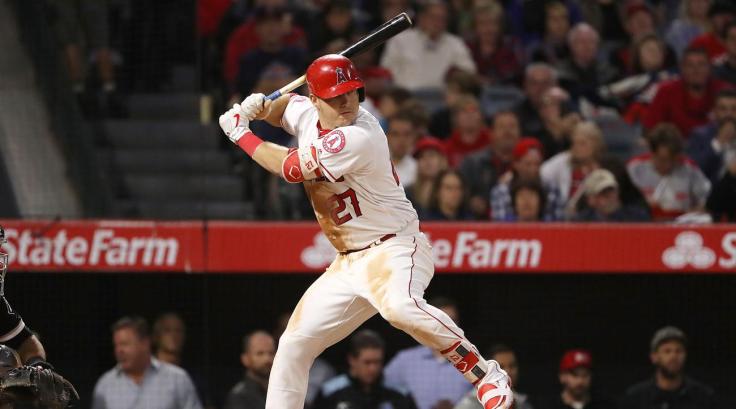
I am thankful for Mike Trout. Literally everything about him. Trout is that every day working man who goes out there and helps his team almost every game. Defense, hitting, hitting for power, running the bases; Trout brings it to every aspect of his game. We are seeing the best player in modern-day baseball and possibly one of the greatest of all-time when it is all said and done. I am thankful we get to see such a great player in my lifetime.
Almost the same can be said for Clayton Kershaw, only on the pitching side of the game. I’ve seen Maddux, Johnson and Pedro in my time, but Kershaw could be the best of the bunch. I am thankful for his precision, dedication and work ethic that makes Kershaw as great as he is.
I am thankful for the current playoff system. I was initially against the second wild card in the playoffs, but it has added a new, exciting element to the postseason and I feel it is for the better. The last four October’s have been spectacular and it has shown a steady uptick for baseball viewing among the general public.
Credit: Chicago Tribune
I am thankful for the mass group of players that I love watching all throughout the baseball season.
Ben Zobrist’s versatility and patience.
Andrew McCutchen’s five tools.
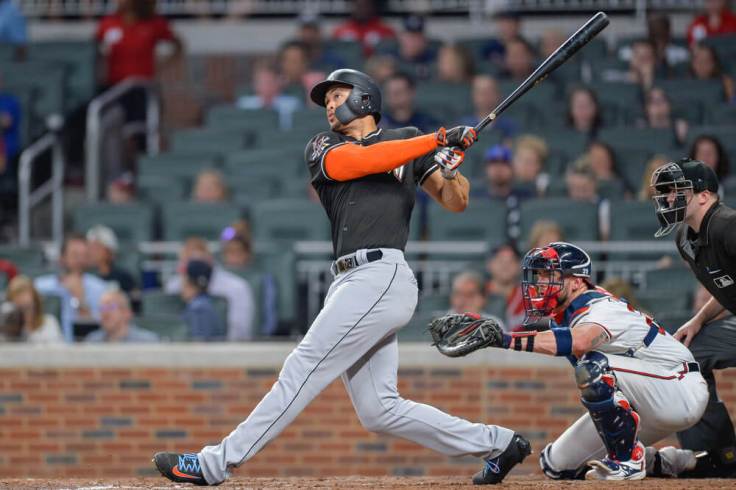
Giancarlo Stanton’s unbridled power.
Yasiel Puig’s child-like enthusiasm.
Bryce Harper’s hustle and ‘Hair on Fire’ approach on the field.
Wade Davis’ ‘Vein’s of Ice’.
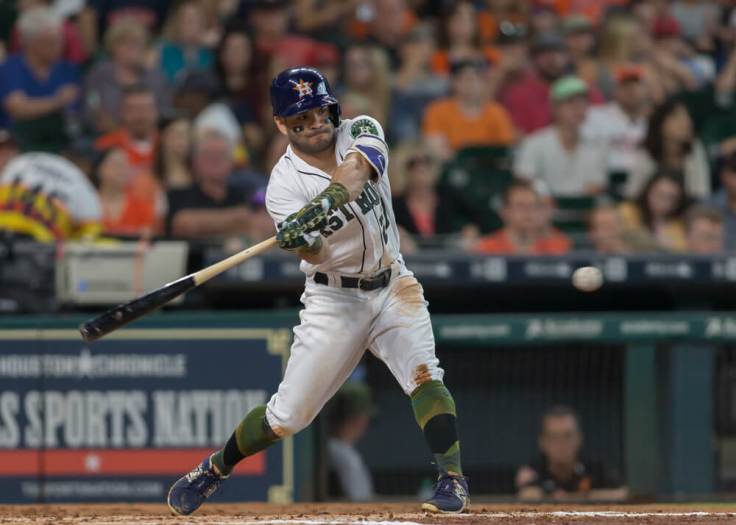
Jose Altuve’s ability to hit the ball “where they ain’t”.
Baseball not only has a great group of guys that encompass the immense talent in the game, but a group that are positive role models for the game and makes rooting for them even easier.
I’m also thankful for all the retired players whose accomplishments I’m still in awe of today.
Ted Williams’ love and dedication to hitting.
Willie Mays’ grace.
Bob Gibson’s fire.
Yogi Berra’s understated play on the field…oh, and his sayings.
Tony Gwynn’s knowledge of the strike zone.
Greg Maddux’s precise location.
Edgar Martinez’s understated study of hitting.
Tim Raines’ speed and ability to put himself in a position to score.
Jackie Robinson’s patience, maturity and determination to prove his worth.
Hank Aaron’s power, quiet leadership and calm demeanor.
I could go on and on with some of the greats of the game, but more than anything I am thankful they were able to pave the way for the talent that would follow them.
Credit: NPR
More than anything, I am thankful for my favorite team of the last 30+ years, the team I fell in love with as a child and the team that always reminds me why I love baseball, the Kansas City Royals.
Thank you George Brett, for the hustle and inability to give up that helped me love this game.
Thank you Bo Jackson, for doing the impossible on a baseball diamond.
Thank you Dan Quisenberry, for your unique delivery, late inning shutdowns and your sense of humor.
Thank you Bret Saberhagen, for being one of the best of your generation.
Thank you Mike Sweeney, for your loyalty.
Thank you Alex Gordon, for quiet leadership and ability to become a Gold Glover at a new position. Oh, and that home run in Game 1 of the 2015 World Series.
Thank you Eric Hosmer, Mike Moustakas and Lorenzo Cain. Without you, 2014 and 2015 do not happen.
Thank you Salvador Perez, for your infectious smile and childlike love of the game.
Thank you Denny Matthews and Fred White. You were the voices of my childhood and will always be my favorite baseball announcers. The pictures you drew with your words made listening to a Royals game on the radio an absolute joy.
Thank you Kauffman Stadium, for being so beautiful.
Thank you, 1985.
Thank you, 2015.
Thank you, Kansas City.
More than anything, thank you baseball. Thank you for loving me back. There will never be another like you. I could go on all day with the things I love about baseball, but more than anything, I love it all. I am thankful that baseball has been a major part of my life since the age of 7. I look forward to the many years ahead we have together. I will always be thankful for you. You’re the best, baseball.
It’s been only a few weeks since the World Series ended and baseball came to a close for 2017. I’d like to say I’ve dealt with it in a fair manner, but I’ve been counting down the days until pitchers and catchers report (89 by my count) since the season ended. Luckily, the Hot Stove season will keep us seamheads occupied, as will this week’s award season. All throughout this week, the BBWAA has been unveiling their winners, as has my brethren in the IBWAA. As a member of the IBWAA, we vote just like the members in the BBWAA while not getting quite the fanfare (although if anyone wants to toot our horn, go for it!). I’ve been a member for a number of years, so you can go back and take a gander at my previous voting record: here is 2014, 2015, and 2016. As always, it is a true honor to have this opportunity to vote and I always vote with the utmost respect. With that being said, here are my picks to win awards in 2017…
Credit-Sports Illustrated
American League MVP: Mike Trout
While most have declared this a two-man race between Jose Altuve and Aaron Judge, I feel the true winner is Mr. Michael Nelson Trout. I’m sure at least one person is reading this, shaking their head at me; that’s fine, as I have zero issue with anyone picking Altuve and I at least understand the voters who picked Judge. But to me, Trout was head and shoulders above the rest this year, despite only playing in 114 games. If you want a real in-depth look at how and why I voted for Trout, go back to August when I wrote about Trout being amazing despite the 40 so games he missed in the first half of the season. I really broke down the how and why of this vote with that article, so let’s just recap some of the main points here. Trout led the league in On-base Percentage, Slugging, OPS, OPS+, and wRC+. This is all impressive considering the time he missed, but what really swayed my vote was Trout leading the AL hitters in Win Probability Added (WPA). Considering WPA is a stat that accumulates as the season wears on and factors in the change in Win Expectancy from one plate appearance to the next. It’s all about the opportunities you get and what you do with them, and Trout did better than anyone else in this category. The interesting aspect of that is those games missed, which should mean he got fewer opportunities, and more than likely he did. What it really tells us is that Trout did the most with those chances, leading the league with a 5.58 WPA. The next closest player? Nelson Cruz at 3.90. Altuve was 4th in the league at 3.74. Think about that for a moment: In 40 fewer games, Trout was a bigger factor in his team’s victories than Altuve, who had a fantastic season…and it isn’t even close! FYI, Judge came in at 17th, with 2.38. We all juggle with what “Most Valuable” means in MVP, and for me it is the guy who is giving his team the best chance to win. Mike Trout did that in his limited time in 2017 and for that he received my vote.
My Top 3: 1-Trout, 2-Jose Altuve, 3-Aaron Judge
IBWAA Winner: Jose Altuve
BBWAA Winner: Jose Altuve
National League MVP: Joey Votto
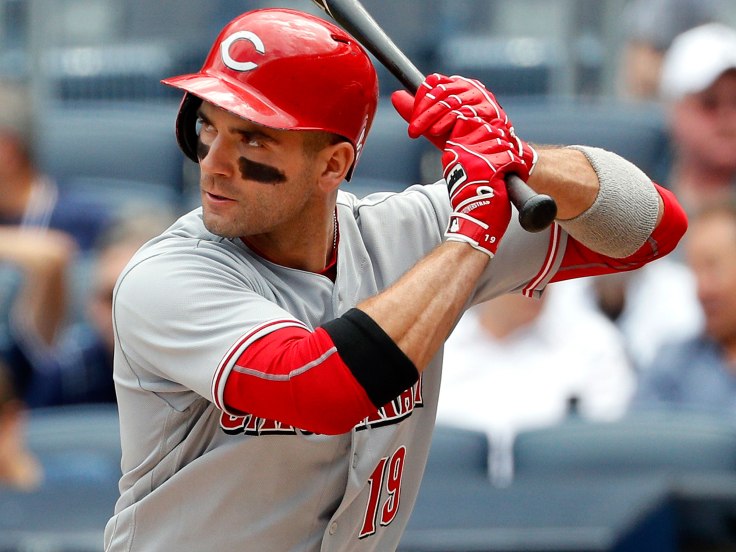
Over the years, there appears to be a divide when it comes to a person’s opinion of Cincinnati Reds first baseman Joey Votto. If you believe a middle of the order guy should drive in runs and hit for power, you probably are frustrated by Votto’s patience at the dish and focus on just getting on base. If you are of the opinion that it’s all about not getting out and making sure you extend the inning for your team, then you probably love the guy. I am in the latter position and nothing speaks volumes about Votto’s true value than what he did offensively in 2017. If you love the black ink that shows up in the statistic category (which means a player led the league in that category), then Votto should be your man. He led the NL this year in Walks, On-Base Percentage, OPS, OPS+ and wRC+. You can probably also tack on 36 home runs, 100 RBI’s, 323 total bases, a slugging percentage of .578 and 7.5 bWAR. Offensively, Votto was a beast in 2017 and to add the cherry on top of this offensive sundae, he lead the NL hitters in WPA, 4.96 to Giancarlo Stanton’s 4.84. Some will poo-pah that Votto wasn’t on a contending team; I would counter with this being an individual award, so what the other 24 players do should have no factor into the winner of MVP. While Stanton put up monster power numbers and Charlie Blackmon had an amazing season out of the leadoff spot (and easily baseball’s best mullet), the true Most Valuable Player was Joey Votto in my eyes.
My Top 3: 1-Votto, 2-Giancarlo Stanton, 3-Charlie Blackmon
IBWAA Winner: Giancarlo Stanton
BBWAA Winner: Giancarlo Stanton
American League Cy Young Award: Corey Kluber
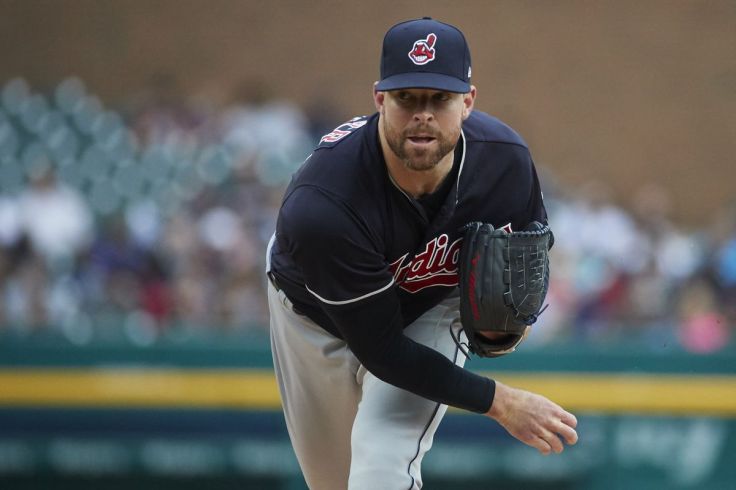
The debate the last two months of the season was the two-man race for the AL Cy Young: would it be Corey Kluber or Chris Sale? What once appeared to be Sale’s award to win turned into Kluber’s gain, as he absolutely shoved the last two months of the season. In those last two months, Kluber threw 89 innings and produced an ERA of 1.42 and a WPA of 3.07. Batters only hit .172 against him in that span with a paltry .290 slugging percentage. Those two months were just the nail in the coffin, as Kluber led the league in ERA, Complete Games, Shutouts, ERA+ and WHIP. Sale held his on, as he lead in Innings Pitched and strike outs, but the stats tell the true story. Kluber lead in ERA+, 202 to 157. WHIP was 0.869 to Sale’s 0.970. WPA? 4.9 to Sale’s 3.7. WAR? Kluber 8.0 to Sale’s 6.0. While Sale made three more starts than Kluber, the gap wasn’t so wide that it would diminish Kluber’s accomplishments. At the end of the day, Kluber proved he was worthy of yet another Cy Young Award.
My Top 3: 1-Kluber, 2-Chris Sale, 3-Luis Severino
IBWAA Winner: Corey Kluber
BBWAA Winner: Corey Kluber
National League Cy Young Award: Max Scherzer
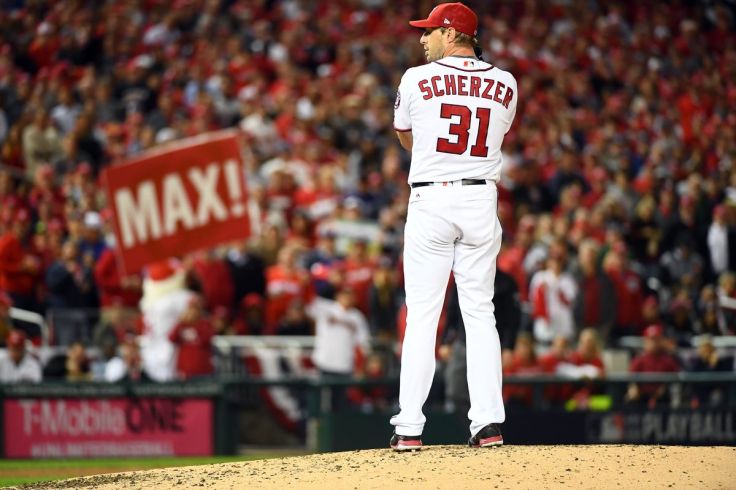
Over the last couple seasons, there hasn’t been much discussion about who the best pitcher in baseball is. Clayton Kershaw was pretty much hands down the best and very few were putting up a fight. But during that span, Max Scherzer followed behind, nipping at Kershaw’s heels. While the debate will continue, the one definite is that Scherzer has just as much of a claim to that title in 2017 as Kershaw and proved himself worthy of this award. Scherzer has the black ink for the year, leading the league in complete games, Strike Outs, WHIP and Hits per 9. Kershaw lead in ERA and ERA+. But while Kluber and Sale’s numbers felt pretty far apart, Scherzer and Kershaw felt neck and neck. Scherzer beat Kershaw in WHIP, 0.902 to 0.949, while Kershaw beat Scherzer in ERA+ by a margin of 180 to 177. So to dig further, Scherzer easily beat him in WAR, 7.3 to 4.6, but WPA was much closer, 4.6 to 4.3. One wonders if Kershaw hadn’t missed those starts in the middle of the season, if this race would have turned out a bit different. Instead, Scherzer proved once again why might be the closest thing to Kershaw’s equal and why these two seem to battle it out for this award every season. But in 2017, Max Scherzer was the better pitcher.
My Top 3: 1-Scherzer, 2-Stephen Strasburg, 3-Zack Greinke
IBWAA Winner: Max Scherzer
BBWAA Winner: Max Scherzer
American League Rookie of the Year: Aaron Judge
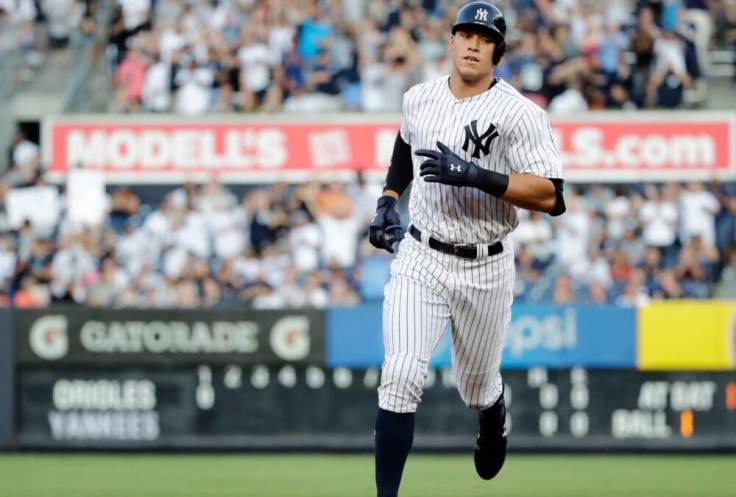
This award felt like a ‘Gimme’, as Judge was a dominant force for a large chunk of his rookie campaign. It was hard to read an article or watch a video without mention of Judge and his accomplishments this season and for the most part they were very deserved. Judge led the league in Runs, Home Runs, Walks and Strike outs. Judge’s 52 home runs (a new single season record for a rookie, breaking Mark McGwire’s 49 HR’s back in 1987) and 114 RBI’s spoke of a force in the middle of the Yankees batting order, while the walks showed the ability to show patience at the plate. Judge was different from many rookies, as this year was his age 25 season, which would explain a maturity not seen by many a rookie. While his contact rate was a bit low (65.1%, with league average being 80%) and the strike outs were high, Judge is no different than most of the power hitters that fill up major league rosters in 2017. To me, the most telling stat of Judge’s worth is OPS+, which sits at 171, second in the AL behind Trout. Since OPS+ is a statistic that adjusts to league and park effects, it means that despite playing in a very hitter friendly park in Yankee Stadium, Judge still raked like an elite hitter. That to me speaks more of his skills than a home run total, to be honest. While the sky is the limit for Judge, I worry about all the attention that the media bestows on him. I’m not a big fan of all the hype that the baseball media granted to him this year, but I get it. Judge had one of the best rookie seasons in baseball history and New York has been starving for a young power bat for years now. Judge more than deserves the honor of AL Rookie of the year but…what will his sequel look like? It’s not going to be easy for him to match what he did throughout this magical first year.
My Top 3: 1-Judge, 2-Matt Chapman, 3-Andrew Benintendi
IBWAA Winner: Aaron Judge
BBWAA: Aaron Judge
Credit: Sports Illustrated
National League Rookie of the Year: Cody Bellinger
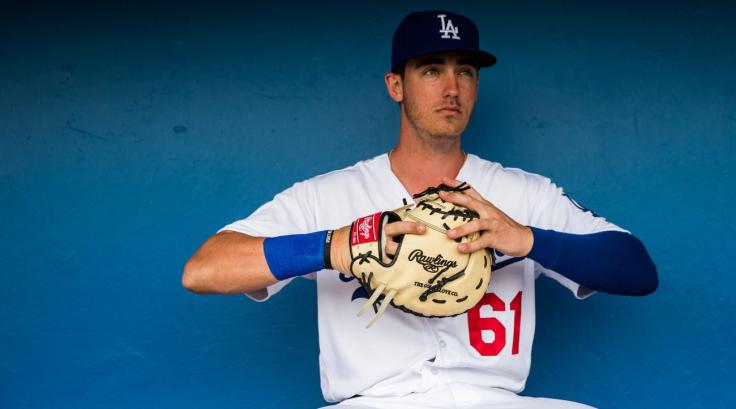
If anything has been proven over the years, it is that the Los Angeles Dodgers might just have a ‘Rookie Tree’ near Chavez Ravine where they pluck healthy, fresh new talent from on a consistent basis. That tree continued to produce in 2017, as young first baseman Cody Bellinger came away with the NL Rookie of the Year award, the 18th Dodger to win that award. Bellinger now sits beside such notables like Seager, Valenzuela, Karros, Nomo, Sax, Mondesi, Newcombe, Sutcliffe, Howard, Piazza and the man who now has his name on the award, Jackie Robinson. Bellinger debuted on April 25th this year and from almost day one he punished baseballs. Cody hit 39 home runs (a new National League single season record for a rookie), 26 doubles and posted an OPS+ of 142. Bellinger lead the National League Champions in homers, RBI and slugging percentage while putting together a 4.2 bWAR season in his rookie campaign. Maybe the most impressive stat for him this season was a 4.3 WPA, good enough for 5th in the NL, ahead of MVP hopeful Charlie Blackmon and teammate Justin Turner. Bellinger had been a highly touted prospect for a few years now and he showed this year that there was a reason for the hype. Like Judge, Bellinger will now have to follow-up a splendid first season with the hope for even bigger numbers. Bellinger won’t turn 23 years old until next July but is already showing the patience and maturity of a 10 year veteran. It’s a lot of expectations for such a young player, but so far so good for Cody Bellinger.
My Top 3: 1-Bellinger, 2-Paul DeJong, 3-Austin Barnes
IBWAA Winner: Cody Bellinger
BBWAA Winner: Cody Bellinger
Credit: Sports Illustrated
American League Reliever of the Year: Craig Kimbrel
When digesting the numbers for American League relievers in 2017, it became very apparent that there was no dominant force like in year’s past. No Zach Britton, no Andrew Miller, no Wade Davis. But while digging in the depths, it did appear that Craig Kimbrel of the Red Sox had put together a stellar season that had flown under the radar. Kimbrel threw 69 innings, striking out 126 batters while posting an ERA+ of 319, three times above the league average. His strike out rate (49.6%) was the highest it had been since 2012 while his walk rate (5.5%) was the lowest of his career. His WPA was also huge, posting a 4.5 Win Probability while his Run Expectancy (RE24), which calculates the runs he saved, was the highest of his career at 28.0. Kimbrel also had a 1.43 ERA, which is great but fairly normal for a reliever of his caliber, but I was interested to see how the runs he did give up (which were 11 over those 69 innings) were scattered about. In August he gave up the most runs in one month (4), while May was his best effort, giving up none. Over the last two months of the season, Kimbrel pitched 25.1 innings, giving up five runs while striking out 46….and that wasn’t even his best two month stretch! While Andrew Miller and Chad Green both had great seasons this year, Kimbrel showed why he has been an elite closer since 2011. For anyone calling for his demise in 2016, Kimbrel showed this year why his career isn’t dead yet.
My Top 3: 1-Kimbrel, 2-Andrew Miller, 3-Chad Green
IBWAA Winner: Craig Kimbrel
Credit: USA Today
National League Reliever of the Year: Kenley Jansen
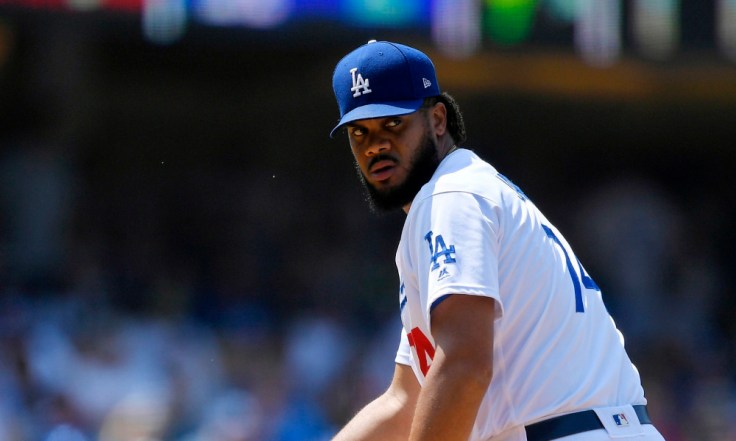
While the American League relievers felt like a closer race, in the National League on closer stood out over all the rest and his name is Kenley Jansen of the Los Angeles Dodgers. Jansen was dominant in 2017: 68.1 innings, 1.32 ERA, 318 ERA+ with 109 strike outs. Jansen even posted a 2.9 bWAR this year, the highest of his career. But a couple other stats just blew me away for Jansen this year. Jansen allowed seven walks all year-long. Yes, 7…that is it. Which leads to another stat that blows my mind, which is his Strike out to Walk ratio: 15.57. Seriously, that number is just ridiculous. Finally, the most impressive statistic for Jansen in 2017 was his league leading WPA, 5.7. Not only did that number lead the NL, it lead all of baseball, even better than Mike Trout’s 5.58 in the AL. If there was ever any doubt that Los Angeles made the right move to re-sign Jansen last offseason, his spectacular 2017 warranted almost every dollar he earned. Those numbers speak as a dominant reason why Kenley Jansen is the NL Reliever of the Year.
My Top 3: 1-Jansen, 2-Archie Bradley, 3-Pat Neshek
IBWAA Winner: Kenley Jansen
American League Manager of the Year: Paul Molitor
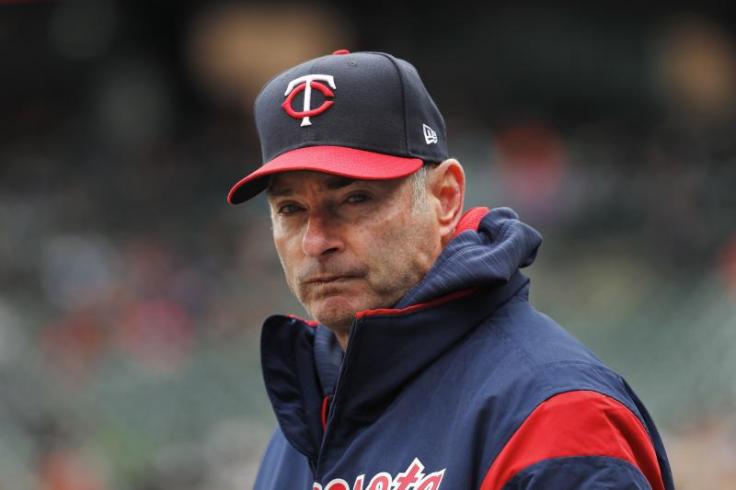
While managers like Terry Francona and Joe Girardi guided their respective teams to the postseason this year, one man stood head and shoulders as the true manager of the year in the American League, and his name is Paul Molitor of the Minnesota Twins. The Twins came into the year trying to bounce back from a 100 loss season in 2016 and they more than bounced back. Despite having a pieced together rotation and an occasional spotty bullpen, Molitor was able to lead Minnesota to an 85 win season and a Wild Card spot in the AL. No one expected the Twins to reach .500, yet along wrap up a playoff spot but that is exactly what happened in the ‘Twin Cities’ this year. The team really took off in August, as the offense went on a tear and pushed the team to the upper section of the American League Central. Molitor was able to work around some of the team’s flaws and gave youngsters like Byron Buxton and Jorge Polanco the playing time they needed to be comfortable in the big leagues. Two of the team’s big issues the year before was the defense and the pen, which both improved in 2017 with his use of mixing and matching. Sometimes he doesn’t get the credit he deserves, but Molitor was able to lay out some strategies this year that appeared to pay off:
“He’s extremely baseball smart,” Twins catcher Chris Gimeneztold reporters. “He’s in the Hall of Fame for a reason. Yeah, he was a great player, but you have to think the game to do what he did on the field. I see it constantly. He’s very much ahead of the game. Sometimes it hasn’t worked out necessarily the way you draw it up, but I think for the most part I’d take him any day of the week.”
I know some don’t feel that the Manager of the Year award should just go to a team that outperforms expectations, but I think that is exactly why someone like Molitor deserves this award. Once the Twins started to excel, teams began to pay more attention to them and it caused Minnesota to revert the course they had been on. The team you saw in April wasn’t the same team there in September and it was for the better. While Francona lead his Indians to an AL Central title, he did so with pretty much the same roster he took to the World Series the year before. Molitor’s roster was revamped and a large chunk of the credit of their turnaround should be given to Molitor. He did what few expected and that is why he is my choice for Manager of the Year.
My Top 3: 1-Molitor, 2-Terry Francona, 3-Joe Girardi
IBWAA Winner: Terry Francona
BBWAA Winner: Paul Molitor
Credit: Getty Images
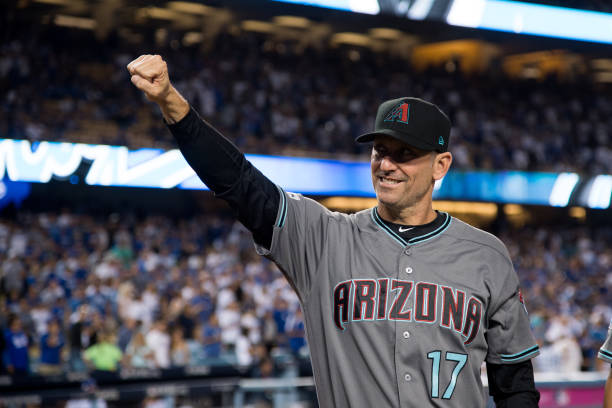
National League Manager of the Year: Torey Lovullo
Does anyone remember the Arizona Diamondbacks in 2016? The best way to describe them is by just saying they were a mess. They only won 69 games last year and the team didn’t appear to have a set direction they were going in, other than down. GM Mike Hazen decided to restructure the roster, inserted Lovullo into his first big league managing spot and the team flourished. While all the attention was on the Dodgers, Lovullo kept Arizona just slightly off their pace while holding their ground on the Wild Card spot throughout the year. There was more attention paid to pitching strategy, defense and run prevention while he melded with his players:
Lovullo’s ability to incorporate analytics with his locker-room skills made him an instant success. He built a solid foundation in his first year and seems to have the Diamondbacks on track to compete for division titles and the World Series for the foreseeable future.
The Diamondbacks now look like a consistent contender in the NL West and with their young talent they shouldn’t have to make many major moves in the future. Lovullo changed the atmosphere in the desert and for that he is the best manager this year in the National League.
My Top 3: 1-Lovullo, 2-Bud Black, 3-Craig Counsell
IBWAA Winner: Torey Lovullo
BBWAA Winner: Torey Lovullo
So there you have it, another season officially wraps up as we reward those that reached the highest of achievements. I did find it amusing that back in April when I made my season predictions I guessed only one of these correctly (Bellinger as NL ROTY, which felt like a slam dunk). It goes to show how hard it is to really guess what will happen during the duration of a 162 game season. It is a great honor that I get to vote every year like this and I can only hope I do a respectable part to show the value of an organization like the IBWAA. This is a game we all love and while we might squabble here and there on numbers, it really comes down to what you value. I can only hope 2018 brings us just as many highly contested winners. Here’s to baseball being back sooner rather than later.
The baseball world was shocked on Tuesday by the death of former Toronto and Philadelphia pitcher Roy “Doc” Halladay in a plane crash off the Florida coast. Halladay was only 40 years old and he is expected to be a first ballot Hall of Famer when he is eligible for induction in 2019. The numbers don’t lie about Halladay’s greatness: two-time Cy Young award winner, 41st best WAR all-time for pitchers, 69th all-time in strike outs, 24th best K/BB ratio, 40th best ERA+, and 14th best WPA. He was a durable ace in a time period where starters didn’t finish what they started; Halladay led the league in complete games seven times and threw over 200 innings in a season eight times. Halladay’s closest comparisons are Zack Greinke, Dwight Gooden and Justin Verlander, three pitchers who have all been Cy Young winners and had long, productive careers. But while the numbers speak of greatness, the baseball world’s response to his passing speaks of how great he was as a human being, not just what he did on a baseball diamond:
When Roy threw his perfect game, he bought about 60 watches to commemorate the occasion each engraved and personalized. The case had a plaque that read "Couldn't have done it without you. Thanks" – Roy Halladay#FirstClass#LeadersLead#R.I.P.Doc pic.twitter.com/hoXNoAIFDX
September 2014. This was how Roy Halladay treated fans young and old at a collectibles show. He was just awesome. Such a gigantic loss. pic.twitter.com/XO9w1gCe25
Beyond gifted, but never spoke of it. Inspired with action, not words. Never compromised, backed down, or judged. Always respectful. Ever-kind. Genuinely humble. Quiet. Honest. Sincere. Caring. A Timeless example.
Devastating news about Roy Halladay…an unparalleled artist on the mound. I dropped everything to watch him work…Baseball’s heart hurts…😔 My deepest condolences to the Halladay family. #RIPDoc
I could keep going with the tweets and the numbers, but you get the point. Roy Halladay was everything that was great about baseball. He’s a guy that was easy to root for and one your kids should be looking up to. Rather than writing a column looking back at the greatness of Halladay (and trust me when I say that article will happen when he is going into the Hall of Fame), I thought we could watch some of his greatness on the mound:
It’s amazing how watching a couple of videos can remind someone of just how great Halladay truly was. I hope younger players not only study how he pitched, but also the work ethic that went with it. Roy Halladay was an elite pitcher that didn’t just blow batters away. Location and control were his friends and helped him be more than just another good pitcher. I can only hope baseball receives more ‘Doc’ Halladay’s in their future; he was everything that is great about this game we love. Thanks, Doc. You will be missed.
Coming off of a crazy Game 5 of the World Series, Sean is joined this week by Panda Pete of The Twins and Losses Supershow to talk about this crazy October, discussion on whether or not a different baseball is being used during the playoffs, a look back at the Twins 2017, free agency, the managerial shuffle and just a ton of baseball talk. Listen, laugh, love and check out Twins and Losses on the 4D Podcast Network!
The story of the Kansas City Royals after this past 2017 season was murky, but simple enough: Eric Hosmer, Mike Moustakas and Lorenzo Cain would all be free agents and the Royals would be lucky to re-sign one of them, if any at all. What seemed the most apparent was that Hosmer would have the highest chance of leaving, even before he put together a career year in 2017. The belief was that a number of bigger market teams would be bidding for his services (the Yankees and Red Sox have been mentioned the most) and he would go where the money led him. We kept hearing the Royals would be making Hosmer their main priority, but in a lot of ways that just felt like lip service. I know myself personally, it appeared that the Royals would make him an offer or two, the big market teams would blow away Kansas City’s offer and Royals GM Dayton Moore would essentially concede defeat. The team could then say they made an effort, but financially just couldn’t compete with the New York’s and Boston’s of the world. This has been my frame of mind for well over a year now…and then something threw a monkey wrench into that thinking. That something now has me wondering if it is not only possible to bring Hosmer back, but possibly either Moose or LoCain as well.
Credit: Kansas City Royals
Let me begin by stating I still feel like it is a long shot to bring back Hosmer but the chances do appear to be improving for the Royals. Start by reading this article by Sam Mellinger of the Kansas City Star. Mellinger paints a picture of how this could go down and while it feels like a ‘Hail Mary’, it isn’t as crazy as you might think. To sum up what he says, the belief is that if the market shakes out a certain way for Hosmer, he could fall back to the Royals, much in the way Alex Gordon did a few years back, as even Moore references:
“I think there’s some other things that we’d like to execute if possible — see what happens with our free agents. Everybody assumes that we are just going to just get blown away in free agency, and we don’t have a chance. They may be right, but I think everybody felt that way about Alex Gordon at the time. That fell back to us. You just never really know.”
If you remember, Gordon appeared all but gone by all of baseball, that was until Jason Heyward signed his contract with the Cubs and Justin Upton and Yoenis Cespedes’ names were still on the board. Gordon fell a tick or two below those two names and his age and the fact that the Cubs were the biggest suitor for him appeared to lower the type of deal he could get on the market. The one aspect of Alex coming back to Kansas City was that he always wanted to stay with the Royals, which is a bit in question with Hosmer:
The Royals know they cannot offer the biggest contract to Hosmer, so they will likely follow the same plan that eventually landed Gordon two years ago: stay in touch, be patient, trust that they’ll have a chance after other offers come in, and then get as close as possible.
Hosmer signing with the Royals would require a series of breaks their way. Many around the game believe Hosmer could get $150 million or more. They would need to be wrong. Many around the game believe Hosmer wants to play in a bigger market. They would need to be wrong about that, too.
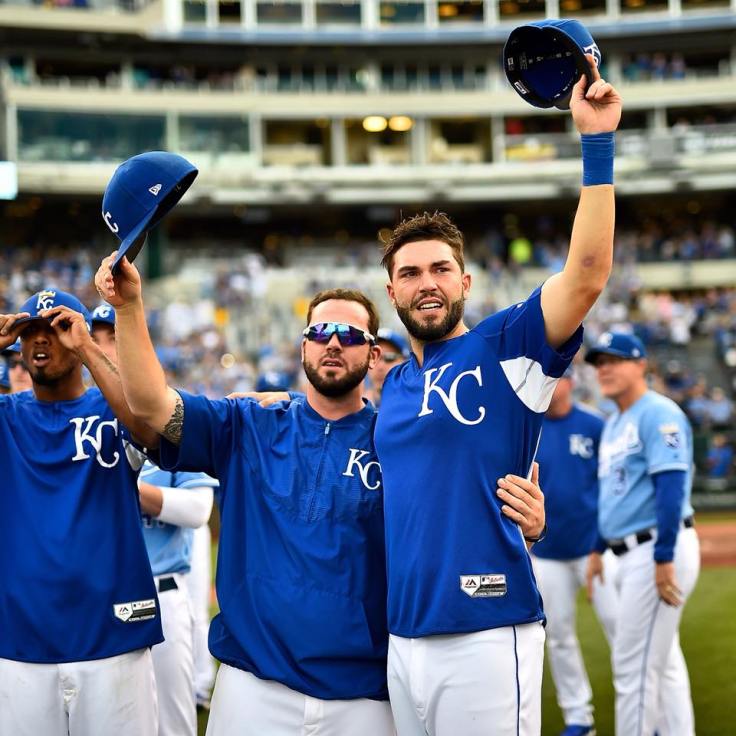
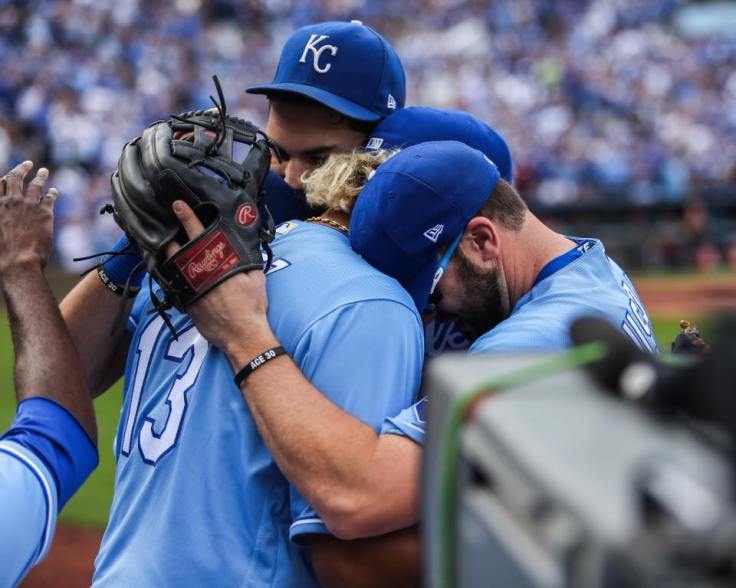
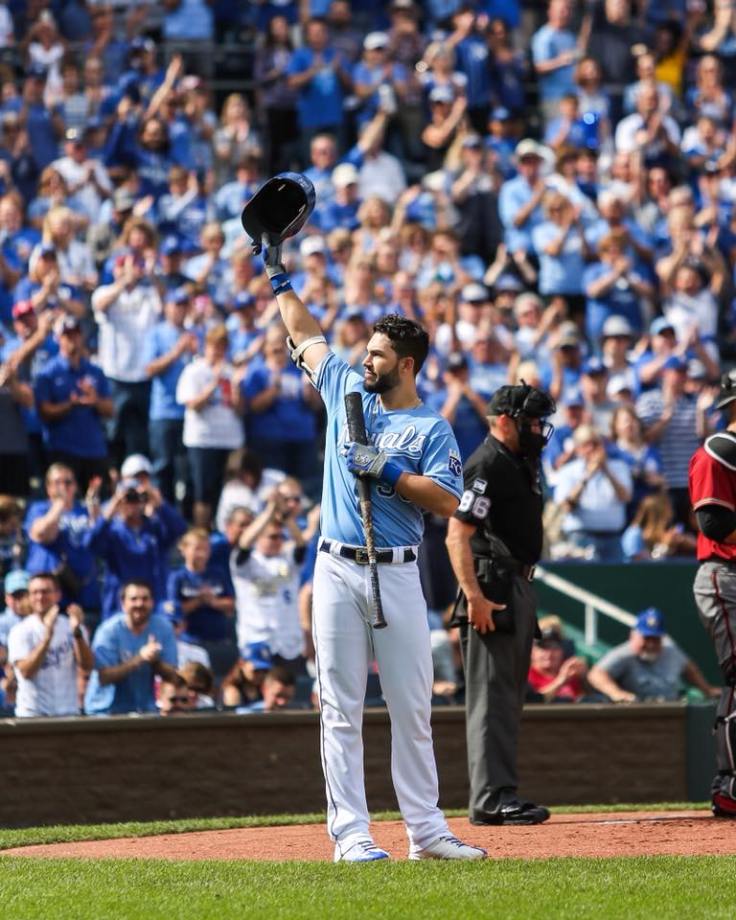
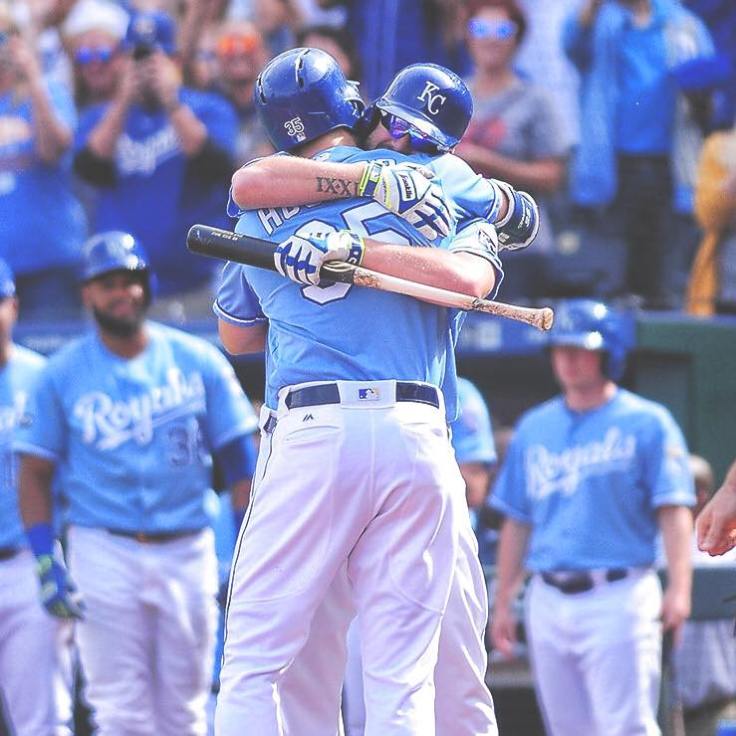
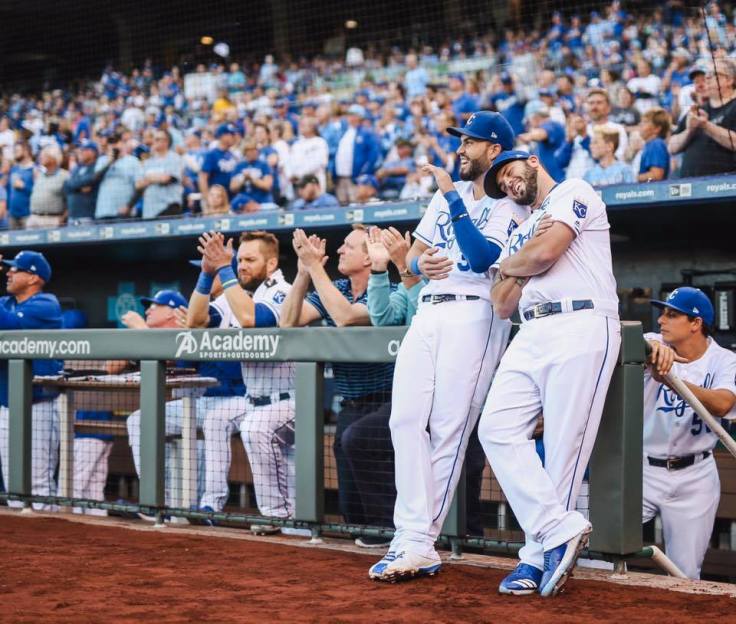
Sure, that is a lot of if’s. A lot. But I do genuinely feel like these guys love Kansas City and the organization. If you saw any of the send-off on the final day of the season you could tell that there was some real, heartfelt emotion going on with this group. Hosmer is super close to Moustakas and Salvador Perez and one does have to wonder how much those friendships play into a player’s decision. I know, money trumps the rest most of the time. I even understand that, considering most players don’t have a super long career in the first place, so they should make their money while they can. But if these guys want to make it work while staying in Kansas City, it could happen. But Hosmer appears to be the pivotal piece and his decision will affect the rest when it comes to re-signing.
Credit: Kansas City Royals
The decision for Hosmer could be affected by which and how many teams are bidding for his services. The belief all along has been that a number of big market teams would be vying for his attention, but Buster Olney of ESPN points out that there might not be as many teams as first thought:
Hosmer theoretically fits the Red Sox or the Yankees, but each of those big-market teams have worked to get under the luxury-tax threshold. New York believes in Greg Bird’s talent and swing, and the potential savings of Bird over Hosmer is likely to keep the Yankees out of the Hosmer bidding. The Red Sox already have over $130 million committed in 2018 payroll before they pick up the options on closer Craig Kimbrel ($13 million) and Chris Sale ($12.5 million) and before they deal with the pricey arbitration cases of Xander Bogaerts, Jackie Bradley Jr. and Mookie Betts.
The Giants also have very little payroll flexibility, to the degree that they informed Madison Bumgarner last winter they weren’t ready to talk about a contract extension yet because of luxury-tax implications. The San Francisco front office would probably love to have Hosmer, who would help in so many ways — the offensive production and RBI potential, the defense, the leadership. But Brandon Belt is about to reach the backloaded portion of his contract: He’ll make $17.2 million for each of the next four seasons, a staggering debt that the Giants might have to live with.
Olney also mentions that there are a number of bigger market teams who already have younger, cheaper options at first base, like the Dodgers, Phillies and Mets. He would go on to mention the Angels could be interested, but it would matter on whether or not Upton returns to the team and the Cardinals would probably have to unload Matt Carpenter before they could consider signing Hosmer. That leaves…well, that leaves only a few teams in the hunt for the young first baseman, as Olney again points out:
As the saying goes: All it takes is one serious bidder. But it does not appear as if Hosmer will have a high volume of teams in pursuit, and the Royals might turn out to be his most ardent suitors.
If this comes to fruition, it is very plausible Hosmer could fall to the Royals. To add to the discussion, the Yankees Greg Bird had a very positive postseason this month (.244/.426/.512 with 3 home runs, 6 RBI’s and 5 total extra base hits) and it would appear the Yankees are already out of the running, especially considering the luxury-tax threshold. So if this happens, what would the Royals be able to offer money-wise?
Credit: Kansas City Royals
It’s hard to predict just what the Royals would be offering Hosmer, but I’m going to go ahead and take a guess. Let’s start with his salary for 2017, which sat at $12.25 million. Hosmer will obviously see a bump from there, but how high? I’m assuming here the Royals will want to sign him to a long-term deal, but not the ten-year deal that was floated around this past spring. So let’s go with a 6 year deal with a couple of option years tacked on (Dayton does love his mutual options!). This might be a tad less, but I can’t picture the team being locked into anything over six years guaranteed (but I could be wrong about that). Hosmer’s comparable player would most likely be Freddie Freeman of the Braves (or as I normally call him, “Better Hosmer”); Freeman signed a 8 year, $135 million dollar deal back in 2014. That averages out to $16.875 million a year. I tend to believe Hosmer would get something in that same ballpark, but I’m not quite sold that he would get the $20 million a year that was tossed around for a while. So lets keep him at an average of $18 million a year, which in six years would be a $108 million dollar deal. He could get slightly more than that, but if I know Moore, he would probably make the early years slightly lesser and the last few years would be heavily back-loaded. Like I said, he could get slightly more than this from the Royals, but not much more. So if Kansas City is able to pull this off, the talk is that then the Royals would go after either Moustakas or Cain, which sounds crazy, right?
Royals officials are making it clear that Hosmer is their top offseason priority. If they are able to re-sign him, they will try to shed some payroll and make an aggressive offer to Mike Moustakas or Lorenzo Cain. If Hosmer signs somewhere else, the Royals will move to a contingency plan.
Let’s play devil’s advocate: if Hosmer re-signs and they then go out and sign Moustakas for instance, how would the Royals be able to afford both stars?
Credit: Kansas City Royals
There is a very simple solution to how the Royals could afford both players: shed payroll. That also means Kansas City would have to eat some money, which they have been reluctant to do:
That could mean moving players like Ian Kennedy, Joakim Soria, Jason Hammel and Brandon Moss. All of those contracts are backloaded, so the Royals would need to eat some money. They haven’t done much of that in the past, but would have to see the opportunity to keep homegrown stars long-term as reason to break protocol.
So you are probably now shaking your head at me, saying ‘but then how do you replace THOSE players?’. Good question. Obviously, the Royals would get something in return for all them, but the quality of players they would get in return would be questionable, as well as if they would be major league ready. The Royals could also go out and deal Cheslor Cuthbert, Hunter Dozier and Ryan O’Hearn (or two of the three), since Hosmer and Moustakas would be taking over the positions they currently play. That could be a way for the team to pick up some younger, affordable arms to add to the organization. Obviously the team would also have to scrounge on the free agent market for a few more players, but Moore has shown a tendency to be creative the last few years if called upon. Kansas City seriously needs to upgrade their pitching next year, and if the team did bring back Hos and Moose, it would appear a bit harder to accomplish that goal. Harder, but still possible. Once again, this is a long shot, but it is interesting to think of all the different scenarios the team could go in if they were able to bring back two members of this core group.
Credit: Kansas City Royals
While I still contend this is the least likely scenario to happen, I am all in to bring back Hosmer and Moustakas. Now that might appear to be a bit strange coming from the guy who earlier this wrote that the Royals shouldn’t re-sign Hosmer, but if it means Moustakas stays (which has been my main preference all along) and it forces the front office to be creative, then I am on board. The one thing to remember in situations like this is that many players who sign a long-term deal with a team don’t remain with said team for the duration of the contract. So the prospect of the Royals locking in Hosmer for more than five years might appear to be daunting on the surface, in the big picture it would be likely he is dealt before the contract is up. Maybe I’m holding on to all those ‘fuzzy feelings’ I felt at that last game of the season, or maybe I’m just not ready to move on from these players. But I’m not opposed to this plan by the front office and if they aren’t going to tank the big league club, this is a better scenario than piecing players together for years on end. It wouldn’t be the first time this organization flew by the seat of their pants:
If this sounds wishy-washy, like an organization that doesn’t know exactly what it wants to be, it’s actually similar in philosophy to how they made the parade.
When he came to Kansas City, Moore didn’t intend to build a team without home-run power — first thing he wanted to do as GM was move the fences in.
He didn’t intend to build the best bullpen in modern baseball history — strongest belief he had when he arrived was the importance of starting pitching.
But the Royals’ best teams hit very few home runs, and had a line of shutdown relievers, because the front office identified cost-effective workarounds to the traditional ways of winning.
They’ll have to continue to think on their feet, but for now, they wait. Everything depends on Hosmer.
I couldn’t have said it better myself, Sam. Remember this during the winter whenever Hosmer’s name is brought up. He is the key to what we will see on the field next year in Kansas City.
Last year about this time I decided to take a look back at the 2016 campaign and hand out awards for the most deserving players. At the time it felt like a fun thing to do but moving forward I feel it is a way to really acknowledge the players who have earned the honor and attention for their play. While the Royals season was a letdown in some regards, in others it was successful. So let’s look at the players who contributed to some of Kansas City’s success.
Credit: Kansas City Star
Most Valuable Royal: Lorenzo Cain
Man, this was not an easy category, not with all the productive offensive seasons put up by Kansas City. By no means is this a slight on Eric Hosmer, Mike Moustakas or Whit Merrifield; all three were very worthy of this honor and it was hard to weigh one over the other. But at the end of the day, I felt Lorenzo Cain had not only the most productive season for the Royals but also the most consistent. Cain wrapped up the year hitting .300/.363/.400 with 15 home runs, 49 RBI’s, 47 extra base hits, 26 stolen bases an OPS+ of 112 and a bWAR of 5.3. Cain’s value obviously goes beyond just his offense, as his defense led him to this win, posting a 0.9 defensive WAR and 5 defensive runs saved. It was hard to separate Cain and Hosmer, as they both put up very similar numbers outside of some of the power numbers that Hosmer dominated, and they even tied for fWAR at 4.1. At the end of the day Cain’s defense won out but it was also interesting how Cain got to this point. While it is obvious 2015 has been his career year to this point, Cain did post career high’s this year in walk rate and on base percentage while posting the lowest strike out rate of his career (15.5%). While Cain’s power numbers were higher in 2015, his role on this year’s team was slightly different, especially later in the season when manager Ned Yost was batting him 2nd in the order. Cain’s responsibility in the lineup became more of a guy trying to get on base rather than driving in base runners and it shows in his numbers. Since 2015 Cain has morphed into Kansas City’s best overall player, taking the mantle from Alex Gordon. What he showed this year was not only a productive wrap up of his Royals career (more than likely), but he adjusted to the situation he was in and came out a better player. That is why he was the ‘Most Valuable Royal’ in 2017.
Honorable Mention: Eric Hosmer, Whit Merrifield, Mike Moustakas
Most Valuable Pitcher and Reliever of the Year: Mike Minor
This was another category that was not an easy pick, for different reasons than the previous. While numerous Kansas City batters put up ‘career years’ during 2017, the pitching staff wasn’t quite as promising. Danny Duffy and Jason Vargas at various times felt like the front runners, but between Duffy’s injuries and Vargas’ awful second half, neither felt like the guy who pieced together enough for this honor. So it came down to the bullpen and after an initial belief on my part that Scott Alexander deserved this honor (and if not for his late burnout he probably would have won it), the winner ended up going to Minor. While most probably expected some success from Minor when Kansas City signed him in 2016, the idea he would garner such prosperity out of the bullpen would be an idea out of left field. Before this season, Minor had made two career relief appearances…total. That is for his entire professional career, both in the minors and majors. So converting Minor to a blockbuster reliever didn’t really appear to be in the cards, but now it seems like genius on the Royals part. Minor appeared in 65 games this season, throwing 77.2 innings, posting a 2.55 ERA, a 2.62 FIP, a 28.7% K rate (the best of his major league career) and 2.1 fWAR. What made his conversion even more intriguing was his acceptance of the closer role over the last couple weeks of the season. Kelvin Herrera struggles pushed him to a setup role for the team and with Scott Alexander taxed physically and Brandon Maurer mentally, the Royals turned to Minor to close out a few games. Mike would do so with quite a bit of success, enough so that if he would return to Kansas City (he is an upcoming free agent) he would be in the running for said role. Overall, the 2017 campaign was a positive one for a guy who kept having his comeback attempts foiled in the minors throughout 2016 and was not a lock to even make the Royals out of spring training this year. From the trainers room to the bullpen, Mike Minor has earned the honor of Royals best pitcher in 2017.
Honorable Mention: Scott Alexander, Jason Vargas
Best Hitter Award: Eric Hosmer
While the Royals overall didn’t compile the best of offensive numbers, a number of players did achieve career years in 2017. While Whit Merrifield and Mike Moustakas can claim great seasons, Eric Hosmer will be bestowed the Best Hitter Award for the Royals in 2017. Now Hosmer has long been a sore spot on this blog; just going back to February I discussed reasons the Royals shouldn’t re-sign him. One of my main arguments was his lack of consistency, an issue that had dragged him down throughout his career. That all changed in 2017, as Hosmer proved to be the hitter we all imagined him to be when he was coming up through the Royals farm system. Outside of April (which was his worst month of the season and worst for the entire Royals offense), Hosmer’s lowest batting average in any one month was .297. His lowest on base percentage was .367 in June and his lowest slugging percentage per month was .476 in September. To take this a step further, Hosmer’s lowest wRC+ outside of April was 134 in September, a number I would take for an entire season if we are being honest. All Hosmer did in 2017 was tie for his career high in home runs while setting new career highs in walk percentage, isolated power, batting average on balls in play, batting average, on base percentage, slugging percentage, weighted on base average, weighted runs created plus and wins above replacement. If there was ever a time for Hos to have a career year, this year would be his best option as he gets ready to enter free agency. While Hosmer still has a higher ground ball rate than a guy in the middle of the batting order should have (55.6%) he countered that with a much higher line drive rate (up to 22.2% from 16.5% in 2016). Back when Hosmer was first recalled to Kansas City in the 2011 season there was quite a bit of discussion on how if he performed as expected he could be a future MVP contender. While that felt far-fetched even eight months ago, it now appears that Hosmer finally reached his potential. For that, he was easily Kansas City’s best hitter in 2017.
Honorable Mention: Mike Moustakas, Lorenzo Cain
Rookie(s) of the Year: Jorge Bonifacio and Jake Junis
When forced to make a choice between these two candidates for best Royals rookie, it just felt wrong to slight either of them. So instead, Bonifacio and Junis are my co-winner’s of the best rookie in Kansas City this year. Lets start with Bonifacio, who was recalled late in April to help a struggling offense. It was very evident early on that Bonifacio could be a keeper, as he slugged at a .523 pace in May (his first full month) with a wRC+ of 118. Outside of a very pedestrian August, Boni put up some solid numbers throughout the season and provided some power that has been much-needed in Kansas City over the years. By the end of the year he had posted a line of .255/.320/.432 with 17 home runs, 40 RBI’s, a 99 wRC+ (which is essentially league average) and 0.9 fWAR. It should also be mentioned that he saw his playing time cut quite a bit once Melky Cabrera was acquired in late July, so while some of those numbers might feel a tad low, he was also used very sparingly over the last couple months of the season. If anything, Jorge’s 2017 earned him a spot on the team moving into spring training come February. While Boni helped the offense, Jake Junis was a shot in the arm for the rotation. After a bumpy start that saw him follow a pattern of ‘One good start, one bad start’, Junis’ ERA peaked at 5.66 after his start in Detroit on June 29th. Junis would appear in only one game in July (which was in relief, also against the Tigers) but come August he would firmly entrench himself into the rotation for the rest of the year, proving he is a major league pitcher. Over the last two months of the season, Junis threw 62.1 innings, posting an ERA of 3.61, only allowing nine walks in that span, while holding batters to a line of .250/.286/.392. Junis’ footprint had left such a mark that if the Royals had made it to the wild card game, there was some discussion of him being a solid candidate to start it. Junis proved he is here to stay and should be almost a lock for the rotation in 2018. What Junis and Bonifacio did this year was show the brass of Kansas City that they are big leaguers and should be solid contributors moving forward.
Honorable Mention: Kevin McCarthy
Comeback Player of the Year: Mike Moustakas
One of the best stories told on the field for Kansas City this year was that of Mike Moustakas and his run toward the Royals single season home run record, or as we liked to call it ‘Chasing Balboni’. The truth is, if there was ever a Royal during this period of Kansas City baseball to break the record, it was long thought to be the man we call Moose. Moustakas’ power numbers grew during his time in the minors (go look at his 2010 minor league numbers; you can see where the excitement grew) and it was believed that he would gradually build those up in the big leagues. After a 20 home run 2012 season, the sky was the limit; unfortunately, Moose crashed back down to earth in both 2013 and 2014. After changing up his approach in 2015 (which included going the other way, but also saw his power numbers rise), Moustakas looked to be on track for a big year in 2016. Then came the collision with Alex Gordon and his season ended due to a knee injury in May. The good news was that 2016 had seen his power numbers escalate and it gave most of us hope for the 2017 campaign…and boy did he deliver! Moustakas would end the year hitting .272/.314/.521 with 38 home runs (breaking Steve Balboni’s single season record), 85 RBI’s, a .249 ISO (which was his highest for a full season), a wOBA of .345 and wRC+ of 114. While his numbers overall were slightly better in 2015(I still consider that his career year, plus I prefer Oppo-Moose), he really came into his own power-wise and set himself up for a healthy pay raise this offseason. The one question that still lingers concerns his last two months of the season that saw a decline in his numbers. Moose spent those last two months dealing with leg issues and one has to wonder how many home runs he might have hit if it were not for the knee issue suffered against Seattle or even if Bruce Rondon was an adult instead of a child. The belief is that if not for those injuries, he would have been well on his way to over 40 home runs and possibly even higher. Overall, it was the comeback season that the Royals both needed and expected from Mike Moustakas.
Honorable Mention: Mike Minor, Jason Vargas
While there was obvious disappointment with how the season ended in Kansas City, there was plenty to honor as well. These awards were well deserved and showed the positive sides of the Royals in 2017. I know some believe ‘World Series or Bust’ but I am at peace with a team that is a contender. To me, there was more positive than negative this year and those are the moments I will remember moving forward. Speaking of, here is a great video that shows almost all the highlights of this season. Enjoy and once again a big congratulations to all the winners I honored in this piece.
After a long layoff (apologies for the delay!) Bleeding Royal Blue Radio returns! Sean is joined by Dalton Wiley as they breakdown the 2017 Kansas City Royals season, dive into the possibilities as Hosmer, Moustakas, Cain and Escobar hit free agency and wrap up the show discussing the baseball playoffs! Listen, share and tell all your friends as we look back at the Royals past, present and future!








 Bleeding Royal Blue