Royals Lineup Projection

kc1

One of the funnest parts of the offseason in baseball is breaking down the projections that are littered throughout the winter. The three main projection systems are PECOTA, Steamer, and ZiPS and they all attempt to predict and break down how the upcoming season will turn out. Of course, as with any algorithm, there will be predictions that are way off, which is why the games are played. But this is a fun look at how the upcoming season could go and see whether or not the projections predict a player will improve, regress or stand pat. With that said, I thought it might be interesting to break down the Kansas City Royals projected lineup and see what the Steamer projections have in store for Kansas City offensively in 2017.
MLB: Minnesota Twins at Kansas City Royals

Salvador Perez-Catcher

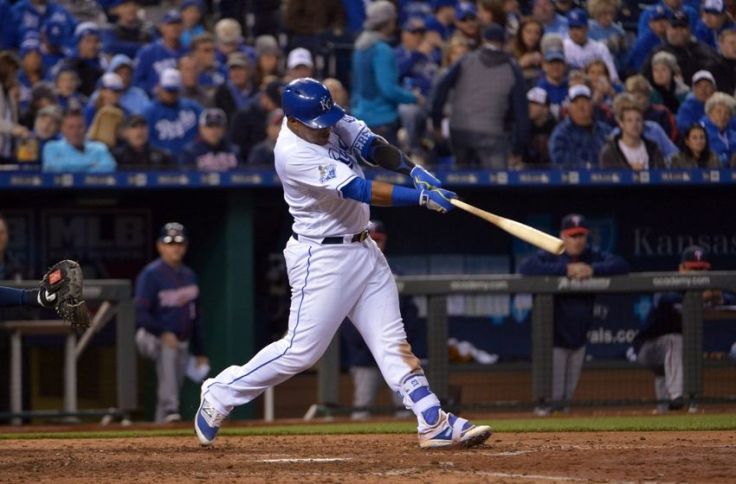
What I found most interesting about Salvy’s projected numbers for this year wasn’t the fact that they expected his numbers to pick up a notch but that they project he will play in less games! I don’t know if that happens, especially if they use the designated hitter as a rotating spot, but I like the idea of Perez getting some much-needed extra rest. Steamer has Salvy hitting .264/.298/.444 with 20 home runs, 67 RBI’s and 2.8 WAR. All but the home runs would be an improvement over 2016 and even that was only off by two. I tend to think all of this is possible, especially if Ned gives him that extra rest. It’s been very apparent over the last couple of seasons that by August, Salvy seems to be tiring and the grind of catching as many innings as he has the last few years catches up to him. I would like to see Perez get some extra at bats at DH and rest his legs, which I think would mean an increase in his offense. For the most part, I believe these projections are doable.
kc3

Eric Hosmer-1st Base

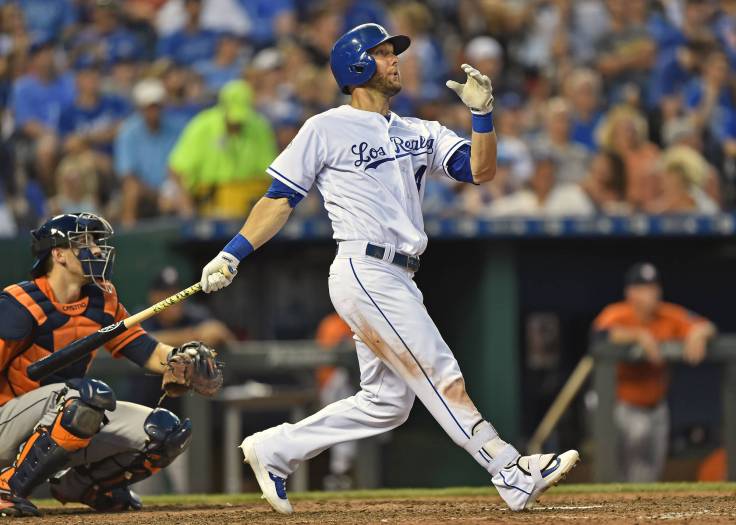
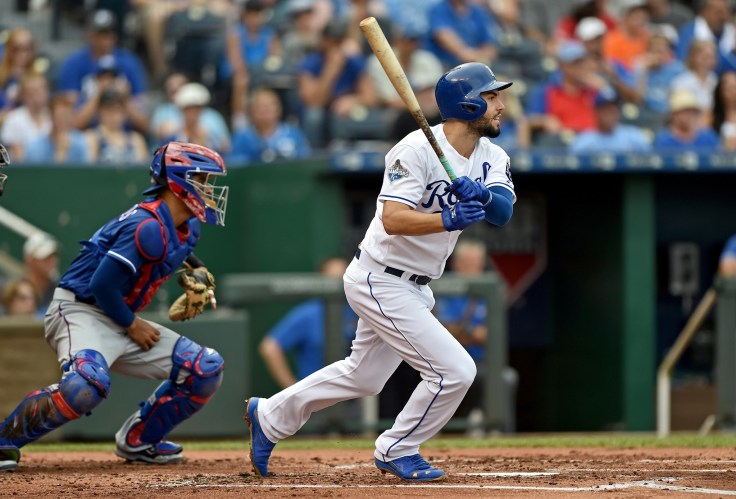
Anyone who has followed this blog knows that I soured on Hosmer this past season and it was to the point where I don’t know if I will ever expect him to perform even remotely consistent in the big leagues. The good news is that Steamer thinks Eric will improve on last year, projecting a line of .278/.345/.455 with 22 home runs and 84 RBI’s and a 1.7 WAR. Outside of the home runs and RBI’s, everything else would be an improvement on a season that was the tale of two different seasons for Hos. To me, the biggest tell on whether or not he improves offensively this year is if he is able to decrease his ground ball rate, which was a ridiculous 58.9% in 2016. If he does that and lowers his strike out rate, I think we could see a better Hos in 2017. There has never been a better time for him to have a career year than the season right before he enters the free agent market, so there should be some motivation to not be the guy who produced a well below average OPS+ (78) in the second half of 2016.
MLB: Toronto Blue Jays at Kansas City Royals

Raul Mondesi-2nd Base

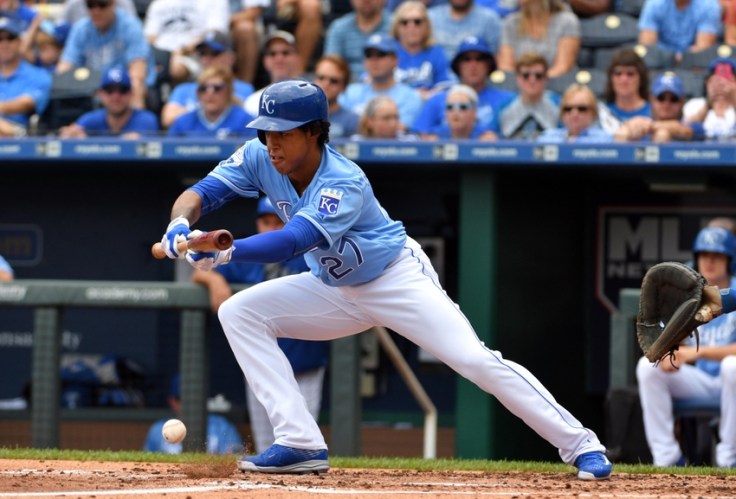
My hunch is that Mondesi will be the Kansas City second bagger to start 2017 unless he really struggles this spring. The good news is that there is almost no way he could be worse offensively than he was during his first stint with the Royals last year. Steamer agrees with me on this, as they are projecting him to hit .231/.272/.360 with 8 home runs and 36 RBI’s, a WAR of 0.0 and a wRC+ of 64. Yes, none of those numbers are great, but all would be an improvement on his numbers in 47 major league games in 2016. I tend to look at Mondesi like this: right now, his defense is ready while his bat still needs some major work. But he has slowly improved his offense ever year in the minors, with his power numbers improving by quite a bit in his short spans in both AA and AAA in 2016. The question the Royals have to ask is if A.) His defense is good enough to let him learn at the big league level? or B.) Do they have a better option at second base? The honest answer is that as much as I like Whit Merrifield, I think he is better suited to be a super utility guy in the big leagues and I also believe Mondesi is going to learn more in the majors then spending time in the minors. This could be an interesting development to follow and I’m highly intrigued to see if Mondesi raises some eyebrows this spring in Arizona.

MLB: ALCS-Toronto Blue Jays at Kansas City Royals

Alcides Escobar-Shortstop

Escobar’s offense in 2016 was nothing to write home about; in fact, it’s probably best left to just not mention it happened. It was evident throughout the season that he had no business hitting leadoff and was not pulling his weight for a guy getting close to 700 plate appearances. Luckily, Steamer is expecting bigger things from Esky this year, with a projected line of .264/.299/.352 with a WAR of 1.0 and wRC+ of 72. Okay, the numbers are only slightly better but even if we just see a slightly better strike out rate or walk rate, I’ll take it. At this point, Escobar is who he is, which is someone who rarely walks, strikes out too often and his faith lies in the BABIP Gods. As much as I have always enjoyed his defense, we are even starting to see a slight regression there, so it might be good that he will be a free agent after the season wraps up.
MLB: Minnesota Twins at Kansas City Royals

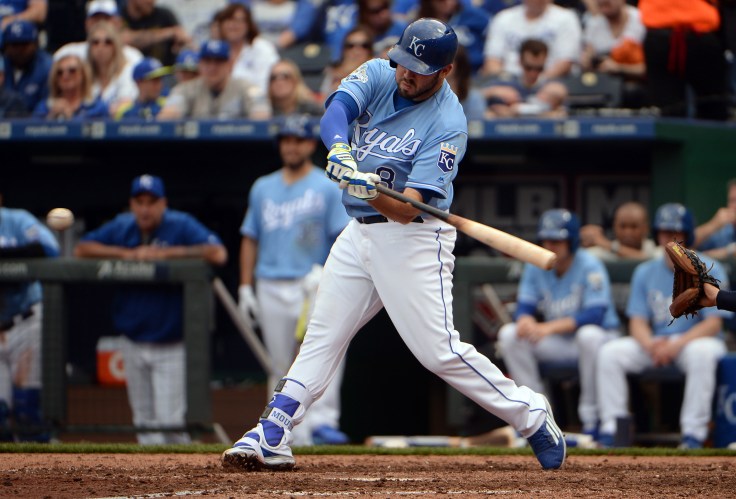
Mike Moustakas-3rd Base

Man, the Steamer really loves Mike Moustakas! Moose missed most of the 2016 campaign but in the 27 games he appeared in it was obvious that his power numbers were drastically improved and it appeared he was headed for a break-out season. Instead, a collision with left fielder Alex Gordon did in his knee and he was shelved. Right now though, the Steamer has Moose hitting .267/.329/.468 over 129 games with 23 home runs, 73 RBI’s, a wRC+ of 111 and a WAR of 3.1. Now, a large chunk of that projection is from his 2015 season, but I feel like these estimates are light. Yes, I think Moustakas is going to have a big year and I wouldn’t be surprised if he surpasses the 30 home run barrier if he can stay healthy. Moustakas has shown a tendency to improve throughout his career and in what could be his final year in Kansas City, I tend to believe he wants to show the power we have all expected him to display. While most of these projections have felt close to what I was thinking, this is one that I think will be much higher when it is all said and done.
kc7

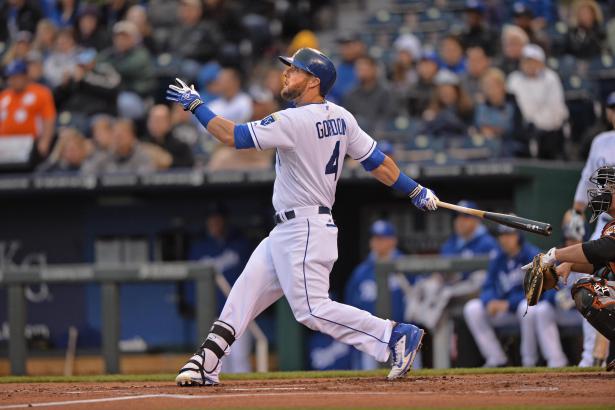
Alex Gordon-Left Field

Most players have that one season where they would prefer it would magically disappear and never be spoken of again. For Alex Gordon, 2016 was one of those seasons. Gordon struggled through the year, ending up with a line of .220/.312/.380 in 128 games. In late May, Gordon collided with Mike Moustakas and would proceed to miss the following month. It really just felt like Gordon was off most of the year, and chalk it up to whatever you want (I personally felt he wasn’t 100% most of the year) but it was a year to forget. So what is being predicted for this year? Steamer has Gordon at .248/.335/.404 with 15 home runs, 61 RBI’s and a wRC+ of 98. Call me an optimist, but I feel Gordon will be a bit better than that this year, as he looks to bounce back. Gordon probably won’t see the highs he racked up back in 2011-2012, but if he stays healthy a .260/.350/.430 season is reachable. Yes, Gordon is probably seeing the beginning of his regression, but I just don’t see it being as sharp a fall as he had last year. Expect Alex to improve on  a forgettable 2016 this year and help improve the Royals offense.

kc8

Lorenzo Cain-Center Field

Coming off of a career year in 2015, Cain looked to grow on that last year and guide the Royals back to the playoffs. Unfortunately, life doesn’t always follow a nice, cozy script and Cain would spend a large chunk of 2016 on the disabled list. Cain went from appearing in a career high amount of games in 2015 (140 games) to barely over 100 (103 to be exact) in 2016. This also meant a decline in his MVP caliber numbers from the previous year and a line of .287/.339/.408 and a wRC+ of only 98. Luckily, Steamer is projecting a similar year for Cain in 2017, as they foresee a .283/.338/.417 line and a wRC+ of 100 in 130 games. I must be the middle man here; I think Cain’s numbers could very well be higher, as he will be working for a contract, but it will all be determined on his health. If he can stay on the field, I think he will produce. If he doesn’t expect a season on par to last year. I don’t think we will ever see the numbers from Cain again that we saw two years ago, but something in that vicinity would greatly improve Kansas City’s offense.

kc9

Jorge Soler-Right Field

If you haven’t noticed it yet, there is a trend with the Royals lineup coming into this year. Almost every hitter is coming off of a sub-par 2016 and looking to redeem themselves this year. Count new acquisition Soler in that category, as he struggled for Chicago this past year. Soler hit .238/.333/.436 with 12 home runs, 37 RBI’s and a wRC+ of 106. Soler was slightly above league average, but only appeared in 86 games due to injuries in 2016. The Royals are counting on Soler to be a regular cog in the middle of their order this year…but Steamer doesn’t trust his injury history. Right now, they have predicted he will hit .257/.333/.436, 14 home runs, 48 RBI’s and a wRC+ of 104 in just slightly over 100 games. The Royals training staff has done a good job these last few years keeping the team on the field (with last year being the exception) and I tend to feel like this will be the first full year Soler spends in the big leagues. Number-wise, Soler is what he is: a high strikeout, power hitting slugger. Soler did see an uptick in his walk percentage last year and with a full year on his plate, I think he could put up solid slugging and on base percentage numbers. Soler’s probably never going to hit for a high average, but if the other stats are there, it won’t matter. The Royals need him to slug and that is just what should see him accomplish this year.
MLB: NLDS-Chicago Cubs at St. Louis Cardinals

Brandon Moss-Designated Hitter

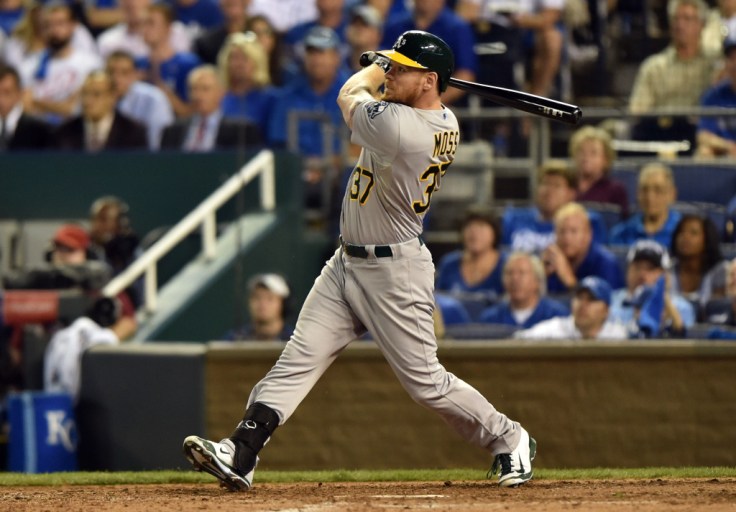
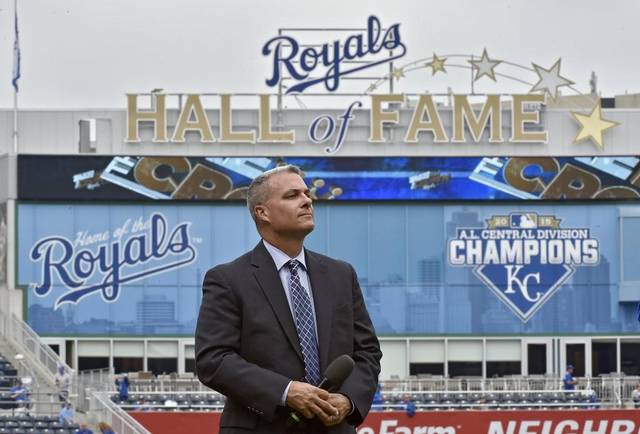
Now, I know Royals GM Dayton Moore said the other day that Moss won’t be the “primary” DH this year, but I have a feeling when it is all said and done Moss will be the recipient of the most AB’s in that spot. Moss had a very productive 2016 and Kansas City is hoping that the same power he showed last year transfers over to Kauffman Stadium this year. A solid 2016 out Moss at .225/.300/.484 with 28 home runs, 66 RBI’s and a wRC+ of 105. Steamer has Moss sitting this year at .237/.319/.453 with only 17 home runs and 44 RBI’s and a wRC+ of 103. Now, if you are asking yourself why those numbers are lower, it is because Steamer has projected that Moss will only appear in 89 games this year, which right now feels like an extremely low number. I tend to project Moss will play in the 120-130 game zone which will see his production go slightly up. I think we could see Moss’ on base numbers increase this year (mostly from more walks) and his power numbers see a slight drop, although with Kauffman in play I could see Moss racking up more doubles than homers. In this regard, I tend to think Steamer is fairly close on the averages and a bit low on the accumulated numbers. Look for Moss to perform fairly similar this year, if not a tad bit better.
Opening Day 5-6-15

So with the projections out there, it’s easy to see that most of them are based off of past production, which isn’t always a good thing for this Royals team. Luckily, the games are played for a reason and coming off of a poor offensive season in 2014, many of the Royals batters improved on their numbers in 2015. There is no reason to think that can’t happen again, at least with a number of their starters this year coming off of injuries. One final projection I want to throw out there are the ZiPS projections which are done by Dan Szymborski and are one of the more sought after projections during baseball’s offseason. Going off of fWAR, ZiPS projects the Royals this way (projections obviously made before Ventura’s death and Moss’ signing):

kc12

The good news is that ZiPS has improvement from Gordon, Cain and Moose. The bad news is that there is little if any improvement expected from Hosmer, Soler, Escobar and Mondesi. Once again, these are just projections and while some will be fairly close, some of these will end up being way off. I always like to say that projections like this are a good starting point and once the season begins we will get a better feel for how this team will operate in 2017. More than anything, this Royals team needs improvement from their offense in 2017; if they don’t, we might as well kiss October baseball goodbye. No pressure, offense-just be better.
Royals Sign Moss, Scrap Rotating DH Plan

kc1

Nothing makes me chuckle quite like when Kansas City Royals General Manager Dayton Moore plays a free agent signing so close to his chest that we know nothing of it until it is almost official. This was none more true than on Sunday when he signed OF/DH Brandon Moss to a 2-year deal:

There had been some light littering of rumors floating about DH types, like Chris Carter, but no specific mention of Moss being on the Kansas City radar. The deal actually breaks down very favorable for the Royals this year, as like most contracts Dayton works on, as it is backloaded for the second year of the deal:

So, close to $4 million is added to the payroll with this move, which is actually not much and still gives Moore room to go after another starting pitcher and/or reliever. In regards to the financial aspect of this signing, very shrewd move from Moore and one that could pay off if Moss produces like he has in the past. So what should be expected of Moss production-wise?

kc2

Last season Moss produced a line of .225/.300/.484 with 28 home runs, 67 RBI’s, an OPS+ of 105 and 0.8 bWAR. The biggest aspect of Moss’ game is his power and the power numbers were impressive in 2016: 2nd best home run total, 3rd best slugging percentage of his career, 3rd best extra base hit percentage, the highest percentage of hits for extra bases, 2nd best at bats per home run and 3rd highest isolated power average. You also get strike outs with Moss (he sat at 30% last year), but that is normal for someone with his kind of power. He will get the occasional walk, but throughout his career he has been league average to slightly above average (9.3%  over ten years). In other words, don’t expect a high batting average from Moss, which is good since he could care less about that stat:

It’s very apparent that Moss understands the value of a walk and the flaws within batting average. This also tells me that he is probably walking up to the dish with a plan already in place, which is a good thing. Also, while Moss does have flaws in his game, there is a way to optimize some of the negatives. Moss’ splits over his career have not been kind, with a drop in his slugging percentage against lefties (.395 compared to .472 against righties) and an even bigger drop last year (.375 compared to .525 against righthanders). If manager Ned Yost was smart, he would almost primarily have Moss face right-handed pitching; he doesn’t have to lock him into a platoon, but I wouldn’t have him face many lefties this upcoming season. The good thing for Kansas City is they have a number of good options (Cheslor Cuthbert, Hunter Dozier, Paulo Orlando, possibly even putting a regular position player in the DH spot) and could work around some of the lesser aspects of his game.

kc3

What about his defense? Honestly, while Moss can man the outfield corners and first base, he is well below average defender at first (-16.1 UZR, -22 Defensive Runs Saved) and most capable in right field (6.6 UZR, 5 defensive runs saved). This tells me he is probably average to slightly below average defender in the outfield and his defensive metrics are still better than new Royals right fielder Jorge Soler (-8.2 UZR, -7 Defensive Runs Saved). Many like myself felt that Soler would end up being the primary DH by mid-season this year, but if we go by the numbers (and yes, defensive metrics are still a work in progress, so they shouldn’t be taken solely by the end numbers) Moss could be better suited for right field than Soler. The curious part of my brain wonders how the Royals will attack that, since one of the big aspects of the Kansas City team’s these past few years has been the greatness of the outfield defense. Obviously, putting Moss or Soler out there lowers the bar quite a bit, which makes me wonder how that will be addressed (although coach Rusty Kuntz plans on working with Soler this spring, so we’ll see how that plays out). I think this also shows that Moss was acquired to get most of his plate appearances in 2017 at DH, which is what most assumed.

MLB: Cincinnati Reds at St. Louis Cardinals

There is one aspect of the signing that didn’t sit well with me and that was that the signing meant the end (once again) of the rotating DH plan that Kansas City has tried to implement for years:

I’m sure I am in the minority, but I actually thought this would be a good idea for Kansas City in 2017. Rather than be tied down to one guy playing the majority of the games in this slot, you could rotate players in and out of the role. This would give at bats to a Cuthbert or Dozier, while also allowing a Gordon, Perez or Cain to rest their bodies (and all three have taken quite a beating these last few years). If the Royals are serious about contending this year, having those guys rested and as close to 100% as possible headed into September-October is a must. The rotating DH plan would have given Yost more options and given these guys a defensive day off, which will be needed. Now, there is still a chance that happens (as we mentioned Moss’ numbers against southpaws) but the other concern is Yost’s use of his backups. Even if you have just followed his tenure in Kansas City, you have figured out that Ned is not big on using his bench a ton. He is notorious for riding guys for as long as he can and with the three names mentioned above, that worries me. Maybe I am worrying about nothing and like in years past, Yost has learned to ebb and flow with what his team needs. But there is also a chance that “Rigid Ned” continues to play his guys into the ground and injuries pile up because of it. I like the addition of Moss, but one does have to wonder if it strengthens or weakens this team in the long run.

MLB: AL Wild Card-Oakland Athletics at Kansas City Royals

So which is it, a plus or a negative acquisition? I have to admit to really liking this signing by Dayton and although I have my concerns, they don’t bother me to the extent that I wish they could take it all back. Home runs were up throughout baseball in 2016 and year after year the Royals are near the basement (if not in the cellar) in home runs hit throughout the league. Adding Moss’ bat to Moose, Hos, Soler and Salvy just accentuates one more threat in the Kansas City lineup. If optimized correctly, he could be a steal for the low price he is signed for in 2017. The signing also gives them just a smidge more room for another starting pitcher (Jason Hammel?) or reliever (the return of Luke Hochevar?) if the Royals are looking. Don’t be surprised to see a number of bombs hit into the fountains this year; I mean, it’s not like Moss isn’t familiar with Kauffman Stadium!

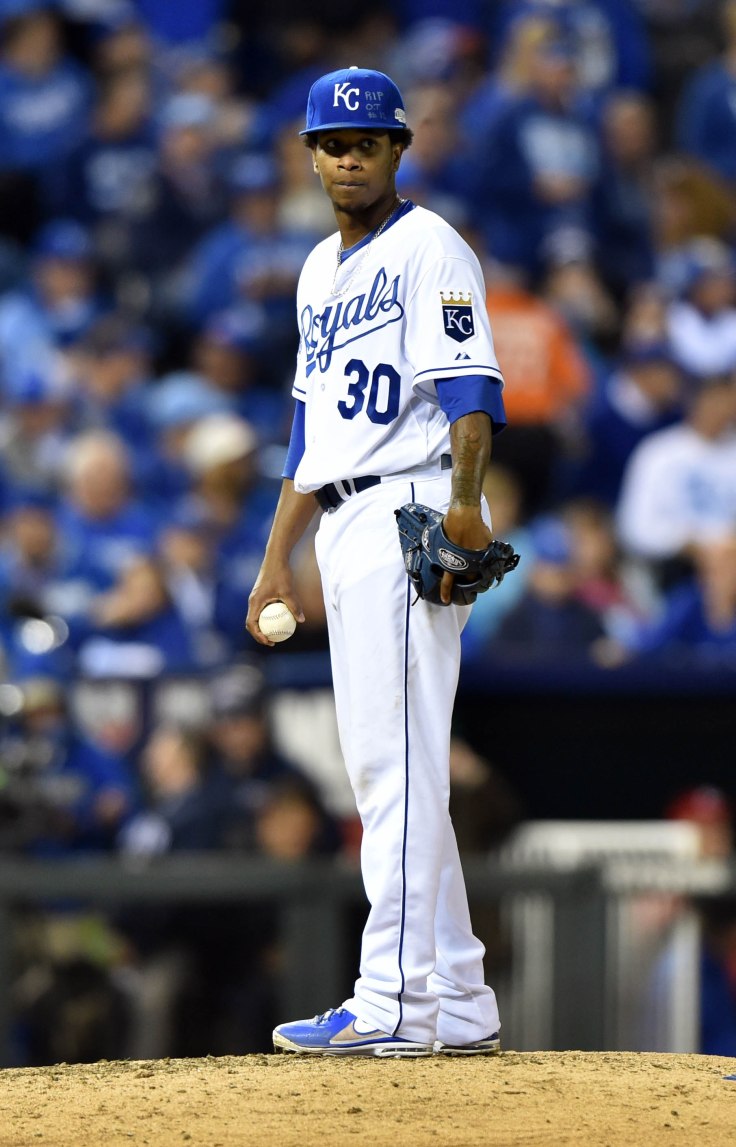
Yordano Ventura Remembered

kc2

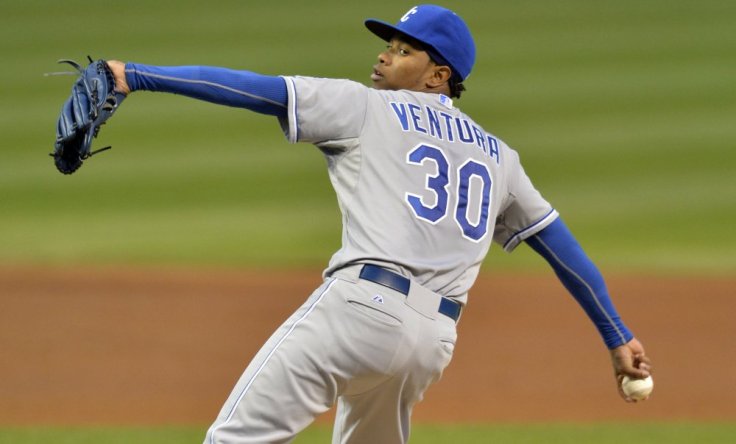
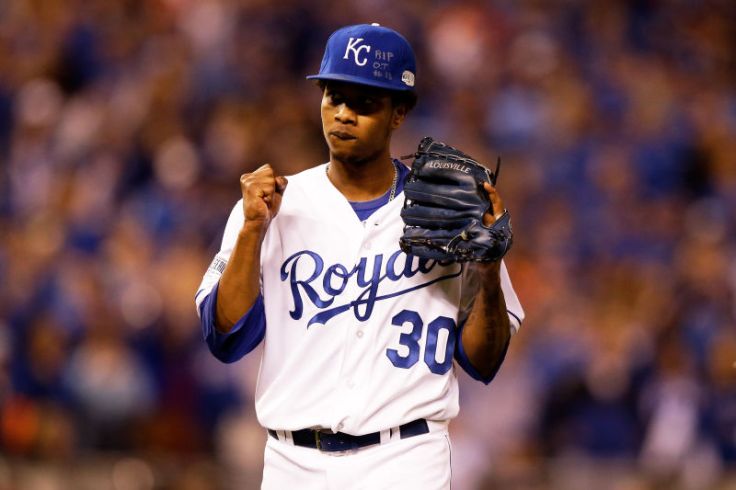
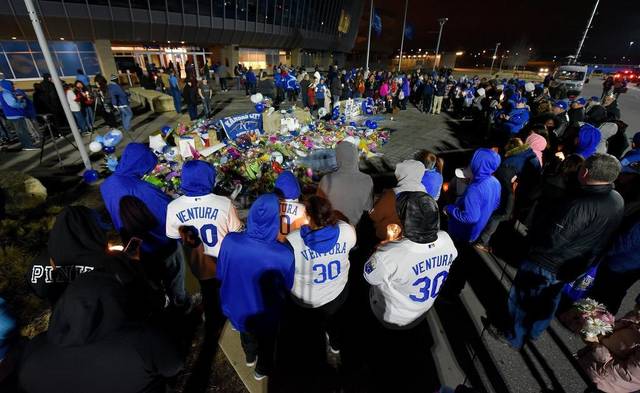
You often hear that “baseball is a kid’s game”, a phrase that bears a ton of truth. For many fans, they fall in love with the game at a young age and never lose that youthful exuberance when at the ballpark. Players are no different, as many play as if they are still ten years old, kicking dirt on a backfield while playing a pick up game with friends. The realities of life sometimes slip away during the span of a baseball game, as all the daily worries seem to slide into a separate filter, only to be untapped at a later date. Last year, baseball lost a grown up kid in Jose Fernandez, an elite pitcher who’s life was taken all too soon. On Sunday, Kansas City Royals pitcher Yordano Ventura, just 25, fell to the same fate, dying from a traffic crash in the Dominican Republic. Ventura was not wearing a seat belt and was thrown from his vehicle after losing control of it on the highway. Apparently there was some thick fog when the accident happened. For a guy who only pitched three full seasons in the majors, there are a ton of memories for Royals fans to remember him by.

kc3

Ventura first started showing up on most Royals fan’s radar in late 2012, a season where he fanned 130 batters in 109 minor league innings. His ascension in the Royals farm system continued in 2013, where he struck out 155 hitters in just 134 innings and was a September call-up that year, starting three games while throwing just 15 innings and producing an ERA+ of 120. The report back then was pretty simple; lanky righthander with a power arm that would sometimes allow too many baserunners. He was already getting comparisons with Hall of Fame pitcher Pedro Martinez, as there were even questions on whether or not his frame could hold up to a full major league season. That would be put to the test in 2014, as Ventura made the team out of Spring Training, throwing 183 innings, posting an ERA+ of 123, a FIP of 3.60 and a strike out to walk ratio of 2.30. Ventura would end up 6th in the Amiercan League Rookie of the Year voting. He was already cementing his spot in the Kansas City rotation and would further that even more in October.

kc4

It’s funny looking back at it now, but Ventura would make his playoff debut in the 2014 Wild Card game against Oakland, in a very controversial outing at the time. Ventura would be brought in from the bullpen after the 6th inning had started, and would face only three batters; one would single,Brandon Moss would hit a home run, and he would get one batter out.

After the homer, the Royals would be down 6-2 at that point and even to this day, it felt like a weird move to make. Why would you bring in a rookie, who had started all but one game all season, in the middle of the inning with a runner on base rather than bring him in during a clean inning? It seemed like a move that could have cost manager Ned Yost his job. Luckily for Yost, the Royals would come back and win the game in extra innings and moving forward we would only see Ventura start in the postseason.

kc5

In fact, it was during that postseason that he would pitch the greatest game of his career. In Game 6 of the 2014 World Series, with the Royals on the edge of elimination, Ventura would pitch in honor of his friend Oscar Tavares (a Cardinals prospect who had five days earlier passed away from a car accident) and throw a gem against the San Francisco Giants, pitching seven shutout innings, striking out 4 while only allowing 3 hits.

It was hard at that point not imagining Ventura being the future of the Royals starting rotation and putting together a string of memorable outings. Over the years, Kansas City had a number of excellent pitchers to hang their hat on: Saberhagen, Busby, Leonard, Cone and Greinke just to name a few. At this point it felt like we would be able to add Ventura to the list. But that wasn’t how things played out.

MLB: World Series-San Francisco Giants at Kansas City Royals

While the Royals were better in 2015, Ventura seemed to fall down a peg. Ventura would throw 20 less innings in 2015, while his ERA+ was right around league average (103) and his bWAR fell (3.2 to 1.9), his strike out to walk ratio and FIP would slightly improve. 2016 wasn’t any better, as his ERA+ fell below league average (98), while his FIP and WHIP both rose to career highs.His strike out to walk ratio also fell, as his strike out total fell while his walk total increased. It was obvious to some at this point that Ventura’s real battle was going to be harnessing his emotions while on the mound.

kc7

The first bout of his emotions getting the better of him occurred in 2015, as early in the season Ventura would get upset at a Mike Trout single that breezed by his head. It was chalked up to just being a heat of the moment type thing, at least until the incident against Oakland later in the month. After some bad feelings on Friday night (thanks to an aggressive Brett Lawrie slide), Ventura would give up a home run to Josh Reddick in what to that point had been a rocky outing for the young flamethrower. Ventura would follow by plunking Lawrie with a 100 mph fastball and the benches would empty. I was at the ballpark for that game (which I was super excited about since it was the first Yordano game I was getting to see in person) and was disappointed with Ventura’s obvious decision to get himself taken out of the game. Ventura would get ejected again in his next start, as Adam Eaton of Chicago would get under his skin and start a melee. A reputation would be earned at this point for Ventura, that of being a hot-head, and other teams would try to take advantage of this by trying to get him riled up and off his game. That reputation would hit an apex in June of last year as he would tussle with Manny Machado of the Orioles, hitting him and causing everyone to question Ventura’s mental stability on the mound.

But was this really who Yordano Ventura was? The answer, like most things, was more complicated than that.

MLB: Cleveland Indians at Kansas City Royals

For all the posturing and cockiness, there was a guy with a big heart inside of Ventura. Many of the Royals players, while frustrated with his shenanigans on the mound, considered him their “younger brother”, disappointed with his actions but supporting him all the same, knowing he was still young and finding his way. They saw the kid who would get upset after a tough loss, feeling like he let the team down with his performance on the field and hoping to work better. For every outburst, there were just as many (if not more) days where you could see a smiling Ventura, loving where he was at considering where he came from. While the Royals had become disappointed with his behavior sometimes, they saw the kid who was watching tape, listening to what his coaches were telling him and who was one of the hardest working guys on the team. Ventura was human, like most of us and with that comes the good and the bad.

kc9

As a fan, most of us were equal parts enthralled and impatient with him. For every outing where he struggled to keep his cool, there was one that gave you hope that the ceiling was starting to be reached. For every emotional outburst there was a perfect setup of a batter, luring the batters in with the heat before finishing them off with the nastiest of curveballs. For a team that has struggled producing quality starting pitching, Ventura was that hope that the Royals had finally found their Marichal, their Martinez, their Fernandez. He was the scrawny kid from the Dominican Republic who was signed at 16 years old, throwing in the mid 80’s, hoping he would grow to be something more. He had grown to be something more…but unfortunately we will never find out just how much more.

kc10

No human being should meet their fate at the age of 25, let alone an athlete who hasn’t reached the peak of their career yet. There was so much more life to live, so much more for Ventura to give and I don’t even mean on the mound. What most people will remember from Yordano Ventura won’t be the fastball, or the fights or the swagger. No, most people will remember that smile, a smile that was infectious and was a little kid’s smile in a grown man’s body. Even at 25, Ventura was just a little kid getting to throw a baseball for a living. That will stay with me much longer than individual accomplishments or frustration I had with him as a player. Ventura was that sign of hope that all of us look for in our baseball team’s, that hope that tomorrow will be a brighter day. While today was a dark one for baseball fans, I promise tomorrow will be brighter. As fans, our days were brighter with the hope that Yordano Ventura’s arm and smile brought us.

Butera Returns, Collins’ Let Go

kc1

So far, this winter has been a dead one if you follow the Kansas City Royals. There are many factors contributing to this. One appears to be the Collective Bargaining agreement between the players and owners, which is currently in discussion. Another factor is the growing patience of GM Dayton Moore, who once was an early ‘Wheeler and Dealer’ in the offseason. Moore has said he wants to wait until the Winter Meetings, which begin on December 4th, before making any major moves with the roster. All that being said, last week there were a couple transactions that piqued the interest of at least a few Royals fans.

kc2

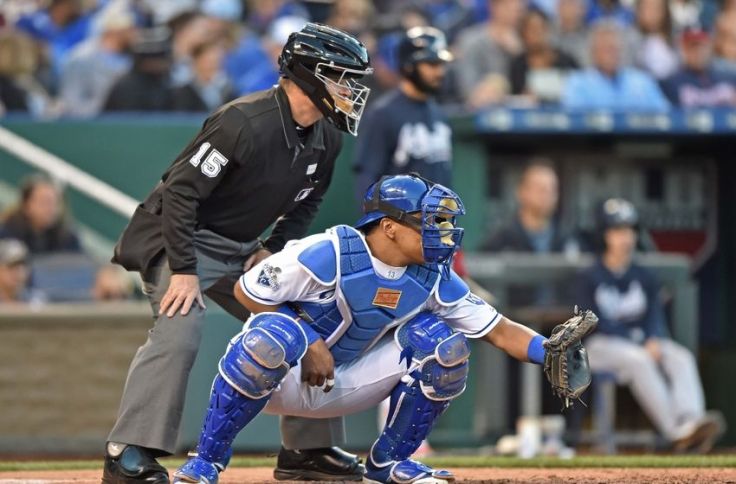
The first was the re-signing of backup catcher Drew Butera to a two-year deal. Butera returns to Kansas City making $1.8 million in 2017 and $2.3 million for 2018. It was long believed that Butera would be back in Kansas City as the backup to starting catcher Salvador Perez:

“We made it very clear once the season was over that we wanted to bring back Drew,” Royals general manager Dayton Moore said. “He’s been a valuable performer for us. We works well with our pitching staff and Salvador and our coaches.”

Butera is coming off of a career year offensively, posting new career highs in doubles, home runs, batting average, on-base percentage, OPS, OPS+, bWAR and WPA:

“He has made tremendous strides offensively,” Moore said. “We feel extremely confident with him defensively and feel like he can contribute in a lot of ways.”

In some ways Butera is the perfect catcher for Kansas City as he enters his age 33 season. With Salvador Perez entrenched as the starter, and knowing that manager Ned Yost is not one to rest his regulars too much, Butera won’t be seeing a ton of playing time unless an injury occurs. Butera is known for being an above average defender and a guy who pitchers like to throw to. He is the ultimate team player as well; last season it was discussed how in the past he has been known to do anything the coaching staff needs him to do, whether that be a bullpen catcher or warming up the starting pitcher while Salvy is getting his gear back on. Hell, he even pitched in a few blowouts in 2016 and more than held his own on the mound. Butera has flaws in his game but as long as he isn’t seeing regular playing time he is a solid receiver to play in 4o to 60 games a year. Add in the mutual love between the fans and him and it only makes sense for him to return to the Royals.
kc3

On the other end, Tim Collins elected free agency as the team was making room on their 40 man roster. Collins is coming off of consecutive Tommy John surgeries and hasn’t pitched since 2014. When healthy Collins is an above average contributor out of the bullpen, posting an ERA+ of 117 and 9.4 strike outs per 9 innings from 2011 to 2014. In some ways this hurts Kansas City, as it is not every day you run across a lefty reliever with mid-90’s fastball that  averaged 60+ innings over the first three seasons of his big league career. On the other hand, there is no assurance that Collins will even be able to return from back to back surgeries and definitely not for the $1.5 million he was expected to make in 2017. I always liked having Collins coming out of the pen late in the game, as he a reliable arm. At this point, we can wish him the best luck and hope he doesn’t get to pitch against Kansas City very much.

kc4

Both of these moves, while minor, are a step in figuring the construction of the 2017 Kansas City Royals. So what happens next? No clue. Dayton talks like this could be it, but I find that hard to believe:

“There’ll be some moves that we make and present themselves for us the remainder of the offseason,” Moore said. “But I think what you see now is about what it’s going to be going into spring training.”

If this isn’t Dayton-Speak, then I don’t know what is. Moore is notorious for not tipping his hand during this part of the year and I am not surprised by his sly use of words here. Dayton likes to cloud suspicion on possible moves and I would not expect to find out about anything until a deal is almost done. What I do feel will happen is for the Royals to be more active on the trade market than with free agency. There just isn’t a great crop of free agents out there this year and Kansas City would probably be more successful making a deal or two at this point. What I can promise is that Moore is not done. There is no way that Drew Butera is the biggest move of Kansas City’s offseason.

From A Land Down Under

Minnesota Twins vs. Kansas City Royals
(John Sleezer/Kansas City Star/TNS)

On Friday night, the Kansas City Royals bullpen gave up their first run in over 41 innings(41.2 innings to be exact) and unfortunately the man who gave up that run is a veteran who has had a nice season in Kansas City, Peter Moylan (although if you want to pin some of it on catcher Drew Butera, you probably wouldn’t get an argument from me). Moylan, in his age 37 season, has thrown 31 innings for the Royals, striking out 7.76 per 9 innings, posting an ERA of 3.73, a FIP of 3.69 and continuing to induce ground balls at a high rate, 62.2% so far in 2016(61.7% average over his career). Those numbers might not jump out at you, but when you consider what all he has been through in his career, it is a major achievement that he is currently pitching in the big leagues. In fact, Peter Moylan’s story might be one of my favorite baseball stories ever.

kc1

Moylan’s baseball journey began back in 1996, when he was signed as a free agent by the Minnesota Twins. Moylan struggled for a few years in Minnesota’s farm system(Low A Ball) before they released him in 1998. Moylan left baseball, returning to Australia and becoming a pharmaceutical salesman. Yes, you read that correctly. Two back surgeries later, he was back in baseball, coaching in Australia and playing the occasional first base. The team eventually was short on pitching and threw Moylan on the mound. Back in the 90’s, Moylan threw the ball over the top. He decided to try something different:

“We were getting short on pitching and I started messing around with a sidearm delivery out in the outfield one day,” Moylan said. “When I threw sidearm, it didn’t hurt my back. Next thing I know, our pitching coach tells me I’m throwing 94 on the gun.”

Moylan was given the chance to pitch on the Australian team in the 2006 World Baseball Classic. He struck out major leaguers Bobby Abreu, Marco Scutaro, Ramon Hernandez and Magglio Ordonez. A pitcher throwing sidearm in the mid-90’s caught many a team’s attention:

“Next thing I know, teams are all over me. Three made really good offers: the Braves, the Red Sox and the Royals,” Moylan said. “I signed with the Braves so I could go to Disney World.”

Moylan made the fast track to the majors and was on Atlanta’s 25 man roster by April 11 of that year. He shuttled back and forth between the majors and AAA in his rookie campaign, throwing 14 innings, striking out 8. 40 per 9 and a FIP of 3.15 in the big leagues. Moylan was 27 years old.

kc2

Moylan became a big part of the Braves bullpen in 2007, and over the next two seasons would post some great numbers: 1.79 ERA, 244 ERA+, 4.02 FIP and a WHIP of 1.066 in 95 innings. Unfortunately, Moylan would land on the disabled list in May of 2008, and would have the first of two dreaded Tommy John surgeries. He would return in 2009 and re-assert himself into Atlanta’s pen, and would put up some good numbers over the next four seasons: 2.88 ERA, 140 ERA+, striking out 7.5 per 9 over 150 innings. Moylan continued to induce ground balls (his lowest ground ball % was 56.3 in 2012) but also dealt with a number of injuries. 2011 alone saw him deal with more back issues and near the end of the year he was back on the DL with a torn rotator cuff in his pitching shoulder. He would sign with the Dodgers before the 2013 season, but didn’t look like his old self; he would only appear in 14 games for Los Angeles and posted a career low ground ball rate of 28.1%. Moylan would become a free agent at the end of the season and would try to latch on with Houston, before they released him near the end of Spring Training 2014. It appeared that another Tommy John surgery was in Moylan’s future and he would have the procedure done in March of that year. At age 35, Moylan’s career seemed to be on the ropes.

Astros Royals Baseball
(AP Photo/Colin E. Braley)

The Braves would come knocking again in March of 2015, only this time with a bit of a twist. The team wanted to bring Moylan back into the fold, but as a player/coach in their minor league system. This appeared to be a great opportunity for Moylan to be back in the game without any pressure:

“If I signed with a team, I’m obviously going to try to prove myself immediately,” Moylan said. “I risk getting hurt again. I risk having horrible numbers. Then all of a sudden, they could say, ‘He’s not doing anything, let’s get rid of him’ and my career might be over. This way, I can take my time. The Braves are going to be patient and I’m going to be patient, which is not my strong point. When it’s right, it will be right.”

The fact it was the Braves made it even better for him:

“The Braves have always been kind of like that ex-girlfriend that you always think about,” Moylan said. “I’d always check the Braves’ results and hope that they were doing well. But I can do it for real now and not have to hide it.”

Moylan would put up good numbers in the Braves Triple A affiliate, Gwinnett, posting a 3.14 ERA in 28 innings,  but the best part was that his velocity appeared to be back:

“We’re all pulling for him to get another shot,” pitching coach Marty Reed said. “He’s done everything you could ask of him here. The encouraging thing for me is the last month or so I’ve seen his velocity jump up a little bit. At the beginning of the year he was mostly 88, 89 (mph), sitting right in that area, and he’d pop a 90, 91 here and there on a good night. All of a sudden you go ‘Wow,’ you look at a 91. Now he’s sitting 90, 91 and he’s popping a 93 here and there.”

The hard work paid off and Moylan was back in Atlanta by August. Moylan would only throw 10 innings for the Braves last year, but he had his ground ball rate back up to 69% and in that short span was able to accumulate 0.2 fWAR.

kc6

The Royals would sign Moylan to a minor league contract in January of 2016 with an invite to Spring Training. Thanks to former teammate and current Royals Kris Medlen, Moylan was interested in coming to Kansas City:

“A lot of it had to do with reports from Sir Kris Medlen, in regards to the training staff and how they take care of their guys — the strength guys,” the 37-year-old Moylan says. “Another part of it, for me, was I had a history with (Royals general manager) Dayton Moore. He signed me in Atlanta, and when it came time to make my decision, my agent had spoken to everyone from all the interested clubs, and Dayton was the one who was not just saying, ‘We’ll give you a job,’ but ‘We’d really like you to come here.’ It was nice to feel wanted again. I know it’s an uphill battle to make this ‘pen, let’s be honest, but to feel like you’re going to get a chance to come in and prove you can offer something, was huge for me.”

Moylan struggled to find his release point this spring and wasn’t near a big league job yet, so after opting out of his contract, he re-signed with Kansas City and went to Triple A Omaha. Moylan get the call back to the majors on May 12 and really felt like he had found his groove during that first month of the season:

“I found a comfortable release point for those last few outings of spring,” said Moylan. “I knew that I could go into the season and still do the same sort of thing. And I managed to have a bit of success down there. Next thing you know, I’m here.”

 Moylan started out as an option out of the pen if the game was out of reach or if the Royals needed to go to the pen early. After the injuries to Wade Davis and Luke Hochevar in July, Moylan became a bigger part of the bullpen. Since July 31st, Moylan has appeared in 12 games, posting an ERA of 1.35, allowing only one run in 6.2 innings. Moylan has been one of manager Ned Yost’s first calls in pressure situations and has averted many a tight situation over the last month. At 37, Moylan appears to have found a new home in Kansas City.

kc7

Moylan becomes a free agent after the season and will have quite a few options on the market if he decides to leave Kansas City. He might be in his late 30’s, but Moylan is not a pitcher who relies on velocity as much as deception, guile and pitch placement. It’s hard to imagine much of anything stopping him, as he has bounced back from a litany of injuries and keeps coming back. Moylan will never be a star player and won’t get the type of adulation that the top players in the game receive. They can have all the attention in the world; what they won’t have is one of the best damn baseball stories you will ever hear about. Moylan has just that to set his hat on.


In Paulo We Trust

kc1

When the season started, it was expected that Paulo Orlando would be splitting time in right field with Jarrod Dyson, with Dyson probably seeing the bulk of the playing time. In 2015, Orlando proved that he was a worthy backup outfielder, posting a line of .249/.269/.444 in 251 plate appearances with a wRC+ of 89 and 1.0 fWAR. Orlando supplied above average defense with a bat that wasn’t spectacular but could place a timely hit from time to time with a bit of pop. Orlando had toiled in the minors for 9 seasons before 2015 and in some ways it was easy to see why. He had put together a couple of above average offensive seasons in the minors, but nothing that would really grab a scout looking for a gem in the minors. The Royals liked Orlando’s defense and speed, two pillars of Kansas City’s success these last few years. As much as most of us liked Paulo, we also figured with his past track record that he was a solid backup at best, whose flaws would be more glaring the more playing time he would receive. Instead, Paulo followed a sparse April(30 plate appearances in 9 games) with a spectacular May where he hit .429/.456/.603 and hasn’t looked back. So is Paulo for real?

kc2

My first instinct with Orlando’s hot hitting was that as much as it appeared as if he had improved offensively, that at some point he would regress. The highest he has hit average wise at any level was .305, which he did in 2010 for the Royals AA team. Orlando has only two above average offensive seasons throughout his minor league career(2010 and 2014) and one of those seasons was just barely above league average(101 wRC+ in 2014 for Omaha, the Royals AAA team). In June, he still put up solid numbers, but they slipped a bit, down to .292/.323/.371 in 26 more plate appearances. Paulo went from platooning with Dyson to seeing the majority of the time in right field and in all honesty he had earned it. Orlando would follow that with a bigger dip in July, hitting .273/.291/.351 , which were still respectable numbers but it did appear as if he was finally coming down to earth. But early into August he is hitting .500/.519/.692 with a sOPS+ of 227. So what is he doing differently in 2016 to see such a big increase in production?

paulo1

It appears the biggest part of his success is coming from watching video. Back in June, Orlando discussed his use of video to scout out the opposing pitchers and would use what he learned when it came time take batting practice that day:

“It can slow down the game and help you a lot. Before every game, before I go practice, I watch. If a pitcher throws a lot of breaking balls, you go to BP and try to work on that.”

It’s also been obvious that playing every day has also helped his approach at the plate:

“When you play more games, you have your timing every day. Some guys throw hard — 95 to 97 mph — some guys throw 90 to 92. So when you play every day, you have more confidence in yourself.”

At the plate Paulo has improved his hitting, but a number of his stats point to him being in some ways the same player he was in 2015. His strike out percentage is about the same as last year (20.1% to 21.1%) while his walk percentage is still almost non-existent(2.0% to 2.3% last year). Orlando has continued to put the ball in play at a high rate(77.9 % this year, 79.1% in 2015) but his placement of where he is hitting the ball is a bit different this year. Last year, Paulo was pulling the ball at a 36% clip, while this year he is hitting the ball to center field 39.7% of the time. In fact, he is even hitting the ball to right field more this year (30.6%) than he is to left (29.7%). It’s obvious that his approach at the plate this year has been more focused on putting the ball in play and going with the pitch than trying to pull the ball and use his power. The power, is the one part of his game that has been sacrificed so far in 2016.
kc3
One of the positives for Orlando last year was the fact that he showed some power from the right side of the plate, something the Royals didn’t have a plethora of in 2015. Last year Orlando slugged at a .432 clip with 27 extra base hits and an ISO of .195. So far in 2016(and as of  August 11 he has played in exactly the same amount of games as last year, with 60 more plate appearances), Paulo is slugging at a .432 rate with 22 extra base hits and an ISO of .105. It’s obvious with his approach this year he has sacrificed some of his power this year for an increase in his on-base percentage(which is up by .082 this year). This also means his hard hit rate is down(26.5%,  down from 31.4% in 2015), but his soft hit rate is down as well(17.6% from 19.9% last year). How you feel about this is determined on whether or not  you believe the Royals would be better off with someone with more power or someone getting on base. To me, as much as Kansas City needs a bit more power in their lineup, even more in need is someone who can get on base consistently. Orlando is doing just that so this could probably be filed under the ‘if it ain’t broke, don’t try to fix it’ category.
kc5
In what has become a very frustrating season for Kansas City, Orlando’s production has been a bright light and while some of us(myself included) have been thinking he will start to regress, time is proving us wrong. Within the last week Orlando has been moved to the leadoff spot for the Royals, a spot that has been lacking this year. Kansas City’s leadoff batters are hitting .243/.277/.314, all either in last or next to last in the American League this year. The Royals also have just 23 extra base hits from leadoff this year, the lowest in the league. I’m not sold that Orlando is the answer at the top(he does have only 12 career walks during his two years in the major leagues), but it was also obvious that mainstay Alcides Escobar wasn’t the answer either. The Royals have no immediate answer at the top of the order, which is why manager Ned Yost is giving it a try:
“(We’re) just giving him a shot,” Yost said in the dugout before Tuesday’s game. “We’ve been thinking about it for a while. Paulo’s been swinging the bat good.”
In two games, he is 2 for 11 at the top, not exactly proving Yost right but it is the smallest of small sample sizes. At this point, it is worth a try to see if he can still get on base at a good clip. No matter whether at the top or farther down the lineup, Paulo Orlando has earned his playing time this year. Like Lorenzo Cain, he didn’t start playing baseball until his teenage years in Brazil, so his development is not quite the same as the normal player. Orlando has proven himself a quick learner and could be seeing more improvement before a regression sets in. Not bad for a guy who didn’t even make his major league debut until the age of 29.

Wader, Disabled List Please

kc1

Over the last couple years there has been one aspect of the Kansas City Royals success that has made me nervous. That one thing was how the team dealt with very few major injuries, as for the most part the key parts of the roster were kept healthy and on the field. 2016 has felt a bit like the back payment for that good luck is being paid up. In May, All-Stars Alex Gordon and Mike Moustakas collided in foul territory chasing a foul ball, leaving Alex out for about a month and losing Moose for the rest of the season. Just last week Lorenzo Cain was bitten by the injury bug, going down to a hamstring injury that will leave him out until the Royals return from the All-Star break. Even catcher Salvador Perez missed a week of action due to injury, but luckily avoided the disabled list. It appears the Royals All-Stars are falling off one by one and that was added to today when closer Wade Davis, he of the bionic arm, was placed on the 15-day DL with a forearm strain.

kc2

The first thing to pop in most people’s heads when mentioning a forearm injury is a ligament injury in the elbow, which Royals management is saying is not the case with Davis:

The strain, Yost said, was located on the top of the forearm, and not a flexor-pronator strain, the ailment commonly associated with ligament damage in the elbow. Yost said the injury was similar to one that forced starter Chris Young to the disabled list earlier this season.

Alright, well that doesn’t sound bad at all. In fact, it appears as if the Royals are trying to nip the strain in the bud before it gets any worse. Davis had first felt the strain last week in St. Louis, and he also had a similar injury last September. Last year he was shut down for about a week and was all good to go for the playoffs. Sounds like Kansas City is hoping for more of the same this year.
MLB: Kansas City Royals at Houston Astros

(Credit: Thomas B. Shea-USA TODAY)

With the injury to Davis, I was curious to see if his velocity had seen a decrease recently and if so, if  it was noticeable. This first chart shows his velocity on his pitches all year and there really isn’t a noticeable change:

Brooksbaseball-Chart

There is a very slight decrease in Davis’ cutter, but outside of that everything has been moving in an upward direction, even just slightly. There was also a slight change when it comes to whether Wade was facing a right-handed or left-handed batter:

Brooksbaseball-Chart (1)

The decrease to righties was very slight, about 1 MPH difference, so nothing major to worry about. There was a slight difference from outing to outing, which is almost to be expected with an injury like this:

Wade had said he felt tightness during his June 30th outing against St. Louis, which would be the 94.7 MPH velocity you see above. The Royals seem like they are concerned but we aren’t seeing the big drop in velocity like we saw last year in Greg Holland, where he was down in the high to mid 80 MPH range, so there isn’t a reason to get too worried yet. The real test will be on whether Davis feels better in a week or if the tightness is still there. Most likely he will play catch for now and the team will get feedback from him on how he is feeling. In other words, it literally is a feeling out process for Wade and the Royals.

kc4

So who will fill the closer role from Davis while he is away? For the time being, it appears to be a match-up role:

If I had to guess, Kelvin Herrera will get first shot, since he has been a dominating force for most of this year. I also wouldn’t be surprised to see Joakim Soria get a save opportunity during his absence, as Yost likes his past success as a closer. I know some fans have soured on Soria, but he has been more than solid for the most part this season. Hell, I could even see Luke Hochevar getting an opportunity to close out the game if he looks like a good option. The good news for the Royals is that the team is loaded in the pen with solid arms, as it might be the deepest part of the team.

kc5

If there was a word to describe this 2016 season for the Royals, it would be ‘adversity’. This team has been dealt one crushing injury blow after another and yet are still a contender in the American League. Luckily, it sounds like everyone involved feels good about Davis’ chances of being back in the fold by next weekend:

For the most part this looks to be just a minor bump in the road that Kansas City is just being cautious about. I would worry more if there was a major decrease in velocity, or this was a ligament instead of a muscle. Instead, we are looking at a nice little dose of ‘R & R’ for the cyborg before he returns to give hitters fits of hopelessness. This is just one more struggle for this team to overcome if they want to return to October baseball….and if there was one team to handle adversity, well…

Selection Tuesday: Which Royals Are All-Star Worthy

kc1

On Tuesday, Major League Baseball will announce the All-Star team rosters and it appears that the litany of Kansas City Royals players on the roster will not be as hefty as they were in 2015. With that being said, manager Ned Yost will once again be at the helm of the American League All-Star team and will have a say in some of the participants of the team. There will be Royal blue in San Diego on July 12, but how much? Let’s go ahead and look at my predictions for the Royals and who will be joining Yost at Petco Park next week.

All-Star Locks

kc2

Salvador Perez

Salvy, a fan favorite not only in Kansas City but all around Major League Baseball, was leading the AL catcher position last we checked so the likelihood of him going is about 99.999999%. Normally Perez gets to the All-Star game on his charming positivity and his stellar defense behind the dish. But this year you can add a lethal bat to the mix; .281/.315/.490, 12 home runs, 37 RBI’s, 110 wRC+ and 2.1 WAR. I remember back in 2012 when former Cardinals manager Tony LaRussa was being interviewed the day before the All-Star game and was asked about Perez, who was in his first full major league season. LaRussa had compared Sal to Cardinals elite receiver Yadier Molina, which at the time was the highest of compliments. At this stage, it feels like Salvy has overtaken Molina and is the standard-bearer for catchers, at least in the American League. This won’t be a shock and will be well deserved when Perez starts next week in San Diego.

kc3

Eric Hosmer

Hosmer has been battling the first base position out with the Tigers Miguel Cabrera for the starting nod and deservedly so. Hosmer has produced like a star so far in 2016, hitting .303/.361/.490 with 13 home runs, 49 RBI’s, 127 wRC+ and a 0.4 WAR(with his defensive metrics dragging this number down). Hosmer has looked the part this year of offensive force rather than just potential,  and at this point is probably more worthy of starting the game than Cabrera. Hosmer is a lock either way to be on the roster, it’s just a matter of whether he is voted in or heads to San Diego as a reserve.

kc4

Wade Davis

I’m sure there will be someone out there, somewhere, who will say Wade doesn’t deserve to go to San Diego next week because he “isn’t quite as dominant” as he has been the last two years. That is pretty much the equivalent of Mike Trout’s numbers falling a smidge but still being an MVP candidate. Davis has thrown 29 innings so far this year, and while his numbers don’t pop out at you like in the past(K rate is down, walk rate is up) he is still producing. Wade has an ERA of 1.23, FIP of 2.69, and is still stranding 87% of his runners on base. He is easily one of the top five relievers in the game and deserves to be an All-Star. No way Ned doesn’t make that happen, if he isn’t voted there by the players. Wade will be an All-Star, period.

All-Star Probables

kc5

Lorenzo Cain

This will be a complicated pick, but one that should happen. Cain is currently on the disabled list, which means he would be unable to play in the All-Star game, but he can always be picked as a reserve and then have someone else take his spot; not like that has never happened before in All-Star’s past. Cain is hitting .290/.336/.416 with 8 home runs, 39 RBI’s, 1.9 WAR with 9 defensive runs saved. Sure, Cain is not tearing it up offensively the way he did in 2015(April was not kind to Lorenzo), but he is still considered one of the elite center fielders in the game and that’s what this game is for: the best of the best. It will interesting to see if Cain gets a spot, as it would be another honor that he could use when negotiating a new contract with Kansas City after the 2017 season. I feel he is worthy, but he might end up being a borderline selection by the players and coaches.

MLB: Detroit Tigers at Kansas City Royals
(Credit: Peter G. Aiken-USA TODAY)

Kelvin Herrera

To me this is an easy pick but Herrera could be cast aside for another Royals reliever this year(more on that in just a bit). Herrera has put up dominating numbers this: 11.41 strikeouts per 9, 1.63 walks per 9, 87% left on base percentage, 1.40 ERA, 2.01 FIP and 1.3 WAR, all over 38 innings of work. Herrera added a slider to his repertoire late in 2015 and it has made him even more unhittable than he was before. The Royals aren’t the defending World Champions without Herrera and he has continued to be the bridge to Wade Davis this year to help lock down the late innings for the Royals. Herrera is an All-Star; now we will see if he actually gets the honor or is passed over for a bullpen brother.

All-Star Longshots

kc7

Luke Hochevar

Yep, bet you probably didn’t see this coming. Above, I mentioned Herrera could get passed over for another Royals reliever and of course I was talking about Hochevar. Hoch, a man who I once despised, has been one of the most reliable Royals relievers this year and the numbers back that up: 10.16 strikeouts per 9, 2.03 walks per 9, 79% left on base percentage, 2.90 ERA and 0.4 WAR over 31 innings. Sure, these aren’t eye-popping numbers like Davis or Herrera, but they are more than solid and worthy of the adulation. Now, if Hoch gets picked it will be by manager Ned Yost, who will want to reward Luke for his hard work out of the pen and the fact he doesn’t get a lot of the recognition that his bullpen mates get. Yost has asked Hochevar to perform in a lot of high-leverage situations this year and for the most part he has been highly effective in that role. If he is rewarded with the honor, it will show just how loyal a man like Yost is and a nice nod for a guy who turned his career around after being a failure in the rotation.

kc8

Whit Merrifield

Okay, okay, I know; Whit has played in only 40 games for Kansas City and more than likely has no business even being in this discussion. But…those 40 games have been stellar with steady production from a guy who is supposed to just be an afterthought after the season started. Instead, Merrifield has posted a line of .308/.328/.426 with 26 runs scored, 15 RBI’s, a .385 BAbip, 100 wRC+ and 1.3 WAR…all in 40 games! Merrifield is 8th in WAR for second baseman in the American League and while Robinson Cano, Jose Altuve and Ian Kinsler are all worthy of roster spots this year, the story of Whitley Merrifield would make a great story. It’s not going to happen and for the most part, it shouldn’t. But it’s hard not to root for this guy and everything he has accomplished in about six weeks. To see him gaining an All-Star nod would be about as warm and fuzzy as one can imagine. Think of watching ‘Toy Story’ while cuddling with a bunch of puppies and you will be close…not quite, but close. So Merrifield isn’t going to San Diego, but I felt like I should at least mention him. Rock on, Whitley.

kc9

The Royals aren’t going to send as many players to San Diego as they did last year in Cincinnati(no bus needed this year. Sorry, Rex) but I would expect a healthy dose of Kansas City blue at the festivities next week. For years Royals fans would hem and haw about who actually deserved to get Kansas City’s lone spot at the game, and there were even years were no one was really worthy(hello, Mark Redman!). The Royals will have enough players going this year to where you should probably pay attention to the game to see if any of the players end up playing pivotal roles. Just don’t take the game too seriously; it is an exhibition game after all. An exhibition game where Salvy could throw a runner out, Hosmer could hit a home run and Wade could record the final out. Sure, there is a good chance none of that happens, but you never quite know.


Whit is a Hit

kc1

Baseball might just be the best sport when it comes to stories that grab us and give us the belief that if you try hard enough anything can happen. You’ve heard the stories before; the player who toils in the minors for years on end before finally getting their shot at the ‘Big Show'(not the wrestler; that is a whole other article) while producing at such a high level that was never thought possible. Many Kansas City Royals fans remember Mike Aviles, who stormed on the scene in 2008 and ended up finishing 4th that year in the American League Rookie of the Year vote. Aviles has never quite reached those same heights since then, but he has turned it into a successful baseball career as a backup utility player. Eight years later, it looks like Whit Merrifield is looking to improve on what Aviles did all those years ago.

MLB: Game two-Boston Red Sox at Kansas City Royals
(Credit: Denny Medley-USA TODAY)

This is not only a great feel good story, but I could almost say I foreshadowed part of this with my article about Whit during Spring Training. The funny part is during the spring, Whit was mainly just thought of as a backup, someone who could fill in anywhere on the field and would be used as more of an insurance piece than an actual part of the lineup. There was a belief by some that Whit had earned a spot on the roster when the team broke camp, but unfortunately he was sent back to Omaha to start the year in AAA. Luckily, there is always a need for a guy who can play 3/4 of the position’s on the field and Merrifield got the call to the majors on May 18th. The initial thought was that Whit would be a backup infielder mostly, as he took the roster spot of infielder Christian Colon. But the stars must have been aligned for Merrifield, as four days later Alex Gordon and Mike Moustakas collided in foul territory during a game against the White Sox, eventually leading to both being placed on the disabled list. Between the Royals injuries piling up and Omar Infante’s disappearing act(62 OPS+ so far this year, which is actually an improvement over 2015) led to more playing time for Whit. Boy, has he taken advantage of it!

kc3

So far in 22 games, Merrifield has played second base, third base and left field, with manager Ned Yost saying recently that he would see the majority of his time at second base, unofficially supplanting Infante from the starting job. The solid defense at second isn’t a big shocker(the most errors in one season at 2B in the minors has been 5, if you are into that sort of thing. He also has 3 defensive runs saved already for Kansas City) but the bat has been a bit of a surprise. So far this year he is hitting .330/.344/.484with a wRC+(weighted runs created, basically accumulating all offensive production and is park adjusted) of 123 and 0.8 fWAR. I think we all tend to think that some of this is sustainable and some of it will regulate itself. But which stats should we believe in when it comes to Merrifield, and which should we hold off on?

kc4

Let’s start with the average and on base percentage. I think both of those should still hold up fairly well, although I can’t imagine Whit would hit in the .330 range all year long. If you look at his line during his seven seasons in the minors, he hit .274/.334/.399. The batting average and on base are very respectable numbers and I would tend to lean toward those being about what Kansas City should expect from him. The slugging percentage is down from what he is producing right now, but Whit has never been known for his power numbers. Merrifield has only hit 40 career minor league homers, which is slightly less than 6 a season if you average it out. But while he probably won’t give you many long balls, he might just rack up a nice amount of doubles. Whit has hit 161 career doubles during his time in the minors, averaging about 23 a year. But only going back to 2014, he put together a 41 double season, which is very impressive. Kauffman Stadium could elevate his amount of doubles hit, if he is able to take advantage of the gaps in the huge outfield at ‘The K’.

kc5

Merrifield also currently has a .412 batting average on balls in play. This just seems highly implausible to sustain, as there would have to be a certain amount of luck involved. This could also change if he starts making more contact, although an 84% contact rate isn’t too bad. The 19 strikeouts worries me a bit, since that almost equals one per game, but the more time he spends in the majors the more likely he is to lower that, especially if Dale Sveum gets ahold of him. You can also chalk up 3 stolen bases so far, which I like. I can see many a hit and run used when Whit is on base and he actually does have decent speed(just for note, he did pile on 32 stolen bases last year during his time in Omaha). Whit has looked like a good fit at the top of the Royals lineup, giving them a guy who can get on base and also supply some speed to go with it.

kc6

One more item I want to look at with Whit; exit velocity. Merrifield started out hot for the Royals upon his promotion and they also seemed to catch him at a good time, as he was smoking the ball early on:

chart

It’s obvious to see the drop, falling from above the 94 MPH line to below league average this past week. I tend to think he would average himself out, where on average his exit velocity would be sitting in 90-92 MPH range. Merrifield has a very nice, compact swing with very little movement which I think helps him make solid contact on a regular basis. This will be something to follow over the next few weeks, as he continues to see regular playing time and gets more comfortable at the big league level.

kc7

The comparisons have been flying when it comes to Merrifield and most of them feel fairly accurate. I’ve seen the Willie Bloomquist comp, which I tend to think might be the closest comparison you can make with Whit. Ryan Lefebvre mentioned over the weekend that at the plate he looked a lot like former Rangers infielder Michael Young, and I totally see that when he is batting. I’ve often referred to him as a “Poor Man’s Ben Zobrist”, mainly for his ability to play all over the diamond but apparently I wasn’t too far off; when he was scouted back in college, scouts wrote Zobrist’s name in the report as a similar player. No matter the comparison, what you can say for a fact is that Merrifield has looked like a million bucks so far in Kansas City and it’s hard not to root for the guy who made his big league debut at 27 years old. Logic tells us that there will be a regression on Whit’s part but it’s hard not to think ‘what if?’ when it comes to him keeping up this pace. Even if Whit ends up being the next Mike Aviles or has a career like Willie Bloomquist, is that such a bad thing? Both have ended up with long careers and have contributed as steady backups. But that is possibly the worst case scenario. The best case scenario is that Merrifield becomes a super utility starter that floats around for the team wherever is needed. Either scenario is a respectable one for a guy who has fought hard to get to this point. It has taken Merrifield seven years to get to the majors and by the way he is playing he doesn’t want to go back anytime soon. He might not be the ‘Royals Offensive Savior’ that he is playing like now but he is a guy who should be able to hold down a major league roster spot. Now doesn’t seem like the right time to bet against Whit Merrifield. All he will do is prove everyone wrong.

New Look Eddie?

kc1

In 2015, Edinson Volquez was the rock of the Kansas City Royals rotation. While Yordano Ventura got the attention for his fiery fastball and his antics on the field, Volquez was the true ace of last year’s pitching staff. It should be no shock that whenever manager Ned Yost needed a solid start, especially early in a playoff series, he went to “Sexy Eddie” to get the job done. What was intriguing was the increase in Volquez’s velocity in the playoffs, as October seemed to give him a big shot of adrenaline. In fact, during the postseason Volquez saw a velocity bump, from an average of 93.8 mph during the season to 95.2 mph in the postseason. It didn’t change Eddie’s game much, but the extra tick in his fastball was helpful. After two starts to this 2016 season, Volquez seems like he has changed up his game a bit with a little bit of that velo hanging around. So is Volquez a different pitcher this year? I decided to dive in and take a look.

kc2

Before we begin, I feel I should state how this is based purely off of just two starts for Volquez, so we are definitely dealing with a small sample size. Just remember this as we look at the numbers that they could change with a couple more starts tacked on later this week. Okay, onto the numbers. It has seemed to me through Eddie’s first few starts that he has really been utilizing his off-speed stuff more and it has elevated his strikeouts. Looking at the Pitch F/X data, Volquez has been throwing his fastball pretty close to his normal rate(12.0 to 12.3 last year) while usage of his change-up isn’t too far off(23.4 to 24.7). The differences seem to lie in his sinker and knuckle-curve, one he is throwing more and the other he is throwing less. Volquez has thrown the knuckle-curve less(21.5 to 24.1) so far this year, although it has never been a big weapon in his repertoire. The sinker on the other hand is being used more and it shouldn’t be surprising.

kc3

If Volquez has an “out-pitch”, it would be his sinker. The key to Volquez’s success truly relies on his ability to induce grounders with his sinker and let the Royals defense handle the rest. Last year Volquez used his sinker at a higher percentage than at any other time in his career, a solid 38.9%. So far this year, he has upped it to 43.1% which seems to signify how comfortable he is in not only throwing the pitch but also the trust in Kansas City’s elite defense. Not only is Volquez throwing this at the highest frequency of his career, he is also throwing it at the highest speed. In his two starts this year, Eddie is averaging 94 mph on his sinker, which is slightly higher than the 93.8 mph he was averaging in 2011 with the Reds, a season where he only threw the pitch 17% on average. It will be interesting to follow and see if this trend keeps up or it fades a bit as the season wears on. What will also be interesting to follow will be the upward velocity tick Volquez has seen since October.

kc5

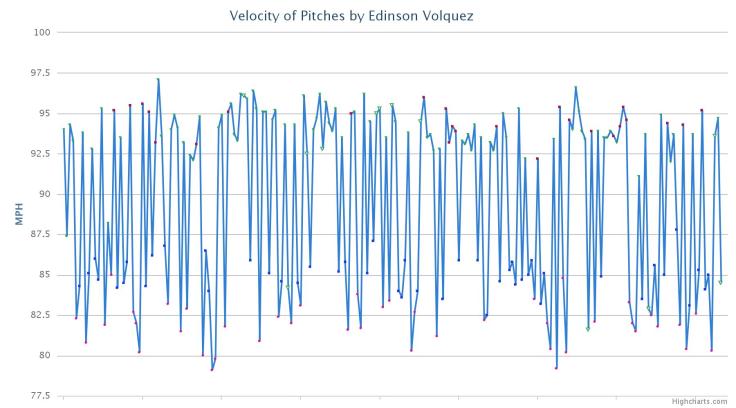
It was discussed quite a bit during the playoffs that Volquez saw an increase in his velocity, with most chalking it up to a surge in adrenaline from playing in the postseason. But early on this season, it seems some of that velocity has stuck around:

volquez velo chart

As you can tell from the chart, Volquez has seen his velocity spike over 95 mph quite often with a few pitches even coming up on 97.5 mph. Now, this could very easily be a situation once again of a pitcher being pumped up for a big matchup, as he did throw on opening night against the Mets. But with even a small bit of continuity from last year, one does have to wonder if there was a small adjustment in his delivery that pitching coach Dave Eiland found that has increased Volquez’s velocity. This is yet another item to keep an eye on as the season unwinds, especially since the velocity has an instant effect on his other pitches, including the sinker.

kc6

Volquez is only two starts into this 2016 season, so obviously it’s a little early to get too excited about a slight adjustment in a game plan. What the stats are telling us at this point though is that Volquez could very well be in for an even better 2016 and it’s worth keeping an eye on. The Royals don’t need Volquez to go out and win a Cy Young Award to be successful, but any increase in production this year would be a bonus. Volquez has always been known as being a pitcher with great stuff but the inability to completely harness it. If he is able to reign in the inconsistent losses of control, we could be looking at a banner season for the man we call “Sexy Eddie”.


Blog at WordPress.com.

Up ↑