Euphoria Lingers:What 2016 Meant For the Kansas City Royals

kc1

“I’ve had some wins. And been knocked down with defeats. Glimpsed views from the top of the mountain. And walked through the darkest of valleys. But through this entire ride called ‘a life’ – I’ve refused to give up.”~Robin S. Sharma

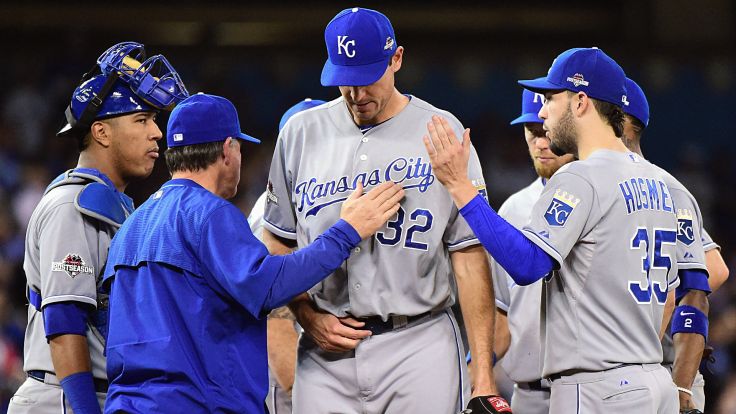
Everyone knew from the beginning that it wouldn’t be an easy task. Some would even say it was highly unlikely that the Kansas City Royals would repeat as World Series champions, a title they carried all throughout the 2016 campaign. The last team to repeat? That would be the 1998-2000 New York Yankees, a dynasty of a team that even tried to make it four in a row. So when the Royals came into the season, the hope was that they could make it back to the promise land. Instead, they were forced off their perch at the top of the mountain. There was a litany of factors as to why that was, but it wasn’t as if Kansas City had an awful season. In fact, the team wasn’t officially eliminated from postseason play until the last week of the season with four games to go. There were even some positives that came out of the season that will help the foundation of the 2017 Royals team.
kc2

What Went Right  

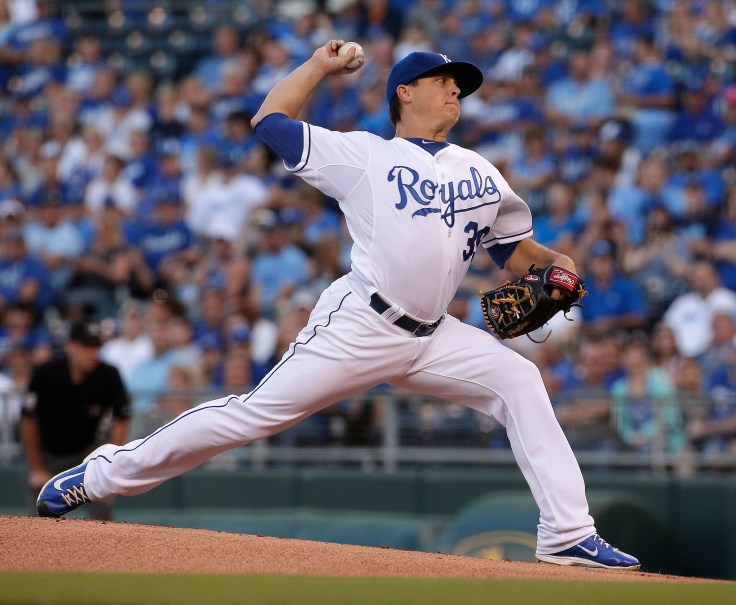
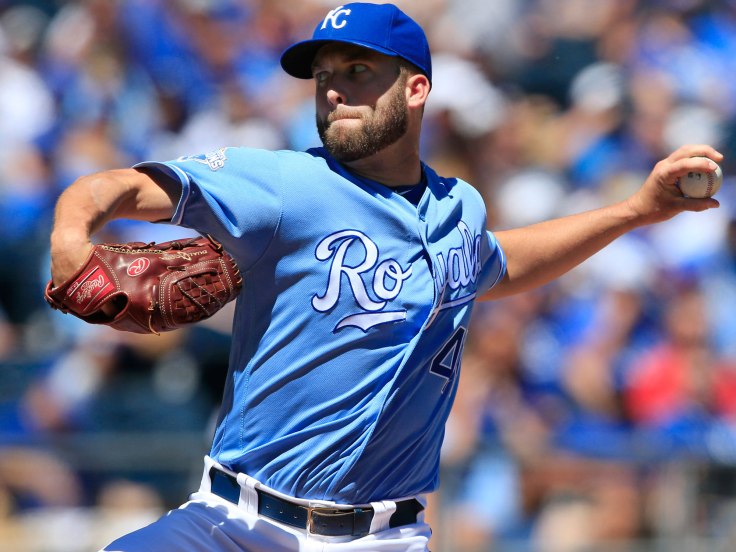
First and foremost, Danny Duffy became the team ace that had been hoped of him for years now. Duffy started the year in the bullpen but it wouldn’t be long until he was summoned for starting duty. Duffy would make his first start of the year on May 15 against Atlanta, shutting out the Braves in his three innings of work. Duffy would continue to excel, gradually building up his arm strength while taking the lessons he learned in the pen into his starts. No longer was Duffy a man of inefficiency, racking up high pitch counts in a limited amount of innings. Instead, Duffy would post the lowest walk ratio of his career (2.1) while also increasing his strike out numbers as well (9.4 strikeouts per 9). On August 1st, Duffy would throw the game of his career, holding the Rays hitless through seven before finally giving up a hit, all while striking out 16 batters. Duffy would leave after 8 innings of work, just a mere inning away from throwing the first complete game of his career. He would get that complete game just two starts later, holding the White Sox to 1 run and 7 hits in a 9 inning gem . When it was all said and done, Duffy would post career highs in innings, strike outs, walks, FIP, BB9, SO9, SO/W and will go into the 2017 season as the ace of the Royals rotation.
kc3

Cheslor Cuthbert was a welcome plus for the Royals this year, as he ended up with the third base job after Mike Moustakas went down with a season ending injury in May. Cuthbert’s numbers weren’t at Moustakas’ level, but did put himself into a solid position come Spring Training. Cuthbert hit a respectable .274/.318/.413 with an OPS+ of 93 (slightly below league average) and a bWAR of -0.2 (1.1 oWAR, -0.9 dWAR). Cuthbert could be a man without a position in 2017, but the team has sent him to the instructional league to get some work at second base, a chance to build up some versatility. Considering he is out of options and Moustakas will be back next year, Cuthbert could be dealt in the offseason; the good news is that 2016 really elevated his value in many people’s eyes.

kc4

We also got our first look at Matt Strahm and he was a pleasant addition to the Kansas City bullpen. Strahm appeared in 21 games this year, posting a 1.23 ERA over 22 innings, 12.3 strike outs per 9 with an ERA+ of 362. Strahm became a reliable arm in the pen but manager Ned Yost was reluctant on using him too much, as he threw only 94 innings in 2015 and had already thrown over 100 innings during his time in AA this year. Strahm could return to the bullpen next year, but the Royals have also shown interest in giving him a shot at a rotation job in 2017.

kc5

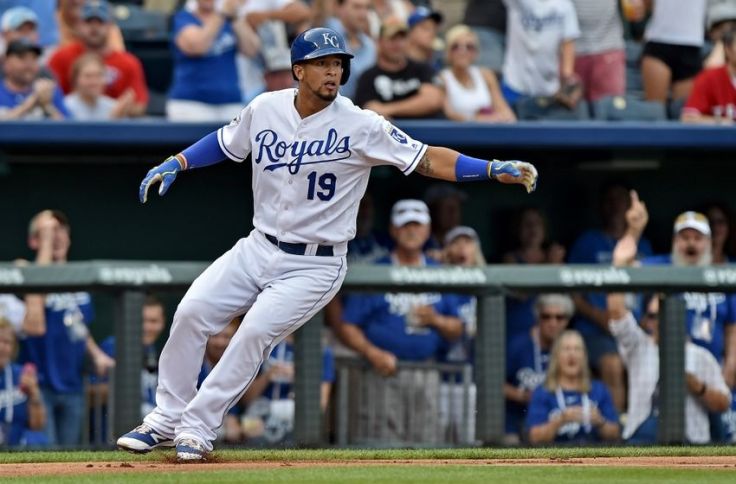
Paulo Orlando was another surprise this year for Kansas City, as the Brazilian elevated his game in 2016, putting him in a position to compete for a regular spot in 2017. Paulo hit .302/.329/.405 with an OPS+ of 95 and a bWAR of 2.3. Orlando sacrificed some power this year for more of a ‘spray the ball to all fields’ approach and that netted him a solid average but a dip in his slugging numbers. The Royals believe that Orlando is late bloomer and expect him to be in the hunt for the right field job at the ripe age of 31 next year.

kc6

Whit Merrifield showed in 2016 that he could hang with the big boys, hitting .283/.323/.392 with an OPS+ of 90 and a bWAR of 1.6. Merrifield saw a lot of time at second base this year and while he proved adequate both offensively and defensively, he is probably better suited as a super utility guy for Kansas City. Merrifield will probably get at least a shot at the second base job in the spring, but there is a greater chance of Whit holding down a utility spot for the team next year.
kc7

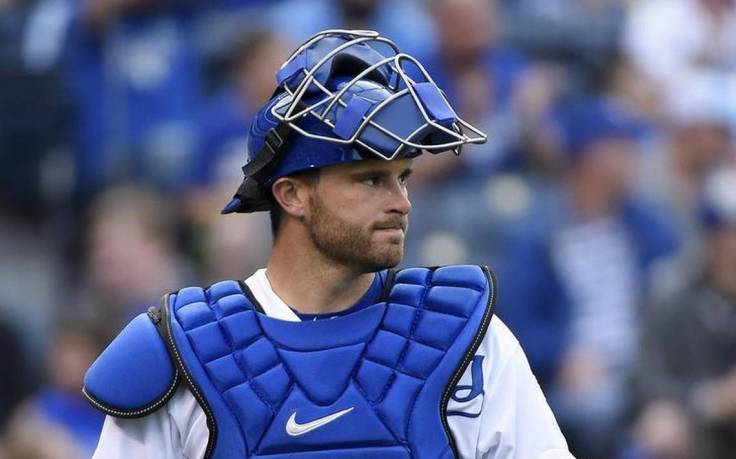
Finally, a slight nod to Drew Butera, the backup catcher for the Royals. It’s hard being the backup to Salvador Perez, as you see very little playing time. Perez did go down with a few injuries in 2016, so Drew saw some extra time behind the dish and performed admirably when asked. Butera got the most plate appearances he has seen since 2014, hitting .285/.328/.480 with an OPS+ of 112 and a bWAR of 0.4. Those are all career highs for Butera, who has long been known as a defense first guy with very little stick value. Drew will be a free agent this offseason and I can only hope he returns for another year in Kansas City. In a lot of ways, Butera is the perfect backup receiver for what this club needs from that spot.

kc8

What Needs Some Work

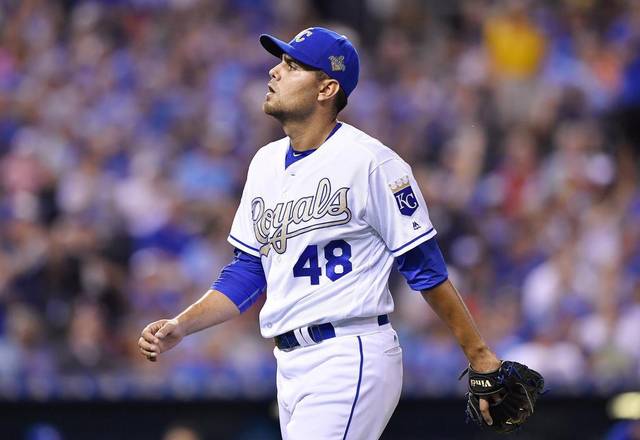
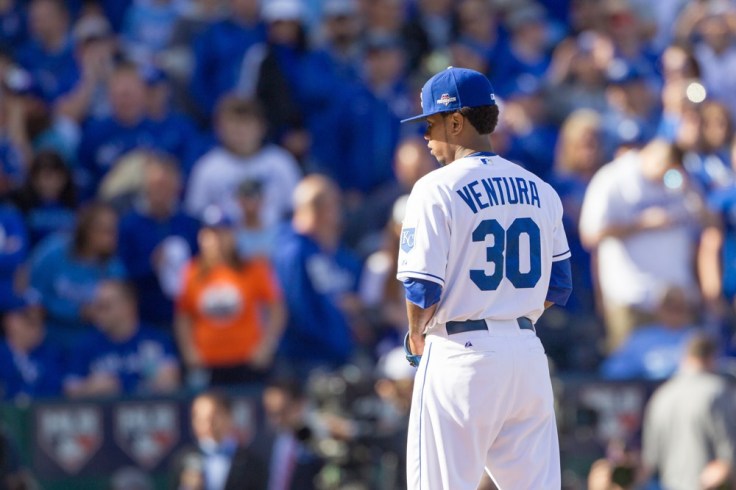
Let’s start here with the starting rotation. The rotation felt like a talking point for a good chunk of the season, but some of that was positive in a few good stretches. Overall, the Royals starters had the third highest BB/9, the highest HR/9 and FIP, and in the bottom third of the American League in innings pitched, ERA and WAR. Yordano Ventura and Ian Kennedy both had roller coaster years, with equal parts good and bad in 2016. Ventura is still a work in progress and Kennedy gave up the third most home runs in the AL this year. Both will need to work on their consistency, as they will be back next year. There will probably be some change in next year’s rotation, as Edinson Volquez is a free agent while the fifth spot was in constant flux this year. Jason Vargas, Mike Minor and Strahm could all be in-house candidates for next year’s rotation.
kc9

Also needing some work was the Royals bullpen. The bullpen was a key part of the Royals last two World Series’ teams, but this year they struggled. Luke Hochevar was lost for the season back in August, Wade Davis made a few appearances on the disabled list, and Joakim Soria struggled around a couple of strong stretches in his return to Kansas City. While some ranted and raved about the pen (mostly about Soria), I would like to point out here that we as Royals fans have been spoiled these last few years. The bullpen in year’s past were so insanely good that most seemed to just take it for granted. This was still a good bunch of arms for Kansas City, posting a HR/9 of 0.92(third lowest in the league), 77.3% LOB percentage (also third lowest), 3.45 ERA (yep, still third lowest), and 4.9 fWAR, 5th best in the league. The Royals have already talked about the bullpen being their main focus this offseason, so don’t be surprised to see some changes. Davis, Soria and Herrera will be back while Hochevar is a free agent, although it will be interesting to see if the Royals try to re-sign him. I also think there is a decent chance that Kansas City tries to bring Greg Holland, who spent the year recovering from Tommy John surgery, back into the fold. The pen is still a plus for Kansas City, but it will need some work.
kc10

What Went Wrong

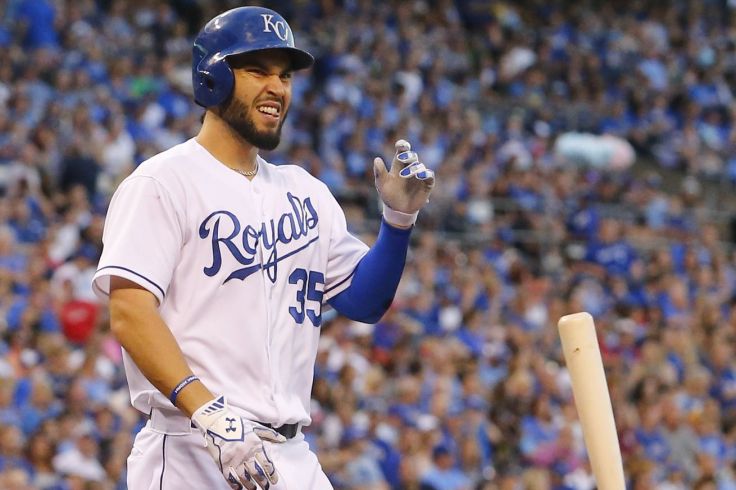
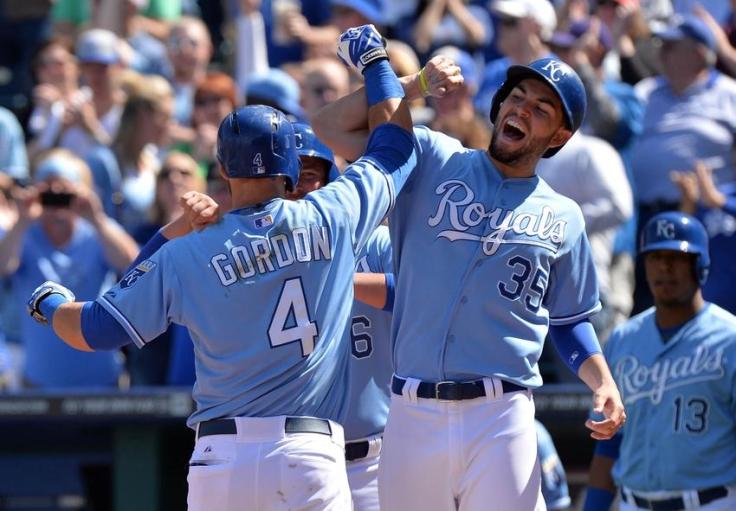
Two items of note went horribly wrong for Kansas City in 2016. First, the offense. What was actually a strong point in 2015 (6th in the league in runs scored last year), went sour this year. The Royals offense was last in home runs, ISO, BB% and wRC+, while in the bottom third of the league in runs, RBI’s, OBP%, slugging, and fWAR. Almost the entire lineup could be looked at to blame for this regression; Alex Gordon struggled when he wasn’t hurt, Salvador Perez saw a dip in his offensive numbers while Eric Hosmer had a horrendous second half  of the season, hitting in the low .200’s during that span, producing only six doubles in the second half while leading the American League in ground ball percentage. If it wasn’t for Kendrys Morales’ huge spurts of offense (and even Kendrys saw an early season slump derail his numbers)and Hosmer’s first two months of the season, one has to wonder how worse off this Kansas City team might have been. I believe some of the expectation of the Royals returning players is for them to improve on this year’s numbers in 2017, but there will need to be some changes before Spring Training rolls around.
MLB: ALDS-Kansas City Royals at Houston Astros
(Credit: Thomas B. Shea-USA TODAY)

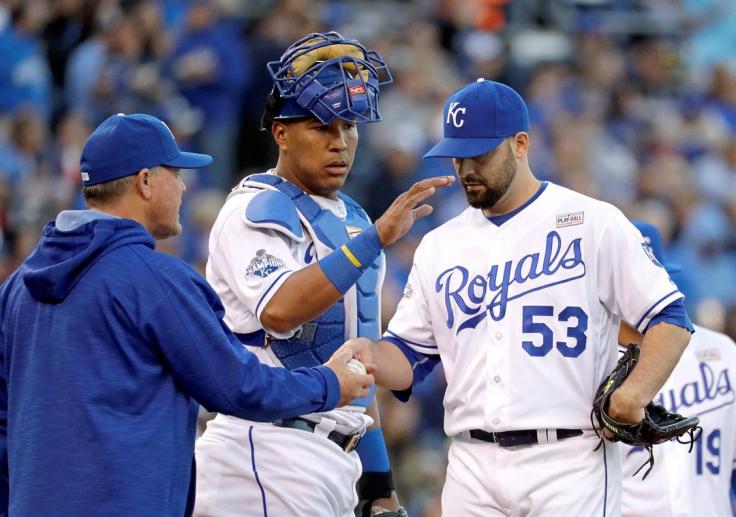
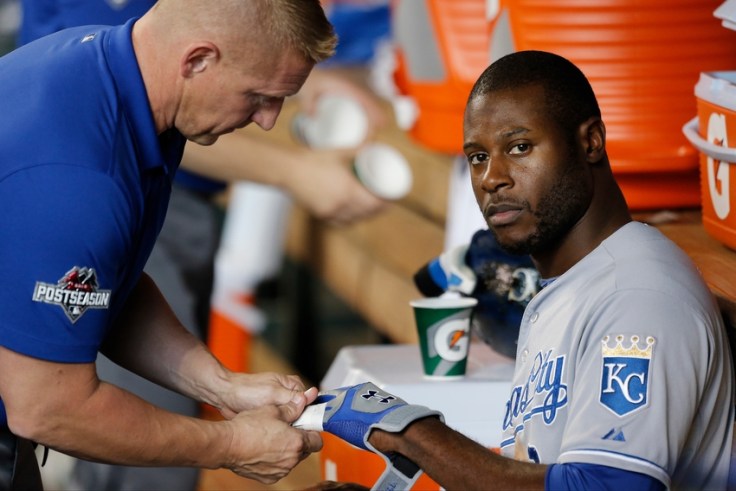
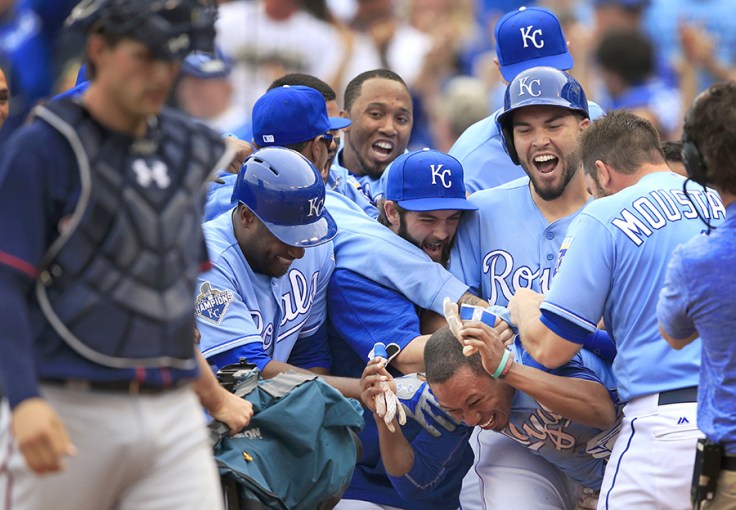
But the biggest blow to the Royals success this season was injuries. After years of the Royals being fairly healthy, they were dealt a bad hand this season. Alex Gordon, Salvador Perez, Luke Hochevar, Jarrod Dyson, Chris Young, Kris Medlen and Wade Davis all spent some time on the disabled list this year at one point or another. Mike Moustakas collided with Gordon in late May, and while Gordon would miss a month, Moustakas would have a torn ACL and would be gone for the rest of the season. Lorenzo Cain, who was the Royals best player in 2015, had multiple stints on the DL and would end up missing about 1/3 of the season. While backups like Cuthbert, Merrifield and Orlando all performed admirably in their absence, they didn’t produce at the same level and it showed in the numbers. For the Royals to be successful in 2017, they are going to have to stay healthy and not have the level of injuries that hit them this season.
kc12

The Royals finished 81-81 this season, a clean .500 record. To be honest with you, when you consider the performance of the pitching and the offense, then add in the injuries, I feel like Kansas City ended up about where they should have been. A few years back, I made the comment that all I really wanted from the organization was a contending ball club, a team that was in the hunt for a playoff spot on a regular basis. After years of watching them lose and most of the time in an ugly manner, I just wanted a team that could make the playoffs. We’ve gotten that the last couple seasons and even this year, the Royals weren’t officially eliminated until after game 158. You can expect a large chunk of this same team to return in 2017, as that appears to be the last year the window will be open with the core group of players they have now. It will be an interesting off-season, as the team needs to build up a few areas while also taking a look past 2017 when making any signing or deal. The 2016 season will be remembered as the year Kansas City came down from the euphoric high that we have all been on the last few years. Now it’s time to take a breath, rebuild and prepare for what could be another wild ride next season. I don’t now about you, but I’m ready.



Celebrating Jose Fernandez

kc1

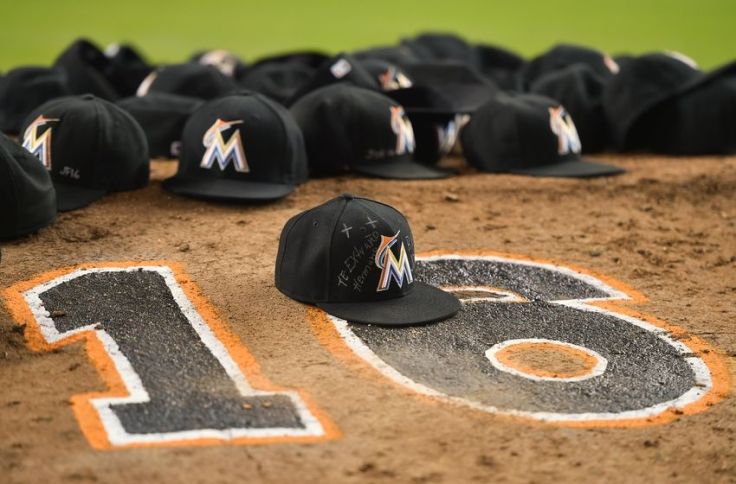
The entire baseball community has been mourning the sudden death of Miami Marlins All-Star pitcher Jose Fernandez since the news of his passing on Sunday morning. I, like many others, was in a bit of a haze on Sunday, as it was hard to grasp that such a talent with his whole life in front of him was now gone. I’ve tossed around writing about Fernandez the last couple days, but in some ways felt I wouldn’t be able to do him justice nor say anything that hasn’t already been said by many others. Instead, I finally decided on doing something else to honor him; show you his greatness rather than talk about it. Actions speak louder than words, and with that in mind, here are some favorite Jose Fernandez moments to remember him by.
First, there is his first major league home run. Yes, it’s weird I started off with a batting highlight for a great pitcher,  but the joy he showed in this personified him to a ‘T’. Also, baseball’s unwritten rules are still stupid. There was zero reason for anyone to get mad at him for watching his first ever home run.

Speaking of firsts, here is Fernandez’s major league debut. At the beginning, glance at his minor league numbers. Twenty Seven total minor league games?? Crazy. It was known very early on that this kid was going to be special and he was.

Instincts. This is Fernandez at 21. I’m not so sure many veteran pitchers would have that kind of “game awareness”. A great play on defense.

Seriously, this speaks for itself. Folks, baseball is a kid’s game and no one understood that more than Jose Fernandez.

For the unaware, Fernandez was a very good pitcher. This highlight from back in July was not only a career-high in strikeouts, but also his 500th career strike out. When healthy, Fernandez was easily one of the best pitchers in the game and a treat to watch.

Cuba vs. Cuba. Fernandez vs. Puig. That smile. Fernandez just loved playing baseball and you could tell.

I feel like I am underselling it when I say he was a great pitcher. He was a great athlete. This, also from July, was Fernandez pinch-hitting in extra innings with a big pinch hit double. In some ways it made perfect sense that Fernandez was playing in the National League, where he could pitch and hit.

Seriously, Fernandez made Barry Bonds smile. That within itself should show how special Jose was. For me, a longtime Bonds fan, this is great to see. Barry and Jose, enjoying the game and having fun.

That reaction. I almost wish I was a Marlins fan. I celebrated after the Royals won the World Series last year…but not like that. Just fantastic.

This was Fernandez’s final start, a week ago against the Nationals. Fernandez threw 8 scoreless innings, striking out 12. In other words, he was making a push to be named the National League Cy Young award winner.

Vin Scully has a way with words. It only made sense to have him talk about Fernandez and relay a great story in the process.

kc2

There is a big hole that is now missing in Major League Baseball. Fernandez was not just a once in a lifetime player that the game could use as a spokesman for as to why baseball is so great; Jose was a once in a lifetime person. Fernandez joins a list of players taken too soon from us, guys like Roberto Clemente, Thurman Munson and Darryl Kile. The only difference is that those players were all veterans who had made their footprint in baseball for years; Fernandez was just getting started. As much as Jose will be missed, there will come a time that a new player will come along with great talent and unbelievable joy. There will be a player who just oozes happiness to be part of this grand game. When that happens, I hope it makes us all think about Fernandez. We will all miss watching him perform on the diamond, but I think I will miss that contagious smile more. Rest in Power, Jose.

Rooting Problems

kc1

For the first time in 3 years I have no idea of who to root for when the Major League Baseball playoff’s start in a few weeks. As a Kansas City Royals fan, this is the first year since 2013 that our “Boys in Blue” haven’t been a part of the postseason and during that span I appear to have forgotten how to pick a team to cheer for come October. Since I need to figure out the team I am pulling for, I figured I would break down each team that will probably end up in postseason play and see which one I should be cheering for. Yes, this seems like a perfect scientific approach to this issue…said no one ever. I have no idea where this will lead me, folks; I guess we are going to find out together.

kc2

Boston Red Sox

Boston is an interesting start to this experiment. For one, I really appreciate the fact that a big part of this team’s core was built from within, as up and comers like Mookie Betts and Xander Bogaerts are homegrown talent. It’s hard to dislike second baseman Dustin Pedroia and I can appreciate this team’s offensive approach. But the team’s pitching could be an issue, although the starters have held their own this year for the most part. The bullpen doesn’t seem as strong and we all know how important the pen is during the postseason. But more than anything, I am tired of the David Ortiz narrative that has been spewed this season. I am officially sick of the adulation and instantly shut my ears down once he is being discussed. With the expectation being that the Ortiz talk will only intensify as the team progresses, I can’t condone cheering for this team. I won’t put myself through that kind of mental hell. So Boston probably won’t be my team.

Chance of Cheering: 25%

kc3

Cleveland Indians

The Indians have some big positives going on. For one, the starting pitching has been a force all year for them, although they are now down a Danny Salazar and a Carlos Carrasco, which might not bode well for them(sounds like more Trevor Bauer to me). I have always felt Terry Francona is one of the better managers in the game and knew it was a matter of time till he got this team on the same page. In some ways, this team reminds of those late 90’s Indians teams that were a young bunch of players blossoming at the same time. But…they are in the Royals division and despite the fact I don’t hate them like I hate the White Sox, I just can’t, in good conscious, root for a team in the same division as “my team”. There’s also that whole bad luck thing with Cleveland over the years. So the Indians are a no-go, no matter how many positives there are on this team. I. Just. Can’t.

Chance of Cheering: 15%

kc4

Texas Rangers

The Rangers are the best team in the American League and it is easy to see how they have gotten here. For one, they have an electric offense, built around Adrian Beltre and Ian Desmond and have a great bunch of complimentary players. Hey, they get votes from me just for having Roughned Odor on their roster; anyone who punches Jose Bautista in the face is a friend in my eyes. They have also gotten a good season out of Cole Hamels, but the pitching is a bit worrisome. Starters are in the bottom fifth of the league while their relievers are in the bottom third, with neither posting the greatest of numbers. But I kind of like this team, and they have never won a World Series before, which makes them a bit more intriguing. I’m not completely ready to buy in, but my interest is piqued with Texas.

Chance of Cheering: 55%

kc5

Toronto Blue Jays

No. Just no. Look, I have no issue with Blue Jays fans. I love Canada. But…all I can think of is Josh Donaldson and Jose Bautista complaining about pitchers throwing inside, while wearing enough body armor that they could be considered part of King Arthur’s ‘Knights of the Round Table’. Or Bautista throwing Ryan Goins under the bus in last year’s playoffs. Or really anything Bautista says. Look, I’m sure there are reasons to root for this team. I just don’t see any of them and instead might be rooting against them. Sorry, Toronto.

Chance of Cheering: 0%

MLB: Oakland Athletics at Baltimore Orioles
Credit: Tommy Gilligan (USA TODAY)

Baltimore Orioles

Alright, now we have the first team that I feel like I can really get behind. I’m not the biggest fan of teams known for their propensity for slugging the ball, but watching a player of Manny Machado’s caliber can change a man’s mind. Add in the likes of Adam Jones and Mark Trumbo and you have an offense that could rival Boston’s if given the chance. Baltimore’s starting pitching isn’t going to blow anyone away, but their bullpen is a different story. The pen is lead by Zach Britton, who has had a phenomenal season and could get a number of first place votes for the American League Cy Young award. Not many expected the Orioles to be where they are today, and for that I could easily see myself cheering for them.

Chance of Cheering: 75%

kc7

Washington Nationals

Washington is another team I can see myself rooting for. I like their young core of players like Bryce Harper and Anthony Rendon and enjoy watching guys like Stephen Strasburg (who hopefully will be healthy soon) and Max Scherzer in their element. This Nationals team seems like a perfect fit to make a deep run in the playoffs this year and should be a serious World Series contender. Will Daniel Murphy put on a playoff tear like he did last year for New York? Will Scherzer dominate like he does in the regular season? Will Jayson Werth cuss in a postgame interview again? The Nationals could be a fun team to follow this October and would be a good choice to cheer on.

Chance of Cheering: 80%

Los Angeles Dodgers v San Diego Padres
(Photo by Denis Poroy/Getty Images)

Los Angeles Dodgers

The Dodgers are an interesting team, as they are a weird hybrid of talent and dysfunction, and I’m not just talking about Yasiel Puig. Is this the year the Dodgers get over the hump and return to the World Series? Is this the year Clayton Kershaw dominates in the postseason? Hey, it could happen to worse teams. I would love to see Kershaw strap the rest of the team on his back as he leads them to the ‘Fall Classic’. This is a very talented team but definitely one that has their flaws. I could see me rooting for them, but a few other teams would have to fall to the waste-side for that to happen.

Chance of Cheering: 50%

kc9

San Francisco Giants

We’ve all made the joke; The Giants have won the World Series the last 3 even years, so of course they will be accepting the trophy again this year, right? Hey, I might be inclined to tell you this team is different and could have some big obstacles in front of them if/when they reach October. But the other part of me knows that this is a team that has ‘been there and done that’ and should never be counted out. They still have Buster Posey. They still have Madison Bumgarner. They still have future HOF manager Bruce Bochy. So yeah, the odds might be stacked against this team, but they seem to like it that way. Sound familiar, Royals fans? Add in the quirkiness of Hunter Pence and Johnny Cueto and I can’t say I won’t root for them. They just don’t feel like my first choice, that is all.

Chance of Cheering: 65%

kc10

New York Mets

Yep, these guys are back. In many a way, they feel a lot like last year’s team; great pitching, weaker hitting. I am not opposed to watching the Mets young fireballers throw shade in the postseason, in fact that seems like it would be fun. I would LOVE to see Bartolo Colon hit a walk-off home run to win Game 7 of the World Series, because “Big Sexy” is capable of anything. There really isn’t much with this team that I dislike, but there really isn’t a ton that compels me either. In other words, the Mets probably aren’t my ‘October Team’. Plus, I still hold it against Mr. Met for almost knocking me over at Kauffman Stadium at the All-Star Game in 2012. But that is another story for another time…

Chance of Cheering: 55%

kc11

St. Louis Cardinals

As a self-respecting Kansas City Royals fan, I can in no way, shape or form, root for the Cardinals. It is against everything I stand for and everything I believe in. Plus, every ounce of my body hates them. Sorry, this ain’t happening!

Chance of Cheering: -1000%

kc12

Chicago Cubs

…and we have our winner! Sure, a few of you would assume I am cheering for the Cubs since they are the odds on favorites to win the World Series. Nope, that’s not it. Hey, could it be wanting the team who hasn’t won the whole thing in over 100 years to finally come out on top? Nope, try again. It’s not even because one of my favorite players (Ben Zobrist) plays on this team, or my fondness for Joe Maddon. All these reasons, while solid, aren’t the real reason that I will be rooting for the Cubs this October. No, the real reason is simpler than all of that. As a kid, I loved baseball. By the age of ten, I was fully engulfed in baseball fever. It became the obsession it still is today. Back in those days, we didn’t always get to watch my favorite team, the Royals, as they only aired them maybe once or twice a week, at best. But what team was on almost every single afternoon, and especially when I came home from school? The Chicago Cubs. The Cubs were shown on WGN on a daily basis and in my thirst for baseball I would sit and watch an insane amount of games…or at least watch them until I decided to go outside and actually play baseball! So because of this, I still have a deep affinity for the Cubbies. They are a part of my youth, and I will always hold them in a higher regard than a lot of teams because of it. Yes, I want the curse to be broken and I want all those Cubs fans to have some of the joy that us Royals fans got to wrap ourselves around these last few seasons. They have earned it. Because of this, I’m rooting for the Cubs to break through and get their third world championship. You can think it’s me jumping on a bandwagon, but it’s me acknowledging that this franchise was a big part of my love of baseball over the years. I’m just looking to give some of that back.

Chance of Cheering: 100%

kc14

So there you go; I guess I should have seen where this was going but it was still a fun little experiment. It will be weird this October to not see the Royals in the playoffs, but it will be a lot less stressful. Here’s to hoping your team is one of the teams I mentioned  and that they have a deep run in the postseason. It’s a month of excitement, great performances and unbelievable results. It is the best reason to love baseball…and it is almost upon us!


Less Than Steady Eddie

kc1

In 2015, there was no steadier part of the Kansas City Royals rotation than Edinson Volquez. If there was a big game situation, Volquez was the man to turn to. You knew that if Volquez was on the mound, he was going to keep the Royals in the game and give them the best opportunity to win. But baseball can be a funny game and the joys of success one year can turn into the dread of failure in another. Volquez has struggled most of this year, posting a 5.02 ERA over 166 innings, with a 2.10 SO/W ratio, 4.39 FIP, 1.470 WHIP and an ERA+ of 88(20 points below last year’s 118). Volquez’s walk and strike out ratio are on par with last year’s totals, so what has changed for “Sexy Eddie” this year?

kc2

My first instinct is to say most of it is based off of pitch location. Let’s first take a look at Volquez’s horizontal pitch location:

brooksbaseball-chart-1

Looking at both 2015 and 2016, it appears as if his hard stuff is fairly comparable, but there are some bigger differences between his breaking stuff and the off-speed pitches. The biggest change is in his offspeed stuff, which is leaning a bit more away this year, which might be a sign that he is leaving his offspeed pitches a bit more over the middle of the plate. Now a look at the vertical pitch location:

brooksbaseball-chart-2

This tells a bit different story and leans toward location being a big factor. While his breaking pitches appear to be at least moderately comparable to last year, Eddie does show he has kept the ball up a bit more this year, which can be a problem. It also seems he has been keeping his off-speed stuff down, which is a major positive. Volquez has made a consistent effort to keep his hard stuff down in the strike zone, as it has been on a decline since the beginning of the season, with a slight uptick this past month. There is one more locator factor that I wanted to take a look at:

brooksbaseball-chart-3

No pitcher wants to groove a pitch, or at least groove one and have the batter take advantage of it. This chart really shows that Volquez has been grooving more pitches this year, especially his hard stuff. Between that and the increase in grooved breaking balls, you can see why Volquez’s hits per 9 and home runs per 9 have both increased this year.

kc3

This also lines up with how hard batters are hitting the ball off of Volquez:

chart-1

The graph shows that Volquez has been above league average quite often when it comes to exit velocity, but it also shows a lot of inconsistency this year. Week by week, Volquez seems to see his numbers drop or rise, with very little consistency showing up in his exit velocity numbers. This is a lot different from his 2015 exit velocity numbers:

chart-2

There are some big jumps here as well, but for the first four months last year, Volquez was pretty consistent when it came to the exit velocity off of his pitches. I don’t believe this is a change in velocity, as he has been not only really consistent in that regard this year, but very comparable to 2015 as well:

brooksbaseball-chart-4

So if it is not velocity, then it goes back to location and use of pitches:

brooksbaseball-chart-5

Volquez has been using his four-seam fastball much more this year than last, while also using his change-up less and less. This puzzles me quite a bit, since the changeup is Volquez’s out-pitch and has been a lethal pitch in his arsenal for years now. Batters have been hitting the ball harder off of Volquez in 2016 and just by seeing this chart it would appear that hitters are sitting on his hard stuff and laying off his off-speed pitches.

kc4

With those numbers glaring at us, I tend to believe that batters are swinging earlier and more often against Volquez this year. Volquez has a higher contact rate against him this year (80.3% to 77.5%) while also racking up a higher percentage of pitches swung at as well (46.7% to 45.8%). The interesting part is that he has also thrown the same amount of strikes this year (64.0%) as last year while throwing less pitches per plate appearance (3.79 compared to 3.87 in 2015). This backs up my theory that hitters are swinging earlier in the count against Volquez, which seems to be what is happening. Batters are also putting the ball in play more against Eddie this year, 30.7% to 29.2% last year. This would seem to be backed up by the increase in his BAbip, which is risen from .293 to .317 this year. Hitters are not letting Volquez go deep in the count this year and are taking advantage of his early strikes, which are turning into more hits against him.

kc5

The Royals have surged back into the playoff race this past month and in that span, Volquez has been the weakest link in the Kansas City rotation. If the Royals make the playoffs, one would really have to contemplate whether or not Volquez should be in the rotation, especially with his performance as of late (6.38 ERA over his last 8 starts). I would tend to think that if he started mixing in his change-up a bit more, he might start seeing better results and not have as many batters sitting on his fastball. Volquez has been a big part of this Royals team these last two seasons and if the team is serious about making it back to the playoffs, they need him to be on the top of his game. Right now, he is struggling just to be an average major league starter.

From A Land Down Under

Minnesota Twins vs. Kansas City Royals
(John Sleezer/Kansas City Star/TNS)

On Friday night, the Kansas City Royals bullpen gave up their first run in over 41 innings(41.2 innings to be exact) and unfortunately the man who gave up that run is a veteran who has had a nice season in Kansas City, Peter Moylan (although if you want to pin some of it on catcher Drew Butera, you probably wouldn’t get an argument from me). Moylan, in his age 37 season, has thrown 31 innings for the Royals, striking out 7.76 per 9 innings, posting an ERA of 3.73, a FIP of 3.69 and continuing to induce ground balls at a high rate, 62.2% so far in 2016(61.7% average over his career). Those numbers might not jump out at you, but when you consider what all he has been through in his career, it is a major achievement that he is currently pitching in the big leagues. In fact, Peter Moylan’s story might be one of my favorite baseball stories ever.

kc1

Moylan’s baseball journey began back in 1996, when he was signed as a free agent by the Minnesota Twins. Moylan struggled for a few years in Minnesota’s farm system(Low A Ball) before they released him in 1998. Moylan left baseball, returning to Australia and becoming a pharmaceutical salesman. Yes, you read that correctly. Two back surgeries later, he was back in baseball, coaching in Australia and playing the occasional first base. The team eventually was short on pitching and threw Moylan on the mound. Back in the 90’s, Moylan threw the ball over the top. He decided to try something different:

“We were getting short on pitching and I started messing around with a sidearm delivery out in the outfield one day,” Moylan said. “When I threw sidearm, it didn’t hurt my back. Next thing I know, our pitching coach tells me I’m throwing 94 on the gun.”

Moylan was given the chance to pitch on the Australian team in the 2006 World Baseball Classic. He struck out major leaguers Bobby Abreu, Marco Scutaro, Ramon Hernandez and Magglio Ordonez. A pitcher throwing sidearm in the mid-90’s caught many a team’s attention:

“Next thing I know, teams are all over me. Three made really good offers: the Braves, the Red Sox and the Royals,” Moylan said. “I signed with the Braves so I could go to Disney World.”

Moylan made the fast track to the majors and was on Atlanta’s 25 man roster by April 11 of that year. He shuttled back and forth between the majors and AAA in his rookie campaign, throwing 14 innings, striking out 8. 40 per 9 and a FIP of 3.15 in the big leagues. Moylan was 27 years old.

kc2

Moylan became a big part of the Braves bullpen in 2007, and over the next two seasons would post some great numbers: 1.79 ERA, 244 ERA+, 4.02 FIP and a WHIP of 1.066 in 95 innings. Unfortunately, Moylan would land on the disabled list in May of 2008, and would have the first of two dreaded Tommy John surgeries. He would return in 2009 and re-assert himself into Atlanta’s pen, and would put up some good numbers over the next four seasons: 2.88 ERA, 140 ERA+, striking out 7.5 per 9 over 150 innings. Moylan continued to induce ground balls (his lowest ground ball % was 56.3 in 2012) but also dealt with a number of injuries. 2011 alone saw him deal with more back issues and near the end of the year he was back on the DL with a torn rotator cuff in his pitching shoulder. He would sign with the Dodgers before the 2013 season, but didn’t look like his old self; he would only appear in 14 games for Los Angeles and posted a career low ground ball rate of 28.1%. Moylan would become a free agent at the end of the season and would try to latch on with Houston, before they released him near the end of Spring Training 2014. It appeared that another Tommy John surgery was in Moylan’s future and he would have the procedure done in March of that year. At age 35, Moylan’s career seemed to be on the ropes.

Astros Royals Baseball
(AP Photo/Colin E. Braley)

The Braves would come knocking again in March of 2015, only this time with a bit of a twist. The team wanted to bring Moylan back into the fold, but as a player/coach in their minor league system. This appeared to be a great opportunity for Moylan to be back in the game without any pressure:

“If I signed with a team, I’m obviously going to try to prove myself immediately,” Moylan said. “I risk getting hurt again. I risk having horrible numbers. Then all of a sudden, they could say, ‘He’s not doing anything, let’s get rid of him’ and my career might be over. This way, I can take my time. The Braves are going to be patient and I’m going to be patient, which is not my strong point. When it’s right, it will be right.”

The fact it was the Braves made it even better for him:

“The Braves have always been kind of like that ex-girlfriend that you always think about,” Moylan said. “I’d always check the Braves’ results and hope that they were doing well. But I can do it for real now and not have to hide it.”

Moylan would put up good numbers in the Braves Triple A affiliate, Gwinnett, posting a 3.14 ERA in 28 innings,  but the best part was that his velocity appeared to be back:

“We’re all pulling for him to get another shot,” pitching coach Marty Reed said. “He’s done everything you could ask of him here. The encouraging thing for me is the last month or so I’ve seen his velocity jump up a little bit. At the beginning of the year he was mostly 88, 89 (mph), sitting right in that area, and he’d pop a 90, 91 here and there on a good night. All of a sudden you go ‘Wow,’ you look at a 91. Now he’s sitting 90, 91 and he’s popping a 93 here and there.”

The hard work paid off and Moylan was back in Atlanta by August. Moylan would only throw 10 innings for the Braves last year, but he had his ground ball rate back up to 69% and in that short span was able to accumulate 0.2 fWAR.

kc6

The Royals would sign Moylan to a minor league contract in January of 2016 with an invite to Spring Training. Thanks to former teammate and current Royals Kris Medlen, Moylan was interested in coming to Kansas City:

“A lot of it had to do with reports from Sir Kris Medlen, in regards to the training staff and how they take care of their guys — the strength guys,” the 37-year-old Moylan says. “Another part of it, for me, was I had a history with (Royals general manager) Dayton Moore. He signed me in Atlanta, and when it came time to make my decision, my agent had spoken to everyone from all the interested clubs, and Dayton was the one who was not just saying, ‘We’ll give you a job,’ but ‘We’d really like you to come here.’ It was nice to feel wanted again. I know it’s an uphill battle to make this ‘pen, let’s be honest, but to feel like you’re going to get a chance to come in and prove you can offer something, was huge for me.”

Moylan struggled to find his release point this spring and wasn’t near a big league job yet, so after opting out of his contract, he re-signed with Kansas City and went to Triple A Omaha. Moylan get the call back to the majors on May 12 and really felt like he had found his groove during that first month of the season:

“I found a comfortable release point for those last few outings of spring,” said Moylan. “I knew that I could go into the season and still do the same sort of thing. And I managed to have a bit of success down there. Next thing you know, I’m here.”

 Moylan started out as an option out of the pen if the game was out of reach or if the Royals needed to go to the pen early. After the injuries to Wade Davis and Luke Hochevar in July, Moylan became a bigger part of the bullpen. Since July 31st, Moylan has appeared in 12 games, posting an ERA of 1.35, allowing only one run in 6.2 innings. Moylan has been one of manager Ned Yost’s first calls in pressure situations and has averted many a tight situation over the last month. At 37, Moylan appears to have found a new home in Kansas City.

kc7

Moylan becomes a free agent after the season and will have quite a few options on the market if he decides to leave Kansas City. He might be in his late 30’s, but Moylan is not a pitcher who relies on velocity as much as deception, guile and pitch placement. It’s hard to imagine much of anything stopping him, as he has bounced back from a litany of injuries and keeps coming back. Moylan will never be a star player and won’t get the type of adulation that the top players in the game receive. They can have all the attention in the world; what they won’t have is one of the best damn baseball stories you will ever hear about. Moylan has just that to set his hat on.


Quality and Quantity

MLB: Kansas City Royals at Baltimore Orioles
(Credit: Evan Habeeb-USA TODAY)

Quality pitching might be the greatest necessity throughout the game of baseball. You could ask 100 baseball executives, scouts or analysts, and I’m sure almost all of them would point to quality starting pitching as a constant need for every team. Point blank, you can never have enough pitching. The Kansas City Royals can be counted as one of those teams, as evident by the way their starting rotation has performed this year. It has been so vital for Kansas City that I wrote about it here and here…and here. If there ever was a season where the Royals fate would be determined by their rotation, this would be the year. In fact, you could almost say that as their starters go, so go the Royals. When they struggle, the Royals struggle. When they are glorious, the team strives. Kansas City is currently riding a hot streak and while you will hear names like Gordon, Hosmer and Orlando linked to this streak, the biggest reason for their success can be attributed to the improvement of the starting pitching.

Kansas City Royals vs St. Louis Cardinals
(UPI/Bill Greenblatt)

Lets start by discussing the Royals pitchers and the quality start. For those that don’t know, a quality start is considered any start where the pitcher goes at least 6 innings while allowing 3 runs or less. It’s shouldn’t be a hard standard to meet, but occasionally it is an issue and has been for Kansas City this year. Obviously leading the way is Danny Duffy and his amazing season. Duffy has reeled off six straight quality starts and has 12 overall in his 18 starts this year. Ian Kennedy has spun four straight quality starts and Yordano Ventura has three straight. Even Dillon Gee got into the act on Thursday night, spinning his best start of the season and only his second quality start of the year. The starters seem to be working deeper into the game as of late, allowing the bullpen to not log as many innings as they have been and giving them a chance to be a bit sharper. This is big, because if the Royals pitching holds the other team’s offense, there is a good chance that the bullpen will also hold them in check. The Kansas City offense has a tendency to erupt late in the game, and the starting pitching as of late has given them the opportunity to do just that.

Ian Kennedy
(AP Photo/Paul Sancya)

During the month of July, the Royals scuffled and while the offense sputtered, the starting pitching wasn’t much better. For most of the year, the rotation has been near the bottom of most categories in the American League, but that has changed. The Kansas City starters have climbed up from last in innings pitched to 11th, next to last in starters WAR and FIP, and 10th in ERA. The starters have still given up the most home runs in the league and the 3rd highest walk percentage, but you can see some definite progression in the numbers. Teams are only batting .255 against Kansas City’s starters, 4th best in the league and they have the third best LOB(Left on Base) percentage of 74.7%. Their strike out numbers have risen as well, as they have the third best K rate in the league at 20.7%. There are still some flaws with the starters, as expected, but when you see the team has the second best Clutch statistic in the league(Kansas City is at 3.26 this year, with 2.00 considered an excellent number) it makes it appear as if the rotation is moving in the correct direction.

kc4

The interesting part is that the Royals have not relied as heavily on their starters the last few years and it has seen them make back to back World Series appearances. The team was actually last in the American League last year in innings pitched, 4th highest ERA and FIP, 2nd lowest starters WAR and the highest walk rate in the league(7.6%). When digesting the 2016 numbers compared to last year, it appears the only big glaring difference would be the home runs allowed by the starters. Last year they allowed 107 home runs for the entire year, 6th lowest in the league. This year they have allowed 121 homers, 14 more in 232 less innings. The long ball has hurt the team this year and can be attributed as the big difference in the rotation this year. Luckily, they have only allowed 13 home runs over the last two weeks in 85 innings, which gives them a HR/9 ratio of 1.38. That is quite a bit better than the 1.60 ratio they have for the entire season. This team is never going to be quite like the Atlanta Braves rotations of the 1990’s but there is notable improvement over the last few weeks and some of the same competitiveness seen by Atlanta back in the day.

kc5

With just forty games remaining in this 2016 season, the Royals are sitting at 62-60, 9 games out of the American League Central lead and 5.5 games out of the Wild Card. This latest hot streak has soared them back into the race and the starting pitching should get a lot of the praise for that. If this team wants to play in the postseason for the third consecutive year, they need the rotation to keep doing what they have been doing these last couple weeks. What was considered a lost cause just a few weeks ago now seems a distinct possibility for the team that has ‘been there, done that’. If the rest of the rotation follows Danny Duffy’s lead, there will be a fun comeback story to dwell on when October rolls around.

The Hosmer Enigma

kc1

The first half of the 2016 season was glorious for Eric Hosmer. Hosmer was the steady force of the Kansas City Royals offense, putting up a line of .299/.355/.476 with 13 home runs, 49 RBI’s and an sOPS+ of 124. He was more than deserving for his start in the MLB All-Star game and it really seemed as if he had finally reached his true potential. Even I, who had wavered on Hosmer throughout the years, was finally believing that we were seeing the true Hos and he was past his yearly “summer swoon”. What is the “summer swoon” you ask? Every year, Hosmer would go through a stretch where he would look lost at the plate, his mechanics would be all out of whack and his numbers would start to take a nosedive. If you only follow the Royals on a national level(and by that I mean only follow the team in October) you have no clue about this, because the national media never discusses this. But it’s a real thing, and it has been rearing it’s head over the last six weeks.

kc2

We all remember Hosmer’s home run in the All-Star game, a shot that seemed like a precursor to the second half of the season. Only problem was that Eric didn’t get the notice. So far in the second half of the season, Hosmer is hitting .203/.261/.333 with 4 home runs, 20 RBI’s and an sOPS+ of 63. Those numbers might even be generous, since he has hit home runs in back to back games this week, which would raise his slugging and production totals. He has struck out 26 times in just 32 games in the second half, 36% of his first half total of 72. He has been doing it to himself, as he has the highest ground ball percentage in baseball:

61% for a guy who is supposed to be a middle of the order bat, someone who should be providing the team with a higher average of extra base hits. In comparison, Mike Trout has a ground ball rate of 39%, Mookie Betts 42%, and Jose Altuve 41.9%. Now I know I used three of the best hitters in the American League, but I wanted to prove a point. Those numbers should be the ones that Hosmer strives for, especially if he wants to be considered a top shelf player. The lowest percentage of ground balls that he has had in his career is 49.7%, and that was all the way back in his rookie season, 2011. Over the last few years this rate has hovered in the lower 50’s until the big increase this season.

Eric Hosmer
(AP Photo/Charlie Riedel)

During this latest swoon, Hosmer’s exit velocity has taken a dip as well:

chart

As the chart shows, Hosmer’s highest peak was right around the All-Star break and since has struggled to climb back up to his peak levels. This past week has seen a big spike(I’m sure the two homers have helped) and there does seem to be a four-week increase, which is a positive sign. One of the big issues that Hosmer has incurred this year is dealing with the inside pitch. Hosmer has seen an increase of off-speed pitches over the last month or so and justly is swinging at a higher percentage of those pitches:

Brooksbaseball-Chart

The interesting part is that he has still posting the second highest hard hit % of his career, but also the second highest soft hit % as well. To me, this reads as someone who is either going for all or nothing at the plate.

kc4

What is most interesting with Hosmer is how streaky a hitter he has been over the years. Since 2012 he has had a stretch each season where he struggles; that within itself isn’t too shocking, since most players have stretches of inconsistency. Hosmer’s though are periods of just looking lost at the plate. September 2015: .239/.328/.410. June 2014: .195/.240/.292. March/April 2013: .250/.337/.306. Sept/Oct 2012: .179/.264/.295. Even in his rookie season of 2011, he posted a rough June line of .253/.312/.293. Early in his career these stretches could be chalked up to growing pains; for a younger player it is fairly common, as they deal with major league pitching. The concerning part is that this seems to be consistent each season. During those stretches, it appears that his mechanics are out of whack and there is no consistency with his swing. One subject that has been noted by the Royals broadcast as of late has been what Hosmer does with his legs as he gets ready for the pitch to arrive. Part of the time he is using a toe tap:

The toe tap seems to steady him quite a bit and honestly, he has seen the most success this past month with the toe tap. But other times he likes to employ a leg kick:

The leg kick sometimes works, but it also becomes a timing mechanism and doesn’t appear to be as consistent. Who knows what hitting coach Dale Sveum has told him, but it would seem that the toe tap helps with his timing and is more consistent.

kc5

What makes this of greater importance is the fact that Hosmer will be a free agent after the 2017 season and is hoping to garner a huge contract. How huge you ask? Jon Heyman discussed that last month and came away with an interesting answer:

Hosmer’s camp isn’t tipping their hand, but Royals brass, which stepped up with a $70-milllion deal for free agent pitcher Ian Kennedy and $72 million for another core star Alex Gordon, seems to have an idea Hosmer could be seeking $20-million plus per year on a 10-year deal.

It seems hard to fathom that a player with the only accolades on his resume being Gold Glove winner and one All-Star game appearance could get a $200 million dollar contract. Maybe it’s just me, but I can’t imagine a world where a player who has only 10.0 bWAR and a slightly above average OPS+ of 107 over six years would get a king’s ransom. But there is also this little nugget-Scott Boras is his agent. So of course, there is a Boras spin on Hosmer:

“The premium associated with 27-year-olds are very different than metrics associated with 32-year-olds, especially when it’s a widely known Gold Glove franchise-type player who also has the ability to perform at extremely high levels in big situations and on big stages. You’d have everything you’d want in a free agent Eric Hosmer.”

I’m not saying Hosmer doesn’t deserve a big contract, but it also feels like there should be a disclaimer note on him before a team decides to purchase him.

kc7

It appears Hosmer might be coming out of his funk this week, as he has been 4 for 17 with 2 home runs and 5 RBI’s, including a go-ahead homer on Wednesday night. The Royals are riding a hot streak of late and look to be gearing up for another run at a playoff spot, as they are 8-2 over their last ten, 6.5 games out of a wild card spot. If that is to occur, they need Eric to perform at the level he has the last couple October’s. Hosmer has had sporadic success over the years and every time he rides a hot streak it makes us wonder if he is finally living up to potential. If not, he is still a very good ballplayer who has earned a starting spot on a big league club. But if he really wants to cash in next offseason, he is going to have to show that consistency that teams cherish. Rather than taking two steps forward then taking two steps back, it’s time for Eric Hosmer to take two steps forward and don’t look back.

Five Is The Magic Number

kc1

The defending World Series champion Kansas City Royals have had a very trying 2016, with a litany of injuries, slumps and starting pitching woes. While the rotation has seemed to stabilize as of late, the team still struggles to put up good numbers from their number five starter each week. Chris Young isn’t the answer. Dillon Gee isn’t the answer. Brian Flynn probably isn’t the answer either, or like the other two pitchers mentioned, has racked up better numbers out of the bullpen than out of the rotation. So who would that leave Kansas City to be their fifth starter? There seems to be a lack of depth in some regards for the spot, but if they really want to be creative there might some solutions to this season-long problem.

kc2

One fairly obvious choice would be to shuffle rookie reliever Matt Strahm into the rotation. Strahm has been a starter in the minor leagues but the Royals have been using him out of the pen since his recall. Strahm has shown electric stuff out of the bullpen, combining his 91-95 mph fastball with a slider and a change-up. He also occasionally throws a slurve, which is normally in the 77-81 mph range. Strahm’s numbers this year in the majors have been impressive; 1.80 ERA, 19.8 K/9 and a bWAR of 0.2. Obviously, if he was put back into the rotation his fastball would probably go down a notch or two, but it still can be an effective pitch with his deceptive delivery. Strahm will eventually be in the Royals rotation, so he really wouldn’t be a bad choice to get a test run under his belt this year.

kc3
Credit: Minda Haas Kuhlmann

Then there is prospect Jake Junis. Junis started the year in AA, where he put up some impressive numbers, a 3.35 ERA with 18.5 K/BB% and a FIP of 3.32 over 119 innings. Junis was recalled to AAA Omaha within the past week and threw 7 innings of 1 run ball, striking out 7 while walking none. Junis was rated as the 10th best prospect for Kansas City this year and in his age 23 season and has seen an increase in his velocity (92-94 mph, topping out at 96 mph) with a consistent curve and a change-up with good sink. The Royals could be concerned about elevating Junis too fast this season, which is understood. But with September around the corner, a couple of starts at the big league level would be a good way to get his feet wet while helping the Royals get solid innings from the fifth starters spot.

kc4

Now we get to the really creative options for the rotation. First, lets start with Mike Minor. Minor is currently on his second rehab stint in the minors for Kansas City, after the first one was shut down for “shoulder fatigue”. While Minor’s ERA has looked better, I’m sure Royals management would be concerned with most of his other numbers during this stint; he has 44 strike outs over 38.1 innings, although the 20 walks in that span would be a bit concerning. There was hope earlier in the season that Minor would be able to contribute at some point and September could be his best shot of helping the Royals out. Minor’s numbers aren’t eye-popping in the minors, but he does have big league experience and could be an upgrade over the options the Royals have thrown out there so far this year.

Kris Medlen
(AP Photo/Charlie Riedel)

Don’t like any of those ideas? Well, here are a couple of less likely options that we probably won’t see, but are at least worth mentioning. Kris Medlen has been on the disabled list since May but was scheduled to begin a rehab assignment on Tuesday. Medlen struggled in his 6 big league games this year, posting an ERA of 7.77, with 6.7 K/9, 7.4 BB/9(yes, his walk total was higher than his strike out total), and an ERA+ of 57. Even if we see Medlen this year, I would imagine it would only be a few starts, as his rehab stint will probably cover almost the entire 30 day period.

kc6

Also out on rehab assignment is Jason Vargas, who had Tommy John surgery last year. Vargas will begin his assignment at AA and will probably see some work at AAA as well. Vargas’ situation is interesting, since there was some concern that if Vargas started for the Royals this year that they would lose the $6 million insurance coverage of his contract, but it appears it would be maxed out by then anyway. Even so, I’m not so sure we see Vargas this year. It would be about 13 months after his surgery if he pitched next month for Kansas City and I’m not really for sure what Vargas or the Royals would really gain by having him throw in the big leagues this year. In my mind, let him do the rehab assignment and then shut him down until Spring Training. That being said, the Royals could think differently and we could see the Rodney Ruxin look-a-like throwing off a big league mound in September.

kc7

So there are some outside of the box options for the back-end of the Royals rotation. At this point in the season, all Kansas City really needs from their number five is 5-6 innings of 3 runs or less and most of us would be appeased with that. With the Royals still of the belief that they can claim a playoff spot, this spot in the rotation becomes even more vital. If the Royals are close to a wild card spot and the number five spot struggles, it could be the difference between playoffs or no playoffs. With the Royals winning the last three series’ and playing like a contending team, now might be the time to take a chance and see what a Strahm, Junis or Minor can do. It could make all the difference in the world.


In Paulo We Trust

kc1

When the season started, it was expected that Paulo Orlando would be splitting time in right field with Jarrod Dyson, with Dyson probably seeing the bulk of the playing time. In 2015, Orlando proved that he was a worthy backup outfielder, posting a line of .249/.269/.444 in 251 plate appearances with a wRC+ of 89 and 1.0 fWAR. Orlando supplied above average defense with a bat that wasn’t spectacular but could place a timely hit from time to time with a bit of pop. Orlando had toiled in the minors for 9 seasons before 2015 and in some ways it was easy to see why. He had put together a couple of above average offensive seasons in the minors, but nothing that would really grab a scout looking for a gem in the minors. The Royals liked Orlando’s defense and speed, two pillars of Kansas City’s success these last few years. As much as most of us liked Paulo, we also figured with his past track record that he was a solid backup at best, whose flaws would be more glaring the more playing time he would receive. Instead, Paulo followed a sparse April(30 plate appearances in 9 games) with a spectacular May where he hit .429/.456/.603 and hasn’t looked back. So is Paulo for real?

kc2

My first instinct with Orlando’s hot hitting was that as much as it appeared as if he had improved offensively, that at some point he would regress. The highest he has hit average wise at any level was .305, which he did in 2010 for the Royals AA team. Orlando has only two above average offensive seasons throughout his minor league career(2010 and 2014) and one of those seasons was just barely above league average(101 wRC+ in 2014 for Omaha, the Royals AAA team). In June, he still put up solid numbers, but they slipped a bit, down to .292/.323/.371 in 26 more plate appearances. Paulo went from platooning with Dyson to seeing the majority of the time in right field and in all honesty he had earned it. Orlando would follow that with a bigger dip in July, hitting .273/.291/.351 , which were still respectable numbers but it did appear as if he was finally coming down to earth. But early into August he is hitting .500/.519/.692 with a sOPS+ of 227. So what is he doing differently in 2016 to see such a big increase in production?

paulo1

It appears the biggest part of his success is coming from watching video. Back in June, Orlando discussed his use of video to scout out the opposing pitchers and would use what he learned when it came time take batting practice that day:

“It can slow down the game and help you a lot. Before every game, before I go practice, I watch. If a pitcher throws a lot of breaking balls, you go to BP and try to work on that.”

It’s also been obvious that playing every day has also helped his approach at the plate:

“When you play more games, you have your timing every day. Some guys throw hard — 95 to 97 mph — some guys throw 90 to 92. So when you play every day, you have more confidence in yourself.”

At the plate Paulo has improved his hitting, but a number of his stats point to him being in some ways the same player he was in 2015. His strike out percentage is about the same as last year (20.1% to 21.1%) while his walk percentage is still almost non-existent(2.0% to 2.3% last year). Orlando has continued to put the ball in play at a high rate(77.9 % this year, 79.1% in 2015) but his placement of where he is hitting the ball is a bit different this year. Last year, Paulo was pulling the ball at a 36% clip, while this year he is hitting the ball to center field 39.7% of the time. In fact, he is even hitting the ball to right field more this year (30.6%) than he is to left (29.7%). It’s obvious that his approach at the plate this year has been more focused on putting the ball in play and going with the pitch than trying to pull the ball and use his power. The power, is the one part of his game that has been sacrificed so far in 2016.
kc3
One of the positives for Orlando last year was the fact that he showed some power from the right side of the plate, something the Royals didn’t have a plethora of in 2015. Last year Orlando slugged at a .432 clip with 27 extra base hits and an ISO of .195. So far in 2016(and as of  August 11 he has played in exactly the same amount of games as last year, with 60 more plate appearances), Paulo is slugging at a .432 rate with 22 extra base hits and an ISO of .105. It’s obvious with his approach this year he has sacrificed some of his power this year for an increase in his on-base percentage(which is up by .082 this year). This also means his hard hit rate is down(26.5%,  down from 31.4% in 2015), but his soft hit rate is down as well(17.6% from 19.9% last year). How you feel about this is determined on whether or not  you believe the Royals would be better off with someone with more power or someone getting on base. To me, as much as Kansas City needs a bit more power in their lineup, even more in need is someone who can get on base consistently. Orlando is doing just that so this could probably be filed under the ‘if it ain’t broke, don’t try to fix it’ category.
kc5
In what has become a very frustrating season for Kansas City, Orlando’s production has been a bright light and while some of us(myself included) have been thinking he will start to regress, time is proving us wrong. Within the last week Orlando has been moved to the leadoff spot for the Royals, a spot that has been lacking this year. Kansas City’s leadoff batters are hitting .243/.277/.314, all either in last or next to last in the American League this year. The Royals also have just 23 extra base hits from leadoff this year, the lowest in the league. I’m not sold that Orlando is the answer at the top(he does have only 12 career walks during his two years in the major leagues), but it was also obvious that mainstay Alcides Escobar wasn’t the answer either. The Royals have no immediate answer at the top of the order, which is why manager Ned Yost is giving it a try:
“(We’re) just giving him a shot,” Yost said in the dugout before Tuesday’s game. “We’ve been thinking about it for a while. Paulo’s been swinging the bat good.”
In two games, he is 2 for 11 at the top, not exactly proving Yost right but it is the smallest of small sample sizes. At this point, it is worth a try to see if he can still get on base at a good clip. No matter whether at the top or farther down the lineup, Paulo Orlando has earned his playing time this year. Like Lorenzo Cain, he didn’t start playing baseball until his teenage years in Brazil, so his development is not quite the same as the normal player. Orlando has proven himself a quick learner and could be seeing more improvement before a regression sets in. Not bad for a guy who didn’t even make his major league debut until the age of 29.

Blog at WordPress.com.

Up ↑