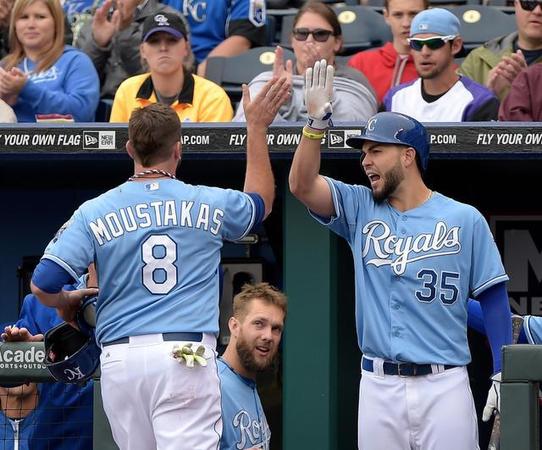
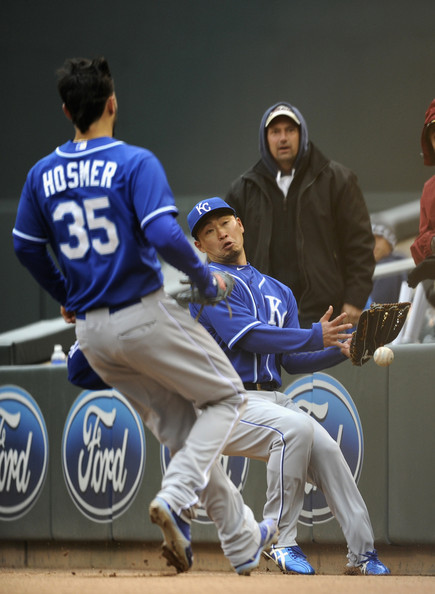
Hosmer vs. Butler: Potential vs. Production

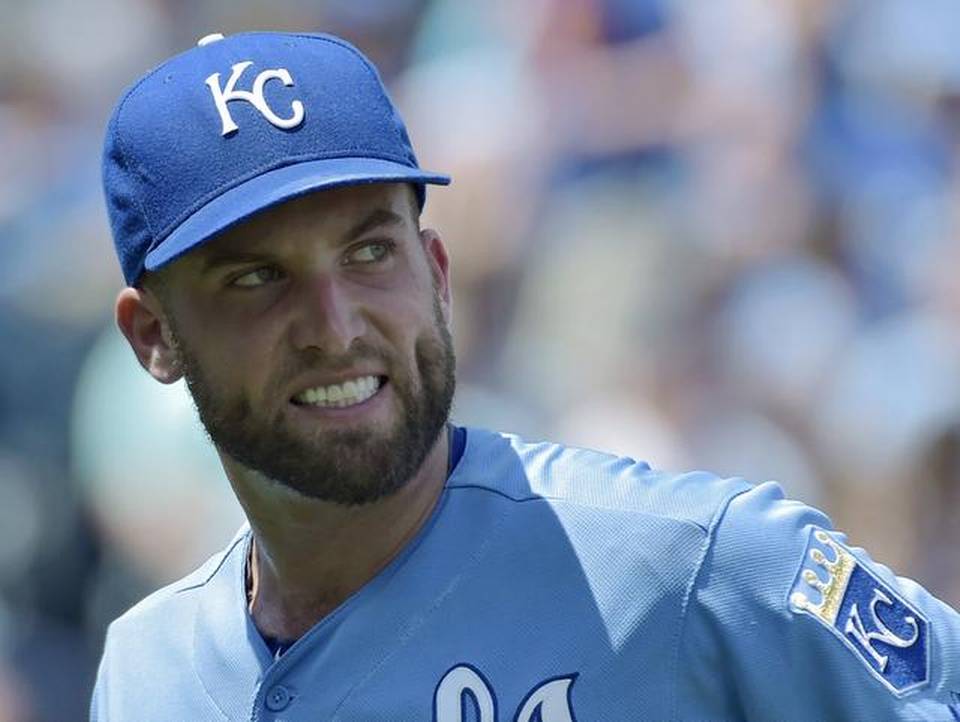
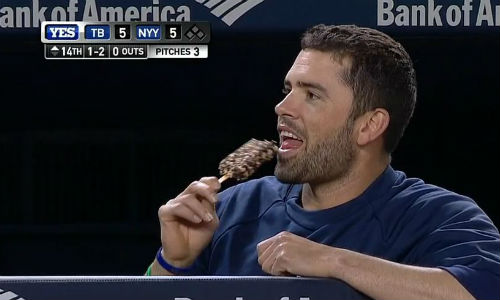
Eric Hosmer

“I’ve been through it too many times,” Hosmer said. “I’ve gone through a rough start. I’ve gone through a whole rough year. I know my abilities, and I know I can get hot.”

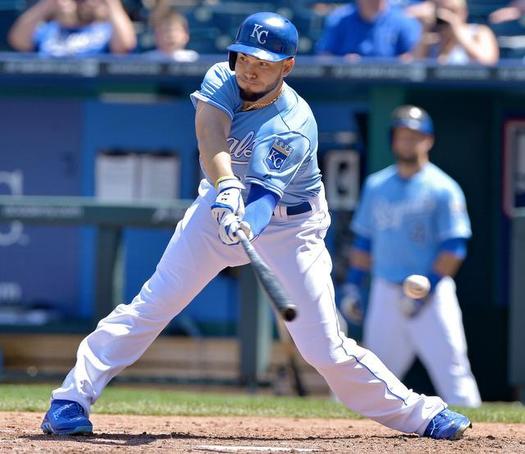
Slumps are a funny thing. Most baseball players incur at least one per season, some longer than others. It’s a long season and things aren’t bound to be perfect for anyone the entire time. But when do slumps curtail into a whole new territory, that of a player either losing playing time or being moved down in the lineup? To ask a more pointed question, why is potential sometimes rated higher than actual production? The Kansas City Royals are dealing with this very issue at the moment, with both Billy Butler and Eric Hosmer struggling. But while Butler’s slump has mainly been the last few weeks, Hosmer’s is closing in on two months. Yet Hosmer continues to bat near the top of the order, and Butler has been dropped down the order to 7th. But is this the smartest move for a team wanting to reach the playoffs this year?
kc2

“I can take it. I guess I’m a mentally tough guy. He could do it to somebody else, but I think he knows how I’ll take it.”

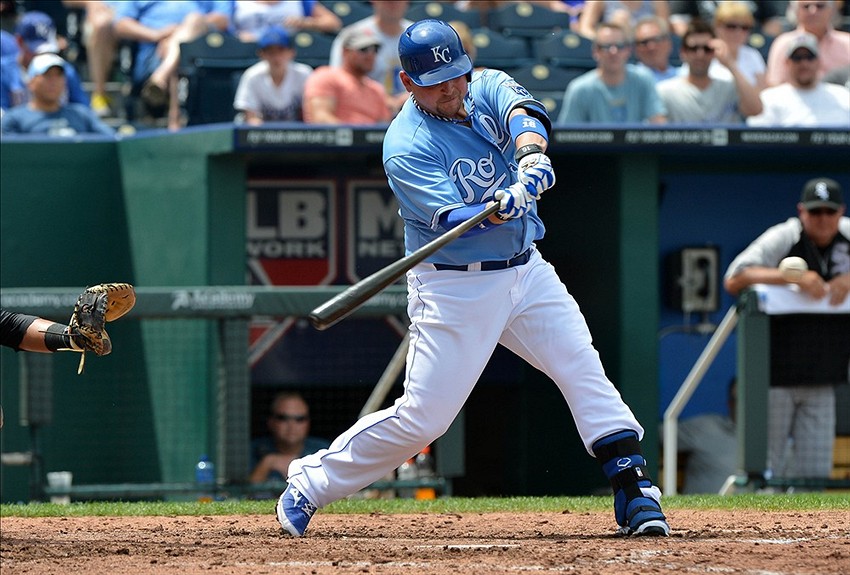
This was the sentiment felt by Butler after Friday’s loss to Cleveland. Obviously you can see the frustration from Billy, as well as the thinly veiled shot at Hosmer. With that being said let’s lay our truth cards out on the table; Billy Butler isn’t the Butler from 2012. At this point, Billy isn’t even the Butler from 2013. No, this Billy Butler has a combined 20 extra base hits and an OPS+ of 84(to judge against years past, since 2009 he has averaged between 138 and 116). His numbers are down across the board and even a red hot second half could probably not help most of his power numbers(slugging percentage this year is at an all time low). The biggest culprit is probably the rise in the amount of ground balls he has hit, as his ground ball to fly ball rate is at it’s highest this season(1.18). So by no means is this a declaration that Billy Butler is hitting the way he should nor is it saying that Billy is knocking the cover off the ball. But he has been producing more than Hosmer as of late.
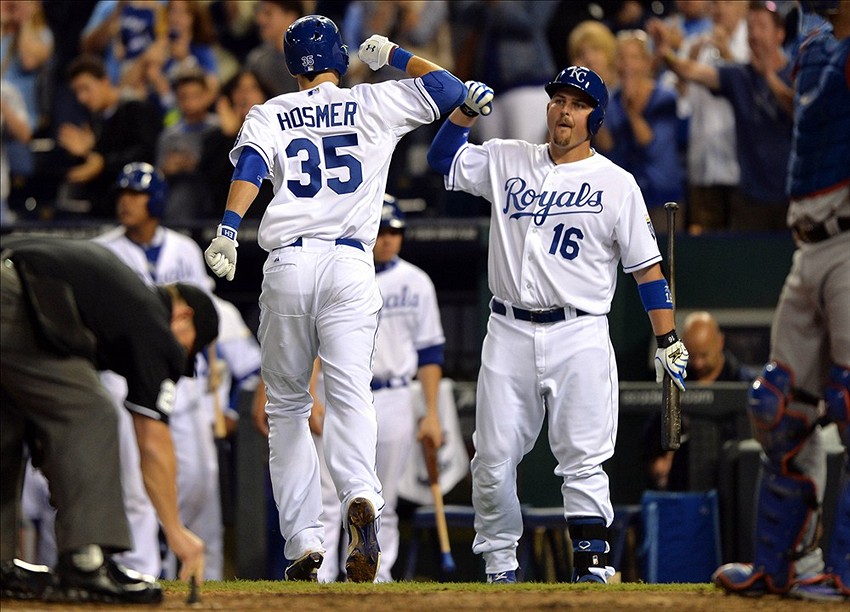
kc3

“He’s a guy that can hit .220 one month, and .360 the next.”

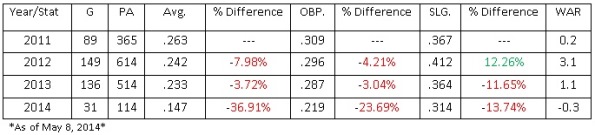
Royals manager Ned Yost obviously has faith in Eric Hosmer and his potential. Potential is what is keeping Hosmer near the top of the lineup the last couple months despite his prolonged slump. It’s a slump that has seen his OPS to fall from .800 to .648 and his double in yesterday’s game against Cleveland was his first extra base hit since June 18th. Hosmer’s main issue has been a lack of plate discipline. He is hacking at a career high 38.3 percent of balls outside of the strike zone and has 9 walks over the last month compared to 15 strikeouts over that same span. During this same span, Butler is hitting .311, and has an OPS of .781. For a guy who is batting near the top of the order, Hosmer should at least be getting on base. Unfortunately his on base percentage is below .300 this year and he isn’t driving in runs either. Hosmer’s numbers across the board are eerily similar to his disastrous 2012 season yet not only has Hosmer not been given a day off as of late, he was moved from 3rd to 2nd in the order(which means he would get even more at bats per game). So why was he moved up but Butler moved down? Potential.
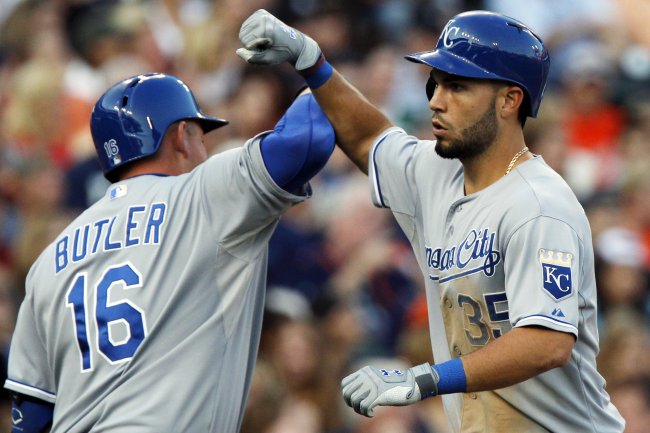
kc4

“I still feel he’s capable of being the Billy that we’ve had,” Yost said. “He hasn’t really been.”

Sam Mellinger wrote a great piece on this situation and why it is unfolding the way it is. The main thing to take from it is that the Royals see Hosmer filling his potential before Butler becomes the Billy of old. The problem is that doesn’t mean you can’t lower Hosmer in the lineup as well. I understand potential as much as the next guy, but when you need more offense it makes no sense to leave a player near the top of the order because of potential. What you need is actual, real production, not the possibility of production because that might never happen. My biggest beef to this whole scenario is this comment made here:

“The truth is that Hosmer’s spot in the lineup is being evaluated, but for now, the team sees Butler as an underperforming and now overpaid hitter on a roster in desperate need of consistent production…”

Hosmer’s spot is being evaluated? That is a sign that they just aren’t willing to face the reality that he isn’t producing. To add to that, if Butler is underperforming from his last month, what the hell is Hosmer’s last two months?? It’s obvious here that the club has soured on Billy and still considers Hosmer their “Golden Child”, despite the fact their true “Golden Child” is behind home plate. It’s a fairly well known fact that Butler has an option at the end of the year and Mellinger spoke what most of us have known for awhile now:

“For Butler, he must know there is little chance the Royals will pick up a $12.5 million option for next season. He is a full-time designated hitter in a modern baseball world that no longer values full-time DHs, and is having his worst career year at the worst possible time.”

Logic says that the Royals are smart in not picking up Billy’s option. I agree with that sentiment, especially since the club would like some more flexibility in the lineup and the ability to rest Salvador Perez’s knees from time to time by placing him at DH. With that being said, Billy is pretty untradeable at this point(I honestly don’t think the Royals would get a player in return that they feel would be at proper value) and even if they wanted to replace him, there is no one to take over the spot and produce even the below average numbers he has this year. Raul Ibanez? Please. There is a reason the Angels released him. Anyone in the minors? No one with near the pop Butler can have when he is on his game. Even the Royals understand this:

” So by now, even with both sides understanding they are likely breaking up at the end of the year, both sides also understand their mutual dependence. The Royals need Butler hitting to win, and Butler needs opportunities in the lineup to hit.”

Mellinger adds:

“Neither team nor player can fully succeed without the other, and in a season that each side has spent so much time working toward, ultimate success will depend heavily on recognizing that simple fact.”
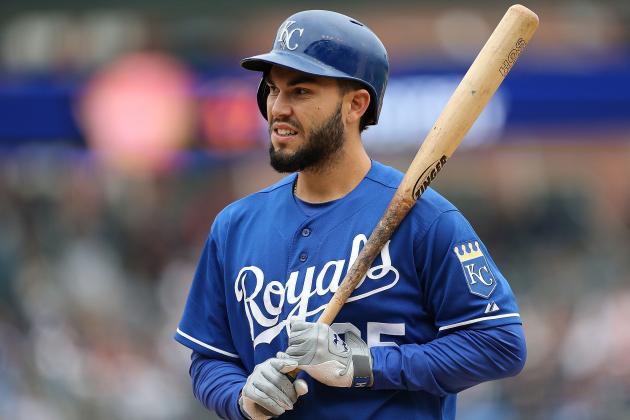
kc5

“That is what happens when things start to go south for him,” one American League scout said. “He tries to swing his way out of it.”

So Billy is going nowhere for now, same with Hosmer. But that doesn’t mean Hosmer shouldn’t be lowered in the lineup. At this point potential only matters in that Hosmer has a spot in the lineup. Without him producing and his inability to get on base it only makes sense for Kansas City to lower him in the lineup and insert someone who gets on base(like Alcides Escobar) in the 2nd spot of the order. It only hurts the Royals when Hosmer is allowed to get the second most AB’s every game when there are suitable replacements that can be shuffled. It’s also hurting Hosmer, as it has become glaringly obvious that dealing with pressure does not help his psyche. If the Royals are serious about winning then you put the best lineup out that that will produce.
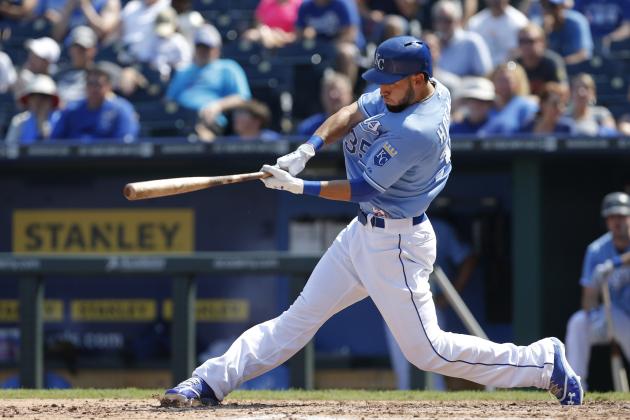
kc6

Potential is a slippery slope that can suck you up and make people in baseball make stupid decisions. The honest truth is sometimes potential just doesn’t pan out. This is the third straight season Eric Hosmer has gone through a long stretch of a season where he has just looked lost. As much as myself and others want to believe that he can reach the potential most of us believe he has, it is starting to look as if the mental aspect of the game messes with his physical part. The Royals are insistent that Hosmer will just one day play at the caliber he did his rookie year or in the second half of 2013. The honest truth is that there are no guarantees in baseball and you realistically you have to produce. Both Hosmer and Butler aren’t producing the way the Royals need them too, and neither is truly reaching their true potential. If you ask me, I trust the guy with the track record(Butler) over the guy who has shown he isn’t a consistent hitter(Hosmer). The one thing both of them are doing is hurting the Royals chances of reaching the playoffs. The definition of insanity is to continue to do the same thing over and over again and expect different results. Expecting Hosmer to live off potential is a mistake that needs to be rectified soon. Butler has been dropped in the order; now it’s time for Hosmer to do the same. Production is more valuable than potential in the present.

“It’s not the first time I’ve done it,” Hosmer said. “So it’s not panic, or nothing like that. You realize what you’ve got to do, and how you get out of it.”
Book Review: The Fight of Their Lives

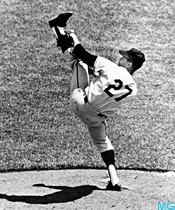
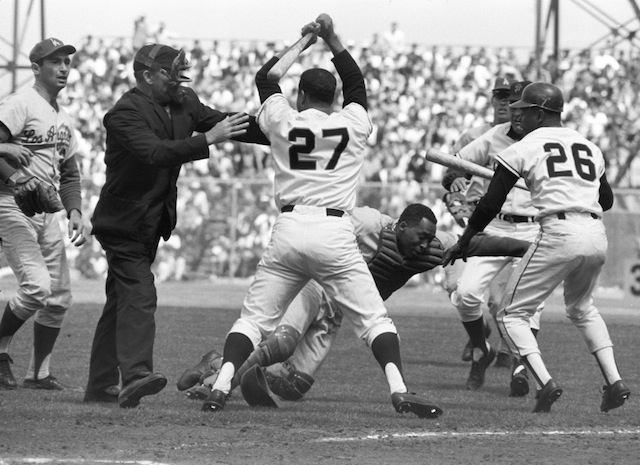
Juan Marichal Hitting Catcher John Roseboro

I became infatuated early on in life with baseball.  By the age of ten it was what my world revolved around(that and Star Wars) and I began finding out everything I could about the game, including it’s history. Many images blazed a trail in my mind early on, like the video clips of Babe Ruth running fast around the bases or Pete Rose’s headfirst slide. But when I read about Giants pitcher Juan Marichal hitting Dodgers catcher John Roseboro with a baseball bat, I couldn’t get the image out of my head. Things got so bad that the batter hit the catcher with a bat? Whoa! This just never happened in baseball, yet at one point things got heated enough that a man hit another man in the head with a baseball bat. I knew the Dodgers and Giants rivalry was heated, but this was another level. I never learned much of why this happened but I’ve always been curious. Thanks to John Rosengren we now know.

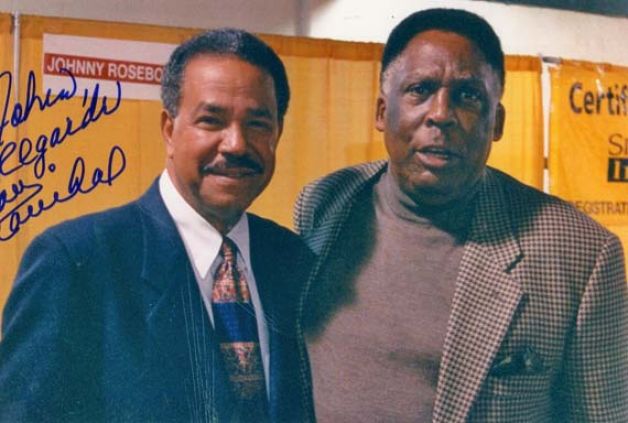
John Roseboro and Willie Mays - Aftermath of Marichal Incident

Rosengren spends a lot of the early portion of the book discussing both Marichal and Roseboro and the early portions of their life, both before baseball and early in their careers. The picture that is drawn is one of two different people; one grew up in the Dominican Republic, the other in Ohio. But as much as those locations couldn’t be farther apart, they both knew what it felt like to be treated differently because of the color of their skin. You learn that Marichal is a warm, gentle man who felt he was misunderstood a lot once he got to the United States. Roseboro’s family was one of only a few of color in Ashland, Ohio, but John didn’t deal with a lot of the racial prejudice that many faced around the country at that time. John excelled in sports in school but was also a quiet man who didn’t socialize a lot. As much as you want to learn about the fight and how and why it happened, learning about the two players involved helps give you a better feel about the incident and how this was just an isolated incident, not a pattern of anger or violence.

kc3

Maybe the most interesting part of the book is Marichal discussing some of the prejudice he encountered against Latinos in the game. Most of us are aware of the issues that African Americans encountered in baseball for the longest time, even after the racial barrier was crossed. The picture painted of was one of Latinos being taken advantage of by managers, owners and even Major League Baseball in general. A pitcher like Marichal, who at the time was very close to being the equal of the Dodgers Sandy Koufax, could never make close to the money Koufax was making. The language barrier was a big issue for many Latinos and in a lot of cases where Marichal was hurt or sick, the club just thought he was being lazy and didn’t want to “fight through it”. It is a real eye opener to realize that as much as we realize the biggest black eye on baseball throughout its history has been racial prejudice against African Americans, there was just as much prejudice going around for Latinos. The fact that both Marichal and Roseboro dealt with these issues while playing in the big leagues showed that these two men were more alike than either would have realized.

© Copyright 2013 CorbisCorporation

Now onto the fight. What you really get is that this was a perfect storm. Obviously the Giants and Dodgers playing each other means emotions are already heightened. Two teams, jockeying for position in a playoff push while already having quite a bit of dislike for each other is a recipe for disaster. I won’t give away what leads to the fight, but what I will say is that Marichal did not strike Roseboro out of anger. This fight might be the ugliest on a major league ball field in history and most of us can agree that something like this should never happen ever again. It’s interesting to hear how both sides felt after the incident and how the public and baseball felt. As much as the media wasn’t even close to invasive as it is now, there was still a very one-sided view of what happened, which still happens the majority of time today. The counter-effects of the fight were numerous and felt by both parties, which the author does a great job of relaying both and not taking a side either way.

kc5

Over the years neither player was able to leave the incident behind them, as whenever either player was brought up, so was the fight. Time painted Marichal as the bad guy and Roseboro as just being in the wrong place at the wrong time. Over time Marichal would reach out to Roseboro, and the two men would even be able to bury the hatchet. For a number of years Marichal, despite having the numbers, wouldn’t be voted into the Hall of Fame, many citing the fight. This whole section of the book is a great view into the two former players relationship, as Roseboro feels the need to set the record straight and vouch for his friend, Marichal. Two men who at once were enemies on the field would grow a friendship that many former players never achieve, yet along two that were once at odds.

kc6

To read about not only how close Marichal and Roseboro became but also how close both families would become really pointed out how we all make mistakes and holding onto anger doesn’t hurt anyone but yourself. John Rosengren did a great job of focusing more on the human aspect of these two men than just what they were as ballplayers. By the end of the book you really feel like you know the two of them and that they were not only good players, but good human beings. If you are a baseball fan you will love all the baseball talk that is in the book. But this is not just a baseball book; this is a book about two people, from two different worlds. One incident connects these two players for life but do not let it define them. Juan Marichal spoke at John Roseboro’s funeral and probably sums up everything the best someone could:

“Johnny’s forgiving me was one of the best things that happened in my life,” he said. “I wish I could have had John Roseboro as my catcher.”
I highly recommend following John Rosengren on twitter and also going and purchasing the book here. This is a great read that I will be picking up again at some point.


The Turnaround of Danny Duffy

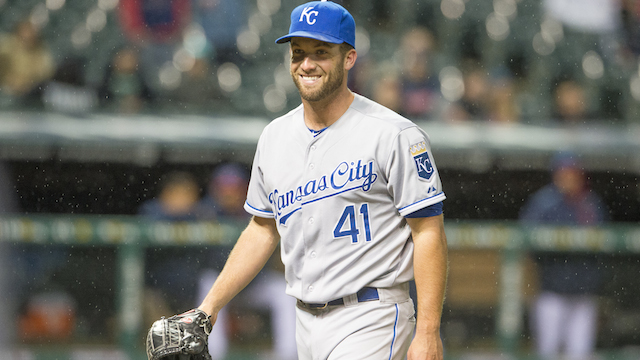
Kansas City Royals  v Cleveland Indians

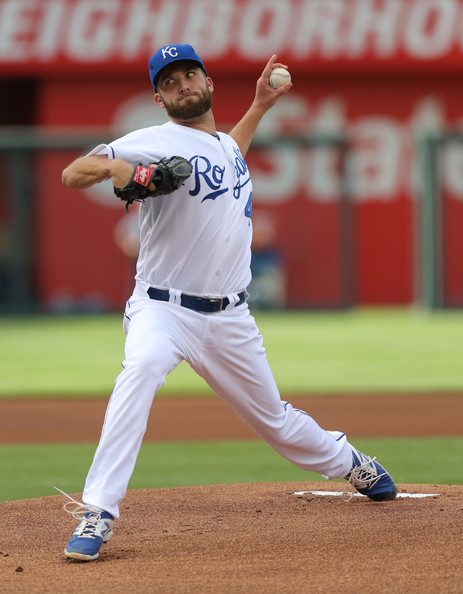
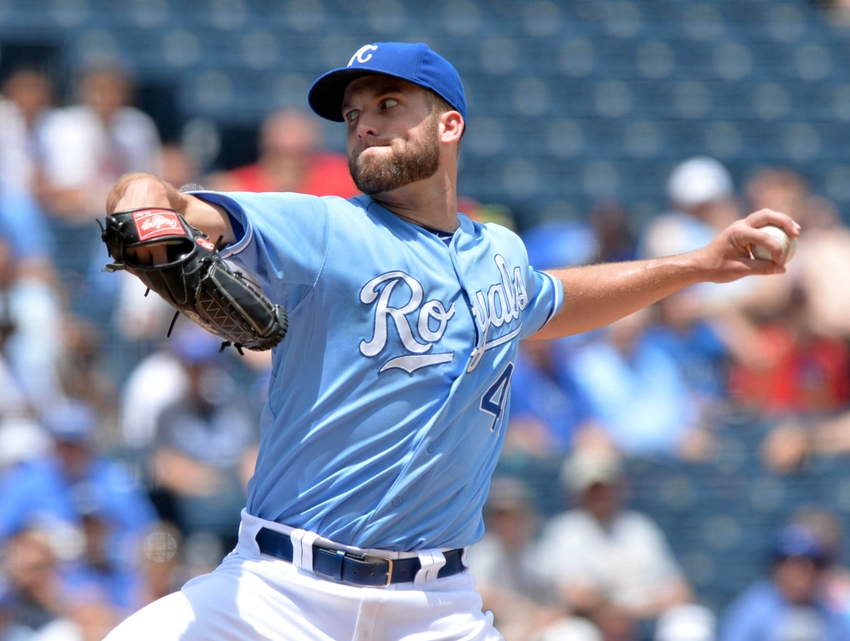
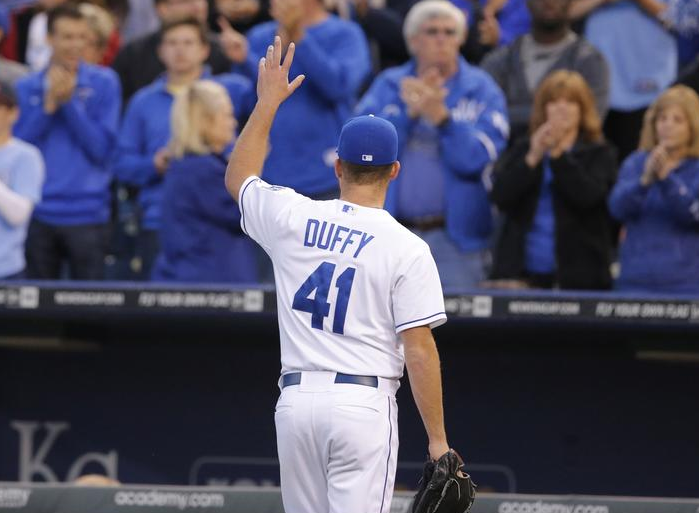
It has not been the smoothest of rides to get where Danny Duffy is at this moment. If you can think of possible derailments for a player to be a consistent performer in the big leagues, Duffy has probably had it. Tommy John Surgery? Check. Left baseball for awhile for personal reasons? Check. Struggle with pitch efficiency? Check. The word potential has been floated around for years now around Duffy, but headed into this 2014 season it seemed that might be all we saw of him. But a few twists and turns(and an injury to the lovable Bruce Chen) have left Duffy in the brightest of spots; one of the best starters in the Kansas City Royals rotation this year.

kc2

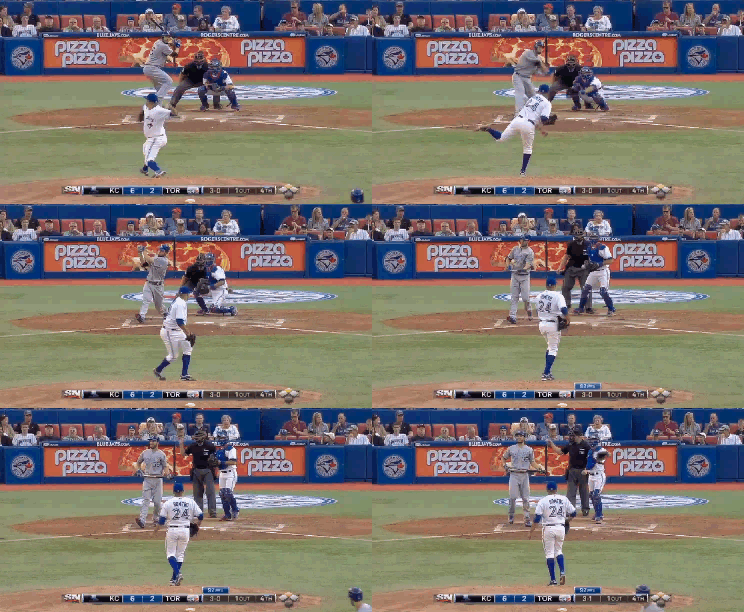
The season didn’t start out this year all sunshine and lollipops for Duffy, though. I remember watching a Spring Training game against the Rangers where he was all over the place with his location, which forced him to throw a few pitches down the heart of the plate. This lead to a couple of homers and a big inning for Texas. Outings like this lead the Royals to switch Duffy to the bullpen to start the year, where the thought was that he could harness his nasty stuff(plus fastball with late tail on it, sharp 12-to-6 curveball and a changeup over 10 mph slower than his fastball) and let it all hang out. It worked for awhile, but within a span of a week Duffy had a bad outing in Baltimore and then a few days later he faced two Toronto batters, hitting one and walking the other. None of his pitches were near the strike zone and he didn’t look comfortable on the mound. It made me make this observation:

Whoops! In my defense, 1) it was just an observation and 2) he just didn’t look like himself on the mound. I wasn’t implying that he was going to be the next Rick Ankiel or Steve Blass, but I won’t lie: the thought crossed my mind. This also happened the week that Bruce Chen went on the disabled list, which meant the Royals needed a starter to take his place that weekend. I was almost certain it wouldn’t be Duffy and was worried about what would happen if it was.

kc3

Nothing spectacular happened that outing, but my concerns did go away and showed whatever I saw earlier in the week was unfounded. Duffy pitched what has been a normal outing for him the last few years, as he threw 4 innings, giving up 2 hits and 1 run while striking out 2 and walking 4 against the Tigers. Duffy threw 75 pitches in those four innings, which at that point was average for him, as his pitch efficiency has always been the big concern. But then…then there was the outing against Baltimore. Duffy was perfect for 20 batters and pitched into the eighth inning, giving up only two hits. THIS  was the Duffy that everyone envisioned as he was coming up through Kansas City’s farm system. Since that start Duffy has been one of the most consistent starters in the Royals rotation, notwithstanding a hiccup here and there.  So what is Duffy doing differently?

MLB: Houston Astros at Kansas City Royals

The obvious answer here is that Duffy has learned how to use the spectacular Royals defense to his advantage and pitch more to contact rather than trying to strike everyone out. This is backed up by a lower strikeout rate(19.2%) and a higher balls in play percentage, which is up 5 percent(28.0%) . Obviously this has helped his pitch count a ton and led to him being able to last longer in the game than normal. His walk rate(10.0%) is also down, about 3.5 percent from last year and the lowest of his major league career. It also appears as if Duffy is inducing more ground balls than ever before in his career, as his ground outs to air outs ratio is at 0.55.

kc5

The other thing that Duffy is doing better than ever is pitching ahead in the count. We’ve already seen this year how that has helped teammate Jason Vargas and it appears to have helped just as much for Duffy. His first pitch strike percentage is the highest it has ever been(58.3%), as is the amount of 0-2 counts he has achieved(28.8%). What seems the oddest fun stat for Duffy is the amount of strikeouts looking, which is sitting at 46.2% this year, almost twenty points higher than his previous high last year of 27.3%. Duffy over his career has had issues with not being able to finish batters off, which leads to numerous balls fouled off and a raise in his pitch count. This year he seems to be fooling batters more often and they don’t appear to be locked in on what Duffy will throw next.

kc6

To me, the best part of Duffy’s game this year are the pitch counts. It has been obvious for a very long time that for him to be a major contributor for Kansas City Duffy would have to be a more efficient pitcher. This year he is doing that, as he is averaging 92 pitches per start, which isn’t much less than his career average. But what has changed is his innings pitched per start, which is up to 5.9 compared to last year’s 4.9 and 2012’s 4.6. So it’s obvious that he is throwing the same amount of pitches, just spread out longer, which is a great thing. So far this year Duffy has had one game where he threw under 80 pitches(which would have been his first start after leaving the bullpen), 6 games throwing between 80-99 pitches, and 3 games throwing between 100-119 pitches. With the way Duffy has been throwing, he has earned more faith from the Royals coaching staff and has been allowed to go longer in his games. That is nothing but positive for a team who will need him down the stretch if they are to be serious contenders.

kc7

So after all this time and some losing faith(like myself), Danny Duffy has found himself in a position where he could be a difference maker this September for a playoff hopeful like Kansas City. At one time some of us debated whether Duffy should be a starter or pitch out of the pen. It now appears as if Duffy will be a fixture in the Royals rotation for years to come, barring an injury. His new found success couldn’t come to a better guy; the Royals need more guys who make comments like “bury me a Royal”. It proves once again that efficiency is the key to a pitcher’s success.


The Royals Right Field Answer Might Be in Tampa Bay

David DeJesus


ed. note: Right after finishing this I found out DeJesus suffered a fractured left hand off of a check swing and was placed on the 15-day DL. I have not seen when they expect him back, although a guess would be 3-6 weeks, or close to the trade deadline. 

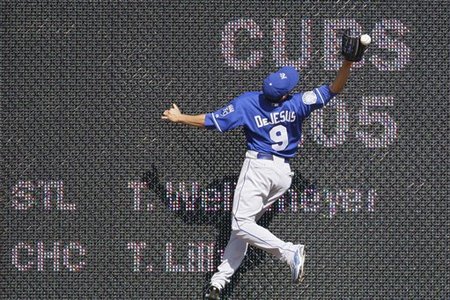
The Kansas City Royals are in first place and visions of playoff games and parades dance in our heads. The Royals are on an unprecedented streak of ten straight wins and it almost seems like the winning will never stop. Only it will stop, and when it does the Royals still will need to win the majority of their games to be contenders. With Kansas City (FINALLY!) being a contender, it only makes sense for the team to upgrade a few worry areas before the July trade deadline. With word coming out this week from GM Dayton Moore that the team would be allowed to add payroll to help out before the trade deadline, it appears the green light has been given to make those upgrades. Obviously the most pressing spots are right field and third base, but I’m pretty positive that Royals management still believes in Mike Moustakas and are giving him until (at the least) the end of the season. That leaves right field, as it has become pressingly obvious that Nori Aoki just isn’t cutting it. I like Jarrod Dyson, but the more he plays the more his flaws are in sight for all to see. So upgrading right field is a must, but the Royals also don’t have a lot to deal. Unless the team wants to part with a major prospect(which isn’t recommended) or a key part of the current roster(which will leave another hole) it appears Moore is either going to have to be creative or go for a player that won’t take much to acquire. There are some good option’s out there, like Chris Denorfia or Seth Smith both of San Diego, but I think a great option for Kansas City is in Tampa Bay at the moment and is familiar with the Royals organization. No, I am not talking about Wil Myers(I knew that is where everyone would go); I am talking about David DeJesus.

kc2

Let’s preface this with this little nugget of information; despite the Rays being in last place in the American League East and 13 games out of the lead, they still feel the majority of their roster is a championship team. So the Rays won’t be holding a fire sale, or a garage sale, or buy one get one free sale. What they will be doing is dealing a few players for other parts, guys like Ben Zobrist, Jeremy Hellickson and DeJesus. DDJ isn’t a major part of their offense and at 34 probably isn’t a major part of their future. That should make it fairly easy to deal for him. In my mind, a minor league arm or two should be all it takes to acquire DeJesus. It shouldn’t be someone like Miguel Almonte or Christian Binford, but maybe someone at AA NW Arkansas or A Wilmington. So a deal for DeJesus should be an easy one to work out for the Royals.

kc3

If the trade happens, I have to believe that you pencil DeJesus in as the right fielder and leadoff hitter. Now, he isn’t as fast as he was in his Royals’ prime, but that is to be expected at 34. The thing is, DeJesus never was a big base stealer, as his high for any season was 11 in 2008 for Kansas City. The Royals know what they would be getting with him, and that is a solid  above average performer. DeJesus’ numbers are up this year across the board, with his higher walk percentage(11.9%)and lower strikeout rate(5.7 AB per SO) really sticking out. You have to feel good that DeJesus might  not steal many bases or hit many home runs, but he gets on base and has always been able to smell out extra bases at Kauffman Stadium. Right now his OPS+, slugging percentage and OBP are way up over the last few years and is already halfway to last year’s extra base total. It appears that despite a little bit of regression over the last few years, DeJesus is performing smarter in 2014 and his numbers are greater because of it.

MLB: Oakland Athletics at Tampa Bay Rays

Now there are a few things for mild concern, as no player is ever perfect. DeJesus’ defense is just about average nowadays which is probably why he has been the Rays DH most of this year(37 games at DH compared to 15 in the field). He’s not quite a liability in the field(and probably still an upgrade over Aoki defensively) but he’s never possessed a strong arm and has obviously lost a step or two. The good thing is he was always known for being a smart fielder, knowing where he was at and where that hitter liked to place the ball. I’ll take a smart fielder any day over one that takes bad routes to the ball. DeJesus also won’t supply much power, but as long as guys like Gordon, Perez and Butler supply some that shouldn’t be an issue. DeJesus’ main job will be to get on base and be a veteran presence in the clubhouse.

kc5

Now it appears as if the Royals won’t make a move to upgrade until mid-July, so they will have some time to feel things out and see what direction they want to go. I personally would prefer a move sooner rather than later, but it seems as if a wait is in our future. I don’t expect a blockbuster move or one that shakes up the foundation of the team, but adding DeJesus to a clubhouse he is familiar with could really pay off. DeJesus is easily an upgrade over Aoki and can be had on the cheap. DeJesus also has another year on his contract, so acquiring him would also give the Royals their right fielder for 2015, as the team waits on Jorge Bonifacio to take over that spot. Add in his postseason experience and good clubhouse character and you have a guy who would make a perfect fit for this Royals team as they contend for a playoff spot. DDJ was never a guy who gained much attention but is the definition of a solid ballplayer and is probably one of the most underrated players in team history. Having him be a part of  the first Royals team to make the playoffs since 1985 seems like an appropriate role for a guy who played on some awful Royals teams. He might not be flashy, but he might be exactly what this Royals team needs.


Alcides Escobar: All-Star?

kc1

It’s amazing what a year can do. Last year at this time we were wondering what had happened to Alcides Escobar’s offense. Was the Royals shortstop just pressing? Was the loss of Kevin Seitzer hurting him? Or was 2012 a fluke? It was apparent ‘Shortstop Jesus‘ had to change something about his hitting approach before reporting to Arizona for spring training. Sure, Escobar is dynamic on defense and that alone would almost assure his spot in the lineup. But if Esky continued to lack offensively, it would only be a matter of time until the Royals started looking for different options. Luckily, he promised a more patient approach at the plate this spring and so far he has delivered. 2012 was a career year for him offensively, but so far he is challenging that this year. But is he hitting good enough to earn him an All-Star spot? Let’s take a look.

kc2

Let’s start with what at this point is a pretty well known fact; Derek Jeter will be at the All-Star game and will probably start. Yes, his numbers won’t justify it, but sometimes it isn’t about the numbers(I know, it’s weird to hear me say that). So Jeter will take up one slot for shortstops, which will probably leave two open slots. I have found four candidates for those two slots who are having good enough seasons to warrant consideration: Escobar, Alexei Ramirez of the White Sox, Erick Aybar of the Angels and Xander Bogaerts of the Red Sox. All four players are having outstanding offensive and defensive seasons and seem to be the elite of the American League this year. In all honesty, none are bad candidates for the midsummer classic, but like always, not all will go.

kc3

So I went to the ‘RoyalTron 2000′(or I just looked up stats from Fangraphs, Baseball Reference and ESPN) and took a look at the American League shortstops and where they rank statistically. I figured to go with more basic stats for the most part(Runs, Hits, Batting Average, On-base percentage, OPS, WAR, and Runs Created), otherwise I figured I would be swimming in stats and not find my way out of that rabbit hole. The first thing that was almost immediately pointed out was that Alexei Ramirez should be a lock for a spot. Ramirez is currently sitting at either first or second in all of those categories except for runs(in which he is in third) and most have him sitting in first. So Ramirez should be a lock for an All-Star spot.

kc4

This will leave one spot open for Escobar, Aybar and Bogaerts to fight over. Bogaerts placements are the most interesting, as half of the stats have him in fifth or seventh place, including seventh place in WAR. But he also ranks first in both OBP and OPS and second in RC. Those seem to point out his offensive potential that Boston sees in him and are great numbers for a guy in his rookie season. Also, those stats are probably the most important out of all of the ones I picked(other than WAR) and hold a bit more weight than the others. So despite his lower rankings in hits, runs and batting average, it is showing that Bogaerts is getting on base at a good clip and hitting for some power as well.

kc5

So what are Aybar and Escobar bringing to the table? Aybar is ranking in second or third place 5 of the 7 categories, placing second in WAR and third in OPS and RC. His defense has definitely helped bump up his WAR number, despite being fifth in OBP. Escobar meanwhile is ranking second or third in 4 out of the 7 categories, including third in WAR and OBP. I would say at this point Escobar and Aybar are pretty even, although the defensive metrics seem to favor Aybar a bit more than Alcides, which would explain a higher WAR on his part.

kc6

So between the three, who should get the final spot? It’s a tough choice, one in which you can make arguments for all three players. Fangraphs broke it down even farther, picking their team based on WAR(outside of Jeter, who they acknowledge as well will be there) and pick Aybar and Bogaerts. I’m a bit surprised that Ramirez was slighted by them, since he has the best WAR of all the shortstops in the American League. The argument for Bogaerts is based on his offensive production, which is notable and Aybar gets some help from his glove. It would appear that in spite of his improved numbers across the board(and you can glimpse those pearly numbers for yourself right here)that Escobar will be the one on the outside looking in, as either Aybar or Bogaerts will claim that final spot at shortstop.

kc7

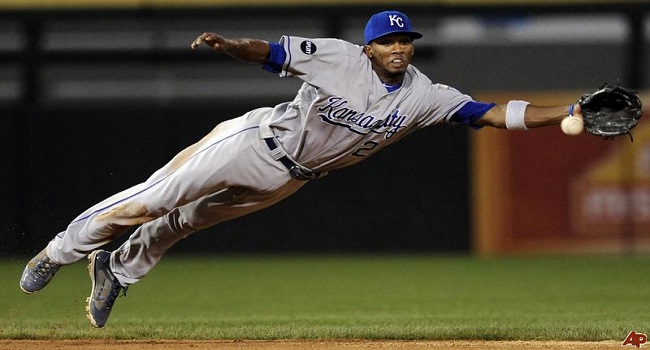
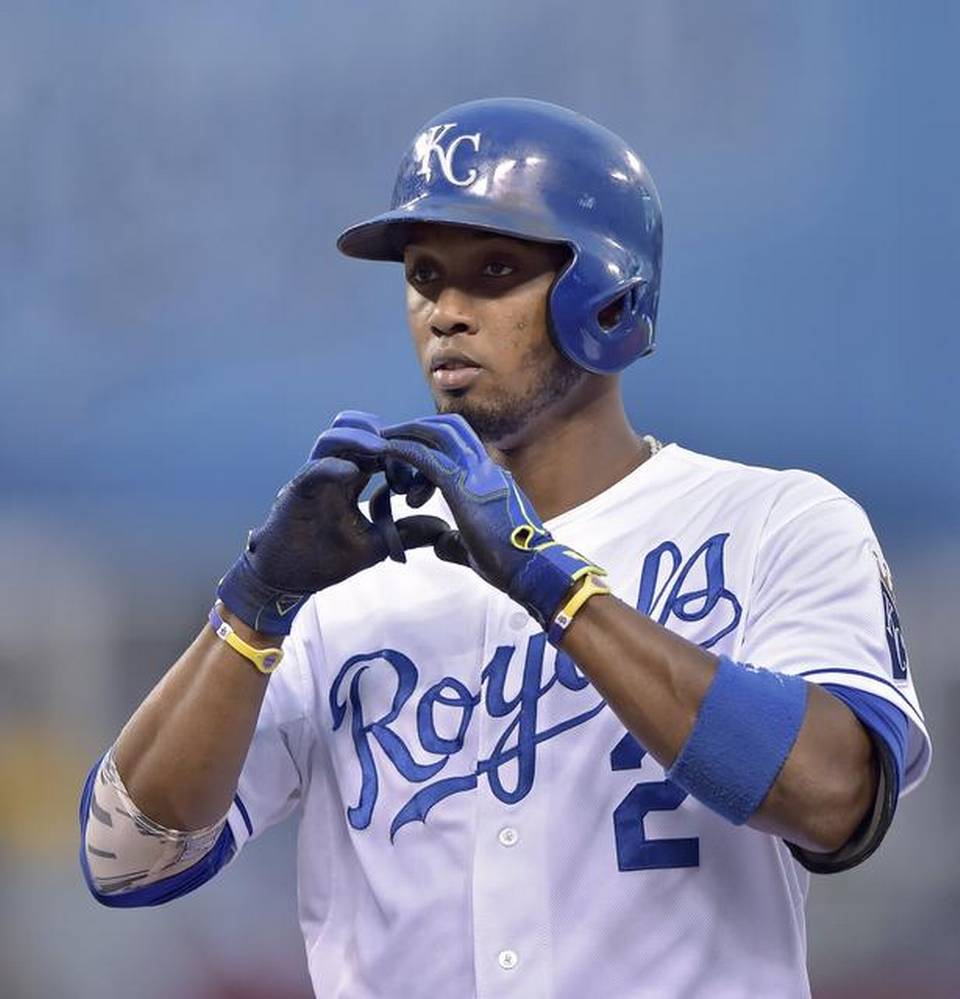
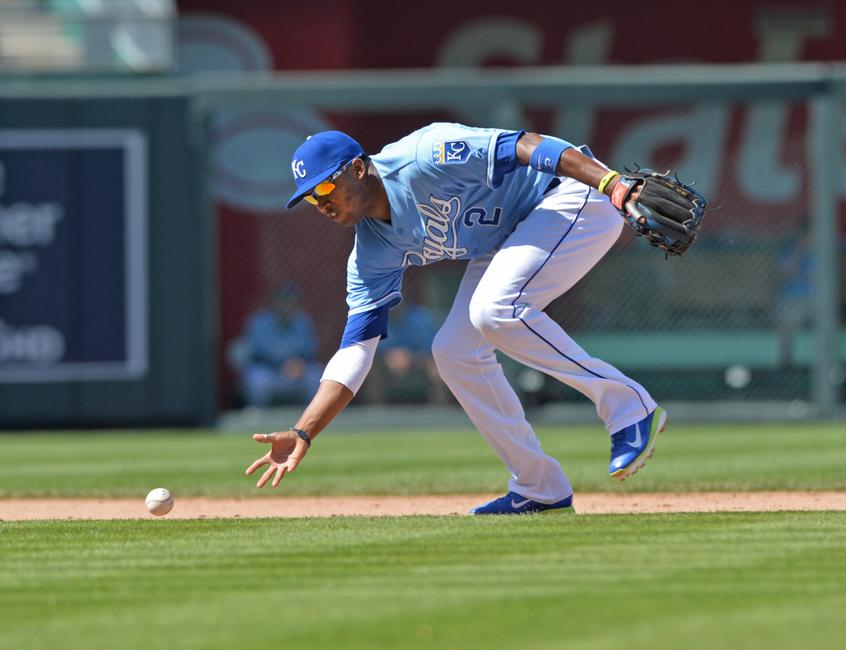
The positive to take from all of this is that there is a serious discussion and argument for Alcides to make the American League All-Star roster. His batting this season has improved enough that his defense isn’t the only thing mentioned when his name is brought up, even by rival executives. As a fan, I couldn’t be happier. Escobar has been a personal favorite of mine since his acquisition and I was personally rooting for him this past off-season. With Alex Gordon, Salvador Perez and Greg Holland the probable picks for the Royals All-Star’s again this year, it appears Esky will be on the outside looking in. Don’t worry though; we will always have these fantastic plays to remind us how good of a shortstop Escobar really is.

kc8

kc9

kc10


Two Dudes With Attitude: What Should the Royals do With Hosmer and Moustakas?

hayspost.com
hayspost.com

Maybe the most perplexing issue facing the Royals in this disappointing 2014 season is the struggles of two players who were supposed to be sure things:

tripod.com
tripod.com

No, not those two. We already know they are hard hitters. The two I am referencing are these two:

zimbio.com
zimbio.com

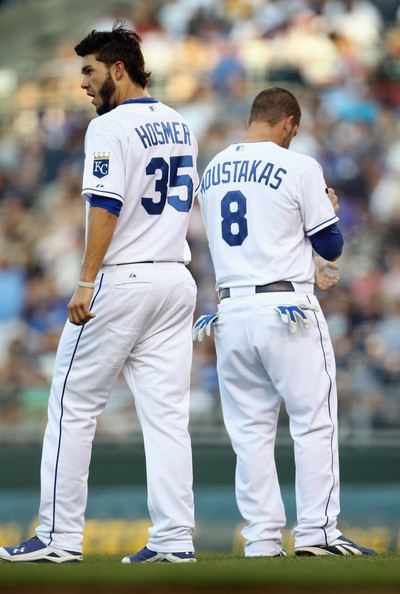
Eric Hosmer and Mike Moustakas have to be two of the most frustrating players ever, if for no other reason than the fact that they were supposed to be the cornerstones of this franchise. Instead it’s getting more and more apparent that these are not the baseball players(droids) we are looking for. So where did it all go wrong?

yahoo.com
yahoo.com

Let’s start with Moustakas first, since I have chronicled his issues heavily. There was last year’s struggles ; aaaaand this year’s slump. You read that correctly; Moustakas has pretty much been in a slump for two seasons now. Moose had looked to really up his game in 2012, as his defense had drastically improved and his bat produced numbers good enough for consideration for the All-Star Game that season. But a knee injury in the second half of the season sapped his power and seemed to sap whatever lightning he had trapped in his bottle.  Since then he has been a mess at the plate, producing either a strike out or pop-up 30% of the time this season and producing these numbers earlier this season:

kc5

Moose’s numbers seem to be bottoming out this year and even a stint in Omaha didn’t cure whatever is ailing him, as he has only four hits since his return and his hitting .148 in those eight games. The bad thing is that even his newfound patience, which has raised his walk rate, seems to be of no use. Moose seems to have bad pitch selection, as he has a higher contact rate on pitches outside of the strike zone than inside the strike zone. The other major concern is that Moustakas can’t seem to hit fastballs at a regular rate, which is explained by his -10.0 wFB, or Fastball runs above average. To give you a comparison, Billy Butler has never had a wFB below 15.1 in a full season(besides this season where his numbers have taken a dive). More and more it just seems Moustakas can’t catch up to a fastball:

blessyouboys.com
blessyouboys.com

So the verdict on Moose? Moustakas is still young enough to bounce back and be a regular contributor in the majors. He is still above average defensively and has some pop in his bat. At this point, the Royals have given him over 1500 at bats and he still has a career slash line of .235/.288/.376. The team has given him close to a season and a half to break out of this “slump” and he is still putting up putrid numbers. There does appear to be some trade interest for Moose, with three teams interested. My guess would be that those three teams think a change of scenery would do him good. In my opinion it might be time to cut ties with Moose and let him get that change of scenery. If the Royals decide they don’t want to do that, they have to send him back to the minors…for real this time. His hitting obviously hasn’t improved from the ten days he spent in AAA, so a more prolonged time might be the way to go. The Royals are unfortunately thin at third base, at least in the upper minors. Cheslor Cuthbert is in AA Northwest Arkansas, but he still needs time to develop before he is major league ready. Hunter Dozier is the other major third base prospect in the Kansas City farm system, but he is currently in Wilmington, the High A team for the Royals. Dozier has been crushing the ball as of late, but he still has a way to go. So there isn’t a clear cut answer at third base for Kansas City in the minors, but it is also apparent Moustakas isn’t that answer either.
zimbio.com
zimbio.com

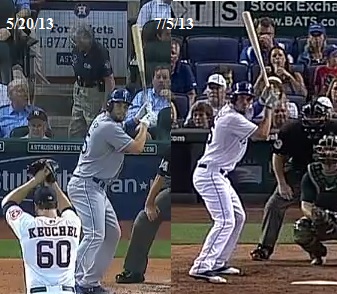
Now onto the other Kansas City problem child, Eric Hosmer. Hosmer struggled mightily in 2012 and started out 2013 about the same way, only he was able to get some hits but showed absolutely no power and seemed incapable of pulling the ball. Insert Pedro Grifol in as the Royals hitting coach at the end of May and we started seeing a new Hosmer, one who could pull the ball and hit homeruns. The difference was notable in his swing and stance:

kckingdom.com
kckingdom.com

The numbers are a bit closer, thanks to the change in June, but it is apparent there was a different Hosmer between the first and second half of last year:

Split       G GS  PA  AB  R  H 2B 3B HR RBI SB CS BB SO   BA  OBP  SLG  OPS  TB GDP HBP SH SF IBB ROE BAbip tOPS+ sOPS+
1st Half   90 86 374 344 46 98 18  2  9  40  7  3 25 51 .285 .332 .427 .760 147   8   1  1  3   2   5  .310    89   111
2nd Half   69 69 306 279 40 90 16  1  8  39  4  1 26 49 .323 .379 .473 .852 132   7   0  0  1   2   2  .368   113   140


So coming into this year, it seemed as if Hos was fixed and there were no worries with him…

i70baseball.com
i70baseball.com

…but there are worries. Hosmer has seemed to have lost his power(slugging percentage is down to .357 from last year’s .448) and his approach at the plate the last few weeks has been hack-tastic. I’m starting to think Hosmer went to school at Francoeur High, where their motto is “We have never seen a pitch you don’t like”. Hosmer’s strikeout rate is up, walk rate is down but the biggest fall has been his situational hitting. Hosmer’s RE24(Base-Out runs added, where zero is average) is at -3.5, compared to last year’s 25.1. while his WPA+(Wins Probability Added) is at 4.6 next to last year’s 14.3. What that basically means is that in situations where the Royals need a big hit from Hosmer, he just isn’t producing. His doubles are way up this year, sitting at 20 already compared to last year’s 34, but across the board he is hurting the team more than helping. His defense is still above average(although the advanced metrics have not been nice to him defensively over the years) but his oWar is at a -0.9. So whatever he is bringing to the table defensively is being negated offensively. This is a nice look at his “new” approach:

fangraphs.com
fangraphs.com

Hosmer has a bit different verdict than Moustakas at this point, as there is still value in Hos. It amazes me that the Royals continue to hit him in the 3rd spot in the order, as he is hitting only .171 in the last month, but there he is every night, near the top of the order. Does a trip to Omaha help? Possibly. I could see a scenario where Hos is sent down and Matt Fields  is given a shot in his absence. The likelihood of that happening is probably miniscule, as the Royals seem reluctant to admit their draftees need to be sent back down(Moustakas being the perfect case). Another option is to package Hosmer in a trade to a contender at the trade deadline. David Lesky(who is a great follow on twitter) first proposed this at PineTarPress.com and I was taken aback at first. I had never really considered the idea of trading Hos, as he always seemed like a possible future MVP candidate. But as we stretch into year three of him struggling for major portions of the year, I really started considering if this was the right thing to do.

zimbio.com
zimbio.com

On one hand, it’s obvious the talent there. When Hosmer puts it all together he is a middle of the order threat and can be a major factor in the direction this ballclub goes in. But the more he struggles, the more you start wondering what is fundamentally wrong to where he can’t just put it together. Why does his swing get messed up so often? Why is his approach at the dish a mess? Why does his power go on vacation at the worst times? You really start to wonder if mentally he just isn’t cut for this and if this is how he will be his entire career. The Royals are very much in “win now” mode and if they fall out of contention this move could be considered. Hosmer still has a lot of value and I’m sure some team is already salivating at the thought of working with him on his swing and untapping his true potential. I’m not saying the Royals should go out and trade him; what I am saying is that it isn’t foolish to consider that as a possibility.

kansas.com
kansas.com

Hosmer and Moustakas were supposed to be two of the main keys to get the Royals to the “Promised Land”, the playoffs. But so far we are left with two players who just aren’t producing like this team needs them to. I remember once having a conversation about which of the two of these hitters the Royals should try to sign to an extension if you could only keep one(the thought being they are both Scott Boras clients so there was no way the Royals would be able to keep both). This was early in the season of 2012 and I couldn’t make a definitive choice. Now in 2014, I seriously don’t think the Royals should sign either to a long term deal. As the old saying goes, it’s time to quit straddling the fence on these two; it’s time for Kansas City to either “Shit or get off the pot”, cause Hosmer and Moustakas are killing the Royals in more ways than one.


Nori Aoki: Man of Laughter and Tears

zimbio.com
zimbio.com

Building blocks are a great mental exercise tool. Using these tools to figure out what is a good fit and what isn’t helps you for later in life on a number of different levels. One of the most obvious things you learn is that some shapes don’t fit into other shaped holes. So the idiomatic expression goes, “a square peg in a round hole”. At first glance you think the square will go into the hole made for a circle; but alas they just don’t go together. What looked like a good idea originally can end up being a major misstep. So is the acquisition of Nori Aoki by the Kansas City Royals.

zimbio.com
zimbio.com

When the Royals originally acquired Aoki it looked like a genius move by Dayton Moore(no, seriously). Moore had traded from an overflowing bullpen by dealing Will Smith to Milwaukee for Aoki. It was almost hard to fathom that Moore had traded from an area the team was overloaded in and helped fill a hole the Royals had. Right field had been a problem area for Kansas City for the last few years, as Jeff Francoeur had become a black hole of suck after one turnaround year in 2011. By the end of last year David Lough was splitting time with Justin Maxwell in right, with Jarrod Dyson also occasionally starting in center and shifting Lorenzo Cain over to right. Aoki was supposed to not only fill the spot defensively but fill the leadoff spot as well. The Royals had been on the lookout for a “true” leadoff hitter for awhile; Alex Gordon had been filling the spot for the most part the last few years and while he had success there, the team really wanted to use his bat lower in the order(despite the fact that his biggest success to date was batting first). Aoki seemed to be a good fit: a slightly above average defender that would not hit for much power but would get on base.

zimbio.com
zimbio.com

But the player Aoki was in Milwaukee the last few years has only shown up in slight glimpses for Kansas City. We already knew he wouldn’t walk much; his highest walk rate was last year at 8.2%. This year he is sitting in line with that, at 6.9%. But his strikeout rate is way up, 5.9% to 11.1%. He has already almost reached his strikeout total from last year(29 to last years 40) in not even half the amount of games played. Sure, you can chalk some of that up to changing leagues; it takes most players a little bit of time to adjust to the differences in the other league and the style of baseball played in each. Most of it is Aoki swinging at more pitches than ever before in his career. He is swinging at about 45% of the pitches he has seen and is only seeing on average about 3.81 pitches per plate appearance. For a guy who’s main responsibility is to go deep in the count to allow himself a better opportunity to get on base, he just isn’t doing his job.

zimbio.com
zimbio.com

The thing is, his numbers really aren’t much different than they were before this year. Most of his numbers show that he should be on pace offensively for close to his 2013 numbers, taking out his home run totals. Aoki had hit eight bombs last year, but you all know how Kauffman Stadium is a cavernous canyon where home runs go to die, so don’t expect much there this year(insert sarcasm here). The strikeouts seem to be dragging Aoki down, despite the fact he is still putting the ball in play quite frequently. His total bases also seem to be a tad bit down, .541 to .660. This factors in things like hit by pitch(HBP), which happens to Aoki quite often. Looking at the numbers, it really appears the issue is more that Aoki just isn’t a typical leadoff hitter. He doesn’t walk, he doesn’t hit a ton of extra bases, and his value early on in his career was his ability to get on base, whether it be by hit, error or free pass.


mlblogs.com
mlblogs.com

There is another issue: regression. Aoki is currently 32, which is about the average age that a major league ballplayer starts to slide downward when it comes to his production. Aoki had a slight progression downward last year, and it seems to be continuing into 2014. Offensively it means his bat speed slows down a tick and he can expect a gradual decrease in speed. This would explain why his ground ball rate is up and explain a portion of the strikeouts. He also has regressed on defense and the Royals have noticed. The Royals have gotten to the point where late in games Aoki is taken out defensively and Dyson comes in to play center field while Cain slides over to right. It’s been obvious by watching Aoki that he has lost a noticeable step or two and takes odd routes to the ball from time to time. Apparently he has been working with Royals first base coach Rusty Kuntz and maybe that means an increase in playing time late in the game as the season wears. Either way, it seems apparent that Aoki has not been the player the Royals expected to get when they traded for him and it leaves a few questions for later in the season.

kansasfirstnews.com
kansasfirstnews.com

The question has already been asked on whether or not Aoki will lose playing time and outside of being replaced defensively, manager Ned Yost has said no. That would mean at this point Aoki is the right fielder and leadoff hitter unless something changes. Could the team go out and acquire someone to play right field? Possibly, and there seems to be a good candidate in San Diego. Chris Denorfia is a very possible trade candidate and I’ve mentioned him this past offseason as a candidate for the position. As always the Padres are in sell mode and it probably wouldn’t take much to acquire a player like Denorfia, who isn’t an All-Star but is about as reliable a player as there is out there on the market. There is also the possiblity that Yost could play Dyson more, although it always seems that his flaws are on display more when he gets increased playing time. The amount Dyson is used now might be the best thing for him and his numbers.

zimbio.com
zimbio.com

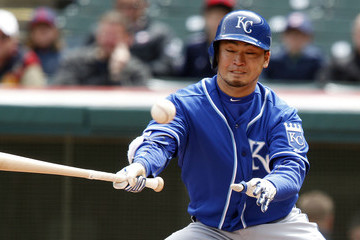
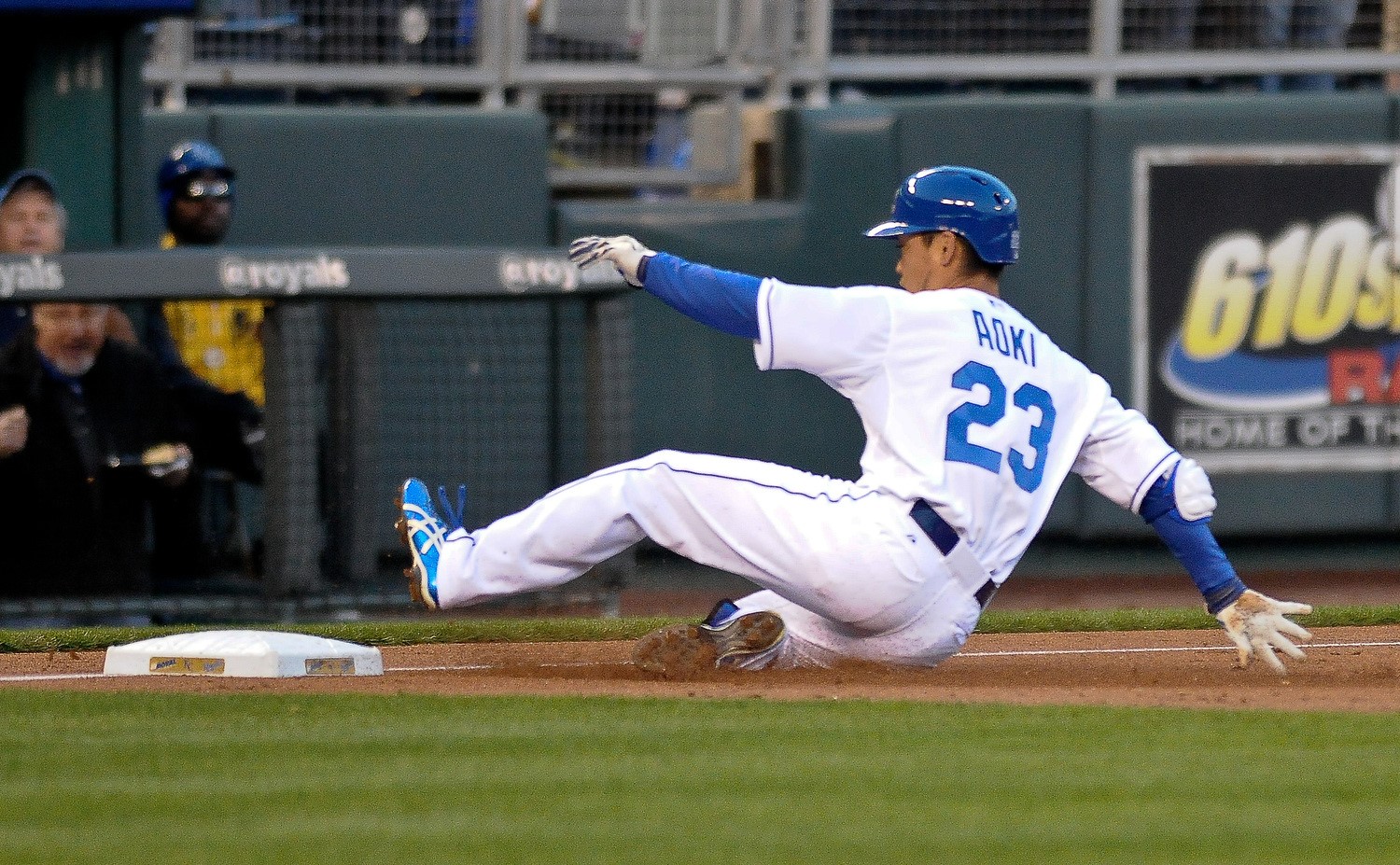
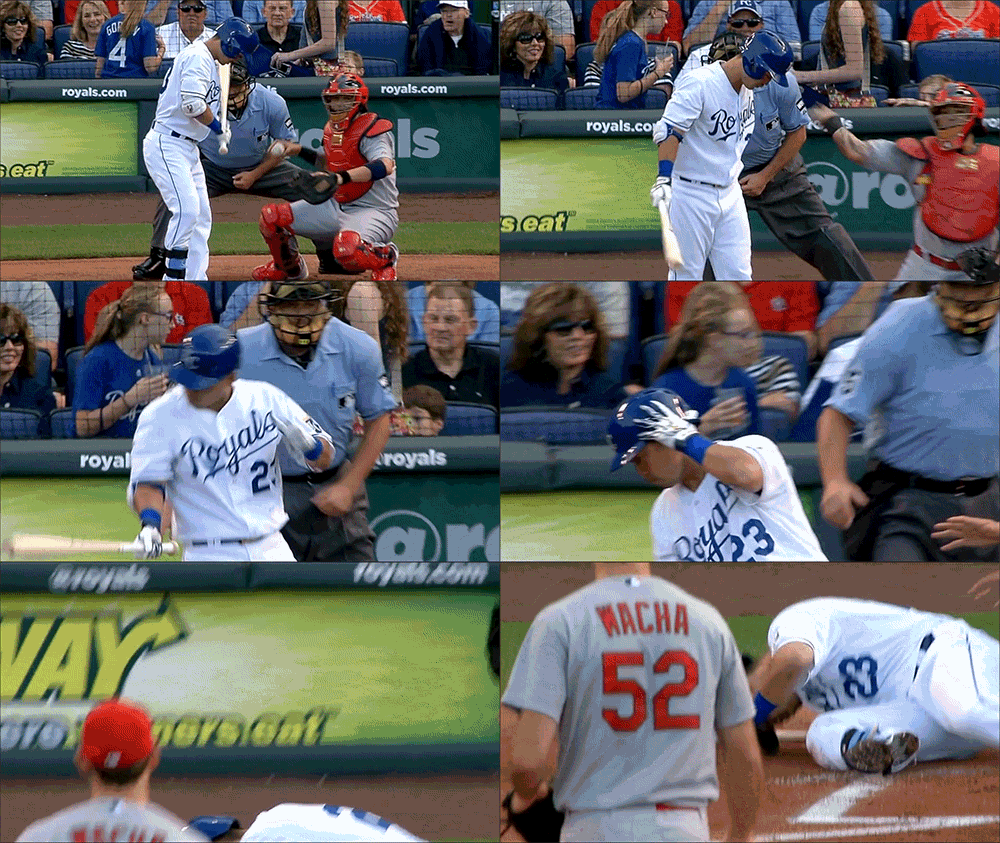
Nori Aoki hasn’t been the player Dayton Moore thought he was acquiring this winter but it’s hard to really feel like it was a wasted trade. The Royals traded from a position of depth and took a chance on a guy who they thought could help them. Unfortunately, they seemed to have caught him at the beginning of the downturn of his career. There is still a few months for Aoki to salvage his season and elevate his numbers to more respectable levels and prove that there shouldn’t be questions about his playing time. Until that happens though, there is always the outside chance the Royals will look for more production from the right field and leadoff spots. If that isn’t enough to warm your soul, I recommend a laugh at Aoki’s expense. Thanks to the genius of one Grant Brisbee, numerous pictures of Nori jumping, ducking or flying out of the way of pitches were compiled for our sick pleasure. Yes, Aoki is a superhero and a damned treasure. Not always in that order. My tears might come from his on field play, but my laughter is the photographic proof.

kc33


Royals 2014 Draft Possibilities

kc1

Last year the Kansas City Royals took 3B Hunter Dozier with the 8th pick in the MLB Draft. It was a surprising pick, as most teams had Dozier slated to be a late first round draft pick. The Royals were sly though, as they were able to draft Dozier, pay him a bit less(saving nearly a million dollars on their slot recommendation) and then draft the guy they really wanted, pitcher Sean Manaea, as their first round supplemental pick, a guy who had been picked as a possible top draft pick when the 2013 season began. A smart move by the Royals, and one that makes you wonder what they have in store for this year’s draft(which will be held later on tonight). The Royals currently have two first round draft picks (17th and 28th) and have been connected to a number of players for these two slots. Let’s go ahead and take a look at the players Kansas City has interest in and the chances of them being taken in one of those two slots.

mlb.com
mlb.com

Forrest Wall

From BaseballFactory.com:

Advanced LH bat with natural, confident actions in the box. Has a knack for finding the barrel. Runs well and has sure hands, but arm limits him to 2B or maybe CF in future.

And this from FloridaBaseballReport.com:

Forrest shows national level speed and power from the leftside of the plate. With plus batspeed and room to grow may play second or third base at the next level. Defensively has plus range and soft hands with an avg arm.

Wall is a prep second baseman that has been aggressively climbing draft boards as of late. There is a very good chance that he won’t be available for Kansas City by the time they get to the 17th pick. Wall is considered their “Plan A”. This was said about the Royals and Wall at http://www.baseballamerica.com during their latest mock draft:

Plan A for Kansas City would be Forrest Wall, who had a great predraft workout with the team, but he might have too much helium to get to them now.

If Wall doesn’t fall to the Royals, that might mean the Mets grab him at the 10th pick. If so that would make him the highest second baseman out of high school taken that high.

khon2.com
khon2.com

Kodi Medeiros

From BaseballFactory.com:

LHP with average-sized athletic body and long arm swing, but outstanding present stuff. Runs FB up to 95 and has a wipe out slider.

From BaseballProspectus.com:

Established himself as one of the top lefty arms on the circuit, sitting 90-92 mph and touching 93 with good arm-side life. He mixed in a promising 78-80 mph slider and solid low-80s changeup, though he struggled to command the former. Medeiros is a work in progress, but the raw materials are there for a premium arm to emerge over the next calendar year.

And from MinorLeagueBall.com:

He could get out big leaguers right now and I’m not exaggerating. His fastball is 90-93 touching 94 but that’s just the appetizer. It has run in on lefties like a screwball. It fades away from righties. You can see lefties bail as it attacks them making it impossible to hit well with any frequency.

Medeiros has long been linked to the Royals and it seems if they don’t take him at 17, they will try at 28(if he is still available). The biggest part of his repeirtoire that has scouts salivating is his slider. Once again from minorleagueball.com:

His slider is in the main course. It’s a 76-78 MPH nasty offering. It’s an expletive pitch. The first time I saw it live, I swore. From the angle he delivers it, it can be unhittable. Lefty hitters won’t stand a chance hitting the ball that starts behind them and ends up on the outside corner. Right-handers could swing and miss and it could hit them in the chest. It is amazing. It has tight spin, late break and enormous movement both horizontally and vertically, although the bulk of it is horizontal due to his low ¾, almost sidearm delivery.

There are concerns about Medeiros’ build and mechanics, but the upside outweighs those concerns. If I had to make a sure bet on a player getting picked by the Royals, this would be it.

kc4

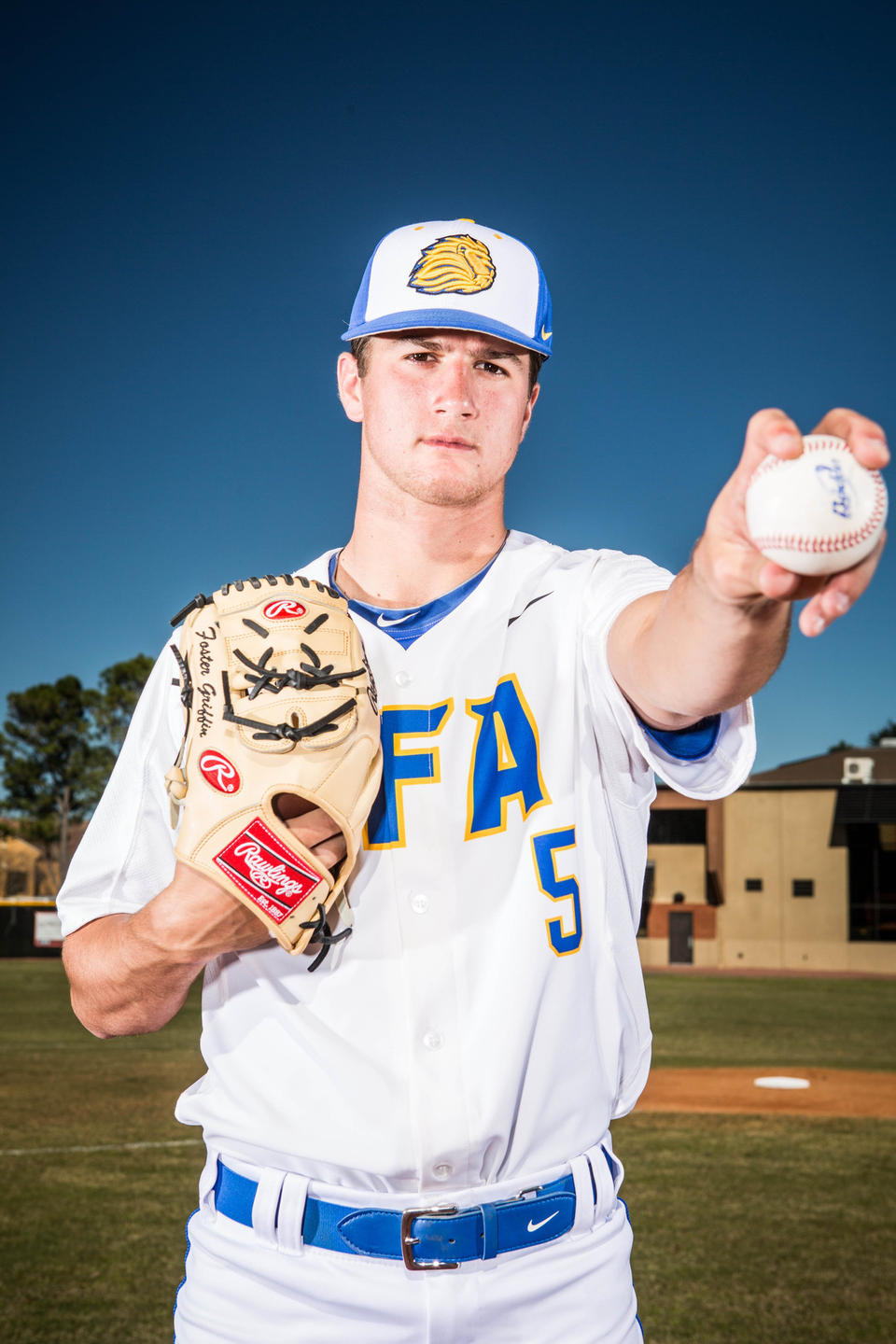
Foster Griffin 

From BaseballFactory.com:

LHP who has a repeatable delivery and a polished 3-pitch mix. Running his fastball up to 94 this spring has enhanced his draft stock.

From BigLeagueFutures.net:

Long, sloped and slider athletic build in Brian Matusz type mold.  He has a sound three piece delivery with the balance and transfer that is relaxed, effortless.  He repeats well for a long and limber pitcher, nice extension that allows him to attack the lower half with plane on every offering.  Fastball was 89-91 mph with an extension that plays up the offering.  Good movement on it with a tough plane to square up.  Curve, 73-75 mph, has the shape and path to project into an above average offering.  He did not show the change up this event, but that pitch could round out a nice 3 pitch mix.  Foster is very projectable with easy arm speed.

and from TalkingChop.com:

Scouts think he could fill out and add ticks to his fastball, which currently sits around 89-91 in game. In addition, he also tosses a changeup as his primary secondary and mixes in a curve as well. He’s committed to play with Ole Miss in the fall, but a first round signing bonus would likely lure him away.

BaseballAmerica.com has Griffin going to Kansas City at the 17th slot with their latest mock draft, which means if Medeiros goes at 28 the Royals would get two prep pitchers in the first round. There was some talk of Griffin falling to later in the draft, but it’s conceivable to see him go in the top two, especially since he is rated in the top ten of high school players available for the draft.

kc5

Monte Harrison 

From BaseballFactory.com:

One of the top athletes in the class. Also a football star, he can run, throw and hit on the baseball field. Extremely high ceiling once he concentrates on baseball.

From PiratesProscpects.com:

Harrison has plus speed, can cover center field and has a plus arm. He has a ton of power potential in his bat. His only average tool is the hit tool, but even that currently rates 50 on the 20-80 scout scale.

and from PrepBaseballReport.com:

Standing 6-foot-2, 195-pounds, Harrison hits for power and average, as well as showing speed on the base path and ability to track down fly balls in the outfield. 

Harrison is probably a long shot for the Royals, and the reasoning why makes total sense. From BaseballAmerica.com:

Prep outfielder and uberathlete Monte Harrison is also a possibility, but the apparent failure of the Bubba Starling experiment will probably make them gunshy.

The Bubba Starling comparisons are everywhere: two sport athlete, from the Kansas City area( Lee’s Summit West), committed to play football at Nebraska. Harrison could be a pick for the Royals at 17, but my guess would be there is a greater chance the Pirates nab him at the 24th pick. To me, the Royals can’t make the same mistake twice. It would be way too costly.

veooz.com
veooz.com

So those are the most talked about prospects that the Royals could pick later on today in the MLB Draft. I’ve always felt like baseball’s draft is the hardest sport to know what you are truly getting and your slot in the draft doesn’t always guarantee success. The Royals have been burned a few times already in the draft over the last few years, so a successful draft at this point is almost a necessity. A productive draft at this point would go a long way to shaping the Royals for a promising future.


If Not Dayton, Then Who?

Milwaukee Brewers v Kansas City Royals
Last week I took a look at five possible managerial candidates if(or when) Neddy Yost ends up fired. Many pointed out that as much as a new manager would be nice, Royals GM Dayton Moore shouldn’t be allowed to hire a third manager. I agree with that sentiment, that Moore should be fired before Yost(although both being gone would be fine for me). Rany Jazayerli has made the best argument so far for Moore’s dismissal, one that obviously I agree with. Here is the problem; I don’t see Moore getting fired soon. There is a far greater chance of Yost getting the heave-ho, which is why I took a look at possible replacements. With that said, it seems only fair that I take a look at possible replacements for Moore. But to be honest, you don’t read about possible general managers very often. There are the candidates you read about from time to time, most being assistant GM’s for other ballclubs. There are also those that are under the radar but make total sense when you think about it. I might not be up on possible replacements for GMDM, but I can tell what the Royals should be looking for. Here are some tips for Kansas City to use when perusing the classifieds for Moore’s successor.

kc1

1)Pick Someone Who Has Worked for a Small Market Team

There are many reasons why I think Kansas City should look at other small market franchises when picking a new general manager. The most obvious is to pick from the ones who have a winning pedigree. Off the top of my head comes Tampa Bay, Oakland and Minnesota. These are teams that have worked with less and been successful in spite of it. The first two are obvious, but I have massive respect for Minnesota’s front office. You might not know it from the last few years, but there for a long time they produced player after player and when it came time for one to leave, there was another prospect to take their place. The funny thing is soon the Twins will be a force again, as they have been stockpiling talent in the minor leagues for a few years now. If the Royals bring in a candidate from one of these teams, they will already understand the restrictions placed under them and have a leg up on how they can work around it. There are some from bigger market teams that could still succeed, but they just aren’t as used to the parameters set on them as an executive from a smaller market franchise. There are a few exceptions to that rule, most notably being St. Louis and Boston. Both franchises work with a bigger budget and are able to do things the Royals realistically just can’t do. But both also focus on drafting and player development and then adding the rest of the pieces through trades and free agents. The formula is the same for Kansas City, just on a bigger scale in those two markets. No matter what, Kansas City needs to be looking for someone who isn’t conventional. Which leads us to the next thing they should be looking for…

kc2

2) Pick a GM Who Will Be Creative

Honestly, this might be the most important thing for the Royals when hiring a new GM. Ever since Billy Beane started incorporating ‘Moneyball’, almost every team in baseball has either stolen ideas from him or tried to catch up to the way he structures a team. Beane’s biggest attribute has been to be creative and think outside the box when acquiring talent. This has allowed Oakland to be a perennial playoff contender despite the fact they have a small payroll, play in a crappy stadium and have a hard time convincing big-name talent to play for them. For the GM of a small market franchise, being creative should be an everyday staple. Unfortunately, I’ve never felt like Dayton was creative in his outlook of picking up pieces. Sure, Moore has had some good trades, some even great(Guthrie for Sanchez? Still a steal!). But most of what Moore does is thinking that most other GM’s would do as well. It’s almost like they follow the same handbook. That is what the Royals next GM should not do; follow a handbook. Instead he needs to be ahead of the pack, thinking in ways the other GM’s in the league aren’t thinking. Beane has made a living out of being unorthodox and it has paid off well. Whomever the Royals hire next needs to work along that same vein.

kc3

3) Build a Team Around Your Strengths

It’s conceivable here to make the argument that the Royals in a lot of ways have already done this. There is some truth to that statement. The Royals are a team focused around pitching and defense, which is a large chunk of this team. But if you look at the Royals teams of the 70’s and 80’s, they were catered to Kauffman Stadium. Their hitters were good hitters who knew how to hit the ball in the gap for extra bases. They had power, but not exactly power hitters(minus a John Mayberry or a Steve Balboni here and there). In some ways this Royals team is the same way-only the Royals hitters have forgotten how to hit. You very rarely ever see them hit the ball in the gaps, which means they seem to be a station to station team. Whitey Herzog understood this and helped build his Cardinals teams in the 80’s to play faster than everyone else. It helped that Herzog was one of the best managers in the history of baseball, but he understood playing to one’s strengths. The Royals will need hitters who can hit, not just hit home runs, although a power hitter would be nice for this team. Whoever ends up being the next GM needs to realize this and draft, trade and sign accordingly. Home Runs can happen at ‘The K’, but a team full of them probably won’t give them the success they want. A balanced lineup is really what this team needs to add to the already stellar pitching and defense.

kc4

4) You Need to Charm David Glass

Sure, it seems as if it doesn’t take much to charm David Glass. I mean, Dayton has made him think that eight years is a perfectly fine amount of time to rebuild a team. But is he easier to charm than this David Glass?

kc5

Or this David Glass, who seems to be looking for a good time?

kc6

Now that I have given you nightmares, let’s get back to the point of this. I’m not so sure Mr. Glass really understands baseball, or at least understanding what a real GM should look and sound like. Moore was smart enough to get Glass to open up his pocket book over the last eight years, not only for major league talent but money for drafting and signing young talent. Moore had a plan lined out and even though it appears to be a total failure, I’m sure Glass was impressed that he had something lined up. If a candidate is going to interview for this job, they are going to have to show him they know what they are doing and give him a reason to hand him the keys to this struggling franchise. This is where it doesn’t matter one’s qualifications; it will come down to what Glass wants. I’m positive the Glasses know nothing about sabermetrics or just how unbelievable it is that team’s like the A’s and Rays compete year after year. But there is always hope that he will listen to other people within the Royals organization that know what they are doing and weigh his decision with them in mind. Or this is all for nothing and it is all about who can charm the pants off of a 78 year old man.

bputv.com

5) Player Development Plan

I’m sure Dayton learned a thing or two about player development when he was with the Atlanta organization. Problem is, it hasn’t shown with Kansas City. So far, the only real players the team has developed and are high caliber major league players are Salvador Perez, Yordano Ventura and Greg Holland…and even Ventura is questionable, since he has only been with the team a few months. There is obviously something wrong with the development of these players, otherwise why would guys like Eric Hosmer and Mike Moustakas succeed in the minors then struggle so much once they made it to the big leagues? There is a chance the problem lies in the major league coaching staff, but there is also a chance that some things are fishy in the minor league development. At the end of the day, the next GM needs to have a plan outlined and hopefully it is one that has succeeded in the past. Look at a team like the Cardinals; they have a simple plan outlined for their entire minor league system and a lot of their success can be tied into that plan. Those players get to the majors and already know what they need to do to succeed. The Royals need a system like that, one in which there are simple plans to follow but also one that lets each player be an individual. Not every player is the same and what works for one player might not work for another. That is a big part of the entire player development program. The next Royals GM needs this to be a big part of his plan and be ready to implement it in any way possible.

kc8

These are just some of the bullet points that the Royals should have in mind once Dayton Moore is shown the door. Most seem like simple things but just because something is simple doesn’t mean it works out that way. We are seeing that now, as GMDM’s ‘Process’ has turned into an eight year nightmare. Whomever is chosen needs to not make the mistakes that Moore has made over the last eight years. He needs to be not only creative when acquiring talent, but creative when putting together his master plan and no matter what they shouldn’t have a process. It just has a negative connotation now. All that Moore’s successor really needs is a winning formula. Do that and that person will be made in Kansas City.

I Would Rather Throw Like a Girl Than Throw Like 50 Cent

kc5

Just yesterday rapper 50 Cent was asked to throw out the first pitch at the New York Mets game. No big deal; celebrities throw out the first pitch quite often. It’s a nice honor and probably cool for a lot of the players to get to hang out with Mr. Cent during the day. But something went horribly awry for 50. We found out his dirty little secret:

Yep, he can’t throw. It’s possible he has never thrown a baseball in his life. Mr. Cent was asked about his awful feat later on and he blamed it on…Curtis Jackson. Yes, he blamed it on his real name, who is apparently a different persona:

“50 Cent is the best,” he told SNY reporter Kevin Burkhardt during an interview in the fourth inning. “Curtis Jackson, I don’t know what’s the matter with him.”

Cent’s awful performance made me think of other awful first pitches…and there are quite a few.

Wait, Carl Lewis is in there? Man, can that guy do anything other than run? He sucks at singing too:

Yes, that was Los Angeles Dodgers TV announcer Charley Steiner almost dying from laughter at Lewis. Getting back to bad first pitches, those were some awful ones but what about Carly Rae Jepsen?

Yep, that’s bad. Singer’s in general seem to be bad. Like Tiffany Hwang of the South Korean pop group girls:

Even Hall of Famer Don Sutton had some issues:

Who has nailed it? This girl, that’s who:

Who else? Well, the Miz might be a jobber now, but he has some good accuracy:

And this was pretty awesome:

And let’s be honest, the bar was raised with this kid’s first pitch:

But this one is my favorite:

Not everyone can throw like a blonde girl from Los Angeles, or a former WWE Champion or a blind kid. But we can all throw better than 50 Cent.


Create a free website or blog at WordPress.com.

Up ↑