Welcome To The Jungle

kc1

“Some things will never change. Some things will always be the same.” ~Thomas Wolfe, You Can’t Go Home Again.

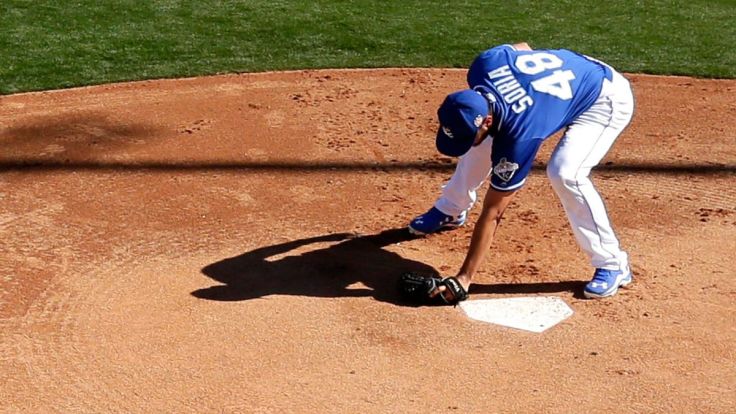
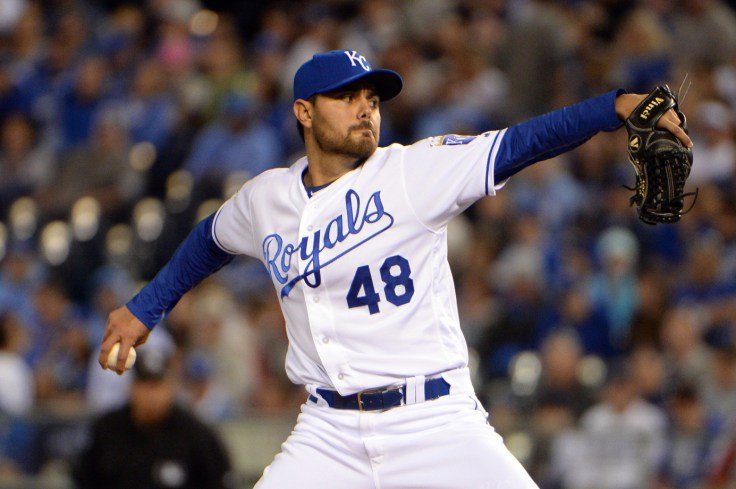
It’s hard sometimes to visit the past. As much as we want to look at the past through rose-colored glasses, most times the truth is that there was just as much bad as good. Go ahead, look back at an old relationship and really dissect what worked and what didn’t. There is a reason you parted ways. This holds true in baseball as well; if a player leaves a team, there is normally a reason. For the most part, Joakim Soria was a positive when it came to his first go-around with the Kansas City Royals. Multiple time All-Star, reliable closer, and even racked some American League Cy Young  and MVP votes back in 2010. Sure, there was the rough patch he had in 2010 when  he was using a cutter way too often(and saw him get hit hard because he hadn’t mastered the pitch), but those five years of glory endeared him to the Royals fanbase. Unfortunately, Soria was part of the losing years in Kansas City, the years that aren’t always looked back on fondly. It wasn’t his fault, but it’s hard not to associate him with that era of losing.
kc2

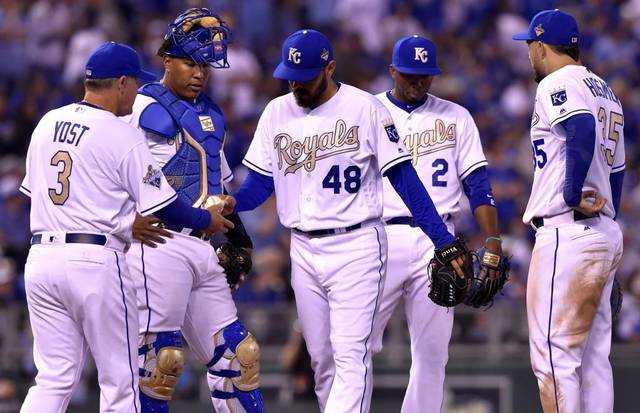
So when the Royals signed Soria to a 3 year deal this past offseason, it was mostly met with cheers and adulation. Soria had put up some good numbers last year during his stint in Pittsburgh and was only entering his age 32 season. But there were reasons to be concerned; I for one wasn’t fond of the length of the deal nor the amount of dollars spent. I wasn’t Anti-Soria, but my feeling was that solid relief pitching could not only be found on the cheap, but younger relief pitching wouldn’t be that hard to find. Instead, the Royals latched themselves to Soria for three years with the hope that he still had some of that old glory left in his arm. In some ways Soria hadn’t changed much; his average velocity is still on par with years past and he still uses his four seam fastball to set up a nasty change-up that is a real worm killer. Soria was known to throw the change-up to generate more swings and misses, as it is slightly firmer than the usual change and has more natural sink to it. The feeling was that Soria could help set-up for closer Wade Davis while also using his past closing experience to help in case of emergency.
kc3

The first month of the 2016 season wasn’t a warm welcome back to the fold for Soria. Call it nerves, call it bad pitch location or just bad luck, but in his first outing back he would only throw 2/3 of an inning, allowing 3 hits, 3 runs and 2 walks. In fact, just chalk up April as a bad month; 12 games, 11 innings pitched while giving up 8 runs and posting an ERA of 5.73. Many a Royals fan was already wanting him to be pushed back to less intensive work, a few even wanting him to only pitch during blow outs or in mop up duty. But the truth was that Soria just wasn’t pitching as bad as it appeared; his line-drive rate was down and his hard hit rate also leaned downward. This told me that hitters were just not hitting the ball very hard off of him. This was even more evident when looking at his BAbip, which stood at .355. Luckily, things would turn around starting in May.
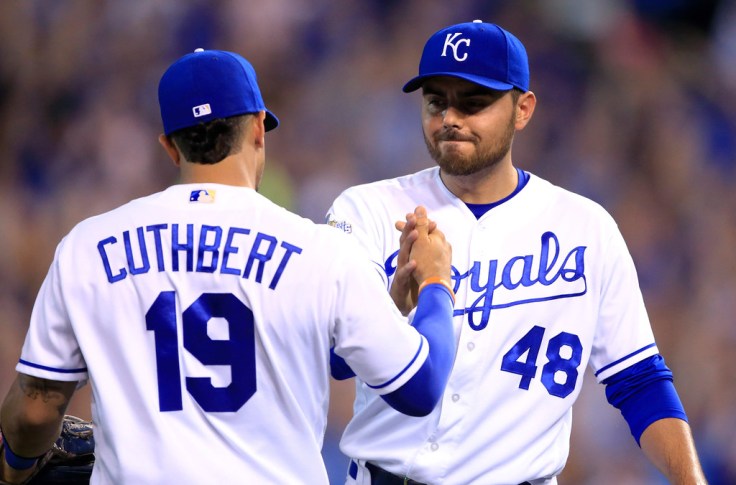
Cheslor Cuthbert, Joakim Soria
(AP Photo/Orlin Wagner)

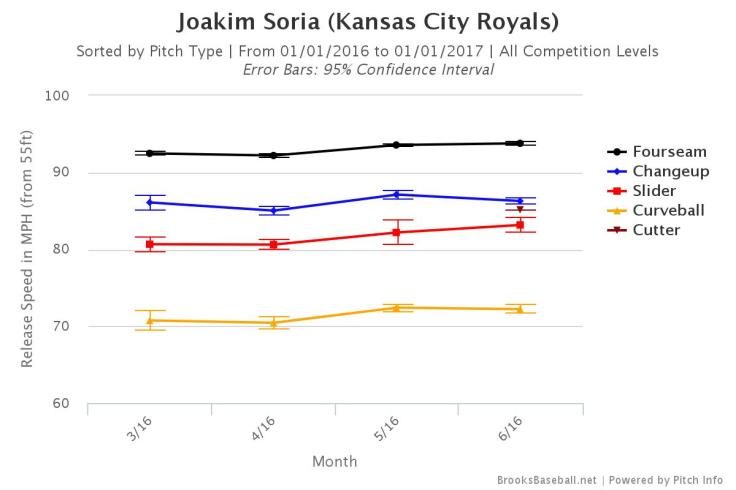
May would lead to more prosperity for Soria; 12 games, 13 innings thrown only allowing 2 runs and posting an ERA of 1.35 while his BAbip lowered to .222. In fact, since May Soria has been one of the most reliable Royals relievers. Over his last 22 appearances, Soria has given up only 5 runs over 24 innings, putting up an ERA of 1.88 while almost striking out a batter per inning(striking out 21 over those 24 innings). So what has changed?
Brooksbaseball-Chart

For one, it appears his velocity has gone up. There is a slight decrease in the speed of his change-up, but to me that is actually a good thing, as it puts more distance between his fastball and his off-speed stuff. This is a good sign.
Brooksbaseball-Chart (1)

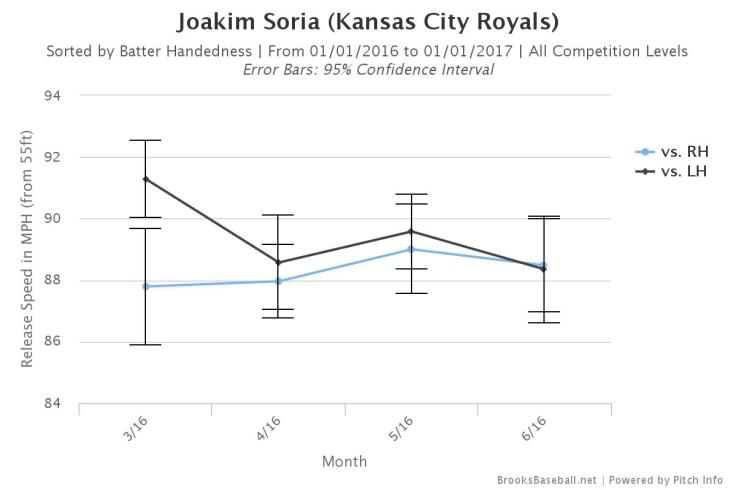
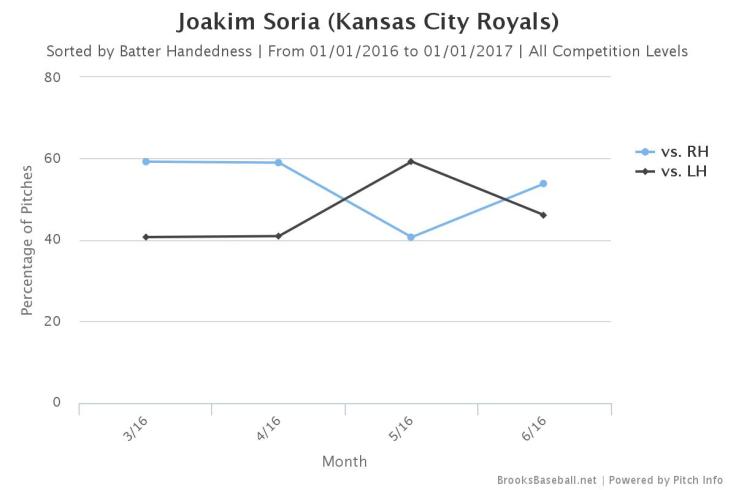
It also looks as if left-handed hitters have hard a harder time hitting him, as the release speed has changed by a decent amount from the beginning of the season.Right-handed hitters speed has gone up, but not by very much. This is also shown in the percentage of pitches:
Brooksbaseball-Chart (2)

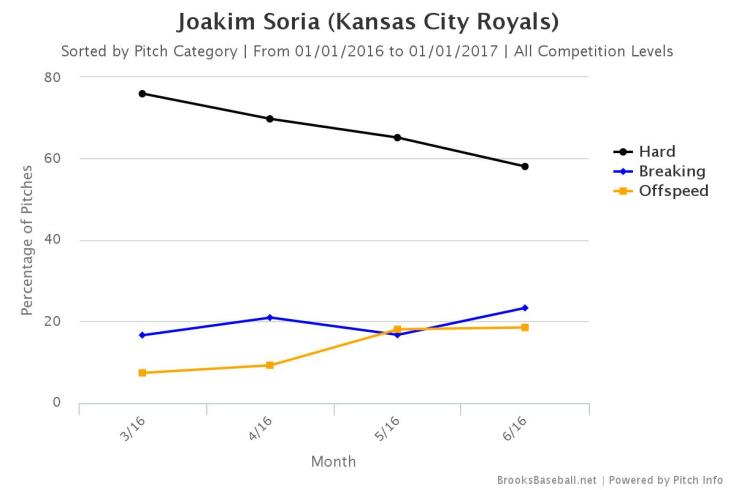
So what is Soria doing differently from April? He has drastically increased the use of his off-speed pitches:
Brooksbaseball-Chart (3)

If you notice, the percentage of hard stuff has been drastically reduced by Soria, while both his breaking balls and off-speed pitches have seen an increase since April. This change in philosophy can also be seen in the pitches that batters are swinging at:
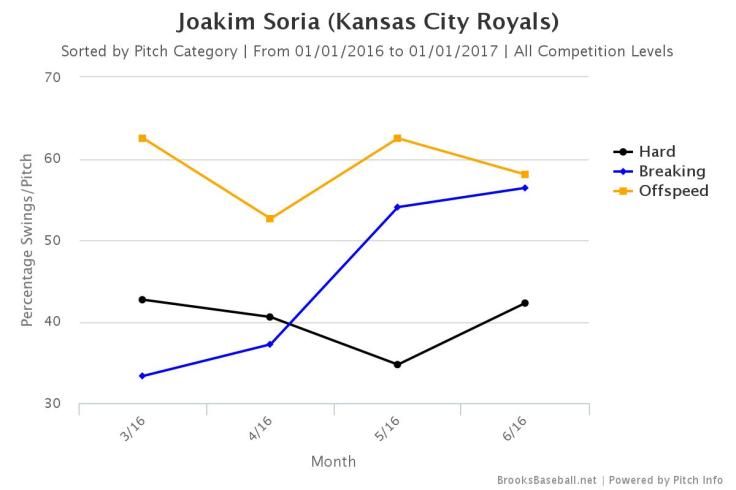
Brooksbaseball-Chart (4)

Hitters are swinging at more of his breaking balls thrown and is also seeing their batting average go down on breaking balls as well:
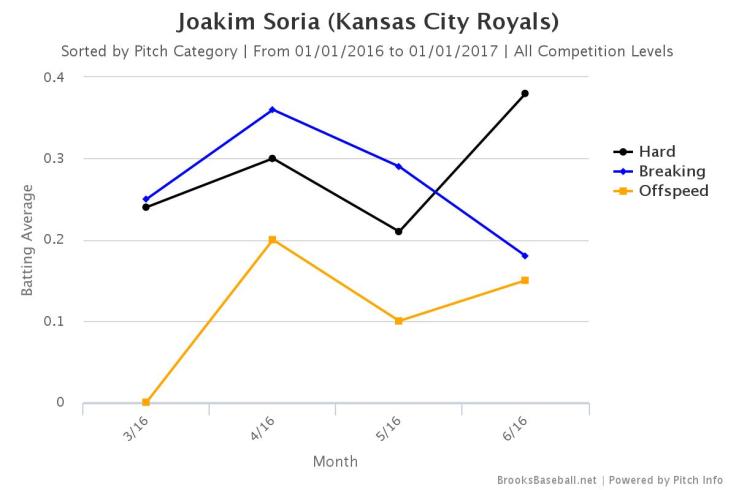
Brooksbaseball-Chart (5)

It goes to show how a slight change in philosophy can change everything. Batters are hitting better against Soria’s hard stuff, but they aren’t seeing those pitches nearly as much as early in the season. As has always been the case for him, he is using his fastball to set up his off-speed stuff, and because of that the results are looking more and more like they did back in his heyday.
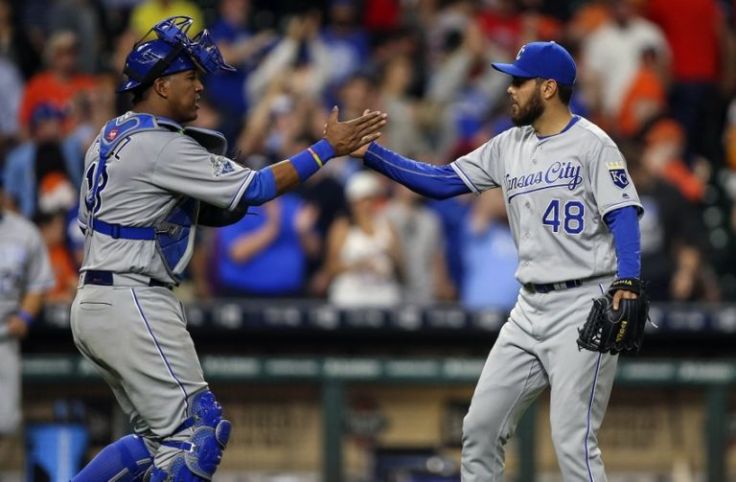
MLB: Kansas City Royals at Houston Astros
(Credit: Troy Taormina-USA TODAY)

I’m not sure who to give credit to for the change in Soria’s pitch usage(my gut thinking is it was probably pitching coach Dave Eiland) but whomever it was should get a raise. Normally players at Soria’s age start to see a regression; less foot or bat speed, or a decrease in velocity for pitchers. Thankfully for Soria, he seems to have skirted the enivitable…for now.  There is no way to tell if we will be able to say the same by the end of his contract, but for now he is a main cog in the Kansas City bullpen. Players come and go for your favorite baseball team and a select few hold a special spot in your memory. Normally, if a player returns it is at the tail end of his career and he is but a shell of his former self. Thankfully, we are still seeing top shelf Joakim Soria. Sometimes you can go home again.
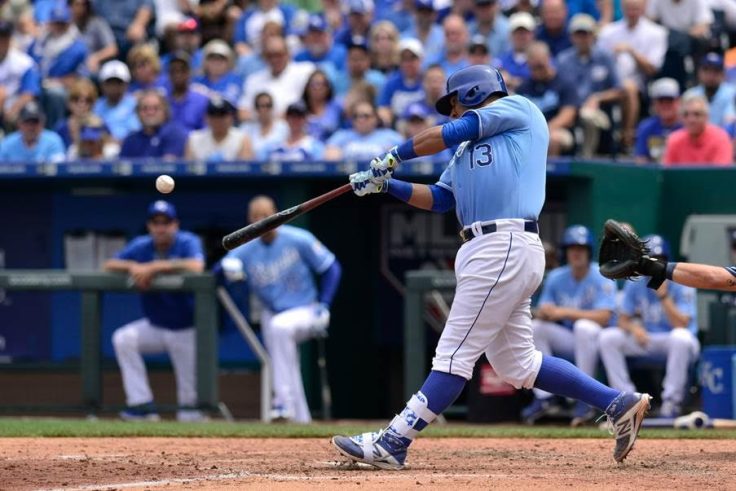
Salvy Power

kc1

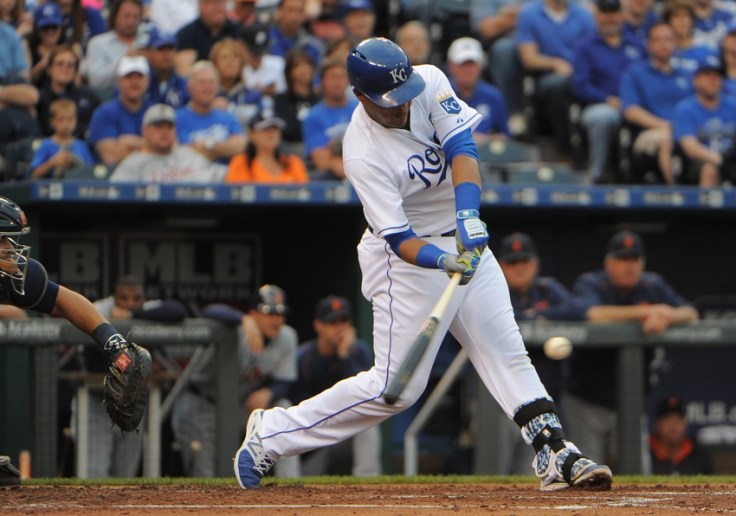
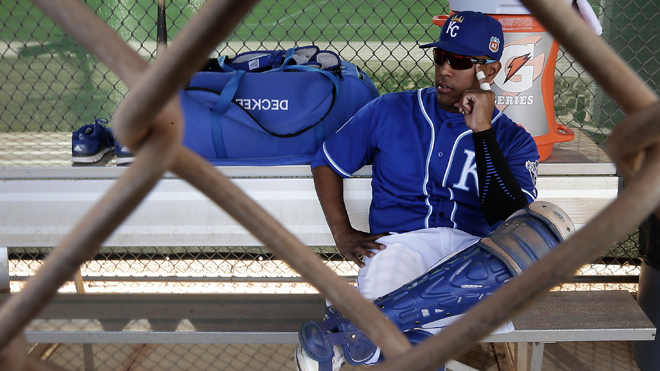
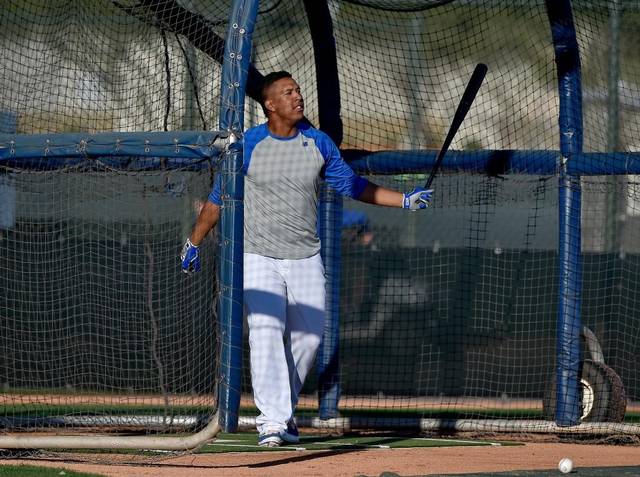
Salvador Perez holds many roles for the Kansas City Royals; clubhouse leader, Lorenzo Cain’s BFF, backup broadcaster, leader of the pitching staff and middle of the order power threat. In 2015, Perez would hit 21 home runs, a new high for a Kansas City catcher. Despite this career high, Salvy’s other numbers weren’t as impressive. Walk rate was the lowest of his career. Strike out rate was the highest it had ever been. Hard hit rate was the lowest it had been since his rookie campaign. Line drive rate was one of the lowest of his career. Most importantly, his wRC+(which weighs runs per plate appearance while being park and league adjusted) was the lowest of his career, at 87(league average is 100). It really appeared as if Perez’s numbers were already starting to skew downwards, which was not good for a player coming into his age 26 season. Most Royals fans are well aware of Salvy’s lack of patience at the plate and most don’t expect him to walk much, but would prefer he became a bit more selective at the plate. All this information makes it even more impressive when discussing what Perez has done so far in 2016.

kc2

Over the last month Perez has been the hottest hitting Royal, putting up a line of .411/.436/.689 with 6 home runs, 14 RBI’s and an OPS of 1.125. Perez, a notorious free-swinger, is still swinging at a lot of pitches(in fact he is pretty much on par with his totals for the last two seasons), but there is a slight change in his approach. Last year, Perez was making contact with pitches outside the strike zone about 73% of the time; so far this year he is at 62%. Meanwhile, pitches inside the strike zone he is actually making a bit more contact, up to 91.4% from 90.7%. This tells me that he is laying off the pitches outside the strike zone a bit more this year while focusing more of his attention on pitches within the meat of the plate. The funny part to all of this is that Salvy’s strikeout rate is up by quite a bit(22%, up from 14% last year) while his contact rate is also down, to 78% from last year’s 83%. You would think that a guy who is making less contact would not see his numbers go up, but they have. In fact, Salvy has been a beast in the power department so far this year.

kc3

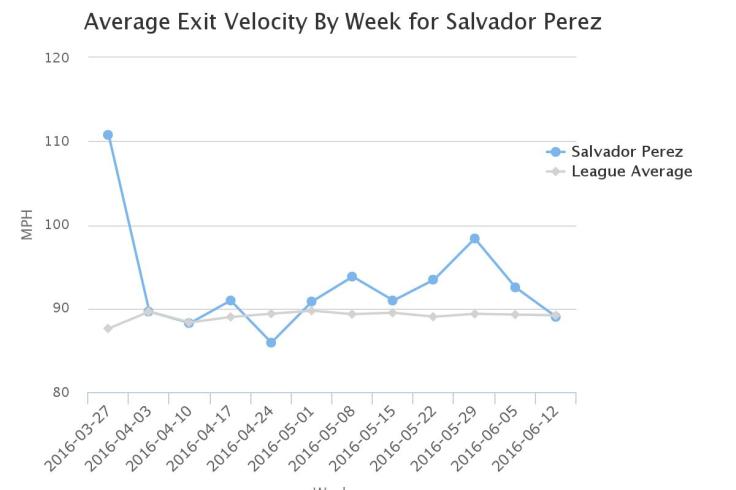
The power numbers are where Perez is really stepping up his game. His hard hit rate is significantly up this year, 36% from last year’s 24%, and his fly ball rate has also soared, 48.8% from 37.4%. Of course because of this, Perez has a higher home run to fly ball ratio(14.3%) and a lower ground ball rate(26.7% from last year’s 41.9%). To me this all screams of someone driving the ball much more and realizing he can do more damage on pitches closer to the middle of the plate. This is even more evident when looking at Salvy’s exit velocity:

chart

As you can tell, outside of a brief dip the week of April 24th, Perez has been not only above league average, but even close to averaging 100MPH on hit balls for a few weeks. Now, while his approach with pitches outside the zone has changed, he is still a very pull-heavy hitter, as he is pulling the ball the most he has since 2014. Slugging, On Base Plus Slugging, Isolated Power and Weighted on Base Average have all gone way up so far in 2016. Hell, Salvy’s BAbip over the last month is a ridiculous .508! These numbers speak of a player on track for a career year.

Salvador Perez
(AP Photo/Charlie Riedel)

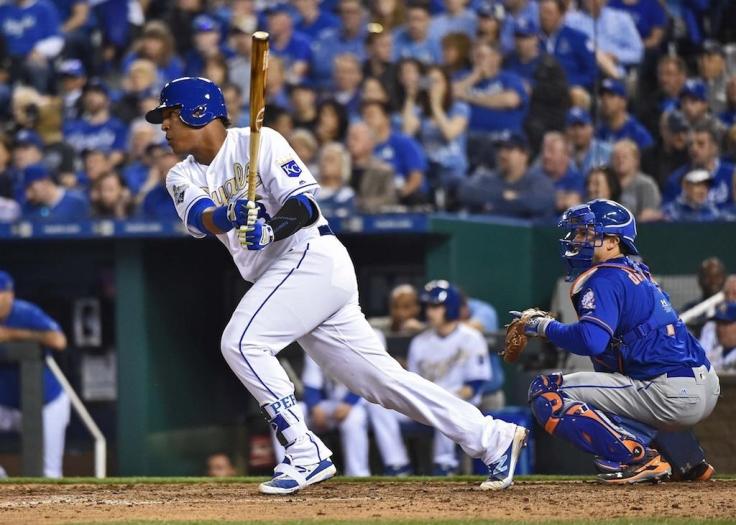
Speaking of career highs, at his current rate, Perez is on track to have career highs in doubles, home runs, RBI’s, batting average, on base percentage, slugging and with a little luck, possibly even WAR. He also already has 11 walks this year, only 6 behind last year’s total. His career high for free passes is 24, which I’m not quite ready to say he could topple, although if he keeps hitting like this he will surely see his intentional walks go up. I know there was an increased effort this year for Perez to be more patient at the plate. To me, being more patient at the plate doesn’t always mean more walks as much as waiting for a good pitch to hit and drive. I’ve long felt that Royals hitting coach Dale Sveum has been teaching these guys to look for a pitch to drive and because of that we have seen higher power numbers from Lorenzo Cain, Eric Hosmer and Mike Moustakas. I’m starting to think the same philosophy is being soaked up from Salvy and it is paying off in spades.

kc5

So do I believe he will be able to keep this up all season? Perez is a very streaky hitter and I would assume at some point we are going to start seeing a lull in his numbers. That being said, I think even with that he can still keep himself with numbers higher than what he accumulated last year. Is he going to hit .300 all year? Probably not, but the power numbers could be here to stay. The bigger concern for Kansas City is to keep Perez rested and make sure they are not over-working him behind the plate. The Royals have a solid backup receiver in Drew Butera and with Kendrys Morales slumping much of this season, it seems like a solid idea to give Salvy’s knees a rest and start him at DH occasionally. More than anything, Kansas City needs Salvy to stay healthy the rest of the year for them to stay in contention in the American League Central. Perez has long been regarded as one of the top defensive catchers in the game and rightfully so; but now, outside of a Jonathan Lucroy or Buster Posey, he is making the case as one of the best all-around catchers, period. Perez is as special as they get and I really hope Kansas City fans are savoring what they have with him. If he keeps this up, the hardware won’t be stopping anytime soon.


Create a free website or blog at WordPress.com.

Up ↑