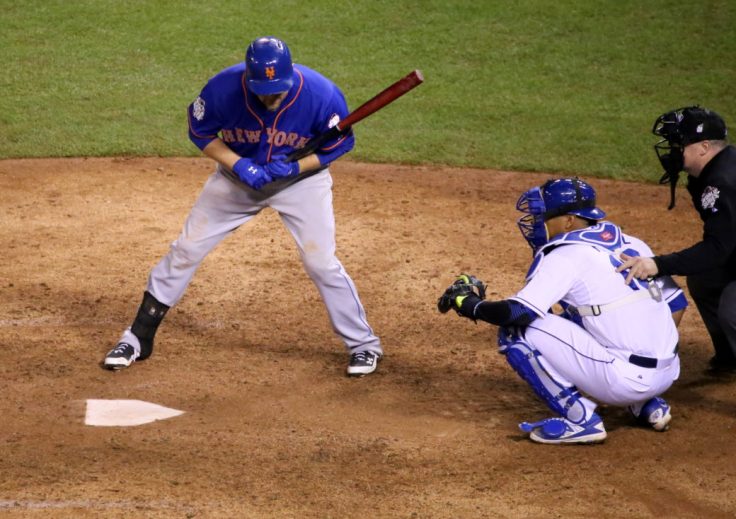
L-O-Y-A-L-T-Y

kc1
Credit: KansasCity.com

I’ve always been told loyalty is an honorable trait to have. It speaks of a person’s character and can be a window into how a person will react when times get rough. In fact, the definition says it all:

loyalty
[loi-uh l-tee]

1.the state or quality of being loyal; faithfulness to commitments or obligations.
2.faithful adherence to a sovereign, government, leader, cause, etc.
3.an example or instance of faithfulness, adherence, or the like:a man with fierce loyalties.

Loyalty in sports can be a tricky thing. The definition of the word can fluctuate, whether you are a fan or a player. For years players have been labeled as “sell outs” or “greedy” whenever they decide to look for greener pastures ($$$$) and head to the highest bidder. But loyalty in baseball should probably be defined differently.
kc2
Credit: AP Photo/Charlie Neibergall


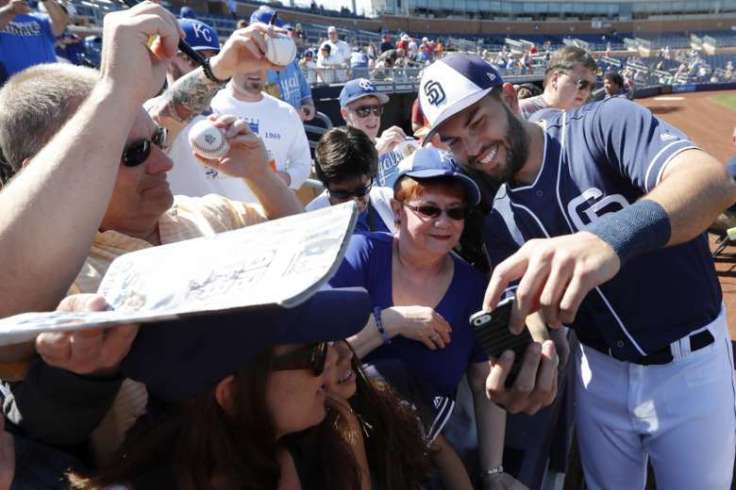
I bring this up because a few Royals fans were not pleased with Eric Hosmer’s decision to sign with the San Diego Padres. Yes, these fans are the minority, but they are a vocal bunch. Obviously there is an emotional attachment to this group of players; I knew this was going to be rough when a part of me felt bad that Jeremy Guthrie was gone. It’s inevitable that winning a championship would make it harder when the business of baseball gets in the way of putting together the big league roster. But that word–business–seems to be the hurdle some have a hard time getting over.

Let’s break this down. When a player is allowed to venture out on the free agent market, they can talk with other teams and see if there is a mutual interest there in working together. It only makes sense that a player would want to gauge how much he is worth. It’s really not any different from if another job talks to you about leaving your current employment and offers you perks that your current job has not.


kc3
Credit: Michael Sears, Milwaukee Journal Sentinel

But baseball has a slight difference: you can’t be a major league player forever. In fact the average length of a major league career is just 5.6 years:

After studying the 5,989 position players who began their careers between 1902 and 1993 and who played 33,272 years of major league baseball, three demographers have come up with an answer: On average, a rookie can expect to play major league baseball for 5.6 years.Their study, which is being published in the August issue of Population Research and Policy Review, also found that one in five position players would play only a single season.

Fewer than half of all rookies remain long enough to play a fifth year. And only about 1 percent of players last 20 seasons or more.

Cognizant that pitchers are more prone to injuries and have volatile careers, the authors, William Witnauer of the State University of New York at Buffalo and Richard Rogers and Jarron Saint Onge of the University of Colorado, excluded them from the study. They also excluded 618 players who made their debut after Sept. 1 and played only that season.The authors found advantages in starting a major league career early. The probability of ending a career after one year is 10 percent for players starting at age 20, but rises to 13 percent for players who start at 21, and 36 percent for players who start at 28.

With the averages not boding well for a long, lengthy career for a large chunk of players reaching the majors, that would mean the wise decision is to make as much money as humanly possible while you can. You never know when an injury or illness could swing around and not only hurt your value but also hurt your chances of continuing your career.So it’s easy to see why most players want to make as much money as possible when they head out on the free agent market. Take Lorenzo Cain for example. Cain has dealt with numerous leg issues over the years and will be entering his age 32 season this year. While he might have been able to take a shorter deal for more money per year, Cain went with a 5-year deal in Milwaukee this winter. It made more sense for Cain to go with a long-term deal rather than a shorter one where he would end up back on the market at an older age. At that point, who knows where Cain’s value would be and if injuries would hurt his chances of procuring a deal similar to what he received this past offseason.
kc5
Credit: Charlie Neibergall / AP

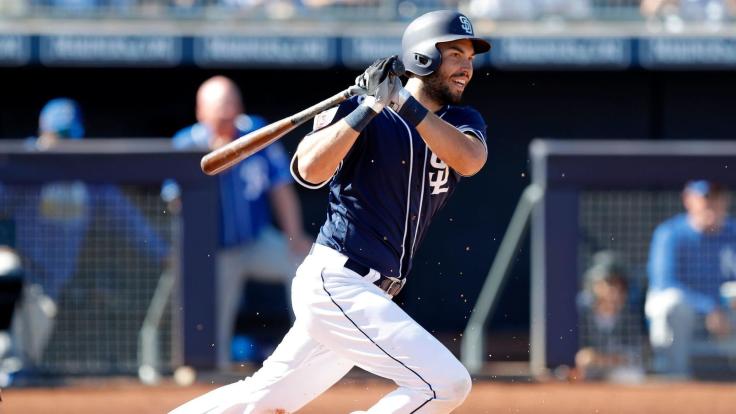
What that means is I will never fault a player for getting as much money as they can out on the market. I also wouldn’t question their loyalty to the organization, since that is a two-way street. Sure, Hosmer and Cain could have possibly returned to Kansas City on lesser deals, but why? A sense of loyalty from what they have done these past seven years? While it might be looked at by some as a noble gesture if they had stayed, logically it would make no sense. The Royals this winter weren’t financially in a position to offer the contracts that the Brewers or Padres offered, let alone whether those deals would make sense for the Royals long-term.The honest truth is that while it is great when players like George Brett or Alex Gordon stay with one team for the duration of their career, you can’t fault a player for wanting to milk as much as they can from the market. This doesn’t mean they are disloyal to the team they left nor does it mean they disliked the team, organization or even the fans with that team; it just means they did what was best for them and their family.
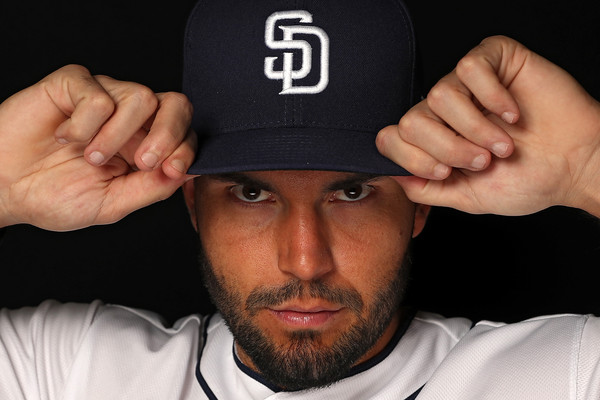
kc4
Credit: K.C. Alfred / San Diego Union-Tribune

I expect Royals’ fans will give a healthy standing ovation the next time Eric Hosmer or Lorenzo Cain return to Kauffman Stadium and they should. Both players were a big part of the rejuvenation of baseball in Kansas City over these last couple of seasons. But if you boo these players you might want to think about what you would do in that situation. It’s easy to say you would take less money to stay in a comfortable place like Kansas City, but would you still feel that way if your career was winding down or if you had the opportunity at a mega-contract?At the end of the day baseball is a business and as we have seen this offseason, it can sometimes be a cold, heartless, ruthless business to those looking for a job. While on the surface the idea of a player staying in one spot and being loyal sounds great, the reality is a lot murkier than that. Temper expectations, try to look at the situation from someone else’s point of view and enjoy the time you have with your favorite players. Hopefully if you are loyal to your team, they will be loyal to you.


Royals Sign Duda


kc1
Credit: Sports Illustrated

Just when you thought the Kansas City Royals winter was over…

On Wednesday they signed Lucas Duda to a one-year, $3.5 million dollar deal with Kansas City. Incentives could push this deal a bit higher, based on plate appearances:

With the signing, Duda will take over the first base position to begin the year and will add a much-needed left-handed bat to the middle of the Royals batting order. Even better, Duda has been surprisingly productive the last few years in both New York and Tampa Bay.

kc2
Credit: The Associated Press

Duda is coming off of a 30-home run season as he split time with the Rays and Mets. Duda hit 30 bombs, drove in 64 runs, posted a slash line of .217/.322/.496 with an OPS+ of 116. Not enough for your liking? Over his career he has put up an OPS+ of 120 (league average is 100), a .457 slugging percentage and has three seasons where he has produced over 200 total bases. Duda is a power hitting first baseman who is entering his age 32 season and should be able to still produce in the friendly confines of Kauffman Stadium.

I’m sure there will be some who question whether or not he can produce at the level of his predecessor, Eric Hosmer. Well….

Duda won’t be as agile as Hosmer on the base paths or even on defense. Speaking of his defense…

In case you didn’t know, Duda was the one who threw the ball into the stands. The Royals are obviously taking a step down defensively with Duda, but considering what he will do with the bat and what they will be paying him, it is still a good deal.

Lucas Duda takes a pitch during #WorldSeries Game 1.

The one issue that has been brought up with his signing is how he will affect the younger players who have been vying for the first base spot in camp, most notably Hunter Dozier (who appeared to be the front-runner this spring). If you are in the camp of the Royals doing a larger rebuild, Duda would be the wrench in that process as he would be taking at bats away from players like Dozier, Ryan O’Hearn and Frank Schwindel. But General Manager Dayton Moore doesn’t see things that way:

It’s obvious to see that the best case scenario is for Duda to play well, boosting his value and making him more tantalizing for teams before the summer trade deadline. The Royals could then ship him off for a piece that could hopefully help the team in the future and someone like Dozier or O’Hearn could then take over the first base position. In fact, it appears that is what Moore is already thinking:

This seems to hint toward Dozier starting the year in the minors and working his way back up to the big league club. In my mind, this isn’t a bad idea and I even pointed out why I believe that the day of the signing:

While I probably view Dozier differently then some (and I will delve into that at a later date), throwing him into the lineup to start the year and replacing an icon while still learning the position feels like a lot of weight to throw on one man’s shoulders. The Duda signing gives the team time to get Dozier better adjusted to these scenario’s while adding a veteran left-handed bat to a lineup that is going to need all the help it can get.

Lucas Duda
Credit: Fox Sports

Taking this all into account, bringing Duda into the fold feels like a win-win situation for the Royals. The Royals get a veteran bat, adding a lefthander for a very righthanded heavy lineup while allowing time for Dozier to adjust to his fairly new position. Throw in that it is only costing Kansas City $3.5 million AND they might be able to deal him later in the summer and you have the makings of a quality Dayton Moore signing. It even looks like any beef Duda had with Rusty Kuntz has gone away:

It’s not ground breaking, but it was a move that pegs in the positive side of the ledger. For those worried about how Moore will operate as the team moves to rebuild, this will hopefully temper some of the paranoia.

Oh…and considering he is a world series hero in many a Royals fan’s eyes, I would expect a ‘Standing O’ come Opening Day. I have a feeling Duda will fit in just fine…


Book Review: The Bullpen Gospels

kc1

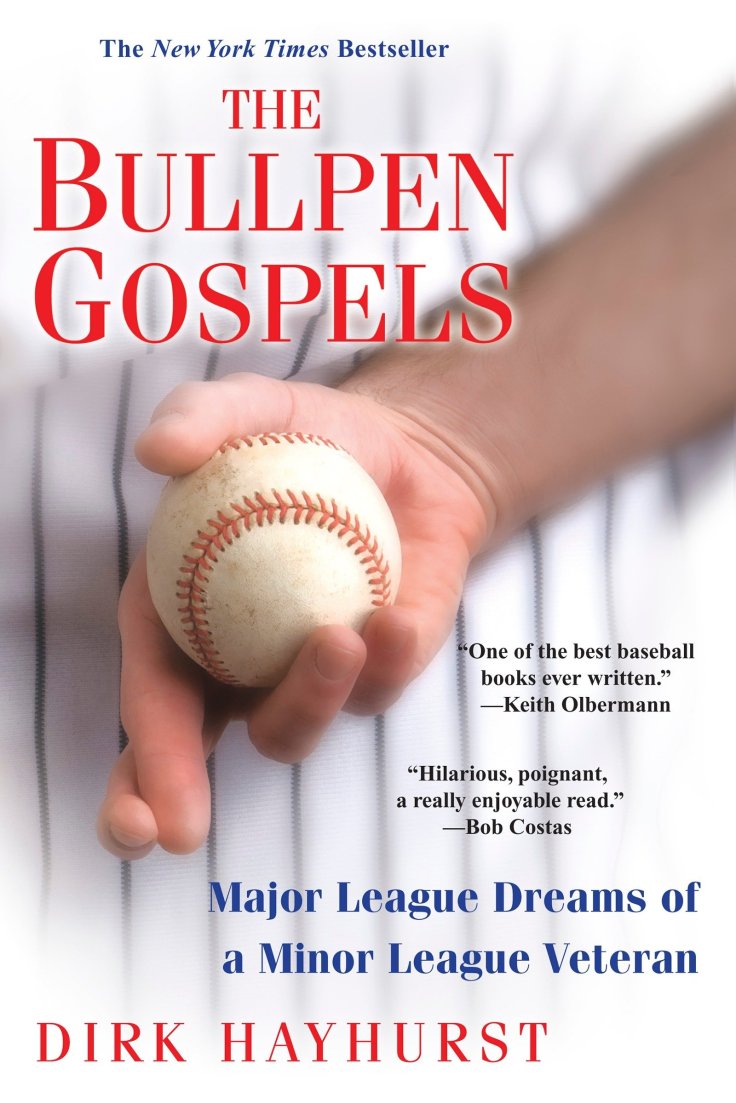
There is something to be said about a good baseball book and when you can find one that deals with failure, it makes it even better. “The Bullpen Gospels” is a book written by former major league reliever Dirk Hayhurst, looking at a pivotal part of his career while in the minor leagues. While a number of baseball books delve into the successes of its players, this book also takes a hard look at what it is like as a player trying to achieve his dream while coming up through the minor leagues

The book begins as Hayhurst is struggling with his future. He’s coming off of a lackluster finish to a season and is unsure how long he wants to continue trying to reach his dream of being a big league pitcher. He does a great job of letting us wander into his mind as he deals with what his future has in store. You really get a window into how something as major as “confidence” can play into a player’s success or failure. Hayhurst is dealing with a floundering career, a lack of confidence and a non-existent support system.

Rays Spring Baseball
Credit: Associated Press

While the focal point of this book is Hayhurst’s struggle and attempt to reach the big leagues, the aspect of the book that really grabs you is his description of minor league life and the relationships with his teammates. Whether it is the lewd jokes, the grizzled coaches or even a bus trip from hell, listening to stories about the grind of a baseball season really puts into perspective how unattractive the minor leagues can be. While some of the names are legit and left as is, there are a number of players whose names were changed for one reason or another. If you’ve ever wondered what it is like to live a season chasing your baseball dream, this is a nice view into that scenario.

You also find out how Dirk evolves as a pitcher and allows himself to not worry about his performance on the field. While his struggles are in the forefront at the beginning of the book, his success is thrown in as almost a side note as the book progresses. The deeper you get into this book, the more you realize it isn’t as much about what happens on the baseball field as much as it’s a look into the thinking pattern of a player trying to avoid the repetitiveness of a long baseball season.

kc3
Credit: DirkHayhurst.com

Overall, I loved the book. I’ve always had a fondness for locker room stories and a deeper look into not just the game of baseball but the nuts and bolts of what makes the game. My favorite part of the book was Dirk’s interactions with Trevor Hoffman, someone who Hayhurst had looked up to for years. These visits not only gave a nice insight into how his mind works, but also how someone like Hoffman can be viewed one way as a player and another as a person.

If you are looking into an honest look into what it is like climbing the ladder of baseball’s minor league system and the ups and downs that are met along the way, this is for you. Some have said this is the best baseball book since Jim Bouton’s “Ball Four” and while I can’t vouch for that (I haven’t read the classic Bouton book), I will say that Hayhurst is a great writer and has woven a baseball tale that will entertain you. If you would like to give it a read, here is a link to the book on Amazon and he has written two other books, here and also here. While his career was a short one, Hayhurst has made sure that it will live on for years to come. The book is worth your time and should make you even more excited for baseball season to begin.

Create a free website or blog at WordPress.com.

Up ↑