Over the last couple months, there has been quite a flurry of discussion about Houston’s Jose Altuve and him being the front-runner for the American League MVP award with the magnificent season he is having. Boston’s Mookie Betts has also moved himself into the conversation, posting amazing numbers in his age 23 season. Both players have been producing at an elite level this year and it could be a battle down to the wire for the MVP award. Only issue is that there should be a third member in this discussion, someone who has been here before and has also posted stellar numbers this year. His name shouldn’t be a shock; it’s Mike Trout.
The numbers for all three are worthy of the American League’s biggest prize. Altuve is hitting .363/.425/.575 with 20 home runs, 83 RBI’s and an OPS+ of 173. Altuve is leading the league in batting average, hits and OPS+. Betts numbers are a bit lower, but comparable: .313/.353/.555 with 28 home runs, 89 RBI’s and an OPS+of 133. Betts leads the league in at bats, runs and total bases. Trout’s numbers? .309/.427/.543 with 23 home runs, 77 RBI’s and OPS+ of 167. Trout is leading the league in walks and on base percentage. Just perusing these numbers it would appear Altuve probably has the best overall statistics, but a case could be made for both Betts and Trout. In fact, Trout’s numbers, while slightly below Altuve’s, match up quite well with Jose’s so far this year. It would only make sense for us to take a deeper look at the numbers to see just how close Trout, Betts and Altuve really compare.
(Credit: Andy Marlin-USA TODAY)
No conversation is fully complete without a deeper, sabermetric slant to it. Looking at fWAR, Trout has a very slight edge over Altuve, 6.9 to 6.8. Betts is fourth in the American League with 5.9, with Toronto third baseman Josh Donaldson sitting in third place at 6.4. Trout has the highest walk % and strike out % of the three, while Betts has the higher ISO(isolated power). Looking at their hard hit rate, Trout is second in the league with 41.2%, Betts at 35.2% and Altuve is sitting at 34.4%. Not a big surprise, considering Altuve is leading the league in singles(119) and those are normally of the softer hit variety. I decided to delve a bit deeper, since I wanted to see just what type of category each of these hitters fit into. Altuve had the highest O-Contact %(percentage of pitches a batter makes contact with when swinging outside the strike zone) with 78.3%, 5th best in the league. Trout was at 71.1% and Betts clocked in at 69.2%. When it comes to Z-Contact %(percentage of pitches a batter makes contact with when swinging inside the strike zone), Betts is 2nd in the league with 95.3%, Altuve at 91.4% and Trout at 85.9%. To me, this made total sense; Altuve has long been known as a hitter who likes to swing at pitches outside the strike zone and is infamous for dunking a single to the opposite field by slapping a pitch outside the strike zone away from defenders. Betts has the highest contact rate of the three (86.9%) and is actually fifth in the league when it comes to making contact. His numbers tell me that once he sees a pitch within the strike zone, he is swinging and making contact. He also has the lowest walk % of the three, walking only 6% of the time. It also made sense that Trout would be making the least amount of contact, as he has the highest strike out rate of the three, plus the highest walk rate. That tells me he is the most patient of the three and that can lead to both walks and strike outs. These numbers all tell an interesting story, but there is one more stat that needs special attention.
A statistic that has been making a lot of noise is WPA, or Win Probability Added. The case has been made the last few weeks for Zach Britton of Baltimore, one of the best relievers in the game, to win the Cy Young Award and much of the case hinges on his league leading WPA of 4.29. To get a better idea of what this means, here is the definition given on Fangraphs:
Win Probability Added (WPA) captures the change in Win Expectancy from one plate appearance to the next and credits or debits the player based on how much their action increased their team’s odds of winning. Most sabermetric statistics are context neutral — they do not consider the situation of a particular event or how some plays are more crucial to a win than others.
Alright, so how you feel about this stat depends on how much weight you want to put into a single play, from inning to inning. I lean toward it having stock, but there are so many variables to it and is purely a context driven statistic that it wouldn’t ever be my “end all, be all”. That being said, it does determine importance, so it does help in this argument on the importance of each player in their team’s success. No shock to me, Trout is tops in the American League at 5.03. The Angels have struggled throughout 2016 and any success they do have in many ways can be attributed to the “Best Player in the Game”. Altuve is 5th in the league, with a WPA of 2.91, while Betts is 14th with 2.24. Hey, all three are in the top 15 of the league, so it is quite easy to see their value. But Trout thumps the competition in this category, 2.12 higher than the runner-up Altuve.
(AP Photo/Gregory Bull)
So after this, who is your front-runner for AL MVP? Altuve is going to be the popular vote at this point and the numbers show someone who is worthy. Like everyone else, I love watching him play and as a short guy myself, I can’t help but root for him. That being said, I think there is an argument for Mike Trout, and in fact I might lean a bit more toward him. Just because he is playing on a losing team doesn’t mean he is unworthy of being the league’s MVP. In some ways, one has to wonder just where the Angels would be without Trout. There is over a month before votes have to be turned in, and as I learned a couple years ago, making a pick weeks in advance is a silly mistake. This race could go right down to the wire and very well could be a pier six brawl for the MVP trophy. Much like in 2012 when both Trout and Miguel Cabrera were worthy winners, this year looks to be much the same. There might not be a wrong choice, but more than likely there will be a better choice. Right now, it looks to be Mike Trout.
The first half of the 2016 season was glorious for Eric Hosmer. Hosmer was the steady force of the Kansas City Royals offense, putting up a line of .299/.355/.476 with 13 home runs, 49 RBI’s and an sOPS+ of 124. He was more than deserving for his start in the MLB All-Star game and it really seemed as if he had finally reached his true potential. Even I, who had wavered on Hosmer throughout the years, was finally believing that we were seeing the true Hos and he was past his yearly “summer swoon”. What is the “summer swoon” you ask? Every year, Hosmer would go through a stretch where he would look lost at the plate, his mechanics would be all out of whack and his numbers would start to take a nosedive. If you only follow the Royals on a national level(and by that I mean only follow the team in October) you have no clue about this, because the national media never discusses this. But it’s a real thing, and it has been rearing it’s head over the last six weeks.
We all remember Hosmer’s home run in the All-Star game, a shot that seemed like a precursor to the second half of the season. Only problem was that Eric didn’t get the notice. So far in the second half of the season, Hosmer is hitting .203/.261/.333 with 4 home runs, 20 RBI’s and an sOPS+ of 63. Those numbers might even be generous, since he has hit home runs in back to back games this week, which would raise his slugging and production totals. He has struck out 26 times in just 32 games in the second half, 36% of his first half total of 72. He has been doing it to himself, as he has the highest ground ball percentage in baseball:
Top Hitters in Groundball Rate Hosmer: 61% Kendrick: 60% Freese: 59% Villar: 58% C Hernandez: 57% Yelich: 57%
61% for a guy who is supposed to be a middle of the order bat, someone who should be providing the team with a higher average of extra base hits. In comparison, Mike Trout has a ground ball rate of 39%, Mookie Betts 42%, and Jose Altuve 41.9%. Now I know I used three of the best hitters in the American League, but I wanted to prove a point. Those numbers should be the ones that Hosmer strives for, especially if he wants to be considered a top shelf player. The lowest percentage of ground balls that he has had in his career is 49.7%, and that was all the way back in his rookie season, 2011. Over the last few years this rate has hovered in the lower 50’s until the big increase this season.
(AP Photo/Charlie Riedel)
During this latest swoon, Hosmer’s exit velocity has taken a dip as well:
As the chart shows, Hosmer’s highest peak was right around the All-Star break and since has struggled to climb back up to his peak levels. This past week has seen a big spike(I’m sure the two homers have helped) and there does seem to be a four-week increase, which is a positive sign. One of the big issues that Hosmer has incurred this year is dealing with the inside pitch. Hosmer has seen an increase of off-speed pitches over the last month or so and justly is swinging at a higher percentage of those pitches:
The interesting part is that he has still posting the second highest hard hit % of his career, but also the second highest soft hit % as well. To me, this reads as someone who is either going for all or nothing at the plate.
What is most interesting with Hosmer is how streaky a hitter he has been over the years. Since 2012 he has had a stretch each season where he struggles; that within itself isn’t too shocking, since most players have stretches of inconsistency. Hosmer’s though are periods of just looking lost at the plate. September 2015: .239/.328/.410. June 2014: .195/.240/.292. March/April 2013: .250/.337/.306. Sept/Oct 2012: .179/.264/.295. Even in his rookie season of 2011, he posted a rough June line of .253/.312/.293. Early in his career these stretches could be chalked up to growing pains; for a younger player it is fairly common, as they deal with major league pitching. The concerning part is that this seems to be consistent each season. During those stretches, it appears that his mechanics are out of whack and there is no consistency with his swing. One subject that has been noted by the Royals broadcast as of late has been what Hosmer does with his legs as he gets ready for the pitch to arrive. Part of the time he is using a toe tap:
The toe tap seems to steady him quite a bit and honestly, he has seen the most success this past month with the toe tap. But other times he likes to employ a leg kick:
The leg kick sometimes works, but it also becomes a timing mechanism and doesn’t appear to be as consistent. Who knows what hitting coach Dale Sveum has told him, but it would seem that the toe tap helps with his timing and is more consistent.
What makes this of greater importance is the fact that Hosmer will be a free agent after the 2017 season and is hoping to garner a huge contract. How huge you ask? Jon Heyman discussed that last month and came away with an interesting answer:
Hosmer’s camp isn’t tipping their hand, but Royals brass, which stepped up with a $70-milllion deal for free agent pitcher Ian Kennedy and $72 million for another core star Alex Gordon, seems to have an idea Hosmer could be seeking $20-million plus per year on a 10-year deal.
It seems hard to fathom that a player with the only accolades on his resume being Gold Glove winner and one All-Star game appearance could get a $200 million dollar contract. Maybe it’s just me, but I can’t imagine a world where a player who has only 10.0 bWAR and a slightly above average OPS+ of 107 over six years would get a king’s ransom. But there is also this little nugget-Scott Boras is his agent. So of course, there is a Boras spin on Hosmer:
“The premium associated with 27-year-olds are very different than metrics associated with 32-year-olds, especially when it’s a widely known Gold Glove franchise-type player who also has the ability to perform at extremely high levels in big situations and on big stages. You’d have everything you’d want in a free agent Eric Hosmer.”
I’m not saying Hosmer doesn’t deserve a big contract, but it also feels like there should be a disclaimer note on him before a team decides to purchase him.
It appears Hosmer might be coming out of his funk this week, as he has been 4 for 17 with 2 home runs and 5 RBI’s, including a go-ahead homer on Wednesday night. The Royals are riding a hot streak of late and look to be gearing up for another run at a playoff spot, as they are 8-2 over their last ten, 6.5 games out of a wild card spot. If that is to occur, they need Eric to perform at the level he has the last couple October’s. Hosmer has had sporadic success over the years and every time he rides a hot streak it makes us wonder if he is finally living up to potential. If not, he is still a very good ballplayer who has earned a starting spot on a big league club. But if he really wants to cash in next offseason, he is going to have to show that consistency that teams cherish. Rather than taking two steps forward then taking two steps back, it’s time for Eric Hosmer to take two steps forward and don’t look back.
On Tuesday, Major League Baseball will announce the All-Star team rosters and it appears that the litany of Kansas City Royals players on the roster will not be as hefty as they were in 2015. With that being said, manager Ned Yost will once again be at the helm of the American League All-Star team and will have a say in some of the participants of the team. There will be Royal blue in San Diego on July 12, but how much? Let’s go ahead and look at my predictions for the Royals and who will be joining Yost at Petco Park next week.
All-Star Locks
Salvador Perez
Salvy, a fan favorite not only in Kansas City but all around Major League Baseball, was leading the AL catcher position last we checked so the likelihood of him going is about 99.999999%. Normally Perez gets to the All-Star game on his charming positivity and his stellar defense behind the dish. But this year you can add a lethal bat to the mix; .281/.315/.490, 12 home runs, 37 RBI’s, 110 wRC+ and 2.1 WAR. I remember back in 2012 when former Cardinals manager Tony LaRussa was being interviewed the day before the All-Star game and was asked about Perez, who was in his first full major league season. LaRussa had compared Sal to Cardinals elite receiver Yadier Molina, which at the time was the highest of compliments. At this stage, it feels like Salvy has overtaken Molina and is the standard-bearer for catchers, at least in the American League. This won’t be a shock and will be well deserved when Perez starts next week in San Diego.
Eric Hosmer
Hosmer has been battling the first base position out with the Tigers Miguel Cabrera for the starting nod and deservedly so. Hosmer has produced like a star so far in 2016, hitting .303/.361/.490 with 13 home runs, 49 RBI’s, 127 wRC+ and a 0.4 WAR(with his defensive metrics dragging this number down). Hosmer has looked the part this year of offensive force rather than just potential, and at this point is probably more worthy of starting the game than Cabrera. Hosmer is a lock either way to be on the roster, it’s just a matter of whether he is voted in or heads to San Diego as a reserve.
Wade Davis
I’m sure there will be someone out there, somewhere, who will say Wade doesn’t deserve to go to San Diego next week because he “isn’t quite as dominant” as he has been the last two years. That is pretty much the equivalent of Mike Trout’s numbers falling a smidge but still being an MVP candidate. Davis has thrown 29 innings so far this year, and while his numbers don’t pop out at you like in the past(K rate is down, walk rate is up) he is still producing. Wade has an ERA of 1.23, FIP of 2.69, and is still stranding 87% of his runners on base. He is easily one of the top five relievers in the game and deserves to be an All-Star. No way Ned doesn’t make that happen, if he isn’t voted there by the players. Wade will be an All-Star, period.
All-Star Probables
Lorenzo Cain
This will be a complicated pick, but one that should happen. Cain is currently on the disabled list, which means he would be unable to play in the All-Star game, but he can always be picked as a reserve and then have someone else take his spot; not like that has never happened before in All-Star’s past. Cain is hitting .290/.336/.416 with 8 home runs, 39 RBI’s, 1.9 WAR with 9 defensive runs saved. Sure, Cain is not tearing it up offensively the way he did in 2015(April was not kind to Lorenzo), but he is still considered one of the elite center fielders in the game and that’s what this game is for: the best of the best. It will interesting to see if Cain gets a spot, as it would be another honor that he could use when negotiating a new contract with Kansas City after the 2017 season. I feel he is worthy, but he might end up being a borderline selection by the players and coaches.
(Credit: Peter G. Aiken-USA TODAY)
Kelvin Herrera
To me this is an easy pick but Herrera could be cast aside for another Royals reliever this year(more on that in just a bit). Herrera has put up dominating numbers this: 11.41 strikeouts per 9, 1.63 walks per 9, 87% left on base percentage, 1.40 ERA, 2.01 FIP and 1.3 WAR, all over 38 innings of work. Herrera added a slider to his repertoire late in 2015 and it has made him even more unhittable than he was before. The Royals aren’t the defending World Champions without Herrera and he has continued to be the bridge to Wade Davis this year to help lock down the late innings for the Royals. Herrera is an All-Star; now we will see if he actually gets the honor or is passed over for a bullpen brother.
All-Star Longshots
Luke Hochevar
Yep, bet you probably didn’t see this coming. Above, I mentioned Herrera could get passed over for another Royals reliever and of course I was talking about Hochevar. Hoch, a man who I once despised, has been one of the most reliable Royals relievers this year and the numbers back that up: 10.16 strikeouts per 9, 2.03 walks per 9, 79% left on base percentage, 2.90 ERA and 0.4 WAR over 31 innings. Sure, these aren’t eye-popping numbers like Davis or Herrera, but they are more than solid and worthy of the adulation. Now, if Hoch gets picked it will be by manager Ned Yost, who will want to reward Luke for his hard work out of the pen and the fact he doesn’t get a lot of the recognition that his bullpen mates get. Yost has asked Hochevar to perform in a lot of high-leverage situations this year and for the most part he has been highly effective in that role. If he is rewarded with the honor, it will show just how loyal a man like Yost is and a nice nod for a guy who turned his career around after being a failure in the rotation.
Whit Merrifield
Okay, okay, I know; Whit has played in only 40 games for Kansas City and more than likely has no business even being in this discussion. But…those 40 games have been stellar with steady production from a guy who is supposed to just be an afterthought after the season started. Instead, Merrifield has posted a line of .308/.328/.426 with 26 runs scored, 15 RBI’s, a .385 BAbip, 100 wRC+ and 1.3 WAR…all in 40 games! Merrifield is 8th in WAR for second baseman in the American League and while Robinson Cano, Jose Altuve and Ian Kinsler are all worthy of roster spots this year, the story of Whitley Merrifield would make a great story. It’s not going to happen and for the most part, it shouldn’t. But it’s hard not to root for this guy and everything he has accomplished in about six weeks. To see him gaining an All-Star nod would be about as warm and fuzzy as one can imagine. Think of watching ‘Toy Story’ while cuddling with a bunch of puppies and you will be close…not quite, but close. So Merrifield isn’t going to San Diego, but I felt like I should at least mention him. Rock on, Whitley.
The Royals aren’t going to send as many players to San Diego as they did last year in Cincinnati(no bus needed this year. Sorry, Rex) but I would expect a healthy dose of Kansas City blue at the festivities next week. For years Royals fans would hem and haw about who actually deserved to get Kansas City’s lone spot at the game, and there were even years were no one was really worthy(hello, Mark Redman!). The Royals will have enough players going this year to where you should probably pay attention to the game to see if any of the players end up playing pivotal roles. Just don’t take the game too seriously; it is an exhibition game after all. An exhibition game where Salvy could throw a runner out, Hosmer could hit a home run and Wade could record the final out. Sure, there is a good chance none of that happens, but you never quite know.
When June began there were many a question pointed in the direction of Kansas City Royals DH Kendrys Morales. Morales was mired in a two month-long hitting slump and at that point was hitting a paltry .193/.262/.330 with 6 home runs, 21 RBI’s and more strike outs than actual hits. Morales looked lost and there was concern that maybe Kansas City needed to go out and get a bat to replace him if the slump continued much longer. Even I wondered if Carlos Beltran would be a better option than Morales while deep down hoping that Kendrys would find his swing and take off like a rocket offensively. Well, it took a lot longer than expected, but the slugger we saw in 2015 win the Silver Slugger award for American League DH is back to form and has been tearing the hide off the ball these last few weeks. But this begs an even bigger question than we were asking a month ago: What has changed for Morales?
One of my initial beliefs about Morales’ improvement has been his ability to hit breaking balls and off-speed pitches. Early in the season it appeared he was really struggling trying to make contact and pitchers had picked up on that. But in June it seemed as if Morales was actually pounding those same pitches he was missing the first two months of the season:
The chart above confirms my suspicions as Morales’ exit velocity on breaking balls and off-speed stuff has taken a steady rise in a positive direction. This made me also wonder if he was not only hitting those pitches harder, but also improving his line-drive rate on balls in play:
That turned out to be a big 10-4 as Morales’ line drive rate on breaking balls jumped from an average of 7.14 in May to 66.67 in June. If you have watched a number of Royals games this past month, you are well aware of how Kendrys has been scalding the ball and by that I mean not in the form of ground balls:
This is also confirmed, at least on breaking balls. It does appear as if Morales saw a jump on ground balls off the off-speed pitch, which Isn’t too big of a shock. This probably should not be seen as completely negative, as it is better than popping those pitches up, where at least a well hit ground ball can find a hole. This seemed to be proven by Morales’ ground ball chart:
Last month Morales was hitting breaking balls in the air a lot, as it spiked the highest in May. In June, it is at the very bottom and is actually at zero. Rather than giving the other team an easy out by hitting it in the air, Morales has been getting enough of the bat on the ball to either hit the ball on the ground or line the ball into the field of play. Not only has Morales been hitting off-speed pitches, it also is the pitch he is swinging at the most in the last month:
This tells me that Morales felt more comfortable in June swinging at the off-speed pitch and probably even expected to see more change-ups than fastballs. Teams had obviously started throwing Morales a certain way, seeing that he was struggling catching up to the off-speed pitch and it makes one wonder if he will start seeing more fastballs with the way he has been hitting as of late.
So we have looked at Morales’ improvement with breaking balls and the off-speed pitch, but the overall numbers are even more impressive. Over the last month, Morales has put up a line of .402/.453/.655 with 5 home runs, 18 RBI’s and 12 total extra base hits. His strike outs have also steadily fallen, as he had 21 in April, 18 in May and down to 17 strike outs in June. One stat that really points out why Morales has seen this success is batting average on balls in play(BAbip). During the first two months of the season Morales posted BAbip’s of .270 and .157 respectively; in June he hit a whopping .462! Morales was not only hitting the ball better, but he was also finding holes in the other team’s defense at a higher rate as well. It shouldn’t be surprising that Morales ended up with an OPS+ of 190 throughout the month, as those are the two forms of attack for him in June; get on base and accumulate extra base hits. Morales ended up with only one more home run in June than May, but hit 7 doubles while only racking up 1 double in May. Oh, and Morales saw a big uptick in his batting average in the last month. He would start the month hitting .193, and would finish it hitting .262. We could probably dig up numbers all day comparing April/May to June and be blown away but more than anything it shows what Kendrys is capable of when he is in the zone. The numbers Morales put up last month weren’t just impressive for a guy who had been slumping all season, they would be impressive for the Mike Trout’s and Bryce Harper’s of the world as well. That is elite company, to say the least.
With this big of a turnaround, one has to wonder just what changed for Morales. We can speculate all day but if you have followed baseball for even a small bit you know the slightest change can make a difference. Earlier in the week I had a friend suggest that he believed that Morales had been staying on his back foot longer than normal and honestly, a change like that could make a batter see the ball better out of the pitcher’s hand and also give him more time to prepare for something slower than a fastball. Whatever approach Morales changed has worked and has made him look like the hitter who was spraying the ball with authority throughout much of 2015. With the trade deadline looming, having Kendrys on point leaves the Royals front office with one less position to worry about when looking at trade targets. Now if the rest of the Kansas City offense can help him out(and if Cleveland finally decides to lose a game) the Royals could be sitting pretty headed into the last couple months of the season. One minute we are cursing the slumping player, the next praising him. Piling on the adulation is way more productive than wondering what the hell is going on with someone like Morales. I’m just glad he chose to wake up his bat when he did.
When a new baseball season begins, there are certain definites that we are guaranteed and don’t even have to worry about. Mike Trout will put up MVP caliber numbers, Clayton Kershaw will pitch like he is the second coming of Sandy Koufax, and Bartolo Colon will make you smile at some point. There is also this definite for any Kansas City Royals fan: Danny Duffy will make you shake your head at some point. Sometimes it’s for how good he is pitching, other times it will be for how inconsistent he is pitching. Danny Duffy might be one of the hardest players to really put your finger on and he is continuing his mystifying act so far in 2016.
Duffy started the year in the bullpen for the Royals, but was soon summoned to the rotation when both Chris Young and Kris Medlen came down with injuries. Danny would make his first start of the season on May 15 and (on a limited pitch count)would put forth a starling effort. On that Sunday, Duffy would throw 48 pitches in 3 innings of work, giving up 1 hit, and no runs while allowing 2 walks and striking out 5. Over the next three starts, Duffy would gradually increase his pitch count, which also meant he was pitching deeper into each game. But that wasn’t the only improvement by Duffy over those next three starts.
Over his last three starts, Duffy has not walked a single batter, striking out 14 over 15.2 innings, which feels like a minor miracle if you have followed Duffy’s progression over the last three season. One major obstacle for Duffy throughout his career has been the ability to pitch efficiently, both as a way to keep his pitch count lower and to avoid allowing extra runners on base with walks. Since 2012, Duffy’s walks per 9 have been a bit high: 5.86, 5.18, 3.19, and 3.49. So far this year he has lowered it considerably, down to 1.72 over 36 total innings. Allowing less runners, no matter the situation, is always a plus and Duffy lowering his walks has made him a more efficient starter in a small sample size.
While Duffy’s walks are down, his average velocity is up so far this year. Now, part of that reason is his early stint in the bullpen, where he was able to air out the ball in his 16 outings in relief. But over these last four starts, he has maintained his increased velocity with only a slight difference being seen between his stint in the pen and his work in the rotation:
What it also looks like is that Duffy has ditched his slider for the most part and decreased his use of the cutter. Instead, Duffy has been throwing his two-seam fastball at a higher rate(15% compared to 4% last year) and his change-up has been used as a bigger weapon as well(13% compared to 95% usage last year). This actually explains a lot of the velocity increase, as a cutter is normally 2-5 MPH slower on average compared to a 4 or 2 seam fastball. Duffy seems to be using his change-up enough to keep batters on the look out for it while then using his fastball as his ‘out pitch ‘. In fact, Duffy’s swinging strike out percentage this year has seen an uptick (from 14% to 25% this year) while his strike out’s looking has taken a dive(25% to 19%). Rather than fooling batters this year, Duffy is throwing the cheese and forcing hitters to try and hit his 95 MPH+ fastball, a strategy that maybe should have been used earlier in his career.
Hitters are also not hitting the ball as hard off of Duffy this year. On average, Duffy has been below league average most weeks when it comes to the exit velocity off his pitches:
In fact, Duffy’s soft hit percentage has increased this year(up to 26%) while both the medium and hard hit percentages have gone down (48% and 26% respectively). Hitters are just not hitting the ball as hard off of him this year which has helped turn him from a pitcher with potential to be a solid mid-rotation starter to one who could actually achieve that status if he keeps it up.
So which Danny Duffy is the real Duffy? History would say that Danny will come back down to earth and pitch less consistently than he has over his four starts. But all the numbers tell a different story, that of a pitcher who has changed his approach on the mound and might have unlocked a secret to success. Duffy is throwing more strikes(his first pitch strike percentage is up, as is the amount of 0-2 counts he is throwing), and allowing less walks which is also knocking down his pitch counts. On Wednesday, Duffy threw just 75 pitches in 6 innings of work(51 of those pitches were strikes) and if he can keep that kind of efficiency up, there would be no reason to think he couldn’t be the starter the Royals have longed him to be. The one slight on GM Dayton Moore’s record has been the inability to produce productive starting pitching during his tenure in Kansas City. If Duffy can be what they always envisioned him to be, that would go a long way toward improving the rotation and improve Moore’s track record with starting pitching. It might have taken longer than expected, but we could finally be seeing the ‘Real’ Danny Duffy, the one we always knew we wanted.
As a “stat-geek”, I am always on the lookout for a new statistic in baseball that will give me a deeper look at the game that we all love. In 2015, MLB Advanced Media made a hitter’s exit velocity available for the first time on a regular basis and ever since I have been mesmerized. In case you are not in the know, exit velocity is very simple; it’s essentially the speed of the ball after it makes contact with the bat, or a radar gun for the batter. You might be asking yourself just why something like exit velocity can help teams gain an advantage over their opponent…and that would be a valid question. So why is this fancy new statistic such a hit? Well, there are many reasons for it’s success.
The most obvious reason is the fact that you can measure which batters are hitting the ball the hardest. If you are consistently nailing the ball with a high exit velocity, then the likelihood is that you are stacking up hits at an efficient rate. Looking at the top average exit velocities in 2015 and you obviously will find some of the biggest home run hitters in the game. There is no shock that Giancarlo Stanton led this category last year, averaging 99.1 mph launch speed on balls hit; Stanton might be the most prolific home run hitter in the game right now. But looking at the Top 15 and you see a who’s who of sluggers; Miguel Cabrera, Miguel Sano, David Ortiz, Jose Bautista, Kyle Schwarber and Mike Trout are just a few of the names littered near the top. These are not only big home run hitters, but also some of the most elite hitters in the game, period. The easy answer is that if you have a high exit velocity, then there is a good chance you are going to be near the top of the leaderboard for extra base hits. There are still other factors in play(like actually hitting the ball. See Peguero, Carlos) but exit velocity will show you who is hitting the ball the hardest on your team.
For instance, let’s look at the Royals exit velocity leaders last year. Top of the list is Kendrys Morales at 92.9 mph on average; Morales just put together a great comeback season last year while winning a Silver Slugger award. He also put up 22 home runs, 41 doubles and drove in over 100 runs, so one would assume his exit velocity numbers were higher than what they were in 2014. Same for Royals minor leaguer Jose Martinez, who had one of the highest exit velocities in the minors last year and put together a career year for Omaha. What is really fun is going and looking at Kansas City’s playoff exit velocities. Granted this is a smaller sample size, but three Royals had an average exit velocity above 94 mph(Lorenzo Cain, Morales and Salvador Perez) with Morales having the highest average launch speed during the postseason. Exit velocity won’t give you instant success, but in a shortened period like the postseason it sure would indicate a higher chance of success, especially if you have multiple players near the top of the rankings.
But there are a couple more reasons to keep your eye on a hitter’s exit velocity. For one, it could be a window into a possible injury. A hitter would tend to put up a fairly consistent exit velocity, as it is five times more the batter’s doing than the pitcher. If a batter has shown a major dip in his exit velocity and shown that over a regular period of time, then there is a possibility that player could be injured. There is no way to 100% quantify this, but if a player is averaging an exit velocity in the mid 90’s, then averages an exit velocity in the lower 90’s/upper 80’s in a short amount of time, there is a good chance that player is hurt. Exit velocity could actually help teams determine if a player should play through the injury or take up some DL time.
Another interesting pattern to watch would be a player’s regression. Most know that as a player gets older his abilities will start to regress and a statistic like exit velocity would(and should) show a declining pattern. The difference between an injury and regression is that an injury would show a more sudden decline while regression would be over a longer period of time. Look at it this way; a batter isn’t going to wake up one day and all of a sudden lose a ton of bat speed and show a weaker hand eye coordination.Both of those skills will slowly erode over a long stretch of time, so you would have to look at a number of years of exit velocity to get a true feel for a regression. Since Statcast is still in a somewhat early infancy, this is probably still a few years away from being something an organization would use. I could easily see teams using it to determine keeping or trading a player or even using exit velocity to determine whether or not to sign a free agent. This is the beauty of a stat like exit velocity; we are still learning from it and how to use it to evaluate players and their abilities.
In a baseball world where power is still a highly coveted commodity, exit velocity could be the holy grail to determine who to stack into the middle of a batting order. The fun part for those of us that love stats is how the possibilities are endless. With the information that is currently available, it is possible to break down a hitter’s exit velocity into pitches, into whatever the count is at the time of the hit(3-2, 0-1, 2-2, etc.) or even against individual pitchers. Statcast has opened up a whole new door into baseball statistics and we should all welcome them in. Exit velocity is just another way to look at a game that is constantly evolving using the technology available today. I still want my peanuts and cracker jacks, but go ahead and throw in a side of velocity and launch angle.
Here we are: we are in the section of Spring Training where you can see the upcoming regular season on the horizon, but it is still far enough away that you just wish you could fast forward to games that actually count. Luckily, this also means we are close enough to camps heading north that we have a decent idea of how most team’s rosters will look. Every year I take my stab at how I think the season unfold, mostly with comical results. Here is my 2014 and 2015 predictions if you are looking for a good laugh(although I did guess fairly well on the playoff teams in 2014). I do want to reiterate one nugget of information that I’ve been preaching about the last few years: predictions are just guesses. This is just simply a fun little exercise I do before the season starts for me to look back on in October and see how far off I was. It is purely fun and that is how it should be taken. So here we go; my guesstimation of the 2016 season!
American League East
Toronto Blue Jays
Boston Red Sox
New York Yankees
Tampa Bay Rays
Baltimore Orioles
Last year I felt like no one AL East team stood out from the rest and any one of those teams could step up and win the division. There is still a feeling of an openness, but with a little more division in the way of talent. The Blue Jays look to be the team to beat, as they are returning a large portion of their division winning team and have a top-notch offense to carry their team. While Boston returns most of their roster that struggled in 2015, there is a belief that there is no way they are as bad this year…especially now that Hanley Ramirez is not in the outfield and they have David Price anchoring the rotation. The Yankees could make a run again, as they have one of the deepest bullpens in baseball. My main issue with them is the aging stars(Beltran, Sabathia, A-Rod, etc.) holding back the rest of the team. Tampa has some great pitching but what will they be able to do offensively? Then there is Baltimore. I want to root for the Orioles to surprise everyone this year, but I’m not for sure it will happen. Sure, Chris Davis is back(which I think is good) but not much has been added to the roster. Pedro Alvarez and Mark Trumbo might add some needed pop, but what will Baltimore lose if/when either plays on defense? Yovanni Gallardo will give the team innings, but how efficient will he be? As you can see, there seems to be more questions than answers with Baltimore, and that scares me.
American League Central
Kansas City Royals
Minnesota Twins
Cleveland Indians
Detroit Tigers
Chicago White Sox
This is always my hardest division to pick, as I am a lifelong Royals fan. Saying that, the last two years I have not picked the Royals to get to the playoffs and both years they made it to the World Series. So why pick them now? In all honesty, I really believe they have the most talent of any team in the division, thus my pick to sit on top of the AL Central. Behind them I see a cat fight for second between the Twins and Indians. I’ve gone back and forth on who should be where, but alas I went with Minny in second and Cleveland third, as I really like(fear?) the talent accumulated in the ‘Twin Cities’. Detroit and Chicago bring up the back of this division in my mind, as Detroit still feels really old to me(even with the acquisitions of Upton and Zimmermann) and despite Chicago overhauling their offense, they still don’t feel like a playoff caliber team. The interesting part here is that I could easily see a scenario where this division could be a dog fight, with five teams within 5-8 games of each other. Right now though, until someone knocks off the Royals, they have to be the favorites.
American League West
Houston Astros
Texas Rangers
Seattle Mariners
Los Angeles Angels
Oakland A’s
The West should be a fun division this year, if for no other reason than to see if it is competitive or if the Astros and Rangers dominate the division. Houston has to be the favorite this year, as they not only will try to build off their playoff run in ’15, but also will have Carlos Correa and Lance McCullers(once he returns from injury) from day one of the season. I really like what the Rangers management has done with this team and tend to believe they will be a serious contender this year, especially if Yu Darvish is able to return to his old form. Jerry DiPoto has done an admirable job trying to fix the Mariners roster, but it feels like an uphill battle for the team this year, with success more likely in the future. What can you say about the Angels and A’s? I would probably have the Angels in last if not for Mike Trout and his ability to carry this team on his back. But Angel’s management is a mess and only slightly worse than their farm system. The A’s seem to just be biding time until their next wave of prospects can start infiltrating the major league roster. Oakland might not be as bad as they were last year, but I can’t see them being serious contenders in 2016.
(Credit: David Kohl-USA TODAY)
National League East
Washington Nationals
New York Mets
Miami Marlins
Atlanta Braves
Philadelphia Phillies
Last year was supposed to be the Nationals’ year, as many(myself included) figured they would end up in the World Series. Instead, a late season collapse left them on the outside looking in and costing Matt Williams his job. Now Washington has retooled their roster while adding known players’ manager Dusty Baker to the fold. While Baker is about as old school as they come, players love him and I tend to think he will make a big difference in that locker room this year while losing some of the team’s tension. The Mets will be right on their tail and look to repeat as National League Champions this year. The Mets pitching will take them far, but the offense will be the real deciding factor in New York. Miami has added a new manager(Don Mattingly) and a new hitting coach(Barry Bonds) to shake up a young and talented Miami team. One has to be curious as to how lethal the Marlins could be if they can get a full season out of Jose Fernandez and Giancarlo Stanton. Atlanta stocked up on prospects this winter and are left with Freddie Freeman and a cast of other players for the Braves this year. They might not make much noise this season, but the Braves are looking good in the next couple of years. The Phillies? Well, they won’t be very good but a few steps were taken to improve on a dreadful 2015. So there is that.
National League Central
Chicago Cubs
Pittsburgh Pirates
St. Louis Cardinals
Milwaukee Brewers
Cincinnati Reds
2015 saw the NL Central send three teams to the playoffs. I have to believe that won’t happen two years in a row, which might leave the Cardinals missing the playoffs this year. The Cubs are the early on favorites not only to win the Central, but also to win the World Series. One has to think Chicago will grow on their stellar 2015 and are looking to win their first world championships since 1908. The Pirates will look to be hot on the Cubs heels and it’s hard to argue with the success this team has had the last couple of seasons. My guess is that Pittsburgh will join Chicago in the playoffs comes October. That would leave the Cardinals on the outside looking in, as they lost more than they gained this past offseason and are betting on a number of veterans like Matt Holliday and Yadier Molina to bounce back this year and stay healthy for the Cardinals to be real contenders. That being said, I find it hard to count St. Louis out. The Brewers won’t be horrible but they won’t be great and the Reds from the outside look to have a few good pieces but are multiple players away from being contenders.
National League West
San Francisco Giants
Los Angeles Dodgers
Arizona Diamondbacks
San Diego Padres
Colorado Rockies
The West could be a lot of fun this summer and I could envision a scenario where the top three teams in the league could be shuffled in any order. My pick is for the Giants to come out on top, as they bolstered their starting pitching with the acquisitions of Johnny Cueto and Jeff Samardzija and adding Denard Span to help the defense. Throw in their main nucleus of Buster Posey, Hunter Pence, Brandon Belt and Madison Bumgarner, and give them a future Hall of Fame manager(Bruce Bochy), and you have the makings of a division title. Oh, and the Giants win in even years; there is that too. The Dodgers look to be in the discussion as they have Kenta Maeda replace Zack Greinke in the rotation while their best pick up this winter being manager Dave Roberts. The Dodgers will be in the running but chemistry is a big part of their story yet again this year. Arizona went out this offseason and made some good transactions(Greinke) and some head-scratchers(Jean Segura??). How far the Diamondbacks go this year will be determined by how the younger talents like AJ Pollock and Patrick Corbin perform. At this point San Diego and Colorado are afterthoughts. Neither seem to have much direction nor a captain to steer them away from rocky weather. It could be a long season for fans of both.
Awards
(Credit: Joy R. Absalon-USA TODAY)
American League
MVP: Manny Machado
Cy Young: Chris Archer
Rookie of the Year: Byron Buxton
National League
MVP: Giancarlo Stanton
Cy Young: Jacob deGrom
Rookie of the Year: Corey Seager
Playoff Teams
(AP Photo/Jeff Roberson)
American League
Toronto, Kansas City, Houston, Texas, Minnesota
National League
Washington, Chicago, San Francisco, Pittsburgh, New York
So there are my guesses on the upcoming 2016 campaign. I look forward to revisiting this come October and laughing about how far off I was. One of the great things about baseball is every spring we make our predictions on how we think things will evolve, yet we rarely guess correctly. I love the fact that they play six months of games to determine who plays in the final month and what happens in April doesn’t always dictate what occurs in October. The season is a grind and much like a good book it will have a ton of twists and turns to question just where your team ends up. There is a reason they play the games; what would be the fun of the season being decided by guesses? The drama of baseball is what keeps bringing us back and keeps us on our toes. I love this damn game and can’t wait to see how this season unfolds. I can promise you this; you won’t see it coming. Play ball!
It’s that time of year where most of us look back fondly on what is good in our life and how lucky we really are. The more and more I threw this idea around in my head today, I kept coming back to all the joy baseball gives me. With that in mind, here is what I am thankful for this holiday season, at least where baseball is concerned.
I am thankful that ‘The best Farm System in Baseball’ eventually did pan out for Kansas City, as players like Eric Hosmer, Mike Moustakas and Salvador Perez all turned out to be All-Stars and quality big leaguers.
I am thankful that Lorenzo Cain stepped up his game in 2015, proving there is more to him than just one of the best gloves in baseball.
I am thankful that when Mike Trout is inducted into the National Baseball Hall of Fame, I can say I remember when he was a rookie and we had no idea that what we were seeing was greatness.
I am thankful that the extra round of playoffs in baseball has worked and has made it even more exciting than it was before.
I am thankful that Matt Harvey realized an innings limit didn’t matter in the playoffs…and that he was stubborn enough to convince his manager to keep him in for the 9th inning in Game 5 of the World Series.
Speaking of the Mets, I am thankful that my favorite team only has to face the Mets young arms in one series next year. They are the real deal.
I am thankful that baseball has a crop of young superstars(Trout, McCutchen, Stanton, etc.) that they can be proud of and should be promoting as to why they are great for the game.
By the way, I am thankful that a baseball town like Pittsburgh can tout a talent like McCutchen and add him to a legacy of true stars that deserve to be looked at like stars, much like Roberto Clemente before him.
I am thankful that we get to see a historic season like Bryce Harper this year…then remember he is only 23!
I am thankful for a baseball world where Bartolo Colon is still a thing…and gives everyone great material on a monthly basis.
I am thankful for a sport where you can argue for years about possible Hall of Fame players and still change someone’s mind after a ‘deeper look at the numbers’.
I am thankful my son loves the Hot Stove League as much as I do.
I am thankful that baseball has gone from a game where ‘experience is king’ to a game where now ‘youth is king’.
I am thankful for Rusty Kuntz’s flowing mane…damn!
I am thankful that we now live in a world where phrases like ‘exit velocity’ and ‘efficient route’ are part of the lexicon.
I am thankful for bat flips.
I am thankful predictions mean nothing in baseball; it’s why you play the games.
I am thankful that certain ballplayers can make my hair look suave…thanks, John Jaso!
I am thankful that I can watch a different baseball game everyday and learn something new, even 30+ years after I first started watching the game.
I am thankful that the history of the game is still woven into the fabric of today’s game.
I am thankful that my son thinks I would be a better analyst than Harold Reynolds.
I am thankful for the Royals defense.
I am thankful that I got to watch Brett, Saberhagen, Jackson, Wilson, McRae and White in my youth. Those players made me fall head over heels for baseball.
I am thankful that I am not the only person who believes Barry Bonds and Roger Clemens deserve to be in the Hall of Fame.
I also am thankful for the push the last couple years for Tim Raines and Edgar Martinez for their deserved spot in Cooperstown.
I am thankful I still remember Oddible McDowell, Razor Shines and Danny Darwin.
I am thankful that Ken Griffey, Jr. still smiles.
I am thankful to have witnessed the transformation of Wade Davis from human to cyborg.
I am thankful that I have been given the chance over the last 4 years to do things around this sport that I never imagined possible.
I am thankful that I waited out all the bad years of Kansas City baseball. It has made these last two years even more joyful than I can ever put in words.
I am thankful that I was wrong about Dayton Moore and Ned Yost.
I am thankful for all the late comebacks by the Kansas City Royals.
I am thankful for Lorenzo Cain’s running.
I am thankful for Alex Gordon’s clutch slugging.
I am thankful for Eric Hosmer’s daring baserunning skills.
I am thankful for a lockdown Kansas City bullpen.
I am thankful to call ‘my Royals’ the World Champs. I honesty wondered if I would ever see that again in my lifetime.
and I am thankful that the people in my life who I care most about not only support my love of baseball, but they share in the love. They make all of this even better than if I was just enjoying it on my own.
Oh…almost forgot. I am thankful for Jonny Gomes mic skills. His speech will never get old.
Honestly, I could go on and on. I love this game and there are so many little bits of information or plays that remind of the nuances of this game that spark my love. Let’s all be thankful that baseball is still flourishing and despite some of the things we would fix with the game, for the most part it is as good as it was when we first got hooked. Thank you, baseball. Thank you for being you.
April 13, 2015One of the great honors of being a member of the IBWAA is that come September we vote on the season awards, just like the BBWAA. Last year I filled out my first ballot and I learned a few things. One, never turn in your ballot until sometime in the final week. I turned mine in about two weeks early and was kicking myself within a week. Yep, one’s mind can change. Second, there is no way not to take this serious. None. I look at stats all year long, and even still I’m not for sure it compared to the number crunching I did the last two years before turning in my winners. With that said, I was very pleased with the end results and feel confident throwing out how I voted for the year-end awards. So without further ado, here are my picks for the 2015 Major League Baseball season awards.
American League MVP: Mike Trout
I know the consensus was this award should go to Toronto’s Josh Donaldson, and I won’t tell you that is the wrong vote. No, Donaldson is just as deserving as Trout and either vote is a solid vote. That being said, I give Trout the edge for a few reasons. Let’s start with the main stats that everyone loves: They tied for homers, Donaldson had about 30 more RBI’s, Donaldson edged Trout in batting average, while Trout had the advantage in On-Base Percentage and Slugging Percentage(in fact Trout led the league in slugging). Now to the meaty stats: Trout over Donaldson in OPS+, 176 to 155. bWAR has Trout over Donaldson, 9.4 to 8.8. fWAR has Trout slightly edging out Donaldson, 9.0 to 8.7. Donaldson does have the edge defensively by quite a large margin, but not enough that I would give the win to him. All that is a compelling argument for Mike Trout, as most of the numbers are in his favor. But here is where the scale is tipped for me…Trout spent part of the year dealing with nagging injuries, as is evident if you look at his numbers month by month. Trout not only came back to raise those numbers, he also practically put the entire Angels team on his shoulders in September, keeping them in the pennant race into the final week. In fact Trout’s line in September looks like video game numbers: .315/.430/.648 with 8 homers and 16 RBI’s. Yes, Josh Donaldson was on a playoff team, but if you take him out of Toronto’s stellar lineup you still have a team that could probably win the American League East. Take Trout out of the Angels lineup and that team is out of the race before September. At the end of the day, Trout was more valuable to his team than Donaldson, thus he is my winner for AL MVP.
My top 3: 1-Trout, 2-Donaldson, 3-Cain
IBWAA Winner: Josh Donaldson
BBWAA Winner: Josh Donaldson
National League MVP: Bryce Harper
Very rarely does a player have a season where he is sooooo dominate that they should be a no doubt MVP, where an unanimous vote seems like the logical way to go. But this year in the National League, Bryce Harper was ‘The Man’ and there really is no debate. Harper, in his age 22 season, led the National League in so many categories that I almost thought he led the league in saves and wins. Harper was the front man in runs, home runs, On-Base Percentage, Slugging Percentage, OPS, OPS+ and both fWAR and bWAR. Harper had the type of season we all expected when he was selected by the Nationals as the #1 Draft Pick in 2010. The funny part is he still has room to improve, which is frightening if you are an opposing pitcher. Harper led this Nationals team to the brink of the playoffs this year and outside of the stupidity of Jonathan Papelbon, he would have about as perfect a season as a player can have. The one stat that blows my mind more than any is his OPS+, a staggering 195(remember, 100 is average). His season is the 71st best in baseball history, which seems great but not out of this world stupendous. If you take out all the players in the ‘Dead-Ball Era’, Harper’s season is the 50th best of all-time. I decided to go a step further, going off of seasons since 1950. Taking that into affect, Harper had the 24th best season by a batter in the last 65 years! What this amounts up to is a without a doubt MVP and possibly the beginning of a career we could be discussing in detail within the next 5-8 years.
My Top 3: 1-Harper, 2-Goldschmidt, 3-Votto
IBWAA Winner: Bryce Harper
BBWAA Winner: Bryce Harper
(Photo by Tom Szczerbowski/Getty Images)
American League Cy Young: David Price
There was a number of awards this year that felt like a tight race and this would be another one, as David Price and Dallas Keuchel both seemed like worthy winners. At the end of the day, I chose Price and the more you digest the numbers you can see why he has started to grow a resume that puts him as one of the top elite starters in baseball. Price only lead the league in ERA(2.45) and pitchers WAR, but it was all the other numbers together that make his case. Price is no lower than 6th in Innings Pitched, Wins, K/9, BB/9, HR/9, Left On Base %, ERA(1st), FIP(2nd in the league), xFIP, and fWAR(1st with 6.4, Keuchel is 3rd with 6.1). Price did all of these while switching teams in July, as he was traded to Toronto and helped them clinch a playoff spot while driving them to the ALCS. I wouldn’t disparage a vote for Keuchel, but at the end of the day it felt like this was Price’s award to win so my vote went to him in a highly contested race.
My Top 3: 1-Price, 2-Keuchel, 3-Sale
IBWAA Winner: Dallas Keuchel
BBWAA Winner: Dallas Keuchel
(AP Photo/Charles Rex Arbogast)
National League Cy Young: Jake Arrieta
It was a magical season in 2015 for the Chicago Cubs and a big part of that was because of Jake Arrieta. This was another close vote, as Zack Greinke of the Dodgers also put forth a Cy Young caliber season and a vote for him also made sense. I went back and forth on this award more than once, but finally settled on Arrieta for his work down the stretch. Arrieta led the National League in Wins, Games Started, Complete Games, Shutouts, H/9, HR/9, while finishing 2nd in pitchers WAR, Innings pitched, FIP, xFIP and ERA, and 3rd in Left on Base %. What Arrieta did the last couple months of the season really set him apart from both Greinke and Kershaw, as Arrieta made sure whenever he pitched that the Cubs more than had a chance to win that day. From August through the end of the season, Arrieta was 11-0 with an ERA of 0.41(allowing only 4 ER in 88.1 innings), including a no-hitter and 2 shutouts. While the Cubs were fighting for their playoff lives, Arrieta stepped up and made this a season to remember. Greinke and Kershaw both had amazing seasons, but Arrieta was out of this world when it counted the most.
My Top 3: 1-Arrieta, 2-Greinke, 3-Kershaw
IBWAA Winner: Jake Arrieta
BBWAA Winner: Jake Arrieta
American League Rookie of the Year: Francisco Lindor
2015 was a banner year for rookie shortstops in the American League, as both Carlos Correa and Francisco Lindor would get called up mid-season and were sparkplugs for their team’s as they tried to lock up a postseason berth. Correa’s team would advance, while Lindor’s Indians came up just short, which I’m sure to some would give Correa the edge. But what on the surface seems like a blow away win for Correa as ROY, I give the nod to Lindor and it isn’t as close as you think. I know a lot of press has been given to Correa’s offense, as they should. Correa reminds me of Alex Rodriguez early in his career, as he combines power and speed and appears to only grow from here. But if you want the whole package, Lindor is your man. While Correa led with the power numbers, Lindor led in batting average(.313 to .279), and On-Base Percentage(.353 to .345), while categories like wOBA and wRC+ were close enough that it could be a scratch. What pushed Lindor over the edge for me was his WAR, and more specifically, dWAR. Lindor led Correa this past season in bWAR(4.6 to 4.1) and fWAR(4.6 to 3.3) but defensively Lindor was a top notch defender while Correa was closer to average. This defensive edge gave Lindor the nod in my eyes as their dWAR wasn’t really close at all(1.7 to 0.6) and Lindor led Correa defensively in 2015, 14.9 to Correa’s -1.6. A vote for Correa isn’t a bad vote, but in my eyes the battle of rookie shortstops in the American League was fronted by Lindor in this rookie campaign.
My Top 3: 1-Lindor, 2-Correa, 3-Sano
IBWAA Winner: Carlos Correa
BBWAA Winner: Carlos Correa
National League Rookie of the Year: Kris Bryant
It wasn’t just the home runs that won Kris Bryant this award. Okay, the home runs helped, but Bryant, as much as he is known for his power, is also a hitter with a good eye and a knack for learning from his mistakes. So in his rookie campaign it’s no shock that Bryant stood head and shoulders above his peers. Bryant led all NL rookies with 26 homers(tied with Joc Pederson), but also led in On-Base Percentage and fWAR while being second in wRC+. Maybe the most surprising item from Bryant this year was the amount of positions Bryant played, as manager Joe Maddon bounced him around the diamond. His main position was 3B, but he also saw time at 1B, and all three outfield positions. For a guy who had only briefly experimented with the outfield, Bryant held his own and even held up a slightly above average dWAR. There are parts of Bryant’s game that still need work; he did lead the league in strikeouts, with 199. But that can be worked on and more than likely will be in Spring Training. Overall it was a positive rookie season for this young slugger and he looks like he will be one of the cornerstones of this Cubs team for a number of years, as rookies Addison Russell and Kyle Schwarber also saw time in Chicago this season. Be scared, National League pitchers. Be very afraid.
My Top 3: 1-Bryant, 2-Duffy, 3-Kang
IBWAA Winner: Kris Bryant
BBWAA Winner: Kris Bryant
(Pioneer Press: Jean Pieri)
American League Manager of the Year: Paul Molitor
The Manager of the Year awards have gotten some flak this offseason as being an award just about “who’s team improved the most from the previous year”. It’s hard to argue with some of that reasoning, as Ned Yost and John Gibbons are nowhere on this list while their teams were the elite of the American League. I can say I based my ballot off of what manager did the most with the least, which lead me to the Minnesota Twins Paul Molitor. In Molitor’s first season he did what no one(and I do mean no one) thought would happen; over .500 record, contending for a playoff spot into the final week of the season and 2nd place in the American League Central. Credit goes to Jeff Banister of the Rangers for dealing with early season injuriesand guiding his team to the American League West title. Kudos to AJ Hinch of the Astros for bringing this young Houston team to the playoffs and one game away from the ALCS. But I figured both teams would be better this year and had even mentioned Houston being a sleeper pick back in early April:
The ‘surprise’ team of the American League could very well be Houston, as they’ve got a nice mix of veterans and youngsters that could be better sooner rather than later.
But Minnesota? Nope. Look, I have praised the Twins young prospects for the last few years, knowing they are lurking in the background. But the thought was 2016 would be the first year you would see Minnesota start contending again. Instead, Molitor was able to mesh all the young talent they have with veterans like Torii Hunter and Brian Dozier to keep this team in contention all through the season. Oh, and this was also Molitor’s first season managing in the majors. What Banister and Hinch did was great work; what Molitor did was borderline ‘miracle worker’. That is why I chose Paul Molitor for American League Manager of the Year.
My Top 3: 1-Molitor, 2-Banister, 3-Hinch
IBWAA Winner: Jeff Banister
BBWAA Winner: Jeff Banister
National League Manager of the Year: Terry Collins
People love Joe Maddon and what he did for the Cubs this year, and he deserves the praise he will get for getting Chicago to the playoffs. I love Maddon as much as the next guy, but figured he would turn that Cubs team around. Which is why my pick for NL Manager of the Year is Terry Collins. The hope when the season started was that the Mets would compete with the Nationals during the season and maybe make the playoffs as a wild card. Instead, the Nationals blew a tire down the stretch and the Mets sauntered in to grab the NL East. In July the Mets were contending, but didn’t look like they would be winning the division. The offense was struggling, but the rotation had brought some young arms to help and Matt Harvey looked like the Harvey of old. Yoenis Cespedes was acquired before the trade deadline and the Mets were soon off to the races. Collins did a great job this year managing Harvey(and his agent), and the youngsters while also getting veterans enough playing time to appease them. New York had an interesting mix of players this year and Collins dealt with it like a pro. Credit goes to Maddon and Clint Hurdle on great years for their teams, but it didn’t feel like they had to juggle as much as Collins.
My Top 3: 1-Collins, 2-Maddon, 3-Hurdle
IBWAA Winner: Joe Maddon
BBWAA Winner: Joe Maddon
American League Reliever of the Year: Wade Davis
Yes, the Yankees duo of Dellin Betances and Andrew Miller had great years, as did Zach Britton of Baltimore and Cody Allen of Cleveland. But to me, there is no more dominate reliever in the game right now than Wade Davis. All Davis did this year was put up back to back seasons of 1.00 or below ERA’s while flat out dominating the competition. For relievers in the American League, Davis was 6th in fWAR(2.0), 7th in HR/9(he gave up one this year, to Jose Bautista), led in Left On Base %(92.2), 1st in ERA(0.94), 7th in FIP(2.29), averaged over 10 K/9, and had a ridiculous ERA+ of 444(100 is league average). Davis also closed some games this year, as he had mostly been the setup guy for the Royals in 2014. Greg Holland dealt with some injuries this year, and in September when it was announced Holland was done for the year and would be requiring Tommy John Surgery, Davis slid into the closer role, a role that felt already like it belonged to him. Trust me, you can make the argument for any of the relievers I mentioned above but none of them make a batter feel defeated before he even steps to the plate like Wade Davis.
My Top 3: 1-Davis, 2-Betances, 3-Allen
IBWAA Winner: Andrew Miller
The Enquirer/Jeff Swinger
National League Reliever of the Year: Aroldis Chapman
Did you read what I wrote above about Wade Davis? The same pretty much goes for Aroldis Chapman of Cincinnati. Chapman is one of those relievers who is practically unhittable and continued his dominance in 2015. Chapman led the ‘Senior Circuit’ for relievers in K/9(an astounding 15.74), ERA(1.63), fWAR(2.5), 4th in LOB%(88.5), 2nd in FIP(1.94), 4th in xFIP(2.49) and an ERA+ of 244. Chapman had some solid competition this year in Trevor Rosenthal of St. Louis and Sergio Romo of San Francisco, but alas neither had the dominance of Chapman. The interesting part is that Cincinnati is a team that probably won’t be contending in the near future and Chapman’s value has never been higher. It’s a possibility that when the 2016 awards are handed out a year from now, Chapman will be with a different team. The possibility of Aroldis Chapman on a contender makes for a interesting scenario come playoff time.
My Top 3: 1-Chapman, 2-Rosenthal, 3-Romo
IBWAA Winner: Mark Melancon
So those are my picks this year. Go ahead, debate them or even agree and with some of these races the debate could rage on till the end of time. What I can say is that I feel confident with my votes and really felt like I crunched a bunch of numbers to get to these decisions. Be ready though; once award season is over, that means the Hot Stove season starts to pick up. Who knows, we could have a 2016 award winner switching teams this offseason. That is one of the great things about baseball; all it could take is a switch in teams to ignite a player to greatness. Although I have the feeling I will be talking about Mike Trout again next year…and Bryce Harper as well. Yep, baseball is great my friend!
Sometimes a little competition is nice. With the Royals soundly dominating the American League Central and with the regular season winding down to about six weeks left, it seemed as good a time as any to have the Los Angeles Angels stroll into town. The Angels are currently in second place in the American League West and are in the conversation for one of the wild card spots in the league. Plus, the Angels have the best player in baseball, that wily veteran Mike Trout. So on paper this looked like a good matchup with the possibility of some very good baseball…and very good baseball is what we got.
(Photo by Ed Zurga/Getty Images)
Series MVP: Eric Hosmer
Eric Hosmer has been on fire. I don’t know what magic potion he took during the All-Star break, but since coming back he has been a dominant force. In these four games, Hosmer went 6 for 15, with 2 home runs, 6 RBI’s, a double, 4 walks and my adulation. First, there was this single plating a run on Thursday:
There was also this blast on Thursday night; just listen to the sound of the ball off the bat!
Statcast, by the way, had the Hoz homer at 410 feet with an exit velocity of 111 mph. #Royals
Hosmer is hitting right now like most of us felt he would when he first got the call to the big leagues. Since the start of the second half, he has a line of .397/.457/.655, driving in 26 runs in 31 games and has raised his wRC+ to 142(16th best in MLB). He has also driven in a run in 10 consecutive games:
Eric Hosmer is the 3rd player in Royals history to drive in a run in 10 straight games, joining Mike Sweeney (13) & Frank White (11)
There are so many things to gush about right now when it comes to Hosmer that I almost don’t know where to start. His patience at the plate, quiet hands, driving the ball and understanding the situation of the game have all been elevated in the last month and has turned him from a solid bat and glove at first base to a middle of the order basher. In fact, he is just punishing the ball right now:
Most batted balls 100 MPH+ in August: Hosmer 20 Zimmerman 18 Daniel Murphy 18 Chris Davis 17 David Ortiz 16http://t.co/P8B6r9g6V6
I had mentioned 4 years ago how I felt Hosmer could one day be an MVP candidate in the very near future. He seemed to have taken the long way there, but he might have finally arrived at his expected destination. He also has great hair:
Pitching Performance of the Series: Johnny Cueto
It shouldn’t be a surprise that Cueto has taken this category for two straight series. The funny thing is the Royals got quality starts out of all four of their starters this series and their game scores reflected that. Cueto’s line was most impressive: 8 innings, 8 hits and 1 run while hitting a batter and striking out 4. This lead to a game score of 66, which was just one point higher than Yordano Ventura’s on Sunday. This start was another example of why the Royals acquired Cueto; they needed a starter at the top of the rotation who can shut down an offense and give the bullpen a rest from time to time. Cueto accomplished all of those things on Saturday and with his last two starts has shown what he is capable come October.
Walk-Off Wonders
Up until July 3rd, the Royals had not gotten a walk-off win all year. Since then, they have piled up a number of memorable walk-off’s, none more memorable than Sunday night’s victory. One reason why it will probably stay etched in my brain for awhile is the fact that after the 1st inning the Royals didn’t get another hit until the 10th inning(33 batters in that span). Even in the bottom of the 9th inning, where the Royals rallied to tie the game on an Alex Rios sac fly, the Royals cobbled together three walks(more on that in a bit) but no hits. So finally the Royals broke through in the bottom of the 10th, as Ben Zobrist singled to right. That was followed a few batters later by a walk to Eric Hosmer(who had 3 walks in this game!) before Kendrys Morales ended the proceedings:
I almost wanted to yell at the players to Leave.Morales.Alone. He just has a bad history of celebrating walk-offs(no, I will not post that video here). These two teams dueled for 10 innings, turning the final game of this series into a nice pitchers duel for the most part. Even more, a chance for Morales to get the recognition he deserves for a great season so far:
5th career walk-off hit for Kendrys Morales– 1st with the Royals
Outside of maybe Zobrist or Hosmer, there is no one else on that team I would rather have up in that situation. Morales had a chance in the 9th to win, but hit a dribbler in front of the plate. An inning later, he redeemed himself and put another memory into what has been a magical season for these Kansas City Royals.
This four game set was chalked full of nice little tidbits. Let’s dive into the rest of what happened over the weekend in Kansas City:
After the Royals bullpen lost the game on Wednesday night against Detroit, the pen would lose another the next night against the Angels. Greg Holland, making his first appearance in five days, looked less than sharp and gave up 4 runs while not even getting a batter out:
The last time Greg Holland gave up more than 3 Runs in a game? August 27…… 2010. His 7th ever appearance. And it was over 2.1 IP.
Now, Holland has not looked like his normal dominating self for most of this season. But as of late his velocity has been on the incline and his arm slot has seemed a bit more consistent. There was a belief amongst the Royals coaches that part of the problem was Holland needs regular work to be consistent:
All of Greg Holland's blowups this season have come with four or more days rest. #Royals
There was a lot of talk this past weekend about the Royals bullpen and how it might be cracking. I’m not totally for sure I buy into that, if for no other reason than the fact that Holland hasn’t been his normal self all season. Add in that no team is going to hold a “perfect” pen and you have a few days where the bullpen under-performed. It happens. Like Greg Holland, lets move on and not worry about this until it becomes a weekly thing.
Salvador Perez returned to the lineup on Saturday and proceeded to hit a home run in his first at bat back:
His ejection might have actually been a godsend, as Drew Butera would come in and draw a walk in the 9th inning that helped prolong the inning and allow the Royals to tie up the score. I’m glad Salvy is back, but I also felt like the rest was good for him.
The Royals have been doing something recently that we are not accustomed to them doing:
.@Royals with 3 walks tonight. 33 in last 9 games. 1st time since August of 2013 KC has walked 2+ times in 9 straight games.
I am a big proponent of walks, since it does two things; it puts a runner on base and it also drives up the pitch count of the pitcher(and leave the pitcher more likely to make a mistake). I have long wanted this team to walk more, but for the most part had given up any hope of this becoming an arsenal in their offensive game. It does appear in some non-connected way that Ben Zobrist is rubbing off onto his new teammates:
Since debuting for KC on July 30, Ben Zobrist has 10 of the Royals' 40 walks.
I don’t want to give Zobrist all the credit, but he has lead the charge. It would be wise for this team to continue this philosophy, since it plays well in the postseason.
I mentioned earlier about the great starts by the rotation this series, as all four starters achieved quality starts. Guthrie and Duffy went 6 innings apiece while Ventura would go 7 innings, to go with Cueto’s eight. It has been nice to see both Duffy and Ventura improve from start to start, as they are a key part of this team when it comes to the playoffs. Cueto has been a nice influence on Ventura, as Ventura’s only real concern at this point is working on his location. These guys might not have quality starts every outing, but if they can compile numbers close to what they did this weekend they will help this team win more often than not.
Mike Sweeney was inducted into the Royals Hall of Fame on Saturday and there really couldn’t be a more deserving player to be given this honor:
As far back as BBRef has records, only 25 hitters were better with two outs and RISP than Mike Sweeney. He was as clutch as they came.
Unfortunately for Sweeney he played on some awful Royals teams, so he didn’t get to experience postseason play until after he left Kansas City. There is no one who was more deserving of getting to experience the Royals return to the playoffs than Sweeney. He bleeds Royal blue, folks. Here is clips from his Hall of Fame ceremony:
Jarrod Dyson celebrated his 31st birthday on Saturday the best way possible. Dyson went 3 for 4, drove in 3 runs and stole 2 bases. Dyson probably will never be a fulltime starter, but as a 4th outfielder and injury replacement he is perfect. If he could only hit lefties…
Speaking of Dyson, there has been a push as of late to replace right fielder Alex Rios with a Dyson/Paulo Orlando platoon, especially once the playoffs come around:
It's too early for postseason roster projections, but this evening bodes well for those advocating a Dyson/Orlando RF platoon.
I don’t know if it is the thumb and/or wrist injury, or just the normal regression of a player his age, but Rios is at a point in his career where he has zero power and his defense is average at best. Dyson and Orlando are both much superior defenders and offensively they won’t be a major upgrade, but they tend to get on base more than Rios. I say make the move before October; we will see if that happens or if Yost rides Rios through the rest of the regular season.
Finally, the Royals added depth to their pitching staff in AAA:
The Royals signed Wandy Rodriguez and Joba Chamberlain to minor-league deals. Both will report to Omaha.
I doubt either makes a serious impact with the big league club, but you can never have enough depth. Plus, they could eat some innings in September, letting some of the other pitchers get some rest. Chamberlain in particular could see some serious time out of the pen, if necessary.
Tweets of Royalty
Lorenzo Cain is on pace to finish the year w/ 40 2B, 9 3B, 17 HR & 30 SB. He would be the sixth to do so since 1901. http://t.co/K8v5ZCFOoQ
Only 45 games are left in the season and at this point it feels like the Royals will spend September loading up and getting all their ducks in a row for the playoffs. This week the Royals will have two games against Cincinnati, then wrap up the week with a four game series with Boston. The offense, defense and pitching all clicked for Kansas City this past weekend and they will need that to continue this week. Sure, the Reds and Red Sox are out of the race, but both teams can still cause problems. I really like of late that Ned Yost has been resting his starters on a regular basis, even if he always seems to rest Lorenzo Cain when I go to a game! There is a game plan in place and it looks to be unfolding as expected. It’s been a magical season in Kansas City this summer, but there is still some leg-work left to do before another ‘Blue October’!


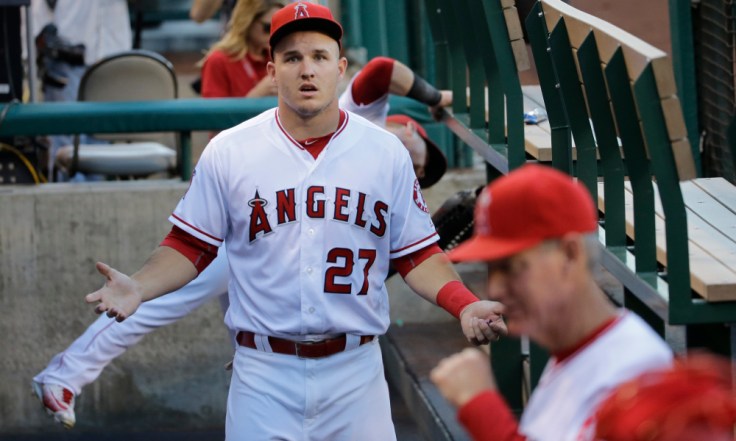


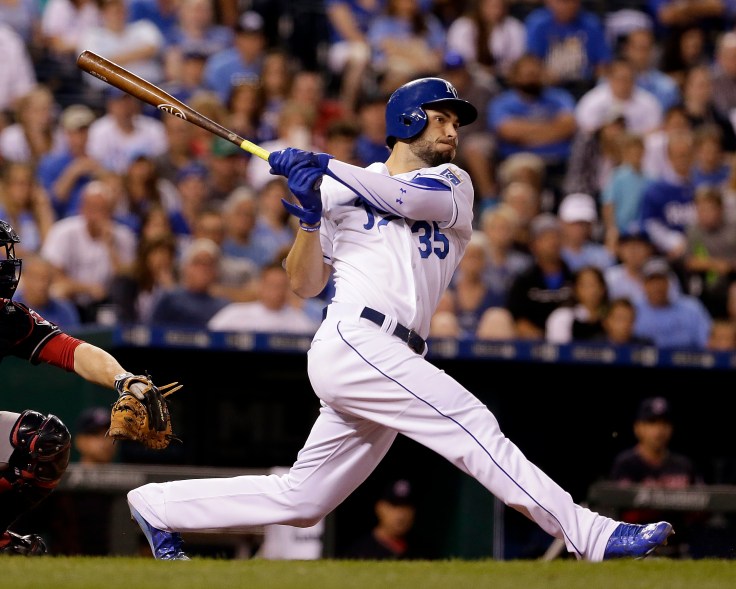


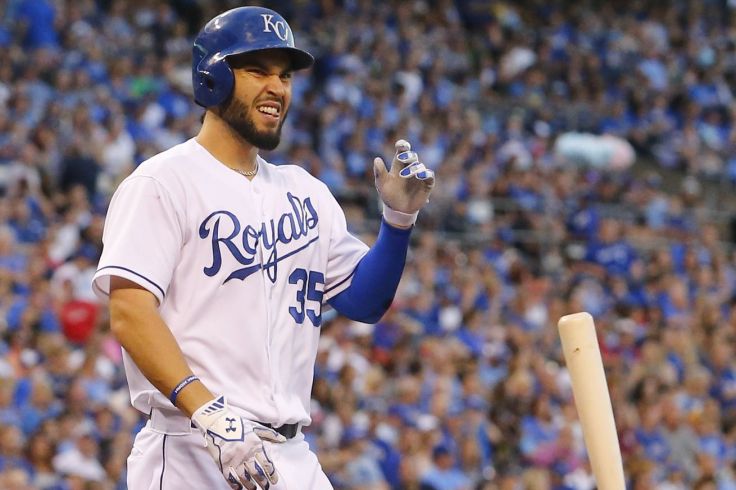


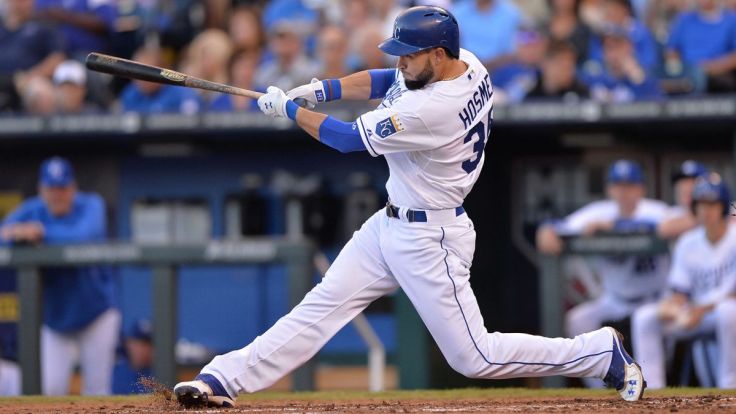
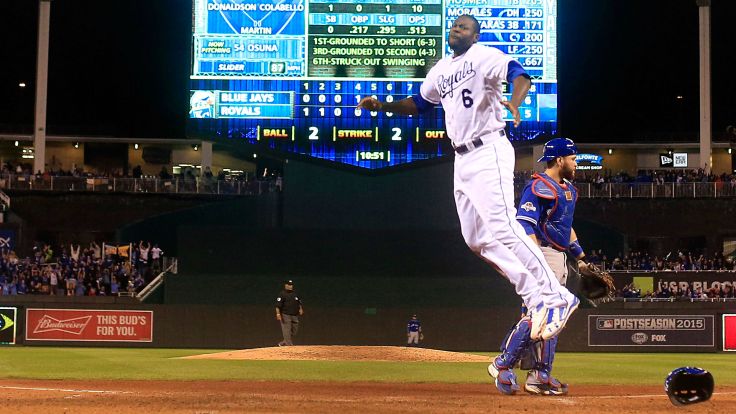
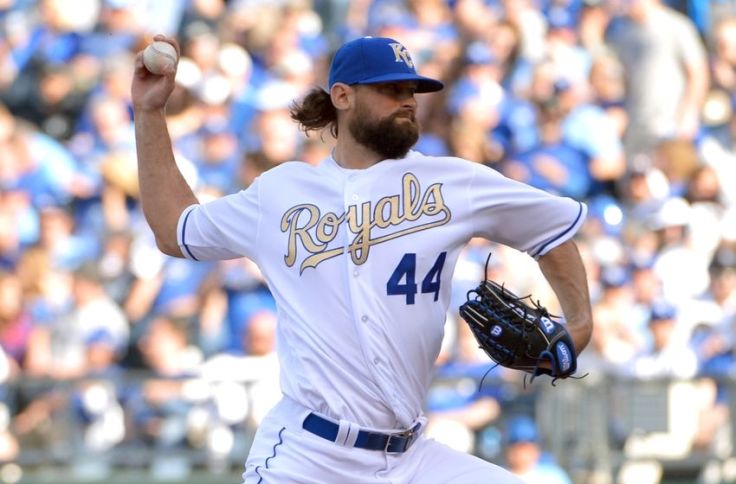

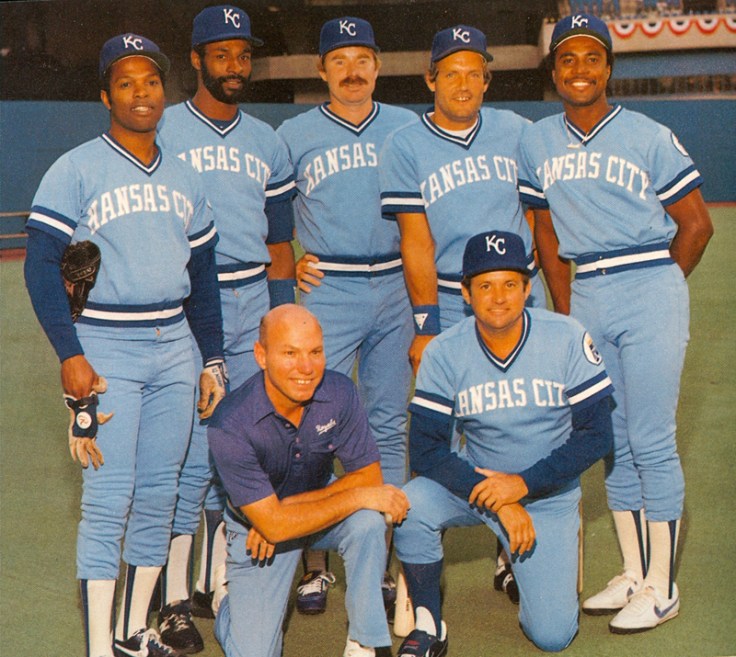

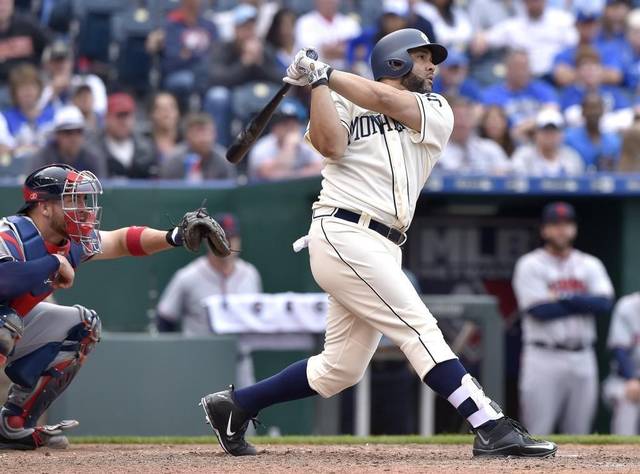
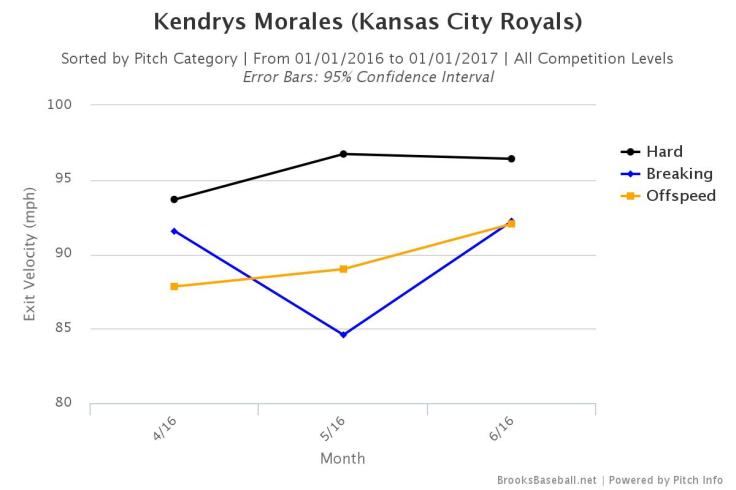
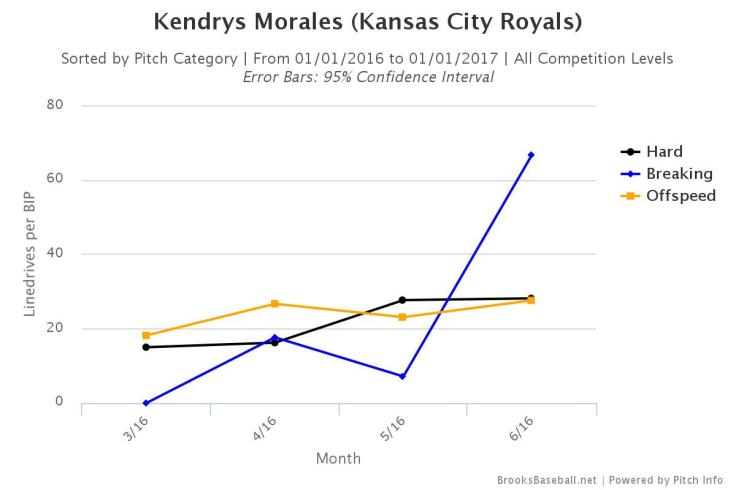
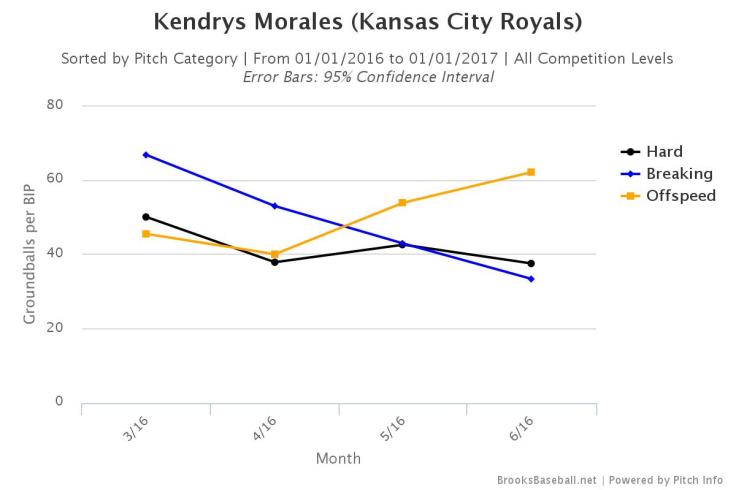
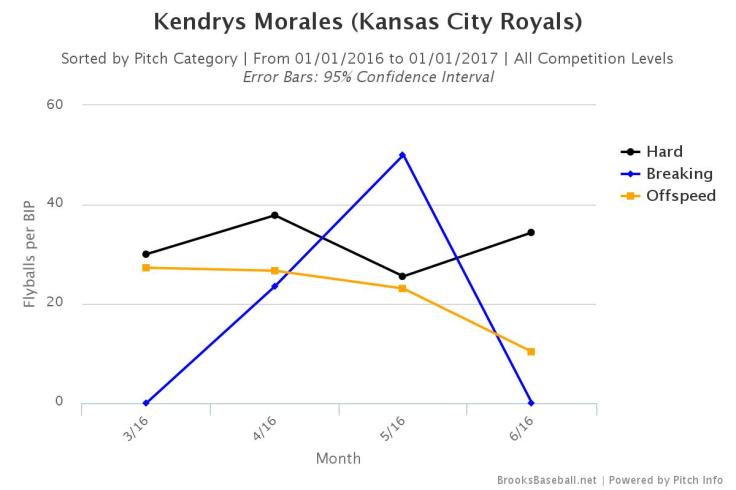
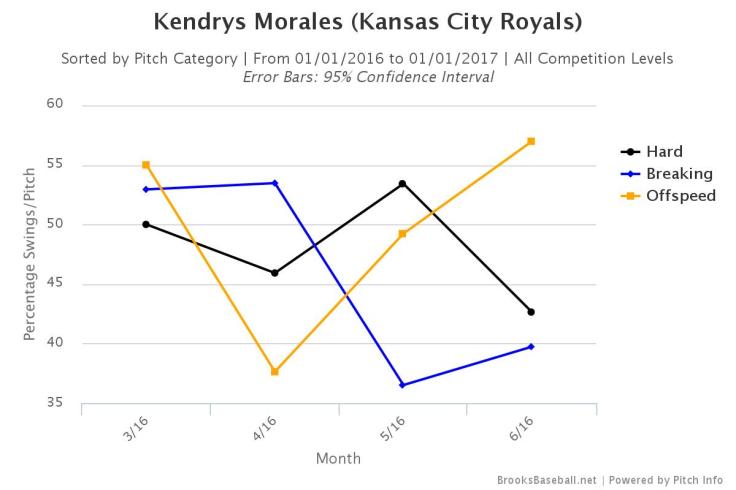
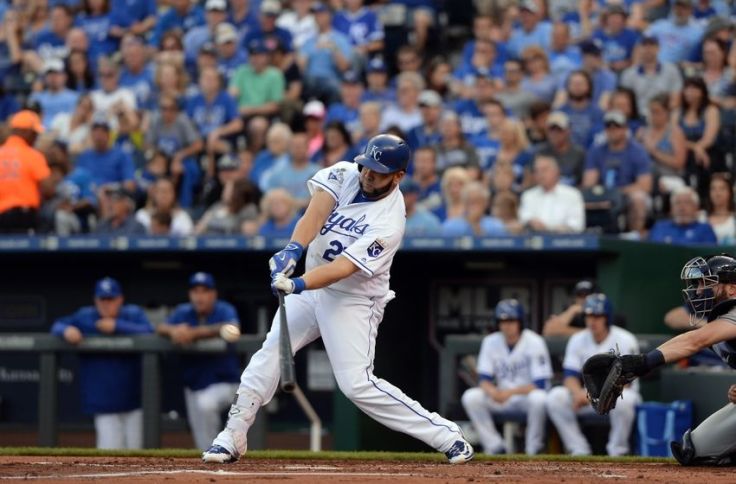
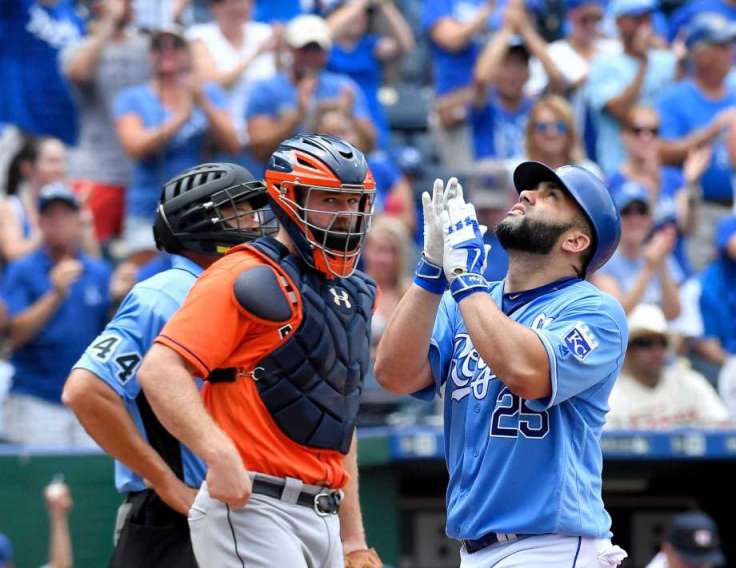
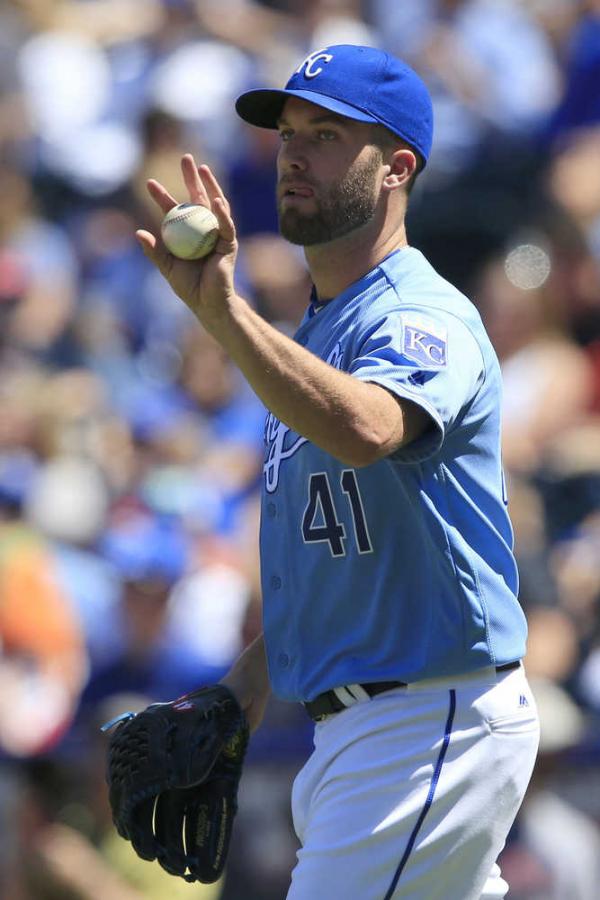


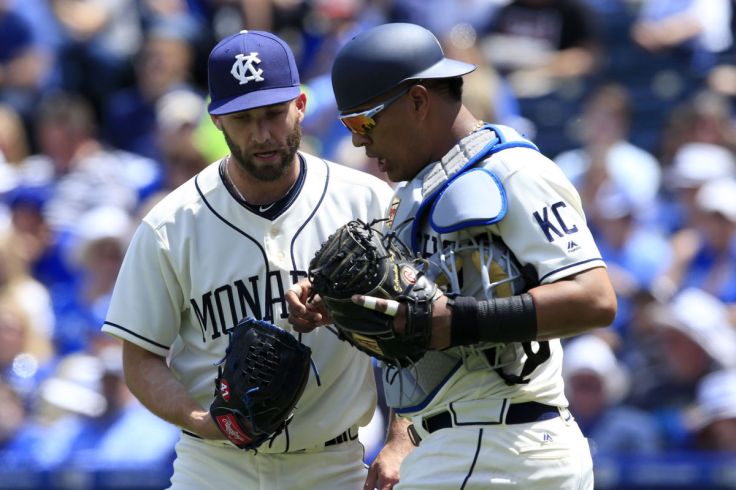
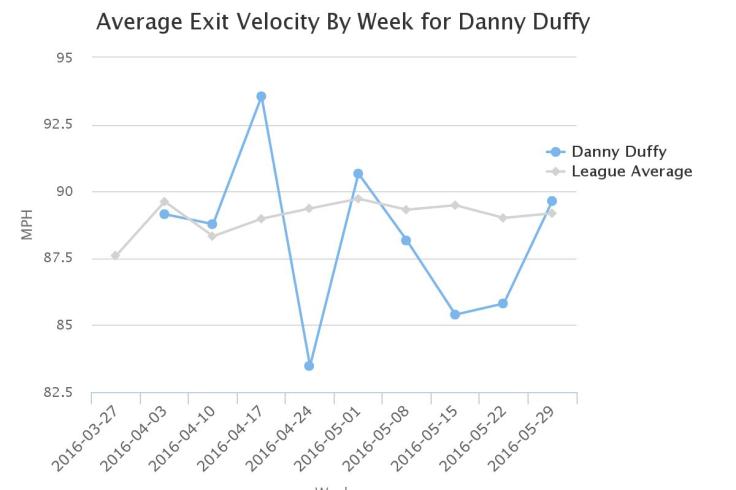


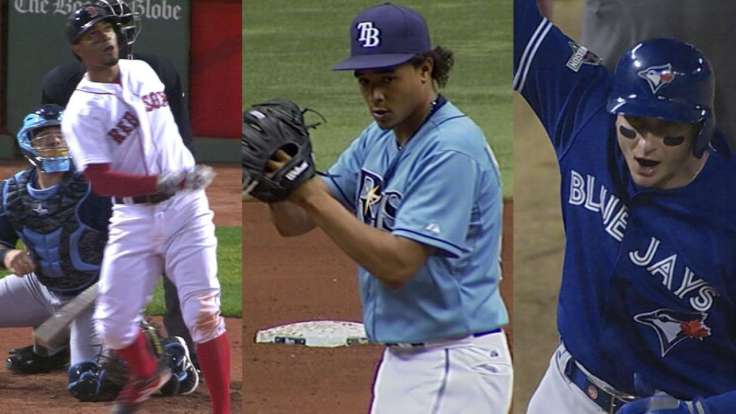
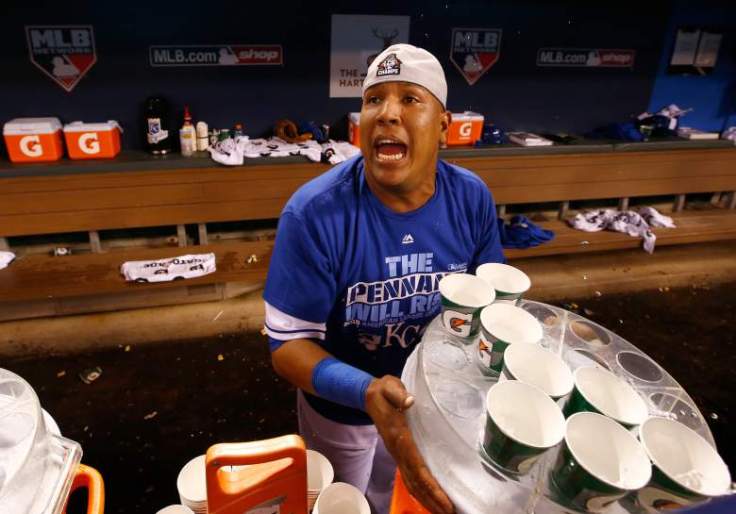
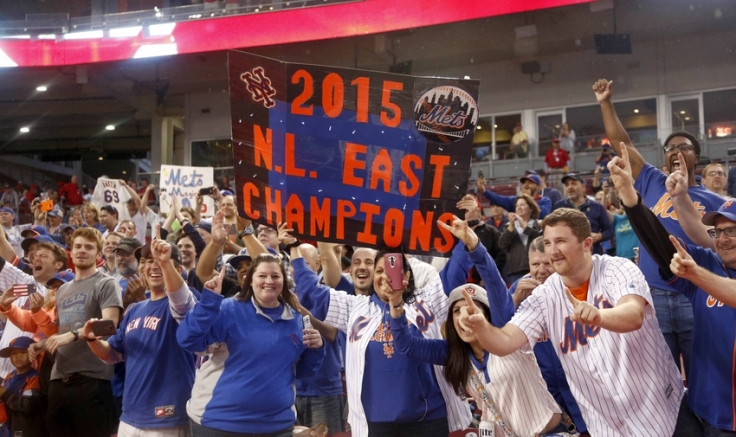
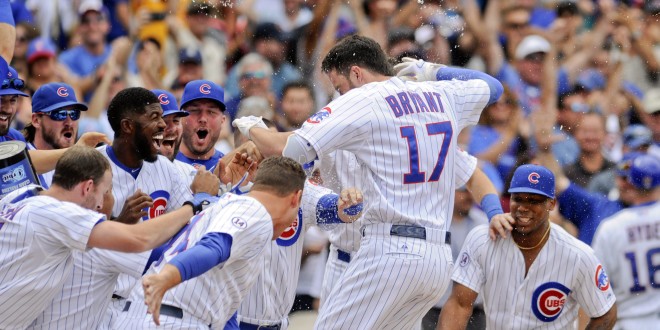
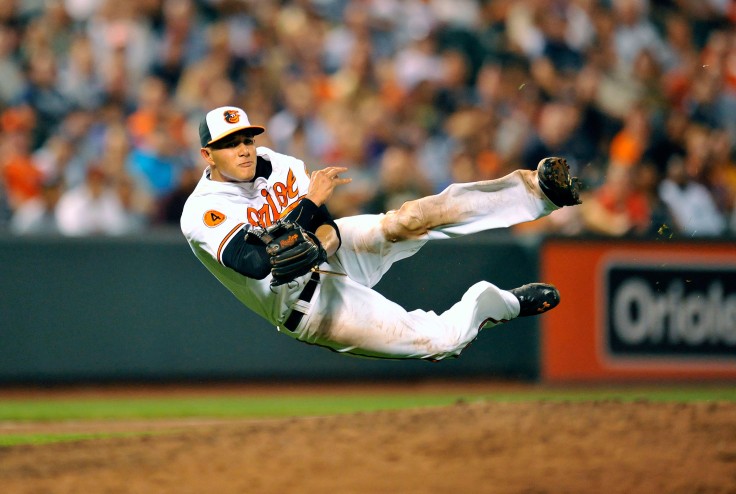
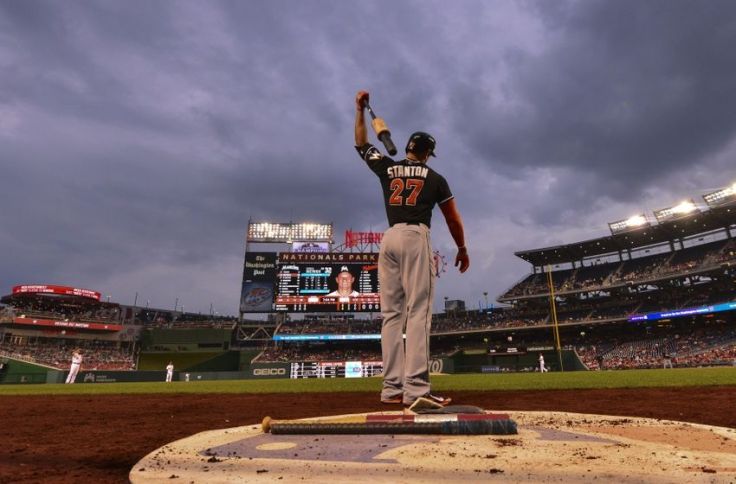
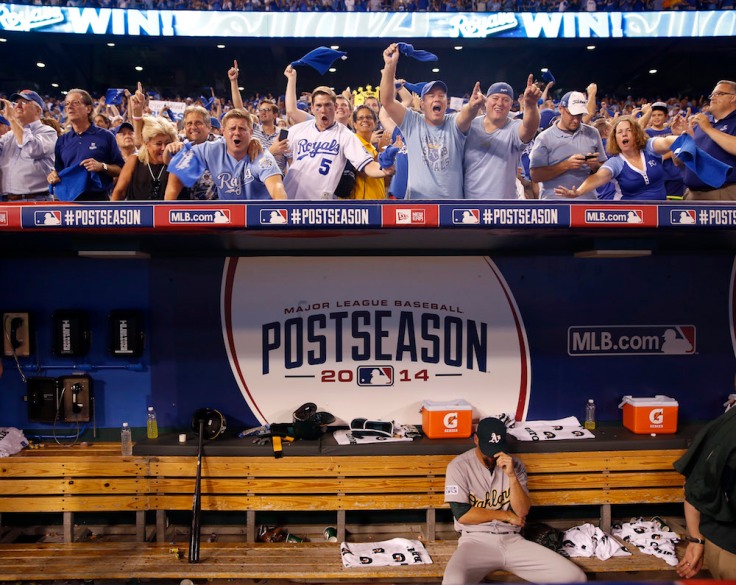


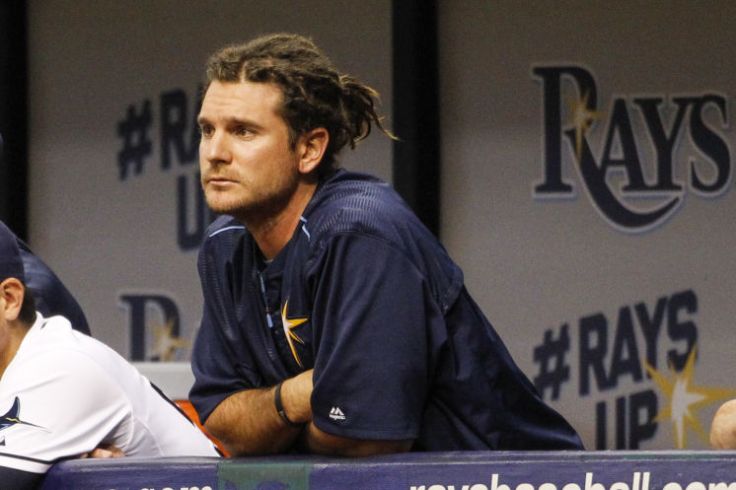
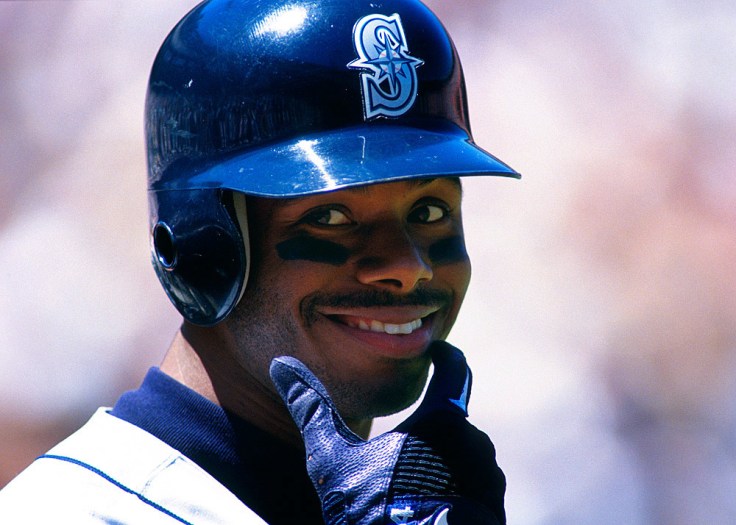
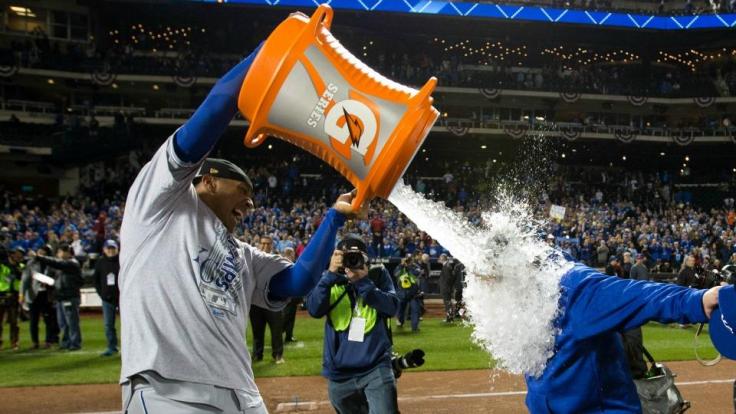
![April 13, 2015: Toronto Blue Jays Third base Josh Donaldson (20) [7086] bats during the Tampa Bay Rays 2-1 victory over the Toronto Blue Jays at Rogers Centre in Toronto, ON](https://bleedingroyalblue.com/wp-content/uploads/2015/11/kc14.jpg)


 Bleeding Royal Blue