Royals Lineup Projection

kc1

One of the funnest parts of the offseason in baseball is breaking down the projections that are littered throughout the winter. The three main projection systems are PECOTA, Steamer, and ZiPS and they all attempt to predict and break down how the upcoming season will turn out. Of course, as with any algorithm, there will be predictions that are way off, which is why the games are played. But this is a fun look at how the upcoming season could go and see whether or not the projections predict a player will improve, regress or stand pat. With that said, I thought it might be interesting to break down the Kansas City Royals projected lineup and see what the Steamer projections have in store for Kansas City offensively in 2017.
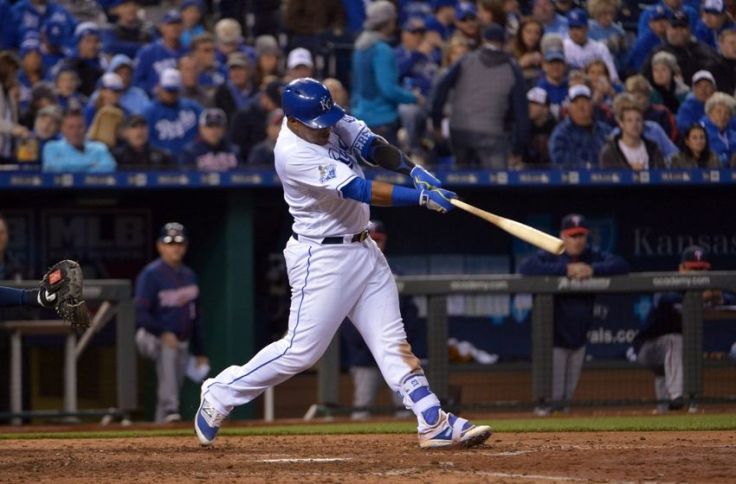
MLB: Minnesota Twins at Kansas City Royals

Salvador Perez-Catcher

What I found most interesting about Salvy’s projected numbers for this year wasn’t the fact that they expected his numbers to pick up a notch but that they project he will play in less games! I don’t know if that happens, especially if they use the designated hitter as a rotating spot, but I like the idea of Perez getting some much-needed extra rest. Steamer has Salvy hitting .264/.298/.444 with 20 home runs, 67 RBI’s and 2.8 WAR. All but the home runs would be an improvement over 2016 and even that was only off by two. I tend to think all of this is possible, especially if Ned gives him that extra rest. It’s been very apparent over the last couple of seasons that by August, Salvy seems to be tiring and the grind of catching as many innings as he has the last few years catches up to him. I would like to see Perez get some extra at bats at DH and rest his legs, which I think would mean an increase in his offense. For the most part, I believe these projections are doable.
kc3

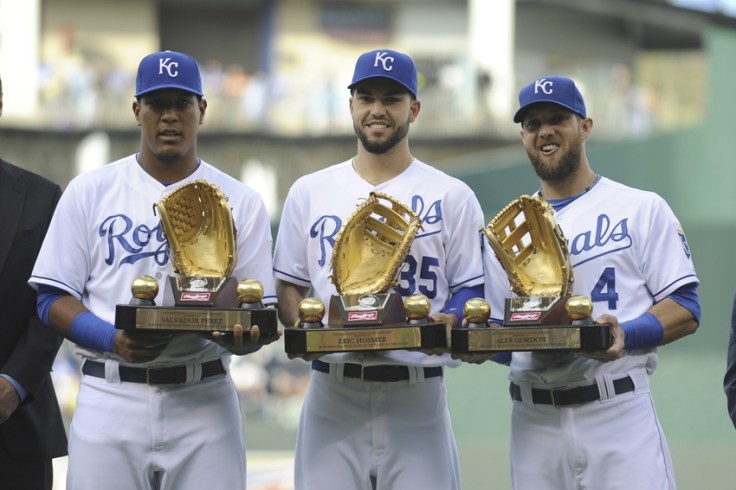
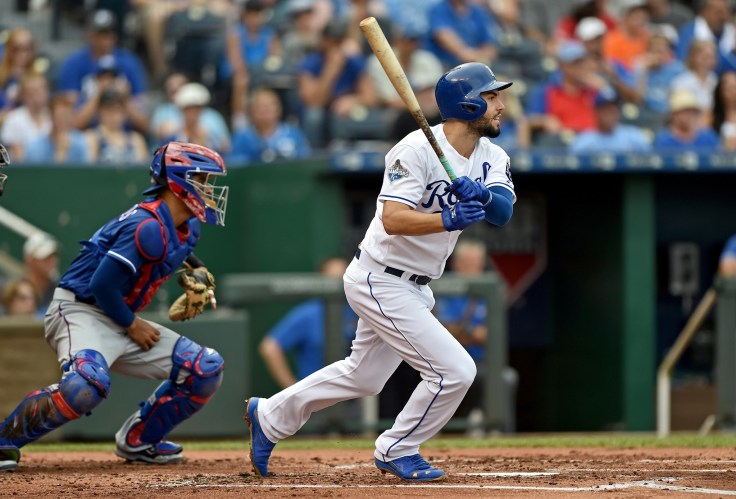
Eric Hosmer-1st Base

Anyone who has followed this blog knows that I soured on Hosmer this past season and it was to the point where I don’t know if I will ever expect him to perform even remotely consistent in the big leagues. The good news is that Steamer thinks Eric will improve on last year, projecting a line of .278/.345/.455 with 22 home runs and 84 RBI’s and a 1.7 WAR. Outside of the home runs and RBI’s, everything else would be an improvement on a season that was the tale of two different seasons for Hos. To me, the biggest tell on whether or not he improves offensively this year is if he is able to decrease his ground ball rate, which was a ridiculous 58.9% in 2016. If he does that and lowers his strike out rate, I think we could see a better Hos in 2017. There has never been a better time for him to have a career year than the season right before he enters the free agent market, so there should be some motivation to not be the guy who produced a well below average OPS+ (78) in the second half of 2016.
MLB: Toronto Blue Jays at Kansas City Royals

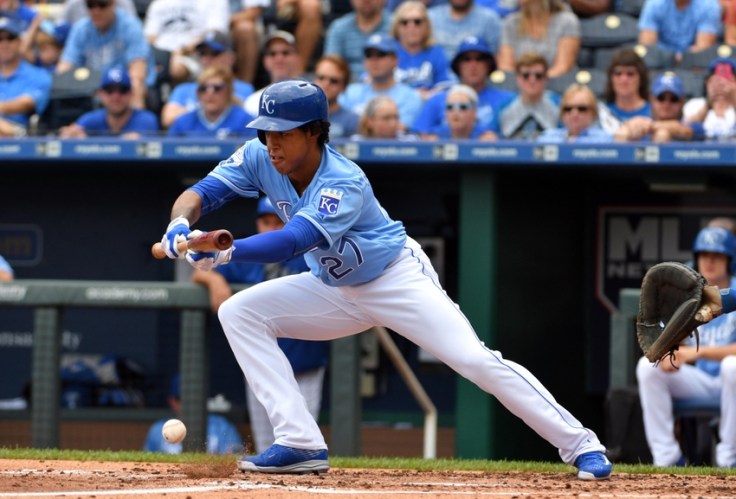
Raul Mondesi-2nd Base

My hunch is that Mondesi will be the Kansas City second bagger to start 2017 unless he really struggles this spring. The good news is that there is almost no way he could be worse offensively than he was during his first stint with the Royals last year. Steamer agrees with me on this, as they are projecting him to hit .231/.272/.360 with 8 home runs and 36 RBI’s, a WAR of 0.0 and a wRC+ of 64. Yes, none of those numbers are great, but all would be an improvement on his numbers in 47 major league games in 2016. I tend to look at Mondesi like this: right now, his defense is ready while his bat still needs some major work. But he has slowly improved his offense ever year in the minors, with his power numbers improving by quite a bit in his short spans in both AA and AAA in 2016. The question the Royals have to ask is if A.) His defense is good enough to let him learn at the big league level? or B.) Do they have a better option at second base? The honest answer is that as much as I like Whit Merrifield, I think he is better suited to be a super utility guy in the big leagues and I also believe Mondesi is going to learn more in the majors then spending time in the minors. This could be an interesting development to follow and I’m highly intrigued to see if Mondesi raises some eyebrows this spring in Arizona.

MLB: ALCS-Toronto Blue Jays at Kansas City Royals

Alcides Escobar-Shortstop

Escobar’s offense in 2016 was nothing to write home about; in fact, it’s probably best left to just not mention it happened. It was evident throughout the season that he had no business hitting leadoff and was not pulling his weight for a guy getting close to 700 plate appearances. Luckily, Steamer is expecting bigger things from Esky this year, with a projected line of .264/.299/.352 with a WAR of 1.0 and wRC+ of 72. Okay, the numbers are only slightly better but even if we just see a slightly better strike out rate or walk rate, I’ll take it. At this point, Escobar is who he is, which is someone who rarely walks, strikes out too often and his faith lies in the BABIP Gods. As much as I have always enjoyed his defense, we are even starting to see a slight regression there, so it might be good that he will be a free agent after the season wraps up.
MLB: Minnesota Twins at Kansas City Royals

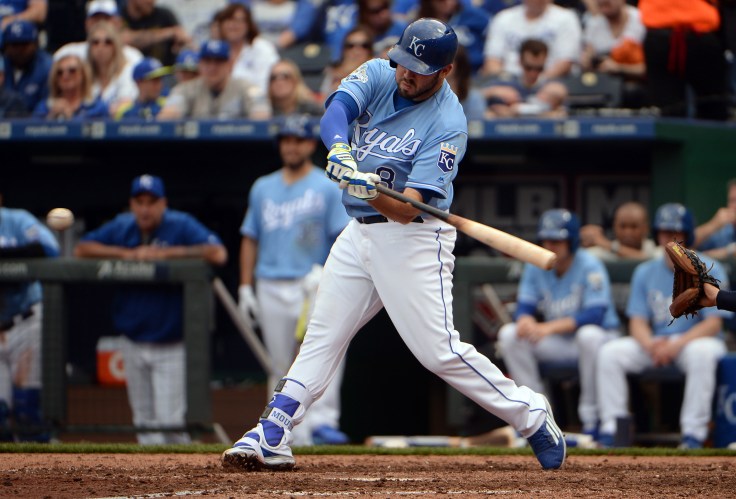
Mike Moustakas-3rd Base

Man, the Steamer really loves Mike Moustakas! Moose missed most of the 2016 campaign but in the 27 games he appeared in it was obvious that his power numbers were drastically improved and it appeared he was headed for a break-out season. Instead, a collision with left fielder Alex Gordon did in his knee and he was shelved. Right now though, the Steamer has Moose hitting .267/.329/.468 over 129 games with 23 home runs, 73 RBI’s, a wRC+ of 111 and a WAR of 3.1. Now, a large chunk of that projection is from his 2015 season, but I feel like these estimates are light. Yes, I think Moustakas is going to have a big year and I wouldn’t be surprised if he surpasses the 30 home run barrier if he can stay healthy. Moustakas has shown a tendency to improve throughout his career and in what could be his final year in Kansas City, I tend to believe he wants to show the power we have all expected him to display. While most of these projections have felt close to what I was thinking, this is one that I think will be much higher when it is all said and done.
kc7

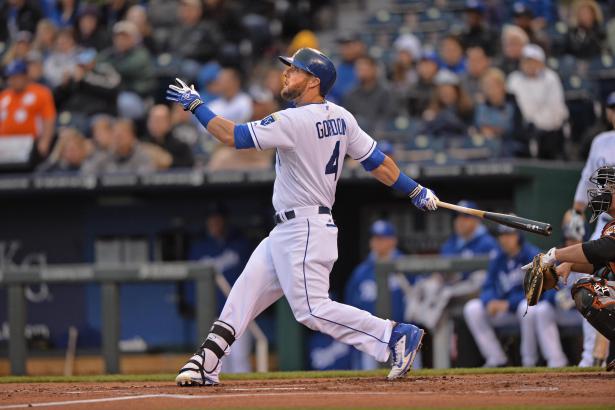
Alex Gordon-Left Field

Most players have that one season where they would prefer it would magically disappear and never be spoken of again. For Alex Gordon, 2016 was one of those seasons. Gordon struggled through the year, ending up with a line of .220/.312/.380 in 128 games. In late May, Gordon collided with Mike Moustakas and would proceed to miss the following month. It really just felt like Gordon was off most of the year, and chalk it up to whatever you want (I personally felt he wasn’t 100% most of the year) but it was a year to forget. So what is being predicted for this year? Steamer has Gordon at .248/.335/.404 with 15 home runs, 61 RBI’s and a wRC+ of 98. Call me an optimist, but I feel Gordon will be a bit better than that this year, as he looks to bounce back. Gordon probably won’t see the highs he racked up back in 2011-2012, but if he stays healthy a .260/.350/.430 season is reachable. Yes, Gordon is probably seeing the beginning of his regression, but I just don’t see it being as sharp a fall as he had last year. Expect Alex to improve on  a forgettable 2016 this year and help improve the Royals offense.

kc8

Lorenzo Cain-Center Field

Coming off of a career year in 2015, Cain looked to grow on that last year and guide the Royals back to the playoffs. Unfortunately, life doesn’t always follow a nice, cozy script and Cain would spend a large chunk of 2016 on the disabled list. Cain went from appearing in a career high amount of games in 2015 (140 games) to barely over 100 (103 to be exact) in 2016. This also meant a decline in his MVP caliber numbers from the previous year and a line of .287/.339/.408 and a wRC+ of only 98. Luckily, Steamer is projecting a similar year for Cain in 2017, as they foresee a .283/.338/.417 line and a wRC+ of 100 in 130 games. I must be the middle man here; I think Cain’s numbers could very well be higher, as he will be working for a contract, but it will all be determined on his health. If he can stay on the field, I think he will produce. If he doesn’t expect a season on par to last year. I don’t think we will ever see the numbers from Cain again that we saw two years ago, but something in that vicinity would greatly improve Kansas City’s offense.

kc9

Jorge Soler-Right Field

If you haven’t noticed it yet, there is a trend with the Royals lineup coming into this year. Almost every hitter is coming off of a sub-par 2016 and looking to redeem themselves this year. Count new acquisition Soler in that category, as he struggled for Chicago this past year. Soler hit .238/.333/.436 with 12 home runs, 37 RBI’s and a wRC+ of 106. Soler was slightly above league average, but only appeared in 86 games due to injuries in 2016. The Royals are counting on Soler to be a regular cog in the middle of their order this year…but Steamer doesn’t trust his injury history. Right now, they have predicted he will hit .257/.333/.436, 14 home runs, 48 RBI’s and a wRC+ of 104 in just slightly over 100 games. The Royals training staff has done a good job these last few years keeping the team on the field (with last year being the exception) and I tend to feel like this will be the first full year Soler spends in the big leagues. Number-wise, Soler is what he is: a high strikeout, power hitting slugger. Soler did see an uptick in his walk percentage last year and with a full year on his plate, I think he could put up solid slugging and on base percentage numbers. Soler’s probably never going to hit for a high average, but if the other stats are there, it won’t matter. The Royals need him to slug and that is just what should see him accomplish this year.
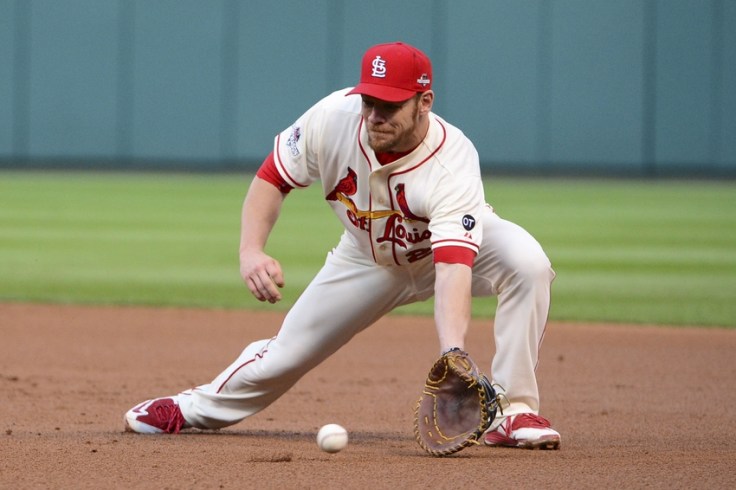
MLB: NLDS-Chicago Cubs at St. Louis Cardinals

Brandon Moss-Designated Hitter

Now, I know Royals GM Dayton Moore said the other day that Moss won’t be the “primary” DH this year, but I have a feeling when it is all said and done Moss will be the recipient of the most AB’s in that spot. Moss had a very productive 2016 and Kansas City is hoping that the same power he showed last year transfers over to Kauffman Stadium this year. A solid 2016 out Moss at .225/.300/.484 with 28 home runs, 66 RBI’s and a wRC+ of 105. Steamer has Moss sitting this year at .237/.319/.453 with only 17 home runs and 44 RBI’s and a wRC+ of 103. Now, if you are asking yourself why those numbers are lower, it is because Steamer has projected that Moss will only appear in 89 games this year, which right now feels like an extremely low number. I tend to project Moss will play in the 120-130 game zone which will see his production go slightly up. I think we could see Moss’ on base numbers increase this year (mostly from more walks) and his power numbers see a slight drop, although with Kauffman in play I could see Moss racking up more doubles than homers. In this regard, I tend to think Steamer is fairly close on the averages and a bit low on the accumulated numbers. Look for Moss to perform fairly similar this year, if not a tad bit better.
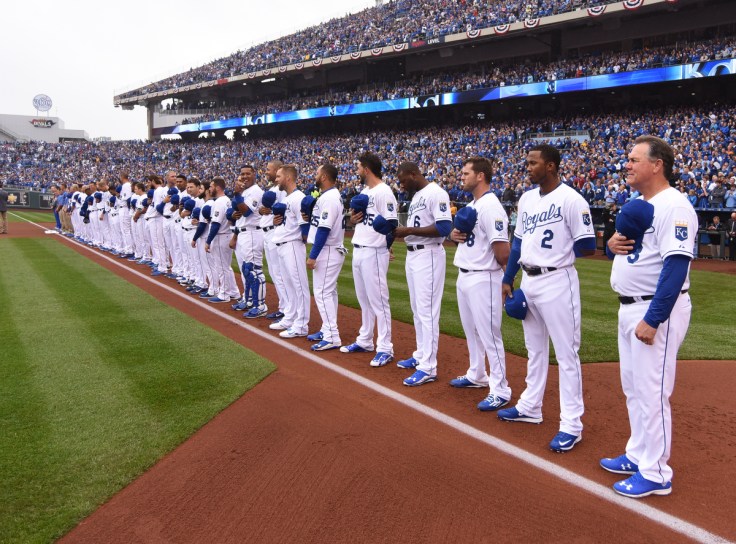
Opening Day 5-6-15

So with the projections out there, it’s easy to see that most of them are based off of past production, which isn’t always a good thing for this Royals team. Luckily, the games are played for a reason and coming off of a poor offensive season in 2014, many of the Royals batters improved on their numbers in 2015. There is no reason to think that can’t happen again, at least with a number of their starters this year coming off of injuries. One final projection I want to throw out there are the ZiPS projections which are done by Dan Szymborski and are one of the more sought after projections during baseball’s offseason. Going off of fWAR, ZiPS projects the Royals this way (projections obviously made before Ventura’s death and Moss’ signing):

kc12

The good news is that ZiPS has improvement from Gordon, Cain and Moose. The bad news is that there is little if any improvement expected from Hosmer, Soler, Escobar and Mondesi. Once again, these are just projections and while some will be fairly close, some of these will end up being way off. I always like to say that projections like this are a good starting point and once the season begins we will get a better feel for how this team will operate in 2017. More than anything, this Royals team needs improvement from their offense in 2017; if they don’t, we might as well kiss October baseball goodbye. No pressure, offense-just be better.

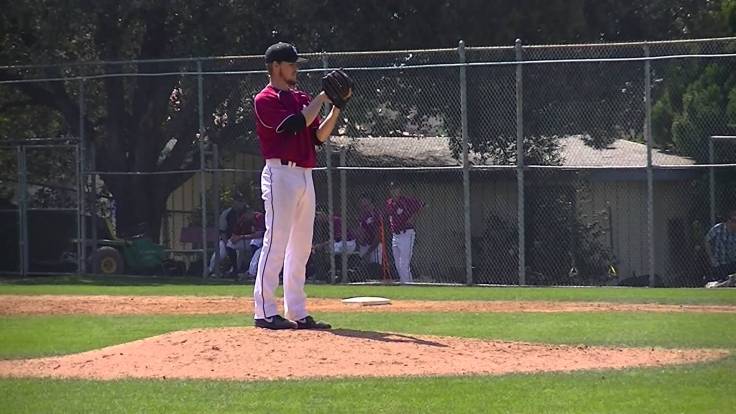
The Future of Josh Staumont

kc1

There is no greater currency in baseball than prospects. Prospects can make or break your team, whether you are a team rebuilding or a team making a playoff push. When discussing prospects, every team is in need of a young power arm, the ones who throw anywhere from the upper 90’s to triple digits on the radar gun. It’s also easy for a young flamethrower to get more chances than his softer throwing brethren, making it easier for them to climb up the prospect ladder. No pitcher follows this pattern in the Kansas City Royals system more than Josh Staumont.

kc2

Staumont was drafted in the second round of the 2015 draft by Kansas City and the early buzz on him was that he had a lively arm but also had issues with his control. That was very evident that first season, as in 18 games, Staumont was walking 7.2 batters per 9 innings, an absolutely ridiculous amount. But during that span, he also was striking out 13.0 batters per 9 inning, which is also ridiculous but in the good way. Before the 2016 season, Baseball America rated Staumont as the Royals #15 prospect and had some very glowing praise for him:

He tickles triple-digits regularly with a low-effort delivery. Staumont sits 96-98 and has touched 102 mph with a four-seamer. It grades out as an easy top-of-the-scale 80 on the scouting card.

They also praised his curveball, which had graded out as plus-plus when he stays on top of it. But coming into 2016, the concern was that his inability to harness his windup, which led to inconsistency throwing strikes, would continue to hold him back. Luckily, a slight adjustment would speed up his arrival time.

kc3

What the Royals wanted him to work on was speeding up his delivery. By the second half of the 2016 season, he figured his delivery out:

He was keeping his arm in the glove too long, which caused him to have trouble finding a proper release point. The Royals preached a delivery with more tempo.

“It was causing a lot of erratic behavior, especially when it came to the fastball,” Staumont said. “It was just figuring out how my body worked.”
The numbers definitely showed a different Staumont: over his final 10 starts, Staumont posted a 3.17 ERA while striking out 71 and walking 33 in 45  1/3 innings while in AA Northwest Arkansas. Overall he still had a high walk total (7.6 walks per 9 overall, 6.6 in AA) but his ERA, WHIP, and FIP had all gone down. By the end of the season, there was already rumblings that Staumont could be seen in Kansas City the following season, probably out of the bullpen and probably late in the year. Since then, that timetable might have changed.
kc4
The Royals sent Staumont to the Arizona Fall League this offseason and he has been nothing short of impressive. In 7 games, Staumont threw 24 innings, striking out 30 batters while walking 16. On the surface those aren’t blow away numbers, but they are on par with his second half in AA which is a sign of consistency. It’s also been good enough for Baseball America to bump him from 15th to 1st on the Royals prospect chart. They weren’t the only ones impressed  by Staumont, as former pro scout Bernie Pleskoff was really taken with him during the AFL:
The young man I saw throwing an easy, effortless 98 miles per hour with a recently-incorporated over-the-head, windmill delivery knows how to pitch. He is realizing success with his new mechanics. Of course, more time is needed to perfect the changes, but he is smart and patient.
What I found very interesting was his take on Staumont’s delivery, the one that was adjusted earlier in the year:
Staumont repeats his delivery very well. He uses the identical over-the-head, old-school windmill windup to gain consistency on his delivery. The ball comes from the same location and at the same pace and arm speed every pitch.
This is very good to see and shows that the slight hitch in his delivery is gone and he has taken to the instructions of the coaching staff. Staumont has been pitching as a starter, but Pleskoff did wonder what his role would be once he reaches the majors:
As I observed Staumont, I wondered exactly what role the Royals have in mind for the hard-throwing right-hander. If he remains a starter, he may be able to get a way with two very solid above-average pitches in his four-seam fastball and his curveball. It will help that he mixes in the cutter. However, it would really help him navigate a big league batting order if he includes a two-seam fastball to his arsenal. That would give him an entirely different pitch to show hitters. It could provide earlier sink and induce ground balls.
Overall, Pleskoff was very impressed with Josh:
I project Staumont to be an impact pitcher for the Royals once he is settled in with his new mechanics and a greater sense of confidence in his ability. Yes, there may be some hiccups along the way, but he has the arm, the poise and the pitches to dominate. He just needs time now to refine the entire package.
At this point, it might be okay to get excited about what the Royals have with Staumont.
kc5
So the verdict on Staumont? He will be heading to Spring Training in February and should at the least compete for a role on the Royals 2017 pitching staff. I tend to lean toward Staumont starting the year in the minors but I fully expect to see him before the year is done. But…in what role? I really believe his future is in the bullpen, but I can easily see why the Royals would want to see what he can do as a starting pitcher. I wouldn’t be surprised to see him start in the pen for Kansas City and eventually shift to the rotation, either late in 2017 or even 2018. No matter the role, it appears as if Staumont’s star is on the rise. During Dayton Moore’s tenure, the Royals have had a hard time producing homegrown arms for the rotation that stick. Time will tell, but the thought of Staumont  on the mound at Kauffman Stadium, blowing away hitters, should get Kansas City fans excited. Write Josh’s name down in pencil for now, but it looks like we will be seeing him sooner rather than later.

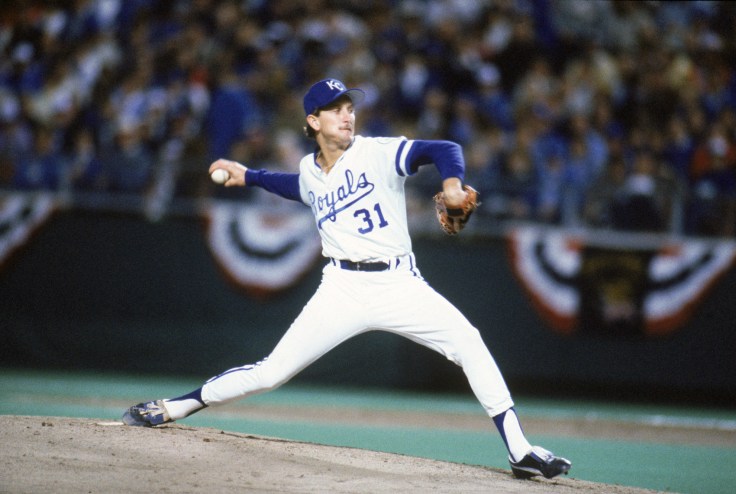
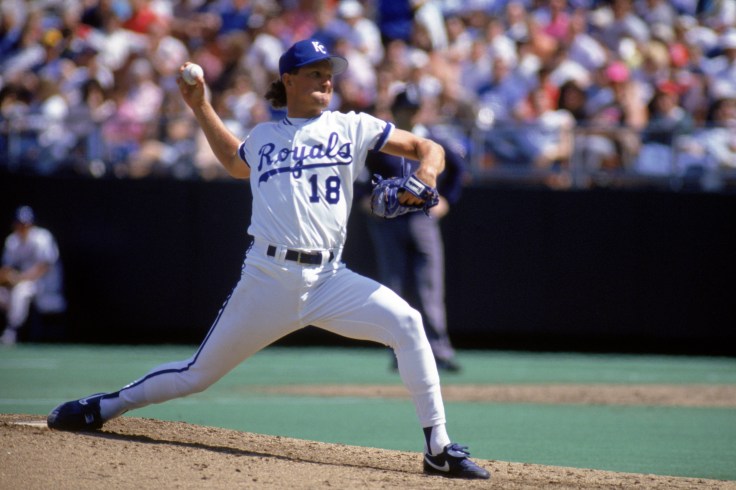
Royals Retro: Bret Saberhagen

kc1

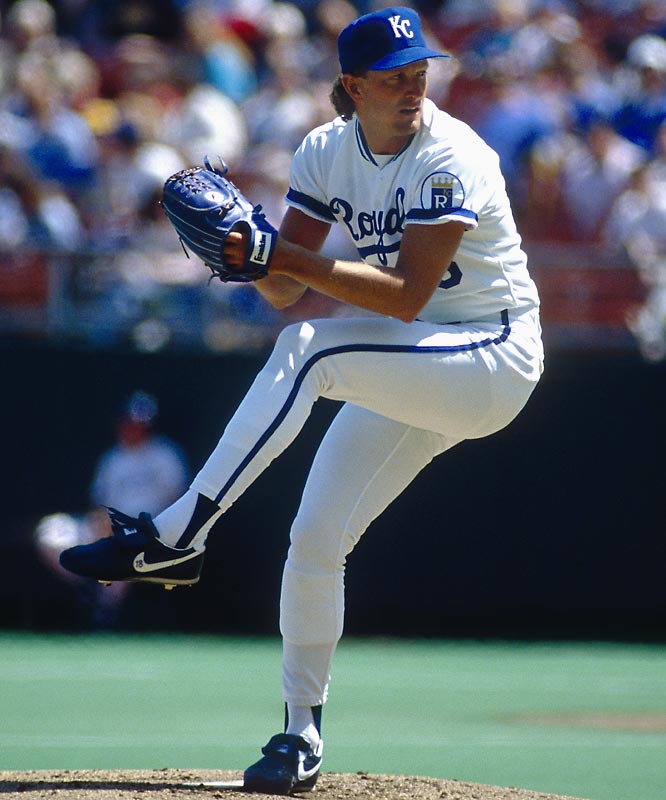
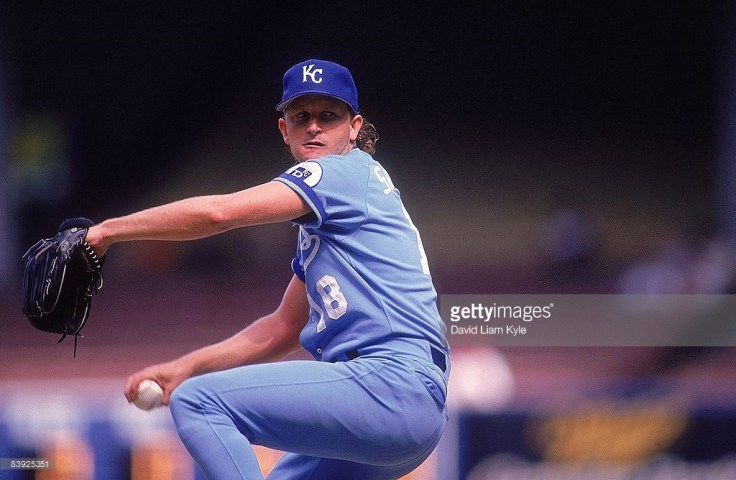
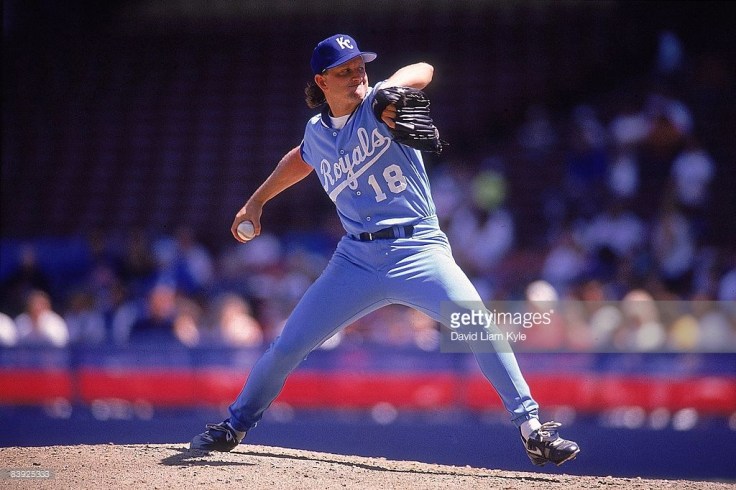
Back in the spring, I got to thinking about the history of the Kansas City Royals and how it was embedded into the fabric of my fandom as much as anything else. In the past I have done pieces on Hal McRae and have taken a look back at the history of the team, both at shortstop and a ‘Where are They Now’ piece as well. But I really wanted to dive into the past a bit more here on the blog and knew that during the season wouldn’t exactly be an opportune time to do that. Instead, I decided to wait until the off-season to get started with a monthly segment that will be called ‘Royals Retro’. Once a month, I’ll take a look back at the career of a past Royal who deserves to have a light shined on their career. I honestly couldn’t think of a better candidate to start off with than possibly the greatest pitcher in Royals history, Bret Saberhagen.

MLB Photos Archive

Saberhagen wasn’t a glorified first round draft pick by the Royals as I assume many would think he was. Instead, Bret was drafted by Kansas City in the 19th round of the 1982 draft, a high school pitcher out of Reseda, California. Saberhagen would sign late in July of that year, but wouldn’t make his professional debut until the 1983 season. In fact, 1983 would be Saberhagen’s only year in the minors, starting 27 games, posting an ERA of 2.55 over 187 innings, averaging 6.3 strike outs per 9, 2.3 walks per 9 and a WHIP of 1.134. Saberhagen took the fast track to the major leagues, as he would make his debut in Kansas City just one year later in 1984, splitting time between the rotation and bullpen for the Royals. He would throw 157 innings over 38 games (18 games started), posting an ERA+ of 115, striking out 4.2 batters per 9, and a FIP of 3.64. As probably expected, Saberhagen put up slightly better numbers in his 20 appearances out of the bullpen, posting an ERA of 2.32 over 54 innings, while averaging 4.1 strike outs per 9. One aspect of his game that was evident even early on in his career was how Sabs was good about trusting his defense and making pitches for the batter to put in play. Spanning his career, Bret’s ball in play percentage was on average anywhere from mid 70% to upper 70%; during his rookie year, it sat at 79%. Saberhagen would also make his first postseason start, throwing 8 innings while only allowing 3 runs, 2 earned. Nothing overtly stands out in his 1984 numbers that showed how he would break out the following year, but it was at least obvious that the Royals had a keeper.

Kansas City Royals

Saberhagen would enter his age 21 season and it wouldn’t take long for him to become the Royals ace. By the end of the season, he would lead the American League in FIP, WHIP, walks per 9 and strike out to walk ratio. He would also rack up an ERA+ of 143, an ERA of 2.87 and would win his first Cy Young award while coming in tenth in the AL MVP voting…basically on two pitches:

“The year Bret won 20, he relied mostly on two pitches: his fastball and his changeup, which he throws extremely well,” said Kansas City pitching coach Gary Blaylock. “Even though he also threw a curveball and a hard slider, he never really had control of either of them. Too often they were just waste pitches.

The icing on the cake was during the Royals playoff run that October. During the World Series in 1985, Saberhagen would make two starts, throwing two complete games, including a complete game shutout in Game 7 to help Kansas City take their first championship. Bret would end up MVP of the World Series, while his wife would give birth to the couple’s first child, Drew William, on the night of Game 6. All in all, it felt like the beginning of a very prosperous career for the young righthander.

kc4

But Saberhagen would fall back in 1986, as a nasty combination of struggles and injuries limited him to 25 starts and 30 appearances overall. Injuries were the biggest issue, as Bret dealt with shoulder, elbow and foot problems and contributed to a 4.15 ERA, a 102 ERA+ and just 2.0 bWAR, a year after racking up an impressive 7.3 bWAR. Many wondered  back in ’86 if success had spoiled Sabs, but Saberhagen was just as unsure as anyone else:

“Everybody’s trying to come up with a solution or theory of what I could have done to change things,” Saberhagen said before the Kansas City Royals met the Angels Tuesday night in Anaheim Stadium. “When you’re not going as well as you should be, everybody shines the light at you and asks why.”

1986 would also be the beginning of weird odd year/even year pattern where it concerned his success. It appeared over time that Bret excelled in odd years, while struggling during even years. This odd phenomenon would continue throughout his Kansas City career.

Kansas City Royals

1987 saw Saberhagen restore his old glory, throwing an impressive 257 innings over his 33 starts, compiling 15 complete games, a WHIP of 1.163, an ERA+ of 136 and 8.0 bWAR. Bret would also earn his first All-Star nomination and a WPA+ of 19.1. A big part of his success that year was the added use of a curveball, a new addition to his pitching repertoire:

“That’s why we decided to take the hard slider away from him in spring training and have him work on perfecting his curveball, which actually fits his mechanics a lot better,” Blaylock continued. “Now he can consistently get hitters out with his curveball, where before it was just there. I won’t say that’s the chief reason for Bret’s fast start this season, but that’s part of it.”

It also appeared that any distractions he had in ’86 were in the rear-view mirror:

Saberhagen reportedly is also a lot more disciplined on days when he is scheduled to work than he was last year, when on at least one occasion he came to the park early, not to work on some of his problems, but to film a car commercial. This year he definitely seems more organized, more able to block out distractions, and more willing to challenge the hitters with a fastball that has been clocked as high as 96 m.p.h.

The one downside to 1987 was a shoulder injury in the second half of the season that affected his performance on the field, as only 4 of those 15 complete games were in the second half. Saberhagen would also allow more hits, runs and home runs in the second half, all in 42 less innings than he had in the first half.

kc6

The pattern would continue in 1988, as Bret struggled, allowing the most hits in the American League and giving up the most runs in his career. Saberhagen would post an ERA+ of 106, a FIP of 3.08 (which actually wasn’t that bad) and a bWAR of 3.8. The good news was that he stayed healthy and that health would remain as he ventured into 1989. ’89 would be his career year when it came to numbers, as he would lead the American League in wins, W-L%, ERA, complete games, innings pitched, ERA+, WHIP, FIP and strike out to walk ratio. His bWAR that year was the highest of his career, 9.7, as he would earn his second Cy Young award, while earning his first Gold Glove and finishing 8th in the AL MVP voting. From July 26th on, Saberhagen would compile four shutouts and only once in a game over that period would a team score more than two runs on him. In many ways, 1989 was the year that Saberhagen went from being a really good pitcher who won the Cy Young award at one point to one of the best pitchers in the game and an elite ace. Most Royals fans will discuss his 1985 campaign when talking about his greatness, but 1989 was easily his best year.

kc7

1990 was the expected off-year for Saberhagen, as he would appear in just 20 games while throwing 135 innings. The one positive for him was his second All-Star game appearance, one in which he would pick up the win for the American League. Bret would pitch in one game during the second half before being shelved, as he would have successful arthroscopic surgery on his elbow in July. At this point, he was 26 and the litany of injury issues were starting to pile up.

kc8

1991 would be Bret’s final year in Kansas City and as patterns go, it was another solid season. Saberhagen would throw 196 innings in 1991, with seven complete games, an ERA+ of 135, a WHIP of 1.070 and a bWAR of 5.1. The crowning moment for him that season was his first career no-hitter, as he blanked the Chicago White Sox, 7-0. All these years later and it is the last no-hitter thrown in Royals history. Bret really didn’t think about getting it until about the 7th inning:

“The funny thing is that once we got to the seventh inning — and I’d been at that point a few times before in my career (with a no-hitter) and I’d never been able to finish it off — I started to think about getting that darn thing,” Saberhagen recalled. “So at that point, I told myself I was going to go at every batter like he was the last batter of the game.

The toughest out might very well have been the final out:

“It was a breaking ball to Frank, and he hit the ball to Terry Shumpert at second base,” Saberhagen recalled almost 23 years later. “Terry got it and fired to first and that was it. Such a cool feeling.”

How ironic, 25 years later, that this would be just a few months before Saberhagen’s time in Kansas City would wrap up. It seems fitting that possibly the greatest pitcher in Royals history would throw a no-no in his final year as a Royal.

kc9

On December 11, 1991, the Royals shockingly traded Saberhagen to the New York Mets (with Bill Pecota) for Kevin McReynolds, Gregg Jefferies and Keith Miller. Bret was entering his age 28 season, and while there were some concerns about injuries, this was a way to fill three holes in the Kansas City offense:

“Any time an organization gives up a player of Bret Saberhagen’s caliber, it’s a hard thing to do. But we had to take a risk and do some things that you don’t always want to do. But we feel we’re a better ball club because of it. We were able to fill three holes. The Mets probably were the only club in baseball talent-rich enough to do something like this.”

What is interesting to see all these years later is the reactions, such as this one from former Mets GM Al Harazin on whether or not New York felt like they overpaid for Saberhagen:

“I think we gave up an awful lot of talent, but we got one of the best pitchers in baseball. I’ll leave it to others to decide if we overpaid.”

It was a shocking move, even for Bret as he wasn’t expected to leave Kansas City:

“When you win a couple of Cy Young’s you start thinking maybe you’re a fixture and one of the main reasons they’ve accomplished what they have in the past.”

The move was equally as shocking for Royals fans. I remember being crushed as a 15 year old Royals fan to learn one of my favorite players was no longer a Royal. At the time I wasn’t as privy to the business side of baseball; all I knew was a player I had gotten attached to was now going to pitch in New York. So how did the trade work out? Not great for the Royals. Saberhagen would accumulate 11.7 bWAR during his time in New York, including a third place finish in the National League Cy Young voting in 1994. Miller would play parts of four seasons with Kansas City, raking in 1.4 total bWAR in that span. McReynolds put together 1.9 bWAR in his two seasons in Kansas City (and never endeared himself to Royals fans), while Jefferies had a 2.2 bWAR in his lone season in Kansas City. Jefferies at one point was considered a future star, but was a slightly above average player whom the Royals would trade the following winter for Felix Jose. Jose was an even bigger bust, posting a -0.2 bWAR during his time in Kansas City. It’s hard to say one move could lead to the downfall of one organization, but the Saberhagen trade didn’t accomplish what Royals management was hoping it would and instead began a downfall that would fall even farther in upcoming seasons.

kc10

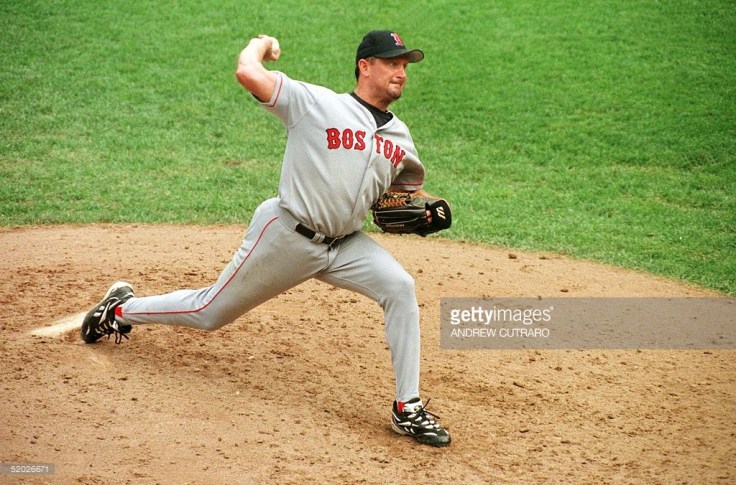
The Mets would deal Bret to Colorado during the 1995 season and would finish out the year with the Rockies, including pitching in a Colorado playoff game that fall. He would sit out the 1996 season due to injury, but would return to baseball the following year, joining the Boston Red Sox. Saberhagen would pitch part of four seasons in Boston, and while at times he would show a glint of his past success, at this point of his career he was a nice middle of the rotation starter. He did become the Sporting News Comeback Player of the Year in 1998 and would also win the Tony Conigliaro Award. He would miss the 2000 season and while he tried a comeback in 2001, he would only pitch in three games and retire at the end of the season.The latter part of his career was littered with injuries and stunted what at one time was considered a possible Hall of Fame career.

kc11

So two questions have gnawed at me over the years: one, ‘is Bret the greatest Royals pitcher in history?’ and two, ‘how close did he actually get to becoming a Hall of Famer?’. Let’s start with the first question, his place in Royals history. In all-time career bWAR, Saberhagen is just behind Kevin Appier, 47.3 to 40.8. He is fourth in ERA (behind three relievers), sixth in wins, fourth in win-loss%, 1st in WHIP, 2nd in walks per 9, 6th in innings pitched and fourth in strikeouts. At this point, it is pretty close between him and Appier, so I’m going to venture to the advanced side of things. Saberhagen is 5th in team adjusted ERA+ (second behind Appier for starters), first in team FIP and third in WPA. With all these numbers at hand, I would say in a very close race that Kevin Appier might just slightly edge out Bret for being the greatest Royals starting pitcher of all time. That also tells you how super underrated Appier really was.

kc12

So how about the Hall of Fame? Going off the great website Hall of Stats, Saberhagen is in, as they gave him a Hall Rating of 122, as they take the top 217 players (the amount of players currently in the Hall of Fame) based just off of their career statistics and nothing else. Their formula?:

The Hall of Stats uses a formula called Hall Rating to rank every player in baseball history. Hall Rating combines the value of a player’s peak and longevity into a single number that represents the quality of that player’s Hall of Fame case. It’s not perfect, but there’s a lot to be said for rating all players in history according to the same objective criteria.

Now this factors in both longevity and peak of career, which has become more and more important over the years. Saberhagen’s case is 62% peak and 38% longevity and by their Hall Ratings he is 152nd all-time, 134th among eligible players and 45th among pitchers. Saberhagen will be eligible for the upcoming Today’s Game Era Committee, but the likelihood of him getting voted in is probably pretty slim. What this does tell us though is that his battle with injuries late in his career probably hurt his case and has made many voters ignore his numbers during his peak. The good news is that Saberhagen is already in the Kansas City Royals Hall of Fame, which is a great honor in Kansas City and was also voted one of the ‘Franchise Four’ for the Royals back in 2015.

MLB: World Series-San Francisco Giants at Kansas City Royals

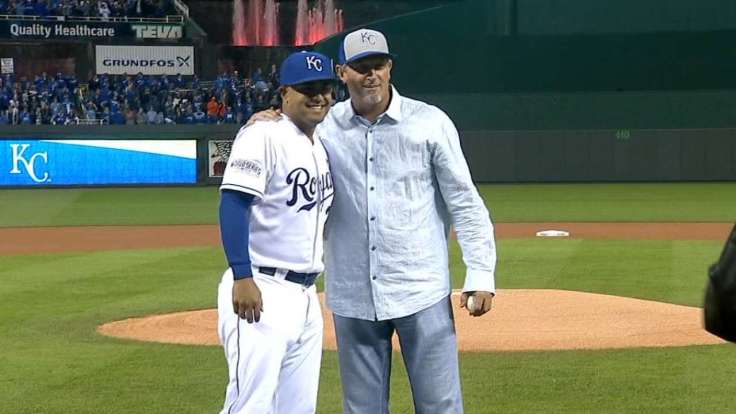
For a number of years, it felt like the Royals had forgotten about Saberhagen and his place in the team’s history. There were a few public acknowledgements, but that was about it. It always bothered me, considering his place in franchise history. Luckily, over the last few years while the Royals have made their epic playoff runs, Saberhagen has continuously been seen at Kauffman Stadium. After all these years, it is still great to see ‘The Kid’ at the stadium, even for just a moment. I’m sure a kid from California never imagined while he was growing up that he would become such a large part of the fabric of a team in the midwest, but he has. When you talk about great Royals pitchers, names like Splittorff, Leonard, Busby, Appier and Greinke are often mentioned. But for me, the conversation started and ended with Saberhagen…and it always will.


The 1st Annual 2016 Kansas City Royals Postseason Awards

kc1

Once we get past October and wrap up the World Series, it will be full-blown award season for Major League Baseball, as they will reward the players voted on once the regular season wraps up. But here at ‘Bleeding Royal Blue’, I can hand out awards whenever I feel like it. Don’t be surprised if I give out an award on some random day in June next year, folks. It could happen. But for now, I wanted to fully wrap up the Kansas City Royals 2016 season by handing out acknowledgements to the deserving players on the Royals roster this year. Also, I did a mid-season awards back in July and now felt tied to this gimmick…soooo, there’s that as well. So no more procrastination, here are your award winners for your 2016 Kansas City Royals.

kc2

MVP and Best Pitcher Award: Danny Duffy

Yes, I fully believe Duffy deserves both of these honors, as he was the main cog for any success the Royals had this year. I’ve spent a lot of time discussing Danny (look here and over here) and all of it was deserved. After years where we saw only glimpses and flashes of true potential in him, 2016 saw Duffy finally put all the pieces together to be a successful starting pitcher. To put it bluntly, Duffy quit thinking and just went out there and pitched.This change in attitude led to some fantastic numbers: 9.4 SO/9, 2.1 BB/9, 188 strike outs, 125 ERA+ and 4.2 bWAR. He held left-handed batters to a line of .183/.219/.229 with an sOPS+ of 22. Many enjoyed pointing to his 7-0 record at home (ah, wins; that is so cute!) but Duffy was a beast on the road in 2016: 76 innings, 11.1 SO/9, 4.95 SO/W ratio, with the opposition hitting only .226/.287/.417 away from Kauffman Stadium. The numbers keep going for Danny, but the most important key to his game was shutting down the opposition when it mattered the most; in other words, the high leverage situations. Duffy posted a 1.37 ERA when the Royals scored 0-2 runs in his starts, with an 11.0 SO/W ratio. Hitters only hit .217/.250/.330 in those high leverage situations and he posted an 8.00 SO/W ratio in those scenarios. In other words, Duffy was big when the Royals needed it the most, coming through in the clutch. That is what an ace does and that is why Danny Duffy wins these two big honors this year for Kansas City.

MLB: Baltimore Orioles at Kansas City Royals
(Credit: Denny Medley-USA TODAY)

Best Hitter Award: Kendrys Morales

To be perfectly honest with you, in many ways I wanted to pick no one for this achievement. In my eyes, the offense had no ‘go to guy’ this year and almost the entire lineup struggled at one point or another. But if I was picking one, Morales would be the hitter who posted the best numbers. He would get off to a rough first few months (.193/.262/.330 with 12 total extra base hits in April and May) but would come alive in June. June saw Morales hit .402/.453/.655 with 5 home runs and 18 RBI’s, propping the Royals up on his back. Like every other Royal in July, Morales struggled, but he would post solid numbers in both August and September. By the time it was all said and done, Morales hit .263/.327/.468 with 30 homers, 93 RBI’s and an OPS+ of 108. Good numbers considering where he was early in the season, but still a notch below his 2015 numbers. Morales would also post a 0.9 bWAR and a 10.6 WPA+ (which is the sum of positive events for this batter), both below his 2015 stats. Overall, it was a solid season for Morales and one that would make him the Royals best hitter, the only real candidate for this award.

Honorable Mention: Paulo Orlando

kc4

Rookie of the Year: Cheslor Cuthbert

There have been some real questions asked these last few years about Cuthbert and just how much of a prospect he should be. With Mike Moustakas blocking him at third base, it seemed unlikely we would ever really find out. Unfortunately, Moose would go down with a torn ACL; exit Moose, enter Cheslor. Cuthbert stepped in at the hot corner and after some early struggles, he would get comfortable and show everyone what he could actually do. Cuthbert would end up with 510 plate appearances this season, hitting .274/.318/.413 with 12 home runs, 46 RBI’s and an OPS+ of 93. For most of the season, Cuthbert’s numbers were at or above league average, with a slump in the final month dragging some of his numbers down. Cheslor would post a -0.2 bWAR this year, but most of that was due to a slightly below average defense that had him at -0.9 dWAR, with an oWAR of 1.1. The big knock on Cheslor defensively is his range and speed, which are below average and yes, below Moustakas. That being said, he would fill in admirably and at the very least showed Kansas City management that he was worth another look next year when Moose comes back. So what should we expect next year? The bad part is that Cuthbert is out of options and probably wouldn’t go through waivers unclaimed at this point. Kansas City has sent him to the instructional league to learn second base, as the Royals want to see if he can increase his versatility and give the team more options and positions to play him at next year. There is also the chance that he could see time at DH, as Morales is a free agent and who knows if they will sign a permanent replacement this offseason. No matter the situation, Cuthbert elevated his positioning in the organization in 2016 and deserves a big league job at this point in his career.

Honorable Mention: Matt Strahm, Whit Merrifield

MLB: OCT 22 World Series - Giants at Royals - Game 2
[Photo via Newscom]
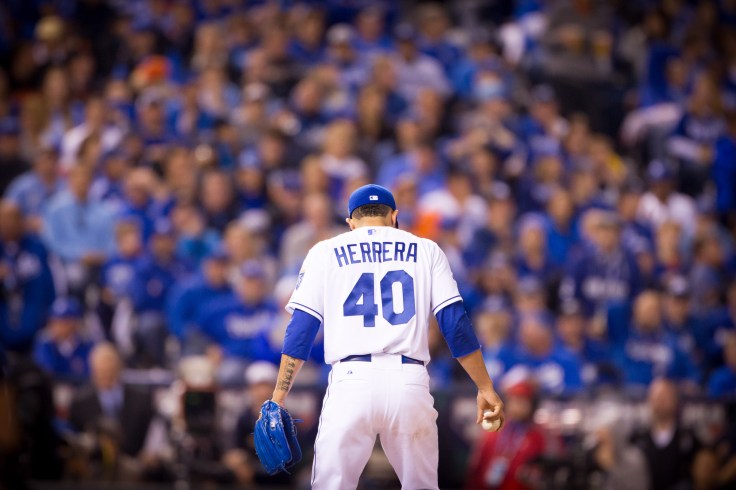
Reliever of the Year: Kelvin Herrera

The Royals saw their bullpen come back down to earth in 2016, but the man who stayed the course for Kansas City was Kelvin Herrera. All Herrera did this year was rack up a career low FIP of 2.47, a career low BB/9 of 1.47, career low WHIP of 0.958, with a SO/9 of 10.8,  ERA+ of 160 with 2.0 WAR. Herrera started the year as the set-up man, but when closer Wade Davis would end up on the disabled list, Herrera would step in as the closer. He would earn his second consecutive All-Star nod and continued his dominance, thanks to a new look slider he developed late in 2015. The slider gave him even more dominance than he had before, which is shown by his walk rate and WHIP. To give you a better idea: Herrera threw 72 innings this year and allowed only 12 walks.This increased his SO/W ratio to 7.17, the best of his career. Here is the truly scary part: Herrera will be entering his age 27 season. In other words, he is just now in his prime. Be scared, Major League hitters.

Honorable Mention: Wade Davis, Matt Strahm

MLB: Kansas City Royals-Workouts
(Credit: Joe Camporeale-USA TODAY)

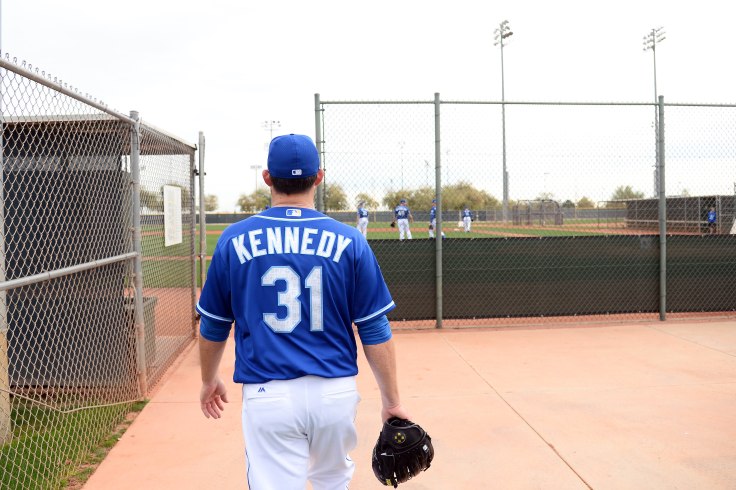
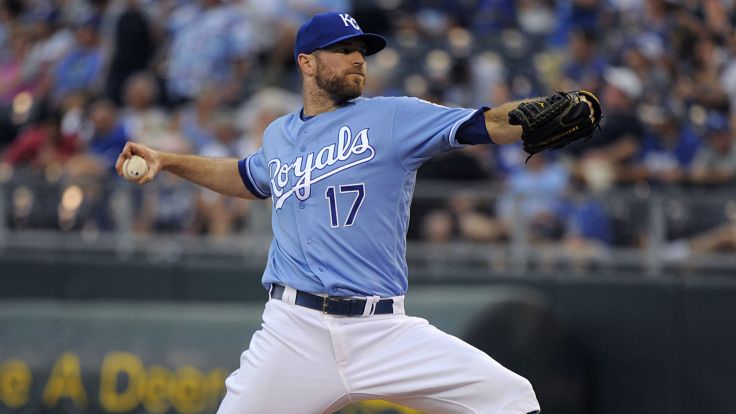
Comeback Player of the Year: Ian Kennedy

Royals fans weren’t exactly enthused when Kansas City signed Kennedy to a 5-year deal. Kennedy had been a below average pitcher the last five years and one had to wonder if the combination of Kauffman Stadium and pitching coach Dave Eiland could change that. Well, it did and because of that Kennedy is the Comeback Player of  the Year. Here are the numbers that got him here: 184 strike outs over 195 innings, 1.221 WHIP, 119 ERA+, 1.6 WPA and 4.1 WAR (his highest since 2011). There were flaws in his game; Kennedy allowed 33 home runs, third most in the American League and he saw both his walk rate and FIP go up. Kennedy’s season wasn’t perfect, but in my eyes he was exactly what I expected; a guy who sometimes looks great, and sometimes looks bad. Kennedy was lucky enough in 2016 to lessen the bad starts while performing at least league average in a large chunk of the others. He did compile 15 quality starts, which was 45% of his starts this year and had an average Game Score of 54.6, a few ticks up on his 2015 campaign. In all honesty, I can live with these numbers from Kennedy if he continues this throughout the span of his contract while staying healthy.

Honorable Mention: Paulo Orlando

Now, onto our consolation awards:

kc7

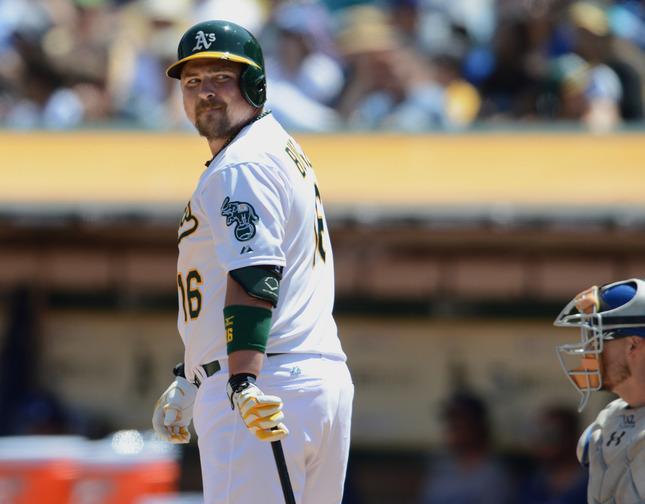
Best Hair: Drew Butera

kc8

Best Hair, Classic: Rusty Kuntz

kc9

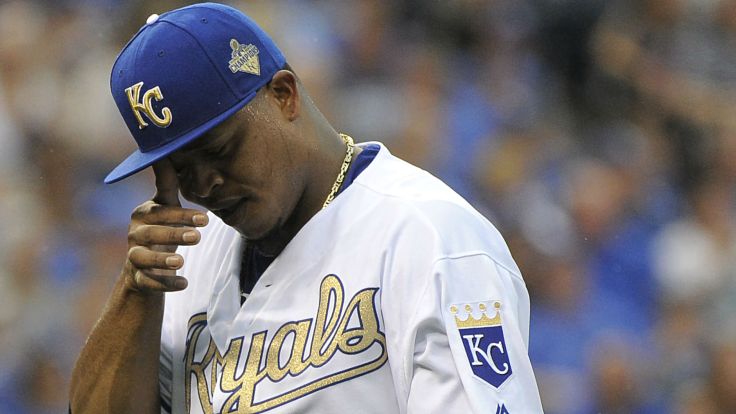
Best Forehead: Edinson Volquez

kc10

In Memoriam: Joakim Soria…wait, I’m being told he is STILL on the team. Nevermind.

MLB: Chicago White Sox at Kansas City Royals
 (Credit: John Rieger-USA TODAY)

Here’s to more awards next year, hopefully with a brighter spin on everything. Also, if any player wants to buy my vote, I will allow that. Except for Eric Hosmer. He has to earn it…and improve on his 58.9% ground ball rate. Make it happen guys and there will be gold stars for everyone! Thanks again, Kansas City, for another great baseball season. Pencil me in again for next year.


Rooting Problems

kc1

For the first time in 3 years I have no idea of who to root for when the Major League Baseball playoff’s start in a few weeks. As a Kansas City Royals fan, this is the first year since 2013 that our “Boys in Blue” haven’t been a part of the postseason and during that span I appear to have forgotten how to pick a team to cheer for come October. Since I need to figure out the team I am pulling for, I figured I would break down each team that will probably end up in postseason play and see which one I should be cheering for. Yes, this seems like a perfect scientific approach to this issue…said no one ever. I have no idea where this will lead me, folks; I guess we are going to find out together.

kc2

Boston Red Sox

Boston is an interesting start to this experiment. For one, I really appreciate the fact that a big part of this team’s core was built from within, as up and comers like Mookie Betts and Xander Bogaerts are homegrown talent. It’s hard to dislike second baseman Dustin Pedroia and I can appreciate this team’s offensive approach. But the team’s pitching could be an issue, although the starters have held their own this year for the most part. The bullpen doesn’t seem as strong and we all know how important the pen is during the postseason. But more than anything, I am tired of the David Ortiz narrative that has been spewed this season. I am officially sick of the adulation and instantly shut my ears down once he is being discussed. With the expectation being that the Ortiz talk will only intensify as the team progresses, I can’t condone cheering for this team. I won’t put myself through that kind of mental hell. So Boston probably won’t be my team.

Chance of Cheering: 25%

kc3

Cleveland Indians

The Indians have some big positives going on. For one, the starting pitching has been a force all year for them, although they are now down a Danny Salazar and a Carlos Carrasco, which might not bode well for them(sounds like more Trevor Bauer to me). I have always felt Terry Francona is one of the better managers in the game and knew it was a matter of time till he got this team on the same page. In some ways, this team reminds of those late 90’s Indians teams that were a young bunch of players blossoming at the same time. But…they are in the Royals division and despite the fact I don’t hate them like I hate the White Sox, I just can’t, in good conscious, root for a team in the same division as “my team”. There’s also that whole bad luck thing with Cleveland over the years. So the Indians are a no-go, no matter how many positives there are on this team. I. Just. Can’t.

Chance of Cheering: 15%

kc4

Texas Rangers

The Rangers are the best team in the American League and it is easy to see how they have gotten here. For one, they have an electric offense, built around Adrian Beltre and Ian Desmond and have a great bunch of complimentary players. Hey, they get votes from me just for having Roughned Odor on their roster; anyone who punches Jose Bautista in the face is a friend in my eyes. They have also gotten a good season out of Cole Hamels, but the pitching is a bit worrisome. Starters are in the bottom fifth of the league while their relievers are in the bottom third, with neither posting the greatest of numbers. But I kind of like this team, and they have never won a World Series before, which makes them a bit more intriguing. I’m not completely ready to buy in, but my interest is piqued with Texas.

Chance of Cheering: 55%

kc5

Toronto Blue Jays

No. Just no. Look, I have no issue with Blue Jays fans. I love Canada. But…all I can think of is Josh Donaldson and Jose Bautista complaining about pitchers throwing inside, while wearing enough body armor that they could be considered part of King Arthur’s ‘Knights of the Round Table’. Or Bautista throwing Ryan Goins under the bus in last year’s playoffs. Or really anything Bautista says. Look, I’m sure there are reasons to root for this team. I just don’t see any of them and instead might be rooting against them. Sorry, Toronto.

Chance of Cheering: 0%

MLB: Oakland Athletics at Baltimore Orioles
Credit: Tommy Gilligan (USA TODAY)

Baltimore Orioles

Alright, now we have the first team that I feel like I can really get behind. I’m not the biggest fan of teams known for their propensity for slugging the ball, but watching a player of Manny Machado’s caliber can change a man’s mind. Add in the likes of Adam Jones and Mark Trumbo and you have an offense that could rival Boston’s if given the chance. Baltimore’s starting pitching isn’t going to blow anyone away, but their bullpen is a different story. The pen is lead by Zach Britton, who has had a phenomenal season and could get a number of first place votes for the American League Cy Young award. Not many expected the Orioles to be where they are today, and for that I could easily see myself cheering for them.

Chance of Cheering: 75%

kc7

Washington Nationals

Washington is another team I can see myself rooting for. I like their young core of players like Bryce Harper and Anthony Rendon and enjoy watching guys like Stephen Strasburg (who hopefully will be healthy soon) and Max Scherzer in their element. This Nationals team seems like a perfect fit to make a deep run in the playoffs this year and should be a serious World Series contender. Will Daniel Murphy put on a playoff tear like he did last year for New York? Will Scherzer dominate like he does in the regular season? Will Jayson Werth cuss in a postgame interview again? The Nationals could be a fun team to follow this October and would be a good choice to cheer on.

Chance of Cheering: 80%

Los Angeles Dodgers v San Diego Padres
(Photo by Denis Poroy/Getty Images)

Los Angeles Dodgers

The Dodgers are an interesting team, as they are a weird hybrid of talent and dysfunction, and I’m not just talking about Yasiel Puig. Is this the year the Dodgers get over the hump and return to the World Series? Is this the year Clayton Kershaw dominates in the postseason? Hey, it could happen to worse teams. I would love to see Kershaw strap the rest of the team on his back as he leads them to the ‘Fall Classic’. This is a very talented team but definitely one that has their flaws. I could see me rooting for them, but a few other teams would have to fall to the waste-side for that to happen.

Chance of Cheering: 50%

kc9

San Francisco Giants

We’ve all made the joke; The Giants have won the World Series the last 3 even years, so of course they will be accepting the trophy again this year, right? Hey, I might be inclined to tell you this team is different and could have some big obstacles in front of them if/when they reach October. But the other part of me knows that this is a team that has ‘been there and done that’ and should never be counted out. They still have Buster Posey. They still have Madison Bumgarner. They still have future HOF manager Bruce Bochy. So yeah, the odds might be stacked against this team, but they seem to like it that way. Sound familiar, Royals fans? Add in the quirkiness of Hunter Pence and Johnny Cueto and I can’t say I won’t root for them. They just don’t feel like my first choice, that is all.

Chance of Cheering: 65%

kc10

New York Mets

Yep, these guys are back. In many a way, they feel a lot like last year’s team; great pitching, weaker hitting. I am not opposed to watching the Mets young fireballers throw shade in the postseason, in fact that seems like it would be fun. I would LOVE to see Bartolo Colon hit a walk-off home run to win Game 7 of the World Series, because “Big Sexy” is capable of anything. There really isn’t much with this team that I dislike, but there really isn’t a ton that compels me either. In other words, the Mets probably aren’t my ‘October Team’. Plus, I still hold it against Mr. Met for almost knocking me over at Kauffman Stadium at the All-Star Game in 2012. But that is another story for another time…

Chance of Cheering: 55%

kc11

St. Louis Cardinals

As a self-respecting Kansas City Royals fan, I can in no way, shape or form, root for the Cardinals. It is against everything I stand for and everything I believe in. Plus, every ounce of my body hates them. Sorry, this ain’t happening!

Chance of Cheering: -1000%

kc12

Chicago Cubs

…and we have our winner! Sure, a few of you would assume I am cheering for the Cubs since they are the odds on favorites to win the World Series. Nope, that’s not it. Hey, could it be wanting the team who hasn’t won the whole thing in over 100 years to finally come out on top? Nope, try again. It’s not even because one of my favorite players (Ben Zobrist) plays on this team, or my fondness for Joe Maddon. All these reasons, while solid, aren’t the real reason that I will be rooting for the Cubs this October. No, the real reason is simpler than all of that. As a kid, I loved baseball. By the age of ten, I was fully engulfed in baseball fever. It became the obsession it still is today. Back in those days, we didn’t always get to watch my favorite team, the Royals, as they only aired them maybe once or twice a week, at best. But what team was on almost every single afternoon, and especially when I came home from school? The Chicago Cubs. The Cubs were shown on WGN on a daily basis and in my thirst for baseball I would sit and watch an insane amount of games…or at least watch them until I decided to go outside and actually play baseball! So because of this, I still have a deep affinity for the Cubbies. They are a part of my youth, and I will always hold them in a higher regard than a lot of teams because of it. Yes, I want the curse to be broken and I want all those Cubs fans to have some of the joy that us Royals fans got to wrap ourselves around these last few seasons. They have earned it. Because of this, I’m rooting for the Cubs to break through and get their third world championship. You can think it’s me jumping on a bandwagon, but it’s me acknowledging that this franchise was a big part of my love of baseball over the years. I’m just looking to give some of that back.

Chance of Cheering: 100%

kc14

So there you go; I guess I should have seen where this was going but it was still a fun little experiment. It will be weird this October to not see the Royals in the playoffs, but it will be a lot less stressful. Here’s to hoping your team is one of the teams I mentioned  and that they have a deep run in the postseason. It’s a month of excitement, great performances and unbelievable results. It is the best reason to love baseball…and it is almost upon us!


The Ballad of Billy Butler

kc1

Less than surprising news came forth on Sunday: The Oakland A’s released DH/1B Billy Butler. This was not a shock, since Butler has struggled in his two years in Oakland and there was no way he was returning to the A’s in 2017. Butler’s numbers in Oakland were pedestrian at best:  .258/.325/.394, OPS+ of 99, -0.8 bWAR with 19 homers and 96 RBI’s in 843 trips to the plate with Oakland. At the time of the signing the belief was that it seemed like a weird pairing, as Butler’s fly ball numbers had been on the decline while his ground ball ratio continued to rise. Much like Kauffman Stadium, this seemed to be a bad fit in Oakland’s large ballpark. But Oakland showed the money, so Butler jumped(which I have no issue with). Now that Butler is free to sign where he wants, the question has been ‘What is next for Billy?’ and there seems to be a variety of ways to answer that question.

kc2

Let’s start with question of his regression. The numbers on Butler speak of a player who has been on the decline since his age 28 season in Kansas City back in 2014, where most of his power numbers took a dip; extra base hits, ISO, slugging percentage and wRC+ all were down from his career year in 2012 and even his 2013 season. I mentioned the rise in ground balls which started back in 2013, and it is still very high for a guy like Butler, who has no speed and is better suited to spray the ball to the outfield or hit the ball in the air. In reality, his ground ball ratio this year is actually the lowest of his career(42.3%) but that is also with the least amount of plate appearances as well. There has also been in increase this year in his line drives (29.1%) and his hard hit percentage is back up to previous levels (up to 33.3% compared to 30.4% last year). I want to think that this increase is a sign of Butler coming back to his glory year levels, but I also realize we are dealing with a smaller sample size and he has had irregular playing time so far in 2016.

kc3

Butler also has to repair his clubhouse reputation, which took a big blow after his scuffle with teammate Danny Valencia last month. The most interesting aspect of the fight was while Valencia has always been known as a malcontent…

…Butler wasn’t always loved in Kansas City. Maybe the hardest criticism came from former Royals captain and Royals Hall of Famer Mike Sweeney:

It got worse:

“Billy is a great-hearted guy. He’s like a 31-year-old kid that can hit, that wakes up and says I’m going to go out and get two hits today. Sadly, whether we win or lose, it wasn’t at the top of the list for Billy, as far as my experiences with him. But he’s a great-hearted guy, he’s just not a team guy. I felt the same with Danny.”

The general consensus from former teammates and reporters has been that Billy cared more about his numbers than how the team did and could be very annoying in the clubhouse. I’ve never heard anyone say he was a bad guy, but it does sound like his act was harder to take when he was struggling. This does coincide with his behavior at times in Kansas City. For one, he was never a big fan of being a full-time DH and he still complained about it his last season there in 2014. He also was still taking issue with his lack of playing time, which he commented on earlier this season:

“I’ve never been in this position before. I’ve played every day of my life from when I was 7 years old, so this is something new. I don’t even know how to exactly prepare for what I’m supposed to do because I’ve never had to do it, so I just try to treat it like I’ve treated everything else, like I’m a starter. I know I can do it in this game. There’s not a lack of confidence in my abilities.”

Butler never really seemed to grasp why he had become a part-time player and that seemed to affect his performance on the field. The bottom line is that Butler has been in a free-fall for a few years now, which has dictated his playing time. For him to continue in the big leagues, that attitude has to change.

kc4

So what does Butler’s future look like? By no means does this release mean the end of his career, especially since Butler will be in his age 31 season in 2017. There is still value in Billy and his bat, but a few things have to change. For one, he needs to just be happy to have a major league job. You want a player who is confident and believes he can be a starter, but Butler is at a point in his career where he has to earn a job moving forward. Butler needs to go into Spring Training with the mentality that he will take whatever he can get, even if he feels like he deserves to start. He also needs to grasp that being a positive force in the clubhouse will get him farther and prolong his career. No team wants a bench player who is also a bad seed; that is a good way to find yourself on the unemployment line. In a few words, Butler needs to reinvent himself and I honestly believe the best place for him to be next year is in the National League. In the NL, he will see more pinch-hitting opportunities while getting the occasional start at first base. He would also possibly start at DH in interleague games and can put forth a mindset of approaching the game from a different angle. It’s hard to tell whether or not he would do this, but there is still value in Billy Butler; he just needs to work on being better, both as a hitter and a teammate. He is at a crossroads of his career where his decision this offseason might be the biggest of his life. He needs to decide how important playing professional baseball is to him. I’m still rooting for him to succeed, but he is going to have to be better or his career could be close to wrapping up.


Royals Selling, But Who’s Buying?

Edinson Volquez
(AP Photo/Marcio Jose Sanchez)

With the trade deadline a few days away(Monday afternoon at 3pm CT, to be exact), there has been much discussion about what the Kansas City Royals are going to do, especially since it now appears they will be selling rather than buying. It’s hard to imagine the defending World Champions being in this position when the season started but the team has been littered with issues in the starting rotation and more than anything else, a litany of injuries. So who might the Royals ship off before Monday? There are a few candidates for Kansas City to deal and it starts with a key part of the rotation.

kc2

Volquez has had a very up and down 2016 so far, compiling a 4.56 ERA in 124 innings, with an ERA+ of 98, a FIP of 4.11 and a SO/W ratio of 2.00, all numbers below what he racked up last year but above his career marks. The starting pitching market is fairly weak this deadline and a known commodity like Volquez should garner a couple of very solid prospects. Or…maybe more:

Alright, so maybe we should make that 3-4 prospects. The Royals are in a position where they need to re-stock the arms in their minor league system and dealing Eddie would be a good first start for this to happen. There is a bit of immediacy when it comes to starting pitching(last in the American League in innings pitched, WAR, FIP…yes, the list goes on) and if Kansas City can gain a few major league or close to major league ready arms from dealing Volquez than they should go for it. Volquez’s contract runs out after this season(there is a mutual option for 2017) and if Kansas City was really interested, they could look into re-signing Eddie during the off-season if they happen to deal him. There is a very good likelihood that Volquez is dealt before Monday afternoon(I would say probably an 85-90% chance for a trade) and there is a number of contending teams interested in him. So far, San Francisco, Texas and Los Angeles(Dodgers) have all inquired about him while Baltimore, Boston and Miami could also be options(although the Marlins picked up Andrew Cashner on Friday). No matter the team, there is probably a very good chance that Volquez will no longer be a Royal by Tuesday.

kc3

Also on the trading block is Kendrys Morales. Morales’ numbers are down from last year(.246/.315/.431 with an OPS+ of 95 and -0.4 bWAR) but Morales had a great June and is still a viable power threat. Like Volquez, Morales is signed through this season with a mutual option for 2017(Dayton sure does love his mutual options). So if a team was interested in him, he would be just a two month rental. I can’t imagine many National League teams would be interested, as he is almost purely a DH at this point in his career and is a below average defender. This leaves the American League teams as an option and many of them wouldn’t have a set spot for him in the lineup. I could possibly see him as an option off the bench, but that would be an expensive bench player for most teams. One team that might consider Kendrys is the Rangers, as they found out this week that their high-priced DH, Prince Fielder, will be having season-ending neck surgery. Morales is a great fit in that Texas lineup and might see an uptick in offense at Globe Life Park in Arlington. That being said, the chances of the Royals finding a trade partner for Morales is probably in the 20-30% range, so I wouldn’t expect him to be leaving the confines of Kauffman Stadium by the deadline.

kc5

Then there is the wild card of this bunch, Wade Davis. It’s not hard to see why so many teams are interested in Davis, as he has been one of the top(if not the very top) reliever in the game since 2014. Davis hasn’t been as dominating in 2016(1.60 ERA, 280 ERA+, 2.75 FIP, 8.6 Strike Outs per 9) but is still considered an elite closer. The interesting scenario with Wade is that he is under contract until the end of 2017, which means if he was dealt by Kansas City, whichever team acquired him would get him for the 2017 season. Because of this, the Royals are asking for a bigger haul for Davis than New York got from the Cubs for Aroldis Chapman, and rightly so because of the extra year of contract control. Since the Royals are asking for so much, they have also tried to pawn off the contract of Ian Kennedy onto anyone wanting Davis, like the Dodgers. Kennedy’s contract would be a lot for any team to take on, even one has wealthy as Los Angeles. The Royals know at this point they don’t have to deal Wade, as Kansas City is in a position where they could be contenders again in 2017. So the only way Davis is dealt is if a team totally overwhelms Dayton Moore to where he just can’t say no. I would say the chances of him being traded are in the 10-20% area, with Los Angeles, Washington and Cleveland as possible suitors(although I can’t imagine Moore trading Davis to a team within their division, so don’t hold your breathe on that one). I’m not expecting Wade to be dealt, but I also know it is not completely off the table.(Writers note: While working on this piece, it was found out that Davis definitely is NOT going to be traded:

The MRI is planning to be on his right elbow. Try not to think the worst, Royals fans, but with the way this season is going…)

kc7

One name I initially did not plan on talking about in this space was Jarrod Dyson, but I’m now thinking he very well could be gone by Monday afternoon. Why the change of heart?

Let’s see if Burns sounds familiar; speedy guy, slightly above average defensively, doesn’t strike out much, makes contact but sometimes has trouble getting on base. Sounds a lot like Dyson, right? Burns was 5th last year in the AL Rookie of the Year voting, with 26 stolen bases and .334 OBP. He has struggled most of this year and was sent to AAA Omaha after the trade today. But with Burns now in the fold, and Dyson getting more expensive as he approaches free agency after the 2017 season, it appears as if the Royals might have acquired Dyson’s replacement if he was dealt. I don’t know what percentage chance he has of being traded, but it would seem weird to have two backup outfielders with pretty much the exact same talent set. Just saying.

kc6

There is one more Royal that has been heavily mentioned in trade talk, and that is Luke Hochevar. Hochevar looked like almost a lock to be traded away before the deadline, that was until he was placed on the disabled list on Thursday. The news didn’t get better on Friday:

Hochevar and the Royals could not have gotten any worse news. For a guy who was an awful starter, to turn his career around out of the bullpen, AND THEN have Tommy John Surgery, that is some bad luck. To then return from surgery and less than two years later find out you have Thoracic Outlet Syndrome, that will defeat anyone’s hopes:

That is a tough break and I don’t even mean that in the sense of Hochevar’s trade value. Sure, the Royals could have traded him and gotten 1-2 good players in return. But it’s even worse to have this surgery and be unsure about one’s future. Moving forward, Hochevar has a long road ahead of him.

kc8

The frame of mind that the Kansas City front office should have right now is of a team that is close to contending but needs to upgrade some pieces for 2017. I am not 100% waving the white flag on this season, but it just doesn’t appear as if the postseason is in the cards for this team. If the Royals are able to swing a few trades, upgrade a few question marks and look ahead toward the future, they will be sitting in a good position next year, the last year for the main core on this Royals roster. I doubt there is a lot of movement by Kansas City but a few tweaks here and there are probable. Major League Baseball extended the trade deadline an extra day this year so that it wouldn’t fall on the weekend. The Royals have an extra day to get creative; the clock is ticking.


Whit is a Hit

kc1

Baseball might just be the best sport when it comes to stories that grab us and give us the belief that if you try hard enough anything can happen. You’ve heard the stories before; the player who toils in the minors for years on end before finally getting their shot at the ‘Big Show'(not the wrestler; that is a whole other article) while producing at such a high level that was never thought possible. Many Kansas City Royals fans remember Mike Aviles, who stormed on the scene in 2008 and ended up finishing 4th that year in the American League Rookie of the Year vote. Aviles has never quite reached those same heights since then, but he has turned it into a successful baseball career as a backup utility player. Eight years later, it looks like Whit Merrifield is looking to improve on what Aviles did all those years ago.

MLB: Game two-Boston Red Sox at Kansas City Royals
(Credit: Denny Medley-USA TODAY)

This is not only a great feel good story, but I could almost say I foreshadowed part of this with my article about Whit during Spring Training. The funny part is during the spring, Whit was mainly just thought of as a backup, someone who could fill in anywhere on the field and would be used as more of an insurance piece than an actual part of the lineup. There was a belief by some that Whit had earned a spot on the roster when the team broke camp, but unfortunately he was sent back to Omaha to start the year in AAA. Luckily, there is always a need for a guy who can play 3/4 of the position’s on the field and Merrifield got the call to the majors on May 18th. The initial thought was that Whit would be a backup infielder mostly, as he took the roster spot of infielder Christian Colon. But the stars must have been aligned for Merrifield, as four days later Alex Gordon and Mike Moustakas collided in foul territory during a game against the White Sox, eventually leading to both being placed on the disabled list. Between the Royals injuries piling up and Omar Infante’s disappearing act(62 OPS+ so far this year, which is actually an improvement over 2015) led to more playing time for Whit. Boy, has he taken advantage of it!

kc3

So far in 22 games, Merrifield has played second base, third base and left field, with manager Ned Yost saying recently that he would see the majority of his time at second base, unofficially supplanting Infante from the starting job. The solid defense at second isn’t a big shocker(the most errors in one season at 2B in the minors has been 5, if you are into that sort of thing. He also has 3 defensive runs saved already for Kansas City) but the bat has been a bit of a surprise. So far this year he is hitting .330/.344/.484with a wRC+(weighted runs created, basically accumulating all offensive production and is park adjusted) of 123 and 0.8 fWAR. I think we all tend to think that some of this is sustainable and some of it will regulate itself. But which stats should we believe in when it comes to Merrifield, and which should we hold off on?

kc4

Let’s start with the average and on base percentage. I think both of those should still hold up fairly well, although I can’t imagine Whit would hit in the .330 range all year long. If you look at his line during his seven seasons in the minors, he hit .274/.334/.399. The batting average and on base are very respectable numbers and I would tend to lean toward those being about what Kansas City should expect from him. The slugging percentage is down from what he is producing right now, but Whit has never been known for his power numbers. Merrifield has only hit 40 career minor league homers, which is slightly less than 6 a season if you average it out. But while he probably won’t give you many long balls, he might just rack up a nice amount of doubles. Whit has hit 161 career doubles during his time in the minors, averaging about 23 a year. But only going back to 2014, he put together a 41 double season, which is very impressive. Kauffman Stadium could elevate his amount of doubles hit, if he is able to take advantage of the gaps in the huge outfield at ‘The K’.

kc5

Merrifield also currently has a .412 batting average on balls in play. This just seems highly implausible to sustain, as there would have to be a certain amount of luck involved. This could also change if he starts making more contact, although an 84% contact rate isn’t too bad. The 19 strikeouts worries me a bit, since that almost equals one per game, but the more time he spends in the majors the more likely he is to lower that, especially if Dale Sveum gets ahold of him. You can also chalk up 3 stolen bases so far, which I like. I can see many a hit and run used when Whit is on base and he actually does have decent speed(just for note, he did pile on 32 stolen bases last year during his time in Omaha). Whit has looked like a good fit at the top of the Royals lineup, giving them a guy who can get on base and also supply some speed to go with it.

kc6

One more item I want to look at with Whit; exit velocity. Merrifield started out hot for the Royals upon his promotion and they also seemed to catch him at a good time, as he was smoking the ball early on:

chart

It’s obvious to see the drop, falling from above the 94 MPH line to below league average this past week. I tend to think he would average himself out, where on average his exit velocity would be sitting in 90-92 MPH range. Merrifield has a very nice, compact swing with very little movement which I think helps him make solid contact on a regular basis. This will be something to follow over the next few weeks, as he continues to see regular playing time and gets more comfortable at the big league level.

kc7

The comparisons have been flying when it comes to Merrifield and most of them feel fairly accurate. I’ve seen the Willie Bloomquist comp, which I tend to think might be the closest comparison you can make with Whit. Ryan Lefebvre mentioned over the weekend that at the plate he looked a lot like former Rangers infielder Michael Young, and I totally see that when he is batting. I’ve often referred to him as a “Poor Man’s Ben Zobrist”, mainly for his ability to play all over the diamond but apparently I wasn’t too far off; when he was scouted back in college, scouts wrote Zobrist’s name in the report as a similar player. No matter the comparison, what you can say for a fact is that Merrifield has looked like a million bucks so far in Kansas City and it’s hard not to root for the guy who made his big league debut at 27 years old. Logic tells us that there will be a regression on Whit’s part but it’s hard not to think ‘what if?’ when it comes to him keeping up this pace. Even if Whit ends up being the next Mike Aviles or has a career like Willie Bloomquist, is that such a bad thing? Both have ended up with long careers and have contributed as steady backups. But that is possibly the worst case scenario. The best case scenario is that Merrifield becomes a super utility starter that floats around for the team wherever is needed. Either scenario is a respectable one for a guy who has fought hard to get to this point. It has taken Merrifield seven years to get to the majors and by the way he is playing he doesn’t want to go back anytime soon. He might not be the ‘Royals Offensive Savior’ that he is playing like now but he is a guy who should be able to hold down a major league roster spot. Now doesn’t seem like the right time to bet against Whit Merrifield. All he will do is prove everyone wrong.

Is It Time For a Beltran-Royals Reunion?

MLB - Oakland Athletics vs Kansas City Royals
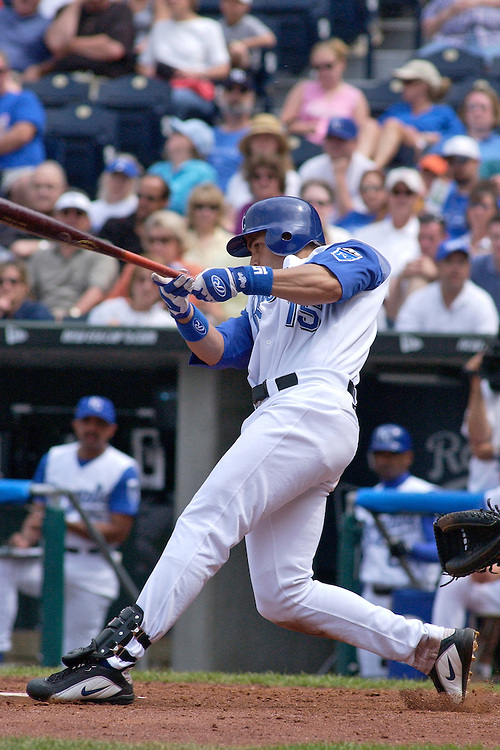
May 30, 2003.

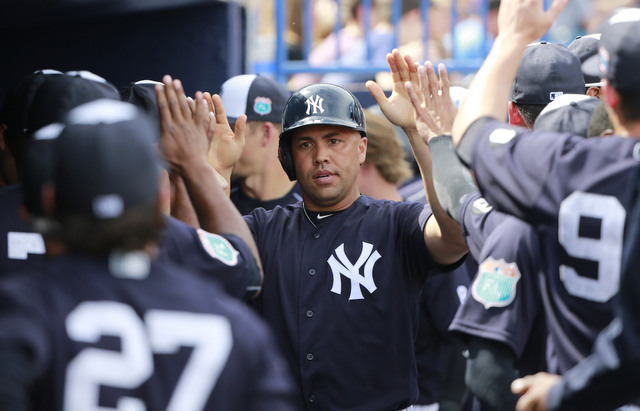
With the trade deadline looming about six weeks away, it is the time of the year where speculation runs rampant. In fact, be prepared for so many rumors during this time period that you can probably discard about 3/4 of them from your brain. One rumor that I can guarantee you will hear a bunch moving forward is whether or not the Kansas City Royals will visit a reunion between themselves and current New York Yankee Carlos Beltran. For the uninformed, Beltran actually began his big league career in Kansas City, playing there from 1998 through the middle of the 2004 season, when he was dealt to Houston. The Royals even attempted to sign him before the 2014 season; but despite a spirited try, Beltran decided to head back to the bright lights of New York City. So should the Royals bring Beltran back to the midwest? Let’s take a look.

kc2

When this subject was initially broached to me back in May, I scoffed. I just didn’t believe that Beltran, at 39 years old, was a good fit for the Royals. He is a below average defender now, which probably leaves him in the position to DH more than anything else and the Royals have Kendrys Morales, who is also without a defensive position in the field. Add in his age and how batters are normally in full-blown regression at this stage of the game, adding Beltran didn’t seem like a step forward for Kansas City. But as we sit here in June, Morales is still struggling and Beltran has done something I wasn’t expecting: his numbers have gone skyward during this last month. With that said, let’s break those numbers down a bit farther to see if he would be a good fit in Kansas City.

USP MLB: AL WILD CARD GAME-HOUSTON ASTROS AT NEW Y S BBA USA NY
(Credit: Adam Hunger-USA TODAY)

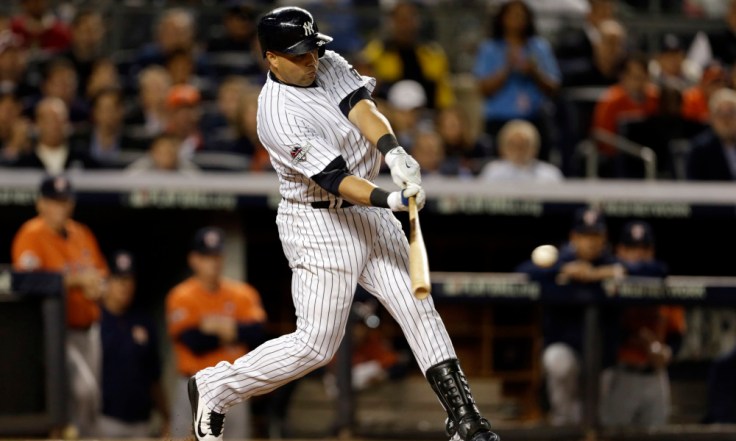
Let’s start with the basics. Beltran’s line so far this year sits at .282/.316/.573 with 16 home runs and 43 RBI’s. To really grasp this, for the entire 2015 campaign, Beltran hit 19 homers and knocked in 67 runs while hitting .276/.337/.471. I like to dig deeper though, to fully weigh just how everything breaks down. Beltran’s OPS+ currently sits 135 compared to 120 last year and unless something drastically goes awful, has the same bWAR(1.0) as he did in 2015. His walk rate is down by quite a bit from 2015, as his strike out rate has gone up, but I tend to think you can link those together a bit with the increase in power. In fact, Beltran’s ISO this year has rocketed up almost one hundred points from last year, .291 from .195.

MLB: Spring Training-Boston Red Sox at New York Yankees
(Credit: Kim Klement-USA TODAY

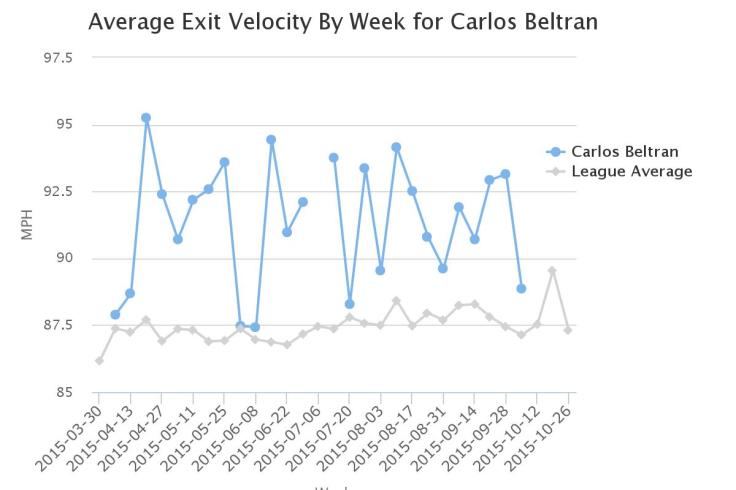
Now to the real meat and potatoes that I feel will give us a good grasp of Beltran’s performance; how hard is Beltran hitting the ball and how often? In an interesting swerve, Beltran’s line drive rate is down(18.3%), his ground ball rate is up(39.6%), while his fly ball rate is the same from 2015. But his Home Run to Fly Ball ratio has doubled(22.5% from 11.1%) while his hard hit rate has gone up(36.7%) and his soft hit rate is down(11.2%, the lowest it has been since 2006). This goes in line with his exit velocity this year, which has been above the league average for all but two weeks this year:

chart

As you can tell, Beltran’s exit velocity has been above 92.5 MPH for a large chunk of the 2016 season, an increase from 2015. In fact last year barely saw him get in the 95 MPH range:

chart (1)

So what does all this tell us? It tells me that Beltran seems to be not only seeing the ball very well this year but is also hitting the ball with some authority. This is a good sign for Beltran, as he is not getting beat by the fastball, a common occurrence for player’s his age. In fact Beltran has been within 5% of his hits coming on fastballs for the last six seasons. It’s a bit odd to see a hitter staying close to his same numbers near the tail end of his career, so the fact that Beltran’s hit selection hasn’t seen a drastic change is a good sign if Kansas City wanted to go after him.

MLB - Oakland Athletics vs Kansas City Royals
June 1, 2003.

One more positive from Beltran’s numbers is that there isn’t a drastic difference between when he hits from the right or the left hand side of the plate. Against right-handed pitching he is hitting .289/.318/.563 while against left-handed pitching he is hitting .280/.321/.587. I’m actually a bit surprised by this, since Beltran plays his home games at Yankee Stadium, which has that short right field porch. All you have to do to hit it out of Yankee Stadium is to hit the ball 314 feet to right field and you have yourself a home run. This would seem to benefit Beltran when he bats left handed, which he does the majority of the time(142 at bats hitting left handed, 75 right handed). But just peeking at the stats show that there isn’t a giant split in those numbers, which tells me he is just flat-out raking, not just taking advantage of his home surroundings. I’m sure Beltran’s numbers are a tad skewed because of his stadium(11 of his 16 home runs are in New York) but if you are looking at the entire offensive package, Beltran is putting up solid numbers almost everywhere, including his four games in Oakland. If there were concerns about Beltran coming to play in Kansas City and hitting in a pitcher’s park like Kauffman Stadium, I would tend to lean toward that not being a big issue moving forward.

MLB - Oakland Athletics vs Kansas City Royals
May 31, 2003. 

So after looking at all of Beltran’s numbers, the question will be asked again: should the Royals look into bringing him back? I can’t believe I am going to say this but yes, I think they should. With Morales continuing to struggle and the combo of Jarrod Dyson and Paulo Orlando starting to come down to earth, it might be a good time to take a flyer on Beltran. The Royals shouldn’t give up a major prospect(or a needed piece of the current roster) for Beltran, but I tend to think New York won’t ask for something like that. Beltran’s contract only runs through the rest of this season and there have been whispers that he might decide to retire once the season is up. It’s conceivable to think the Royals could take on his contract for the last few months of the season and see if he can help them offensively. It would be assumed that Beltran could see some time in right field(especially if Morales starts to hit) but it makes sense for him to mostly be a DH if he came to Kansas City. The Royals have had some offensive struggles as of late and adding a solid bat for the stretch run might be just what this team needs. While the Royals haven’t looked like a contender during this most recent road trip, as I type this they are only four games out of first place in the American League Central, or within striking distance. Reuniting Beltran with the Royals(plus Alex Gordon returning from the disabled list) might be just what the Kansas City offense needs. Since we all love feel good stories, can you think of a better one than the future Hall of Famer Carlos Beltran, returning to the team that he began his career with, and helping them reach the playoffs for the third consecutive season? Sounds like the storybook ending that Beltran’s career deserves.


Minnesota Love

kc1

It’s a tough time to be a Minnesota Twins fan. After an unexpected second place finish in the American League Central in 2015(and competing for a playoff spot into the last week of the season), the belief was that the Twins would take another step forward in 2016. Minnesota was expected to grow from last year’s success, especially with the addition of some top-level prospects being around all year(Miguel Sano, Byron Buxton) and the addition of Korean slugger Byung Ho Park, so it appeared that second year manager Paul Molitor had a contender on his hands. I definitely had bought in, as I expected the Twins to garnish a playoff spot this year, with my belief being that they had a great mix of veterans, youngsters and a great leader in Molitor. Instead this year has felt like a horror show, as they are 14.5 games out of first in the Central, 13 games below .500. But this isn’t a brow beating on this year’s Twins team as much as it’s a look back at my fondness for a team that was a big part of my childhood.

kc2

Now, I am a devoted Kansas City Royals fan and have been since I was 7 years old; that will never change. But in 1987 I couldn’t help but root for a fun Minnesota Twins team that would go on and win the World Series that year. What really started my ‘Minnesota Love’ was Kirby Puckett. Puckett was everything great about baseball; a cherubic center fielder who could hit, run and play defense and had elevated himself to be one of the great players in the game. I loved watching Puckett run around the outfield, then step to the plate and rack up hit after hit. He fit in perfectly in the 1980’s, an era of contact hitters like Tony Gwynn, Wade Boggs and Don Mattingly. Puckett also seemed to have a child-like grin on his face at all times, leaving the impression that he was having as much fun playing the game as we did watching him. Puckett was a perennial All-Star, a guy who averaged 192 hits a season throughout his 12 year career, multiple time Gold Glove and Silver Slugger winner and was voted in the top ten of the American League MVP ballots 7 of his 12 major league seasons. I know some have questioned whether or not he should have been a Hall of Famer, but in my eyes there was never a question. Puckett was one of the best throughout his career and one can only imagine what his final numbers would have been had glaucoma not taken his sight. There were some less than flattering moments for Puckett post-career but Puckett the ballplayer was a joy to watch play.

New York Yankees v Minnesota Twins
(Photo by Lisa Blumenfeld/Getty Images)

Once you looked at the rest of the roster, there was a nice group of players who were easy to root for. Kent Hrbek was the lovable, goofy first baseman with power. Dan Gladden, current Twins radio broadcaster, played like his hair was on fire and was the spark plug at the top of the lineup. Frank Viola was the left-handed ace who had elevated himself as one of the best pitchers in baseball. Bert Blyleven was nearing the end of his career but still fun to watch. I also can’t forget Juan Berenguer, a guy who did not fit the normal physique of a major league ballplayer but was a pivotal part of the Minnesota bullpen. Even the 1991 World Series team was easy to root for, with Puckett, Hrbek, Gladden and pitchers like Scott Erickson and Kevin Tapani holding down the rotation and Rick Aguilera closing out of the pen. The Twins had players who were fun to watch and it always appeared as if Tom Kelly led teams played more as a team and weren’t as focused on individual numbers. As the Royals have shown these last few years, if you play as a team there is a good chance that winning is part of the formula.

kc4

Speaking of Kansas City, there is a deep connection between those late 1980’s/early 1990’s Twins team and the Royals. Many of the Twins who helped Minnesota win those two World Series’ would eventually spend time in Kansas City. Gary Gaetti, the Twins third baseman for both championship teams, would eventually move onto the Royals and would even hit 35 home runs for Kansas City in 1995. Greg Gagne was a pivotal part of those Minnesota teams and he would go on to play three seasons in Kansas City at shortstop; his offense wasn’t anything to write home about, but his defense got him 4.8 dWAR during that period. Chuck Knoblauch would play his last major league season for the Royals, producing a -0.7 bWAR in just 80 games. Chili Davis would end up in Kansas City in 1997, hitting 30 home runs and posting 2.4 bWAR. As if that wasn’t enough, Berenguer pitched for the Royals earlier in his career, while backup catcher Sal Butera’s son, Drew, would later play for the Twins and is the current backup receiver in Kansas City. So in a roundabout way, I got to see a few of the bigger pieces of those championship Twins team’s contribute in a Royals uniform.

kc5

But it wasn’t just the players or the style of baseball they played that made me intrigued by the Twins. As a kid, I was enamored with the Metrodome, warts and all. Here was this domed stadium that had character and didn’t have the feel of cookie cutter stadiums like Three Rivers or Veterans Stadium. Minnesota had the “baggie” out in right field(which is now a handbag), and a roof that looked spectacular but was easy for fielders to lose a pop fly in. The crowd always seemed raucous and during the playoffs the fans would wave their “Homer Hanky” to get the team going. There seemed to be a whole atmosphere to that stadium that I wanted to be a part of  and that lured me into wanting this team to succeed. Sure, I had heard stories about the stadium being broken down, cold, drab and being nothing but a big slab of concrete, but that didn’t seem to matter to me much. It just seemed like a fun place to watch a baseball game from. I still get goosebumps when I think back to Game 163 of the 2009 season, when the Twins and Tigers battled it out in the dome for the Central Division title. Here was a stadium that being replaced the next season but it was going to get one more thrilling, iconic moment before it was gone. The Metrodome might not have had the beauty of Kauffman Stadium(yes, biased), the legend of a Wrigley Field or the visual classicism of a Camden Yards, but it had its own nuances that would grow on you. I never got to attend a game at the Metrodome, which saddens me, but I was able to be at Target Field a few years back. While I liked Target Field and think it is a solid replacement for the Metrodome, I have a feeling it won’t match up when it comes to the character of that old dome.

kc6

You would think that with the Twins being in the same division as my Royals I would loathe them and wish for them to just go away, but I don’t. I have very fond memories of the Twins and most years wish them the best. Well, I always hope they don’t do as good as Kansas City, but otherwise I want them to have success. It blows my mind sometimes when I think back and remember there was a period where baseball considered contracting the Twins. This is an organization with rich history and the idea of a baseball team not being up in Minnesota is unfathomable. When I go back and think about baseball highlights in my life that I will play over and over in my head, there are a number of Twins highlights that will live on forever. Puckett’s catch, Larkin’s single, Morris’s pitching and Casilla’s single; all are memories etched in my head forever. For that, I thank Minnesota. Thank you for making my childhood brighter and my adulthood memorable. I still kinda love ya.


Blog at WordPress.com.

Up ↑