
You often hear that “baseball is a kid’s game”, a phrase that bears a ton of truth. For many fans, they fall in love with the game at a young age and never lose that youthful exuberance when at the ballpark. Players are no different, as many play as if they are still ten years old, kicking dirt on a backfield while playing a pick up game with friends. The realities of life sometimes slip away during the span of a baseball game, as all the daily worries seem to slide into a separate filter, only to be untapped at a later date. Last year, baseball lost a grown up kid in Jose Fernandez, an elite pitcher who’s life was taken all too soon. On Sunday, Kansas City Royals pitcher Yordano Ventura, just 25, fell to the same fate, dying from a traffic crash in the Dominican Republic. Ventura was not wearing a seat belt and was thrown from his vehicle after losing control of it on the highway. Apparently there was some thick fog when the accident happened. For a guy who only pitched three full seasons in the majors, there are a ton of memories for Royals fans to remember him by.
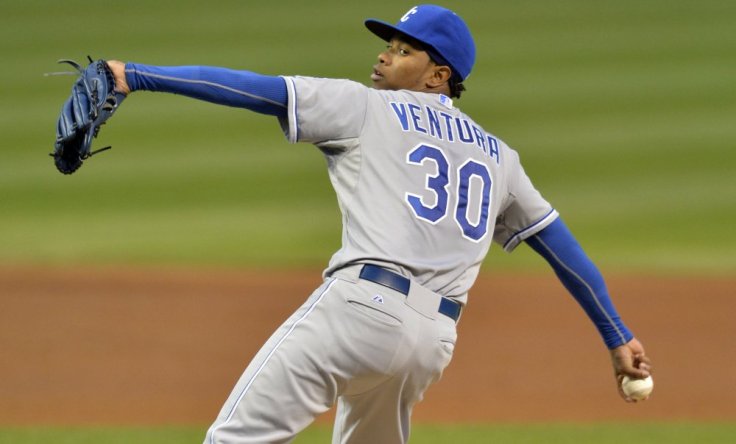
Ventura first started showing up on most Royals fan’s radar in late 2012, a season where he fanned 130 batters in 109 minor league innings. His ascension in the Royals farm system continued in 2013, where he struck out 155 hitters in just 134 innings and was a September call-up that year, starting three games while throwing just 15 innings and producing an ERA+ of 120. The report back then was pretty simple; lanky righthander with a power arm that would sometimes allow too many baserunners. He was already getting comparisons with Hall of Fame pitcher Pedro Martinez, as there were even questions on whether or not his frame could hold up to a full major league season. That would be put to the test in 2014, as Ventura made the team out of Spring Training, throwing 183 innings, posting an ERA+ of 123, a FIP of 3.60 and a strike out to walk ratio of 2.30. Ventura would end up 6th in the Amiercan League Rookie of the Year voting. He was already cementing his spot in the Kansas City rotation and would further that even more in October.
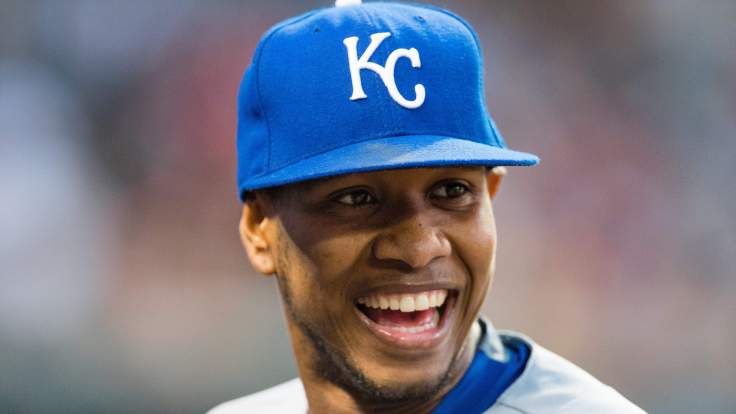
It’s funny looking back at it now, but Ventura would make his playoff debut in the 2014 Wild Card game against Oakland, in a very controversial outing at the time. Ventura would be brought in from the bullpen after the 6th inning had started, and would face only three batters; one would single,Brandon Moss would hit a home run, and he would get one batter out.
After the homer, the Royals would be down 6-2 at that point and even to this day, it felt like a weird move to make. Why would you bring in a rookie, who had started all but one game all season, in the middle of the inning with a runner on base rather than bring him in during a clean inning? It seemed like a move that could have cost manager Ned Yost his job. Luckily for Yost, the Royals would come back and win the game in extra innings and moving forward we would only see Ventura start in the postseason.

In fact, it was during that postseason that he would pitch the greatest game of his career. In Game 6 of the 2014 World Series, with the Royals on the edge of elimination, Ventura would pitch in honor of his friend Oscar Tavares (a Cardinals prospect who had five days earlier passed away from a car accident) and throw a gem against the San Francisco Giants, pitching seven shutout innings, striking out 4 while only allowing 3 hits.
It was hard at that point not imagining Ventura being the future of the Royals starting rotation and putting together a string of memorable outings. Over the years, Kansas City had a number of excellent pitchers to hang their hat on: Saberhagen, Busby, Leonard, Cone and Greinke just to name a few. At this point it felt like we would be able to add Ventura to the list. But that wasn’t how things played out.
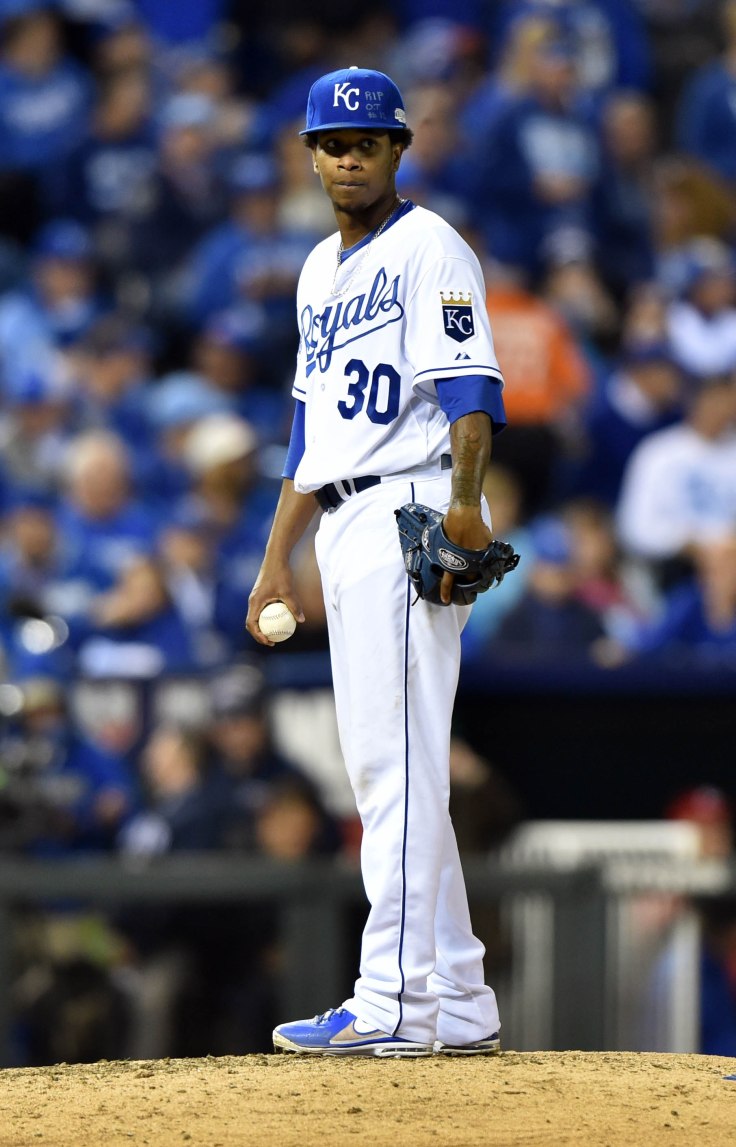
While the Royals were better in 2015, Ventura seemed to fall down a peg. Ventura would throw 20 less innings in 2015, while his ERA+ was right around league average (103) and his bWAR fell (3.2 to 1.9), his strike out to walk ratio and FIP would slightly improve. 2016 wasn’t any better, as his ERA+ fell below league average (98), while his FIP and WHIP both rose to career highs.His strike out to walk ratio also fell, as his strike out total fell while his walk total increased. It was obvious to some at this point that Ventura’s real battle was going to be harnessing his emotions while on the mound.

The first bout of his emotions getting the better of him occurred in 2015, as early in the season Ventura would get upset at a Mike Trout single that breezed by his head. It was chalked up to just being a heat of the moment type thing, at least until the incident against Oakland later in the month. After some bad feelings on Friday night (thanks to an aggressive Brett Lawrie slide), Ventura would give up a home run to Josh Reddick in what to that point had been a rocky outing for the young flamethrower. Ventura would follow by plunking Lawrie with a 100 mph fastball and the benches would empty. I was at the ballpark for that game (which I was super excited about since it was the first Yordano game I was getting to see in person) and was disappointed with Ventura’s obvious decision to get himself taken out of the game. Ventura would get ejected again in his next start, as Adam Eaton of Chicago would get under his skin and start a melee. A reputation would be earned at this point for Ventura, that of being a hot-head, and other teams would try to take advantage of this by trying to get him riled up and off his game. That reputation would hit an apex in June of last year as he would tussle with Manny Machado of the Orioles, hitting him and causing everyone to question Ventura’s mental stability on the mound.
But was this really who Yordano Ventura was? The answer, like most things, was more complicated than that.
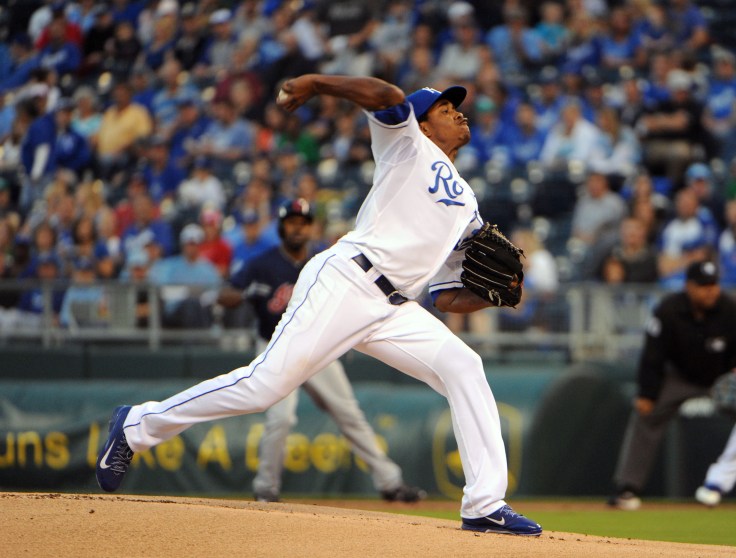
For all the posturing and cockiness, there was a guy with a big heart inside of Ventura. Many of the Royals players, while frustrated with his shenanigans on the mound, considered him their “younger brother”, disappointed with his actions but supporting him all the same, knowing he was still young and finding his way. They saw the kid who would get upset after a tough loss, feeling like he let the team down with his performance on the field and hoping to work better. For every outburst, there were just as many (if not more) days where you could see a smiling Ventura, loving where he was at considering where he came from. While the Royals had become disappointed with his behavior sometimes, they saw the kid who was watching tape, listening to what his coaches were telling him and who was one of the hardest working guys on the team. Ventura was human, like most of us and with that comes the good and the bad.
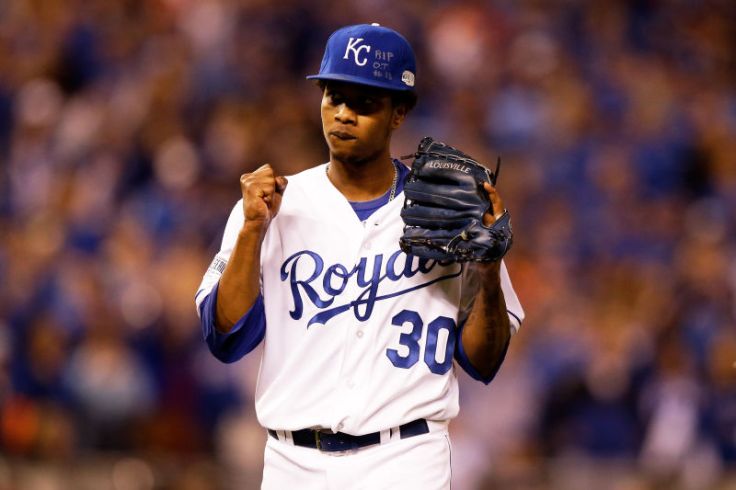
As a fan, most of us were equal parts enthralled and impatient with him. For every outing where he struggled to keep his cool, there was one that gave you hope that the ceiling was starting to be reached. For every emotional outburst there was a perfect setup of a batter, luring the batters in with the heat before finishing them off with the nastiest of curveballs. For a team that has struggled producing quality starting pitching, Ventura was that hope that the Royals had finally found their Marichal, their Martinez, their Fernandez. He was the scrawny kid from the Dominican Republic who was signed at 16 years old, throwing in the mid 80’s, hoping he would grow to be something more. He had grown to be something more…but unfortunately we will never find out just how much more.
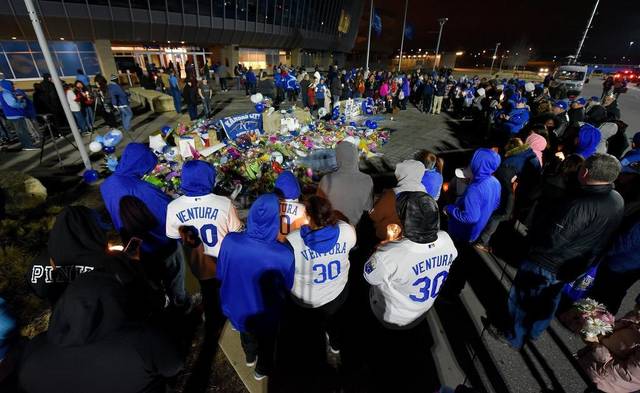
No human being should meet their fate at the age of 25, let alone an athlete who hasn’t reached the peak of their career yet. There was so much more life to live, so much more for Ventura to give and I don’t even mean on the mound. What most people will remember from Yordano Ventura won’t be the fastball, or the fights or the swagger. No, most people will remember that smile, a smile that was infectious and was a little kid’s smile in a grown man’s body. Even at 25, Ventura was just a little kid getting to throw a baseball for a living. That will stay with me much longer than individual accomplishments or frustration I had with him as a player. Ventura was that sign of hope that all of us look for in our baseball team’s, that hope that tomorrow will be a brighter day. While today was a dark one for baseball fans, I promise tomorrow will be brighter. As fans, our days were brighter with the hope that Yordano Ventura’s arm and smile brought us.



 Bleeding Royal Blue