Selection Tuesday: Which Royals Are All-Star Worthy

kc1

On Tuesday, Major League Baseball will announce the All-Star team rosters and it appears that the litany of Kansas City Royals players on the roster will not be as hefty as they were in 2015. With that being said, manager Ned Yost will once again be at the helm of the American League All-Star team and will have a say in some of the participants of the team. There will be Royal blue in San Diego on July 12, but how much? Let’s go ahead and look at my predictions for the Royals and who will be joining Yost at Petco Park next week.

All-Star Locks
kc2

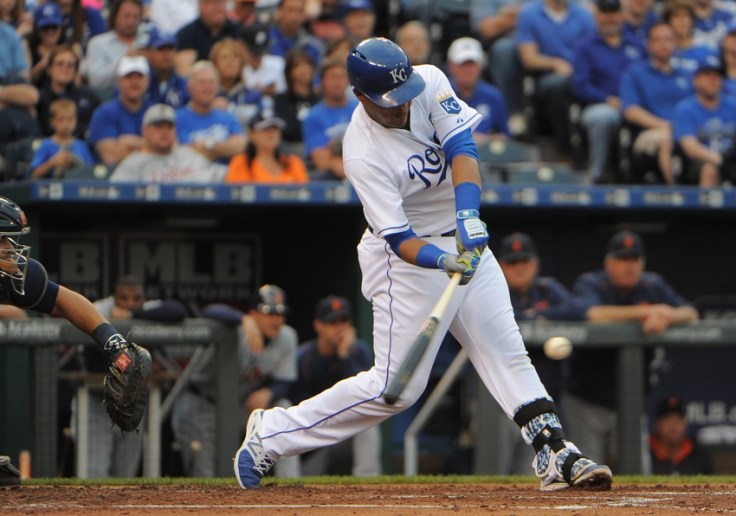
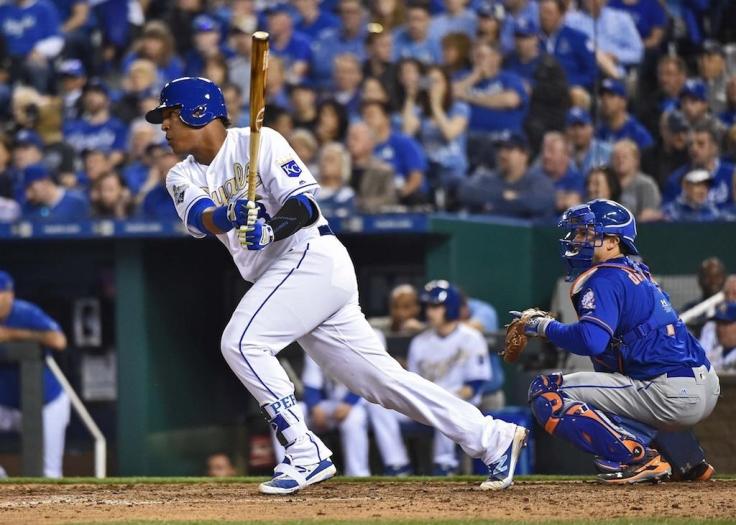
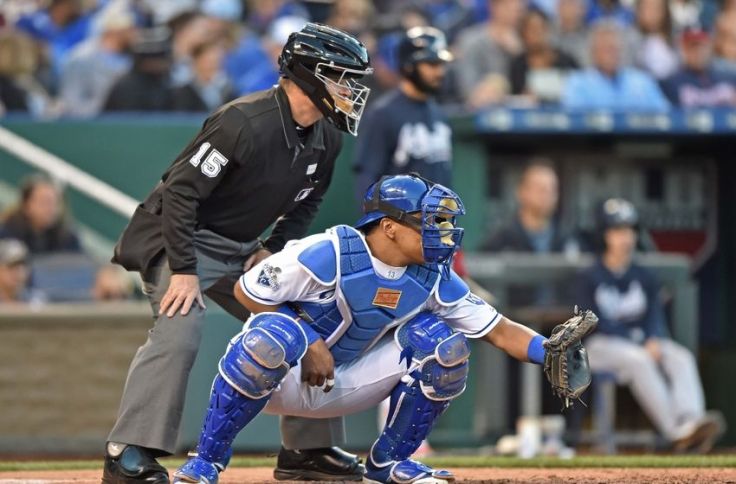
Salvador Perez

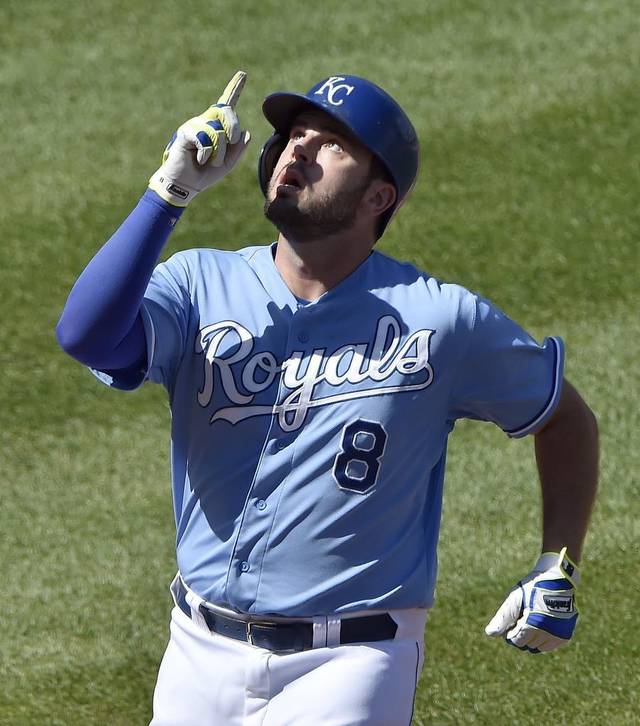
Salvy, a fan favorite not only in Kansas City but all around Major League Baseball, was leading the AL catcher position last we checked so the likelihood of him going is about 99.999999%. Normally Perez gets to the All-Star game on his charming positivity and his stellar defense behind the dish. But this year you can add a lethal bat to the mix; .281/.315/.490, 12 home runs, 37 RBI’s, 110 wRC+ and 2.1 WAR. I remember back in 2012 when former Cardinals manager Tony LaRussa was being interviewed the day before the All-Star game and was asked about Perez, who was in his first full major league season. LaRussa had compared Sal to Cardinals elite receiver Yadier Molina, which at the time was the highest of compliments. At this stage, it feels like Salvy has overtaken Molina and is the standard-bearer for catchers, at least in the American League. This won’t be a shock and will be well deserved when Perez starts next week in San Diego.
kc3

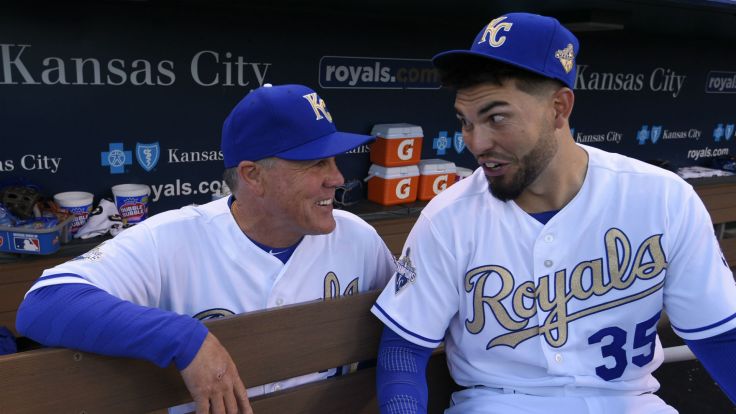
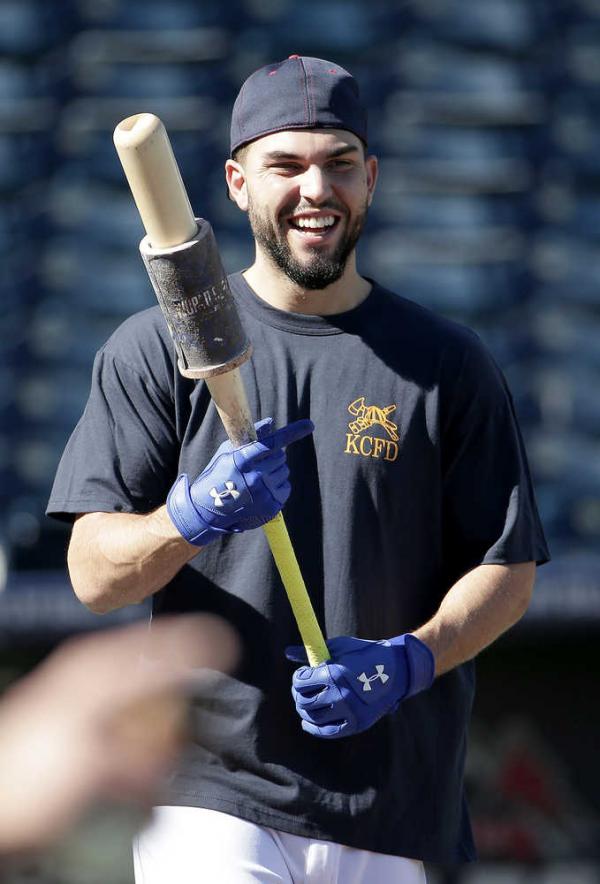
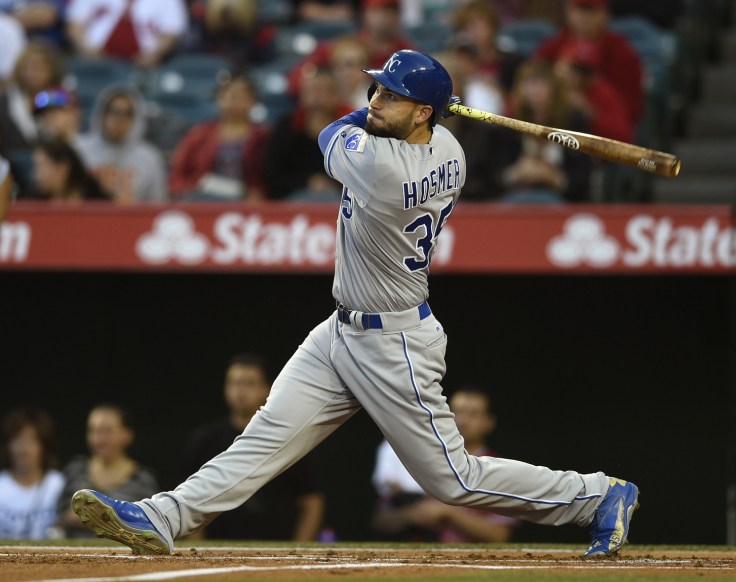
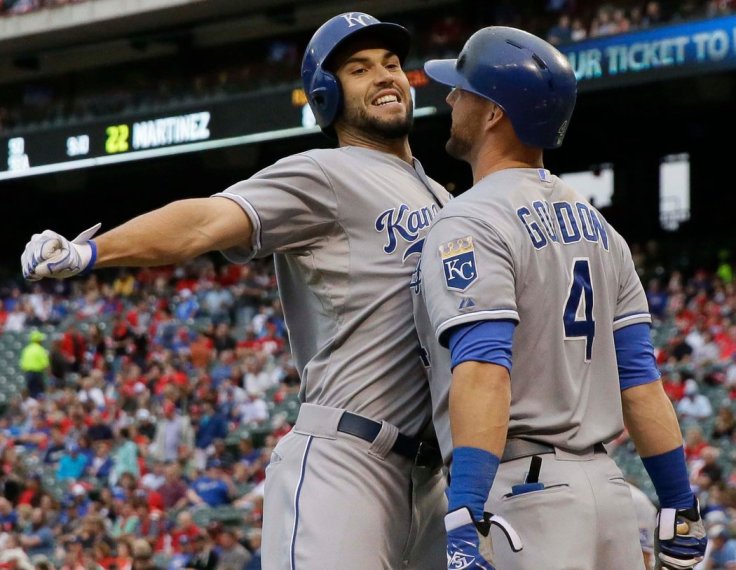
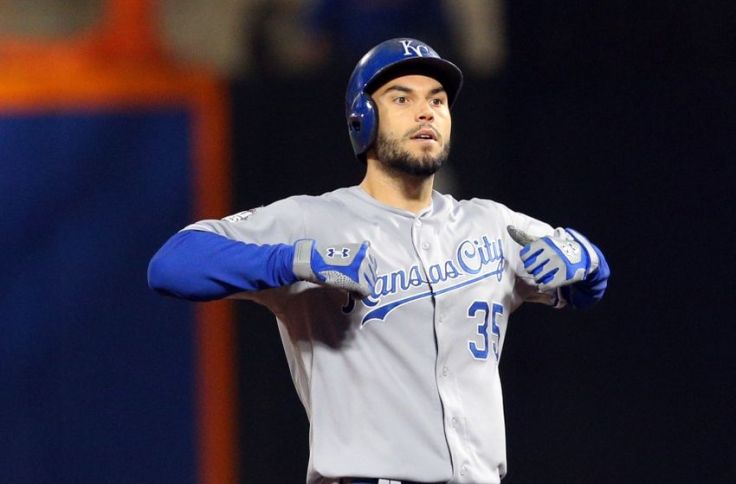
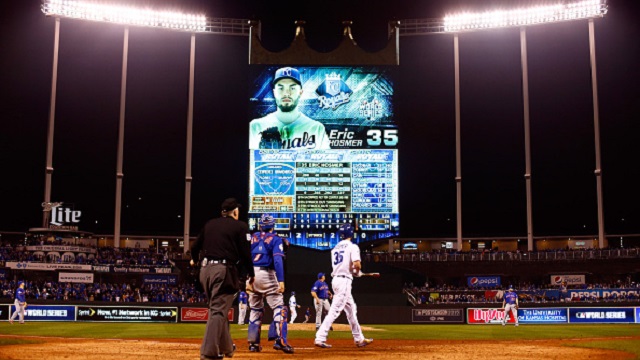
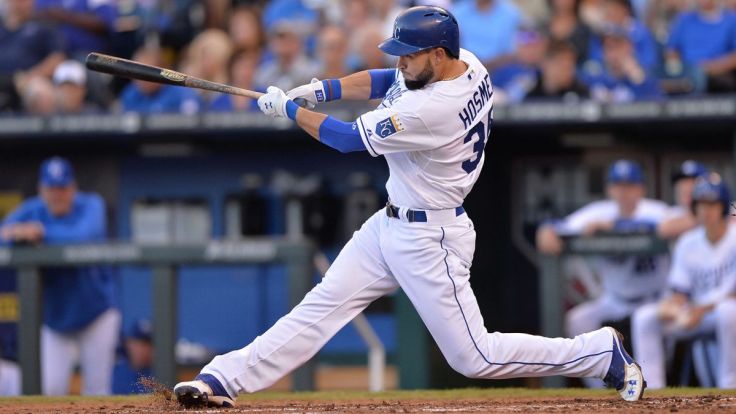
Eric Hosmer

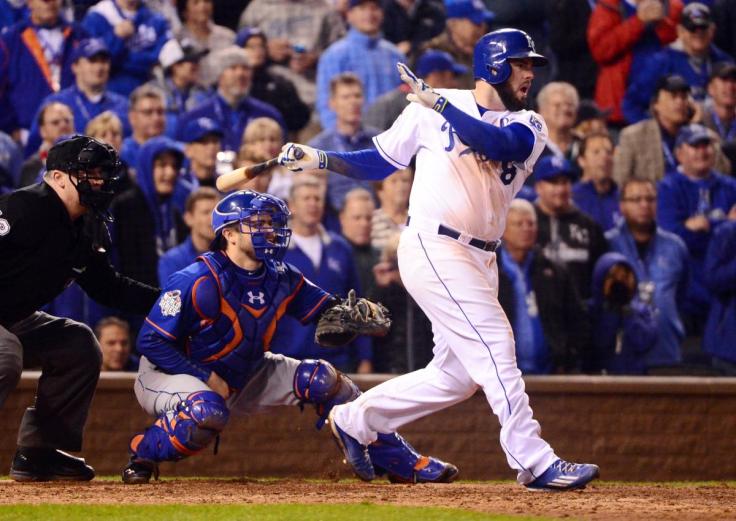
Hosmer has been battling the first base position out with the Tigers Miguel Cabrera for the starting nod and deservedly so. Hosmer has produced like a star so far in 2016, hitting .303/.361/.490 with 13 home runs, 49 RBI’s, 127 wRC+ and a 0.4 WAR(with his defensive metrics dragging this number down). Hosmer has looked the part this year of offensive force rather than just potential,  and at this point is probably more worthy of starting the game than Cabrera. Hosmer is a lock either way to be on the roster, it’s just a matter of whether he is voted in or heads to San Diego as a reserve.
kc4

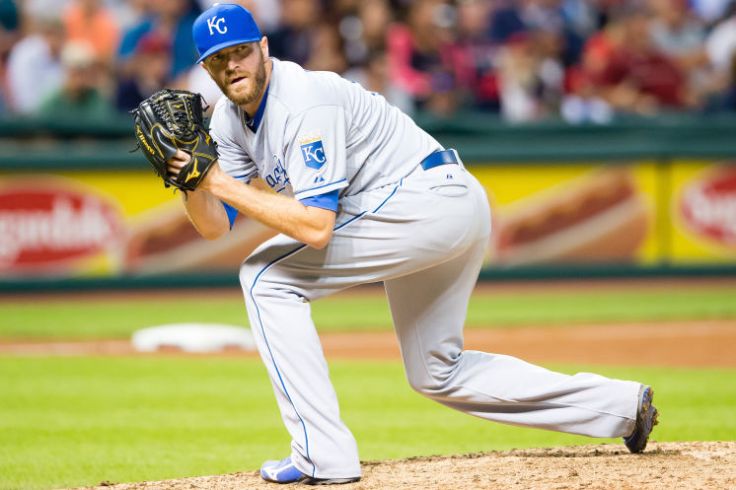
Wade Davis

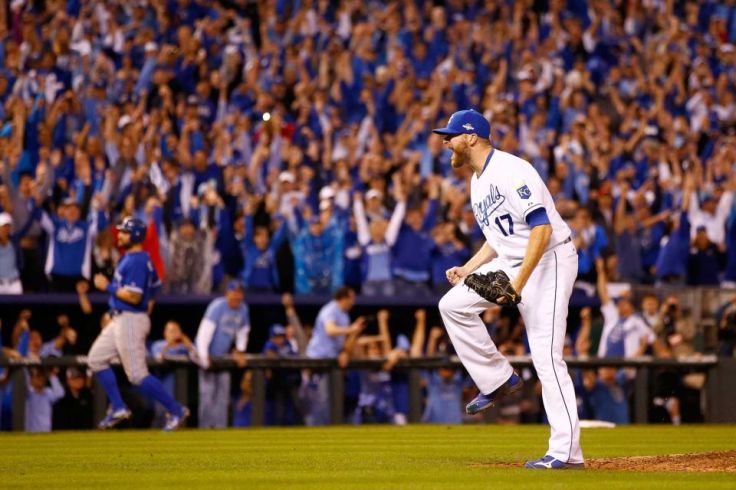
I’m sure there will be someone out there, somewhere, who will say Wade doesn’t deserve to go to San Diego next week because he “isn’t quite as dominant” as he has been the last two years. That is pretty much the equivalent of Mike Trout’s numbers falling a smidge but still being an MVP candidate. Davis has thrown 29 innings so far this year, and while his numbers don’t pop out at you like in the past(K rate is down, walk rate is up) he is still producing. Wade has an ERA of 1.23, FIP of 2.69, and is still stranding 87% of his runners on base. He is easily one of the top five relievers in the game and deserves to be an All-Star. No way Ned doesn’t make that happen, if he isn’t voted there by the players. Wade will be an All-Star, period.

All-Star Probables
kc5

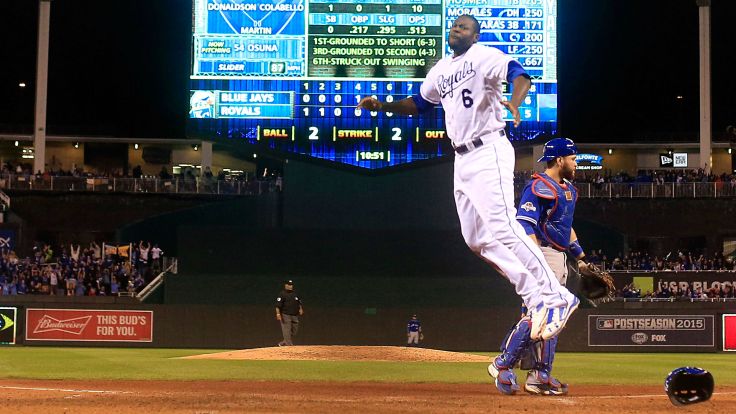
Lorenzo Cain

This will be a complicated pick, but one that should happen. Cain is currently on the disabled list, which means he would be unable to play in the All-Star game, but he can always be picked as a reserve and then have someone else take his spot; not like that has never happened before in All-Star’s past. Cain is hitting .290/.336/.416 with 8 home runs, 39 RBI’s, 1.9 WAR with 9 defensive runs saved. Sure, Cain is not tearing it up offensively the way he did in 2015(April was not kind to Lorenzo), but he is still considered one of the elite center fielders in the game and that’s what this game is for: the best of the best. It will interesting to see if Cain gets a spot, as it would be another honor that he could use when negotiating a new contract with Kansas City after the 2017 season. I feel he is worthy, but he might end up being a borderline selection by the players and coaches.
MLB: Detroit Tigers at Kansas City Royals
(Credit: Peter G. Aiken-USA TODAY)

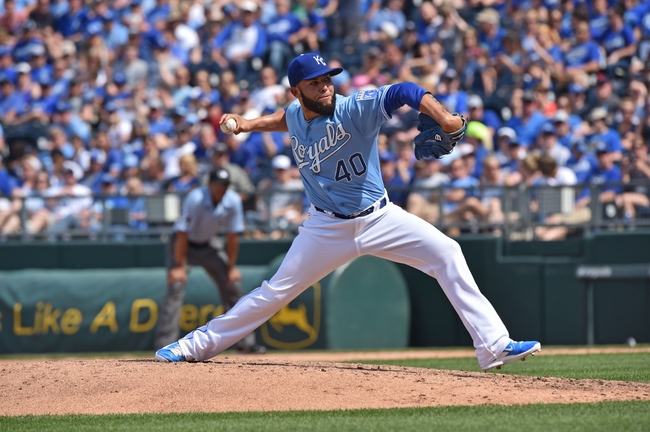
Kelvin Herrera

To me this is an easy pick but Herrera could be cast aside for another Royals reliever this year(more on that in just a bit). Herrera has put up dominating numbers this: 11.41 strikeouts per 9, 1.63 walks per 9, 87% left on base percentage, 1.40 ERA, 2.01 FIP and 1.3 WAR, all over 38 innings of work. Herrera added a slider to his repertoire late in 2015 and it has made him even more unhittable than he was before. The Royals aren’t the defending World Champions without Herrera and he has continued to be the bridge to Wade Davis this year to help lock down the late innings for the Royals. Herrera is an All-Star; now we will see if he actually gets the honor or is passed over for a bullpen brother.

All-Star Longshots
kc7

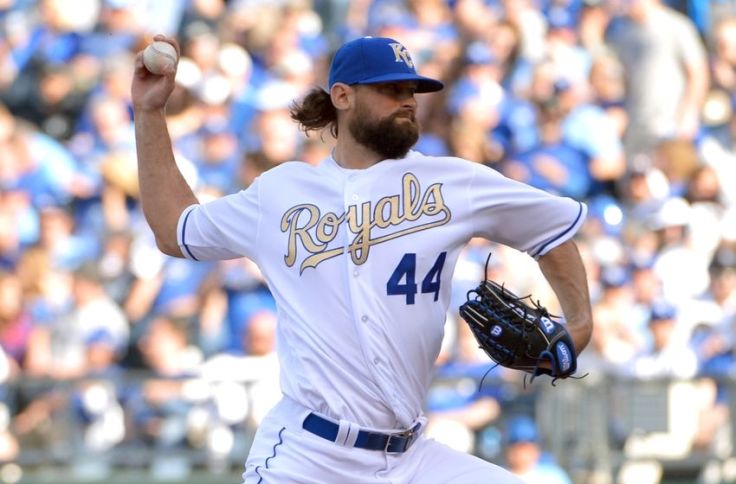
Luke Hochevar

Yep, bet you probably didn’t see this coming. Above, I mentioned Herrera could get passed over for another Royals reliever and of course I was talking about Hochevar. Hoch, a man who I once despised, has been one of the most reliable Royals relievers this year and the numbers back that up: 10.16 strikeouts per 9, 2.03 walks per 9, 79% left on base percentage, 2.90 ERA and 0.4 WAR over 31 innings. Sure, these aren’t eye-popping numbers like Davis or Herrera, but they are more than solid and worthy of the adulation. Now, if Hoch gets picked it will be by manager Ned Yost, who will want to reward Luke for his hard work out of the pen and the fact he doesn’t get a lot of the recognition that his bullpen mates get. Yost has asked Hochevar to perform in a lot of high-leverage situations this year and for the most part he has been highly effective in that role. If he is rewarded with the honor, it will show just how loyal a man like Yost is and a nice nod for a guy who turned his career around after being a failure in the rotation.

kc8

Whit Merrifield

Okay, okay, I know; Whit has played in only 40 games for Kansas City and more than likely has no business even being in this discussion. But…those 40 games have been stellar with steady production from a guy who is supposed to just be an afterthought after the season started. Instead, Merrifield has posted a line of .308/.328/.426 with 26 runs scored, 15 RBI’s, a .385 BAbip, 100 wRC+ and 1.3 WAR…all in 40 games! Merrifield is 8th in WAR for second baseman in the American League and while Robinson Cano, Jose Altuve and Ian Kinsler are all worthy of roster spots this year, the story of Whitley Merrifield would make a great story. It’s not going to happen and for the most part, it shouldn’t. But it’s hard not to root for this guy and everything he has accomplished in about six weeks. To see him gaining an All-Star nod would be about as warm and fuzzy as one can imagine. Think of watching ‘Toy Story’ while cuddling with a bunch of puppies and you will be close…not quite, but close. So Merrifield isn’t going to San Diego, but I felt like I should at least mention him. Rock on, Whitley.
kc9

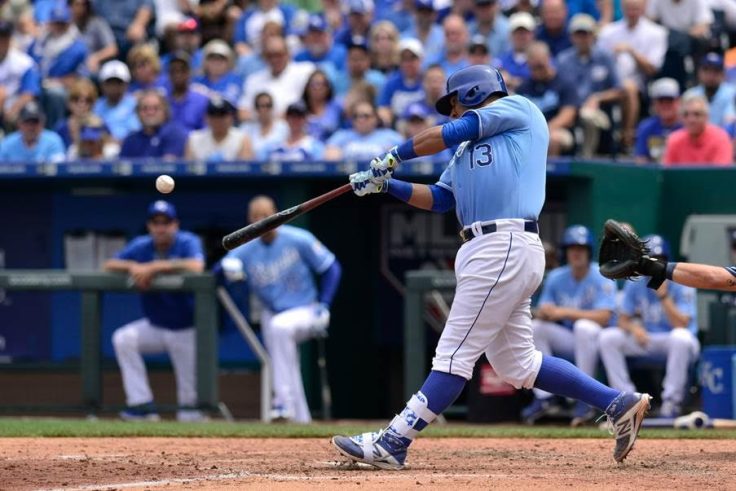
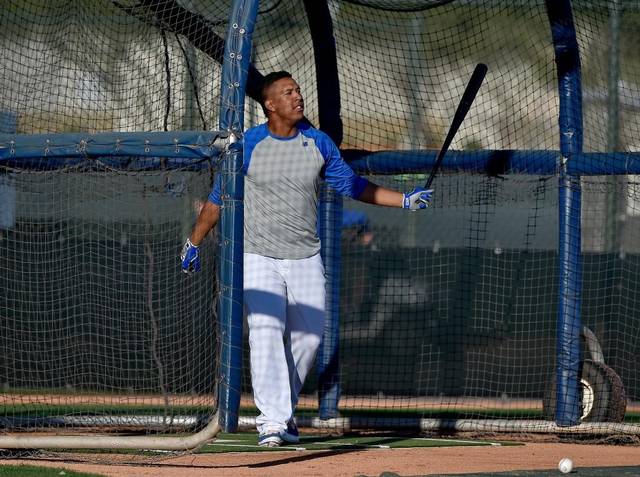
The Royals aren’t going to send as many players to San Diego as they did last year in Cincinnati(no bus needed this year. Sorry, Rex) but I would expect a healthy dose of Kansas City blue at the festivities next week. For years Royals fans would hem and haw about who actually deserved to get Kansas City’s lone spot at the game, and there were even years were no one was really worthy(hello, Mark Redman!). The Royals will have enough players going this year to where you should probably pay attention to the game to see if any of the players end up playing pivotal roles. Just don’t take the game too seriously; it is an exhibition game after all. An exhibition game where Salvy could throw a runner out, Hosmer could hit a home run and Wade could record the final out. Sure, there is a good chance none of that happens, but you never quite know.


Salvy Power

kc1

Salvador Perez holds many roles for the Kansas City Royals; clubhouse leader, Lorenzo Cain’s BFF, backup broadcaster, leader of the pitching staff and middle of the order power threat. In 2015, Perez would hit 21 home runs, a new high for a Kansas City catcher. Despite this career high, Salvy’s other numbers weren’t as impressive. Walk rate was the lowest of his career. Strike out rate was the highest it had ever been. Hard hit rate was the lowest it had been since his rookie campaign. Line drive rate was one of the lowest of his career. Most importantly, his wRC+(which weighs runs per plate appearance while being park and league adjusted) was the lowest of his career, at 87(league average is 100). It really appeared as if Perez’s numbers were already starting to skew downwards, which was not good for a player coming into his age 26 season. Most Royals fans are well aware of Salvy’s lack of patience at the plate and most don’t expect him to walk much, but would prefer he became a bit more selective at the plate. All this information makes it even more impressive when discussing what Perez has done so far in 2016.

kc2

Over the last month Perez has been the hottest hitting Royal, putting up a line of .411/.436/.689 with 6 home runs, 14 RBI’s and an OPS of 1.125. Perez, a notorious free-swinger, is still swinging at a lot of pitches(in fact he is pretty much on par with his totals for the last two seasons), but there is a slight change in his approach. Last year, Perez was making contact with pitches outside the strike zone about 73% of the time; so far this year he is at 62%. Meanwhile, pitches inside the strike zone he is actually making a bit more contact, up to 91.4% from 90.7%. This tells me that he is laying off the pitches outside the strike zone a bit more this year while focusing more of his attention on pitches within the meat of the plate. The funny part to all of this is that Salvy’s strikeout rate is up by quite a bit(22%, up from 14% last year) while his contact rate is also down, to 78% from last year’s 83%. You would think that a guy who is making less contact would not see his numbers go up, but they have. In fact, Salvy has been a beast in the power department so far this year.

kc3

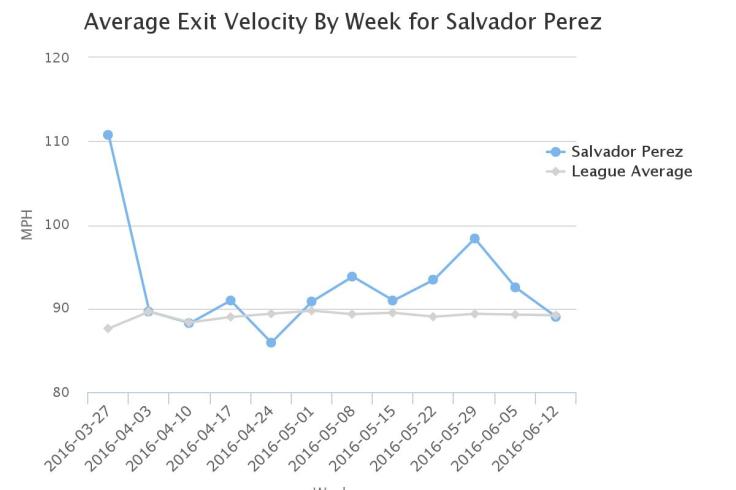
The power numbers are where Perez is really stepping up his game. His hard hit rate is significantly up this year, 36% from last year’s 24%, and his fly ball rate has also soared, 48.8% from 37.4%. Of course because of this, Perez has a higher home run to fly ball ratio(14.3%) and a lower ground ball rate(26.7% from last year’s 41.9%). To me this all screams of someone driving the ball much more and realizing he can do more damage on pitches closer to the middle of the plate. This is even more evident when looking at Salvy’s exit velocity:

chart

As you can tell, outside of a brief dip the week of April 24th, Perez has been not only above league average, but even close to averaging 100MPH on hit balls for a few weeks. Now, while his approach with pitches outside the zone has changed, he is still a very pull-heavy hitter, as he is pulling the ball the most he has since 2014. Slugging, On Base Plus Slugging, Isolated Power and Weighted on Base Average have all gone way up so far in 2016. Hell, Salvy’s BAbip over the last month is a ridiculous .508! These numbers speak of a player on track for a career year.

Salvador Perez
(AP Photo/Charlie Riedel)

Speaking of career highs, at his current rate, Perez is on track to have career highs in doubles, home runs, RBI’s, batting average, on base percentage, slugging and with a little luck, possibly even WAR. He also already has 11 walks this year, only 6 behind last year’s total. His career high for free passes is 24, which I’m not quite ready to say he could topple, although if he keeps hitting like this he will surely see his intentional walks go up. I know there was an increased effort this year for Perez to be more patient at the plate. To me, being more patient at the plate doesn’t always mean more walks as much as waiting for a good pitch to hit and drive. I’ve long felt that Royals hitting coach Dale Sveum has been teaching these guys to look for a pitch to drive and because of that we have seen higher power numbers from Lorenzo Cain, Eric Hosmer and Mike Moustakas. I’m starting to think the same philosophy is being soaked up from Salvy and it is paying off in spades.

kc5

So do I believe he will be able to keep this up all season? Perez is a very streaky hitter and I would assume at some point we are going to start seeing a lull in his numbers. That being said, I think even with that he can still keep himself with numbers higher than what he accumulated last year. Is he going to hit .300 all year? Probably not, but the power numbers could be here to stay. The bigger concern for Kansas City is to keep Perez rested and make sure they are not over-working him behind the plate. The Royals have a solid backup receiver in Drew Butera and with Kendrys Morales slumping much of this season, it seems like a solid idea to give Salvy’s knees a rest and start him at DH occasionally. More than anything, Kansas City needs Salvy to stay healthy the rest of the year for them to stay in contention in the American League Central. Perez has long been regarded as one of the top defensive catchers in the game and rightfully so; but now, outside of a Jonathan Lucroy or Buster Posey, he is making the case as one of the best all-around catchers, period. Perez is as special as they get and I really hope Kansas City fans are savoring what they have with him. If he keeps this up, the hardware won’t be stopping anytime soon.


Tapped Potential

kc1

Back in May of 2011, Eric Hosmer made his major league debut for the Kansas City Royals with expectations soaring through the roof. The world was his oyster and the belief was that Hosmer had the potential to be a future middle of the order run producer and possibly even future MVP candidate. Unfortunately, life and baseball don’t normally follow a movie script. Hosmer would struggle mightily in 2012 and would be up and down offensively from 2013 to 2015. Defensively he would accumulate a few Gold Gloves at first base and would be a big part of two Royals World Series teams. He had built up a nice career but maybe not the one everyone was hoping for. Luckily, sometimes it just takes a bit of time for a baseball player to figure things out, which is what has happened for Eric Hosmer in 2016.

kc2

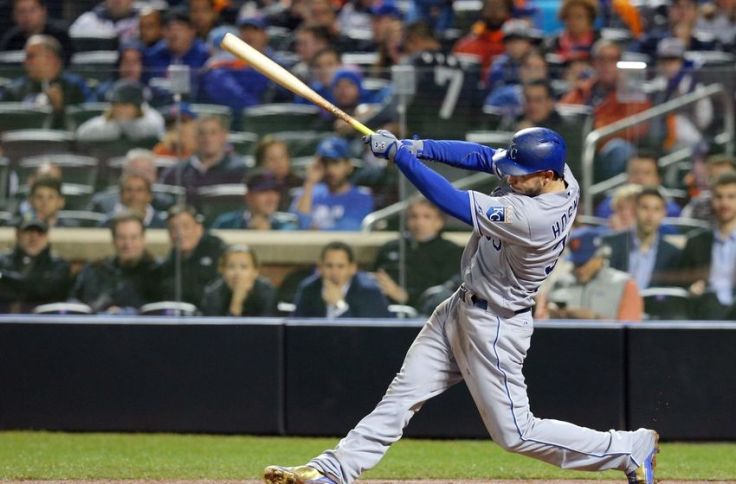
To this point in the new campaign, Hosmer has looked like the offensive force most of us expected upon his arrival. This year he is batting .311/.367/.522 with 8 home runs, 21 RBI’s and an OPS+ of 140 (or a wRC+of 145 if you prefer that). He has already racked up 1.1 bWAR and has become a complete player. The lone knock on Hos had been a lack of power, or more to the point that he seemed to prefer an opposite field approach to driving a ball for power. Now, I am a proponent of hitting the ball to all fields, which Hosmer is still doing(30% of his hits to left, 30 to center and 38.9 to right) but there is also a time for driving the ball, especially with good pitch recognition. Hosmer has so far racked up 17 extra base hits out of his 50 hits, or 34% of the time. His ground ball percentage is up(58 from 52 last year) but his fly ball percentage is up as well(26 to 24). Add in an ISO of .211(up from .162 last year) and you have the making of a guy more fitted to hit in the middle of the order. So what do the numbers tell us?

MLB: World Series-Kansas City Royals at New York Mets
(Credit: Brad Penner-USA TODAY)

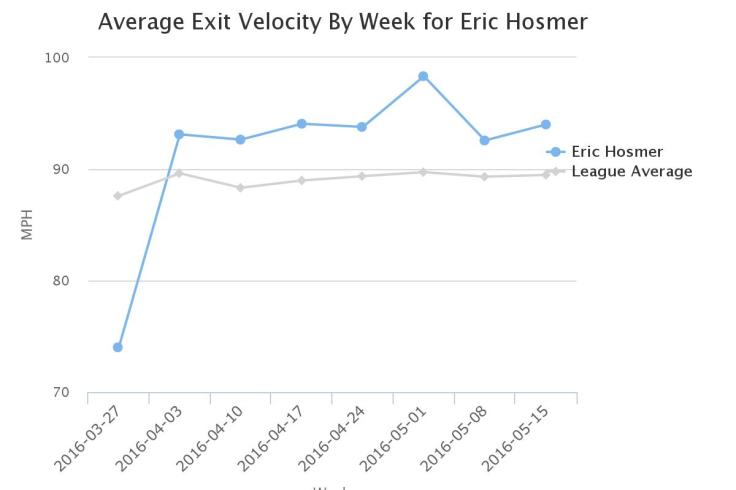
What it tells me is that Hosmer’s main approach (which has always been to hit according to the situation) hasn’t drastically changed, but his ability to lift the ball has improved. Hosmer’s hard hit percentage this year is up, 35 from last year’s 32.9 and his HR/FB percentage is way up, 23 to 15. Obviously there is a smaller sample size at this point in the season compared to 2015 but even a slight dip should keep his numbers above what he did last year. What is most impressive is the increase in Hosmer’s exit velocity this year. Not only has his exit velocity gone up but it has progressively gone up:

chart

Hosmer has an average exit velocity this year of 93.5 mph, compared to 90.4 mph in 2015. Many of his home runs have not been ‘barely shots’, as he has had some massive bombs this year like last week against Boston. It shows that Hosmer has been taking advantage of pitchers mistakes, something he wasn’t doing earlier in his career. The fact that he is but 26 years old really makes one wonder what he will be able to do when he actually enters the prime of his career.

kc4

There is no way to tell whether or not Hosmer will be able to keep up this pace, especially since over his career he has been an extremely streaky hitter. Just looking at 2015, by month Hosmer had slugging percentage’s of .488, .520, .322, .577, .434, and .410. There is an over.250 percent difference between his best and worst month. For as steady and consistent as he has been this year, Hosmer has a history of going from the top of the mountain to the depths of the basement. The hope this year is that Hosmer has started figuring things out and won’t fall to the inconsistentcy of his earlier years. It’s just two months(yes, small sample size; take a drink) but so far this year he has slugged .506 and .542. Time will tell but his numbers are definitely potruding in the correct direction.

kc5

The Royals count on Eric Hosmer for a number of items-clubhouse leadership, popular hairstyles, steady, Gold Glove award winning defense(even if the defensive metrics don’t always agree) and a run producing bat in the middle of their batting order. Over the years he hasn’t always lived up to that last one but this year he has been the rock in the middle of a questionable Royals offense. Hosmer will be a free agent after the 2017 season and he looks primed to cash in when the time comes. There is no way to tell if that means a longer stay in Kansas City or elsewhere, but he has picked an excellent time to improve on his value. He has taken that power potential and made it a reality, a consistency long-needed in Kansas City. Earlier in the year I thought Steve Balboni might have his single season home run mark(36) threatened by Mike Moustakas; now I’m wondering if maybe ‘Bye Bye’ Balboni should worry about both Moose and Hos. For Royals fans, this is a good problem to have.

Dayton’s Farm


26612532492_ece8547543_z
Credit: Minda Haas Kuhlmann

From about 2009 on, I have regularly followed the Kansas City Royals minor  league teams to keep track of the development of the prospects throughout the Royals farm system. Initially it was done to get a glimpse into brighter days, as the big league club was struggling and the likes of Eric Hosmer, Mike Moustakas and Salvador Perez were all being touted as the future of the organization. Luckily, I enjoyed keeping track of the future big league stars in the minors and have continued following the development of the Royals prospects. So while the Royals are now the World Champions of baseball, their farm system is still chugging away with a number of players who will end up contributing to the big league club. Today, let’s look at some of the players who are putting up good numbers down on the farm.

26352810231_638e25c96f_z
Credit: Minda Haas Kuhlmann

Let’s begin with the Royals AAA team, the Omaha Storm Chasers. The Chasers are about 21 games into the new season and have gotten some solid hitting from their lineup in the first few weeks of the 2016 campaign. Jorge Bonifacio has been the big bopper so far, as he is currently riding a 10-game hitting streak into Saturday’s game. Bonifacio, the brother of former Royal Emilio Bonifacio, has been hitting at a .333/.341/.571 clip with 4 home runs, 17 RBI’s and 48 total bases. Bonifacio has had some competition though, as Cheslor Cuthbert has been tearing it up as well, hitting .325/.393/.584 with 5 home runs, 23 RBI’s and 45 total bases. But it hasn’t just been the hitters stealing the show for the Chasers so far this year, as Brooks Pounders is 2-0 in his first 4 starts, with an ERA of 2.25 and a WHIP of 1.20 to lead the Chasers pitching staff.

kc3

Meanwhile, let’s mosey on over to the Royals AA affiliate, the Northwest Arkansas Naturals. The name on most people’s lips on this team is Raul Mondesi Jr, who is one of the Royals top prospects. While Mondesi has shown some decent power this year for really the first time in his career( 4 home runs so far, 8 total extra base hits), the early staple of the Naturals lineup has been former #1 Draft Pick Hunter Dozier. Dozier is hitting .299/.405/.627 with 5 homers, 14 RBI’s and 42 total bases. On the pitching side, the team has been bolstered by two guys I have talked about before, Alec Mills and Matt Strahm. Both have 4 starts under their belt so far this year, ERA’s under 2.00 and WHIP’s under 1.00 while striking out a combined 41 batters over 45 innings. I still think their future is tied to the bullpen, but so far they have been the horses of the Naturals’ rotation.

kc4

The final stop on this Royals minor league tour is Kansas City’s High A ball affiliate, the Wilmington Blue Rocks. A player who has been steadily rising on the Royals prospect board is first baseman Ryan O’Hearn. O’Hearn has been a ‘One Man Wrecking Machine’ in Wilmington, putting up a line of .366/.424/.707 with 7 home runs, 18 RBI’s and 58 total bases in just 21 games. On the pitching side, the Blue Rocks have been led by Pedro Fernandez, a fireballing righty who has been almost unhittable so far this year. Fernandez has struck out 23 over 22 innings so far this year, posting a 1.21 ERA and a WHIP just a hair over 1.00(1.03). These two players are the best prospects in Wilmington at the moment and I would have to think will be in AA before the year is up.

kc5

So a quick trip through the Royals farm system shows a number of prospects are putting up stellar numbers in the early going of 2016. It’s still too early to tell just how many of these players will end up helping the Royals, although one would think at least a few will see time in Kansas City before the season is over. What this shows is that while the Royals are one of the older teams in the American League, there is still youth in the minors that could be helping the team in the near future.

Moose’s Power Surge

kc1

When I initially started this piece, my plan was take a look at Mike Moustakas’ home run history, broken down by month each year. But as I took a deeper look at Moose’s 2015 home run numbers, something jumped off the page at me. After hitting either  two or three homers for each of the first four months of the year, he exploded for five home runs in August and seven(7!) in September/October. When you add in the four home runs he has already hit through the first eleven games of this season, I have to ask a question: is Moustakas finally living up to his expected power potential?

kc2

While Moustakas was coming up through the Royals minor league system, the expectation was that he had a good chance of producing some great power numbers. Here is a scouting report back  in 2009 from MLB.com:

Plus bat speed and a good swing translate to outstanding raw power, though he showed more of it in 2008 than last year. He does have the ability to hit the ball out to all fields.

There was also this about his upside potential:

Middle-of-the-order run producer who is a constant home run threat.

Also, this scouting report of Moose back when he was drafted in 2007:

Moustakas can flat-out hit and has potential to hit for average and power.

He’s a left-handed hitter with serious power. He homered three times in this game.

So there was a prevalent thought even back when he was in high school, that Moustakas could be a major power threat in the middle of Kansas City’s batting order. Even his minor league numbers showed a hitter with plus power, including 36 home runs in 2010 as he split time in AA and AAA.

kc3

Some of that power has translated over in the big leagues. Moose connected for 20 homers in 2012 with a slugging percentage of .412 and wrapped up last year with 22 and .470 respectively. In fact, the last two months of 2015 might have been a window into some of the power predicted by scouts before he was even drafted. Not only was there the 12 home runs during that span, but also 17 doubles and a slugging percentage of .562. So there seemed to be a change in philosophy in Moustakas from his approach at the plate early in 2015 and the numbers agree with that. Early in the season, Moose’s Fly Ball % hovered in the 30’s but jumped to the upper 40’s starting in July. His Home Run to Fly Ball % also jumped, from below 10% to 13.5% in August and a whopping 17.9% in September. A big part of his early season success was attributed to a philosophy of hitting the ball to the opposite field, as shown by his Pull % lingering in the mid to upper 30’s. August and September saw those numbers rise into the 40’s, while his opposite field numbers falling down into the 20’s. It definitely appeared on the surface that Moustakas was trying to drive the ball more in the second half of the season, with definite success showing up over the last two months of the season.

kc4

It also appears as if Moose’s pitch recognition has improved as well. Last year it became very apparent that teammate Lorenzo Cain had figured out which balls he could drive and which ones he should just go with, leading to his best season to date. I tend to believe a big part of Moustakas’ success late last year and early this year can be attributed to better pitch recognition as well and realizing which pitches to pull and which ones to just go with. So far this year he has avoided rolling the ball over to second base and instead has taken those pitches the opposite way, while pitches that he can scorch(and let’s be honest, most of those are fastballs placed middle to in on him) he has been driving to the deeper portions of right field. Pitch recognition is sometimes a hard facet of the game to grasp, but when a player picks up on it, that normally means a whole new world has been opened to them.

kc5

So it is early into 2016 (and everything is a small sample size) but it does appear as if Moose’s approach at the dish is very comparable to how he ended 2015. Moose has opened up the new campaign with 4 home runs in just 11 games and his numbers show they aren’t too far off from the end of last year. Obviously his Pull % is higher(57.5) but the Oppo & Cent % are both close to his last few months of ’15, while his Fly Ball % is on par. There are a few numbers that are inflated by it being so early in the season(Moose’s ISO is up over .300 and his Home Run to Fly Ball ratio is a solid 26.7 over last year’s 11.2%) but some of those numbers will even out as more games are played and he racks up more at bats. With the advanced attention being paid to taking the ball deep though, that could also mean that Moose could approach the 30 home run plateau, which is very rare in Royals history. There have been only ten(10!!!) 30+ home runs seasons in Royals history, with the last player to hit that high water mark being Jermaine Dye(with 33) back in 2000. Billy Butler came close with 29 in 2012, but fell just short of adding his name to a list that includes Chili Davis, Gary Gaetti, Dean Palmer and the Steve Balboni, who holds the season mark with 36 back in 1985. So Moustakas will look to achieve something that is very rare in Royals history, but not completely impossible.

kc6

So if Moustakas increases his home run total this year and approaches or passes 30 dingers, is that a plus or a minus for Kansas City? I have to admit I am quite partial to the Moustakas that was flinging the ball all over the field early last year and something about “Oppo-Moose” stirs warm fuzzies in my belly. But I am also aware that Kansas City has longed for a power threat on their team for years now and they might have just produced one. Since this Royals lineup is filled with good, solid bats like Cain, Eric Hosmer and Alex Gordon, I tend to believe that having Moose provide more pop might help balance the offense out a bit more. If Mike can hit above .270 while still producing around 30 bombs, then it has to be considered a win/win for the Royals. If he is languishing around .250 or below then the extra homers are not worth it. I think there is a good chance we see a big season this year from Moustakas(as long as he can avoid injury; he did miss Friday’s game due to slight hamstring soreness) and while I don’t believe we will see him topple Balboni’s season best mark, I do think he could get close. It will be interesting to follow Moose’s power numbers this year and see how they progress. Will he trail off or continue to bomb away? We will know soon enough…

The 2016 Kansas City Royals: Top of the Mountain

kc1

Last year in my Kansas City Royals preview I asked this question after they came one game away from winning the World Series: “So now what?”. We got our answer, which was the Royals returning to the Series and winning the whole damn thing in just five games. The Royals last year had one goal on their mind and they were going to do everything in their power to reach that goal of being world champions. This Royals team didn’t listen to critics, analysts or even numbers when it came to reaching the top of the mountain. Now that the Royals have reached the pinnacle of the sport, the question now becomes ‘Can they repeat?’…and the answer might surprise you.

New York Mets v Kansas City Royals
(Photo by Ed Zurga/Getty Images)

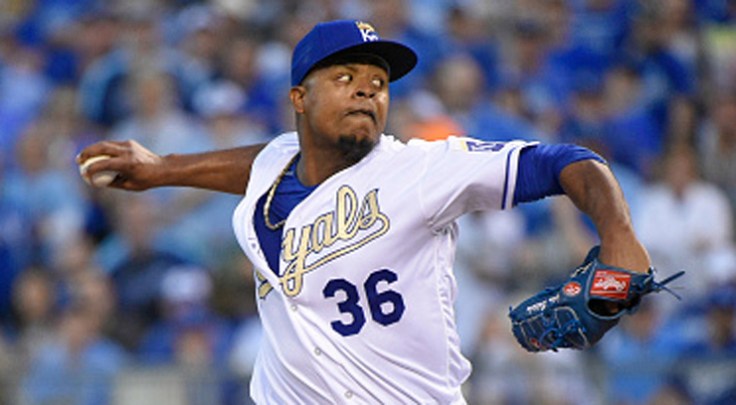
I’m going to break down the Royals into segments, starting here with the starting rotation. In 2015, the rotation put up decent numbers but wasn’t the most reliable group of moundsmen in baseball. As a team, the Royals were 22nd in starters WAR, 24th in IP, 15th in LOB%, 9th in ERA, and 10th in FIP. The rotation was fronted by Edinson Volquez, who duplicated his WAR from 2014 in Pittsburgh and was the most reliable starter manager Ned Yost had. In fact, looking at his numbers, Volquez was very close to replicating his bounce back 2014 season and that is meant in the most positive of ways. Yordano Ventura was initially looked at as the ‘Ace’ last year but efficiency and maturity became an issue. Ventura still put up decent numbers(8.6 K/9, 3.57 FIP and 102 ERA+ over 163 innings) but there is hope that he can put up stellar numbers in this, his third big league season. New acquisition Ian Kennedy was acquired for one reason-eat innings. Kennedy had another poor season last year in San Diego(4.51 FIP, 85 ERA+) but he did strike out 9.3 batters per 9 innings and there is hope that with Kansas City’s defense and above average outfield defense his numbers will improve this year. Chris Young is returning for his second season in Kansas City and was a strong veteran presence in the Royals rotation last year. Young was exactly what the Royals needed, posting a a WHIP of 1.086, and an ERA+ of 135 over 123 innings. Young split time last year between the rotation and bullpen and will look to do the same this year. Rounding out the starting five is Kris Medlen, who returned last year at midseason from Tommy John Surgery. Medlen only threw 58 innings last year, but more is expected from him this year with hope he will return to something resembling his 2012-2013 form. Medlen was acquired more for this year than last, so what he truly can do post surgery is likely to be seen this year. The Royals have some depth this year in case of injury and struggles, with Mike Minor being a possibility after June. They also have Danny Duffy and Dillon Gee stowed away in the bullpen for now(and more than likely they will break the glass for emergency at some point this year), with a few guys in the minors a possibility as well. Kyle Zimmer’s name has been long rumored as contributing this year, and time will tell if he is physically and mentally ready for the big time. A guy like Miguel Almonte is also an outside shot, but there is probably a greater chance he sees time out of the bullpen this year.

kc3

Speaking of the bullpen, the Royals are returning a large part of the core of a pen that has been a force in baseball for a number of years. Last year the Royals were 5th in baseball in relievers WAR, 17th in K/9, 1st in LOB%, 2nd in ERA, and 10th in FIP. Wad Davis returns for his third year in the bullpen for Kansas City, following two of the greatest seasons a relievers has ever tallied. Over the last two seasons, Davis has accumulated 139 innings, striking out 187 batters while posting an ERA of 0.97, an FIP of 172, and an ERA+ of 418(league average is 100). The one thing that will be different is that this will be his first full year as the Royals closer which means there will be a new bridge to Wade in the 8th inning. That bridge looks to be former Royals closer Joakim Soria, returning to Kansas City after stints in Texas, Detroit and Pittsburgh. Last year Soria racked up the most appearances of his career while posting his lowest ERA and highest ERA+ since 2010. Kelvin Herrera will also return to help setup and I wouldn’t be surprised to see Luke Hochevar used as well in that position. Gee and Duffy will be the longmen out of the pen, with both occasionally starting while Chien-Ming Wang resurrected his career this spring and will also be used out of the bullpen. The great thing about the Royals is that there are more arms ready to go in the minors, as guys like Scott Alexander, Brian Duensing, Matt Strahm, Alec Mills and Brian Flynn could all see action this year. Even starters like Almonte and Zimmer could be used in relief at some point. This is the deepest part of the Royals team and is so good that it makes the Royals starters only have to go 5-6 innings a start if necessary to hand it over to the biggest strength the Royals have.

kc4

One thing that has to be mentioned here is that the Royals pitching numbers(both starters and relievers) wouldn’t be so good if not for the Royals incredible defense. Last year the Royals had the highest defensive rating in baseball, the 2nd most defensive runs saved,  and the highest UZR. If you want to know the real reason the Royals have excelled these last two years, it’s because of the bullpen and the defense. The Royals currently employ three returning Gold Glove winners from 2015(Alcides Escobar, Eric Hosmer and Salvador Perez) while also having Alex Gordon patrolling left(a four time Gold Glove winner) and Lorenzo Cain in center, two of the best defensive players at their positions. Throw in above average defenders all around the diamond(Mike Moustakas at third, Omar Infante at second) and a right field platoon of above average outfielders(Jarrod Dyson and Paulo Orlando) and you have a team with above average defense at every position. This team was specifically built this way and has given the Royals an unfair advantage for a number of years. I would expect more of the same from the Royals ‘D’ in 2016.

kc5

That leaves us with the offense, which took a big leap forward in 2015. Kansas City is returning 8 of the 9 starters in their lineup this year so they are hoping for similar output as they saw last year from a number of players who elevated their game. Mike Moustakas, Eric Hosmer, Kendrys Morales and Lorenzo Cain all improved on their 2014 offensive seasons which helped the Royals offense be a bit more potent last year. The team ranked 5th in offensive WAR, 5th in stolen bases, 7th in runs scored, 1st in lowest strikeout %, 11th in BABIP, 11th in OBP, and 10th in wRC+. The Royals are infamously known as a team that doesn’t walk or hit many home runs, which shows up in the totals; they had the worst walk % in baseball, 24th in home runs but 11th in sluggening percentage. Kansas City is smart to play to their strengths offensively, which they did to a ‘t’ last year  but there are a few areas they can improve on. Alcides Escobar struggled for a good portion of 2015, but could see a jump in his age 29 season, as he has shown a pattern of improving on offense in even years. Last year, both Omar Infante and Alex Rios ended the year with negative Wins Above Replacement, and the Royals are hoping to improve at both positions this year. Infante is back, and for almost the first time as a Royal, is healthy. Infante won’t walk much and probably won’t produce like he did for Detroit in 2013, but an improvement would help his cause and not make the Royals search for a second baseman come July. Rios is gone, and in his place is the platoon of Dyson and Orlando, who both had positive offensive WAR in 2015. I’m not so sure the Royals will replicate their offensive numbers of a year ago(and I could see a scenario where Moustakas and Morales specifically take a slight slide down)but overall this should be a team who produces enough offensively to help the starting pitching while also putting extra pressure on opposing teams late in the game, which has become their specialty. It’s a cliche saying, but for the Royals it really is all about the little things.

kc6

Kansas City’s coaching staff returns for another season and that includes the skipper, Ned Yost. Over the years I have been less than enamored with Yost and in some ways that hasn’t changed. What has changed is that since late in the 2014 season, Yost has learned to trust his players and just allow them to go out and play ball. In a lot of ways this has lead to the Royals success and I give major props to Ned for staying out of his own way and only making major in-play decisions when necessary. He’s also put more stock in what his coaches pass along to him, which tends to lean toward a team with more on-field success. Yost will never be my favorite, but these ballplayers have embraced him and as long as they have his trust, his voice will be heard. Hard to argue with the direction he has steered this Royals team in the last two years, so I am hoping for more of the same this year.

kc7

So what is on tap for the Royals this year, or at least in my estimation? I lean toward another successful year, one in which the chance of postseason play is a very high possibility. It’s hard in today’s baseball landscape to win back to back World Series’, but I don’t doubt this team, not in the least. This is a team that has had the percentages and odds against them for two seasons now and they keep coming out on top. I figure nothing much changes this year, in that regard. You can bet against the Royals and say the numbers are against them; I won’t be the one betting against Kansas City. No, I think more success is just around the corner, as the Royals plan their next big comeback. Kansas City, Kansas City here they come…again!


Line Up the Royals


kc1

One of the fun things about Spring Training is that anything is possible, and the opportunities are endless. In fact, every spring is spent with fans trying to predict how their favorite team will stack the lineup to start the season. In some ways it is a pointless activity but it’s always interesting to compare how you would position the starting lineup as opposed to the manager in the dugout. With that being said, here is how I would stack the starting nine for the Kansas City Royals to kick off their 2016 campaign.

kc2

Batting leadoff would be left fielder Alex Gordon. Years ago Gordon was actually the regular at the top of the order but the Royals have spent the last few years trying to utilize some of his power and put him anywhere from fourth to eighth in the order. My reasoning for having Gordon leadoff is that he is one of the few Royals to put up a good walk rate, has decent speed and has proven success in this role. I really like Gordon’s ability to get on base and feel like it is best suited for this spot in the lineup. I know it is highly unlikely this will happen, but Gordon would be my choice.

kc3

Batting in the two hole would be Lorenzo Cain. Last year Cain spent most of the year in the third spot in the order and turned in a career year that netted him a third place finish in the American League MVP vote. Now, it might seem odd to move Cain out of the third spot after the year he had, but I like having the Royals best two players hitting back to back in the order, as it allows Cain use his speed a bit more early in the game and makes it harder for pitchers to pitch around the Royals top of the order. I have no issue with Cain batting third, but I would like to see what he could do batting second.

kc4

Hitting third in my Royals batting order would be Eric Hosmer. It’s long been said that you bat your best hitter in the third spot in the order and this could be the year that Hosmer takes that leap and puts up MVP caliber numbers. Hosmer put together a solid 2015 campaign and was an RBI machine in the postseason. If Gordon and Cain got on base consistently, Hosmer would get even more RBI opportunities and give the Royals more runs on the scoreboard. Batting Hosmer third could be a win-win situation.

kc5

The “Cleanup Spot” could go to Kendrys Morales, the Royals RBI leader in 2015. The four hole has long been where you plug in your power guy and Morales is that for Kansas City. Even if we see a slight fall in extra base hits, Morales batting cleanup would give Morales even more of a chance to drive in runners than he did last year batting fifth.

kc6

In the fifth spot would be Salvador Perez. Salvy isn’t the most patient hitter in baseball, but he did put up career high home run totals in 2015 and could see better pitches hitting behind Morales. Now that Perez is signed long-term in Kansas City, its time to give the man more rest and one has to wonder if his offensive numbers would hit an upward trajectory with more time to rest his weary bones.

kc7

Despite coming off of a career season, I would bat Mike Moustakas sixth this season for the Royals. Moustakas looked like a changed man the first few months of the season, as he consistently was hitting the ball to the opposite field, forcing teams to scrap the shifts against him which were prevalent in 2014. The second half of the 2015 season saw him pull the ball at a greater rate, although still occasionally taking the ball the opposite way. So which player is Moose? I would like to say he would be more like the guy we saw in the first half of the season, but we will have to wait and see. If he continues to show that growth this season then he is more than capable of batting back near the top of the order. I would prefer to be convinced first before sliding him back.

MLB: Kansas City Royals at Chicago Cubs
(Credit: Matt Marton-USA TODAY)

The seventh, eighth and ninth spots in the order are pretty interchangeable, but I would go with Omar Infante/Christian Colon batting seventh. Infante will probably win this job and if he does he is good to bat near the bottom of the order while still occasionally driving in some runs from this spot.

kc9

Eighth would be Alcides Escobar, the man who Ned Yost will have lead-off this year. None of us can explain why it works, but batting Escobar at the top of the order, a guy who rarely walks and batted .257 last year, seemed to be a sparkplug for this Royals team during the playoffs. Honestly, Escobar just doesn’t get on base enough for my taste, which is why I would bat him near the bottom of the order. We know how this will play out, but Escobar’s bat seems to justify me batting him eighth in the Royals batting order.

MLB: Los Angeles Angels at Kansas City Royals
(Credit: Denny Medley-USA TODAY)

Batting at the bottom of the Royals lineup would be the Jarrod Dyson/Paulo Orlando platoon. I really like batting these two here for two reasons. First, neither will produce much offensively and will see the least amount of at bats in this spot. Second, if they do get on base, their speed could be utilized when the batting order flips back around to the team’s best hitters in Gordon and Cain and you could even see the hit and run used quite a bit. I actually think batting the right field duo here is the perfect spot for them.

Salvador Perez
(AP Photo/Charlie Riedel)

So how do I think the line-up will actually shake out? Knowing manager Ned Yost and what he has said so far this spring, the line-up looks to be Escobar, Moustakas, Cain, Hosmer, Morales, Gordon, Perez, Infante/Colon, Dyson/Orlando. It’s not too far off from the batting order we saw in October last year and that seemed to work out okay. How would you stack the Royals? Who knows what would actually be the most productive order for the Royals, but it sure is fun moving it around to see what comes out of it.

Projections & Predictions: The Royals Mortal Enemies

kc1

We all know the story of the Kansas City Royals and projections the last couple seasons. Before 2014 Kansas City was projected to finish 79-83 by Baseball Prospectus, in a tie for second in the American League Central with the Cleveland Indians. The Royals did ten games better, finishing 89-73, earning a Wild Card berth and ending up one game short of winning the World Series. In 2015, the Royals were projected to finish(once again by Baseball Prospectus) even worse, 72-90, the second worst projected total in the American League. The Royals would easily eclipse this projection, finishing 95-67, winning the American League Central, claiming home field advantage throughout the playoffs and eventually winning the World Series. So with pitchers and catchers reporting to Spring Training in less than two weeks, once again the Royals are once again projected to finish 79-83, this time by Fangraphs. Last year, Royals fans were in an uproar over this, feeling like the team was being overlooked and not given the respect they earned after the 2014 World Series. Even into the summer, when Kansas City steamrolled past the 72 win mark, fans would make snide remarks and mock BP, questioning the website and the way they came to their results. But the real problem isn’t Baseball Prospectus or Fangraphs; no, the real problem is that fans(and analysts alike) put too much stock in projections and predictions.

kc2

Let’s start with the PECOTA projections. I actually had no issue with the Royals being projected so low, as it made sense to me. Most of their projections are taken off of a players’ past performance and the Royals had a number of players who accumulated poor seasons in 2014. A lot of people just remember the playoffs, when Mike Moustakas and Eric Hosmer looked like beasts and the Royals looked like an unbeatable locomotive. The truth was that Moustakas had an awful 2014, Hosmer’s wasn’t great and they weren’t alone. A good chunk of the Royals lineup did not fare well, so of course the projections would be lower. Even offseason acquisition Kendrys Morales was coming off of a lackluster campaign, one in which he put up worse numbers than the man he was replacing, Billy Butler. PECOTA puts a lot of stock in past performance, so this made sense. Sam Miller of BP wrote a great article about how they came to these results, in which Miller even admits that they need to work on improving the weight of a good bullpen and excellent defense can have on a team winning. The final paragraph speaks volumes about the projections and why they aren’t perfect:

While PECOTA aspires to be perfect, what it really does is this: It projects players, individually; it converts those performances into expected runs, based on how baseball usually works; then it converts those runs into expected wins, based on how baseball usually works. At each step along the way, it gets harder to be perfect, and the Royals demonstrate that challenge well. Some players did better than we expected; some offered incomplete data on which to project them; some were added to the roster at midseason; some found the right fit. None of us is arrogant enough to think that projection systems are magic; baseball is impossible to predict with the sort of precision that avoids situations like 2015 Royals. We all know we can’€™t outrun the bear

To sum this up, the projections are based off of projected numbers put up by each player on the team. If you calculate the players who will get injured or the players who will be acquired within the season, these numbers are bound to be off. In fact, as much as I use BP quite frequently during the season(the yearly projection book is normally right beside my desk), I also know that the projections are just that, not a definite. Just look at last year’s projections: only three teams were expected to win over 90 games. Yep, three total for both leagues. Instead, seven teams finished with over 90 wins while three alone were in the National League Central. So it becomes very obvious that BP’s projections are a starting point, not a literal interpretation of how the season will actually unfold.

World Series - New York Mets v Kansas City Royals - Game One
Game One of the 2015 World Series-October 27, 2015

Predictions are different than projections in that predictions are purely one person’s opinion. Projections you can actually go back and check the numbers and see how you ended up with the finished results. It’s like when you would show your math homework; if your answer is ‘C’, all you have to do is go back and look at ‘A’ and ‘B’ to figure out how you got to your final answer. Predictions are literally just guesses. Granted, these predictions hold more weight when it is a respected baseball analyst, but at the end of the day they are still guesses. I respect the hell out of guys like Ken Rosenthal and Jayson Stark, and both of them are around the game every day and are about as knowledgeable as they come in the game. But…their predictions are still just guesses. So why are fans, most notably Royals fans, getting upset that someone essentially has a different opinion than they do?

kc4

This is where I laugh at the fan who gets visibly angry that analyst ‘x’ predicted that the Royals won’t get to the playoffs or that they won’t compete at the level they did the year before. To me, all predictions are guesses and more than anything are done for fun. Most analysts(yes, the Rosenthal’s, Stark’s and Gammon’s of the world) would even tell you their guesses are normally way off. So if we all acknowledge the fact that predictions shouldn’t be taken super serious, why do some fans get all worked up about it? The only logical answer is that they want an analyst(or you or me) to agree with them. There seems to be some underlying issue with people who view something like preseason predictions as the expected result and the end all be all of final answers. They are not. If anything, these last couple seasons have proved that with the way the Royals have gone out there and over-exceeded results. I couldn’t tell you if Kansas City used such “guesses” as bulletin board fodder or not, but I’m sure they were aware and promptly did what every other team did: go out and play the games.

MLB: JUL 22 Orioles at Royals
July 22 2013

At the end of the day, that is what it all comes down to; actually playing the games. You see, we can estimate what someone like Alex Gordon will do, and we might even be closely accurate, but the players have to go out there and actually play on the field. I am proud to say I absolutely love stats and I freely will admit to being a ‘stat nerd’, but I also realize that these are humans that go out there and play baseball. I say let all the ‘experts’ predict and project that the Royals won’t do this, or won’t do that. Let them say that they don’t hit enough home runs or make too much contact. Because if we have learned anything these last two years, it’s that this Royals team determines their own fate. The unpredictable is almost the norm for this team and that can’t be predicted. So remember that when more projections and predictions pop up soon; the numbers unfortunately can’t measure a player’s heart or will. It can’t predict a five run 8th inning or a mad dash to home with two outs. It can’t measure a team that has an out of this world defense and a cyborg for their closer. Love the numbers, but realize that anything is possible if you put your mind to it.


Leaving San Diego: Royals Ink Kennedy to 5 Year Deal

kc1

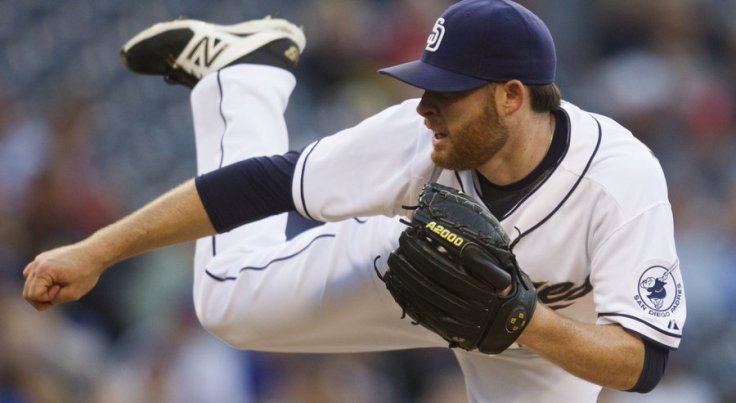
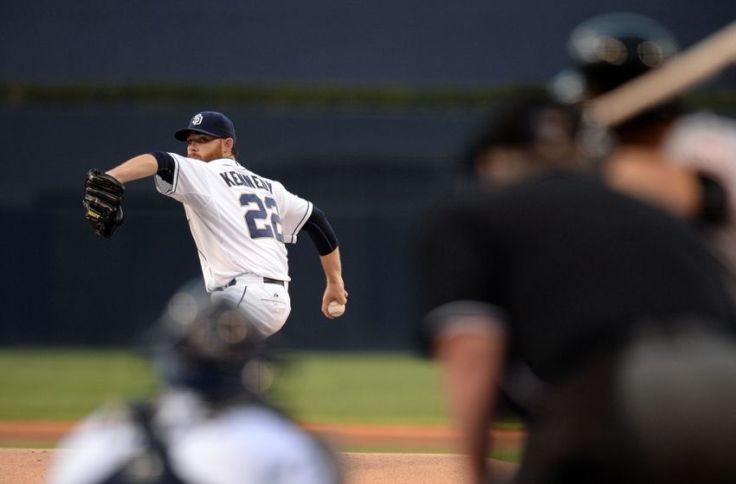
Sometimes things are so inevitable that they will happen no matter the circumstances. For the last week plus we have heard about the Kansas City Royals interest in free agent righty Ian Kennedy and on Saturday morning they pulled the trigger on a 5 year, $70 million dollar deal.

The deal does have an opt out after year two(appears to be a player option) which would be after the 2017 season, where the Royals would already have Wade Davis, Lorenzo Cain, Eric Hosmer, Mike Moustakas and Alcides Escobar possibly eligible for free agency. This obviously means the Royals are taking advantage of the two year window in front of them and adding another arm to the rotation was at the top of the list for General Manager Dayton Moore. There are a number of immediate questions about Kennedy(as well as some positives), but first let’s give you an idea of just who Ian Kennedy really is.

kc2

Ian Kennedy is going into his 31 year old season as a former big time prospect in the New York Yankees organization who has toiled in the majors since 2007. His best season to date is the 2011 campaign, where he went 21-4 for the Diamondbacks, striking out 8.03 batters per 9, a 2.88 ERA, an ERA+ of 137 and 4.8 WAR. Unfortunately, that 2011 season seems to be the outlier of Kennedy’s career, as he has been a fairly mediocre starter throughout his time in the big leagues, including three straight seasons of being a below average pitcher from 2013-2015. That being said, there are plusses and minuses to the signing.

kc3

Let’s start with the giant pink elephant in the room: home runs. Last year, Kennedy gave up 31 home runs, 19 in his home field of Petco Park. Yes, the Petco park that is considered a major pitchers park. For whatever reason, balls flew out of that place at a higher rate last year, and Kennedy and former Padres teammate James Shields paid the price for the increase. In fact, Kennedy allowed home runs on 17% of his fly balls in 2015, only toppled by Shields and Kyle Kendrick, with a difference of only less than half of one percentage point. Yes, it appeared that balls flew out of Petco last year, but giving up that many home runs is still a blemish on the stat board and has to be taken into consideration. It appears that the Royals scouts and front office believe that playing in Kauffman Stadium, which has a low home run rate, plus adding in the Royals stellar defense in the outfield will help Kennedy with some of those fly balls. It’s possible…but as this chart shows, maybe not as much as we would hope:

What the graph shows is that if you took those 31 home runs and moved them to Kauffman, 3/4 of them would still leave the park. Add in that Kennedy won’t be starting all of his games in Kansas City, and…well, you can see why there is some worry.

kc4

Now, I feel like I can’t paint the ‘Ian Kennedy picture’ without mentioning some of the positives. For one, his K/9 rate the last has been above 8 for three straight seasons and has been sitting at a steady 9.3 for the last two. The guy has noticed an uptick in his velocity and it has shown in his strikeout numbers. But the increase in velocity has also accounted for a high hard-hit rate, which normally means a low soft-hit rate. In fact, Kennedy has not a hard-hit % below 30% since…you guessed it, that great 2011 season. In other words, when batters do make contact off of Kennedy, they are getting good wood on the ball. That makes it harder to keep the scoring down and also hurts the chances of a pitcher pitching deeper into the game. Last year, Kennedy averaged 5.6 innings per start, but over his career he has been a workhouse. Since 2010, the lowest amount of innings Kennedy has accumulated is 168 in 2015, while in that span he has had three seasons over 200 innings(and one at 194). So Kennedy will give you innings, which has long been a goal of Moore when he acquires starting pitchers.

kc5

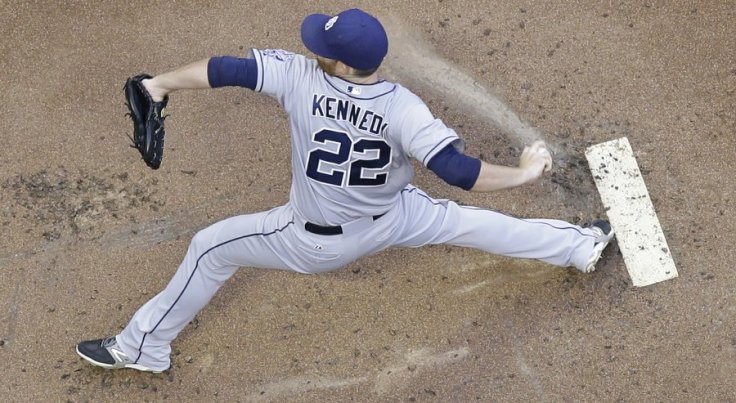
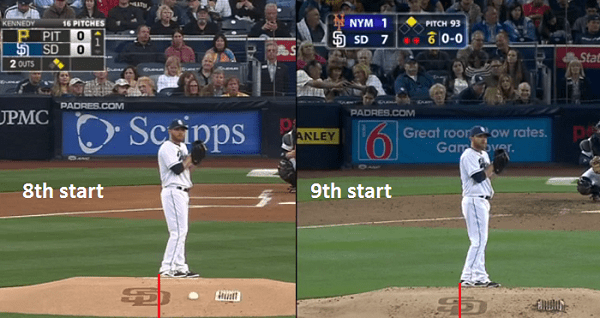
Also, his walk rate went down this past year, down to 2.78 after hovering in the 3’s for the previous two years. So you have a guy who has increased his strikeout rate while lowering his walk rate, which is a plus for any starter in the majors. Kennedy also seemed to improve his statistics in June of last year, possibly due to a shift on the pitching rubber:

kc6

The picture on the left is from his last start, the one on the right is from his first start in June. As you can tell, he went from throwing on the 3rd base side of the rubber to the 1st base side. There was a noticeable improvement, as his home runs dipped down and his OPS allowed improved by almost 200 points. I’m sure all of this will be digested by Royals pitching coach Dave Eiland, who within himself is a big part of this puzzle. You see, Kennedy is not a stranger to Eiland:

Eiland was the pitching coach for the Yankees when Kennedy made it to the big leagues so Eiland is familiar with him not only from then but back when he had success during his days as a prospect in the New York system. One has to think a big part of Kansas City feeling so confident in giving him this big contract was having Eiland in their back pocket to guide him back to success. Eiland has shown over the years to have a knack of turning questionable pitchers into solid starters by just tweaking the most subtle of things. All you have to look at is Jeremy Guthrie time in Kansas City(before 2015) and most recently Edinson Volquez. If anyone can turn Kennedy around, it would be Eiland.

kc7

There is one more positive to the this signing, and that would be durability. Kennedy has been lucky so far in his career and hasn’t had a major arm injury. In fact, Kennedy spent a little bit of time on the disable list last year, but it was for a hamstring strain. Kennedy has been healthy enough to make at least 30 starts in all 6 of his seasons as a regular. Add in the innings totals and at the very least you have a starter that you can count on to take the mound once every five games. Anymore, that is a major victory within itself in this game.

kc8

So where do I stand? This is an odd signing in that I am not totally for sure how I feel. I like that the Royals seem to have signed a durable starter who can log some innings for the team before turning it over to the pen. There were times this past season where the starters went four or five innings and were done for the day. I’m not a big fan of a five year deal, but there is the opt out clause after year two, so hopefully Kennedy takes that and the Royals don’t get stuck with the last three years of the contract. For me it’s not even about Kennedy as much as I don’t like giving any pitcher a long-term deal, not with how easy it is to get arm injuries in this day and age. Over his career Kennedy has been about a league average pitcher and I have a feeling that is what Kansas City will get from him this year. I think there will be times he looks really good on the hill, and I think there will be times those hard hit fly balls will leave the playing field. Steamer projections are predicting Kennedy to make 31 starts, logging 182 innings with an ERA of 3.90, an FIP of 4.02 and 2.2 WAR. Honestly, I would take that and would even applaud that kind of season. The best part of the signing is that the Royals showed a willingness to spend money and give them as good a chance as any to keep a contending baseball team on the field. The last few years, Dayton Moore has shown an ability to make questionable acquisitions and have them turn to gold(paging Morales, Kendrys). At this point, if Dayton likes this move than I am on board. I just hope the ride isn’t too bumpy.

The Prodigal Son Has Returned

kc1

There really has been only one topic on the minds of anyone who follows the Kansas City Royals: will Alex Gordon re-sign with Kansas City and continue to be the pillar of this championship Royals team? After months of speculation(and worry that he would leave) we found out on Wednesday that Gordon was staying with the only major league team he has ever known, signing a 4 year, $72 million dollar contract with an option for a 5th year. So how does that deal break down?

It’s interesting to see that Gordon will actually be making less this upcoming season than he made in 2015, but it is not surprising to see the contract back-loaded with a mutual option(seriously, Dayton loves those mutual options) in year five. So what does this mean for the Royals moving forward?

kc2

Financially, Gordon’s contract gives the team flexibility not only for this year(after expected arbitration raises and probably the signing of another starting pitcher, the team’s payroll will probably be above $120 million, which really isn’t a giant increase from 2015), but also 2017. Why those two years? The main core of this Kansas City team will be intact for at least the next two years, so the Royals chances of continuing to reach the postseason is greater now for those two years. A smaller deal for Gordon helps out the rest of that payroll and could very well impact the team if they try to make another big deal in July if so be it. Now his contract goes up in years 3 and 4 of the deal, but I would say there is a good chance that by then this contract won’t look as imposing when you look at the influx of money within the game of baseball right now. Add in that the Royals should be able to restructure their TV deal around 2018 and the Royals could be playing with even more money than they have right now. Obviously the big part of this deal is that it gives GM Dayton Moore more wiggle room to help get the pieces needed to keep this team a contender through 2017, which will then see Eric Hosmer, Mike Moustakas, Lorenzo Cain, Wade Davis and Alcides Escobar become free agents.

kc3

The signing also means the chances of Kansas City taking advantage of their window have improved with the return of Gordon. Realistically, the Royals have the next two seasons to take advantage of their current core players and have a better chance of reaching the playoffs again with Gordon in tow. I am of the belief that without Gordon’s return, the chances of Kansas City returning to October baseball would have been much harder to accomplish, where as now they return the “backbone” of the team. About a month ago I went into deep detail on why the Royals should bring back Alex and it seems obvious when I say this team is better with Alex roaming left field for the next four years. To me, I wouldn’t even worry too much about 2018 and instead focus on the here and now. If the Royals reach the postseason the next two years(or even one of the two), that means more people coming to the ballpark, meaning more money coming into the team. To me, that extra money could be used on whatever the game plan is for after the 2017 season, which could be to re-sign a Cain or a Hosmer(I know, he is a Boras client so the likelihood is not very high) or go out and revamp the team. Either way, giving the Royals the best chance possible to win now helps the organization in the future as well. Keeping Gordon in the fold helps in that regard.

kc4

Speaking of the core Royals group, I also felt like Gordon was the best choice for a long-term deal out of that group mentioned earlier. Hosmer and Moustakas are almost completely off the table since they are Scott Boras clients and he will always tell his clients to take the deal that will make them the most money. I love Wade Davis but he is a reliever and you should never give a reliever a long-term deal(unless his last name is Rivera). That leaves Cain and Escobar, who will both be in their low 30’s at this point. I love both guys but Cain has a long injury history and a big part of Escobar’s game(speed) will have started to regress at this point which makes a long-term deal seem iffy. To me, Gordon will regress the best out of this bunch and will probably come close to his expected production over the next couple years that will make his deal worth the money that was spent. In fact Craig Brown of Royals Authority took a look at just that the other day, taking a look at his Steamer & ZiPS projections over the course of the deal and putting that up against his earnings during those years. I feel you can also throw in what he means to that clubhouse, as many a teammate has referred to Gordon as the “backbone” of the team. He isn’t the rah-rah team leader, but that is why they have Salvador Perez. Gordon is the quiet one who leads by example and it is normally a “balls to the wall” type example that he plays by for them to follow.

kc5

Concerns? There are always concerns when signing a player to a deal of this size, and most of them are health related. Gordon missed some time this year due to a couple injuries, a wrist injury that limited him when the season began and a groin injury that left him out of action for August and a good chunk of July. But since Gordon made the move to left field full-time in 2011, he had played at least 150 games in all of those years before this past year. I tend to feel like the injury is an outlier for Alex, but it’s easy to see how an injury could happen to him with his “reckless abandon” style of play out on the field. We all saw what happened to Mike Sweeney late in his career, but knowing how Gordon is a health nut and his insane work-out routine, I think there is a better chance of Alex staying healthy than spending the majority of his time on the disabled list. Will he regress? Of course he will. ‘Father Time’ always wins that battle. But once again, Gordon takes good care of his body, so the belief is that his regression won’t be as steep as it normally is for others.

kc6

To me it always made the most sense to bring back Gordon to the only major league team he has ever known. Gordon is beloved in Kansas City and it was the team he grew up rooting for. It only made sense for the present and the future to make sure Alex remained in Royal blue. As a fan, I was very biased on this all along. As a kid my favorite player was George Brett and would stop whatever I was doing once Brett came up to the plate. I loved the way Brett played and it became a model for me to judge other players by. As an adult, Alex Gordon is in that same pantheon for me. He is my favorite player on this Royals team and the thought of him wearing another team’s jersey was tough to stomach. Knowing now that he is locked up makes me feel better about the future of the Royals as he is the constant everyone can rely on. Alex now has four years to further cement his legacy and a deeper place into the history of the Kansas City Royals. It seems like a lock now that Gordon will one day get a statue near the fountains at Kauffman Stadium. Honestly, I can’t think of a current player more deserving than ‘#4’.

Blog at WordPress.com.

Up ↑