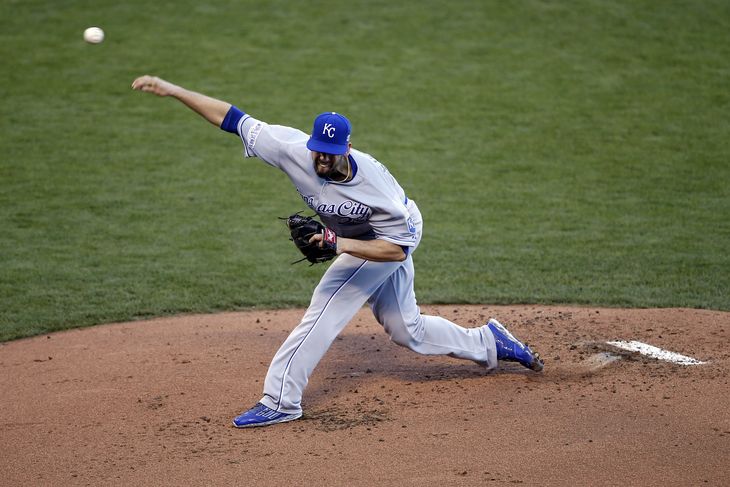
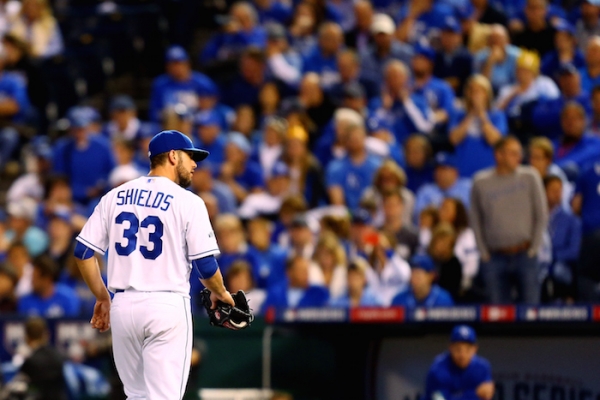
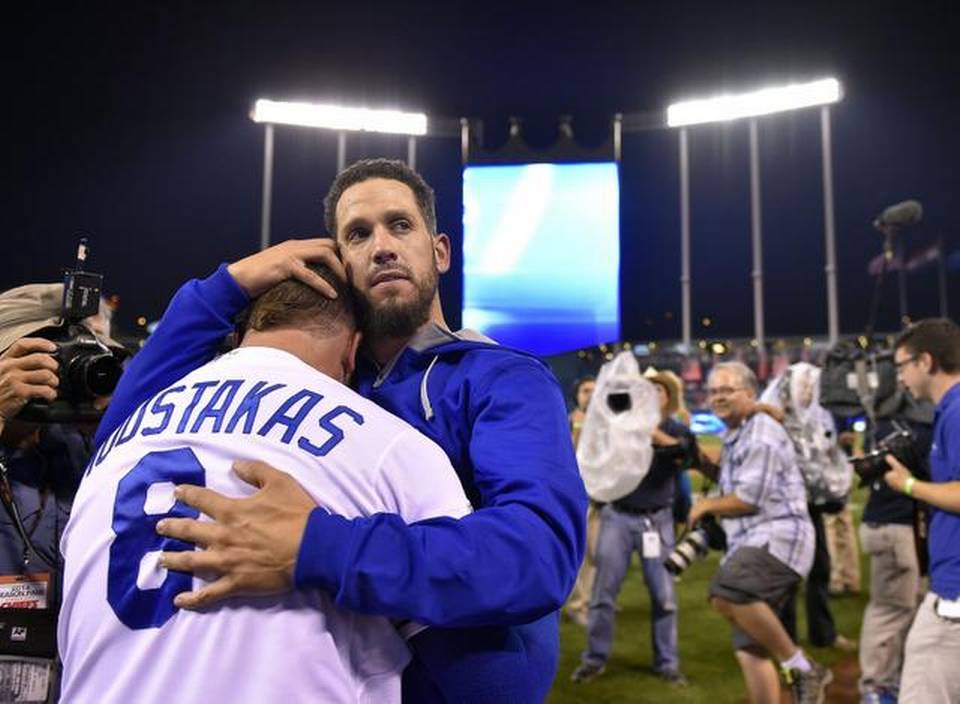
Now that Nori Aoki has planted himself in San Francisco for this upcoming season, that leaves only one major Kansas City free agent left on the market in James Shields. It’s a bit surprising that Shields hasn’t chosen where he will play in 2015, as it seemed he would sign once Jon Lester decided on his destination. Lester chose the Cubs over a month ago and Shields is still being courted by several teams. The question now is which teams are in on the Shields sweepstakes?
Arizona mentioned earlier last week they would like Shields to mentor their young pitchers if he ended up in the desert. Late in the week we also found out that the Tigers have had discussions with his agent, which makes sense since Max Scherzer won’t likely be returning to Motown. San Francisco, Boston, Toronto, Texas and Miami have all shown interest at one point or another for Big Game James but have all but said they no longer are interested, at least for the price he wants. A close source told ESPN’s Jonah Keri this past week that the Marlins have “zero chance” of signing Shields, which last I checked was as low as you can go. There was also word that a team had offered him $110 million (I’m assuming over 5 years) but that he didn’t want to sign with that team.
So where will he land? Honestly, I have no clue. If you asked me this question before the season I would have told you big market teams like Boston, New York or Chicago would seem to be the frontrunners but the fact that we are sitting here in late January and there seems to be no clear winner, well, that tells me that this could go on a bit longer. As more and more time goes on, I’m glad the Royals aren’t wrapped up in these negotiations. Shields is 33 and wants a 5 year deal. I might not have enough fingers but by my math that would make him 38(almost 39) by the end of this deal. Add in his bumpy postseason performance and the amount of innings his arm has logged over his career and it makes one wonder if his regression is just around the corner.
As much as I was initially against the trade with Tampa Bay that brought him to Kansas City, I can sit here now and say I was wrong. The trade did what it was supposed to do, which was get the Royals to the postseason. Shields was a big part of that and his work with fellow moundsmen Danny Duffy and Yordano Ventura speaks volumes about how his value exceeded any numbers he accumulated on a scorecard. But at this point in his career I would say good luck to any team that signs him. Maybe Detroit wouldn’t be that bad of a destination for Shields. But with the way this winter has gone he will end up in Atlanta with no logical explanation.
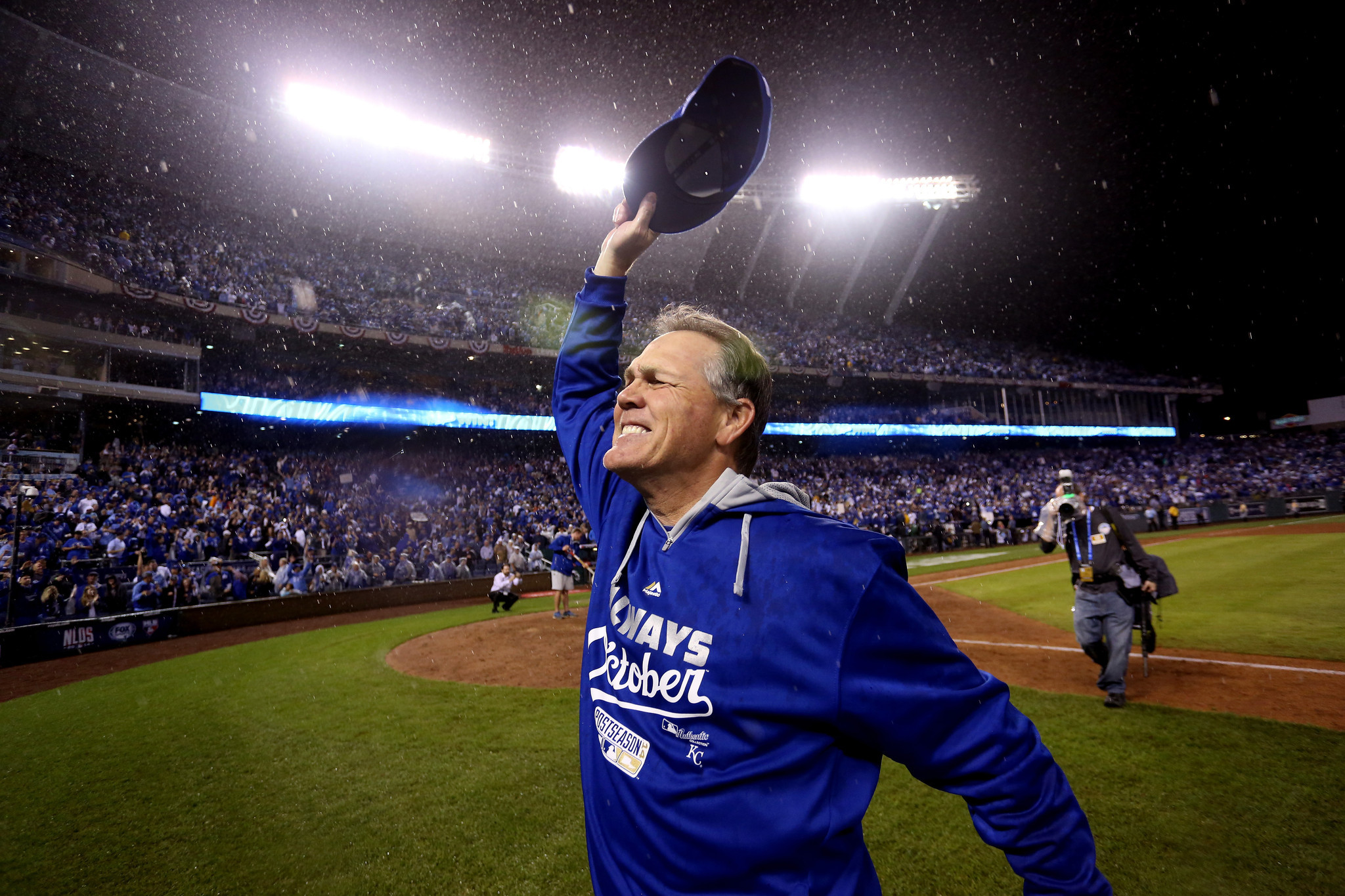
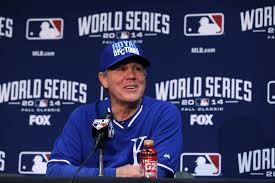
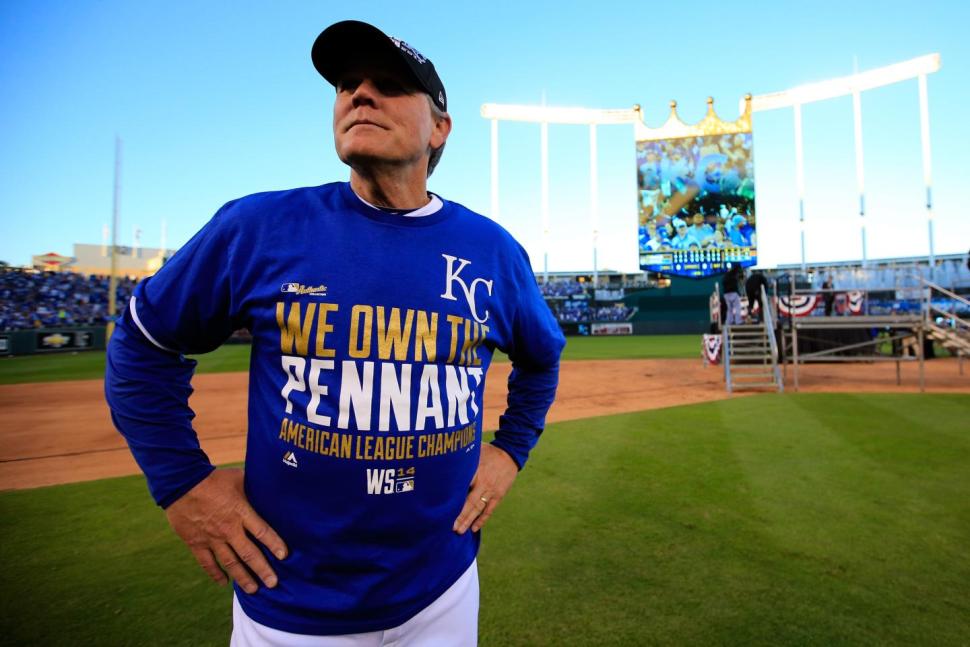
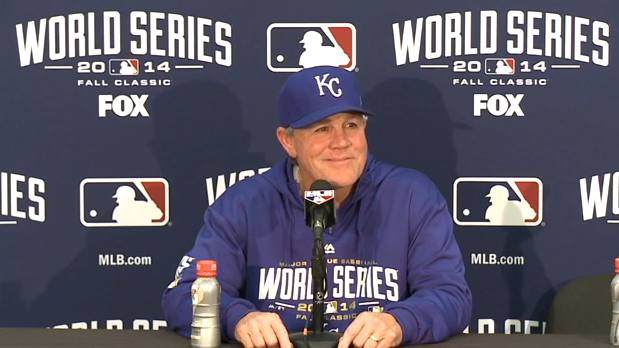
The inevitable became reality on Tuesday when Kansas City Royals manager Ned Yost(Neddy if you’re nasty!) received a on year contract extension, which makes him the Royals head honcho through the 2016 season. This wasn’t even close to being a shock, as it was expected Yost would receive more years after guiding the Royals to their first playoff and World Series appearance since 1985 while compiling an 11-4 record in the postseason.
It was been well chronicled my dislike for Yost(seriously, just read anything from 2013 on this blog), and the Royals run in October didn’t change my opinion on Neddaniel. I do give him credit for this; during that run in the postseason Yost was smart enough to let his players just go out and play. He didn’t over-manage, he didn’t over-think anything; he let them just go out there and play the game that needed to be played. He was also smart enough to change the way he handled his bullpen most of the season and didn’t define them to set roles in the playoffs. This allowed someone like Kelvin Herrera to not just be the “7th inning pitcher” but come in earlier if he was needed:
Asked why he didn’t just use Herrera in that spot then, Yost said: “Aaron Crow’s inning is the sixth inning. Kelvin’s is the seventh.”
There is hope that the postseason helped Neddeth when it comes to managerial decisions and that he has learned and grown from this experience. For the Royals sake I hope that is true.
While this news wasn’t a shock to the system, the one curious part of the extension was the length of it. You would think after Yost guided the team to the World Series that management would roll out the red carpet for him and offer him at the least a 3 year extension(or a lifetime contract, one of the two). Well, there is a reason why it was only one year:
“Dayton’s got this year and next year, and that’s all I wanted,” Yost told The Kansas City Star in a telephone conversation. He added, “One extra year, I’m happy with that. And we’ll just play it out, and see what happens after that.”
There has also been talk that Yost might only want to manage another season or two as well:
If you're wondering why only 1-year extension for #Royals' Yost, he has said he's not sure if he wants to manage beyond 2016
If that is the case he could be setting up the team for his future replacement, which as of this time would appear to be Vance Wilson, the manager of the Royals AA club in Northwest Arkansas. The Royals still have a decent chance to get to the playoffs again in 2015(VegasInsider.com has their odds at 25/1 to win the World Series this year) and it appears that Yost still feels as if the team has some unfinished business:
“I think we’re in great shape headed into this year,” Yost said Tuesday, “We came as close as you can to winning a world championship last year and when you don’t do it, it leaves a taste in your mouth. It’s something you strive to do, and I think everyone in that locker room will tell you they want to finish this thing off.”
I made the comment before the start of the 2014 season that as much as I disliked Yosty he was the devil we know ,knowing full well that he wasn’t going anywhere. I’ll never be a big fan of Yost’s work, especially if this past October didn’t sway me. Yost is what he is, which is a manager very stuck in his ways and the style of baseball he feels can win ballgames. That thinking paid off in 2014, but the real story will be whether he can keep the team in the hunt over the next two seasons. Quite often I make the comment “things could always be worse” and most the time it could be. As much as I would like Yost to wander off to that deer stand in Georgia and never come back, I also realize we know what we can expect from him as manager. The question in 2015 is whether or not Yost will be as flexible in his thinking as he was in late September and October of 2014 or will his stubbornness rear it’s ugly head? Yost has earned his extension but it doesn’t mean his work is done.
“My impact on the game was going out there and making things happen”
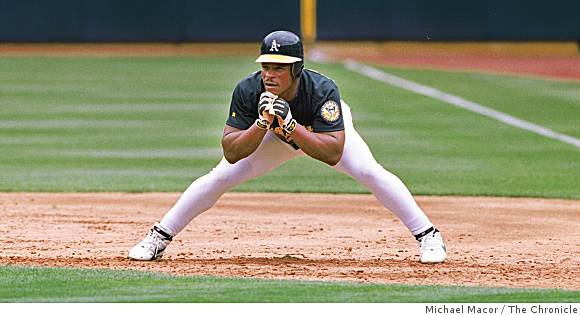
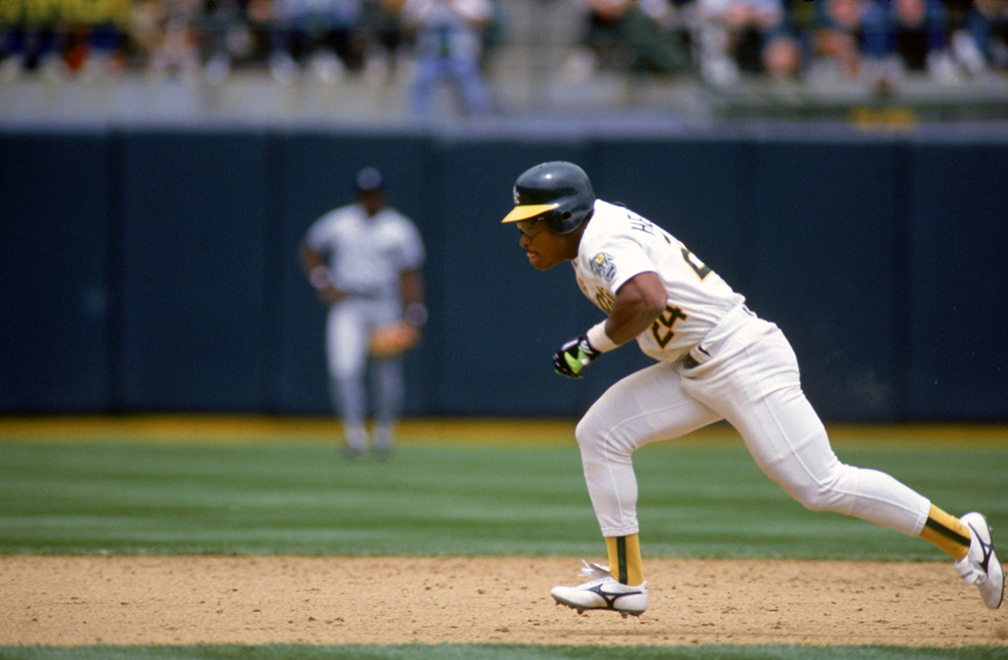
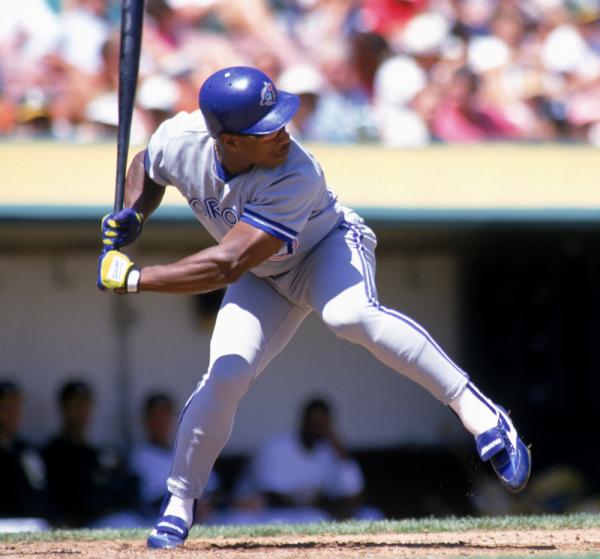
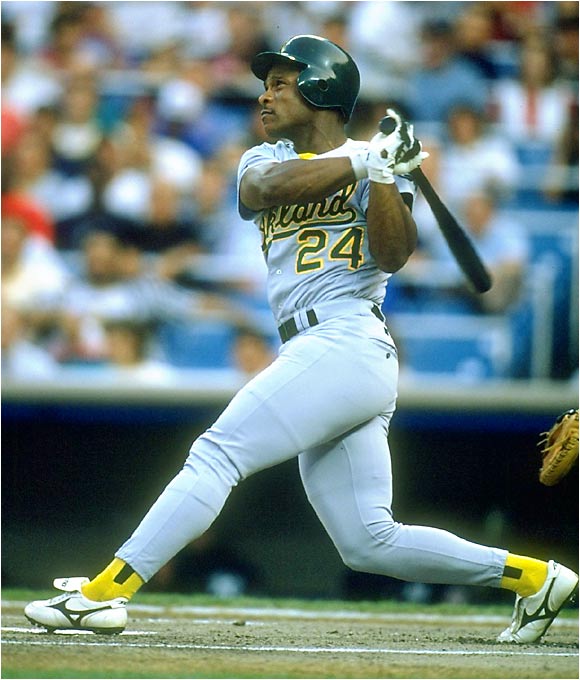
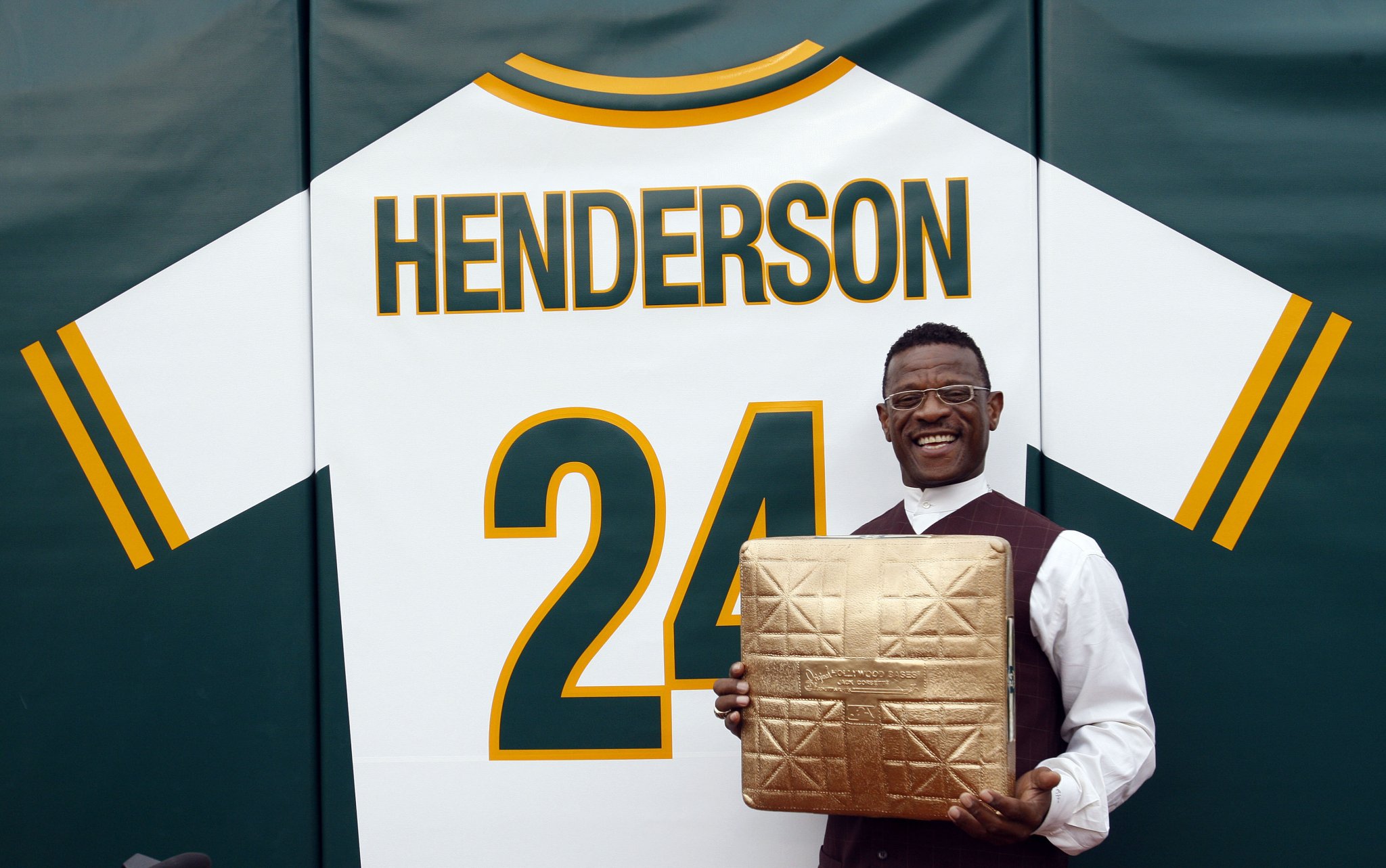
Rickey Henderson is a lot of things. Rickey is entertaining. Rickey is a Hall of Famer. Rickey is baseball’s all-time stolen base leader. But is Rickey the greatest of all time? After breaking Lou Brock’s career stolen base record, he declared just that:
Sure, in May of 1991, this seemed like a ludicrous statement. We all knew Rickey was a great base stealer and a future Hall of Famer, but declaring yourself the greatest back then just seemed cocky(which it was). Normally when you think of the greatest in baseball history, names like Ruth, Aaron, Williams, Mays and Mantle all come to mind, but the more you think about, putting Henderson in that list isn’t as far fetched as it seemed back in 1991. When it comes to a complete player, Rickey is on that short list of players who can make that argument.
To really dive into this, we need to define our parameters. This isn’t the player who meant the most to the game or dominated his era; that would go to Babe Ruth, who while being one of the greatest ever, was not a five tool player. It isn’t who was the best fielder or best hitter either; those are singular sections of the game that don’t encompass a complete player. A complete player is one who does a bit of everything and does them really well. Running speed, arm strength, hitting for average, hitting for power, and fielding are the five tools and very few players are able to show greatness at all of them. Hank Aaron, Willie Mays, Barry Bonds, Mickey Mantle and Ken Griffey, Jr. would join Henderson on this short list of players who were able to be a complete package. Obviously most on this list might have one tool they were maybe average at, but greatness at the other four made it easier to look past it. So let’s break down these players numbers…
Let’s start with the obvious, which is running speed. If we just went by stolen bases Rickey would run away(deliberate and expected pun) with the category. I decided to dig a bit deeper into this category though, so lets look at ‘Runs from Baserunning'(Rbaser). Comparing the six players mentioned above,Henderson is the easy winner with 144 over his career. In fact this race isn’t even close, as the next closest in this category is Willie Mays at 77. The surprising player in this department is Ken Griffey Jr. who only compiled a 16 over his 22 year career. In fact Griffey had numerous seasons in the negative, mostly later in his career once his injuries started piling up. We could check a few more numbers relating to base running, but I’m pretty sure we end up at the same spot, with Rickey at the top of the mountain. No big surprise there.
Arm strength wasn’t one of Rickey’s strong points, as he probably had an average throwing arm at best. Maybe the best way to decipher this is to look at assists in a season. Hank Aaron sits atop this leader board with 201 assists over his career while Rickey is next to last on this list. Mantle sits lower than Henderson, but Mickey also played 8 less years then Henderson which plays into his 117 assists compared to Rickey’s 131. Since we are already on fielding, lets compare these players using dWAR first. Henderson has a -3.4 career dWAR, but he is not alone on the negative side of the board. Both Aaron and Mantle also reside there, -4.8 and -10.1 respectively. Willie May’s blows away the competition here, as he has a career dWAR of 18.1! Bonds is next at 6.7 and Griffey at 1.3. I should also mention here that how you feel about this is probably predetermined on how you feel about defensive metrics. In my mind defensive metrics help show a player’s value, but I also think they are a work in progress. We can all probably agree that Mays was probably the defensive superior out of this bunch; that’s probably not even really up for argument. But do you feel as if Griffey was just a barely better than average defender? Or that Mantle was a horrendous defender? Probably not, although both players were slowed down by injuries late in their career. I decided to go a bit deeper defensively so I decided to check each player’s UZR rating(Ultimate Zone Rating, putting a run value to defense, attempting to quantify how many runs a player saved or gave up through their fielding prowess, or lack thereof). Using UZR(TZ before 2002) showed us basically the same thing that dWAR showed us; Mays and Bonds are the superior defenders, while Mantle and Griffey were the bottom of this list. Both Bonds and Mays were in the 180’s with their UZR while Griffey and Mantle were in the negatives. Henderson floated in between, sitting at 63.4, lower than Aaron but better than Griffey. What I take from all of this is that Henderson was probably an average defender, maybe even slightly above average who was aided by his speed early in his career, especially when it came to range. I think this also points out that our perspective on Ken Griffey Jr. was from early in his career when he was a defensive daredevil. His later years(mainly once he was traded to the Reds) showed a defender who was a shadow of his former self. Injuries can do that to even the greatest of players.
Now lets look at hitting for average.The easiest way to do this is by batting average, with most of this group hitting between .298 and .305. The only two with career batting averages below that is Griffey at .284 and Henderson at .279. You have to think that Rickey hanging on and playing those last 4 years didn’t help him, as he posted his lowest hitting averages those years. But I don’t think average really covers this whole section, so lets dig deeper. A big part of a consistently quality hitter is someone who can get on base, so I figured I would check these players career On-Base Percentage(OBP). No surprise that Barry Bonds would lead here with a .444 career OBP, with Mantle second at .421 and Rickey coming in third at .401. Henderson did lead the league 4 times in walks and 7 times had seasons where he accumulated over 100 walks. Obviously Rickey knew how to get on base and was a master at it.
Time to move on to hitting with power, and I don’t think I am going on a ledge by saying that Rickey probably won’t match up as well with the other players in this category. Considering the other 5 players in this comparison all have at least 500 home runs and 4 of those have over 600, it’s safe to say Rickey will lack a bit here, since his career total is at 297 career home runs. Now Rickey does hold the career record for home runs leading off a game with 81, which is a nice consolation prize. But I think we can go a step further since power alone isn’t defined by home runs. Lets check these players career slugging percentage and see where Henderson stands. Not a shock here but Henderson lags far behind, as his percentage sits at .419 while the next closest is Ken Griffey Jr. at .538. Barry Bonds career slugging percentage is sick, an insane .607! One last test; since OPS is widely used anymore(on-base percentage + slugging percentage) I figured we could check these players’ career OPS+, which will factor in the league averages during these players era’s while also factoring in the ballparks. With 100 equaling average, every player is above that with Henderson the lowest at 127. But he isn’t too far off from Griffey at 136, Aaron at 155 and Mays at 156. So what these numbers tell us is that Henderson, who had good power for a leadoff hitter, was not at the elite level power-wise as most of the greats of the game. This isn’t much of a surprise but shows that Henderson obviously affected the game from a different perspective than the bigger hitters in baseball history.
So it comes down to this, one last comparison, one that will digest every part of a players contribution to his team(s), WAR. Lets preface this by saying that the WAR stat is not perfect and not the end all be all of statistics. But it is a stat that can quantify just how much of a complete player he is, and until another statistic pops up that breaks it down even more, it is the best assessment of what we are looking for here. What WAR tells us is that Barry Bonds and Willie Mays are in a league of their own, with 162.4 and 156.2 respectively, followed by Hank Aaron at 142.6, then Henderson at 110.8, Mantle at 109.7 and Griffey down at 83.6. Rickey isn’t the elite here, but he is right in the middle of the pack and holds his own with the greats of the game.
So what did we learn from this little exercise? For one, Barry Bonds and Willie Mays are quite possible the two most complete players in baseball history, as they did everything above average when they played. Maybe the most surprising item from this is that Ken Griffey Jr., soon to be a member of the Hall of Fame in 2016, was really hurt late in his career by all the injuries. And Rickey Henderson? He is the greatest basestealer of all-time, taking what Lou Brock did to another level. He is the greatest leadoff hitter in baseball history, a man who redefined what that even means. While he might not be the greatest player we have ever seen, he holds his own with the other 5 tool players I compared him to. Rickey isn’t the greatest like he said he was, but he was pretty damn close and that means almost as much. At some point a player will break his stolen base record or a leadoff hitter will hit more home runs to lead off a game; records are made to be broken. But there will only ever be one Rickey Henderson, just the way Rickey likes it.
On January 6th, the National Baseball Hall of Fame will announce their 2015 inductees, with expectations being that multiple players will be enshrined into the Hall this summer in Cooperstown, New York. There has been a plethora of debate concerning the voting process done by the BBWAA the last few years and how to handle possible PED users. This has cause a number of worthy players to be passed over, even without any evidence proving their taking of said substances. It has become harder and harder for voters to turn in their ballots, as the Hall allows up to 10 votes and many members of the BBWAA feeling as if more than that amount are worthy of the Hall’s honor. Last year I wrote up what my ten votes would have been if I could vote. This year I officially did get to vote, as a member of the IBWAA, and there were some notable differences between the BBWAA voting procedure and the IBWAA’s voting. For one, you can vote up to 15 candidates for the IBWAA, while the BBWAA has held fast to 10. Also, the IBWAA has already voted in Mike Piazza and Craig Biggio, while Barry Larkin(who is in the National Baseball Hall of Fame) has not. I ended up voting for 12 players and to save a bit of time I will be posting a link to my picks last year for some of the same candidates. Also, to get a better idea of just how difficult the voting process has become, read Jay Jaffe’s article on voting. So without further ado, here is my IBWAA ballot for 2015(in alphabetical order).
1)Jeff Bagwell
Jeff Bagwell was on my list last year and I am still amazed he hasn’t gotten voted in. Many voters are suspicious of PED use, despite not evidence to any besides his body getting bigger between his time in the minor leagues and his ascension to the majors. Bagwell was not only one of the best hitters of his era, but also stellar defensively and on the basepaths. To me Bagwell is a slam dunk candidate and a major disservice has been done by excluding him from the Hall.
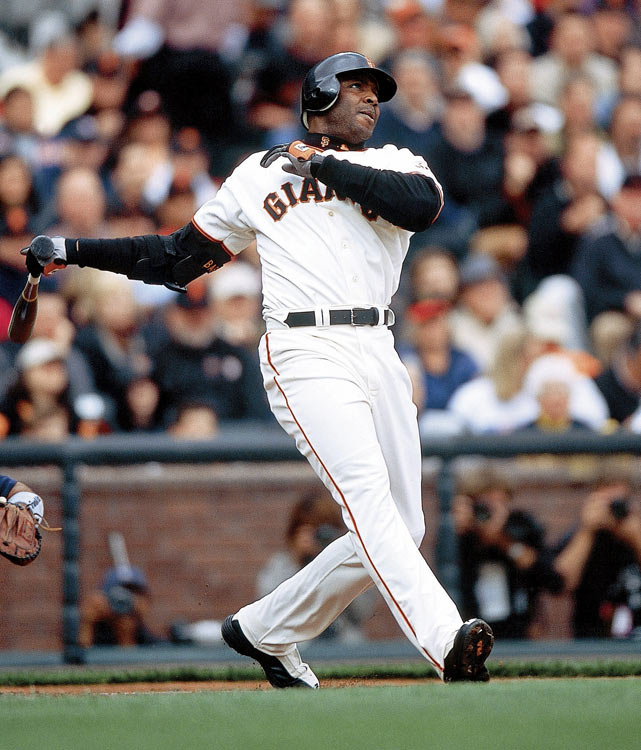
2) Barry Bonds
Barry Bonds was also on my list in 2014 and is easily one of the greatest baseball players ever, the all-time home run king and that is all tainted by supposed steroid use. To me Bonds was a Hall of Famer before his supposed use and was a 5 tool player early in his career. We can debate all day about whether or not PED users should be allowed in the Hall(and I am someone who believes the Hall of Fame is NOT sacred ground) but what is easy to decipher is that Bonds is one of the greats of the game. ‘Nuff said.
3) Roger Clemens
Roger Clemens is another 2014 vote for me and like Bonds, has the PED albatross around his neck. Clemens is the greatest pitcher of his era, a 7 time Cy Young award winner and should have been a first ballot Hall of Famer. Instead we are stuck continuing an argument that might never finish and also like Bonds, might have to wait for the Veteran’s Committe to get voted into Cooperstown. Clemens deserves to have a plaque next to the Johnson’s, Koufax’s, and Gibson’s of the world. When(or if) that happens is another issue.
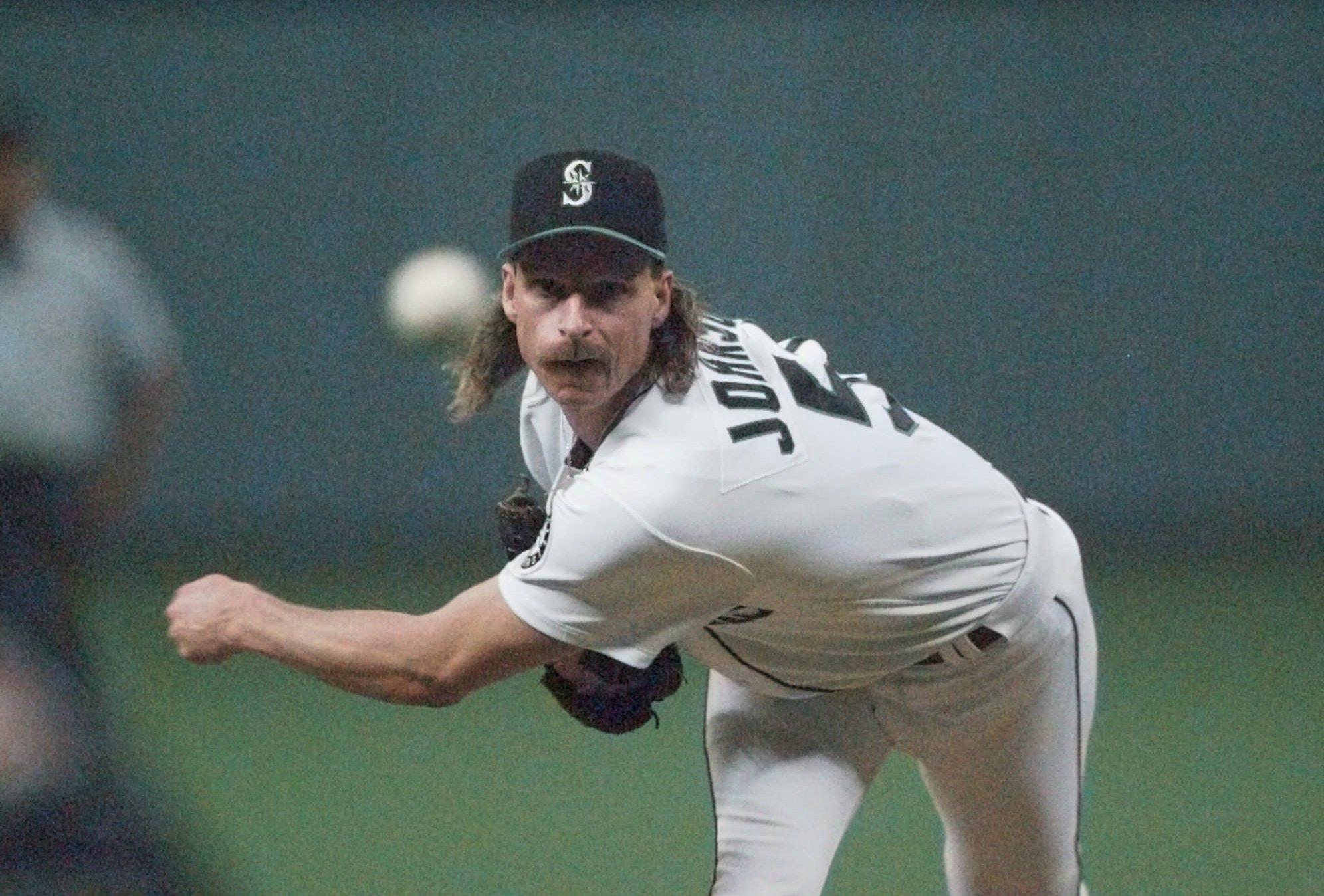
4) Randy Johnson
Randy Johnson is on the ballot for the first time this year and is a guaranteed lock to be voted in this year. It’s pretty easy to see why; 5 time Cy Young winner(placing 2nd 3 times), 2nd career in strikeouts(4875), 1st all-time in K’s per 9 inn(10.61), 23rd all-time in ERA+(135), over 300 wins and a 104.3 career WAR. Need More?
In the 1914-2014 span, only one other pitcher had more 10+ strikeout games with 0 ER than Randy Johnson (49)— Nolan Ryan (67)
All this from a guy who when he started his career in 1988 it wasn’t guaranteed that he would be a top shelf starter. Sure, he had the stuff(an electric fastball that reached triple digits and a hard, biting slider), but Johnson was also known for having control issues. Even as late as 1992 Johnson still had a BB/9 of 6.2, but after that year he never got above 3.8 walks per 9 the rest of his career. Johnson threw 2 no-hitters in his career, the 2nd was the 17th perfect game in major league history. Randy would also dominant on the big stage of the playoffs, especially in 2001. During the playoffs that year for Arizona, Johnson would beat Atlanta twice in the NLCS and then pick up 3 wins against the Yankees in the World Series, the final victory coming in relief in Game 7, after he had pitched 7 innings the night before in Game 6. Johnson was as dominant in an era known for lack of dominance by pitching, and held that standard for a number of years. When you think of the greatest left handed starters in major league history names like Koufax, Spahn and Carlton instantly spring to mind. Randy Johnson is easily in that group and should easily slide into the Hall of Fame this year.
5) Barry Larkin
As mentioned earlier, Larkin has already been inducted into the National Baseball Hall of Fame, but not yet in the IBWAA’s version. It’s a shame really, because Larkin was the next evolution of offensive shortstop, following in the footsteps of Cal Ripken, Jr. in the 80’s. Larkin pretty much did everything(a 5 tool player), which was a big part of why he was one of my favorites of all-time. Larkin was a 12 time All-Star, 1995 NL MVP, 3 time Gold Glove winner, 9 time Silver Slugger winner, 5 times was in the top 10 of WAR in the NL(7 times for just position players), the first shortstop to have a 30 HR/30 SB season and is 22nd all-time in SB% (83.11). Larkin wasn’t flashy but he was consistent and was the blueprint for future shortstops like Derek Jeter, Alex Rodriguez and Nomar Garciaparra, combining offensive punch with defensive prowess. Larkin is what most shortstops of that era shrived to be, a Hall of Famer.
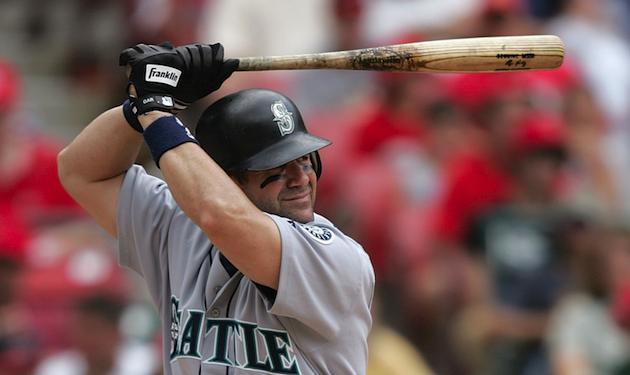
6) Edgar Martinez
Edgar Martinez has been looked over for years but he was an easy pick for me last year. Edgar is the greatest Designated Hitter of all-time, and one of the greatest hitters in baseball history. Apparently Martinez not playing much in the field hurts his case, but that honestly should be superseded by the fact that he was so good at one thing(hitting) that he is 76th in career WAR. Still don’t believe Edgar belongs?
Edgar: 2055 G .312/.418/.515, 147 OPS+, 68.3 WAR Ortiz: 2111 G .285/.379/.547, 140 OPS+, 47.7 WAR Guess who's prob sailing into Cooperstown
The stats easily tell a story, that of a Hall of Fame player .
7) Pedro Martinez
Pedro Martinez is much like Randy Johnson, a man who dominated in an era(the Steroid Era) where offense was king and pitching was hard to come by. Pedro was elite in this era, posting numbers who by themselves are jaw dropping, let alone when stacked next to his cohorts.
From 1997 to 2003, Pedro Martinez maintained a 213 ERA+.
Career-bests:
2014 Clayton Kershaw 197 1997 Randy Johnson 197 1981 Nolan Ryan 195
Pedro’s list of accomplishments during his 7 year peak almost look like ridiculous video game numbers: 5 times lead league in ERA(twice under 2!), 3 times lead AL in strikeouts, and 5 times lead AL in ERA+, FIP, and WHIP. Martinez was unhittable in a period where everyone and everything was hittable. Martinez was a 3 time Cy Young award winner(2nd two other times), an 8 time All-Star, 2nd in the MVP voting in 1999, twice lead the AL in WAR(3 times for pitchers), is 6th all-time in career winning percentage(.687), 5th all-time in WHIP(1.054), 3rd all-time in K/9 (10.04), 13th all-time in career strikeouts (3154) and 2nd all-time in ERA+(154). All this from a guy who most believed would throw his arm out due to his small stature. In a time where muscle bound behemoths ruled the game, a small 5’11” 170 lbs pitcher made them all look like fools. That greatness will propel him into the hallowed halls of Cooperstown this summer.
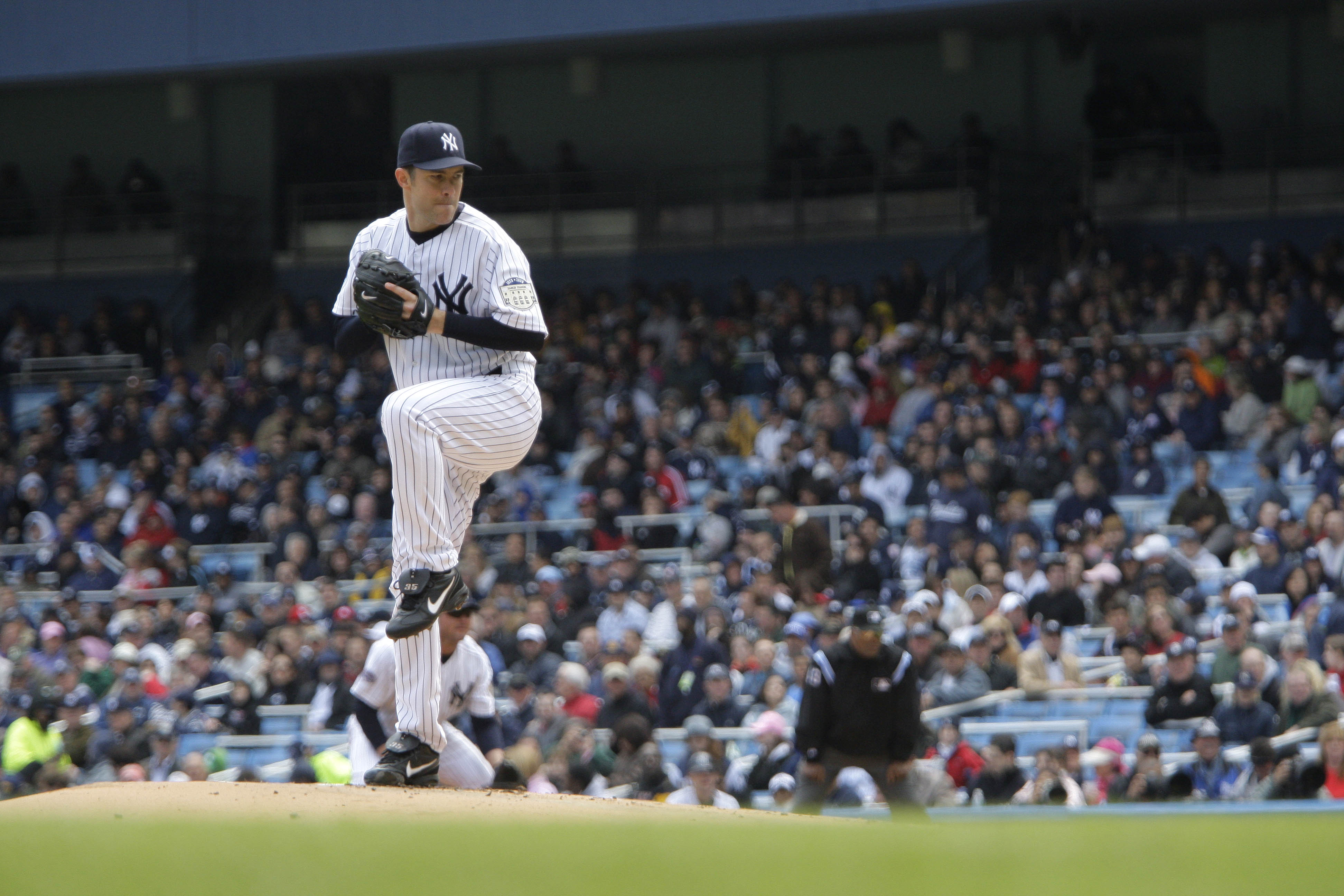
8)Mike Mussina
Mike Mussina probably never dazzled anyone over his 18 year big league career. He wasn’t the most dominant, didn’t really blow gas past batters or have that one pitch that no one could hit(although his knuckle curve was a nice little out pitch when he needed it). But more than anything Mussina was consistent and stayed that way for the entire span of his career. In fact if you didn’t know better you would think Mussina was a ninja with the way his numbers jump up on you:
Doing some HoF research. Mike Mussina is 19th all-time in Ks and his carer WAR was 83.0. Pedro Martinez’s was 84.0.
So here are just a few of the numbers Mussina compiled during his (what should be) Hall of Fame career: 5 time All-Star, 6 Top 5 finishes in American League Cy Young voting, 7 time Gold Glove winner, 57th all-time in career WAR(24th all-time for pitchers), 19th all-time career strikeouts(2813), 89th all-time career ERA+(123), and 270 career wins. Mussina also pitched a large chunk of his career during the ‘Steroid Era’ and the two ballparks he called home during his career(Camden Yards and Yankee Stadium) were both hitters parks. I’ve always considered ‘Moose’ the right-handed equivalent of Tom Glavine, a guy who wouldn’t blow you away but put up solid numbers year after year. Last year was Mussina’s first year on the BBWAA ballot and he compiled 20.3% of the vote, which I have to believe will go up this year. He was one I had to leave off last year but with the extra votes this year it was easy to add him to the mix. If you want flashy, Mussina isn’t your guy. But if you want a top of the rotation starter who you can rely on year after year for quality starts and quality innings, Mussina was a lock. Eighteen years of that quality should also mean he is a lock–for the Hall of Fame.
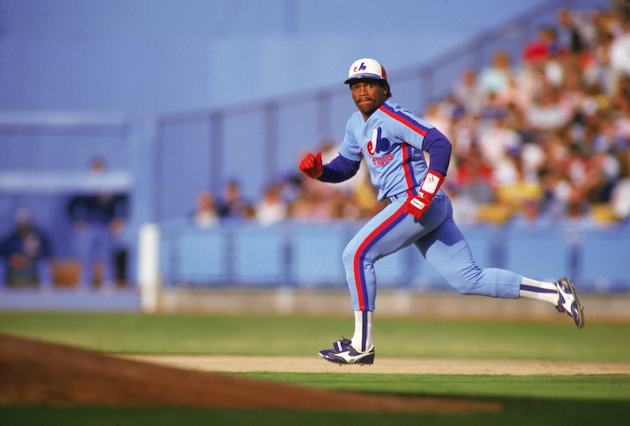
9) Tim Raines
Tim Raines might be one of the most undervalued players on this list but he shouldn’t be. It took me awhile, but within the last few years I have come around on my thinking when it comes to Raines and where his true place in the game should be. The good thing is that I am not alone, as his numbers have steadily increased until this past year, when he dropped from a high of 52.2% to 46.1%, probably mostly due to the gluttony of players on the list and not enough spots for all the deserving players. There are so many reasons to vote for Raines(and I state my case in the link earlier) but to NOT vote for him because he wasn’t Rickey Henderson(who just happened to play at the same time as ‘Rock’) is the equivalent of not voting for a hitter because “he wasn’t Ted Williams” I mean, being the 2nd best leadoff hitter EVER should count for something:
And if "Tim Raines wasn’t Rickey Henderson" is a reason for keeping a guy out, the Hall of Fame has, what, five guys in it?
Luckily it appears a bump could be in order for Raines and with the possibility of 5 players getting in this year it could free up votes for future years. It might take a few more years, but hopefully the #RainesForHOF is not in vain.
10) Curt Schilling
Just how much difference does a player’s postseason success factor into a Hall of Fame vote? In the case of Curt Schilling it matters a lot. In fact I would say without his playoff numbers Schilling probably wouldn’t get into the Hall. But when you add that to the mix, his true greatness shines through. A 2.23 ERA, .846 winning %, and a WHIP of .968(plus one bloody sock), all over 133 innings pitched in October shows just what kind of mettle Schilling really had. In fact, just go look at his postseason stats for 2001; ridiculous! When you then add in the regular season numbers it becomes much more obvious:
Curt Schilling is most likely a HOFer: 127 ERA+, 1.13 WHIP, 3.46 ERA…2.23 ERA & 0.96 WHIP in 133 postseason innings pic.twitter.com/1WPKvLP0WG
Schilling was a 6 time All-Star, 1993 NLCS MVP, 2001 World Series MVP, 4 times was in the Top 5 of the Cy Young award voting, 62nd all-time in career WAR(26th for pitchers), 15th all-time in career strikeouts(3116), and 47th all-time in career ERA+(127). All this from a guy who floundered in the majors until he was 25 in 1992 with the Phillies. Schilling the person might not be a guy who we would agree with on a regular basis(and definitely don’t argue evolution with him) but none of that matters when it comes to Hall of Fame voting. Schilling was a front line starter in the big leagues for 15 years and has the numbers to prove it. That is ‘Hall Worthy’ if I have ever seen it.
11) John Smoltz
In the 1990’s there was no better rotation than the Atlanta Braves three-headed attack of Greg Maddux, Tom Glavine and John Smoltz. Smoltz is eligible for the first time this year and he looks to be joining his former teammates in Cooperstown. Very few pitchers have done what Smoltz did in his career, be both a top notch starter and closer. In fact the only other pitcher I can think of that was able to do what Smoltz did was Dennis Eckersley and we know how he turned out. But there appears to be some writers and journalists who don’t believe Smoltz should get into the Hall on the first ballot. Ben Lindbergh wrote a great piece for Grantland on just this subject, and delves into not only Smoltz’s candidacy but also those of Mussina and Schilling. But near the end of the article Lindbergh points out something that should really be heavily taken into consideration when it comes to whether someone should vote for him:
While Schilling, Mussina, and Smoltz were all great starters, though, Smoltz’s story has a hook: As manyvotersmentioned, he did something unprecedented, becoming the first pitcher to win 200 games and save 150 more. And while he didn’t come close to the magic milestone of 300 wins, 200 plus 150 equals 350, which is greater than 300. That’s the kind of math that even the most WAR-averse voters don’t mind.
Smoltz accumulated 213 wins and 154 saves, which is quite the accomplishment for any pitcher. Add in a 2.67 ERA, .789 winning % in the postseason, 1996 Cy Young award winner(2 other top 5 finishes), 8 time All-Star, 1992 NLCS MVP, 66.5 career WAR(39th career for pitchers, 44th all-time in career K/9(7.992), and 16th all-time in career strikeouts(3084) and you have a nice resume when looking for induction. It’s easy to sit here and say that Smoltz wasn’t as good as former teammates Maddux and Glavine, but who was? It certainly doesn’t take away from a career that is certainly ‘Hall Worthy’.
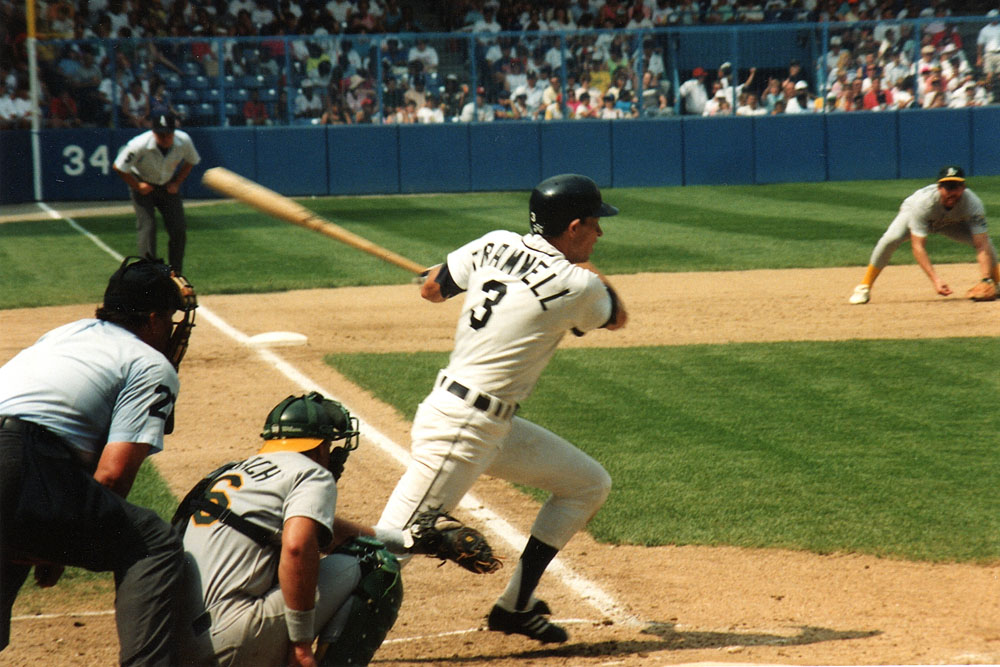
12) Alan Trammell
It took me a long time(almost too long) but after really studying his case, I believe Alan Trammell is a Hall of Famer. Trammell case has probably been hurt for a number of reasons. Trammell’s offensive numbers don’t pop out at you and he never reached any of the big milestones that voters look for when it comes time to fill out a ballot. The argument for Trammell though outweighs a lot of the negatives; Trammell has a career WAR of 70.4, which makes him 94th all-time and 63rd amongst position players. To go a step further, Trammell has a career dWAR of 22.0, which places him 34th all-time. Trammell was solid with the bat, winning three Silver Slugger awards and in 1987 probably should have won the American League MVP(which went to George Bell of Toronto). Trammell was a 6 time All-Star, the 1984 World Series MVP, a 4 time Gold Glove winner during a period where he competed with Cal Ripken Jr. for the award, and walked more than he struck out in 7 different seasons(and had the same amount of both in 2 other seasons). Trammell is the batter equivalent of Mike Mussina; he never blew you away with anything but he was so consistent for a long period of time that what he put together was a Hall of Fame career. Still aren’t convinced? Joe Posnanski has made the argument that if you are of the belief that Derek Jeter is a Hall of Famer, then you should compare his numbers with Trammell’s. Joe points out just how close Jeter and Trammell were as players, with Jeter holding a slight edge over Alan offensively, while Trammell was easily a better defender. If Ozzie Smith can get into the Hall on his defense, and Jeter will get in on his offense(and leadership; you know that will be brought up) then Trammell deserves to be in for being the better all-around player. The sad part is that this will be Trammell’s 14th year on the ballot, which means he gets only one more shot after this year and then his case will be handed over to the Veteran’s Committee. I wish I had really studied his case sooner, not that my lone vote would mean much. If anything I wouldn’t have underrated Trammell as much as I did, not realizing he was way better than the memory remembers. Now about his double play partner, Lou Whitaker…
So there you go, my 2015 IBWAA Hall of Fame ballot. I had also given a decent amount of consideration to Jeff Kent, Gary Sheffield and Mark McGwire but alas I wasn’t quite on board yet for either of those three. What I can say is that it is never too late to judge each case and compare and contrast with other cases in the past. Sometimes our memory fails us and doesn’t paint the entire picture we need to fairly assess the situation. I can only hope the logjam that has accumulated the last few years eventually gets weeded out and some deserving candidates get the call they deserve. I can honestly say I feel as if I put together a list of players worthy of the greatest of all honors, a plaque at Cooperstown. It’s not a church folks; it’s a museum that tells us the history of the game we love. These 12 players help tell that story, blemishes and all.
“Another great move from the Royals. They were able to procure an outfielder with some upside, athletic and for the most part on a solid contract. Good work by Dayton”
“The Royals went the unexpected DH route but brought in a slugger with some power coming off a solid season”
These are quotes I wanted to say during this winter, hoping that maybe the great postseason run the Royals accomplished this year might have changed Moore’s mind on some things. More than anything I wanted to like what GMDM has done this winter and feel confident(or at least moderately confident) headed into the 2015 season. Instead he has made two offensive signings that made me shake my head so violently that even more is loose upstairs then before and a rotation acquisition that I don’t hate.
It all started last week with the signing of Kendrys Morales. I didn’t like the move on many fronts, but also took the stance of hoping that his awful 2014 season was more a byproduct of missing Spring Training and the first two months of the season than him beginning to regress(which is my belief). Then Moore went out and acquired long coveted outfielder Alex Rios to a one year, $11mm contract. I’ve never been a big fan of Rios, mainly for the fact that he is the ultimate streaky player, a player who has the talent but basically decides from year to year just how much of said talent he will actually use. Rios lacks consistency and his 2014 season was probably the sign of a player who’s best days are in the rearview mirror. Rios did hit lefties pretty solid in 2014, but there was very little power (4 home runs total, only 1 in the bandbox known as Globe Life Park in Arlington)to speak of. Add in that Rios will turn 34 in February and was a below average defender last season(although he might be a tad better defensively than Nori Aoki). All this made me not even want to write about Rios and left me with more questions about the Royals going into next year than answers. Yes, these guys will be complimentary players to the Hosmer’s and Gordon’s, but I felt the whole point to this offseason was to improve the offense and I wasn’t for sure that had been accomplished. Then it hit me.
The reason I don’t like most of Dayton’s moves on the offensive front, and why I seem to always be at conflict with his game plan is simple; I value different strengths in batters than Moore. I have known this for a long time, but these signings really glared the light at the differences between what I value compared to him. I prefer hitters that tend to walk more, are more patient and don’t strikeout much. Moore prefers free-swingers who make lots of contact. Rios and Morales fit this mold, although not quite to the extreme as some of the current Royals batters. Since this is the case, more times than not I am not going to like the players he is on the hunt for. It’s a bitter conflict, as I can’t quit being a Royals fan(hey, 30 years later isn’t the time to jump ship) but I also am just not on the same page with the thinking of this Kansas City front office. Yes, I am just a fan and they have major league baseball jobs(no jokes please), but I would like to think I am not a complete dummy when it comes to evaluating talent and noticing player patterns that don’t just change overnight.
I am smart enough to know that Kansas City isn’t going to be able to go out and match dollars with the likes of a Boston or Los Angeles, but I also think the Royals could be smarter about how they evaluate talent. There is nothing wrong with creativity by a front office; it has helped Billy Beane in Oakland for years now. The Rios and Morales signings felt like the opposite of creative; it felt like two signings that were taken by an old, tattered 1983 book that felt outdated 20 years ago. The Royals are hoping(counting) on these two to have bounce back seasons, when both are at an age where regression has begun to creep in. I wouldn’t expect either guy to put up career best numbers, but at this point in their careers I’m not even for sure they can accumulate average numbers. I would have preferred the Royals gone after an outfielder like Corey Hart or Colby Rasmus than the likes of Rios and Morales. Hell, I was more on the bandwagon of Kansas City going out and making a trade. The Royals are a team that has to spend wisely on the free agent market and it just seems that spending $17.5mm on two bounce back candidates wasn’t the best direction for a team hoping to make it back to the playoffs in 2015.
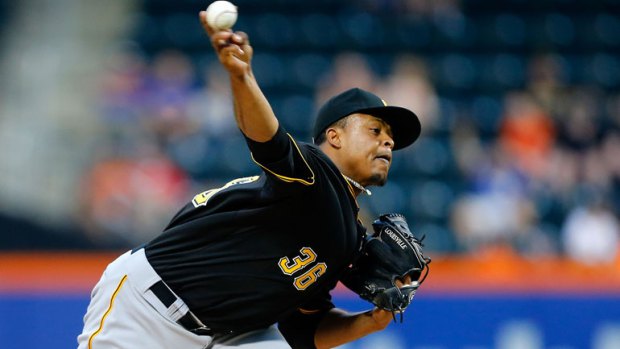
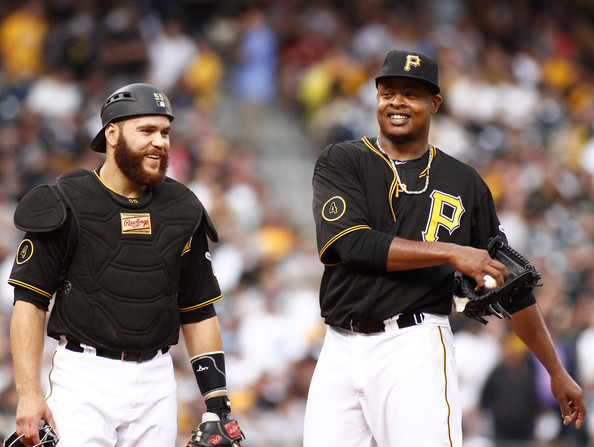
That leads to Wednesday’s announcement that Kansas City had signed Edinson Volquez to a 2 year, $20mm contract. Volquez is essentially James Shields replacement in the rotation and is coming off a solid 2014 campaign for the Pittsburgh Pirates. There are some concerns when it comes to Volquez, most notably his penchant to giving up the walk and a declining strikeout rate. The strikeout rate doesn’t worry me as much, as he has worked on pitching more to contact and relying on the defense, which will be a plus in Kansas City. Sure, Volquez isn’t at the level of a James Shields(although I personally feel that decline is right on Big Game James’ doorsteps) but if a Danny Duffy or Yordano Ventura bump up in the rotation then all Volquez has to do is throw 6 innings and give up an average of 2-3 runs on a consistent basis. I personally like this move and feel with the way the market was this was one of Dayton’s better bets. This goes to show that as much as my thinking clashes with Moore when it comes to hitting, I tend to value a lot of the same strengths in pitchers, especially those that are middle rotation starters.
So out of the three big offseason acquisitions the Royals have made this winter(this week?) I am on board with at least one of them. In a perfect world every move is a positive and elevates this team even more in 2015. Unfortunately we don’t live in a perfect world and just as I don’t trust anyone who hates every move a general manager makes, I also don’t trust the person who loves every move that is made. Free agency is a gamble and Dayton has rolled the dice with the Royals for this upcoming season. Hopefully he was more right than wrong and we can experience another magical October. My skepticism does remind me though that I felt this same way in September and we know what happened after that. So was it luck or a careful, drawn out plan? Only time will tell us.
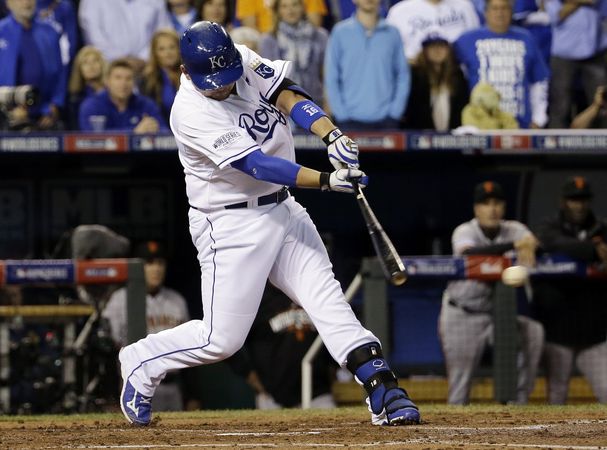
Royals fans have been clamoring for General Manager Dayton Moore to do something(anything!) this offseason and it looks like he has done just that, signing Kendrys Morales to a 2 year, $17mm deal with incentives. The deal is for less than what former Royal Billy Butler got in Oakland but it also raises some questions about the Royals going forward.
The obvious question is whether Morales’ 2014 season was an aberration or the beginning of a decline. Morales was late to sign with a team last season, waiting until June 8th to sign with Minnesota, as teams were afraid to give up a first round compensatory pick to sign him. Morales struggled with the Twins, putting up a slash line of .234/.259/.325 in 39 games. Morales was traded back to his former team, Seattle, in July and didn’t do much better, hitting .207/.285/.347 in 59 games. It’s hard to tell if Morales struggled because of his skipping Spring Training and not playing until June or it was the beginning of a decline. Just one year earlier in Seattle he put up a .277/.336/.449 line, hitting 23 bombs and an OPS + of 123. If 2014 was a blip on the radar than this looks like a solid deal for Kansas City. But there are concerns this is more of a decline, as Morales is turning 32 this year and his ISO(Isolated Power, which measures a batters raw power; the final result measures how many extra bases a player averages per at bat) has declined every year since his 2010 broken ankle that cost him almost two years of baseball. There is a good chance that last year’s numbers for Morales was purely him sitting out for the first two months of the season and not participating in Spring Training to work out any rust or kinks. Or it was the beginning of a downward turn in production.
Just bringing Morales in posts a numbers of interesting questions, including this one: if the Royals wanted to go to a floating DH, why would you let your current DH leave(Butler) just to sign another DH? We’ve heard for the last two years that the team wanted to venture into an area that alot of American League teams are already implementing, which is not having a set DH and rotating players around that spot. The reasoning for Kansas City was to make the team more athletic while giving some of their players(Perez, Gordon, etc.) some time off in the field. Like I said, this has been talked about for over two years now and was highly discussed this winter during negotations with Butler. Why the team would turn 180 degrees and change their stance is puzzling to say the least. There are some that think this was done in a way to get Butler out of town, but I’m not so much of a conspiracy theorist to believe that is actually the truth. I do believe the market plays a big part in this decision, as the team has been on the prowl for an outfield bat this offseason. It become apparent quickly that the Royals were going to either offer an outfielder more money than they were initially willing to or scrounge the trade market to find this bat, and it appears they didn’t like that market either. Also heavily playing in this discussion is Moore’s inability to want to part with one of three highly regarded bullpen arms(Greg Holland, Wade Davis, Kelvin Herrera). I felt this would be the smarter way to go this winter, but Dayton must feel they are just too valuable to the success of this Royals team to pull that trigger. With that said, this obviously left the Royals with very few options and Morales must have looked like the best choice.
The question is going to get asked, so lets answer it; if the Royals are not rotating the DH spot now, wouldn’t a younger Billy Butler be the better option for Kansas City? This is probably one of the most loaded questions a Royals fan can ask, but I will attempt to answer it. In theory it would appear Butler would be the better option; he is younger, has more upside and the Royals would already know what they are getting. But with Billy there is also the question of whether he is on a decline as well. His 2013 wasn’t spectacular, but 2014 was easily Butler’s worst major league season and his power has really gone M.I.A. the last two years. You could make the argument that Morales’ chances of producing more power are higher, and and he has a more consisent history of proven power. I would like to think Butler would have been the better option over Morales, even if the Royals had just picked up Butler’s $12mm option for 2015. But it might just be an argument of one declining player over the other.
How you feel about this signing is probably hindered on whether or not you feel 2014 was an anamoly for Morales. If it was, this would appear to be a good acquisition by Dayton and will help the Royals offense in 2015. I tend to sit in the camp that believes Morales is on the decline and the numbers we saw from him last year are probably close to what we will see next year. I wasn’t the biggest fan of the rotating DH scenario, but I easily preferred it over this. It appears the flexibility on this team has gone down again, barring another move. I’m hoping I am wrong about Morales and we see the guy who has a major offensive force for the Angels and Mariners in the past. I fear instead the Royals just fit themselves with a two year albatross around their neck that will weigh this team down.
Earlier this week the Royals re-signed Luke Hochevar to a two year deal with a mutual option for a third. Hochevar missed all of 2014, as he went through the dreaded(and now normal) Tommy John surgery but looks to be on track to be ready to start 2015. Hochevar is planning to start throwing off a mound later this month to get ready for the next season and appears to be headed back to the bullpen where he garnered success back in 2013. That might not be 100% guaranteed, as Hochevar has bonuses in his contract that can earn him $500K worth of incentives for non-closing relief work, $500K of incentives for closing work and up to $2MM for starting. Yes, bonuses for Hochevar starting, where he was less than average over his career and made me stamp him onto my list of most hated Royals. But that was before 2013 and before he showed value out of the bullpen. Once the Hochevar signing became official, a thought kept popping into my head; is this a move done so the Royals can trade either Greg Holland or Wade Davis?
The Royals went into this offseason needing two major things-a new right fielder and another starting pitcher. The market for free agent outfielders has diminished heavily this winter and leaves the team in a position where a trade seems like a better option for the team. The Royals aren’t going to majorly tear apart the defending American League Champions and only have a few players that could be traded and net them some value without ripping the fabric of the team apart. The biggest position of depth is the bullpen, with the “cyborgs” of Holland, Davis and Kelvin Herrera leading the team throughout the playoffs and showing baseball what a dominant pen can do for a team in the postseason. With that said, it would appear that closer Greg Holland has the most value and is also the most expensive. He is currently making $4.675MM and that number looks to rise this winter in arbitration. MLBTradeRumors.com predicts Holland could see a raise of another $4.62MM, which would push his salary close to $10MM for 2015. I love “Dirty South” as much as the next Royals fan but I also realize that relievers are the easiest position to replace and closers normally have a small shelf life. It just seems to make sense to trade Holland now while he is at his highest value and net the biggest return you can from a trade. The Royals were burned from staying loyal to a closer in the very recent past, as Kansas City stuck with Joakim Soria, who missed the 2012 season due to his second Tommy John surgery. Soria would leave after that season, signing with the Rangers and leaving the Royals without anything in return. So it makes sense to see just what could be had by dealing Holland this winter.
So if the Hochevar signing was made so the team could trade Holland for an outfielder, how would that reshape the bullpen? It would appear if that happened Wade Davis would move up from setup man to closer. Davis had a ridiculous 2014 season, one that made him one of the best relievers in baseball. His season was so ridiculous that Davis didn’t give up but 5 extra base hits the whole season, none in the first half of the season and gave up NO home runs. Not even one. To say Davis could probably easily slide into the closers role sure seems like an understatement and almost seems like the smart thing to do if Holland is traded. Herrera could slide into the setup role while Hochevar and possibly Jason Frasor could fill in during the 6th and 7th innings. There is no way to tell if this group would put up the same numbers that “HDH” put up in 2014, but the belief is it wouldn’t be too far off.
It could just as easily be Wade Davis who gets traded, as there has been interest for both him and Holland. But the smarter play at this point is trading Holland, if for no other reason than to give the Royals more payroll flexibility. It’s no big secret that Kansas City doesn’t have one of the higher payrolls in the sport, but it is one that has steadily increased year by year and looks to reach the $100MM threshold for the upcoming 2015 season. A lot of this money is already earmarked for players already with the team and according to Jerry Crasnick of ESPN, the team really only has enough money for one of their needs, not both:
#Royals need a starter and an OF, but only have enough $ to invest significantly in one. Might have to bargain shop for the other.
With that said, it appears a deal where they can shed some hefty payroll AND acquire one of their needs would be the wise choice to do. Kansas City has already picked up the $7MM option on Davis, and with Holland estimated to be making around $9.3MM it would appear Holland would give them more flexibility. Either option would help the team, but with the salary that would be freed up and with Holland appearing to bring the Royals more value, it would be wise at this point to trade Holland, not Davis.
The hard part of this whole thing is the fact that a trade even has to happen at all. What Herrera, Davis and Holland accomplished this year was magical and more than likely won’t be duplicated any time soon. It would be great to keep this trio together for the forseeable future but baseball’s landscape makes it hard to do that when you are a small market team. At some point the money is just too much and it becomes apparent that the money could be used in other, more needed areas. The Royals are at that point and with Hochevar and Frasor back in the fold it appears the team has more than enough depth to weather the storm. If Kansas City is wanting to stay as a contender in 2015 they are going to need at least one more solid bat and another starting pitcher, and that can’t be accomplished at the team’s current payroll structure. That means someone has to go, and it looks like one of the team’s elite relievers will have to be dangled for a bat. It’s not the fun part about baseball, but it is a necessary part. The only question going forward is whether Dayton Moore will pull the trigger or not. It’s not the popular move to make, but it does appear to be the intelligent one.
The 2014 Major League Baseball season has come to an end, which also means that all ballots have been turned in to decide the winners in the awards to be announced this week. I was fortunate to turn in my first ballot as a member of the IBWAA, the Internet Baseball Writers Association of America, this year and realized a few things. One, this isn’t as easy as one thinks it is. I spent a lot of time thinking about who I really felt should win these awards and who truly should be honored. I also realized that it is MY vote, and though I am positive some will disagree with it, it is just one man’s opinion. I also should stress this: I turned in my ballot about two weeks before the end of the season. In hindsight, I probably should have waited, but that is a lesson learned and will prepare better for 2015. So without any further ado, here are my winners for the 2014 season…
American League MVP: Alex Gordon, Kansas City
We can probably all agree that Mike Trout of the Los Angeles Angels had the best numbers for a player in the American League this year. I don’t argue that, nor am I trying to take that away from him. But my vote was based more on who was more valuable to his team this year in the league, and in my opinion that man is Alex Gordon. Not too long ago I made Gordon’s case for MVP, as I felt he shouldn’t be overlooked when it came time for the voting. I know I am a bit biased, if for no other reason than the fact that I watch the large majority of Royals games during the season. The thing about Gordon is his numbers don’t tell the whole story; he is the leader of this Royals team in so many facets of the game. Obviously his defense is of another caliber, as most know. His WAR numbers get a nice bump from his defensive metrics, as he finished the year 7th in the AL in bWAR with 6.6 and 5th in fWAR with 6.1. You could also add in the 27 defensive runs he saved this year on defense, 1st in the league with Josh Donaldson far behind in 2nd place with 20 DRS. Gordon is also an excellent base runner, and was most valuable when the Royals needed him to be. Gordon basically carried the team on his back in August, a month where the Royals made one of their biggest pushes for a playoff spot. Gordon had a slash line of .292/.356/.585 with 9 home runs and 16 RBI’s. Alex was what the Royals needed when they needed it this year to help propel them to the playoffs. This Royals team doesn’t go on the run they went on in the playoffs if not for Gordon being a leader during the regular season. In fact, without him this Royals team doesn’t even get to October. For that, my most valuable player vote goes to Alex Gordon.
National League MVP & Cy Young: Clayton Kershaw, Los Angeles
What else can be said about Clayton Kershaw’s season that hasn’t already been said? Kershaw had a season for the ages, one that was so good that the comparison’s toward all-time great Sandy Koufax don’t really feel far-fetched anymore. Kershaw lead the league in Wins(if you like that sort of thing), Win-Loss Percentage, ERA, Complete Games, ERA+, FIP, WHIP, Strikeouts per 9 inn., Strikeout to Walk Ratio and was an All-Star as well. Oh, and he threw his first career no-hitter, a game so dominant that only one other pitcher(Kerry Wood) has thrown a better game, and that was just a piddly 20-strikeout game. All this while missing the entire month of April(after throwing the season opener in Australia)! Kershaw was so dominate this season that I also felt like he was the MVP of the National League, which some folks in baseball(hello, Tommy Lasorda) feel a pitcher shouldn’t win the award for Most Valuable Player. But when a pitcher has a season like this (and no other major candidate really sticks out) it throws that pitcher into the MVP conversation. I had seriously considered both Andrew McCutchen of Pittsburgh and Giancarlo Stanton of Miami for the award, but alas I felt Kershaw was more valuable to the Dodgers success than either of those two were for their teams. Kershaw winning MVP isn’t like Willie Hernandez winning American League MVP back in 1984; Kershaw is not only an elite pitcher at the moment but if he continues on the path he is going he could be an all-time great. So as preposterous as some believe a pitcher winning MVP is, just remember it in the proper context; Clayton Kershaw is the best pitcher in baseball and it isn’t even close.
American League Cy Young: Felix Hernandez, Seattle
Out of all the votes I had to place, this was easily the toughest decision to make. It came down to Hernandez and Corey Kluber of Cleveland and honestly, a pick either way didn’t feel like a bad one. As someone who watches close to every Royals game during the season I had seen Kluber several times and saw just how dominant he was for the Indians this year and in some ways that almost swayed my vote. Obviously in a close vote you compare numbers and once again, they were pretty damn even. David Schoenfield goes into great detail about just how close this race was and why really neither pitcher was a bad choice. My only hope is no one voted for Kluber just based off of win totals; that would just seem silly. I think the biggest argument for Hernandez(at least in my eyes) was his streak of 16 starts of at least 7 innings giving up 2 runs or less which he held this year until August 17th. The previous mark was set all the way back in 1971 by Tom Seaver as he set the mark of 13 starts. In this day in age, where most starters have a rough time going more than 6 innings a start and where teams employ lockdown bullpens as part of their strategy, the fact a starting pitcher could accomplish this feat is borderline amazing. The fact that Hernandez was able to accomplish this really swayed my vote and was enough to warrant his second Cy Young award. The real point of this is that if I would have gone with Kluber it wouldn’t have been a bad choice either; there was no bad choices. Just two pitchers who had excellent seasons and both deserved consideration for this award.
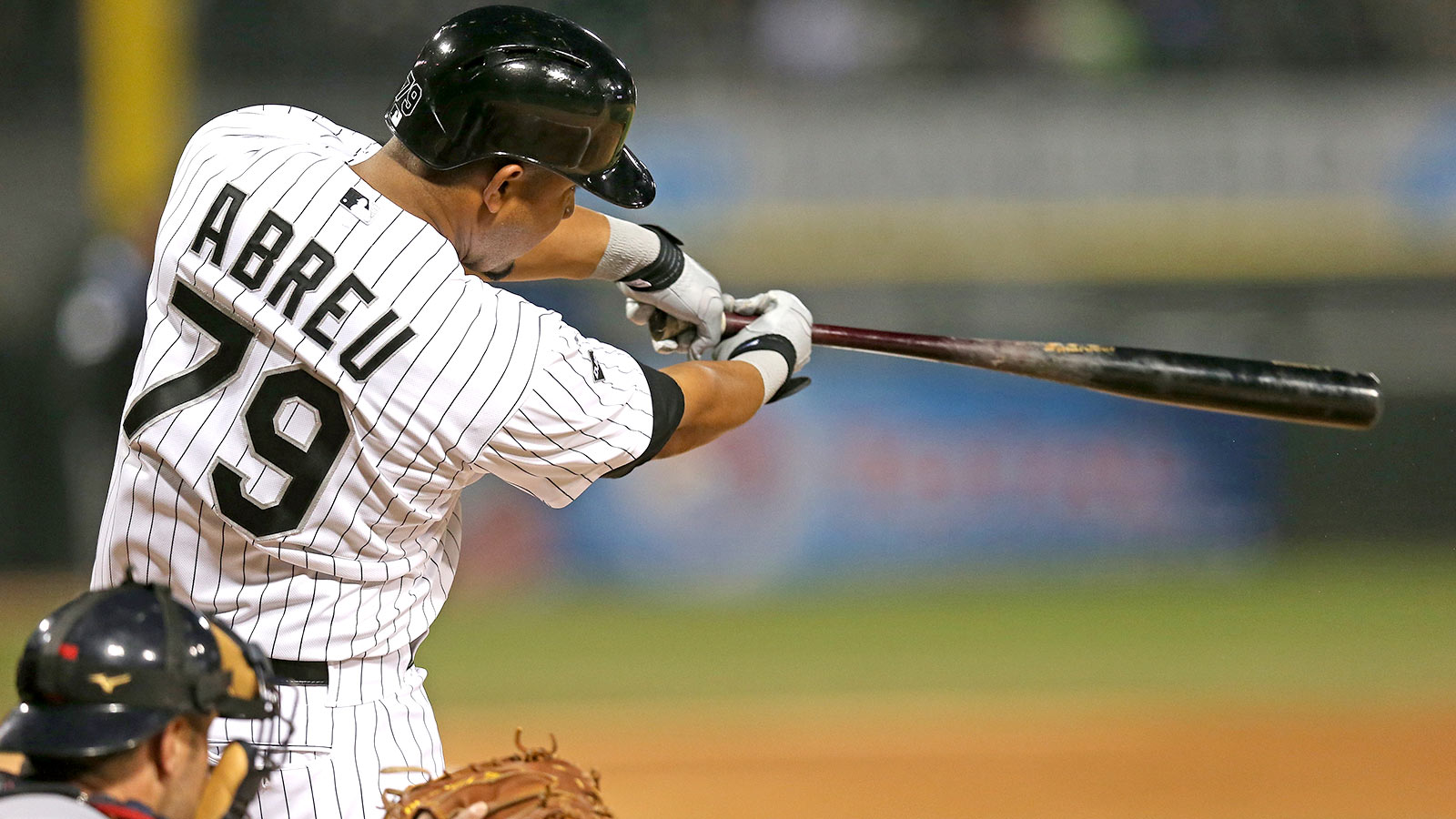
American League Rookie of the Year: Jose Abreu, Chicago
This was about as easy a choice as possible. From almost day one Abreu showed he was the real deal, which is never a certainty with any talent from Cuba. But Abreu made sure it was known early he was as advertised, hitting 29 home runs, a slash line of .292/.342/.630 and an sOPS+ of 169 in the first half of the season. His power numbers went down in the second half, hitting only 7 home runs while producing a slugging percentage of .513 and raising his batting average and sOPS+. I’m sure the longer season wore on Abreu, but all in all he put in a rookie season that should be praised for years to come. It’s a bit unfortunate that Abreu ran away with this award, as the American League put together a nice crop of rookies in 2014, from New York Yankees Masahiro Tanaka and Dellin Bettances to Kansas City’s flame-throwing hurler Yordano Ventura. All had really solid opening campaigns but none matched Abreu who should be a solid bat in Chicago’s batting order for years to come.
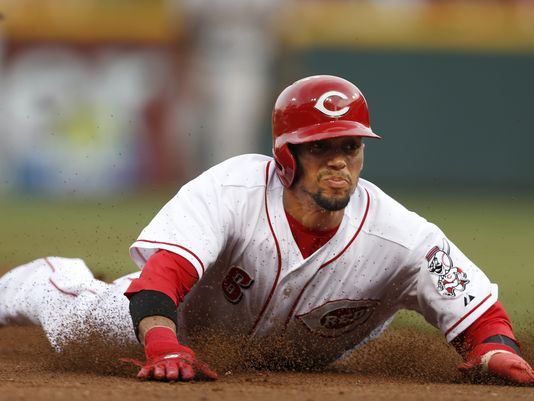
National League Rookie of the Year: Billy Hamilton, Cincinnati
This race was much closer than it’s AL counterpart, as it came down to New York Mets pitcher Jacob DeGrom and Cincinnati’s Billy Hamilton. Honestly, an argument for either rookie is valid and a part of me almost voted for DeGrom. But I liked all the different area’s of the game that Hamilton helped the Reds this year. Everyone knows of Hamilton’s speed, he of the 56 steals this year. But he also produced 200 total bases only grounded into 1 double play this year and 39 extra bases. There was a small downside to his year; Hamilton struck out a ridiculous amount for a top of the order guy, 117 times, and was caught stealing 23 times. Both of these facets will need to be improved upon in 2015 for him elevate his game. Defensively Hamilton was more than solid; 14 defensive runs saved in 2014, 10 assists and an 1.8 dWAR. Overall a more than solid rookie campaign for Billy Hamilton(and likewise for DeGrom) and for the Reds sake(especially if they want to contend in 2015) hopefully he can grow on it.
American League Manager of the Year: Bob Melvin, Oakland
I mentioned earlier that I should have waited and locked in my votes during the last week of the season and this selection is a big reason why. Do I think Bob Melvin did a fabulous job managing the A’s in 2014? Of course. This was a team that was one of the elite in baseball for a large chunk of the season, a team of no superstars, compiled together and platooned–yet they still reached the playoffs. But just barely and Oakland’s second half collapse almost cost them that postseason spot, one they didn’t clinch until the last weekend and left them in Kansas City for the one game “battle to the death” Wild Card game. For that reason I feel like I should have waited to vote, as Buck Showalter deserved high praise for this honor and very well might have been my vote. Hell, throw Mike Scioscia’s hat into this argument as well, as the Angels came from behind to not only win the American League West but put together the best record in the league. Lesson learned by me, but I still think Melvin should get a ton of credit. No way does Oakland even sniff the playoffs if an average manager is in charge of this team. Melvin maneuvered and coddled this roster and got top notch performance out of his team. Something has to be said for being able to get the most out of the talent you have, especially when your talent doesn’t always match up with the best teams in baseball.
National League Manager of the Year: Clint Hurdle, Pittsburgh
The easy thing is to say Hurdle deserved this honor more in 2013. That year he guided Pittsburgh to their first playoff spot in over 20 years and helped the Pirates slay some demons. But for all the love Hurdle got in 2013, he deserves even more for his managerial work in 2014. Hurdle helped the Pirates reach the playoffs again this past season and did it without their ace from 2013(A.J. Burnett), their closer fizzled out and was eventually traded(Jason Grilli), they lost their star(Andrew McCutchen) for a few weeks and lost their future ace(Gerrit Cole) multiple times to the disabled list. Despite all of this the Pirates made back to back appearances into the postseason and although that only lasted one game(thanks to Brandon Crawford and Madison Bumgarner) it just showed the great job Hurdle did as manager this season. Honorable mention should go out to both Matt Williams of Washington and Mike Redmond of Miami. Both did a great job with their team this past year and that was not lost on me. It just felt like Hurdle accomplished the insurmountable and continued to show that he has been one of the best Pittsburgh acquisitions the last few years.
So there you go, my picks for the 2014 IBWAA end of season awards. This was a great learning experience and makes me even more pumped for my next ballot, the upcoming Hall of Fame vote. Voting seems like an easy chore from the outside looking in, yet there is a decent amount of pressure if you take them seriously. I have a feeling that the next vote will go a bit smoother. The great thing about the voting process is that they inspire endless debate. One man’s vote is another man’s worst nightmare…that was mainly meant for anyone who voted Ned Yost ‘Manager of the Year’. So you might not agree with my vote’s, just know that can go both ways. It is all just a matter of opinion at the end of the day.
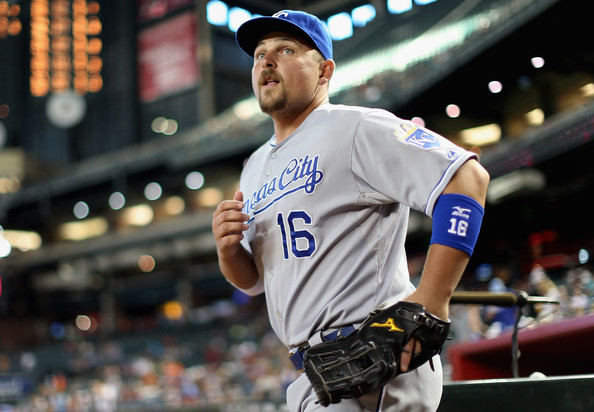
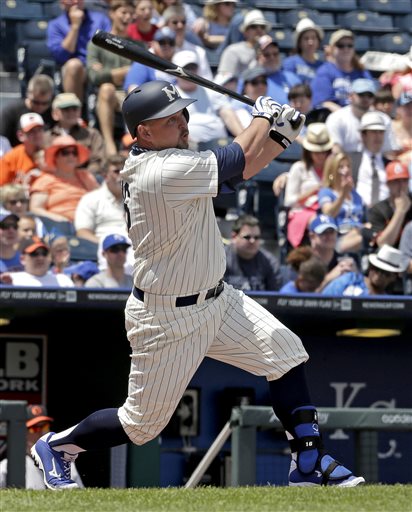
It was inevitable that Billy Butler would be leaving Kansas City this year, the only question was where he would be landing. We got our answer Tuesday night as it was announced that Butler was headed to the west coast to join the Oakland A’s, agreeing to a 3 year/30 million dollar contract. I have seen a lot of varying opinions on the signing and it’s affect on both Kansas City and Oakland, so let’s look at the fallout from Butler’s signing.
Let’s start with it’s affect on Oakland. They get the right handed bat they wanted for the middle of the order, and they plan on playing Butler at both DH and first base. Where will he bat in the order?
Melvin already spoke to Butler, told him he'll likely hit cleanup vs. lefties. Facing righties, Melvin sees Donaldson-Moss-Butler as 3-4-5.
So there you go. Billy had been wanting to play some more first base the last few years and that just wasn’t going to happen in Kansas City, unless Eric Hosmer would injure himself again. Oakland also has a number of run producers in the middle of their offense, guys like Josh Donaldson and Brandon Moss, so Butler won’t be asked to be the main cog in the offensive machine. A lot of times in Kansas City Butler was asked to be “the guy”, which just wasn’t realistic. This will give Billy the chance to perform with a little less pressure than he had for the Royals. For all we know, Oakland’s hitting coaches Darren Bush and Marcus Jensen will be able to unlock some of the power that has been missing from Butler’s bat the last two seasons.
The affect on the Royals will be quite pronounced, as the team will finally be able to use the DH as a rotating position like they have wished for the last few seasons. This will give guys like Salvador Perez and Alex Gordon days off in the field, and even help a veteran like Omar Infante rest a day if they are experiencing minor injuries. In my mind this also means they need to sign not one, but two OF/DH types this offseason. If they are going to not only replace Butler’s numbers but also gain on them, they need more than just one bat. The honesty of this situation is that the Royals are not a great offensive force, and even to say they are “good” might be questionable. So if they are wanting to improve the offense, acquiring just one bat seems very shortsighted. Getting two bats, plus throwing in Jarrod Dyson occasionally gives them a chance to rotate players and use the DH the way they have dreamed of since 2012.
So despite seeing how this could be major plus for both teams, I’ve still heard a few fans make the comment that Billy didn’t really want to stay in Kansas City, and I just don’t believe that is true. I think Butler meant it when he said he loved Kansas City and wanted him to stay. I just don’t think Royals management was as keen about keeping him around. Andy McCullough of the Kansas City Star has done a good job of chronicling the Butler situation this offseason. Money was obviously an issue:
Moore said they shied away from a major financial committment to Butler because they wanted to "free up our resources" to improve SP, RP.
So as you can see, things weren’t as rosy and sweet between Butler and Royals management as some seem to think. Do you remember earlier in the season, when Butler’s production was coming into question while other Royals who weren’t producing(ie. Hosmer) seemed to be ignored? Or September, after Hosmer came back from injury and manager Ned Yost seemed to favor Josh Willingham at DH instead of Butler? After all this, and the expectations from fans for him to repeat his stellar 2012, it makes you wonder a bit why he would even want to come back. So the fact that he gave the Royals last chance tells me just how much Billy Butler wanted to stay a Royal:
royals had chance to match $30M/3 yrs for butler & passed. not a surprise since they didnt pick up $12.5M, 1-yr BB option
As with baseball in general, money is always an issue. It plays an issue here too, but so does playing time and years on the contract. I personally feel like Butler would have taken less money if it meant he would get the same amount of playing time and only a 2 year contract. Instead the Royals had already planned to not have a fulltime DH and weren’t willing to go more than 1 year on a new deal with Butler. Plus, let’s be honest and frank here(or Susan, if you don’t like being frank). A baseball player has a very short shelf life when it comes to active playing time and years to really make big money, since most players don’t make a bunch of money early in their career. So when a player is approaching 30 and looking for a new deal, they are just as big on years as money when it comes to guaranteed contracts. So when the A’s offered more years(3) and more money than Billy made in 2014(8 mill in ’14, 10 mill in ’15-’17) it’s hard to turn that down, especially when you are coming off of the worst year of your major league career. Plus, it seemed like Oakland wanted Butler, which I’m not so sure about when it comes to the Royals. It’s easy for any fan to sit there and say “he just wanted the money”, but in his situation, the desire to be wanted outweighs a dollar total. Like this:
Butler calls himself very loyal. Says Beane was first to contact him, showed great genuine interest: "It hit me where it mattered most."
So was this about money? Maybe a bit. But it was also about more than just money. The honest truth is if the Royals had really wanted Butler back, he would be in Royal blue. Instead he will be wearing white cleats come February:
Butler: "I think everyone on the other side has definitely liked the white cleats. I’m looking forward to wearing them."
I am like most Royals fans in that I would have liked to have seen Butler return to Kansas City. But I understand that sometimes the financial aspect of baseball makes it hard for a team(especially a small market team) to keep a player for the duration of his career. It was a great 8 years that Billy Butler and the Kansas City Royals got to share together. I know I will never forget hearing Kauffman Stadium chant Billy’s name at the 2012 Home Run Derby. There was definite love that night between the fans and Butler, as there was during Game 3 of the ALDS this October when Butler stole second base. Butler loved Kansas City and for the most part Kansas City loved him. I wish the best for Butler in Oakland and plan on cheering him when he returns to ‘The K’ in April. We still have the memories, folks. We should always remember though that nothing lasts forever, even cold November rain. The new chapter for the Royals involves no Billy Butler, as it should. Life and baseball moves on, as it always will.
On Monday the Kansas City Royals extended a qualifying offer to ace James Shields, a $15.3 million offer that assures the team will receive a compensation pick for Shields if he signs with another team before June 8th. Shields can accept the offer, but he has to by November 10th. The odds say he will not accept it, as Shields will be looking for a multi-year deal at possibly a higher rate this winter and there are many teams(Red Sox, Cubs, Angels, Yankees, etc.) who will be enticed by James’ ability to be a workhorse for any team he has been with. It appears Kansas City will make a run at Shields, as evidenced by a report back in October that the team would offer him a 5 year, $80 million deal. But would this be the best thing for the Royals? Not in my eyes.
This is not an indictment on Shields or his performance. ‘Big Games James’ did what the Royals wanted him to do; stabilize the rotation, bring leadership to the clubhouse and get Kansas City to the playoffs. Check, Check, and Check. Shields has driven the rest of his rotation mates to reach the 1,000 innings plateau the last two years and even though they didn’t reach that goal, they came close both years. He was a great influence on both Danny Duffy and Yordano Ventura, helping them keep their focus and teach them how to be aggressive on the mound but not ‘too aggressive’. As much as I cringe when people bring up ‘character guys’, Shields is one and has shown this team of young players how to win and how to handle pressure situations. I scoffed at most of this when the trade from the Rays happened, but he has done all of these things and more to get this team to the playoffs for the first time since 1985. So there is value in Shields beyond just numbers and these are things that might not even be replaced if(when) he signs elsewhere.
But is he worth the 5/80 number thrown out there, or even more than that? To me this isn’t even about the numbers as much as the years. James Shields will turn 33 in December and has logged a lot of innings on that arm. A-LOT. In fact, he has accumulated over 1900 innings during the regular season and another 59 in the postseason. He has been fairly lucky injury wise, but it is normally only a matter of time until issues start showing up. If Shields was brought back for 5 years, that means he would be 38(almost 39) by the end of that deal. Can you see him holding up that late in the deal? I can’t. In fact we are already seeing a bit of regression. Over the last few years he has been using his changeup less and less, and even this postseason was mentioned as being more of a “cutter and fastball” pitcher. This isn’t always a bad thing(some think Shields’ changeup has been overrated) but when he doesn’t have a feel for his changeup, he has trouble, as evidenced in Game 1 of the World Series. Shields is a competitor and seems like the type of pitcher who would adjust as time takes away the zip on his fastball and the dip in his changeup. But it’s more probable that Shields will continue to regress and not be even close to the pitcher he is today by the end of a 5 year deal.
That brings me to a bigger concern, that being the sentimental aspect of this whole scenario. Look, we all loved the run the Royals went on in October. For many it brought out the little kid in us and reminded every one that even though baseball can take you down deep in the depths, it can also lift you to heights you would never imagine possible. But now that the season has ended it’s time to come back down to earth and look at this team from a realistic viewpoint. That means no bringing players back just because they were a part of the “American League Champion Kansas City Royals” and instead looking at the situation on whether that player(s) is a good fit for the team in not only 2015 but beyond. Does 5 years of James Shields really look good for this team? I love the guy as much as the next Royals fan but I also realize that regression is on his doorstep and it probably won’t be pretty. The sentimental factor especially comes into play with Billy Butler, who has been a part of this organization(easy for me to say) since he was drafted by Kansas City in 2004. Butler’s option for 2015 was declined by Kansas City, as his salary would have risen from $8 million a year to $12 million. But there are other factors that the team shouldn’t bring back “Country Breakfast”.
Maybe the biggest reason for the team to not bring back Butler is the fact that the team has discussed making the DH a rotating position for two years now and it would seem foolish now to change course just because the team could lose a longtime staple of their lineup. I’ve long been a supporter of Butler but unfortunately 2014 was a major downturn for him when it comes to production. Just going off of the stats Butler looks like a guy who has begun his regression at a younger age than most players do and his power especially has slid to a meek 41 total extra bases this past season. Back in 2009 Butler had 51 doubles alone not even counting the 21 home runs he hit that year…and 1 triple. Can’t leave out the triple! Yes, Butler could bounce back and put up numbers comparable to his 2009 and 2010 where his OPS+ was 125 and 134 respectively. Numbers like 2012? Probably not. That was a career year if there ever was one. But he could bounce back.
But the numbers factor alone shouldn’t decide whether Billy comes back or not. With the team wanting to rotate the DH, that will leave Butler with less at bats and less games to show his worth. He also loves playing out in the field, and the Royals just aren’t good at resting Eric Hosmer(he of the Gold Glove defense) and letting Butler get some reps at the first base. So Butler could come back(and it has been discussed within the organization)but it would be on a lesser salary and less playing time. That doesn’t bode well for a player who needs to pile up better numbers so he can get another big contract before he trots out to that corn field in the sky(Wait, that makes it sound like Butler will die when he is done playing baseball. Not what I meant. My bad). Baseball players have a fairly short amount of time to make as much money as humanly possible. Butler, soon to be 29, is running out of time. Coming back to the Royals, no matter how much he loves this team and the town, just seems like the equivalent of spinning one’s tires. Personally I would love for Butler to retire a Royal, but I get why he needs to leave, and now makes the most sense. Even if it crushes my son, a huge Billy Butler fan.
The hardest thing about baseball is that it is a business, and no matter how much joy it can give you, it’s always lingering around to remind you that nothing lasts forever(even cold November rain). Dayton Moore has some tough decisions to make this offseason, especially when it comes to two key elements of a team that ventured to the World Series. James Shields and Billy Butler are two players I have enjoyed watching excel at their craft. But with the Royals being a small market team, they have to be especially intelligent when it comes to structuring a roster that can return them to the playoffs in 2015. With that in mind, it seems like it would be wise to let Shields and Butler go. It might not be what the heart wants, but the brain should be the one making the decisions this winter for Kansas City.






















 Bleeding Royal Blue