My 2018 Hall of Fame Ballot

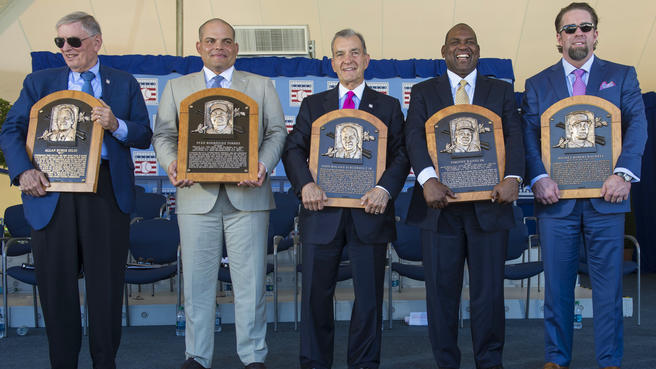
MLB: Baseball Hall of Fame-Induction Ceremony
Credit: USA Today

There is no greater honor in any sport than getting a plaque in the baseball Hall of Fame. I’m sure someone who believes the NFL or NBA is a greater honor will debate me on this, but there is never the sort of debate toward their hall’s as there is in baseball. That debate has grown into a fervor amongst baseball fans, writers and even players, as every one seems to have an opinion on this topic. What has made it even more intense is what we should do with players who were “suspected” of enhancement thanks to steroids and other performance enhancement drugs, and whether or not they deserve a spot in the hallowed halls of Cooperstown or left on the outside looking in. In some ways, the people who vote on this honor are the judge, jury and executioner, as testing was not done during this period so for many of the players of that era there is no definite of what they did or did not do. Even Hall of Famer Joe Morgan has spoken out on the topic recently, which stirred the pot even more. As a member of the IBWAA, this will be my fourth year of voting for ‘the Hall’ and as I have said in years past, I have no issue voting for anyone suspected for PED use, since I feel those players played within the parameters of the rules allowed at that time. I’ve long considered the Hall of Fame a museum of the game, not a church, and because of this I vote based on performance alone. Now, there are a few differences between us in the IBWAA & our brethren in the BBWAA, one of which is the players we have already inducted. Last year we inducted Vladimir Guerrero and Ivan Rodriguez, and in years past we had already voted in Edgar Martinez, so he will not show up on our ballot this year. Also, we are allowed to vote for up to 15 players, where the BBWAA can only vote for 10. Before we get to my actual votes, you can read my previous votes: Here is 201420152016, and 2017. Also, follow Ryan Thibodaux on Twitter. That way you can follow how the voting is going before the big announcement on January 24th. Without further ado, here are my votes for the 2018 Hall of Fame ballot.

kc2

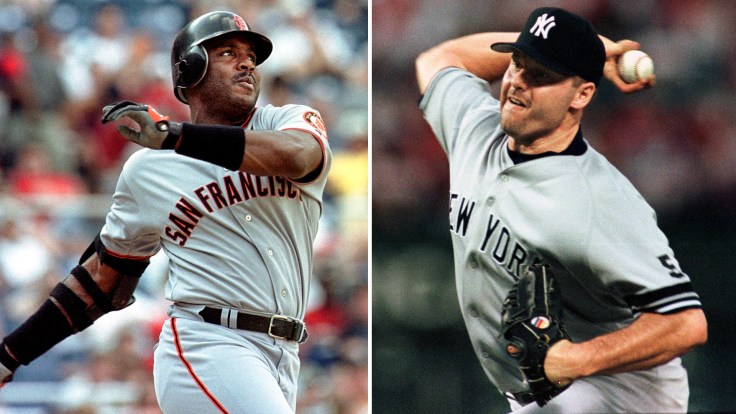
Barry Bonds

I have voted for Bonds every year and will continue to until he is finally elected. In my eyes, this is a no-brainer, as Bonds is one of the greatest baseball players ever, not just of his era. I could rattle off all the numbers that show how great he was, but I think the best way to explain it is this way: before there was any whispers about suspected steroid use, Bonds was a 5 tool player who could literally do anything on the baseball field…and then he became an offensive juggernaut that could not be contained. The all-time home run king took that whole era to another level and it wasn’t even close. You might not like him or what he had to do to elevate his game, but I am not concerned about any of that when it comes to voting. To me, Bonds is a slam dunk pick and should already be in the Hall of Fame.
 

kc3
Credit: DOUG BENC/GETTY IMAGES

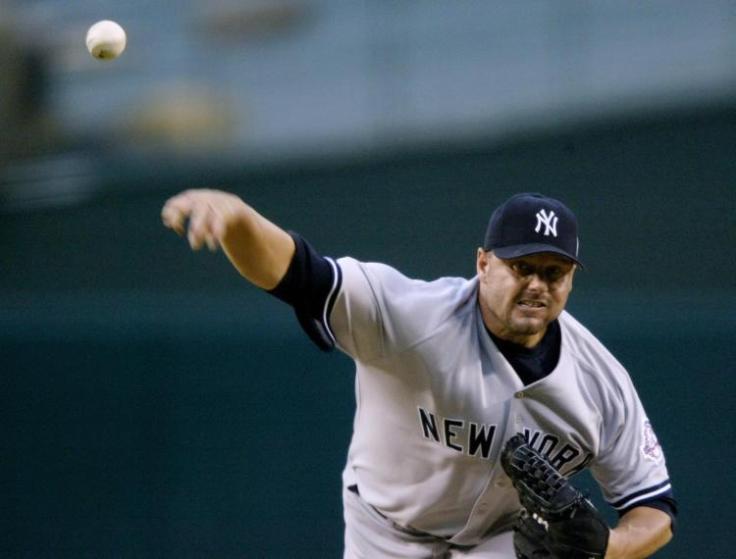
Roger Clemens

Like Bonds, Clemens is an easy pick, the greatest pitcher of his era and one of the greatest pitchers of all-time. Clemens won the Cy Young Award seven times throughout his career, and is on a list of statistics that garner him near the top of almost all pitching leader boards. Both Bonds and Clemens seem to be garnering more support, as the election of former Commissioner Bud Selig to the Hall seems to have allowed some voters to start putting an ‘x’ in the box next to their names. At one time it appeared both men would have to wait until they showed up on the Veteran’s Committee ballot before they would get elected; now we could see that wall busted through in the next couple of years.


kc4
Credit: Getty Images

Billy Wagner

Wagner was a seven time All-Star, twice was in the top ten of the NL Cy Young award and took home the 1999 NL Rolaids Relief Award. While he sits in 6th place all-time in saves, that doesn’t mean as much to me as his 86% conversion rate, which is close to Trevor Hoffman’s 88.8%. What does interest me is some of the deeper numbers when compared to fellow relievers. Wagner is 5th all-time for relievers in ERA+, 14th for relievers in bWAR (in fact, just under Hoffman), 4th in strikeouts for a reliever, 86th in Adjusted Pitching Runs, 93rd in Adjusted Pitching Wins, 55th in RE24, and 36th in Win Probability Added. All this was done in less than 1,000 innings, which for some is a hindrance rather than a positive. I get that relievers today aren’t used in the same scenarios as their forefathers, and because of that their innings totals will seem meek in comparison. But that is also what the role calls for nowadays and there is something to be said for compiling numbers like this in a much shorter amount of time. For Wagner, it was more about the efficiency than the longevity; Wagner came in, shut down the opposing team and was done. In some ways, Wagner and Hoffman are linked in that they both pitched about the same amount of time, in the same period and were equally efficient. Both were top of the food chain for their position and in my eyes, both should be in Cooperstown.


kc5
Credit: MLB.com

Chipper Jones

If there is a position that is under-represented in Cooperstown, it is third base. Only 16 third baseman are enshrined into the “Hallowed Halls” (which is the lowest of any single position) but it looks as if number 17 will be inducted this summer, as Chipper Jones feels like a slam-dunk to get voted in. When it comes to just third baseman, Chipper is ranked high among the elite at his position: 6th in WAR, 8th in WAR7 (which are a combination of his seven best seasons), 8th in JAWS (which is a combination of the previous two WAR stats), 6th in hits, 3rd in home runs, 2nd in RBI’s, 7th in on-base percentage, 4th in slugging and 9th in OPS+. In the Hall of Stats, Chipper is ranked 6th all-time at the position and considering the other numbers that feels like a fair spot for him. While it is obvious he ranks among the best at his position, that did make me curious to see where his place was in the all-time rankings of baseball history.  The numbers actually tell the story of a great baseball player: 51st in career WAR (32nd for position players), 25th in offensive WAR, 54th in on-base percentage, 51st in slugging percentage, 37th in OPS, 60th in career hits, 32nd in total bases, 33rd in home runs, 34th in RBI’s, 16th in career walks (this actually surprised me a bit), 72nd in OPS+, 25th in runs created, 28th in extra base hits, and 15th in career Win Probability Added. It is easy to tell that Jones was a Hall of Famer but there is more to it than just his place in history. Jones was drafted as a shortstop by the Braves, but ended up only playing 49 games at the position in the big leagues. While Chipper is known as a third baseman (and that is where he played the most games), Jones did spend the 2002-2003 seasons out in left field, as the Braves had Vinny Castilla playing at third base. To me, this felt a bit like Kris Bryant, who has floated around for the Cubs the last few years at third base and the outfield. Jones was also a switch hitter and easily one of the best of his kind in baseball lore. In fact, Fangraphs ranked the greatest switch hitters  in MLB history a few years back and Jones came in at number two, just behind Mickey Mantle and ahead of Hall of Famers Eddie Murray, Tim Raines and Roberto Alomar. But what statistic stood out to me the most in Chipper’s career? From 1996 to the end of his career in 2012, Jones never posted an OPS+ below 116. In other words, for the duration of his career, Chipper never produced an offensive season below league average (his lowest was a 108 that he posted in his rookie year of 1995). To play 19 seasons in the big leagues and never get below the league average is the definition of consistency and is just one of many numbers that prove that Chipper Jones deserves induction to the baseball Hall of Fame.
 

thome_bat
Credit: Jonathan Daniel/Getty Images

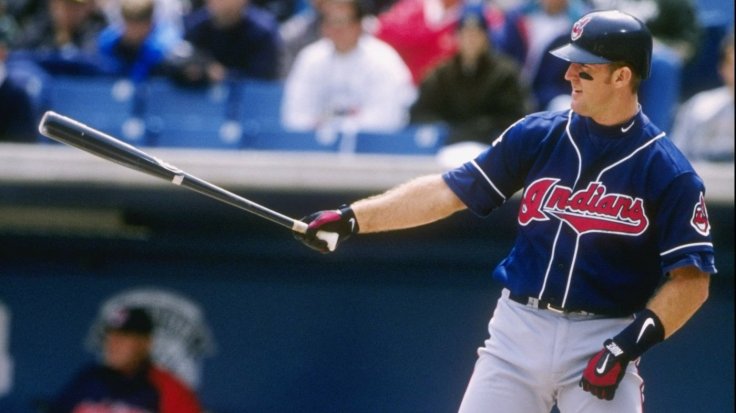
Jim Thome

Some hitters are adored for their ability to get on base, some are praised for their mastery of putting the ball ‘where it ain’t’…and then some are hailed for power and consistency; that would be the category that Jim Thome would fall into. Thome was one of the greatest home run hitters of his era and was that middle of the lineup force that few teams wanted to mess with. While the accolades are there (five time All-Star, a Silver Slugger award, 2002 Roberto Clemente award, 2004 Lou Gehrig Memorial Award and 2006 AL Comeback Player of the Year), the numbers are the meat and potatoes of Thome’s candidacy. Thome’s rank as a first baseman is a nod to just how great he was, considering how loaded that position is throughout the course of baseball history. Thome ranks 9th in WAR for first baseman, 19th in WAR7, 10th in JAWS, 2nd in home runs, 9th in RBI’s, 8th in slugging percentage, 8th in OPS and 13th in OPS+. This really amazes me, considering Thome is dealing with such classic first baseman as Gehrig, Foxx, Mize, Thomas and Pujols, just to name a few. Thome ranks 10th all-time for the position in the Hall of Stats, 96th all-time. Much like Chipper, his model of consistency was amazing. Outside of the 2005 season (where he appeared in only 59 games due to injury), he never posted an OPS+ below league average, and the lowest he posted in a season where he played at least 120 games was 117. In fact, he posted 10 seasons (10!) where he had an OPS+ of 150 or more. I’m a big proponent of where player’s rank all-time when it comes to their Hall candidacy, and Thome crosses those off with flying colors. He ranks 84 in career WAR (54th for position players), 44th in offensive WAR, 51st in on-base percentage, 23rd in slugging percentage, 18th in OPS, 41st in total bases, 8th in career home runs, 26th in RBI’s, 7th in walks, 47th in OPS+, 24th in runs created, 23rd in extra base hits, 5th all-time in at bats per home run, 21st in RE24, and 38th in Win Probability Added. While Thome wasn’t a great defensive player, teams weren’t employing him for his glove; it was all about his bat. But there is always one more thing that compels us to cheer for Jim Thome on his journey to Cooperstown: Thome might be one of the nicest guys that has ever played professional baseball. Don’t just take my word, take the word of Cleveland Indians President Chris Antonetti:

“The thing that stands out to me about Jim is just who he is — day-in, day-out,” Indians general manager Chris Antonetti told Rumblings. “It’s the way he treats the ushers and the parking-lot attendants, not just how great a guy he is in the clubhouse. He treats every person he meets with respect and dignity. And I’m not sure I can give anybody a better compliment.”

For those of you that wouldn’t vote for a Bonds or a Schilling for how they have acted in the past, Thome would be your measuring stick for the other side of the pendulum. A vote for Thome is not only for the great numbers that rank among the best in history. No, a vote for Thome is one for a guy who was a Hall of Fame player AND person. I’m pretty sure Thome is another lock to be giving a speech in upstate New York this upcoming summer.


Detroit Tigers' Sheffield laughs with Washington Nationals catcher Nieves during spring training baseball game in Lakeland, Florida

Gary Sheffield

Over the last few years I have gone back and forth on Gary Sheffield and his candidacy for the Hall of Fame. Maybe it was because he bounced around from team to team, or the fact that he bounced between the infield and the outfield throughout his career. Either way, it was easy to leave Sheff out of the conversation and feel like he was on the cusp of greatness. But when I finally broke down the numbers, it really felt like his case has been one of the most overlooked when it comes to the hall. Sheffield played right field more than any other position, so I first stacked his numbers against the others at that position. Sheffield is 19th in WAR for right fielders, just below Shoeless Joe Jackson and Dave Winfield. He ranks a bit lower on his peak, as he sits 24th in WAR7, above Hall of Famers Winfield, Chuck Klein, Willie Keeler, and Enos Slaughter. He is also at 24th in JAWS while 7th in home runs, 8th in RBI’s, 12th in OPS and 15th in OPS+. Now, right fielders are well represented in the hall (24 to be exact) so Sheffield holds his own in the position, even if he is slightly below the elite level. But as I mentioned earlier, I’m a big proponent of where players stack up all-time and that is where Sheffield shines. He is 35th in offensive WAR (obviously his defense dragged him down a bit in the WAR category), 88th in on-base percentage, 76th in slugging percentage, 58th in OPS, 69th in hits, 34th in total bases, 26th in home runs, 28th in RBI’s, 21st in walks, 78th in OPS+, 26th in runs created, 39th in extra base hits, 25th in RE24, and 16th in Win Probability Added. I’m sure the fact he played 22 seasons helped him compile a decent amount of those numbers, but he also was able to stay healthy and be a consistent run producer for almost the entirety of his career. Sheffield had six seasons with an OPS+ of 150 or more and was above league average for all but two years of his career (one was his rookie year and the other was his age 39 season). So what has hurt Sheffield’s case? I’m sure a few people would mention that his name was in the Mitchell Report and had been linked to PED’s in the past. Like I mentioned, that doesn’t affect my voting. But the other concern was his defense. It didn’t really matter whether he was at shortstop, third base or the outfield, he just wasn’t a great fielder. In the past I’ve not voted for Jeff Kent because of his defense and I didn’t vote for Omar Vizquel this year because of his lack of offense. So what was the difference with Sheff? His offense was so good that it crossed out any issues I had with his defense. I’m also a “Big Hall” guy and feel like Sheffield was one of the great hitters of his era. I can understand if someone leaves him off (he is a fringe guy in this regard), but for me he was far enough above the line to be considered one of the greats.
 

kc8

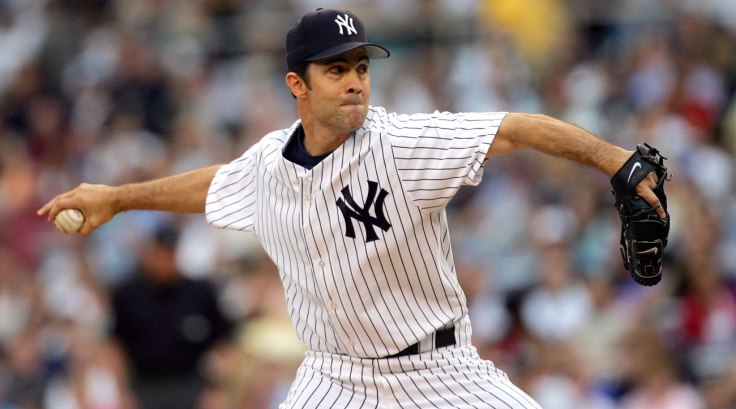
Mike Mussina

When thinking about Mike Mussina, what is the first thing that springs to mind? Is it his start in Game 7 of the 2003 ALCS? Or maybe his use of the knuckle-curve, which was his out pitch? Or does nothing specific pop into your mind when hearing Mussina’s name? I sometimes wonder if those of us on the Mussina bandwagon would have to praise his career if he had been even just a tad bit flashier.What I end up realizing is that part of what made him so great was that he wasn’t flashy and just went out for 18 seasons and performed as a top of the rotation starter in that span. There are no Cy Young awards on his mantle, but there are numbers that back up his greatness. Mussina has the 24th best bWAR for pitchers, 19th in strikeouts, 22nd best strikeout to walk ratio, 17th best adjusted pitching runs, 21st best adjusted pitching wins, 9th best RE24, and 10th best Win Probability Added. Mussina was that guy who you could count on for a big win or just to go out and save the bullpen from being overused. Mussina jumped up to 51.8% of the ballots in 2017 and it appears he is inching closer to the 75% he needs to reach the Hall. One of the pitchers that Mussina’s stats are comparable to is another former Oriole, Jim Palmer. While Palmer might have the accolades that Mussina does not have, the one thing in common is that both pitchers deserve to be in the baseball Hall of Fame.
 

kc9

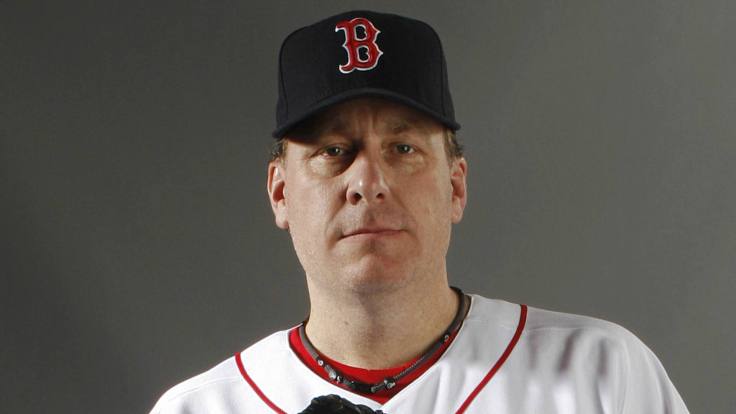
Curt Schilling

There might not be a bigger lightning rod on the Hall of Fame ballot than Schilling, who has caught quite a bit of scorn for his behavior on social media within the last couple of years. While I might not agree with his politics, I do realize it has nothing to do with his candidacy in the Hall and justly had no qualms in voting for him yet again this year. Schilling’s numbers speak of a top-notch starter: 26th all-time in pitchers bWAR, 15th in strikeouts, 3rd best strikeout to walk ratio, 18th best Win Probability Added and 46th best ERA+. Those are just his regular season numbers; toss in the postseason and you have a surefire Hall of Famer. Schilling has rubbed many a writer the wrong way (and by no means do I feel sorry for Curt; he would probably be better off learning when to keep quiet) and because of that his vote totals went down last year, down 7.3 %, finishing at 45%. I might not like Schilling the person, but the baseball player was one hell of a pitcher out on the diamond. For that, he has my vote.


kc10

Trevor Hoffman

For the third consecutive season, I voted for Trevor Hoffman. There has been plenty of debate on whether or not closers should be judged on a different criteria than most other positions and to a small degree I get some of the trepidation. Closers today don’t always face the strongest part of the lineup and it seems odd to have your best bullpen arm only throw an inning or less an outing. The thing to remember though is that “the closer” is still a position and if you excel at it for 16 seasons, you should be rewarded justly. In some ways, the Hoffman argument is very similar to Tim Raines; Raines was the second best leadoff hitter of his time, behind another Hall of Famer in Rickey Henderson. Hoffman was the second best closer of his, behind future Hall honoree Mariano Rivera. Hoffman not only shouldn’t be punished for not being Rivera, but was about as consistent as one can be. During his career, Hoffman posted 15 consecutive seasons of 20+ saves (and I hate the save stat, but this is still very impressive) and had an 88.8% save conversion rate, which within itself is almost insane when you consider the amount of save opportunities he received in his career.Throw in his lethal change-up that was almost as deadly as Rivera’s cutter, and you have a one of the best relievers of all-time. He might be no Mariano Rivera, but then again who is? What Hoffman is though is a Hall of Fame closer.
 

kc11

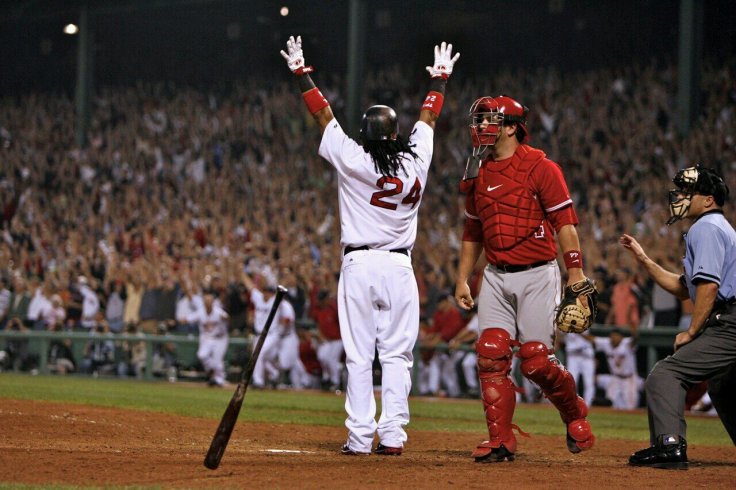
Manny Ramirez

Many voters have said the difference to them between Bonds or Clemens and Rafael Palmeiro or Ramirez is that the latter tested positive for performance enhancing drugs and was justly suspended. In fact, last year when I started filling out my ballot, I paused on Ramirez and had to really stop and think of which direction I wanted to go. Like I have said, my voting is performance based but an actual suspension (and for Manny it was multiple suspensions) muddies the water a bit. After much contemplation, I went ahead and voted for Manny since he had put up Hall of Fame numbers before the suspensions. While Ramirez wasn’t a stellar defender (and that is evidenced by his career bWAR of 69.2), offensively he was a juggernaut. Manny posted a career line of .312/.411/.585 with 555 career home runs, and an OPS+ of 154. I firmly believe he could hit blindfolded and still produce league average numbers, as he was that good of a hitter. Manny also contributed during the playoffs, where he hit .285/.394/.544 with 29 home runs and 78 RBI’s over 111 postseason games, all fairly on pace to his regular season averages. The awards are all there for him as he was a 12 time All-Star, 2 time Hank Aaron award winner, 2002 AL batting title, 2004 World Series MVP, and 9 time Silver Slugger award winner. If that isn’t impressive enough, the numbers are quite gaudy: 32nd all-time in oWAR, 32nd in On-Base Percentage, 8th in Slugging Percentage, 8th in OPS, 29th in total bases, 31st in doubles, 15th in home runs, 18th in RBI’s, 28th in OPS+, 21st in runs created, 17th in Adjusted Batting Runs, 20th in Adjusted Batting Wins, 16th in extra base hits, 11th in RE24,  and 23rd in Win Probability Added. Those are Hall of Fame numbers and most of that accumulated before he tested positive for anything. Would I hold it against anyone for not voting for him because of the suspensions? Nope. I get it.But for me, Ramirez has long been a Hall of Famer; the only thing those suspensions did was tarnish the perception of him, which is unfortunate. Instead of people remembering Manny for his child-like antics or immense hitting, he will be branded a cheater. He has no one else to blame for that, but I still felt like he had earned my vote, scarlet letter and all.
 

PHIL 2 SPT

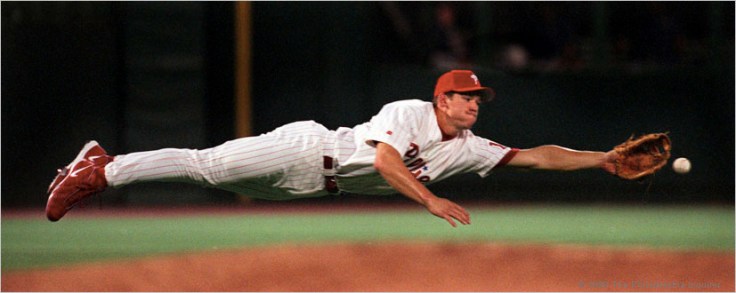
Scott Rolen

If there is a player I voted for that I feel others will look past on first glance when they absolutely shouldn’t, it’s Scott Rolen. I mentioned earlier how under-represented the position of third base is and voting for both Chipper and Rolen would go a long way toward making up some much-needed ground. While Chipper’s case mostly lies on his offense, Rolen’s leans a bit more toward his defense. While the defensive metrics still feel a bit like a work in progress, there is no denying that he was an elite defender. Rolen sits 6th all-time in total zone runs as a third baseman, 32nd for range factor/9 innings for a third baseman and is second in defensive runs saved as a third sacker since 2002. Rolen was 48th all-time in defensive WAR, an eight-time Gold Glove winner and outside of maybe Adrian Beltre, was considered the elite defender at the position during his day. Now, defense alone doesn’t get you in the hall, otherwise someone like Mark Belanger would have a nice little plaque. Luckily for Rolen, his offense was stellar as well. The stats don’t speak as a world beater as much as a consistent performer throughout his 17 year career; 99th all-time in WAR (67th for position players), 51st in career doubles, 74th in extra base hits and 104th in Win Probability Added. Like I said, not breaking any records but I doubt many would expect these kind of footprints stepping into the statistical records of baseball history. But to truly honor Rolen’s greatness, all you have to do is view his place in third basemen all-time. Rolen sits 10th for third basemen all-time in WAR, 14th in WAR7, and 10th in JAWS. If you believe in those numbers as much as I do, you consider Rolen one of the greatest third baseman in history…but there is more. When considering the other players at his position, he is 6th in doubles, 15th in home runs, 14th in RBI’s, 14th in slugging percentage, and 11th in OPS. To top it all off, the Hall of Stats has him listed as a 142 Hall Rating, 85th all-time overall and 8th among third baseman. In other words, he was great and totally deserves this honor. I really wish Rolen was getting more support this year, since I really feel like he is the third base equivalent of Alan Trammell. Great numbers, especially the more you dive into them but overshadowed by his peers who played at the same time. It would be great to see Rolen and Trammell get inducted together; unfortunately, it appears Rolen will have to wait for his honor. At some point he will get his acknowledgement, it’s just a matter of how long that takes to happen.
 

MLB: New York Mets at Washington Nationals
Credit: Geoff Burke-USA TODAY Sports

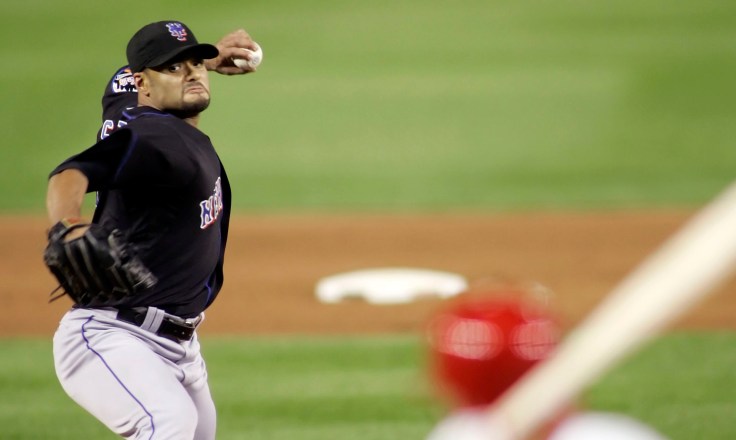
Johan Santana

There are so many factors when considering players for the Hall of Fame, and everyone’s criteria is different, especially since every player is a different case. Some of my main factors are placement on the all-time leaderboard, consistency, and being elite at your position. But what about longevity, you might be asking? While it can be a factor, I’ve always leaned more toward being great for a longer period, not just length of ones career. In other words, I strongly lean toward the seven-year peak, or WAR7, which defines a player’s best seven WAR years of his career. With that in mind, it was hard to say no to Johan Santana, a player who I’m sure some will say didn’t do enough in his career. I get that and even at first I wasn’t sold that he had performed good enough to deserve the honor. But breaking down the numbers showed while shorter than most, he packed a lot of great into his 12 year career. Let’s start with his ranking among starting pitchers, since that is really where the conversation begins. Santana ranks 100th in WAR, 63rd in WAR7 and 86th in JAWS. It’s interesting to mention JAWS in these conversations, as the man who created it, Jay Jaffe, actually has debated himself just where Santana stands in the pantheon of history:

From an advanced metrics standpoint, Santana is obviously short of the WAR-based career, peak and JAWS standards, but he outdoes many big-name Hall of Famers. His 51.4 career WAR (including offense) is tied for 102nd all time but beats that of 11 enshrined pitchers, including Sandy Koufax (49.0), Dean (44.9), and Catfish Hunter (41.4), not to mention Morris (44.1). His 44.8 peak score, which is tied with Dave Stieb for 61st, is higher than 25 of the 62 (or 26 of 63 if you include Morris), and his 48.1 JAWS, which ranks 85th, tops 15 enshrinees (plus Morris), including Koufax (47.5), Whitey Ford (46.0), Dean and Bob Lemon (both 43.9), and Hunter (38.3).

So despite his short career, Santana has managed to wedge himself into interesting company when it comes to some of the advanced metrics. I was interested to see where he placed when it comes to ERA+, and he did not disappoint, sitting in 16th place all-time at 136. But where I really wanted to check Santana was a comparison to Koufax, since both were great for a number of years and both retired at a younger age due to injuries. So here are some comparisons between the two:

  • When it comes to WAR, Santana trumps Koufax, 51.4 to 49.0.
  • For their seven-year peak, Koufax beats Santana, 46.1 to 44.8.
  • Now for JAWS, Santana slides by Koufax, 48.1 to 47.5.
  • Since both pitchers had 12 year careers, I thought I would look at some of the other stats and see where they stand. Koufax easily beats Santana in ERA, WHIP, Hits per 9, Strikeouts per 9, and Strikeouts, while Santana beats him in Strikeout to Walk Ratio.

Granted they played in different times, when starting pitchers were used differently, but there really doesn’t appear to be a huge gap between the two players overall. So then I ask the question: if you feel Koufax is a surefire Hall of Famer (which I’m pretty sure no one is arguing), then why isn’t Santana? To me he is, which is why I voted for him. The voting has not been going well for him so far (he is polling at 1.3% so far with 46.9% of the ballots known) and it appears he will fall off the ballot for next year. It’s unfortunate, because he really feels like a guy who should be getting a longer look. Instead, you have to hope the Modern Baseball Era committee will give him a longer look when that times comes. To quote Neil Young, “It’s better to burn out, than to fade away”.
 

kc14
Credit: DAVID ZALUBOWSKI / Associated Press

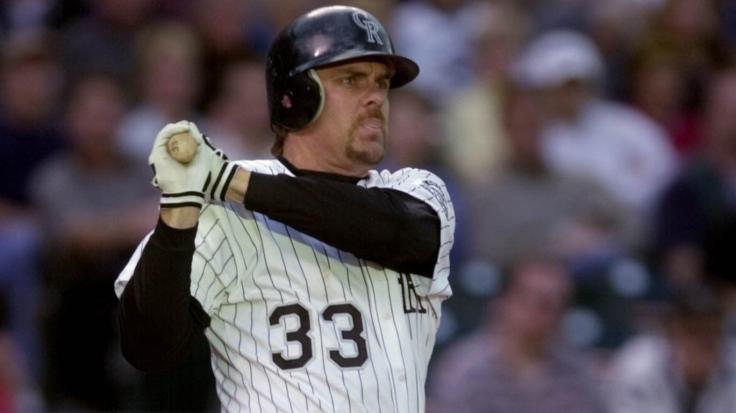
Larry Walker

This was the second year I voted for Walker and my take on him seemed to be a bit different from a lot of folks. For many, the fact that Walker played a large chunk of his home games in Coors Field (Walker was a Rockie from 1995 to 2004) seemed to deter voters from placing a vote for him; I had no issue with that, since I knew he hit on the road almost as well as he did at home. No, my issue with him was injuries, as he had 7 seasons of less than 130 games, 12 of less than 140. Walker’s issue wasn’t the ‘Rocky Mountain High’s’ as much as the ability to stay on the field and play. The numbers speak volumes: .313/.400/.565 career slash line, 141 career OPS+, 5 time All-Star, 1997 NL MVP, 3 batting titles, and 7 time Gold Glove winner. So what changed for me when it comes to Walker? His place in history. According to JAWS, Walker is the 10th best right fielder of all-time. All-Time! Just seeing who he is better than sounds like a who’s-who of right fielders: Shoeless Joe Jackson, Tony Gwynn, Ichiro Suzuki, Dwight Evans, Dave Winfield, Vladimir Guerrero, Willie Keeler, Paul Waner and Enos Slaughter, just to name a few. Walker is 86th all-time in bWAR, 56th in bWAR for position players, 55th in on base percentage, 12th in slugging percentage, 14th in OPS, 31st in power-speed #, 38th in RE24, and 36th in Win Probability Added. Those numbers are just a sliver of what he could do; there are 7 other categories where Walker is in the Top 100 of all-time. What makes me curious is the voting for Walker during the first six years on the ballot; He peaked in 2012 at 22% and last year bumped up a bit to 21.9%. One has to wonder if the voters viewpoint of him would change if he hadn’t played so many games in Colorado. It took me awhile to recognize it, but Walker deserves to be with the other elite right fielders in Cooperstown.
 

kc15
Credit: Getty Images

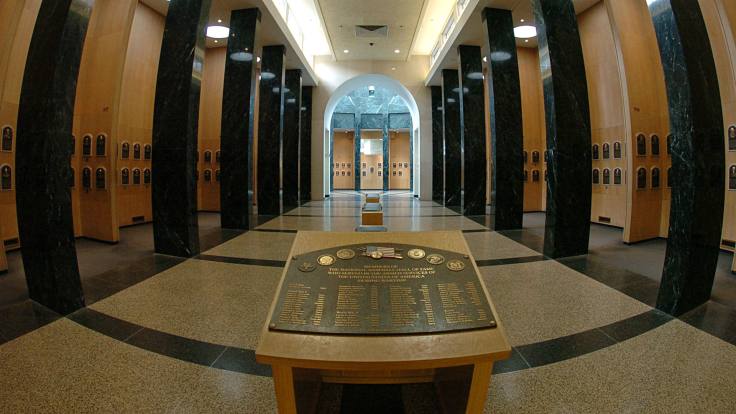
So there you go, my 13 picks to be inducted into the IBWAA Hall of Fame. One player that could get my vote next year is Andruw Jones. I reluctantly left him off this year, as I’m not 100% sold on him being one of the elite, but he is one that I did heavily consider during this process. One other player that fell quite a bit short was Omar Vizquel. There are those that believe his defense is enough to get him in. Unfortunately, his offense was more than lacking: a career OPS+ of 82 and only 45.3 WAR in his career shows that his defense was not enough to get my vote. 2019 should be interesting, as a number of big names will pop up on the ballot: Mariano Rivera, Roy Halladay, Todd Helton, Andy Pettitte, Lance Berkman and Roy Oswalt will all be on the list. It’s probably a good thing that it looks like as many as five players could be inducted this year, as a number of worthy candidates will be added next year. Don’t worry; while the voting will commence on Wednesday, the debate will rage on.


Destination Unknown: Where Will the Royals Free Agents Land?

kc11

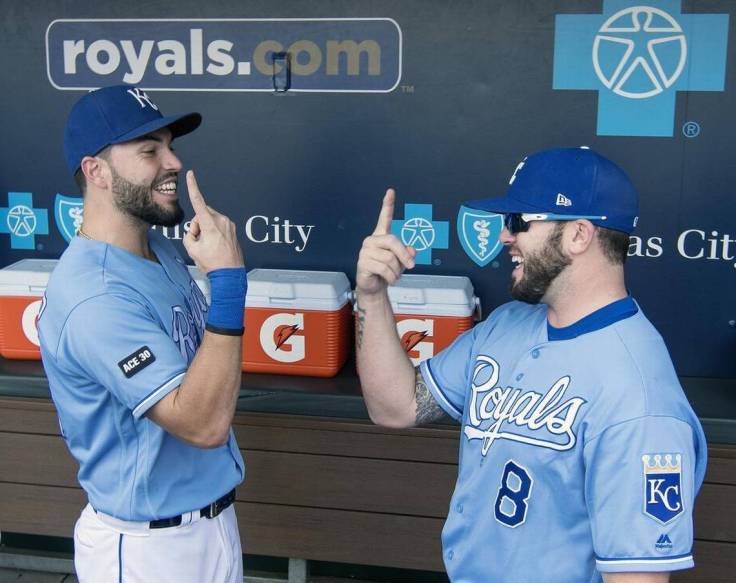
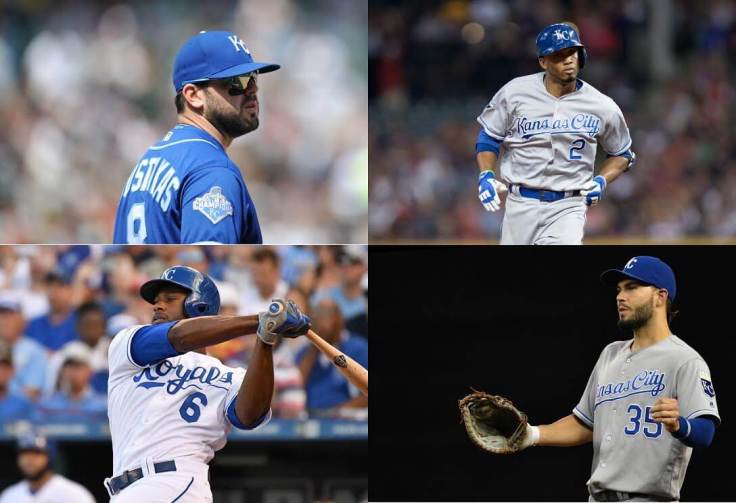
Here we are halfway through January and baseball’s “Hot Stove” is more like a frigid freezer. There has been some speculation as to why the free agent market is as dead as a door nail; Jeff Passan broke down baseball’s economic system while Max Rieper did a great job looking into baseball’s middle class. No matter how you view this situation, the bottom line is there are a number of players ripe for the picking on the market right now and that includes the “Big 4” of the Kansas City Royals. Still out there are Eric Hosmer, Alcides Escobar, Lorenzo Cain and Mike Moustakas, all still unemployed as of this writing. There is no way these four don’t end up on some needy team soon, but who will they finally sign with? I thought it would be fun today to look at each player and throw out some guesses as to where they end up. Do I have any inside information? Nope. Am I just going to guess? Kind of. Should you take this seriously? Since I’m not their agent, probably not. Chalk this up as just a fun exercise to pass what has been about the slowest winter since the mid-80’s, when that dreaded “C” word was going around (Yes, collusion. Not the other “C” word…).

kc12
Credit: Rick Osentoski-USA TODAY Sports

Mike Moustakas

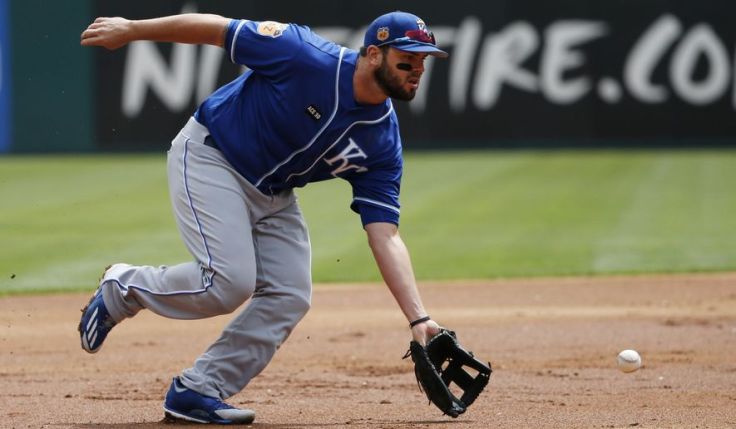
It does appear as the market has almost flat-lined for Moose. Most speculated that the Angels would be the most obvious pick for Moustakas, since he is from California and they were in need of a third baseman. Instead, they signed Zack Cozart. Maybe the Giants? Nope, as they plucked Evan Longoria from the Rays. Whether it is the draft pick a team would have to give up to sign him, concerns about his injury history or just trying to stay under the luxury tax threshold (I’m looking at you, Yankees), it appears every team has had more worries than they would like when it comes to signing Moustakas. Even earlier this week, we are still just hearing a sprinkle of interest when it comes to team’s looking for a slugging third baseman. Baltimore has been mentioned, but they have Manny Machado at the hot corner and Tim Beckham proved he could start at shortstop for the O’s, so it’s not like they have to make a move and force Machado back to shortstop. Milwaukee has been mentioned but they still have Travis Shaw, who one would think would be a slightly younger, cheaper option for the Brewers. I still contend that Moose would be the guy that Kansas City should look into, but it appears that is purely a long shot.  It will be interesting to see where he finally ends up, but I definitely think his value has shrunk and he is more likely to get a two-year deal out of a team than four years and up. A one-year deal is possible, but that would force him back onto the market next winter, with competition from fellow third baseman Machado and Josh Donaldson. To be frank, things aren’t looking good on the long-term front for Mike Moustakas.

Likely Destination: St. Louis Cardinals

Tampa Bay Rays v Kansas City Royals

Alcides Escobar

If the Moustakas market feels cold, then Escobar’s is Antarctica. To say the rumors of interested teams for Esky is limited would be an understatement. There’s the Padres, who showed interest in him before acquiring Freddy Galvis to play shortstop, and then there are…ummm…there is also the…uhhh…no one. Nope, I haven’t seen any other team linked to Escobar this winter, outside of a few writers suggesting locations that might need him. The honest truth is that Escobar has been a weak hitter these last few years who has gotten by on his defense…which has begun to regress. So it shouldn’t be a shock to say that the market for a light hitting shortstop, entering a period where his defense and speed will start to wane as well, is sparse. There aren’t many options for Alcides, so at this point he might have to just take what he can get, even if it is a role as a backup mentor on a rebuilding team.

Likely Destination: Kansas City Royals

Arizona Diamondbacks Kansas City Royals

Lorenzo Cain

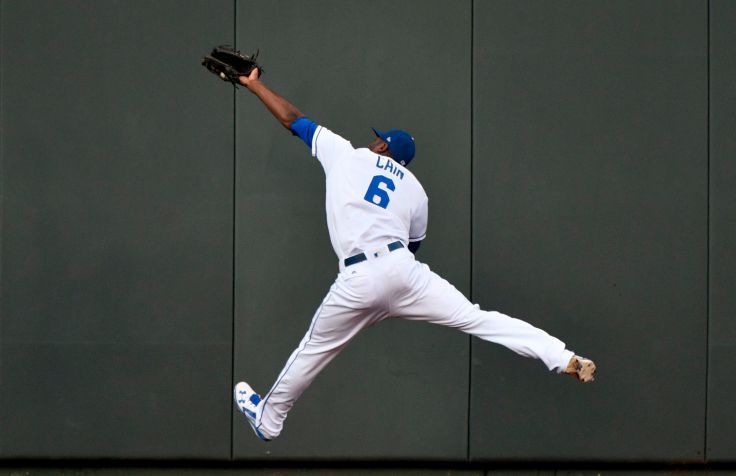
This might be the most curious of available Royals still out there, since Cain actually has a lot of value and isn’t represented by Scott Boras. We’ve all heard the teams that have shown interest in LoCain: Giants, Rangers, Brewers, Dodgers and Blue Jays just to name the most interested. More than likely, the main reason Cain is even still on the market is his age and injury history, combined with a desire for a long-term deal. The long-term thing always appeared to be a hang-up for the Royals and probably went a long way to them not focusing their attention on him. There have been a number of articles written recently discussing Cain’s value and why team’s should be jumping over each other to sign him. I have to believe the answer lies somewhere in-between, as this quote from the Passan piece I mentioned earlier:

One assistant GM interested in center fielder Lorenzo Cain thought about the possibility of offering him a multiyear deal. “I’d rather just give him one year at $24 million,” he said, and maybe he didn’t realize that the one-year deal was a hallmark of collusion, and maybe he did.

It appears that teams would be more interested in someone like Cain and even pay him more on a shorter deal than lock him up on a longer deal. I know as a fan I have had my concerns about Cain’s health and more importantly, the health of his legs. If as a fan I am having that concern, you could see why major league team’s appear to be weary as well when it comes to the long-term health of an outfielder who will be entering his age 32 season in 2018.

Likely Destination: Milwaukee Brewers

kc15
Credit: Adam Hunger-USA TODAY Sports

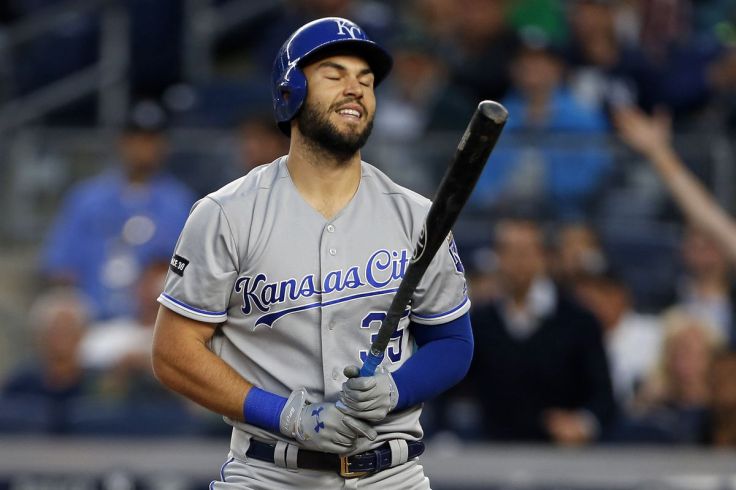
Eric Hosmer

…and then there is Eric Hosmer. There has been a ton of speculation of just who will lock-up Hosmer, but the honest truth is there appears to be only two teams really committed to the idea of making him a long time fixture in their organization: the Royals and the Padres. It does appear both teams are willing to go six to seven years on a deal but the money looks to be the major hang-up in getting the pen to paper. A few other teams appear at least in the mix (the Cardinals and Red Sox keep getting brought up), even if it is just dipping their toes into the proverbial water. Teams have concerns about Hosmer, with a lot of it being directed at his ground ball rate (55.6% in 2017) and whether or not he would adjust his hitting style to allow the ball to be put in the air more often. Any deal over five years takes with it a certain amount of risk and when you add in the ground balls, the defensive metrics and the inconsistency he has had over the years, you can see why more teams aren’t flocking to bring him into their fold. Hosmer very well could be the first major Royals free agent to sign, but he could also be the final domino to fall. With Hos, it will all come down to if an offer is on the table that his agent (Boras) feels comfortable with.

Likely Destination: Kansas City Royals

kc16
Credit: John Sleezer/KC Star

If this winter has proven anything, it’s that teams have become more methodical in how they spend their money and the effects are being felt by this crop of long-time Royals. Do I feel comfortable with my guesses? Not really. This market has been the hardest to read and it might just come down to the best offer on the table whenever pitchers and catchers report next month. The best scenario for the Royals is still for their stars to sign elsewhere, accumulate the extra draft picks and let the team start rebuilding. But the Royals front office sometimes zags when we think they will zig, so I guess that means the possibility is still out there for all four to return to Kansas City. I would say crazier things have happened, but I don’t know if anything is crazier than the lack of action we have seen this winter.


Remembering Roberto Clemente

kc1
Credit: Neil Leifer

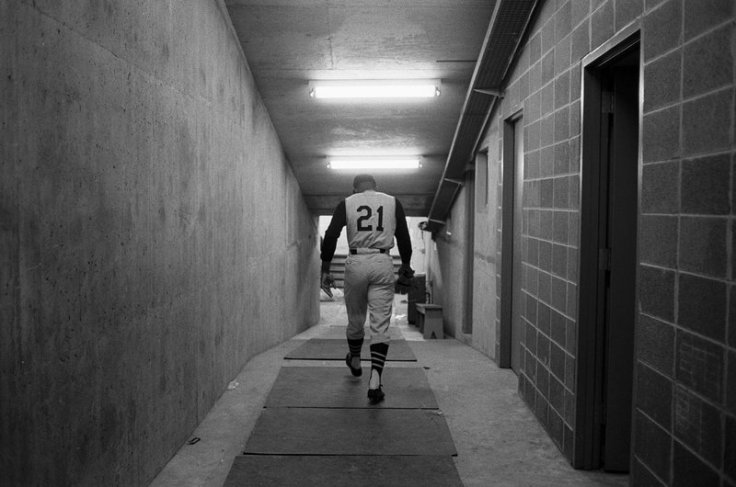
Sunday was the anniversary of Roberto Clemente passing away in a plane crash, as he was making a trip to Nicaragua to help out victims of a recent earthquake. Clemente was just 38 years old at the time of his death and had just gotten his 3,000th career hit a few months earlier. The statistics show an unbelievable player; he was pretty much the definition of a five-tool player. Career .317 hitter. Career wRC+ of 129. Eight seasons of 5+ WAR, with 80.6 career fWAR. He could hit, he could run, he could field and he could lead. Clemente was more than just a ball player, as he was a known for his charity work in Latin American and Caribbean countries. Roberto Clemente was everything great about baseball but don’t just take it from me. Here are some highlights of a man’s career and life.


kc2
Credit: Neil Leifer/Sports Illustrated

As someone who never got to watch Clemente play, it’s a bit harder to grasp what all he meant to not only baseball, but to Puerto Ricans at the time. This wasn’t just a player who put up great numbers and helped his team win a world title. Clemente transcended the game and is a benchmark for even the Latin players of today. The good thing is that even for those of us that never witnessed him in person, the stories carry on his greatness and his message. It’s not just that every player should strive to be like Roberto Clemente. No, it’s more that as a person we should strive to be as great as Clemente was as a human being.

One Step Forward, Two Steps Back

kc1

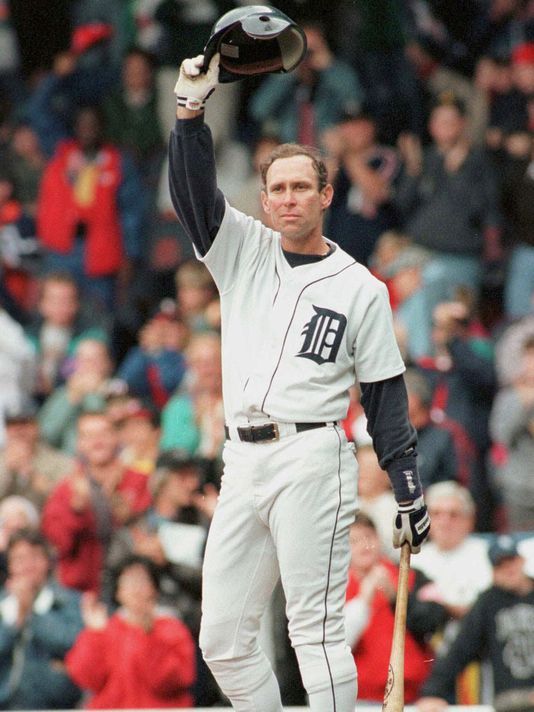
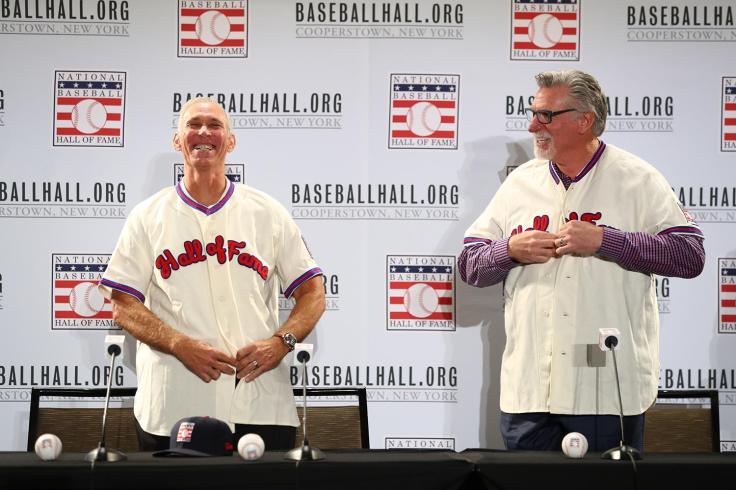
A few weeks back, the Modern Baseball Era Committee announced their results for the 2018 Hall of Fame election, where Jack Morris and Alan Trammell will be joining whomever will be voted in by the BBWAA later on next month. While the result wasn’t surprising, I am struck with a tinge of excitement and frustration when it comes these election results, both by who got in and who didn’t.

kc2
Credit: Duane Burleson, Associated Press

First, I was elated that Alan Trammell will be in the Hall. I came around a bit late to just how great Trammell was but felt really strongly that he deserved to be in the Hall a few years back. Here is a snippet of my argument for him back in 2015:

The argument for Trammell though outweighs a lot of the negatives; Trammell has a career WAR of 70.4, which makes him 94th all-time and 63rd amongst position players. To go a step further, Trammell has a career dWAR of 22.0, which places him 34th all-time.

Trammell is listed as the 12th best shortstop according to the Hall of Stats (hallofstats.com) and has a Hall Rating of 143 (100 is deemed Hall worthy). Trammell played in an era of Cal Ripken, Jr. and Ozzie Smith and while he wasn’t quite at their level, he was close and even beat Cal out for the Gold Glove four times. What is even more interesting is going back and comparing his numbers to Derek Jeter as Joe Posnanski did a few years ago:

Joe Posnanski has made the argument that if you are of the belief that Derek Jeter is a Hall of Famer, then you should compare his numbers with Trammell’s. Joe points out just how close Jeter and Trammell were as players, with Jeter holding a slight edge over Alan offensively, while Trammell was easily a better defender.

Trammell really felt like a player who could have gained momentum if more voters had digested his numbers. Instead, the highest he reached on the ballot was 40.9% (back in 2016) and one does have to wonder if the constant logjam of only being able to vote for ten players really hurt him in the long run. The good news is that his peers corrected this injustice and he will be claiming his rightful place in Cooperstown this summer.

kc3
Credit: Baseball Hall of Fame

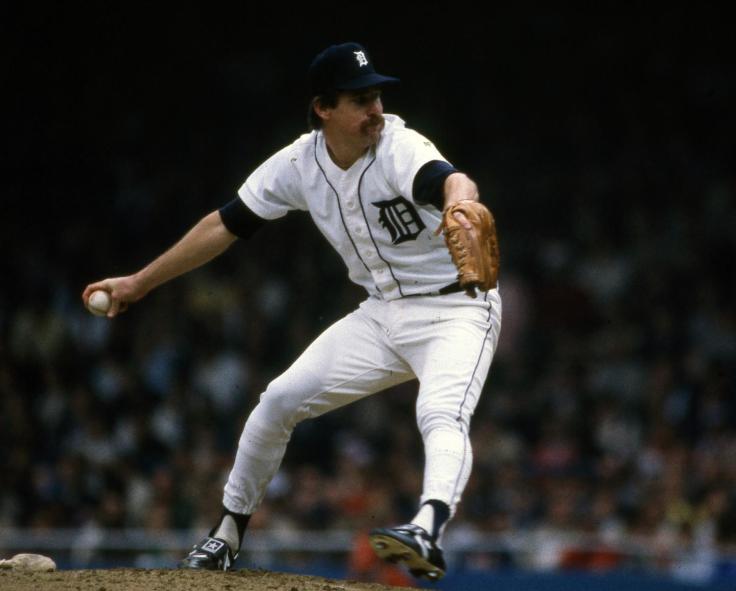
Then there is Jack Morris. There is really no easy way to put this than to just say I don’t feel he is a Hall of Famer. Did he have moments of greatness? Obviously. He is viewed by many as the greatest pitcher of the 1980’s, which is easy to see when looking at stats like strike outs and wins. But when digging deeper he is 65th in ERA+ (league and ballpark adjusted) in the decade and 12th in bWAR for pitchers. It gets even dicier when you start digging through the all-time rankings. According to the Hall of Stats, Morris is 165th among pitchers all-time and has a Hall Ranking of 77, well below the necessary 100 to be “Hall Worthy”. In fact, over an 18 year career, Morris has only 44.2 WAR, which roughly averages out to 2.45 Wins Above Replacement a year. The truth is that much like Bill Mazeroski, Morris’ greatness is defined by one classic moment: Game 7 of the 1991 World Series, where he pitched 10 innings of shutout baseball and led the Twins to a World Championship over the Braves. It’s an iconic moment, but unfortunately for Morris it is not a complete representation of his career. The issue with putting him into the Hall is simple; the numbers don’t back up what the memory recalls. It might just be better to let Jay Jaffe of Sports Illustrated explain:

While Morris won 254 games for the Tigers, Twins, Blue Jays and Indians in his 18-year career—the 43rd highest total in history and seventh among those outside the Hall—his win total is a reflection of the great work of his teammates. He got excellent support from his defense, which included Trammell and his longtime double play partner Lou Whitaker, in the form of a .272 batting average on balls in play, 14 points better than league average. Relative to his leagues, the offensive support he received was six percent better than average (better than 41 of the 62 other Hall starters), while his rate of run prevention was just five percent better than league average. Among Hall of Famers, his 105 ERA+ tops only those of Catfish Hunter (104) and Rube Marquard (103). By comparison, Red Ruffing, whose 3.80 ERA was previously the highest among Hall of Fame starters, had a 109 ERA+, as he pitched during a higher-scoring era (1924-47).

In other words, Morris being in the Hall of Fame redefines greatness:

Still, his election lowers the bar for Hall of Fame pitchers and serves as a slight to numerous contemporaries such as Bret Saberhagen, Dave Stieb, Dwight Gooden, Orel Hershiser and David Cone. Win totals aside, all have far fuller résumés than Morris from a Hall standpoint, better run prevention combined with Cy Young awards and their own shares of records and postseason heroics. They now deserve an equally thorough airing in this context, particularly in light of the scarcity of viable starting pitcher candidates in the coming years.

This is not to say I wish ill on Morris; personally I like the guy and believe he has handled all the arguments about his Hall of Fame case like a champ. I just don’t personally feel he should be sitting among the greats of the game. The one silver lining to this is we can now be done with the Morris argument; it no longer matters since the Modern Baseball Era Committee made sure he is getting a plaque.

kc4
Credit: Associated Press

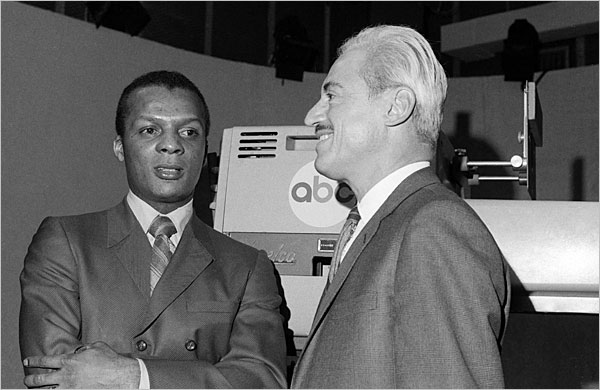
While Trammell felt like a step forward and Morris felt like a slight step back, the fact Marvin Miller was not elected just felt like a slap in the face. Miller is the former executive director of the Major League Baseball Players Association and was the driving force behind free agency in baseball. Without Miller, the players would probably never make the kind of money and have the freedom they have today. Once again, Jaffe said it best:

Miller, who oversaw the game’s biggest change since integration by dismantling the reserve clause and therefore shifting the century-old balance of power from the owners to the players, is the candidate with the strongest case of any individual outside Cooperstown, and perhaps the strongest case of any non-player in the game’s history.

It really surprises me that a committee of what was mostly former players didn’t vote in the guy who has had possibly one of the biggest effects on their career when it comes to the ability to make market value money. Hopefully this mistake will be rectified in the very near future.

kc5
Credit: Baseball Hall of Fame

The one thing this recent vote proves is that it just isn’t a perfect process. Whether it is the new committee or the BBWAA, this is a system where most of the voters are doing their due diligence to get it right.  For every slam dunk like Ken Griffey Jr., there is an Alan Trammell who falls through the cracks. While I might not feel Morris is deserving, I was happy to see Ted Simmons (who I feel is deserving) fall just one vote shy of being added to this group. As long as the games continue to be played, the Hall of Fame debates will continue to be discussed. The fact that baseball is constantly trying to get this right should tell you that everything is moving in a forward direction, just possibly not at the speed everyone would hope for.

Classic Royals: Royals Clinch First Playoff Spot in 29 Years

kc1
Credit: Jerry Lai, USA TODAY Sports

It feels strange to think this was ONLY three years ago, but back on September 27, 2014 the Kansas City Royals clinched their first playoff spot since 1985. We are all well aware of what happened next: the Royals would beat the A’s in the wildest baseball game I have ever seen and would continue to win all the way to the World Series that year. While the wild card game extracted most of the Kansas City demons, this game and the finality of wrapping up a playoff spot made all the naysayers and doubters clamp up. This was where all the pessimism went to die. Looking back, it’s funny how ingrained into my brain the highlights from 2014 and 2015 are. I can rattle off moments in full detail about those two seasons and games that I remember like they were played yesterday. There is a long road ahead for this franchise and I’m sure they will get back to this spot sooner rather than later. But for now, this is a great starting spot for the ride that was soon to follow. It was a ride that none of us expected but one that we all needed.

Rebuilding a Franchise: A 2017 Wrap-Up

kc1
Credit: MLB.com

It was hard to venture anywhere this past summer and not see or hear questions about the Royals future. It didn’t matter if you were watching baseball, listening to baseball or reading about baseball; everywhere you went there were discussions about whether Kansas City should trade their future free agents or ride the wave out and see what happens. Obviously we now know how this story plays out, as the team was contending throughout the summer and the Royals held on to their Eric Hosmer’s and Lorenzo Cain’s.

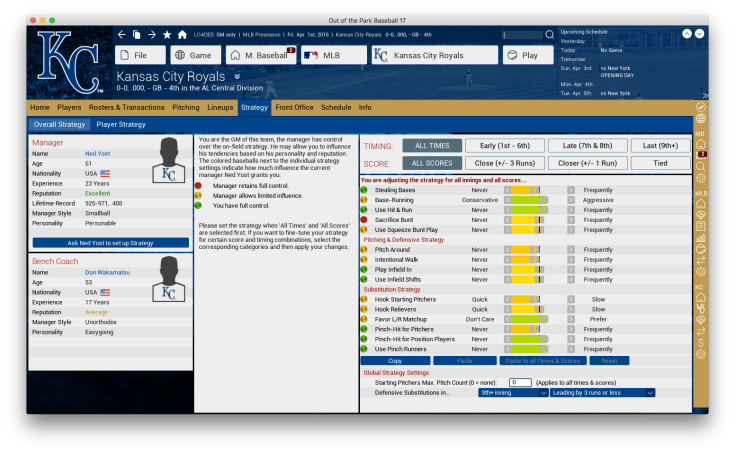
But I didn’t. You see, I’ve been playing ‘Out of the Park Baseball’ for about three years now and it is a daily staple of my life. In my humble opinion, it is baseball simulation at its grandest. Every year I purchase the newest model of the game and almost instantly begin a new Royals season. When my 2017 team started off the year in a bumpy manner, I decided to begin the tearing down of my team. If you want to read about the how, who and why of this rebuild click here.

kc2
Credit: Out of the Park Baseball

When I last wrote about my OOTP Royals, it was near the end of June and my team was in the basement, which I was expecting considering I had just gutted my team. They were sitting at 27-49 and my attendance was already sliding. I knew a change this drastic was not going to instantly take and my feeling was it would be rough all the way around.

Recently the 2017 season wrapped up for my team and it came with some mixed results. They finished with a 64-98 record, which means I went 37-49 since my last update. It wasn’t a great second half, but it was a slight improvement. The pitching ended up being my downfall; a combined 5.07 ERA, 189 home runs allowed and only a 4.9 WAR for my entire pitching staff. One of the big aspects of the “New Look” Royals was to go young which was really felt with the pitching.

kc3
Credit: MLB.com

By the end of the year I had Yordano Ventura, Blake Snell, Aaron Sanchez and Kyle Zimmer in my rotation, all 25 years of age or younger. Ventura ended up racking up over 200 innings and a 2.3 WAR. Snell and Sanchez each reached 122 innings for Kansas City and while at times they struggled with their command (both gave up over 50 free passes), they also showed signs of dominance, as evidenced by each of them striking out over 100 batters. The real surprise for me was Zimmer, who I had no idea what to expect from him. Early on he struggled and had a hard time making it to the 5th inning on a regular basis. But as the season wore on, he righted the ship and while the numbers aren’t great (4.73 ERA, 5.29 FIP, 0.3 WAR) they did improve. Maybe the biggest surprise was that for the most part he stayed healthy, making 28 starts for Kansas City and throwing 159 innings.

While the rotation at least showed signs of life, my bullpen killed me. Only one reliever (Wade Davis) posted a WAR above 1.0 and only three were even league average.If I really want to look in the mirror and see where I failed in 2017, the bullpen was a good place to start. Let’s just say the less I say about the pen, the better. The good news is there is only one direction to move for my relievers and that is up.

kc4
Credit: Jake Roth-USA TODAY Sports

This leaves me to my offense and it was the one area of my team that saw an obvious improvement in the second half of the season. Randall Grichuk was a savior after being acquired from St. Louis, as he produced a team high 3.6 WAR, 145 wRC+, 20 home runs and a line of .289/.361/.564. Cody Bellinger also turned out to be a stellar pick-up, posting 2.2 WAR, 127 wRC+ and a slash line of .288/.359/.494.

The lineup stalwarts that I kept on the team were Alex Gordon and Mike Moustakas and while both were above replacement level overall (Gordon 1.5 WAR, Moose 1.4), offensively they were just below the league average. Gordon had a wRC+ of 92 while Moose had an 88. Both suffered injuries at separate points in the season and I’m hoping they both make a decent comeback for my 2018 campaign (authors note: I locked Moustakas into a two-year deal in the middle of the season).

kc5
Credit: Kansas City Star

But my two biggest surprises were homegrown, as I recalled Bubba Starling and Ryan O’Hearn to get some big league playing time. Since I was going young and I knew the season would be a losing one, I figured it was the perfect time to get some quality at bats. I knew Bubba would deliver solid defense, but I was a bit surprised about some of the pop in his bat (11 home runs and 23 extra base hits). Starling put up a .217/.319/.376 line in 78 games, with a wRC+ of 93 and 1.0 WAR. It’s obvious his offense still needs some work, but I was actually expecting less.

O’Hearn was my big shocker. I had him splitting time at 1B and DH with Bellinger but through his first 100 at bats he was hitting right around .100 with no home runs. I seriously considered sending him back down to Omaha, but remembered that the whole point of this exercise was to get the younger guys playing time. So I stuck with him and in the end it paid off. O’Hearn led the team with 22 home runs, hit a nice .272/.358/.508 with a wRC+ of 125 and 1.5 WAR in just 83 games. The power definitely played and he went from a consideration for 2018 to a locked in starter.

kc6
Credit: AP Photo/Michael Ainsworth

So what has this rebuild taught me? First, it was very obvious that there is no easy answers for a team dealing with a number of major free agents. I might have been able to put together a .500 season if I had kept everyone, but then I would be facing 2018 without a number of younger talents that ended up being major contributors.

Second, I learned that pitching AND hitting really can determine a hit or miss season. With the improvement I saw on offense, it makes me wonder how the season might have turned out if my bullpen had been even league average. There are two sides to this game and if you skimp on one it won’t matter how good the other side is.

Finally, I learned that patience is a virtue. I normally play every game rather than simulate it (so I can make in-game managerial decisions) and because of that I played some really bad baseball during the season. But after starting my 2018 season, my team is 12-9 in the early going, sitting in first place in the AL Central. I’m not for sure that will hold up all season but it’s already apparent how much improved my team is.

On one final note, if you have never played OOTP Baseball I would highly suggest it. I still feel like I am learning every day that I play it. Also, if you have any questions or even suggestions for me about the game, you can always shoot me a message on twitter @SeanThornton5. Enjoy and I hope this shows that the term “rebuild” isn’t a dirty word.

Ohtani Headed to Disneyland, Stanton to the Bronx

kc1
Credit: The Japan Times

The ‘Hot Stove’ season has felt lukewarm at best since the World Series wrapped up, with a number of reasons at the forefront. Two very big reasons for the lack of action was a number of teams focusing their attention on Japanese star Shohei Ohtani and Marlins slugger Giancarlo Stanton. With the Winter Meetings looming on the horizon, both players have punched a ticket to their 2018 destination and it appears on the surface that the rich just got richer.

kc2
Credit: Sports Illustrated

Ohtani announced his intentions on Friday to sign with the Los Angeles Angels and while I’m sure a few teams felt slighted (I’m looking at you, Mariners and Cubs), the more I’ve thought about it the more it makes sense for him to play with the Angels. For one, Ohtani instantly moves to the front of the Los Angeles’ rotation, as Garrett Richards is probably better suited to be in the 2nd or 3rd slot of a major league rotation. Second, with the Angels loaded in the outfield (Mike Trout, Justin Upton, Kole Calhoun) it means Ohtani will almost exclusively be used at DH whenever he is in the lineup. The less time he spends out on defense the better, since that opens up more opportunities to get hurt and the Angels need him pitching more than anything.

Third, being teammates with Trout is a plus. With Ohtani playing beside the best player in baseball, it means Shohei won’t always be the focal point of attention and it means occasionally he can fade into the background. It won’t be the majority of the time, but it will allow him some room just to play baseball. Fourth, the Angels aren’t too far off from being a playoff team. The team stayed in the pennant race until the last week of the season this year and adding Upton for a full year, a healthy Trout and now Ohtani, it should improve the team’s chance of seeing October baseball. Baseball is better when their best players are showcased in October and Trout is the best while Ohtani could end being in that category.

With all that being said, it will be interesting to track his adjustment to American baseball. While we have seen guys like Ichiro Suzuki and Hideo Nomo have instant success once coming to America, they also both were in the back half of their 20’s when they made it to the big leagues. Ohtani will be just 23 years of age when he plays on opening day and he would appear to have more eyes on him than Ichiro and Nomo had combined. Also, I still contend that by the end of his contract he won’t still be a two-way player. I totally get the want and need to see if he can do both on a regular basis, but at the end of the day his true value for the Angels is on the mound, not the 3-5 at bats he racks up in a game. I know there is a ton of interest to see if he can be the “Next Babe Ruth”, but I feel there is a greater chance he becomes the “First Shohei Ohtani”…and there is nothing wrong with that.

kc3
Credit: New York Post

The other big news of the weekend was the acquisition by the New York Yankees of Miami slugger Giancarlo Stanton. For weeks there were discussions of Stanton moving on to the Cardinals, or the Giants, or possibly even the Dodgers. But at the end of the day, the Yankees swooped in and took ownership of the massive slugger and his massive contract. Now I know there are a variety of talking points that have already been hit on with this trade, but I wanted to cover a few just for me personally:

  1. While I am no fan of the Yankees, the one thing this organization does most of the time is put their team in a position to reach the playoffs. We can boo-hoo all day about how much money the Yankees can eat, but remember that big contracts do not always equal on-field success. Remember the Padres spending all that money in 2015? What about the Red Sox of 2016? Or even go back to the early 2000’s and the Yankees additions of guys like Kevin Brown and Randy Johnson? While the Yankees have once again gone and done what the Yankees do, they still have to go out there and perform on the field and rack up W’s. Plus, be honest: would you really want your team to take on Stanton’s ridiculous contract?
  2. Also remember that Stanton isn’t the definition of health. Over the last six seasons, Stanton has played 130 games or more just twice. That is not to say he will go and get injured next year, but do remember that he has had a proclivity of  ending up on the disabled list throughout his eight-year career.
  3. I have always been told that baseball is better when the Yankees are good because so many of us despise the ‘Bronx Bombers’. While there is some definite truth to this (I will almost always root against them, with very few deviations), I can also tell you that if they had advanced to the World Series this year my interest in the series would have gone down tremendously. There is a difference between ‘rooting against’ and ‘not giving a damn’ and the line is very thin between those two things.
  4. While I agree with most that the new ownership group in Miami is off to a horrible start (especially in the public relations department), I don’t fault them for trading Stanton. That contract was awful from day one and none of us really believed he would stay in Miami for the duration of the deal. The Marlins did what any other ownership group would do, which is look into ridding themselves of that bloated contract. That being said, they did fumble everything else when it comes to dealing him, as evidenced by the fact he ended up in New York. If he wasn’t going to accept a deal to St. Louis or San Francisco, why waste all that time working out a deal? Maybe they should have talked to Giancarlo, figured out who he was willing to accept a trade to and then talk to those teams? The Marlins look like bumbling idiots for spending weeks on end trying to work something out and at the end of the day they had to work out a deal with the team in the largest market in baseball. It has not been a good start for the Derek Jeter-led group as they begin their tenure in Miami.
  5. Finally, I am already dreading listening to baseball outlets discuss the Stanton-Judge tandem in the Bronx. Look, we get it. The Yankees have two big sluggers in this itty-bitty ballpark. It doesn’t mean we need to hear about it ad nauseam for the next four months. It will be a shock to a number of major media outlets, but most of us couldn’t care less about what the Yankees are up to. The less we hear about them, the better.
Shohei Ohtani
Credit: Associated Press

So now that Ohtani and Stanton are off the table, it might finally be time for baseball’s ‘Hot Stove’ to heat up. With the Winter Meetings taking place this week, it’s as good a time as any to see teams start wheeling and dealing. It will be interesting to see how the team that had interest in these two players move forward and how they react to not acquiring their top choice. In one fell swoop, two major pieces came off the board and the real game this offseason kicks into full swing. Los Angeles and New York made their moves; now it’s time for the 28 other teams in baseball to make theirs.


Classic Royals: Opening Day 1996

RoyClev_SP091_USE appier

While searching on Youtube for the last no-hitter in Royals history (which was by Bret Saberhagen in August of 1991), I stumbled across this gem. What a great pitching match-up, as Kevin Appier took the hill for the Royals and Mike Mussina for the Orioles. Kansas City would lose 4-2, but if you miss the old days it’s a good chance to watch some Royals legends like Keith Lockhart, Joe Vitiello and Bob Hamelin. For those worried about what the team will look like next year, this might be a decent comparison, as the 1996 Royals finished 75-86 and last in the American League Central.

To give or not give Eric Hosmer a long-term deal, that is the question

MLB: FEB 27 Kansas City Royals Photo Day

Ask any player out on the free agent market this winter what they covet the most and a good majority will say a multi-year contract. Sure, they won’t turn their nose up to the wads of cash thrown their way, but signing a new deal for an extended period is the kind of stability players dream of. The Royals have set their sights on re-signing first baseman Eric Hosmer and it’s hard to fathom that happening without Kansas City committing to a deal that is at least four years in length (and probably more). But history has shown that might not bode well for the Royals.

Kansas City Royals v New York Yankees
Credit: Getty Images

The most infamous long-term contracts in Royals history goes back to 1985 and the “lifetime contracts” . George Brett, Dan Quisenberry and Willie Wilson were the recipients of those deals that appeared at the time to be solid commitments for a perennial contender. But those deals would fall apart quickly, with Quisenberry being released in July of 1988 while Wilson fought off injuries and saw his offensive production wane before leaving after the 1990 season. While in theory these contracts appeared to lock in a chunk of the Kansas City nucleus in the mid 1980’s,  the reality was that the Royals overpaid for players during a period where collusion controlled the free agent market and salaries.

The Royals would close out the 1980’s with one of the worst free agent signings in club history, signing Mark Davis (the 1989 Cy Young award winner) to a four-year, $13 million dollar deal. That deal would go sour almost instantly, as Davis would struggle and lose his closers role to future Royals Hall of Famer Jeff Montgomery. Davis would be dealt to Atlanta in July of 1992 and put up some ugly numbers during his short stint in Kansas City: 167.2 innings, a 5.31 ERA, 5.01 FIP and an ERA+ of 76.

Mike Sweeney
Credit: MLB.com

We all remember Mike Sweeney’s $55 million dollar deal he signed after the 2002 season. Sweeney was the one who decided to stay, while watching Damon, Dye and Beltran be shipped off. Sweeney was coming off his career year in Kansas City, posting the highest bWAR and OPS+ of his career, among other career highs that season. Sweeney’s deal kept him in Kansas City through 2007 but injuries would take their toll on him as early as 2003. While the offensive production was still there for the first couple years of the contract, his time on the field diminished and by 2006 he had essentially become a shell of his former self.

Not every long-term contract handed out by the Royals would miss the mark. One could argue that George Brett’s lifetime contract paid off in spades, as he would continue to be a hitting machine until his age 38 season, well past the normal age of regression for a major league hitter. Zack Greinke’s four-year deal that was signed in 2009 would produce a Cy Young season, but Greinke would be dealt before the contract had run its course. One could even make the argument for David Cone’s three-year deal that he signed with Kansas City before the 1993 season being a success, but for the sake of argument you could also contend that a contract of three years really isn’t “long-term” by definition.

kc4

That leads us to the modern-day Royals, which currently host a number of extended relationships. Ian Kennedy is locked in for another three seasons in Kansas City and has been a mixed bag during his first two seasons as a Royal (one good season, one bad season). Salvador Perez will be entering year two of a five-year extension in 2018 and while Salvy should be entering his prime, there have to be some concerns about the amount of games (and innings) he has caught in his major league career and the wear and tear that goes with it. Danny Duffy will also be in the second year of a five-year extension this upcoming season and has dealt with a wide array of injuries throughout his career as well as a DUI arrest just last summer.

Then there is the Royals contract with the most scorn, that of Alex Gordon. His four-year contract originally appeared on the surface to be a calculated move. Gordon had been a consistent run producer and defensive wizard for the previous five seasons and while he was entering his regression years, the slope appeared lessened by his crazy work ethic and ability to stay healthy. Gordon had appeared in at least 150 games in every season between 2011 and 2014, while his groin strain in 2015 looked to be an outlier. But injuries hindered his 2016 campaign and offensively he hasn’t looked the same for two years now. Situations like Gordon’s are why teams become hesitant to commit to a long-term contract.

kc5
Credit: Kansas City Star

This all leads back to the Eric Hosmer situation and how the Royals should deal with it. On one hand, you have a player entering his age 28 season, coming off of a career best season, in what should be the prime of his career. On the other hand, Hosmer before 2017 was an inconsistent offensive player and has a propensity to hit the ball on the ground at an alarming rate. While the Royals have not had the best of luck when it comes to contracts of more than four years, we are all aware that every situation (and player) is different. Signing any player for 4+ years is a gamble within itself. The question the Royals have to ask is if the risk is bigger or smaller than the reward when rolling the dice on their future.

Hall of Shame

kc1

I received my IBWAA Hall of Fame ballot in my inbox yesterday. I look forward to it every year, as it is an honor to be able to vote for players I feel are worthy of baseball’s highest honor. It also gives me the opportunity to really dive into the numbers, or as my wife calls it “fall down the statistic rabbit hole”. You will see that article in about a months time, where I breakdown my votes and why I voted the way I did. Since I occasionally get asked this, in the IBWAA we do things a bit differently than the boys and girls over at the BBWAA. We have a number of guys who have been voted in (Vlad Guerrero, Edgar Martinez) that the BBWAA still has on their ballot. We are also able to vote for 15 players instead of the 10 the BBWAA are left with. Finally, we don’t have a former player like Joe Morgan send us a letter, trying to sway our vote with arrogant confidence and ignorant hubris…and for that I am grateful.

kc2
Credit: Kansas City Star

If you aren’t aware(or maybe in a cave), Joe Morgan sent out a letter a few weeks back, hoping to veer the writers of the BBWAA away from voting for players linked to steroid use. If you want to read the entire letter, here it is:

Now, I’m not going to get into a huge debate over the Hall of Fame or steroid use in baseball; I have done that so much over the years that I’m just bored with it and it just seems to agitate me. I will tell you that if you want my opinion on the Hall, read this; I wrote this a few years back and it pretty much encompasses my feelings on “cheaters” in the Hall. So I’m not going to get into a big debate about steroid use and Cooperstown. But…I do have a few comments about what Joe said and just who Joe is speaking for.

kc3
Credit: MLB.com

First, let’s start with Joe’s comment about those linked to steroid use:

We hope the day never comes when known steroid users are voted into the Hall of Fame. They
cheated. Steroid users don’t belong here.

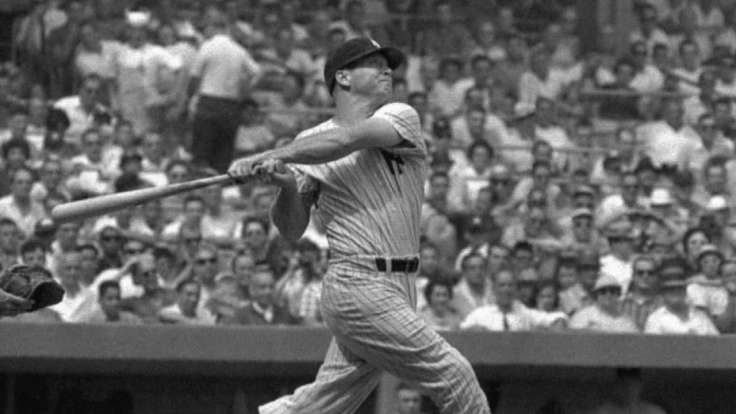
I hate to tell Joe, but I’m pretty positive there is someone (or likely more than one) in the Hall who used steroids. Oh yeah…Mickey Mantle took steroids. So right there, you have a player in those “hallowed halls” that falls below Morgan’s standard for Cooperstown. Pretty sure you won’t catch ol’ Joe looking to pull “The Mick” and his plaque.

Players who failed drug tests, admitted using steroids, or were identified as users in Major League
Baseball’s investigation into steroid abuse, known as the Mitchell Report, should not get in. Those
are the three criteria that many of the players and I think are right.

Look, there is a some validity to the Mitchell Report but lets not act like it is a 100% guilty verdict. That is just someone wanting to believe guilt without the proof.

Now, I recognize there are players identified as users on the Mitchell Report who deny they were
users. That’s why this is a tricky issue. Not everything is black and white – there are shades of gray
here. It’s why your job as a voter is and has always been a difficult and important job. I have faith in
your judgment and know that ultimately, this is your call.

Wait, so Joe knows the Mitchell Report is probably not 100% accurate, yet earlier wants voters to use that report as a template? Come on Joe…

But it still occurs to me that anyone who took body-altering chemicals in a deliberate effort to cheat
the game we love, not to mention they cheated current and former players, and fans too, doesn’t
belong in the Hall of Fame. By cheating, they put up huge numbers, and they made great players
who didn’t cheat look smaller by comparison, taking away from their achievements and consideration for the Hall of Fame. That’s not right.

Body-altering chemicals? You mean like performance enhancers? So players who used amphetamines, right? Because, if we are being honest, amphetamines are enhancing a players performance…and Greenies were used in baseball up until they started testing for amphetamines back in 2006. Greenies were prevalent in the game for years and were widely used during Morgan’s playing days. In fact, players like Hank Aaron & Willie Mays have both been linked to amphetamines over the years…and no one is asking those two to leave Cooperstown (nor should they).

It’s gotten to the point where Hall of Famers are saying that if steroid users get in, they’ll no longer
come to Cooperstown for Induction Ceremonies or other events. Some feel they can’t share a stage
with players who did steroids. The cheating that tainted an era now risks tainting the Hall of Fame
too. The Hall of Fame means too much to us to ever see that happen. If steroid users get in, it will
divide and diminish the Hall, something we couldn’t bear.

Does this include Gaylord Perry? Is he appalled by the cheating?

I care about how good a player was or what kind of numbers he put up; but if a player did steroids,
his integrity is suspect; he lacks sportsmanship; his character is flawed; and, whatever contribution
he made to his team is now dwarfed by his selfishness.

So when do we point out the selfishness of baseball for allowing steroids to be used all those years? The owners? The GM’s? Bud Selig? I’m sure their selfishness won’t allow them to return all the money they received from fans flooding the ballparks during this period. You can put some of the blame on the players, Joe, but there is enough blame to go all the way around.

Steroid users knew they were taking a drug that physically improved how they played. Taking
steroids is a decision. It’s the deliberate act of using chemistry to change how hard you hit and throw by changing what your body is made of.

See “Greenies” from earlier.

I and other Hall of Famers played hard all our lives to achieve what we did. I love this game and am
proud of it. I hope the Hall of Fame’s standards won’t be lowered with the passage of time.
For over eighty years, the Hall of Fame has been a place to look up to, where the hallowed halls
honor those who played the game hard and right. I hope it will always remain that way.

Honestly, baseball has never been a pure game and never will. If I’m being completely honest, when I first read this letter, it felt sanctimonious and hypocritical. Reading it again doesn’t make me change my mind. In fact, it just further cements my initial thoughts of the ignorance in Joe’s words…and how Joe is being used as a puppet.

kc4
Credit: Sports Illustrated

Don’t get me wrong; I totally think Joe Morgan believes the words he wrote in this letter. But I also believe that what he wrote was allowed to be sent because the people on the board for the Hall of Fame and those involved agree with this sentiment. I also feel this is a direct reaction to seeing Barry Bonds’ and Roger Clemens’ vote total moving upward these last couple years. The honest truth is that testing for performance enhancing drugs was not being done when these players were putting up those “tainted numbers” that Joe mentioned. Maybe it’s just me, but since baseball wasn’t testing and those involved seemed okay with it continuing (that was until congress stepped in to put a halt to it), it feels self-righteous to then turn around and punish the players and no one else (including the true villain in this, Bud Selig). Luckily, the letter appears to have angered many a writer in the BBWAA and it makes one wonder if Bonds’ and Clemens’ total will continue to rise. As a member of the IBWAA, we don’t have to worry about any of this mess. I don’t expect a letter from Howard Cole telling us about “hallowed grounds” and “flawed character”. I thank Howard for that, as he appears to “get it”. I’m still going to enjoy the Cooperstown inductions next summer, as I love watching some of the best players in the history of the game get to celebrate their career in the best way possible. The real taint on the Hall of Fame is those involved who try to move the chess pieces to their liking by ignoring a section of history. History is exactly what it is, a part of the past. If you don’t ignore it, you aren’t likely to repeat it again. Now, it appears it’s time for me to go turn in my IBWAA ballot…


Blog at WordPress.com.

Up ↑