On Wednesday, the National Baseball Hall of Fame got a little bit bigger as the BBWAA (Baseball Writers’ Association of America) voted in four new inductees: Trevor Hoffman, Chipper Jones, Jim Thome and Vladimir Guerrero. Add in Alan Trammell and Jack Morris and you have six induction speeches on a sunny July afternoon in Cooperstown. Meanwhile, my brethren in the IBWAA did some house cleaning as well, as we inducted six players (Chipper Jones, Jim Thome, Mike Mussina, Roger Clemens, Barry Bonds and Trevor Hoffman) into our digital Hall of Fame. In my eyes, all the players mentioned above were worthy of this honor. It is also showing a shift in the thinking of baseball writer’s across the baseball landscape.
First, let’s discuss the BBWAA voting, which almost led to a five man class in 2018:
First, it was very obvious going into Wednesday that Chipper, Vlad and Thome were locks. All three were over 90% for the polling (which was sitting at around 55% of the ballots made public) that morning. Hoffman was a bit dicier, as he was sitting around 78.2% of public ballots. It appeared on the surface that he would get in, since he fell just five votes short in 2017.
Meanwhile, Edgar Martinez came up just a bit short, despite the fact he had been polling in the 80% range for the last couple weeks. The good news is that Edgar jumped up to 70.4%, less than 5% to the promised land as he enters his final year on the ballot in 2019.
Credit: Robert Hanashiro, USA TODAY Sports
Also making ground this year on the ballot was Mike Mussina and Larry Walker. Mussina bumped up to 63.5% and Walker 34.1%. Mussina feels like a lock for induction sometime in the next couple of years, while Walker has only two more years of eligibility left. Clemens, Bonds and Curt Schilling all appeared to stay put around where they have been, so next year could be a big one for all three of them.
I was glad to see Scott Rolen and Andruw Jones get enough support to stay on the ballot, and their climb could get a bit easier over the next couple of years, since there are less Hall-worthy candidates on the horizon. The one disappointment was Johan Santana, who is a borderline candidate for the hall. If you are like me and believe strongly in WAR7 (which is the seven-year peak or that players best seven years) and notice the similarities with Sandy Koufax, then you are probably leaning toward him being in. If you believe in a long career and lots of innings for a pitcher, then you are probably against him. The one thing that most of us can agree on is he probably deserved to at least stay on the ballot and let his case be judged for a few more years. Unfortunately, he is now bumped off and like Lou Whitaker, Jim Edmonds and Kenny Lofton before him, he won’t get a fair shake of letting his case be heard.
Overall I felt like the BBWAA did an admirable job and it does appear as if the ballot logjam is starting to sort itself out. That should be a good thing for fringe candidates and those players like Mussina and Martinez who need a little extra nudge to get them over the finish line.
Now onto an organization I am part of, the IBWAA. If you want to talk about making room on the ballot for the future, I believe we took care of that this year:
The 2018 @IBWAA#HOF inductees are: Barry Bonds, Roger Clemens, Trevor Hoffman, Mike Mussina, Chipper Jones and Jim Thome. Edgar (2016) and Vlad (2017) previously elected. The @IBWAA is not affiliated with the @officalBBWAA in any way. #FineByUs#SwatTheVotepic.twitter.com/L4Peso2QHs
Six players are entering our “Digital Hall of Fame” and I’ll be the first to admit I was a bit shocked that we elected Clemens and Bonds, just because they have been floating around on our ballot as well. This is just me throwing out a theory, but our members tend to skew a bit younger and it has felt over the last couple of years like the younger writers have less of an issue with the “Steroid Era” than the older ones. I’m sure there are different reasons for that, whether it is the lack of testing during that period making it harder to really know who did what, or feeling like the rest of baseball was able to get off scot-free while inducting then-Commissioner Bud Selig just last year. Whatever the case may be, Bonds and Clemens were joined by Chipper, Thome, Mussina and Hoffman as part of the IBWAA Class of 2018.
With six players off the ballot, that should make it easier for us to focus on some other deserving candidates next year. Schilling and Walker both took big jumps and Scott Rolen posted a nice 44.7% of the vote in his first year on the ballot. Even Santana stuck around for round two, as he got 36 votes and sits at 21.1% in his first year. With next year’s class of Mariano Rivera, Roy Halladay and Todd Helton being the main first year candidates, it should be easy for us to keep honoring players who deserve this highest honor. We also get 15 votes instead of the BBWAA’s 10, which also helps us keep players on the ballot longer. All in all, I feel like we as a group did a great job this year and I look forward to the results in 2019.
Credit: MLB Photos
In 2013, the BBWAA voted no player over the 75% threshold, which meant a very quiet summer in Cooperstown. Luckily, the last few years have made up for that error, as the writers have voted in 16 players over the last five years. Whether you prefer a bigger Hall of Fame or a smaller one, the truth is that we have seen a lot of worthy entries over these last few years. For every Tim Raines or Edgar Martinez that have to struggle and have people preaching their cause, there are the Chipper Jones’ and Jim Thome’s that have the numbers and look the part. Baseball is better when a light can be shone on the players of year’s past that helped make this the great game that it is. For all its flaws, baseball at its pinnacle is the grandest game of them all. To get to honor those that encompass that greatness…well, that just makes this process a whole lot sweeter.
“Boy, you gotta carry that weight
Carry that weight a long time
Boy, you gonna carry that weight
Carry that weight a long time”
~The Beatles, “Carry That Weight”, 1969
History has shown that the Kansas City Royals are no strangers to bad trades. Ed Hearn for David Cone. Mike Wood, Mark Teahen and John Buck for Carlos Beltran. Neifi Perez for Jermaine Dye. Yuck…I feel dirty just writing Neifi Perez’s name. I’m sure you the reader can think of a few more bad trades that the Royals have been party to. To take that a step further, I’m sure a few would even mention the trade last winter of Wade Davis to the Cubs for slugging outfielder Jorge Soler. But don’t count me in that camp…yet. Because while Soler was awful during his short time in the majors in 2017, this trade is not won or lost on one year alone.
In fact, the whole crux of this trade was about team control. The reason the Royals only got Soler for Davis was because Kansas City was giving up one year of Wade for four years of Soler. While it would have been nice to get a haul similar to what the Yankees got for Andrew Miller, the truth is they were able to get that much since Miller had 2+ years still left on his contract. Even the Aroldis Chapman deal was a different beast, as it was a trade made right before the deadline. With the Davis trade going down during the winter, it meant the Royals weren’t going to get the same kind of deal as other elite relievers. With that being said, four years of control for a younger talent is nothing to sneeze at.
Credit: Steven Branscombe-USA TODAY Sports
It also means that a little bit of patience should be involved when it comes to Soler. He will be entering his age 26 season and more than anything he will need consistent at bats this year for the Royals to really see a difference. One of the reasons the Royals sent him to AAA a couple of times last year was the lack of at bats he was getting for the big league team. At the time, Kansas City was pushing for a playoff spot and the team just didn’t have the time necessary to help him get out of his slump. More than anything, he just wasn’t comfortable:
“It’s just been a struggle to get going,” Yost said. “He just doesn’t look comfortable in the box. He just hasn’t been able to get on a roll up here. We were hoping after his stint down there where he was hitting .320 and hitting homers that he could get up here and get comfortable. But we just need him to get at-bats.”
Between the spring oblique injury, the sporadic playing time for Kansas City and the demotion to the minors, Soler never got a chance to get situated with his new team. Luckily, 2018 will be a new year and with the Royals looking to rebuild it will give him the perfect chance to just go out and play.
While there wasn’t much positive to come from last year, there are a few glimmering signs of hope that Royals fans can clutch onto. One is his walk rate, which has always been a positive and 2017 was no different. Soler put up a 10.9% walk rate in 110 plate appearances, which is above his career rate of 9.3%. In fact, one of his issues last year very well could have been too much patience, as addressed early in the season at beyondtheboxscore.com:
Right now, Soler is displaying the difference between plate approach and pitch recognition. His current approach at the plate is a good one: take a lot of pitches, look for ones to drive, and hit the ball in the air when they come. But there’s no evidence Soler has made progress in pitch recognition. While he’s laying off the pitches he shouldn’t chase early in the count, he’s also laying off the pitches he needs to swing at early in the count. This is leading to a lot deep counts, walks, and strikeouts; it’s not leading to a lot of hits and home runs, which are kind of important.
Sounds like what we saw last year, doesn’t it? The good news is that pitch recognition is something that players normally grow into the longer they are in the league. A number of the advances that both Lorenzo Cain and Mike Moustakas saw these last 3-4 years appeared to be from recognizing pitches and realizing which pitches to pounce on and which ones to try to go the other way with. While it can be frustrating, it can also be worth it in the long run.
Credit: Jim McIsaac/Getty Images
It also appeared that Soler was hitting the ball in the air a tad more, as his fly ball rate continued the upward trajectory it has been taking throughout his career. Soler’s bread and butter is the home run and it won’t do him any good if he is hitting the ball on the ground. I wouldn’t mind seeing a few more line drives, as they have taken a downward turn these last few years. Soler’s high for his line drive rate was 27.8% back in 2015; the last two years he has posted rates of 17.1% and 18.0%. Those two years have also seen a slight move up in ground balls, but not enough to get worried about. It does appear obvious what he should be working on when he reports to camp next month.
Credit: AP images
With Terry Bradshaw sliding into the hitting coach role this year, Soler should be near the top of the list of priorities for him this spring. With a focus on pitch recognition and driving the ball, we could see Soler start to put up the numbers we all envisioned from him when he was acquired last winter. It’s unfair to expect him to produce at the level of the man he was traded for. The legend of Wade Davis is of an unstoppable force that compiled two of the best seasons for a reliever not only in Royals history, but in baseball lore. He will also be remembered as the man on the mound for the final out of the 2015 World Series. The expectations for Jorge Soler aren’t to match what Davis did in his Kansas City tenure. No, the expectations are simple. All the Royals need from him is to go out and produce above league average for a couple of seasons and be a force in the middle of the batting order. Asking him to be on par with a legend is being unrealistic of why he was acquired in the first place.
There is no greater honor in any sport than getting a plaque in the baseball Hall of Fame. I’m sure someone who believes the NFL or NBA is a greater honor will debate me on this, but there is never the sort of debate toward their hall’s as there is in baseball. That debate has grown into a fervor amongst baseball fans, writers and even players, as every one seems to have an opinion on this topic. What has made it even more intense is what we should do with players who were “suspected” of enhancement thanks to steroids and other performance enhancement drugs, and whether or not they deserve a spot in the hallowed halls of Cooperstown or left on the outside looking in. In some ways, the people who vote on this honor are the judge, jury and executioner, as testing was not done during this period so for many of the players of that era there is no definite of what they did or did not do. Even Hall of Famer Joe Morgan has spoken out on the topic recently, which stirred the pot even more. As a member of the IBWAA, this will be my fourth year of voting for ‘the Hall’ and as I have said in years past, I have no issue voting for anyone suspected for PED use, since I feel those players played within the parameters of the rules allowed at that time. I’ve long considered the Hall of Fame a museum of the game, not a church, and because of this I vote based on performance alone. Now, there are a few differences between us in the IBWAA & our brethren in the BBWAA, one of which is the players we have already inducted. Last year we inducted Vladimir Guerrero and Ivan Rodriguez, and in years past we had already voted in Edgar Martinez, so he will not show up on our ballot this year. Also, we are allowed to vote for up to 15 players, where the BBWAA can only vote for 10. Before we get to my actual votes, you can read my previous votes: Here is 2014, 2015, 2016, and 2017. Also, follow Ryan Thibodaux on Twitter. That way you can follow how the voting is going before the big announcement on January 24th. Without further ado, here are my votes for the 2018 Hall of Fame ballot.
Barry Bonds
I have voted for Bonds every year and will continue to until he is finally elected. In my eyes, this is a no-brainer, as Bonds is one of the greatest baseball players ever, not just of his era. I could rattle off all the numbers that show how great he was, but I think the best way to explain it is this way: before there was any whispers about suspected steroid use, Bonds was a 5 tool player who could literally do anything on the baseball field…and then he became an offensive juggernaut that could not be contained. The all-time home run king took that whole era to another level and it wasn’t even close. You might not like him or what he had to do to elevate his game, but I am not concerned about any of that when it comes to voting. To me, Bonds is a slam dunk pick and should already be in the Hall of Fame.
Credit: DOUG BENC/GETTY IMAGES
Roger Clemens
Like Bonds, Clemens is an easy pick, the greatest pitcher of his era and one of the greatest pitchers of all-time. Clemens won the Cy Young Award seven times throughout his career, and is on a list of statistics that garner him near the top of almost all pitching leader boards. Both Bonds and Clemens seem to be garnering more support, as the election of former Commissioner Bud Selig to the Hall seems to have allowed some voters to start putting an ‘x’ in the box next to their names. At one time it appeared both men would have to wait until they showed up on the Veteran’s Committee ballot before they would get elected; now we could see that wall busted through in the next couple of years.
Credit: Getty Images
Billy Wagner
Wagner was a seven time All-Star, twice was in the top ten of the NL Cy Young award and took home the 1999 NL Rolaids Relief Award. While he sits in 6th place all-time in saves, that doesn’t mean as much to me as his 86% conversion rate, which is close to Trevor Hoffman’s 88.8%. What does interest me is some of the deeper numbers when compared to fellow relievers. Wagner is 5th all-time for relievers in ERA+, 14th for relievers in bWAR (in fact, just under Hoffman), 4th in strikeouts for a reliever, 86th in Adjusted Pitching Runs, 93rd in Adjusted Pitching Wins, 55th in RE24, and 36th in Win Probability Added. All this was done in less than 1,000 innings, which for some is a hindrance rather than a positive. I get that relievers today aren’t used in the same scenarios as their forefathers, and because of that their innings totals will seem meek in comparison. But that is also what the role calls for nowadays and there is something to be said for compiling numbers like this in a much shorter amount of time. For Wagner, it was more about the efficiency than the longevity; Wagner came in, shut down the opposing team and was done. In some ways, Wagner and Hoffman are linked in that they both pitched about the same amount of time, in the same period and were equally efficient. Both were top of the food chain for their position and in my eyes, both should be in Cooperstown.
Credit: MLB.com
Chipper Jones
If there is a position that is under-represented in Cooperstown, it is third base. Only 16 third baseman are enshrined into the “Hallowed Halls” (which is the lowest of any single position) but it looks as if number 17 will be inducted this summer, as Chipper Jones feels like a slam-dunk to get voted in. When it comes to just third baseman, Chipper is ranked high among the elite at his position: 6th in WAR, 8th in WAR7 (which are a combination of his seven best seasons), 8th in JAWS (which is a combination of the previous two WAR stats), 6th in hits, 3rd in home runs, 2nd in RBI’s, 7th in on-base percentage, 4th in slugging and 9th in OPS+. In the Hall of Stats, Chipper is ranked 6th all-time at the position and considering the other numbers that feels like a fair spot for him. While it is obvious he ranks among the best at his position, that did make me curious to see where his place was in the all-time rankings of baseball history. The numbers actually tell the story of a great baseball player: 51st in career WAR (32nd for position players), 25th in offensive WAR, 54th in on-base percentage, 51st in slugging percentage, 37th in OPS, 60th in career hits, 32nd in total bases, 33rd in home runs, 34th in RBI’s, 16th in career walks (this actually surprised me a bit), 72nd in OPS+, 25th in runs created, 28th in extra base hits, and 15th in career Win Probability Added. It is easy to tell that Jones was a Hall of Famer but there is more to it than just his place in history. Jones was drafted as a shortstop by the Braves, but ended up only playing 49 games at the position in the big leagues. While Chipper is known as a third baseman (and that is where he played the most games), Jones did spend the 2002-2003 seasons out in left field, as the Braves had Vinny Castilla playing at third base. To me, this felt a bit like Kris Bryant, who has floated around for the Cubs the last few years at third base and the outfield. Jones was also a switch hitter and easily one of the best of his kind in baseball lore. In fact, Fangraphs ranked the greatest switch hitters in MLB history a few years back and Jones came in at number two, just behind Mickey Mantle and ahead of Hall of Famers Eddie Murray, Tim Raines and Roberto Alomar. But what statistic stood out to me the most in Chipper’s career? From 1996 to the end of his career in 2012, Jones never posted an OPS+ below 116. In other words, for the duration of his career, Chipper never produced an offensive season below league average (his lowest was a 108 that he posted in his rookie year of 1995). To play 19 seasons in the big leagues and never get below the league average is the definition of consistency and is just one of many numbers that prove that Chipper Jones deserves induction to the baseball Hall of Fame.
Credit: Jonathan Daniel/Getty Images
Jim Thome
Some hitters are adored for their ability to get on base, some are praised for their mastery of putting the ball ‘where it ain’t’…and then some are hailed for power and consistency; that would be the category that Jim Thome would fall into. Thome was one of the greatest home run hitters of his era and was that middle of the lineup force that few teams wanted to mess with. While the accolades are there (five time All-Star, a Silver Slugger award, 2002 Roberto Clemente award, 2004 Lou Gehrig Memorial Award and 2006 AL Comeback Player of the Year), the numbers are the meat and potatoes of Thome’s candidacy. Thome’s rank as a first baseman is a nod to just how great he was, considering how loaded that position is throughout the course of baseball history. Thome ranks 9th in WAR for first baseman, 19th in WAR7, 10th in JAWS, 2nd in home runs, 9th in RBI’s, 8th in slugging percentage, 8th in OPS and 13th in OPS+. This really amazes me, considering Thome is dealing with such classic first baseman as Gehrig, Foxx, Mize, Thomas and Pujols, just to name a few. Thome ranks 10th all-time for the position in the Hall of Stats, 96th all-time. Much like Chipper, his model of consistency was amazing. Outside of the 2005 season (where he appeared in only 59 games due to injury), he never posted an OPS+ below league average, and the lowest he posted in a season where he played at least 120 games was 117. In fact, he posted 10 seasons (10!) where he had an OPS+ of 150 or more. I’m a big proponent of where player’s rank all-time when it comes to their Hall candidacy, and Thome crosses those off with flying colors. He ranks 84 in career WAR (54th for position players), 44th in offensive WAR, 51st in on-base percentage, 23rd in slugging percentage, 18th in OPS, 41st in total bases, 8th in career home runs, 26th in RBI’s, 7th in walks, 47th in OPS+, 24th in runs created, 23rd in extra base hits, 5th all-time in at bats per home run, 21st in RE24, and 38th in Win Probability Added. While Thome wasn’t a great defensive player, teams weren’t employing him for his glove; it was all about his bat. But there is always one more thing that compels us to cheer for Jim Thome on his journey to Cooperstown: Thome might be one of the nicest guys that has ever played professional baseball. Don’t just take my word, take the word of Cleveland Indians President Chris Antonetti:
“The thing that stands out to me about Jim is just who he is — day-in, day-out,” Indians general manager Chris Antonetti told Rumblings. “It’s the way he treats the ushers and the parking-lot attendants, not just how great a guy he is in the clubhouse. He treats every person he meets with respect and dignity. And I’m not sure I can give anybody a better compliment.”
For those of you that wouldn’t vote for a Bonds or a Schilling for how they have acted in the past, Thome would be your measuring stick for the other side of the pendulum. A vote for Thome is not only for the great numbers that rank among the best in history. No, a vote for Thome is one for a guy who was a Hall of Fame player AND person. I’m pretty sure Thome is another lock to be giving a speech in upstate New York this upcoming summer.
Gary Sheffield
Over the last few years I have gone back and forth on Gary Sheffield and his candidacy for the Hall of Fame. Maybe it was because he bounced around from team to team, or the fact that he bounced between the infield and the outfield throughout his career. Either way, it was easy to leave Sheff out of the conversation and feel like he was on the cusp of greatness. But when I finally broke down the numbers, it really felt like his case has been one of the most overlooked when it comes to the hall. Sheffield played right field more than any other position, so I first stacked his numbers against the others at that position. Sheffield is 19th in WAR for right fielders, just below Shoeless Joe Jackson and Dave Winfield. He ranks a bit lower on his peak, as he sits 24th in WAR7, above Hall of Famers Winfield, Chuck Klein, Willie Keeler, and Enos Slaughter. He is also at 24th in JAWS while 7th in home runs, 8th in RBI’s, 12th in OPS and 15th in OPS+. Now, right fielders are well represented in the hall (24 to be exact) so Sheffield holds his own in the position, even if he is slightly below the elite level. But as I mentioned earlier, I’m a big proponent of where players stack up all-time and that is where Sheffield shines. He is 35th in offensive WAR (obviously his defense dragged him down a bit in the WAR category), 88th in on-base percentage, 76th in slugging percentage, 58th in OPS, 69th in hits, 34th in total bases, 26th in home runs, 28th in RBI’s, 21st in walks, 78th in OPS+, 26th in runs created, 39th in extra base hits, 25th in RE24, and 16th in Win Probability Added. I’m sure the fact he played 22 seasons helped him compile a decent amount of those numbers, but he also was able to stay healthy and be a consistent run producer for almost the entirety of his career. Sheffield had six seasons with an OPS+ of 150 or more and was above league average for all but two years of his career (one was his rookie year and the other was his age 39 season). So what has hurt Sheffield’s case? I’m sure a few people would mention that his name was in the Mitchell Report and had been linked to PED’s in the past. Like I mentioned, that doesn’t affect my voting. But the other concern was his defense. It didn’t really matter whether he was at shortstop, third base or the outfield, he just wasn’t a great fielder. In the past I’ve not voted for Jeff Kent because of his defense and I didn’t vote for Omar Vizquel this year because of his lack of offense. So what was the difference with Sheff? His offense was so good that it crossed out any issues I had with his defense. I’m also a “Big Hall” guy and feel like Sheffield was one of the great hitters of his era. I can understand if someone leaves him off (he is a fringe guy in this regard), but for me he was far enough above the line to be considered one of the greats.
Mike Mussina
When thinking about Mike Mussina, what is the first thing that springs to mind? Is it his start in Game 7 of the 2003 ALCS? Or maybe his use of the knuckle-curve, which was his out pitch? Or does nothing specific pop into your mind when hearing Mussina’s name? I sometimes wonder if those of us on the Mussina bandwagon would have to praise his career if he had been even just a tad bit flashier.What I end up realizing is that part of what made him so great was that he wasn’t flashy and just went out for 18 seasons and performed as a top of the rotation starter in that span. There are no Cy Young awards on his mantle, but there are numbers that back up his greatness. Mussina has the 24th best bWAR for pitchers, 19th in strikeouts, 22nd best strikeout to walk ratio, 17th best adjusted pitching runs, 21st best adjusted pitching wins, 9th best RE24, and 10th best Win Probability Added. Mussina was that guy who you could count on for a big win or just to go out and save the bullpen from being overused. Mussina jumped up to 51.8% of the ballots in 2017 and it appears he is inching closer to the 75% he needs to reach the Hall. One of the pitchers that Mussina’s stats are comparable to is another former Oriole, Jim Palmer. While Palmer might have the accolades that Mussina does not have, the one thing in common is that both pitchers deserve to be in the baseball Hall of Fame.
Curt Schilling
There might not be a bigger lightning rod on the Hall of Fame ballot than Schilling, who has caught quite a bit of scorn for his behavior on social media within the last couple of years. While I might not agree with his politics, I do realize it has nothing to do with his candidacy in the Hall and justly had no qualms in voting for him yet again this year. Schilling’s numbers speak of a top-notch starter: 26th all-time in pitchers bWAR, 15th in strikeouts, 3rd best strikeout to walk ratio, 18th best Win Probability Added and 46th best ERA+. Those are just his regular season numbers; toss in the postseason and you have a surefire Hall of Famer. Schilling has rubbed many a writer the wrong way (and by no means do I feel sorry for Curt; he would probably be better off learning when to keep quiet) and because of that his vote totals went down last year, down 7.3 %, finishing at 45%. I might not like Schilling the person, but the baseball player was one hell of a pitcher out on the diamond. For that, he has my vote.
Trevor Hoffman
For the third consecutive season, I voted for Trevor Hoffman. There has been plenty of debate on whether or not closers should be judged on a different criteria than most other positions and to a small degree I get some of the trepidation. Closers today don’t always face the strongest part of the lineup and it seems odd to have your best bullpen arm only throw an inning or less an outing. The thing to remember though is that “the closer” is still a position and if you excel at it for 16 seasons, you should be rewarded justly. In some ways, the Hoffman argument is very similar to Tim Raines; Raines was the second best leadoff hitter of his time, behind another Hall of Famer in Rickey Henderson. Hoffman was the second best closer of his, behind future Hall honoree Mariano Rivera. Hoffman not only shouldn’t be punished for not being Rivera, but was about as consistent as one can be. During his career, Hoffman posted 15 consecutive seasons of 20+ saves (and I hate the save stat, but this is still very impressive) and had an 88.8% save conversion rate, which within itself is almost insane when you consider the amount of save opportunities he received in his career.Throw in his lethal change-up that was almost as deadly as Rivera’s cutter, and you have a one of the best relievers of all-time. He might be no Mariano Rivera, but then again who is? What Hoffman is though is a Hall of Fame closer.
Manny Ramirez
Many voters have said the difference to them between Bonds or Clemens and Rafael Palmeiro or Ramirez is that the latter tested positive for performance enhancing drugs and was justly suspended. In fact, last year when I started filling out my ballot, I paused on Ramirez and had to really stop and think of which direction I wanted to go. Like I have said, my voting is performance based but an actual suspension (and for Manny it was multiple suspensions) muddies the water a bit. After much contemplation, I went ahead and voted for Manny since he had put up Hall of Fame numbers before the suspensions. While Ramirez wasn’t a stellar defender (and that is evidenced by his career bWAR of 69.2), offensively he was a juggernaut. Manny posted a career line of .312/.411/.585 with 555 career home runs, and an OPS+ of 154. I firmly believe he could hit blindfolded and still produce league average numbers, as he was that good of a hitter. Manny also contributed during the playoffs, where he hit .285/.394/.544 with 29 home runs and 78 RBI’s over 111 postseason games, all fairly on pace to his regular season averages. The awards are all there for him as he was a 12 time All-Star, 2 time Hank Aaron award winner, 2002 AL batting title, 2004 World Series MVP, and 9 time Silver Slugger award winner. If that isn’t impressive enough, the numbers are quite gaudy: 32nd all-time in oWAR, 32nd in On-Base Percentage, 8th in Slugging Percentage, 8th in OPS, 29th in total bases, 31st in doubles, 15th in home runs, 18th in RBI’s, 28th in OPS+, 21st in runs created, 17th in Adjusted Batting Runs, 20th in Adjusted Batting Wins, 16th in extra base hits, 11th in RE24, and 23rd in Win Probability Added. Those are Hall of Fame numbers and most of that accumulated before he tested positive for anything. Would I hold it against anyone for not voting for him because of the suspensions? Nope. I get it.But for me, Ramirez has long been a Hall of Famer; the only thing those suspensions did was tarnish the perception of him, which is unfortunate. Instead of people remembering Manny for his child-like antics or immense hitting, he will be branded a cheater. He has no one else to blame for that, but I still felt like he had earned my vote, scarlet letter and all.
Scott Rolen
If there is a player I voted for that I feel others will look past on first glance when they absolutely shouldn’t, it’s Scott Rolen. I mentioned earlier how under-represented the position of third base is and voting for both Chipper and Rolen would go a long way toward making up some much-needed ground. While Chipper’s case mostly lies on his offense, Rolen’s leans a bit more toward his defense. While the defensive metrics still feel a bit like a work in progress, there is no denying that he was an elite defender. Rolen sits 6th all-time in total zone runs as a third baseman, 32nd for range factor/9 innings for a third baseman and is second in defensive runs saved as a third sacker since 2002. Rolen was 48th all-time in defensive WAR, an eight-time Gold Glove winner and outside of maybe Adrian Beltre, was considered the elite defender at the position during his day. Now, defense alone doesn’t get you in the hall, otherwise someone like Mark Belanger would have a nice little plaque. Luckily for Rolen, his offense was stellar as well. The stats don’t speak as a world beater as much as a consistent performer throughout his 17 year career; 99th all-time in WAR (67th for position players), 51st in career doubles, 74th in extra base hits and 104th in Win Probability Added. Like I said, not breaking any records but I doubt many would expect these kind of footprints stepping into the statistical records of baseball history. But to truly honor Rolen’s greatness, all you have to do is view his place in third basemen all-time. Rolen sits 10th for third basemen all-time in WAR, 14th in WAR7, and 10th in JAWS. If you believe in those numbers as much as I do, you consider Rolen one of the greatest third baseman in history…but there is more. When considering the other players at his position, he is 6th in doubles, 15th in home runs, 14th in RBI’s, 14th in slugging percentage, and 11th in OPS. To top it all off, the Hall of Stats has him listed as a 142 Hall Rating, 85th all-time overall and 8th among third baseman. In other words, he was great and totally deserves this honor. I really wish Rolen was getting more support this year, since I really feel like he is the third base equivalent of Alan Trammell. Great numbers, especially the more you dive into them but overshadowed by his peers who played at the same time. It would be great to see Rolen and Trammell get inducted together; unfortunately, it appears Rolen will have to wait for his honor. At some point he will get his acknowledgement, it’s just a matter of how long that takes to happen.
Credit: Geoff Burke-USA TODAY Sports
Johan Santana
There are so many factors when considering players for the Hall of Fame, and everyone’s criteria is different, especially since every player is a different case. Some of my main factors are placement on the all-time leaderboard, consistency, and being elite at your position. But what about longevity, you might be asking? While it can be a factor, I’ve always leaned more toward being great for a longer period, not just length of ones career. In other words, I strongly lean toward the seven-year peak, or WAR7, which defines a player’s best seven WAR years of his career. With that in mind, it was hard to say no to Johan Santana, a player who I’m sure some will say didn’t do enough in his career. I get that and even at first I wasn’t sold that he had performed good enough to deserve the honor. But breaking down the numbers showed while shorter than most, he packed a lot of great into his 12 year career. Let’s start with his ranking among starting pitchers, since that is really where the conversation begins. Santana ranks 100th in WAR, 63rd in WAR7 and 86th in JAWS. It’s interesting to mention JAWS in these conversations, as the man who created it, Jay Jaffe, actually has debated himself just where Santana stands in the pantheon of history:
From an advanced metrics standpoint, Santana is obviously short of the WAR-based career, peak and JAWS standards, but he outdoes many big-name Hall of Famers. His 51.4 career WAR (including offense) is tied for 102nd all time but beats that of 11 enshrined pitchers, including Sandy Koufax (49.0), Dean (44.9), and Catfish Hunter (41.4), not to mention Morris (44.1). His 44.8 peak score, which is tied with Dave Stieb for 61st, is higher than 25 of the 62 (or 26 of 63 if you include Morris), and his 48.1 JAWS, which ranks 85th, tops 15 enshrinees (plus Morris), including Koufax (47.5), Whitey Ford (46.0), Dean and Bob Lemon (both 43.9), and Hunter (38.3).
So despite his short career, Santana has managed to wedge himself into interesting company when it comes to some of the advanced metrics. I was interested to see where he placed when it comes to ERA+, and he did not disappoint, sitting in 16th place all-time at 136. But where I really wanted to check Santana was a comparison to Koufax, since both were great for a number of years and both retired at a younger age due to injuries. So here are some comparisons between the two:
When it comes to WAR, Santana trumps Koufax, 51.4 to 49.0.
For their seven-year peak, Koufax beats Santana, 46.1 to 44.8.
Now for JAWS, Santana slides by Koufax, 48.1 to 47.5.
Since both pitchers had 12 year careers, I thought I would look at some of the other stats and see where they stand. Koufax easily beats Santana in ERA, WHIP, Hits per 9, Strikeouts per 9, and Strikeouts, while Santana beats him in Strikeout to Walk Ratio.
Granted they played in different times, when starting pitchers were used differently, but there really doesn’t appear to be a huge gap between the two players overall. So then I ask the question: if you feel Koufax is a surefire Hall of Famer (which I’m pretty sure no one is arguing), then why isn’t Santana? To me he is, which is why I voted for him. The voting has not been going well for him so far (he is polling at 1.3% so far with 46.9% of the ballots known) and it appears he will fall off the ballot for next year. It’s unfortunate, because he really feels like a guy who should be getting a longer look. Instead, you have to hope the Modern Baseball Era committee will give him a longer look when that times comes. To quote Neil Young, “It’s better to burn out, than to fade away”.
Credit: DAVID ZALUBOWSKI / Associated Press
Larry Walker
This was the second year I voted for Walker and my take on him seemed to be a bit different from a lot of folks. For many, the fact that Walker played a large chunk of his home games in Coors Field (Walker was a Rockie from 1995 to 2004) seemed to deter voters from placing a vote for him; I had no issue with that, since I knew he hit on the road almost as well as he did at home. No, my issue with him was injuries, as he had 7 seasons of less than 130 games, 12 of less than 140. Walker’s issue wasn’t the ‘Rocky Mountain High’s’ as much as the ability to stay on the field and play. The numbers speak volumes: .313/.400/.565 career slash line, 141 career OPS+, 5 time All-Star, 1997 NL MVP, 3 batting titles, and 7 time Gold Glove winner. So what changed for me when it comes to Walker? His place in history. According to JAWS, Walker is the 10th best right fielder of all-time. All-Time! Just seeing who he is better than sounds like a who’s-who of right fielders: Shoeless Joe Jackson, Tony Gwynn, Ichiro Suzuki, Dwight Evans, Dave Winfield, Vladimir Guerrero, Willie Keeler, Paul Waner and Enos Slaughter, just to name a few. Walker is 86th all-time in bWAR, 56th in bWAR for position players, 55th in on base percentage, 12th in slugging percentage, 14th in OPS, 31st in power-speed #, 38th in RE24, and 36th in Win Probability Added. Those numbers are just a sliver of what he could do; there are 7 other categories where Walker is in the Top 100 of all-time. What makes me curious is the voting for Walker during the first six years on the ballot; He peaked in 2012 at 22% and last year bumped up a bit to 21.9%. One has to wonder if the voters viewpoint of him would change if he hadn’t played so many games in Colorado. It took me awhile to recognize it, but Walker deserves to be with the other elite right fielders in Cooperstown.
Credit: Getty Images
So there you go, my 13 picks to be inducted into the IBWAA Hall of Fame. One player that could get my vote next year is Andruw Jones. I reluctantly left him off this year, as I’m not 100% sold on him being one of the elite, but he is one that I did heavily consider during this process. One other player that fell quite a bit short was Omar Vizquel. There are those that believe his defense is enough to get him in. Unfortunately, his offense was more than lacking: a career OPS+ of 82 and only 45.3 WAR in his career shows that his defense was not enough to get my vote. 2019 should be interesting, as a number of big names will pop up on the ballot: Mariano Rivera, Roy Halladay, Todd Helton, Andy Pettitte, Lance Berkman and Roy Oswalt will all be on the list. It’s probably a good thing that it looks like as many as five players could be inducted this year, as a number of worthy candidates will be added next year. Don’t worry; while the voting will commence on Wednesday, the debate will rage on.
Here we are halfway through January and baseball’s “Hot Stove” is more like a frigid freezer. There has been some speculation as to why the free agent market is as dead as a door nail; Jeff Passan broke down baseball’s economic system while Max Rieper did a great job looking into baseball’s middle class. No matter how you view this situation, the bottom line is there are a number of players ripe for the picking on the market right now and that includes the “Big 4” of the Kansas City Royals. Still out there are Eric Hosmer, Alcides Escobar, Lorenzo Cain and Mike Moustakas, all still unemployed as of this writing. There is no way these four don’t end up on some needy team soon, but who will they finally sign with? I thought it would be fun today to look at each player and throw out some guesses as to where they end up. Do I have any inside information? Nope. Am I just going to guess? Kind of. Should you take this seriously? Since I’m not their agent, probably not. Chalk this up as just a fun exercise to pass what has been about the slowest winter since the mid-80’s, when that dreaded “C” word was going around (Yes, collusion. Not the other “C” word…).
Credit: Rick Osentoski-USA TODAY Sports
Mike Moustakas
It does appear as the market has almost flat-lined for Moose. Most speculated that the Angels would be the most obvious pick for Moustakas, since he is from California and they were in need of a third baseman. Instead, they signed Zack Cozart. Maybe the Giants? Nope, as they plucked Evan Longoria from the Rays. Whether it is the draft pick a team would have to give up to sign him, concerns about his injury history or just trying to stay under the luxury tax threshold (I’m looking at you, Yankees), it appears every team has had more worries than they would like when it comes to signing Moustakas. Even earlier this week, we are still just hearing a sprinkle of interest when it comes to team’s looking for a slugging third baseman. Baltimore has been mentioned, but they have Manny Machado at the hot corner and Tim Beckham proved he could start at shortstop for the O’s, so it’s not like they have to make a move and force Machado back to shortstop. Milwaukee has been mentioned but they still have Travis Shaw, who one would think would be a slightly younger, cheaper option for the Brewers. I still contend that Moose would be the guy that Kansas City should look into, but it appears that is purely a long shot. It will be interesting to see where he finally ends up, but I definitely think his value has shrunk and he is more likely to get a two-year deal out of a team than four years and up. A one-year deal is possible, but that would force him back onto the market next winter, with competition from fellow third baseman Machado and Josh Donaldson. To be frank, things aren’t looking good on the long-term front for Mike Moustakas.
Likely Destination: St. Louis Cardinals
Alcides Escobar
If the Moustakas market feels cold, then Escobar’s is Antarctica. To say the rumors of interested teams for Esky is limited would be an understatement. There’s the Padres, who showed interest in him before acquiring Freddy Galvis to play shortstop, and then there are…ummm…there is also the…uhhh…no one. Nope, I haven’t seen any other team linked to Escobar this winter, outside of a few writers suggesting locations that might need him. The honest truth is that Escobar has been a weak hitter these last few years who has gotten by on his defense…which has begun to regress. So it shouldn’t be a shock to say that the market for a light hitting shortstop, entering a period where his defense and speed will start to wane as well, is sparse. There aren’t many options for Alcides, so at this point he might have to just take what he can get, even if it is a role as a backup mentor on a rebuilding team.
Likely Destination: Kansas City Royals
Lorenzo Cain
This might be the most curious of available Royals still out there, since Cain actually has a lot of value and isn’t represented by Scott Boras. We’ve all heard the teams that have shown interest in LoCain: Giants, Rangers, Brewers, Dodgers and Blue Jays just to name the most interested. More than likely, the main reason Cain is even still on the market is his age and injury history, combined with a desire for a long-term deal. The long-term thing always appeared to be a hang-up for the Royals and probably went a long way to them not focusing their attention on him. There have been a number of articles written recently discussing Cain’s value and why team’s should be jumping over each other to sign him. I have to believe the answer lies somewhere in-between, as this quote from the Passan piece I mentioned earlier:
One assistant GM interested in center fielder Lorenzo Cain thought about the possibility of offering him a multiyear deal. “I’d rather just give him one year at $24 million,” he said, and maybe he didn’t realize that the one-year deal was a hallmark of collusion, and maybe he did.
It appears that teams would be more interested in someone like Cain and even pay him more on a shorter deal than lock him up on a longer deal. I know as a fan I have had my concerns about Cain’s health and more importantly, the health of his legs. If as a fan I am having that concern, you could see why major league team’s appear to be weary as well when it comes to the long-term health of an outfielder who will be entering his age 32 season in 2018.
Likely Destination: Milwaukee Brewers
Credit: Adam Hunger-USA TODAY Sports
Eric Hosmer
…and then there is Eric Hosmer. There has been a ton of speculation of just who will lock-up Hosmer, but the honest truth is there appears to be only two teams really committed to the idea of making him a long time fixture in their organization: the Royals and the Padres. It does appear both teams are willing to go six to seven years on a deal but the money looks to be the major hang-up in getting the pen to paper. A few other teams appear at least in the mix (the Cardinals and Red Sox keep getting brought up), even if it is just dipping their toes into the proverbial water. Teams have concerns about Hosmer, with a lot of it being directed at his ground ball rate (55.6% in 2017) and whether or not he would adjust his hitting style to allow the ball to be put in the air more often. Any deal over five years takes with it a certain amount of risk and when you add in the ground balls, the defensive metrics and the inconsistency he has had over the years, you can see why more teams aren’t flocking to bring him into their fold. Hosmer very well could be the first major Royals free agent to sign, but he could also be the final domino to fall. With Hos, it will all come down to if an offer is on the table that his agent (Boras) feels comfortable with.
Likely Destination: Kansas City Royals
Credit: John Sleezer/KC Star
If this winter has proven anything, it’s that teams have become more methodical in how they spend their money and the effects are being felt by this crop of long-time Royals. Do I feel comfortable with my guesses? Not really. This market has been the hardest to read and it might just come down to the best offer on the table whenever pitchers and catchers report next month. The best scenario for the Royals is still for their stars to sign elsewhere, accumulate the extra draft picks and let the team start rebuilding. But the Royals front office sometimes zags when we think they will zig, so I guess that means the possibility is still out there for all four to return to Kansas City. I would say crazier things have happened, but I don’t know if anything is crazier than the lack of action we have seen this winter.
Throughout 2014 and 2015, the Royals bullpen was out of this world. Looking back, it shouldn’t be a shock to anyone that Kansas City was able to dominate the way they did and shut down opposing teams in the postseason. The honest truth is that the Royals pen of that era was a ‘once in a lifetime’ group that we might never see again. Sure, it feels like every team in baseball is trying to copy the Royals’ blueprint (Hello, Rockies!) but who knows if we see that level of domination in both the regular season AND the postseason again.
But what that group taught us is that success can be fleeting. The last two years, the Royals bullpen has been a shell of those playoff teams when the honesty of the situation is that the Royals had slid back into the norm. Many fans expected dominance all the time, not realizing how irregular the numbers were that those bullpens were putting up. The truth? The Royals bullpen the last two years has been a very average group, or in other words…normal.
Credit: Denny Medley-USA TODAY Sports
The numbers in 2017 speak of just how average they were: 3.9 fWAR, 4.24 ERA, 4.14 FIP, 20.4% strike out rate, 10.0% walk rate. These numbers placed the Royals pen in either the middle of the pack or closer to the bottom of the American League. While the pen did post a 4.20 WPA last year (good enough for 5th best in the AL), they also put up a 1.64 RE24, putting them down to 10th in the league. In other words, while this group had some positives, they had just as many (if not more) negatives to cancel out the good they were doing.
So what does the bullpen have moving forward? To be honest, the pen is in a bit of disarray. Scott Alexander and Joakim Soria have been traded. Kelvin Herrera has been mentioned as a trade possibility and logic will tell you that the Royals should look further into dealing him. He is coming into the last year of his contract and will be making a substantial amount of money for a reliever on a rebuilding team.
Credit: John Rieger-USA TODAY Sports
Herrera is the interesting case, as he is coming off of a very roller coaster season. Herrera saw his strike out rate decline (30.4% to 21.6%), his walk rate shoot up (4.2% to 7.7%), and his home run to fly ball rate took a step up as well (10.0% to 14.5%). Many expected his transition to the closers role to be an easy move, while instead it turned into a nightmare and he had been displaced by the end of the season.
So did anything go right for Herrera? Not really. His numbers almost across the board went in the opposite direction and the only (somewhat) positive to find was an increase in his velocity. Almost all across the board was an increase: his sinker, slider, change-up, and curve all saw an uptick…except for his cutter, which took a dive from averaging 96 MPH to 90.4 MPH.
The argument could be made that this could have very well been his downfall, as Herrera was using the cutter at a greater rate last year, from 0.1% to 8.1%. He was also using his fastball at a higher rate (56.4% to 66.9%) and while it is a plus pitch, it has always been his ability to mix in his off-speed stuff and breaking balls that pushed his success. Those off-speed pitches were used less in 2017, and a re-focus on their usage could bring success to Herrera in the upcoming year.
All that being said, it feels like the time to deal him. Herrera could see a pay increase from arbitration and with the Royals looking to rebuild, there is not much need to keep him around. He will be going into his age 28 season and it would make more sense to deal him now and continue rebuilding the pen.
Credit: Ed Zurga/Getty Images
So how does the rest of the pen shake out? Brandon Maurer and Ryan Buchter (two of the pitchers acquired from San Diego over the summer) will be back for their first full season in Kansas City and one would have to think their numbers would improve upon their short stint in KC so far. Maurer is an interesting option, as his plus fastball can be a difference maker. A number of scouts have suggested that Maurer would be better suited in the set-up role, (rather than as the closer he was in San Diego) and if he can command his control, we could see improvement from him in 2018.
There are a number of other arms that could be interesting options for the pen this year. Kevin McCarthy had a solid rookie season and Andres Machado could be an interesting arm if he isn’t in the minors as a starter. Brad Keller and Burch Smith were acquired in trades after being picked in the Rule 5 draft and could add some depth to the back-end of the pen. Wily Peralta was signed earlier this offseason and while he has struggled the last couple seasons, he still has an electric fastball and could be a pet project for new pitching coach Cal Eldred. Scott Barlow is another interesting option that was signed by Kansas City this winter and could be a nice fit for the Royals in middle relief :
“Today, Barlow’s heater sits in the low 90s, but his out-pitch is a plus-slider which normally comes in between 78 and 82 MPH. He also throws a curve in the low 70s and changeup in the low 80s to compliment his off-speed arsenal.”
Barlow is also on the 40-man roster, so he should be given a bigger opportunity to secure a main roster spot this spring.
A number of minor leaguers could also see action this year, names like Tim Hill, Eric Stout and yes, Kyle Zimmer. Zimmer could be an intriguing option out of the pen if (and stop me if you’ve heard this one) he can stay healthy, while Josh Staumont could also make the case for a job if he can harness some of his control issues. The one name I expect to hear from in 2018 is Richard Lovelady, who compiled a great season in 2017. John Sickels of minorleagueball.com had this to say about Lovelady:
10th round pick in 2016 from Kennesaw State; 1.62 ERA with 77/17 K/BB in 67 innings between High-A and Double-A; fastball up to 96, good slider, usually throws strikes, command and stuff good enough to avoid LOOGY work, might get to close games eventually if command holds; as usual, rating/grading relievers is problematic due to difficulties in valuation but he should be a good one.
There are options in the minor league system and a number of arms could be given opportunities in the upcoming season.
For a team that is not going to be a contender, I almost lean toward the Royals going with a bullpen by committee this season. This would allow them to see what they have as the season progresses and I’m a proponent of using your best pitchers in the best situations. The closer role in general feels outdated and it would be nice to see the Royals shuffle their pitchers around according to what is going on with the game. The reality is that Ned Yost appears to prefer having set roles for his relievers and outside of 2015 and the postseason, has used them in their roles. There was some shuffling late last year, but that felt more like a reaction to Herrera’s struggles and the injuries they had been dealt. So while it would be nice to see a more “hands on deck” approach, we shouldn’t count on seeing it in the near future.
Credit: Jayne Kamin-Oncea-USA TODAY Sports
The bullpen in its current state feels a bit weak but they still have time to work on that this offseason. There are a number of options on the free agent market this winter, but few that really pop out. Drew Hutchison interests me, as he could be a nice reclamation project and could see an uptick in velocity, as he would be shifting from being a starter to a reliever. Moore could easily sign a few guys like that to minor league deals, bring them into camp and see what they can do. The options are endless right now and it would be smart for the team to think outside the box. The focus was once on building a better bullpen to compensate for a weak rotation. It might be time to take that route once again.
So unless you live under a rock (or have gone on a sabbatical from social media), you probably saw the report last week that Kansas City offered Eric Hosmer a seven-year, $147 million dollar contract:
The San Diego #Padres have offered Eric Hosmer a 7-year,$140 million contract but look who’s pulling out all stops to keep him? The #Royals who are offering even more. https://t.co/AIh5ZBTCsI via @USATODAY
But did they? Did the Royals really offer that deal?
What if I told you the Royals haven't made a 7 year, $147 million offer for Eric Hosmer? And that the two are probably better without each other anyway? https://t.co/f3vUhQ14Pq
So I figured we would sort this out real quick, for those that are confused. Sam Mellinger of the Kansas City Star is saying that was not the deal offered to Hosmer by Kansas City (which is not to say they haven’t offered a deal, just not that one), while Bob Nightengale’s report is saying they did, according to his source. So who is this mystery source?
Credit: Jayne Kamin-Oncea-USA TODAY Sports
Since Mellinger is obviously more informed on this topic (I would have to believe there is no way his sources are not tied to the Royals organization is some manner), I would tend to lean toward him. To me, the answer is right there in his first paragraph:
The Royals remain interested in signing Eric Hosmer but have not offered a contract worth $147 million over seven years, as stated in a report almost certainly pushed by people close to Hosmer in an attempt to kickstart action in a historically slow baseball offseason.
It is very possible that someone within the inner circle of Hosmer’s management (and do remember his agent is Scott Boras) has floated this number out there to push for a bigger deal. In fact, there have been rumors that Boras has been seeking an eight or even nine-year deal for the star first baseman. The only report that appears to have some accuracy is the offer from San Diego:
According to a USA Today report, the Royals have offered Hosmer a seven-year, $147 million deal to remain in Kansas City, while the Padres’ bid is worth $140 million.
People with knowledge of San Diego’s pursuit on Wednesday contradicted that report. The Padres’ offer is lower than $140 million, according to sources who requested anonymity because of the sensitivity of negotiations. The exact amount proposed is unknown, though it is well above $100 million.
So the exact dollar amount offered appears to be the bone of contention here…but are the years?
When reading both the article from Nightengale and the one from Mellinger, it does appear that the length of the deal being offered from Kansas City (7 years) is accurate. In fact, that appears to be the one aspect of these reports that everyone can agree on:
By the way. The 7 year deal to Hosmer is "100% real."
I don’t know about you, but if the Royals are offering Hosmer a deal of seven years, I feel that is a giant mistake. Personally, I wouldn’t offer any player a deal of that length unless their last name was Trout, Harper or Machado. Now, there could always be a provision in the contract where Hosmer could opt out after season three or four, but even then you are tying up a position and the payroll for a number of years. In fact, it does appear that the big trade that went down the other day was a payroll move:
Complete deal: Left-handed reliever Scott Alexander and Triple A infielder Jake Peter to #Dodgers; right-handed relievers Luis Avilan and Joakim Soria and cash to #WhiteSox; RHP Trevor Oaks and minor-league infielder Erick Mejia to #Royals.
In fact, Rustin Dodd of the Kansas City Star echoes that sentiment:
For the Royals, the move represented a cost-cutting maneuver while signaling the impending rebuild. They dumped the final $9 million on Soria’s three-year, $25 million contract by sending the reliever to Chicago, picking up his $1 million buyout for 2019 in the process. To make the deal work, they attached a valuable asset in Alexander and acquired two prospects who will help fill a hollowed-out farm system.
The savings on Soria could offer the Royals flexibility to further pursue free agent Eric Hosmer. Yet the club may need to make additional reductions, Moore said. The club is hoping to pare its payroll down to close to the $105 million range. It entered Thursday with obligations of more than $115 million, including possible arbitration cases. That reality — and the desire to gain assets for the future — spurred team officials into action.
So even if the Royals aren’t offering $147 million for Eric Hosmer, they are still looking to offer him a boatload of money for his services.
Credit: Rob Tringali/Getty Images
Whether you are for the Royals re-signing Hosmer or not (and I am definitely in the not category) it appears Kansas City is going to at least put forth the effort to make it happen. It’s obvious a rebuild is a lock for the future of the Royals and it will be interesting to see if Hosmer actually wants to be a part of it. On the surface, it kind of looks as if he could be questioning such a move. Major league players already have a short career span and one could understand why they wouldn’t want to be tied down to a rebuilding franchise during the prime of their playing days. These are the issues that Hosmer has to juggle and decide which is more important. For the sake of the future and the ability of this organization to return to contending baseball, let’s hope Eric decides that winning is of higher value than sentimentality.
Sunday was the anniversary of Roberto Clemente passing away in a plane crash, as he was making a trip to Nicaragua to help out victims of a recent earthquake. Clemente was just 38 years old at the time of his death and had just gotten his 3,000th career hit a few months earlier. The statistics show an unbelievable player; he was pretty much the definition of a five-tool player. Career .317 hitter. Career wRC+ of 129. Eight seasons of 5+ WAR, with 80.6 career fWAR. He could hit, he could run, he could field and he could lead. Clemente was more than just a ball player, as he was a known for his charity work in Latin American and Caribbean countries. Roberto Clemente was everything great about baseball but don’t just take it from me. Here are some highlights of a man’s career and life.
Credit: Neil Leifer/Sports Illustrated
As someone who never got to watch Clemente play, it’s a bit harder to grasp what all he meant to not only baseball, but to Puerto Ricans at the time. This wasn’t just a player who put up great numbers and helped his team win a world title. Clemente transcended the game and is a benchmark for even the Latin players of today. The good thing is that even for those of us that never witnessed him in person, the stories carry on his greatness and his message. It’s not just that every player should strive to be like Roberto Clemente. No, it’s more that as a person we should strive to be as great as Clemente was as a human being.
Since the 2017 campaign wrapped up in October, all we have heard from those surrounding the Kansas City Royals front office was how Eric Hosmer was the player they wanted to rebuild around out of their recent crop of free agents. In fact, the push to bring Hosmer back took another step forward on Monday , as Mitch Moreland re-upped with Boston, taking them out of the hunt for Hosmer’s services. So while the Royals might have to step over San Diego or St. Louis to sign him, in my eyes he isn’t the Kansas City free agent that Dayton Moore should even be targeting. In my humble opinion, the focus should have been on Mike Moustakas all along.
It’s easy to see why they picked Hosmer initially; he is a year younger than Moustakas, has been almost injury-free throughout his career and has racked up a nice resume of awards, including four Gold Gloves’, a Silver Slugger and an All-Star Game MVP to round it all out. Hosmer has shown himself to be a charismatic interview, a team leader and a player that both men and women adore, sometimes for different reasons. It’s easy to see him as the face of an organization that will be transitioning to a team looking to rebuild and get younger. But it also ignores a number of factors that could be detrimental for Kansas City in the long run.
Credit: CBS Sports
If Hosmer returns to Kansas City, his contract would not only take up a large portion of the payroll, it would also cause a conflict with the length of it. More than likely he would be getting a five or six-year deal if Kansas City brought him back, which means he would be manning first base through at least the 2022 season. This could be a possible roadblock for first base prospects Nick Pratto and Samir Duenez. Pratto has been ranked as the number one prospect in the organization and will be entering his age 19 season in 2018. It is easy to conceive him being ready for the big leagues in four years while Duenez could ready even sooner. Meanwhile, there is no major third base prospects in the Royals system (Hunter Dozier is listed as a 3B, yet played more innings in the outfield in 2017. Because of that and the fact that the Royals rarely mention him in the context of the third base discussion, I am considering him as a OF/1B), with Emmanuel Rivera being the top rated one at #16. So if the Royals signed Moustakas to a new deal, he wouldn’t be keeping anyone’s spot warm, so to speak. It would also make sense that Kansas City wouldn’t be bringing Moose back on the same length of deal as Hosmer. I could easily see the team signing Moustakas to a 3-4 year deal instead of the 5-7 years that Hosmer would probably be getting. Add in that Moustakas would probably be in the $15 million dollar a year range and it’s easy to see where he would give the Royals more flexibility with their payroll.
Adjustments also play into this discussion. One of the big talking points this winter has been whether or not Hosmer would adjust his swing to where he would be hitting the ball in the air to tap into his power potential. In fact one of his major suitors, the San Diego Padres, have just that concern:
Whether Hosmer is truly willing to alter his approach could play a sizable role in his free agency. Are suitors bidding for a 25-homer hitter or a player who retains untapped power potential? The historically spendthrift Padres and other teams must contemplate the answer to that question.
Most of the concern lies in his ground ball rate, which has been alarmingly high for years now. Hosmer has not had a ground ball rate below 51.2% since his rookie year and the last two seasons have seen him produce a 58.9% and 55.6% rate when it comes to ground balls. While he still put together a great offensive season in 2017, there has been a feeling that he would see even more success if he put the ball in the air more. Even Hosmer is aware of this:
“You look at the averages and all that, it’s definitely better with the ball in the air,” he told the Kansas City Star in April. “Most guys, especially power hitters, are trying to hit the ball in the air. Our stadium is playing a little different, it’s bigger out there, but still, somebody in my spot in the lineup, and type of hitter I am, I should definitely be trying to hit the ball in the air.”
Problem is, we have rarely heard about him working on his game. There was a small adjustment he made late in the 2014 season and when he started laying off inside pitches early in the 2017 campaign. Meanwhile with Moustakas, there has been a number of times he has worked on a part of his game in the offseason with improved results. Before the 2012 season Moustakas spent the winter working on his defense and improved himself at third base to the point he almost beat out Adrian Beltre for a Fielding Bible Award. Then in 2015, there was his adjustment hitting to the opposite field , which forced teams to halt their extreme shifts on him. He then worked on hitting for more power before the 2016 season, which eventually saw him break the Royals 32 year, single season record for home runs. We know that if there is a part of his game that needs work, Moustakas will put in the work. This is not to say that Hosmer won’t, but there also isn’t as much proof that he will.
When comparing the two, one would expect Hosmer to edge Moustakas out in offensive production but the numbers might surprise you. Both were called up in 2011 and both have dealt with a decent amount of adversity, so let’s start out with the raw career totals. Hosmer has produced a line of .284/.342/.439 over his career while Moose has a line of .251/.305/.425. The two are also fairly close in OPS, .781 to .730 and Hosmer has a decent lead in overall OPS+, 111 to 96. It is apparent that Moustakas’ struggles in 2013 and 2014 dragged him down in the career section of this experiment. But when you compare their numbers over the last three seasons, they end up being very similar. Since 2015, Hosmer has hit .294/.359/.463 with an OPS+ of 119. Meanwhile, Moose has hit .275/.329/.496 with an OPS+ of 117. Hosmer has hit for a higher average and has a higher walk rate in that span while Moustakas has hit for more power. But where Moose starts to show an advantage in the numbers is strike out rate, where he edges out Hosmer 13.8% to 17.2%. Moustakas also has a higher percentage of extra base hits, 10% to 8.1%. While factoring in that Moustakas missed a good chunk of the 2016 season, the numbers imply that there isn’t a giant difference in the actual offensive output by these two, just a difference in how they get there.
The one concern that has been batted around about Moustakas is his leg injuries during the last two seasons. While it is obvious why teams would be leery about this, one can make the argument that both were fluke injuries. The torn ACL in 2016 was on a collision with Alex Gordon, a play that can just be chalked up to two players hustling for a fly ball. The knee issues this past season began after Bruce Rondon hit him in the hip with a 99 MPH fastball. This resulted in a bruise that would drain fluid in his knee over the next couple of weeks. Moustakas would aggravate the knee a few weeks later and would deal with the issue off and on over the last six weeks of the season. Neither injury feels like a trend and would almost fall into the category of bad luck.
One final consideration for re-signing Moustakas is the state of the third base market this offseason. With Zack Cozart signing with the Angels, Evan Longoria being traded to San Francisco yesterday and Manny Machado and Josh Donaldson’s names coming up in trade discussions, teams have taken their focus away from Moose. With the market drying up for him, it’s possible he wouldn’t even be able to sign a deal worth more than $50 million; if that would happen, the Royals would go from getting a compensatory pick after the 1st round of the draft next year to getting one closer to #80. If that is the case, Kansas City would almost get more value out of bringing him back than the pick they would get for him at that spot. It’s hard to imagine a team at this point offering him a long-term deal, and with fewer years come less money. If it looks like he won’t get a deal above $50 million (and that appears to be what is happening) then Kansas City might be better off to swoop in and lock him up.
Credit: Steven Branscombe-USA TODAY
While I am all for a rebuild for the Royals, Moustakas feels like a safer option than Hosmer to build around. It would place less strain on the payroll, would allow greater lineup flexibility in the near future and would still give the team a leader for the younger players to learn from. While Hosmer is the shiny star, Moustakas is the understated grinder. Hopefully the glint from Hosmer hasn’t blinded the Royals front office from seeing the value they would get from Moose.
A few weeks back, the Modern Baseball Era Committee announced their results for the 2018 Hall of Fame election, where Jack Morris and Alan Trammell will be joining whomever will be voted in by the BBWAA later on next month. While the result wasn’t surprising, I am struck with a tinge of excitement and frustration when it comes these election results, both by who got in and who didn’t.
Credit: Duane Burleson, Associated Press
First, I was elated that Alan Trammell will be in the Hall. I came around a bit late to just how great Trammell was but felt really strongly that he deserved to be in the Hall a few years back. Here is a snippet of my argument for him back in 2015:
The argument for Trammell though outweighs a lot of the negatives; Trammell has a career WAR of 70.4, which makes him 94th all-time and 63rd amongst position players. To go a step further, Trammell has a career dWAR of 22.0, which places him 34th all-time.
Trammell is listed as the 12th best shortstop according to the Hall of Stats (hallofstats.com) and has a Hall Rating of 143 (100 is deemed Hall worthy). Trammell played in an era of Cal Ripken, Jr. and Ozzie Smith and while he wasn’t quite at their level, he was close and even beat Cal out for the Gold Glove four times. What is even more interesting is going back and comparing his numbers to Derek Jeter as Joe Posnanski did a few years ago:
Joe Posnanski has made the argument that if you are of the belief that Derek Jeter is a Hall of Famer, then you should compare his numbers with Trammell’s. Joe points out just how close Jeter and Trammell were as players, with Jeter holding a slight edge over Alan offensively, while Trammell was easily a better defender.
Trammell really felt like a player who could have gained momentum if more voters had digested his numbers. Instead, the highest he reached on the ballot was 40.9% (back in 2016) and one does have to wonder if the constant logjam of only being able to vote for ten players really hurt him in the long run. The good news is that his peers corrected this injustice and he will be claiming his rightful place in Cooperstown this summer.
Credit: Baseball Hall of Fame
Then there is Jack Morris. There is really no easy way to put this than to just say I don’t feel he is a Hall of Famer. Did he have moments of greatness? Obviously. He is viewed by many as the greatest pitcher of the 1980’s, which is easy to see when looking at stats like strike outs and wins. But when digging deeper he is 65th in ERA+ (league and ballpark adjusted) in the decade and 12th in bWAR for pitchers. It gets even dicier when you start digging through the all-time rankings. According to the Hall of Stats, Morris is 165th among pitchers all-time and has a Hall Ranking of 77, well below the necessary 100 to be “Hall Worthy”. In fact, over an 18 year career, Morris has only 44.2 WAR, which roughly averages out to 2.45 Wins Above Replacement a year. The truth is that much like Bill Mazeroski, Morris’ greatness is defined by one classic moment: Game 7 of the 1991 World Series, where he pitched 10 innings of shutout baseball and led the Twins to a World Championship over the Braves. It’s an iconic moment, but unfortunately for Morris it is not a complete representation of his career. The issue with putting him into the Hall is simple; the numbers don’t back up what the memory recalls. It might just be better to let Jay Jaffe of Sports Illustrated explain:
While Morris won 254 games for the Tigers, Twins, Blue Jays and Indians in his 18-year career—the 43rd highest total in history and seventh among those outside the Hall—his win total is a reflection of the great work of his teammates. He got excellent support from his defense, which included Trammell and his longtime double play partner Lou Whitaker, in the form of a .272 batting average on balls in play, 14 points better than league average. Relative to his leagues, the offensive support he received was six percent better than average (better than 41 of the 62 other Hall starters), while his rate of run prevention was just five percent better than league average. Among Hall of Famers, his 105 ERA+ tops only those of Catfish Hunter (104) and Rube Marquard (103). By comparison, Red Ruffing, whose 3.80 ERA was previously the highest among Hall of Fame starters, had a 109 ERA+, as he pitched during a higher-scoring era (1924-47).
In other words, Morris being in the Hall of Fame redefines greatness:
Still, his election lowers the bar for Hall of Fame pitchers and serves as a slight to numerous contemporaries such as Bret Saberhagen, Dave Stieb, Dwight Gooden, Orel Hershiser and David Cone. Win totals aside, all have far fuller résumés than Morris from a Hall standpoint, better run prevention combined with Cy Young awards and their own shares of records and postseason heroics. They now deserve an equally thorough airing in this context, particularly in light of the scarcity of viable starting pitcher candidates in the coming years.
This is not to say I wish ill on Morris; personally I like the guy and believe he has handled all the arguments about his Hall of Fame case like a champ. I just don’t personally feel he should be sitting among the greats of the game. The one silver lining to this is we can now be done with the Morris argument; it no longer matters since the Modern Baseball Era Committee made sure he is getting a plaque.
Credit: Associated Press
While Trammell felt like a step forward and Morris felt like a slight step back, the fact Marvin Miller was not elected just felt like a slap in the face. Miller is the former executive director of the Major League Baseball Players Association and was the driving force behind free agency in baseball. Without Miller, the players would probably never make the kind of money and have the freedom they have today. Once again, Jaffe said it best:
Miller, who oversaw the game’s biggest change since integration by dismantling the reserve clause and therefore shifting the century-old balance of power from the owners to the players, is the candidate with the strongest case of any individual outside Cooperstown, and perhaps the strongest case of any non-player in the game’s history.
It really surprises me that a committee of what was mostly former players didn’t vote in the guy who has had possibly one of the biggest effects on their career when it comes to the ability to make market value money. Hopefully this mistake will be rectified in the very near future.
Credit: Baseball Hall of Fame
The one thing this recent vote proves is that it just isn’t a perfect process. Whether it is the new committee or the BBWAA, this is a system where most of the voters are doing their due diligence to get it right. For every slam dunk like Ken Griffey Jr., there is an Alan Trammell who falls through the cracks. While I might not feel Morris is deserving, I was happy to see Ted Simmons (who I feel is deserving) fall just one vote shy of being added to this group. As long as the games continue to be played, the Hall of Fame debates will continue to be discussed. The fact that baseball is constantly trying to get this right should tell you that everything is moving in a forward direction, just possibly not at the speed everyone would hope for.
While the focus has been on the Royals pursuit of first baseman Eric Hosmer, there hasn’t been much discussion about what Kansas City will do if (or when) Hosmer doesn’t return. Normally at this stage of the game there has already been some talk of future replacements or even Plan B, C and D. Instead, there is hope upon hope that “The Golden Child” returns. But what direction should the Royals go in if Hos changes his address to San Diego or Boston? The good news is that there are options aplenty.
Let’s start with in-house options and the one name bandied about the most has been Hunter Dozier. Dozier is coming off of an injury plagued 2017 season where he was only able to rack up 33 games in the minors. There isn’t much statistically to go off of last year (.243/.341/.441 through 111 at bats), but in 2016 Dozier put together a solid minor league season (in both AA and AAA), posting a line of .296/.366/.533. Dozier is coming into his age 26 season and could be an intriguing option for a Royals team looking to rebuild. He has limited exposure to first base professionally (12 total games over the last two seasons), but with a number of his other positions filled (third base and the outfield corners), first base could be a good way for him to get some major league at bats without taking time away from some of the other younger talent. The team even worked with him last spring on the basics of the position:
Also in the discussion could be Cheslor Cuthbert, who was a man without a position in 2017. Cuthbert has a bit more experience at first base than Dozier (7 major league games, 67 in the minor leagues) but more than likely will be the starting third baseman if Mike Moustakas doesn’t return. Brandon Moss could also see some time at first base, since it was once his primary position and a move there could allow some players to slide into other slots in the lineup. If Moss played at first base, Jorge Bonifacio could patrol right field and move Jorge Soler to DH, allowing all three power bats in the lineup at once. Moss is obviously more comfortable at the position than Dozier, so a move could also get Dozier at bats at DH if needed. There is some mixing and matching that could go on with Moss playing his old position and it would allow manager Ned Yost more flexibility with his lineup.
Since we are bringing up options within the organization, I would be remiss if I didn’t mention Ryan O’Hearn and Frank Schwindel. O’Hearn looked to be on the fast track to Kansas City and appeared to have an inside shot at taking over for Hosmer. But his numbers took a slight dip in 2017 (.253/.330/.455 and 22 home runs at both AA and AAA) and was even shipped to Northwest Arkansas near the end of the season to maintain his playing time. O’Hearn was moved because Frank Schwindel put up an amazing second half for Omaha, hitting .396/.414/.681 from July 15th on, putting up 14 home runs and 53 RBI’s in that span. While both aren’t completely out of the picture, the Royals elected not to add either to the 40-man roster last month, leaving them open to the Rule 5 draft. While first basemen normally aren’t picked in the draft, it is also telling that neither were protected, a sign of what the Royals really feel about their value moving forward.
Credit: Getty Images
So with all that being said, I’ve been of the belief that Kansas City won’t look from within to fill the spot; instead, my gut tells me they will go looking for a veteran bat to hold down first base. There have already been a couple of first baseman that appear to be on the Royals radar:
The #Indians and #Royals have both inquired on 1B Matt Adams. In Cleveland's case, he could be a fallback if Tribe can't bring back Carlos Santana. #Nationals have also inquired on Adams, but as more of a bench bat. Adam Lind, who hit .303 with 14 HRs this year, is a free agent.
Rockies are seen as strong contender to re-sign Mark Reynolds but other teams are involved. Royals looking at him as Hosmer fallback plan. Others also with interest.
Adams is a slightly above average career hitter with some power, but more importantly for Kansas City he would be a cheaper option for the ballclub. His splits are pretty lopsided, so if the Royals did sign him they would probably be better suited to use him primarily against righties.
Reynolds is an interesting choice, since he has long been compared to Dave Kingman as primarily a home run-strike out guy. He has encountered a career renaissance in Colorado the last two years, but it’s hard to get behind the Royals looking into him when you factor in the “Coors Field Effect”. In 2017, Reynolds home/away splits showed a major increase in production at Coors Field: .294/.393/.584 at home, .242/.311/.392 on the road . The slugging percentage in particular is very skewed and it showed in his power numbers: 21 homers and 31 extra base hits at Coors, 9 homers and 22 extra base hits on the road. His power would probably play at Kauffman Stadium but the concern would be his productivity when you take away those 81 games played at Coors Field.
Credit: CLIFF WELCH/ICON SPORTSWIRE
While Reynolds and Adams appear to be on Dayton Moore’s mind, there are a number of quality first baseman on the market this winter. Carlos Santana would be a great catch, but one has to wonder if he would be out of Kansas City’s price range. Same thing for Yonder Alonso, as he is coming off of an All-Star season. Logan Morrison hit 38 home runs last year and racked up a wRC+ of 130 and the Kansas City native has said it would be a “dream come true” to play for the Royals. One does have to wonder if Morrison’s somewhat abrasive manner fits in with what Moore looks for in his clubhouse.
Lucas Duda, Mitch Moreland and Mike Napoli are some other options in free agency this winter, but one player who should be on the Royals list is Adam Lind. Lind had a productive year for Washington in 2017 (.303/.362/.513 with a wRC+ of 122) and would be a good fit on a one or two-year deal. He would probably be best served in a platoon and could be a good choice if the Royals are looking to get Dozier’s feet wet at first base this year. Lind would be a stopgap player, but for somewhere in the $4-7 million dollar range he could be a nice veteran fit on a team looking to rebuild.
The good news for Kansas City is that there are plenty of options for them at first base if Hosmer decides to depart. While it might be hard for any of these players to equal his production this past year, all the Royals need is someone who can hit above the league average and play some solid defense at the position. The job here isn’t to get the same kind of results as the team got from Hosmer; instead, it is to hold down the fort for a couple of years before Nick Pratto or Samir Duenez is ready.

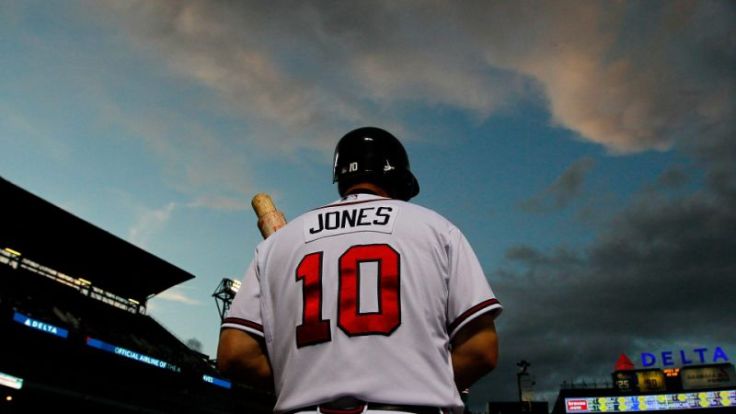
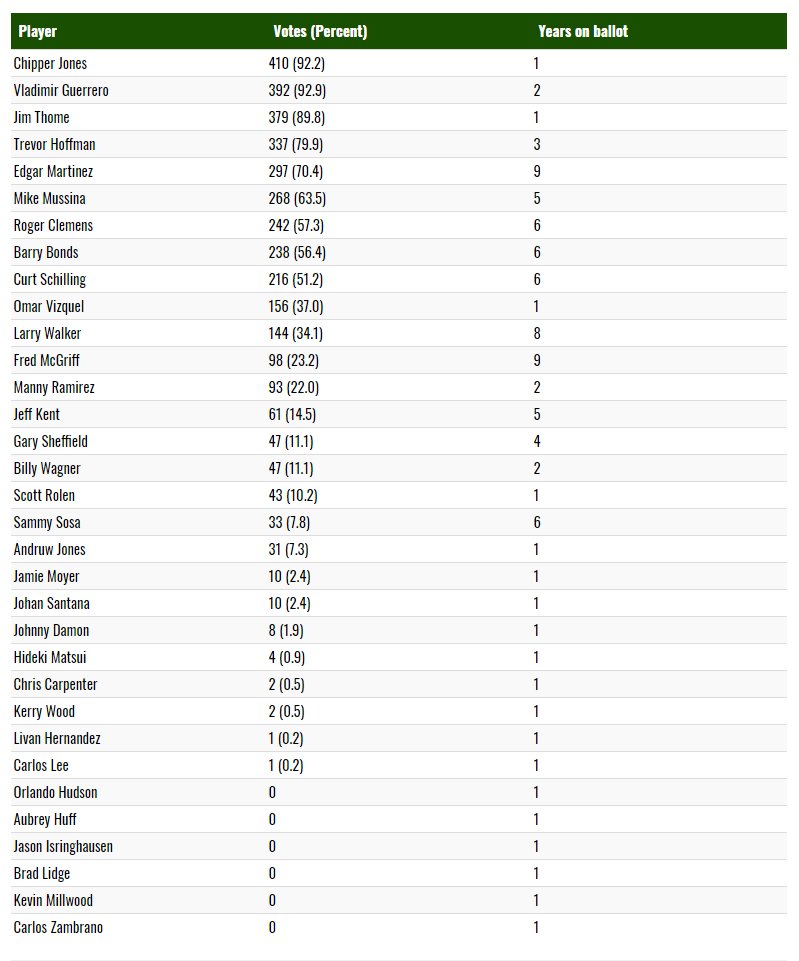
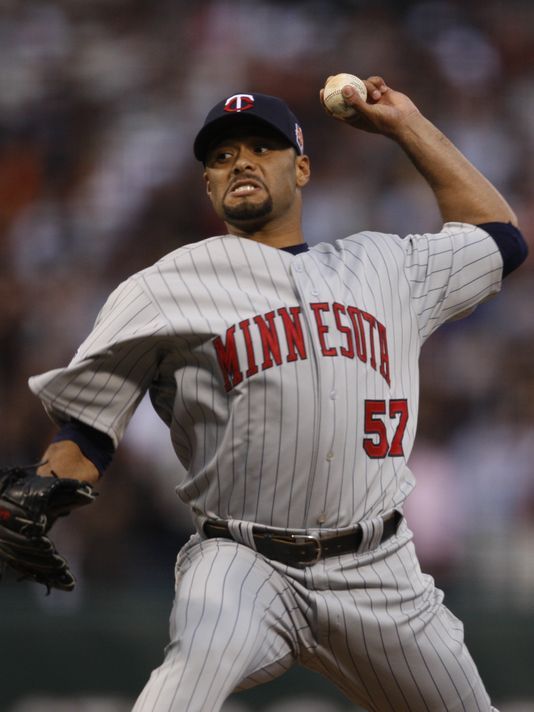


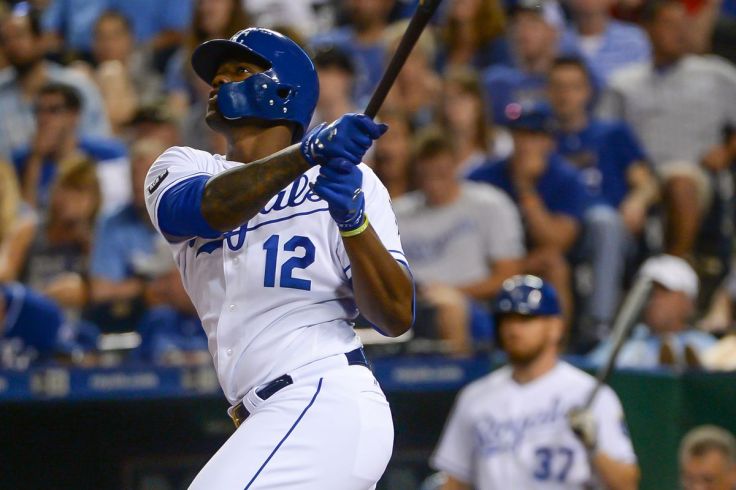

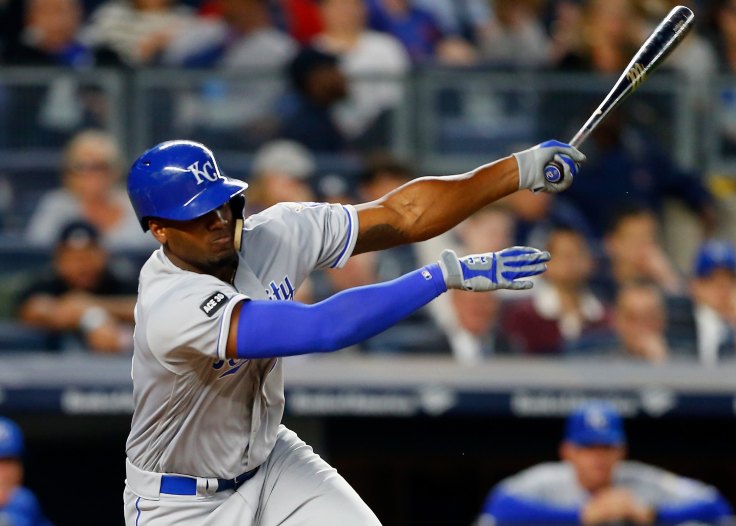
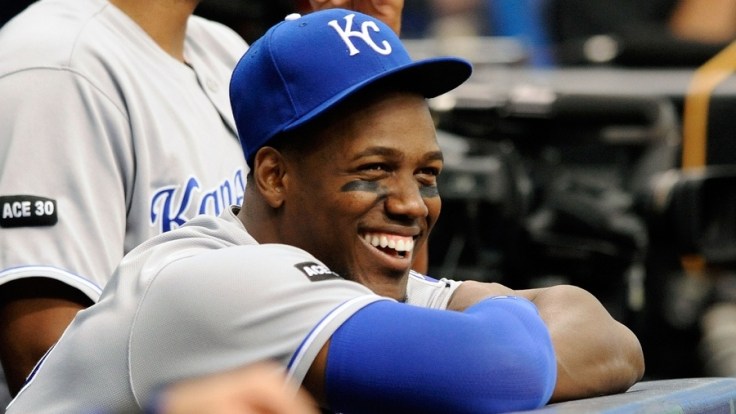
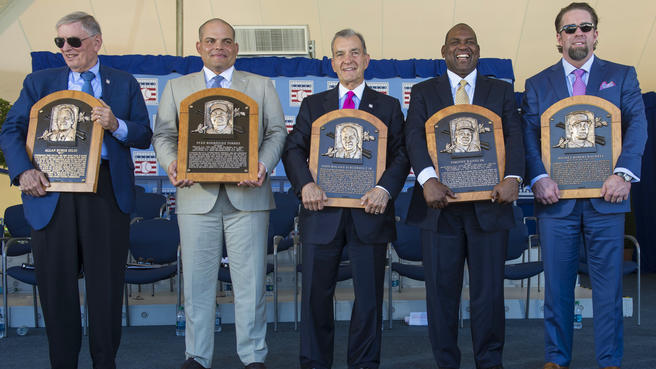

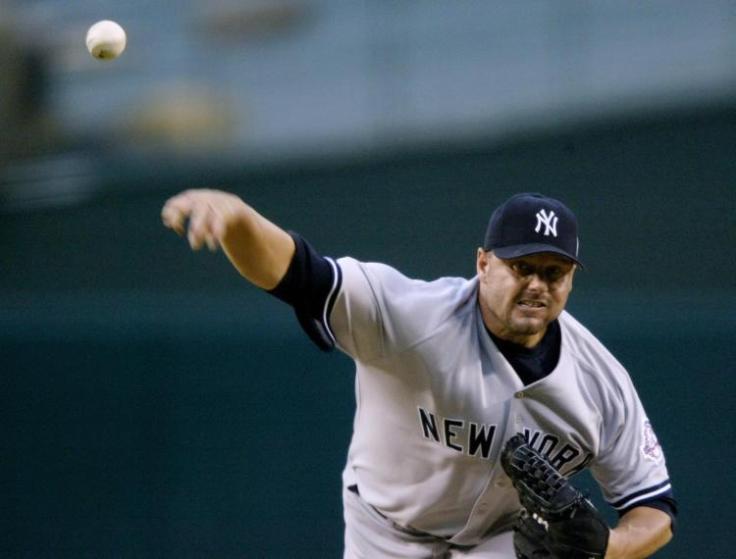


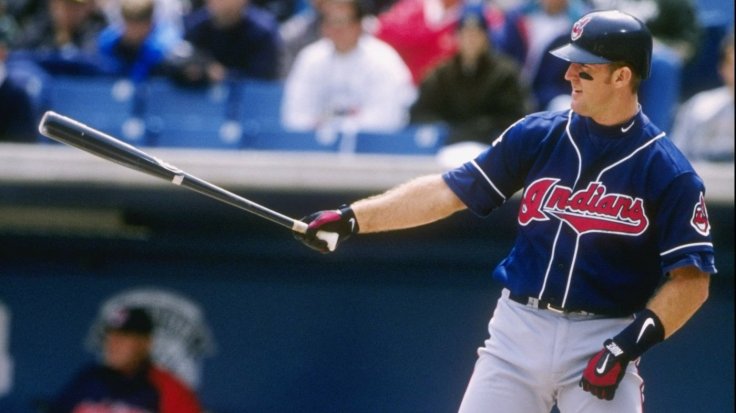

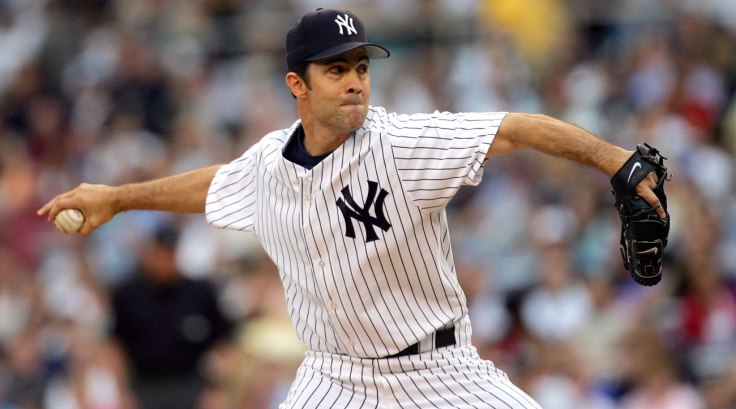
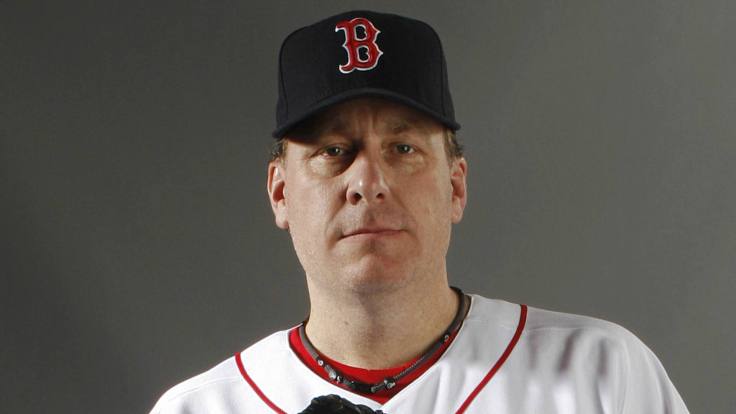

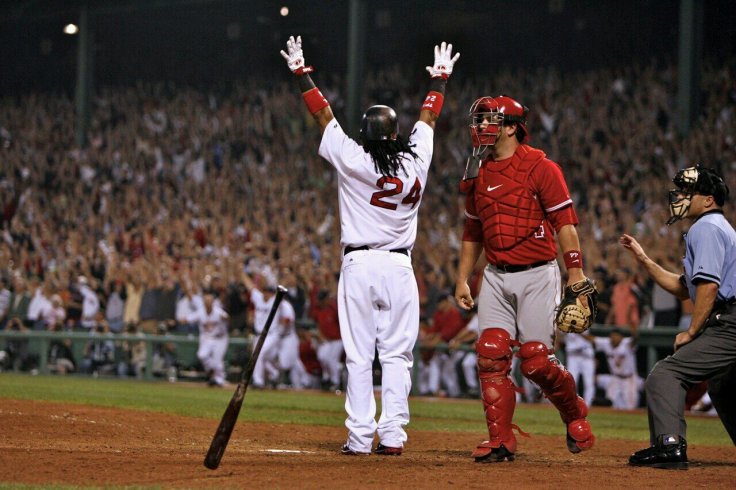
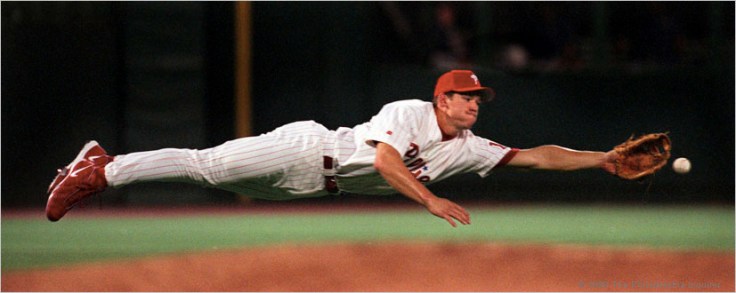
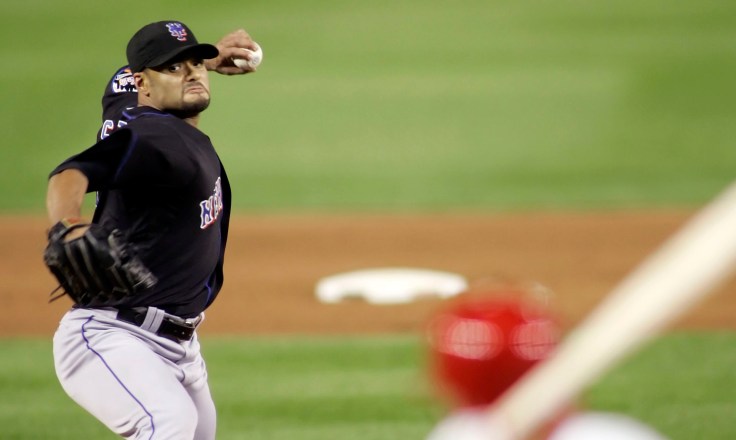
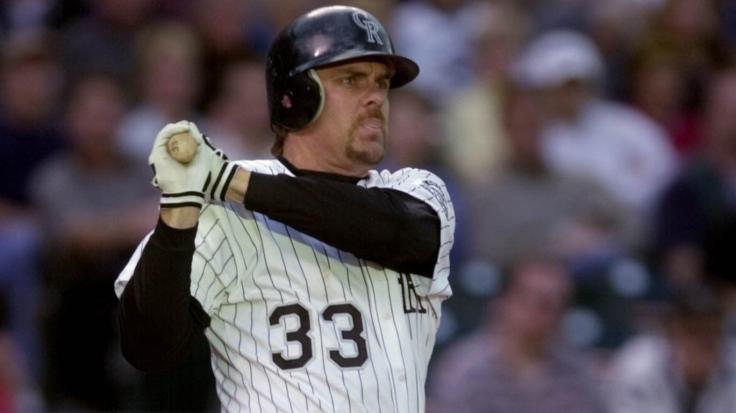
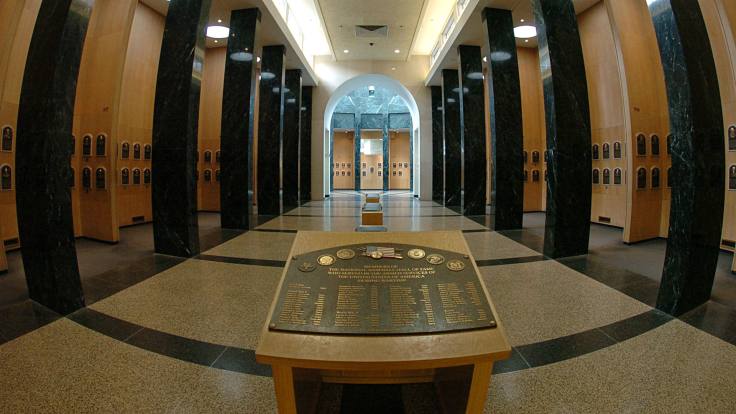
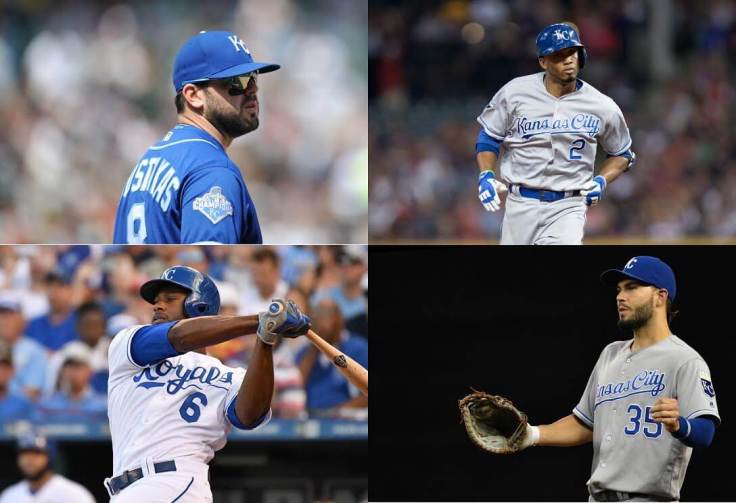


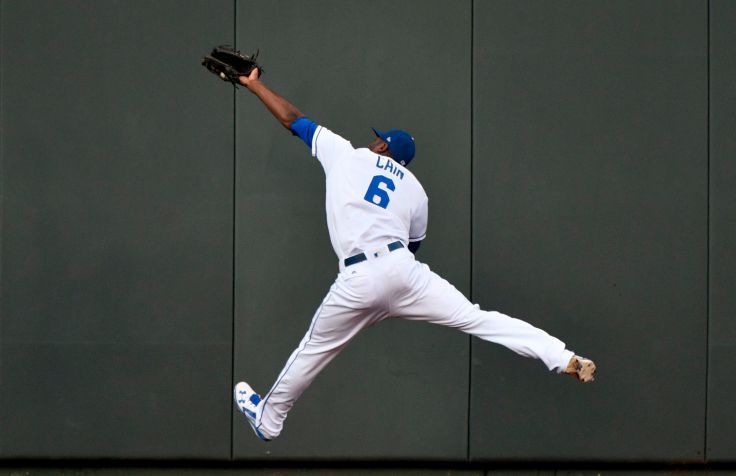
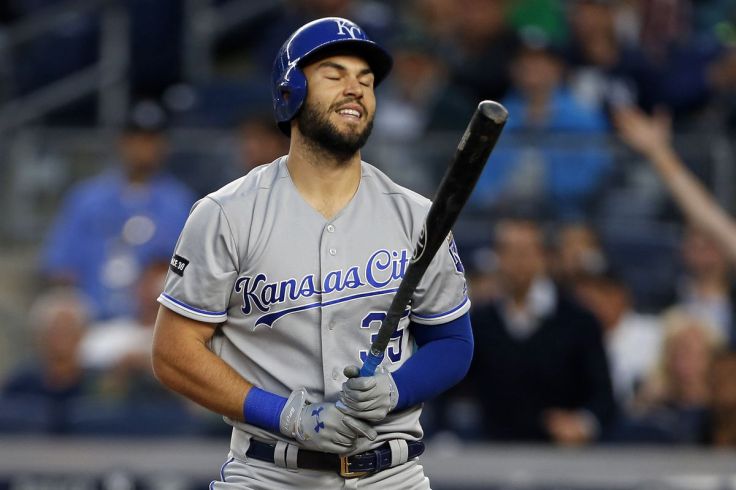
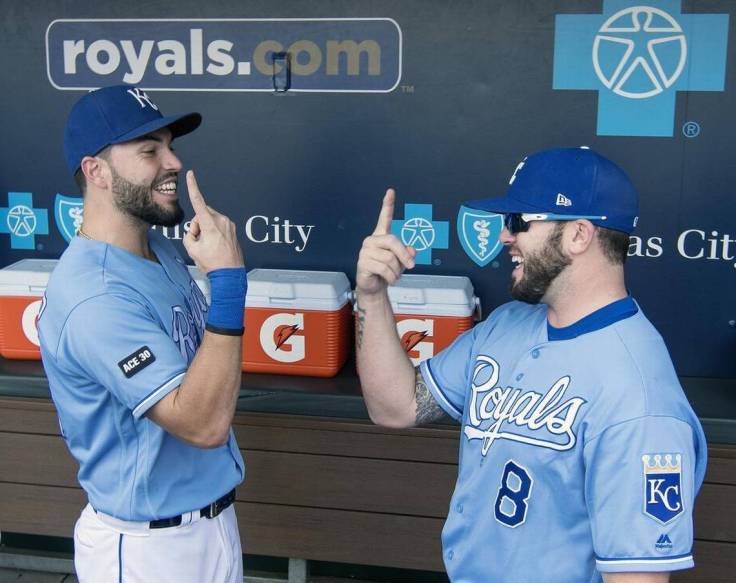
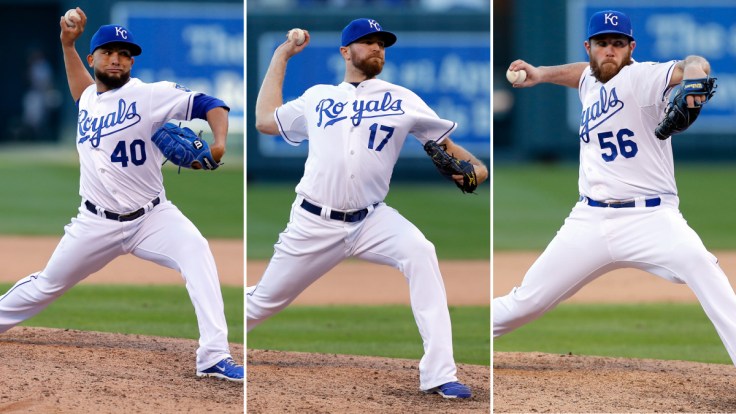


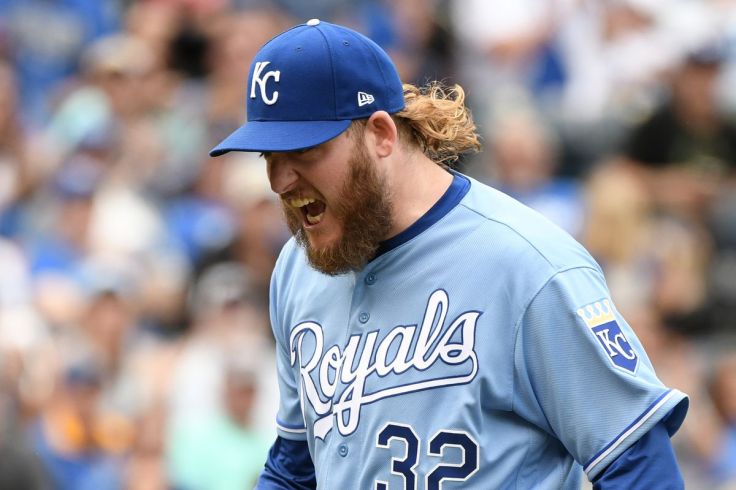
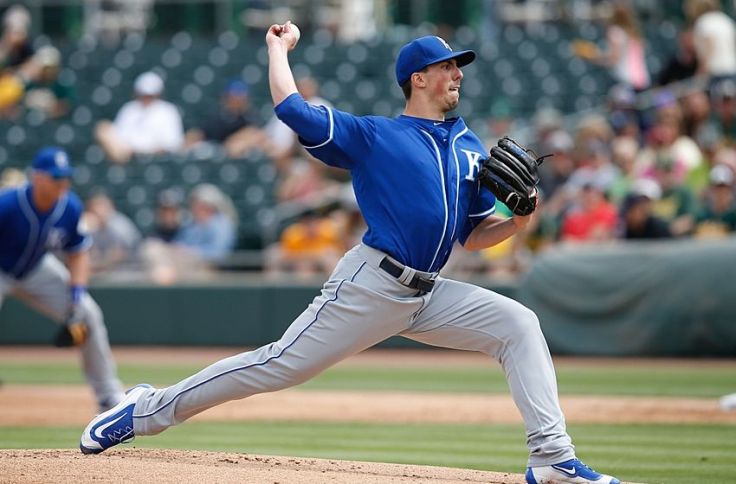


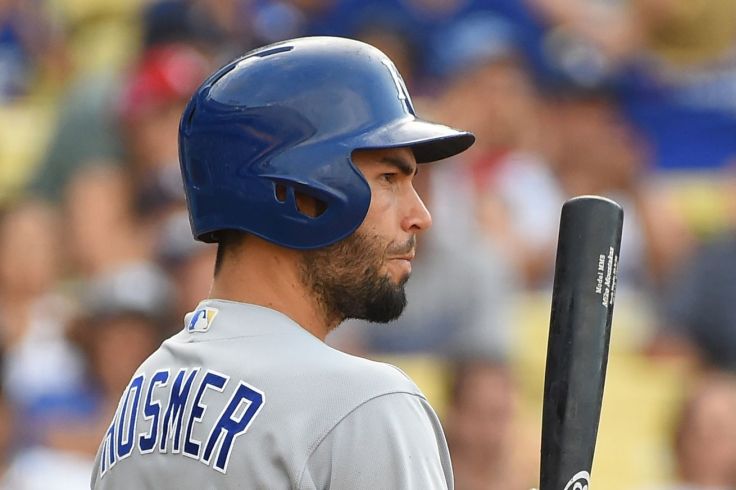
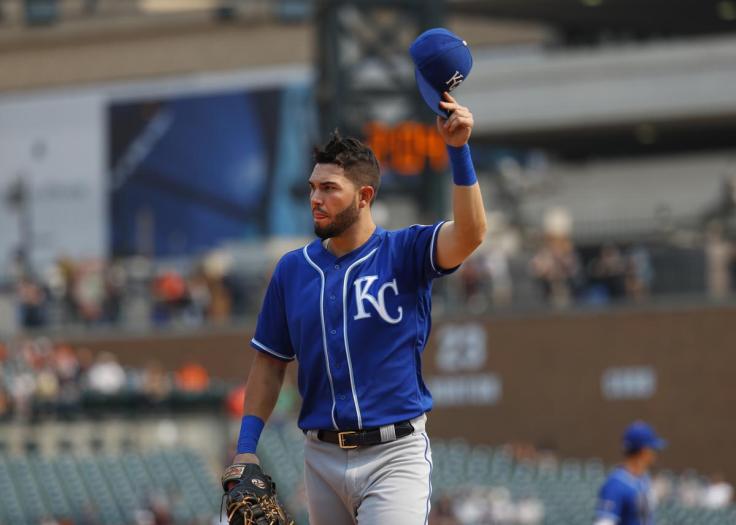


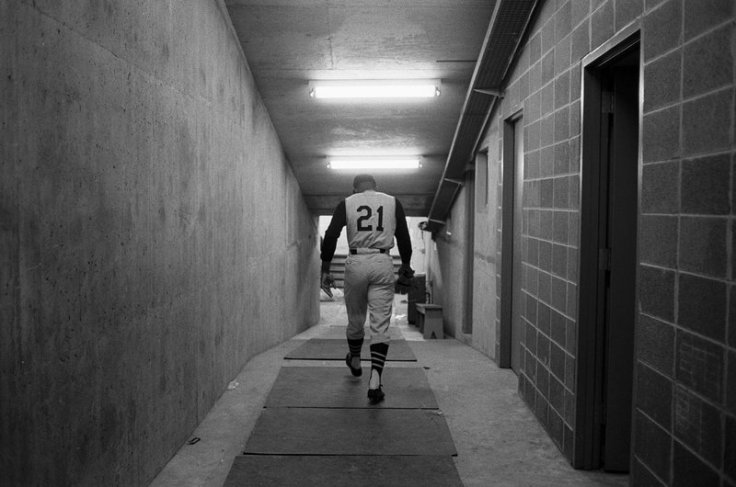
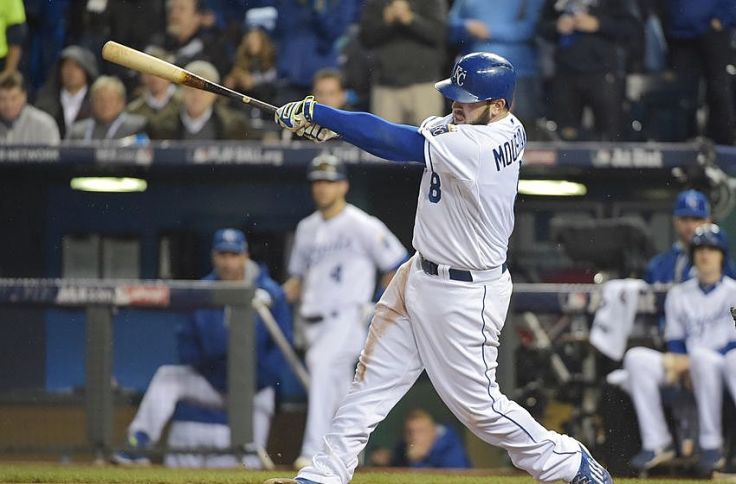
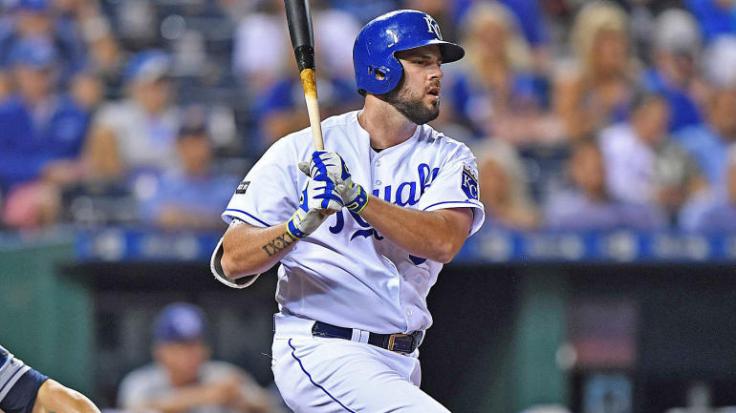
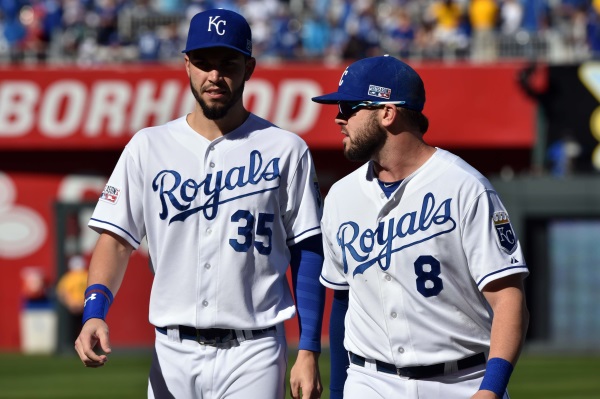

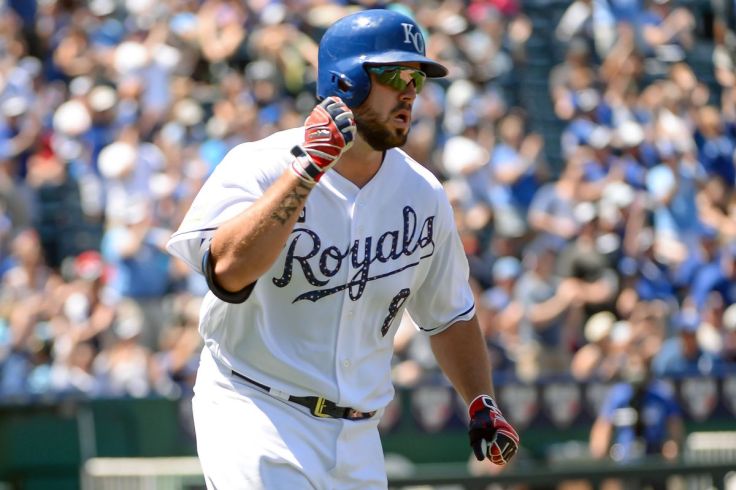

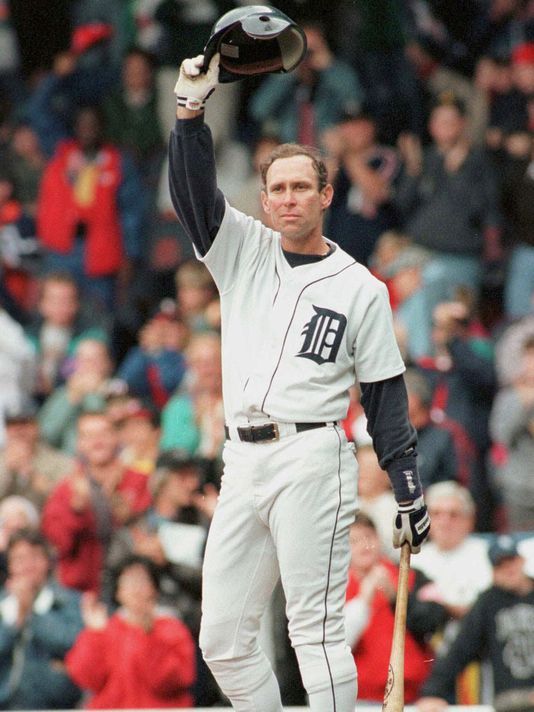
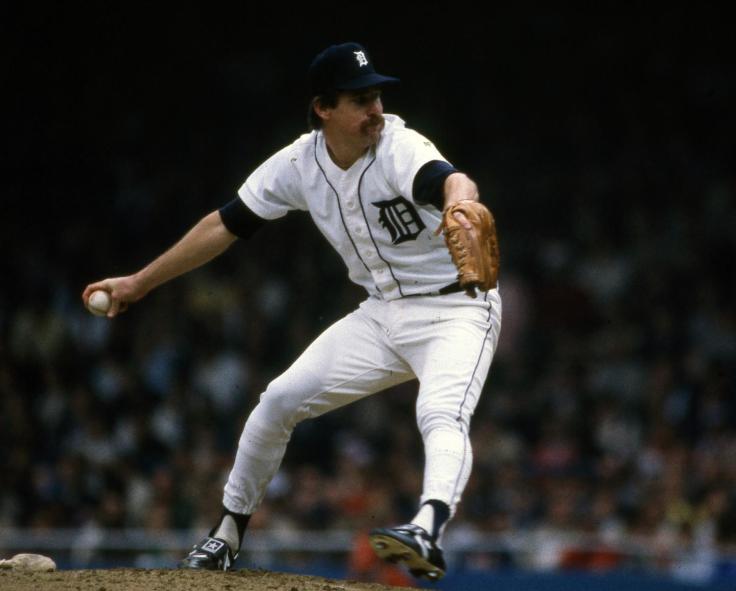
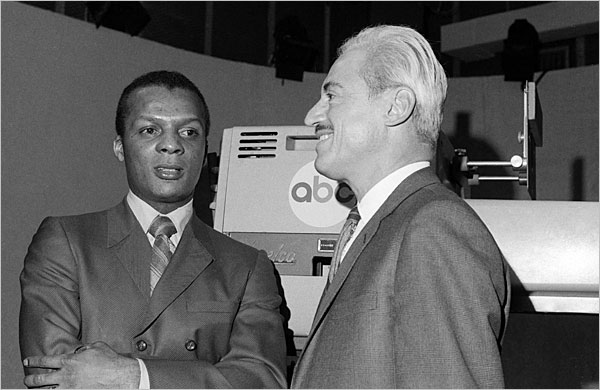
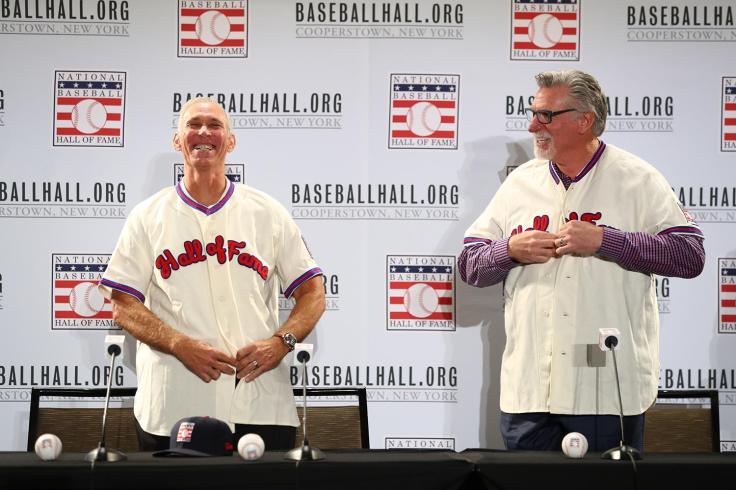

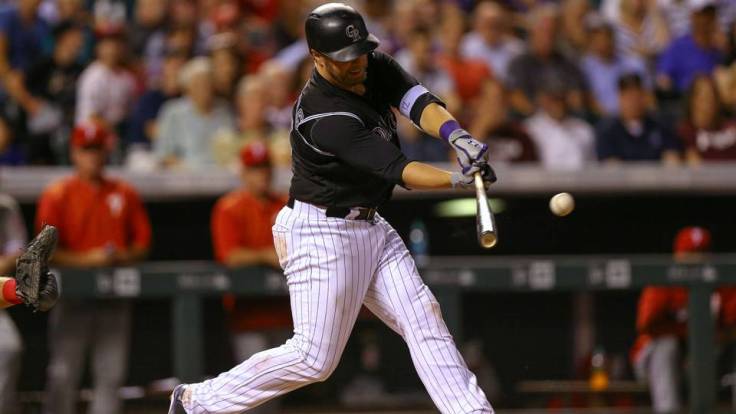
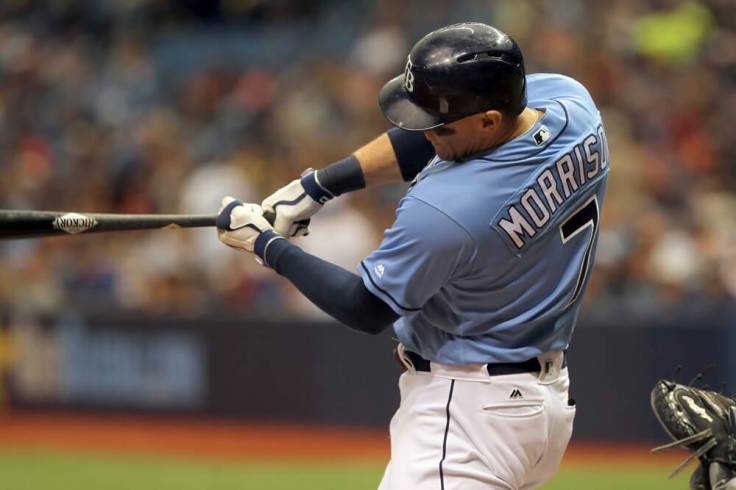
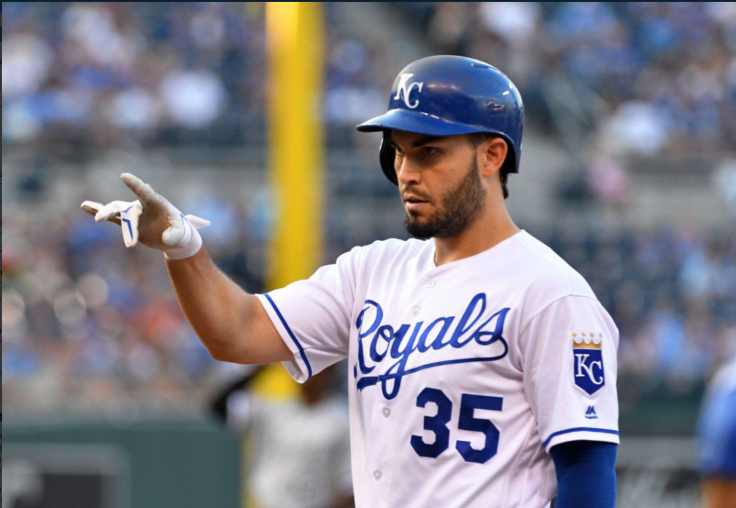
 Bleeding Royal Blue