
Nothing is debated more intensely each year than who should and shouldn’t be elected to the baseball Hall of Fame. The last few years have been filled with a moral dilemma for some, as they struggle with voting in players whose numbers are ‘Hall Caliber’, but the scarlet ‘S’ (for steroids) looms around their neck. This has led to a backloaded ballot for BBWAA members as they struggle with the decision of voting in a player who they feel would tarnish the game. Some of us(myself included) am not bothered by this, since the Hall is all about the history of the game, good or bad, and it is hard for me to sit here and tell you these players shouldn’t be voted in when there are no positive tests, because baseball was not testing at the time. So right there, you see the dilemma. As a member of the IBWAA, we have our own Hall of Fame and do our own voting each year. Our voting has not been completely parallel to the BBWAA’s, as last year Randy Johnson, Pedro Martinez, John Smoltz, Jeff Bagwell and Tim Raines all reached the 75% of the votes needed for election. In years past, Craig Biggio and Mike Piazza have been elected by us in the IBWAA, so they are no longer on the ballot either. As a group, we also decided that we can vote for up to 15 players on the ballot, which opens it up even more and has allowed the ballot not to get so clogged up. Before we get started with my votes, you can go back and read my last two years of voting: Here is 2014 and 2015. Also, to keep up to date with all of the BBWAA votes that have been revealed, follow Ryan Thibs on Twitter. That way you can follow how the voting is going before Wednesday’s big announcement. Without further ado, here are my votes for the 2016 Hall of Fame ballot.
 Barry Bonds
Barry Bonds was also on my list the last two years and is easily one of the greatest baseball players ever, the all-time home run king and that is all tainted by supposed steroid use. To me Bonds was a Hall of Famer before his supposed use and was a 5 tool player early in his career. We can debate all day about whether or not PED users should be allowed in the Hall(and I am someone who believes the Hall of Fame is NOT sacred ground) but what is easy to decipher is that Bonds is one of the greats of the game. ‘Nuff said.
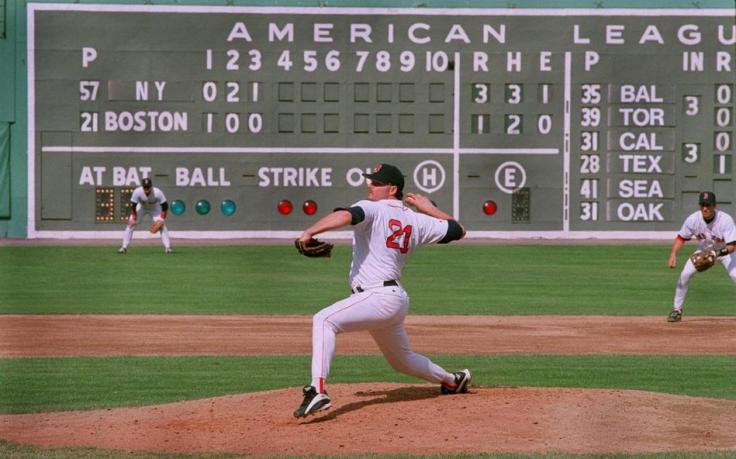
Roger Clemens
Roger Clemens is another duel year vote for me and like Bonds, has the PED albatross around his neck. Clemens is thegreatest pitcher of his era, a 7 time Cy Young award winner and should have been a first ballot Hall of Famer. Instead we are stuck continuing an argument that might never finish and also like Bonds, might have to wait for the Veteran’s Committee to get voted into Cooperstown. Clemens deserves to have a plaque next to the Johnson’s, Koufax’s, and Gibson’s of the world. When(or if) that happens is another issue.
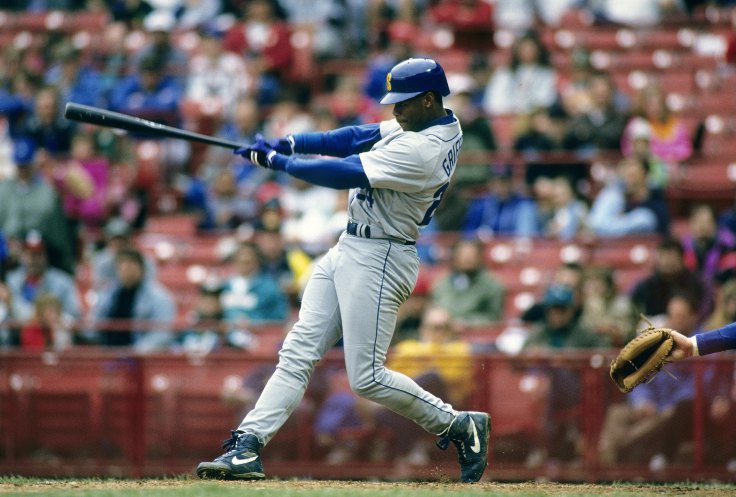
Ken Griffey Jr.
Some votes are so easy you don’t even have to think about them before marking the box. So is the case with Ken Griffey, Jr., an easy first ballot Hall of Famer and one of the greatest players of his generation. Griffey came into the league as a wide eyed youngster, bringing his enthusiasm and childlike glee to stadiums everywhere. It would been awhile since the baseball world had seen a five tool player(outside of Bonds, of course) perform so easily and graceful on the field the way Griffey did. Griffey was a 13 time All-Star(10 as a Mariner, 3 as a Red), AL MVP in 1997, 10 time Gold Glove Winner and 7 time Silver Slugger award winner. At one point or another he lead the league in runs, home runs, RBI’s, slugging percentage, total bases and intentional walks. Griffey would finish 1st in the league in WAR once(1996, while finishing 1st three times for position players), while finishing 2nd three times(pulling a career bWAR of 83.6, 57th all time. The numbers just continue to stack up- 55th all time in OPS, 35th in slugging percentage, 33rd in runs scored, 50th in hits, 13th in total bases, 6th on the all time home run list and 15th career in RBI’s. There are some interesting stats that won’t pop out but are interesting nonetheless-22nd all time runs created, 7th all time extra base hits, and 6th all time intentional walks. The numbers show someone who is an easy vote for the Hall, but one has to wonder just how much higher Griffey would rank on all-time lists if not for injuries that curtailed him late in his career. It’s easy to point at his trade to Cincinnati before the 2000 season as the beginning of his decline, but that 2000 season was actually a solid one for Griffey. After that though, the injuries piled up and he went from being a player who could challenge Hank Aaron’s(at the time) all-time home run record to a ghost of his former self. In fact if you take out that 2000 season, Griffey only averaged 100 games a season during the rest of his time in Cincy, with an average of 22 home runs and 62 RBI’s per season. Even with these numbers you have a player who should be mentioned in the same breath as Mays, Ruth and yes, even Bonds, as one of the most prolific home run hitters(and all around best players) in baseball history. The question this year will be: will Griffey be the first player to be an unanimous selection to the Hall?
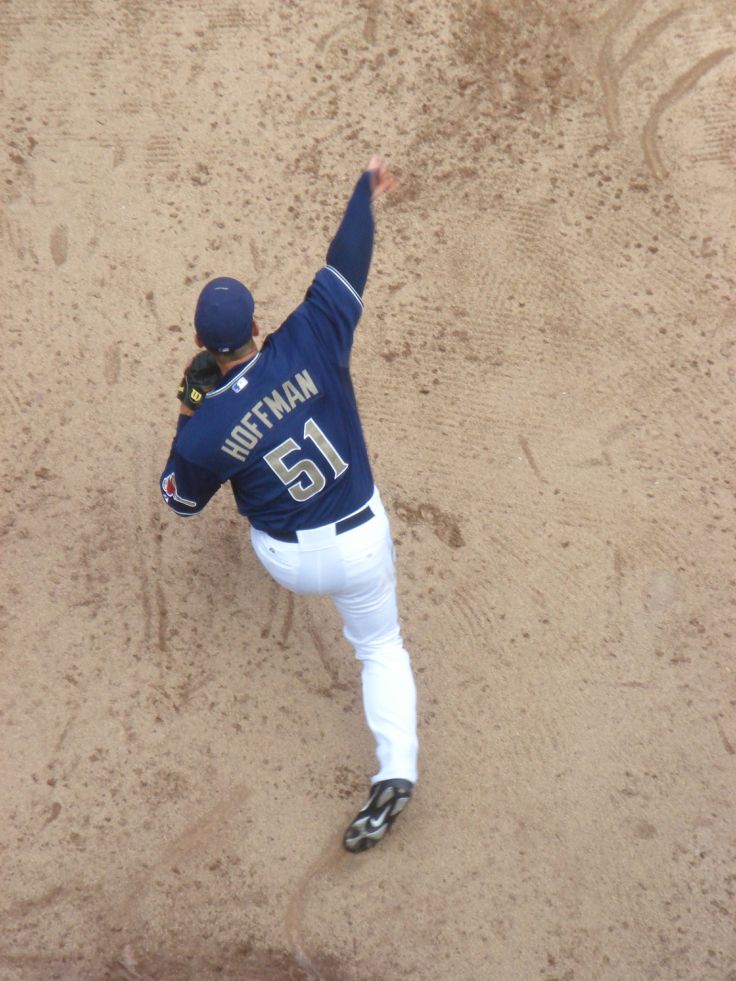
Trevor Hoffman
I’m sure my pick here will cause some debate, since there are those that believe you have to be Mariano Rivera to be a Hall of Fame closer, but much like the Tim Raines debate(which I am a strong supporter of), you can’t fault Hoffman for not being the best closer in baseball history. Yes, the closer in modern day baseball is a defined role that is the guy who closes out the game for his team, not always the guy who faces the toughest part of the lineup. Yes, the save is probably the worst stat in baseball, based just off of its parameters on how you can get one. But when you are the second best player at your position for 16 seasons, you deserve to get more recognition than to be just tossed aside and scoffed at. Here is why I voted for Hoffman and why I feel he is a Hall of Famer. First, he was as consistent as they come. Outside of 2003 when he was injured, Hoffman posted 15 consecutive years of 20 or more saves and is second all-time(ALL-TIME!) behind Rivera. I know some use the argument “well, he was no Gossage or Fingers or even Sutter”, and to be honest, no, he wasn’t. But that is the whole point behind this; no one compares to those guys anymore, because closers aren’t used the same way they were in the 70’s and early 80’s. Why compare a pitcher to guys who faced completely different game situations 30-40 years earlier? It’s not a fair assessment and people sure as hell don’t use that same comparison when talking about Rivera and his place in the game. Second, besides the consistency he was also fairly dominant, which sometimes gets lost in the shuffle. Hoffman is a 7 time All-Star, placed 2nd in the National League Cy Young award voting twice(!), has the 8th best K per 9 percentage, 8th best WHIP, 14th best ERA+ and the 18th best WPA(Win Probability Added) ever. That’s not even mentioning he also blew just 76 career saves, which gives him a 88.8% save conversion rate. What about his out-pitch? Hoffman had a lethal change-up that was one of the hardest pitches to handle during this period. Sure, it wasn’t Mariano’s cutter, but it got the job done and normally threw batters off of their game. No matter which way you cut it, Hoffman is one of the great closers in baseball history, even if you took away the save stat. Very few pitchers have been able to do what he has done and do it for as long as he did. Bottom line is that ‘closer’ is a position filled by each team in the big leagues and Hoffman was elite at that position for a very long time. That is why he gets my vote for the Hall of Fame.
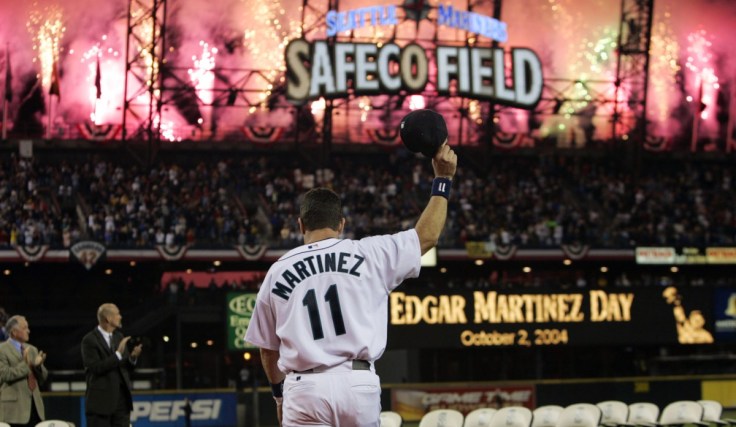
Edgar Martinez
Edgar Martinez has been looked over for years but he was an easy pick for me the last two years. Edgar is the greatestDesignated Hitter of all-time, and one of the greatest hitters in baseball history. Apparently Martinez not playing much in the field hurts his case, but that honestly should be superseded by the fact that he was so good at one thing(hitting) that he is 76th in career WAR. Just like when discussing closers, Designated Hitters are a part of the game just as much as their late inning friends. Soon David Ortiz will be eligible for the Hall of Fame and you don’t hear anyone question whether or not he belongs. If he belongs, why doesn’t the guy who they named the DH Award after? Edgar is the GOAT and should be honored justly.
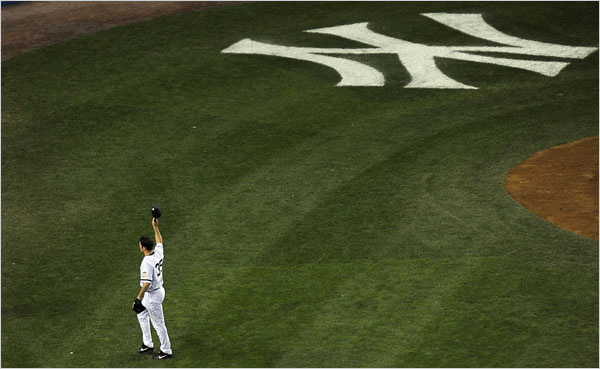
Mike Mussina
Mike Mussina probably never dazzled anyone over his 18 year big league career. He wasn’t the most dominant, didn’t really blow gas past batters or have that one pitch that no one could hit(although his knuckle curve was a nice little out pitch when he needed it). But more than anything Mussina was consistent and stayed that way for the entire span of his career. In fact if you didn’t know better you would think Mussina was a ninja with the way his numbers jump up on you. So here are just a few of the numbers Mussina compiled during his (what should be) Hall of Fame career: 5 time All-Star, 6 Top 5 finishes in American League Cy Young voting, 7 time Gold Glove winner, 57th all-time in career WAR(24th all-time for pitchers), 19th all-time career strikeouts(2813), 89th all-time career ERA+(123), and 270 career wins. Mussina also pitched a large chunk of his career during the ‘Steroid Era’ and the two ballparks he called home during his career(Camden Yards and Yankee Stadium) were both hitters parks. I’ve always considered ‘Moose’ the right-handed equivalent of Tom Glavine, a guy who wouldn’t blow you away but put up solid numbers year after year. 2014 was Mussina’s first year on the BBWAA ballot and he compiled 20.3% of the vote, which I have to believe will go up again this year. If you want flashy, Mussina isn’t your guy. But if you want a top of the rotation starter who you can rely on year after year for quality starts and quality innings, Mussina was a lock. Eighteen years of that quality should also mean he is a lock–for the Hall of Fame.
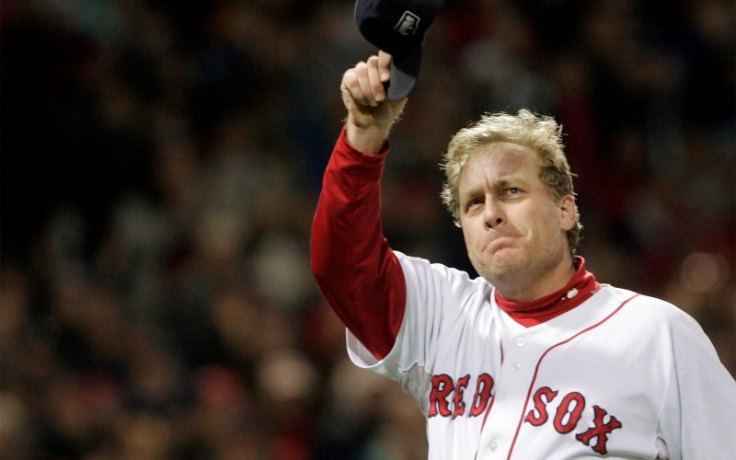
Curt Schilling
Just how much difference does a player’s postseason success factor into a Hall of Fame vote? In the case of Curt Schilling it matters a lot. In fact I would say without his playoff numbers Schilling probably wouldn’t get into the Hall. But when you add that to the mix, his true greatness shines through. A 2.23 ERA, .846 winning %, and a WHIP of .968(plus one bloody sock), all over 133 innings pitched in October shows just what kind of mettle Schilling really had. In fact, just go look at his postseason stats for 2001; ridiculous! When you then add in the regular season numbers it becomes much more obvious. Schilling was a 6 time All-Star, 1993 NLCS MVP, 2001 World Series MVP, 4 times was in the Top 5 of the Cy Young award voting, 62nd all-time in career WAR(26th for pitchers), 15th all-time in career strikeouts(3116), and 47th all-time in career ERA+(127). All this from a guy who floundered in the majors until he was 25 in 1992 with the Phillies. Schilling the person might not be a guy who we would agree with on a regular basis(and definitely don’t argue evolution with him) but none of that matters when it comes to Hall of Fame voting. Schilling was a front line starter in the big leagues for 15 years and has the numbers to prove it. That is ‘Hall Worthy’ if I have ever seen it.
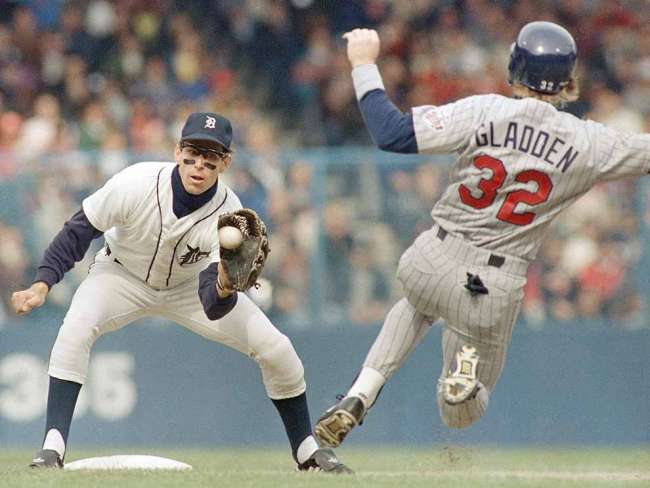
Alan Trammell
It took me a long time(almost too long) but after really studying his case, I believe Alan Trammell is a Hall of Famer. Trammell case has probably been hurt for a number of reasons. Trammell’s offensive numbers don’t pop out at you and he never reached any of the big milestones that voters look for when it comes time to fill out a ballot. The argument for Trammell though outweighs a lot of the negatives; Trammell has a career WAR of 70.4, which makes him 94th all-time and 63rd amongst position players. To go a step further, Trammell has a career dWAR of 22.0, which places him 34th all-time. Trammell was solid with the bat, winning three Silver Slugger awards and in 1987 probably should have won the American League MVP(which went to George Bell of Toronto). Trammell was a 6 time All-Star, the 1984 World Series MVP, a 4 time Gold Glove winner during a period where he competed with Cal Ripken Jr. for the award, and walked more than he struck out in 7 different seasons(and had the same amount of both in 2 other seasons). Trammell is the batter equivalent of Mike Mussina; he never blew you away with anything but he was so consistent for a long period of time that what he put together was a Hall of Fame career. Still aren’t convinced? Joe Posnanski has made the argument that if you are of the belief that Derek Jeter is a Hall of Famer, then you should compare his numbers with Trammell’s. Joe points out just how close Jeter and Trammell were as players, with Jeter holding a slight edge over Alan offensively, while Trammell was easily a better defender. If Ozzie Smith can get into the Hall on his defense, and Jeter will get in on his offense(and leadership; you know that will be brought up) then Trammell deserves to be in for being the better all-around player. The sad part is that this will be Trammell’s last year on the ballot, which means after this year his case will be handed over to the Veteran’s Committee. I wish I had really studied his case sooner, not that my lone vote would mean much. If anything I wouldn’t have underrated Trammell as much as I did, not realizing he was way better than the memory remembers. Now about his double play partner, Lou Whitaker…
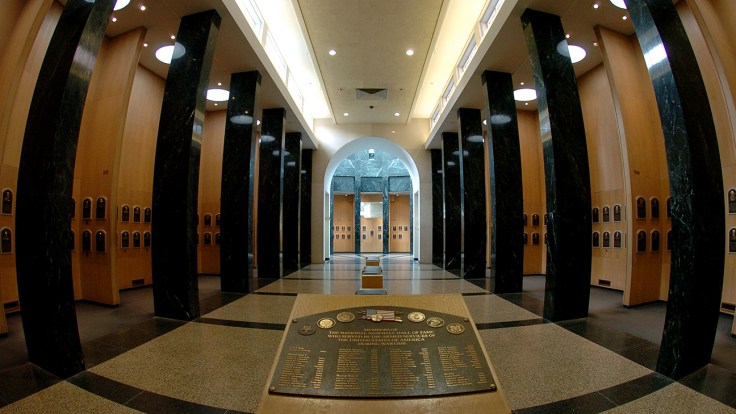
So eight votes from me this year, which was less than last year. I did consider a number of other players for this honor, players who I feel are just on the cusp but not quite there. On that list that I heavily considered was Larry Walker, Billy Wagner, Jeff Kent and Jim Edmonds. All were great players but I felt for now they fall just short for me. Does that mean I could change my mind? I could, honestly. I did when it comes to Trammell and Raines and I could with any of these guys in the future. Sometimes it just takes a longer look to really grasp how important a certain player was to his era. This is a special honor not given to just any player, but only to the greats of the game. The eight I voted for this year I consider great; next year Ivan Rodriguez, Manny Ramirez and Vladimir Guerrero will show up on the ballot for the first time. Oh, and Russ Springer. That means we have a year to determine who of that group should be inducted; yes, even Russ Springer. All these players add a certain element to the baseball Hall of Fame, good and bad. It is all part of the story that is this great game we call baseball.


 Bleeding Royal Blue