My Top 5 Most Hated Royals

If you are a fan long enough of one team, you gradually start to demise certain players. There could be lots of reasons, although normally it is just bad play on the field that makes you wish they were executed in a field by a couple of guys wearing jumpsuits. Being a Kansas City Royals fan for close to 30 years has not only made me a bit jaded, but I’ve also accumulated my fair share of hatred for certain players. I’ve noticed I don’t have much venom for players during my youth. It must be how naive I was, or maybe because when I was young the Royals weren’t one of the worst teams in baseball. Either way, I’ve only ever really hated (HATED) a handful of Royals over the years, with some just a passing thought. Before we dive in, I do have to throw out a couple of honorable mentions. First, Miguel Olivo gets an honorable mention for his atrocious defense. I know I’ve heard broadcasters mention how good Olivo is defensively, but I don’t remember that guy. I remember the guy who spent half his time at the backstop of the K, looking for the baseball that got away from him (again). Between that and his knack of being a ‘all or nothing’ hitter at the plate, I wasn’t sad when the Royals let him go as a free agent. Another honorable mention should go out to one Jonathan Sanchez. Yep, a guy gets a mention even though he was with the team for only half a season. That’s how bad he was. It wasn’t just that Melky Cabrera got off to a great start for the Giants, or that Sanchez couldn’t seem to get past the fifth inning. No, the worst part was it seemed that Sanchez just didn’t want to be in Kansas City. If his goal was to receive a one way ticket out of town, he got it. The amazing part is that even though Sanchez was really, really bad (really), someone was willing to take him. Thank you, Colorado. Not only did you give us Jeremy Guthrie, but you took the albatross that was around our neck.  Alright, with that out of the way, let’s get to the top five.

5) Yuniesky Betancourt

“See no ball, field no ball…”

I’m sure my hatred for Yuni is bigger since he donned the powder blue more than once. I know some thought that he welded a solid bat, or they didn’t realize just how bad his range really was. But I saw a player who had amazingly regressed throughout his major league career, and was to a point where he had no game plan at the plate and no clue on defense. Sure, he’d occasionally pull out a good play on the field, but only if the ball was hit right to him. Forget him getting something to his right, and his left wasn’t much better. The worst part of having Betancourt on your team would be that occasionally he would show flashes of what was once a good player. A clutch hit here, a nice play there. But they were so few and far between that it couldn’t make up for all the holes in his game. The fact that Royals management thought that he would be a solid backup infielder shows just how little they actually pay attention to the play on the field. For all those reasons, I will forever hate the one I christened ‘Jabba the Betancourt’.

4)Luke Hochevar

I can only hope he was hit by a comebacker in this photo…

A part of me wonders if Luke would be on this list if he wasn’t still in a Royals uniform. Part of me wonders if he didn’t show signs of talent from time to time if I would loathe him so much. But the truth is he is still a Royal, and from time to time we see this guy put it all together. But right there is why he comes in at #4. Hochevar has good stuff, which would explain why he has been drafted in the first round by two separate teams.  In fact, maybe we should blame this on the Dodgers. If only they had signed Hoch when they drafted him the year before the Royals did(or even back in 2002, when they drafted him then), then his mess wouldn’t be on our hands. Instead, he goes unsigned, played some independent ball, then is drafted by the Royals in the first round of the 2006 draft. The rest is history, as in the past five years, Hochevar always seems at the cusp of being a solid major league starter. Well, it’s not quite history yet, as the Royals still trot him out every fifth day, and that is where the problem lies. Five years is more than enough time to know whether a guy can pull his weight in the majors or not, and Hochevar seems to do just enough to keep a job. He is probably one of the most frustrating players I have ever watched,  which makes me dislike the guy more and more. I want to think he can be the solid starter the Royals need, but alas it seems he is destined to just be what he is. A guy who occasionally goes out and dominates. Or the guy who goes out and gives up eight runs in less than two innings. It’s hard to root for a guy who can’t decide if he wants to be Dr. Jekyll or Mr. Hyde.

3) Neifi Perez
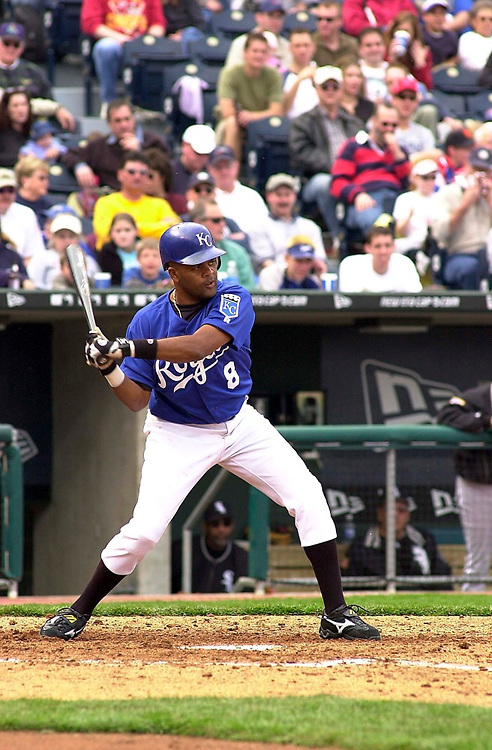
My guess is Neifi didn’t hit this pitch.

Ask any Royals fan from a decade ago, and Neifi Perez evokes either anger or sadness. Perez was the Royals big gain from the Jermaine Dye trade(in fact, their only gain) and was coming off a couple of very good seasons in Colorado, including winning a Gold Glove. Some baseball folks even thought he was one of the top Shortstops in the National League. Dye was a fan favorite, but the Royals thought he was getting too pricey and needed help in the middle of the infield. In came Perez, and it was obvious very early that he wasn’t the player the Royals thought they were acquiring. Perez barely managed a .241 average those last 49 games of the season with only nine extra base hits. 2002 wasn’t much better for Perez, as his bat vanished and his glove seemed to as well. You couldn’t rely on Neifi to do much of anything at the plate, and even less on defense, which used to be a positive for him. Instead we ended up with an infielder who couldn’t hit, field and cost just as much as Dye would have. Why this trade was made makes absolutely no sense not only to me, but to most Royals fans. To top it all off, Perez complained about his playing time, only to then refuse to enter a September game as a defensive replacement. To sum it up for newer Royals fans, Neifi was Yuniesky Betancourt, only with even less value. The day the San Francisco Giants signed him was almost a holiday in Kansas City, as fans rejoiced everywhere. To this date, I can’t think of one positive thing Neifi did in a Royals uniform. Not one.

2) Hiram Davies

“Hiram, in all his glory.”

For anyone wondering, since the day after his release, I abstained from referring to him by Kyle. No, from that point forward, I will call him by his given name, Hiram. Davies was a Dayton Moore acquisition from his time in Atlanta. Hard to believe, but when Davies first reached the majors with the Braves, he reeled off 3 scoreless outings in his first three starts. Kansas City got him for gypsy reliever Octavio Dotel, and was seen as a future part of the rotation. In fact, in Hiram’s first full season in KC, he actually had a decent record(9-7) and ERA(4.06). Unfortunately, he seemed to slide backwards in 2009, with an ERA well over five and a WHIP of 1.5. Probably my biggest complaint of Davies was his lack of attacking the strike zone. No great pitcher ever got anywhere by nibbling constantly, yet that was almost the biggest part of Hiram’s repertoire. Davies was known to have good stuff, and his strikeout totals show that. Unfortunately, he never learned that if he threw more strikes, he could last longer in the game. It never failed, the fifth inning would roll around and Hiram would be approaching one hundred pitches. It was fairly certain that if a guy throws that many pitches, he is going to end up out of the game early, and will tax your bullpen. Davies never got around this, and when it was all said and done, it cost him his job in Kansas City. Hiram Davies was so historically bad that unless former teammate Luke Hochevar passes him in the next couple seasons, he will continue to hold down the title of ‘Worst Starting Pitcher EVER’! Davies has the highest ERA and WHIP of any pitcher who has started 90% of his games and thrown over 700 innings. Ever. That covers a lot of ground, folks, and most of it is charred earth. It can be really simple sometimes in baseball. For instance, if you throw strikes, you are more likely to succeed than if you don’t. Hiram Davies learned this the hard way. Davies didn’t leave on the best of notes, as he was arrested the day before he was released last year for disorderly intoxication. Now, I have no way of knowing or not, but I wouldn’t be surprised to hear ol’ Hiram found out that day he was going to be cut by the Royals and decided to tie one on. Far be it from me to blame him for that, but it does make for an interesting story. Davies signed with Toronto’s AAA team for the remainder of last year, but no team has taken a chance on him in 2012. I hated watching Davies pitch, and in some ways I’m glad he hasn’t signed elsewhere. God forbid some longtime fan has to sit through watching Hiram throw his version of craptastic magic for over thirty starts a year. We Royals fans took that medicine, and now can only hope we will forget it someday.

1) Michael Tucker
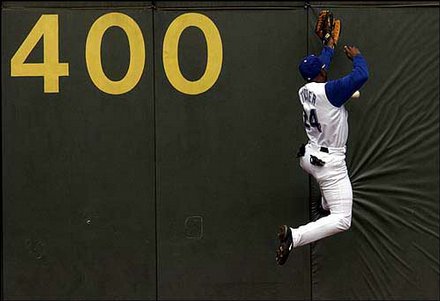
“I’m surprised he got that close to the ball. That would take effort.”

Michael Tucker, how I hate him so. I could tell you so many reasons why, but the main one is that Tucker was a lazy bastard. Here is a guy who might not have ever been a five tool player, but it wasn’t out of the realm of possibilities that he could be a four tool player. He had speed, good defense, hit for average, smart baserunning skills, but not a lot of power. Unfortunately, he didn’t do any of these things as well as he should have, because he always seemed to half-ass it when playing. Here was another former Kansas City first round pick that just never lived up to expectations. He was good on defense…when he wasn’t loafing it to the ball. He could hit for average…when he would actually focus. He even screwed up being speedy, as he just didn’t hustle every time he was on the field. Here was a guy with all the talent in the world, but maybe used only a third of it. Instead of being an All-Star, or even just a full time starter, Tucker was at best a platoon player who never learned to hit lefties. Guys like David Eckstein and Chris Getz would kill to have the kind of talent that Tucker had, yet it was given to a guy who preferred to coast. Tucker actually had a few decent seasons in Atlanta, but in his two stints in Kansas City, he was an average .260 hitter with a .330 On Base Percentage. You would think someone with that much speed would steal a lot of bases, or at least a decent amount. Not Tucker, as he could only muster 43 in four seasons for the Royals. Tucker would actually have a long career, lasting twelve seasons in the bigs. But at the end of the day, he was a platoon player at best who never learned how to up his game. Guys like Michael Tucker never figure out what god given advantages he has. Instead, guys like him piss it away to ‘just get by’. That is why he is my host hated Royal. That is why I will always refer to him as ‘Michael F’n Tucker’!
Buying High, Selling Low: The Boston/LA Story

This past weekend, a trade of Herschel Walker proportions took place in major league baseball. In one fell swoop, the Boston Red Sox unloaded their excess baggage, and the Los Angeles Dodgers picked it up at the baggage claim, showing baseball that they are serious about buying a World Series…I mean, trying to make the playoffs. So I thought I would take a look at this monumental trade and just what it means for the parties involved.

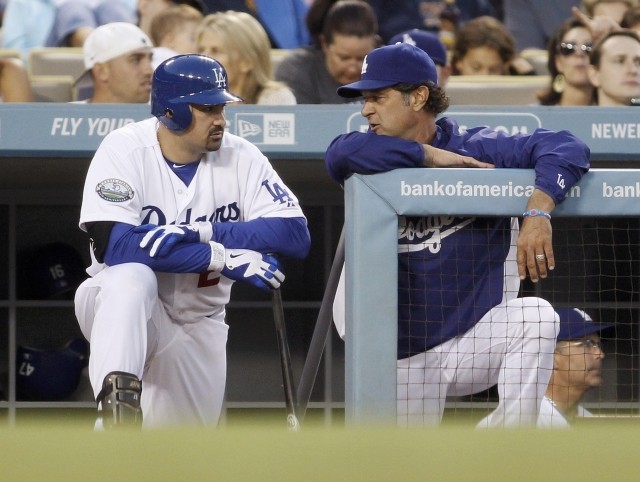
“I hated Boston too, Adrian…”

Adrian Gonzalez is the key to this trade for the Dodgers. They have coveted him for quite awhile, and finally they were able to bring him back to the California sun and drop him into the middle of their batting order. The pluses of having Gonzalez are many and widespread. For one, he is a California boy, born and raised. Bringing him back to Cali can only be a positive, as he loved his time in San Diego and the attitude there fits him better than the one in Boston. In Boston, the media is constantly scrutinizing everything that is done and everyone lives and die by what the Red Sox are doing. California is more laid back, with the joke always being that Dodgers fans wait until the third inning before they show up. Gonzalez’s attitude is more LA than Boston, so just in this regard it should be a plus. Add in stellar defense, and a potent bat in the middle of the order, and you have a guy who can help a team like the Dodgers go the distance. There really only seems two negatives to getting Gonzalez. One, a few scouts have mentioned that Gonzo’s bat speed seems to be slipping. Now, he is still a guy I would want in the middle of the batting order. But normally if bat speed starts to slip, it will never come back. The other negative is the contract he has. It is massive, and still has 5 years left on it. If he continues to slip offensively, those last few years of the contract could feel like an albatross around their neck. All in all, if Gonzalez is what they wanted, they could have done a hell of a lot worse.

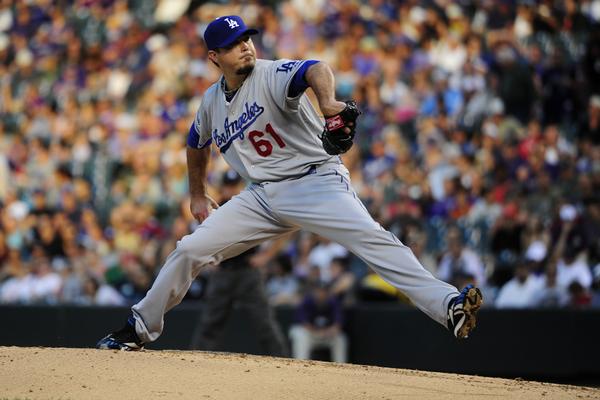
“Beer and Chicken on me if we win.”

Josh Beckett might just seem like an addition to the trade, a contract to heave off for Boston. But in reality, it might be a shroud move by LA. Beckett was never going to get the Boston faithful back in his good graces, as he is now perceived by them as a guy who just wants to pitch every fifth day and not care about the team the rest of the time. Chicken, beer, and video games will do that to a guy. But I also feel Beckett is the type who could be angry about the move, and proceed to pitch like a guy with a chip on his shoulder. Add in his postseason experience, and this could be a coup for LA if they make the playoffs. Beckett still has it in him to be a pitcher who can carry a team on his back in the playoffs, and I wouldn’t be surprised if that happened.

“He found out what Pesky’s Pole really means…”

When it comes to players who this trade benefits the most, Carl Crawford has my pick for ‘best in trade'( by the way, I see him as a labradoodle). Crawford, when healthy, is a game changer, as his speed disrupts pitchers and defenses alike. He also is a solid bat in the lineup, despite what his time in Boston has shown. If ever there was a guy who needed a change of scenario, it would be Crawford. He felt uncomfortable from the time he entered Yawkey Way, and add in a struggling bat and injuries, and you have a recipe for disaster. Even if he would have stayed, Crawford would have had a hard time showing the Boston fans what he can really do. Crawford just had the Tommy John surgery, so he won’t be back till early next season. But once he does come back, he will be part of a loaded outfield in LA. How does this sound: Left Field, Crawford. Center Field, Matt Kemp. Right Field, Andre Ethier. If healthy, very few balls would drop in that outfield, and offensively they could be a juggernaut. Crawford gets a new lease on life with this trade, and I can only imagine he will like the view at Chavez Ravine.

“I would take that same picture if I was a fan…Punto is a fan, right?”

Nick Punto. Well, I like him as a backup infielder. But lets be honest, he’s just along for the ride. He will always be referred to as ‘the other guy in that big trade’. I guess that is better than nothing. He is a good replacement for Jerry Hairston while he is out. But Punto is what Punto is; an afterthought. Have fun in Los Angeles, Nick!

“James Loney, making it look easy.”

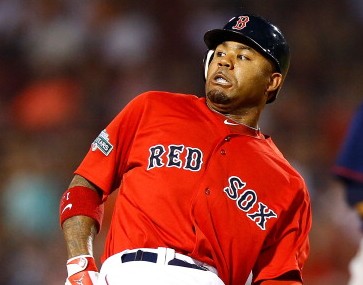
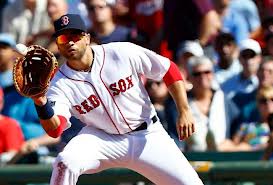
Now, time to look at the Boston side of this trade. James Loney has been with the Dodgers the last seven years as their First Baseman. Loney is a good, solid hitter with a great glove, but has never shown the power that most teams want from their first basemen. He is a free agent at the end of the year, so there is a good chance his time in Boston will be short. Still, not a horrible job by Boston on replacing Gonzalez, at least for the rest of the year.

The major part of the trade for Boston was to give them flexibility. Having Gonzalez, Beckett and Crawford on their payroll, (along with Ortiz, etc.) would have made it hard for the Red Sox to rebuild this upcoming offseason, which they drastically need to do. Boston was able to unload $260 Million in contracts, while giving Los Angeles about $12 Million. Not only does this give the Red Sox room to operate this offseason, it also gets rid of three players that the BoSox fans were tired of. It only made sense to restructure and dump what they could, and Boston did that, along with picking up some prospects as well.

The other four players in the trade are either major league ready or very close. Rubby De La Rosa is the gem of the trade, but won’t be ‘officially’ announce until after the season. He is coming back from Tommy John surgery, but was just up in the bigs for the Dodgers and has electric stuff. Jerry Sands is the other ‘player to be named later’ in the deal, and once he is officially acquired he’ll add some depth to their outfield corps and could even compete for a starting job in spring training next year. Ivan DeJesus, Jr. is an infielder that probably won’t start in Boston, but it does give them more depth and has been up and down between AAA and the majors part of the season. Allen Webster is the last player involved and had a less than stellar start the other day for Boston’s AA team, but he still could be in the pitching discussion for next year in Boston. Overall, not a bad haul of players for Boston in this trade.

This trade is a once in a lifetime trade, and one of the likes we won’t see for a very long time. At the end of the day, this trade did what both teams wanted it to do. For the Dodgers, they get veteran players to help their push for a World Series and to help them win now and for years to come. Boston, meanwhile, needed payroll flexibility and to rid them of players that didn’t fit into the Beantown atmosphere. Payroll was shed and younger, cheaper talent was added. This was a win-win trade for these two teams, and a trade that will be scrutinized for years to come. Time will tell just who gained the most from this monster of a deal. Until then, fire up your gaming system and see if you can do what the Dodgers and Red Sox did; make a trade that my ten year old tries to make with his video games.

Age is but a number…a high number.

Yesterday, Roger Clemens returned to professional baseball(and I am using that term loosely) as he pitched for the Independent Atlantic Leagues Sugar Land Skeeters. Clemens didn’t look bad for a guy who hasn’t pitched professionally in 5 years, as he threw 3 1/3 scoreless innings with 2 strikeouts and one hit, reaching 88 MPH on the radar gun. He even struck out former Kansas City Royal Joey Gathright, who’s claim to fame wasn’t what he could do on the field but for jumping over a car. Really. But all in all Clemens looked impressive for a 50 year old.

So what is the Rocket’s end game here? I tend to think there are multiple reasons for his return. For one, I think he misses the spotlight. Some guys fiend for it. They need it. When it goes away, they don’t know what to do. I think Clemens is one of those guys. I also think he just loves baseball enough that when he is not around it, he doesn’t know what to do. If you think about it, his entire adult life has been spent as a baseball player, so in a lot of ways, this is all he knows. Getting the chance to go back out there, even if it is just in the independent league, is still getting to be around the game he loves. But I think this isn’t the main reason he is back.

“yes, I’m 50 and still have frosted tips…”

No, the real end game here is a return to the Major Leagues, period. Why would a guy, who has accomplished as much as Roger Clemens, want to return to the bigs at the age of 50? It’s really an easy answer, and I am not alone in this thinking. Clemens is eligible to be on the Hall of Fame ballot this upcoming winter, and with all the steroid talk connected to the Rocket for years now, there is a good chance that he will not be voted in, even though he is one of the top ten pitchers EVER. No, Clemens wants to come back to delay the vote, and possibly even leave a different image in the voters minds. Scenario time: What if Clemens comes back, at the age of 50, and pitches at a more than passable level? He could say that it wasn’t the steroids that helped him, that even at 50 he can get major league hitters out. Now, the honesty of the situation is that there are some voters he will never be able to sway. But if he is able to change people’s perception, in his mind it could help his case for the Hall. Clemens has always taken his legacy seriously. For years, he talked about his place in the game, so he understands what is on the line here. It also gives him a chance to separate himself from Barry Bonds, who is also eligible for the Hall of Fame this winter, who himself is the poster boy for the “Steroid Era” in baseball. Being on the ballot the same year as Bonds will make voters tie them together as what was wrong with the game during this period. Distancing himself from that only helps his situation.

So will we see Roger Clemens in a major league uniform this year? I think we will, and I think the Houston Astros will give him an opportunity to pitch sometime in September. Yesterday, the Astros and Kansas City Royals both had scouts at the Skeeters’ game, checking out Clemens’ start. There is a joke within the fact that those were the two teams scouting Clemens, but I’ll make that joke at a later time.  If(when?) Clemens makes a start in the big leagues this year, his eligibility for the Hall of Fame will be delayed for another five years.

Even if all he does is pitch a couple games this year, he will get to leave a different impression of himself and his career to the baseball community. It’s sad that we are even discussing this situation, as Clemens should be a no-brainer when it comes to his place in the game. Two twenty strikeout games, the third most strikeouts of all time and seven(7!!) Cy Young Awards are just a few of the Rocket’s many accomplishments in his 23 year career. The fact that he wants to come back and possibly sully that tells you all you need to know. Although to be honest, can his image be more tarnished than it already is? Probably not. Maybe this is the best way to sway public perception of him. Or maybe we’ve all moved on and just don’t care anymore about the players who didn’t want to play by the same set of rules of everyone else.

Perfection (and Why it is Easier to Accomplish)

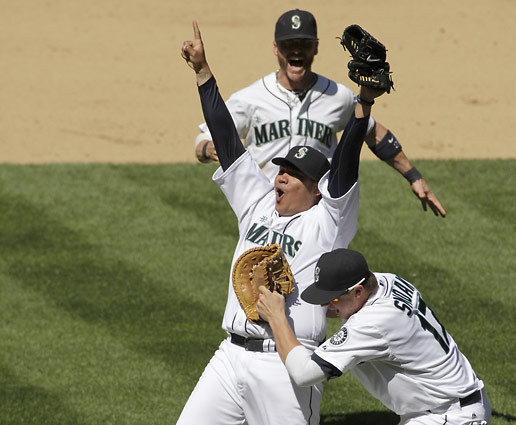
Yesterday, Felix Hernandez of the Seattle Mariners threw a perfect game, the first of his career, the first in Mariners history and the third overall this season. Not only that, it was the sixth no-hitter thrown this year in Major League Baseball. The last two years, pitchers have been all the rave in baseball, and the focus has been more on what happens on the mound than what happens at the dish. When did this happen and why is it good for baseball?

Last year was considered by many to be the year of the pitcher, a nod back to 1968 and a year where pitchers dominated, especially Cardinals Hall of Famer Bob Gibson who led the National League that year with an ERA of 1.12, a modern baseball record. It also forced baseball to lower the mound, to give hitters a “fair chance” against the pitchers who were dominating the game at that point. This year seems like a continuation of the Year of the Pitcher, with all of the perfect games and no-hitters being thrown around baseball and pitchers putting up flashier stats than their hitting counterparts. A big part of why this is happening is because of all the young pitchers scattered across baseball. Younger pitchers have sprouted up across the majors the last two years and not only are they young, but they throw harder and seem to have a good grasp on how to actually pitch, not throw. This has led to pitchers gaining an advantage over the hitters, a good sign for baseball after the years of power, which is often referred to as the “Steroid Era”.

The “Steroid Era” is another reason for the pitchers success over the last two years. Major League Baseball’s drug testing has proven to be topnotch, and other than the gaffe in the Ryan Braun positive test, no one has been able to successfully appeal a suspension handed down to them by MLB. With the success rate they have had with their testing, many players have chosen not to even chance it when it comes to trying to use banned substances. Sure, there will be guys like Melky Cabrera who either try to see what they can get away with or just aren’t smart about it, but most players know the testing is improving at a rapid rate and is not worth chancing it. Therefore, less players that are chiseled out of granite and more professional hitters litter the baseball  fields of 2012.

With all that drug testing being put into affect, it has made it to where teams focus less on homeruns and RBI’s. Instead, more value is shown to stats like OPS and WAR. Both stats show more of a players full value instead of just focusing on one simple area. While these stats will give you a more patient hitter, which is good, it can also give you a player who strikes out a bit more often, or a hitter who puts the ball in play more. Both are hitters that a pitcher like Felix Hernandez or Justin Verlander loves, as both are efficient starters who attack the strike zone and have nasty stuff to back it up. A power hitter can hurt you in more than one way, where as a singles hitter can hurt, but more likely to put the ball in play. Both can hurt you, but more pitchers would rather face a slap hitter than a slugger. Less loaded lineups lead to an advantage to the pitchers.

Maybe the biggest reason for the influx in pitching has been the focus by a lot of teams on pitching and defense. For years, the saying has gone ‘pitching and defense wins championships’. This philosophy was successful for many years, but after the 1994 baseball strike, it seemed many a team got away from this way of thinking. With power going out of vogue again, more teams stocked up on pitching and better defensive players. More teams will get by with a player who isn’t as good offensively if they bring great defense to the table. Ask Felix Hernandez how much it helps having Brendan Ryan playing Shortstop for the Mariners?  Ryan might barely hit .200, but he gives Seattle Gold Glove defense. Having that on your team can help, but can also make it easier for a pitcher to attack the bottom of your batting order. Utilizing these methods can both help and hurt your ballclub, leading to some really great pitching performances.

All in all, this wave of great pitching has really showcased the game of baseball. After years of sluggers with Popeye-like arms, we are now in an age focusing more on the little details of the game. No one knows how long it will last, but it probably means we will see more no-hitters and perfect games before it is all said and done. Hopefully it won’t dilute the game, only highlight all the great things that the game of baseball brings to the table.

Perfection be thy name!


The Tipping Point

There has been a lot of talk within the past month of just how much pain us Kansas City Royals fans can take. The Royals just wrapped up an awful 7-19 July, pushing fans even closer to the edge. It’s easy to sit there and just say ‘What’s new? The Royals are always bad!’, but this season goes deeper than that. It’s not just about winning and losing. It now becomes an issue of at what point do we, as fans, say enough is enough. Just what would it take to reach our tipping point?

I still remember the summer of 1994 fondly. That summer, I got my first real job. I also got my first vehicle, even if someone ran me off the road and totaled it less than a month later. It was also the summer of the baseball strike, and before that happened, the Royals were making a push. Manager Hal McRae was leading Kansas City up the standings, eventually getting the Royals to third place in the American League Central, only 4 games out of first place. When the strike happened, the Royals sat at 64-51, and it seemed the sky was the limit for Kansas City, as they were red hot. But it was not meant to be, as the strike forced the commissioner to call the season done, including no World Series that year. To make matters worse, Hal McRae was fired that offseason, being replaced by Bob Boone. That should of been a sign of what was to come, as the slide downward of our Royals began at that point. In fact, since 1995, the Royals have had only one season above .500. One season, 2003. That is it. Outside of that, there has been no joy in Mudville. Seventeen seasons of losing, which is enough to make a normal man hand in his Royal blue hat and find another team to cheer on. But we are a sadistic bunch, as we continue to take the abuse. In 2006, it seemed a ray of light shined on us, as Dayton Moore was hired as the General Manager. Or so we thought.

Dayton Moore coming in gave us faith that he could turn around the Royals. Moore had been a scout in the Atlanta Braves organization for years, moving up the ladder in Atlanta, sitting under the learning tree of former Royals GM John Schuerholz. Moore had the reputation of having a great eye for young talent, which is what the Royals needed. Moore’s first task was to build Kansas City’s farm system back up, as it had been depleted for years. Six years later, it is safe to say that he has done that. But being a GM isn’t just about developing young talent. It’s also about acquiring veteran talent that you can piece together with the youngsters to mold your team. That is where Moore has lacked.

A finger can be pointed at Moore and Owner David Glass for how the past few years have gone for the Royals. Going into this season, the young players were to continue to grow and we would at least see improvement within the team. Unfortunately, the wheels started to come off the cart in February, as injuries started to pile up. More injuries occurred once the season began, and add in bad roster choices and a rotation with 5 bottom rung starters, and you have a team that is back in the basement of the American League Central. Through it all, we fans continue to watch. But what would it take for us to turn our backs on our team?

The easy answer to this is for the team to continue to lose. The Royals have lost a lot of fans over the past eighteen years, and the longer the losing continues, the more fans don’t care anymore. They always gain new, younger fans. My son is the perfect example. He used to not care what happened with the Royals. Now, he wants to know everything that goes in with the team. The team will always gain fans like this, but keeping them will be the hard part, and the best way to do that is to win. Winning gets you more fans than you even need. Ask the Yankees. Winning makes all the bad that we have endured go away. In the end, that is the real answer.

To be truthful, the tipping point would be if the team continued following the path they are now. Continuing to act like nothing is wrong, that all is fine, will make fans even more apathetic, as it gives across the feeling that management doesn’t care about this team, nor does it care about its fans. This is a good way to alienate the fanbase, and it’s doing the trick at the moment. Many a fan has stepped away from this season and is already looking forward to the upcoming Chiefs season. That is not a good sign. If they go into the offseason with that same attitude, and don’t upgrade this team, then next season will not be pretty. Fans will not flock to the K, and David Glass seems to think if the stands are empty, then there is no reason to spend money. It’s actually the opposite; if there are no fans, you need to give them a reason to attend the games. You can’t just hope that they will come on name alone. Not with all the losing we have seen over the years.

The first time the Royals broke my heart was in December of 1991. Longtime team ace Bret Saberhagen was traded to the New York Mets, and I was crushed. Sabs was one of my favorites, and one of the players connected with my initial love of the team. Now he was gone, and no matter what we got back, it wasn’t enough. Trades happen in baseball, and I realize that now. But to a kid, it’s not that simple. Twenty one years later, and I now can’t even count how many times this team has broke my heart, even by management just not trying. I’d like to say I would never walk away and be done with the team I’ve loved since I was a kid. But it’s tough to watch your team lose year after year, with no end in sight. We need a sign, maybe even a miracle. Either way, something has to happen, and has to happen soon.

“Happier Days.”

The Lesser of Two Evils?

Within the past couple days, it has become heavily apparent that the Miami Marlins are gutting their team, only half a season into their first at the new Marlins Park. This past offseason, Owner Jeffrey Loria went out and did everything possible to buy his team a playoff spot, getting a new manager, new starting pitching, new closer, and new shortstop. What did all that get him? The Marlins are 7 games below .500 and 12 and a half games back in the National League East. It’s a pretty good bet that this team won’t be making the playoffs this season. But is gutting the team the right move?

One complaint that has constantly been made since baseball came to Florida is that the fans just don’t show up to the ballpark. The Marlins tried to rectify some of that this season by moving into their beautiful new stadium, Marlins Park. The team felt like they could afford all their offseason spending, as the money made by the new ballpark would pay those salaries. They also felt this team would be making a playoff rush, which would bring the fans out in droves. Unfortunately, this team has highly underperformed, so Loria felt it a smarter move to cut bait now, rather than wait.

A logical point could be made that Loria should have waited another year before doing this. It really feels like such a knee jerk reaction to go out and start trading off pieces left and right. But what did we expect? Loria has done this before. The Marlins have twice been World Champions, and gutted both times right after winning the big game. There is a history in Florida of teams being dismantled out of nowhere. Loria even has a history of such treachery, leaving the Montreal Expos high and dry to go buy the Marlins. Loria made a ton of promises to the fans of Montreal, and in the end, he jumped ship and let Major League Baseball take over the team. To put it bluntly, Loria can’t be trusted at his word.

This brings up another interesting question: Which is worse: Jeffrey Loria spending the money on his team, but gutting his team in a heartbeat, or David Glass, a man who doesn’t seem committed to spending money on his Kansas City Royals? I have been critical of Mr. Glass for years now, and for just reason. It just seems like the man doesn’t give a crap about his team and is more concerned about his bottom line. But to be honest, I would almost prefer that to what Loria is doing.

What Loria is doing is getting fans’ and their hopes up, then squashing them out of nowhere. It’s not real commitment. It’s commitment until things look murky, then it’s time to duck out. At least Glass is consistent: consistently cheap. If you are a Marlins fan, would you be shocked if Loria up and sold the team tomorrow? He seems weaselly enough to leave in the middle of the night and leaving for Indianapolis. Now, don’t get me wrong. Both owners are awful at owning at Major League Baseball teams, and the both sets of fans deserve better. But baseball has let them do these type of actions for years, so why should they stop now?

At the end of the day, I’m glad I’m not a Marlins fans. Sure, it sucks sometimes being a Royals fan, as I can’t say I honestly believe David Glass will ever spend money on his ballclub. But I can trust he won’t do what Jeffrey Loria has been doing for years. It is impossible for Marlins fans to ever have any dreams, other than for Loria to leave the team to someone who really cares about them. The same can be said about Glass and the Royals, but expectations aren’t driven up like they are in Florida. I can’t believe I am saying this, but I would take the devil I know over the devil who wants to leave when things start looking muddy. What a shame for Florida, and what a shame for Major League Baseball.

A face only a mother could love.

Create a free website or blog at WordPress.com.

Up ↑