Selection Tuesday: Which Royals Are All-Star Worthy

kc1

On Tuesday, Major League Baseball will announce the All-Star team rosters and it appears that the litany of Kansas City Royals players on the roster will not be as hefty as they were in 2015. With that being said, manager Ned Yost will once again be at the helm of the American League All-Star team and will have a say in some of the participants of the team. There will be Royal blue in San Diego on July 12, but how much? Let’s go ahead and look at my predictions for the Royals and who will be joining Yost at Petco Park next week.

All-Star Locks
kc2

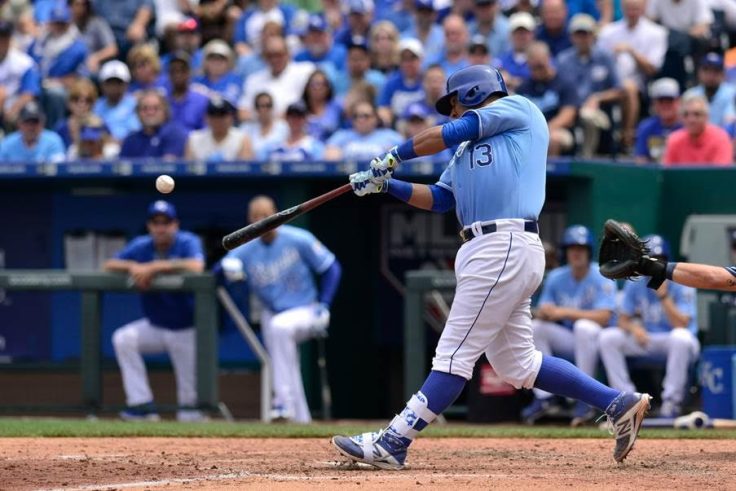
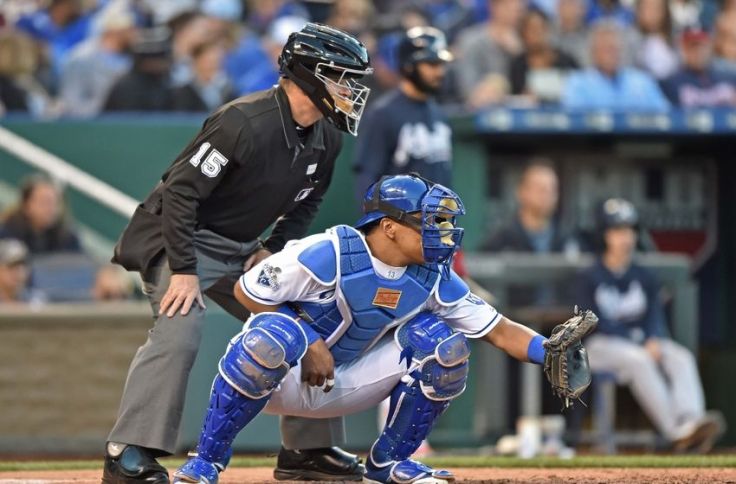
Salvador Perez

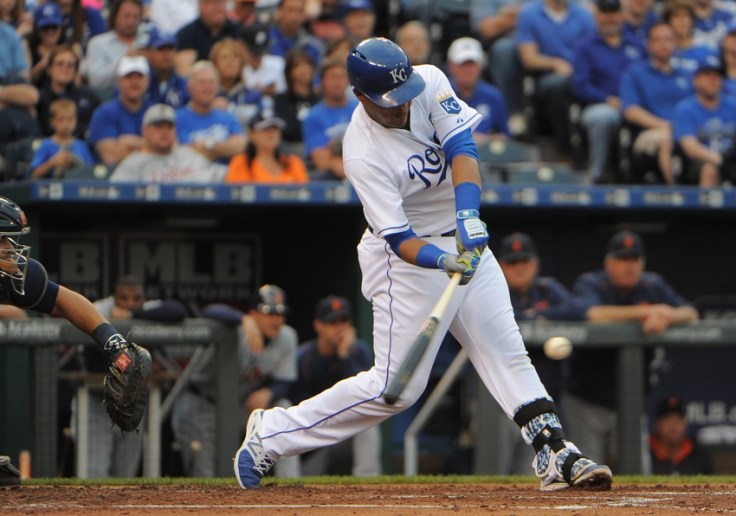
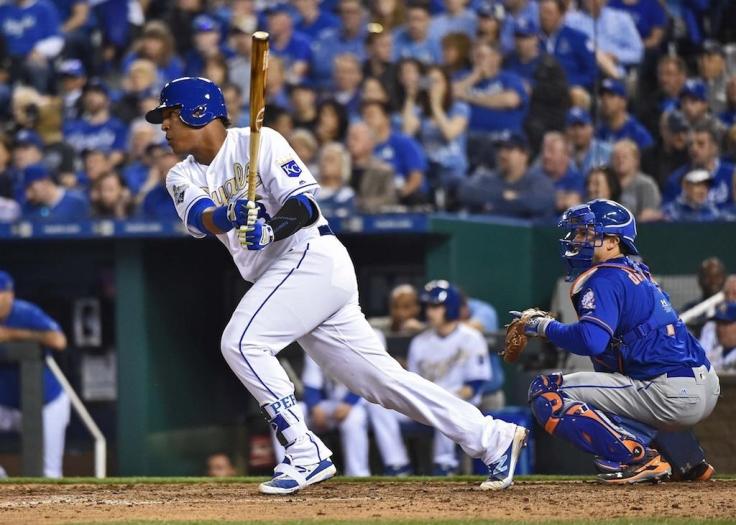
Salvy, a fan favorite not only in Kansas City but all around Major League Baseball, was leading the AL catcher position last we checked so the likelihood of him going is about 99.999999%. Normally Perez gets to the All-Star game on his charming positivity and his stellar defense behind the dish. But this year you can add a lethal bat to the mix; .281/.315/.490, 12 home runs, 37 RBI’s, 110 wRC+ and 2.1 WAR. I remember back in 2012 when former Cardinals manager Tony LaRussa was being interviewed the day before the All-Star game and was asked about Perez, who was in his first full major league season. LaRussa had compared Sal to Cardinals elite receiver Yadier Molina, which at the time was the highest of compliments. At this stage, it feels like Salvy has overtaken Molina and is the standard-bearer for catchers, at least in the American League. This won’t be a shock and will be well deserved when Perez starts next week in San Diego.
kc3

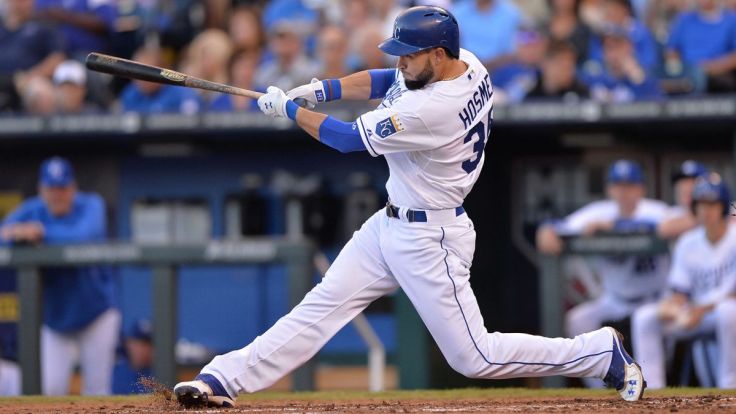
Eric Hosmer

Hosmer has been battling the first base position out with the Tigers Miguel Cabrera for the starting nod and deservedly so. Hosmer has produced like a star so far in 2016, hitting .303/.361/.490 with 13 home runs, 49 RBI’s, 127 wRC+ and a 0.4 WAR(with his defensive metrics dragging this number down). Hosmer has looked the part this year of offensive force rather than just potential,  and at this point is probably more worthy of starting the game than Cabrera. Hosmer is a lock either way to be on the roster, it’s just a matter of whether he is voted in or heads to San Diego as a reserve.
kc4

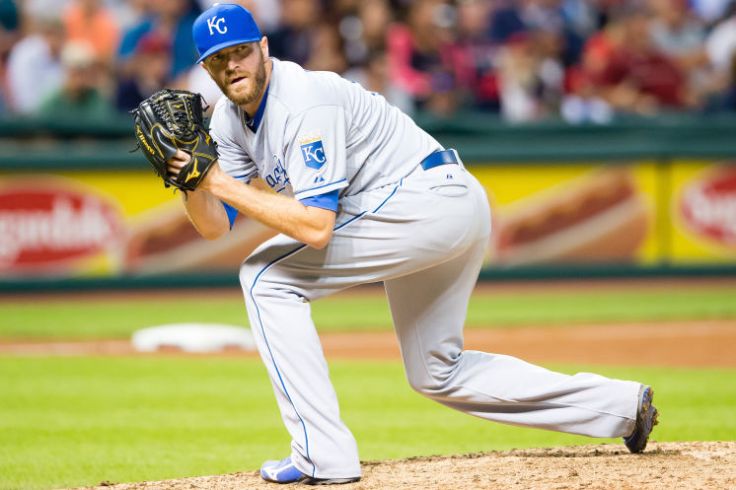
Wade Davis

I’m sure there will be someone out there, somewhere, who will say Wade doesn’t deserve to go to San Diego next week because he “isn’t quite as dominant” as he has been the last two years. That is pretty much the equivalent of Mike Trout’s numbers falling a smidge but still being an MVP candidate. Davis has thrown 29 innings so far this year, and while his numbers don’t pop out at you like in the past(K rate is down, walk rate is up) he is still producing. Wade has an ERA of 1.23, FIP of 2.69, and is still stranding 87% of his runners on base. He is easily one of the top five relievers in the game and deserves to be an All-Star. No way Ned doesn’t make that happen, if he isn’t voted there by the players. Wade will be an All-Star, period.

All-Star Probables
kc5

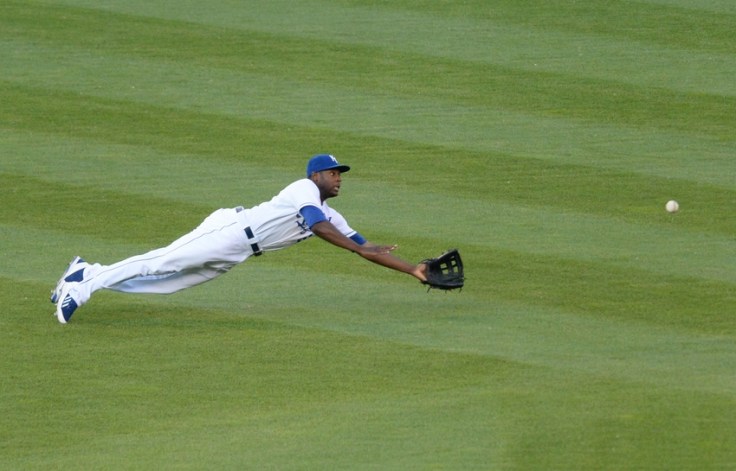
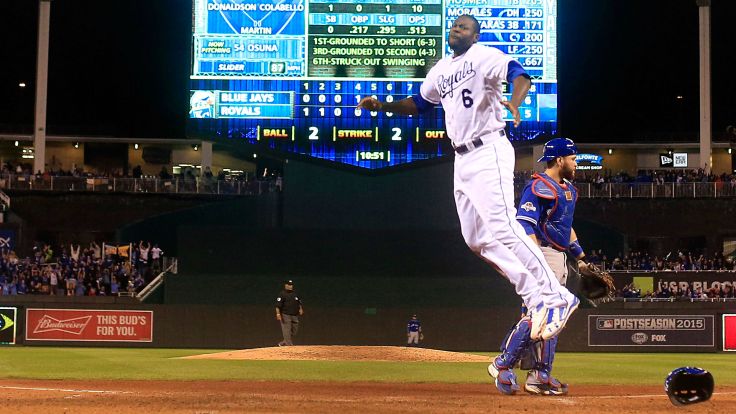
Lorenzo Cain

This will be a complicated pick, but one that should happen. Cain is currently on the disabled list, which means he would be unable to play in the All-Star game, but he can always be picked as a reserve and then have someone else take his spot; not like that has never happened before in All-Star’s past. Cain is hitting .290/.336/.416 with 8 home runs, 39 RBI’s, 1.9 WAR with 9 defensive runs saved. Sure, Cain is not tearing it up offensively the way he did in 2015(April was not kind to Lorenzo), but he is still considered one of the elite center fielders in the game and that’s what this game is for: the best of the best. It will interesting to see if Cain gets a spot, as it would be another honor that he could use when negotiating a new contract with Kansas City after the 2017 season. I feel he is worthy, but he might end up being a borderline selection by the players and coaches.
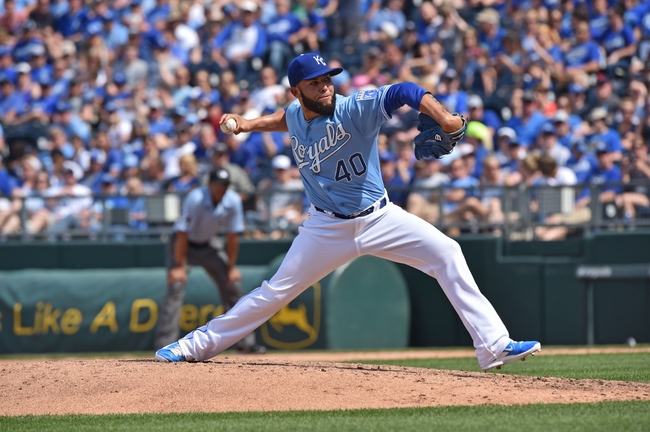
MLB: Detroit Tigers at Kansas City Royals
(Credit: Peter G. Aiken-USA TODAY)

Kelvin Herrera

To me this is an easy pick but Herrera could be cast aside for another Royals reliever this year(more on that in just a bit). Herrera has put up dominating numbers this: 11.41 strikeouts per 9, 1.63 walks per 9, 87% left on base percentage, 1.40 ERA, 2.01 FIP and 1.3 WAR, all over 38 innings of work. Herrera added a slider to his repertoire late in 2015 and it has made him even more unhittable than he was before. The Royals aren’t the defending World Champions without Herrera and he has continued to be the bridge to Wade Davis this year to help lock down the late innings for the Royals. Herrera is an All-Star; now we will see if he actually gets the honor or is passed over for a bullpen brother.

All-Star Longshots
kc7

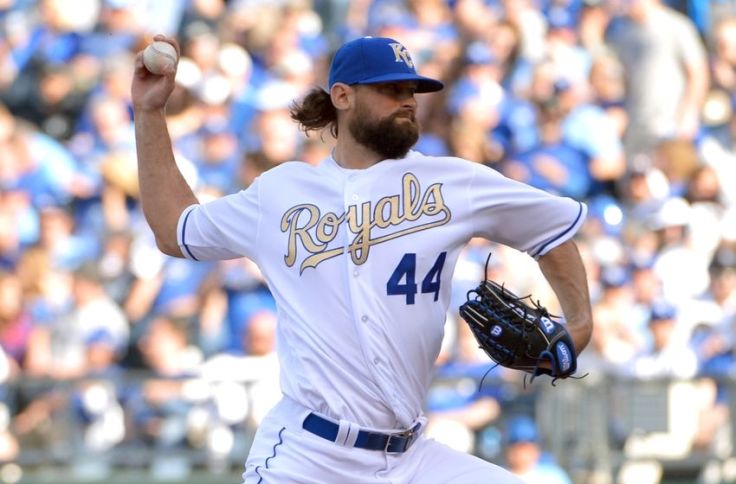
Luke Hochevar

Yep, bet you probably didn’t see this coming. Above, I mentioned Herrera could get passed over for another Royals reliever and of course I was talking about Hochevar. Hoch, a man who I once despised, has been one of the most reliable Royals relievers this year and the numbers back that up: 10.16 strikeouts per 9, 2.03 walks per 9, 79% left on base percentage, 2.90 ERA and 0.4 WAR over 31 innings. Sure, these aren’t eye-popping numbers like Davis or Herrera, but they are more than solid and worthy of the adulation. Now, if Hoch gets picked it will be by manager Ned Yost, who will want to reward Luke for his hard work out of the pen and the fact he doesn’t get a lot of the recognition that his bullpen mates get. Yost has asked Hochevar to perform in a lot of high-leverage situations this year and for the most part he has been highly effective in that role. If he is rewarded with the honor, it will show just how loyal a man like Yost is and a nice nod for a guy who turned his career around after being a failure in the rotation.

kc8

Whit Merrifield

Okay, okay, I know; Whit has played in only 40 games for Kansas City and more than likely has no business even being in this discussion. But…those 40 games have been stellar with steady production from a guy who is supposed to just be an afterthought after the season started. Instead, Merrifield has posted a line of .308/.328/.426 with 26 runs scored, 15 RBI’s, a .385 BAbip, 100 wRC+ and 1.3 WAR…all in 40 games! Merrifield is 8th in WAR for second baseman in the American League and while Robinson Cano, Jose Altuve and Ian Kinsler are all worthy of roster spots this year, the story of Whitley Merrifield would make a great story. It’s not going to happen and for the most part, it shouldn’t. But it’s hard not to root for this guy and everything he has accomplished in about six weeks. To see him gaining an All-Star nod would be about as warm and fuzzy as one can imagine. Think of watching ‘Toy Story’ while cuddling with a bunch of puppies and you will be close…not quite, but close. So Merrifield isn’t going to San Diego, but I felt like I should at least mention him. Rock on, Whitley.
kc9

The Royals aren’t going to send as many players to San Diego as they did last year in Cincinnati(no bus needed this year. Sorry, Rex) but I would expect a healthy dose of Kansas City blue at the festivities next week. For years Royals fans would hem and haw about who actually deserved to get Kansas City’s lone spot at the game, and there were even years were no one was really worthy(hello, Mark Redman!). The Royals will have enough players going this year to where you should probably pay attention to the game to see if any of the players end up playing pivotal roles. Just don’t take the game too seriously; it is an exhibition game after all. An exhibition game where Salvy could throw a runner out, Hosmer could hit a home run and Wade could record the final out. Sure, there is a good chance none of that happens, but you never quite know.
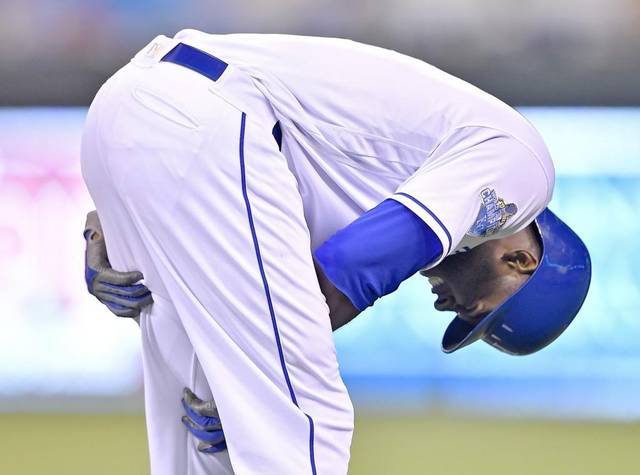
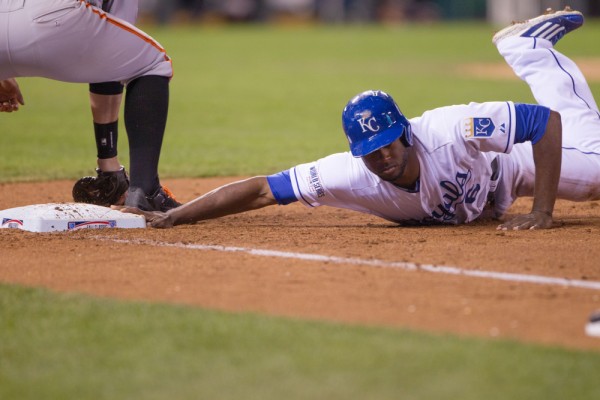


Cain Is Not Able, Heads To DL

kc1

On Tuesday evening, the injury bug hit the Kansas City Royals yet again. This time, it struck All-Star centerfielder Lorenzo Cain, as he pulled up lame running out a ground ball. As most know that follow the Royals, this is not the first time Cain has dealt with a leg injury. In fact, the Royals have spent the last few years trying to get him to kick the habit of lunging at the first base bag when running out grounders and for the most part he has been successful. Unfortunately, this time Cain is dealing with a strained left hamstring and was placed on the disabled list on Wednesday. So what effect will this have on Kansas City?

kc2

Let’s state the obvious first: it is never good to lose a player of Cain’s caliber, let alone the person who is probably the best player on the team. The Royals will obviously miss his stellar defense in center field, but this might turn out to be a nice break for Cain. Cain hasn’t been tearing it up offensively in June, hitting .280/..309/.333 with 6 RBI’s. He’s not hitting poorly, but he’s also not producing the way he was in May; .351/.387/.577 with 6 home runs and 25 RBI’s throughout the second month of the season. It is easy to see where some of the Royals struggles earlier this month can be traced back to Cain, as he has driven in about 20 runs less this month. I feel like I am dogging Cain for the past month, which I’m not; there is no way he would drive in 25 RBI’s every month. But with him batting in the middle of the Kansas City batting order, you would hope he would have contributed a bit more over the span of a full month. Sometimes a player needs to take a step back from the everyday grind of baseball to recharge and get back into a groove. Cain will be allotted that time for the next couple weeks.

kc3

So who will take Cain’s place in his absence? I would have to believe we will see more Jarrod Dyson, as he is a solid fit in center field. Dyson has had a rough June(.229/.357/.257 in only 43 plate appearances) as he has seen his playing time dwindle with Paulo Orlando seeing the majority of playing time in right field due to his hot hitting. Dyson will bring most of the same stellar defense that Cain brings to the table, but offensively he will be a few steps back. There’s also a chance that Brett Eibner, who was recalled again from Omaha once Cain went to the DL, could see some time in center, a position he has played in the minors. Playing Eibner in center field could be interesting, as he is a step back defensively but would add another power bat to the Royals lineup. The Royals tend to put an emphasis on defense the majority of the time, so Eibner would probably see less playing time but it might be a good litmus test to see how he does defensively for a couple of weeks until Cain is back.

kc4

Speaking of Cain coming back, you might be wondering about the timetable for his return. The word is that Cain has a Grade 1+ strained left hamstring, which is defined as follows:

With a grade 1 hamstring strain you may have tightness in back of the thigh but will be able to walk normally. You will be aware of some hamstring discomfort and unable to run at full speed. There will be mild swelling and spasm. Bend your knee against resistance is unlikely to reproduce much pain.

This would be why most didn’t notice a limp after Tuesday night’s game:

This would also explain why they are expecting him to return right after the All-Star break:

In other words, the injury came at an opportune time. With the All-Star break just a few weeks away, that gives the Royals just a tad over two weeks to let Cain rest and get healed without losing him for a long stretch of games. I would also say he will not be playing every single game upon his return, as they will want to monitor the hamstring and make sure not to re-aggravate it. The fact this isn’t Cain’s first leg injury is a concern, but an injury like this would be much more painful during the pennant stretch than it is in late June/early July.

kc5

An injury to an All-Star is never a good deal for any team,  but the Royals should be able to hold the team together during Cain’s absence. Kendrys Morales is on a hot streak offensively and with Alex Gordon back in the fold the Royals offense isn’t as patched together as it was a month ago. If there is a real concern here, it is that Cain has had a myriad of leg injuries throughout his career, most notably back in 2012. You have to hope for the Royals sake that this is just a lone event and not a sign of things to come. Cain has stayed healthy for almost a two-year stretch(his last DL stint was in April of 2014) and the Royals need him healthy if they are going to make a return appearance in the playoffs. The Royals have the depth to wait out this injury and shouldn’t notice a big drop-off in his absence. If you really want a sign as to how the Royals have changed over the last 4-6 years, here it is. The Royals will be without their best player for a few weeks and there isn’t a giant alarm going off. This is progress, folks.

Salvy Power

kc1

Salvador Perez holds many roles for the Kansas City Royals; clubhouse leader, Lorenzo Cain’s BFF, backup broadcaster, leader of the pitching staff and middle of the order power threat. In 2015, Perez would hit 21 home runs, a new high for a Kansas City catcher. Despite this career high, Salvy’s other numbers weren’t as impressive. Walk rate was the lowest of his career. Strike out rate was the highest it had ever been. Hard hit rate was the lowest it had been since his rookie campaign. Line drive rate was one of the lowest of his career. Most importantly, his wRC+(which weighs runs per plate appearance while being park and league adjusted) was the lowest of his career, at 87(league average is 100). It really appeared as if Perez’s numbers were already starting to skew downwards, which was not good for a player coming into his age 26 season. Most Royals fans are well aware of Salvy’s lack of patience at the plate and most don’t expect him to walk much, but would prefer he became a bit more selective at the plate. All this information makes it even more impressive when discussing what Perez has done so far in 2016.

kc2

Over the last month Perez has been the hottest hitting Royal, putting up a line of .411/.436/.689 with 6 home runs, 14 RBI’s and an OPS of 1.125. Perez, a notorious free-swinger, is still swinging at a lot of pitches(in fact he is pretty much on par with his totals for the last two seasons), but there is a slight change in his approach. Last year, Perez was making contact with pitches outside the strike zone about 73% of the time; so far this year he is at 62%. Meanwhile, pitches inside the strike zone he is actually making a bit more contact, up to 91.4% from 90.7%. This tells me that he is laying off the pitches outside the strike zone a bit more this year while focusing more of his attention on pitches within the meat of the plate. The funny part to all of this is that Salvy’s strikeout rate is up by quite a bit(22%, up from 14% last year) while his contact rate is also down, to 78% from last year’s 83%. You would think that a guy who is making less contact would not see his numbers go up, but they have. In fact, Salvy has been a beast in the power department so far this year.

kc3

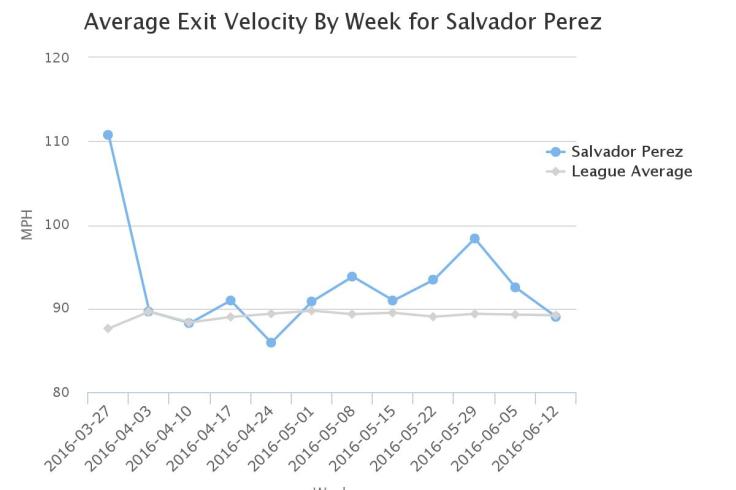
The power numbers are where Perez is really stepping up his game. His hard hit rate is significantly up this year, 36% from last year’s 24%, and his fly ball rate has also soared, 48.8% from 37.4%. Of course because of this, Perez has a higher home run to fly ball ratio(14.3%) and a lower ground ball rate(26.7% from last year’s 41.9%). To me this all screams of someone driving the ball much more and realizing he can do more damage on pitches closer to the middle of the plate. This is even more evident when looking at Salvy’s exit velocity:

chart

As you can tell, outside of a brief dip the week of April 24th, Perez has been not only above league average, but even close to averaging 100MPH on hit balls for a few weeks. Now, while his approach with pitches outside the zone has changed, he is still a very pull-heavy hitter, as he is pulling the ball the most he has since 2014. Slugging, On Base Plus Slugging, Isolated Power and Weighted on Base Average have all gone way up so far in 2016. Hell, Salvy’s BAbip over the last month is a ridiculous .508! These numbers speak of a player on track for a career year.

Salvador Perez
(AP Photo/Charlie Riedel)

Speaking of career highs, at his current rate, Perez is on track to have career highs in doubles, home runs, RBI’s, batting average, on base percentage, slugging and with a little luck, possibly even WAR. He also already has 11 walks this year, only 6 behind last year’s total. His career high for free passes is 24, which I’m not quite ready to say he could topple, although if he keeps hitting like this he will surely see his intentional walks go up. I know there was an increased effort this year for Perez to be more patient at the plate. To me, being more patient at the plate doesn’t always mean more walks as much as waiting for a good pitch to hit and drive. I’ve long felt that Royals hitting coach Dale Sveum has been teaching these guys to look for a pitch to drive and because of that we have seen higher power numbers from Lorenzo Cain, Eric Hosmer and Mike Moustakas. I’m starting to think the same philosophy is being soaked up from Salvy and it is paying off in spades.

kc5

So do I believe he will be able to keep this up all season? Perez is a very streaky hitter and I would assume at some point we are going to start seeing a lull in his numbers. That being said, I think even with that he can still keep himself with numbers higher than what he accumulated last year. Is he going to hit .300 all year? Probably not, but the power numbers could be here to stay. The bigger concern for Kansas City is to keep Perez rested and make sure they are not over-working him behind the plate. The Royals have a solid backup receiver in Drew Butera and with Kendrys Morales slumping much of this season, it seems like a solid idea to give Salvy’s knees a rest and start him at DH occasionally. More than anything, Kansas City needs Salvy to stay healthy the rest of the year for them to stay in contention in the American League Central. Perez has long been regarded as one of the top defensive catchers in the game and rightfully so; but now, outside of a Jonathan Lucroy or Buster Posey, he is making the case as one of the best all-around catchers, period. Perez is as special as they get and I really hope Kansas City fans are savoring what they have with him. If he keeps this up, the hardware won’t be stopping anytime soon.


Cough Syrup, Free Passes and Sparkplugs: Random Royals Notes

kc1

I think we can all agree that the Kansas City Royals have hit a rough patch these last few weeks. The Royals have lost 11 out of their last 14 games and have fallen below .500 within the last couple of days. I’m not one to worry this early in the season, but it does appear as if plenty of other Royals fans are doing that for me. With all that being said, the news has not gotten much better this week as the path of ‘getting back on track’ has taken a detour. With that said, here are some random notes on what has been an eventful week for the Royals of Kansas City.

kc2

  • Let’s begin with the most shocking news of the week, the 50 game suspension of Royals top prospect, Raul Mondesi, Jr.:

Now, the good news from this is that rather than receiving the normal 80 game suspension for a first time offender, Mondesi got his reduced due to proving a cough syrup he took had the PED he tested positive for in the ingredients:

The other positive of the reduced sentence is that because he was able to get his suspension reduced, Mondesi will be eligible for postseason play if the Royals want to use him in October:

So all things considered, this could have gone much worse for both the Royals and Mondesi. It appears, going off of the Royals AA affiliate’s, Northwest Arkansas, schedule that Mondesi would most likely be activated sometime in early July. Where the suspension hurts both parties is the development of Mondesi and his eventual ascension to the big leagues. I’ve been of the belief since before the season even started that Mondesi would be the Royals starting second baseman no later than August of this year. Now with this setback, I would say we might not even see him in the majors until September at the earliest, unless the Royals just believe he is ready to go. So there is still a possibility Mondesi will be helping out the big league club before the season is over, but the chances dimmed a bit from this news. There will be people in certain circles that will label him with the scarlet ‘PED’ letters, but I tend to lean toward MLB with this; if they believed his story enough that they reduced his suspension, then that’s where I will stand as well. Hopefully this is just a bump in the road to what will be a highly successful career for this youngster.

kc3

  • An ever-growing area of concern for the Royals the last few weeks is the starting pitching, which has floundered at best during that span. Outside of Ian Kennedy (who has had only one bad start so far this season), the rotation has been inconsistent at best and ‘watching Bartolo Colon squeeze into a pair of speedos’ at worst. Edinson Volquez has had mostly good outings but a few stinkers while Chris Young has given up 13 home runs in just 32 innings(or a home run every 2.4 innings). Maybe the most concerning statistic is the one that Kris Medlen and Yordano Ventura have put up this year. Both starters are averaging over 7 walks per 9, with Medlen at 7.4 and Ventura at 7.3. The Royals starters are averaging 4.52 walks per 9 innings and only 5.2 innings per start. Bottom line, this group just isn’t getting it done and it’s put extra weight on the Royals bullpen. So are there any options? Only a few, to be honest. There is Danny Duffy in the bullpen, and it has always been figured that he would end up starting at some point this year, since Young was never slated to be a starter all year-long. Duffy might have to build up his arm a bit, but he is a good possibility. Dillon Gee is starting for Young on Saturday and has a good shot of staying there unless he completely bombs out. Mike Minor made his first rehab start on Tuesday, but he probably won’t be ready until the beginning of June. Hey, the Royals might have even see if Brian Flynn, a starter throughout his minor league career, can make a few starts to tide them over. So for the most part that leaves Kansas City with less than stellar options. For the most part, the Royals’ starters just need to step up their game and pitch the way they are expected to, as there is no magical solution to the problem on the horizon.

kc4

  • I was posed the question multiple times this past week on whether or not Cheslor Cuthbert can play some second base. My answer was fairly standard: yes, as he had started three games in the minors throughout his career, committing two errors but I’m pretty sure the Royals would prefer a defensive player at second. Royals Review covered the possibility quite a bit recently and as much as I like Cheslor and would like to see him get more at bats, I just don’t see him getting playing time at second base in his future. The other question I was asked was about Royals minor league outfielder Jorge Bonifacio, who is off to a hot start down in AAA Omaha. I like Bonifacio as well, but I get the feeling the Royals aren’t quite sold that he is ready for a big league job. The questions were directed toward me more because the person was thinking that the Royals needed ‘a spark’ to get them going. As much as the offense has struggled scoring runs this year, I’m not sure either Cuthbert or Bonifacio are really the answer. I tend to believe the answer is already on the roster.

kc5

  • Speaking of that answer, this leads me to a positive note about the offense. Over the last week, a few members of Kansas City’s starting lineup have started producing and getting on base quite regularly. Lorenzo Cain, who had struggled mightily to begin the season, has produced a line of .339/.339/.518 over the last couple of weeks with 3 home runs(all in one game against the Yankees on Tuesday), 7 RBI’s and a BABIP of . 421. Alex Gordon, a notoriously slow starter, has put up a line of .300/.400/.433 with 1 home run, 2 RBI’s and a BABIP of .421 since May 1st. Finally, Alcides Escobar has a line of .368/.400/.421 since May 1st with 3 RBI’s and a BABIP of .412. So the bats are starting to wake up and if Kansas City can get some solid starting pitching, it wouldn’t be out of the realm of belief if they went on a big winning streak. As much as the offense still has some questions(when will Kendrys Morales wake up?), it does appear as if a few players have started climbing out of their early season funk.

kc6

So this season hasn’t played out the way most of us figured it would but it isn’t a lost cause either. It’s not the like the ‘World Champs’ have forgotten how to win, they just need to tweak their performance for better results. The good news is that Atlanta is headed to ‘The K’ this weekend and we all know how dreadful they have played so far this season. The bad news is that after that, Kansas City has Boston and then the White Sox to play in back to back series. If the Royals don’t want to fall farther off the beaten path, they are going to have to step it up and get locked in. If not, there might be a bigger discussion coming up about what needs to happen to turn things around. Before anyone asks, no, they don’t need to change the hitting coach. All that really needs to happen is for the Royals to stay focus and remember what made them the hunted and start being the hunter again.

The Royals and .500 Baseball

kc1

Mother’s Day, 2016. The Kansas City Royals wrap up their series in Cleveland against the Indians, losing the rubber game and losing their fourth straight series in a row. The Royals now sit at 15-15 as they head to New York to take on the Yankees. To say there is concern for Royals fans would be an understatement; a few weeks into the new season and Kansas City does not look like the defending World Champions. But should you be concerned? Nope. Or should I say, “at least not yet”.

kc2

I say not yet because just going by the numbers, this Royals team is not too far off from where they were last year within the American League. Let’s look at offense first, since there has been a lot of concern with the Royals producing with the bats as of late. The Royals right now are on par with where they were last year with numbers you would expect; top of the league in steals, near the top in BABIP, near the bottom in walks and pretty much all power statistics, which is fairly normal for the Royals the last few years. Even their strikeout percentage is the 5th lowest in the American League, which I’m sure is surprising to some. There has been a lot of talk so far this year on how guys like Alex Gordon and Lorenzo Cain have struck out more than normal, but the numbers say as a team they are about where they normally are. Where things differentiate is runs and RBI’s. Last year, the Royals drove in a healthy amount of runs and were in the upper portion of the league at year’s end. This year they are dead last and a lot of that can be pointed toward their inability to score runners in scoring position. The Royals have the third highest rate in the American League (3.55) of stranding runners in scoring position, with only Boston and Houston stranding more this year. To go along with this, Kansas City is just not creating runs, as evident by their being tied for last in wRC+ with 87. So offensively, this team is just not creating runs and being clutch, which are two main cogs of the Royals offense during these last two seasons.

kc3

So what about the pitching? For the most part the Royals are putting up about the same numbers here as well. Going down the line, the stats match up with 2015; HR/9, BABIP, LOB% and GB% are all fairly close to what the Royals finished at last year. One area that has seen a slight bump is the walks per 9, which have jumped up from 3.03 last year to 3. 98 so far in 2016. It’s very believable at this stage in the season to see where a few extra base runners could cause a few more runs for the Royals, even despite the percentage of runners being stranded by the pitching staff on level with last year. The Royals hard hit percentage is also up a tad(29.4 last year, 32.1 so far in 2016) which is mildly concerning, but something the pitching staff can flip around, partially by improving their pitch location. Just taking a glance at the numbers, it shows that Kansas City’s pitchers have a few areas they can improve on, but nothing that can’t be adjusted for a quick fix.

kc4

So just basing how the season has progressed by the numbers, Kansas City isn’t too far away from climbing their way back to the top of the American League Central. It’s easy to see a scenario where the hitters starting hitting better in tight situations and the pitchers start toning down the walks and not allowing as many pitches in the middle of the plate(and a little more good luck). The White Sox have a six game lead right now over the Royals, which is very attainable. Just as the Royals won’t play this way all season, the White Sox won’t dominate all season. Strap in folks; we are one hot streak away from the Royals blowing past .500 baseball.


Diamonds and Pearls:Royals Random Notes

royals1

We are just a few weeks into the season and the Royals are standing atop of a very tight American League Central, as most assumed they would. It’s hard to get too worked up about much of anything this early(especially since number-wise everything is a small sample size), but there have been a few patterns that have shown a light on the performance of a few Kansas City players. I figured today we would take a glance at these few items while also taking into consideration where the team is at early in the season. What do the people say, onward and upward? Sure, let’s do that.

kc1

Let’s start with last year’s MVP candidate, Lorenzo Cain. Cain was able to become an offensive force for Kansas City in 2015, but so far has struggled offensively in 2016. Some have pointed to his uptick in strikeout totals, like Hunter Samuels did for Baseball Prospectus Kansas City. As of Friday, Cain’s strikeout % is sitting at 28.6%, a major increase from last year’s 16.2%. While the K’s have been alarming, I have been pleasantly impressed with the patience Cain has shown at the dish. Over his career, the highest walk % Lorenzo has ever produced was 7.5% in 2013. Like most of the Royals, Cain just doesn’t walk much. But so far this season, he has upped his walk % to 14.3%, as he has walked 9 times in the first couple weeks of the 2016 season. Cain walked a grand total of 37 times last year, so he is already 1/4 of the way to that total. I have enjoyed seeing him be more patient at the plate and I think that also explains his strikeout numbers this year. If he is being more patient(and he is; Cain has increased his pitches seen per plate appearance this year, 4.27 to last year’s 3.79) than it seems just as logical that he is batting with two strikes on him more often. When that happens, you are bound to strikeout a bit more, as you are battling deeper into the count. It will be interesting to see what direction these numbers go throughout the rest of the year and they will be worth the time to occasionally check up on. I like that Cain is working the count more in his at bats, but you also have to realize when that happens there is a high chance that the strikeouts will increase as well. Hopefully Cain can learn to be patient while also knowing when to be more aggressive, as he has been known to do in the past.

kc2

Speaking of a Royals player whose strikeout totals are up, there is Alex Gordon, although I was wanting to talk about something else where “A1” is concerned:

It has fallen a tad, down to 40% as of the time of me writing this, which is still a very good percentage and shows when he gets a piece of the ball he is getting good wood on it. It seems by the numbers that Gordon has been hitting less fly balls(20%) while staying on pace with his ground ball percentage(40% so far this year, 37.6 last year). If you’ve watched a good portion of Royals games, you are probably shocked by these numbers. It just hasn’t seemed like Alex is stinging the ball so far this year. His hard hit % is down a smidge(26.7%) this year, but his medium hit rate is up(56.7%), so that could explain some of the line drive’s being hit by Gordon so far. The line drives also appear to be helping his BABIP, as it has risen to .379 in the season’s first couple weeks. I tend to think this is a good sign, as Alex is a notorious slow starter and these numbers tend to say that he is seeing the ball well. In fact, I might even go out on a limb and say we could be seeing an Alex Gordon hot streak in the very near future.

kc3

So we all knew Ian Kennedy would be this good through his first three starts in Royal blue, right? Um, sure. Go ahead and count me as one of the early skeptics of the Kennedy signing, but so far into 2016 he has proven everyone wrong. In three starts, Kennedy has thrown 20 innings, giving up only 3 runs and an ERA+ of 284. What is interesting is his strikeouts per 9 is on par with 2015 while his walks per 9 is only slightly below last year. You can probably assume part of Kennedy’s early success can be given to having the Royals defense behind him, as he was stuck with San Diego’s awful ‘D’ last year. But it also appears as if pitching coach Dave Eiland made just a slight adjustment to his game plan on the mound this year that seems to have helped Kennedy:

So Eiland(who was also a coach in the Yankees system as Kennedy was coming up through the minors) has wanted Ian to keep the ball down and stay away from missing the ball up in the strike zone. One of Kennedy’s big bugaboo’s over the years has been a tendency to give up the long ball. It would only make sense that if you continue to miss higher up in the strike zone, that there would be a greater chance of giving up some sort of extra base hit. Missing lower in the zone can cost you as well, but the percentages say it would be more likely to get a ground ball or a pop-up in that situation. I had made the comment back when the Royals signed him that I felt we would get some excellent starts from Kennedy as well as some stinkers and for the most part I stand by that. But if Kansas City gets more outings like he has thrown to this point than the bad ones, I don’t think anyone will complain. So far, so good for Kansas City and Ian Kennedy.

MLB: New York Mets at Kansas City Royals
(Credit: Peter G. Aiken-USA TODAY)

…and then there is Joakim Soria. There has been a lot of concern about Soria since Opening Night, when he struggled in his return appearance to Kansas City. Since then, Soria has had some great outings, some good ones and a couple of rough patches. Craig Brown of BP Kansas City recently took a look at some of Soria’s issues and the consensus was that he was having location issues as well as not missing many bats. The funny thing is that while he appears to be struggling, there are a number of factors that point to a little bit of bad luck. For one, batters are not hitting the ball hard on Soria. His hard rate % is only around 20%, which is the lowest of the Royals top four relievers(Wade Davis, Kelvin Herrera, and Luke Hochevar being in that group). In fact, if you’ve been paying attention, Soria has allowed a number of bloop and dink hits so far into the season which would also explain his BABIP of .375, which is ridiculously high for almost any reliever(to give you an idea, Davis’ is currently at .071!). His velocity has also been on par with past seasons, which is a good sign that any trouble that is occurring is easily fixable. In fact, Dave Eiland might have already found a solution:

Royals pitching coach Dave Eiland called Soria into a room early Wednesday afternoon. Eiland had noticed something the night before and confirmed it by watching slow-motion video after the game, but he waited for emotions to settle to meet with Soria.

In baseball speak, Soria has a “lazy front side.” In normal-people speak, his front arm is drifting off to the first base side, which isn’t generating the guidance or power needed for his throwing arm. It is a problem, affecting both movement and location, but coaches would love for this to be the extent of their pitchers’ problems.

So Kansas City is hoping this slight adjustment could solve most of Soria’s woes. It will still beg the question being asked: Should Kelvin Herrera be throwing in the 8th inning instead of Soria? The answer is ‘probably’ but the Royals have an unique situation here where they have such a surplus of arms that the options are plentiful. It sounds like the team will go with the guy who is pitching the best at the time, which could be Herrera, Soria or even Hochevar. The door isn’t closed on Soria pitching in the late innings, but it does appear that it will matter on who has the hot hand at the time. In other words, what inning he comes in for will all be determined on how Joakim is throwing  at the time.
Salvador Perez, Kendrys Morales, Eric Hosmer
(AP Photo/Orlin Wagner)

The Royals currently inhabit first place in the American League Central and have the best record in the AL at 11-5, so things are going smashing for the defending World Champions. It’s still early so any issue at this point is purely minute and nothing to get too worked up about. It’s a long season folks and the Royals have only played about 1/10 of their games, so a long path is still ahead. It’s sunny in Kansas City and it appears the road for every other team in the league will have to run through the Royals to get to the big destination, the World Series. I have a feeling Kansas City will welcome the challenge with open arms; just a thought. We lost some royalty this week, but the “Royalty” in Kansas City is still chugging along.


Moose’s Power Surge

kc1

When I initially started this piece, my plan was take a look at Mike Moustakas’ home run history, broken down by month each year. But as I took a deeper look at Moose’s 2015 home run numbers, something jumped off the page at me. After hitting either  two or three homers for each of the first four months of the year, he exploded for five home runs in August and seven(7!) in September/October. When you add in the four home runs he has already hit through the first eleven games of this season, I have to ask a question: is Moustakas finally living up to his expected power potential?

kc2

While Moustakas was coming up through the Royals minor league system, the expectation was that he had a good chance of producing some great power numbers. Here is a scouting report back  in 2009 from MLB.com:

Plus bat speed and a good swing translate to outstanding raw power, though he showed more of it in 2008 than last year. He does have the ability to hit the ball out to all fields.

There was also this about his upside potential:

Middle-of-the-order run producer who is a constant home run threat.

Also, this scouting report of Moose back when he was drafted in 2007:

Moustakas can flat-out hit and has potential to hit for average and power.

He’s a left-handed hitter with serious power. He homered three times in this game.

So there was a prevalent thought even back when he was in high school, that Moustakas could be a major power threat in the middle of Kansas City’s batting order. Even his minor league numbers showed a hitter with plus power, including 36 home runs in 2010 as he split time in AA and AAA.

kc3

Some of that power has translated over in the big leagues. Moose connected for 20 homers in 2012 with a slugging percentage of .412 and wrapped up last year with 22 and .470 respectively. In fact, the last two months of 2015 might have been a window into some of the power predicted by scouts before he was even drafted. Not only was there the 12 home runs during that span, but also 17 doubles and a slugging percentage of .562. So there seemed to be a change in philosophy in Moustakas from his approach at the plate early in 2015 and the numbers agree with that. Early in the season, Moose’s Fly Ball % hovered in the 30’s but jumped to the upper 40’s starting in July. His Home Run to Fly Ball % also jumped, from below 10% to 13.5% in August and a whopping 17.9% in September. A big part of his early season success was attributed to a philosophy of hitting the ball to the opposite field, as shown by his Pull % lingering in the mid to upper 30’s. August and September saw those numbers rise into the 40’s, while his opposite field numbers falling down into the 20’s. It definitely appeared on the surface that Moustakas was trying to drive the ball more in the second half of the season, with definite success showing up over the last two months of the season.

kc4

It also appears as if Moose’s pitch recognition has improved as well. Last year it became very apparent that teammate Lorenzo Cain had figured out which balls he could drive and which ones he should just go with, leading to his best season to date. I tend to believe a big part of Moustakas’ success late last year and early this year can be attributed to better pitch recognition as well and realizing which pitches to pull and which ones to just go with. So far this year he has avoided rolling the ball over to second base and instead has taken those pitches the opposite way, while pitches that he can scorch(and let’s be honest, most of those are fastballs placed middle to in on him) he has been driving to the deeper portions of right field. Pitch recognition is sometimes a hard facet of the game to grasp, but when a player picks up on it, that normally means a whole new world has been opened to them.

kc5

So it is early into 2016 (and everything is a small sample size) but it does appear as if Moose’s approach at the dish is very comparable to how he ended 2015. Moose has opened up the new campaign with 4 home runs in just 11 games and his numbers show they aren’t too far off from the end of last year. Obviously his Pull % is higher(57.5) but the Oppo & Cent % are both close to his last few months of ’15, while his Fly Ball % is on par. There are a few numbers that are inflated by it being so early in the season(Moose’s ISO is up over .300 and his Home Run to Fly Ball ratio is a solid 26.7 over last year’s 11.2%) but some of those numbers will even out as more games are played and he racks up more at bats. With the advanced attention being paid to taking the ball deep though, that could also mean that Moose could approach the 30 home run plateau, which is very rare in Royals history. There have been only ten(10!!!) 30+ home runs seasons in Royals history, with the last player to hit that high water mark being Jermaine Dye(with 33) back in 2000. Billy Butler came close with 29 in 2012, but fell just short of adding his name to a list that includes Chili Davis, Gary Gaetti, Dean Palmer and the Steve Balboni, who holds the season mark with 36 back in 1985. So Moustakas will look to achieve something that is very rare in Royals history, but not completely impossible.

kc6

So if Moustakas increases his home run total this year and approaches or passes 30 dingers, is that a plus or a minus for Kansas City? I have to admit I am quite partial to the Moustakas that was flinging the ball all over the field early last year and something about “Oppo-Moose” stirs warm fuzzies in my belly. But I am also aware that Kansas City has longed for a power threat on their team for years now and they might have just produced one. Since this Royals lineup is filled with good, solid bats like Cain, Eric Hosmer and Alex Gordon, I tend to believe that having Moose provide more pop might help balance the offense out a bit more. If Mike can hit above .270 while still producing around 30 bombs, then it has to be considered a win/win for the Royals. If he is languishing around .250 or below then the extra homers are not worth it. I think there is a good chance we see a big season this year from Moustakas(as long as he can avoid injury; he did miss Friday’s game due to slight hamstring soreness) and while I don’t believe we will see him topple Balboni’s season best mark, I do think he could get close. It will be interesting to follow Moose’s power numbers this year and see how they progress. Will he trail off or continue to bomb away? We will know soon enough…

Enter Pitch, Exit Velocity

kc1

As a “stat-geek”, I am always on the lookout for a new statistic in baseball that will give me a deeper look at the game that we all love. In 2015, MLB Advanced Media made a hitter’s exit velocity available for the first time on a regular basis and ever since I have been mesmerized. In case you are not in the know, exit velocity is very simple; it’s essentially the speed of the ball after it makes contact with the bat, or a radar gun for the batter. You might be asking yourself just why something like exit velocity can help teams gain an advantage over their opponent…and that would be a valid question. So why is this fancy new statistic such a hit? Well, there are many reasons for it’s success.

kc2

The most obvious reason is the fact that you can measure which batters are hitting the ball the hardest. If you are consistently nailing the ball with a high exit velocity, then the likelihood is that you are stacking up hits at an efficient rate. Looking at the top average exit velocities in 2015 and you obviously will find some of the biggest home run hitters in the game. There is no shock that Giancarlo Stanton led this category last year, averaging 99.1 mph launch speed on balls hit; Stanton might be the most prolific home run hitter in the game right now. But looking at the Top 15 and you see a who’s who of sluggers; Miguel Cabrera, Miguel Sano, David Ortiz, Jose Bautista, Kyle Schwarber and Mike Trout are just a few of the names littered near the top. These are not only big home run hitters, but also some of the most elite hitters in the game, period. The easy answer is that if you have a high exit velocity, then there is a good chance you are going to be near the top of the leaderboard for extra base hits. There are still other factors in play(like actually hitting the ball. See Peguero, Carlos) but exit velocity will show you who is hitting the ball the hardest on your team.

kc3

For instance, let’s look at the Royals exit velocity leaders last year. Top of the list is Kendrys Morales at 92.9 mph on average; Morales just put together a great comeback season last year while winning a Silver Slugger award. He also put up 22 home runs, 41 doubles and drove in over 100 runs, so one would assume his exit velocity numbers were higher than what they were in 2014. Same for Royals minor leaguer Jose Martinez, who had one of the highest exit velocities in the minors last year and put together a career year for Omaha. What is really fun is going and looking at Kansas City’s playoff exit velocities. Granted this is a smaller sample size, but three Royals had an average exit velocity above 94 mph(Lorenzo Cain, Morales and Salvador Perez) with Morales having the highest average launch speed during the postseason. Exit velocity won’t give you instant success, but in a shortened period like the postseason it sure would indicate a higher chance of success, especially if you have multiple players near the top of the rankings.

kc4

But there are a couple more reasons to keep your eye on a hitter’s exit velocity. For one, it could be a window into a possible injury. A hitter would tend to put up a fairly consistent exit velocity, as it is five times more the batter’s doing than the pitcher. If a batter has shown a major dip in his exit velocity and shown that over a regular period of time, then there is a possibility that player could be injured. There is no way to 100% quantify this, but if a player is averaging an exit velocity in the mid 90’s, then averages an exit velocity in the lower 90’s/upper 80’s in a short amount of time, there is a good chance that player is hurt. Exit velocity could actually help teams determine if a player should play through the injury or take up some DL time.

kc6

Another interesting pattern to watch would be a player’s regression. Most know that as a player gets older his abilities will start to regress and a statistic like exit velocity would(and should) show a declining pattern. The difference between an injury and regression is that an injury would show a more sudden decline while regression would be over a longer period of time. Look at it this way; a batter isn’t going to wake up one day and all of a sudden lose a ton of bat speed and show a weaker hand eye coordination.Both of those skills will slowly erode over a long stretch of time, so you would have to look at a number of years of exit velocity to get a true feel for a regression. Since Statcast is still in a somewhat early infancy, this is probably still a few years away from being something an organization would use. I could easily see teams using it to determine keeping or trading a player or even using exit velocity to determine whether or not to sign a free agent. This is the beauty of a stat like exit velocity; we are still learning from it and how to use it to evaluate players and their abilities.

kc7

In a baseball world where power is still a highly coveted commodity, exit velocity could be the holy grail to determine who to stack into the middle of a batting order. The fun part for those of us that love stats is how the possibilities are endless. With the information that is currently available, it is possible to break down a hitter’s exit velocity into pitches, into whatever the count is at the time of the hit(3-2, 0-1, 2-2, etc.) or even against individual pitchers. Statcast has opened up a whole new door into baseball statistics and we should all welcome them in. Exit velocity is just another way to look at a game that is constantly evolving using the technology available today. I still want my peanuts and cracker jacks, but go ahead and throw in a side of velocity and launch angle.

The 2016 Kansas City Royals: Top of the Mountain

kc1

Last year in my Kansas City Royals preview I asked this question after they came one game away from winning the World Series: “So now what?”. We got our answer, which was the Royals returning to the Series and winning the whole damn thing in just five games. The Royals last year had one goal on their mind and they were going to do everything in their power to reach that goal of being world champions. This Royals team didn’t listen to critics, analysts or even numbers when it came to reaching the top of the mountain. Now that the Royals have reached the pinnacle of the sport, the question now becomes ‘Can they repeat?’…and the answer might surprise you.

New York Mets v Kansas City Royals
(Photo by Ed Zurga/Getty Images)

I’m going to break down the Royals into segments, starting here with the starting rotation. In 2015, the rotation put up decent numbers but wasn’t the most reliable group of moundsmen in baseball. As a team, the Royals were 22nd in starters WAR, 24th in IP, 15th in LOB%, 9th in ERA, and 10th in FIP. The rotation was fronted by Edinson Volquez, who duplicated his WAR from 2014 in Pittsburgh and was the most reliable starter manager Ned Yost had. In fact, looking at his numbers, Volquez was very close to replicating his bounce back 2014 season and that is meant in the most positive of ways. Yordano Ventura was initially looked at as the ‘Ace’ last year but efficiency and maturity became an issue. Ventura still put up decent numbers(8.6 K/9, 3.57 FIP and 102 ERA+ over 163 innings) but there is hope that he can put up stellar numbers in this, his third big league season. New acquisition Ian Kennedy was acquired for one reason-eat innings. Kennedy had another poor season last year in San Diego(4.51 FIP, 85 ERA+) but he did strike out 9.3 batters per 9 innings and there is hope that with Kansas City’s defense and above average outfield defense his numbers will improve this year. Chris Young is returning for his second season in Kansas City and was a strong veteran presence in the Royals rotation last year. Young was exactly what the Royals needed, posting a a WHIP of 1.086, and an ERA+ of 135 over 123 innings. Young split time last year between the rotation and bullpen and will look to do the same this year. Rounding out the starting five is Kris Medlen, who returned last year at midseason from Tommy John Surgery. Medlen only threw 58 innings last year, but more is expected from him this year with hope he will return to something resembling his 2012-2013 form. Medlen was acquired more for this year than last, so what he truly can do post surgery is likely to be seen this year. The Royals have some depth this year in case of injury and struggles, with Mike Minor being a possibility after June. They also have Danny Duffy and Dillon Gee stowed away in the bullpen for now(and more than likely they will break the glass for emergency at some point this year), with a few guys in the minors a possibility as well. Kyle Zimmer’s name has been long rumored as contributing this year, and time will tell if he is physically and mentally ready for the big time. A guy like Miguel Almonte is also an outside shot, but there is probably a greater chance he sees time out of the bullpen this year.

kc3

Speaking of the bullpen, the Royals are returning a large part of the core of a pen that has been a force in baseball for a number of years. Last year the Royals were 5th in baseball in relievers WAR, 17th in K/9, 1st in LOB%, 2nd in ERA, and 10th in FIP. Wad Davis returns for his third year in the bullpen for Kansas City, following two of the greatest seasons a relievers has ever tallied. Over the last two seasons, Davis has accumulated 139 innings, striking out 187 batters while posting an ERA of 0.97, an FIP of 172, and an ERA+ of 418(league average is 100). The one thing that will be different is that this will be his first full year as the Royals closer which means there will be a new bridge to Wade in the 8th inning. That bridge looks to be former Royals closer Joakim Soria, returning to Kansas City after stints in Texas, Detroit and Pittsburgh. Last year Soria racked up the most appearances of his career while posting his lowest ERA and highest ERA+ since 2010. Kelvin Herrera will also return to help setup and I wouldn’t be surprised to see Luke Hochevar used as well in that position. Gee and Duffy will be the longmen out of the pen, with both occasionally starting while Chien-Ming Wang resurrected his career this spring and will also be used out of the bullpen. The great thing about the Royals is that there are more arms ready to go in the minors, as guys like Scott Alexander, Brian Duensing, Matt Strahm, Alec Mills and Brian Flynn could all see action this year. Even starters like Almonte and Zimmer could be used in relief at some point. This is the deepest part of the Royals team and is so good that it makes the Royals starters only have to go 5-6 innings a start if necessary to hand it over to the biggest strength the Royals have.

kc4

One thing that has to be mentioned here is that the Royals pitching numbers(both starters and relievers) wouldn’t be so good if not for the Royals incredible defense. Last year the Royals had the highest defensive rating in baseball, the 2nd most defensive runs saved,  and the highest UZR. If you want to know the real reason the Royals have excelled these last two years, it’s because of the bullpen and the defense. The Royals currently employ three returning Gold Glove winners from 2015(Alcides Escobar, Eric Hosmer and Salvador Perez) while also having Alex Gordon patrolling left(a four time Gold Glove winner) and Lorenzo Cain in center, two of the best defensive players at their positions. Throw in above average defenders all around the diamond(Mike Moustakas at third, Omar Infante at second) and a right field platoon of above average outfielders(Jarrod Dyson and Paulo Orlando) and you have a team with above average defense at every position. This team was specifically built this way and has given the Royals an unfair advantage for a number of years. I would expect more of the same from the Royals ‘D’ in 2016.

kc5

That leaves us with the offense, which took a big leap forward in 2015. Kansas City is returning 8 of the 9 starters in their lineup this year so they are hoping for similar output as they saw last year from a number of players who elevated their game. Mike Moustakas, Eric Hosmer, Kendrys Morales and Lorenzo Cain all improved on their 2014 offensive seasons which helped the Royals offense be a bit more potent last year. The team ranked 5th in offensive WAR, 5th in stolen bases, 7th in runs scored, 1st in lowest strikeout %, 11th in BABIP, 11th in OBP, and 10th in wRC+. The Royals are infamously known as a team that doesn’t walk or hit many home runs, which shows up in the totals; they had the worst walk % in baseball, 24th in home runs but 11th in sluggening percentage. Kansas City is smart to play to their strengths offensively, which they did to a ‘t’ last year  but there are a few areas they can improve on. Alcides Escobar struggled for a good portion of 2015, but could see a jump in his age 29 season, as he has shown a pattern of improving on offense in even years. Last year, both Omar Infante and Alex Rios ended the year with negative Wins Above Replacement, and the Royals are hoping to improve at both positions this year. Infante is back, and for almost the first time as a Royal, is healthy. Infante won’t walk much and probably won’t produce like he did for Detroit in 2013, but an improvement would help his cause and not make the Royals search for a second baseman come July. Rios is gone, and in his place is the platoon of Dyson and Orlando, who both had positive offensive WAR in 2015. I’m not so sure the Royals will replicate their offensive numbers of a year ago(and I could see a scenario where Moustakas and Morales specifically take a slight slide down)but overall this should be a team who produces enough offensively to help the starting pitching while also putting extra pressure on opposing teams late in the game, which has become their specialty. It’s a cliche saying, but for the Royals it really is all about the little things.

kc6

Kansas City’s coaching staff returns for another season and that includes the skipper, Ned Yost. Over the years I have been less than enamored with Yost and in some ways that hasn’t changed. What has changed is that since late in the 2014 season, Yost has learned to trust his players and just allow them to go out and play ball. In a lot of ways this has lead to the Royals success and I give major props to Ned for staying out of his own way and only making major in-play decisions when necessary. He’s also put more stock in what his coaches pass along to him, which tends to lean toward a team with more on-field success. Yost will never be my favorite, but these ballplayers have embraced him and as long as they have his trust, his voice will be heard. Hard to argue with the direction he has steered this Royals team in the last two years, so I am hoping for more of the same this year.

kc7

So what is on tap for the Royals this year, or at least in my estimation? I lean toward another successful year, one in which the chance of postseason play is a very high possibility. It’s hard in today’s baseball landscape to win back to back World Series’, but I don’t doubt this team, not in the least. This is a team that has had the percentages and odds against them for two seasons now and they keep coming out on top. I figure nothing much changes this year, in that regard. You can bet against the Royals and say the numbers are against them; I won’t be the one betting against Kansas City. No, I think more success is just around the corner, as the Royals plan their next big comeback. Kansas City, Kansas City here they come…again!


Line Up the Royals


kc1

One of the fun things about Spring Training is that anything is possible, and the opportunities are endless. In fact, every spring is spent with fans trying to predict how their favorite team will stack the lineup to start the season. In some ways it is a pointless activity but it’s always interesting to compare how you would position the starting lineup as opposed to the manager in the dugout. With that being said, here is how I would stack the starting nine for the Kansas City Royals to kick off their 2016 campaign.

kc2

Batting leadoff would be left fielder Alex Gordon. Years ago Gordon was actually the regular at the top of the order but the Royals have spent the last few years trying to utilize some of his power and put him anywhere from fourth to eighth in the order. My reasoning for having Gordon leadoff is that he is one of the few Royals to put up a good walk rate, has decent speed and has proven success in this role. I really like Gordon’s ability to get on base and feel like it is best suited for this spot in the lineup. I know it is highly unlikely this will happen, but Gordon would be my choice.

kc3

Batting in the two hole would be Lorenzo Cain. Last year Cain spent most of the year in the third spot in the order and turned in a career year that netted him a third place finish in the American League MVP vote. Now, it might seem odd to move Cain out of the third spot after the year he had, but I like having the Royals best two players hitting back to back in the order, as it allows Cain use his speed a bit more early in the game and makes it harder for pitchers to pitch around the Royals top of the order. I have no issue with Cain batting third, but I would like to see what he could do batting second.

kc4

Hitting third in my Royals batting order would be Eric Hosmer. It’s long been said that you bat your best hitter in the third spot in the order and this could be the year that Hosmer takes that leap and puts up MVP caliber numbers. Hosmer put together a solid 2015 campaign and was an RBI machine in the postseason. If Gordon and Cain got on base consistently, Hosmer would get even more RBI opportunities and give the Royals more runs on the scoreboard. Batting Hosmer third could be a win-win situation.

kc5

The “Cleanup Spot” could go to Kendrys Morales, the Royals RBI leader in 2015. The four hole has long been where you plug in your power guy and Morales is that for Kansas City. Even if we see a slight fall in extra base hits, Morales batting cleanup would give Morales even more of a chance to drive in runners than he did last year batting fifth.

kc6

In the fifth spot would be Salvador Perez. Salvy isn’t the most patient hitter in baseball, but he did put up career high home run totals in 2015 and could see better pitches hitting behind Morales. Now that Perez is signed long-term in Kansas City, its time to give the man more rest and one has to wonder if his offensive numbers would hit an upward trajectory with more time to rest his weary bones.

kc7

Despite coming off of a career season, I would bat Mike Moustakas sixth this season for the Royals. Moustakas looked like a changed man the first few months of the season, as he consistently was hitting the ball to the opposite field, forcing teams to scrap the shifts against him which were prevalent in 2014. The second half of the 2015 season saw him pull the ball at a greater rate, although still occasionally taking the ball the opposite way. So which player is Moose? I would like to say he would be more like the guy we saw in the first half of the season, but we will have to wait and see. If he continues to show that growth this season then he is more than capable of batting back near the top of the order. I would prefer to be convinced first before sliding him back.

MLB: Kansas City Royals at Chicago Cubs
(Credit: Matt Marton-USA TODAY)

The seventh, eighth and ninth spots in the order are pretty interchangeable, but I would go with Omar Infante/Christian Colon batting seventh. Infante will probably win this job and if he does he is good to bat near the bottom of the order while still occasionally driving in some runs from this spot.

kc9

Eighth would be Alcides Escobar, the man who Ned Yost will have lead-off this year. None of us can explain why it works, but batting Escobar at the top of the order, a guy who rarely walks and batted .257 last year, seemed to be a sparkplug for this Royals team during the playoffs. Honestly, Escobar just doesn’t get on base enough for my taste, which is why I would bat him near the bottom of the order. We know how this will play out, but Escobar’s bat seems to justify me batting him eighth in the Royals batting order.

MLB: Los Angeles Angels at Kansas City Royals
(Credit: Denny Medley-USA TODAY)

Batting at the bottom of the Royals lineup would be the Jarrod Dyson/Paulo Orlando platoon. I really like batting these two here for two reasons. First, neither will produce much offensively and will see the least amount of at bats in this spot. Second, if they do get on base, their speed could be utilized when the batting order flips back around to the team’s best hitters in Gordon and Cain and you could even see the hit and run used quite a bit. I actually think batting the right field duo here is the perfect spot for them.

Salvador Perez
(AP Photo/Charlie Riedel)

So how do I think the line-up will actually shake out? Knowing manager Ned Yost and what he has said so far this spring, the line-up looks to be Escobar, Moustakas, Cain, Hosmer, Morales, Gordon, Perez, Infante/Colon, Dyson/Orlando. It’s not too far off from the batting order we saw in October last year and that seemed to work out okay. How would you stack the Royals? Who knows what would actually be the most productive order for the Royals, but it sure is fun moving it around to see what comes out of it.

Blog at WordPress.com.

Up ↑