Who Should Be the Next Royals Manager?

kc1

On the last day of the 2018 campaign it was announced that manager Ned Yost would be returning to the Kansas City Royals to helm the ship for the 2019 season. This wasn’t a big shock, as there had been a prevalent thought that Yost wanted to come back for at least another season and continue the rebuild that is currently in place (I know, Dayton said it’s not a rebuild. We all know it IS a rebuild. But nice try, DM).

It appears from the outside looking in that the job is Yost’s for as long as he wants it. He has a good working relationship with both Moore and the Glass family, and the fact he led the Royals to back-to-back World Series’ gives him a certain level of leeway that many men in his position would love to have.
kc2
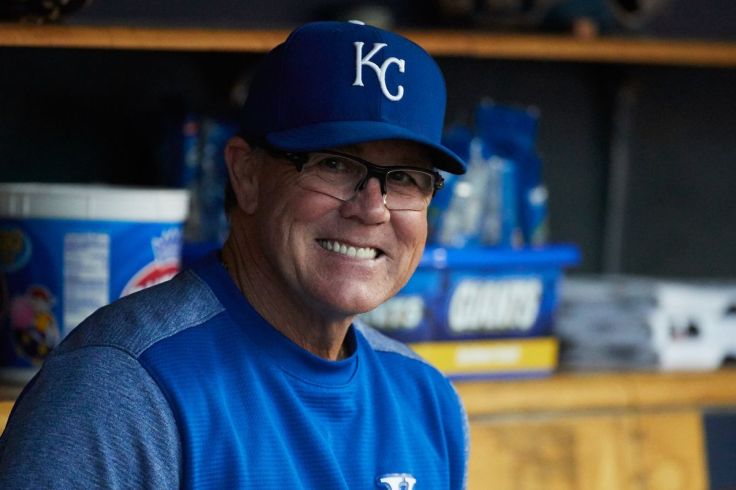
Credit: Rick Osentoski-USA TODAY Sports

But at some point Ned is going to decide to call it a day and go home. In fact, that day is probably closer than you think. For all we know, Yost could decide to retire at the end of 2019 and hand off the reigns to his successor. It’s hard to remember, but Yost has been in this position since May of 2010, which is a lifetime for a major league manager. Imagining someone else leading this Royals team is difficult to picture at times.

But we are going down that road anyway. Let’s imagine that Yost steps down and the Royals are on the hunt for his replacement. Who should they look for? Should they hire from within the organization? Should they go with a younger manager or one with experience?

Sam Mellinger  of the Kansas City Star recently took a look into just what the Royals would be looking for and in some ways it is a bit eye-raising

From what I can gather, the Royals would basically want Ned 2.0, an updated version of Yost for the future of a changing game.

They would prefer someone with previous managing experience, which is worth noting, because the trend elsewhere is for fresh faces. They want someone with respect, who’s a good communicator, has a feel for the game, all the typical traits you’d expect. The biggest difference might be that they’d look for someone with a little more feel for metrics, and the ways baseball is changing.

Using the term “Ned 2.0” made me chuckle because I might have pictured him as a cyborg for a moment. But it is very telling of what they are looking for and it immediately led some to think of former Cardinals manager Mike Matheny, including Mellinger:

My friend Derrick Goold was first to the scene on the Royals’ interest in Mike Matheny. Not that Derrick needs it, but I can confirm the interest. There will be other names that come up, too, and they don’t necessarily have to check every box.

Just mentioning Matheny probably made you groan, right? I get it, since he isn’t my first choice for the job either. This past season really drove home the flaws in his managerial style, which was hit on ad nauseam this summer:

Even in the recent past, old-school managers such as Ned Yost, Dusty Baker, and Charlie Manuel have won not because they’re John McGraw, but because they can get 25 guys to pull together. For that reason, if you can’t get the tactics right, you damn well better bring the best out of your players.

Matheny was never able to do that. And ironically for such a young manager, he committed an age-old sin: inflexibility.

To me, that reads that Matheny is the exact opposite of Yost. Bizarro Yost? Very possible. So as much as we freak out when we hear Matheny’s name, I can’t imagine Dayton Moore will look past that, unless he can just charm the pants off of Moore.
kc3
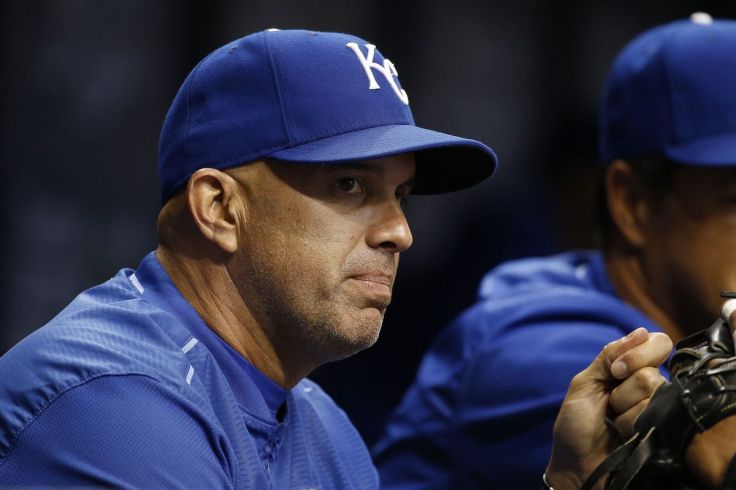
Credit: Kim Klement-USA TODAY Sports

But there are options to replace Yost and some are definitely in-house. Pedro Grifol has long been a favorite and someone the players are very fond of. By the end of George Brett’s tenure as hitting coach in 2013 , the players had shown a strong bond with Grifol and preferred him to Brett when it came to hitting issues. He is also bilingual and obviously a good communicator.

Dale Sveum, the current Royals bench coach, is another option. Sveum has managing experience (he led the Cubs for two seasons, 2012-2013) and has been a coach for Kansas City for five seasons now. Sveum has obviously built a relationship with a number of the current players and would be able to slide right into the system the Royals have been utilizing these last few years.
kc4
Credit: MLB.com

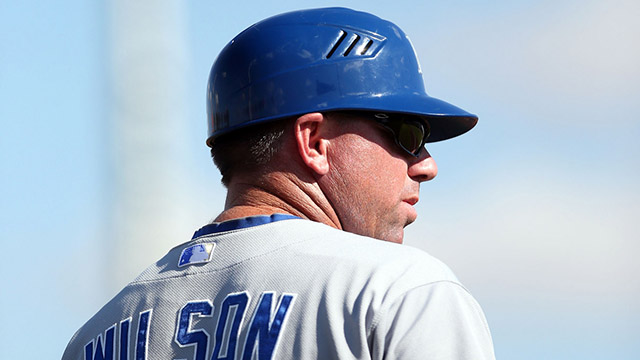
My choice (and the person I felt was a future Royals manager from almost the moment he was brought into the organization) is Vance Wilson. Wilson managed Kansas City’s AA squad in Northwest Arkansas for four seasons and is the Royals current bullpen coach. Wilson has managed a number of the current players on the Kansas City roster and is familiar with their successes and failures. Wilson can be a bit old school, but has also been willing to use analytics as well to help the cause.

I found this comment from 2011 very telling into what kind of manager Wilson would be:

“I’m learning how to relate to the players, especially this new generation of players, and I’m learning to make guys better not only as players, but people. I will see where it takes me beyond this.”

This sounds like something from the Dayton Moore handbook. If anything, it fits the style of leader that Moore looks for in his managers.
kc5
Credit: Associated Press

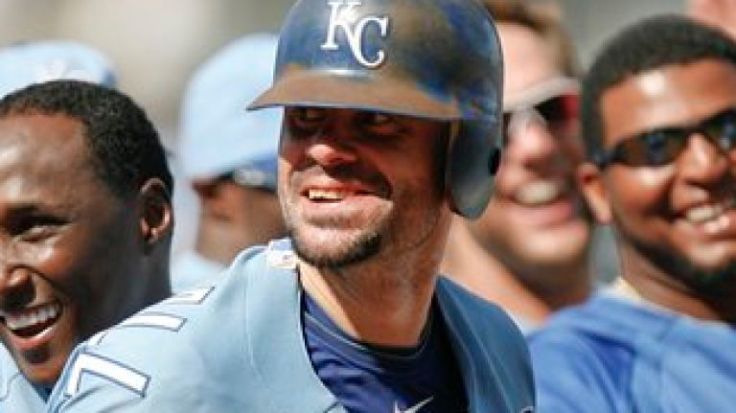
Jason Kendall, a former Royals catcher, has also been mentioned as a future manager over the years. He currently works in the organization as the Special Assignment Coach and has long been a favorite of the Kansas City front office. Kendall is an interesting option, but he might be a bit too rough around the edges. I’m not for sure today’s players would be very receptive to his gruff managerial style, which I imagine is what you would get from Kendall.

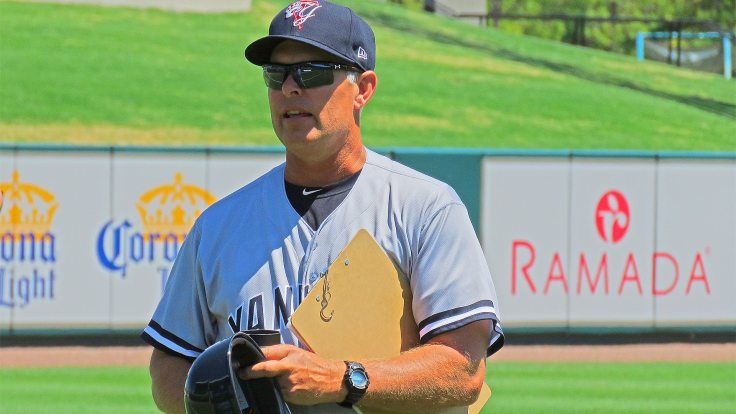
We could also throw in former Royals outfielders Raul Ibanez and Carlos Beltran onto the list as well. Neither have any managerial experience, but both are highly regarded in the baseball community and great communicators. One has to wonder just where the Royals would be if not for Ibanez’s speech to the Royals clubhouse in 2014, a speech that motivated the team and led them on their run to the postseason that year. Could something like that motivate Dayton to hire Raul? Experience (or lack thereof) might not be the deciding factor if the Royals like a candidate.
kc6

There are a number of other candidates that Kansas City could consider when the time comes. Mike Maddux, Tim Wallach, Jay Bell (another former Royal), Bo Porter, Eric Chavez and Joe Espada are just a few more names that could be considered as the future Royals manager. The one thing to remember is that while the Royals might be looking for a Yost clone right now, that could change at the drop of a hat:

By the time Ned retires, the organization could have shifted their needs and desires in a different direction. Personally, I am fine with that. Deciding who leads this team moving forward shouldn’t be a hastily made decision and instead should be done with meticulous detail. Figure out where you want the team to be and decide at that point who is the best candidate to get you to your destination. That should be your choice.

kc7
Credit: Orlin Wagner, The Associated Press

But we aren’t there yet. This is all speculation on our part and it might change twenty more times before Yost steps down. But the future gets a bit closer everyday, a future without Ned. Hopefully the Royals are prepared when that day comes.


FLASHBACK: The Curse of Buddy Biancalana

Author’s Note: The Flashback articles on here I originally wrote for the website royalsbaseball.net. That website has now become defunct, so I thought I would move them over here to Bleeding Royal Blue. I’d like to thank Joel Matheny for giving me the opportunity to write for his website, even if it was for just a few months. So enjoy, and go Royals!

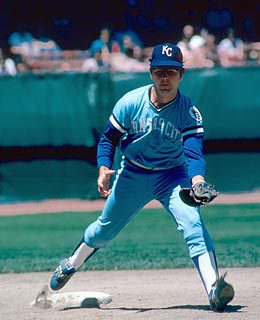
buddy bMany a Major League baseball team have that one position they are constantly looking to upgrade. For whatever reason, they can’t seem to find stability and are stuck every few years finding someone else to take over that spot and hope they finally have found that player who will be there for years to come. Over the years, The Royals have gone through countless players at Shortstop and none ever seem to stick. Why exactly is shortstop a black hole for Kansas City?

patekIt wasn’t always like that. Back in the offseason of 1970, the Royals acquired a little known Shortstop by the name of Fred Patek from the Pittsburgh Pirates. Patek was not the tallest man alive(5’5″, some even say 5’4″)but Patek was like a hoover on the field. Patek was a three time All-Star with Kansas City and even finished sixth in the MVP voting back in 1971. Patek would end up being a vital cog for the Royals as they made 3 playoff appearances in the mid-to late 70’s. Former Royals manager and Hall of Famer Whitey Herzog once said about Patek that he was  “the best artificial turf shortstop he ever managed”, ranking him even higher than Ozzie Smith. Patek would leave the Royals at the end of the 1979 season, signing with the California Angels.  Alas, him leaving began the Royals carousel of revolving Shortstops.

ULPatek’s leaving left the spot open, and in slid UL Washington. Washington had been with Kansas City for a few years as a backup infielder and was going to finally get a chance to show what he could do. Washington had great speed, and was yet another success of the Royals Baseball Academy, a program that also netted them Frank White. Washington was above the league average in batting those first few years, and combined solid defense with excellent baserunning to give the Royals another weapon in their lineup. Washington had a career year in 1982 after coming back from injury, and it looked as if the Royals had their Shortstop for the near future. In 1983 UL slumped badly and injuries ruined his 1984 season, as Onix Concepcion had made his way into the lineup. After the 1984 season, Washington was dealt to the Montreal Expos.

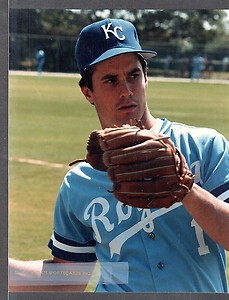
Concepcion took over the job in 1984, and was the starter for most of 1985. Not happy with his play, Royals manager Dick Howser replaced him with rookie Buddy Biancalana, and Biancalana would finish not only the season as the starter, but would start all 14 playoff games for KC that season. Biancalana was inserted in the lineup more for his defense, but his offense in the playoffs was a big boost for the ballclub. His funny name even brought mentions on the David Letterman show, and eventually an appearance on Late Night. Buddy would come back to reality in 1986, hitting .242 in 100 games, although providing solid defense. By 1987 the Royals had traded Biancalana to the Astros and was out of the big leagues by the end of the next season.

stillwell_11Now, I joke about the curse of Royals Shortstops being on Biancalana’s head. Whether it was bad judgement or just plain bad luck, the Royals would continue to go through Shortstops throughout the next decade. The player that seemed to have the best shot of longevity for the Royals was one Kurt Stillwell. Stillwell was acquired from the Reds after the 1987 season, as the Royals parted way with lefthander Danny Jackson. The Reds had a logjam at Shortstop, as another youngster was ready for the bigs at the point. Some guy named Barry Larkin…ever heard of him? So Stillwell became the starter at Short and after injuries hit a few All-Stars, was an American League All-Star in 1988. Stillwell showed flashes of greatness at Shortstop, and would have streaks at the plate where it seemed he was really starting to advance, only to have equally as down periods. 1990 seemed to start off as Stillwell’s coming out party, hitting .386 in April and was still over .300
in June. Unfortunately, injuries hampered him the rest of the year and could only hit .205. In 1991, Kurt would get off to another hot start, but by Independence Day he was mired in another slump and manager Hal McRae ended up benching Stillwell. Kurt was not very fond of his new manager, and after the season wrapped up, Stillwell, still only 26 at this point, packed up and headed to San Diego. Later Kurt would say his relationship with McRae, or lack of one, sent him on his way, and alas another Shortstop for the Royals was out the door after only 4 years.

Over the next few years, a number of players tried to solidify the position, only to leave earlier than expected. Greg Gagne, Jose Offerman, Jay Bell and Rey Sanchez are just a few of the players who occupied the position. Most were solid players, but none were long term solutions.

berroaThat seemed to all change in 2003. Rookie Angel Berroa was handed the Shortstop job and seemed to be the future of this organization. Berroa had a rocky start to the season, but by years end his defense seemed to get better and his hitting had more than improved. Berroa hit .287 that season with 17 Homeruns,  73 RBI, and 21 stolen bases. Berroa would win the American League Rookie of the Year Award, being only the fourth Royal to accomplish such a feat. Things went downhill from there on. Season by season, Berroa seemed to regress more and more, especially defensively, as his error rate was the highest in the Majors during that period. Angel also seemed lost at the plate, not seeming to have any real gameplan and flailing at pitches out of the strike zone. Finally in 2007, the Royals acquired Tony Pena Jr. from Atlanta, and Berroa was sent to the minor leagues. Outside of nine games that season, Berroa spent the rest of his time in AAA Omaha. 2008
started the same way and on June 6th was traded to the Dodgers.

tony_pena_jr_2008_04_13Pena wasn’t the answer here either. As much as Pena was a good fielder, he couldn’t hit worth a lick. By mid-2008, Pena was out and in stepped Mike Aviles. Aviles was finally getting his shot in the Bigs, and he took advantage of it. Aviles ended the season hitting  .325 in 102 games, with 10 home runs and 51 RBI’s. Aviles’ season was so good that the Royals named him their 2008 Player of the Year. Aviles, unfortunately, would suffer an arm injury playing winter ball, and be forced to miss most of the 2009 season due to Tommy John surgery. Whatever it was that Aviles had in 2008, he never seemed to catch it again. Aviles split 2010 between Omaha and the Majors, but mainly as a backup. Mike started the 2011 season at Third Base for KC but never got going and was traded to Boston at the end of July. I was always an Aviles fan and really hoped that he would end up breaking the curse. Unfortunately, Mike Aviles was not meant to be that guy.

YuniWhen it became apparent in 2009 that Aviles would be gone for the foreseeable future, the Royals acquired Yuniesky Betancourt from the Seattle Mariners. Betancourt went from being one of the better defensive Shortstop’s in the game early in his career to a plodding Shortstop with no range by the time he appeared in Kansas City. Betancourt brought a little pop in his bat as well, and to be honest, at the time it wasn’t like there was a better option for the team either on the roster or in the minors.  In 2009, he had the lowest on base percentage of any starter in the major leagues, at .274, and the lowest slugging percentage in the American League with .351. His numbers did improve in 2010, but he still was a liability on both defense and offense. Yuni obviously wasn’t the long term answer.

In the winter of 2010, the Royals would acquire their current Shortstop, trading Ace pitcher Zack Greinke and Yuniesky Betancourt to the Milwaukee Brewers for Alcides Escobar and three youngsters. Escobar showed last season why he was a good commodity, flashing great defense at Shortstop. After the Berroa/Betancourt years, it was good to see a Shortstop with a great glove. Escobar even earned the nickname “Shortstop Jesus” by Royals fans. Escobar struggled with the bat, although he seemed to hit better as the season went on. By the time it was all said and done, Escobar hit .254 for the Royals, and some experts predict he could hit as high .269 this upcoming season.His defense though, is why he is in the starting lineup. Any offense is just an addition to his amazing play on the diamond.

EskySo is Escobar the one to break the curse? Time will only tell, but if Alcides can hit even in the .260 range, he seems like a good fit for the position for many a year. He was a .300 hitter in the minors, so it is possible. One thing is for certain; luck has not been on the Royals side when finding a Shortstop all these years. For them to break the curse, they need both good judgement and good luck…and maybe a guy who stands only 5’5″. Hey, it worked before!

Blog at WordPress.com.

Up ↑