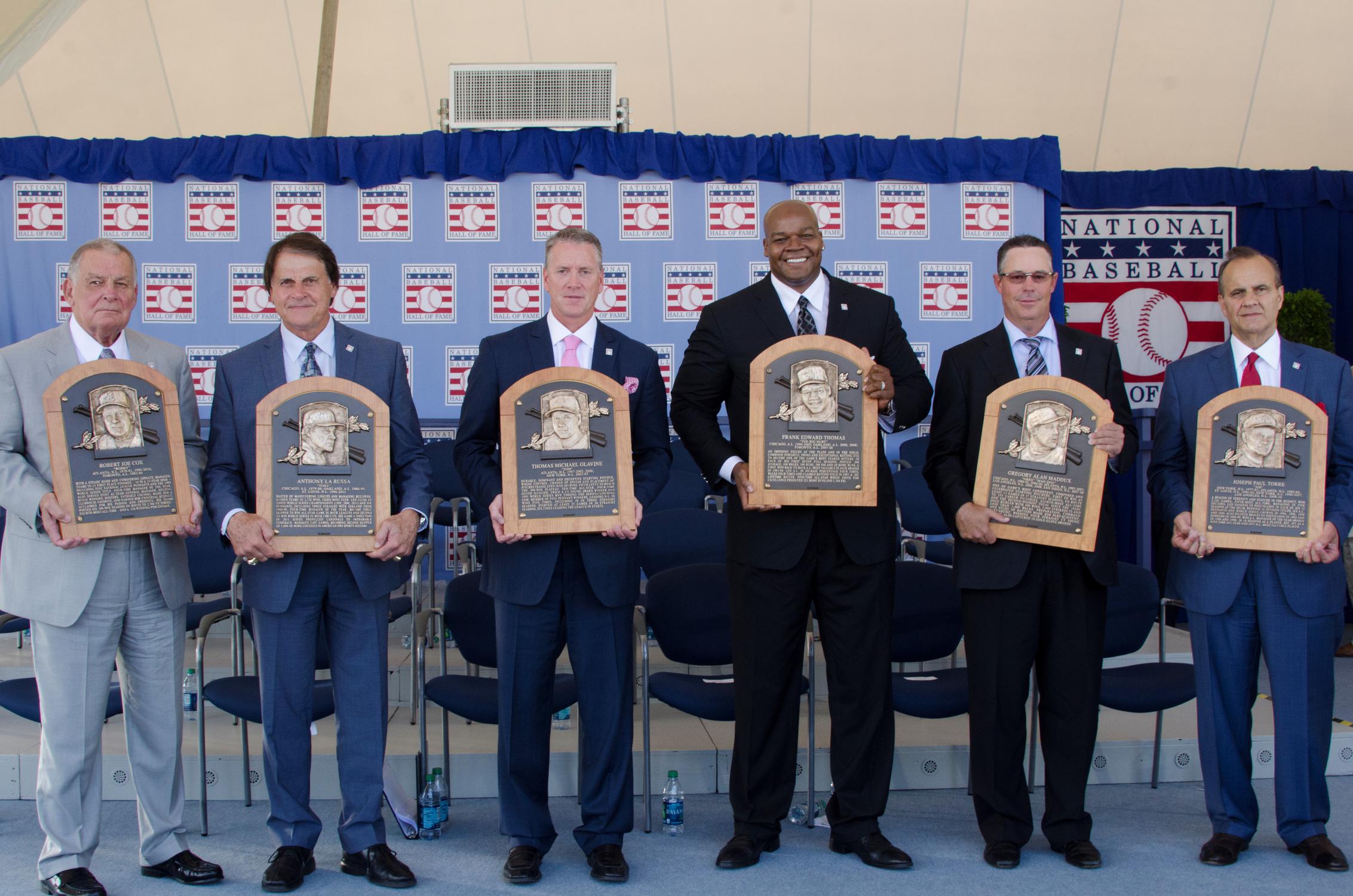
On January 6th, the National Baseball Hall of Fame will announce their 2015 inductees, with expectations being that multiple players will be enshrined into the Hall this summer in Cooperstown, New York. There has been a plethora of debate concerning the voting process done by the BBWAA the last few years and how to handle possible PED users. This has cause a number of worthy players to be passed over, even without any evidence proving their taking of said substances. It has become harder and harder for voters to turn in their ballots, as the Hall allows up to 10 votes and many members of the BBWAA feeling as if more than that amount are worthy of the Hall’s honor. Last year I wrote up what my ten votes would have been if I could vote. This year I officially did get to vote, as a member of the IBWAA, and there were some notable differences between the BBWAA voting procedure and the IBWAA’s voting. For one, you can vote up to 15 candidates for the IBWAA, while the BBWAA has held fast to 10. Also, the IBWAA has already voted in Mike Piazza and Craig Biggio, while Barry Larkin(who is in the National Baseball Hall of Fame) has not. I ended up voting for 12 players and to save a bit of time I will be posting a link to my picks last year for some of the same candidates. Also, to get a better idea of just how difficult the voting process has become, read Jay Jaffe’s article on voting. So without further ado, here is my IBWAA ballot for 2015(in alphabetical order).
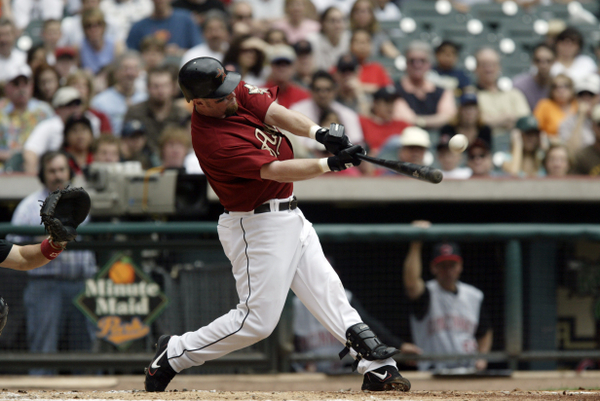
1)Jeff Bagwell
Jeff Bagwell was on my list last year and I am still amazed he hasn’t gotten voted in. Many voters are suspicious of PED use, despite not evidence to any besides his body getting bigger between his time in the minor leagues and his ascension to the majors. Bagwell was not only one of the best hitters of his era, but also stellar defensively and on the basepaths. To me Bagwell is a slam dunk candidate and a major disservice has been done by excluding him from the Hall.
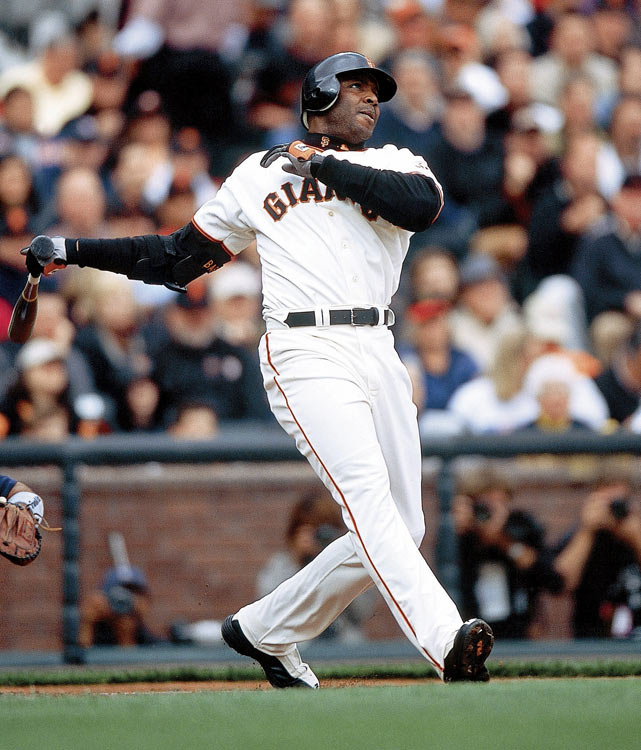
2) Barry Bonds
Barry Bonds was also on my list in 2014 and is easily one of the greatest baseball players ever, the all-time home run king and that is all tainted by supposed steroid use. To me Bonds was a Hall of Famer before his supposed use and was a 5 tool player early in his career. We can debate all day about whether or not PED users should be allowed in the Hall(and I am someone who believes the Hall of Fame is NOT sacred ground) but what is easy to decipher is that Bonds is one of the greats of the game. ‘Nuff said.

3) Roger Clemens
Roger Clemens is another 2014 vote for me and like Bonds, has the PED albatross around his neck. Clemens is the greatest pitcher of his era, a 7 time Cy Young award winner and should have been a first ballot Hall of Famer. Instead we are stuck continuing an argument that might never finish and also like Bonds, might have to wait for the Veteran’s Committe to get voted into Cooperstown. Clemens deserves to have a plaque next to the Johnson’s, Koufax’s, and Gibson’s of the world. When(or if) that happens is another issue.
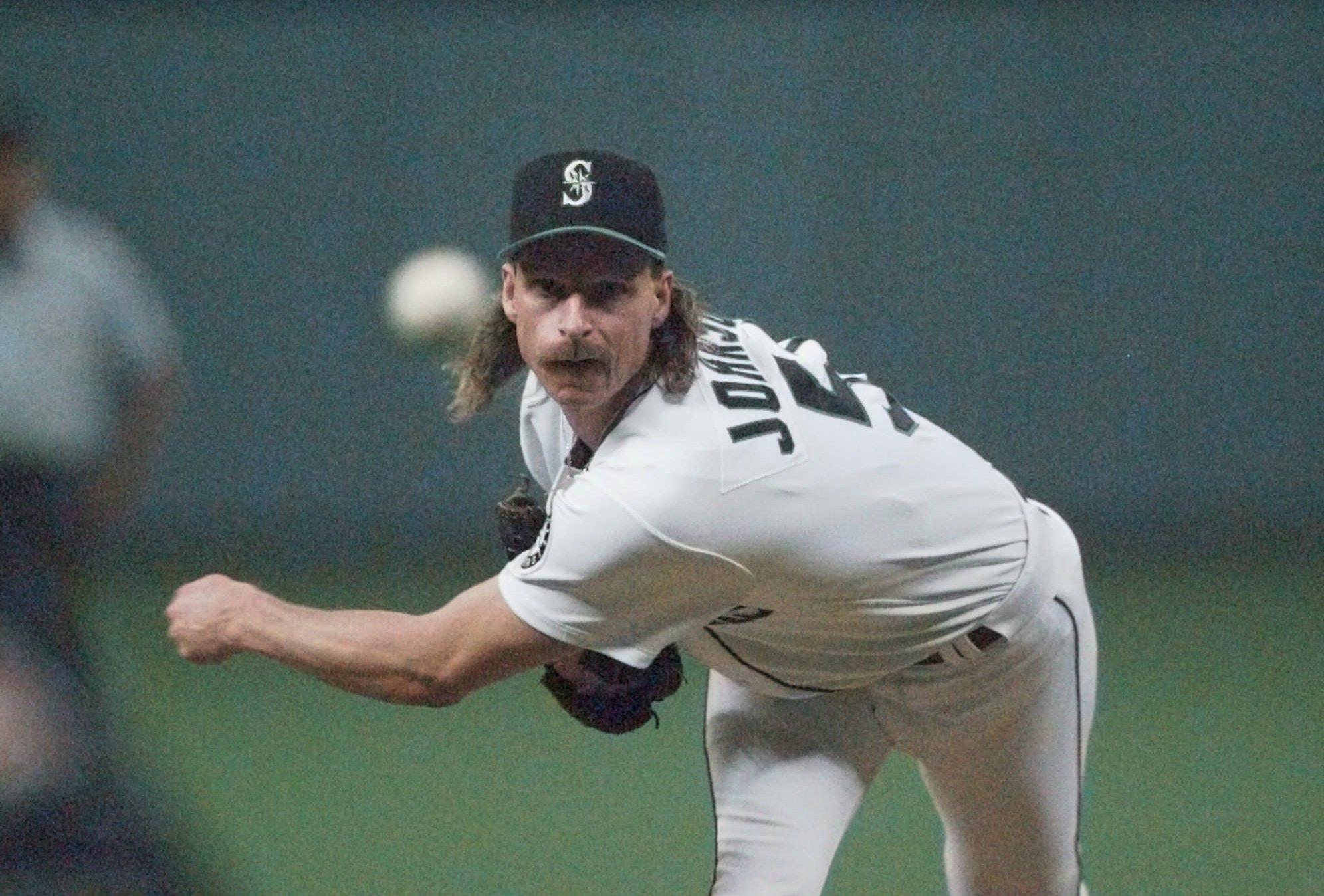
4) Randy Johnson
Randy Johnson is on the ballot for the first time this year and is a guaranteed lock to be voted in this year. It’s pretty easy to see why; 5 time Cy Young winner(placing 2nd 3 times), 2nd career in strikeouts(4875), 1st all-time in K’s per 9 inn(10.61), 23rd all-time in ERA+(135), over 300 wins and a 104.3 career WAR. Need More?
All this from a guy who when he started his career in 1988 it wasn’t guaranteed that he would be a top shelf starter. Sure, he had the stuff(an electric fastball that reached triple digits and a hard, biting slider), but Johnson was also known for having control issues. Even as late as 1992 Johnson still had a BB/9 of 6.2, but after that year he never got above 3.8 walks per 9 the rest of his career. Johnson threw 2 no-hitters in his career, the 2nd was the 17th perfect game in major league history. Randy would also dominant on the big stage of the playoffs, especially in 2001. During the playoffs that year for Arizona, Johnson would beat Atlanta twice in the NLCS and then pick up 3 wins against the Yankees in the World Series, the final victory coming in relief in Game 7, after he had pitched 7 innings the night before in Game 6. Johnson was as dominant in an era known for lack of dominance by pitching, and held that standard for a number of years. When you think of the greatest left handed starters in major league history names like Koufax, Spahn and Carlton instantly spring to mind. Randy Johnson is easily in that group and should easily slide into the Hall of Fame this year.

5) Barry Larkin
As mentioned earlier, Larkin has already been inducted into the National Baseball Hall of Fame, but not yet in the IBWAA’s version. It’s a shame really, because Larkin was the next evolution of offensive shortstop, following in the footsteps of Cal Ripken, Jr. in the 80’s. Larkin pretty much did everything(a 5 tool player), which was a big part of why he was one of my favorites of all-time. Larkin was a 12 time All-Star, 1995 NL MVP, 3 time Gold Glove winner, 9 time Silver Slugger winner, 5 times was in the top 10 of WAR in the NL(7 times for just position players), the first shortstop to have a 30 HR/30 SB season and is 22nd all-time in SB% (83.11). Larkin wasn’t flashy but he was consistent and was the blueprint for future shortstops like Derek Jeter, Alex Rodriguez and Nomar Garciaparra, combining offensive punch with defensive prowess. Larkin is what most shortstops of that era shrived to be, a Hall of Famer.
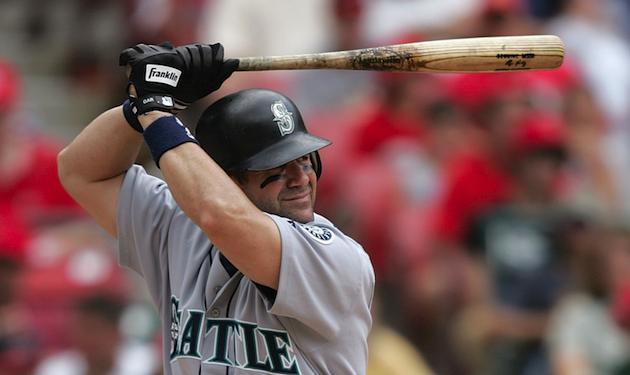
6) Edgar Martinez
Edgar Martinez has been looked over for years but he was an easy pick for me last year. Edgar is the greatest Designated Hitter of all-time, and one of the greatest hitters in baseball history. Apparently Martinez not playing much in the field hurts his case, but that honestly should be superseded by the fact that he was so good at one thing(hitting) that he is 76th in career WAR. Still don’t believe Edgar belongs?
The stats easily tell a story, that of a Hall of Fame player .

7) Pedro Martinez
Pedro Martinez is much like Randy Johnson, a man who dominated in an era(the Steroid Era) where offense was king and pitching was hard to come by. Pedro was elite in this era, posting numbers who by themselves are jaw dropping, let alone when stacked next to his cohorts.
Pedro’s list of accomplishments during his 7 year peak almost look like ridiculous video game numbers: 5 times lead league in ERA(twice under 2!), 3 times lead AL in strikeouts, and 5 times lead AL in ERA+, FIP, and WHIP. Martinez was unhittable in a period where everyone and everything was hittable. Martinez was a 3 time Cy Young award winner(2nd two other times), an 8 time All-Star, 2nd in the MVP voting in 1999, twice lead the AL in WAR(3 times for pitchers), is 6th all-time in career winning percentage(.687), 5th all-time in WHIP(1.054), 3rd all-time in K/9 (10.04), 13th all-time in career strikeouts (3154) and 2nd all-time in ERA+(154). All this from a guy who most believed would throw his arm out due to his small stature. In a time where muscle bound behemoths ruled the game, a small 5’11” 170 lbs pitcher made them all look like fools. That greatness will propel him into the hallowed halls of Cooperstown this summer.
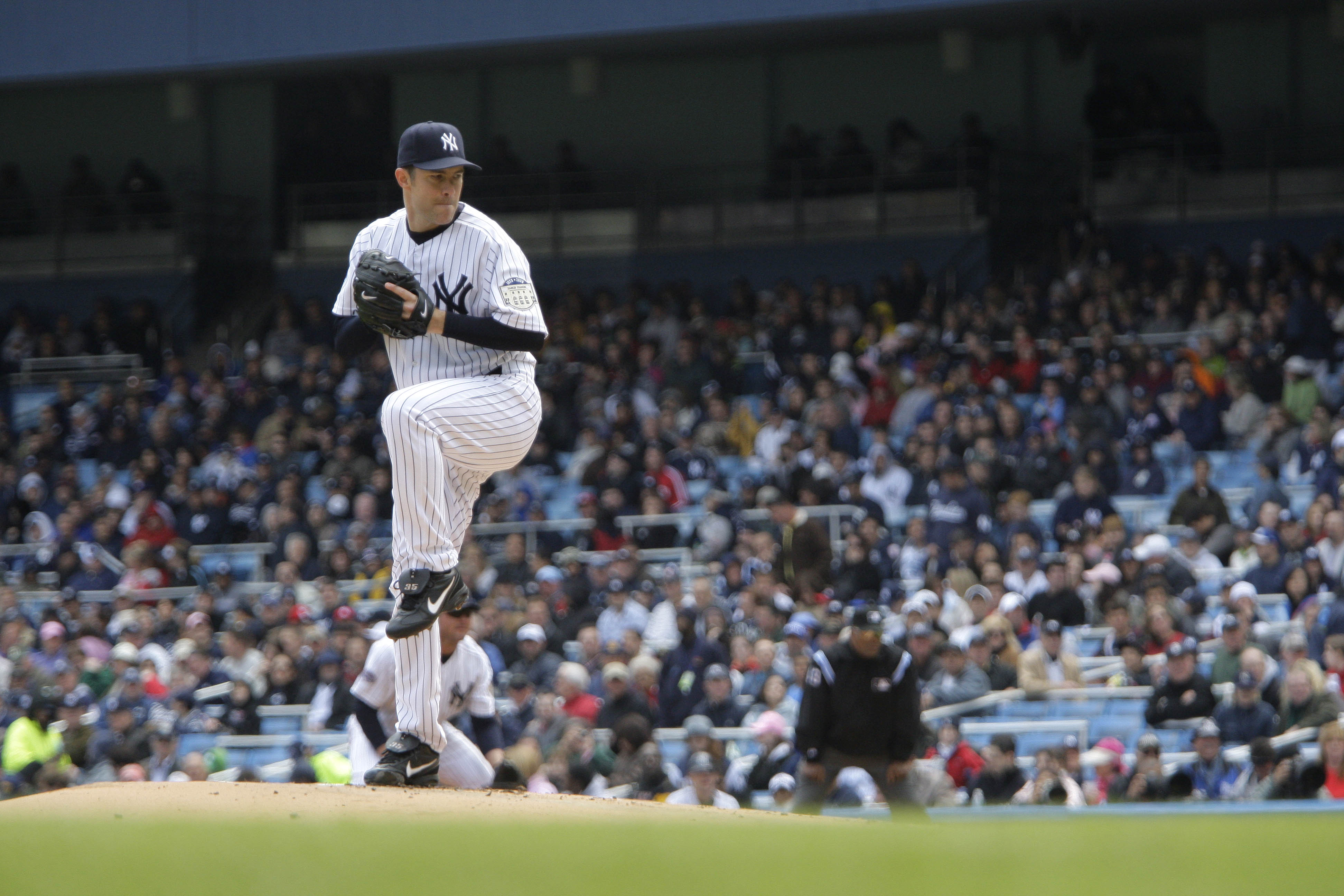
8)Mike Mussina
Mike Mussina probably never dazzled anyone over his 18 year big league career. He wasn’t the most dominant, didn’t really blow gas past batters or have that one pitch that no one could hit(although his knuckle curve was a nice little out pitch when he needed it). But more than anything Mussina was consistent and stayed that way for the entire span of his career. In fact if you didn’t know better you would think Mussina was a ninja with the way his numbers jump up on you:
So here are just a few of the numbers Mussina compiled during his (what should be) Hall of Fame career: 5 time All-Star, 6 Top 5 finishes in American League Cy Young voting, 7 time Gold Glove winner, 57th all-time in career WAR(24th all-time for pitchers), 19th all-time career strikeouts(2813), 89th all-time career ERA+(123), and 270 career wins. Mussina also pitched a large chunk of his career during the ‘Steroid Era’ and the two ballparks he called home during his career(Camden Yards and Yankee Stadium) were both hitters parks. I’ve always considered ‘Moose’ the right-handed equivalent of Tom Glavine, a guy who wouldn’t blow you away but put up solid numbers year after year. Last year was Mussina’s first year on the BBWAA ballot and he compiled 20.3% of the vote, which I have to believe will go up this year. He was one I had to leave off last year but with the extra votes this year it was easy to add him to the mix. If you want flashy, Mussina isn’t your guy. But if you want a top of the rotation starter who you can rely on year after year for quality starts and quality innings, Mussina was a lock. Eighteen years of that quality should also mean he is a lock–for the Hall of Fame.
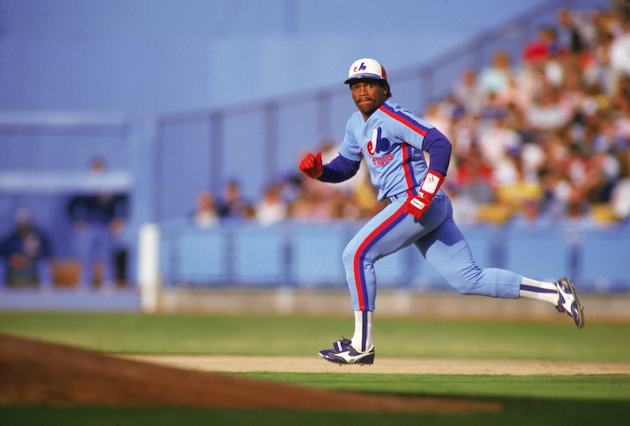
9) Tim Raines
Tim Raines might be one of the most undervalued players on this list but he shouldn’t be. It took me awhile, but within the last few years I have come around on my thinking when it comes to Raines and where his true place in the game should be. The good thing is that I am not alone, as his numbers have steadily increased until this past year, when he dropped from a high of 52.2% to 46.1%, probably mostly due to the gluttony of players on the list and not enough spots for all the deserving players. There are so many reasons to vote for Raines(and I state my case in the link earlier) but to NOT vote for him because he wasn’t Rickey Henderson(who just happened to play at the same time as ‘Rock’) is the equivalent of not voting for a hitter because “he wasn’t Ted Williams” I mean, being the 2nd best leadoff hitter EVER should count for something:
Luckily it appears a bump could be in order for Raines and with the possibility of 5 players getting in this year it could free up votes for future years. It might take a few more years, but hopefully the #RainesForHOF is not in vain.

10) Curt Schilling
Just how much difference does a player’s postseason success factor into a Hall of Fame vote? In the case of Curt Schilling it matters a lot. In fact I would say without his playoff numbers Schilling probably wouldn’t get into the Hall. But when you add that to the mix, his true greatness shines through. A 2.23 ERA, .846 winning %, and a WHIP of .968(plus one bloody sock), all over 133 innings pitched in October shows just what kind of mettle Schilling really had. In fact, just go look at his postseason stats for 2001; ridiculous! When you then add in the regular season numbers it becomes much more obvious:
Schilling was a 6 time All-Star, 1993 NLCS MVP, 2001 World Series MVP, 4 times was in the Top 5 of the Cy Young award voting, 62nd all-time in career WAR(26th for pitchers), 15th all-time in career strikeouts(3116), and 47th all-time in career ERA+(127). All this from a guy who floundered in the majors until he was 25 in 1992 with the Phillies. Schilling the person might not be a guy who we would agree with on a regular basis(and definitely don’t argue evolution with him) but none of that matters when it comes to Hall of Fame voting. Schilling was a front line starter in the big leagues for 15 years and has the numbers to prove it. That is ‘Hall Worthy’ if I have ever seen it.

11) John Smoltz
In the 1990’s there was no better rotation than the Atlanta Braves three-headed attack of Greg Maddux, Tom Glavine and John Smoltz. Smoltz is eligible for the first time this year and he looks to be joining his former teammates in Cooperstown. Very few pitchers have done what Smoltz did in his career, be both a top notch starter and closer. In fact the only other pitcher I can think of that was able to do what Smoltz did was Dennis Eckersley and we know how he turned out. But there appears to be some writers and journalists who don’t believe Smoltz should get into the Hall on the first ballot. Ben Lindbergh wrote a great piece for Grantland on just this subject, and delves into not only Smoltz’s candidacy but also those of Mussina and Schilling. But near the end of the article Lindbergh points out something that should really be heavily taken into consideration when it comes to whether someone should vote for him:
While Schilling, Mussina, and Smoltz were all great starters, though, Smoltz’s story has a hook: As many voters mentioned, he did something unprecedented, becoming the first pitcher to win 200 games and save 150 more. And while he didn’t come close to the magic milestone of 300 wins, 200 plus 150 equals 350, which is greater than 300. That’s the kind of math that even the most WAR-averse voters don’t mind.
Smoltz accumulated 213 wins and 154 saves, which is quite the accomplishment for any pitcher. Add in a 2.67 ERA, .789 winning % in the postseason, 1996 Cy Young award winner(2 other top 5 finishes), 8 time All-Star, 1992 NLCS MVP, 66.5 career WAR(39th career for pitchers, 44th all-time in career K/9(7.992), and 16th all-time in career strikeouts(3084) and you have a nice resume when looking for induction. It’s easy to sit here and say that Smoltz wasn’t as good as former teammates Maddux and Glavine, but who was? It certainly doesn’t take away from a career that is certainly ‘Hall Worthy’.
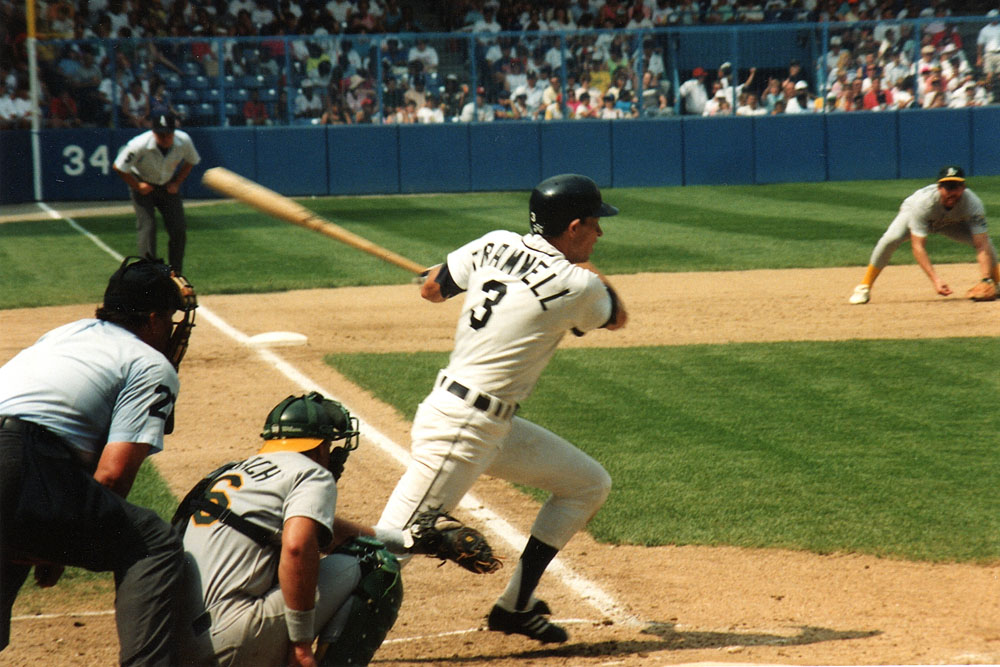
12) Alan Trammell
It took me a long time(almost too long) but after really studying his case, I believe Alan Trammell is a Hall of Famer. Trammell case has probably been hurt for a number of reasons. Trammell’s offensive numbers don’t pop out at you and he never reached any of the big milestones that voters look for when it comes time to fill out a ballot. The argument for Trammell though outweighs a lot of the negatives; Trammell has a career WAR of 70.4, which makes him 94th all-time and 63rd amongst position players. To go a step further, Trammell has a career dWAR of 22.0, which places him 34th all-time. Trammell was solid with the bat, winning three Silver Slugger awards and in 1987 probably should have won the American League MVP(which went to George Bell of Toronto). Trammell was a 6 time All-Star, the 1984 World Series MVP, a 4 time Gold Glove winner during a period where he competed with Cal Ripken Jr. for the award, and walked more than he struck out in 7 different seasons(and had the same amount of both in 2 other seasons). Trammell is the batter equivalent of Mike Mussina; he never blew you away with anything but he was so consistent for a long period of time that what he put together was a Hall of Fame career. Still aren’t convinced? Joe Posnanski has made the argument that if you are of the belief that Derek Jeter is a Hall of Famer, then you should compare his numbers with Trammell’s. Joe points out just how close Jeter and Trammell were as players, with Jeter holding a slight edge over Alan offensively, while Trammell was easily a better defender. If Ozzie Smith can get into the Hall on his defense, and Jeter will get in on his offense(and leadership; you know that will be brought up) then Trammell deserves to be in for being the better all-around player. The sad part is that this will be Trammell’s 14th year on the ballot, which means he gets only one more shot after this year and then his case will be handed over to the Veteran’s Committee. I wish I had really studied his case sooner, not that my lone vote would mean much. If anything I wouldn’t have underrated Trammell as much as I did, not realizing he was way better than the memory remembers. Now about his double play partner, Lou Whitaker…

So there you go, my 2015 IBWAA Hall of Fame ballot. I had also given a decent amount of consideration to Jeff Kent, Gary Sheffield and Mark McGwire but alas I wasn’t quite on board yet for either of those three. What I can say is that it is never too late to judge each case and compare and contrast with other cases in the past. Sometimes our memory fails us and doesn’t paint the entire picture we need to fairly assess the situation. I can only hope the logjam that has accumulated the last few years eventually gets weeded out and some deserving candidates get the call they deserve. I can honestly say I feel as if I put together a list of players worthy of the greatest of all honors, a plaque at Cooperstown. It’s not a church folks; it’s a museum that tells us the history of the game we love. These 12 players help tell that story, blemishes and all.



 Bleeding Royal Blue