Locking Up Duffman

kc1

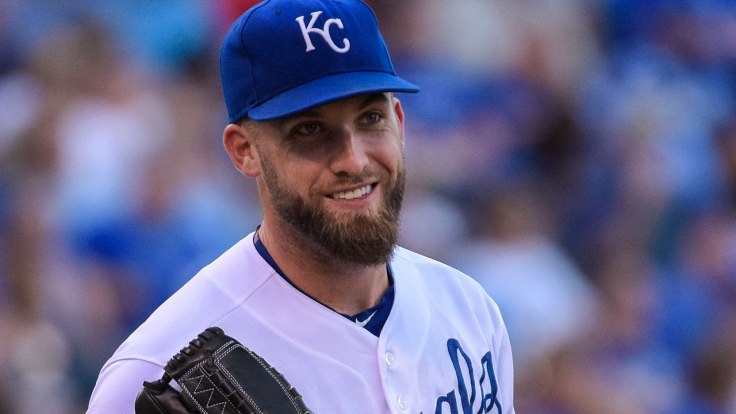
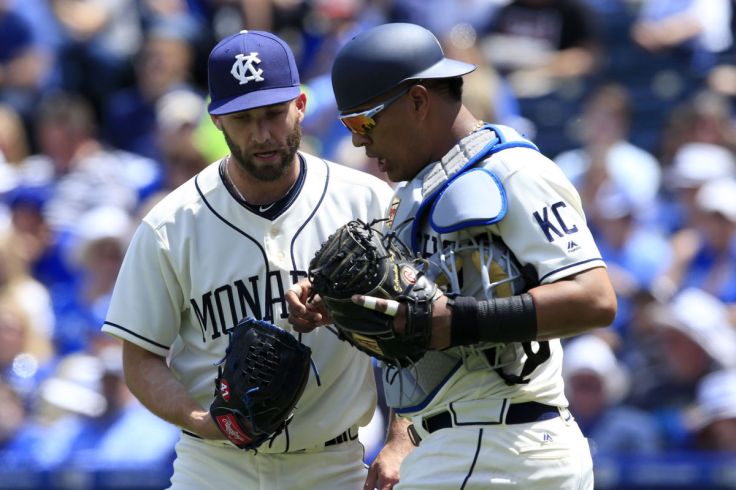
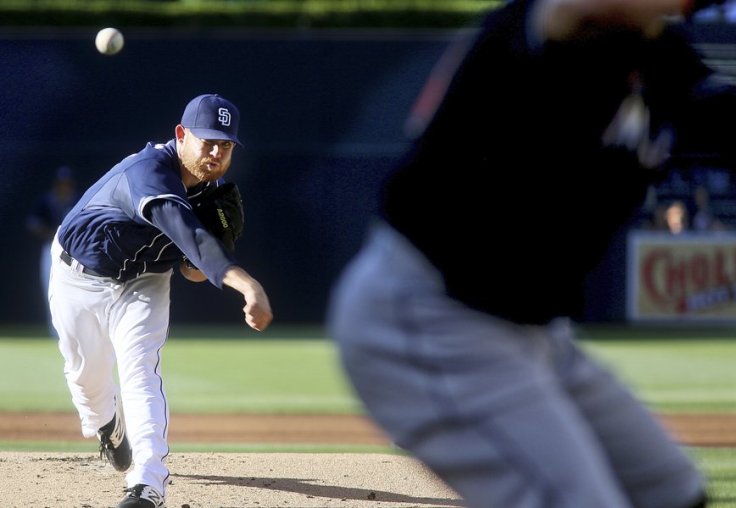
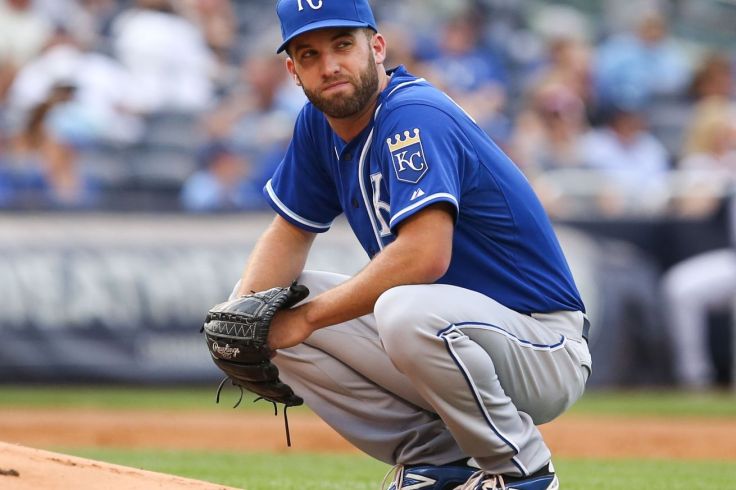
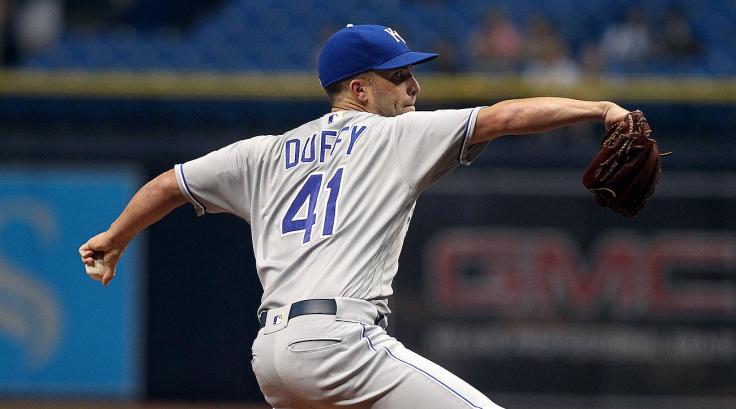
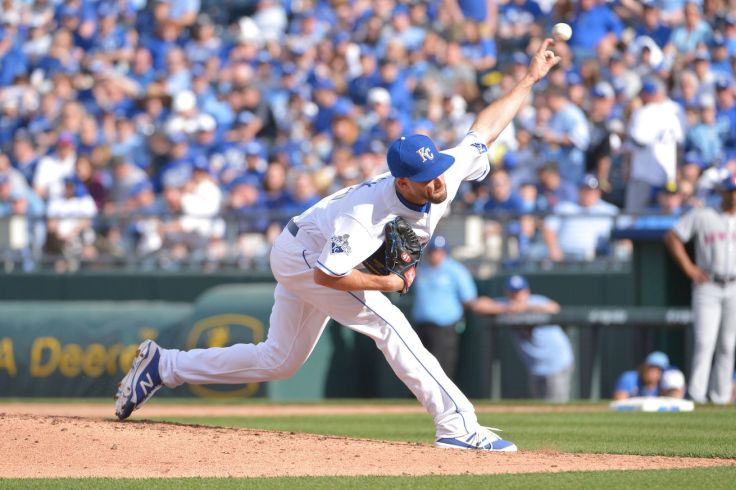
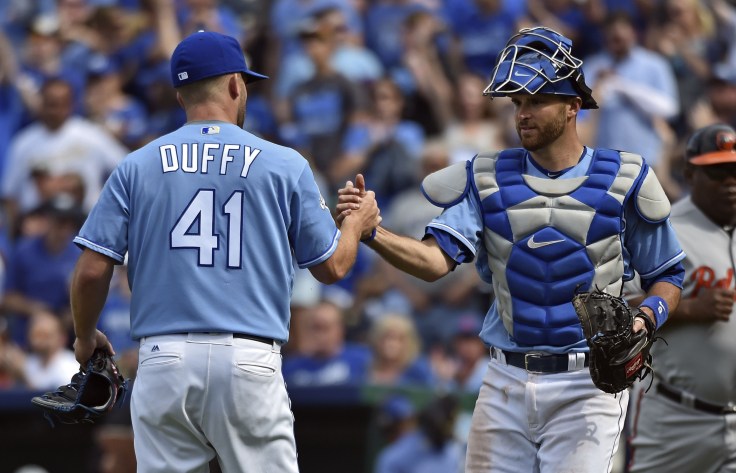
On Monday night, Danny Duffy went out and pitched the game of his life against Tampa Bay, an 8 inning, 1 hit(7 innings of no-hit ball), 16 strike out affair that gave Duffy the new team strikeout record for a single game. It gave many a national baseball analyst to finally discuss the great season that Duffy has had this year, a year that has seen a massive amount of growth. While his superb performance made the baseball world take notice, most in Royal Nation have been discussing a bigger issue when it comes to Duffy-should the Royals lock him up long-term, keeping him a Royal for the immediate future?
kc2

Back in April this seemed not quite comical but definitely would give you some funny looks if the idea was thrown out there. Duffy had been relegated to the bullpen to start the year and didn’t become a part of the Royals rotation until almost the middle of May. Since that time he has easily been Kansas City’s best starter; 96 innings, 105 strike outs, 2.98 ERA, 67% strikes thrown and a WPA(Win Probability Added by pitcher) of 1.336. Duffy has been averaging 6 innings a start, but you have to remember that he was on a limited pitch count during those first few starts, as he was transitioning to the rotation. He didn’t actually go 6 innings in a start until his fourth start and has now thrown quality starts in 10 of his 16 starts. One of the knocks on Duffy for years was  that he wasn’t an efficient pitcher; it was a big deal if he was still in the game come the 7th inning. Danny has been working deeper into games and has also put up career high numbers; he has the highest K/9 of his career, lowest BB/9 and lowest FIP of his major league career. A man who once pitched purely on emotion has not only changed his approach, he has also changed the mentality he goes into each and every game:

It’s been pretty gratifying to not be a guy who’s gone five-and-dive, like I did for so long in my career,” Duffy said. “I’m not saying that’s not something that will ever happen again. But I have confidence when I take the ball that I’m going to do everything I can to hand the ball off to the bullpen late in the game.

The change in his mental approach is a big part of his success this year, but that is also a key to why the Royals should extend his contract for the long-term.

kc3

2016 isn’t the first time we have believed that Duffy had things figured out. Back in 2014, it seemed that he was able to unlock his potential, as he had put together what was a career year at that point. It really appeared as if Duffy had turned a corner, although there is a very noticeable difference between his success two years ago and today. What was very apparent back then was that Duffy wasn’t striking people out, as he was averaging 6.81 K’s per 9, the lowest average of his career. Thankfully the Royals superb defense was able to handle Duffy pitching to contact, as hitters were making the most contact against him(84.4%) in his career. That contact rate stayed fairly close in 2015(82.3%) but hitters were also getting a bit luckier off him last year on balls in play(.298 batting average on balls in play against Danny in 2015). Both stats have taken a decline so far this year, as the contact rate against Duffy sits at 72.3%(the lowest of his career) and hitters have a .286 BAbip.  Throw in all the other career highs he is racking up this year and you can see why he is having a turnaround year in 2016.
kc4

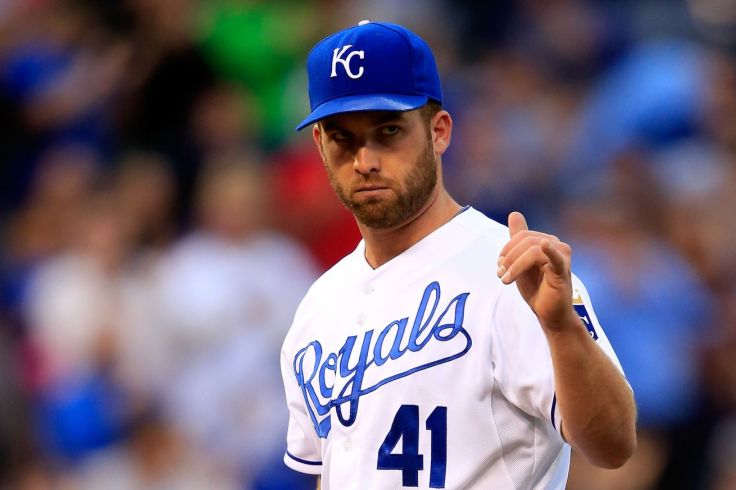
So the numbers play the largest part in why the Royals should sign Duffy to a long-term deal, but there are a few more reasons an extension makes sense. For one, Duffy is still only 27 years old, as he won’t turn 28 until December. He hasn’t even reached 30 years old and these late 20’s are when a lot of pitchers learn to really pitch, not just throw. Maybe the biggest reason to lock him up now is the state of the Kansas City Rotation. The starting staff has struggled so far this year and there isn’t much help in the minors. If the Royals want to still be contenders, they are going to need more reliable starting pitching and keeping Duffy is a must. At some point the Royals are going to have to get younger in their rotation and with no arms on the immediate horizon, Duffy could be in that caliber of a Chris Archer or Sonny Gray, younger arms who lead their respective team’s staffs. Unless Kansas City goes out and swings a deal for a young talented starter, they will have to look older with either the lackluster free agent market or a trade. Locking up Duffy might be a cheaper way to go for the Royals rebuilding of the rotation.
kc5

So what kind of deal could the Royals off Duffy? Good question and in some ways it is hard to guess with the way the market is constantly being elevated. Let’s start first with years; I would go with either a 3-4 year deal with at least one option year(come on, you know Dayton can’t sign someone without a mutual option!). If the Royals go 3 years, give Duffy two option years. If you go 4 years, give him a mutual option for the 5th year. So what about money? Once again, I’m just throwing numbers out here, but let’s start with what he is making this year, $4.2 million. As a comparison, Chris Sale of Chicago is the same age as Duffy, although Sale has a better track record. Sale is making $9.2 million this year, which is higher than what Duffy will get, for sure. Let’s say Duffy gets $6 million in 2017, $9.5 in 2018, 12.5 in 2019 and $16.75 in 2020. That would be a 4 year, $44.75 million contract, which I might even be lowballing a bit, considering how the market has seen such a big increase these last few years. Still, the Royals are going to have to keep the contract manageable, and after Ian Kennedy’s contract I wouldn’t be surprised if they are gun-shy to dole out a contract of that magnitude again for a pitcher. Still, that is not a bad contract for a guy who hasn’t really been a top starter before this year.
kc6

Kansas City has a plethora of decisions to make this upcoming offseason, everything from figuring out what they want to do with free agents Edinson Volquez and Kendrys Morales, to rebuilding the starting rotation, there will be some shuffling going on throughout the winter months. While those decisions won’t be easy, procuring Duffy’s services for the immediate future should be a slam dunk. The last thing the Royals want to do is not have Duffy taken care of before he can become a free agent after 2017, especially with all the decisions that have to be made after next year. One of the top priorities for General Manager Dayton Moore this winter should be to make Duffy a Royal for the long-term. It’s going to cost Kansas City some dollars, but I would rather pay now than have him knock off another fantastic season in 2017 and raise his value even more. Signing Danny Duffy should be a must this offseason; it’s time to keep things ‘gnar’ in Kansas City moving forward.

 

Royals Selling, But Who’s Buying?

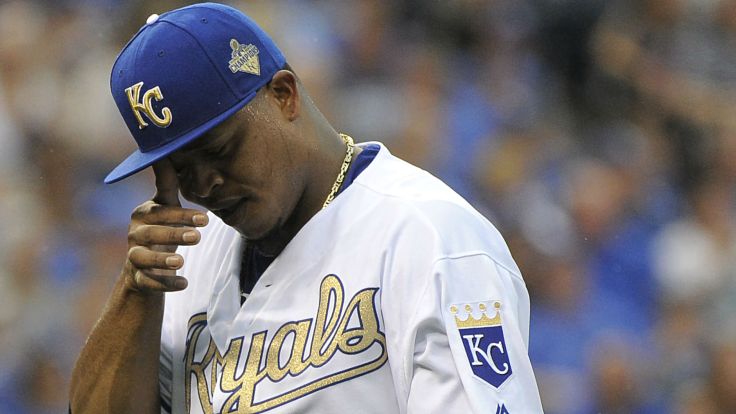
Edinson Volquez
(AP Photo/Marcio Jose Sanchez)

With the trade deadline a few days away(Monday afternoon at 3pm CT, to be exact), there has been much discussion about what the Kansas City Royals are going to do, especially since it now appears they will be selling rather than buying. It’s hard to imagine the defending World Champions being in this position when the season started but the team has been littered with issues in the starting rotation and more than anything else, a litany of injuries. So who might the Royals ship off before Monday? There are a few candidates for Kansas City to deal and it starts with a key part of the rotation.

kc2

Volquez has had a very up and down 2016 so far, compiling a 4.56 ERA in 124 innings, with an ERA+ of 98, a FIP of 4.11 and a SO/W ratio of 2.00, all numbers below what he racked up last year but above his career marks. The starting pitching market is fairly weak this deadline and a known commodity like Volquez should garner a couple of very solid prospects. Or…maybe more:

Alright, so maybe we should make that 3-4 prospects. The Royals are in a position where they need to re-stock the arms in their minor league system and dealing Eddie would be a good first start for this to happen. There is a bit of immediacy when it comes to starting pitching(last in the American League in innings pitched, WAR, FIP…yes, the list goes on) and if Kansas City can gain a few major league or close to major league ready arms from dealing Volquez than they should go for it. Volquez’s contract runs out after this season(there is a mutual option for 2017) and if Kansas City was really interested, they could look into re-signing Eddie during the off-season if they happen to deal him. There is a very good likelihood that Volquez is dealt before Monday afternoon(I would say probably an 85-90% chance for a trade) and there is a number of contending teams interested in him. So far, San Francisco, Texas and Los Angeles(Dodgers) have all inquired about him while Baltimore, Boston and Miami could also be options(although the Marlins picked up Andrew Cashner on Friday). No matter the team, there is probably a very good chance that Volquez will no longer be a Royal by Tuesday.

kc3

Also on the trading block is Kendrys Morales. Morales’ numbers are down from last year(.246/.315/.431 with an OPS+ of 95 and -0.4 bWAR) but Morales had a great June and is still a viable power threat. Like Volquez, Morales is signed through this season with a mutual option for 2017(Dayton sure does love his mutual options). So if a team was interested in him, he would be just a two month rental. I can’t imagine many National League teams would be interested, as he is almost purely a DH at this point in his career and is a below average defender. This leaves the American League teams as an option and many of them wouldn’t have a set spot for him in the lineup. I could possibly see him as an option off the bench, but that would be an expensive bench player for most teams. One team that might consider Kendrys is the Rangers, as they found out this week that their high-priced DH, Prince Fielder, will be having season-ending neck surgery. Morales is a great fit in that Texas lineup and might see an uptick in offense at Globe Life Park in Arlington. That being said, the chances of the Royals finding a trade partner for Morales is probably in the 20-30% range, so I wouldn’t expect him to be leaving the confines of Kauffman Stadium by the deadline.

kc5

Then there is the wild card of this bunch, Wade Davis. It’s not hard to see why so many teams are interested in Davis, as he has been one of the top(if not the very top) reliever in the game since 2014. Davis hasn’t been as dominating in 2016(1.60 ERA, 280 ERA+, 2.75 FIP, 8.6 Strike Outs per 9) but is still considered an elite closer. The interesting scenario with Wade is that he is under contract until the end of 2017, which means if he was dealt by Kansas City, whichever team acquired him would get him for the 2017 season. Because of this, the Royals are asking for a bigger haul for Davis than New York got from the Cubs for Aroldis Chapman, and rightly so because of the extra year of contract control. Since the Royals are asking for so much, they have also tried to pawn off the contract of Ian Kennedy onto anyone wanting Davis, like the Dodgers. Kennedy’s contract would be a lot for any team to take on, even one has wealthy as Los Angeles. The Royals know at this point they don’t have to deal Wade, as Kansas City is in a position where they could be contenders again in 2017. So the only way Davis is dealt is if a team totally overwhelms Dayton Moore to where he just can’t say no. I would say the chances of him being traded are in the 10-20% area, with Los Angeles, Washington and Cleveland as possible suitors(although I can’t imagine Moore trading Davis to a team within their division, so don’t hold your breathe on that one). I’m not expecting Wade to be dealt, but I also know it is not completely off the table.(Writers note: While working on this piece, it was found out that Davis definitely is NOT going to be traded:

The MRI is planning to be on his right elbow. Try not to think the worst, Royals fans, but with the way this season is going…)

kc7

One name I initially did not plan on talking about in this space was Jarrod Dyson, but I’m now thinking he very well could be gone by Monday afternoon. Why the change of heart?

Let’s see if Burns sounds familiar; speedy guy, slightly above average defensively, doesn’t strike out much, makes contact but sometimes has trouble getting on base. Sounds a lot like Dyson, right? Burns was 5th last year in the AL Rookie of the Year voting, with 26 stolen bases and .334 OBP. He has struggled most of this year and was sent to AAA Omaha after the trade today. But with Burns now in the fold, and Dyson getting more expensive as he approaches free agency after the 2017 season, it appears as if the Royals might have acquired Dyson’s replacement if he was dealt. I don’t know what percentage chance he has of being traded, but it would seem weird to have two backup outfielders with pretty much the exact same talent set. Just saying.

kc6

There is one more Royal that has been heavily mentioned in trade talk, and that is Luke Hochevar. Hochevar looked like almost a lock to be traded away before the deadline, that was until he was placed on the disabled list on Thursday. The news didn’t get better on Friday:

Hochevar and the Royals could not have gotten any worse news. For a guy who was an awful starter, to turn his career around out of the bullpen, AND THEN have Tommy John Surgery, that is some bad luck. To then return from surgery and less than two years later find out you have Thoracic Outlet Syndrome, that will defeat anyone’s hopes:

That is a tough break and I don’t even mean that in the sense of Hochevar’s trade value. Sure, the Royals could have traded him and gotten 1-2 good players in return. But it’s even worse to have this surgery and be unsure about one’s future. Moving forward, Hochevar has a long road ahead of him.

kc8

The frame of mind that the Kansas City front office should have right now is of a team that is close to contending but needs to upgrade some pieces for 2017. I am not 100% waving the white flag on this season, but it just doesn’t appear as if the postseason is in the cards for this team. If the Royals are able to swing a few trades, upgrade a few question marks and look ahead toward the future, they will be sitting in a good position next year, the last year for the main core on this Royals roster. I doubt there is a lot of movement by Kansas City but a few tweaks here and there are probable. Major League Baseball extended the trade deadline an extra day this year so that it wouldn’t fall on the weekend. The Royals have an extra day to get creative; the clock is ticking.


Dealer’s Choice

kc1

The second half of the Major League Baseball season is now underway, and with that comes the looming trade deadline, scheduled for August 1st this year. Teams can trade players throughout August, but a player has to pass through waivers first before a deal can be done. So for the next few weeks, teams will be trading players at a greater rate, since there are no restrictions to any deal they would like to procure. With that being said, the Kansas City Royals have a few needs they would like to fill before the deadline. The Royals probably won’t be making the splash they made before last year’s deadline, as the farm system was gutted last summer and with a number of injuries to the team this year, there isn’t as much depth as in years past. So don’t look for a Ben Zobrist or Johnny Cueto to end up in their lap this year. With that being said, the two I will be looking at today is starting pitching (which needs an immediate upgrade) and right field. Now, before anyone asks, yes Paulo Orlando is having a great season for Kansas City, playing mostly right field. While Paulo has been getting on base, he hasn’t been producing as many runs as maybe the team would like and there is possibly even a worry that he won’t be able to sustain his current pace. Now…let’s look at some trade possibilities for the Royals, beginning with starting pitchers.

MLB: MAR 20 Spring Training - Astros at Phillies
20 MAR 2016

Jeremy Hellickson

I’ve long been a supporter of Hellickson since his Tampa years, and secretly hoped the Royals would swing a deal for him. Hellickson has had a bounce back year for Philadelphia this year, throwing 105 innings with a 107 ERA+,  lower FIP and WHIP and a higher SO/W ratio(3.44). Hellickson is still only 29 and will be a free agent after the season, so the Royals wouldn’t have to keep him once the season was over. Hellickson is a ground ball pitcher, which would seem to be a good fit with the Royals infield defense. With Hellickson on the upswing, this would be a good time to pick him up and toss him into the rotation.

kc3

Rich Hill

Hill is inevitably on everyone’s list and not surprisingly so. Hill is coveted because A) He is signed only through the 2016 season B) He is only(only!!) making $6 million this year C) He’s left-handed and D) Billy Beane likes to deal his players at the deadline. Hill has dealt with a groin injury this year but that most likely won’t affect his value on the market. Hill has had a good season when healthy, posting 76 innings with an ERA+ of 184, 2.57 FIP, 3.21 SO/W ratio and 3.0 WAR. Hill resurrected his career last year but shouldn’t cost much if Kansas City decided to part with a prospect. Hill would be a good addition to the Royals rotation, but there is a long list of teams who have been scouting him over the last couple of months.

kc4

Matt Moore

Moore is another lefty that the Royals have been linked to as an interested party. Moore was once considered a top of the rotation type pitcher but has had control and health issues during his time in Tampa. Moore has thrown 109 innings this year, compiling an ERA+ of 93, 4.59 FIP and a 2.94 SO/W ratio. Moore still has electric stuff and is signed through this year, but has team options through 2019. If the Royals wanted, they could acquire Moore and possibly keep him with the team for three more seasons. He is still only 27 years old and would be an intriguing possibility if Kansas City decided to go this route. Tampa Bay appears to be in trading mode, so I would think there is a good chance Moore is dealt before the end of July.

kc5
(STAFF PHOTO / DENNIS MAFFEZZOLI)

Jake Odorizzi

Odorizzi is possibly the most intriguing name on this list, as he came up through the minors in the Kansas City farm system after being acquired from Milwaukee in the Zack Greinke trade. For the longest time Odorizzi was considered a future mainstay of the Royals staff, only to be dealt to Tampa in the Wade Davis deal(which is what we will refer to it moving forward). Odorizzi has seen Amodest success with the Rays the last few years, racking up 104 innings so far this year, with an ERA+ of 93, 4.39 FIP and a WAR of 1.3. There is some familiarity for Kansas City with Odorizzi and much like Moore, if Jake was acquired the Royals would have him under contract through the 2019 season. It might cost Kansas City a bit more to pick up Odorizzi because of the contract, but he also has a better recent track record than Moore and Kansas City would already have an idea of what they would be getting with Odorizzi. If I have a favorite on this list, it’s this guy.

Other names to keep an eye on: Erasmo Ramirez, Ervin Santana, Andrew Cashner, Dan Straily and Jorge De La Rosa

Now, let’s move on to the outfielders…

kc6

Jay Bruce

Bruce might be the most coveted position player available this trade season and is a good bet to be out of Cincinnati by the end of the month. Bruce is signed through the season but has a $13 million team option for 2017. He could be someone the Royals could acquire to keep through this current contending window and then allow to leave at the end of next year. But…I tend to think Bruce is a long shot to end up in Kansas City for a few reasons. One, it will probably take a decent size haul to trade for him in the first place, possibly more than the Royals currently have to offer. Two, while Bruce has put up good power numbers this year(18 home runs, .538 slugging percentage and 171 total bases), he strikes out quite a bit(69 times so far this year, 145 last year) and defensively he is a below average defender. Throw in the fact that he is tops on a number of teams trade list, and you have the likelihood of Bruce ending up in another contenders pocket when the dust finally settles on August 1st.

MLB: JUL 12 Athletics at Indians
12 July 2015

Josh Reddick

Reddick is most contending team’s wet dream; free agent at the end of the season, reasonable salary and is putting up good numbers this season. It’s been reported that the Royals have scouted both Reddick and his teammate Rich Hill, so there is interest from Kansas City in the Oakland slugger. I would normally be gung-ho about this move, especially since Reddick is hitting .295/.369/.426 with an OPS+ of 117 and 1.4 WAR. But Reddick has been dealing with a thumb injury and it seems to have sapped his power; so far this year he has only 5 home runs and 14 total extra base hits. I think this still might be a good acquisition for Kansas City, as the numbers show no major change in his hard hit rate and is also a plus defender in the outfield. If the team was looking to upgrade in right field, they could do a lot worse than Josh Reddick.

MLB: Arizona Diamondbacks at San Diego Padres
(Credit: Jake Roth-USA TODAY)

Melvin Upton, Jr.

I’m going to be honest: I’ve never been a big fan of Upton. I would even go so far as to say I have long felt he is overrated. This goes back to his early years in Tampa Bay, where I felt he was living off his potential and occasional bursts of solid production. He seemed to me to be an athletic guy with the “5 tools” executives and scouts covet but only really making use of one or two of them. In my eyes, he seemed to strike out too much and focus his attention on the longball, turning himself into a one-dimensional hitter. All this being said, I am thoroughly shocked at his production this year and even more shocked that he is out-hitting his brother(106 OPS+ compared to Justin’s 80). Upton is putting up numbers we haven’t seen from him since 2012, posting a line of .262/.311/.454 with 16 home runs, 44 RBI’s and 2.2 WAR. These are all really good numbers and you can see why he has been mentioned in many a trade rumor. But here is the elephant in the room-Upton’s contract. Upton is in year 4 of a 5 year deal that is paying him $15.45 million this year and $16.45 million next year. That is waaaaaaay too much money for a guy who has racked up only 1.2 WAR in 3.5 years.  The only way Kansas City would acquire him is if San Diego was willing to eat a large chunk of that contract, and even then they would be hesitant. If the Padres are willing to eat most of the money, there is a chance this could happen. If not, barely a discussion will happen between the two sides.

Other names to keep an eye on:  Ender Inciarte, Nick Markakis, Matt Joyce and Odubel Herrera

kc9

The one thing to remember before the trade deadline is that there is probably at least a 1,000 to 1 ratio of ‘rumors’ to ‘rumors with actual legs on them’, so take many of them with a grain of salt. With that being said, it appears something will happen on the Royals front and possibly even before August 1st. Kansas City can still make a move after that, but that will require the players involved in the deal to pass through waivers unclaimed first, which is hard to do. Last year Cueto and Zobrist were the big prizes and GM Dayton Moore was able  to reel them in. This year, Dayton might have to be more creative when it comes to piecing together another team that can make a deep playoff run.


Happy Trails, Omar

kc1

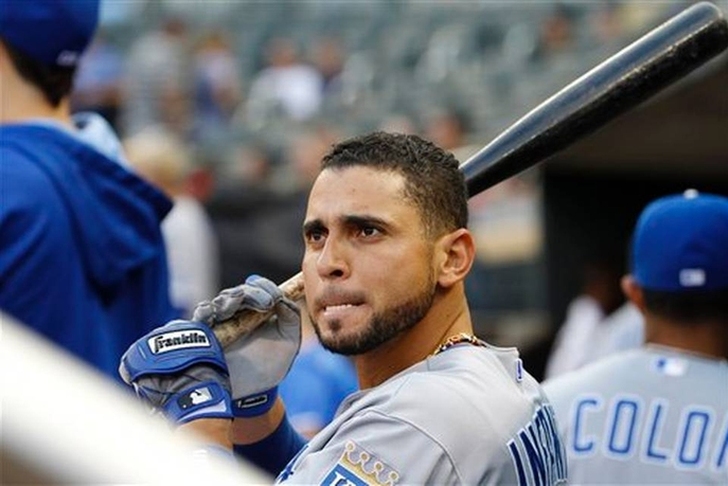
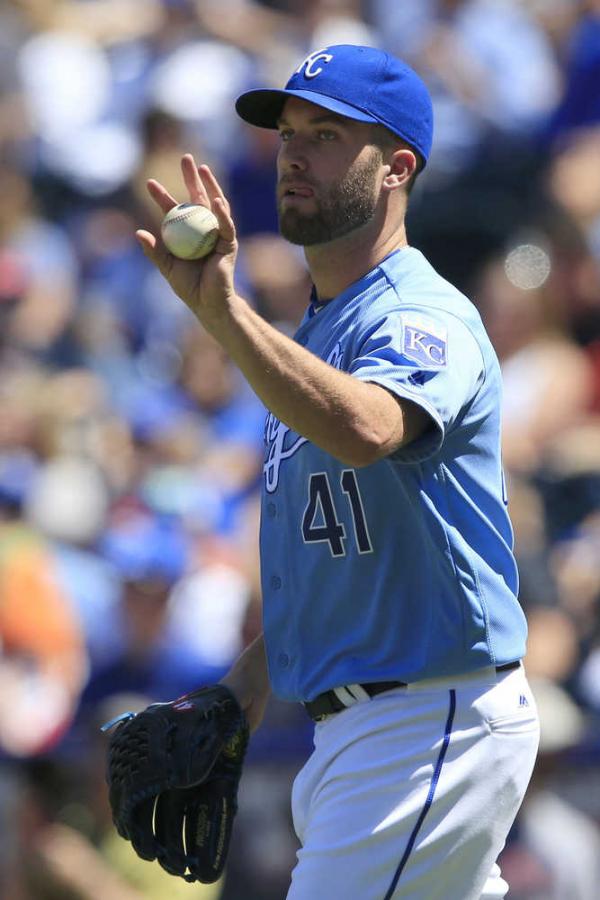
Sometimes things just don’t work out. That’s a good way to describe the Kansas City Royals parting ways with second baseman Omar Infante on Wednesday. This wasn’t a shocking move in the fact that it happened; the timing was the only thing that caught most off-guard. Infante had been relegated to third-string second baseman thanks to the hot start that Whit Merrifield has gotten off to and the fact that Omar had struggled on both offense AND defense this year. The Royals still owe Infante another $17.75 million, which includes a buyout of his 2018 option and the fact that Kansas City was willing to eat the rest of his contract shows you the albatross that Infante had become to the Kansas City roster. But at the end of the day, this was the best choice for everyone involved.

kc2

Not everything was all downtrodden when it comes to the Royals signing of Infante. The Royals signed Infante before the 2014 season to a 4 year, $30.25 million deal with a team option for 2018 and at the time it felt like a good signing. The Royals had struggled at second base for years and before Infante, Kansas City was saddled with my favorite punching bag, Chris Getz. Infante was coming off of a solid 2013 campaign in Detroit, where he put up a line of .318/.345/.450 with an OPS+ of 115 and a bWAR of 2.5. Sure, he was entering his age 32 season with the feeling of regression lurking in the shadows, but all he really had to do was give the Royals an upgrade at offense and solid defense and they would be happy. Unfortunately, the momentum started to shift from almost the very beginning.

kc3

In Infante’s six game in a Royals uniform, he took a fastball to the jaw courtesy of Heath Bell. To say he hasn’t been the same since would be an understatement:


For Infante’s almost 2.5 years in Kansas City, he hit .238/.269/.328 with an OPS+ of 62 and a bWAR of -0.2. Infante did put up above average defensive numbers for the first two years of his deal but even that took a dip this year, falling below replacement level. For the longest time, Infante’s litany of injuries (jaw, shoulder, elbow) were blamed for his struggles, but that seemed to be rectified this past offseason, as Infante had surgery in November to remove bone chips from his right elbow. The belief was now that Omar was healthy, we would see the guy who had performed so well in 2013. Instead, he struggled even more this year, most notably on defense. The move to his right to backhand a grounder was a normal task in the past; this year he struggled on a consistent basis making that move. It appeared his range had continued to decline and there was very little zip on the ball whenever he would make the throw to first. In fact, I can’t even remember the last time I saw Omar throw the ball over the top; every throw I saw from him this year was sidearm. The injuries had seemed to take a toll on his body and the guy who was once a solid defensive second baseman had now become a liability on the field. Infante would bumble a ball in Cleveland a few weeks ago and that would be the last time he would start a game in a Kansas City uniform. Infante was regulated to the bench moving forward, as utility man Merrifield would see the majority of starts moving forward. Christian Colon would be recalled last week and even he was getting multiple starts at second base instead of Infante. It was obvious the end was near.
kc4

There were a couple Omar highlights that I will probably remember for awhile. There was the home run in Game 2 of the 2014 World Series:


Oh Hunter Strickland, you insidious gas can! There was also Infante’s walk-off against the Angels in June 2014(a game I was actually in attendance for):


But there is one highlight that will be hard to ever forget. Last year in Cleveland, Infante and Alcides Escobar pulled off a highlight reel play that still is fun to watch today:


Yep, that was in the 9th inning of a one run game. That’s as big time as it gets! Sure, there aren’t a ton of Omar highlights during his time in Kansas City, but these won’t fade from my memory anytime soon.

kc5

So what should be the game plan for the Royals at second base moving forward? At the current moment, Whit Merrifield seems to be acclimating himself to major league baseball quite well, so I would assume he would continue to see the majority of playing time there. Christian Colon will also figure into their plans, getting a few starts a week at the position:

There has been an interesting rumor floating around over the last couple days:

Now, I’m not 100% sold this will happen. For one, Reyes hasn’t played much second base in his career, just a few games back in 2004. That would be a minor hurdle. The bigger hurdle to jump would be the character issue. Reyes is coming off of a domestic abuse issue and will probably be highly scrutinized for the immediate future. Royals GM Dayton Moore has made it a priority to bring in players who are great clubhouse guys, players who will fit in with the family environment in Kansas City. Moore has occasionally veered off the path(Jose Guillen immediately comes to mind, even Alex Rios wasn’t considered a high character guy) but this just feels like too much media coverage just to fill a slight hole. The plus to it would be that Merrifield could go back to being the utility guy that is probably better suited for him and Reyes would be a major offensive upgrade over Infante. The Royals also wouldn’t have to pay him much, as the Rockies are on the hook for the remainder of Reye’s 2016 salary. But my gut tells me this won’t happen; if I’m wrong there could be a whole batch of issues for us to discuss then. For now, the Royals will just go with Merrifield and Colon and see if someone becomes available that could strengthen the team down the stretch drive.

kc6

No matter how much flak we have given Omar these last couple seasons, I still don’t consider this a bad signing. Sure, I didn’t love that it was a four year deal, but unfortunately that is what a small market team like the Royals has to do since they can’t offer a player more money. No one saw Infante’s regression being so steep, so fast. The good news is we are in the middle of June, with three and a half months left in the season. This could have been so much worse if Infante was still holding up a roster spot into August, taking up space while rarely being used. Infante seemed like a nice enough guy, but it just didn’t work out between him and the Royals. The Royals can now move forward and Omar can see if he is able to latch on to a new team for the rest of the season. That being said, there is one more thing you can do; Vote Omar. Yes, the All-Star balloting is still going on and Infante is listed at second base. Go ahead and go to Royals.com and #VoteOmar. I know, he doesn’t deserve it, but it will burn the chaps of all the people who take All-Star voting seriously. You at least owe us this, Omar. Happy trails.

Will The Real Danny Duffy Please Stand Up?

kc1

When a new baseball season begins, there are certain definites that we are guaranteed and don’t even have to worry about. Mike Trout will put up MVP caliber numbers, Clayton Kershaw will pitch like he is the second coming of Sandy Koufax, and Bartolo Colon will make you smile at some point. There is also this definite for any Kansas City Royals fan: Danny Duffy will make you shake your head at some point. Sometimes it’s for how good he is pitching, other times it will be for how inconsistent he is pitching. Danny Duffy might be one of the hardest players to really put your finger on and he is continuing his mystifying act so far in 2016.

kc2

Duffy started the year in the bullpen for the Royals, but was soon summoned to the rotation when both Chris Young and Kris Medlen came down with injuries. Danny would make his first start of the season on May 15 and (on a limited pitch count)would put forth a starling effort. On that Sunday, Duffy would throw 48 pitches in 3 innings of work, giving up 1 hit, and no runs while allowing 2 walks and striking out 5. Over the next three starts, Duffy would gradually increase his pitch count, which also meant he was pitching deeper into each game. But that wasn’t the only improvement by Duffy over those next three starts.

kc3

Over his last three starts, Duffy has not walked a single batter, striking out 14 over 15.2 innings, which feels like a minor miracle if you have followed Duffy’s progression over the last three season. One major obstacle for Duffy throughout his career has been the ability to pitch efficiently, both as a way to keep his pitch count lower and to avoid allowing extra runners on base with walks. Since 2012, Duffy’s walks per 9 have been a bit high: 5.86, 5.18, 3.19, and 3.49. So far this year he has lowered it considerably, down to 1.72 over 36 total innings. Allowing less runners, no matter the situation, is always a plus and Duffy lowering his walks has made him a more efficient starter in a small sample size.

kc4

While Duffy’s walks are down, his average velocity is up so far this year. Now, part of that reason is his early stint in the bullpen, where he was able to air out the ball in his 16 outings in relief. But over these last four starts, he has maintained his increased velocity with only a slight difference being seen between his stint in the pen and his work in the rotation:

chart (1)

What it also looks like is that Duffy has ditched his slider for the most part and decreased his use of the cutter. Instead, Duffy has been throwing his two-seam fastball at a higher rate(15% compared to 4% last year) and his change-up has been used as a bigger weapon as well(13% compared to 95% usage last year). This actually explains a lot of the velocity increase, as a cutter is normally 2-5 MPH slower on average compared to a 4 or 2 seam fastball. Duffy seems to be using his change-up enough to keep batters on the look out for it while then using his fastball as his ‘out pitch ‘. In fact, Duffy’s swinging strike out percentage this year has seen an uptick (from 14% to 25% this year) while his strike out’s looking has taken a dive(25% to 19%). Rather than fooling batters this year, Duffy is throwing the cheese and forcing hitters to try and hit his 95 MPH+ fastball, a strategy that maybe should have been used earlier in his career.

kc5

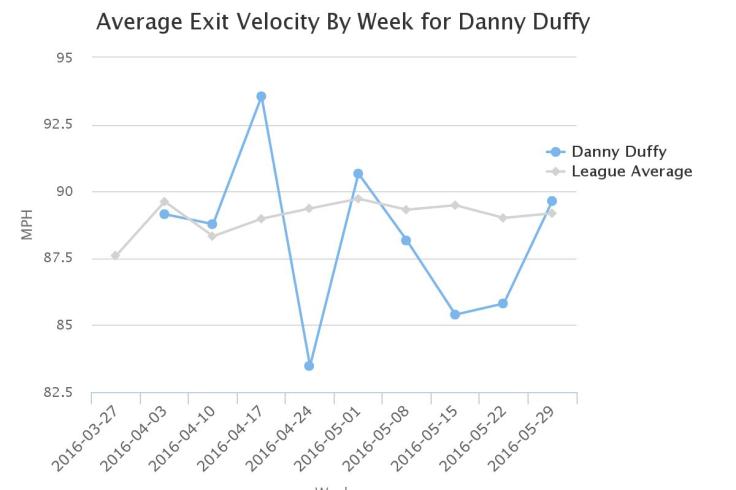
Hitters are also not hitting the ball as hard off of Duffy this year. On average, Duffy has been below league average most weeks when it comes to the exit velocity off his pitches:

chart (2)

In fact, Duffy’s soft hit percentage has increased this year(up to 26%) while both the medium and hard hit percentages have gone down (48% and 26% respectively). Hitters are just not hitting the ball as hard off of him this year which has  helped turn him from a pitcher with potential to be a solid mid-rotation starter to one who could actually achieve that status if he keeps it up.

kc7

So which Danny Duffy is the real Duffy? History would say that Danny will come back down to earth and pitch less consistently than he has over his four starts. But all the numbers tell a different story, that of a pitcher who has changed his approach on the mound and might have unlocked a secret to success. Duffy is throwing more strikes(his first pitch strike percentage is up, as is the amount of 0-2 counts he is throwing), and allowing less walks which is also knocking down his pitch counts. On Wednesday, Duffy threw just 75 pitches in 6 innings of work(51 of those pitches were strikes) and if he can keep that kind of efficiency up, there would be no reason to think he couldn’t be the starter the Royals have longed him to be. The one slight on GM Dayton Moore’s record has been the inability to produce productive starting pitching during his tenure in Kansas City. If Duffy can be what they always envisioned him to be, that would go a long way toward improving the rotation and improve Moore’s track record with starting pitching. It might have taken longer than expected, but we could finally be seeing the ‘Real’ Danny Duffy, the one we always knew we wanted.

Strength of the Pen

kc1

When discussing the Kansas City Royals last two years (and more specifically their historic runs in the playoffs), a lot of their success seems to be derived from the stellar bullpens they have employed. In 2014, the team heavily relied on the three-headed monster of Kelvin Herrera, Wade Davis and Greg Holland. Last year started the same, but after Holland struggled(which we found out later was due to an injury), the coaching staff was able to also rely on Ryan Madson and Luke Hochevar late in the game. General Manager Dayton Moore has made a number of successful moves these last few years, but near the top of the list has been his ability to piece together one of the best(if not the best) bullpens in baseball. What is even odder about this isn’t the ability to put together a solid pen; we can trace the origins of bullpens filled with power arms back to the late 1980’s/early 1990 Cincinnati Reds’ teams that featured the ‘Nasty Boys’, Rob Dibble, Randy Myers and Norm Charlton. No, what is odd is the consistency the Royals bullpen has showed for years now.

kc2

Most major league bullpens show success for a year or two, but then start to be less efficient and eventually are re-tooled. The Royals have tinkered with their formula for a few years now and seem to continually find arms that contribute and keep their success going. Last year, the Royals were 4th in bullpen WAR in the American League at 5.0, but more importantly had the highest LOB(Left on Base) % in the league at 80.4,  4.5 % better than the next best bullpen in the league. In 2014, the Royals bullpen was second in league WAR(5.1 to the Yankees’ 5.5) while leading the league in HR/9(0.62). More of the same in 2013(or as I call it B.W., Before Wade), as the Royals had the second best bullpen WAR in the AL(6.2) while leading the league in LOB%(81.4), K/9(9.57),ERA(2.55) and FIP(3.21). Even going back to 2012 shows the Royals had the second best WAR(6.4), second in FIP(3.52), third in LOB%(77.8)and first in HR/9(0.71). What I find most fascinating about this is how while the Royals have been a model of consistency during that span, no other team in the league has been as consistent. One year the Rays are near the top, the next it’s the Orioles, then it’s the Yankees. The point being that it’s not just that the Royals bullpen is good; it’s also the fact that with new pitchers rolling in and out of the pen each year, the numbers stay near the top of the league.

kc3

So over the last four years, the Royals bullpen has been one of the best in the American League, all while shuffling pitchers around utilizing different players into different roles. With all that being said, the bullpen looks to be just as strong headed into the 2016 campaign. Wade Davis is still front and center as the closer and dominating force he has been the last two year, with Herrera and Hochevar helping setup again this year. But there are some new names in this year’s pen, and one of the primary relievers this year looks to be former Royals closer Joakim Soria. Soria was brought back into the fold this past offseason and will be one of the Royals main setup guys going into the season. Danny Duffy looks to be starting the year in the pen, which adds another power arm to this group while also giving them someone who will probably start at some point this season. Dillon Gee looks to be filling the role that Joe Blanton held for the Royals last year, as spot starter and long reliever if needed. Throw in Scott Alexander and Brian Flynn from the left side(with Tim Collins out for the year) and Chien-Ming Wang looking to be an option at some point this year, it looks to be another loaded pen.This is all without mentioning players coming up through the farm system, guys like Miguel Almonte, Alec Mills, and Matt Strahm, who could all see action at some point this season.

kc4

Every year I wonder if this is the year the bullpen comes back down to reality. So is this the year the bullpen finally stumbles? I wouldn’t count on it:

Sure, they are just Spring Training numbers, which are to be taken with a grain of salt, but they are impressive nonetheless. It’s hard to imagine this group of arms being the one to break the ‘Streak of Dominance’. Greg Holland is gone from this group, but he battled an unknown injury most of last year and his ‘replacement’, Soria, looks to be a notch up from 2015 Holland. Looking at the set of arms the Royals have and it’s hard to imagine much of anyone regressing, as most are still in their prime. It’s a testament to the knowledge and hard work that pitching coach Dave Eiland and bullpen coach Doug Henry have put in that have helped the Royals succeed with their bullpen. At some point the Royals pen will be normal again and we will fondly remember this time period. But I wouldn’t count on that happening anytime in the immediate future, especially if this group of high velocity arms have anything to say about it.

Locking Up the Leader: Royals, Perez Agree on Extension

kc1

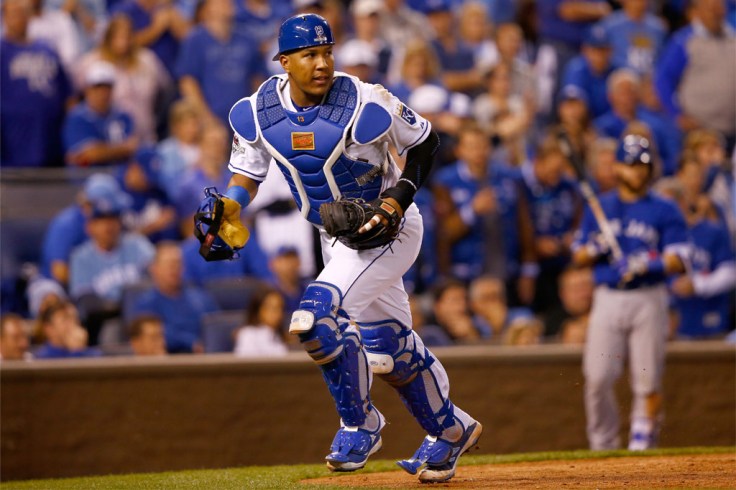
For most baseball fans, certain players stick out. They aren’t hard to find, as they stand out as having a certain ‘it’ about them and it’s fairly obvious to point out when it is right in front of your eyes. Having ‘it’ basically means a player moves like he was born to play this game, whether it be running the bases, throwing a ball or vaporizing a pitch into the upper reaches of the bleachers. Then there are those players that have the look and feel of a leader, just by how they carry themselves. It was pretty obvious from day one that Salvador Perez was one of those leaders, a catcher who was the field general in every sense of the word. Early on in his career Royals management felt the same and locked him into a very team-friendly deal that gave Salvy a commitment and made it to where all he had to worry about was his play on the diamond. It was soon evident that this deal was below market value and the deal was almost a ‘steal’ for Kansas City. The rumblings this winter were that Perez and the Royals were trying to restructure a new deal that would compensate Perez while also extending the contract further into the future. The deal was finally struck on Wednesday, as Salvy looks to now be a Royal through the 2021 season.

kc2

The new, restructured deal for Perez will start in 2017 and will keep him in Royal blue through his age 31 season:

Perez will be making a very team-friendly $2M this year, $3M in ’17, $7.5M in ’18, $10M in ’19; $13M in ’20-21. Curious about any options, since we all know Dayton Moore loves him some mutual options?

Add in a $6M bonus and the Royals showed Perez how much he is appreciated by the organization and restructured a contract that technically they didn’t have to do. This deal is a message to the nucleus of the Royals that will be eligible for free agency after the 2017 season: if you work with us and stay loyal, we will stay loyal to you. The deal makes sense for the team, as Salvy is a fan favorite, the on-field leader, gold glover and possibly even leader of the pitching staff. Perez’s true value is in his defense, as he is considered one of the top catchers in the game, a perennial All-Star who is not only an agile defender, but knows his pitching staff in and out. Add in the pop in his bat(a career high in home runs in 2015) and you have the makings of a future Royals Hall of Famer, a player who will probably receive a statue and his number retired once his career is over. If you meet a Royals fan that doesn’t love Salvy, then that person isn’t really a Royals fan. But the question has to be asked, a question I even hate mentioning because of the high status of Perez with Kansas City: Will Perez still be playing catcher by the end of this contract?

Division Series - Kansas City Royals v Los Angeles Angels of Anaheim - Game Two
(Photo by Harry How/Getty Images)

This is an honest question that needs to be asked, because Perez’s workload over the last few seasons has been, well, ridiculous. In fact, Perez has caught more innings than any other catcher in baseball over the last three seasons:

As the tweet above from Craig says, this does not even include postseason totals, or the innings Perez caught at the end of the 2014 season when he was part of an all-star team that did a tour of Japan. That is a lot of innings for any catcher, yet alone one who has had a knee surgery. Perez is easily one of the most durable catchers in baseball and that has shown by looking at the game totals for him since 2013, where he played the fewest games at 138. The bad thing is that I have been saying for years that the Royals need to give Salvy a lot more rest than they give him. I talked about it as far back as 2013 and my opinion hasn’t changed since then. Now that the Royals have made a long-term investment in Perez, they need to treat him as such. That means Perez should get a break once a week and I mean a real break, where he doesn’t come into the game once the Royals get into the later innings. Over the years we have seen many a catcher break down from their overuse behind the dish and that has also limited their productivity. In fact, we probably have already seen the beginning of this decline.

kc4

Back in 2011, everyone was surprised at how well Perez hit during his first stint in the big leagues, posting a line of .331/.361/.473 while putting up an OPS+ of 128. The thought at the time was that maybe Perez would be a better hitter than first thought. Since then he has been on a gradual decline, putting up an OPS+ the last two years of 91 and 89. His home run total reached a new high in 2015, but almost every other offensive stat saw a dip. It is very well known throughout baseball that Perez swings at almost everything, as Salvy was one of the leaders in swinging at pitches outside of the strike zone and had the lowest walk rate in the league. Is there a correlation between the amount of games played and the decline in his offensive stats? There is no way to 100% know for sure if there is, but one has to think so. Perez will probably never be a league leader in walks, but one wonders if he is able to get regular rest if that means some of his numbers will see an upward trajectory.

kc5

The other note of interest with Perez’s offense concerns him being able to stay healthy. If he isn’t able to stay healthy, the Royals at some point will have to consider moving Perez to a different position, especially if they feel that crouching behind the plate on a regular basis is hurting his health. So if Salvy moves to another position, is he going to produce enough offense to warrant not only the money he is being paid but also the playing time he will receive? This is an easy answer right now, since what he brings to the table as a catcher outweighs the lack of productivity with his bat. But once he is unable to wear the shin guards, it is highly questionable that his bat will produce enough to warrant a place in the starting lineup. It’s not fun to broach this subject, but it is something Kansas City management has to take into consideration and probably did before they signed him to this new contract. In some ways, yes, he will have earned that spot just because of what he has done the last few years for the Royals. But if his offense continues to decline at the current rate, he could be hurting the team more than helping.

kc6

Overall, this is about as positive a signing as the Royals could have, one that could benefit the team for years to come in many facets of the team. If anything, Royals management has shown a commitment to their players in a way that many organizations have ceased doing for years now. What this contract does is put Perez in the forefront of Kansas City’s plans past 2017 and into the next decade. To show this isn’t just about the money, Perez has shown himself to be a classy guy as well:

It’s kind of hard not to root for this guy. He is the real deal and probably will go down as one of the top five Royals of all-time. Yes, that is a lofty prediction but one that Perez is more than capable of upholding. More than anything, the message from this signing is that loyalty is rewarded with loyalty.

Minor Intrigue

kc1

Remember back when the Kansas City Royals signed Ian Kennedy to fill out their rotation? Word leaked out during that time that the Royals were still on the hunt for another starter, most likely just for depth purposes. Everything stayed quiet on the Royals front, that was until Friday, a day after pitchers and catchers reported to Royals Spring Training camp:

I was instantly elated and felt this was another stellar move from GM Dayton Moore. So who is Mike Minor and how can he help the Royals moving forward? I’m glad you asked.

kc2

Minor is a former first round draft pick of the Atlanta Braves who will be entering his age 28 season for Kansas City. Minor sat out the 2015 season due to shoulder surgery, as he went in to fix the labrum  in his left shoulder back in May. Over his five year major league career, Minor has produced a slightly below league average ERA+(93) and a career FIP of 3.90 while accumulating over 652 innings. Minor doesn’t have blow you away stuff, as he uses four pitches in his arsenal (fastball around 90 mph, slider, knuckle-curve and change-up) but over his career has produced good strikeout and walk rates. There is a lot of hope within the Royals organization that the team’s medical staff will be able to help Minor, as he is about nine months removed from surgery at this point:

“We’re trusting (trainer) Nick Kenney and our medical team,” Royals general manager Dayton Moore said, “along with Mike’s work ethic and dedication to get back to perform successfully at the major leagues. (It) led us to a conclusion to give him a two-year deal.”

It is looking like we will see Minor back in the big leagues sometime around late May, early June:

“We don’t anticipate him being ready for the first six weeks to two months (of the regular season),” Moore said.

So the signing seemed to be done to have Minor help out the team later in the year, and in a lot of ways, be more helpful in 2017. If the signing seems familiar, it should.


kc3
It seems familiar cause it is very similar to the deal former teammate Kris Medlen signed with Kansas City about a year ago. Medlen was coming off of a major surgery(Tommy John) and the signing was for him to help later in the season(last year) with more emphasis on the following season. Much like Medlen, Minor could fill various roles for Kansas City, either out of the bullpen as another left-handed arm or in the rotation if needed. Overall, Minor’s role on the team in 2016 is one of doing whatever is needed, although his strength would mainly be in the rotation:

“Hopefully, we’d have him in a position to give us some depth the second half — probably before that,” Moore said. “But realistically, around that period of time.”

This also shows the team is allowing him to not rush to action and rehab at his own pace:

“We wouldn’t put limitations on him,” Moore said. “The important thing is to move at a rate that ensures his long-term health. And that’s why it was important to get him on a two-year deal; not just one year, because not always, but usually you see them better the following year.”


The contract gives Minor the luxury of knowing he is set for 2017 and anything he is able to contribute this year is purely an added bonus. This is also the kind of signing the Royals have to make.
kc4
Don’t let the world championship, nor the big contract signings of Alex Gordon and Ian Kennedy fool you; the Royals are still a small market baseball team. That means that the Royals have to look at guys coming off bad seasons and/or injuries to help fill out their team. The Royals will never be allowed to have an unlimited payroll(or at least the likelihood is very, very low) so scrounging for guys like Minor is pretty much the modus operandi for Dayton Moore and his front office staff. That being said, there is some risk involved in this signing.
kc5
The risk is quite obvious; what if Minor isn’t able to bounce back from surgery or continues to show lingering issues? That is the risk any team takes when signing a player coming back from a major injury and the Royals are just like the other 29 teams in baseball, as they know there is always that chance. The one positive aspect of this is the Royals training staff has shown a propensity the last 3-4 years of keeping players healthy and not rushing a player back out on the field before they are ready. I tend to think if the Royals really felt Minor might not be able to bounce back, they wouldn’t have signed him to a two year deal in the first place. This kind of risk will always be there, but I tend to believe if the Royals had any trepidation, we wouldn’t be discussing this signing right now.
kc6
If one would look at the Royals rotation, especially looking onward into 2017, there are more questions than answers. With that said, having Mike Minor in the fold for the foreseeable future can only be viewed as a plus for the organization. I’m not for sure we should expect much from him in 2016, in fact it could be very comparable to what Medlen contributed last year. What you can probably expect is to pencil his name into the rotation for the 2017 season. Things could still go sideways, but at this moment it looks like the Royals front office found themselves another solid arm for their starting forces. Moore has had issues developing starting pitching throughout his run in Kansas City’s front office, but finding pitching in the bargain bin has become a specialty of his.

The Battle of Who Could Care Less

MLB: St. Louis Cardinals at Kansas City Royals
(Credit: Peter G. Aiken-USA TODAY)

Headed into Spring Training 2016, the Kansas City Royals have very little when it comes to major concerns on their roster. There is right field (which looks like a platoon between Jarrod Dyson and Paulo Orlando), the 5th spot in the starting rotation, the backup catcher battle and a few bullpen spots. But there also is a battle at second base, where Omar Infante looks to reclaim his spot while upstart Christian Colon looks to pry playing time away from the veteran. It would appear on first look that it is Infante’s job to lose, but there is always a chance Colon could take over, especially since Infante’s numbers the last few years have been less than stellar. Word last month from the almighty GM, Dayton Moore was that Colon would get a chance to win the job away from Infante this spring. So this begs the question: who should the Royals start at second base?

kc2

Let’s start with the man we all figure will win the job, Omar Infante. Infante is getting ready for his age 34 season, year 3 of a 4 year deal with Kansas City. To say Infante has been lacking offense the last two seasons would be a bit of an understatement. Infante’s OPS+ the last two seasons has been 76 and 49(league average is 100), miles away from the 115 he produced for Detroit back in 2013. He was actually able to produce a positive WAR in 2014(0.8) but slipped to -0.8 in 2015. Pretty much every offensive statistic has suffered in his two years in Kansas City, although he did have a number of clutch hits for the team in 2014. It’s not even just the main offensive numbers; fly ball % is down, his groundball rate is up and his hard hit rate has suffered as well. None of this is too surprising, as Infante is at that age where regression starts to sit in, so a dip in the numbers shouldn’t be too shocking.

kc3

Defensively, it has been a different story, as Omar actually held his own on defense this past year. Infante was able to post a positive dWAR, a big bump in his UZR, and a slight increase in his defensive runs saved. If ever you wondered why manager Ned Yost continued to pencil Infante into the lineup everyday, looking at his defensive numbers should explain it. The real detriment to Infante the last two seasons(and why there is at least some optimism in his return) has been the litany of injuries that he has dealt with during his time in Kansas City. In just two seasons, Infante has dealt with a jaw sprain, a shoulder sprain, an oblique strain(which sidelined him at the end of 2015), and a bone spur in his right elbow that required surgery this past November. Outside of the first week of the 2014 season, I’m pretty sure we haven’t seen a completely healthy Infante during his time in Royal blue. A healthy Infante would go a long ways toward not only sewing up a starting spot but also increasing his value in any way possible.

kc4

So what about Christian Colon? Well, his numbers are a bit harder to decipher because of limited time in the majors. Offensively, he has been better than Infante the last two seasons numbers wise, but once again this is in limited action. Colon has put up an OPS+ of 139 and 91 the last two seasons, but that is in 21 and 43 games. He has compiled a positive WAR(0.7 and 0.6) and defensively has been a slightly above average fielder. I went ahead and looked at his numbers in AAA Omaha, and Colon played about how you would figure; an average hitter with little power, decent speed and a positive increase in his BB/K rate. It’s hard to really get a read on what kind of major league player Colon would be, but it would appear he is about replacement level.

kc5

If you believe Moore, this will be a serious competition between the two players.  In fact he all but said that last month when talking to MLB.com:

“We’ll just evaluate,” Moore told MLB.com. “We’re going to play the best players. Omar is a terrific second baseman. I know offensively he has not performed the way he has liked or the way we expect him to. I just know we’re going to put the best team out there each and every night, and I know Omar is capable of being that guy. But we like Christian Colon, too. But you need them all to win, as you know. It’s a team, and you count on everyone to perform. I don’t know if Omar, at this point, is going to play 162 games.”

Go ahead, look at that last sentence. Moore basically implies they aren’t for sure Infante can stay healthy the whole season. You can understand why, after the list of injuries I mentioned above, but this also makes you wonder if something else is in the mix.

kc6

There is something else in the mix, and that ‘something else’ would be hot prospect Raul Mondesi Jr. Mondesi is entering his age 20 season and finished last year in AA Northwest Arkansas in the Royals farm system.  Mondesi is still a very raw talent, but it is conceivable he could make a big jump this season. One downside is that Mondesi has only played 18 professional games at second base, although it will be interesting to see what they do with him when he starts the year in the minors. If he is playing second fairly often early on, then it is possible the Royals would be looking at him as a possible solution in the big leagues later in the summer. I don’t think we will see Mondesi in the mix to start the year, but I have a hunch we will see him before the year is up.

kc7

So what is the final verdict? Going just off of numbers, it would seem like a dead heat. Infante and Colon’s ‘Steamer Projections’ are fairly similar: Infante has a projected line of .253/.284/.352 with a wRC+(weighted runs created) of 71, while Colon’s line would be .264/.316/..352 with an 83 wRC+.  The numbers show that Colon might have a slight edge offensively, but not by much. It would seem Infante would have the edge defensively, which the Royals highly value. Infante would probably also have the edge because of his contract; it’s hard to justify benching the guy who’s making $7.8 million this year, especially since he is almost untradeable. Here is what I believe will happen: Infante will win the job out of Spring Training and will hold onto it until/if he gets hurt. Even if Infante is able to stay healthy, I really believe by August we will see Mondesi holding down the second base job. The Infante-Colon combo is not a permanent answer, especially for a team that has aspirations of making the postseason again this year. Instead it is the current answer, not the permanent one. Come August, second base could look much different for the Royals.

Leaving San Diego: Royals Ink Kennedy to 5 Year Deal

kc1

Sometimes things are so inevitable that they will happen no matter the circumstances. For the last week plus we have heard about the Kansas City Royals interest in free agent righty Ian Kennedy and on Saturday morning they pulled the trigger on a 5 year, $70 million dollar deal.

The deal does have an opt out after year two(appears to be a player option) which would be after the 2017 season, where the Royals would already have Wade Davis, Lorenzo Cain, Eric Hosmer, Mike Moustakas and Alcides Escobar possibly eligible for free agency. This obviously means the Royals are taking advantage of the two year window in front of them and adding another arm to the rotation was at the top of the list for General Manager Dayton Moore. There are a number of immediate questions about Kennedy(as well as some positives), but first let’s give you an idea of just who Ian Kennedy really is.

kc2

Ian Kennedy is going into his 31 year old season as a former big time prospect in the New York Yankees organization who has toiled in the majors since 2007. His best season to date is the 2011 campaign, where he went 21-4 for the Diamondbacks, striking out 8.03 batters per 9, a 2.88 ERA, an ERA+ of 137 and 4.8 WAR. Unfortunately, that 2011 season seems to be the outlier of Kennedy’s career, as he has been a fairly mediocre starter throughout his time in the big leagues, including three straight seasons of being a below average pitcher from 2013-2015. That being said, there are plusses and minuses to the signing.

kc3

Let’s start with the giant pink elephant in the room: home runs. Last year, Kennedy gave up 31 home runs, 19 in his home field of Petco Park. Yes, the Petco park that is considered a major pitchers park. For whatever reason, balls flew out of that place at a higher rate last year, and Kennedy and former Padres teammate James Shields paid the price for the increase. In fact, Kennedy allowed home runs on 17% of his fly balls in 2015, only toppled by Shields and Kyle Kendrick, with a difference of only less than half of one percentage point. Yes, it appeared that balls flew out of Petco last year, but giving up that many home runs is still a blemish on the stat board and has to be taken into consideration. It appears that the Royals scouts and front office believe that playing in Kauffman Stadium, which has a low home run rate, plus adding in the Royals stellar defense in the outfield will help Kennedy with some of those fly balls. It’s possible…but as this chart shows, maybe not as much as we would hope:

What the graph shows is that if you took those 31 home runs and moved them to Kauffman, 3/4 of them would still leave the park. Add in that Kennedy won’t be starting all of his games in Kansas City, and…well, you can see why there is some worry.

kc4

Now, I feel like I can’t paint the ‘Ian Kennedy picture’ without mentioning some of the positives. For one, his K/9 rate the last has been above 8 for three straight seasons and has been sitting at a steady 9.3 for the last two. The guy has noticed an uptick in his velocity and it has shown in his strikeout numbers. But the increase in velocity has also accounted for a high hard-hit rate, which normally means a low soft-hit rate. In fact, Kennedy has not a hard-hit % below 30% since…you guessed it, that great 2011 season. In other words, when batters do make contact off of Kennedy, they are getting good wood on the ball. That makes it harder to keep the scoring down and also hurts the chances of a pitcher pitching deeper into the game. Last year, Kennedy averaged 5.6 innings per start, but over his career he has been a workhouse. Since 2010, the lowest amount of innings Kennedy has accumulated is 168 in 2015, while in that span he has had three seasons over 200 innings(and one at 194). So Kennedy will give you innings, which has long been a goal of Moore when he acquires starting pitchers.

kc5

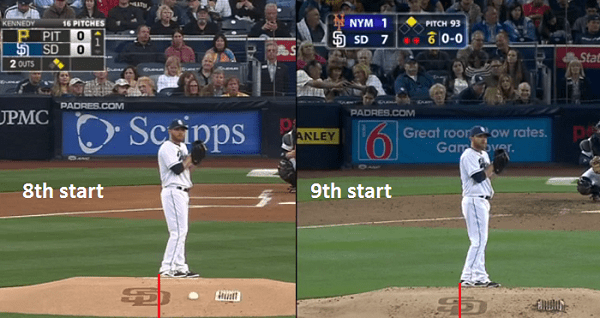
Also, his walk rate went down this past year, down to 2.78 after hovering in the 3’s for the previous two years. So you have a guy who has increased his strikeout rate while lowering his walk rate, which is a plus for any starter in the majors. Kennedy also seemed to improve his statistics in June of last year, possibly due to a shift on the pitching rubber:

kc6

The picture on the left is from his last start, the one on the right is from his first start in June. As you can tell, he went from throwing on the 3rd base side of the rubber to the 1st base side. There was a noticeable improvement, as his home runs dipped down and his OPS allowed improved by almost 200 points. I’m sure all of this will be digested by Royals pitching coach Dave Eiland, who within himself is a big part of this puzzle. You see, Kennedy is not a stranger to Eiland:

Eiland was the pitching coach for the Yankees when Kennedy made it to the big leagues so Eiland is familiar with him not only from then but back when he had success during his days as a prospect in the New York system. One has to think a big part of Kansas City feeling so confident in giving him this big contract was having Eiland in their back pocket to guide him back to success. Eiland has shown over the years to have a knack of turning questionable pitchers into solid starters by just tweaking the most subtle of things. All you have to look at is Jeremy Guthrie time in Kansas City(before 2015) and most recently Edinson Volquez. If anyone can turn Kennedy around, it would be Eiland.

kc7

There is one more positive to the this signing, and that would be durability. Kennedy has been lucky so far in his career and hasn’t had a major arm injury. In fact, Kennedy spent a little bit of time on the disable list last year, but it was for a hamstring strain. Kennedy has been healthy enough to make at least 30 starts in all 6 of his seasons as a regular. Add in the innings totals and at the very least you have a starter that you can count on to take the mound once every five games. Anymore, that is a major victory within itself in this game.

kc8

So where do I stand? This is an odd signing in that I am not totally for sure how I feel. I like that the Royals seem to have signed a durable starter who can log some innings for the team before turning it over to the pen. There were times this past season where the starters went four or five innings and were done for the day. I’m not a big fan of a five year deal, but there is the opt out clause after year two, so hopefully Kennedy takes that and the Royals don’t get stuck with the last three years of the contract. For me it’s not even about Kennedy as much as I don’t like giving any pitcher a long-term deal, not with how easy it is to get arm injuries in this day and age. Over his career Kennedy has been about a league average pitcher and I have a feeling that is what Kansas City will get from him this year. I think there will be times he looks really good on the hill, and I think there will be times those hard hit fly balls will leave the playing field. Steamer projections are predicting Kennedy to make 31 starts, logging 182 innings with an ERA of 3.90, an FIP of 4.02 and 2.2 WAR. Honestly, I would take that and would even applaud that kind of season. The best part of the signing is that the Royals showed a willingness to spend money and give them as good a chance as any to keep a contending baseball team on the field. The last few years, Dayton Moore has shown an ability to make questionable acquisitions and have them turn to gold(paging Morales, Kendrys). At this point, if Dayton likes this move than I am on board. I just hope the ride isn’t too bumpy.
Create a free website or blog at WordPress.com.

Up ↑