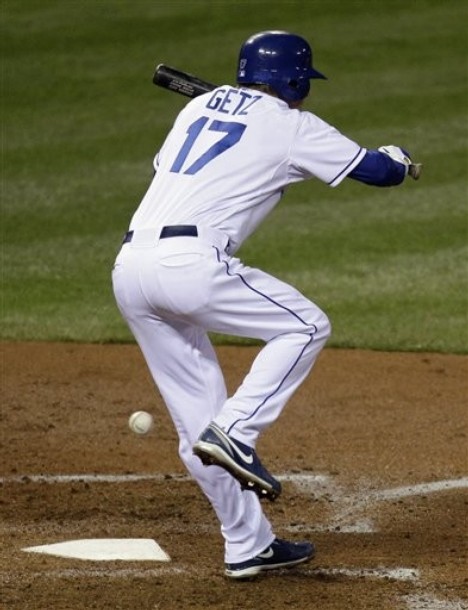
Last night, the Kansas City Royals encountered a tough loss to division rivals, the Detroit Tigers. It was a back and forth game between the two ball clubs that saw the Royals leave a bunch of runners on base and ended with the best hitter in baseball, Miguel Cabrera, take Aaron Crow deep in the 9th inning to win the game. Some Royals fans were outraged that Crow pitched to Cabrera instead of intentionally walking him. I was more outraged that the Royals bunted during the top of the inning with two outs and a runner on third.

If there is one thing that I absolutely loathe about this Royals team(and thank goodness, there aren’t as many things to hate as say, last year) is that they consider bunting a big part of their game. Manager Neddy Yost loves bunting. LOVES it. The last couple years we’ve had to hear about how good a bunter Chris Getz is, even though he has failed to put down a bunt countless times and even injured himself trying to bunt. How many tweets have I seen this year that beat writer Bob Dutton has put out(tweeted out?) talking about the team practicing bunting during batting practice? Too many. I sometimes feel like this team thinks it’s 1982 and there are still stadiums with AstroTurf on them. The honest truth is I used to not hate bunting so much. All we have to do is go back to 2010…

How many remember the 2010 Kansas City Royals? If you do, you remember that they didn’t have much punch on that team. That team had Billy Butler, Jose Guillen…and…and…well, Yuniesky Betancourt was tied for the team lead in RBI’s-with 78. This was also a team with Scott Podsednik and David DeJesus at the top of the lineup, so if this team relied a bit more on small ball, that was fine. The honest truth was that team probably wasn’t going to score much if not for small ball. It was fun watching this team built more around speed work that speed to their advantage and have a very good April, before they fell off the map later on in May. For that team, it made a bit more sense to use bunting as a weapon. But the last two years? Absolutely no reason to use it at all.

Now, there are a few times that bunting is acceptable and even the best course of action to take, but for the most part it isn’t, and the numbers prove it. If you are in the bottom of the eighth or ninth, and really only need one run, and you have a runner on first with no outs, a sacrifice bunt is acceptable. In fact the percentage chance of scoring one run actually goes up in that case. But if you aren’t playing for one run(and let’s be honest, you rarely should be), this is an awful choice, as your run expectancy goes down. Don’t believe me? Read here. For the most part, you should always be playing for more than one run, as only a fool thinks you should stop at one if you have a chance at more. Letting the batter go ahead and hit makes your chance of scoring go up and give you an opportunity to put more runs on the board. There is nothing more frustrating to me than seeing the Royals bunting…IN THE FIRST INNING!!! Everytime it happens, all I can think of is former Orioles manager Earl Weaver. Weaver once said “If you play for one run, that’s all you’ll get”. It might not be like that 100% of the time, but if you look it up, Weaver is right. Playing for one run just seems like a flawed theory and an easy way to have your team playing from behind.
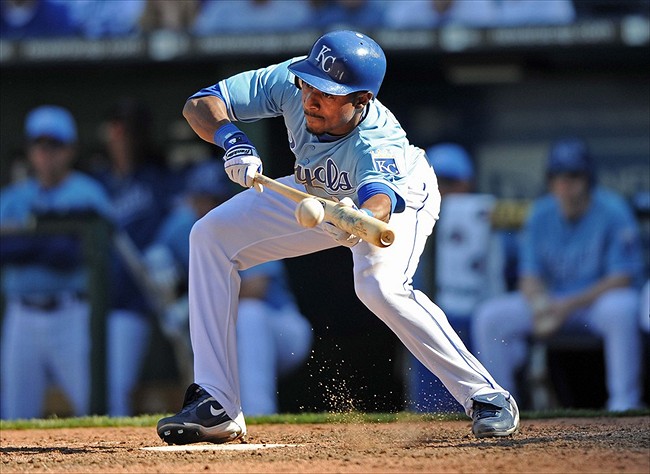
There is one exception in my mind for bunting: if Royals outfielder Jarrod Dyson wants to bunt, you let him. Hell, at times you force him to bunt. Dyson has ridiculous speed. Like ‘Herb Washington only pinch runs because he is a world-class sprinter’ type speed. There are certain players in the game that can use their speed as a weapon, and Dyson is one of them. He has game changing speed. Dyson is a guy who can bunt for a hit and even if the infield is in, will probably get it. So in this situation, I am fine with bunting. A speedster like Dyson can completely change the game plan of the other team or even worse for them, wreak havoc on a fragile pitchers psyche. In this scenario, let him bunt.
Unfortunately, the Royals don’t seem to use their bunting in correct or even logical situations. Alcides Escobar is guilty, especially when he was batting second, of bunting in the first inning. Second Baseman Chris Getz can barely get the ball to the outfield sometimes, so bunting is a big part of his game, and not always when he really should. I would like to say here that it is just a situation of the team not having guys who are good hitters, but it goes deeper than that. This organization loves bunting. The manager and the GM are on the same page, both heaping high praise on the players who bring bunting into the game. Well, unless you are Escobar. Then sometimes Neddaniel will throw you under the bus. But for the most part, they applaud the use of the bunt, and that is just as big a problem as the player who goes out there and thinks it gives them a better chance of scoring then standing in the box and actually trying to hit the ball.
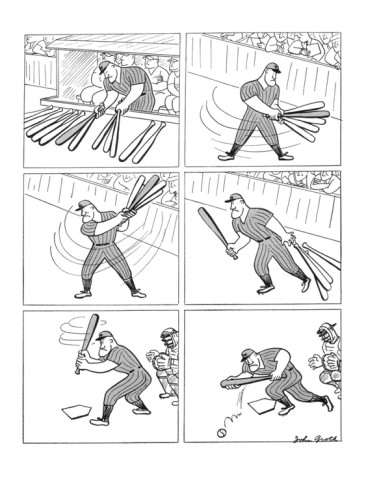
So, are there times that bunting is not only acceptable, but should be expected? Of course. But for the majority of time, it should probably be discouraged and left for only certain situations or for certain players. I know the bunt used to be a big part of the game years ago, but the game is in a constant flux of change, and will for the rest of eternity. The numbers don’t lie and show that bunting actually hurts your team’s chances of putting runs on the board. The Kansas City Royals, a team that can’t allow for many mistakes, would be wise to learn a proper time to use the bunt and when it is detrimental. Bunting with two outs in the 9th and a runner on third? Not the right time. When that happens, a loss shouldn’t be a shock. I can only hope the Royals learn this lesson before it hurts them during a crucial time, like making a playoff push.







 Once Dayton Moore took over as General Manager of the Royals, the team moved to sign better players and would pay them extra to come to Kansas City. The problem was that Dayton was signing level B and sometimes C or D free agents and practically giving them the keys to the city. Gil Meche was the first of these signings and if it wasn’t for former Manager Trey Hillman misusing him, the team would have gotten their money’s worth of that deal. Since then we have been abused with the ultimate clubhouse cancer Jose Guillen and Jason “Rewind Yourself” Kendall. It is almost like Moore felt like players of that level was the best they could do. I guess that is part of the problem here. When you believe that, everyone else will believe that as well.
 Now, to be fair, some of Dayton’s signings have worked. Bruce Chen was picked up off the trash heap and up until 2012, seemed to be playing above himself. Chen was signed at a low cost, but high value with both his play on the field and his jokes in the clubhouse. Unfortunately, he was then given a two year contract that has seemed to be one of many albatrosses around the Royals financial neck. Melky Cabrera and Jeff Francoeur were two former Atlanta Braves that seemed to be on the downside of their once promising careers. A move to Kansas City in 2011 seemed to be a godsend as both players played above their past performances and helped solidified both the lineup and the outfield. Francoeur would sign an extension that seemed questionable at the time and horrific in the present, while Melky would be traded to San Francisco, have the best first half of his career, win the All Star Game MVP, then get busted for PED use. These two signings worked wonders for 2011, but looked awful by May of this past year. The Royals are a team that should constantly be looking to rebuild players who just need a new environment, but need to be selective about these signings as well.
 So this leads us to this offseason, where everyone and their mother is aware that the Royals want(and desperately need) pitching. We’ve heard over and over that the Royals will have to overpay or give a player extra years to get them to come pitch in Kansas City, but is that true? I know some scoff at this, but I believe it is. The Royals have a really good nucleus of young talent, with Perez, Escobar, Moustakas and Hosmer added to lineup mainstays like Gordon and Butler. The thinking is that if the Royals could just get some pitching, this team could make a run at the playoffs. There have been a number of pitching talents on the free agent market this winter, and some have signed for very cheap money. Brandon McCarthy just signed a two year deal with Arizona for $15.5 million. The Royals easily could have afforded just under $8 million a year, especially considering that they will be paying Ervin Santana $12 million for in 2013. Edwin Jackson is still on the market as is Shawn Marcum. Both could garner a one or two year deal for right around that same amount of money. Instead, the Royals seem content shopping top prospect Wil Myers in a deal for a top starter. That is all fine and good if they are able to pull in a David Price or any other top of the rotation starter. But the names being floated around aren’t of that ilk. All we hear are the Shields’, Dickey’s and Lester’s of the world. All are fine pitchers and better than anything the Royals have now, but are they worth losing the next six years of Myers? Um, no.
 So why aren’t these pitchers coming to Kansas City? Well, I do believe part of it is Dayton Moore hasn’t really pushed for them. Ryan Dempster’s name has been tossed around, and the team offered him more than the Red Sox have. But he also wanted a third year on the deal, while Kansas City has only been willing to go two. I agree with them only wanting to give him two, as he is in his mid 30’s and had a hard time adjusting to the American League this year. But I have to believe part of why he won’t come to Kansas City is because this team just doesn’t win. Seventeen of the last eighteen seasons have been losing seasons in KC, and with the management in charge now, it would appear we are gearing up for season eighteen of nineteen. Most players want to win, but can be swayed away from winning if it means more money. If you aren’t getting the top dollar, you don’t want to sign with a perennial loser unless you think they have turned a corner. The Royals took a side road in 2012 and their road map didn’t seem to ever steer them onto the right highway. Players notice that and the losing atmosphere does not endear players to want to sign with the Royals.
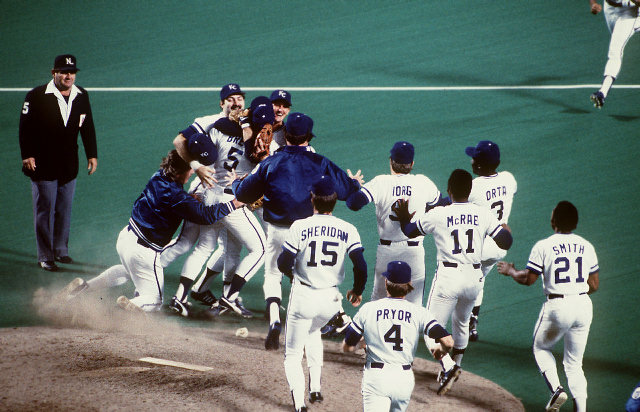 So yes, the Royals do have to overpay to get major name free agents to play in Kansas City. Or at least they will until they put together another winning season. Having management value the wrong players will hurt as well, but until those members are gone( [cough] Dayton) we are stuck with a team that can’t even compete with the Baltimore’s and Brewer’s of the world. One day this awful cycle will be undone and the Royals will be a winning franchise again. Let’s hope this happens sooner than later.


 Bleeding Royal Blue