Earlier in the week it was announced that former Kansas City Royal outfielder David DeJesus was calling it a career and was joining the Chicago Cubs CSN studio team for the upcoming season:
My first official press pass!!😎😎so many fun interviews out in AZ. Cant wait to get back to Chicago!! pic.twitter.com/nIYBKzagkP
While some will remember DeJesus for his time with the Cubs, A’s or Rays (and most will forget his short stints with Washington and the Angels), most Royals fans will remember his stint in Kansas City, where he began his career. I was always a DDJ fan, as he was a great defensive outfielder who got on base and for a period was an All-Star caliber player. More than anything, DeJesus was a steady performer that you could always count on, and I appreciated that. I thought about going in-depth into his career but instead thought it would be fun to go back and look at some career highlights, including this walk-off home run in 2008:
DeJesus wasn’t known for his power (only 99 career home runs over 13 seasons), but he did supply a bit of pop from time to time. DeJesus took that pitch in the heart of the plate and drove it off to win the game for Kansas City.
This isn’t a highlight but a nice look into a young DDJ who talked about baseball with his family as a kid. If you watched the Royals during the early 2000’s, you are aware of why they would need to put together a video like this to introduce their players to the fanbase, which was very small at that point. I had almost forgotten that David was the replacement in center field for Carlos Beltran, who was traded to Houston during the summer of 2004.
It feels a bit weird to post multiple home run videos from a guy who didn’t hit a bunch of them, but there was something else in this that shows what a solid batter DeJesus was. If you notice his swing, there is a slight uptick, but not much. For the most part that is a very level swing that he was able to get behind and take deep. He didn’t go out of his way to hit the ball out, but he would make you pay for a mistake pitch and knew how take advantage of a pitcher’s carelessness.
My favorite part of his game was defense. DeJesus wasn’t the fastest man, nor did he have the best arm. But he was a smart defensive player and right there you see a piece of that. He followed the ball, played the carom well off the wall and made a perfect throw into second base. DeJesus’ was best playing the corners of the outfield and he showed there how it’s not as much about how strong it is; it’s more about how accurate the throw is.
2010 was a big year for DeJesus, as he really came into his own, hitting .318/.384/.443. It was also his final year in Kansas City and his trade value that summer was never higher. Unfortunately for the Royals, DeJesus would get hurt a little bit before the trade deadline and wouldn’t actually deal him until the following winter. It really felt at the time like the Royals missed out on a great opportunity to get a good haul for him, but alas would have to deal him to Oakland in November (for Vin Mazzaro and Justin Marks. WTF?). Watching this video is a great summation of his talent; hit the ball where it’s pitched, nice easy swing and a dash of good luck. By this time he had become a very good player and was worthy of all the All-Star talk around him.
The other thing was that DeJesus was about as clutch as any player on the Royals at the time. It always felt like he knew when to try and drive the ball and when to just go with the pitch, as he drove that pitch into the alley in right center. DeJesus was a great fit for Kauffman Stadium; a solid gap-hitter with above average speed. Even better, that was against Kerry Wood who was still a very good pitcher at that time.
What a great couple of defensive plays right there? Us Royals fans are used to sparkling defense in left field nowadays, with Alex Gordon roaming out there, but I would put that catch up there with a good chunk of Gordon’s catches. The throw home was a great baseball play; good awareness, knew where the runner was at and made a perfect throw to home plate. You often hear it is always about the little things and right there is a perfect summation of that.
Finally, this wasn’t during his time in Kansas City, but I love the fun aspect of this. Here he is, just enjoying some ice cream during an extra inning game. It always felt like DeJesus loved playing the game and right there is a good sign of that.
I tend to always look back fondly at DeJesus’ time in Kansas City and how unfortunate it was that it ended too soon. He was a great story, a kid drafted in the 4th round of the 2000 baseball draft and in the majors three years later. There has already been some discussion on whether or not he should be in the Royals Hall of Fame, and I would lean toward yes. He played part of 8 years in Kansas City, hitting .289/.360/.427 and an OPS+ of 108. If you were a Royals fan during that time span (and even back then I watched 3/4 of the games every year), you knew there wasn’t always something to cheer about in Kansas City. But David DeJesus…he was worth every clap he ever received at Kauffman Stadium, and possibly even more.
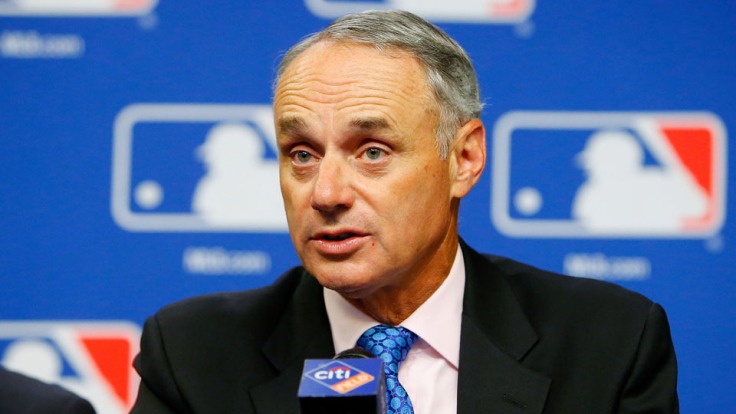
It was hard this past week to go anywhere without hearing about MLB Commissioner Rob Manfred and his disappointment with the MLB Players Union on shaking up some of the rules to help the pace of play in baseball. It appears that Manfred was hoping for a major change for this upcoming 2017 season:
“Unfortunately, it now appears there really won’t be any meaningful rule change for the 2017 season due to a lack of cooperation from the MLBPA,” Manfred said.
The one change that appears to be the most likely is eliminating pitchers actually throwing pitches in an intentional walk, instead having the manager signal from the dugout that they want to place the batter on first. It’s been covered ad-nauseam, but essentially this would be a non-issue when it comes to cutting time in a baseball game, especially considering how few intentional walks there are any more. With that being said, I thought we could look at a few possible changes that could help speed up the game and obviously make it more accessible to the leisurely fan, as most of us diehards aren’t majorly bothered by the pace of the game.
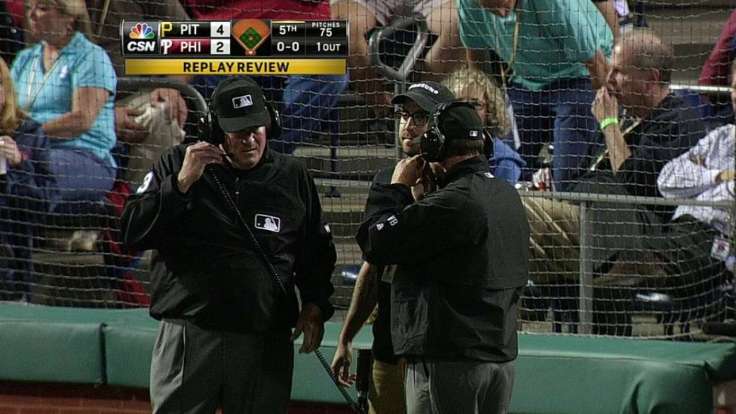
The most immediate solution to speed up the game would be speed up the process of instant replay. There was some talk for a while that baseball would look into setting a hard time limit on managers for making a decision on whether or not they want to go back and look at a play, but in my mind that is not where the major issue lies. The amount of time it took for replays last year did fall (on average it was about 1:36, compared to 1:51 in 2015) but we can all agree that we have sat through some replays that feel like they take hours. I am all for getting the play called correctly, but I also tend to think that if they added another person in their replay booth back in New York, maybe it could speed up even more. I tend to think this wouldn’t drastically improve the pace of play, but it might end the replays that feel like everything has ground to a screeching halt.
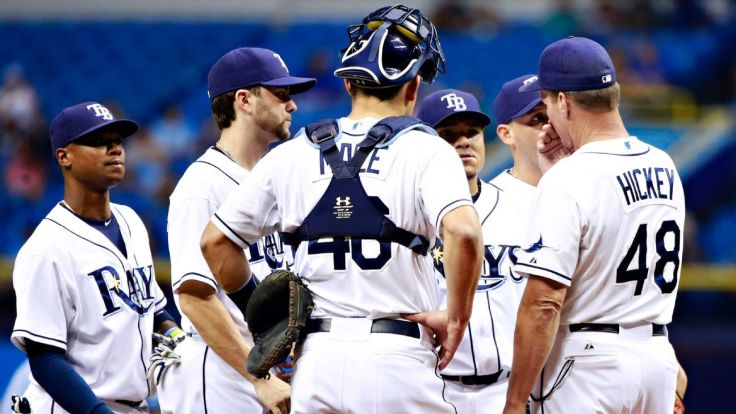
Another rule that could speed things up would be limiting the amount of mound visits in an inning. Obviously this would mean you would have to count any mound visit, whether it be by a catcher, a pitching coach, a manager or just a random player. I actually wouldn’t have an issue with this, as sometimes the visits can drag on (I’m sure an umpire or two would agree with this). That being said, I don’t think they should limit how many pitching changes a team can make per inning. As much as I am not a fan of 20 million pitching changes in an inning, I also don’t think a limit should be imposed on a team. Part of the natural flow of baseball is that you never quite know what moves a manager is going to make from inning to inning. If a manager wants 3 pitchers to each get an individual out in an inning, there shouldn’t be a rule that says he can’t do that. Maybe something where there is a limit on non-pitching change mound visits but none for actual changes? I’m just spitballing here, but the point is to limit the amount of tedious visits to the mound in an inning, which could speed up the game.
What about some other possibilities that have been thrown out there?
Pitch clocks-Don’t have an issue with this. As long as it’s reasonable I would be game for it.
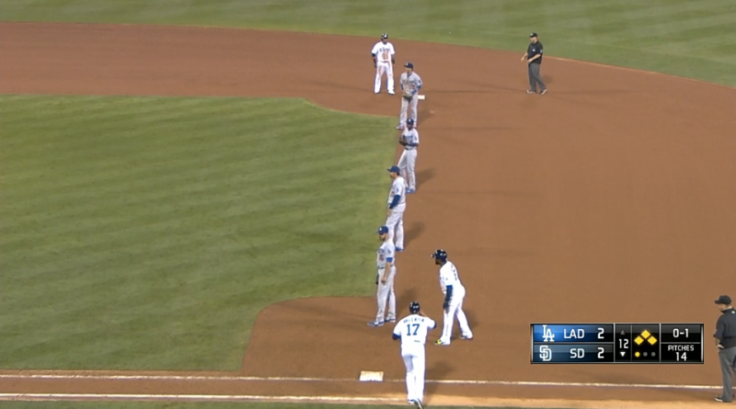
Banning infield shifts-Stupid. The issue isn’t shifts, it’s batters who aren’t adjusting to the shifts being put into effect when they are batting. Want shifts to go away? Start hitting the ball to the opposite field. I have no idea how this would save time in a baseball game, as the initial reasoning was to produce more offense, which would more than likely mean a longer game…which by my count would mean NOT saving time.
Having a runner start extra innings on second base-I almost feel like I shouldn’t acknowledge this, but it has been mentioned. I know sometimes extra innings can feel like a drag, but extra innings also add more drama and intensity to the game. I would hate to see this go away just to save a little bit of time. Could you imagine Game 7 of last year’s World Series, starting the 10th inning with a runner on second? Horrible, horrible idea. Let’s hope this one never sees the light of day.
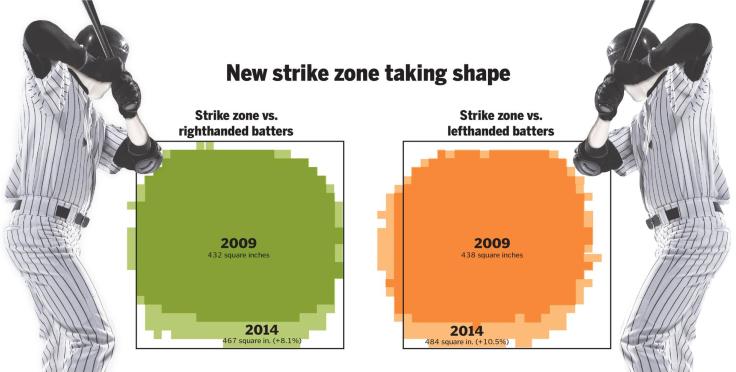
One final solution to speeding up the game has been the expansion of the strike zone. I actually am totally on board with this, as it has felt like for the longest time that the zone has shrunk. Obviously, the above graph says otherwise, although over the last few years it has appeared as if the strike zone has gone lower, with the low strike getting called more than the high strike. That being said, many have long felt as if the zone is determined by individual umpires, as some have a bigger zone than others. I would tend to think if you expanded the zone (and I do mean expand, not make it more lower than higher) you will get more batters swinging at the dish. While strike outs are currently up around Major League Baseball, I tend to wonder if they would go down if the batters are swinging earlier in the count and not taking as many pitches. Out of all the ideas that have been tossed out there, this one has the best legs and could really give the game more action as well, as more balls would be in play. All of these items are what Manfred is looking for and honestly, I would rather see a fly out or ground out than another strike out. The game could very well see a drastic change if this happened and could really open up a whole other world of possibilities.
So is there a real problem with baseball and the pace of play? To a degree, of course. It’s not every game and it’s not just one move or action that does it, but yes, there is a slight pace of play issue with baseball. It’s nothing that most of us would gripe about, but us “Seamheads” aren’t the only people watching baseball games. I feel as if Major League Baseball and the MLBPA should always be looking for new ways to improve the game and make it as viable as humanly possible. That being said, I also don’t think you should just go and change rules for the sake of changing rules. If a rule need a minor tweak or an adjustment, I believe that is exactly what should be done. The other aspect of this is that baseball is a free-flowing game that has no time limits and can range on the amount of time it can take to finish up. I would hate to see part of that go away just to knock a few minutes off of a few games. Should the players union be more open to changes? Yes. Should Rob Manfred slow himself down and not just assume that major changes need to happen? Of course. The game of baseball is a truly great thing and if you are immensely in love with it you accept it, warts and all. Not one answer will solve all the problems and not all problems need immediate attention. I would much rather see baseball address the issues but not make changes until they have a solid solution that most parties can all agree on. Baseball is definitely not broken, but a few minor touch-ups could make it even better than it is now.
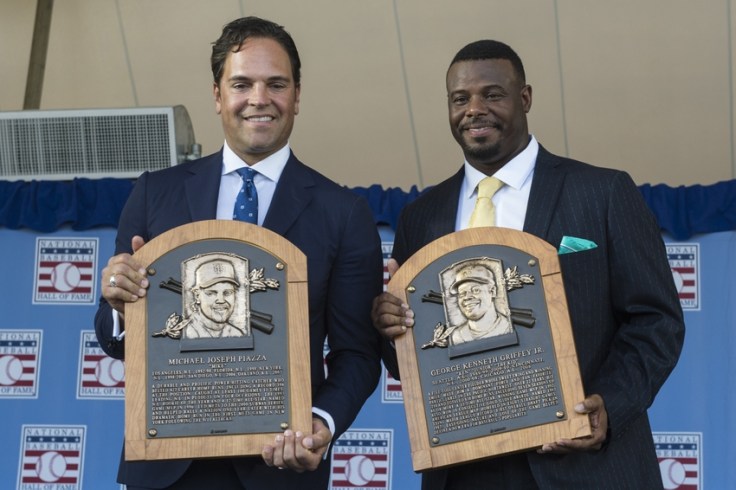
There is no greater honor in any sport than getting a plaque in the baseball Hall of Fame. I’m sure someone who believes the NFL or NBA is a greater honor will debate me on this, but there is never the sort of debate toward their hall’s as there is in baseball. That debate has grown into a fervor amongst baseball fans, writers and even players, as every one seems to have an opinion on this topic. What has made it even more intense is what we should do with players who were “suspected” of enhancement thanks to steroids and other performance enhancement drugs, and whether or not they deserve a spot in the hallowed halls of Cooperstown or left on the outside looking in. In some ways, the people who vote on this honor are the judge, jury and executioner, as testing was not done during this period so for many of the players of that era there is no definite of what they did or did not do. As a member of the IBWAA, this will be my third year of voting for ‘the Hall’ and as I have said in years past, I have no issue voting for anyone suspected for PED use, since I feel those players played within the parameters of the rules allowed at that time. I’ve long considered the Hall of Fame a museum of the game, not a church, and because of this I vote based on performance alone. Now, there are a few differences between us in the IBWAA & our brethren in the BBWAA, one of which is the players we have already inducted. Last year we inducted Ken Griffey Jr. and Edgar Martinez, and in years past we had already voted in Mike Piazza, Jeff Bagwell and Tim Raines, so none of those players showed up on our ballots this year. Also, we are allowed to vote for up to 15 players, where as the BBWAA can only vote for 10. Before we get to my actual votes, you can read my previous votes: Here is 2014, 2015, and 2016. Also, follow Ryan Thibodaux on Twitter. That way you can follow how the voting is going before the big announcement on January 18th. Without further ado, here are my votes for the 2017 Hall of Fame ballot.
Barry Bonds
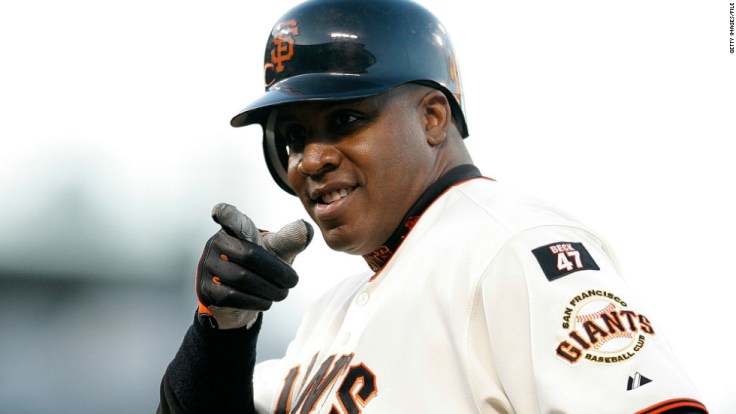
I have voted for Bonds every year and will continue to until he is finally elected. In my eyes, this is a no-brainer, as Bonds is one of the greatest baseball players ever, not just of his era. I could rattle off all the numbers that show how great he was, but I think the best way to explain it is this way: before there was any whispers about suspected steroid use, Bonds was a 5 tool player who could literally do anything on the baseball field…and then he became an offensive juggernaut that could not be contained. The all-time home run king took that whole era to another level and it wasn’t even close. You might not like him or what he had to do to elevate his game, but I am not concerned about any of that when it comes to voting. To me, Bonds is a slam dunk pick and should already be in the Hall of Fame.
Roger Clemens
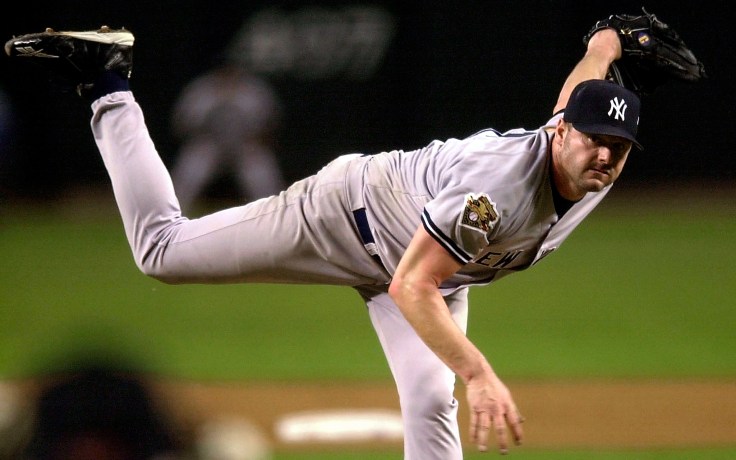
Like Bonds, Clemens is an easy pick, the greatest pitcher of his era and one of the greatest pitchers of all-time. Clemens won the Cy Young Award 7 times throughout his career, and is on top of a plethora of statistics that garner him near the top of almost all pitching leaderboards. Both Bonds and Clemens seem to be garnering more support, as the election of former Commissioner Bud Selig to the Hall seems to have allowed some voters to start putting an ‘x’ in the box next to their names. At one time it appeared both men would have to wait until they showed up on the Veteran’s Committee ballot before they would get elected; now we could see that wall busted through in the next couple of years.
Vladimir Guerrero
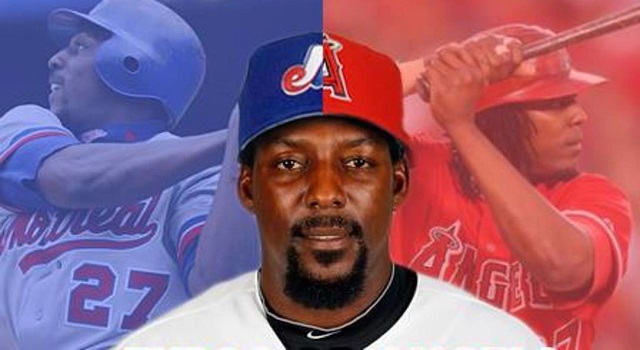
Guerrero is the first debut on my ballot this year and appears on the surface to be a borderline pick for the Hall, but digging deeper shows you a guy who should be more of an easy pick for voters. Most will remember Guerrero as a hitter who never saw a pitch he didn’t like (as he was a notorious bad-ball hitter), but he was also a very good hitter, which those two things normally clash if put together. Instead, Guerrero posted a career .318/.379/.553 line with 449 home runs and 2,590 hits during his 16 year career, with a career contact rate of 79.9%. The accolades are there with this guy: 2004 AL MVP, 9 time All-Star, 8 time Silver Slugger award winner and 2010 Edgar Martinez award winner. All that should entice a voter’s view of Vlad, but what really takes the cake is his place in history when it comes to his offensive stats. Guerrero’s all-time rank is staggering: 56th all-time in batting average, 24th in slugging percentage, 34th in OPS, 49th in total bases, 85th in doubles, 38th in home runs, 57th in RBI’s, 79th in OPS+, 64th in runs created, 56th in adjusted batting runs, 61st in adjusted batting wins, 45th in extra base hits, 5th all time in intentional bases on balls, 45th in power-speed #, 59th in RE24, and 50th in Win Probability Added. Most people could tell you that he was a really good player, but it isn’t until the numbers slap you in the face that you see just how great he was, not just really good. The cherry on top of his offensive numbers is this fun little fact that Graham Womack found: Guerrero’s career batting average, home runs and hits are only topped in baseball history by five players. Those five? Ted Williams, Babe Ruth, Jimmie Foxx, Stan Musial and Lou Gehrig. Yes, all five are Hall of Famers and yes, Vladimir Guerrero should be as well. If not this year, hopefully Vlad will get in the Hall in the very near future.
Trevor Hoffman
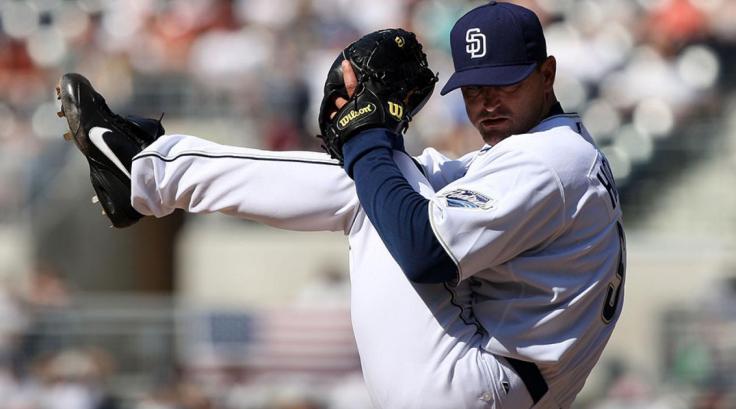
For the second consecutive season, I voted for Trevor Hoffman. There has been plenty of debate on whether or not closers should be judged on a different criteria than most other positions and to a small degree I get some of the trepidation. Closers today don’t always face the strongest part of the lineup and it seems odd to have your best bullpen arm only throw an inning or less an outing. The thing to remember though is that “the closer” is still a position and if you excel at it for 16 seasons, you should be rewarded justly. In some ways, the Hoffman argument is very similar to Tim Raines; Raines was the second best leadoff hitter of his time, behind another Hall of Famer in Rickey Henderson. Hoffman was the second best closer of his, behind future Hall honoree Mariano Rivera. Hoffman not only shouldn’t be punished for not being Rivera, but was about as consistent as one can be. During his career, Hoffman posted 15 consecutive seasons of 20+ saves (and I hate the save stat, but this is still very impressive) and had an 88.8% save conversion rate, which within itself is almost insane when you consider the amount of save opportunities he received in his career.Throw in his lethal change-up that was almost as deadly as Rivera’s cutter, and you have a one of the best relievers of all-time. He might be no Mariano Rivera, but then again who is? What Hoffman is though is a Hall of Fame closer.
Mike Mussina
When thinking about Mike Mussina, what is the first thing that springs to mind? Is it his start in Game 7 of the 2003 ALCS? Or maybe his use of the knuckle-curve, which was his out pitch? Or does nothing specific pop into your mind when hearing Mussina’s name? I sometimes wonder if those of us on the Mussina bandwagon would have to praise his career if he had been even just a tad bit flashier.What I end up realizing is that part of what made him so great was that he wasn’t flashy and just went out for 18 seasons and performed as a top of the rotation starter in that span. There are no Cy Young awards on his mantle, but there are numbers that back up his greatness. Mussina has the 24th best bWAR for pitchers, 19th in strikeouts, 22nd best strikeout to walk ratio, 17th best adjusted pitching runs, 21st best adjusted pitching wins, 9th best RE24, and 10th best Win Probability Added. Mussina was that guy who you could count on for a big win or just to go out and save the bullpen from being overused. Mussina jumped up to 43% of the ballots in 2016 and one can only hope he inches closer to the 75% he needs to reach the Hall. One of the pitchers that Mussina’s stats are comparable to is another former Oriole, Jim Palmer. While Palmer might have the accolades that Mussina does not have, the one thing in common is that both pitchers deserve to be in the baseball Hall of Fame.
Manny Ramirez
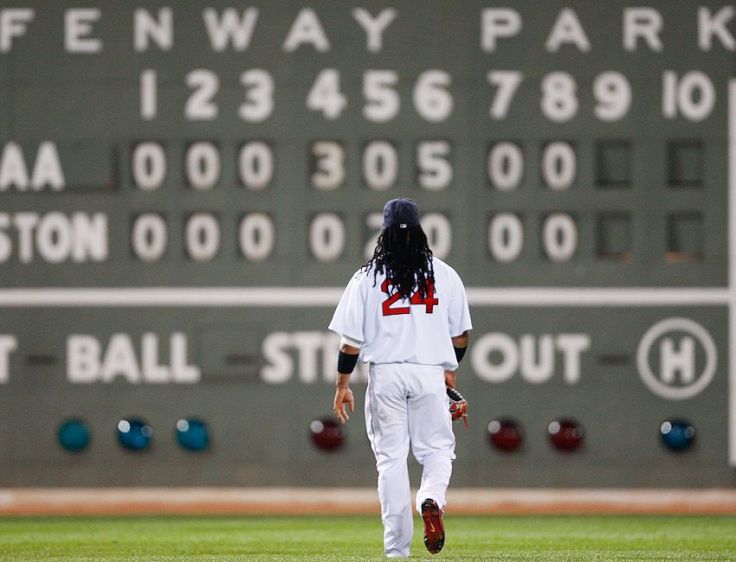
Manny makes his debut on the Hall of Fame ballot and with that comes a bee-hive of debate. Many voters have said the difference to them between Bonds or a Clemens and Palmeiro or Ramirez is that the latter tested positive for performance enhancing drugs and was justly suspended. In fact, when I started filling out my ballot, I paused on Ramirez and had to really stop and think of which direction I wanted to go. Like I have said, my voting is performance based but an actual suspension (and for Manny it was multiple suspensions) muddies the water a bit. After much contemplation, I went ahead and voted for Manny since he had put up Hall of Fame numbers before the suspensions. While Ramirez wasn’t a stellar defender (and that is evidenced by his career bWAR of 69.2), offensively he was a juggernaut. Manny posted a career line of .312/.411/.585 with 555 career home runs, and an OPS+ of 154. I firmly believe he could hit blindfolded and still produce league average numbers, as he was that good of a hitter. Manny also contributed during the playoffs, where he hit .285/.394/.544 with 29 home runs and 78 RBI’s over 111 postseason games, all fairly on pace to his regular season averages. The awards are all there for him as he was a 12 time All-Star, 2 time Hank Aaron award winner, 2002 AL batting title, 2004 World Series MVP, and 9 time Silver Slugger award winner. If that isn’t impressive enough, the numbers are quite gaudy: 32nd all-time in oWAR, 32nd in On-Base Percentage, 8th in Slugging Percentage, 8th in OPS, 29th in total bases, 31st in doubles, 15th in home runs, 18th in RBI’s, 28th in OPS+, 21st in runs created, 17th in Adjusted Batting Runs, 20th in Adjusted Batting Wins, 16th in extra base hits, 11th in RE24, and 23rd in Win Probability Added. Those are Hall of Fame numbers and most of that accumulated before he tested positive for anything. Would I hold it against anyone for not voting for him because of the suspensions? Nope. I get it.But for me, Ramirez has long been a Hall of Famer; the only thing those suspensions did was tarnish the perception of him, which is unfortunate. Instead of people remembering Manny for his child-like antics or immense hitting, he will be branded a cheater. He has no one else to blame for that, but I still felt like he had earned my vote, scarlet letter and all.
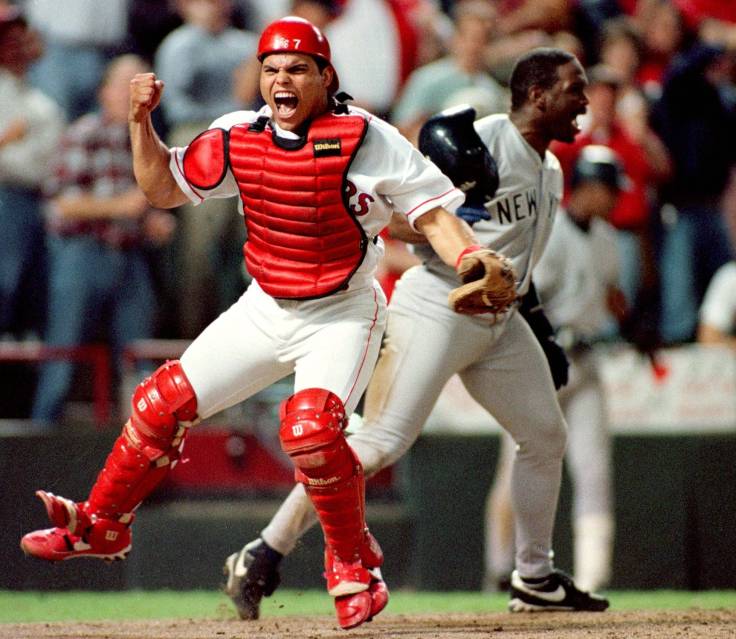
Ivan Rodriguez
This will be “Pudge’s” first time on the ballot and for most accounts should be an easy, first ballot inductee. The problem is that like many of that era, he has been rumored to have used PED’s, as former teammate Jose Canseco (a bastion of trust) said he shot Rodriguez up during their time together on the Rangers. Since it just speculation at this point, he got my vote, as he is easily one of the best catchers in baseball history. Over a 21 year career, Pudge would hit .296/.334/.464 with 311 career home runs, 1,332 RBI’s, an OPS+ of 106 and a bWAR of 68.4. Rodriguez was the 1999 AL MVP, 2003 NL NLCS MVP, 13 time Gold Glove winner, 7 time Silver Slugger award winner, and 14 time All-Star, including this little honor he gets all to himself:
His numbers are somewhat mind-boggling for a catcher, a position that has been very hard for most to excel on both offense and defense. Rodriguez is 9th all-time in career defensive WAR, 48th in hits, 54th in total bases, 26th in doubles, 97th in RBI’s, 58th in extra base hits, 13th in Total Zone Runs, 1st in defensive games as a catcher, 1st in career putouts as a catcher, 23rd in assists at catcher, 5th in double plays turned at catcher, 78th in caught stealing percentage, and 1st in Total Zone Runs as a catcher. In some ways, Rodriguez re-invented the catcher position, as he was a hybrid of speed, guile, power, and nimble defense with a cannon of an arm. According to JAWS (which is a ranking system created by Jay Jaffe that is of great use to help determine Hall of Fame worthiness), is the third best catcher of all-time, just behind Johnny Bench and Gary Carter. When you factor in his comparable players (Carlton Fisk, Ted Simmons, Carter and Yogi Berra) it is easy to see why Rodriguez should be a first ballot HOFer. So far, he is polling at 79.9% of the ballots, which is probably a good sign that he will either get in this year or come up just short, which would be a good sign for 2018. In my eyes, there is no debate here: Pudge is one the greats of the game.
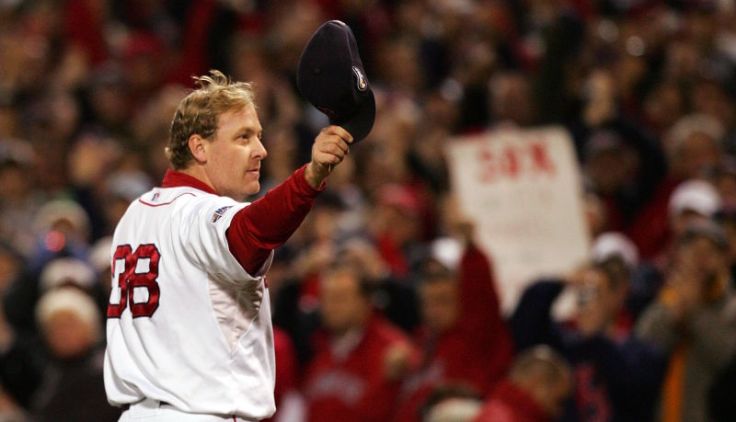
Curt Schilling
There might not be a bigger lightning rod on the Hall of Fame ballot than Schilling, who has caught quite a bit of scorn for his behavior on social media within the last year. While I might not agree with his politics, I do realize it has nothing to do with his candidacy in the Hall and justly had no qualms in voting for him yet again this year. Schilling’s numbers speak of a top notch starter: 26th all-time in pitchers bWAR, 15th in strikeouts, 3rd best strikeout to walk ratio, 18th best Win Probability Added and 46th best ERA+. Those are just his regular season numbers; toss in the postseason and you have a surefire Hall of Famer. Schilling has rubbed many a writer the wrong way (and by no means do I feel sorry for Curt; he would probably be better off learning when to keep quiet) and because of that his vote totals have gone down this year, but so far he is polling exactly where he finished last year, at 52%. I might not like Schilling the person, but the baseball player was one hell of a pitcher out on the diamond. For that, he has my vote.
Billy Wagner
This year is the first that I voted for Wagner, although I came very (very) close to voting for him in 2016. Since I was so close last year to marking an ‘X’ next to his name, I decided to dig deeper into his numbers and compare them to some of his peers. Wagner was a 7 time All-Star, twice was in the top ten of the NL Cy Young award and took home the 1999 NL Rolaids Relief Award. While he sits in 6th place all-time in saves, that doesn’t mean as much to me as his 86% conversion rate, which is close to Trevor Hoffman’s 88.8%. What does interest me is some of the deeper numbers when compared to fellow relievers. Wagner is 5th all-time for relievers in ERA+, 14th for relievers in bWAR (in fact, just under Hoffman), 4th in strikeouts for a reliever, 86th in Adjusted Pitching Runs, 93rd in Adjusted Pitching Wins, 55th in RE24, and 36th in Win Probability Added. All this was done in less than 1,000 innings, which for some is a hindrance rather than a positive. I get that relievers today aren’t used in the same scenarios as their forefathers, and because of that their innings totals will seem meek in comparison. But that is also what the role calls for nowadays and there is something to be said for compiling numbers like this in a much shorter amount of time. For Wagner, it was more about the efficiency than the longevity; Wagner came in, shut down the opposing team and was done. In some ways, Wagner and Hoffman are linked in that they both pitched about the same amount of time, in the same period and were very equally efficient. Both were top of the food chain for their position and in my eyes, both should be in Cooperstown.
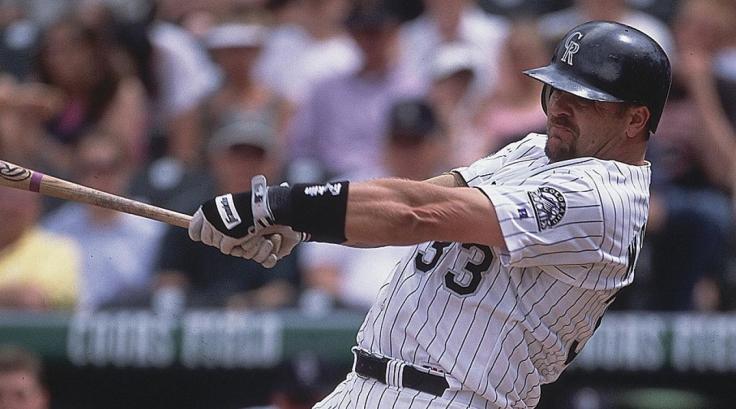
Larry Walker
Much like Wagner, this was the first year I voted for Walker and my take on him seemed to be a bit different than a lot of folks. For many, the fact that Walker played a large chunk of his home games in Coors Field (Walker was a Rockie from 1995 to 2004) seemed to deter voters from placing a vote for him; I had no issue with that, since I knew he hit on the road almost as well as he did at home. No, my issue with him was injuries, as he had 7 seasons of less than 130 games, 12 of less than 140. Walker’s issue wasn’t the ‘Rocky Mountain High’s’ as much as the ability to stay on the field and play. The numbers speak volumes: .313/.400/.565 career slash line, 141 career OPS+, 5 time All-Star, 1997 NL MVP, 3 batting titles, and 7 time Gold Glove winner. So what changed for me when it comes to Walker? His place in history. According to JAWS, Walker is the 10th best right fielder of all-time. All-Time! Just seeing who he is better than sounds like a who’s-who of right fielders: Shoeless Joe Jackson, Tony Gwynn, Ichiro Suzuki, Dwight Evans, Dave Winfield, Vladimir Guerrero, Willie Keeler, Paul Waner and Enos Slaughter, just to name a few. Walker is 86th all-time in bWAR, 56th in bWAR for position players, 55th in on base percentage, 12th in slugging percentage, 14th in OPS, 31st in power-speed #, 38th in RE24, and 36th in Win Probability Added. Those numbers are just a sliver of what he could do; there are 7 other categories where Walker is in the Top 100 of all-time. What makes me curious is the voting for Walker during the first six years on the ballot; He peaked in 2012 at 22% and last year bumped up a bit to 15%. One has to wonder if the voters viewpoint of him would change if he hadn’t played so many games in Colorado. It took me awhile to recognize it, but Walker deserves to be with the other elite right fielders in Cooperstown.
So those were my picks for this year’s class of the Hall of Fame. There are always those players we struggle with, the ones that we hem and haw about before deciding yay or nay. Here are a few of those and why I didn’t vote them:
Jeff Kent-While being one of the best offensive second baseman of all-time, his defense hurts him a ton. 19th all-time in bWAR for second sackers, 27th in WAR (which factors in a players best 7 seasons). Even just factoring in hitting, he is 18th amongst his position in OPS+. Close, but not quite.
Fred McGriff-Also close, but just misses the cut for me. Number-wise he is in the “very good but not quite great” category.
Gary Sheffield-I go back and forth on him every year, mainly because I love his offensive numbers and where they stand in baseball history. But his defense…he has a career bWAR of 60.3; just imagine if he was even just an average defender? Sheff is a close call for me and could very well win me over next year.
Lee Smith-Longevity seems to be his main catch but nothing much really stands out for me. Nice strikeout ratio and ERA+, but outside of that he would seem to fit in the “good not great” category.
Sammy Sosa-Sosa always felt like a one-dimensional player: home runs and not much more. In fact, when you consider he hit over 600 home runs, you would think his bWAR would be higher than just 58.4.Below average defender, struck out a lot, and only cracks the Top 100 of all-time in six offensive categories. Not a Hall of Famer in my eyes.
I always love writing these Hall of Fame articles, as there is a ton of research to gloss over. Every year I feel like I receive a greater perception of the bigger picture and every year I feel like I left someone off that maybe deserved a deeper look into their case. Some of these you will agree with, some you won’t, as each person’s definition of a Hall of Famer seems to be different. What I can say that in my eyes these are the best of the best and earned the honor.
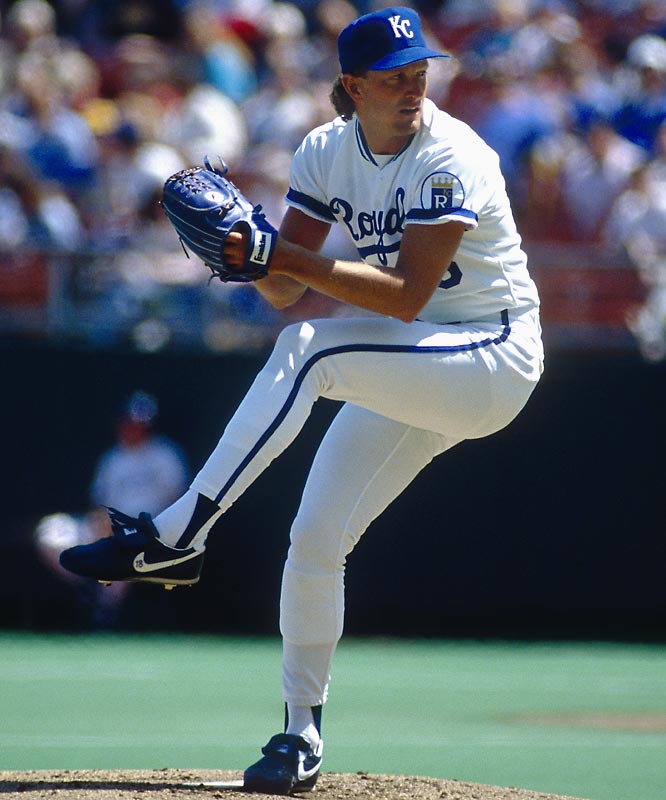
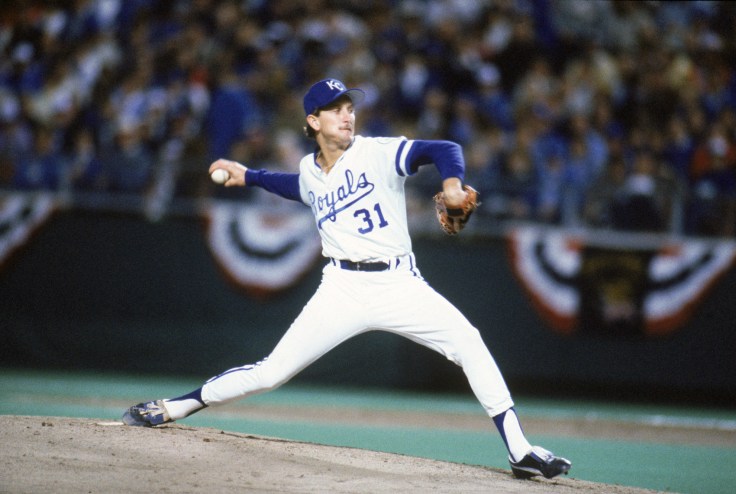
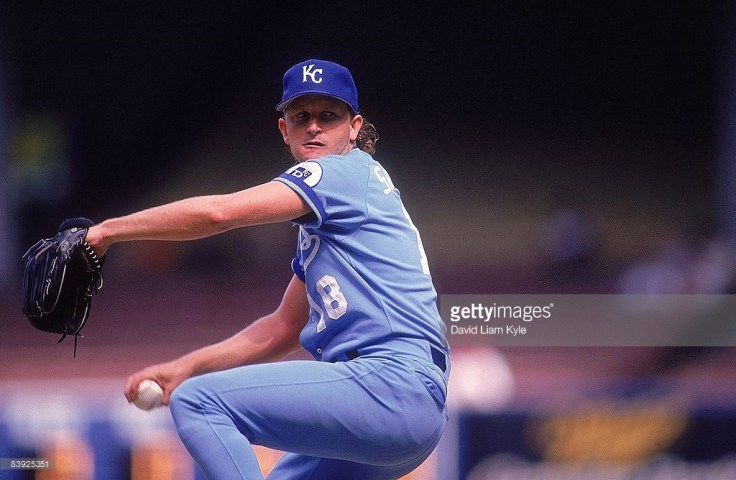
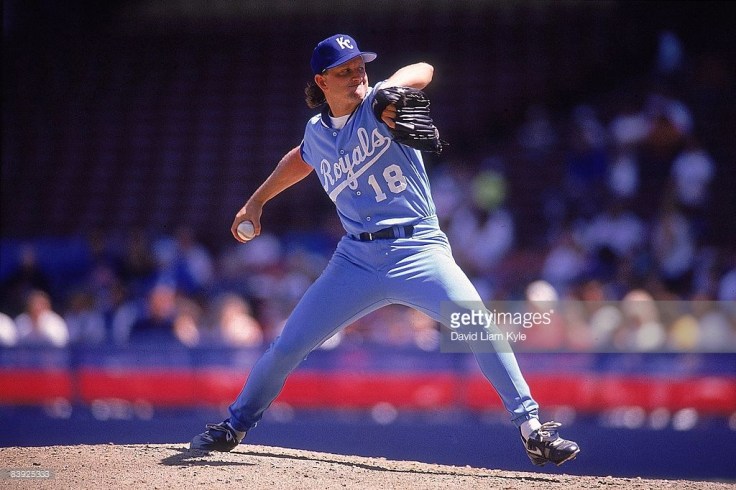
Back in the spring, I got to thinking about the history of the Kansas City Royals and how it was embedded into the fabric of my fandom as much as anything else. In the past I have done pieces on Hal McRae and have taken a look back at the history of the team, both at shortstop and a ‘Where are They Now’ piece as well. But I really wanted to dive into the past a bit more here on the blog and knew that during the season wouldn’t exactly be an opportune time to do that. Instead, I decided to wait until the off-season to get started with a monthly segment that will be called ‘Royals Retro’. Once a month, I’ll take a look back at the career of a past Royal who deserves to have a light shined on their career. I honestly couldn’t think of a better candidate to start off with than possibly the greatest pitcher in Royals history, Bret Saberhagen.
Saberhagen wasn’t a glorified first round draft pick by the Royals as I assume many would think he was. Instead, Bret was drafted by Kansas City in the 19th round of the 1982 draft, a high school pitcher out of Reseda, California. Saberhagen would sign late in July of that year, but wouldn’t make his professional debut until the 1983 season. In fact, 1983 would be Saberhagen’s only year in the minors, starting 27 games, posting an ERA of 2.55 over 187 innings, averaging 6.3 strike outs per 9, 2.3 walks per 9 and a WHIP of 1.134. Saberhagen took the fast track to the major leagues, as he would make his debut in Kansas City just one year later in 1984, splitting time between the rotation and bullpen for the Royals. He would throw 157 innings over 38 games (18 games started), posting an ERA+ of 115, striking out 4.2 batters per 9, and a FIP of 3.64. As probably expected, Saberhagen put up slightly better numbers in his 20 appearances out of the bullpen, posting an ERA of 2.32 over 54 innings, while averaging 4.1 strike outs per 9. One aspect of his game that was evident even early on in his career was how Sabs was good about trusting his defense and making pitches for the batter to put in play. Spanning his career, Bret’s ball in play percentage was on average anywhere from mid 70% to upper 70%; during his rookie year, it sat at 79%. Saberhagen would also make his first postseason start, throwing 8 innings while only allowing 3 runs, 2 earned. Nothing overtly stands out in his 1984 numbers that showed how he would break out the following year, but it was at least obvious that the Royals had a keeper.
Saberhagen would enter his age 21 season and it wouldn’t take long for him to become the Royals ace. By the end of the season, he would lead the American League in FIP, WHIP, walks per 9 and strike out to walk ratio. He would also rack up an ERA+ of 143, an ERA of 2.87 and would win his first Cy Young award while coming in tenth in the AL MVP voting…basically on two pitches:
“The year Bret won 20, he relied mostly on two pitches: his fastball and his changeup, which he throws extremely well,” said Kansas City pitching coach Gary Blaylock. “Even though he also threw a curveball and a hard slider, he never really had control of either of them. Too often they were just waste pitches.
The icing on the cake was during the Royals playoff run that October. During the World Series in 1985, Saberhagen would make two starts, throwing two complete games, including a complete game shutout in Game 7 to help Kansas City take their first championship. Bret would end up MVP of the World Series, while his wife would give birth to the couple’s first child, Drew William, on the night of Game 6. All in all, it felt like the beginning of a very prosperous career for the young righthander.
But Saberhagen would fall back in 1986, as a nasty combination of struggles and injuries limited him to 25 starts and 30 appearances overall. Injuries were the biggest issue, as Bret dealt with shoulder, elbow and foot problems and contributed to a 4.15 ERA, a 102 ERA+ and just 2.0 bWAR, a year after racking up an impressive 7.3 bWAR. Many wondered back in ’86 if success had spoiled Sabs, but Saberhagen was just as unsure as anyone else:
“Everybody’s trying to come up with a solution or theory of what I could have done to change things,” Saberhagen said before the Kansas City Royals met the Angels Tuesday night in Anaheim Stadium. “When you’re not going as well as you should be, everybody shines the light at you and asks why.”
1986 would also be the beginning of weird odd year/even year pattern where it concerned his success. It appeared over time that Bret excelled in odd years, while struggling during even years. This odd phenomenon would continue throughout his Kansas City career.
1987 saw Saberhagen restore his old glory, throwing an impressive 257 innings over his 33 starts, compiling 15 complete games, a WHIP of 1.163, an ERA+ of 136 and 8.0 bWAR. Bret would also earn his first All-Star nomination and a WPA+ of 19.1. A big part of his success that year was the added use of a curveball, a new addition to his pitching repertoire:
“That’s why we decided to take the hard slider away from him in spring training and have him work on perfecting his curveball, which actually fits his mechanics a lot better,” Blaylock continued. “Now he can consistently get hitters out with his curveball, where before it was just there. I won’t say that’s the chief reason for Bret’s fast start this season, but that’s part of it.”
It also appeared that any distractions he had in ’86 were in the rear-view mirror:
Saberhagen reportedly is also a lot more disciplined on days when he is scheduled to work than he was last year, when on at least one occasion he came to the park early, not to work on some of his problems, but to film a car commercial. This year he definitely seems more organized, more able to block out distractions, and more willing to challenge the hitters with a fastball that has been clocked as high as 96 m.p.h.
The one downside to 1987 was a shoulder injury in the second half of the season that affected his performance on the field, as only 4 of those 15 complete games were in the second half. Saberhagen would also allow more hits, runs and home runs in the second half, all in 42 less innings than he had in the first half.
The pattern would continue in 1988, as Bret struggled, allowing the most hits in the American League and giving up the most runs in his career. Saberhagen would post an ERA+ of 106, a FIP of 3.08 (which actually wasn’t that bad) and a bWAR of 3.8. The good news was that he stayed healthy and that health would remain as he ventured into 1989. ’89 would be his career year when it came to numbers, as he would lead the American League in wins, W-L%, ERA, complete games, innings pitched, ERA+, WHIP, FIP and strike out to walk ratio. His bWAR that year was the highest of his career, 9.7, as he would earn his second Cy Young award, while earning his first Gold Glove and finishing 8th in the AL MVP voting. From July 26th on, Saberhagen would compile four shutouts and only once in a game over that period would a team score more than two runs on him. In many ways, 1989 was the year that Saberhagen went from being a really good pitcher who won the Cy Young award at one point to one of the best pitchers in the game and an elite ace. Most Royals fans will discuss his 1985 campaign when talking about his greatness, but 1989 was easily his best year.
1990 was the expected off-year for Saberhagen, as he would appear in just 20 games while throwing 135 innings. The one positive for him was his second All-Star game appearance, one in which he would pick up the win for the American League. Bret would pitch in one game during the second half before being shelved, as he would have successful arthroscopic surgery on his elbow in July. At this point, he was 26 and the litany of injury issues were starting to pile up.
1991 would be Bret’s final year in Kansas City and as patterns go, it was another solid season. Saberhagen would throw 196 innings in 1991, with seven complete games, an ERA+ of 135, a WHIP of 1.070 and a bWAR of 5.1. The crowning moment for him that season was his first career no-hitter, as he blanked the Chicago White Sox, 7-0. All these years later and it is the last no-hitter thrown in Royals history. Bret really didn’t think about getting it until about the 7th inning:
“The funny thing is that once we got to the seventh inning — and I’d been at that point a few times before in my career (with a no-hitter) and I’d never been able to finish it off — I started to think about getting that darn thing,” Saberhagen recalled. “So at that point, I told myself I was going to go at every batter like he was the last batter of the game.
The toughest out might very well have been the final out:
“It was a breaking ball to Frank, and he hit the ball to Terry Shumpert at second base,” Saberhagen recalled almost 23 years later. “Terry got it and fired to first and that was it. Such a cool feeling.”
How ironic, 25 years later, that this would be just a few months before Saberhagen’s time in Kansas City would wrap up. It seems fitting that possibly the greatest pitcher in Royals history would throw a no-no in his final year as a Royal.
On December 11, 1991, the Royals shockingly traded Saberhagen to the New York Mets (with Bill Pecota) for Kevin McReynolds, Gregg Jefferies and Keith Miller. Bret was entering his age 28 season, and while there were some concerns about injuries, this was a way to fill three holes in the Kansas City offense:
“Any time an organization gives up a player of Bret Saberhagen’s caliber, it’s a hard thing to do. But we had to take a risk and do some things that you don’t always want to do. But we feel we’re a better ball club because of it. We were able to fill three holes. The Mets probably were the only club in baseball talent-rich enough to do something like this.”
What is interesting to see all these years later is the reactions, such as this one from former Mets GM Al Harazin on whether or not New York felt like they overpaid for Saberhagen:
“I think we gave up an awful lot of talent, but we got one of the best pitchers in baseball. I’ll leave it to others to decide if we overpaid.”
It was a shocking move, even for Bret as he wasn’t expected to leave Kansas City:
“When you win a couple of Cy Young’s you start thinking maybe you’re a fixture and one of the main reasons they’ve accomplished what they have in the past.”
The move was equally as shocking for Royals fans. I remember being crushed as a 15 year old Royals fan to learn one of my favorite players was no longer a Royal. At the time I wasn’t as privy to the business side of baseball; all I knew was a player I had gotten attached to was now going to pitch in New York. So how did the trade work out? Not great for the Royals. Saberhagen would accumulate 11.7 bWAR during his time in New York, including a third place finish in the National League Cy Young voting in 1994. Miller would play parts of four seasons with Kansas City, raking in 1.4 total bWAR in that span. McReynolds put together 1.9 bWAR in his two seasons in Kansas City (and never endeared himself to Royals fans), while Jefferies had a 2.2 bWAR in his lone season in Kansas City. Jefferies at one point was considered a future star, but was a slightly above average player whom the Royals would trade the following winter for Felix Jose. Jose was an even bigger bust, posting a -0.2 bWAR during his time in Kansas City. It’s hard to say one move could lead to the downfall of one organization, but the Saberhagen trade didn’t accomplish what Royals management was hoping it would and instead began a downfall that would fall even farther in upcoming seasons.
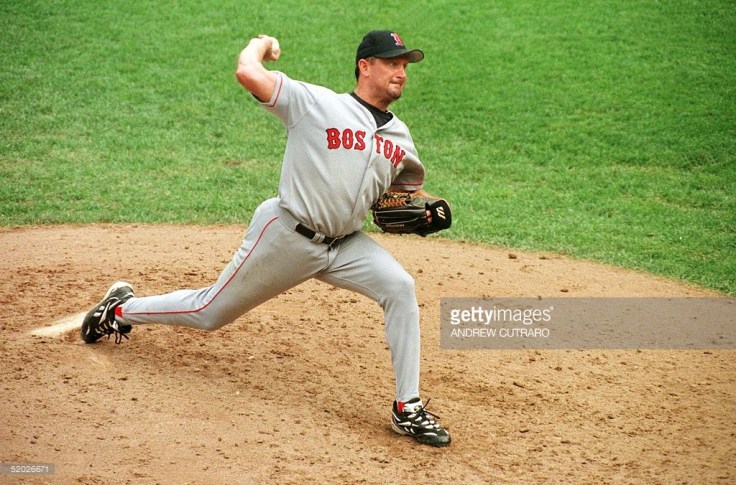
The Mets would deal Bret to Colorado during the 1995 season and would finish out the year with the Rockies, including pitching in a Colorado playoff game that fall. He would sit out the 1996 season due to injury, but would return to baseball the following year, joining the Boston Red Sox. Saberhagen would pitch part of four seasons in Boston, and while at times he would show a glint of his past success, at this point of his career he was a nice middle of the rotation starter. He did become the Sporting News Comeback Player of the Year in 1998 and would also win the Tony Conigliaro Award. He would miss the 2000 season and while he tried a comeback in 2001, he would only pitch in three games and retire at the end of the season.The latter part of his career was littered with injuries and stunted what at one time was considered a possible Hall of Fame career.
So two questions have gnawed at me over the years: one, ‘is Bret the greatest Royals pitcher in history?’ and two, ‘how close did he actually get to becoming a Hall of Famer?’. Let’s start with the first question, his place in Royals history. In all-time career bWAR, Saberhagen is just behind Kevin Appier, 47.3 to 40.8. He is fourth in ERA (behind three relievers), sixth in wins, fourth in win-loss%, 1st in WHIP, 2nd in walks per 9, 6th in innings pitched and fourth in strikeouts. At this point, it is pretty close between him and Appier, so I’m going to venture to the advanced side of things. Saberhagen is 5th in team adjusted ERA+ (second behind Appier for starters), first in team FIP and third in WPA. With all these numbers at hand, I would say in a very close race that Kevin Appier might just slightly edge out Bret for being the greatest Royals starting pitcher of all time. That also tells you how super underrated Appier really was.
So how about the Hall of Fame? Going off the great website Hall of Stats, Saberhagen is in, as they gave him a Hall Rating of 122, as they take the top 217 players (the amount of players currently in the Hall of Fame) based just off of their career statistics and nothing else. Their formula?:
The Hall of Stats uses a formula called Hall Rating to rank every player in baseball history. Hall Rating combines the value of a player’s peak and longevity into a single number that represents the quality of that player’s Hall of Fame case. It’s not perfect, but there’s a lot to be said for rating all players in history according to the same objective criteria.
Now this factors in both longevity and peak of career, which has become more and more important over the years. Saberhagen’s case is 62% peak and 38% longevity and by their Hall Ratings he is 152nd all-time, 134th among eligible players and 45th among pitchers. Saberhagen will be eligible for the upcoming Today’s Game Era Committee, but the likelihood of him getting voted in is probably pretty slim. What this does tell us though is that his battle with injuries late in his career probably hurt his case and has made many voters ignore his numbers during his peak. The good news is that Saberhagen is already in the Kansas City Royals Hall of Fame, which is a great honor in Kansas City and was also voted one of the ‘Franchise Four’ for the Royals back in 2015.
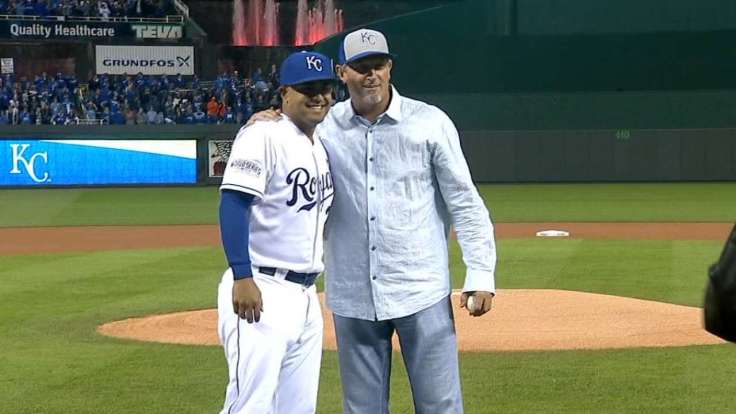
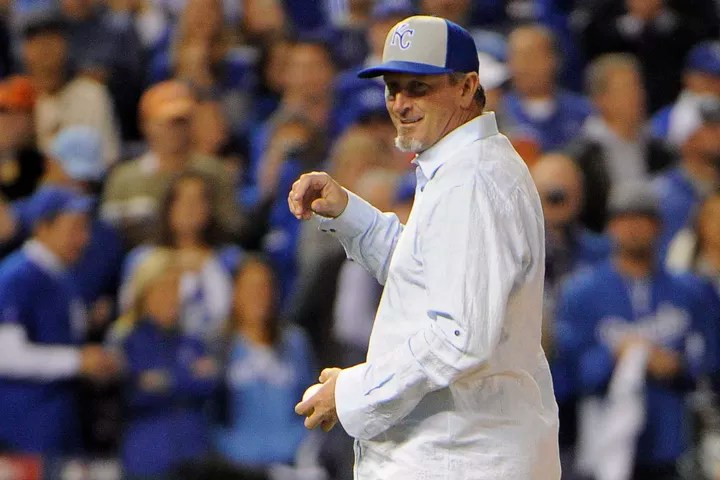
For a number of years, it felt like the Royals had forgotten about Saberhagen and his place in the team’s history. There were a few public acknowledgements, but that was about it. It always bothered me, considering his place in franchise history. Luckily, over the last few years while the Royals have made their epic playoff runs, Saberhagen has continuously been seen at Kauffman Stadium. After all these years, it is still great to see ‘The Kid’ at the stadium, even for just a moment. I’m sure a kid from California never imagined while he was growing up that he would become such a large part of the fabric of a team in the midwest, but he has. When you talk about great Royals pitchers, names like Splittorff, Leonard, Busby, Appier and Greinke are often mentioned. But for me, the conversation started and ended with Saberhagen…and it always will.
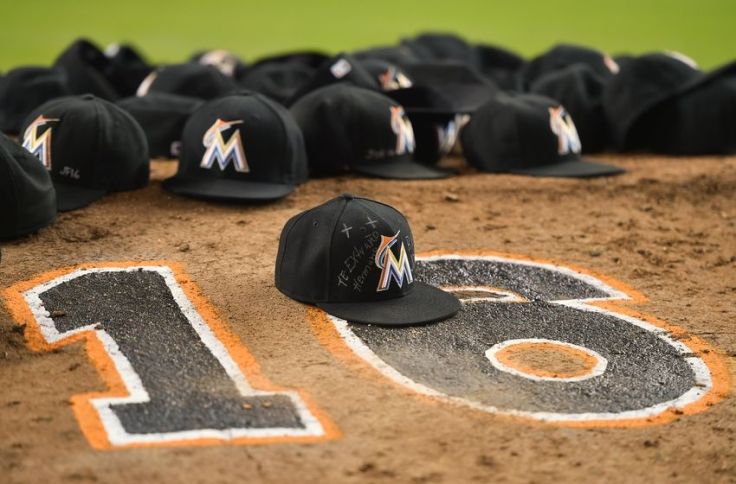
The entire baseball community has been mourning the sudden death of Miami Marlins All-Star pitcher Jose Fernandez since the news of his passing on Sunday morning. I, like many others, was in a bit of a haze on Sunday, as it was hard to grasp that such a talent with his whole life in front of him was now gone. I’ve tossed around writing about Fernandez the last couple days, but in some ways felt I wouldn’t be able to do him justice nor say anything that hasn’t already been said by many others. Instead, I finally decided on doing something else to honor him; show you his greatness rather than talk about it. Actions speak louder than words, and with that in mind, here are some favorite Jose Fernandez moments to remember him by.
First, there is his first major league home run. Yes, it’s weird I started off with a batting highlight for a great pitcher, but the joy he showed in this personified him to a ‘T’. Also, baseball’s unwritten rules are still stupid. There was zero reason for anyone to get mad at him for watching his first ever home run.
Speaking of firsts, here is Fernandez’s major league debut. At the beginning, glance at his minor league numbers. Twenty Seven total minor league games?? Crazy. It was known very early on that this kid was going to be special and he was.
Instincts. This is Fernandez at 21. I’m not so sure many veteran pitchers would have that kind of “game awareness”. A great play on defense.
Seriously, this speaks for itself. Folks, baseball is a kid’s game and no one understood that more than Jose Fernandez.
For the unaware, Fernandez was a very good pitcher. This highlight from back in July was not only a career-high in strikeouts, but also his 500th career strike out. When healthy, Fernandez was easily one of the best pitchers in the game and a treat to watch.
Cuba vs. Cuba. Fernandez vs. Puig. That smile. Fernandez just loved playing baseball and you could tell.
I feel like I am underselling it when I say he was a great pitcher. He was a great athlete. This, also from July, was Fernandez pinch-hitting in extra innings with a big pinch hit double. In some ways it made perfect sense that Fernandez was playing in the National League, where he could pitch and hit.
Seriously, Fernandez made Barry Bonds smile. That within itself should show how special Jose was. For me, a longtime Bonds fan, this is great to see. Barry and Jose, enjoying the game and having fun.
That reaction. I almost wish I was a Marlins fan. I celebrated after the Royals won the World Series last year…but not like that. Just fantastic.
This was Fernandez’s final start, a week ago against the Nationals. Fernandez threw 8 scoreless innings, striking out 12. In other words, he was making a push to be named the National League Cy Young award winner.
Vin Scully has a way with words. It only made sense to have him talk about Fernandez and relay a great story in the process.
There is a big hole that is now missing in Major League Baseball. Fernandez was not just a once in a lifetime player that the game could use as a spokesman for as to why baseball is so great; Jose was a once in a lifetime person. Fernandez joins a list of players taken too soon from us, guys like Roberto Clemente, Thurman Munson and Darryl Kile. The only difference is that those players were all veterans who had made their footprint in baseball for years; Fernandez was just getting started. As much as Jose will be missed, there will come a time that a new player will come along with great talent and unbelievable joy. There will be a player who just oozes happiness to be part of this grand game. When that happens, I hope it makes us all think about Fernandez. We will all miss watching him perform on the diamond, but I think I will miss that contagious smile more. Rest in Power, Jose.
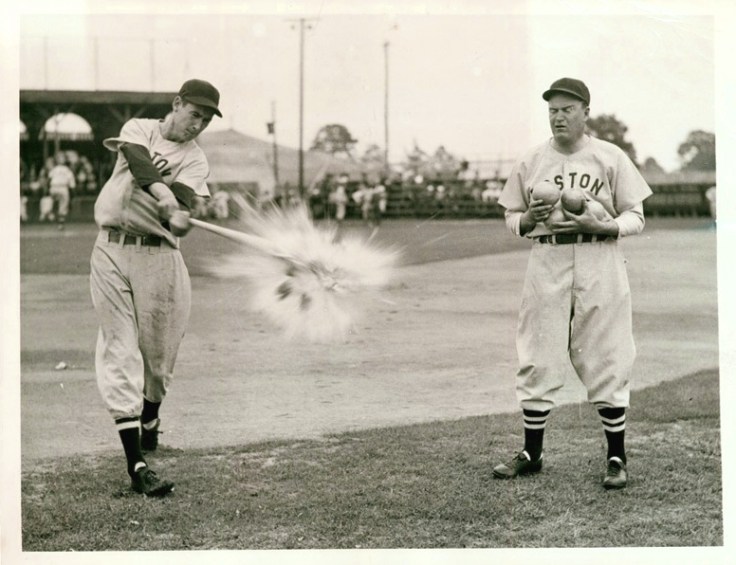
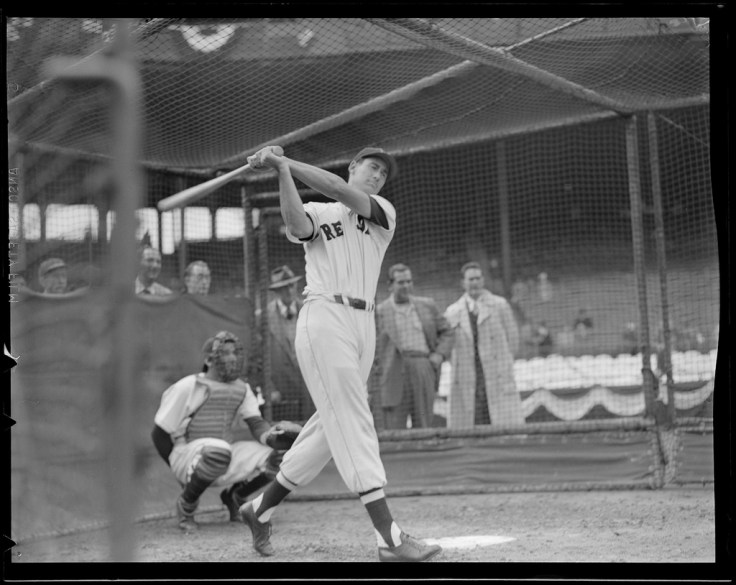
August 30, 2016 would have been Ted Williams’ 98th birthday and though he passed away in July of 2002, Williams’ legacy lives on all these years later. To some like myself, Williams is the greatest hitter of all time in baseball and the numbers back that up: two MVP awards, five time Major League Player of the Year, six batting titles, 14th all time in bWAR(11th for position players), 6th all time in OWAR, 8th best batting average, 2nd best OPS, best career on-base percentage, 2nd best slugging percentage, 4th most walks, 5th best WPA and 6th most runs created. What’s even more compelling is that ‘Teddy Ballgame’ did all of this while missing three years of his prime (his age 24-26 seasons) while serving in the war. Williams is one of the greats in the game and has always been a man who has piqued my interest once I started delving into the history of the game back in my early years. I think one of the main aspects of Williams (at least to me) was he absolutely loved the art of hitting and studied it like he was a scientist or scholar who wanted to breakdown every section of this art. To celebrate his greatness, I thought today we would look at some great factoids, stories and other interesting notes about the ‘Splendid Splinter’, Ted Williams.
Williams had a great memory. In fact, he could recall specific at bats, sequences, conversations and much more from years before. These stories are still being passed along today:
One time, comedian Billy Crystal met Williams and told him that he had video of Williams striking out against the Yankees’ Bobby Shantz in a specific game 30 years earlier. Williams looked at Crystal and said, “Curveball, low and away. [The catcher] dropped the ball and tagged me, right?” Of course it was, because that was Williams.
Williams was obsessed with hitting, taking batting practice before and after games. Tim Kurkjian once wrote:
“Fear of failure drove Williams. That’s why he never stopped hitting, never stopped striving for perfection.”
He would often tell people that his only goal when he retired was to have people look at him walking down the street and say, “There goes Ted Williams, the greatest hitter who ever lived.”
Williams was known to be a surly guy, but stories have surfaced over the years about what a good-hearted person he could be. This story in particular makes it hard to dislike the guy. This came from Roger Waynick, owner of Cool Springs Press:
When Roger was in his mid-teens, before he had a drivers license, he went on a trip with his father to Islamorada, Florida to fish for tarpon. The group that included his dad breakfasted one morning and then, for some reason, left Roger behind when they went to the boat.
Ted Williams, a pretty famous tarpon fisherman (one of his major endorsement deals was with Sears for fishing tackle), noticed the young man sitting by himself and asked him what was going on. Roger explained that his dad and his dad’s friends had left him behind. Ted invited him to spend the day with him fishing on his boat.
Waynick has two great memories of the day. One was about the legendary Williams eyesight. (It was claimed that he could read the label on a 45 rpm record while it was spinning on the turntable.) Waynick explained to me that fishing for tarpon is like hunting; you see the target game first and then “cast to it.” As Waynick put it, “he had brilliant eyes and could see the fish long before I could!”
But the other recollection Waynick has nearly 40 years later is about Williams’s strength. “We caught several fish and I was amazed how he could hold his rod almost vertically as these huge fish pulled. For me, I was being pulled around the boat…but not him. He stood still and straight. Splendid.”
Not a fan of defensive shifts that litter the game of baseball nowadays? Well, Williams was the first player to ever have such a shift used against him.It was called the “Ted Williams Shift”and was first used by Cleveland Indians manager Lou Boudreau on July 14, 1946 :
In the opening game of a Fenway doubleheader, Williams, in his first season back from World War II military service (and waist-deep in what would be his first MVP campaign), went 4-for-5 with three homers and eight RBI. For the second tilt, Boudreau, with creativity likely borne of desperation, employed the following defensive alignment when Williams ambled to the plate …
The immediate result? Williams went 1-for-2 with a double and a pair of walks. So that’s … better, at least compared to what he wrought in the first game of the double-header. Note, though, that Williams posted a .750 OBP for the game, and the shift was still deemed a success of sorts. Such were the hitting chops of the Splendid Splinter.
One factoid that I didn’t realize until a few years ago was that Williams was of hispanic descent:
Williams’s Latino pedigree surprises many, but the Splendid Splinter was always private about family. In his 1969 autobiography, My Turn At Bat, Williams acknowledged his heritage as “part Mexican” and recognized the difficulties that might have been his lot. He wrote, “If I had had my mother’s name, there is no doubt I would have run into problems in those days, the prejudices people had in southern California.”
Williams mother’s name was May Venzor and it appears that his mother’s side of the family had a big influence on Ted’s love of the game of baseball:
Sarah Diaz (May’s younger sister) recalled of Ted’s visits to Santa Barbara in the early 1930s, when he was a teenager: “Ted played with my brother Saul. We had a big garden, and they’d get out there and throw the ball to each other. Ted learned a lot. When Ted would come, the first thing they would do is get out there in that field and pitch to each other and bat. My mother was left-handed and, boy, she didn’t miss when she threw rocks at us, to get our attention.”
As most know, Williams was the last hitter to hit .400 in a season, .406 back in 1941. Many felt like he should sit out the final game of the season, which was a doubleheader at Shibe Park. Williams’ average was at .39955 and batting average’s are always rounded up to the next decimal. Williams’ could have sat out the game and still accomplished a .400 season. Instead, Williams played both games:
Williams went 6 for 8 in the two games to finish at .406, and no one has since hit .400 or better for a season. No one, in fact, has hit higher than .390, and that was 31 years ago.
Many hitters have tried since then to reach the .400 barrier, only to fall short:
Williams had 456 at-bats in 1941. Brett, who hit .390 in 1980, had 449 at-bats that season. In 1994, Gwynn had 419 at-bats in 110 games and washitting .394 on Aug. 11; then the players went on strike and the rest of the season was canceled.
John Olerud was hitting .400 on Aug. 2, 1993, the second latest that anyone has carried a .400 average in a season since Williams. (Brett was hitting .400 on Sept. 19, 1980.) Olerud raved about Williams’s eye for the strike zone and his plate coverage but wondered whether he had benefited from playing when starters usually pitched complete games.
On this issue, Williams always conceded that some changes, like a bullpen full of specialists, might have made hitting harder since the 1940s, but that other changes might have made it easier, like the major league expansion to 30 teams from 16, which probably diluted the overall pitching talent.
One final story that I found incredibly interesting-Ted Williams once pitched in a major league game. It was August 24, 1940 and all things considered didn’t pitch too badly:
Just 21 at the time, Williams was not an ideal person to take the mound. But the Red Sox’s manager, Joe Cronin, found himself in a tight situation during a blowout loss to the Detroit Tigers.
Needing a fresh arm to get some outs, Cronin called on Williams to throw some pitches.
Despite his inexperience, Williams did fine in two innings, allowing just three hits and one run. The Tigers won by 11, but the Red Sox were able to get through the game without any further embarrassment.
Go ahead and use that little fact to try to stump a friend. I’m pretty sure they won’t know that Williams actually pitched in a game early in his career!
Ted Williams is not only one of the greatest baseball players in history, he is also a man who will be talked about way past any of our lifetimes. Williams was a one of a kind player and many of the stories here will be told for years to come. I love running across new stories I have never heard before about Williams, as I find him to be a fascinating player and person, someone whose reach was far past the game of baseball. Williams lived a full life that many would be proud of, but he also was one who always wanted more. We should want more out of life and never quit wanting to learn and be better. It is a goal that Ted Williams strived for and seemed to succeed at.












 Bleeding Royal Blue